Russula firmula
Russula firmulasyn. Russula firmula J. Schaeff., Agaricus firmulus
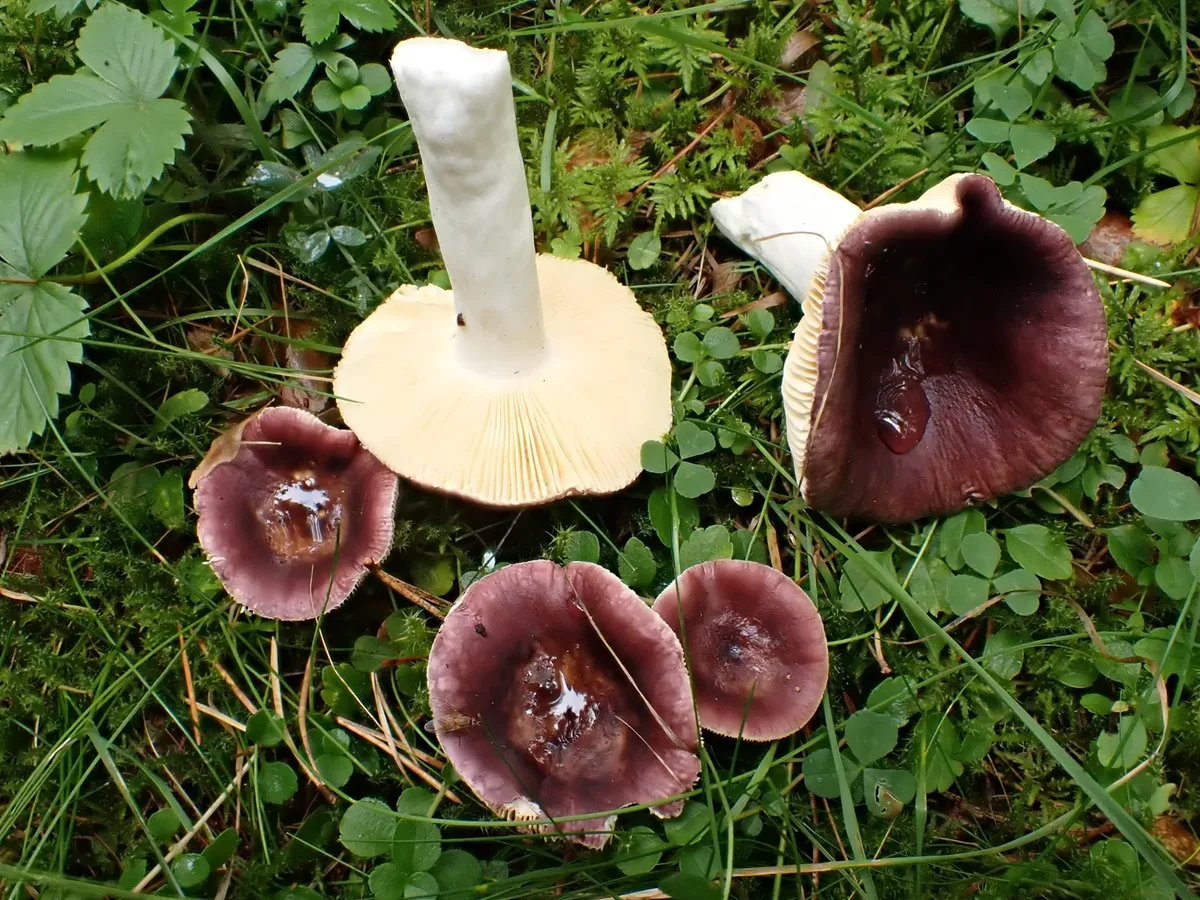 © Perry Gunnar Larsen (CC BY)
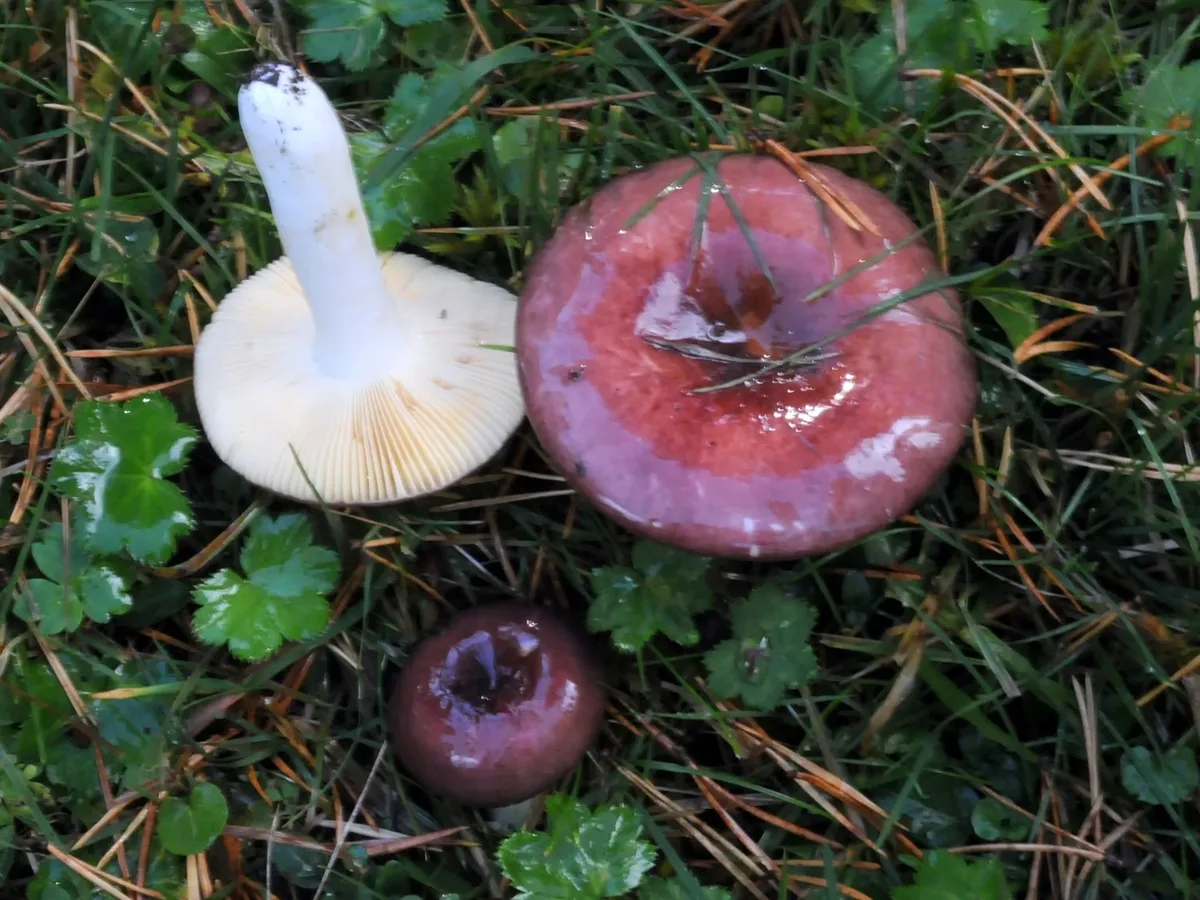 © Perry Gunnar Larsen (CC BY)
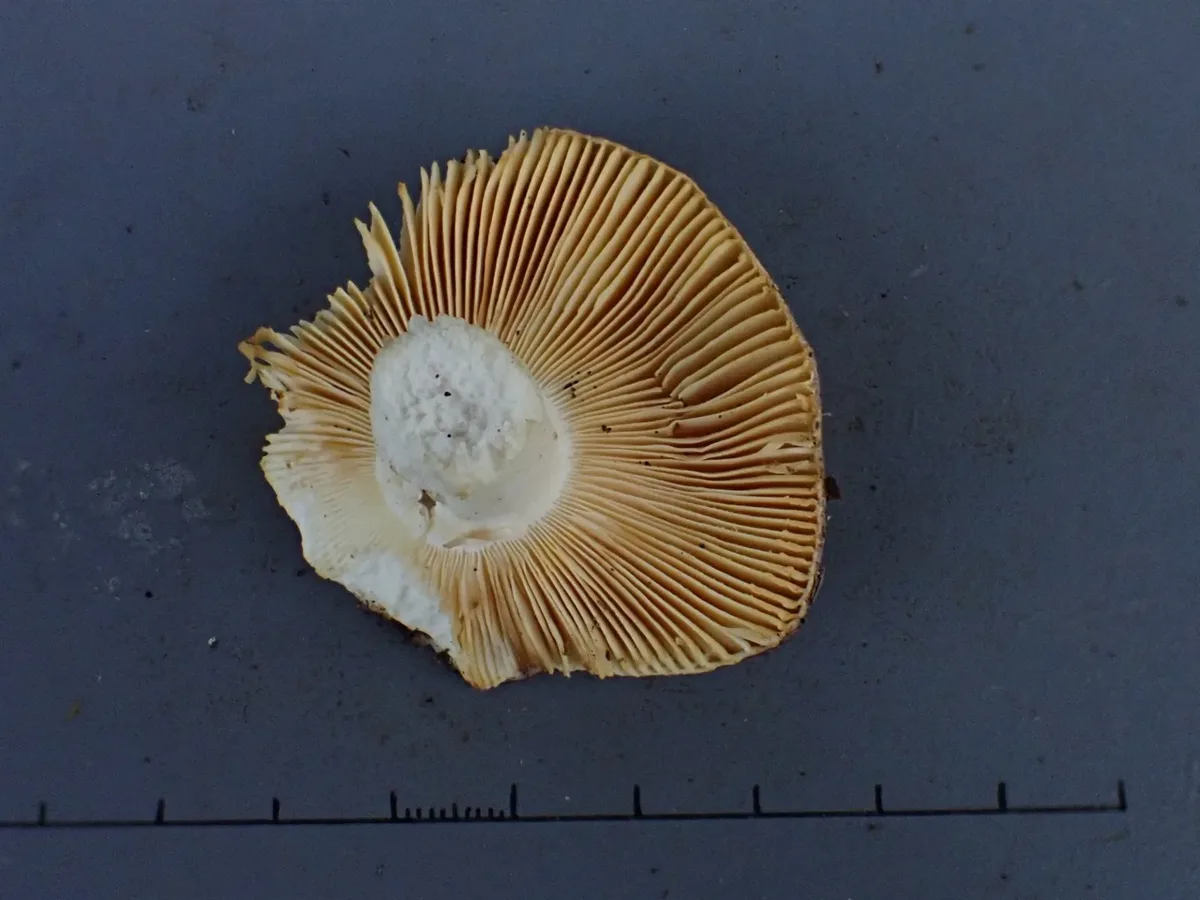 © Kari Ekeberg Nilsen (CC BY)
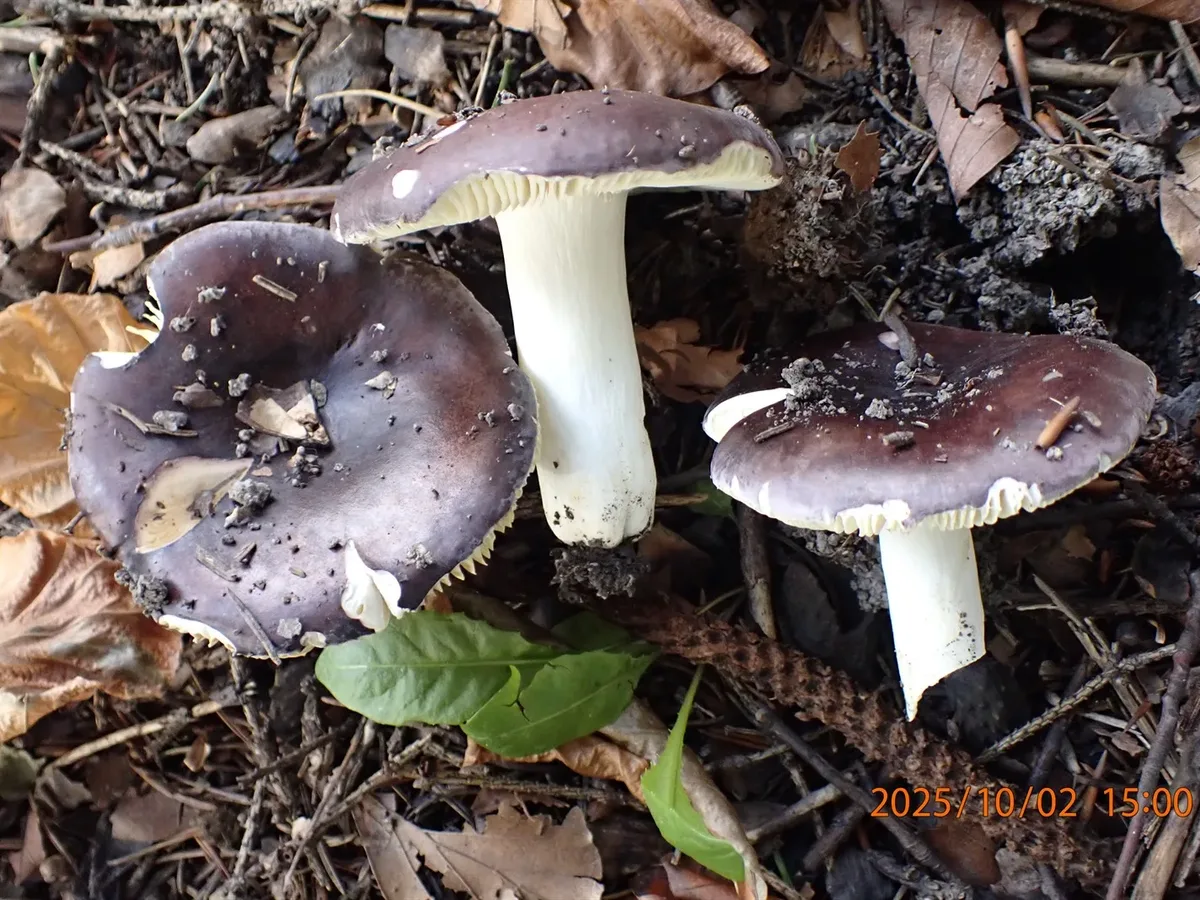 © Tove Jacobsen (CC BY)
 © Unknown (CC BY-SA)
 © Unknown (CC BY-SA)
 © Perry Gunnar Larsen (CC BY)
 © Perry Gunnar Larsen (CC BY)© Perry Gunnar Larsen (CC BY)© Perry Gunnar Larsen (CC BY)
Good to eat, once you have identified it with certainty and cooked it through.
How to recognise it
Russula firmula is a medium-sized brittlegill that earns its name - firmula means "rather firm" - through flesh that stays solid and compact long after many of its relatives have softened.
Cap
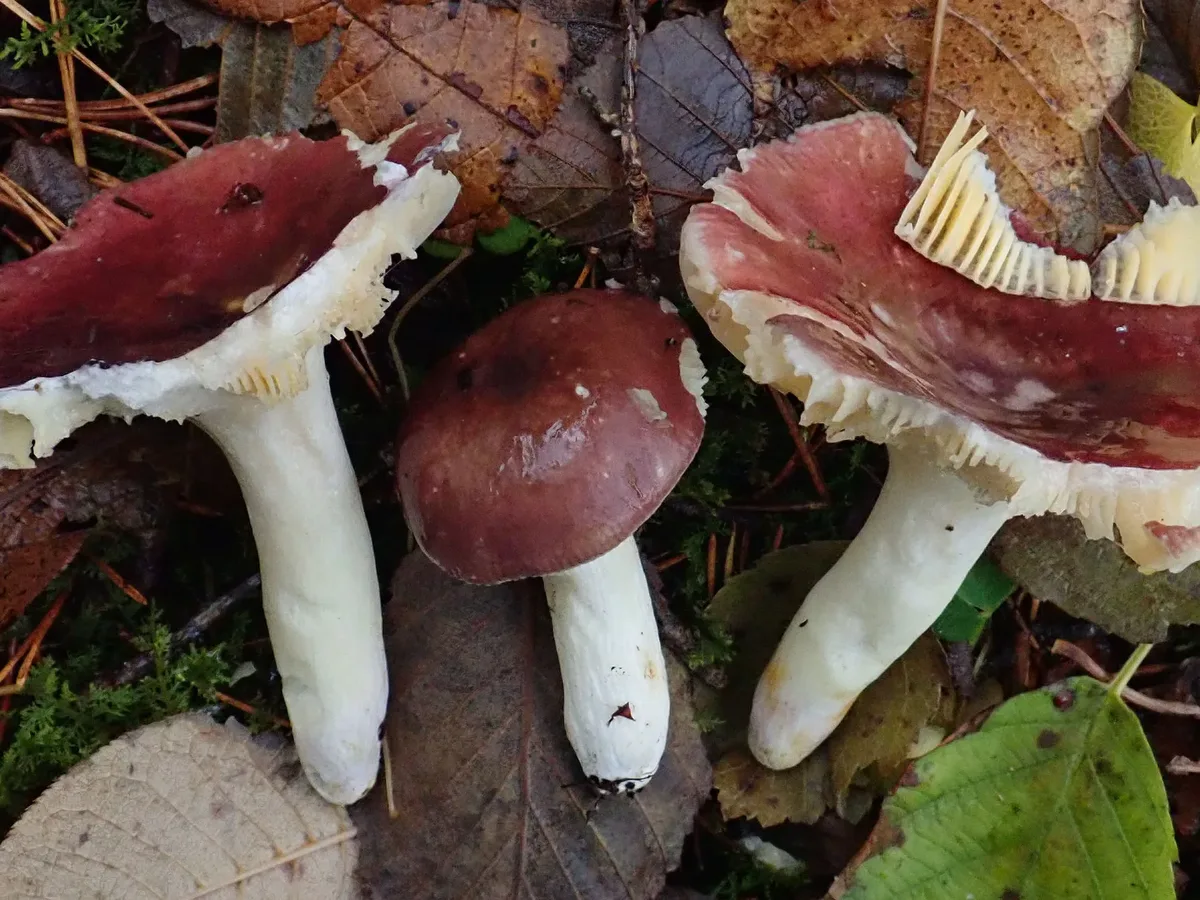
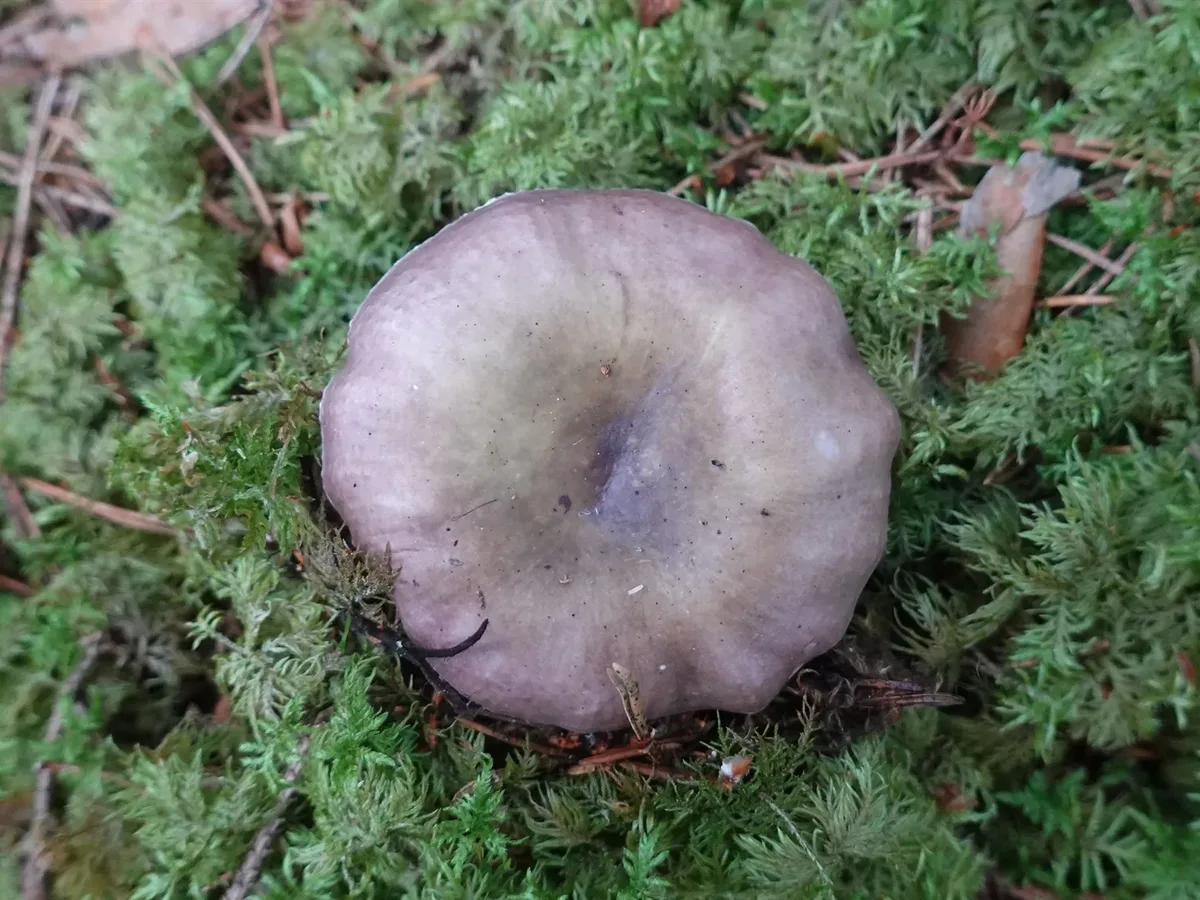
The cap (4-10 cm) opens convex and gradually flattens, eventually settling into a shallow central depression; old specimens sometimes show faint striations around the margin.
The surface is smooth, slightly greasy in rain, and peels fairly easily from the edge inward.
Colour is one of the more variable features: it ranges from a quite saturated dull violet or lilac-purple through greyish-violet to a washed-out brownish-lilac, and caps often bleach patchily to yellowish or pale ochre in older or sun-exposed specimens.
This variability means colour alone cannot be trusted for identification - it needs to be read alongside other features.
Gills
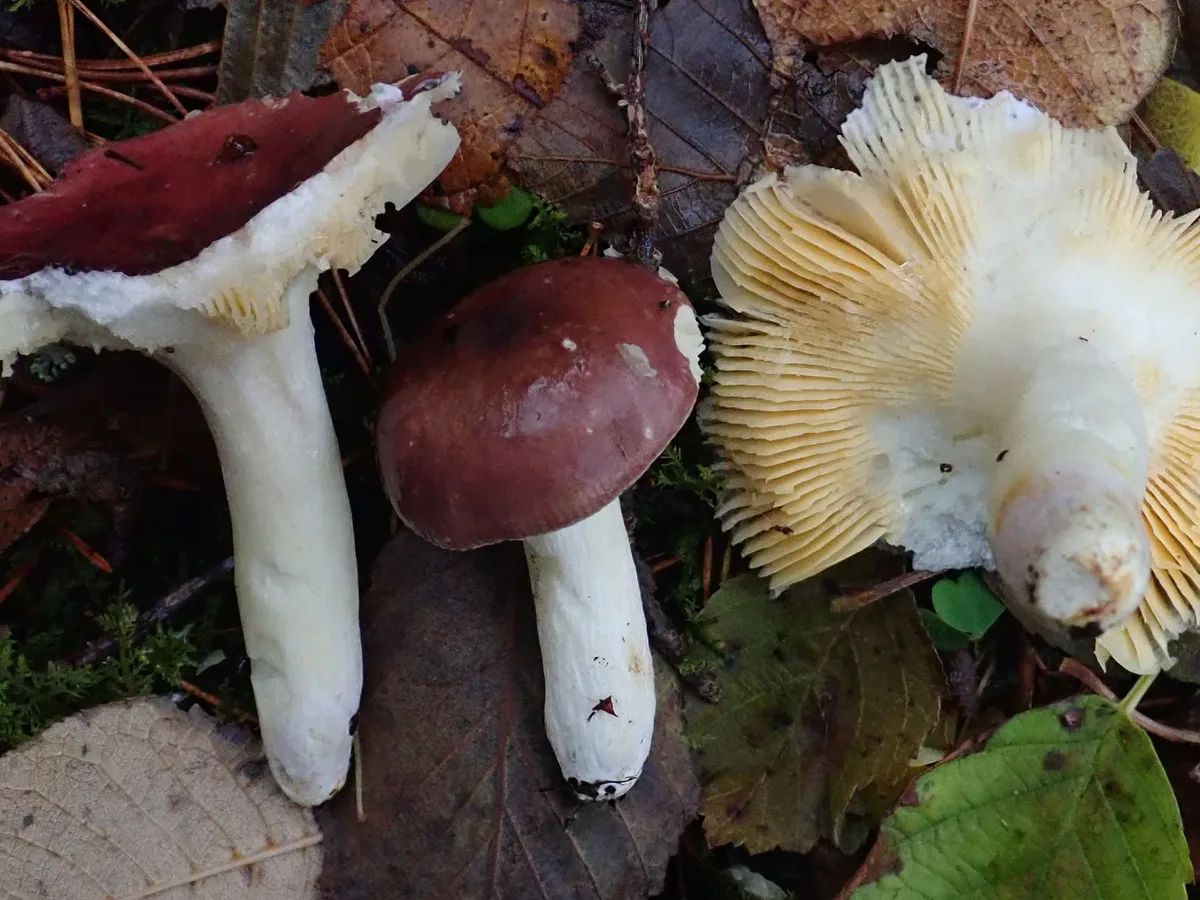
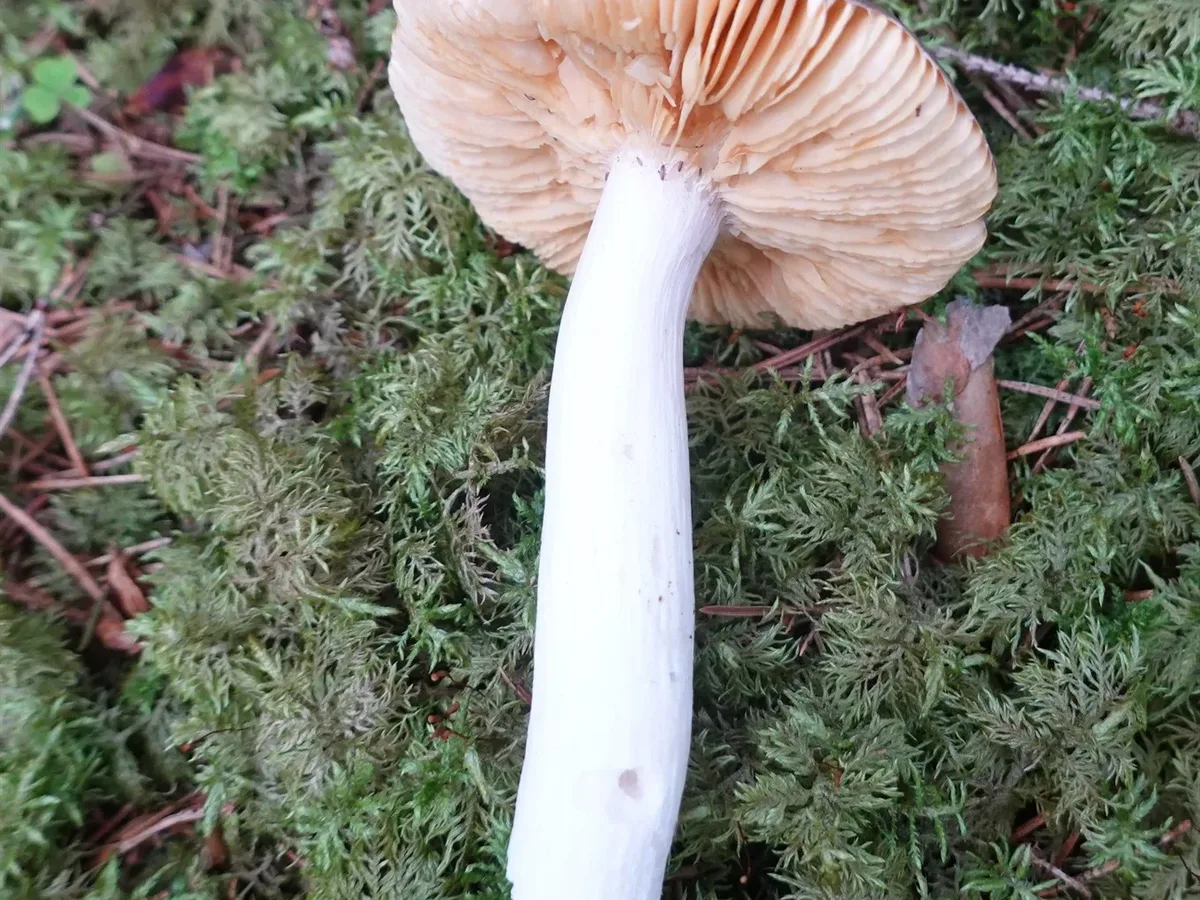
The gills are white to pale cream, adnate to the stem, moderately crowded, and brittle with the characteristic snap of all Russulas: that hallmark brittleness results from the large rounded cells (sphaerocysts) packed through the gill tissue.
The spore print is white to very pale cream.
Stem
The stem is white, solid, and noticeably firm for a Russula.
Flesh
Cut the flesh and it stays white throughout - no darkening, reddening, or staining of any kind.
Smell & taste
The taste is mild to very faintly acrid in some collections (never intensely hot or burning), and the smell is faint and unremarkable.
Where & when it grows
Habitat
Russula firmula is at home in the kind of boreal spruce forest where moss carpets the ground, bilberry and wood sorrel fill the gaps between trees, and feathery mosses soften every rock and root.
Across Scandinavia and central Europe it forms an ectomycorrhizal partnership almost exclusively with Norway spruce (Picea abies) - an intimate underground alliance in which fungal threads wrap the tree's roots and help it draw water and nutrients from the soil in exchange for sugars.
It also turns up in mixed spruce-birch and spruce-pine stands, and in subalpine spruce forest at elevation.
Unlike bog-specialist brittlegills, it does not need waterlogged ground, preferring moderately moist to well-drained forest soils.
Look for it on slopes and along forest tracks where the spruce canopy is intact and the moss and low ericaceous shrubs grow dense.
When
Russula firmula is a mid- to late-summer and autumn species across its boreal range, emerging from late July and peaking through August and September before the first frosts end fruiting in October.
It is part of the large flush of Russula species that characterises productive spruce forest at the height of the Scandinavian mushroom season.
In more southerly or higher-altitude montane localities the peak may shift into September and October.
How it grows
Fruitbodies appear singly or in small scattered groups among moss and needle litter under spruce.
Being mycorrhizal, this species does not cluster on wood or debris. Instead, each fruitbody is the surface expression of a hidden mycelial network threading through the soil and humus below.
Young buttons push up through the moss layer looking pale and convex; they expand fairly quickly in wet weather.
The firm flesh makes these fruitbodies more robust and longer-lived than many brittlegills, and they persist in reasonable condition for several days in cool moist weather before softening.
Flushes follow the standard late-summer trigger: moderate to heavy rain after a period of warmth, as soil temperatures ease down into the 8-15 degrees C range of the boreal autumn.
Fruiting conditions
Flushes after late-summer rain events when soil temperatures fall into the 8-15 degrees C range typical of Scandinavian boreal forest in August-September. Like other boreal Russula species it is sensitive to soil moisture; prolonged dry spells suppress fruiting. The firm flesh makes fruitbodies somewhat more persistent in cool, damp conditions than those of more fragile relatives.
Look-alikes
Russula firmula overlaps in colour with several other brittlegills, and the combination of dull violet cap, white gills, white spore print, and mild taste is needed to distinguish it reliably.
- Russula cyanoxantha (the charcoal burner) is a common edible Russula with a similar range of cap colours - olive-green through lilac, violet, and mixed tones - but is told apart by its uniquely flexible, non-brittle gills (they bend without snapping, unlike those of any other common Russula) and by its tendency to occur under a wider range of trees including oak and beech.
- Russula amethystina is another violet-toned spruce-forest Russula, closely related to R. firmula and sometimes treated as its sister species; it is similarly edible and very difficult to separate with certainty in the field without microscopic examination.
- Russula fragilis has a smaller, more fragile fruitbody, a cap that is often brighter pink to violet-pink, and - most importantly - an intensely hot, acrid taste. The acrid taste makes it inedible and causes gastrointestinal distress; distinguish from R. firmula by tasting (nibble and spit): R. fragilis burns, R. firmula does not.
- Russula queletii has a darker reddish-purple to wine-red cap often with greenish tones, intensely acrid flesh, and grows specifically under spruce; the burning taste immediately separates it.
- Cortinarius violaceus (violet webcap) shares the violet-purple colour and spruce-birch forest habitat but has fibrous (not chalky-brittle) flesh, rusty-brown gills and a rusty-brown spore print at maturity, and a cortina web visible in young specimens - it is inedible and potentially toxic, but the fibrous flesh versus the chalky snap of Russula is immediately diagnostic.
A closely related violet-toned spruce-forest Russula virtually indistinguishable from Russula firmula in the field. Both are mild-tasting, edible, and occur under Norway spruce in boreal forests. Reliable separation requires microscopic examination of spore ornamentation. Both are edible, so confusion carries no practical safety risk -- but field identification to species level is genuinely uncertain without microscopy.
Russula cyanoxantha shares a wide colour range including violet and lilac tones but has uniquely flexible, non-brittle gills that bend rather than snap -- the single most diagnostic feature distinguishing it from all other common Russulas. Also tends to have mixed olive-green and purple-lilac cap tones and occurs under a broad range of broadleaf and conifer trees. Edible and choice.
Smaller and more fragile, cap often brighter pink to violet-pink rather than dull greyish-lilac; most critically has a distinctly hot, acrid taste that persists on the tongue. White spore print. Causes gastrointestinal distress; a quick nibble-and-spit test immediately separates it from the mild R. firmula.
Grows under pine rather than spruce; intensely acrid to bitterish taste; stem flesh often flushed pale violet-lilac; spore print ochre-yellow (not white). All clearly different from R. firmula.
Cap is darker reddish-purple to wine-red, often with greenish tones; flesh intensely and persistently acrid-burning. Grows under spruce in similar habitat. The burning taste immediately separates it from R. firmula. Causes gastrointestinal upset if consumed.
Shares violet-purple colour and spruce-birch forest habitat, but has fibrous non-brittle flesh (tears like fabric rather than snapping like chalk), rusty-brown gills and spore print at maturity, and a cobweb cortina veil visible in young specimens. Inedible and potentially toxic. The fibrous flesh is the immediate distinguishing test.
In the kitchen
Picking & cleaning
Select young to middle-aged specimens that are firm throughout, with intact gills and no sign of softening, larval damage, or sliminess.
The taste test - nibbling a small piece of raw flesh and spitting it out - is essential and safe to perform: Russula firmula should be mild or at most faintly, briefly acrid. If the taste is intensely burning or persistently hot, do not collect.
- Cut cleanly at the stem base with a knife
- Inspect the cut surface (it should remain white with no colour change)
- Carry in a basket to prevent crushing the brittle flesh
Confirm the habitat - spruce forest - and look for the violet-to-lilac cap in combination with white gills and white spore print before consuming.
A spore print (made overnight on black paper) should be white to very pale cream.
Cooking
Russula firmula is an edible species of moderate quality - its mild taste and firm texture make it pleasant enough but not outstanding compared with choice forest mushrooms such as chanterelles or porcini.
The firm flesh holds up well to heat and does not become mushy quickly.
It can be:
- sauteed in butter with garlic and herbs as a straightforward forest mushroom side dish
- added to mixed forest mushroom soups and stews
- incorporated into omelettes and pasta dishes
In Scandinavia and Finland it is sometimes salted or pickled, a traditional preservation method for the milder Russula species.
The cap cuticle may be peeled (it separates easily) before cooking to reduce any residual slightly astringent character.
Blanching briefly in boiling water and discarding the water is an additional precaution sometimes recommended for mildly variable Russulas.
Not ideal for drying, as the brittle flesh crumbles easily.
Good to know
Russula firmula has no recorded toxicity and is regarded as edible in Scandinavian and central European mycological literature.
The mild taste - confirmed by a brief raw nibble - is the most important safety checkpoint: any Russula with a burning, intensely hot, or persistently acrid taste should be rejected regardless of cap colour.
The genus Russula contains several species that cause gastrointestinal illness (notably Russula emetica, Russula fragilis, Russula queletii) that can superficially resemble R. firmula by cap colour. Do not identify by colour alone.
Confirm:
- 1Dull violet to lilac-purple cap under spruce
- 2White gills
- 3White to pale cream spore print
- 4Mild taste
- 5White flesh that does not discolour when cut
If any character is uncertain or atypical, do not consume. Cook all Russula species thoroughly - none should be eaten raw in quantity.
A reference guide - never an edibility guarantee. When in doubt, leave it out.