Beech brittlegill
Russula fagineasyn. Russula romellii auct., Russula integra var. faginea
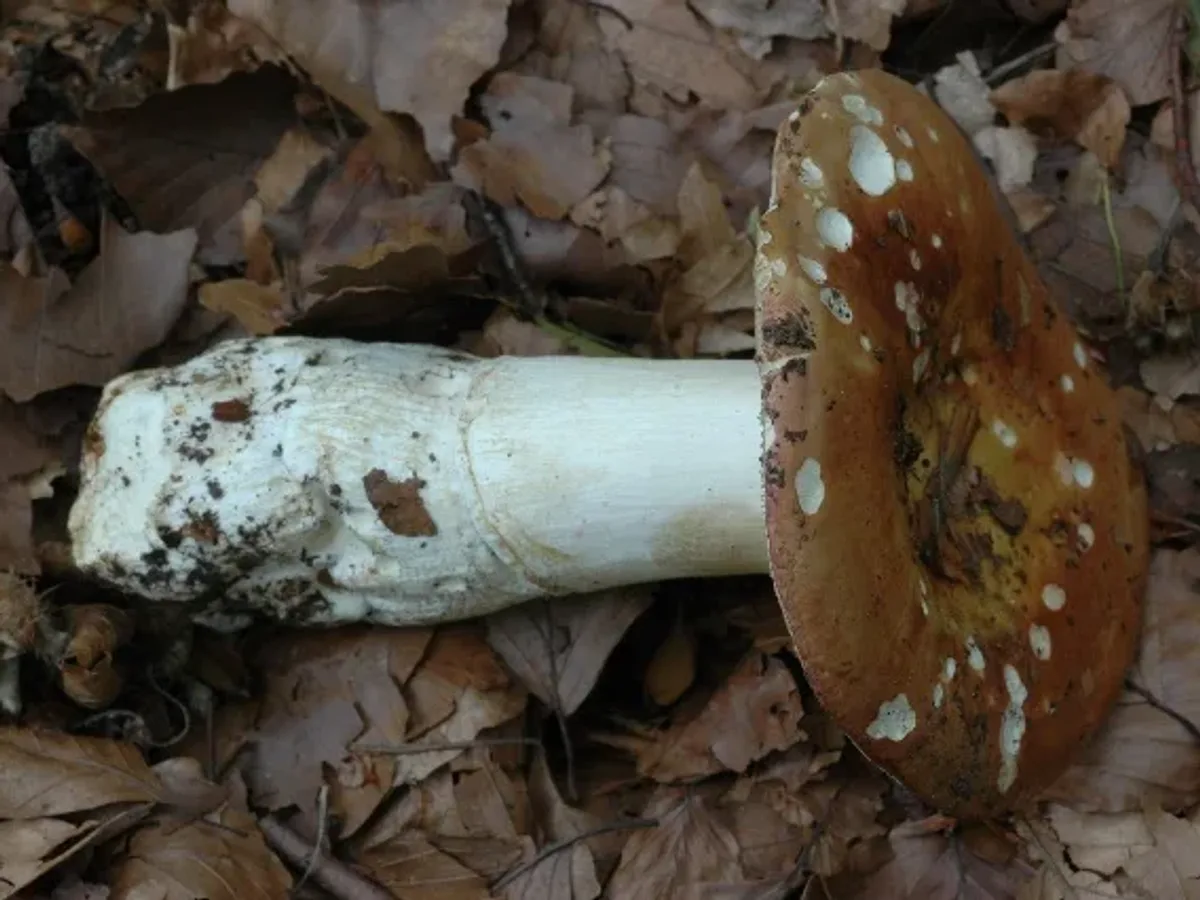 © Per Marstad (CC BY)
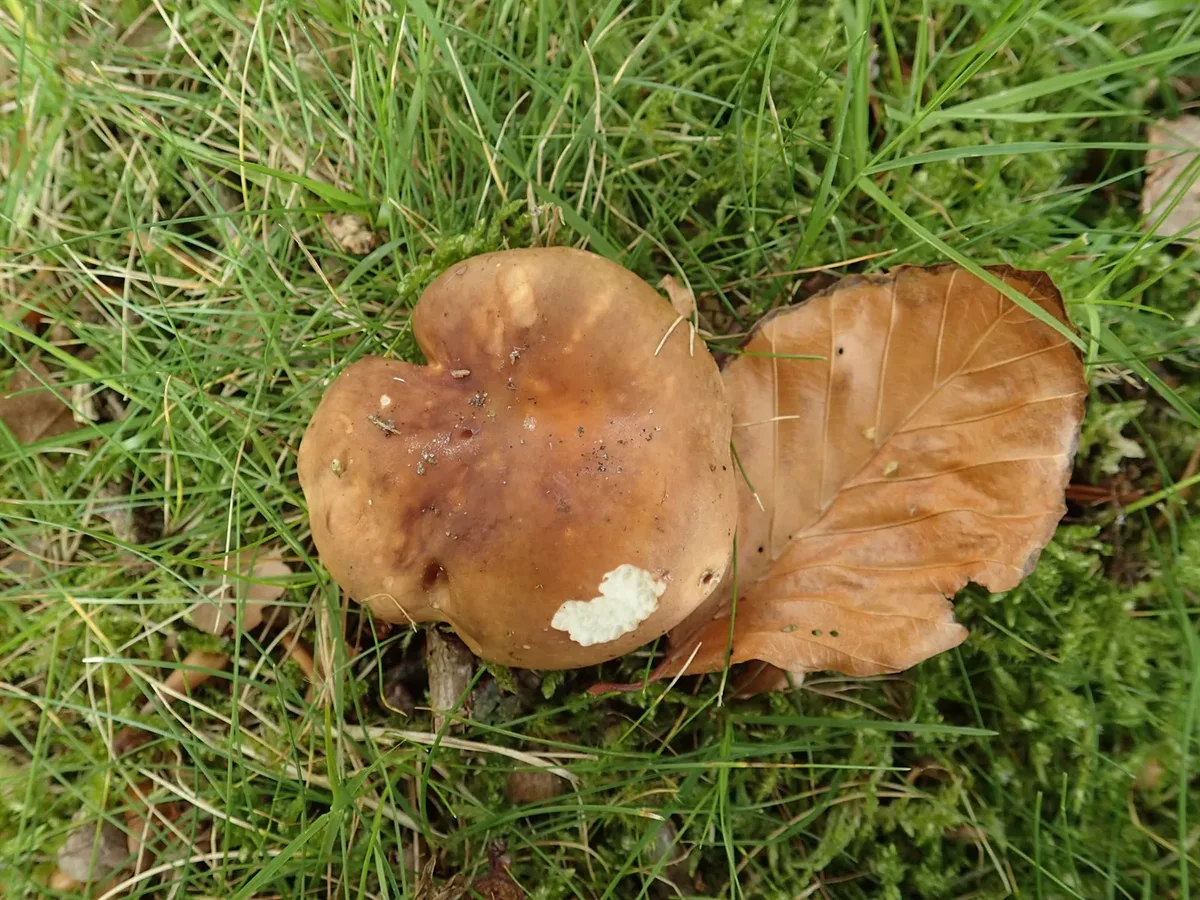 © Inger-Lise Fonneland (CC BY)
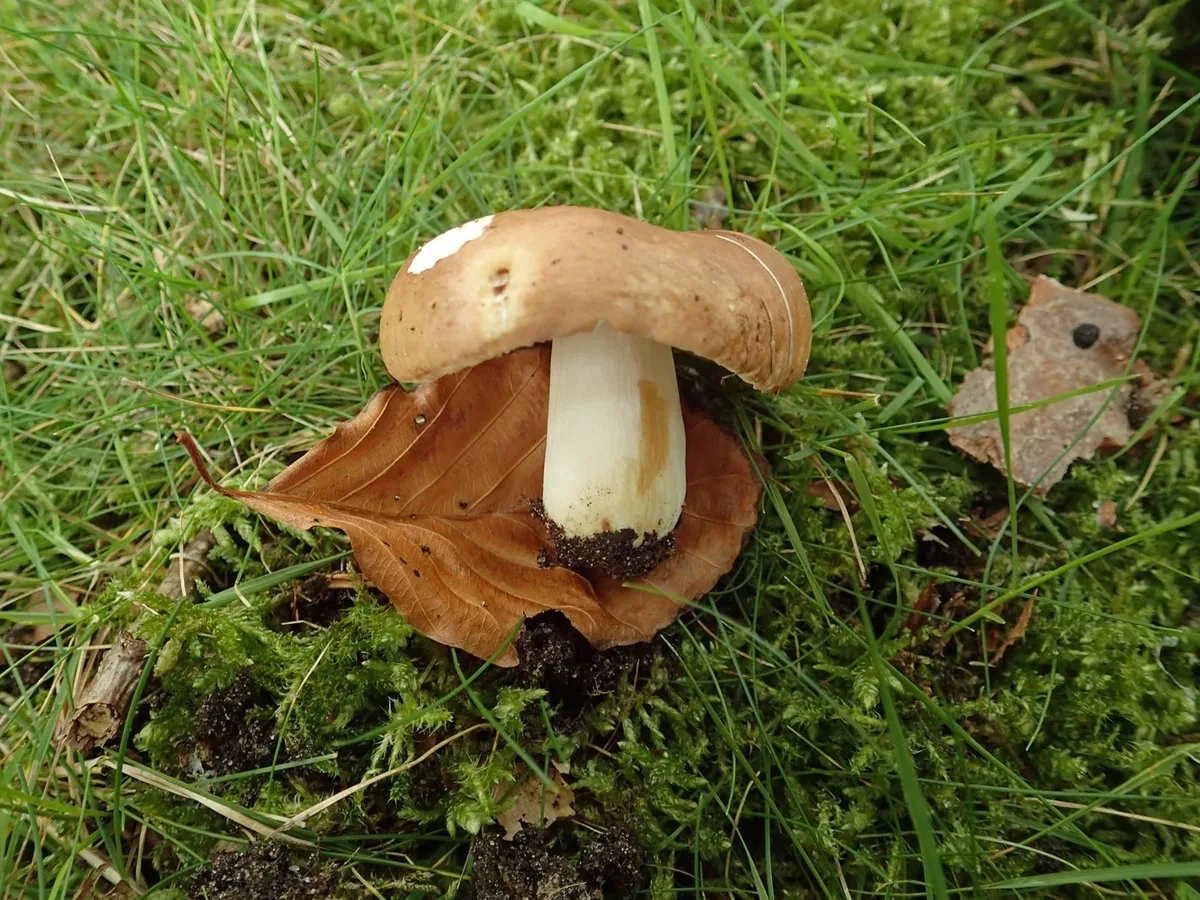 © Inger-Lise Fonneland (CC BY)
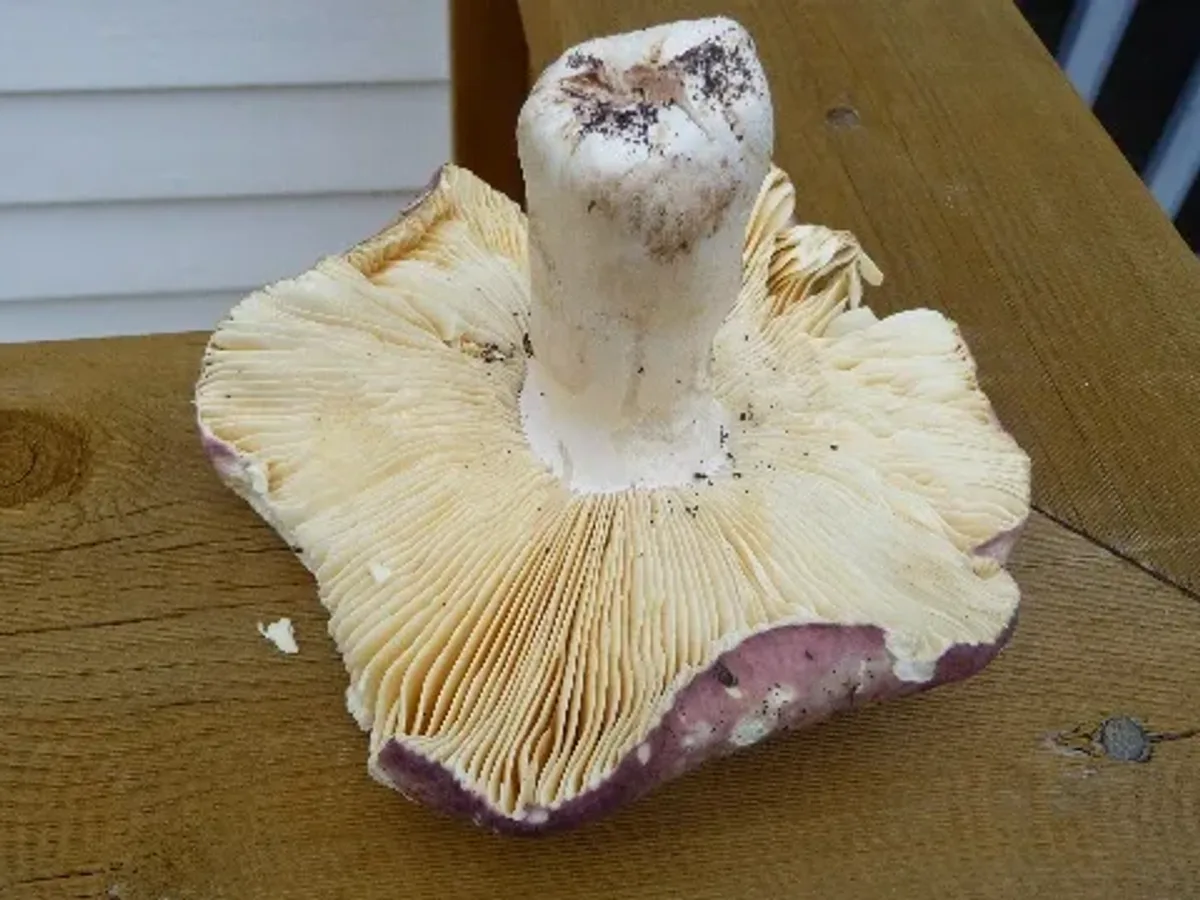 © Bjørn Eidhammer (CC BY)
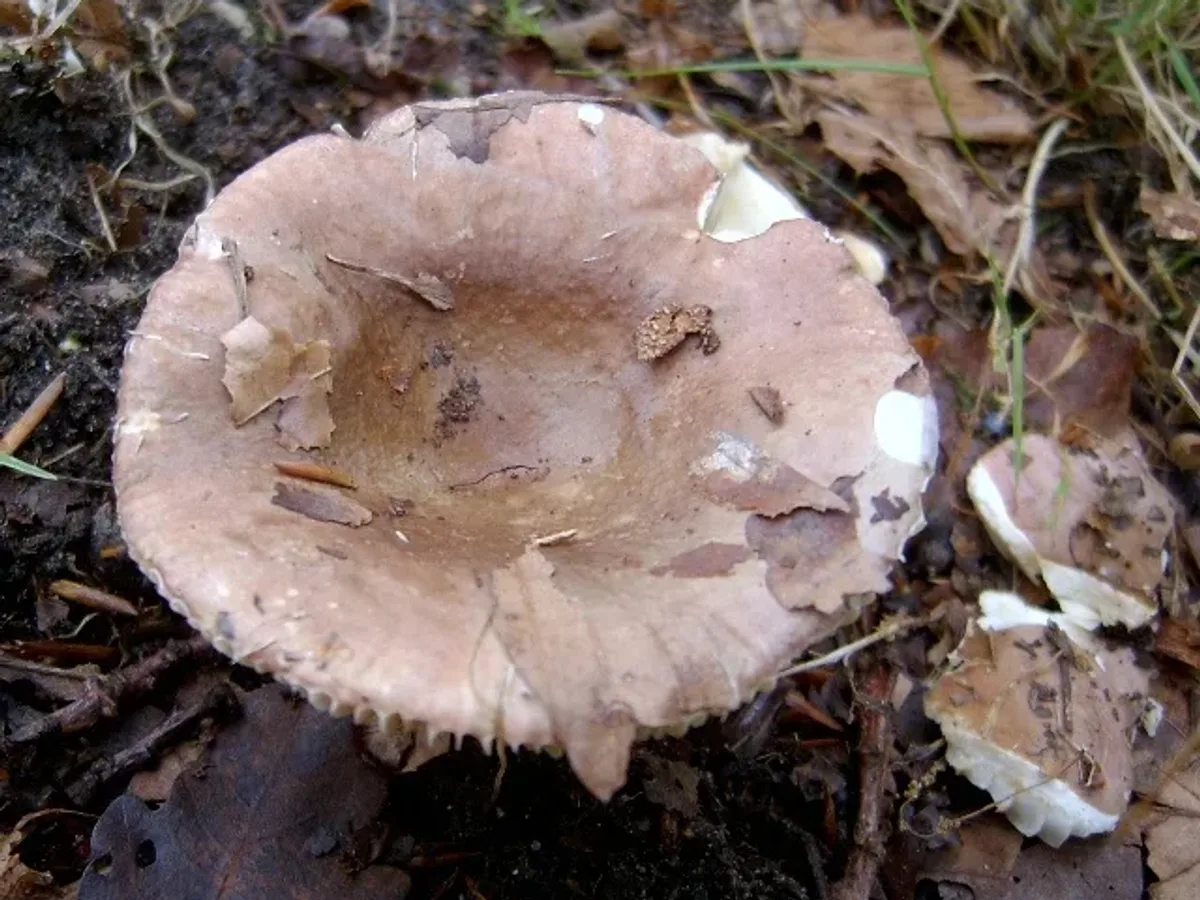 © Eva Weme (CC BY)
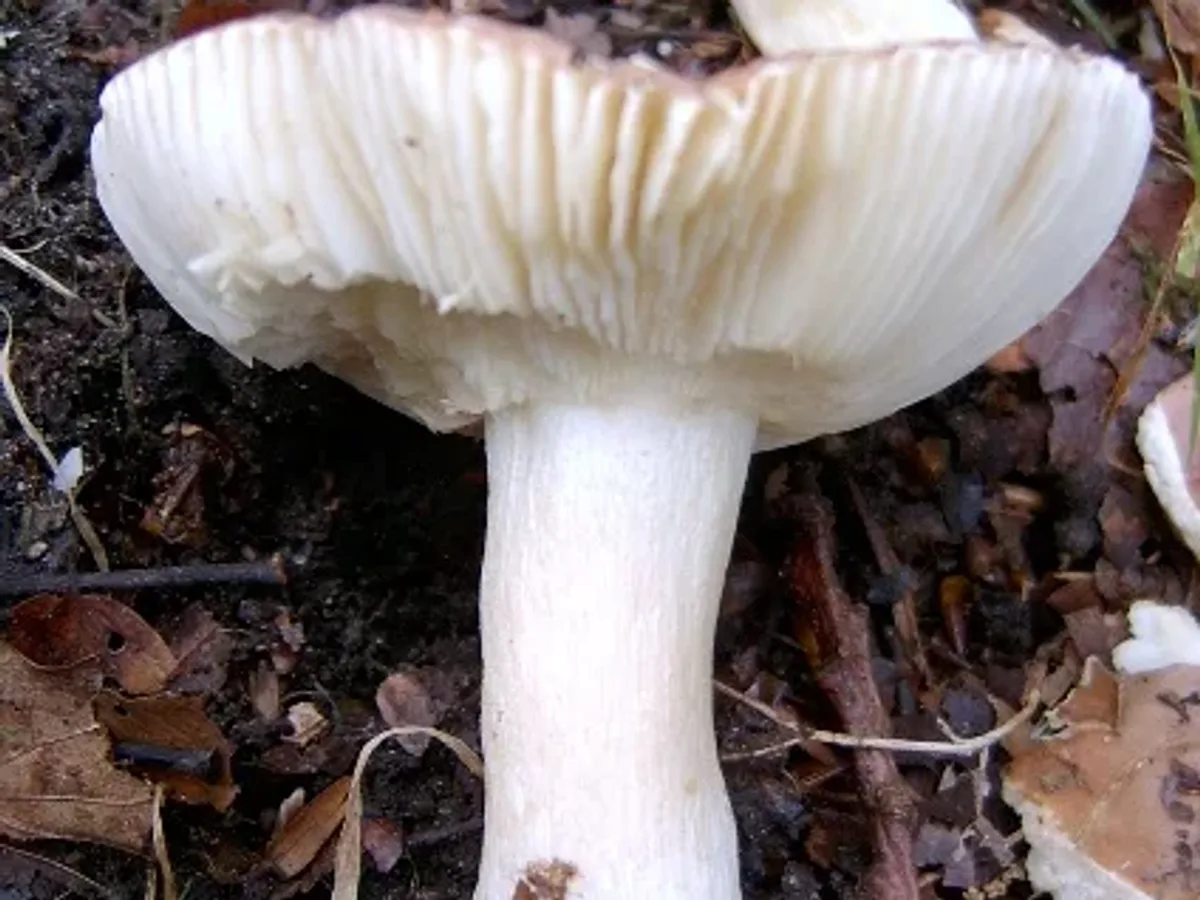 © Eva Weme (CC BY)
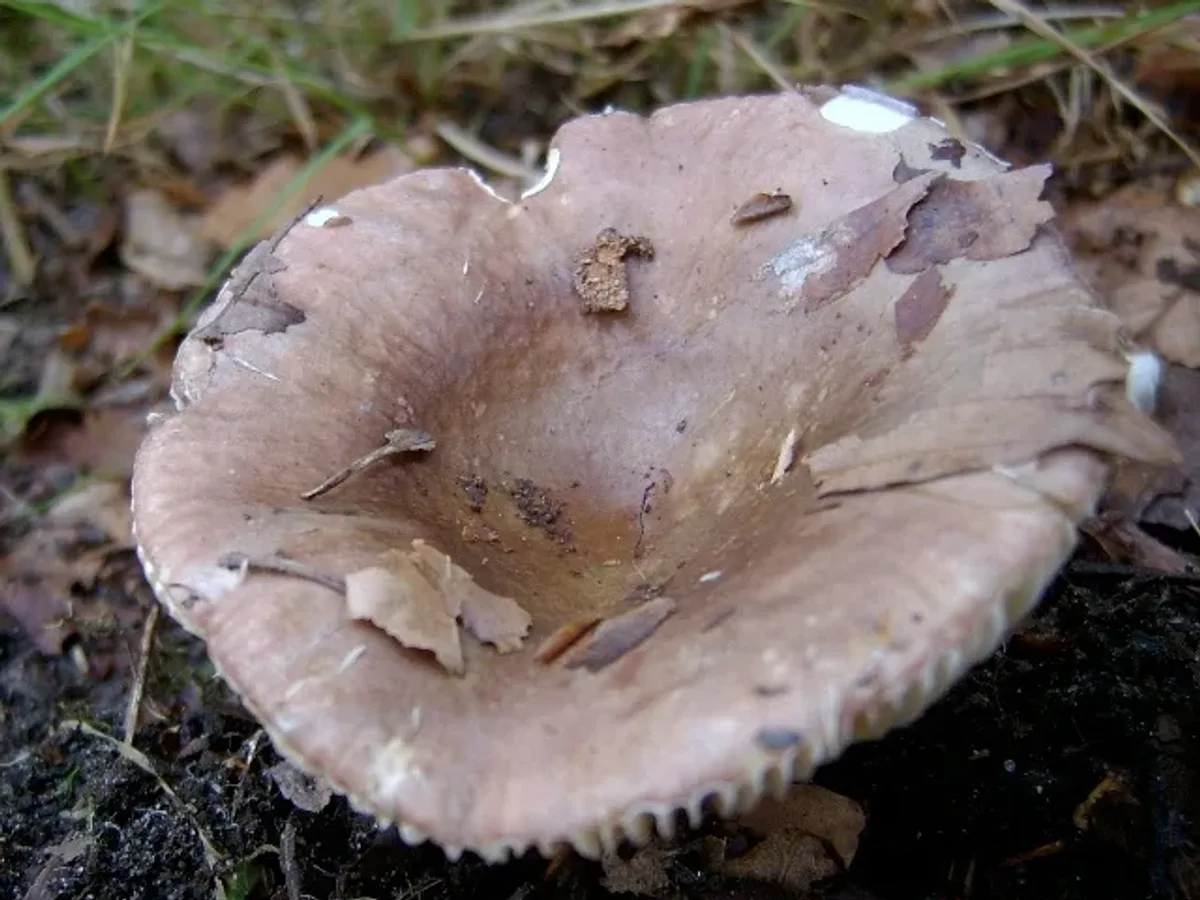 © Eva Weme (CC BY)© Per Marstad (CC BY)© Inger-Lise Fonneland (CC BY)
Good to eat, once you have identified it with certainty and cooked it through.
Never eat a mushroom you are not 100% sure of - check the look-alikes below, and always cook wild mushrooms.
How to recognise it
Russula faginea is a medium-sized beech-forest brittlegill with a mild, inoffensive character that sets it clearly apart from the acrid sickeners.
Cap
The cap (5-10 cm) is ochraceous-buff to honey-tan or pale brownish, sometimes with a faint olivaceous cast, and can bleach to a near-cream in older or dried specimens.
The surface is smooth and slightly greasy in wet weather, and the cuticle peels easily from the margin inward by up to half the radius, revealing paler flesh beneath.
Gills
The gills are cream to pale cream-ochre, brittle, and moderately crowded; they do not weep any latex when damaged.
Stem
The stem is white, stout, and firm, showing no colour change when cut or handled - an important contrast to the yellow-ochre-staining Russula xerampelina.
Flesh
Flesh is white, firm, and crumbles in the distinctively chalky Russula way rather than tearing into fibres. Pulling a piece apart produces a clean snap with no stringy threads, which immediately separates every Russula from all Amanita, Clitocybe, and fibrous-stemmed lookalikes.
Smell & taste
The taste is mild on the raw palate - a small piece chewed and spat out gives no burn or sustained acridness, confirming edibility by the standard Russula taste test.
There is no strong odour. The spore print is pale cream to very pale ochre.
Where & when it grows
Habitat
This species grows exclusively with beech (Fagus sylvatica) and is one of the most host-specific russulas in temperate Europe. It will not be found far from mature beech trees.
Look for it on the deep leaf-litter floor of old beech stands, particularly on calcareous and moderately acidic soils where the root network is dense.
In the right habitat - old beech forest from lowland to montane - it can be locally common, appearing singly or in small scattered groups across the forest floor.
It shares its habitat with a range of other mycorrhizal species including Amanita phalloides, which also favours beech woodland: pickers must always visually check the base of each fruitbody for a volva.
When
Russula faginea fruits from mid-summer through autumn, reliably peaking in August-October across central and western Europe.
The trigger is warm summer weather followed by adequate rainfall; soil temperature in the 10-18 °C range is optimal.
In lowland beech forests of Britain and Atlantic France the first fruitbodies can appear as early as July. In montane beech stands of the Alps and Carpathians the season compresses into August-September.
Unlike some late-autumn species it does not persist well into November.
How it grows
Fruitbodies emerge singly or in small, loosely scattered groups across the beech leaf-litter floor. They do not grow in dense clusters or on wood.
As a mycorrhizal species, Russula faginea has been quietly threading its mycelium through the roots of its host trees for years before a fruitbody ever appears - the mushrooms you see are just the visible tip of a long partnership.
After a rain trigger, individual fruitbodies surface at different points across the forest patch over several days to weeks, rather than all at once, as the network responds in its own time.
Young caps are convex and tightly closed; they expand and flatten as they mature over 5-10 days.
Fruiting conditions
Flushes reliably after moderate summer or early-autumn rainfall (at least 20 mm over two weeks) when soil temperature is in the 10-18 °C band. As a mycorrhizal beech-forest species, fruiting follows the typical broadleaf-forest flush lag of 6-14 days post-rain. Drought stress inhibits fruiting even when temperature is suitable.
Look-alikes
The greatest danger in beech woodland is Amanita phalloides, the death cap, which can have a pale greenish-yellow, buff, or even nearly white cap that may superficially resemble a pale Russula at a glance, especially in button stage.
The differences are absolute. Amanita phalloides shows:
- A ring (skirt) on the upper stem.
- A volva (cup or sheath) buried at or just below soil level at the stem base.
- A faintly sickly-sweet smell in age.
- Stem flesh that is fibrous and pulls apart into threads.
- Gills that are white and free from the stem.
A Russula has no ring, no volva, and chalky-brittle flesh that snaps cleanly. Always dig up the full base of any pale mushroom in beech forest before picking.
Within the genus Russula, pale buff-capped beech-forest species can be confused with these, but the taste test resolves them:
- Russula delica - white, large, decurrent gills, acrid variants.
- Russula foetens - strongly fetid smell, deeply grooved margin, very acrid.
- Russula ochroleuca - more uniformly ochre-yellow, mildly acrid.
Russula faginea's mild taste confirms it belongs to the safe edible group of mild russulas.
Amanita phalloides frequently grows alongside Russula faginea in beech forest and can have a pale greenish-buff or yellowish-white cap similar in colour to a pale brittlegill. The death cap always bears a ring (skirt) on the upper stem and a volva (cup-like sheath) at the stem base - both absent in all Russula species. The stem flesh is fibrous and pulls apart into threads; Russula flesh snaps and crumbles. Amanita gills are free (not attached to the stem); Russula gills are attached. The death cap has a faint sickly-sweet smell in age. Never pick a mushroom from beech woodland without physically digging up and examining the full stem base for a volva.
Russula ochroleuca has a more uniformly bright ochre-yellow cap compared to the paler, often more buffed tones of Russula faginea, and a mildly to distinctly acrid taste (varies). It is not strictly beech-associated and occurs widely under conifers and broadleaves. The raw taste test separates them: if acrid, set aside.
White, funnel-shaped milkcap found in beech woodland. Immediately distinguished by the copious white latex exuded when gills or flesh are cut - Russula faginea produces no latex whatsoever. Also has crowded, decurrent gills and a strongly acrid, peppery taste.
Russula foetens has a very strongly fetid, rancid-oil smell evident from a distance, a deeply ridged and grooved cap margin, and a sharply acrid-hot taste. Despite the superficially similar buff-ochre cap colour, smell and taste immediately distinguish it. Not considered edible.
Russula delica is white to pale cream throughout (cap, gills, stem), typically larger and more robust, with gills that run slightly down the stem. Some variants are mildly acrid. Grows in both coniferous and broadleaf forest. The taste test and overall whiter, more funnel-shaped form distinguish it from the buffier, flatter Russula faginea.
In the kitchen
Picking & cleaning
Select young to middle-aged, firm specimens.
Before picking, always unearth the full stem base and inspect it carefully: a volva (cup-like sheath) at the base indicates an Amanita species, which must be immediately set aside - this check is non-negotiable in beech woodland where Amanita phalloides grows alongside Russula.
Confirm two tests:
- Snap test: flesh crumbles and snaps rather than pulling into fibres.
- Taste test: chew raw flesh, no persistent acridness.
If both tests pass and there is no ring on the stem and no volva at the base, identification as a mild edible Russula is reliable.
Cut cleanly at the stem base and avoid collecting very old, soft, or water-logged specimens.
Cooking
Once correctly identified, Russula faginea makes for a pleasant, unfussy meal. The firm, brittle flesh holds its shape well in moderate heat.
Sauté in butter or olive oil over medium-high heat until golden, with salt, pepper, and herbs. It pairs naturally with pasta, risotto, egg dishes, and poultry.
The flavour is mild and clean rather than assertive, so it rewards combination with more aromatic mushrooms or bold seasonings. It works well in mixed mushroom soups and sauces too.
Always cook wild Russula species thoroughly - avoid eating them raw.
Good to know
Russula faginea is considered edible when correctly identified. However, the context of beech woodland demands heightened vigilance because Amanita phalloides - the death cap and one of the world's deadliest mushrooms - grows in exactly the same habitat and occasionally on the same forest floor patch.
No amount of cooking destroys amatoxins; even a small piece of death cap can be fatal.
Before consuming any pale-capped mushroom from beech forest, confirm:
- 1No ring on the stem.
- 2No volva at the stem base (the full base must be dug up and examined).
- 3Flesh crumbles and snaps rather than pulling into threads.
- 4No milky latex exudes from gills.
- 5Taste mild and not acrid.
All five must be confirmed. If any one feature is absent or uncertain, discard the specimen.
A reference guide - never an edibility guarantee. When in doubt, leave it out.