The Sickener
Russula emeticasyn. Agaricus emeticus Schaeff., Agaricus russula Scop., Amanita rubra Lam., Russula rubra (Lam.) Fr., Russula emetica var. emetica
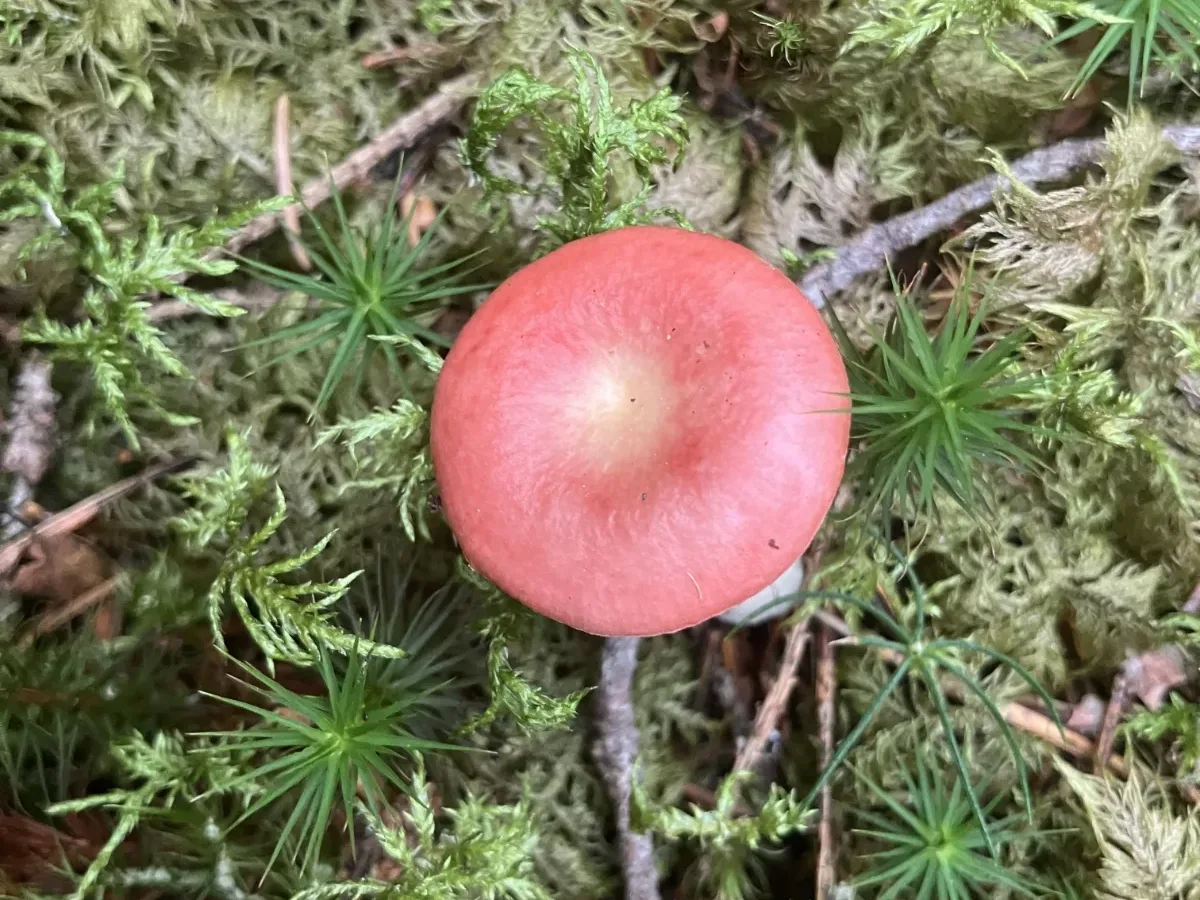 © Jonas Heggedal (CC BY)
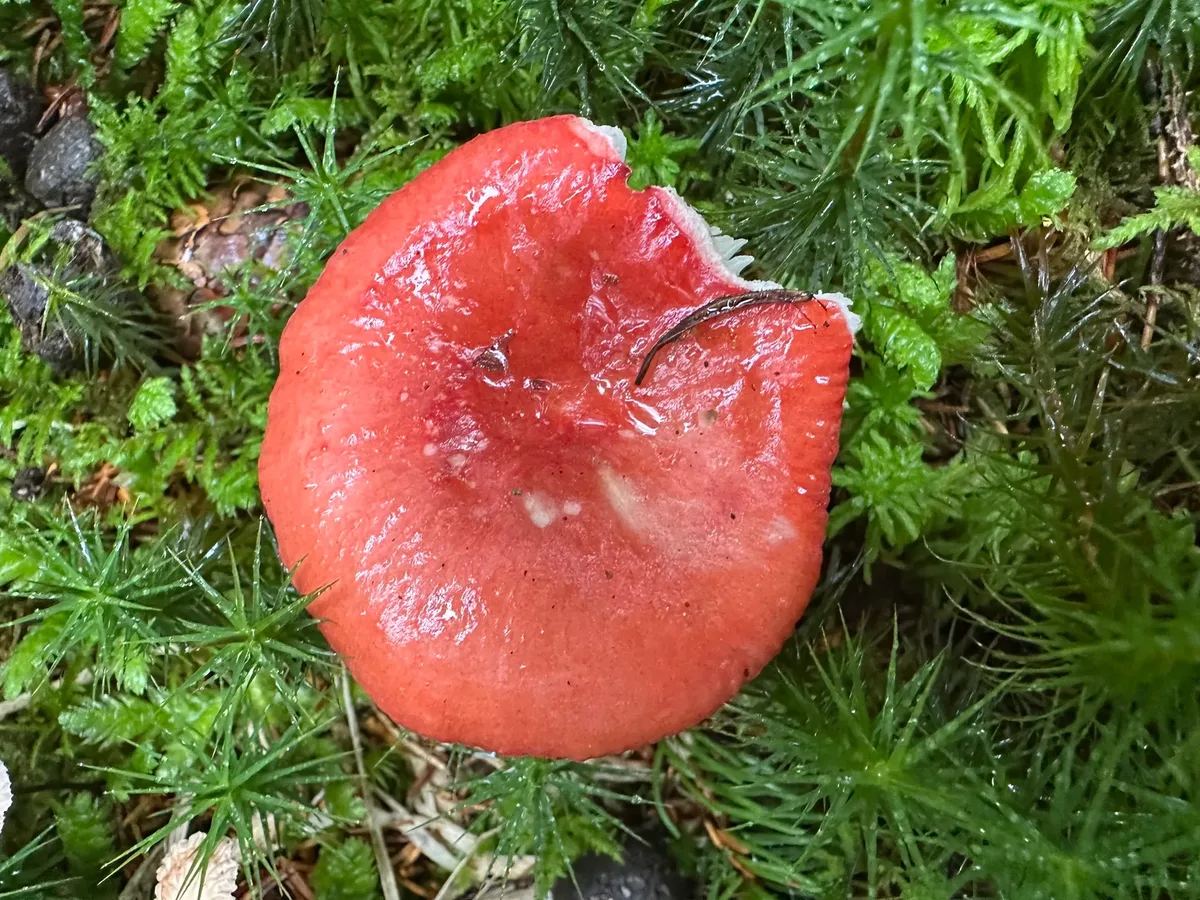 © Katrin Simon (CC BY)
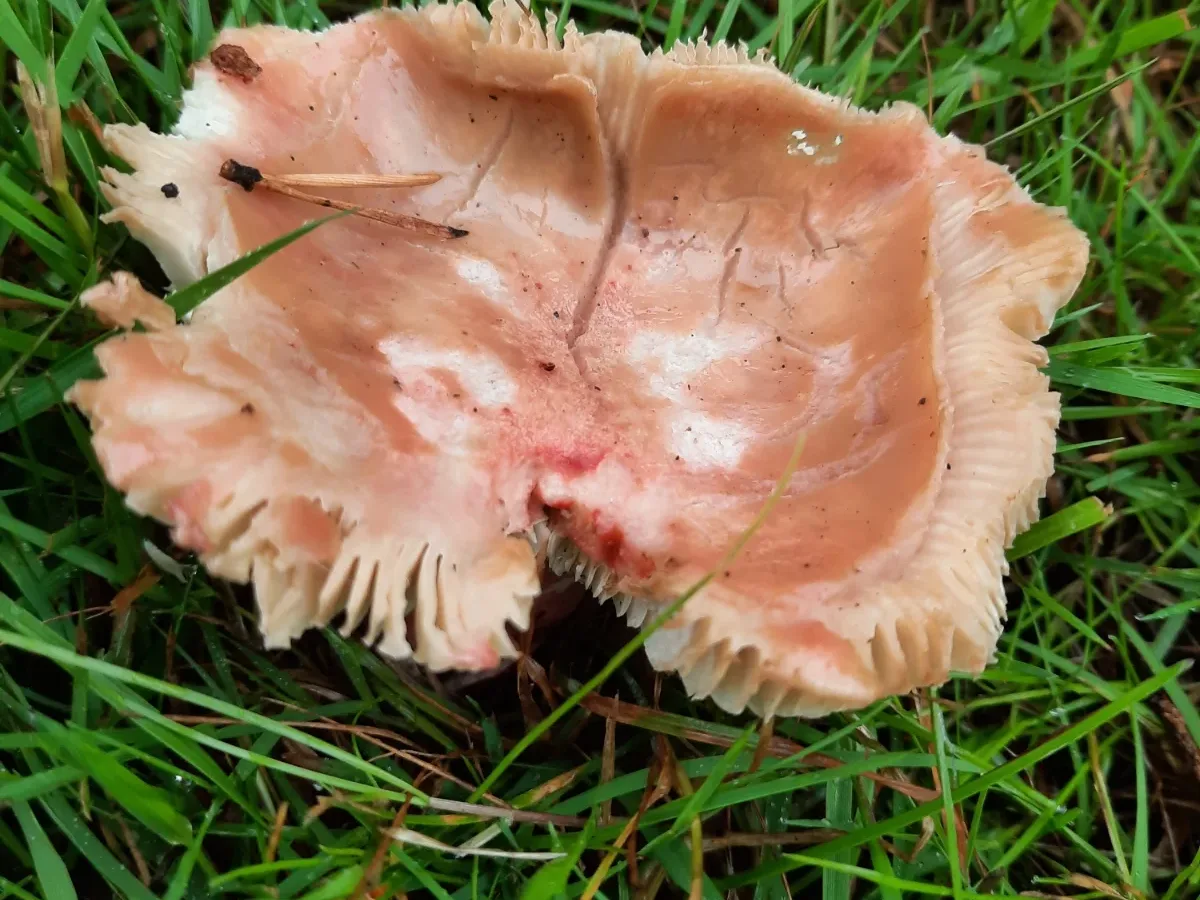 © Tessa Frenay (CC BY)
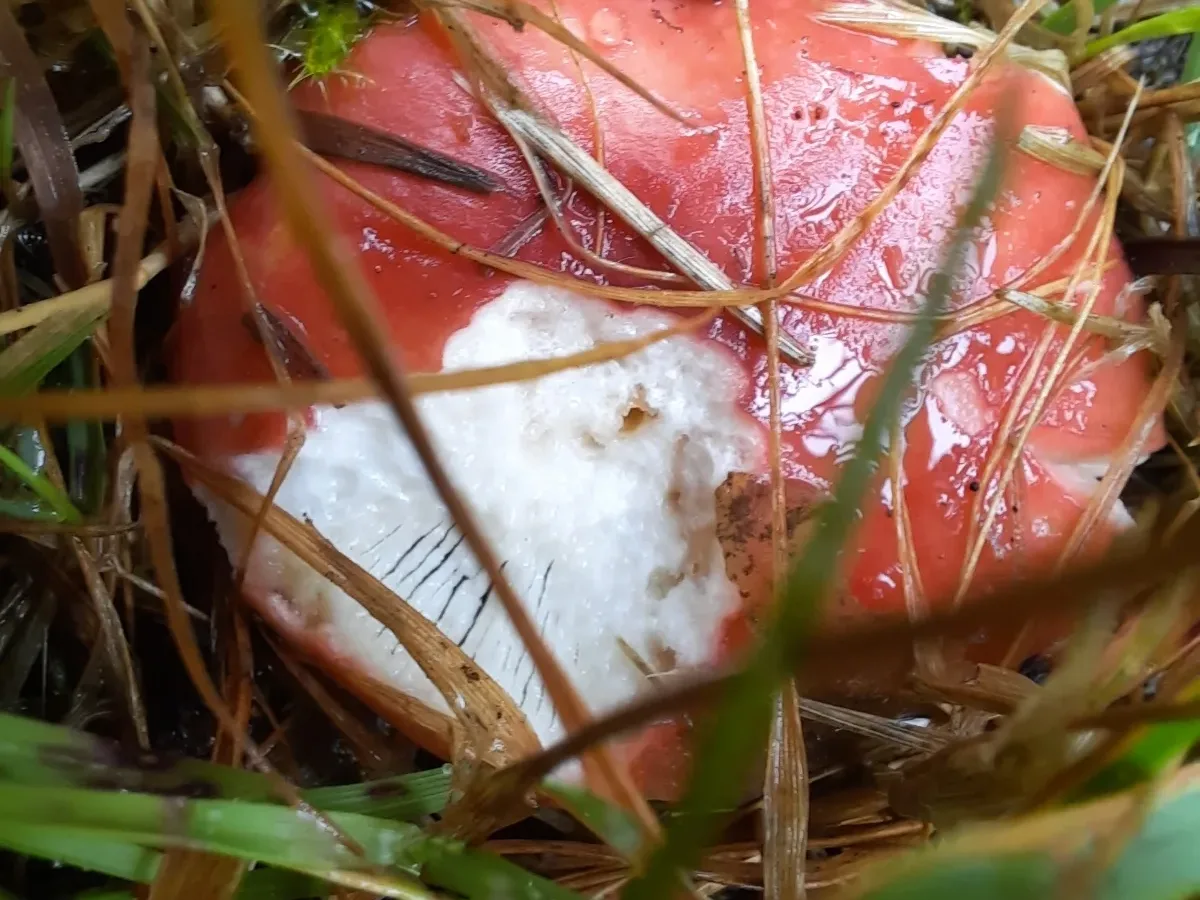 © Tessa Frenay (CC BY)
 © Katrin Simon (CC BY)
 © Katrin Simon (CC BY)
 © Ulrik Andreassen (CC BY)
 © Ulrik Andreassen (CC BY)© Jonas Heggedal (CC BY)© Katrin Simon (CC BY)
Edible only with the right preparation - or safe for some people but not others. Learn the caveats first.
How to recognise it
The Sickener earns its place among the most striking of the red brittlegills.
Cap
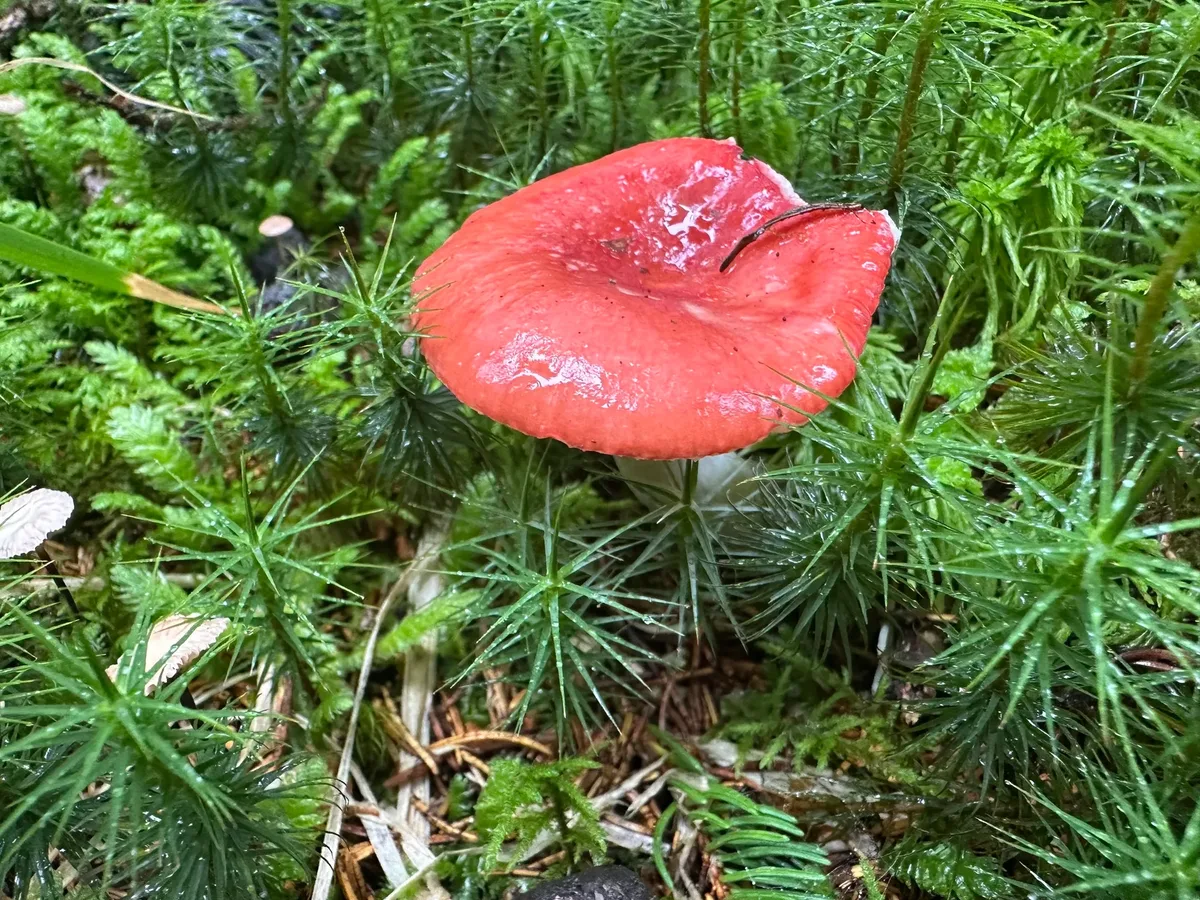
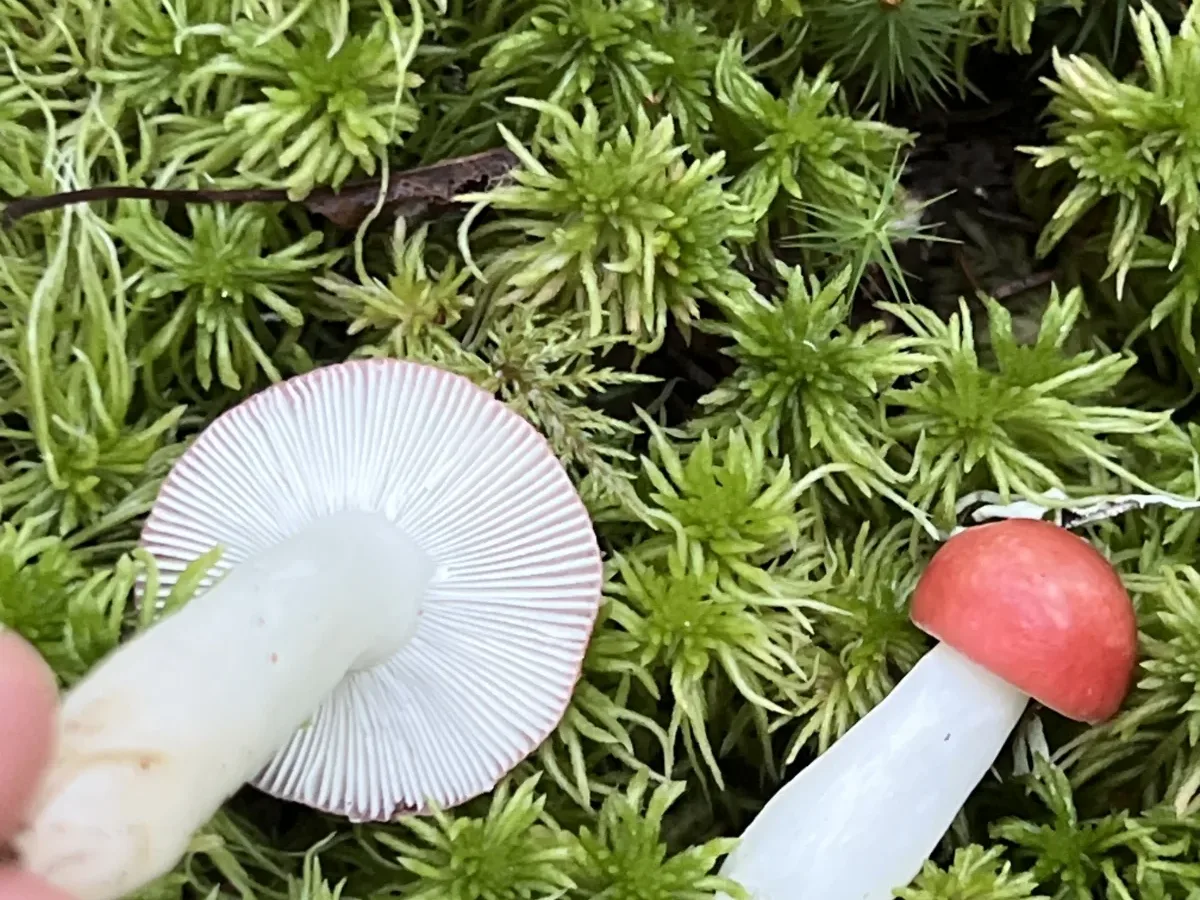
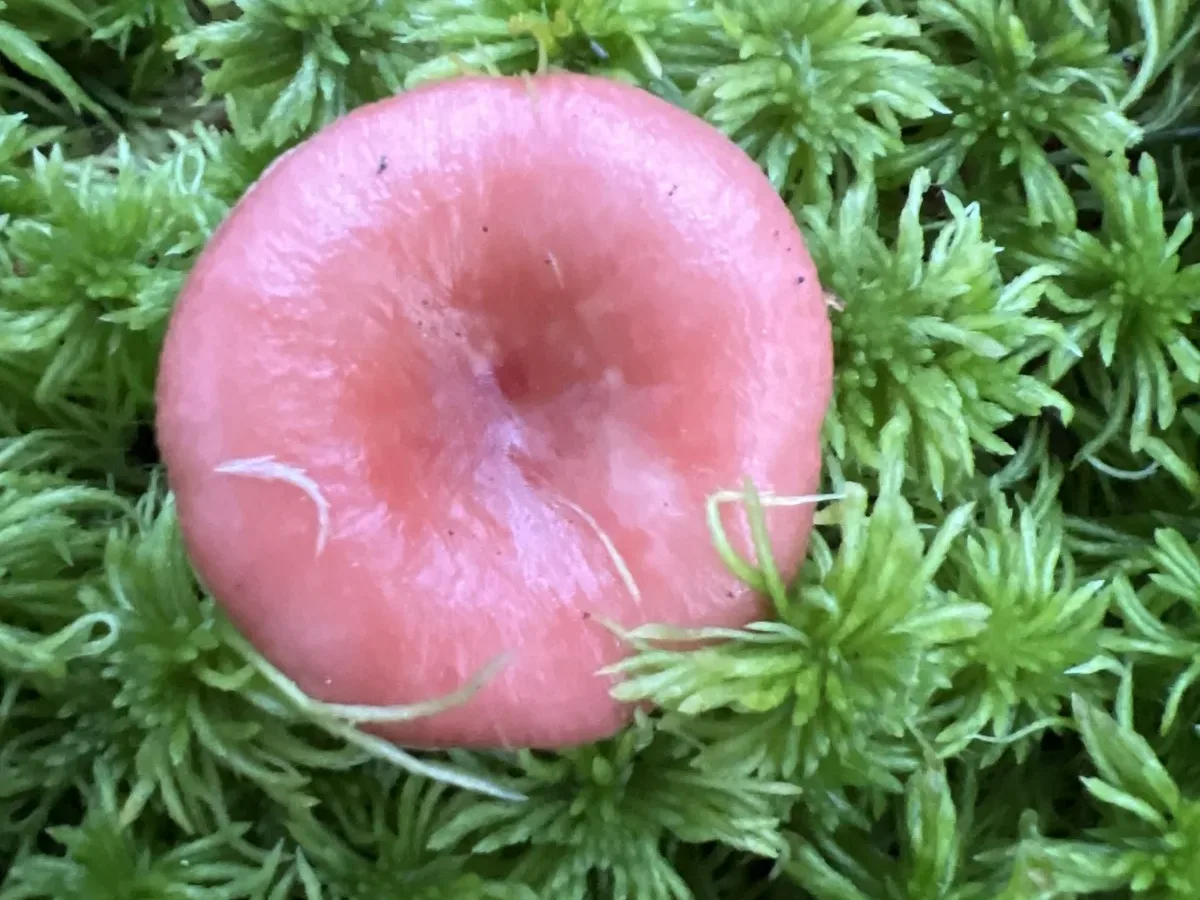
The cap is 2.5-9 cm across, opening from a neat hemisphere through convex to flat, and finally becoming shallowly depressed or even funnel-shaped in older specimens.
Its colour is a vivid, almost lacquered scarlet to cherry- or blood-red - genuinely eye-catching in a dark spruce bog. Rain can leach patches to pink or pale cream, so colour alone is never a safe guide.
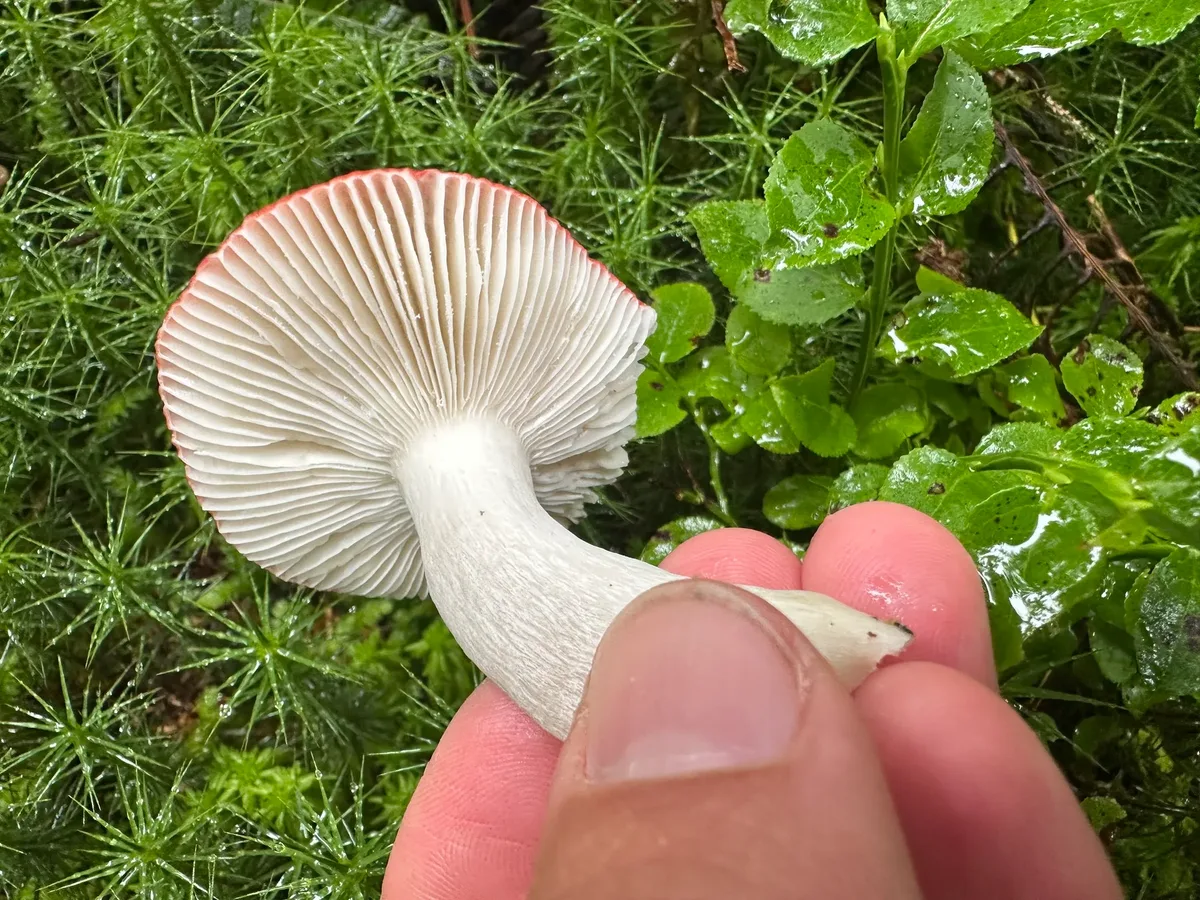
The surface is smooth and viscid when wet, shiny when dry, and the brilliant red skin peels away with unusual ease, often right to the centre, revealing the white-to-faintly-pink flesh beneath.
The margin develops fine grooves (tuberculate striations) as the mushroom matures.
Gills
The gills underneath are pure white to barely cream, moderately spaced, brittle and crumbly to the touch, and run up to or just short of the stem.
Stem
The stem is white, brittle and chalky, 3-9 cm long, often becoming soft or hollow with age.
Flesh
As with all Russula, the flesh snaps cleanly like a stick of chalk rather than tearing into fibres.
Spore print white.
Why it's dangerous
Poisonings are unpleasant but self-limiting. Symptoms usually settle on their own once the offending material has been expelled, generally within a few hours to a day.
The main practical risks are dehydration from heavy vomiting and diarrhoea, which is more serious in children, the elderly and the frail.
Keep the casualty hydrated, and seek medical advice if:
- symptoms are severe or prolonged
- a large amount was eaten
- there is any doubt about the species
A dangerous early-onset look-alike can never be entirely ruled out without firm identification.
Toxin
The exact toxins of Russula emetica are not fully characterised, but are believed to be heat-sensitive sesquiterpene/sesquiterpenoid compounds (such as lactarorufin A and related furan derivatives). They act as direct irritants of the digestive tract, similar to those in acrid Lactarius milkcaps and in Russula sardonia.
Older literature attributing the poisoning to muscarine in this species is now considered unreliable. The dominant effect is local gastrointestinal irritation rather than systemic muscarinic poisoning.
Symptoms
Symptoms are almost entirely gastrointestinal:
- nausea
- repeated vomiting
- watery diarrhoea
- colicky abdominal cramps
Onset is typically rapid, usually within about 30 minutes to 3 hours of eating the mushroom. This places it firmly in the early-onset (and therefore generally non-lethal) category of mushroom poisonings.
Staying safe
Russula emetica is poisonous and earns its name: even a modest portion of raw or undercooked caps reliably triggers violent gastrointestinal upset.
The reassuring point is that it is not deadly, and full recovery is the norm.
The acrid taste is an excellent, conservative field signal: in the Russula and Lactarius genera, a fiercely peppery taste flags a mushroom that should not be eaten.
As always:
- never rely on a single feature
- never eat any wild mushroom you are not completely sure of
- keep all wild fungi away from children and pets
Where & when it grows
Habitat
Look for The Sickener on the ground in damp coniferous and mixed woodland, where it lives in a mycorrhizal partnership with conifers, especially pine and spruce.
It has a strong preference for acidic, wet ground, and is one of the classic mushrooms of Sphagnum bogs, peaty hollows and boggy forest margins - frequently pushing up directly through wet moss.
It is widespread and often abundant across the temperate and boreal Northern Hemisphere, from northern and central Europe across to Asia and through much of North America.
When
This is a summer-to-autumn species. The first caps appear from mid or late summer once the ground is wet, and fruiting builds to a peak between late August and October.
It is among the earlier red brittlegills to appear in a wet season.
In mild, oceanic climates a few fruit bodies may persist into November. In colder continental and boreal regions the season closes abruptly with the first sharp frosts.
How it grows
Russula emetica is an ectomycorrhizal symbiont, exchanging soil nutrients with conifer roots rather than rotting wood, so it fruits on the ground rather than on trunks.
Fruit bodies are typically scattered or in small loose groups rather than dense clusters, emerging within days of soaking rain when soils are warm but cooling.
Boggy, Sphagnum-rich, acidic ground is the prime trigger, and the same mossy hollows tend to produce caps year after year.
Fruiting conditions
Triggered by soaking rain on acidic, Sphagnum-rich conifer ground as soils cool from late summer into autumn; flushes appear within roughly one to two weeks of significant rainfall.
Look-alikes
Several red brittlegills look almost identical and are separated mainly by habitat, cap behaviour and microscopy.
The Beechwood Sickener (Russula nobilis, syn. R. mairei) is the closest twin, but:
- grows with beech
- keeps a firmer, more convex cap that does not become funnel-shaped
- peels its skin only about a third of the way
- often smells faintly of coconut
It is likewise acrid and poisonous, so it is no safer to eat.
Other acrid red species are likewise sharply peppery:
- Russula sardonia (with conifers, yellowish gills and stem often flushed purple)
- the variable Russula sanguinea / R. silvicola group
Crucially, several mild-tasting, edible red brittlegills look similar from above. The difference is revealed only by the taste test, since the edible ones are mild and nutty while the sickeners are acrid.
No red Russula is closely confusable with a genuinely deadly mushroom for anyone who checks the brittlegill characters.
But red-capped Amanita species (such as the fly agaric, Amanita muscaria) are sometimes mistaken from a distance by beginners. Those have:
- a ring on the stem
- a swollen volva-bearing base
- white warts on the cap
- a soft fibrous (non-brittle) stem
None of which a brittlegill has.
Grows with beech rather than conifers; cap stays firmer and convex (never funnel-shaped), skin peels only about a third of the way, often smells of coconut. Also acrid and poisonous, so not a safer option.
Blood-red cap with pine, but cap skin peels poorly, stem frequently flushed pink, and gills more crowded and decurrent. Acrid and inedible; not a deadly confusion.
Look similar from above but taste mild and nutty rather than acrid. The taste test (touch, hold, spit out) is the reliable separator; a searing burn means a sickener, not an edible.
Red-capped but has white cap warts, a ring on the stem, and a swollen volva-bearing base, plus a soft fibrous (non-brittle) stem. A brittlegill has none of these and snaps like chalk.
With conifers; cap dark red to purplish, gills and stem often flushed yellow or purple, and the gills turn pink when touched with ammonia. Also fiercely acrid and inedible.
A reference guide - never an edibility guarantee. When in doubt, leave it out.