Crowded Brittlegill
Russula densifoliasyn. Russula densifolia Secr. ex Gillet, Agaricus densifolia (Secr. ex Gillet) Sacc.
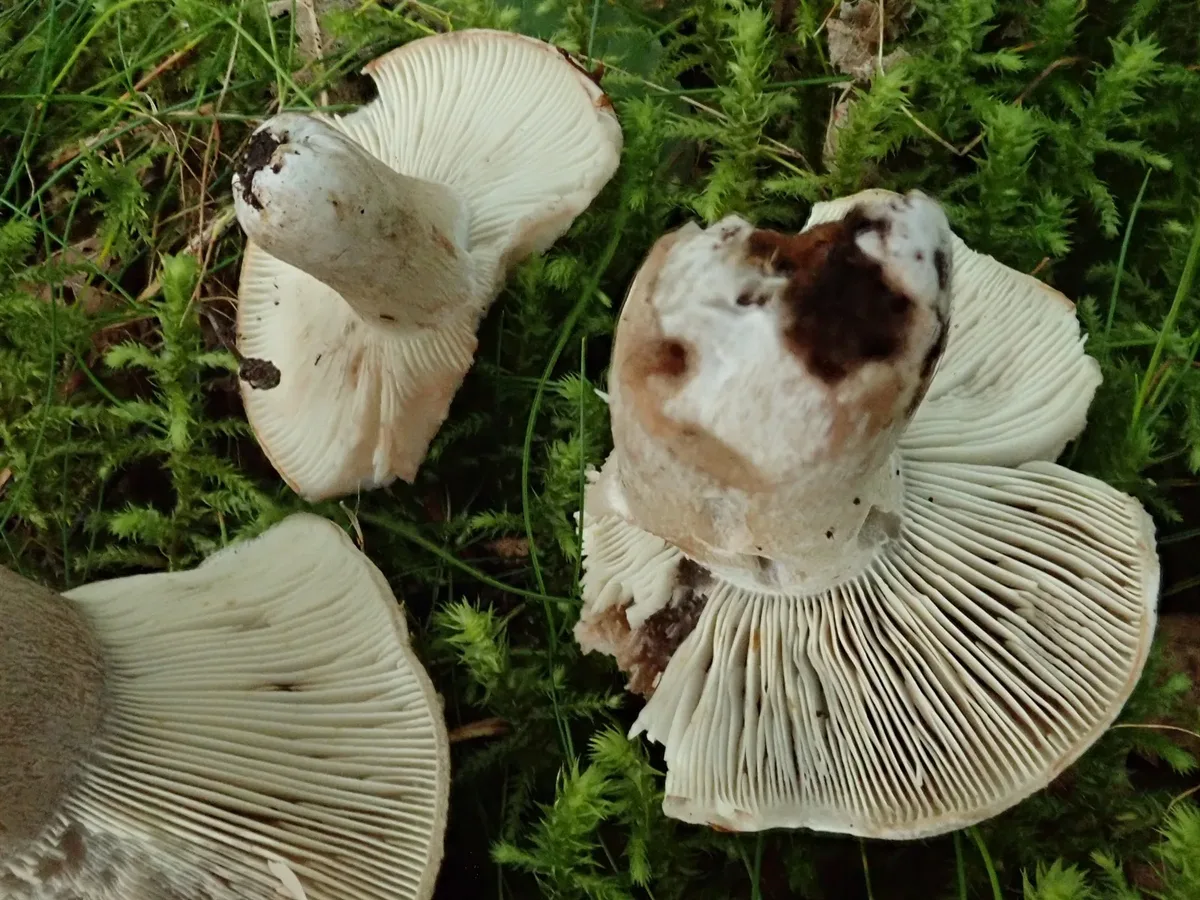 © Anders Røynstrand (CC BY)
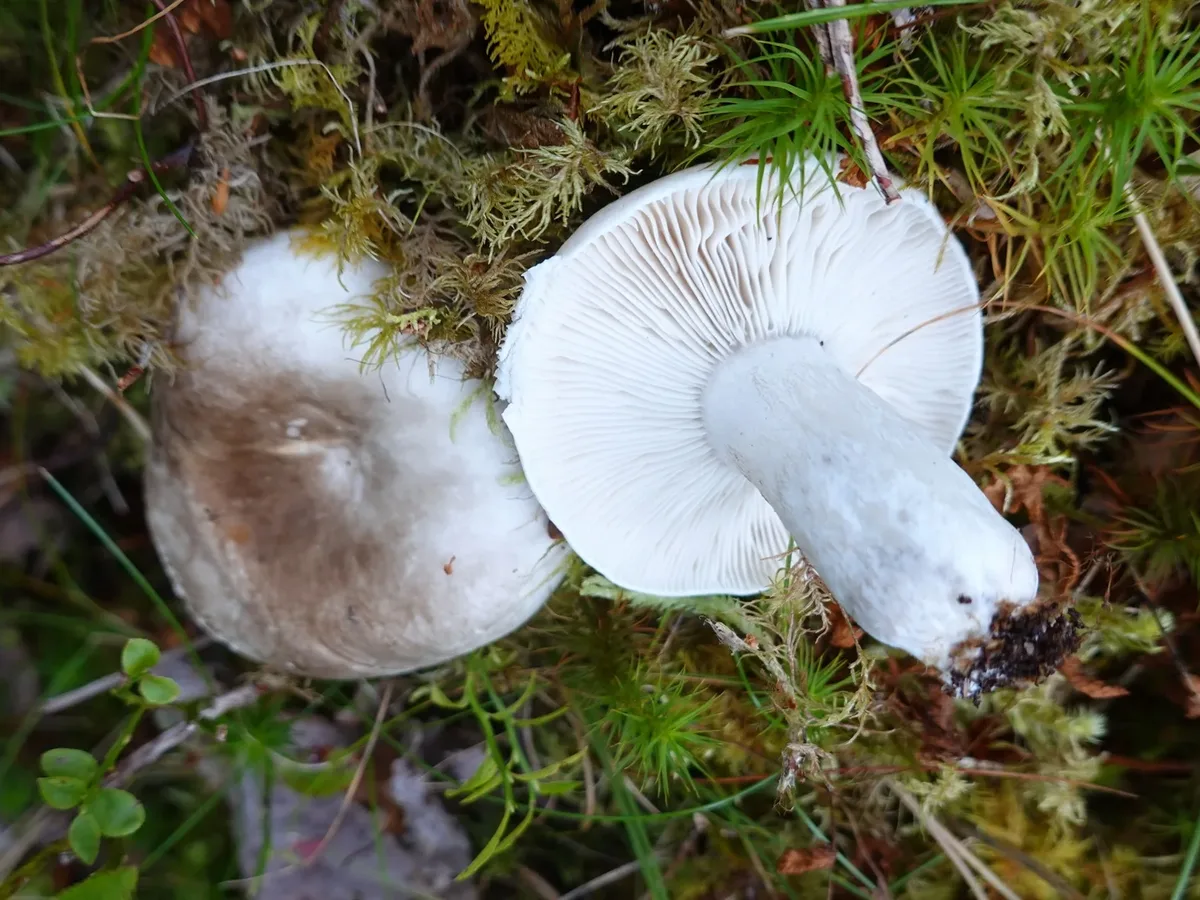 © Perry Gunnar Larsen (CC BY)
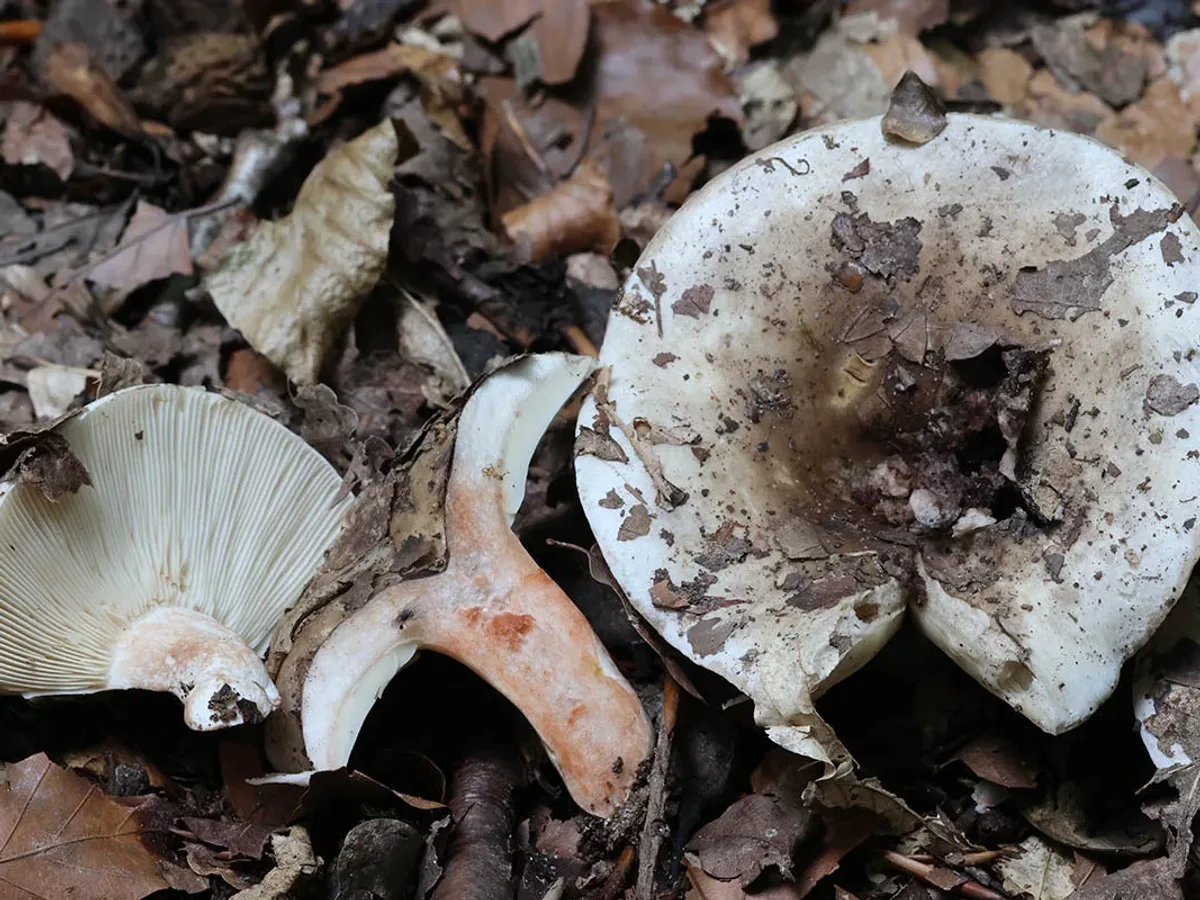 © Daniel Ghyselinck (CC BY)
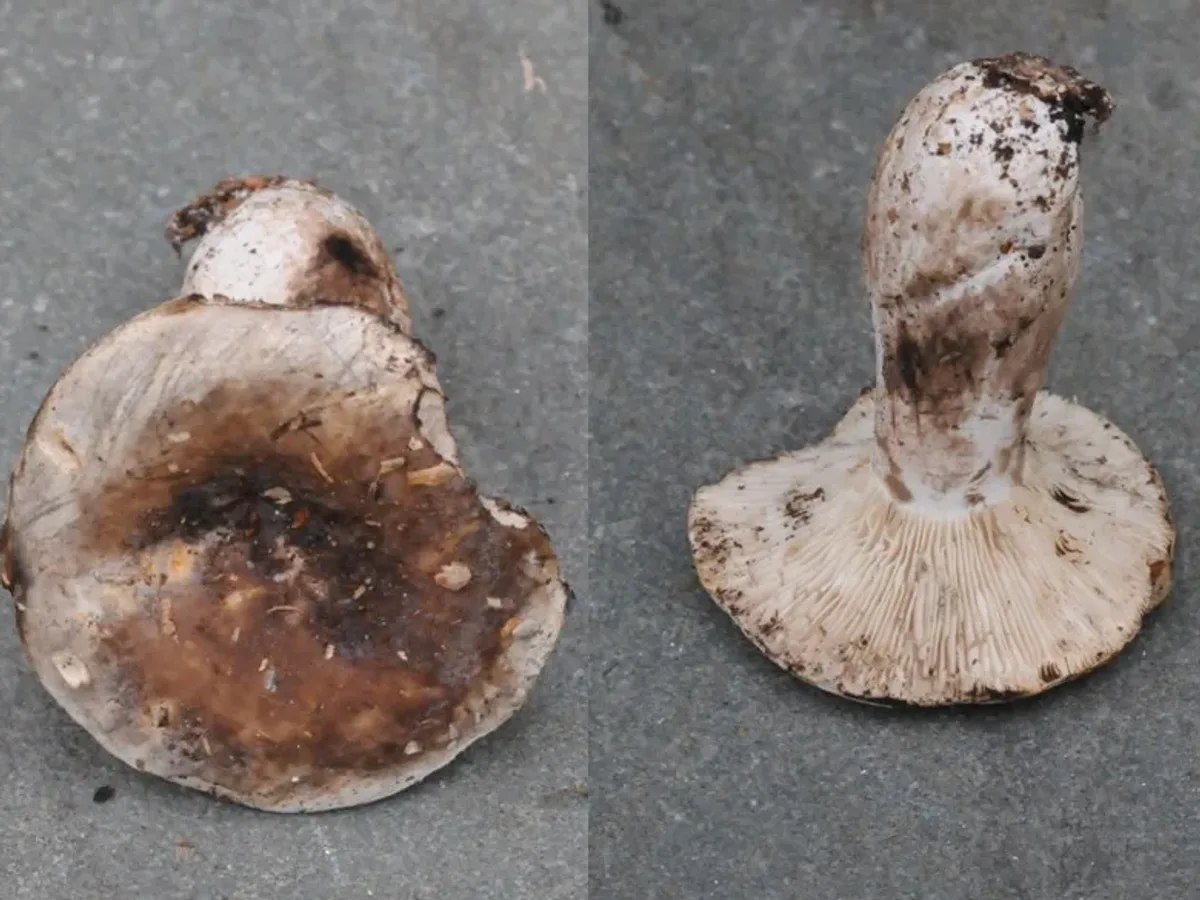 © Perry Gunnar Larsen (CC BY)
 © Brian C. Hunt (CC BY)
 © Ulrik Andreassen (CC BY)
 © Inger-Lise Fonneland (CC BY)© Anders Røynstrand (CC BY)© Perry Gunnar Larsen (CC BY)
Edible only with the right preparation - or safe for some people but not others. Learn the caveats first.
Never eat a mushroom you are not 100% sure of - check the look-alikes below, and always cook wild mushrooms.
How to recognise it
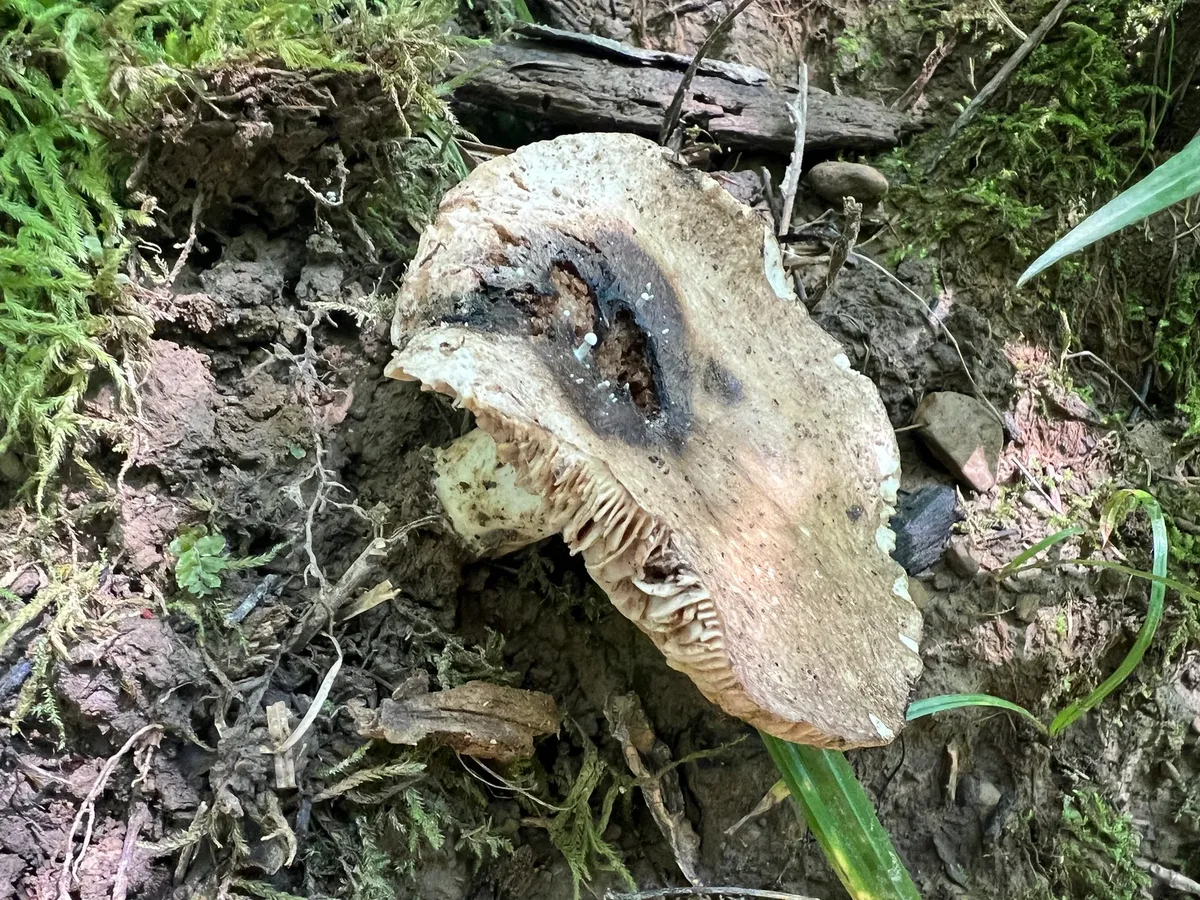
Russula densifolia belongs to the blackening brittlegill complex - a group of Russula species that share the same dramatic sequential colour change: fresh white flesh and gills turn pink or vinaceous-red when cut or bruised, then slowly grey and finally coal-black over several hours.
Gills
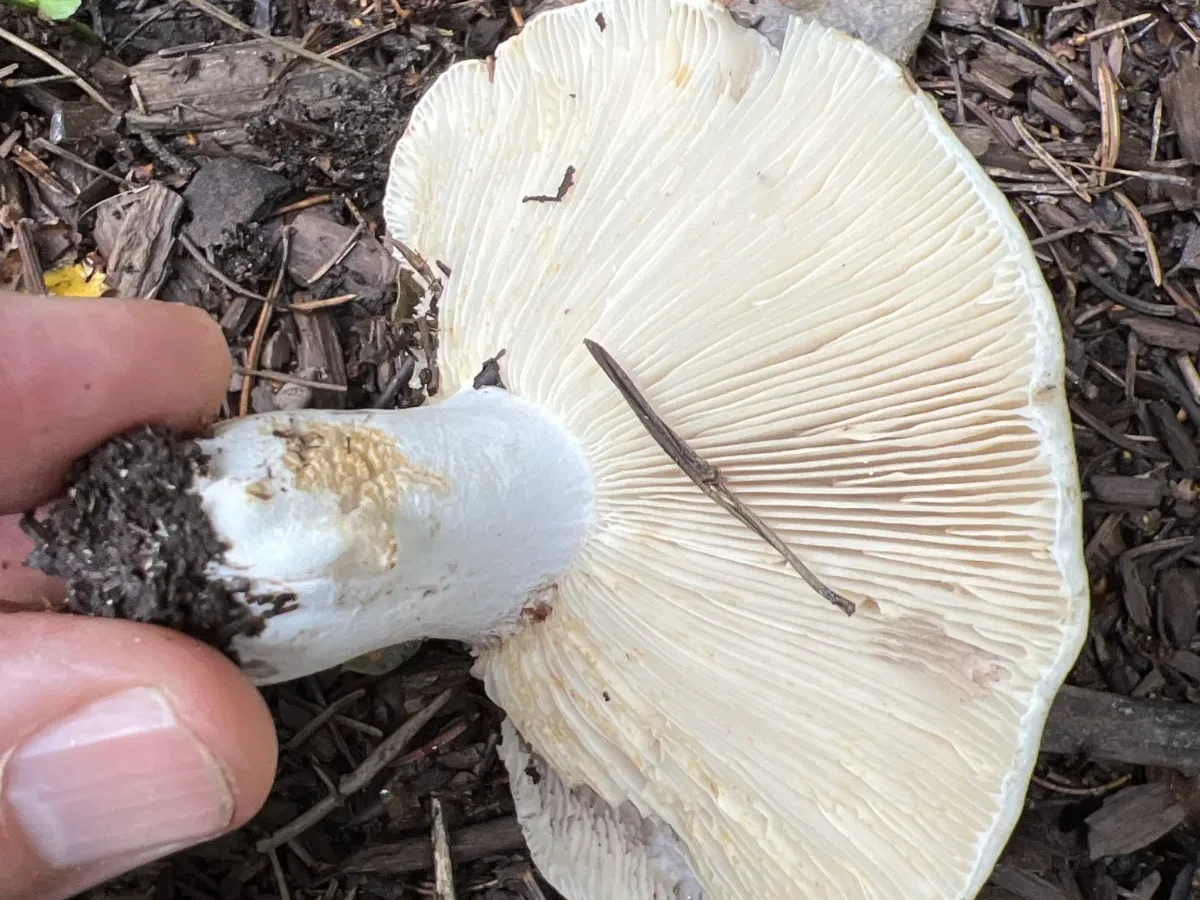
The name 'densifolia' (dense-leaved) is the single most important field character: the gills are markedly crowded and narrow, packed much more tightly than the widely-spaced, blunt, almost ridge-like gills of its close relative R. nigricans. When you hold the cap up and look at the gill surface, R. densifolia looks busy and closely packed; R. nigricans looks almost sparse.
Cap
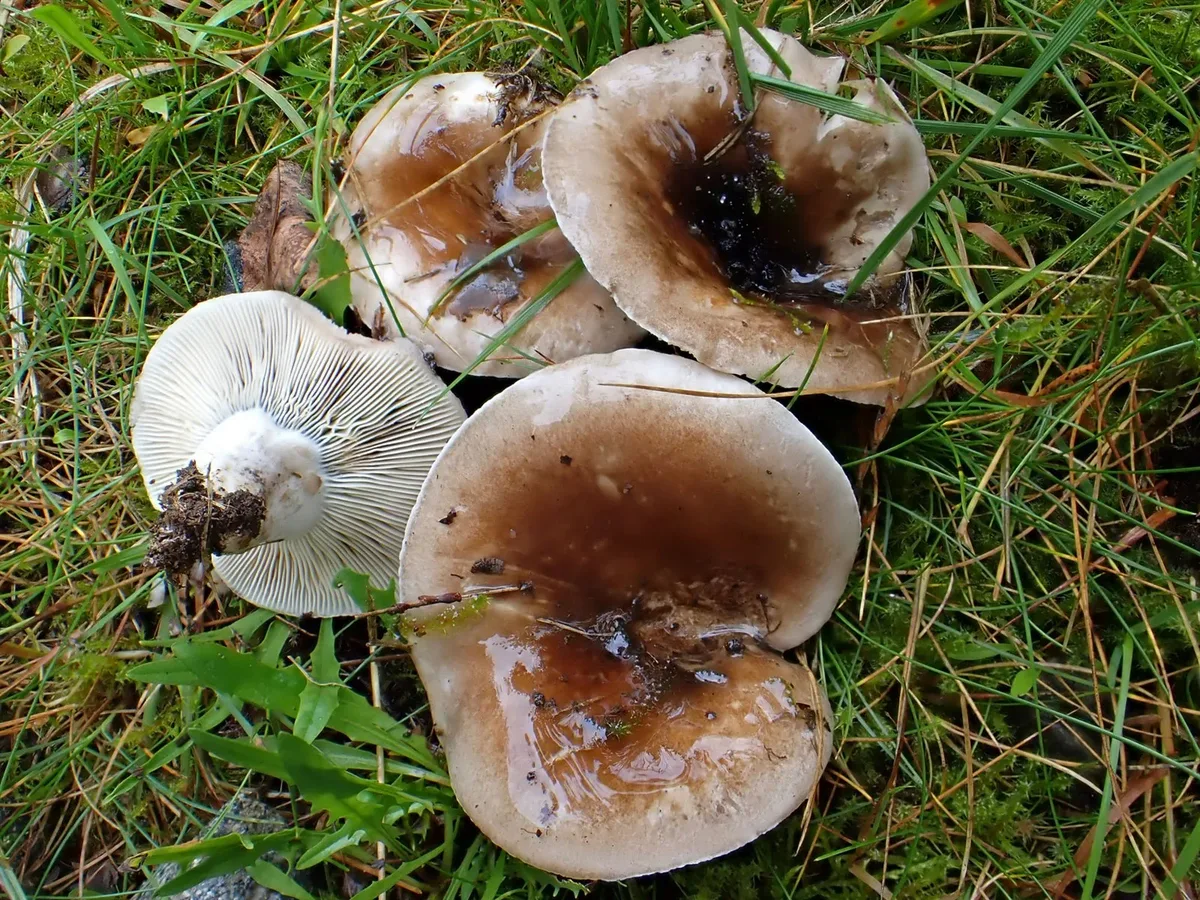
Young caps are white to pale grey-buff, hemispherical, and may remain partially buried in leaf litter; they flatten and depress as they age. The dry, matte surface never becomes slimy or viscid, and the inrolled margin gradually straightens.
Stem
The stem is stout and solid, white when fresh, greying and ultimately blackening in pace with the cap.
Flesh
The flesh is firm and dense - not crumbly and brittle in the way many smaller Russula species are - and the sequential colour change on a fresh cut surface is one of the most visually striking features of the entire genus.
Microscopically, spores are amyloid (turning blue-black in Melzer's reagent), broadly ellipsoid, and ornamented with isolated warts and short connecting ridges that do not form a complete reticulum.
Why it's dangerous
Direct danger from R. densifolia (if correctly identified in Europe) is moderate - irritant-toxic, causing GI illness, not acutely life-threatening.
In East Asia the danger category must be treated as HIGH: field separation from the deadly R. subnigricans is unreliable without microscopy, and R. subnigricans causes fatal rhabdomyolysis.
The combination of similar appearance, overlapping habitat, and potentially fatal outcome in the sister species means the only safe rule for East Asian foragers is: no blackening Russula with crowded gills goes in the basket, ever.
Additionally, the same forest habitat contains deadly Amanita species; any large pale mushroom should be fully excavated to check for a volva before handling.
Toxin
The primary toxicity of R. densifolia is attributed to irritant sesquiterpene compounds in the flesh - the same class of pungent, acrid compounds responsible for the burning oral sensation in many acrid Russula and Lactarius species. These act as mucous membrane irritants, causing burning in the mouth and throat and gastrointestinal upset when ingested.
The more severe systemic toxicity (rhabdomyolysis - breakdown of muscle tissue) documented in East Asian poisoning cases attributed to the blackening Russula complex is believed to involve cycloprop-2-ene carboxylic acid derivatives, a compound class confirmed in the closely related R. subnigricans.
Whether R. densifolia itself produces this compound, or whether historical reports attributed to 'R. densifolia' in East Asia were actually R. subnigricans, is not fully resolved in the literature. The practical consequence for foragers is identical: avoid the entire group.
Symptoms
Gastrointestinal onset (30 minutes to 4 hours after ingestion): burning sensation in the mouth and throat, nausea, vomiting, abdominal cramping, and diarrhoea. These GI symptoms are self-limiting and generally resolve within 24 hours.
In severe or misidentified cases (where R. subnigricans is the true species): delayed onset (6-24 hours) of muscle pain, weakness, and myoglobinuria (dark red-brown urine from myoglobin released by damaged muscle cells) indicating rhabdomyolysis. This can progress to acute renal failure and cardiac arrest and is potentially fatal.
If any muscle symptoms or dark urine appear after eating a blackening Russula, treat as a medical emergency and seek hospital care immediately.
Staying safe
Russula densifolia must be treated as poisonous. Consuming it raw or undercooked causes gastrointestinal irritation; some reports from East Asia implicate it (or closely related species in the same complex) in more severe systemic reactions.
The critical and life-threatening safety issue is not the species itself but its potential confusion with Russula subnigricans - a deadly species in the same complex and the same habitat that causes fatal rhabdomyolysis.
Because reliable separation of R. densifolia from R. subnigricans in the field is not possible without microscopy, any crowded-gilled blackening Russula encountered in East Asian forest should be treated as potentially R. subnigricans and left strictly alone. Never eat any blackening Russula from East Asian forests.
For foragers in Europe, R. densifolia (if correctly identified) does not present the same rhabdomyolysis risk, since R. subnigricans is not established there; however, the species is still irritant-toxic and of no culinary value.
Always exclude Amanita species by checking for the volva, ring, and free gills before handling any white or pale grey cap from the forest floor.
Where & when it grows
Habitat
Russula densifolia is an ectomycorrhizal species, forming mutualistic partnerships with the root systems of broadleaved and mixed-forest trees, particularly members of the Fagaceae (beech family).
In East Asia - where it is most frequently collected and documented - it associates most often with subtropical and warm-temperate oaks (Quercus), chestnuts (Castanea), and evergreen Fagaceae genera including Castanopsis and Lithocarpus, which dominate the forest understorey at low to mid elevations across southern China, Japan, Korea, and Southeast Asia.
In Europe it is recorded from beech, oak, and mixed broadleaved woodland, as well as from mixed conifer-broadleaved stands.
It prefers shaded, humid forest interiors with humus-rich, well-drained mineral soils, and tends not to appear in open or degraded habitats. Old blackened specimens decomposing on the forest floor are often a useful indicator of productive sites for repeat visits.
When
The fruiting season varies considerably by latitude:
- Subtropical East and Southeast Asia (the primary range for this species): fruiting coincides with the summer monsoon, running from June through September, with a peak in July and August when warm temperatures (soil temperature 18-26 °C) combine with high rainfall.
- Higher elevations and temperate regions of Japan, Korea, and northern China: the season shifts later, peaking August to October.
- Europe: the species fruits late summer through autumn (August-November).
The fruiting bodies develop and age slowly, passing through the characteristic colour sequence - white to grey to black - over days to weeks. This means fresh, ageing, and blackened specimens can all be found on a single visit to a productive site.
How it grows
Solitary or scattered, never clustered. The fruiting body develops from below the soil surface as a firm white dome, pushing up through leaf litter in a similar manner to R. nigricans and R. delica.
It grows slowly relative to many agarics; full cap expansion may take one to two weeks. The flesh is notably firm and dense, resisting insect damage longer than softer species.
Old specimens that have fully blackened persist on the forest floor for many weeks before decomposing. Their presence alongside fresh white caps creates the arresting multi-stage tableau that makes this species unmistakable once encountered.
Fruiting conditions
In East and Southeast Asia, fruiting is driven primarily by monsoon rainfall combined with warm soil temperatures (18-26 °C); flushes typically appear 1-2.5 weeks after significant rain events during the June-September monsoon period. In temperate Europe the trigger shifts to late-summer and autumn rainfall as soil temperatures cool from summer peak (optimal 12-20 °C), with a longer flush lag. Individual fruitbodies develop slowly and persist for weeks, passing through the visible white-to-black colour sequence as they age.
Look-alikes
Russula densifolia sits within a tightly clustered group of similar blackening Russula species, several of which present serious risks. The most important distinctions:
- Russula subnigricans - the most critical lookalike - is a deadly species documented in China, Japan, Korea, and other parts of East Asia, causing fatal rhabdomyolysis (muscle breakdown); it causes multiple deaths each year in East Asia. It tends to be smaller (cap 4-10 cm), has a dark grey-brown to sooty cap often from an early stage, gills that are similarly crowded (making macroscopic distinction from R. densifolia very difficult), and flesh that turns reddish on cut but may not fully blacken as dramatically as R. densifolia; however, these differences are subtle and overlap. Spore ornamentation and cystidia characters are needed for reliable separation - this is not a field call any forager should rely on.
- Russula nigricans is closely related but has markedly wider-spaced, blunter, more ridge-like gills that are far less crowded; it also shows the reddening then blackening flesh reaction. It is inedible but not documented as acutely deadly (though some toxicity debate exists).
- Russula adusta has gills that turn grey-brown directly (not reddening first) and flesh that browns without a vivid pink intermediate; taste mild to slightly acrid.
- Russula albonigra turns directly from white to black on bruising with no intermediate reddening step - this direct blackening (no pink/red phase) is the quickest way to exclude it.
- Amanita phalloides and Amanita virosa buttons can superficially resemble any large, pale-capped mushroom emerging from the soil; always excavate the full stem base and check for a volva (cup), a ring on the stem, and free gills - none of these are present in any Russula.
Russula subnigricans is a deadly species causing fatal rhabdomyolysis, documented from China, Japan, Korea, and other East Asian countries. It is visually nearly indistinguishable from R. densifolia in the field: both have crowded gills, blackening flesh that reddens on cut, and similar cap colour progression from grey-brown to black. R. subnigricans tends to be smaller (cap 4-10 cm vs. up to 15 cm in R. densifolia), may have a slightly less vivid red intermediate colour phase, and generally has a more uniformly dark grey-brown cap from an early stage - but these are subtle, overlapping, and unreliable differences. Reliable separation requires microscopic examination of spore ornamentation and cystidia. PRACTICAL RULE: treat any crowded-gilled blackening Russula in East Asian forest as potentially R. subnigricans. Do not eat it.
Pale, partially buried Amanita phalloides buttons can resemble any large pale Russula before the cap expands and before colour changes develop. Excavate the full stem base: Amanita has a membranous sac-like volva buried in the soil, a ring (skirt) on the stem, and free gills that are never decurrent. Russula densifolia has no volva, no ring, and gills that are adnate to slightly decurrent. The death cap is lethal in small quantities; this check is non-negotiable.
Pure white in all stages with a white silky volva and a white ring. Deadly. Distinguished from R. densifolia by the volva at the base, the ring on the stem, and free gills. R. densifolia buttons are firmer, have crowded adnate-decurrent gills, no ring, and no volva. Always dig up the full base.
R. nigricans is the most visually similar European blackening Russula. The single most reliable macro character: R. nigricans has strikingly widely spaced, thick, blunt gills (almost ridge-like, perhaps 4-6 per centimetre at the cap margin) whereas R. densifolia has densely crowded, narrow gills. Both show the same white→red/pink→grey→black colour sequence in cut flesh. R. nigricans is also usually larger overall. Both are inedible; neither is reliably edible, but neither carries the acute mortality risk that R. subnigricans does.
R. albonigra turns directly from white to black when bruised or cut, with no intermediate reddening or pinkening phase whatsoever - this direct blackening (skip the red/pink) distinguishes it immediately in the field. Gills moderately crowded, turning black without the pink step. Also inedible.
R. adusta has gills of intermediate density and flesh that turns greyish-brown (not vivid pink or red) when cut, before gradually darkening. There is no red intermediate stage - this absence of the reddening phase is the most useful distinguishing feature. Also tends to have a more distinctly brownish cap surface with a slight sheen. Inedible but not acutely dangerous.
A reference guide - never an edibility guarantee. When in doubt, leave it out.