Milk-white brittlegill
Russula delicasyn. Lactarius delica Fr., Russula chloroides var. delica (Fr.) Quél., Russula brevipes var. delica (Fr.) Singer
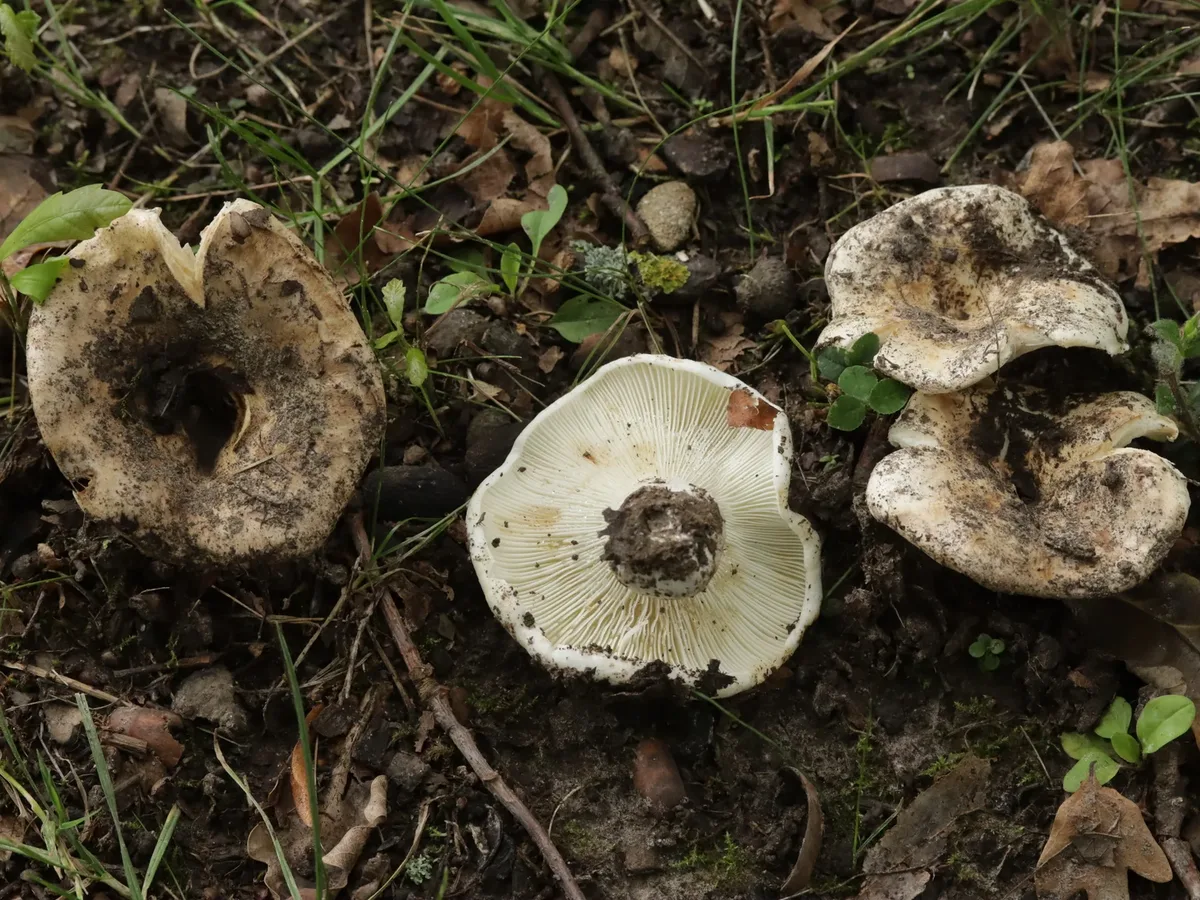 © Björn Sothmann (CC BY-SA)
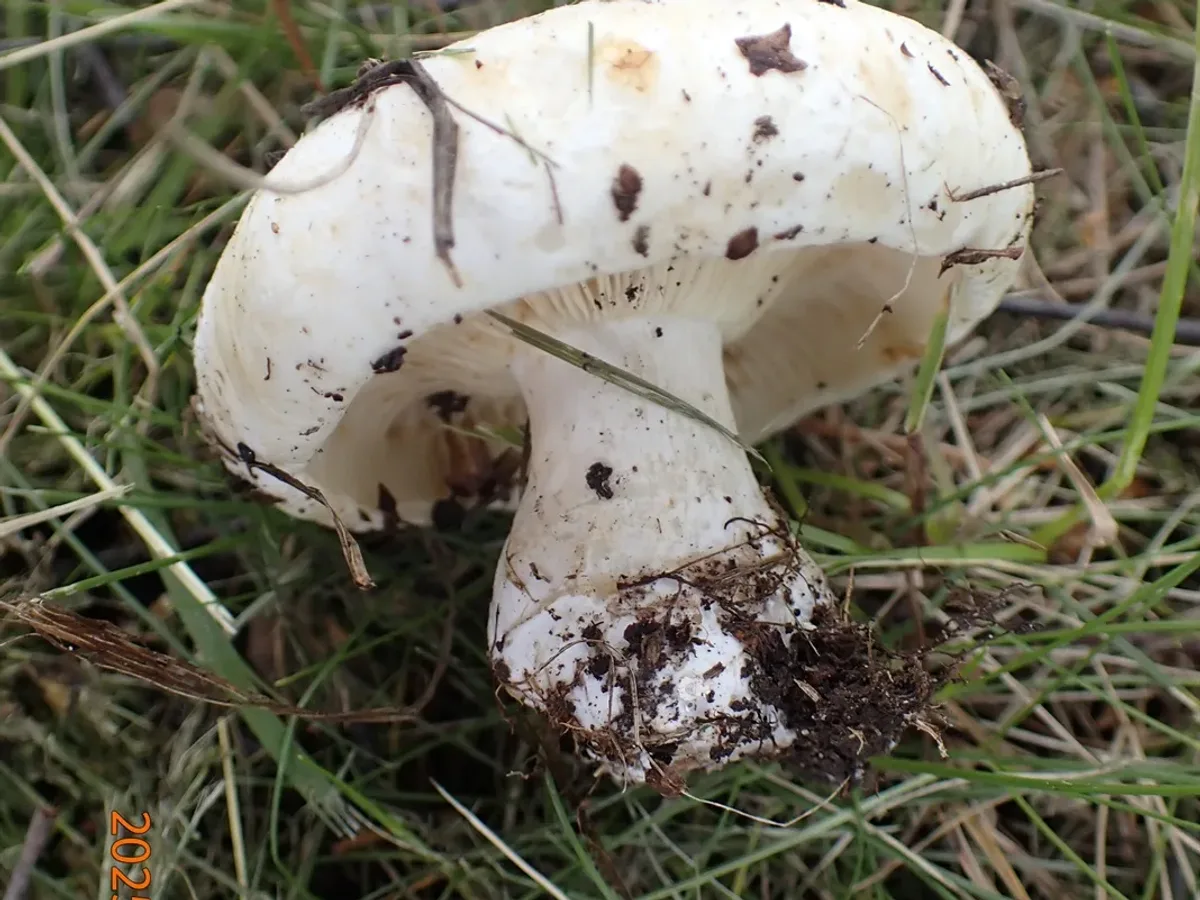 © Tove Jacobsen (CC BY)
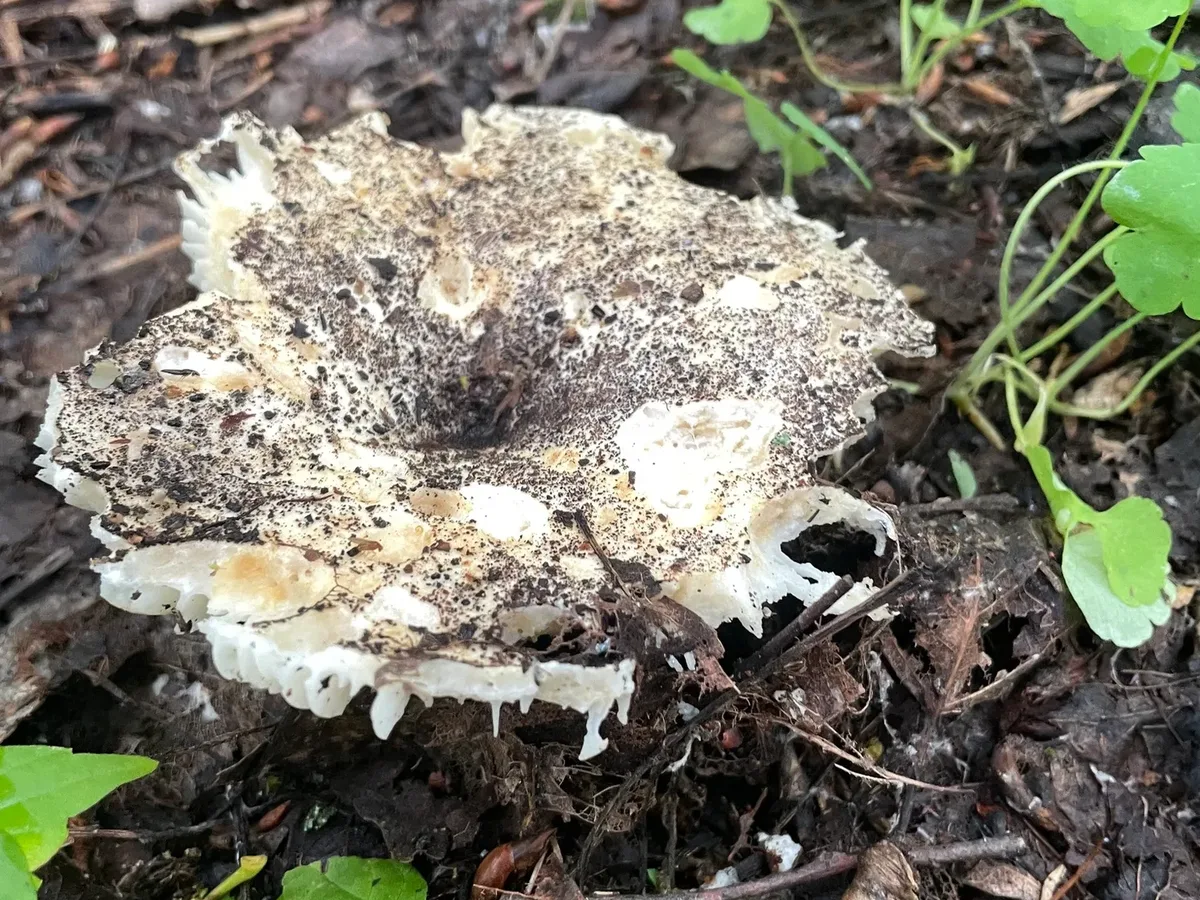 Nastya Kovylina (CC0)
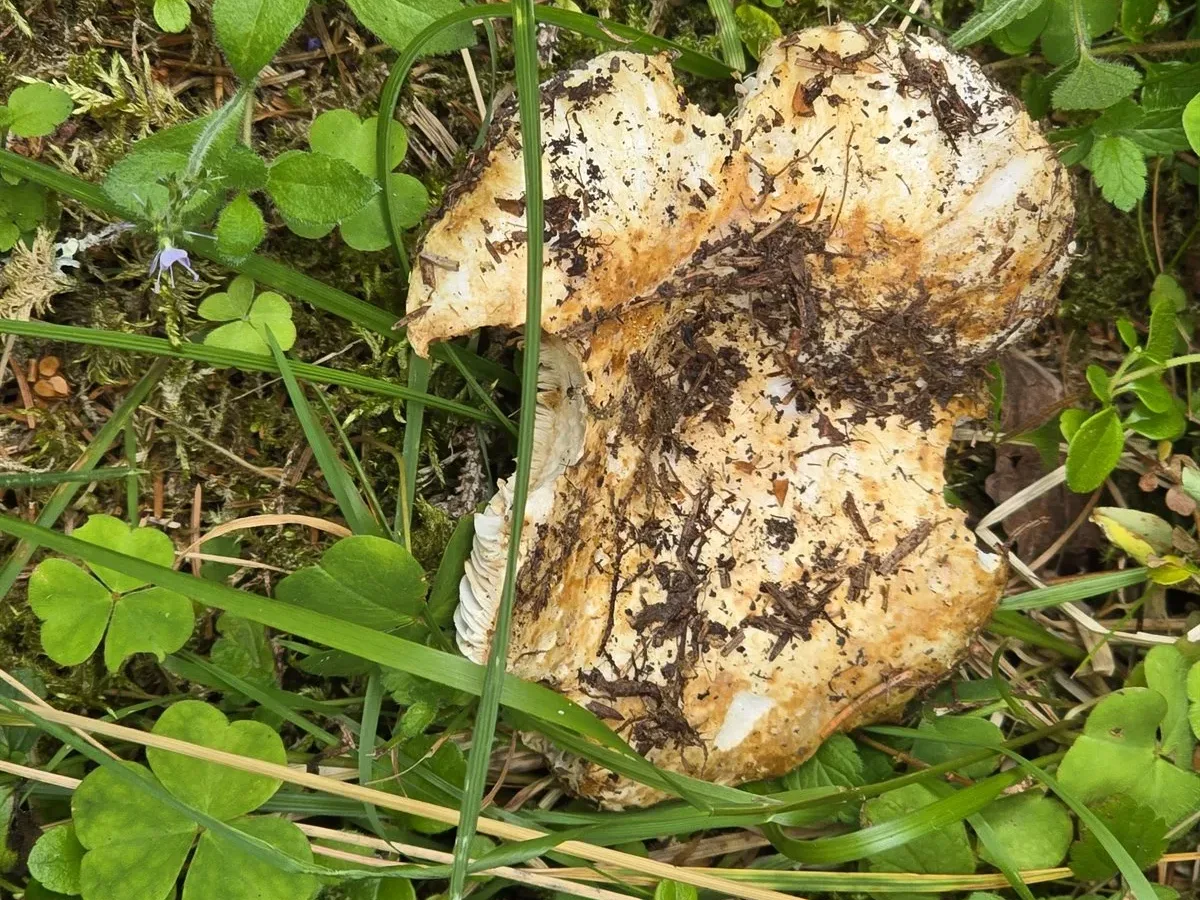 © Nils Edvard Stokke (CC BY)
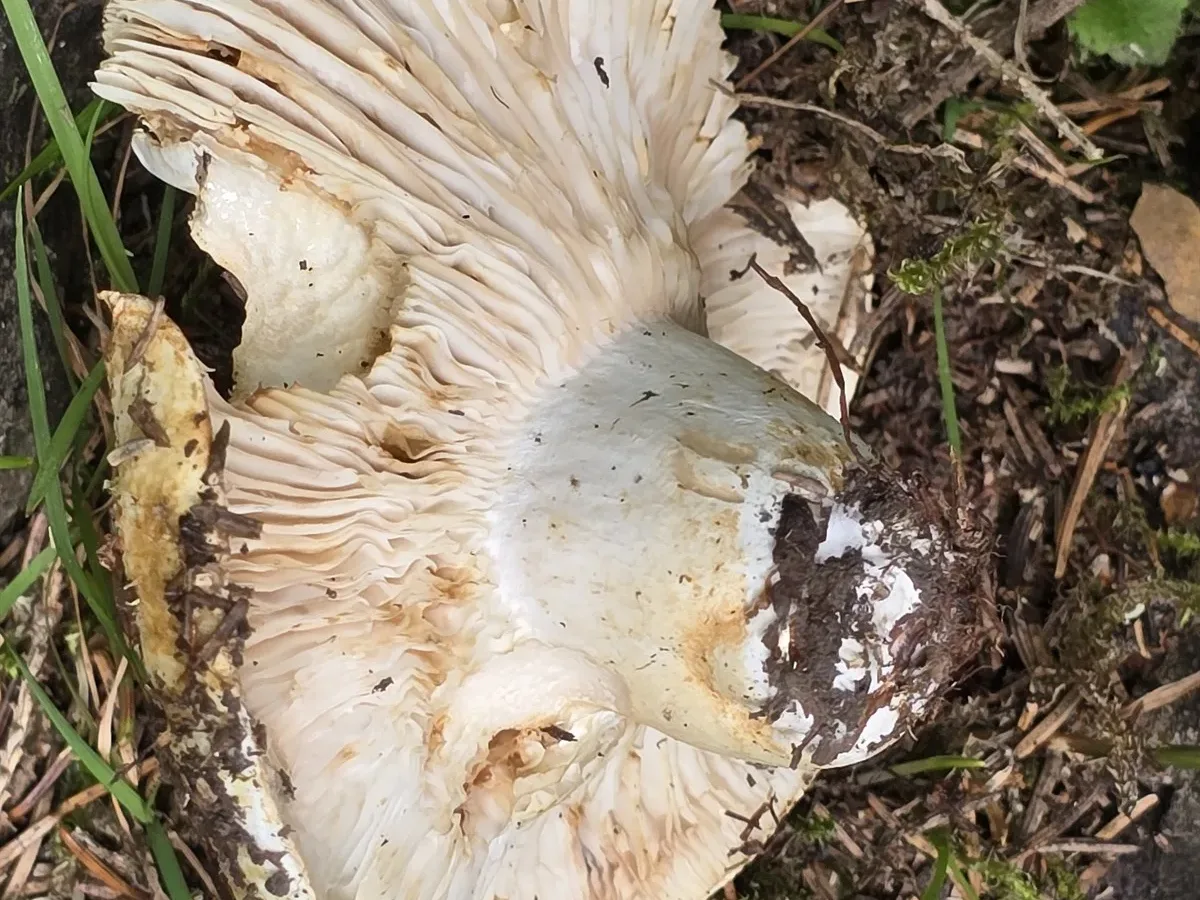 © Nils Edvard Stokke (CC BY)
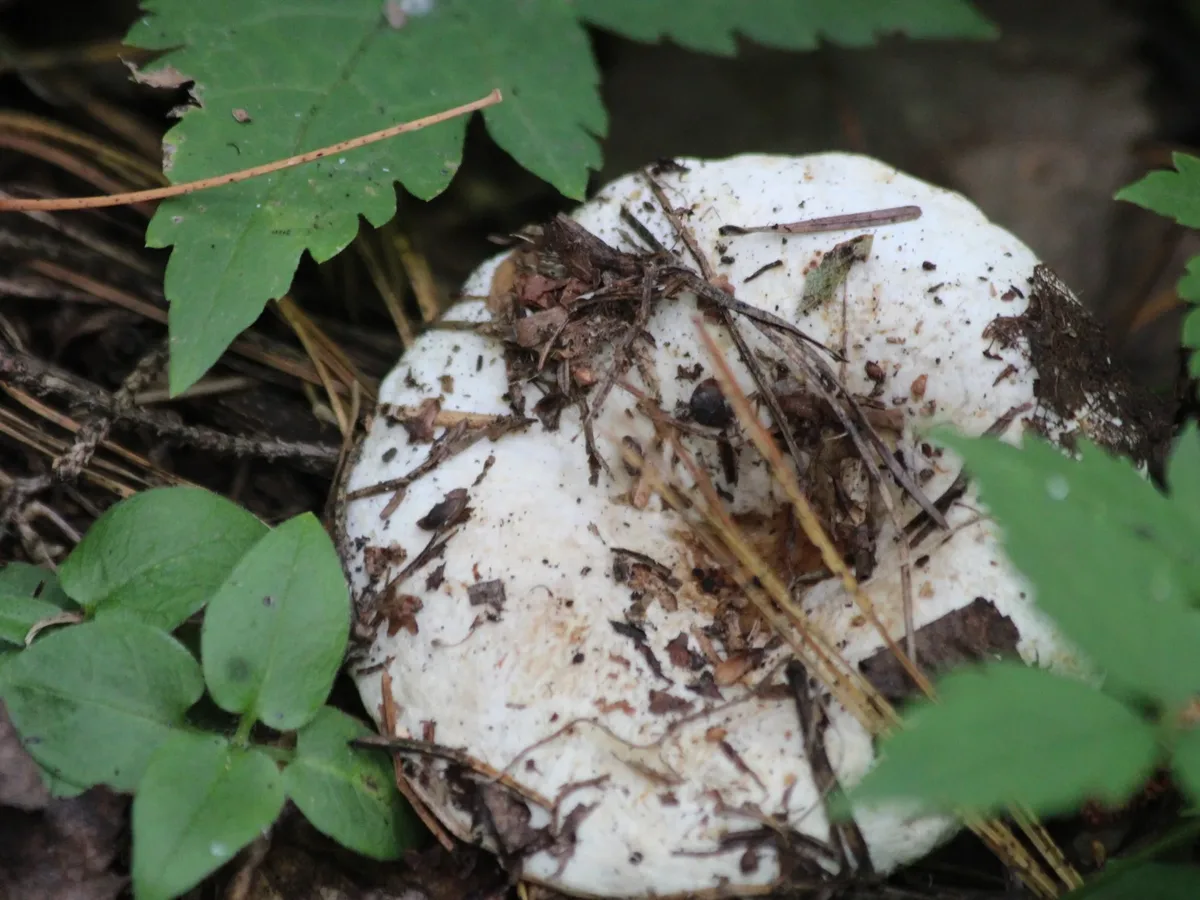 © Tatiana Strus (CC BY)
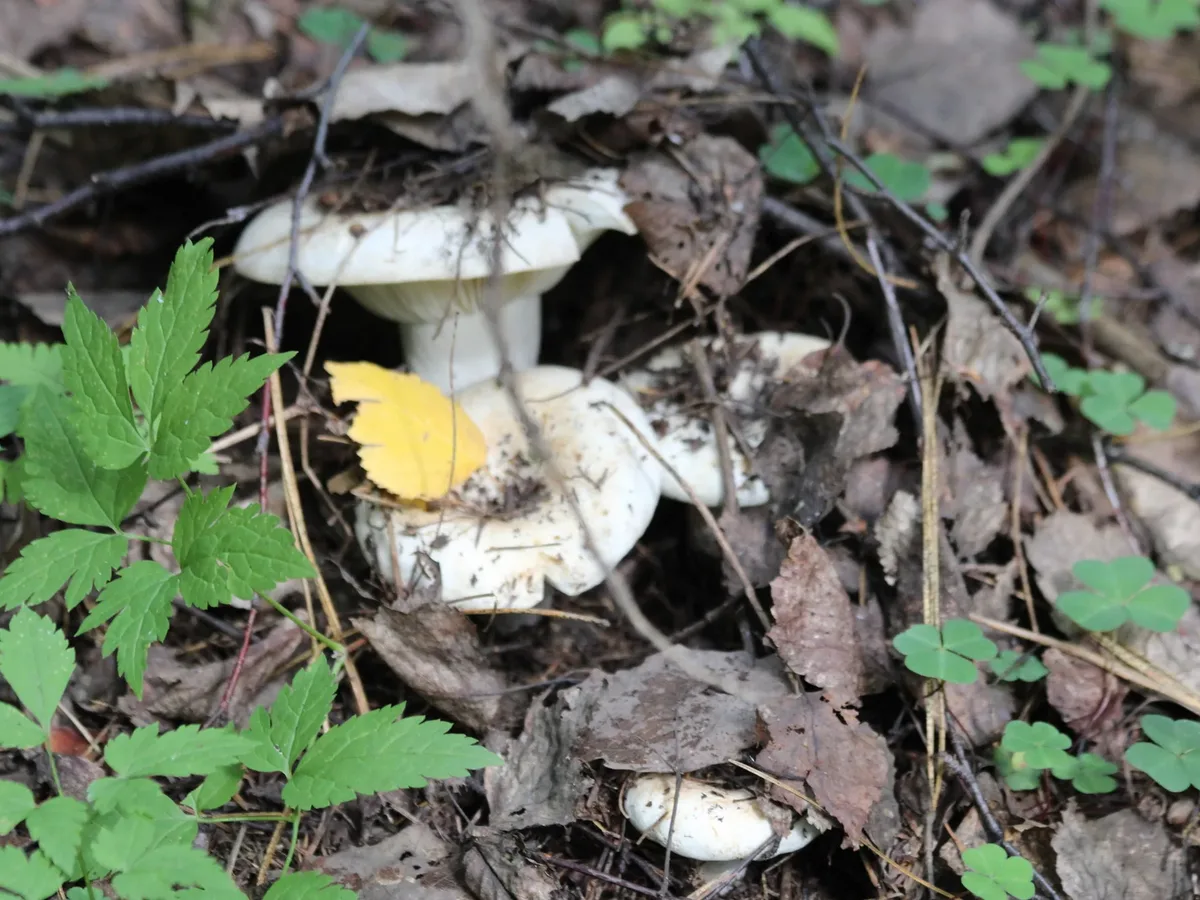 © Tatiana Strus (CC BY)
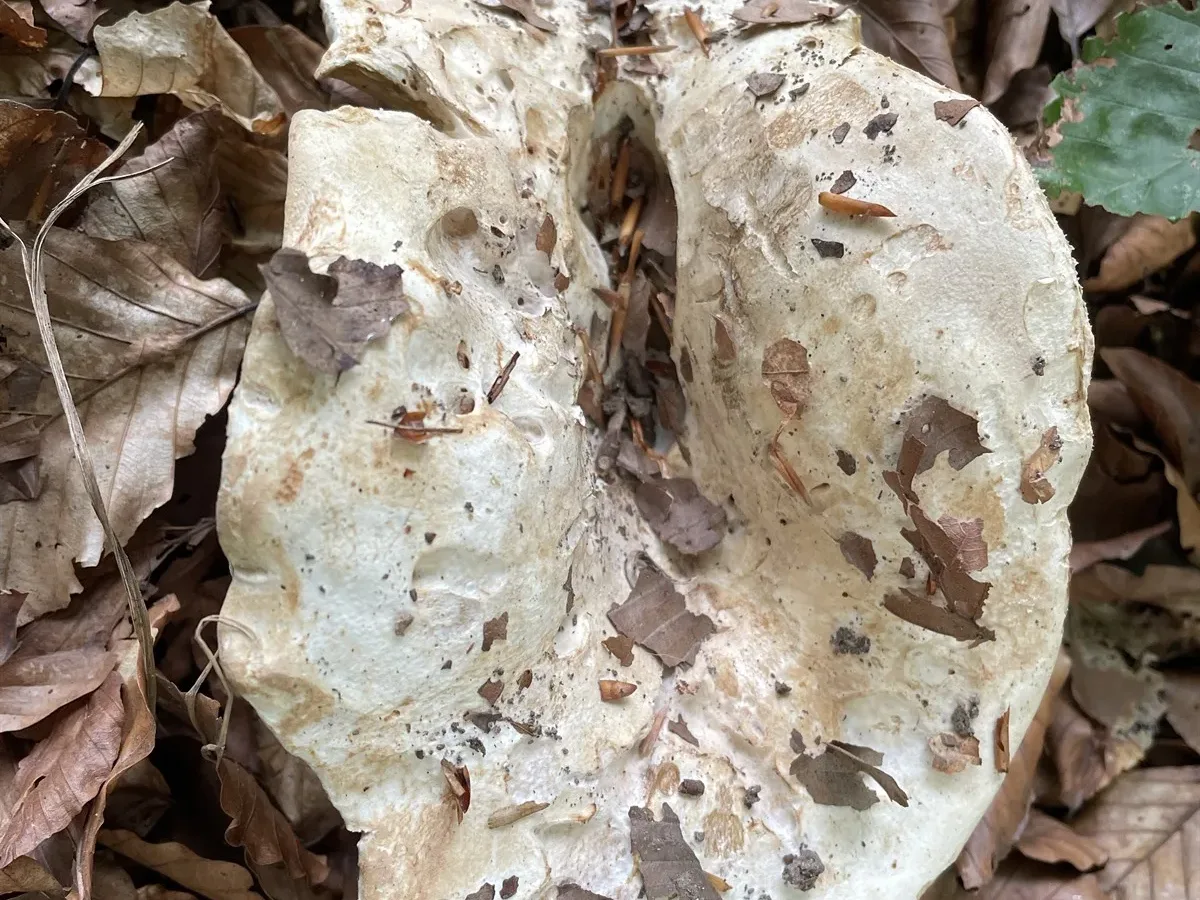 © Bjørn Eidhammer (CC BY)
 © Bjørn Eidhammer (CC BY)© Björn Sothmann (CC BY-SA)© Tove Jacobsen (CC BY)
Good to eat, once you have identified it with certainty and cooked it through.
Never eat a mushroom you are not 100% sure of - check the look-alikes below, and always cook wild mushrooms.
How to recognise it
Russula delica is among the largest and most robust members of the genus.
Cap
The cap starts convex and ivory-white, gradually flattening and then depressing at the centre to produce a broad funnel or shallow vase shape at full maturity; it can reach 20 cm across.
The dry, matt surface is white to cream, occasionally developing faint ochre or dirty-buff staining in the centre with age, but never dramatically discolouring.
The margin begins strongly inrolled and remains enrolled for a long time, only unrolling when the cap is fully expanded.
Flesh
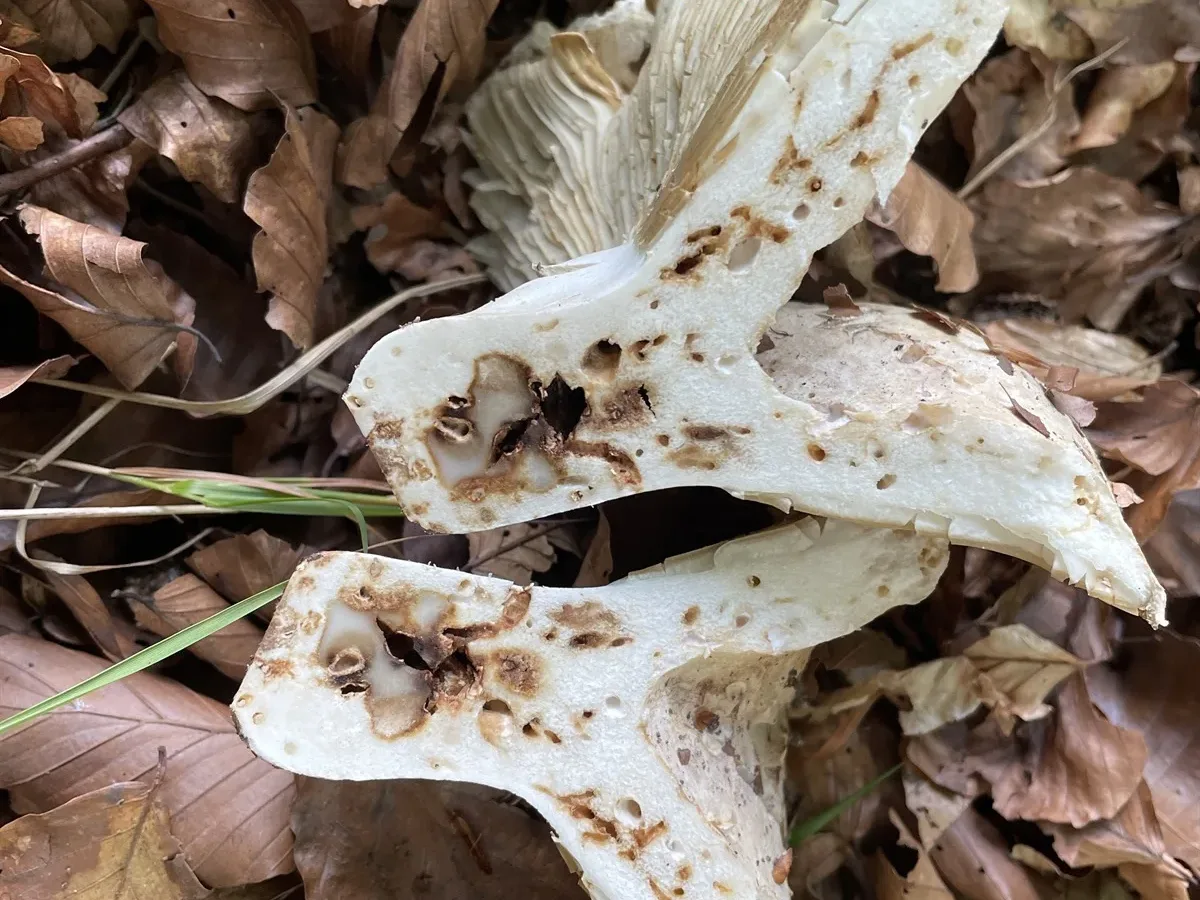
The flesh is thick and firm throughout, white, and does not change colour when cut or bruised - an important distinction from the similarly sized Lactarius species, which exude a milky latex when damaged.
Gills
The gills are narrow, crowded, slightly decurrent onto the stem, white to pale cream.
Some collections show a subtle ice-blue or faintly greenish tint immediately adjacent to the stem apex - this chromatic hint is useful in the field when present, though it is absent in many specimens.
Stem
The stem is short relative to the cap width, stocky and solid, white throughout, with a dry surface that may feel finely powdery.
No veil, ring, or volva is ever present in any Russula - the presence of any of these structures means the specimen is NOT a Russula and may be a deadly Amanita.
The spore print is pure white. Under the microscope, spores are amyloid (turning blue-black in Melzer's reagent), broadly ellipsoid, ornamented with isolated warts and short connectives - typical of the genus.
Where & when it grows
Habitat
Russula delica forms ectomycorrhizal associations with a wide range of broadleaved trees, most consistently with oaks (Quercus spp.) and beech (Fagus sylvatica), but also hornbeam, sweet chestnut, and various conifers including pines and spruces.
It grows in shaded forest interiors and along sunlit edges alike, tolerating a range of soil types from calcareous limestone-derived soils to mildly acidic sandy loams.
Fruiting bodies frequently push up through compacted soil or thick leaf-litter and may be only partially visible, the cap arching up through the duff; this subterranean tendency means that the species is encountered more often than it is recognised.
It is widespread across continental Europe from Scandinavia to the Mediterranean and is locally common in the British Isles, though less conspicuous than many other autumnal species.
When
The main fruiting season runs from mid-July through November across most of temperate Europe, with peak abundance from August to October.
In warmer Mediterranean climates the season may extend to December.
Fruitings are often triggered by late-summer rainfall after warm soil conditions in July-August, and clusters of caps may be found pushing through the same patch of soil over several weeks as the soil cools gradually.
Individual fruiting bodies are long-lasting relative to many mushrooms, remaining firm for a week or more if conditions are cool and dry.
How it grows
Russula delica is solitary to scattered, rarely gregarious. Occasionally several individuals arise near one another in the root zone of the same host tree, but they do not form tight clusters.
The fruiting body emerges directly from the soil, the cap frequently remaining partially buried until the stem elongates enough to push it free.
The subterranean stage, when the cap is white and embedded in duff, can be confused with an egg stage of Amanita.
Growth is relatively slow and the firm flesh resists decay, so specimens are often in good condition days after emergence.
Fruiting conditions
Fruiting initiated by late-summer and autumn rainfall after a period of warm soil; commonly observed 1-2 weeks after significant rain events in August-October when soil temperatures are declining from summer peak. Fruiting bodies are long-lasting and may persist 7-14 days if conditions remain cool and dry after emergence.
Look-alikes
The critical lookalikes of Russula delica fall into three categories of escalating danger:
- 1Other white Russula species - particularly R. chloroides (= R. delica var. chloroides in older literature), which differs by having a more pronounced, persistent blue-green tint on the gills near the stem and a slightly more decurrent gill run; and R. brevipes (North American counterpart), which is larger and often more deeply infundibuliform with gills frequently turning pale buff. These congeners are all edible or mildly inedible; confusion among them poses no safety risk.
- 1Lactarius species - especially Lactarius piperatus (peppery milkcap) and L. vellereus (fleecy milkcap), both of which share the white, large, funnel-shaped profile. The single definitive test: cut or break the gill - Lactarius species immediately exude a white latex (milk) from the wound, whereas Russula delica produces none whatsoever. This latex test is fast, reliable, and should always be applied when collecting any large white funnel-shaped mushroom. The Lactarius species involved are acrid but not deadly.
- 1Amanita species - the most dangerous confusion. Completely buried, unexpanded buttons of Amanita phalloides (death cap), Amanita virosa (destroying angel), and related deadly Amanitas can look like partially emerged white caps in the soil. Any white mushroom emerging from the earth must be carefully excavated at the base to check for the presence of a volva (cup), a ring, and free rather than crowded-decurrent gills. Russula delica has no volva, no ring, and crowded gills that run slightly onto the stem; Amanita species always have free gills (never decurrent), typically a fragile ring on the stem, and a basal volva (sac) often still buried below the soil surface. This distinction is life-critical: never collect any white mushroom from the ground without fully exposing the base.
Fully buried Amanita buttons look like white oval eggs in the soil and can superficially resemble an emerging Russula cap. Excavate the base completely: Amanita has a sac-like volva (cup) at the base, a ring on the stem once expanded, and free gills (never decurrent). Russula delica has no volva, no ring, and crowded gills that run slightly onto the stem. This check is life-critical. The death cap is one of the most lethal fungi on earth and its mild flavour means a taste test provides NO protection.
Pure white Amanita virosa buttons buried in soil can look identical to an emerging Russula in the ground. Always excavate the full base: look for the membranous volva and, in later stages, a ring on the white silky stem. Gills are free, not decurrent. No ring and no volva = not Amanita; presence of either = do not eat. Contains the same lethal amatoxins as A. phalloides.
Often treated as a variety of R. delica or a very close relative. Distinguished by more pronounced and consistent blue-green staining of the gills near the stem apex, and slightly more decurrent gills. Edible, not dangerous; the distinction is academic for foraging purposes but worth noting for accuracy.
Round, potato-like ball in soil. When cut shows dark purple-black gleba (interior mass), not white layered flesh. Thick, scaly ochre skin. Toxic - causes gastrointestinal symptoms and has been associated with more severe reactions in some cases; distinct once opened but never eat any unidentified white object from the soil without cutting it open first.
Larger and often velvety-felty on the cap surface versus the smooth-to-pruinose cap of R. delica. Again, the latex test is definitive: L. vellereus exudes white latex from broken gill tissue; R. delica does not. L. vellereus is also intensely acrid raw and is not recommended for eating without processing.
Very similar in stature, colour, and habitat. The single diagnostic test: break or nick a gill - Lactarius piperatus immediately weeps copious white latex; Russula delica produces no latex whatsoever. Gills in L. piperatus are extremely crowded and narrow; taste is intensely acrid. Not deadly but causes significant gastrointestinal distress if eaten raw or insufficiently prepared.
North American counterpart, larger and more deeply vase-shaped, gills may develop buff tones. Edible but bland; no safety concern when identified correctly. Latex test still distinguishes it from white Lactarius species found in the same habitat.
In the kitchen
Picking & cleaning
Collect only fully emerged, firm specimens with white, unbroken flesh.
- Because the cap is frequently buried, use a knife to carefully cut around the base and lever the fruiting body free; do not rip it from the soil, as this tears the mycelium and leaves embedded base material.
- Always expose the full base of the stem and check for a volva (sac or cup) - the presence of one means the specimen is a deadly Amanita, not a Russula.
- Gently brush soil from the surface and check the gills for discolouration or insect damage - the crowded gills can harbour fly larvae in wet weather.
- Cross-section each stem in the field to confirm the absence of any latent colour change (no reddening, no bluing) and the absence of latex - both of which would indicate a different species.
- Carry in a wide, rigid basket to avoid compressing the brittle flesh.
The smell is mild and faintly pleasant; rank or strongly fishy odour suggests a lookalike.
Cooking
Russula delica has firm, dense white flesh that holds its shape well during cooking but lacks the pronounced flavour of choice species.
It is best suited to slow, high-heat cooking methods: slice thickly and pan-fry over high heat in butter or olive oil until golden to develop Maillard browning, then add garlic, herbs, and seasoning.
The flesh can also be used in mixed mushroom soups and risottos where it contributes body and texture.
In parts of central and eastern Europe it is traditionally salted raw in layers with salt and spices, fermented under a weight for several weeks (the 'cold salt' method common with peppery Russulas and Lactarius species), yielding a tart, firm, brined pickle.
Never eat raw; always cook thoroughly.
Good to know
Russula delica is considered edible but of modest gastronomic quality. It is consumed widely in southern and eastern Europe but largely overlooked by foragers in northern regions.
Some collections have a mildly acrid taste and can cause gastrointestinal upset if eaten raw or insufficiently cooked; as with all Russula species, thorough cooking is strongly recommended.
The main safety concern is not the species itself but the risk of confusing buried buttons with deadly Amanita eggs, or of mistaking large white funnel-shaped fruiters for a Lactarius.
Always:
- 1Expose the full base of any white ground mushroom to exclude a volva - this check is life-critical.
- 2Cut the gills to exclude latex.
- 3Check that gills are crowded, slightly decurrent, and white - not free and white.
Never collect white mushrooms from the ground without carrying out all three checks. Never eat any wild mushroom raw.
A reference guide - never an edibility guarantee. When in doubt, leave it out.