Copper brittlegill
Russula decoloranssyn. Agaricus decolorans Fr., Russula decolorans (Fr.) Fr.
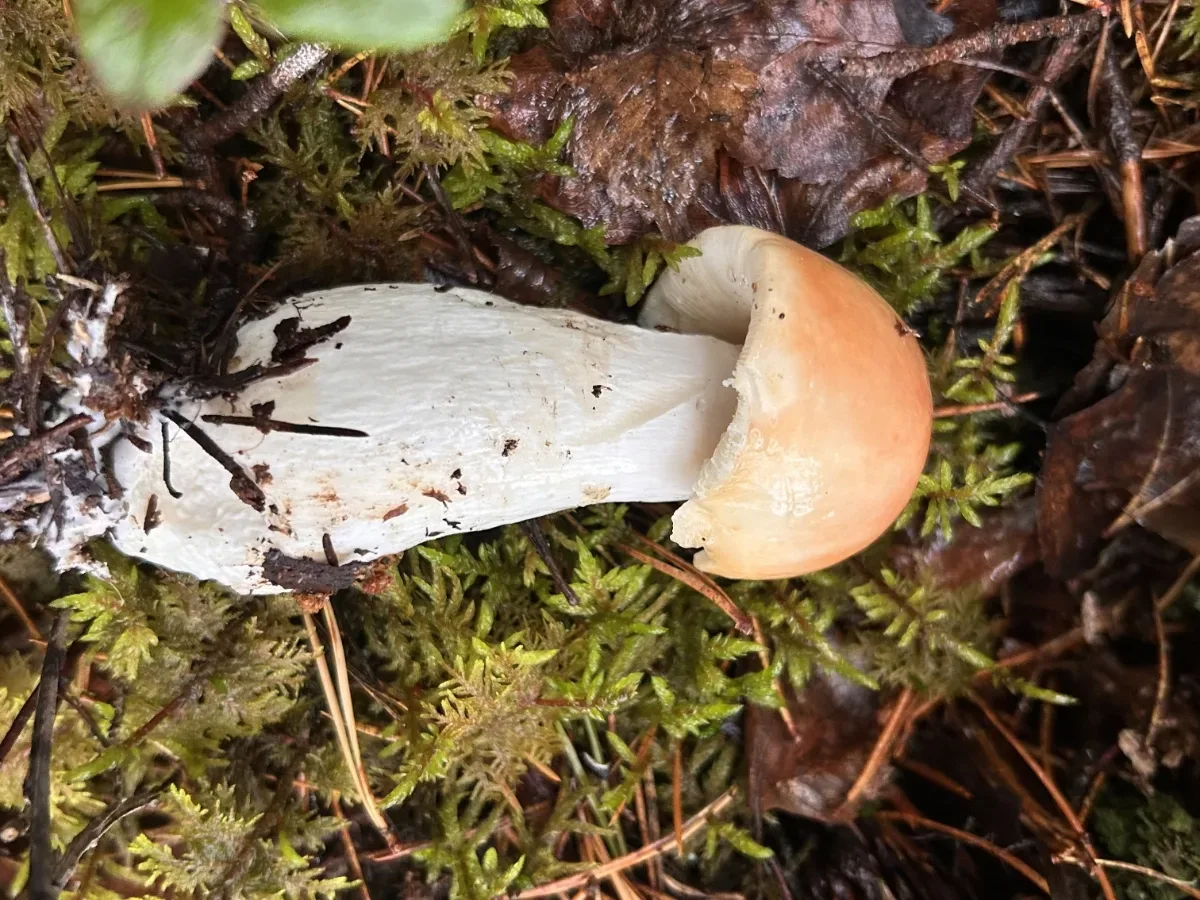 © Kjersti Nerbråten Tjernshaugen (CC BY)
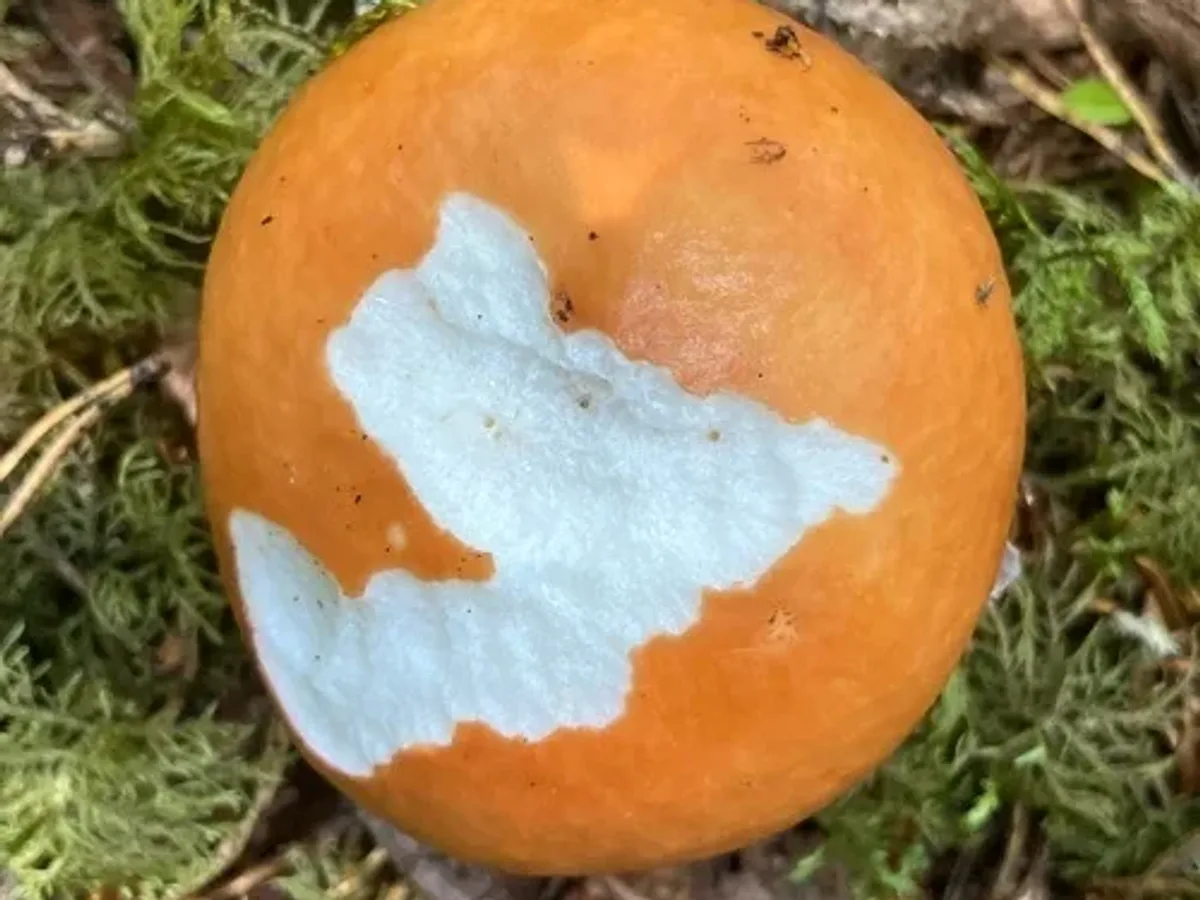 © Jonas Heggedal (CC BY)
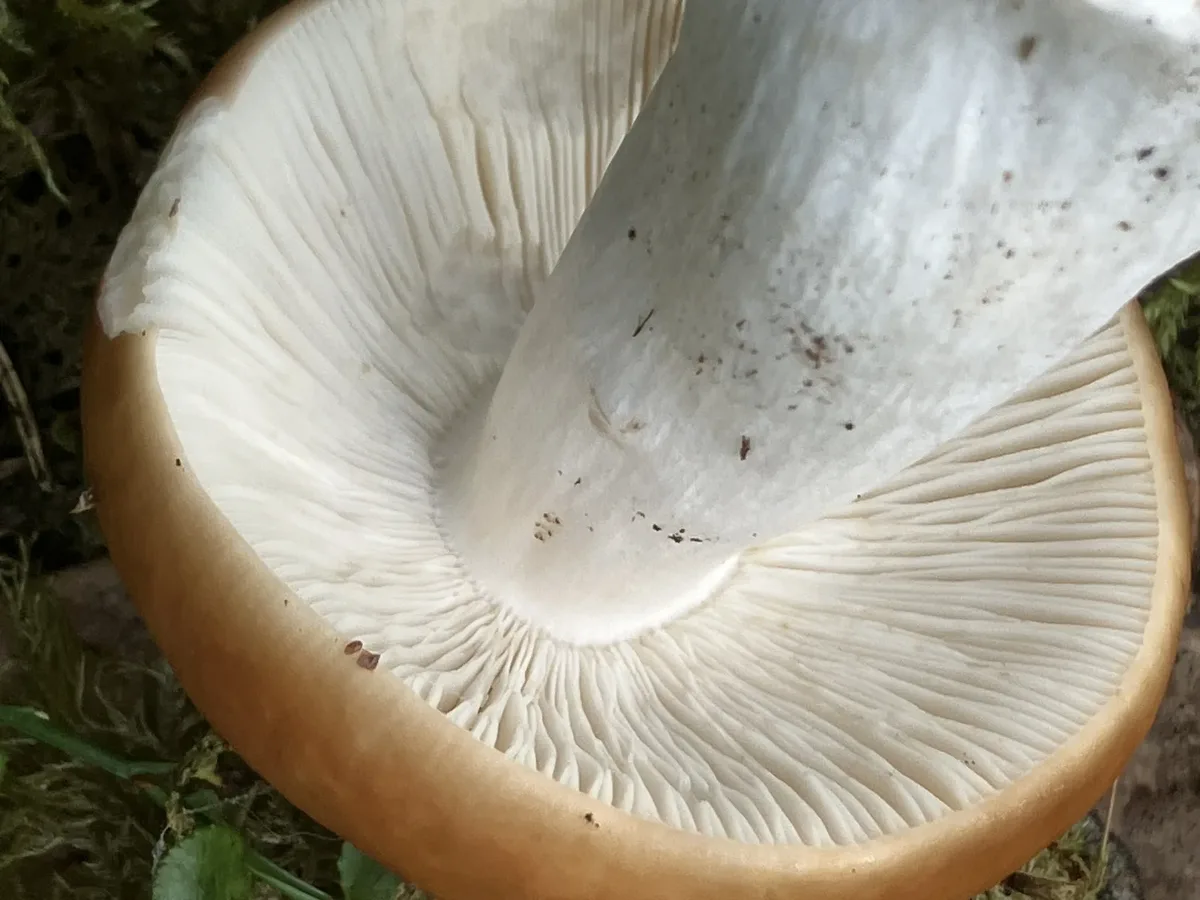 © Jonas Heggedal (CC BY)
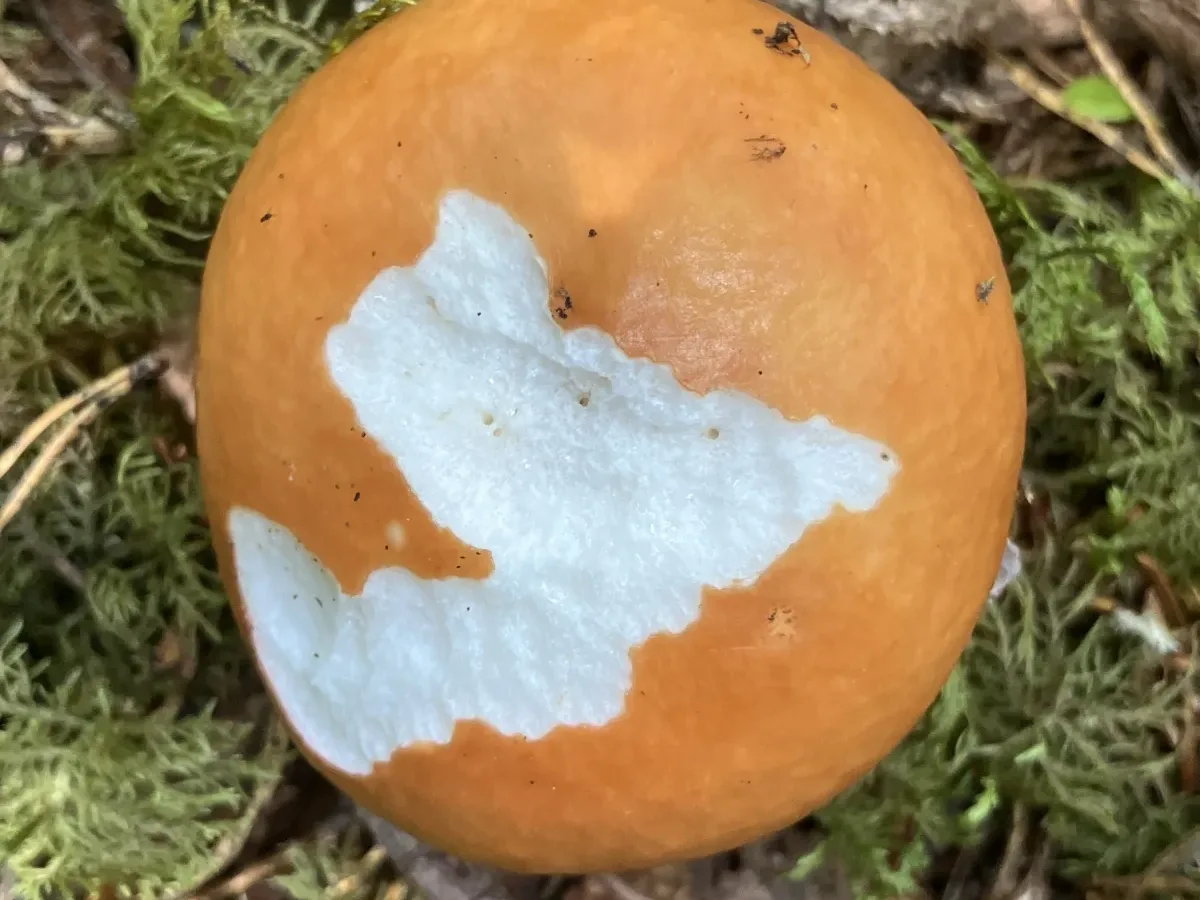 © Jonas Heggedal (CC BY)
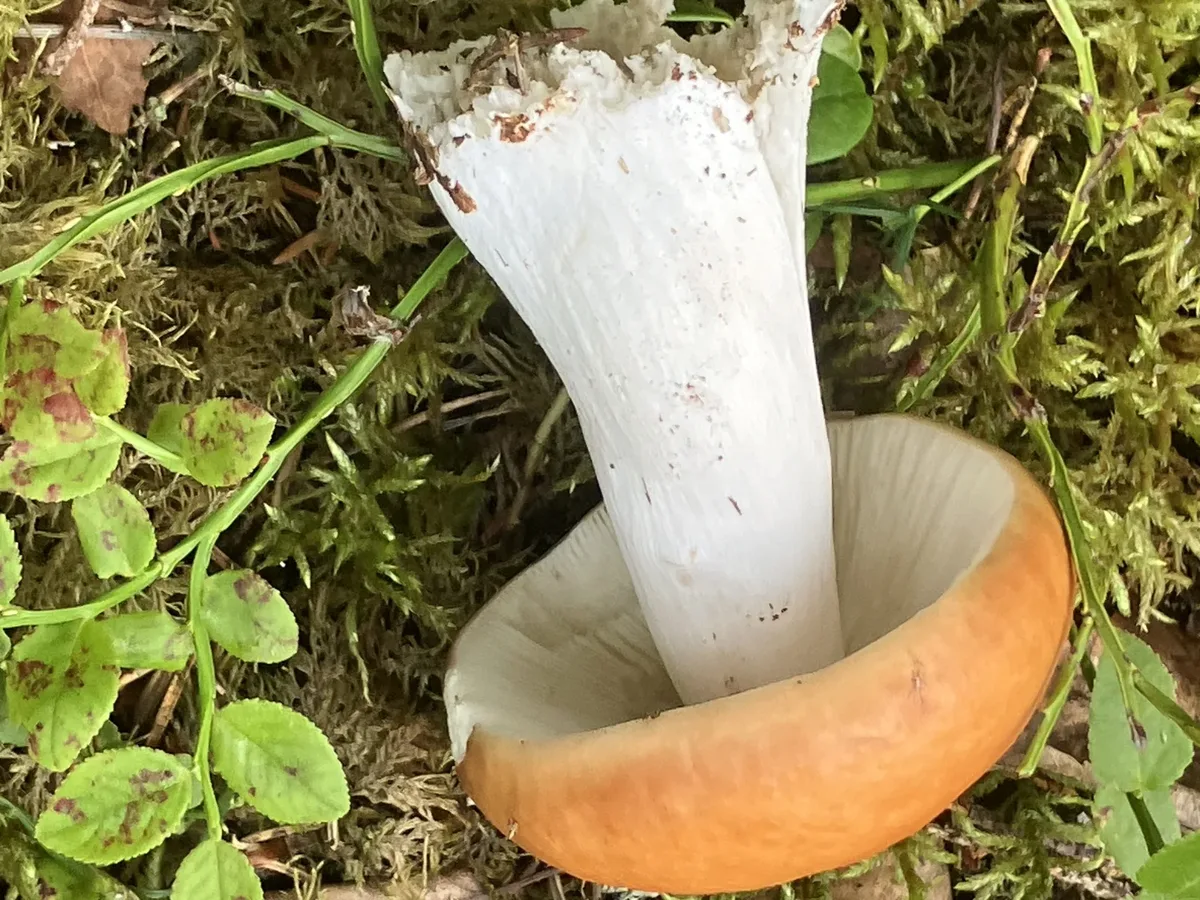 © Jonas Heggedal (CC BY)
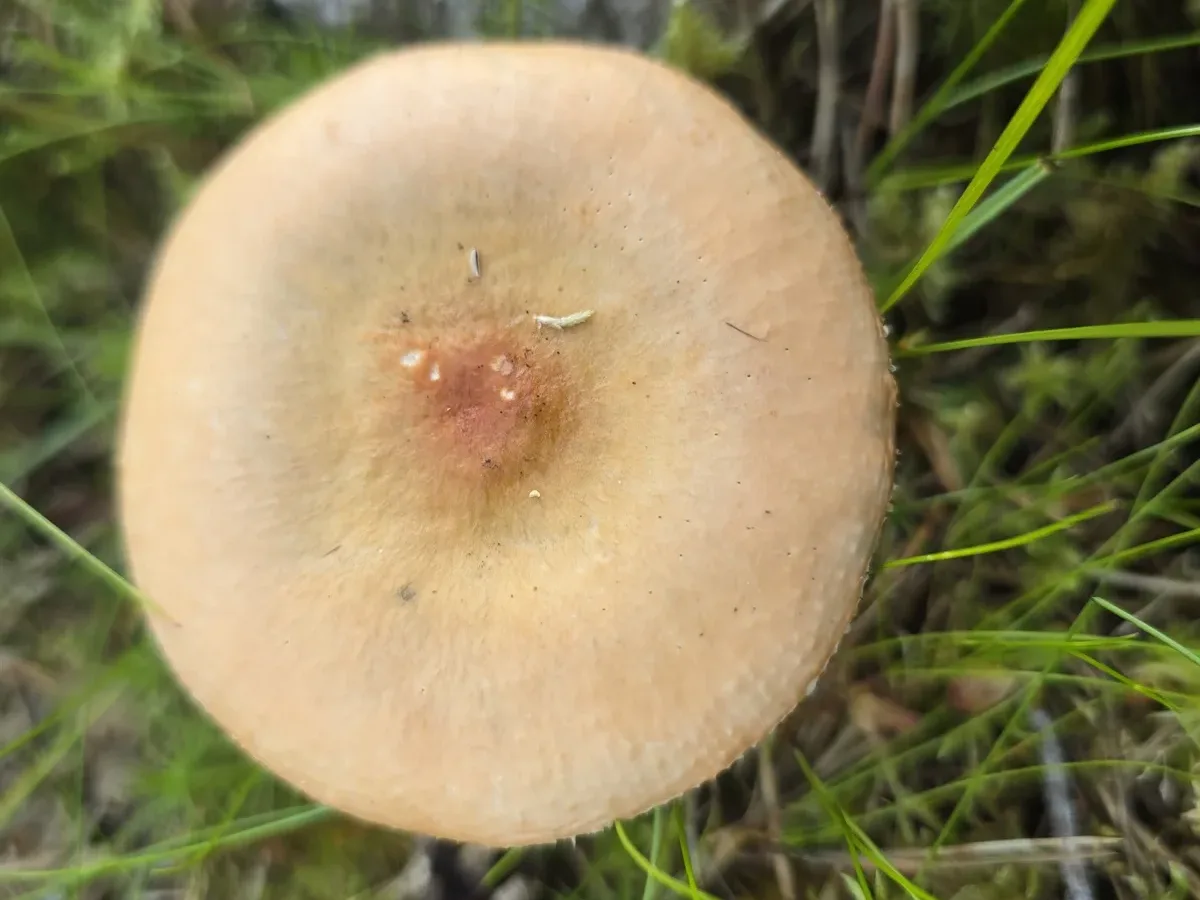 © Nils Edvard Stokke (CC BY)
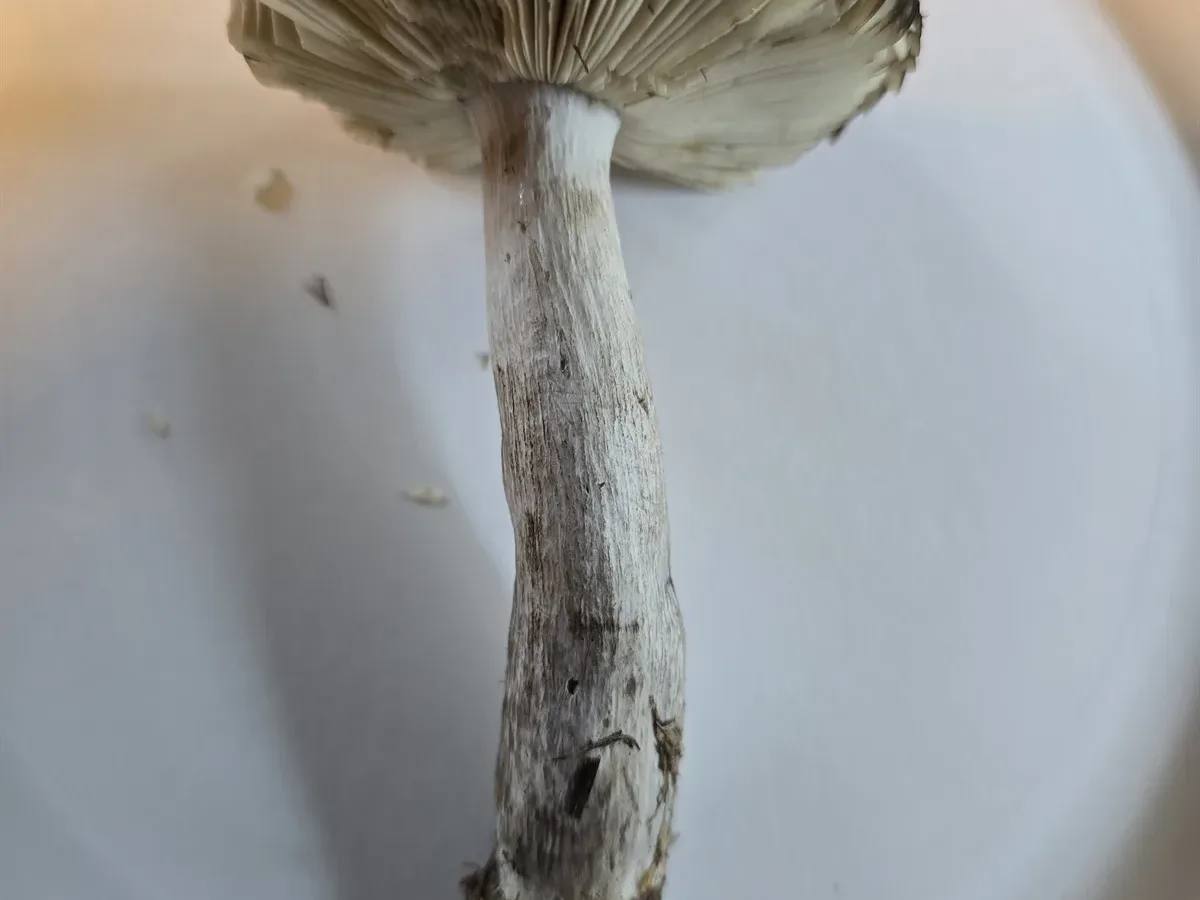 © Nils Edvard Stokke (CC BY)
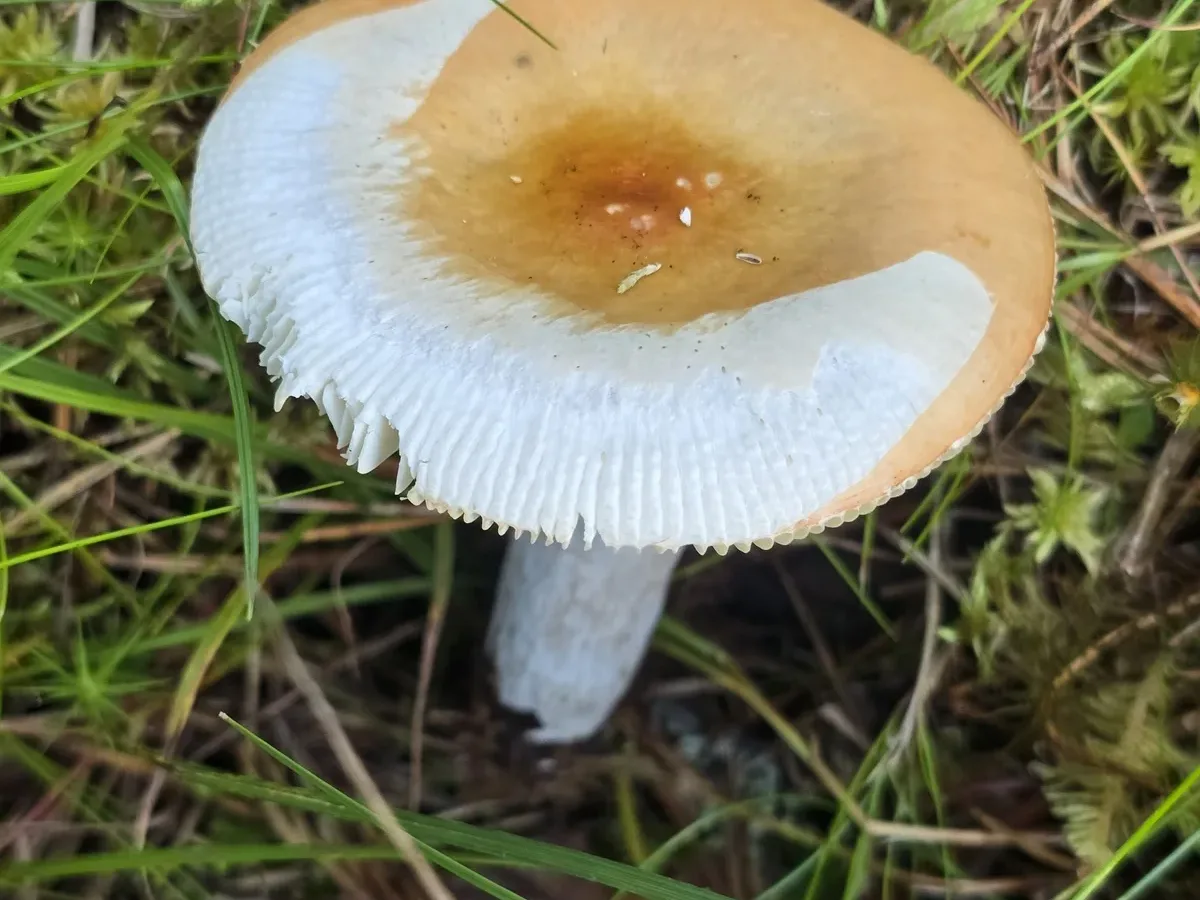 © Nils Edvard Stokke (CC BY)
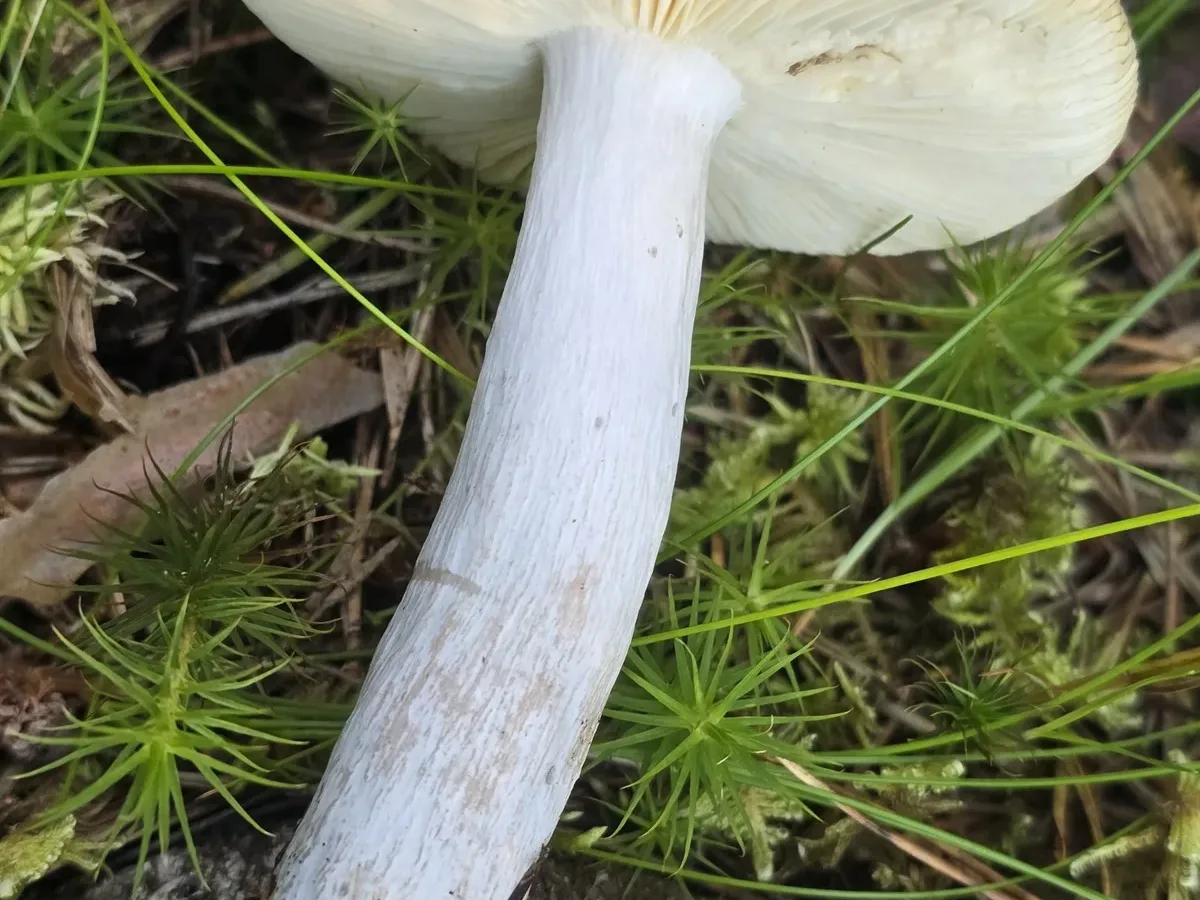 © Nils Edvard Stokke (CC BY)
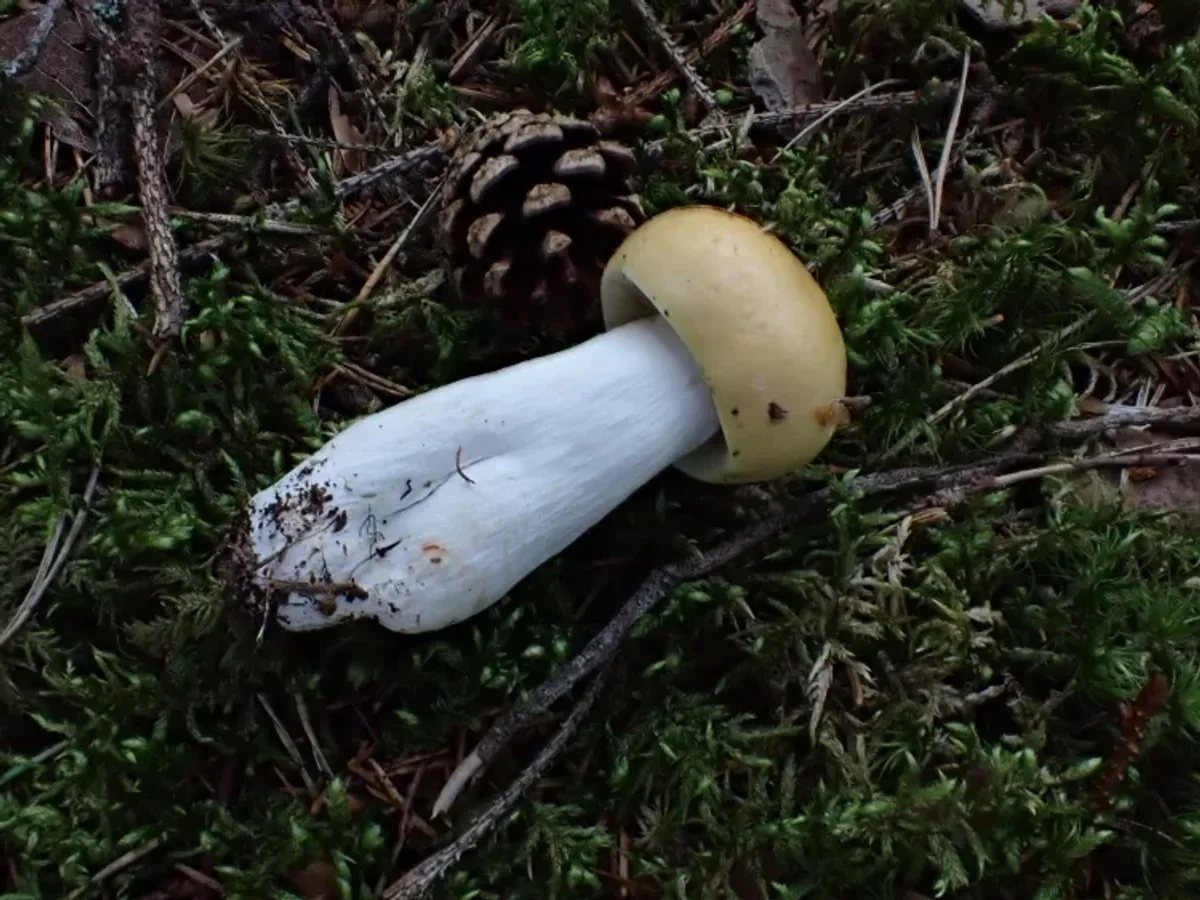 © Morten Pettersen (CC BY)© Kjersti Nerbråten Tjernshaugen (CC BY)© Jonas Heggedal (CC BY)
Good to eat, once you have identified it with certainty and cooked it through.
Never eat a mushroom you are not 100% sure of - check the look-alikes below, and always cook wild mushrooms.
How to recognise it
Russula decolorans is a medium to large brittlegill with two field marks that, used together, make it unmistakable: a copper-orange to brick-red cap that fades dramatically with age, and white flesh that turns grey then black within minutes of being cut.
Cap
The cap (5-12 cm) opens convex then flattens and becomes shallowly depressed. The surface is smooth and slightly viscid when wet, with cuticle that peels easily from the margin inward.
Fresh caps glow copper-orange, vermilion, or brick-red; older or weathered ones fade through tawny-salmon to a washed-out pale ochre-buff - recognising this fade matters because old caps can look misleadingly dull.
Gills
The gills are cream to pale ochre and brittle. The spore print is deep orange-ochre, distinctly more saturated than the pale ochre prints of species like Russula claroflava.
Stem
The stem is robust, white to pale grey, and does NOT stain yellow-ochre when cut (ruling out R. xerampelina).
Flesh
The single most reliable field test is the flesh-blackening reaction: cut a small piece of cap flesh or the stem and wait 15-30 minutes. The white flesh will turn progressively grey and then charcoal-black.
This is an enzymatic reaction (laccase-mediated oxidation of phenolic compounds), entirely harmless, but definitive for this species in its spruce-forest context.
Taste
The taste is mild throughout - never acrid or burning - which eliminates all the toxic red-capped russulas.
Where & when it grows
Habitat
Russula decolorans is a specialist of boreal conifer forests, where it lives as an ectomycorrhizal partner woven into the roots of Norway spruce (Picea abies) and Scots pine (Pinus sylvestris) - a partnership that runs for years unseen before a fruitbody ever emerges.
In Scandinavia it is one of the classic autumn mushrooms of the spruce forest understory, growing among bilberry, lingonberry, and the feathermoss layer (Pleurozium schreberi, Hylocomium splendens).
It colonises acidic, humus-rich mineral soils and slightly peaty substrates. But unlike the closely related Russula claroflava (which inhabits waterlogged Sphagnum bogs), R. decolorans prefers moderately moist to slightly dry forest floors with decent drainage.
Look for it in dense spruce stands and mixed spruce-pine forest, often along forest tracks and in semi-shaded areas. It is rarely found far from spruce or pine even where birch is also present.
In Finland and northern Sweden it is abundant and is one of the most reliably collected edible species of the main season.
When
Russula decolorans is a mid- to late-season species in the boreal calendar, fruiting from mid-July through October and peaking strongly in August and September across Scandinavia and Finland. It belongs to the core autumn flush rather than the early summer wave.
Fruiting is triggered by late-summer rainfall (typically needing at least 20-30 mm over 10-14 days) combined with cooling soil temperatures in the 8-15 °C range.
After a productive late-August or September rain event in productive spruce forest, this species can be very abundant. It persists later than many Russulas, sometimes fruiting until the first light frosts in October.
How it grows
Fruitbodies appear singly or in small scattered groups of two to five, never in dense clusters - each one the visible tip of a mycelium network that may have threaded the soil beneath that spruce for years.
Young buttons push up through the bilberry and moss layer and can be hidden under leaf litter. The cap emerges a vivid copper-red and bleaches progressively as the fruitbody matures.
Growth is moderately fast: a fruitbody goes from emergence to full size in roughly 3-7 days depending on temperature.
In ideal conditions - damp, cool, overcast weather - specimens persist for 1-2 weeks before softening and collapsing back into the forest floor.
Fruiting conditions
Flushes reliably after warm late-summer rains (minimum ~20 mm over 10-14 days) once soil temperature drops into the 8-14 °C range - typically from mid-August onward in Scandinavia. Less dependent on persistent moisture than bog-associated species; fruits in well-drained spruce forest once temperature and rain conditions align. Fruiting may restart after successive rain events through September-October.
Look-alikes
Several species must be distinguished, and one of them is genuinely deadly.
The most dangerous confusion is with Cortinarius rubellus (Deadly webcap, also called Fool's webcap) and related deadly Cortinarius species (C. orellanus, C. speciosissimus). These grow in the same conifer forest habitat and can show rusty-orange to brick-brown caps that might catch the eye alongside R. decolorans.
However, they are fundamentally different mushrooms:
- fibrous (not chalky-brittle) flesh;
- a rusty-brown to cinnamon spore print (vs. deep ochre);
- a cobwebby cortina veil on young specimens (a spider-web-like partial veil connecting cap edge to stem);
- rusty-brown rather than cream gills;
- no blackening reaction.
They contain orellanine, a potent kidney toxin whose effects are delayed 2-3 weeks after ingestion.
Always confirm the chalky Russula texture by snapping a gill (Russula gills break cleanly like chalk), check for any cobweb veil on young specimens (Russula has none), and do the flesh-blackening test.
Within Russula, the main comparisons are:
- Russula claroflava (Yellow swamp brittlegill) - also blackens on cutting, but cap is vivid pure chrome-yellow (not orange-copper), grows in Sphagnum bog with birch rather than spruce on drier soil, and has a paler ochre spore print; fully edible.
- Russula emetica (Sickener) - red cap, but white spore print, strongly acrid burning taste, white non-graying flesh; grows in bogs under conifers; causes gastrointestinal illness.
- Russula badia (Cedar brittlegill) - red-brown cap, bitter acrid taste, under pine; no blackening; inedible.
- Russula paludosa (Rosy russula) - large, vivid crimson-scarlet cap, mild taste, pale ochre spore print, NO blackening reaction; edible; favours damp spruce-pine areas in the north; can be told by absence of blackening.
The flesh-blackening test combined with mild taste and deep orange-ochre spore print definitively separates R. decolorans from all toxic lookalikes.
Cortinarius rubellus has fibrous (not chalky-brittle) flesh, rusty-brown gills (not cream), a rusty-brown spore print (not orange-ochre), a cobwebby cortina veil on young specimens connecting cap edge to stem, and no flesh-blackening reaction. It grows in the same spruce and pine forests. Contains orellanine, a kidney toxin with delayed onset of 2-3 weeks - potentially fatal. Never eat any reddish-brown forest mushroom without confirming the chalky Russula snap-test and the flesh-blackening reaction.
Cortinarius orellanus is tawny to brick-orange, with fibrous flesh, rusty-brown gills and spore print, and a cobweb cortina. No blackening. Deadly orellanine toxin with delayed kidney failure. Tell apart from R. decolorans by fibrous (not brittle) texture and rusty (not ochre) spore print.
Cap wine-red to brownish-red under pine; bitter, very acrid taste after a few seconds; no flesh blackening; pale ochre to ochre-yellow spore print. Inedible. Taste test (acrid vs. mild) immediately separates it from R. decolorans.
Large, vivid scarlet to cherry-red cap, mild taste, pale ochre spore print. Critically: the flesh does NOT blacken when cut - it stays white. Grows in damp spruce-pine forest in the north. Edible. Absence of blackening is the decisive difference from R. decolorans.
Vivid scarlet to cherry-red cap; white spore print (not ochre); strongly acrid, burning taste; flesh does not blacken; grows in bogs or wet ground under conifers. Causes gastrointestinal illness. Easy to separate from R. decolorans by acrid taste, white spore print, and absent blackening.
Also has flesh that grays to black when cut, but cap is vivid chrome-yellow (not copper-orange or red), spore print is pale ochre (paler than R. decolorans), and it grows in waterlogged Sphagnum bog with birch rather than on drier spruce forest floor. Edible.
In the kitchen
Picking & cleaning
Collect young to middle-aged specimens when the cap is still firm and the flesh has not yet begun to soften or show insect damage throughout.
- Verify the flesh-blackening reaction on a cut piece before filling your basket: wait at least 10-15 minutes and check for graying.
- Taste a small piece of cap flesh and spit - it should be mild, never acrid or peppery.
- Check the deep orange-ochre spore print by laying a cap gill-side-down on white paper for 20-30 minutes.
- Confirm spruce or pine habitat.
Once all four characters align (copper-red cap fading to ochre-buff; flesh graying-to-black; mild taste; deep ochre spore print; spruce/pine forest), identification confidence is high.
Cut at the base with a knife; the mushroom is firm and transports well.
Cooking
The copper brittlegill has mild, pleasant flavour and firm flesh that makes it a useful addition to the autumn mushroom harvest.
It is best sautéed in butter over moderate-high heat; the flesh will darken visibly during cooking, turning grey-black, which is purely aesthetic and does not affect flavour or safety.
For mixed dishes where visual appearance matters, this species is best cooked separately or used in soups and stews where darker colour blends in.
The flavour pairs well with butter, onion, garlic, thyme, and cream. It can be added to risotto, pasta sauces, and game dishes, or used in mixed mushroom soups where it contributes body and a mild earthiness.
In Finland and Sweden it is also traditionally salted (lacto-fermented), which preserves it for winter and mellows any residual bitterness.
Drying is possible at low temperature but the darkened flesh may not be visually appealing; powder form is useful as a seasoning.
As with all Russulas, always cook thoroughly before eating - never consume raw.
Good to know
Russula decolorans is a safe, good-quality edible species with a long tradition of collection and consumption in Scandinavia and Finland. It contains no known toxins.
The dramatic graying-to-black of the flesh when cut is entirely due to enzymatic oxidation (laccases acting on phenolic substrates in the flesh) and is harmless. It does not indicate spoilage or toxicity, but it should be forewarned to anyone unfamiliar with the species, as the cooked flesh may also darken.
The most important safety requirement is distinguishing R. decolorans from Cortinarius rubellus and related deadly webcaps that share the same habitat. The three-point check must all be confirmed:
- 1chalky-brittle Russula texture and absence of cortina veil;
- 2flesh that grays to black when cut;
- 3mild (never acrid) taste.
A deep orange-ochre spore print (not rusty-brown, not white) provides additional confirmation.
Never eat any forest mushroom from conifer habitats that you cannot confidently separate from deadly Cortinarius species.
A reference guide - never an edibility guarantee. When in doubt, leave it out.