Charcoal Burner
Russula cyanoxanthasyn. Agaricus cyanoxanthus Schaeff., Russula cyanoxantha f. peltereaui Singer, Russula cyanoxantha var. variata
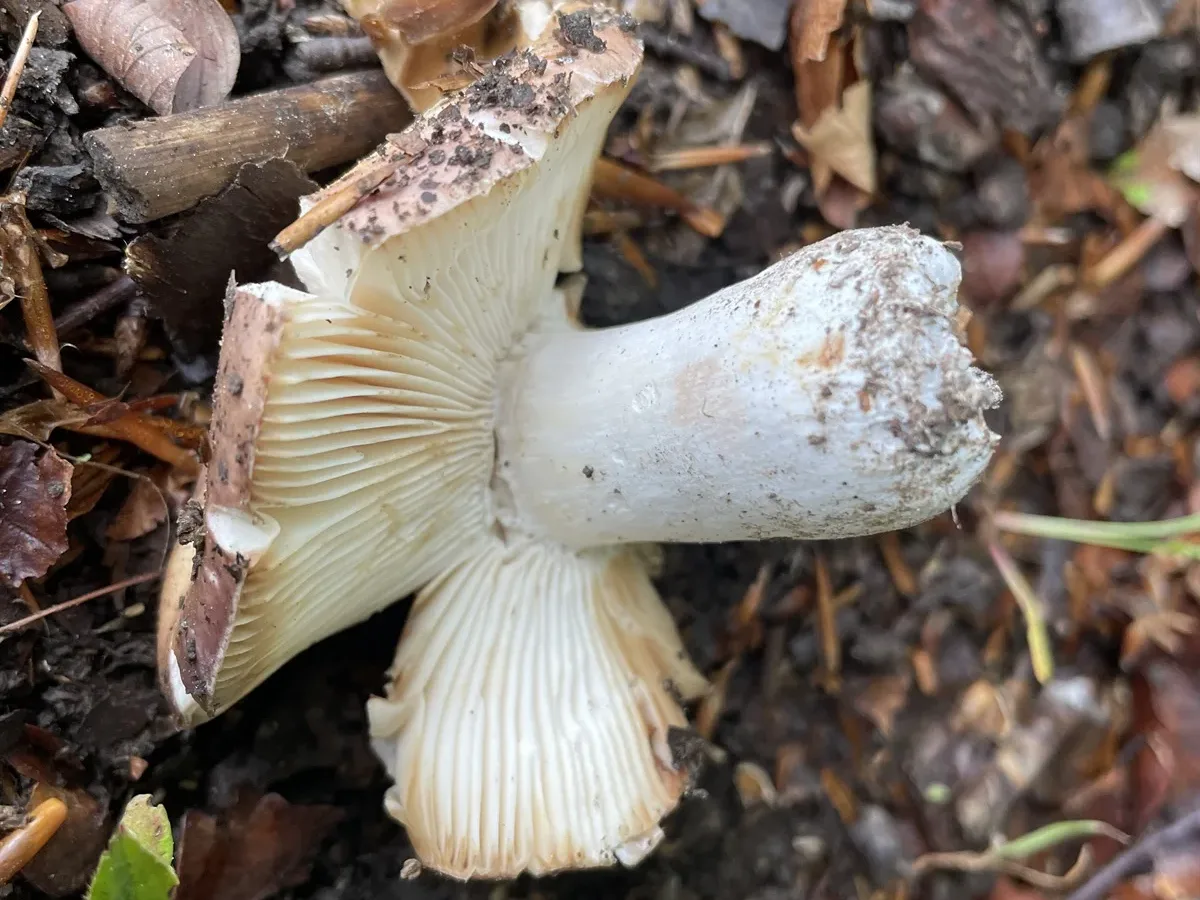 © Bjørn Eidhammer (CC BY)
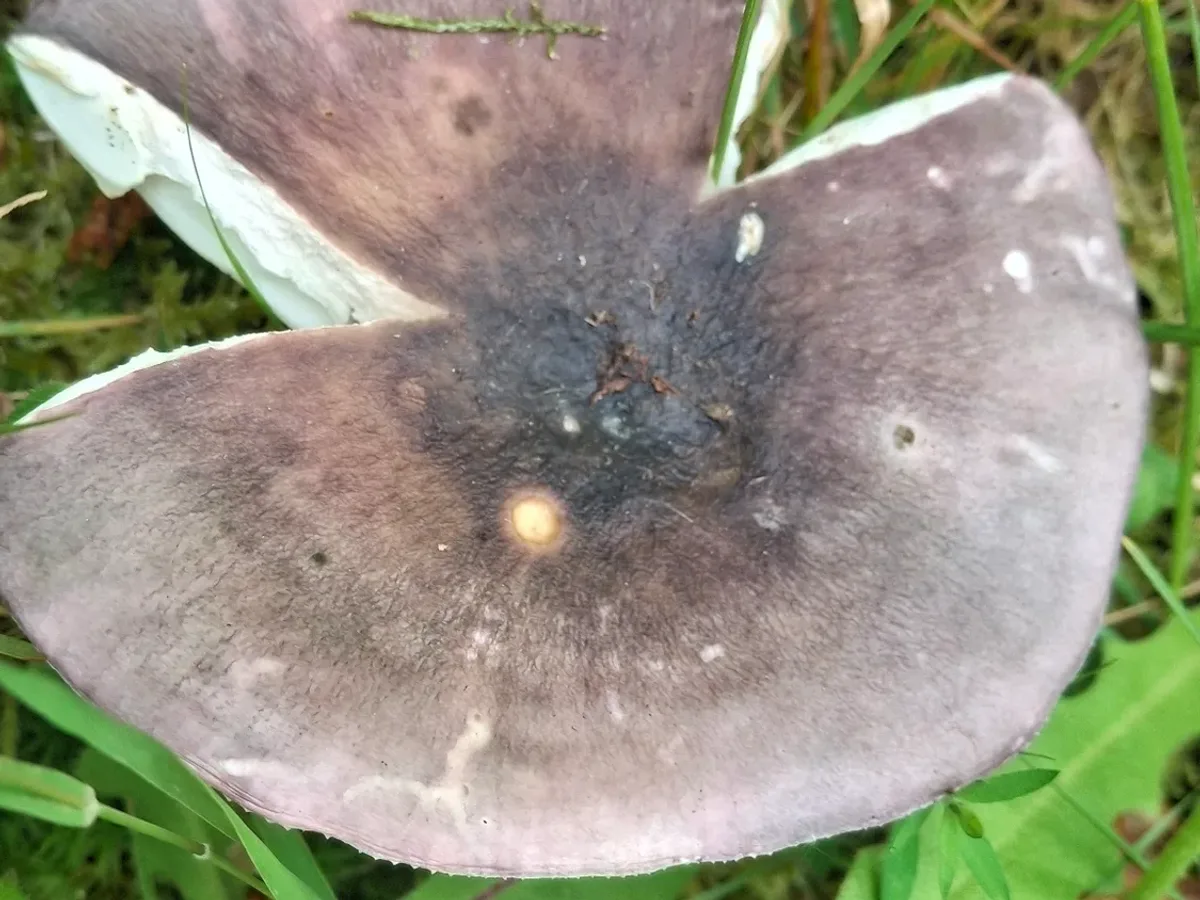 © Carminda Santos (CC BY)
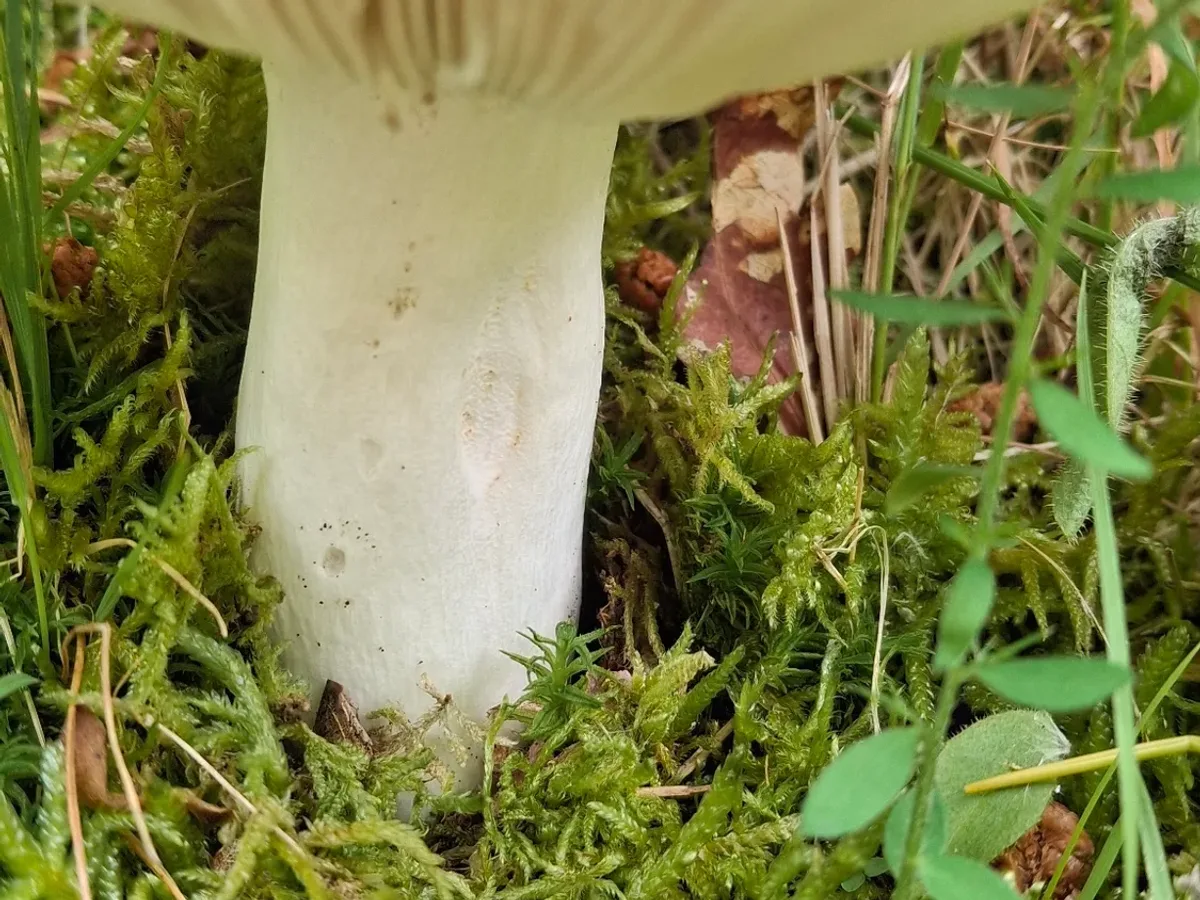 © Carminda Santos (CC BY)
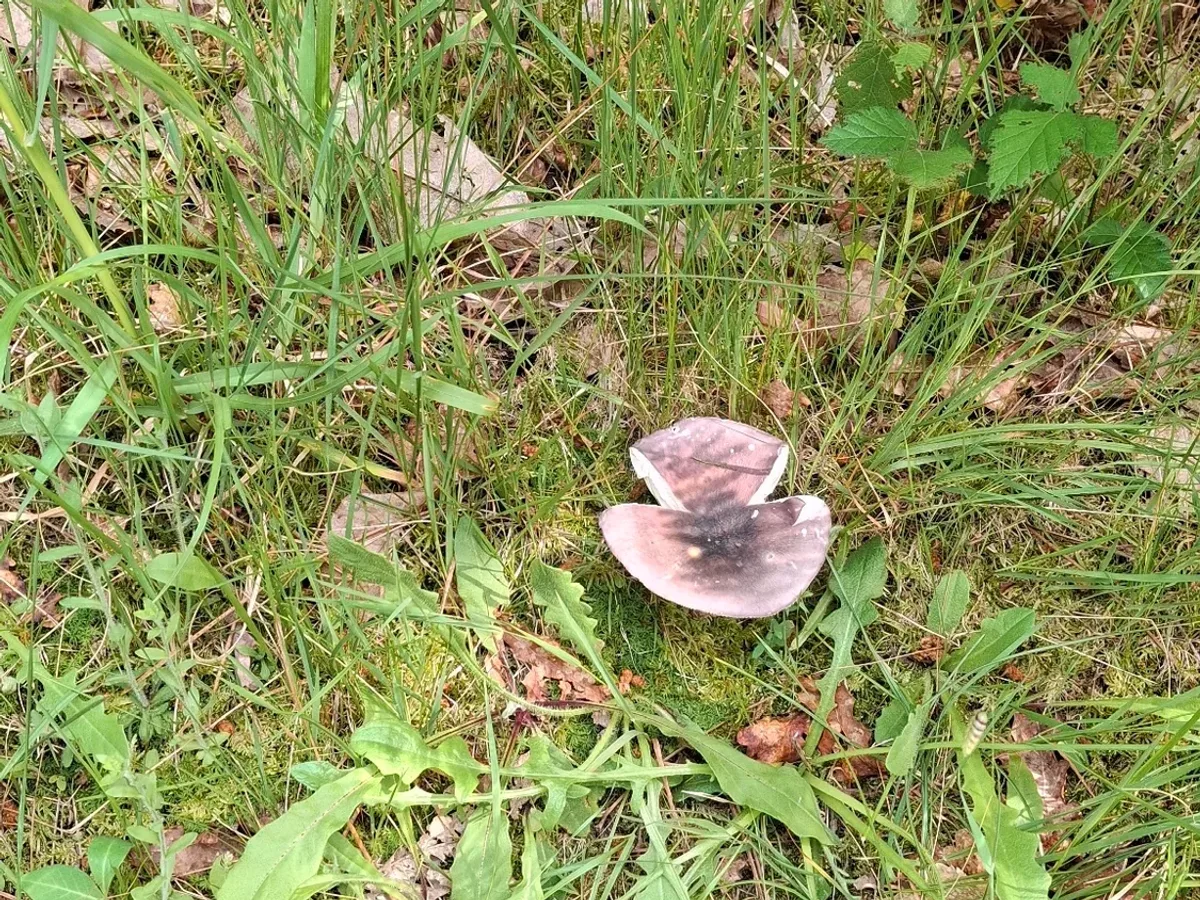 © Carminda Santos (CC BY)
 © Patrick Bayan (CC BY)
 © Patrick Bayan (CC BY)© Bjørn Eidhammer (CC BY)© Carminda Santos (CC BY)
Good to eat, once you have identified it with certainty and cooked it through.
Never eat a mushroom you are not 100% sure of - check the look-alikes below, and always cook wild mushrooms.
How to recognise it
Cap
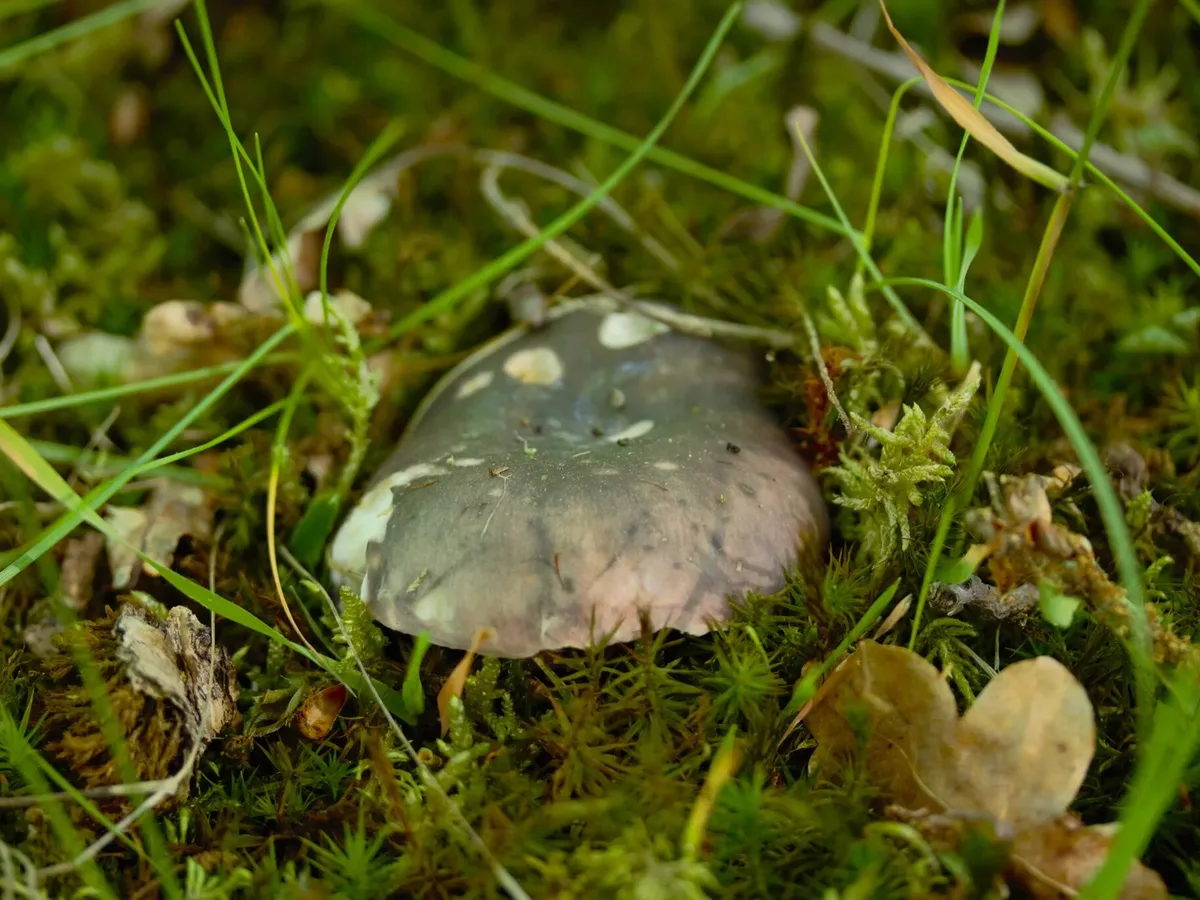
The Charcoal Burner earns its scientific name cyanoxantha ("blue-yellow") from its famously variable, watercolour-like cap, which blends violet, lilac, slate-blue, grey-green, olive, wine and ochre tones - often several at once on a single mottled cap, with the centre usually darkest.
The cap is 5-15 cm, convex then flattening and finally slightly dished, smooth and a little greasy when wet, with a thin margin that becomes faintly grooved in age. The cuticle peels about halfway.
Gills
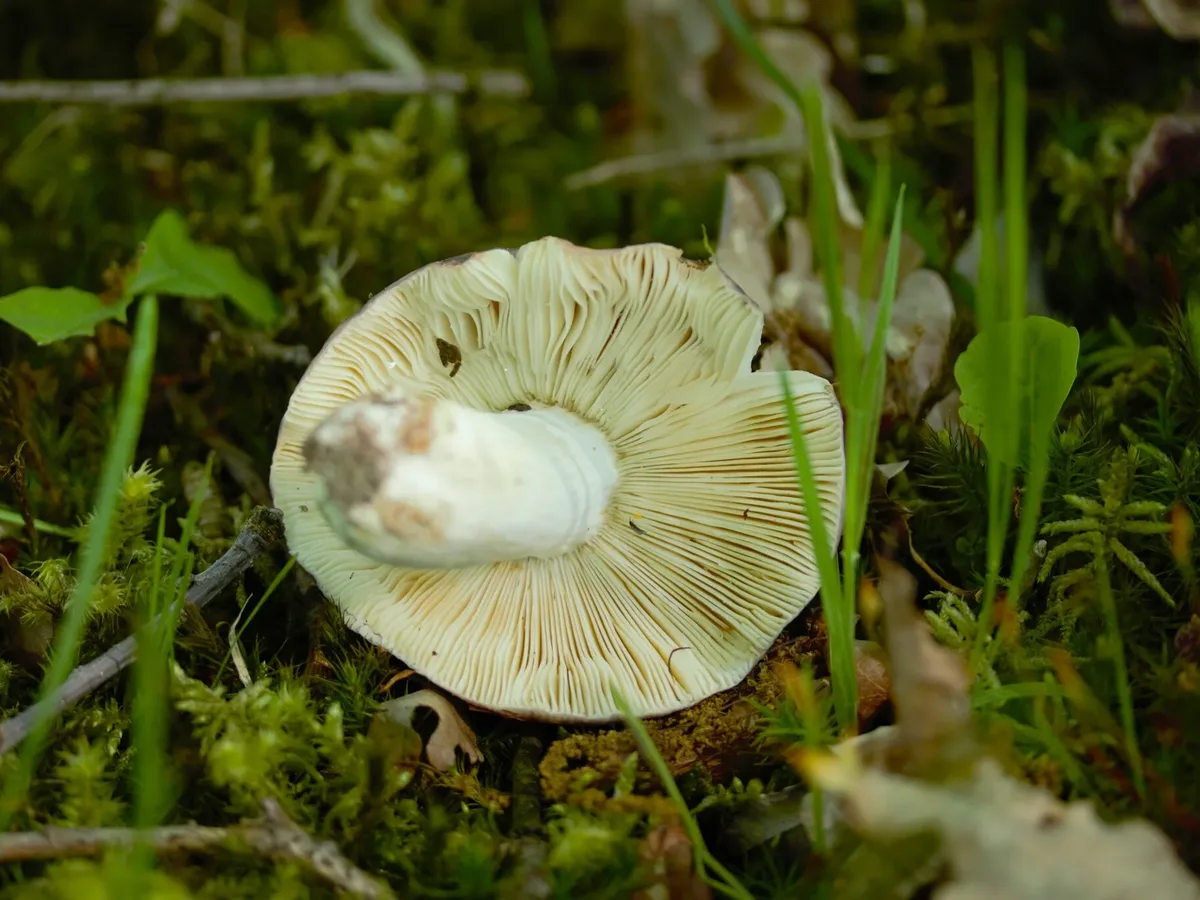
The decisive feature is underneath: the gills are white, moderately crowded, frequently forked, and - uniquely among the russulas - soft, supple and greasy rather than brittle.
Run a finger across them and they bend like lard without snapping; on every other Russula they crumble.
Stem
The stem is white, firm and cylindrical (4-10 x 1.5-3 cm), sometimes faintly lilac-flushed, with no ring and no volva.
Flesh
Flesh is white and unchanging, with a mild, pleasant, slightly nutty taste and faint fruity smell.
Where & when it grows
Habitat
A woodland mushroom of mature deciduous and mixed forest, almost always found in the company of broadleaved trees.
It is one of the commonest large russulas of European beech and oak woods, also appearing under birch, hornbeam, sweet chestnut and hazel, and in mixed stands alongside conifers.
It favours well-drained, neutral to slightly acid soils and prospers in dappled shade on the forest floor among leaf litter.
When
It is among the earliest large russulas to fruit, appearing from June after warm summer rains and continuing in waves until the first hard frosts in November.
The main season runs from late August into October, when it can be one of the most numerous big mushrooms in a beech or oak wood after a damp spell.
How it grows
Grows singly or in scattered troops, never in tight clusters and never on wood.
As an ectomycorrhizal partner it draws sugars from living trees and supplies them with water and minerals in return, so its fruit bodies always emerge within the rooting zone of a host.
New caps appear within a week or so of soaking autumn rain.
Fruiting conditions
Mycorrhizal; flushes follow soaking summer-to-autumn rain once soils are warm. Earliest large russula to appear, fruiting from early summer through autumn whenever conditions stay damp and mild.
Look-alikes
The biggest danger is not another russula but a deadly Amanita.
The death cap (Amanita phalloides) can wear an olive-green, grey-green or even violet-tinged cap that falls squarely within R. cyanoxantha's colour range, and the panther cap (Amanita pantherina) is a brown-capped, seriously poisonous species. Both are white-gilled, white-stemmed woodland mushrooms that a careless eye could mistake for a russula.
The absolute rule - any Amanita has:
- a ring (skirt) on the stem and/or a volva (a membranous sac or girdled, bulbous swelling) at the stem base
- free, non-brittle white gills
- fibrous (not chalky) flesh
R. cyanoxantha has:
- no ring, no volva
- attached, forking gills
- within the genus, uniquely soft, flexible, greasy gills
Among the common European russulas in this colour range none is deadly: the harmless mild species have brittle, crumbling gills and most give a salmon-pink FeSO4 reaction, whereas R. cyanoxantha's gills bend and its FeSO4 reaction stays negative or turns greenish.
Acrid red 'sickener' russulas (e.g. Russula emetica) are sharply peppery and merely cause stomach upset.
Never eat any white-stemmed woodland cap until you have lifted the whole stem and confirmed there is no volva and no ring.
The deadliest confusion. The death cap can show an olive-green, grey-green or faintly violet cap that overlaps R. cyanoxantha's colour range, and is also white-gilled and white-stemmed. It always has a membranous sac-like volva at the stem base and usually a skirt-like ring on the stem; its gills are free and its flesh fibrous, not chalky-brittle. R. cyanoxantha has NO volva, NO ring, attached forking gills, and uniquely soft, flexible, greasy gills. The death cap's mild taste means a taste test will NOT detect it - always dig up the whole stem and rule out a volva and ring before eating.
An Amanita, NOT a russula, and seriously (potentially fatally) poisonous. It has a ring on the stem, a bulbous base with one or more girdling volval rings, and free white gills with fibrous, non-brittle flesh; the cap is usually brown with white wart-like veil patches. R. cyanoxantha has no ring, no volva, attached forking gills and chalky-snapping flesh. Never eat a white-stemmed cap until you have ruled out a volva and ring.
R. nigricans has thick, widely spaced brittle gills and flesh that reddens then blackens on cutting; R. cyanoxantha has crowded forking flexible gills and flesh that stays white.
All other russulas have classically brittle gills that snap and crumble; R. cyanoxantha alone has soft, flexible, greasy gills that bend without breaking. Most also give a salmon-pink FeSO4 reaction, whereas this species stays negative/greenish. All mild russulas in this colour range are edible; none is deadly.
Sickeners are bright red-capped with a fiercely acrid, peppery taste and cause vomiting and stomach upset (not death); R. cyanoxantha is mild-tasting with a mottled violet-green cap. A chewed-and-spat taste test settles it.
In the kitchen
Picking & cleaning
Cut or twist the stem cleanly at the base - and always lift the whole stem so you can inspect the very base, because a hidden volva (sac or girdled bulb) is the giveaway of a deadly Amanita.
Check the gills immediately: gently stroke them with a fingertip - on R. cyanoxantha they flex and feel greasy, never shattering.
Choose firm, young to middle-aged caps; old specimens turn spongy and are readily maggot-ridden.
The mild, nutty taste of a tiny chewed-then-spat fragment is a useful confirmation, since this species and other mild russulas are never acrid.
Never rely on taste alone - it does not detect the deadly amatoxins of a death cap, which is also mild-tasting.
Cooking
One of the better-eating russulas - firm-fleshed, mild and pleasantly nutty, holding its texture well in the pan.
Discard the tougher stems, slice the caps and saute in butter, or add to soups, stews, omelettes and mixed-mushroom dishes.
It can be dried or fried, takes seasoning happily, and unlike many russulas does not turn soft and watery on cooking.
Always cook it through; it should never be eaten raw.
Good to know
R. cyanoxantha is itself a safe, beginner-friendly edible. The common European russulas contain no deadly species, and mild-tasting russulas with brittle chalky flesh, a white-to-ochre spore print and a part-peeling cuticle are reliably edible.
Sharply acrid, peppery ones are rejected as they cause stomach upset. Note that a very few russulas elsewhere in the world, such as the Asian/North American Russula subnigricans, are dangerously poisonous, so "it is a russula" is never on its own a guarantee of safety.
BUT the genuine, life-threatening risk lies in misidentifying the mushroom as a russula in the first place. The death cap (Amanita phalloides) and panther cap (Amanita pantherina) grow in the same woods, can show overlapping cap colours, and are also white-gilled and white-stemmed.
The death cap is among the most lethal fungi on earth, and its mild, even pleasant taste means the taste test will not protect you.
Before anything reaches the pan:
- Dig up the entire stem and prove there is no volva (sac or girdled bulb) at the base and no ring on the stem.
- Confirm white gills and a white spore print.
- Confirm the gills are soft, flexible and greasy and the rest of the flesh snaps like chalk.
If any doubt remains, do not eat it.
Cook thoroughly; never eat any wild mushroom raw.
A reference guide - never an edibility guarantee. When in doubt, leave it out.