Crusty Russula
Russula crustosasyn. Russula crustosa Peck
 © Brian C. Hunt (CC BY)
 Po T Ato (CC0)
 Po T Ato (CC0)
 Po T Ato (CC0)
 Po T Ato (CC0)
 Po T Ato (CC0)
 Po T Ato (CC0)
 © Brian C. Hunt (CC BY)© Brian C. Hunt (CC BY)Po T Ato (CC0)
Good to eat, once you have identified it with certainty and cooked it through.
Never eat a mushroom you are not 100% sure of - check the look-alikes below, and always cook wild mushrooms.
How to recognise it
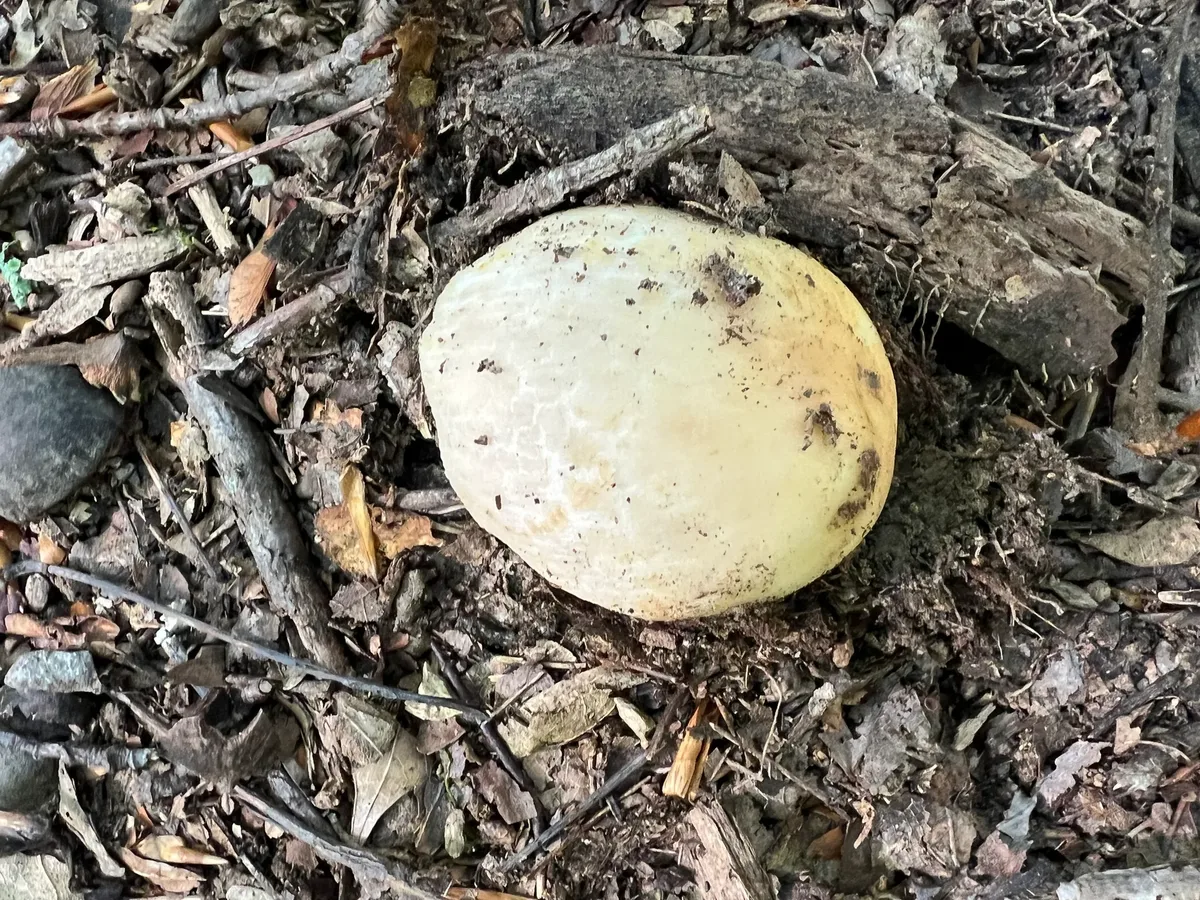
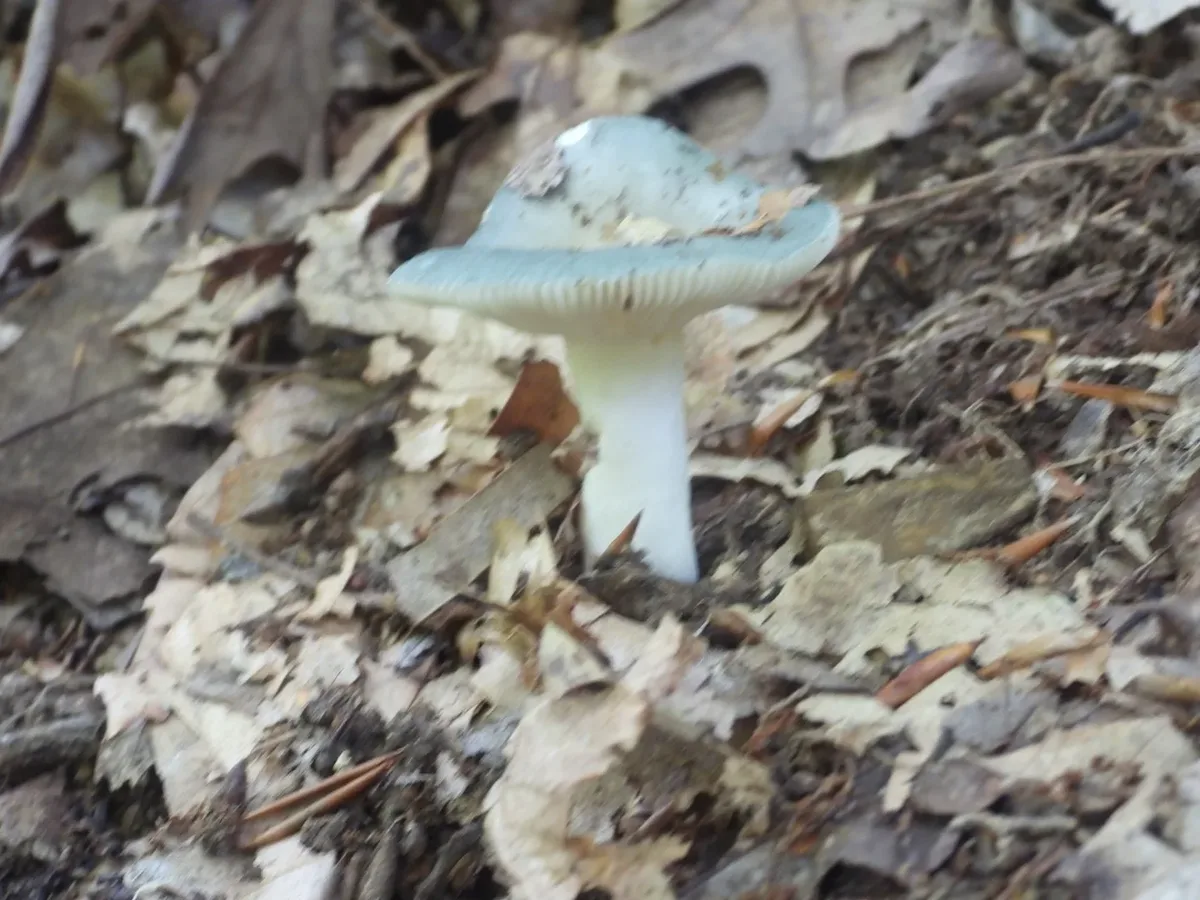
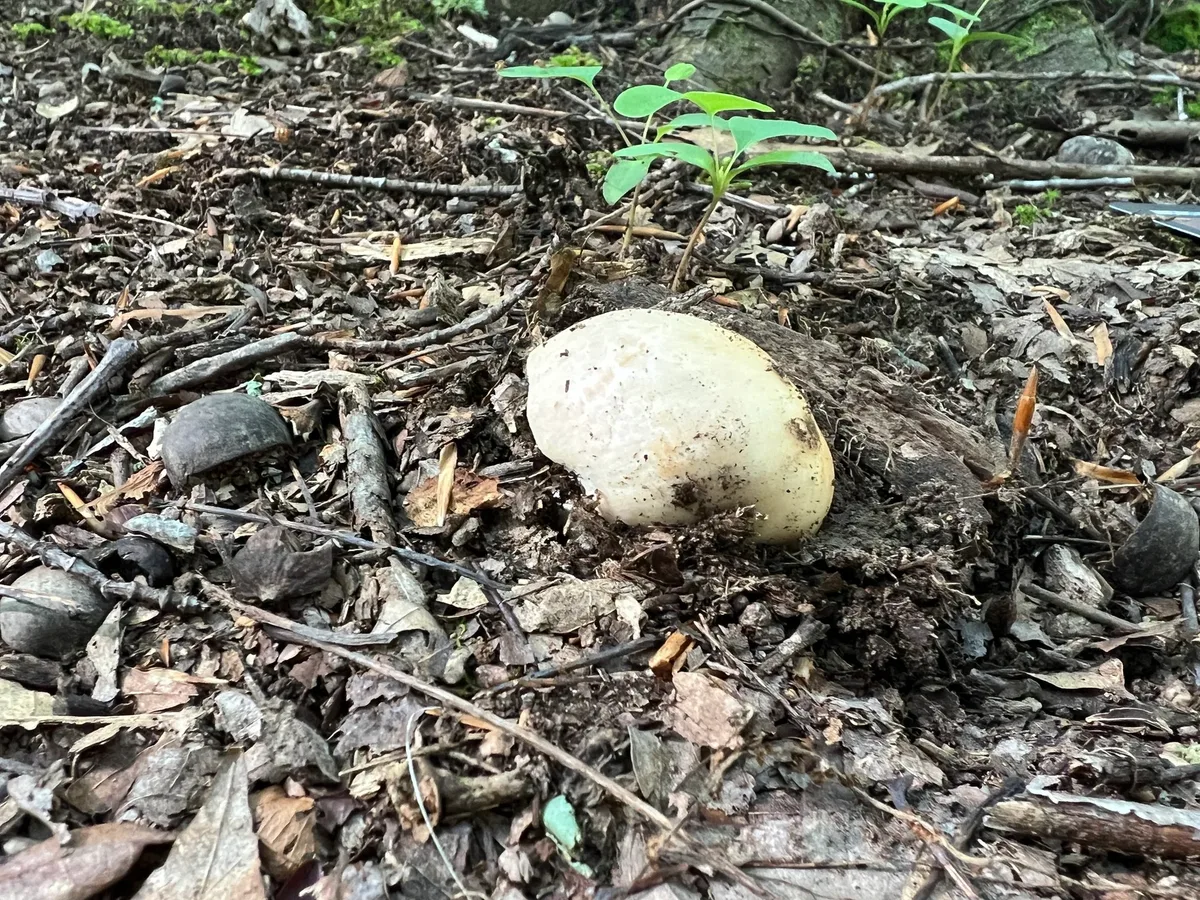
The Crusty Russula announces itself most clearly when dry: the cap surface cracks into a rough, irregular network of angular patches, like old paint or dried earth, giving it a distinctly crusty texture that is almost unique among the common market russulas of East Asia.
Cap
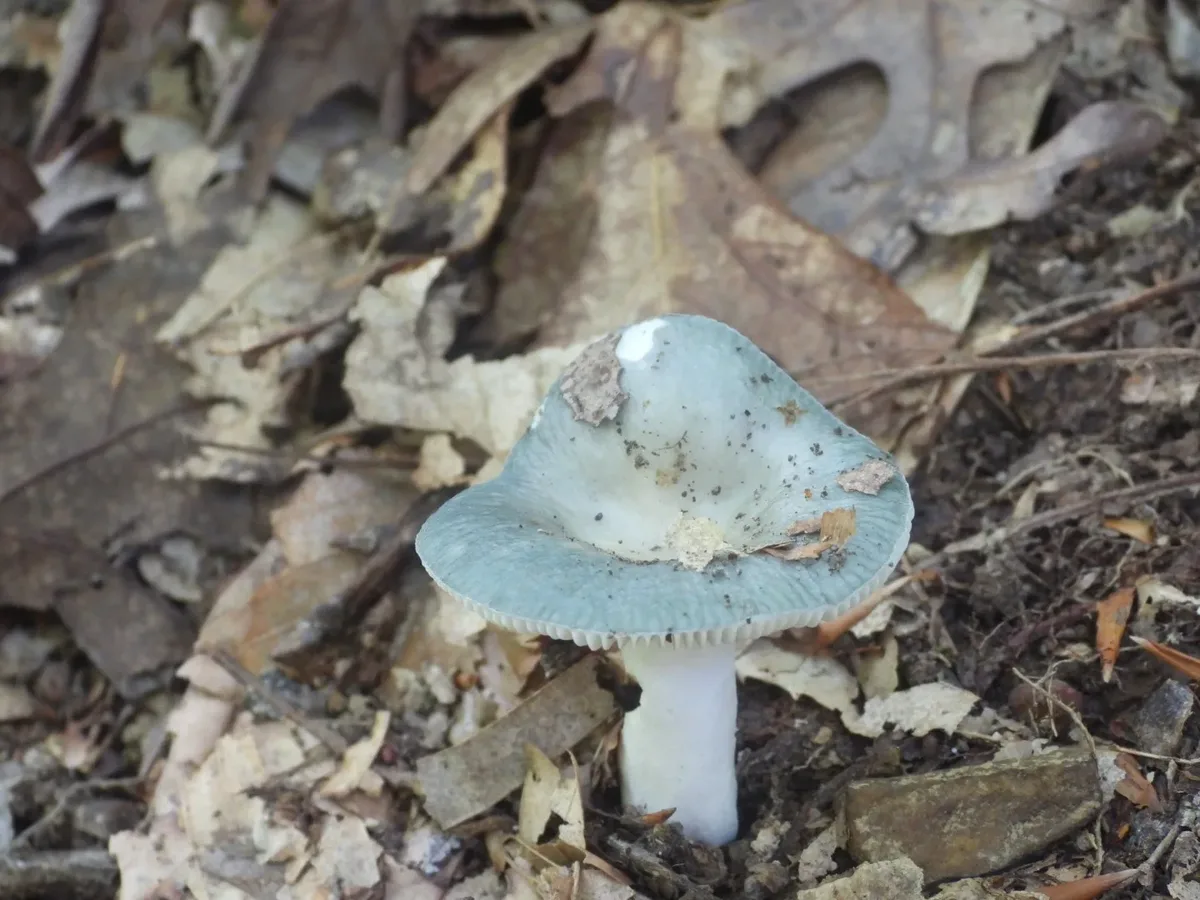
When wet and young, the cap is smooth, slightly viscid, and honey-to-ochre-buff in colour - a warm, quiet yellow-brown - but as it dries out in the summer heat between rain spells, the cuticle contracts and splits into these characteristic areolate sections.
The cap is 5-12 cm, broadly convex in youth, settling to flat or shallowly depressed at full maturity, with a margin that becomes finely ribbed in old age.
Gills
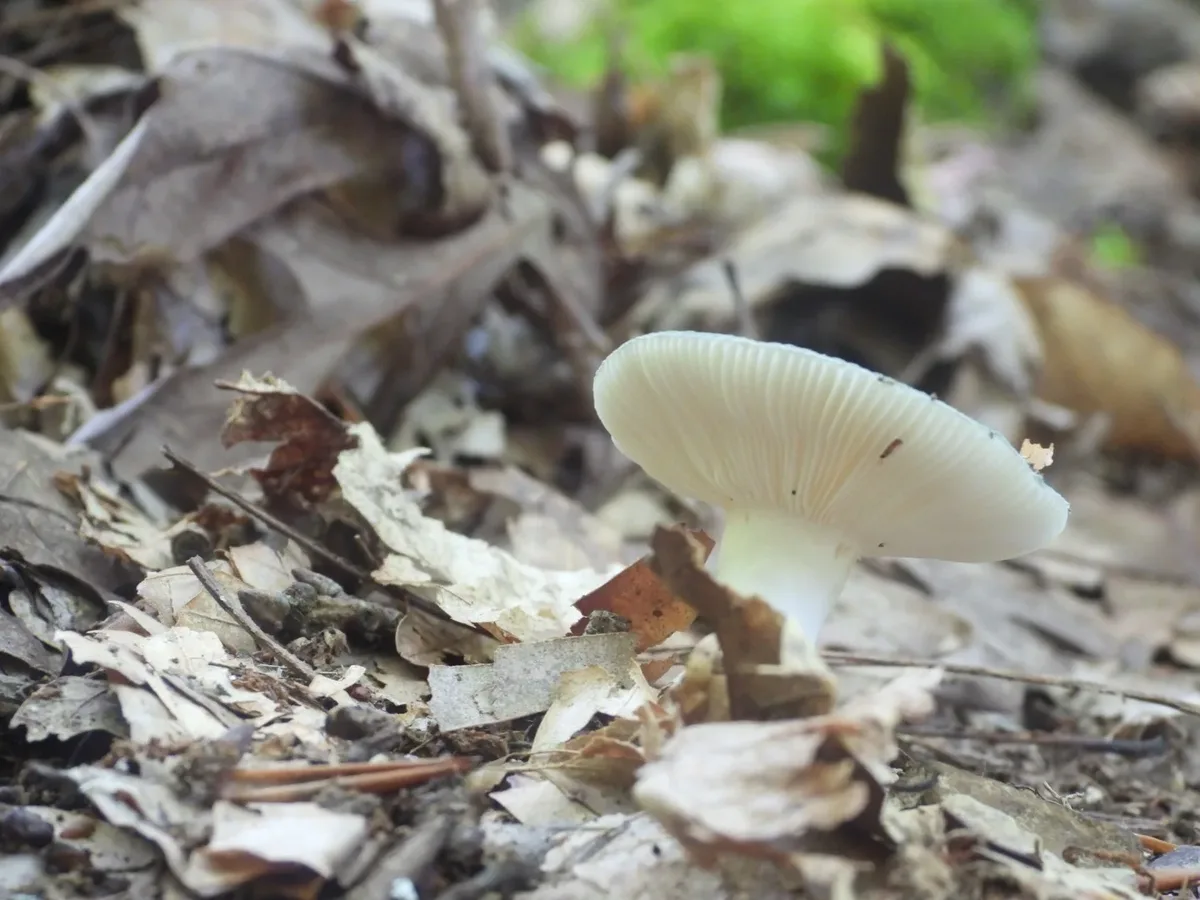
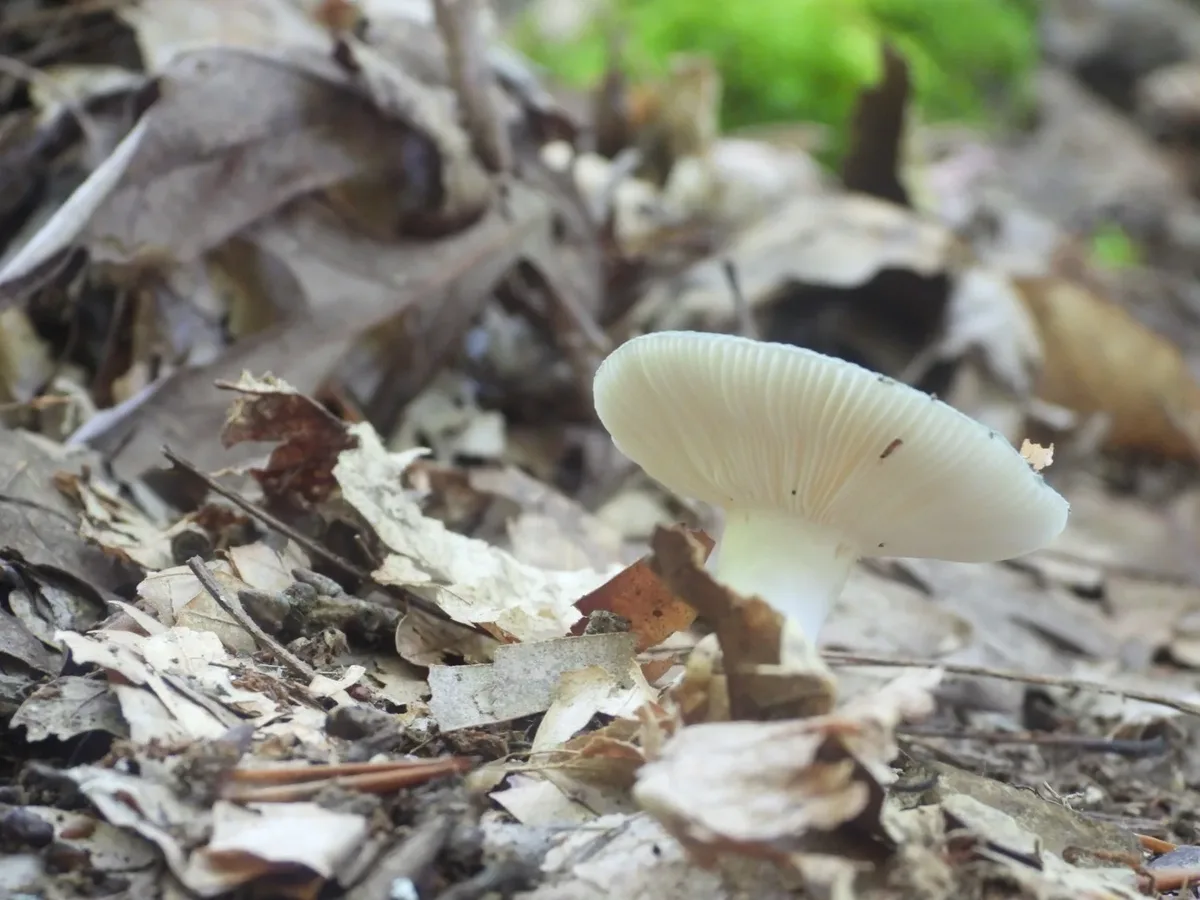
The gills underneath are white to pale cream, moderately crowded, and snap cleanly - the brittle, chalk-like quality of all russula gills.
They do not flex, bend, or feel greasy; running a fingertip along them breaks the lamellae with a dry crumble, exactly as you would expect from chalk.
Stem
The stem is white, firm, and smooth, 3-8 cm tall, with no trace of a ring or any membranous structure at the base.
Flesh
Flesh is white throughout and stays white when you cut it - no colour change, no latex, no reaction.
Smell & taste
The smell is mild and pleasant, faintly fruity, and the taste is completely non-acrid: mild and slightly nutty, never peppery.
Where & when it grows
Habitat
Russula crustosa grows in warm-temperate and subtropical broadleaved or mixed forests where oaks (Quercus, Castanopsis, Lithocarpus) are present, the tree families with which it most reliably forms its ectomycorrhizal partnership.
In East Asia this means the mixed oak and pine forests of southern and central China, and the broader region from subtropical forests of Vietnam and southern Japan to the oak-dominated hills of Korea and eastern China.
Because it is mycorrhizal - meaning it grows only in symbiosis with the living roots of specific trees - it appears reliably on the forest floor beneath host trees but never on wood, open grassland, or degraded land without appropriate canopy.
The soils it favours are moderately well-drained to moist, often slightly acidic clay and loam soils that hold summer moisture well under a closed canopy.
When
The main fruiting season in East and Southeast Asia follows the summer monsoon: warm, rain-saturated soils from June onwards trigger the first flushes, and fruiting continues in waves through September and into October as rains taper.
In the subtropical forests of southern China, where the monsoon arrives earlier and temperatures remain warm into autumn, the season may begin as early as May and extend to November.
The dry-cracked cap appearance is most pronounced mid-season, when brief dry spells alternate with rain between June and August.
In eastern North America (the species' original range), the same summer-to-autumn pattern holds under oaks from June through October.
How it grows
Russula crustosa grows singly or in loose scattered groups, occasionally with two or three fruiting bodies arising near the same tree root. It does not form rings, clusters, or bunches, and is never found on decaying wood.
Because it is obligately mycorrhizal, finding it far from forest or without an appropriate host tree would be a red flag for misidentification.
Fruit bodies emerge relatively quickly after rain - within about a week of a soaking event - and the caps may dry and crack within days if warm, sunny weather follows.
Individual fruiting bodies are moderately durable, remaining firm for several days before softening and attracting insect larvae.
Fruiting conditions
Monsoon-driven in East Asia: sustained warm-season rainfall at soil temperatures of 14-26 °C triggers fruiting, with new fruit bodies appearing roughly 5-12 days after soaking rain. The characteristic cracked cap surface develops as the cap dries out between rain events. Ectomycorrhizal with oaks and related Fagaceae; will not fruit away from host trees.
Look-alikes
The most dangerous confusion is not with other russulas but with deadly Amanita species that grow in the same forests.
Several Amanita species - including the death cap (Amanita phalloides s.l.) and destroying angel relatives (Amanita virosa group) - share the same oak and mixed broadleaved forests in both East Asia and North America, produce a white-gilled, white-stemmed fruit body, and may carry a cap colour in the yellow-buff to pale ochre range that overlaps with R. crustosa.
These Amanita species contain amatoxins that destroy the liver with a clinically silent latency of 6-24 hours; the mild, pleasant taste provides no warning whatsoever at the time of eating.
The absolute distinguishing characters are:
- any Amanita always has a volva (sac-like cup or girdled bulb) at the stem base and typically a ring (skirt) on the stem
- its gills are free (not attached to the stem), non-brittle
- the flesh is fibrous rather than chalky
Russula crustosa has NONE of these features.
Within the genus Russula, the critical Asian danger is Russula subnigricans, which causes fatal rhabdomyolysis (severe skeletal muscle breakdown leading to kidney failure). R. subnigricans is a dull brownish-white to greyish mushroom whose flesh slowly reddens then darkens when cut - very different from R. crustosa's pale warm-buff cap with its distinctive cracked surface and permanently white unchanging flesh.
Any russula in East Asian forests with flesh that reddens when broken must be avoided entirely.
Other mild, pale-capped russulas (R. brevipes-group, R. delica-group) found in the same habitat are edible and the confusion poses no safety risk; the cracked cap surface of R. crustosa is distinctive among them.
The most dangerous confusion within the genus Russula in East Asian forests. R. subnigricans causes fatal rhabdomyolysis (skeletal muscle breakdown and kidney failure). It is a dull brownish-white to greyish mushroom - not warm ochre-buff - and its flesh slowly reddens when cut, then may darken further. R. crustosa has a warm honey-to-ochre-buff cap with a characteristic cracked surface, and its flesh stays permanently white when cut with no colour change. Never eat any Asian russula whose flesh reddens or darkens when broken.
The deadliest possible confusion. Death cap and related amatoxin Amanitas grow in the same oak and mixed broadleaved forests, can show a pale yellowish to olive-buff cap in the same colour range as R. crustosa, and are also white-gilled and white-stemmed. Key Amanita features entirely absent from all russulas: a membranous sac-like volva (cup) at the stem base, a ring (skirt) on the stem, free (not attached or decurrent) gills, and fibrous flesh that does not snap. R. crustosa has NO volva, NO ring, brittle crumbling gills that snap like chalk, and chalky-breaking white flesh. The amatoxins cause a clinically silent latency of 6-24 hours - the mild taste provides absolutely no warning. Always dig up and expose the complete stem base before eating any white-gilled woodland mushroom.
A pure-white Amanita with a sheathing volva at the base, a ring on the silky stem, and free white gills. Also contains lethal amatoxins. Young buttons are white and could superficially be confused with a pale or unexpanded Russula. The volva and ring are absent from all russulas - always excavate the full stem base. If either structure is present, do not eat.
Several pale or whitish russulas in East Asian and North American forests have a sharply acrid, peppery taste that causes gastrointestinal upset. R. crustosa is completely mild and non-acrid. A chewed-and-spat taste test distinguishes them reliably, but acridity alone does not determine safety - always apply the Amanita exclusion checks regardless.
Russula delica is larger, whiter and more funnel-shaped with a strongly inrolled margin; its cap surface does not form the distinctive cracked areolate pattern of R. crustosa, and its colour is paler white to cream rather than warm buff. Both are edible; the confusion poses no safety risk, but R. delica is often confused with white Lactarius and buried Amanita buttons (see its own entry). Confirm the absence of latex (a Lactarius test) and the absence of a volva (Amanita test) regardless.
A large, deeply funnel-shaped, white to pale buff russula of North American oak forests. Lacks R. crustosa's warm ochre-buff tone and the characteristic cracked-crust cap surface. Both are edible. In the field, R. brevipes is larger and more deeply depressed; its flesh is white and unchanging. No safety risk in confusing the two.
In the kitchen
Picking & cleaning
Always extract the complete fruiting body, exposing the full base of the stem to the soil. This is the single most important field safety step: dig carefully around the base with a knife and inspect for any volva - a membranous sac, cup, or girdled swelling at the stem base.
If one is present, stop immediately: the specimen is not a Russula and may be a deadly Amanita. Russula crustosa has an entirely clean, smooth stem base with no such structure.
After confirming the base:
- stroke the gills to confirm they are brittle and crumbling (not flexible or greasy)
- check that the flesh is white and unchanging when cut
- note the mild non-acrid taste if you are uncertain - a tiny fragment chewed and spat is safe for this test
Choose young to middle-aged caps; older specimens become soft, watery, and are readily infested by fly larvae. Transport in a wide, open basket to protect the brittle gills.
Cooking
Russula crustosa has firm, mild-tasting white flesh that holds its texture well during cooking without becoming watery or falling apart.
In East Asian kitchens it is most commonly:
- stir-fried with garlic, ginger, and chili
- added to hot-and-sour soups
- braised with pork and vegetables
The mild, slightly nutty flavour means it absorbs surrounding seasonings well and benefits from bold cooking - it is a versatile background mushroom rather than a delicate centrepiece.
In North American cooking traditions it can be sauteed in butter, included in mixed wild mushroom dishes, or dried for storage.
Always cook thoroughly over sustained heat; do not eat raw or only lightly warmed.
Good to know
Russula crustosa is a well-regarded edible species eaten in both East Asia and eastern North America. It contains no known toxins, the taste is genuinely mild (not acrid), and there are no credible reports of toxicity attributable specifically to this species when correctly identified and properly cooked.
The safety case rests entirely on accurate identification. Confirm all of these before eating:
- the distinctive cracked, areolate cap surface
- white non-changing flesh
- brittle gills
- above all, the complete absence of a ring or volva
The lethal amatoxin-containing Amanitas that share its forest habitat are the primary risk, and their mild taste means that a taste test is useless as a safety screen.
Additionally, in East Asian forests, Russula subnigricans has caused multiple fatalities through rhabdomyolysis; the reddening flesh of that species is the key diagnostic - R. crustosa's flesh stays white.
Never eat any wild mushroom raw. Cook all specimens thoroughly.
If any feature of the collection does not match - especially any structure at the stem base, any colour change in the flesh, or any degree of acridity - discard the entire collection and consult an expert.
A reference guide - never an edibility guarantee. When in doubt, leave it out.