Firm russula
Russula compactasyn. Russula compacta var. sororia
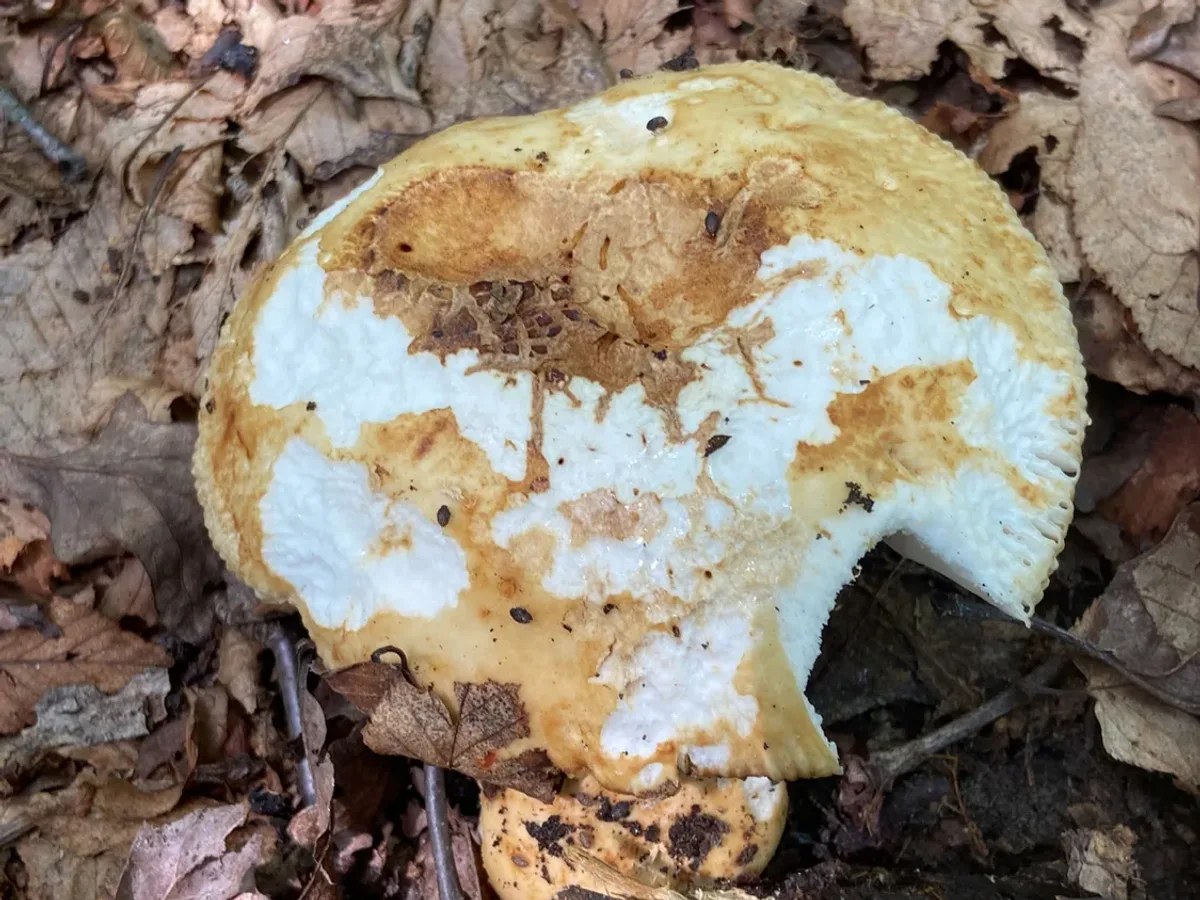 puppyy (CC0)
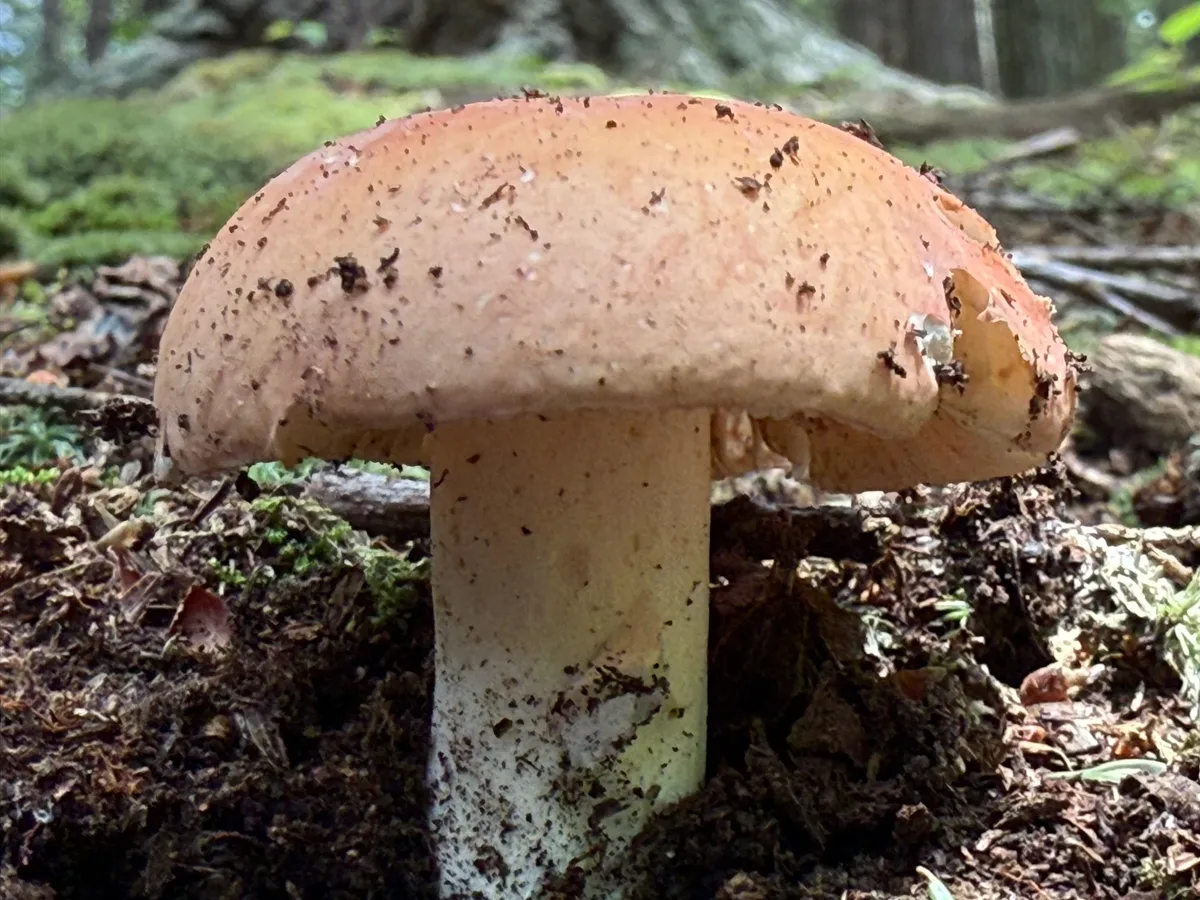 © nebrooks (CC BY)
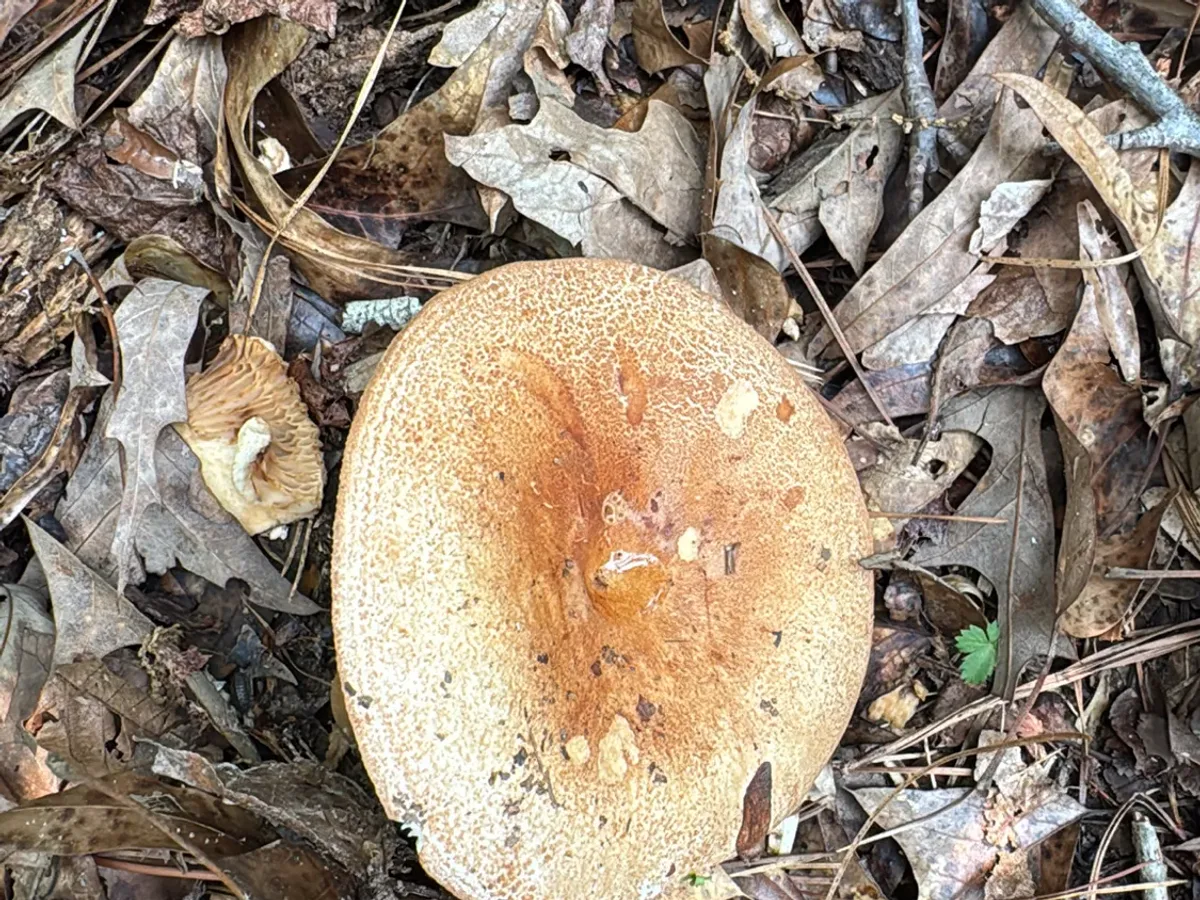 decaturjosh (CC0)
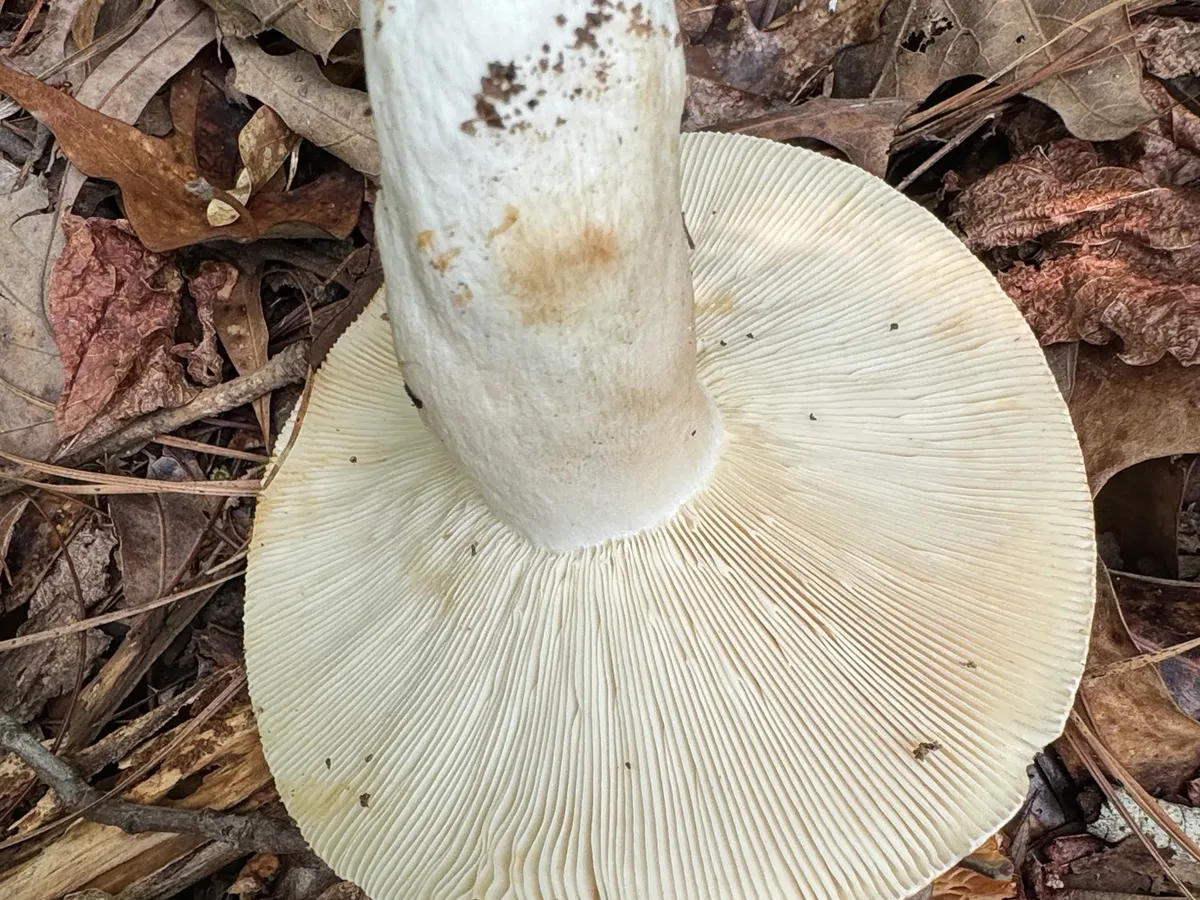 decaturjosh (CC0)
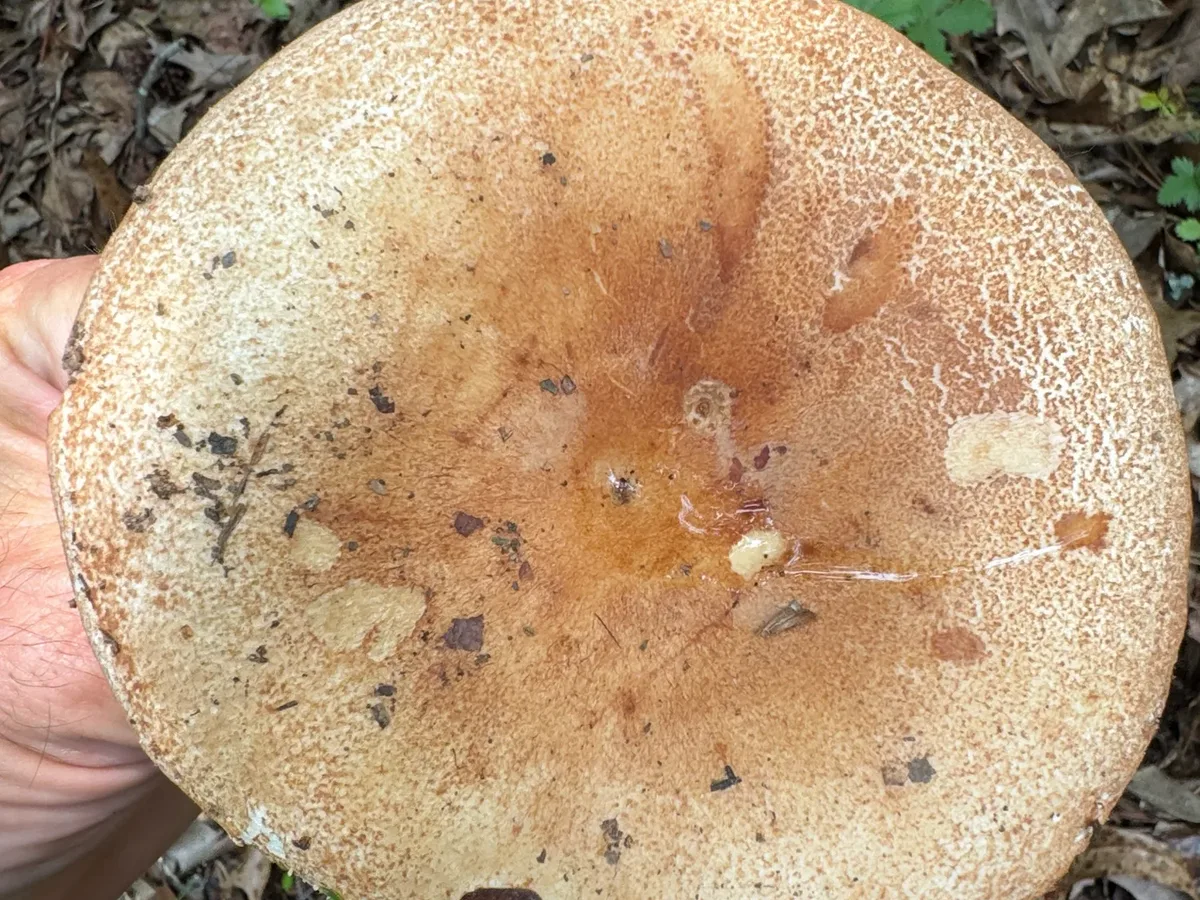 decaturjosh (CC0)
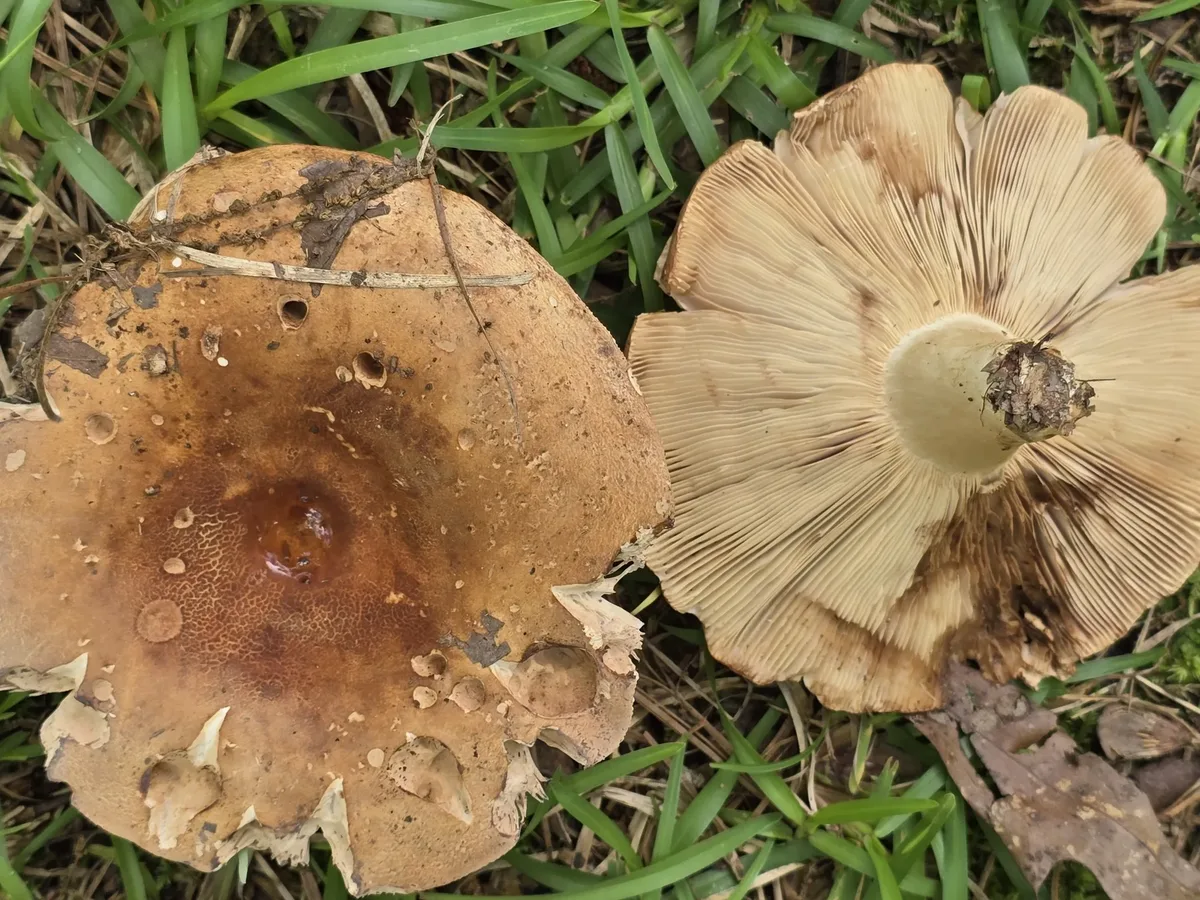 Christine Braaten (CC0)
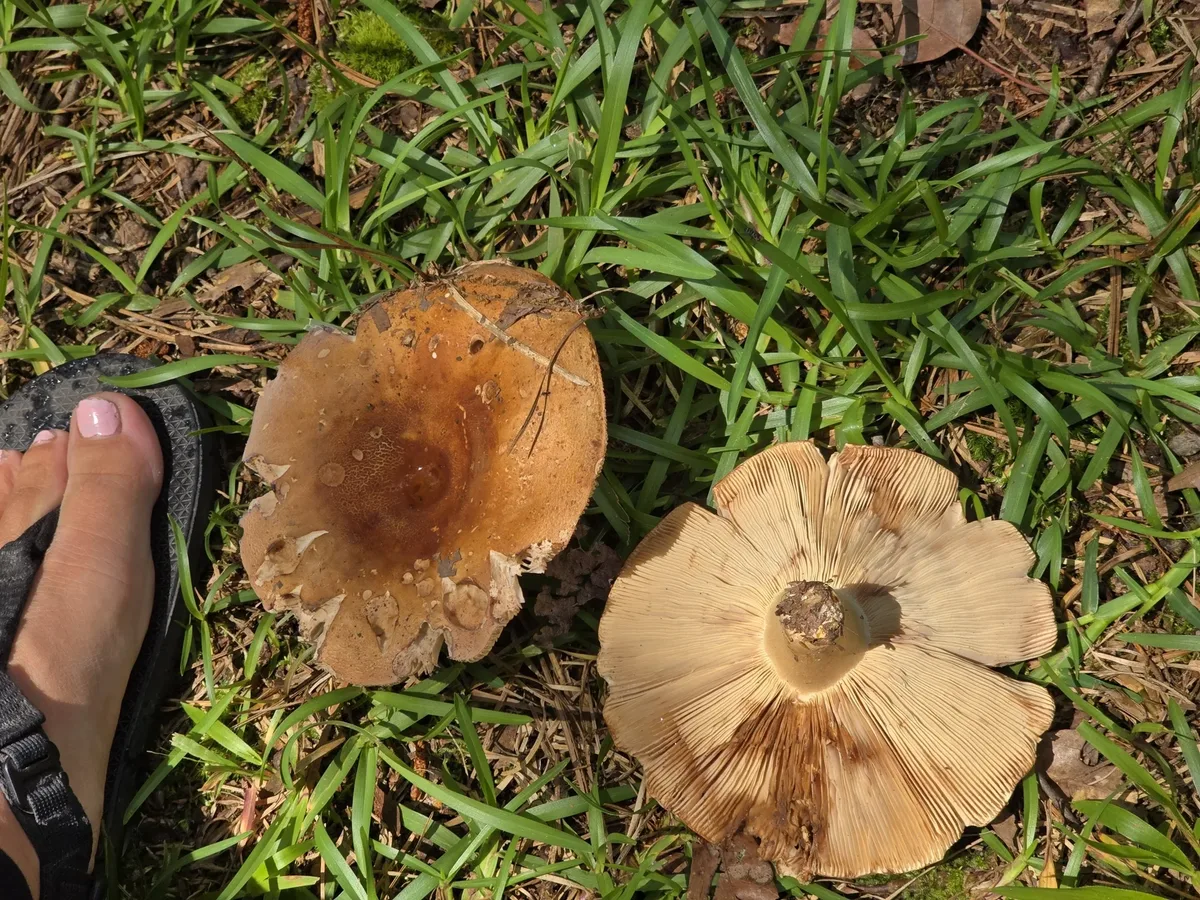 Christine Braaten (CC0)
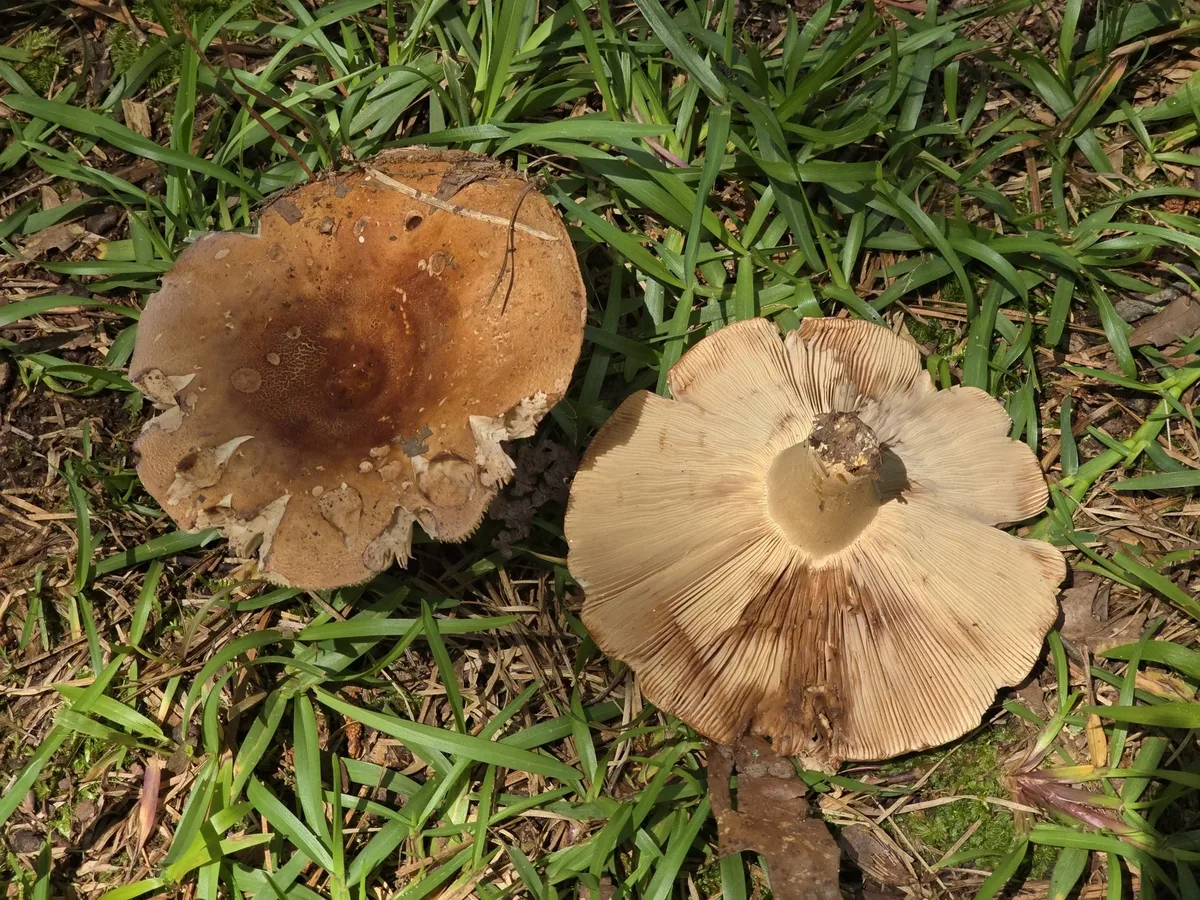 Christine Braaten (CC0)
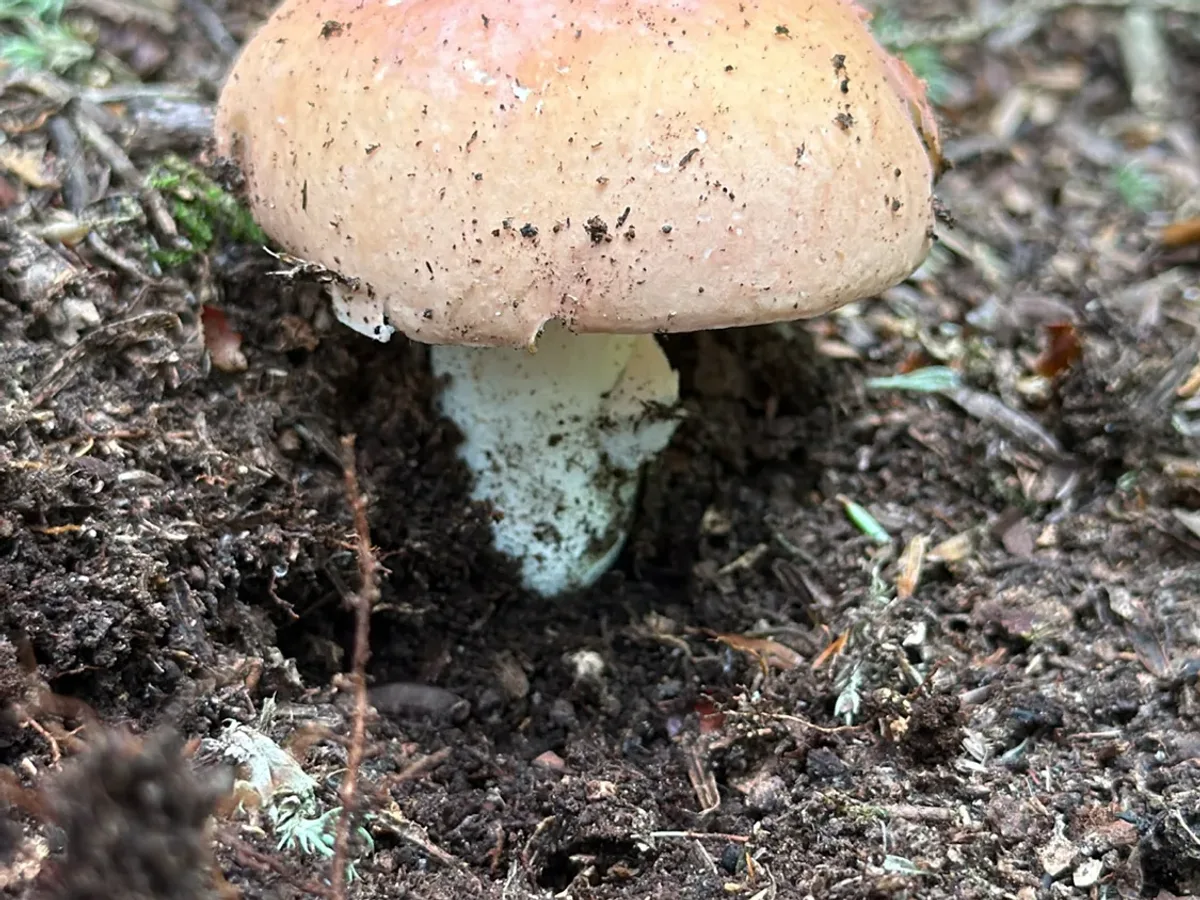 © nebrooks (CC BY)
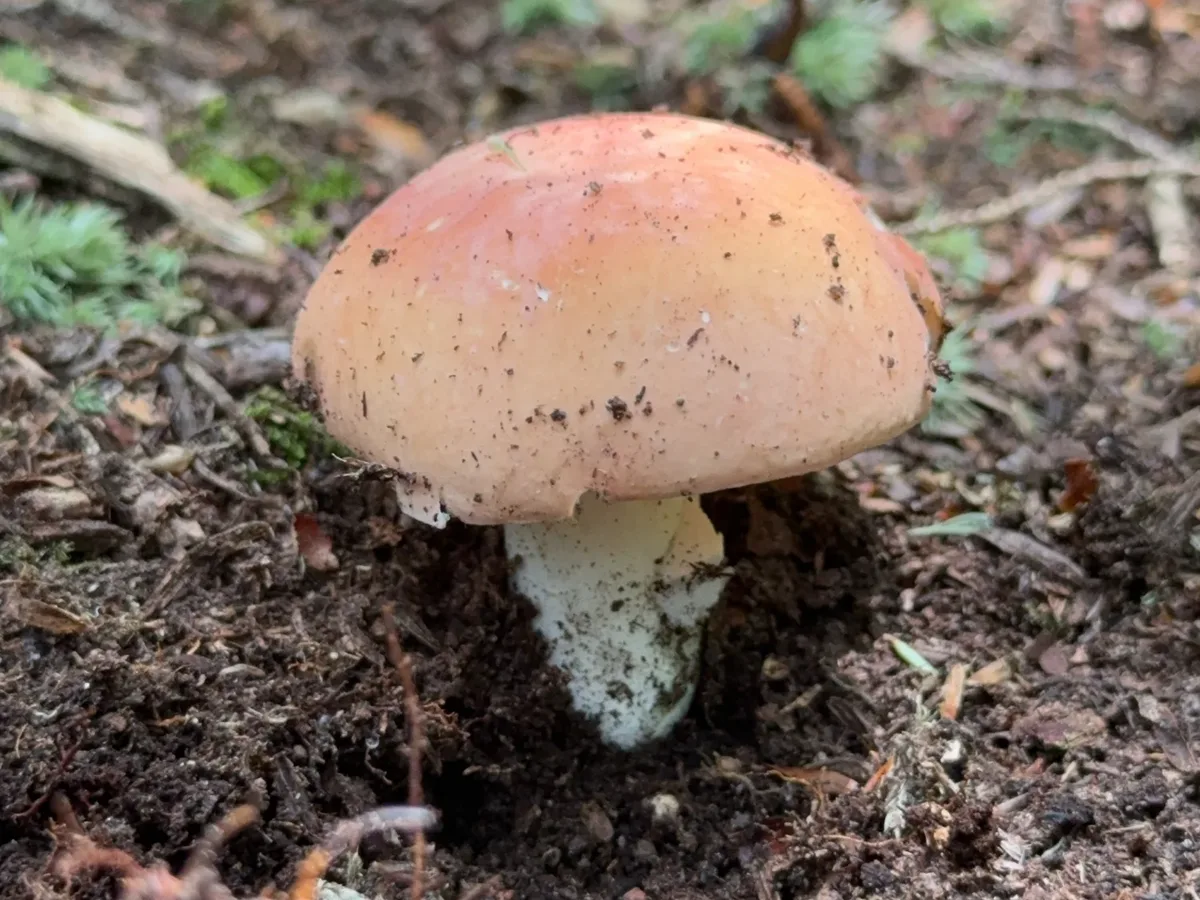 © nebrooks (CC BY)puppyy (CC0)© nebrooks (CC BY)
Not poisonous, but not worth eating - too tough, bitter, or bland for the pot.
Never eat a mushroom you are not 100% sure of - check the look-alikes below, and always cook wild mushrooms.
How to recognise it
Cap
Cap 5-15 cm across, convex when young, becoming flat to shallowly depressed in maturity. Surface smooth to slightly viscid when moist, pale tan, buff-ochre, or pale orange-buff, often darker at the center.
Flesh
Flesh white, exceptionally firm - noticeably firmer than most russulas - staining orange-brown to rusty-orange when cut or bruised; this color-change in the flesh is one of the most reliable diagnostic features.
Gills
Gills white, crowded, adnate, developing brown stains with age.
Stem
Stem 3-8 cm tall, 1.5-3 cm thick, white, staining orange-brown when damaged.
Spore print white. Lacks the volva and ring of Amanita.
The combination of pale tan cap + firm white flesh that stains orange-brown + fishy odor is distinctive within the genus.
Where & when it grows
Habitat
Ectomycorrhizal, growing in mixed hardwood and coniferous forest.
- East Asia: under oaks (Quercus), Castanopsis, and mixed conifers
- North America: under oaks, beech, and hemlock
Appears on the forest floor among leaf litter, often in moist, humid spots.
Because it forms obligate ectomycorrhizal partnerships it cannot be cultivated and is always a wild find.
When
Midsummer through autumn (July-October), peaking in August and September when soil moisture is adequate after summer rains.
Fruiting is triggered by rainfall of at least 20-25 mm over a week or two, when soil temperatures are in the warm-to-cool range (roughly 10-22 °C).
In the humid subtropical parts of East Asia (southern China, Japan), fruits during and after the monsoon season.
How it grows
Like all russulas, R. compacta lives as an ectomycorrhizal partner of its host trees. Its mycelium threads through the soil, wrapped around root tips, trading mineral nutrients for sugars the tree photosynthesises.
This underground partnership can persist for many years; the mushroom you see is just the brief, visible tip of a much older relationship.
Fruits singly or in small scattered groups, sometimes partly buried in leaf litter before the cap pushes free.
The species name 'compacta' reflects the unusually dense, firm flesh - noticeably heavier in the hand than most russulas - that sets it apart from the more fragile members of its genus.
Fruiting conditions
Fruits after sufficient summer or early-autumn rainfall when soil has cooled slightly from midsummer peaks; ectomycorrhizal with oaks and Castanopsis in East Asia, with oaks and beech in North America.
Look-alikes
Several species can be confused with Russula compacta.
The fetid russulas (Russula foetens group, R. laurocerasi) share the unpleasant odor but typically have a more yellow-ochre cap and a hollow, fragile stem rather than the solid, compact stem of R. compacta.
Other pale-capped, firm russulas such as R. mustelina and R. adusta may also superficially resemble it; the orange-brown flesh-staining and fishy odor rule them out.
Most critically, beginners unfamiliar with russula anatomy may confuse pale, button-stage specimens with pale Amanita species, some of which are deadly - particularly Amanita phalloides (death cap) and Amanita virosa (destroying angel) in temperate zones, and Amanita exitialis in East Asia.
The key differences:
- Amanita has a volva (a basal sac) and usually a ring on the stem; Russula compacta has neither
- Russulas have a brittle, snapping texture (like chalk), while Amanita flesh is more fibrous and stringy
Amanita phalloides has a volva (cup-like sac) at the stem base and a ring on the stem; its flesh does not stain orange-brown when cut. Russula compacta lacks both volva and ring and has brittle, chalk-like flesh that stains orange-brown. Always dig up the stem base when in doubt.
Amanita virosa is entirely white with a prominent volva and ring; its flesh is fibrous (not brittle and snapping like a russula) and does not stain orange-brown. Deadly - contains amatoxins at lethal concentrations.
In East Asia, Amanita exitialis is the primary deadly risk; it is white, has a volva and ring, and does not stain orange-brown when cut. Russula compacta's fishy odor and brittle (non-fibrous) flesh and absence of volva and ring distinguish it.
Russula laurocerasi has a similar unpleasant odor (marzipan/bitter almonds) and pale cap, but lacks the orange-brown flesh staining. Also inedible.
Russula foetens and related fetid russulas share the unpleasant odor but have a more yellow-ochre cap, a more fragile stem that is often hollow, and flesh that does not stain orange-brown. Also inedible.
In the kitchen
Picking & cleaning
Do not pick for eating. The fishy odor and bitter, acrid taste make this species thoroughly unpalatable, and it has no culinary value.
If encountered while foraging for edible russulas, the fishy smell (strongest in older specimens) is a clear signal to leave it behind.
When identifying any russula, always break the flesh - Russula compacta's orange-brown staining is a useful negative identifier.
Cooking
Not applicable - Russula compacta is not used culinarily.
Its strong fishy odor does not diminish meaningfully with cooking, and it has no food value.
Good to know
Russula compacta is consistently listed as inedible across mycological literature - not because it causes confirmed serious toxicity, but because the fishy, rancid odor and acrid, bitter taste make it wholly unpalatable.
Some sources note it may cause mild gastrointestinal discomfort if consumed, though severe poisoning is not documented.
The real safety risk is confusion: any forager unfamiliar with russulas should be aware that pale-capped, firm-fleshed mushrooms in mixed forest include deadly Amanita species.
Always check the two against each other:
- Amanita - a volva and ring present
- Russula - both absent, with chalky, brittle flesh
The orange-brown flesh-staining of R. compacta on cutting is a useful aid, but requires cutting the specimen open to observe.
A reference guide - never an edibility guarantee. When in doubt, leave it out.