Cleland's brittlegill
Russula clelandiisyn. Russula clelandii C.H. Cunn.
 © Cal Wood (CC BY)
 © Peter Neish (CC BY)
 © Peter Neish (CC BY)
 © Peter Neish (CC BY)
 © Cal Wood (CC BY)© Cal Wood (CC BY)© Peter Neish (CC BY)
Edible only with the right preparation - or safe for some people but not others. Learn the caveats first.
Never eat a mushroom you are not 100% sure of - check the look-alikes below, and always cook wild mushrooms.
How to recognise it
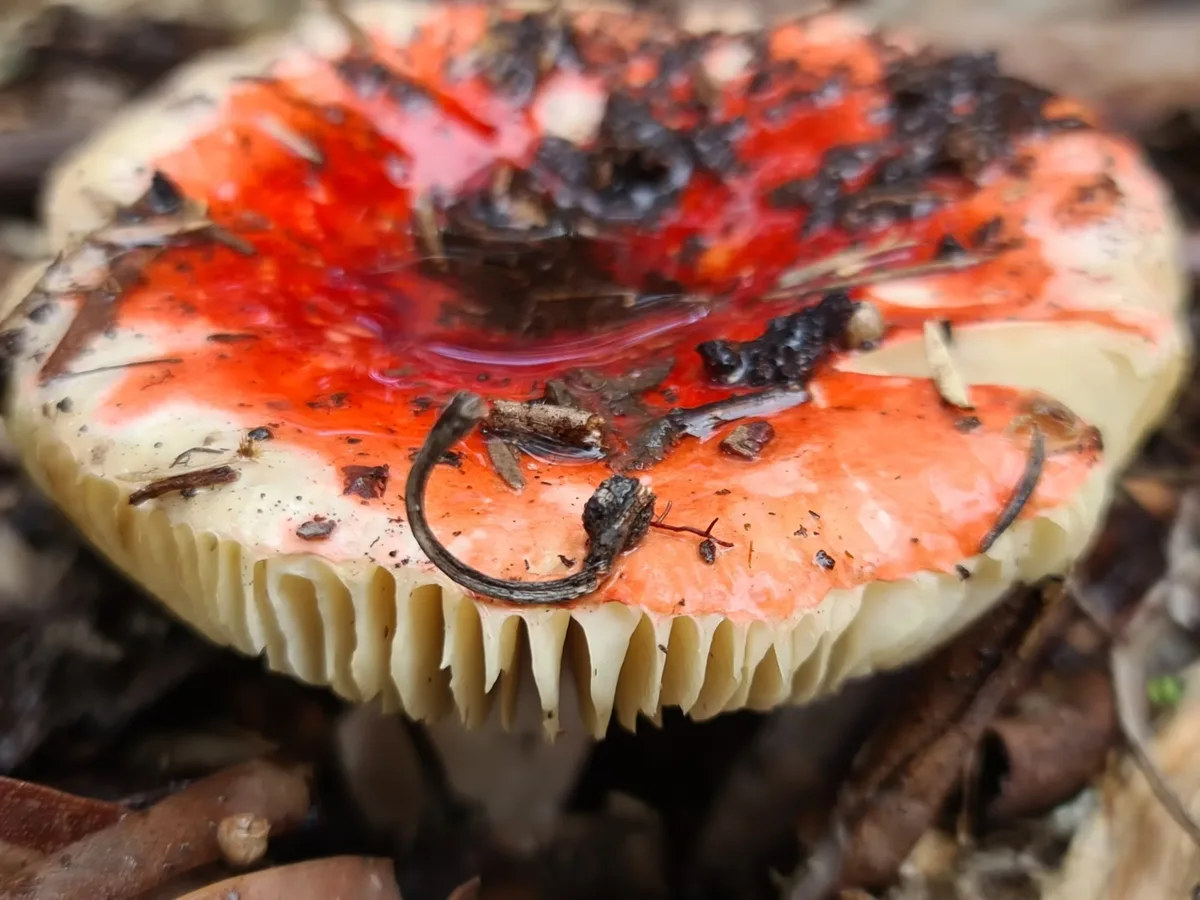
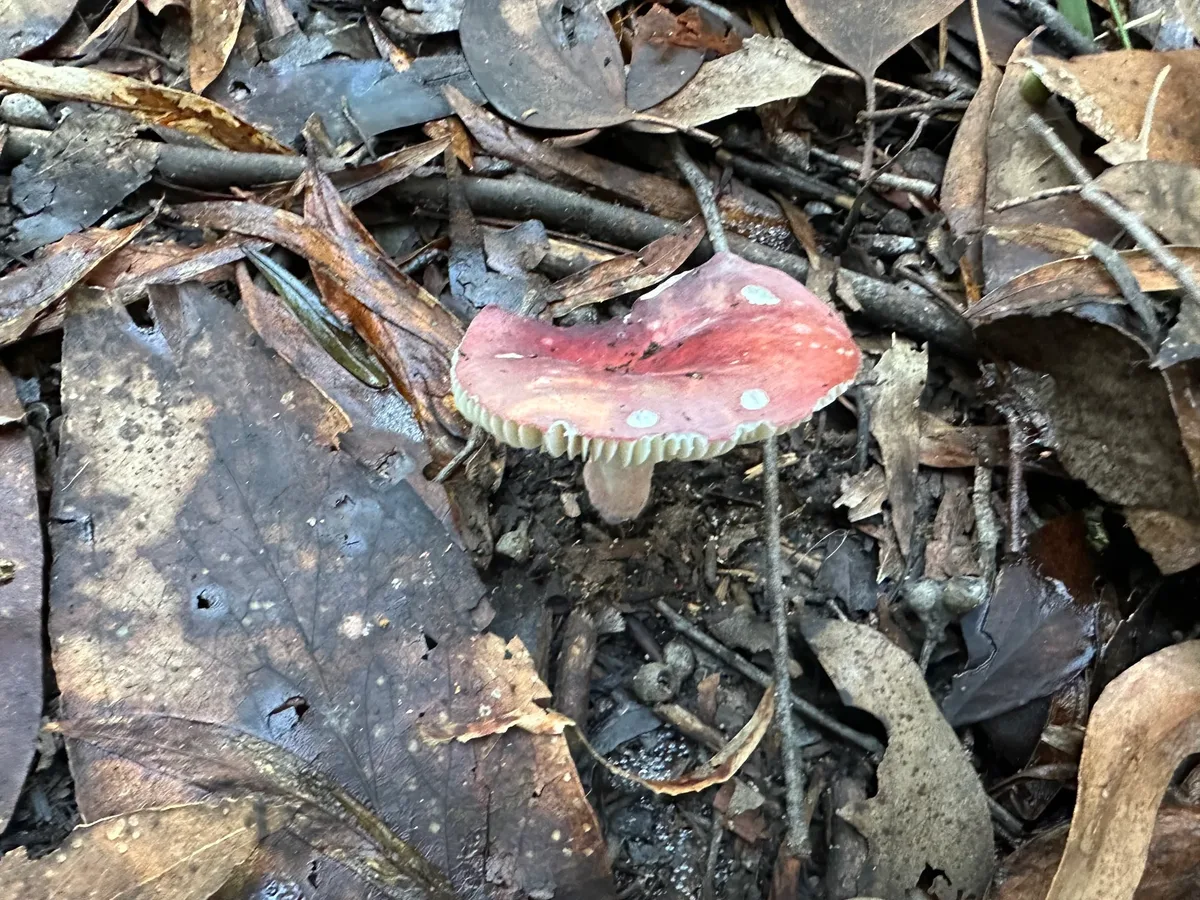
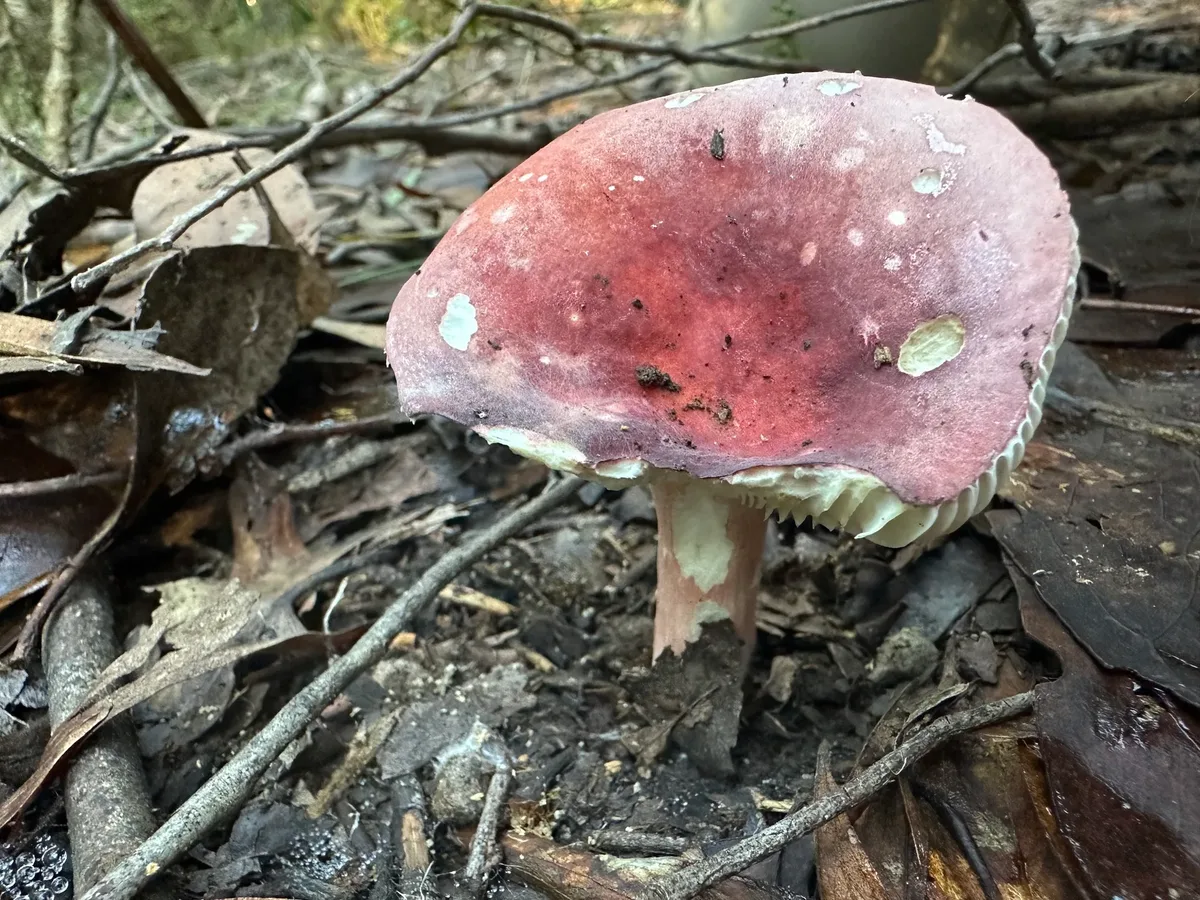
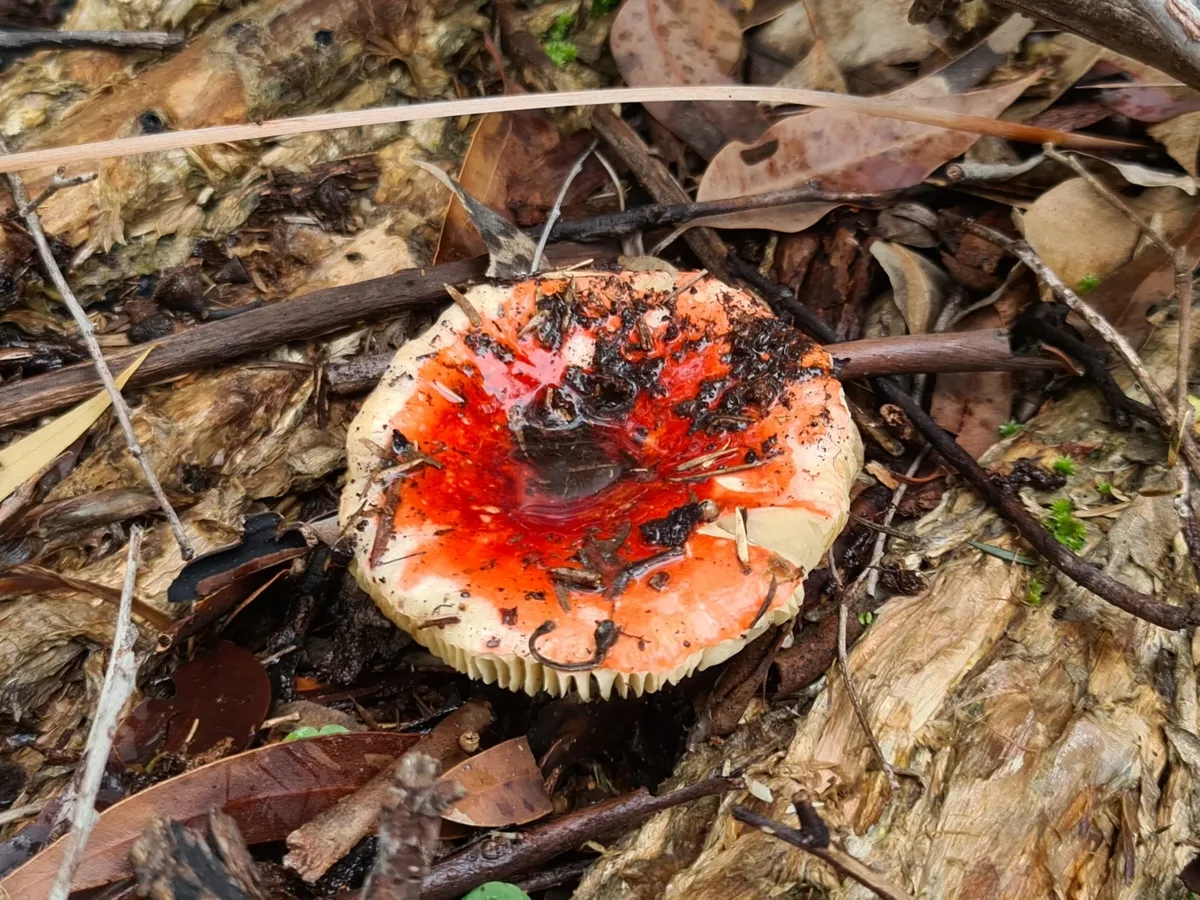
Russula clelandii is a modest-sized brittlegill in restrained, pale tones - straw-yellow to buff, ochre-tan, and occasionally faintly pinkish - that sets it apart from the richly coloured red and crimson Russula species more likely to catch a collector's eye in the same forest.
Cap
The cap runs 3-8 cm across, starting out convex and firm and gradually expanding to broadly flat, often with a shallow depression developing at the centre in older specimens.
When wet the surface has a faint tacky quality; as it dries it settles to a smooth, slightly dull finish.
The cap cuticle peels away from the margin for roughly a quarter to a third of the radius, which is normal for the genus and a useful structural confirmation.
Colour varies from pale cream or straw at the margin through buff and ochre toward the centre, where warmer yellowish-brown tones often deepen - faded or water-soaked specimens can pale to nearly cream throughout.
Gills
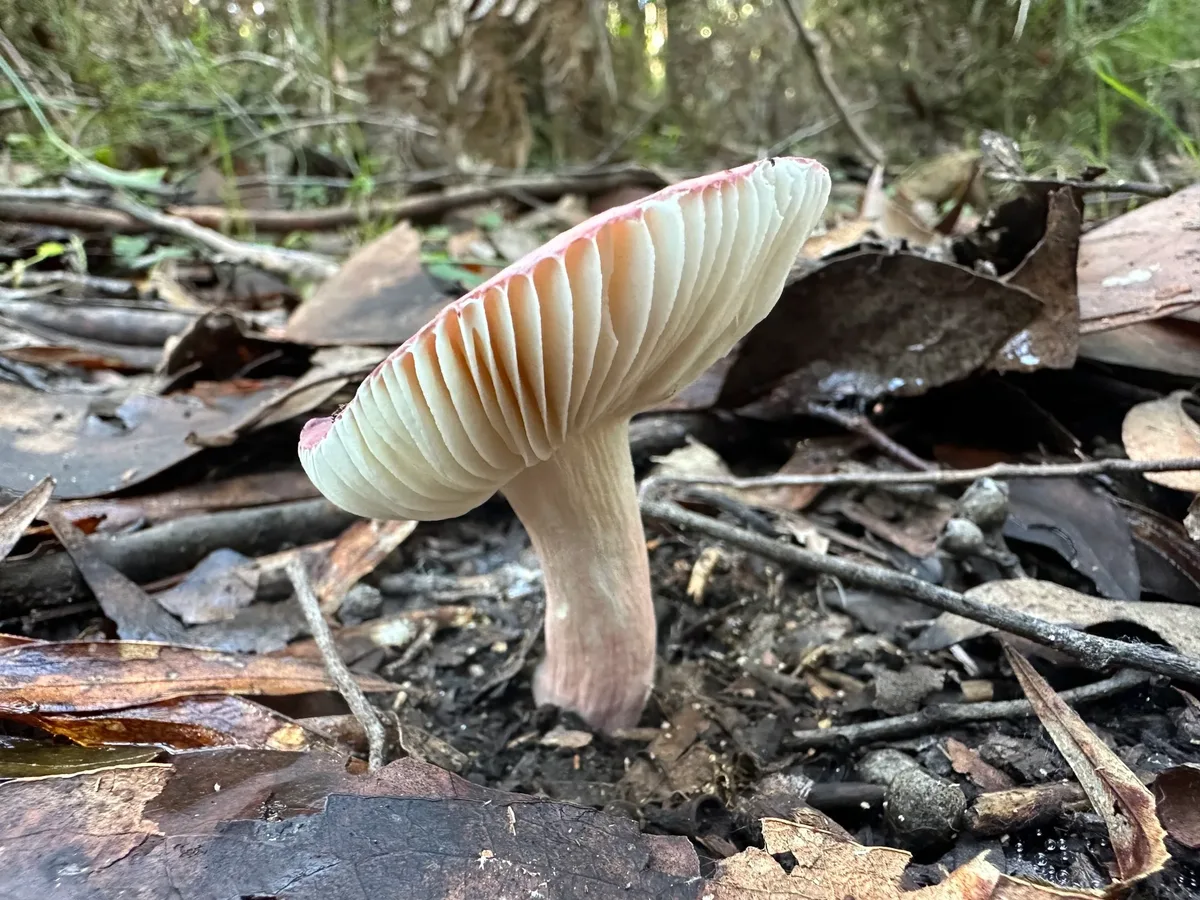
The gills are white to pale cream, moderately to closely crowded, and share the defining feature of the entire genus: they snap and crumble like chalk rather than bending elastically.
This brittleness comes from the non-fibrous, cellular tissue architecture unique to Russula and Lactarius, and is the single most reliable feature for placing any collection in the genus.
Stem
The stem is white, firm when young, smoothly cylindrical, and has no ring of any kind on its surface and no volva, bulb, or swelling at its base - the absence of these structures distinguishes Russula conclusively from any Amanita.
Flesh
Flesh is white throughout and does not change colour on cutting.
Smell & taste
The flesh emits a faint, inoffensive smell.
The taste, however, is variable and important: it may be entirely mild, or it may develop a gradually building hot, acrid, peppery sensation - this variability is the primary reason for caution around consumption.
Why it's dangerous
The primary life-threatening danger associated with Russula clelandii foraging is misidentification of a deadly Amanita species in the same habitat.
Amanita phalloides (death cap), now established and spreading in southeastern Australia, and native species including Amanita austrophalloides, contain amatoxins that cause fatal hepatic and renal failure with delayed onset.
A collector who is insufficiently careful with structural checks - volva presence, ring presence, gill attachment, flesh texture - could confuse a pale-capped, white-stemmed Amanita for a mild russula.
The amatoxins produce no taste, smell, or immediate symptoms. By the time liver damage becomes apparent (typically 12-24 hours after ingestion or later), the therapeutic window for the most effective interventions may be narrowing.
This is not a species for foragers who are not fully confident in distinguishing Russula from Amanita by careful structural examination of the full fruitbody including the excavated stem base.
Toxin
The toxic principle in acrid specimens of Russula clelandii is a group of sesquiterpene compounds - the same class of heat-labile gastrointestinal irritants responsible for acridity across the genus Russula globally.
These compounds cause a burning, acrid sensation in the raw state and, if ingested, act as gastrointestinal irritants.
They are substantially (though not necessarily completely) deactivated by thorough cooking heat, which is why acrid russulas are sometimes reported as edible when cooked. However, the variability in R. clelandii's acridity between specimens makes this mitigation unreliable in practice.
These sesquiterpenes are entirely distinct from the amatoxins of Amanita species and cause a very different clinical picture.
Symptoms
Gastrointestinal irritation, typically beginning 30 minutes to 3 hours after ingestion of an acrid or inadequately identified specimen:
- Nausea
- Abdominal cramping
- Vomiting
- Diarrhoea
Symptoms are generally self-limiting and resolve within 12-24 hours with supportive care; they are dose-dependent and most severe when raw or inadequately cooked acrid material has been consumed.
No systemic organ toxicity from the sesquiterpene irritants themselves.
Critically: if amatoxin poisoning cannot be excluded - that is, if any doubt exists that the mushroom may have been an Amanita rather than a Russula - seek urgent medical attention immediately.
Amatoxin poisoning has a deceptive clinical latency of 6-24 hours before severe, potentially fatal organ damage develops, and delay in seeking care is a major determinant of outcome.
Staying safe
Russula clelandii is classified as requiring caution for two interconnected reasons.
- 1Its taste is variable across individuals and populations: many specimens are entirely mild and have historically been eaten, but a proportion develop acrid, burning characteristics caused by heat-labile sesquiterpene compounds that act as gastrointestinal irritants - consuming these without careful taste-testing causes nausea, vomiting, and diarrhoea.
- 2More significantly, the habitat of R. clelandii in southeastern Australian eucalypt forest is shared with deadly Amanita species, including the introduced death cap (Amanita phalloides) at forest edges and the native amatoxin-containing Amanita austrophalloides and Amanita marmorata in native bush. These species contain amatoxins that cause fatal, delayed-onset liver and kidney failure; their toxicity is not detectable by taste, smell, or appearance.
The structural separation of Russula from Amanita is reliable and learnable - no volva, no ring, adnate brittle gills, chalk-snapping flesh - but must be performed actively on every collected specimen.
Never assume: always excavate the full stem base and confirm absence of volva and ring before eating any pale woodland mushroom in Australian native forest.
If there is any uncertainty after all checks, leave it. Do not eat raw.
Even when mild specimens are correctly identified, consume only a modest quantity on first use and wait 24 hours before larger portions.
Where & when it grows
Habitat
Russula clelandii is an obligate ectomycorrhizal species: its mycelium threads through the root tips of living native trees, supplying them with water and soil minerals in exchange for photosynthetic carbohydrates, and it cannot complete its life cycle without this partnership.
The forests it inhabits are the moist to dry sclerophyll forests and associated native woodland of southeastern Australia - Victoria, New South Wales, Tasmania, and South Australia - dominated by towering eucalyptus species such as mountain ash (Eucalyptus regnans), messmate stringybark (E. obliqua), and alpine ash (E. delegatensis), among others.
On cooler, wetter montane sites it may associate with myrtle beech (Nothofagus cunninghamii) at the margins of cool temperate rainforest patches.
The best habitat has a developed layer of eucalypt leaf litter and humus, mildly acidic to neutral soil pH, and at least partial shade from a continuous canopy.
Russula clelandii does not occur in heavily cleared land or dry mallee scrub; it needs the long-established root systems of mature native trees to sustain its underground mycelium between seasons.
Fruitbodies emerge singly or in small loose groups directly from the soil surface or just below the litter - never from wood, never in dense tight clusters.
When
Fruiting belongs entirely to the Southern Hemisphere autumn and early winter - broadly March through July. This follows the same phenological logic as most ectomycorrhizal woodland fungi in Australian native forest: the hot, dry summer suppresses fruiting almost completely, and the season only opens when persistent autumn rain arrives and soil temperatures cool below roughly 15 °C.
In practice, the first significant autumn rainfall event (20 mm or more over two to three days) after mid-March is the usual trigger, with full fruitbody emergence following seven to fourteen days later.
Peak fruiting in most of the range is April through June.
In the highlands of Victoria and Tasmania, where temperatures drop earlier, the season may start in late March; in milder, lower-elevation areas the main flush is often compressed into May and June.
By July, dropping temperatures and drier conditions typically suppress further activity.
How it grows
As an ectomycorrhizal species, Russula clelandii grows singly or in small scattered troops from soil, its emergence directly dependent on the perennial mycelial network established beneath the nearby host trees.
Dense clustering and growth from wood are never features of this species.
Small, firm buttons develop beneath the litter surface and push upward over five to ten days, reaching full cap expansion relatively quickly once triggered by rain.
The same microsites often produce fruitings in successive years of good autumn rainfall, as the underlying mycelium is long-lived and does not need to be re-established each season.
Fruiting conditions
Autumn fruiting is triggered when the summer drought breaks and sustained rainfall (at least 20 mm over two to three days) coincides with soil temperatures falling below 15 °C. Flush lag from the triggering rain event to emergent caps is typically 7-14 days. Peak fruiting April-June in most of the range; extends into early July at cooler, higher-elevation sites or in wet years.
Look-alikes
The greatest danger in collecting Russula clelandii is not mistaking it for another Russula but failing to exclude a deadly Amanita species from the same habitat.
Russula clelandii's pale buff to straw-yellow colouring, white gills, and white stem mean it could potentially be confused at a casual glance with pale or young Amanita species in the same eucalypt forest.
The introduced death cap (Amanita phalloides) is now established in southeastern Australia wherever introduced oak trees grow - including parks, gardens, and woodland margins - and while its typical cap colour is olive-green, pale or yellowish colour forms occur.
The native Amanita marmorata and the newly characterised Amanita austrophalloides are confirmed or strongly suspected to contain amatoxins and grow in native eucalypt forest, potentially overlapping directly with R. clelandii's habitat.
All Amanita species are separated from Russula by structural features that must be checked on every collection:
- A volva (membranous sac, girdling bands, or bulbous swelling) at the stem base.
- A ring (skirt) on the upper stem.
- Free gills that do not attach to the stem.
- Flesh that is fibrous and elastic rather than brittle-chalky.
Russula clelandii has none of these features - no volva, no ring, attached adnate gills, and chalk-snapping flesh.
The taste test does not protect against Amanita amatoxins, which are entirely tasteless.
Among other native Russula species in Australian eucalypt forest, the buff to pale-ochre cap colour of R. clelandii is less distinctive than the vivid red or crimson of species such as Russula persanguinea, so confusion with other pale-capped native Russula species is possible.
These confusable Russula species are uniformly non-deadly, but some may be acrid and cause gastrointestinal upset, making the taste test essential.
A native Australian Amanita confirmed to contain amatoxins, occurring in native eucalyptus forest - the same habitat as Russula clelandii. Pale to whitish or cream-coloured cap can approach R. clelandii's buff tones. Has a volva at the stem base, a ring on the stem, free gills, and fibrous (not brittle) flesh. Fatal amatoxin poisoning is documented. The structural checks (volva, ring, gill attachment, flesh snap) are the only reliable separation. Never eat a pale-capped woodland mushroom without performing all of these checks.
A native Australian Amanita in eucalyptus forest with suspected to confirmed amatoxin content. Can have pale, cream to buff colouring that overlaps R. clelandii's colour range. Structural Amanita features - volva, ring, free gills, fibrous flesh - distinguish it conclusively from Russula. Treat any Amanita found in Australian native forest as potentially lethally toxic until proven otherwise.
Now established in southeastern Australia near introduced oak trees (and spreading). Typical cap is olive-green, but pale yellowish or buff colour forms occur and could superficially suggest a pale Russula. Amanita phalloides always has: a prominent membranous volva (sac) enveloping the bulbous stem base; a skirt-like ring on the upper stem; free gills not attached to the stem; and fibrous, non-brittle flesh. Russula clelandii has none of these - no volva, no ring, adnate brittle gills, chalk-snapping flesh. The death cap's amatoxins are undetectable by taste or smell. Always excavate the full stem base to rule out a volva before eating any woodland mushroom.
A native Australian Amanita in eucalyptus forest, typically ochre-yellow to orange-yellow; young or faded specimens can approach buff-tan tones. Has a ring on the stem, a volva or skirt of veil tissue at the base, free gills, and fibrous flesh. Not regarded as deadly but should not be consumed and its presence in the same habitat is a reminder to always perform structural checks. Confirms that the presence of a ring or volva is a hard stop - do not eat.
Several other native Australian Russula species can have similarly pale buff, cream, or straw-coloured caps and may be indistinguishable from R. clelandii in the field without microscopic examination. All share the genus hallmarks: brittle chalky flesh, no ring, no volva, white spore print, adnate gills. None are deadly, but some are acrid and will cause gastrointestinal upset. The taste test on each individual specimen is essential; any hot, burning, peppery sensation means that specimen should not be eaten, regardless of which species it is.
A reference guide - never an edibility guarantee. When in doubt, leave it out.