Yellow swamp brittlegill
Russula claroflavasyn. Russula flava, Russula claroflava Grove
 © Мария Стрельникова (CC BY)
 © Jonas Heggedal (CC BY)
 © Bjørn Eidhammer (CC BY)
 © Bjørn Eidhammer (CC BY)
 © Bjørn Eidhammer (CC BY)
 © Bjørn Eidhammer (CC BY)
 © Bjørn Eidhammer (CC BY)
 © Jonas Heggedal (CC BY)© Мария Стрельникова (CC BY)© Jonas Heggedal (CC BY)
Good to eat, once you have identified it with certainty and cooked it through.
How to recognise it
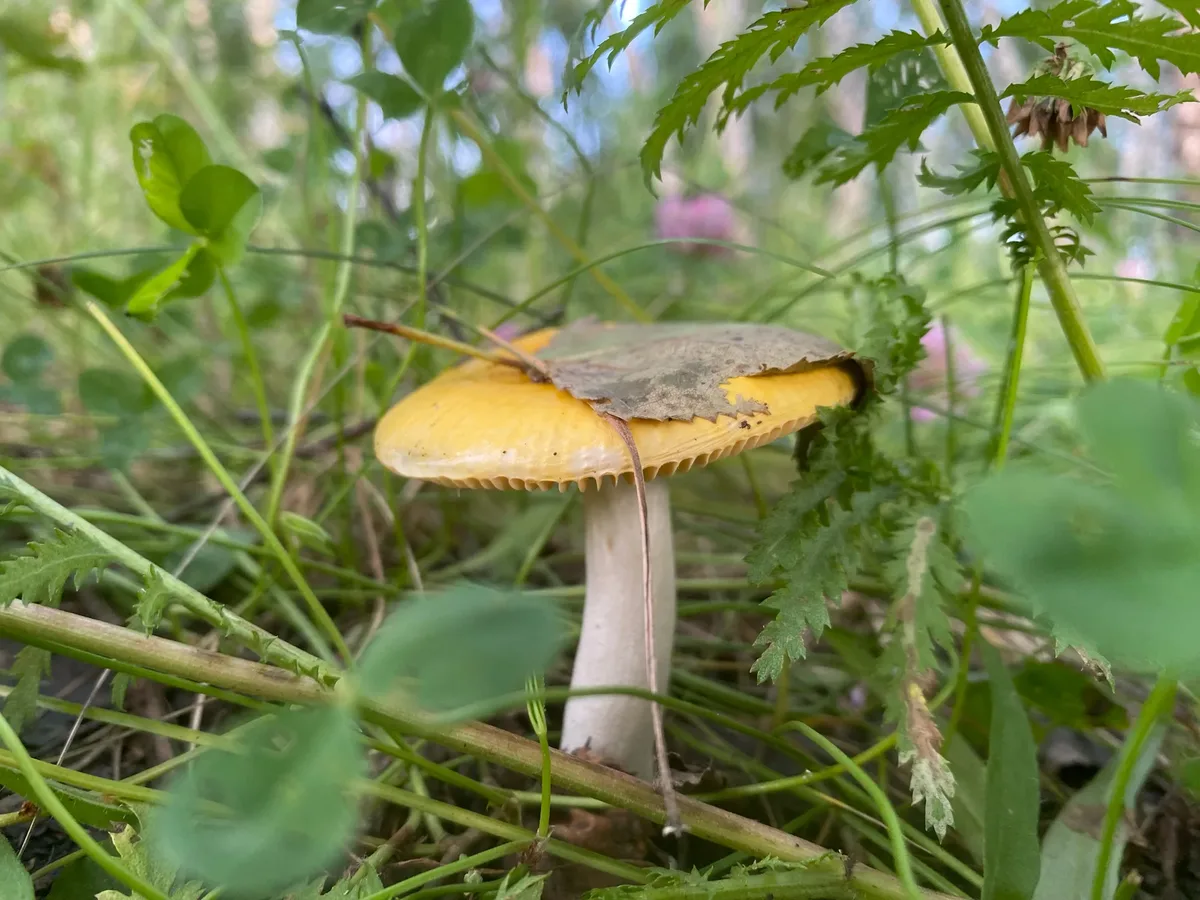
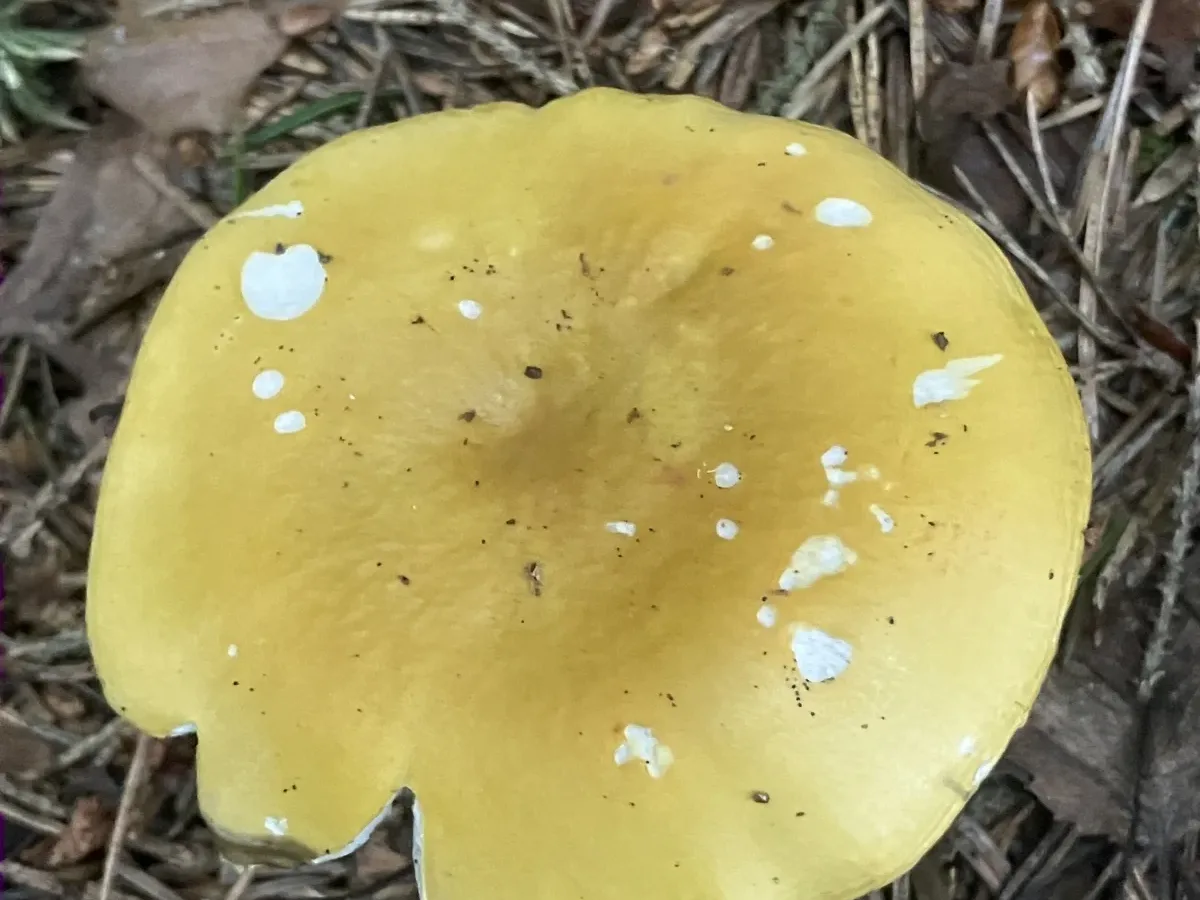
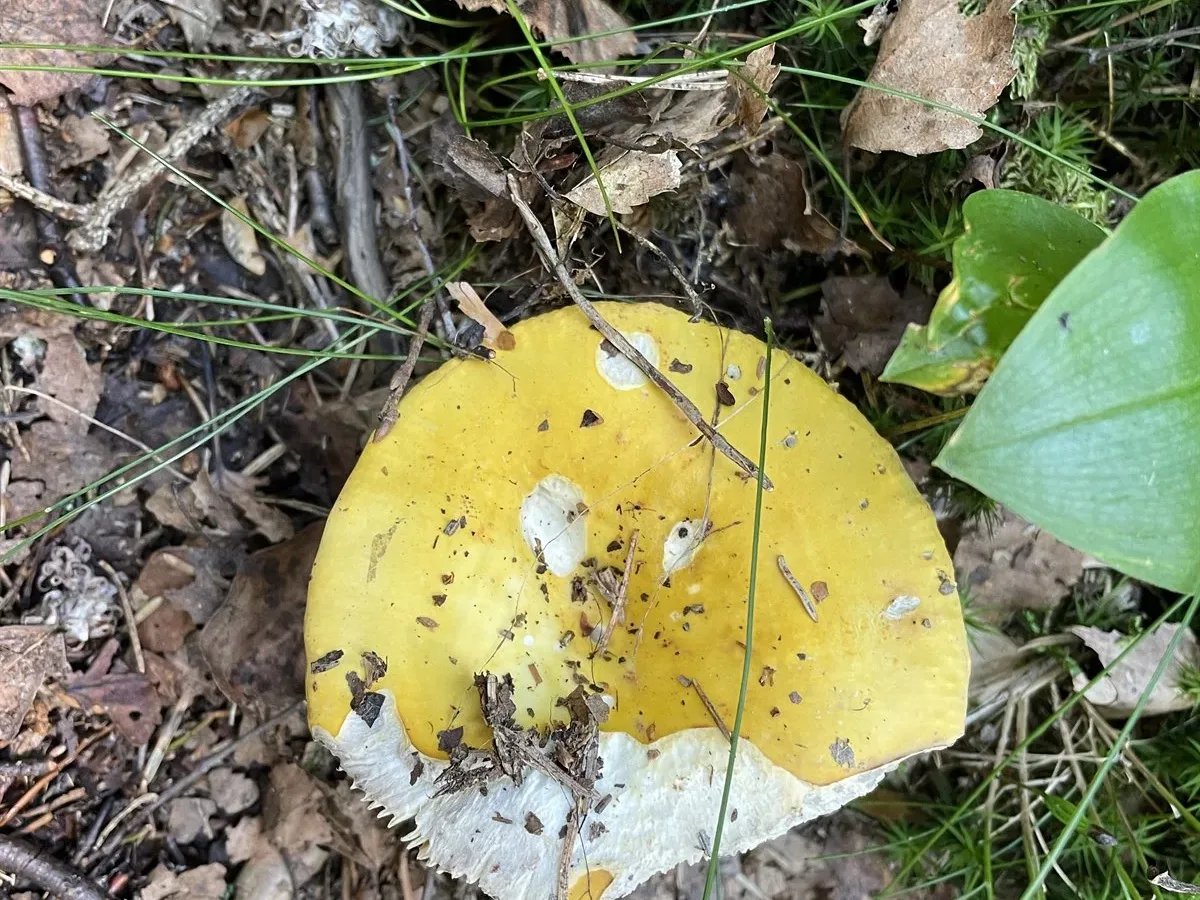
Few mushrooms in the northern forest are as immediately eye-catching as Russula claroflava - its cap is a pure, vivid chrome-yellow to golden-yellow that stands out even against bright Sphagnum moss.
Cap
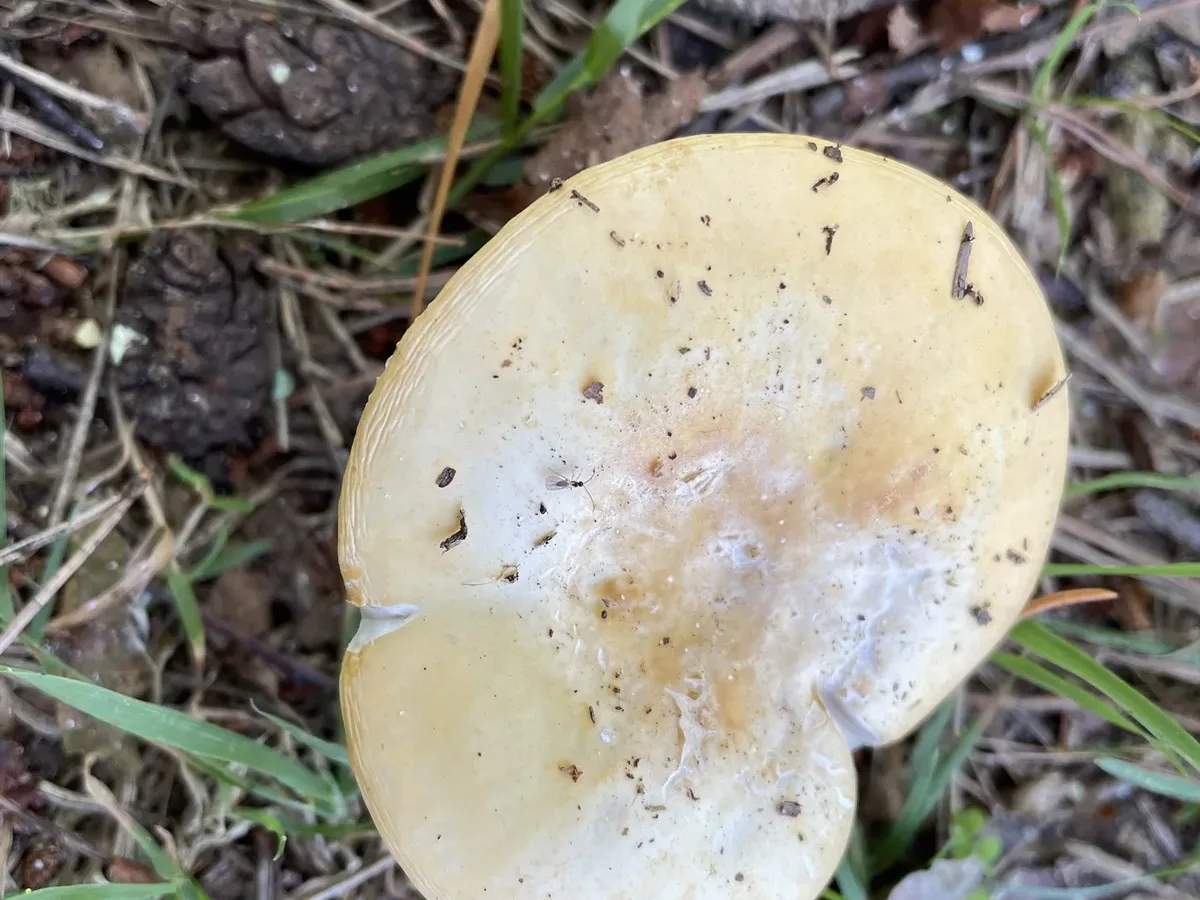
The cap (4-10 cm) opens convex then gradually flattens, eventually settling into a shallow central depression.
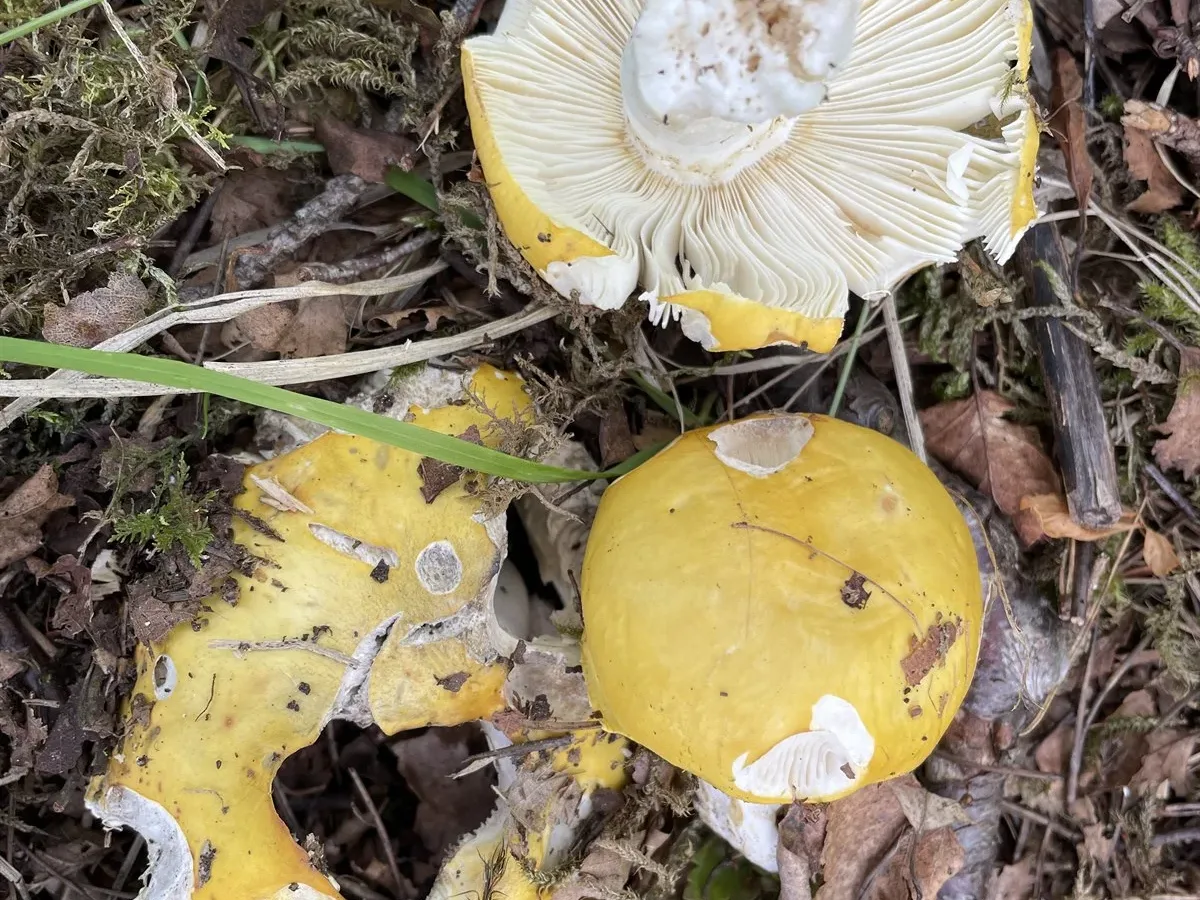
The cuticle is smooth, slightly greasy in wet weather, and peels readily from the margin inward, sometimes all the way to the centre; the colour beneath is the same clean yellow.
Gills
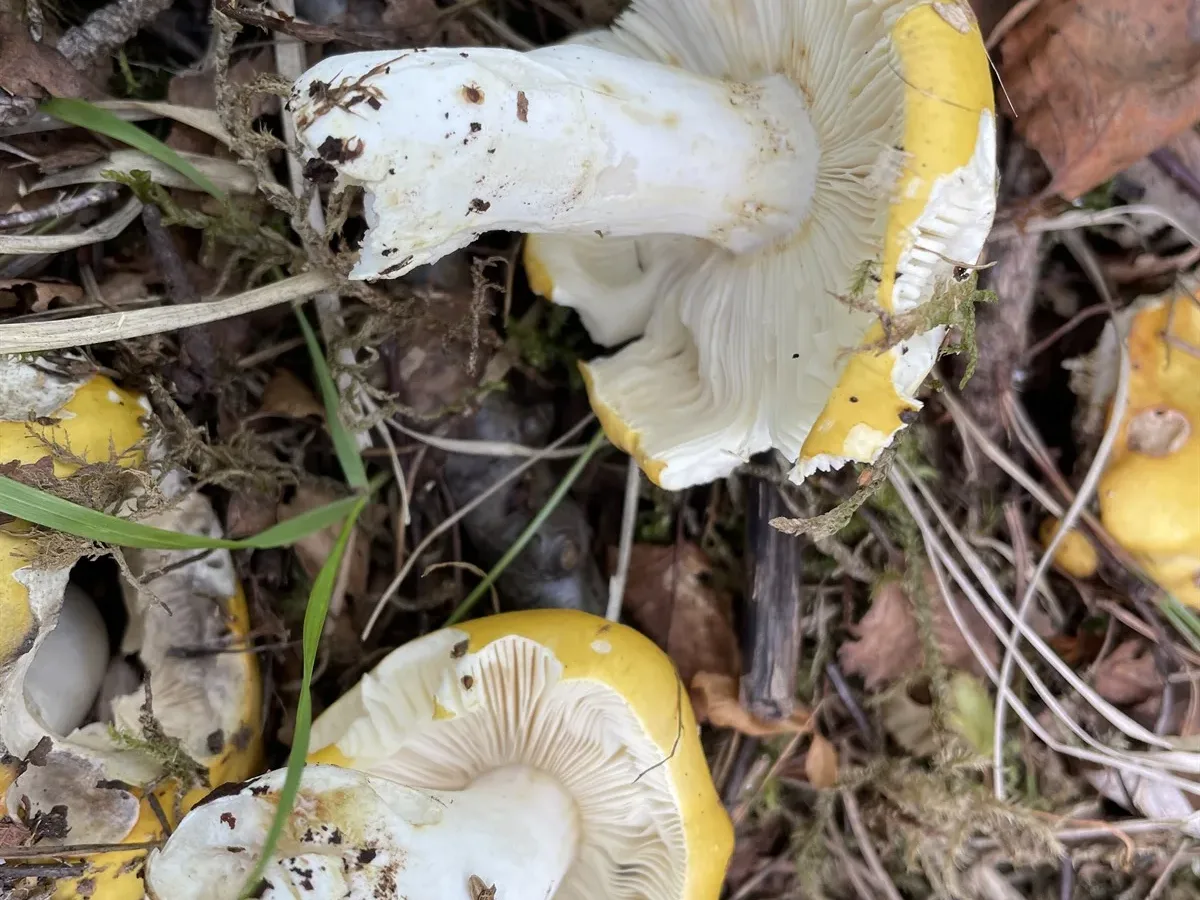
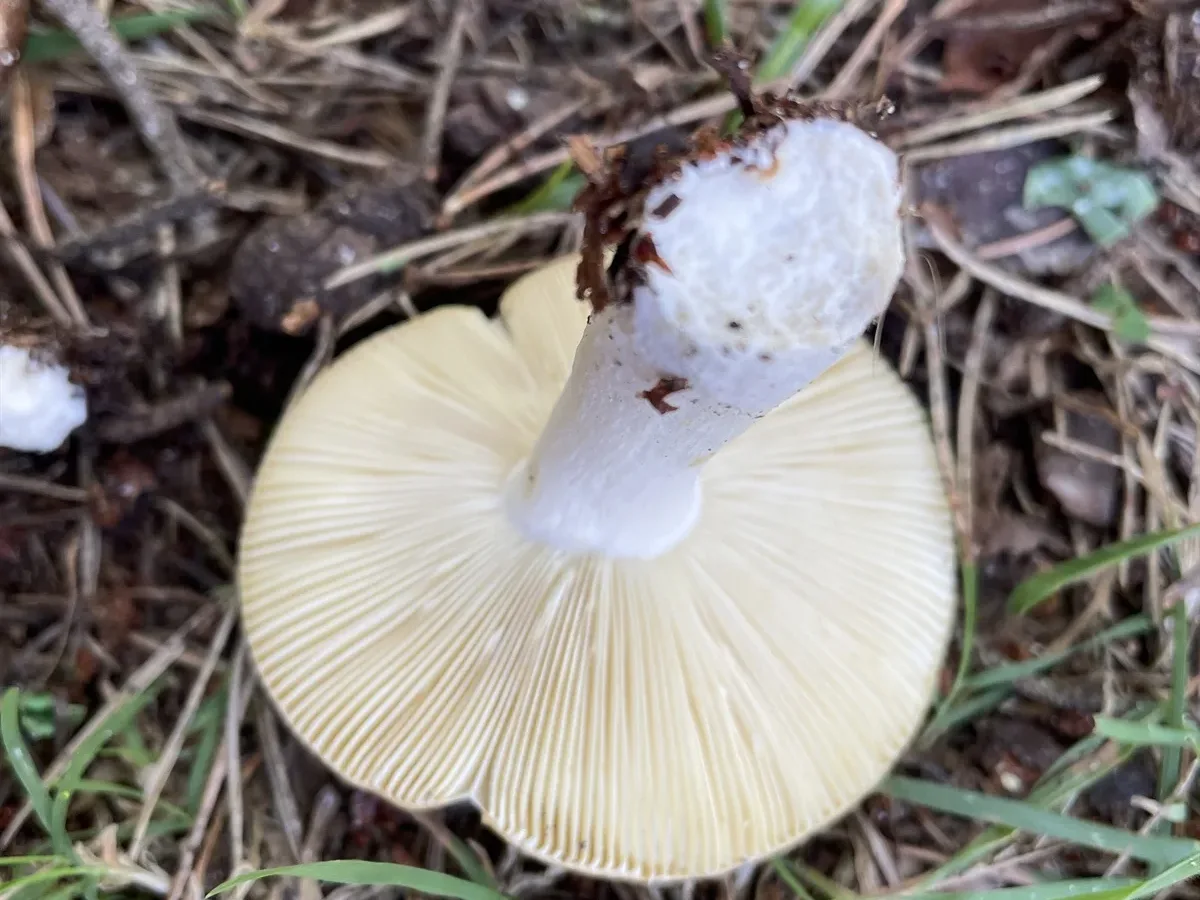
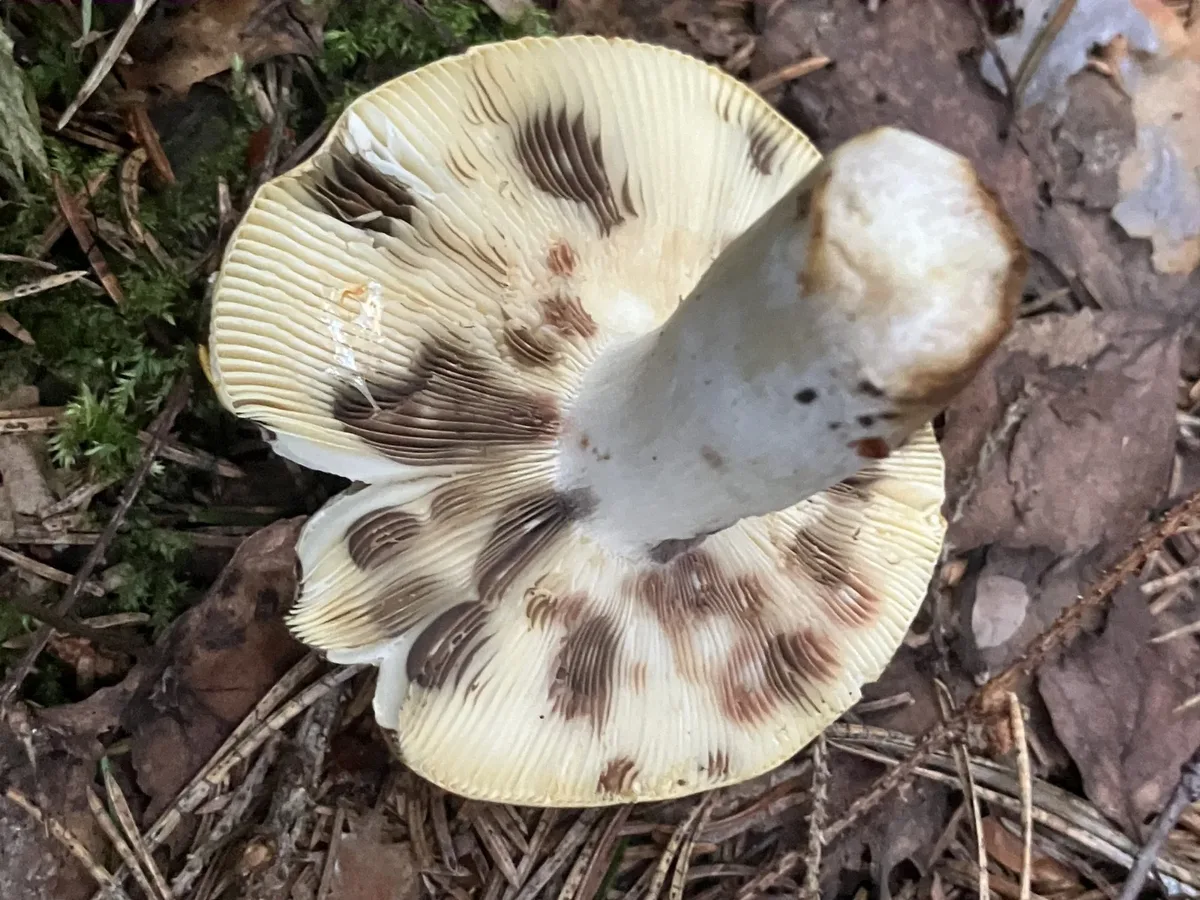
The gills are adnate, cream to pale ochre, fairly crowded, and brittle in the characteristic Russula way; the spore print falls in the pale ochre range (Romagnesi class IIb-IIIa).
Stem
The stem (4-8 × 1-2 cm) is white to ivory, stout and firm in youth, becoming hollow and spongy with age.
Flesh
The single most important diagnostic feature is what happens when you cut the flesh: white at first, it slowly shifts to grey and then coal-black within 15-30 minutes - an enzymatic reaction that looks dramatic but is entirely harmless.
This reliable blackening is shared by very few northern Russulas and is the clearest confirmation you have the right species.
Smell & taste
The smell is mild and faintly pleasant; the taste is mild and not acrid, which sets it apart from the many hot-tasting yellow-capped Russulas.
Where & when it grows
Habitat
Most Russulas prefer drier woodland, but R. claroflava has carved out a niche that few of its relatives tolerate - the wet, acidic world of Sphagnum bogs and swamp forest.
It maintains ectomycorrhizal partnerships primarily with birch (Betula pubescens is the most typical bog-forest host, though B. pendula, alder, and aspen also serve), the mycelium threading through waterlogged, nutrient-poor peat where many fungi simply cannot persist.
Look for it in:
- Sphagnum-filled forest bogs
- along the peaty margins of oligotrophic lakes
- wet alder carr
- birch-fringed swamp forest
It often pushes up directly from wet Sphagnum mats or moss-covered hummocks, sometimes with its stem base barely above the water table. The substrate is invariably acidic and low in nutrients.
Across Scandinavia, Finland, and the Baltic states it is one of the signature mushrooms of the vast northern bog forests.
When
R. claroflava is a mid- to late-season species, emerging from late July onward, peaking through August and September, and persisting into October in mild years.
In boreal Scandinavia it often appears alongside the main bilberry-forest flush.
One advantage of its boggy home: the persistent moisture in Sphagnum keeps the substrate reliably wet even during dry spells that shut down fruiting elsewhere in the forest, so this species can be worth seeking out when conditions seem unfavourable for other mushrooms.
How it grows
Solitary to scattered, rarely in groups, always associated with ectomycorrhizal host trees in boggy terrain.
Primordia emerge at or just below the moss surface and push up through wet Sphagnum. Young buttons are completely enclosed by the cap cuticle and appear as bright yellow spheres.
Growth is moderately fast once conditions are right; fruiting bodies may persist for 1-2 weeks in cool, wet conditions before decaying.
Fruiting conditions
Less rainfall-dependent than most species due to permanently wet Sphagnum bog substrate; soil temperature in the 8-18 °C range is the primary trigger. In wet peatland microsites, fruiting can occur even during dry periods when surrounding forest mushrooms have stopped.
Look-alikes
The main risks concern other yellow-capped Russulas.
- Russula ochroleuca (Ochre brittlegill) is extremely common, similarly pale to bright yellow, but its flesh does NOT blacken on cutting - it stays white, and the taste is distinctly acrid.
- Russula fellea (Geranium brittlegill) has an ochre-yellow to honey-yellow cap and strongly acrid, geranium-scented flesh - also no blackening.
- Russula solaris is smaller, more slender, and inhabits beech forest rather than bogs; no blackening.
- Russula decolorans (Copper brittlegill) is an important comparison: its cap is orange-brick to copper-red (rarely pure yellow), and its flesh also grays to blackish on cutting; it grows under spruce rather than birch in bog settings.
None of the commonly confused species are deadly, but positive identification via the blackening test plus wet boggy birch habitat, vivid pure yellow cap, and ochre spore print is essential.
Cap copper-orange to brick-red, rarely as purely yellow as R. claroflava; flesh also grays to black; found under spruce on slightly drier, more acidic forest floors; spore print deep ochre. Edible - but confirm habitat and cap colour.
Cap honey-ochre to pale buff-yellow; strong geranium or pelargonium scent; taste fiercely acrid; grows under beech and hornbeam, not in bogs; flesh does not blacken.
Cap often slightly paler ochre-yellow rather than vivid chrome-yellow; flesh stays white when cut - does NOT blacken; taste strongly acrid (nibble and spit). Very common in both dry and wet woodland.
Any yellow-capped Russula without the flesh-blackening reaction and mild taste should be treated as suspect and not consumed.
Much larger; cap ochre-brown, deeply grooved margin; fetid, rancid smell; strongly acrid taste; no blackening. Inedible.
In the kitchen
Picking & cleaning
- Cut at the base with a knife to preserve the mycelium and avoid uprooting Sphagnum.
- Inspect for insect larvae, which frequently colonise older specimens from the stem base upward.
- Young to mid-aged specimens are best; avoid waterlogged, softened old caps.
- Confirm the blackening reaction before collecting if uncertain - cut a small piece of the flesh and wait 15-20 minutes.
The cap cuticle peels easily and is removed during preparation anyway.
Cooking
Remove the easily peeled cap cuticle and clean the brittle gills. Young to medium-aged specimens are best.
The flesh has a mild, pleasant flavour that partners well with butter, onion, and forest herbs. It can be sautéed, added to soups and stews, or mixed with other wild mushrooms.
In Finland it is traditionally salted (lacto-fermented) in brine - a technique that preserves it for months and mellows any residual bitterness. It can also be dried at low temperature, though it becomes fragile.
The blackening of the flesh intensifies dramatically when cooked but has no effect on flavour or safety; diners should be forewarned if this could be alarming.
Good to know
Russula claroflava is considered a good edible in Scandinavia and Finland with no reported toxicity. The species has a long tradition of use in northern Europe, particularly in Finland where it is collected and eaten alongside other boletes and chanterelles.
The flesh-blackening reaction is alarming but entirely harmless - it is an enzymatic oxidation reaction.
Ensure that any collected specimen is positively identified by:
- 1vivid chrome-yellow cap
- 2flesh that grays then blackens when cut
- 3mild taste
- 4ochre spore print
- 5boggy birch habitat
The acrid-tasting yellow Russulas such as R. ochroleuca should not be eaten; they cause gastrointestinal distress.
Standard Russula edibility caution applies: never eat any Russula with acrid or burning flesh raw.
A reference guide - never an edibility guarantee. When in doubt, leave it out.