Castanopsis Brittlegill
Russula castanopsidis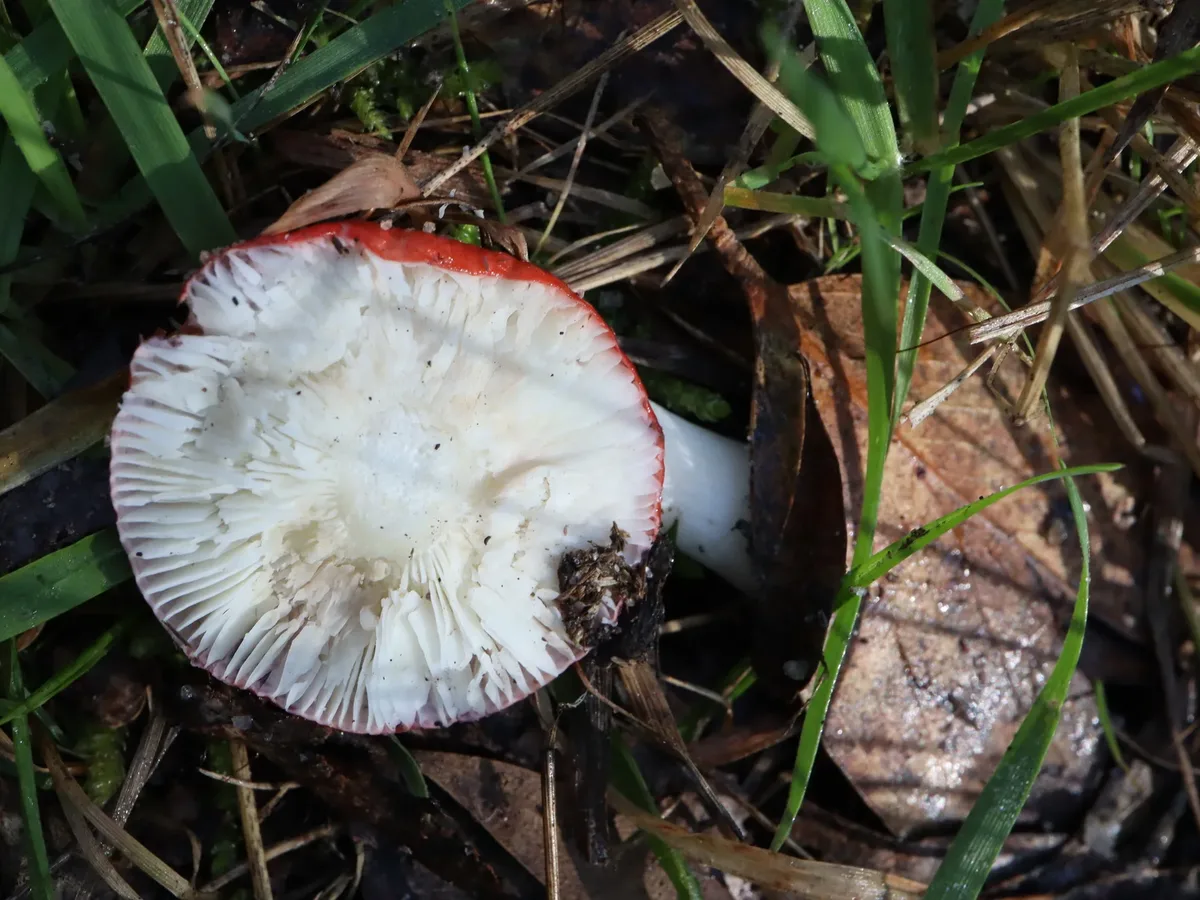 Atlas of Living Australia (CC0)
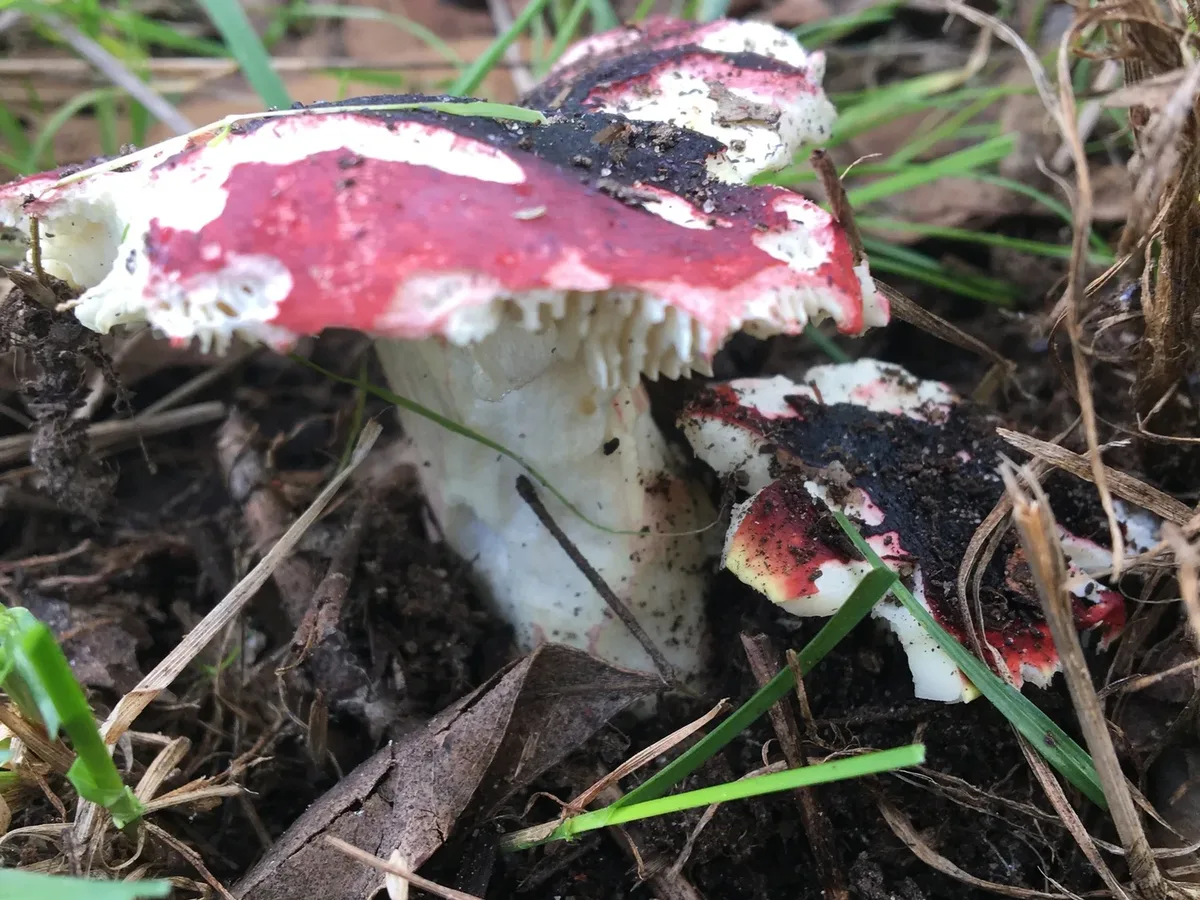 Atlas of Living Australia (CC0)Atlas of Living Australia (CC0)Atlas of Living Australia (CC0)
Edible only with the right preparation - or safe for some people but not others. Learn the caveats first.
Never eat a mushroom you are not 100% sure of - check the look-alikes below, and always cook wild mushrooms.
How to recognise it
Russula castanopsidis is a medium-sized brittlegill of quiet, earthy colours.
Cap
The cap - 4-10 cm across - begins as a firm hemisphere, gradually flattens, and in old age develops a shallow central depression.
Its surface runs from ochre-tan to chestnut-brown, sometimes paling to cream at the margin, and feels faintly tacky after rain but dries to a smooth matte. You can peel the cuticle back to about a third of the cap radius.
Gills
Beneath the cap sit white to cream gills, moderately crowded. Here you see one of the most distinctive traits of the whole Russula genus: the gills are brittle and crumble when pressed rather than bending or flexing - a feature that immediately sets Russula apart from flexible-gilled look-alikes such as Amanita or Tricholoma.
Stem
The stem is 3-7 cm tall, whitish, cylindrical to faintly club-shaped, and carries no ring and no basal sac (volva) - two absences that are critical safety reference points.
Flesh
The flesh is white and breaks with a clean chalky snap. It varies from mild to very faintly acrid depending on the collection; the smell is unremarkable. Spore print white to cream.
Where & when it grows
Habitat
This is a forest mushroom of subtropical and warm-temperate East Asia, bound tightly to Castanopsis trees - the evergreen chinquapins and their close relatives Lithocarpus and Cyclobalanopsis.
These trees dominate mid-elevation hillsides across southern Japan, southern and central China, Taiwan, Vietnam and neighbouring countries, and that is precisely where you find this mushroom, fruiting from the humus directly beneath them.
Like all Russula species, it is ectomycorrhizal: the fruitbody you see is just the visible tip of a fungal network that runs silently through the soil, threaded around living tree roots in a partnership that sustains both partners.
It will never appear on dead wood, in grassland, or away from its hosts. Look for it on well-drained, mildly acidic forest soils under a closed canopy, between roughly 300 m and 1,600 m elevation.
When
Fruiting is keyed to the monsoon and summer rains of East Asia. In the heart of its range - southern Japan, southern China, Taiwan - fruitbodies appear with the onset of the rainy season in late May or June, then continue through July, August and September, the warmest and wettest months.
After a heavy rainfall event, expect a lag of roughly 7-14 days before a flush breaks through the leaf litter, provided soil temperatures are already above about 15°C.
At higher elevations or the northern edge of its range the season can stretch into October as autumn rains arrive. In cool, dry conditions it does not fruit.
How it grows
Grows singly or in small scattered groups on the forest floor - never in dense tufts, never on wood.
Fruitbodies push up through the leaf litter within the mycorrhizal zone, usually within a few metres of the host trunk. The same patch of ground may produce repeated flushes across the season as the underground network responds to successive rain events.
Growth is rapid once conditions are right: caps expand over just a few days after rain, firm and chalky in the buttons, softening gradually with age.
Fruiting conditions
Monsoon-driven; requires warm soils and substantial rainfall typical of the East Asian summer monsoon. Flushes lag heavy rain events by one to two weeks once soils exceed 15°C. Will not fruit in cool-dry conditions.
Handle with care
Toxin
No toxin is currently documented for Russula castanopsidis itself.
The caution rating reflects unverified edibility and the proximity in habitat and appearance to confirmed toxic species, in particular:
- Russula subnigricans - contains cycloprop-2-ene carboxylic acid and related compounds causing rhabdomyolysis.
- Amanita species - amatoxins and phallotoxins.
Symptoms
If a misidentification with Russula subnigricans has occurred: onset of muscular pain, weakness and dark red-brown urine (myoglobinuria) typically 24-72 hours after ingestion, progressing to acute renal failure. This is a medical emergency requiring immediate hospitalisation.
If Amanita phalloides is involved: initial gastrointestinal phase 6-24 hours post-ingestion followed by apparent recovery, then rapid liver and kidney failure 2-7 days later.
Any unexplained illness within a week of consuming a wild mushroom from an East Asian forest must be treated as a medical emergency.
Look-alikes
The most dangerous confusion in its habitat is with deadly Amanita species.
Amanita phalloides (death cap) occurs in Castanopsis and Quercus forests across East Asia. It has a pale to olive-greenish cap that can be washed out to cream or tan, white gills, a white stem - and always has a ring and a volva.
Russula subnigricans is a deadly East Asian Russula (now well-documented from Japan, China, Korea) that causes severe rhabdomyolysis and has been responsible for multiple fatalities. It is brownish-grey and relatively plain, similar in stature to R. castanopsidis. The key chemical difference: R. subnigricans flesh turns slowly red when cut then darkens, and it gives a red then black reaction with ferrous sulphate (FeSO4) on the flesh.
Other similar edible or merely unpalatable Russula species in the region include Russula japonica (a confirmed edible with a pale reddish-brown to ochre cap) and various bitter or acrid species - all are separable by taste: any sharply acrid Russula should be rejected.
Given the presence of the deadly R. subnigricans in the same region and habitat, any unconfirmed Russula in East Asian Castanopsis forests warrants extreme caution.
Why it matters
HIGH, due to habitat overlap with two lethal groups:
- Russula subnigricans (deadly, rhabdomyolysis mechanism).
- Amanita phalloides group (amatoxin mechanism).
Both can be confused with plain brownish Russula species by inexperienced foragers.
Do not eat this species; do not attempt to distinguish it from R. subnigricans without specialist verification.
Grows in the same Castanopsis and Quercus forests of East Asia. Can have a pale olive-green, yellowish or washed-out tan cap, white gills and pale stem - superficially like a pale Russula at a glance. The death cap ALWAYS has a skirt-like ring on the stem and a membranous sac (volva) at the stem base, buried just below the soil surface. Russula castanopsidis has NO ring and NO volva, with brittle chalky gills. Always excavate the full stem base before identifying any white-gilled forest mushroom.
A deadly East Asian Russula causing fatal rhabdomyolysis. Cap is brownish-grey and similarly sized. Critical test: cut the flesh - R. subnigricans flesh turns slowly red then blackens, and a FeSO4 (ferrous sulphate) drop on the flesh turns red then black. R. castanopsidis does not show this reliable reddening-then-blackening. Without chemical confirmation and specialist verification, treat any brownish Russula in East Asian Castanopsis forest with maximum caution.
Numerous Russula species in the region are sharply acrid and peppery - a tiny fragment chewed and immediately spat will cause a burning sensation. Such species cause gastrointestinal upset but are not lethal. Russula castanopsidis reportedly has a mild to only slightly acrid taste, but taste alone is not a safe identifier and does not exclude R. subnigricans or Amanita (both mild-tasting).
A confirmed edible East Asian Russula with a pale ochre to reddish-brown cap. Flesh is mild to very faintly acrid, white and unchanging on cutting, without reddening. Differentiated from R. castanopsidis by its typically paler, more yellowish-tan cap and mild taste; from R. subnigricans by its non-reddening flesh. Requires specialist verification before eating.
In the kitchen
Picking & cleaning
Always uproot the entire stem carefully and examine the very base: the complete absence of a membranous sac or girdled bulb (volva) is the single most important safety check when harvesting any white-gilled, white-stemmed woodland mushroom, because the lethal death caps (Amanita phalloides group) grow in the same forests and also produce white gills and pale caps.
Russula castanopsidis is an obscure species with unverified edibility - it is not an established edible and should not be collected for the table. Collect only for identification purposes, and only with a confirmed reference alongside.
When identifying, confirm:
- 1No ring on the stem.
- 2No volva at the base.
- 3Brittle, chalky gills that crumble.
- 4Chestnut-brown cap with peelable cuticle.
- 5Association with Castanopsis.
Cooking
Russula castanopsidis has no established edibility and should not be cooked or consumed.
There is no safe preparation method that compensates for unverified edibility, and the species cannot be reliably separated from the deadly Russula subnigricans without specialist chemical testing.
Do not collect this mushroom for food under any circumstances.
Good to know
Russula castanopsidis is not an established edible species. Its edibility has not been formally tested or documented, and it must be treated as of unknown safety.
The region it inhabits - subtropical Castanopsis forest in East Asia - is home to Russula subnigricans, one of the world's most dangerous Russula species, which causes delayed, severe muscle destruction (rhabdomyolysis) and has been fatal in Japan, China and Korea.
The two species are broadly similar in appearance, growing in the same forest types and overlapping in season. Until a confirmed identification by a specialist mycologist is in hand and edibility is formally established, this species should not be consumed.
Separately, the same forests contain lethal Amanita species (death cap group) that can superficially resemble any pale-capped, white-gilled woodland mushroom at a glance.
Always dig up the whole stem and confirm no ring and no volva before touching any questionable specimen to your mouth.
A reference guide - never an edibility guarantee. When in doubt, leave it out.