Burning brittlegill
Russula badiasyn. Agaricus badius (Quél.) Pers., Russula badia Quél.
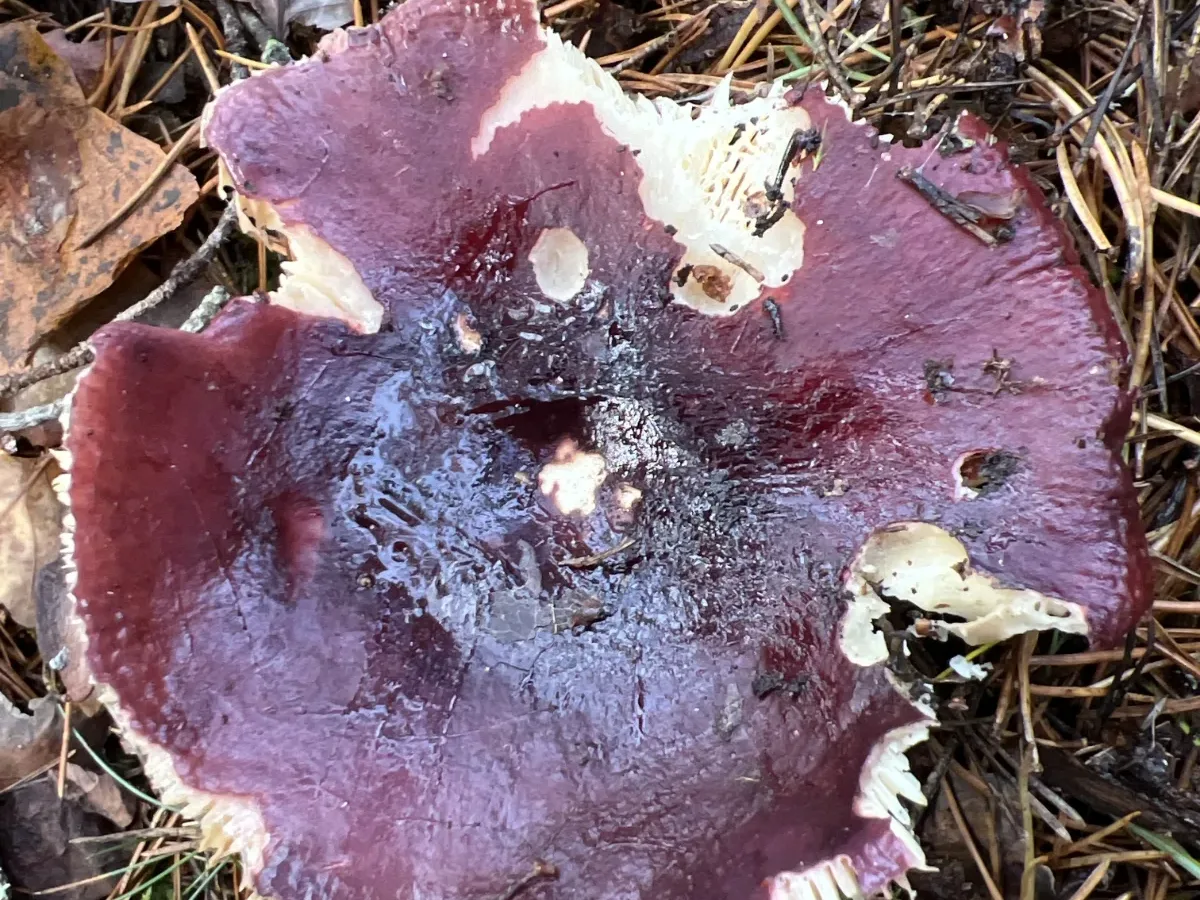 © Ulrik Andreassen (CC BY)
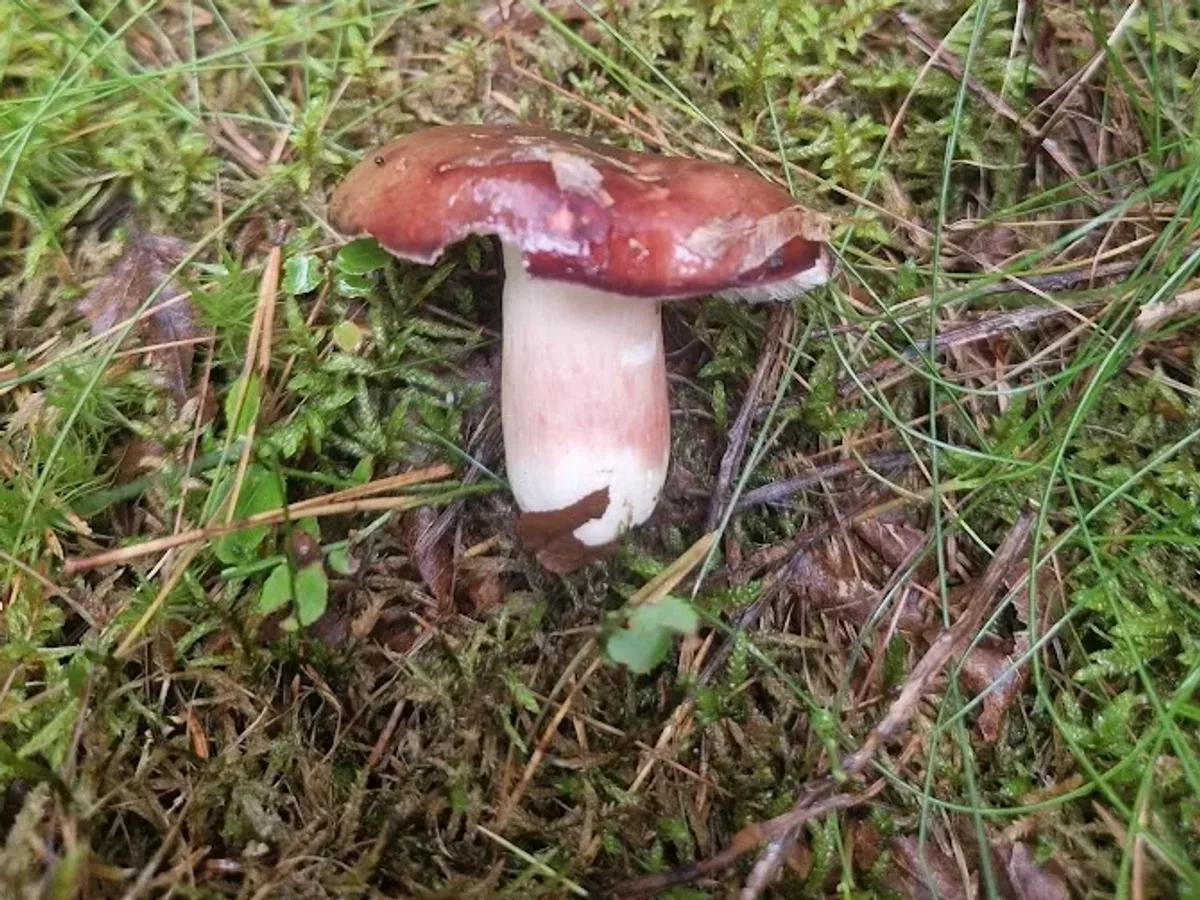 © Torfinn Bjørseth (CC BY)
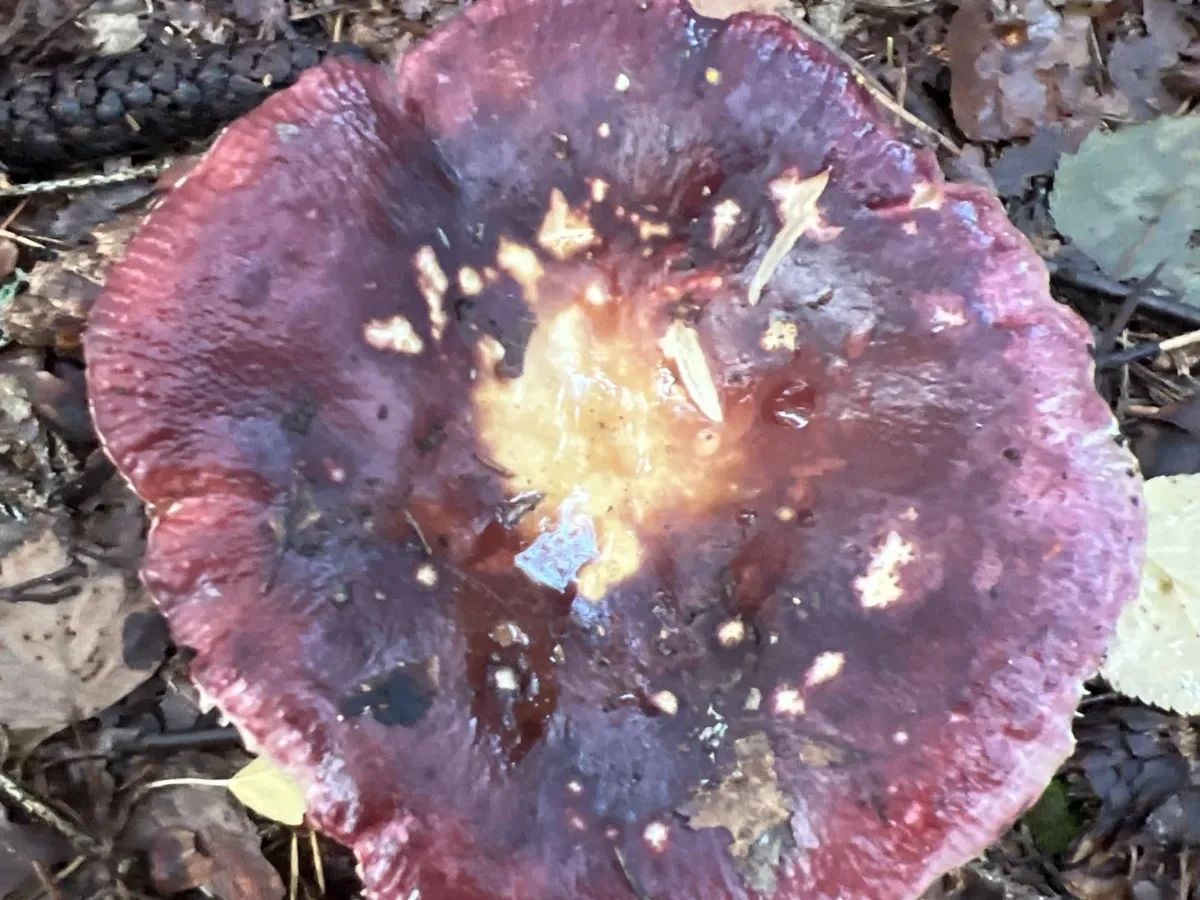 © Ulrik Andreassen (CC BY)
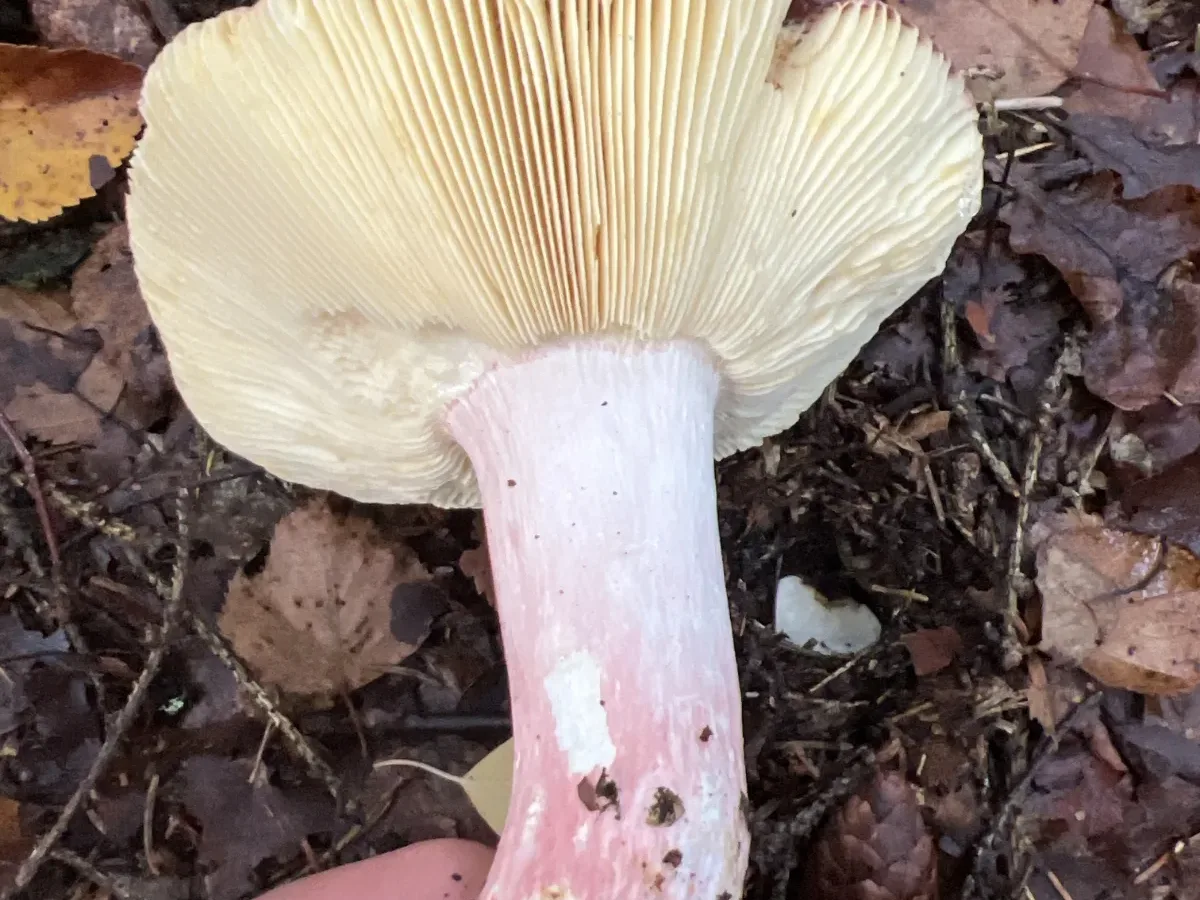 © Ulrik Andreassen (CC BY)
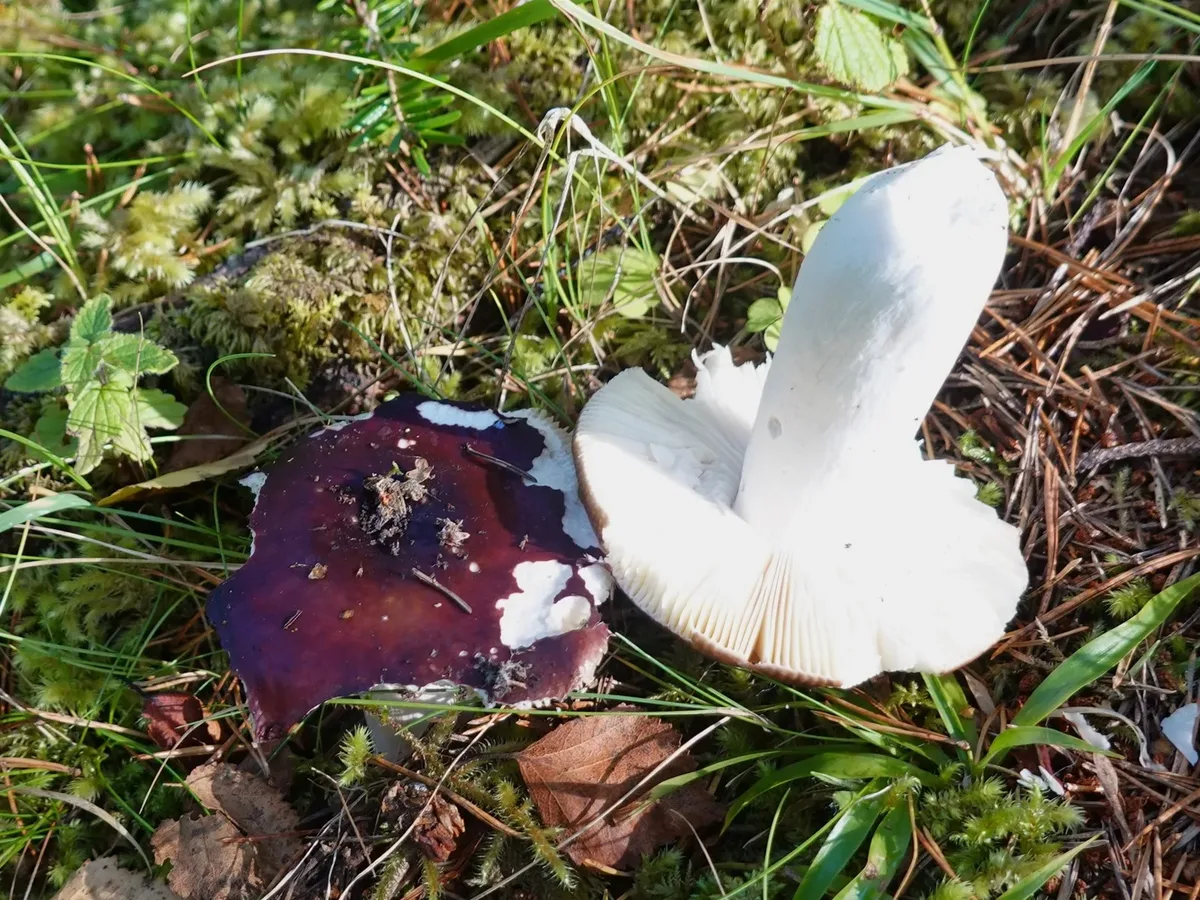 © Perry Gunnar Larsen (CC BY)
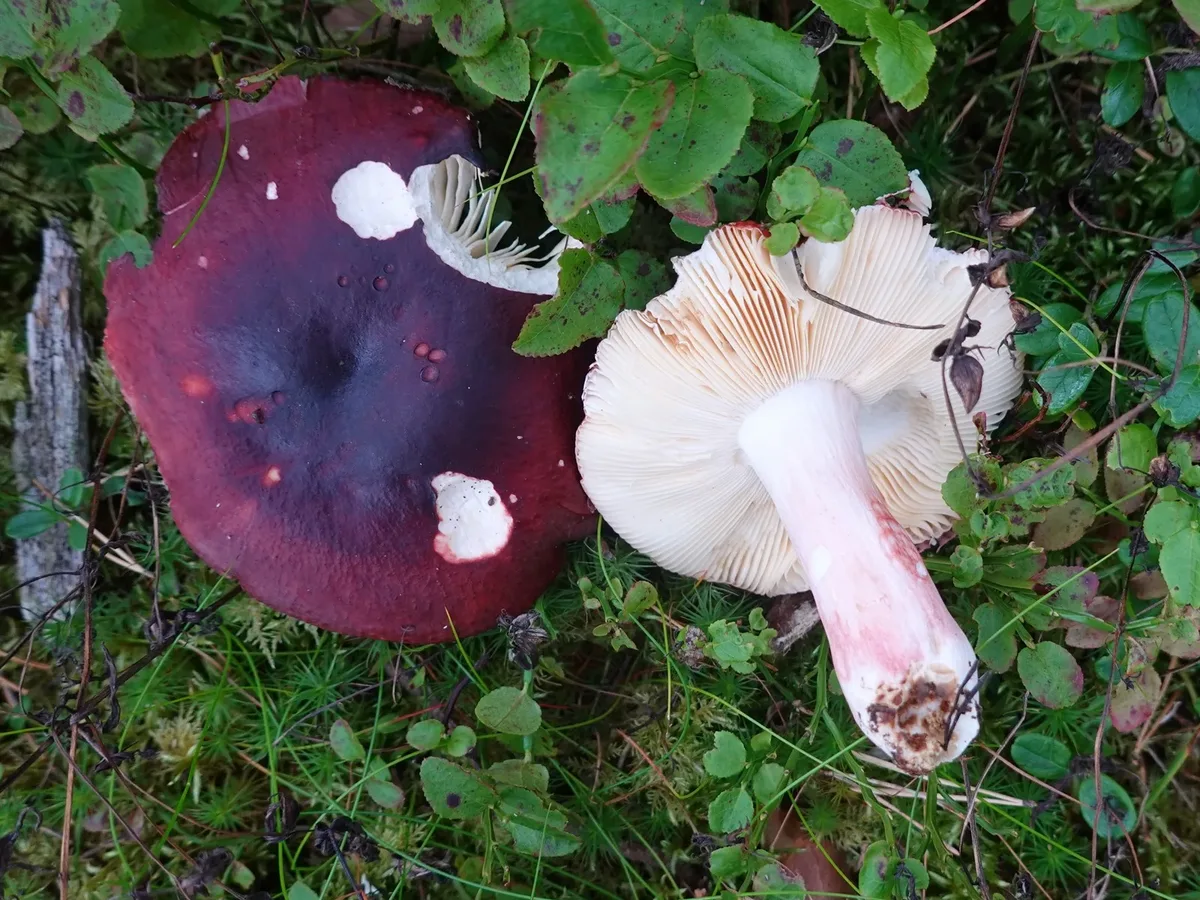 © Perry Gunnar Larsen (CC BY)
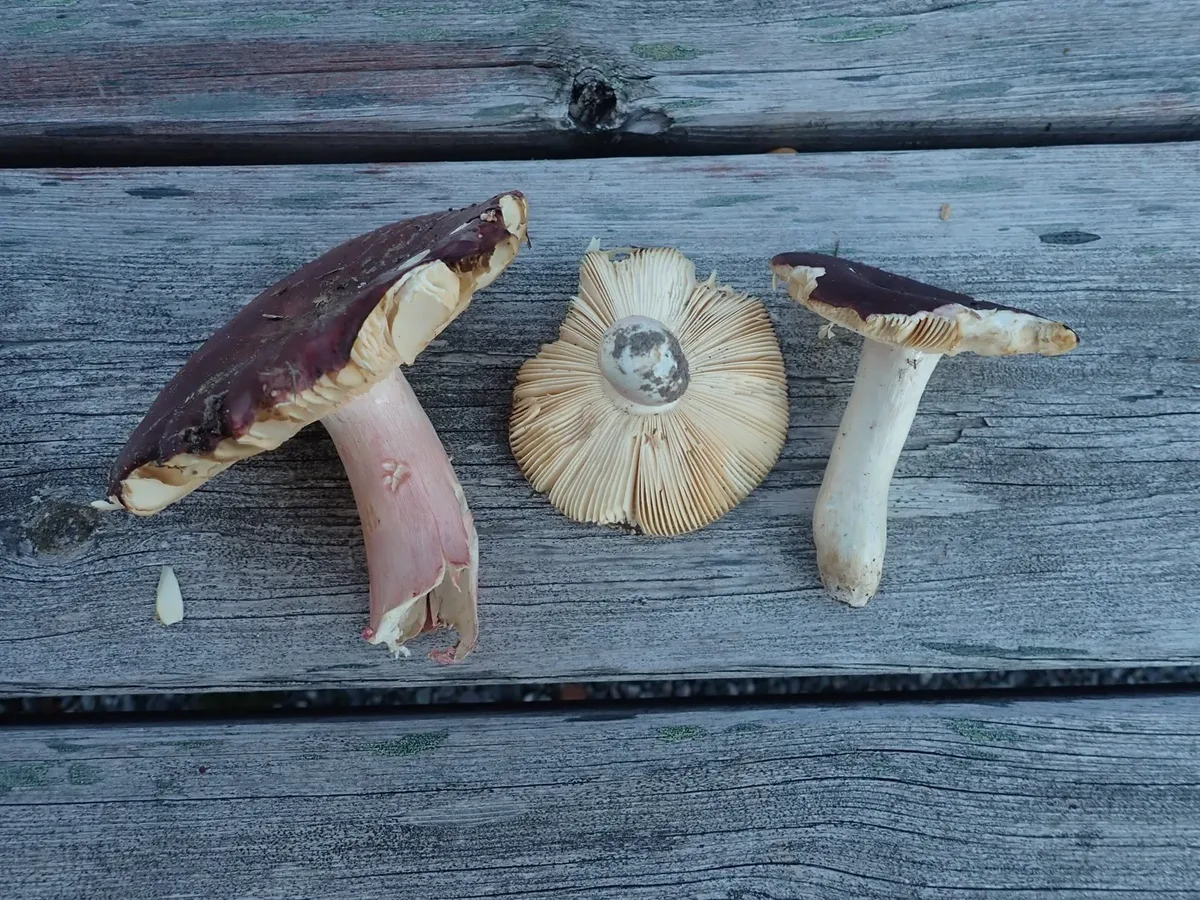 © Rune Solvang (CC BY)
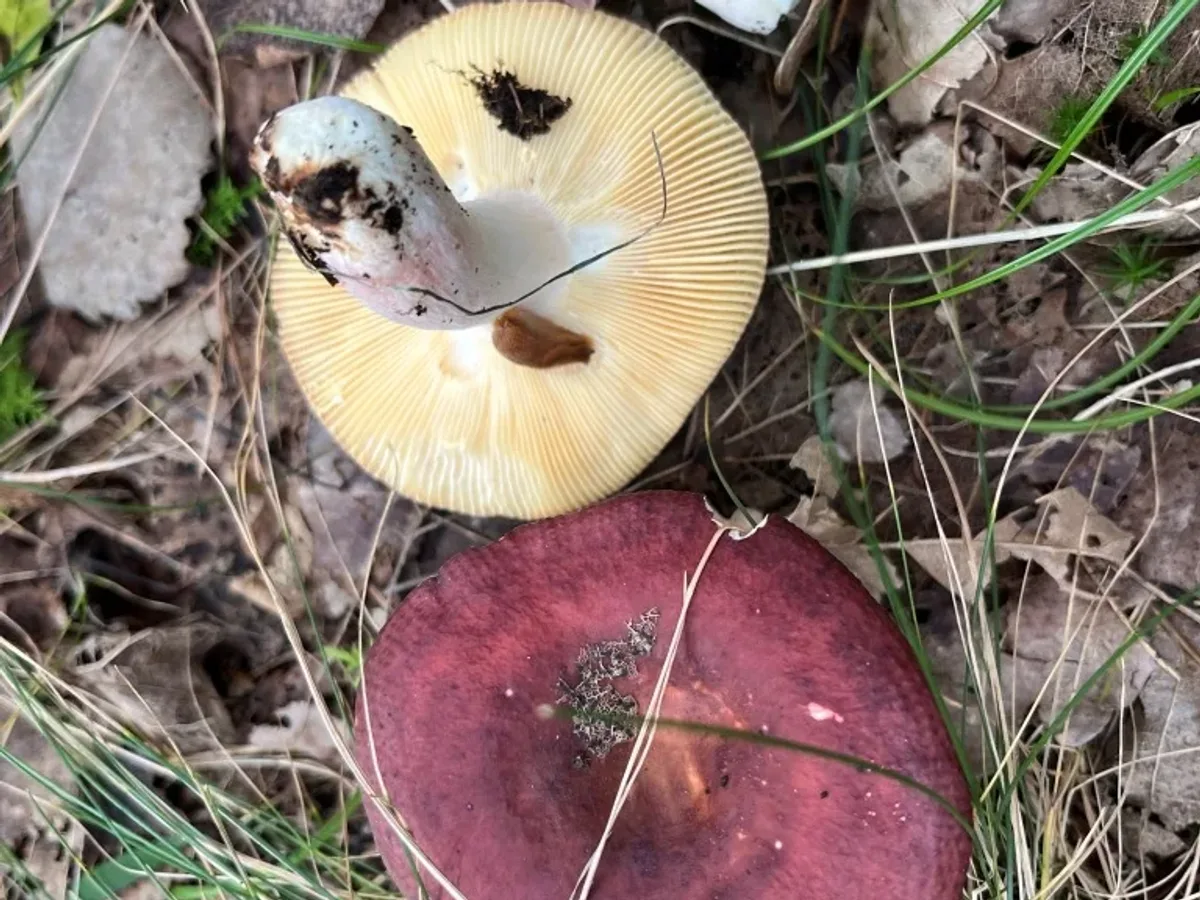 © Siv Moen (CC BY)
 © Anne Christenson (CC BY)
 © Ulrik Andreassen (CC BY)© Ulrik Andreassen (CC BY)© Torfinn Bjørseth (CC BY)
Edible only with the right preparation - or safe for some people but not others. Learn the caveats first.
How to recognise it
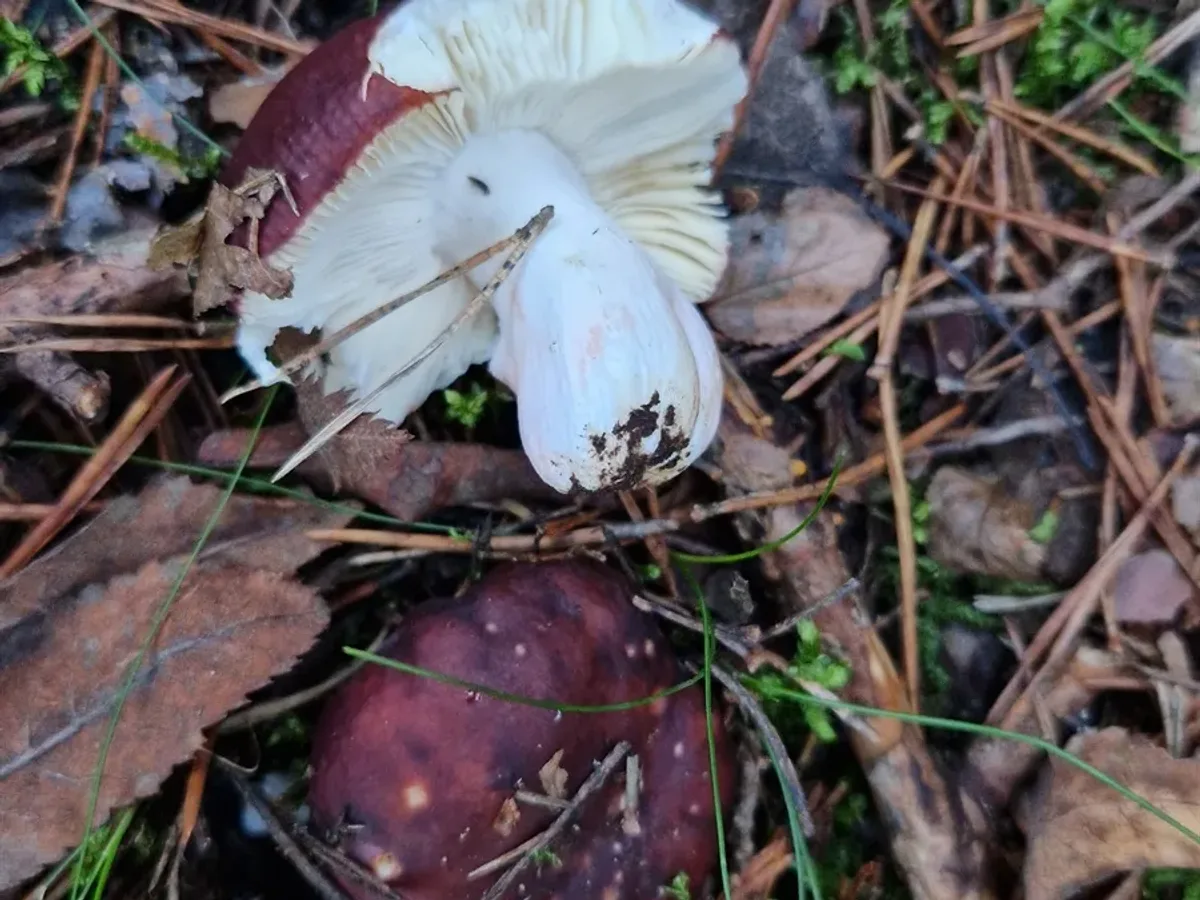
The Burning brittlegill is a medium to large Russula with a striking wine-red to dark purple-red cap (5-12 cm).
Three features working together set it apart from the many superficially similar russulas in pine forest:
- its intensely burning acrid taste
- its distinctive cedar-pencil smell
- the dark vinaceous colour that often bleaches patchily to pinkish-buff on older or sun-exposed specimens
Cap
The cap starts convex, flattens with age, and becomes shallowly funnel-shaped. The surface is slightly greasy when wet and peels about a third of the way in.
Gills
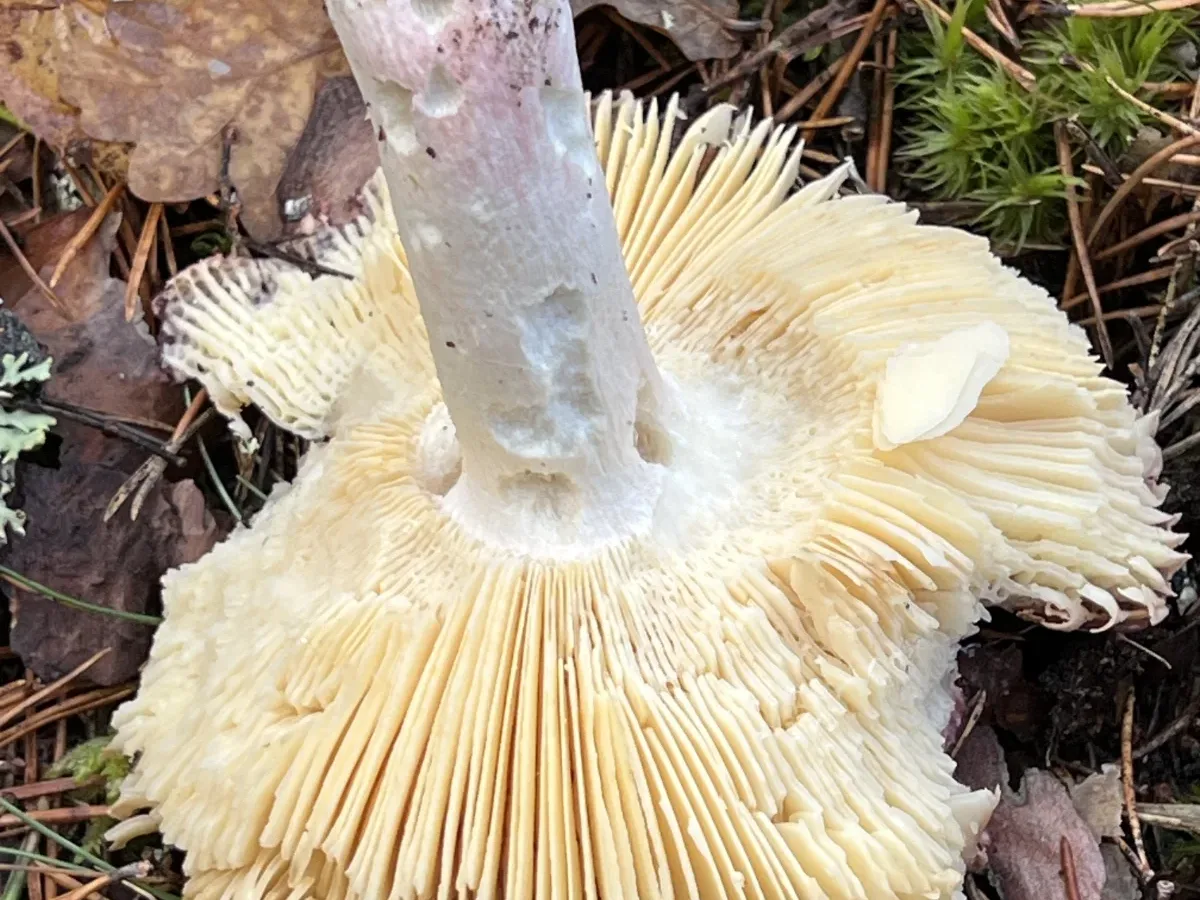
White to pale cream, moderately crowded, and brittle - they crumble rather than bend, as with all russulas.
Stem
White, stout, firm and chalky-brittle, with NO ring and NO volva (sac or swelling) at the base.
Flesh
The white flesh does not change colour when cut.
Smell & taste
The flesh carries the species' most memorable trait: a warm, unmistakable scent of cedarwood pencil shavings that persists even in dried material.
The other defining character is the taste - an infinitesimal fragment on the tip of the tongue quickly builds into a fierce, burning, long-lasting heat that is far more intense than most other acrid russulas. Do not swallow; spit it out immediately.
Why it's dangerous
Significant gastric illness is the expected outcome.
The species is not lethal in typical adult doses but is genuinely poisonous - not merely unpalatable - and the illness it causes is unpleasant enough to require medical attention in some cases.
Do not attempt to detoxify it through cooking and eating.
Toxin
The active irritant compounds in acrid russulas belong to a group of sesquiterpene derivatives, particularly pungent isocyano and related compounds, which have strong vesicant (irritant) properties on mucous membranes.
In R. badia the acridity is among the most persistent of any European Russula, suggesting a particularly high concentration or resistant chemical form.
These compounds trigger intense burning and inflammation in the gastrointestinal tract when ingested, leading to vomiting and diarrhoea - the body's rapid expulsion response that limits deeper absorption.
Symptoms
Onset is typically 30 minutes to 3 hours after ingestion.
Symptoms include intense burning and irritation of the mouth and throat immediately upon eating, followed by nausea, profuse vomiting, abdominal cramps and diarrhoea.
Recovery is usually complete within 24 hours with supportive care (fluids, rest). Serious complications are rare in healthy adults but could be more concerning in children or individuals with compromised health.
If a child has eaten any amount, seek medical advice immediately.
The gastrointestinal irritant in acrid russulas is not the same as the amatoxins of deadly Amanita species and does not cause liver or kidney damage.
Staying safe
Russula badia is poisonous and must not be eaten.
It contains gastrointestinal irritant compounds - the same general category of sesquiterpene and resinous substances responsible for the burning taste of acrid russulas - which cause nausea, vomiting, stomach cramps and diarrhoea if consumed.
Cooking reduces but does not reliably eliminate these compounds in this species, and R. badia is not listed as safe after preparation in any authoritative Nordic or Central European guide.
The intense, fiery burning taste on the tongue (even a tiny fragment) should immediately stop any consideration of eating it.
There are no deadly lookalikes specific to this species, but standard Russula safety rules apply: always confirm no ring and no volva at the base to rule out deadly Amanita species.
Where & when it grows
Habitat
Almost exclusively a species of coniferous woodland, particularly mature Scots pine (Pinus sylvestris) forest and boreal spruce-pine mixes.
It forms ectomycorrhizal associations with living conifers and therefore always grows within the rooting zone of those trees - look for it under pine on sandy, acidic soils in Scandinavia and northern Scotland, or in alpine pine-larch zones in Central Europe.
Mossy, bilberry-rich forest floor under tall, mature pines is the classic setting.
It tolerates mixed woodland if pine is present but is rarely found under pure broadleaved trees.
When
Fruits mainly from mid-July through October, with the heaviest flushes in August and September following warm summer rain.
In northern Scandinavia the window is compressed into August-September.
It is among the characteristic 'high summer to early autumn' russulas of pine forest and is rarely found after the first hard frosts.
How it grows
Emerges singly or in small scattered groups, never clustered, always rooted in soil near living conifers.
As a mycorrhizal species, the fruiting body appears only when the underground fungal network has received adequate moisture after a period of warmth - typically 5-12 days after soaking rain once soil temperatures are above 10 °C.
Maggot infestation is common in older specimens.
Fruiting conditions
Mycorrhizal with pine and spruce; flushes follow warm summer and early autumn rain. Requires a sustained period of moderate warmth - soil temperatures in boreal forest drop quickly after September, compressing the season. Heavy flushes after warm August rain are typical.
Look-alikes
Several wine-red or dark purple-red russulas grow in similar coniferous habitats and superficially resemble R. badia. Careful attention to smell, taste, habitat, and spore print separates them.
- Russula sardonia (Primrose brittlegill) - the most important confusion species. It also has a wine-red to purplish cap, grows under pine, is intensely acrid, and is poisonous - but its gills are distinctly lemon-yellow when young (white in R. badia) and it lacks the cedar smell.
- Russula xerampelina (Crab brittlegill) - also grows under conifers and has a wine-red to brown-crimson cap, but it is mildly flavoured (not acrid), has a strong seafood/crab odour (not cedar), and its stem flesh turns yellow-ochre when handled. It is a good edible that could be denied a meal by confusion with R. badia, but the taste and smell immediately separate them.
- Russula paludosa (Rosy russula) - has a bright rose-red to orange-red cap, also grows under pine, and is edible and mild - but its taste is not acrid and it lacks the cedar smell.
- Russula emetica (The sickener) - has a bright scarlet cap (not dark wine-red) with a pure white stem and very acrid taste, grows in boggy spruce-moss habitats, and is poisonous; the colour and smell distinguish it.
No deadly species is a realistic lookalike in this colour range under European conifers, since Amanita species with red tones (e.g. A. muscaria) are anatomically utterly different from Russula - they have a ring, a volva, and fibrous (not chalky) flesh.
Another pine-forest russula with a bright blood-red cap and acrid taste. R. sanguinea tends toward a brighter, more uniformly blood-red (less purple-brown) cap, and its gills often have a whitish-cream colour with a hint of pink; it also lacks the cedar pencil odour. Both are acrid and should be avoided. Exact separation requires microscopy in some cases.
Similar wine-red to brownish-crimson cap under conifers, but R. xerampelina is edible and mild - not acrid at all. It smells strongly of fresh seafood/crab (not cedar), and its stem flesh turns yellow-ochre when handled or cut. R. badia's burning taste is immediate and decisive: a tip-of-tongue fragment that burns fiercely is R. badia; a mild or pleasant-tasting fragment suggests R. xerampelina. Never eat any specimen without confirming mild taste.
The most likely confusion: also wine-red to purplish-red, also grows under pine, also intensely acrid and poisonous. Key difference: R. sardonia has distinctly lemon-yellow to primrose gills when young (white in R. badia) and lacks the cedar/pencil smell. Both are poisonous; confusing them carries no extra danger, but the distinction matters for accurate records.
Bright rose-red to orange-red cap under pine, mild-tasting and edible. R. paludosa is larger (up to 15 cm), lacks the cedar smell, has a mild or slightly nutty taste and often shows orange-flushed tones on the stem. The burning taste of R. badia immediately separates them.
Bright scarlet to cherry-red cap (not dark wine-red) with a pure white stem, grows in wetter spruce-moss habitats rather than dry pine forest, intensely acrid and poisonous. The much brighter red colour, white stem, wetter habitat preference, and lack of cedar smell separate it from R. badia.
A reference guide - never an edibility guarantee. When in doubt, leave it out.