Gilded brittlegill
Russula aureasyn. Russula aurata (With.) Fr., Agaricus auratus With.
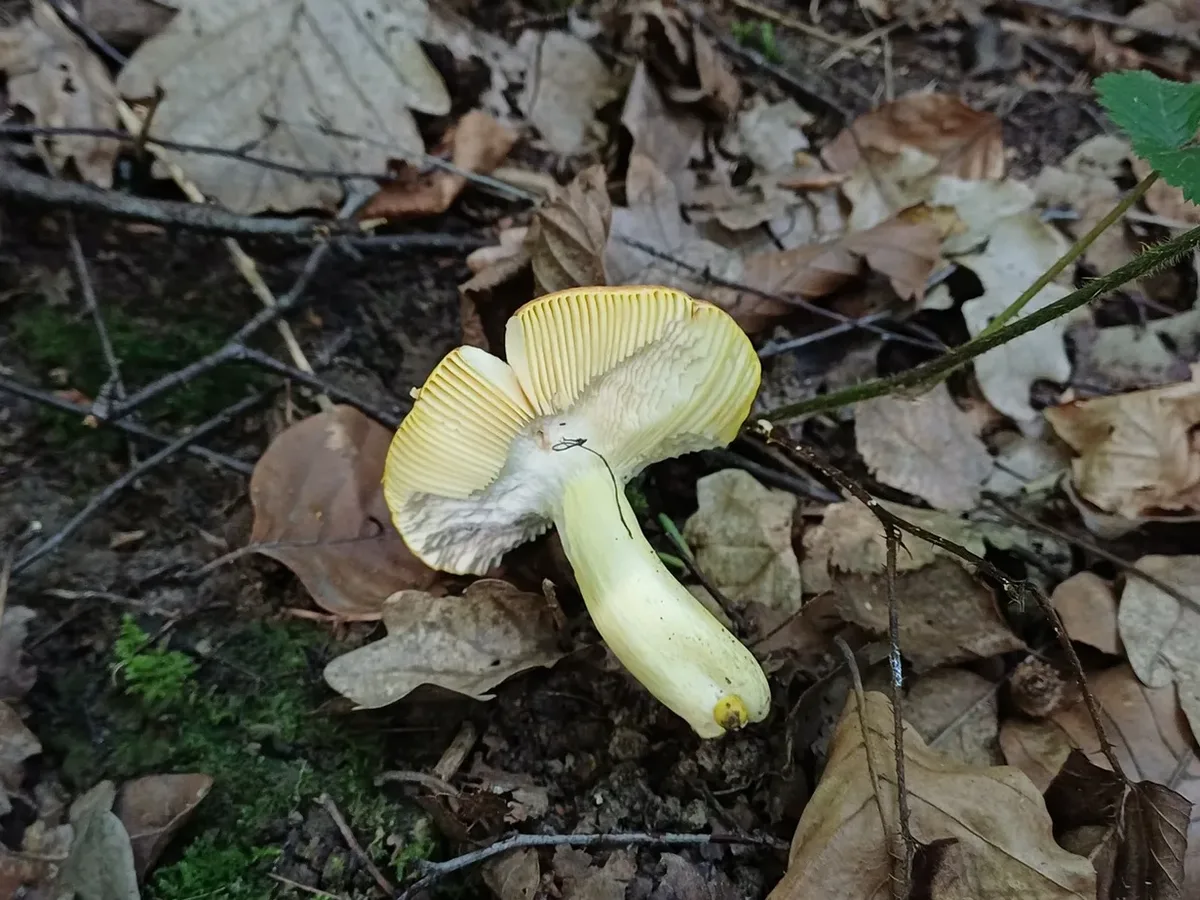 © Patrick Bayan (CC BY)
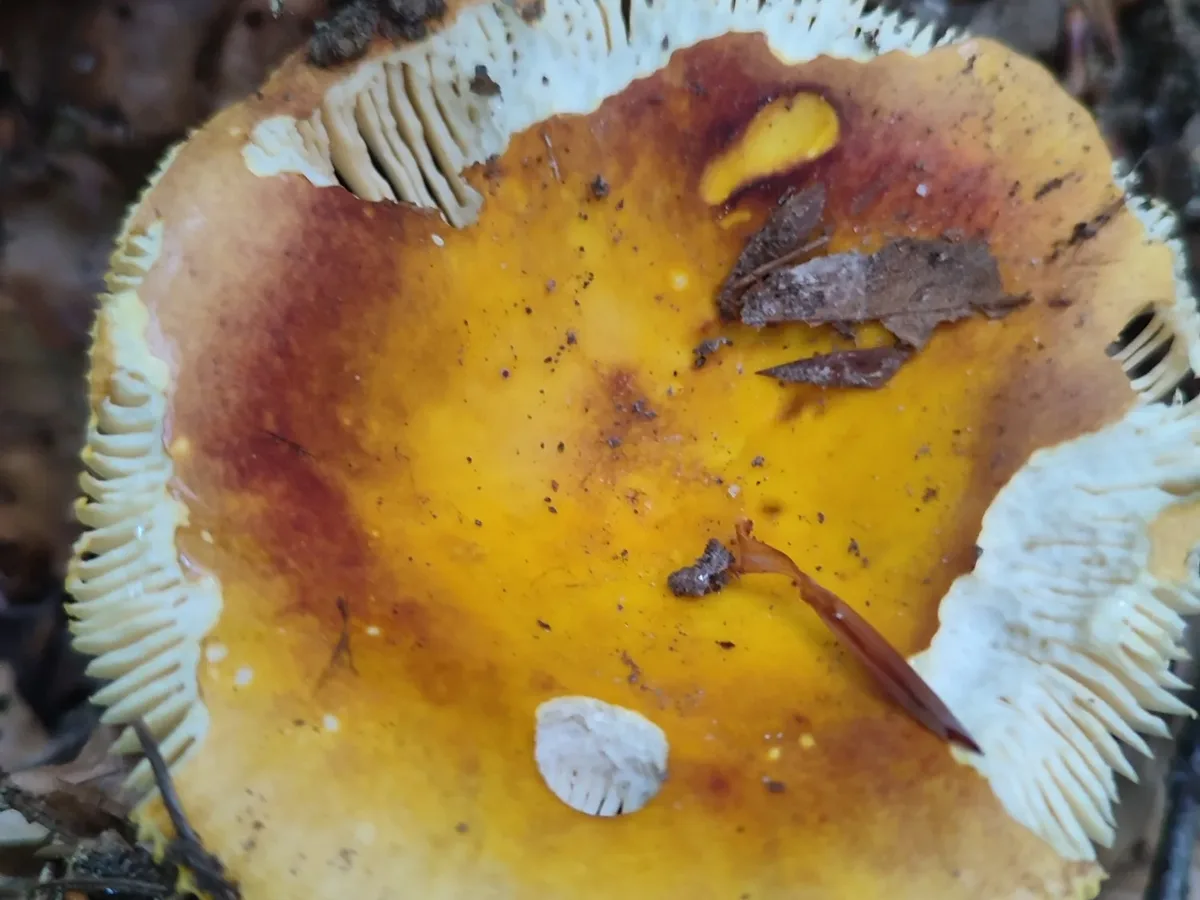 © victor laborde (CC BY)
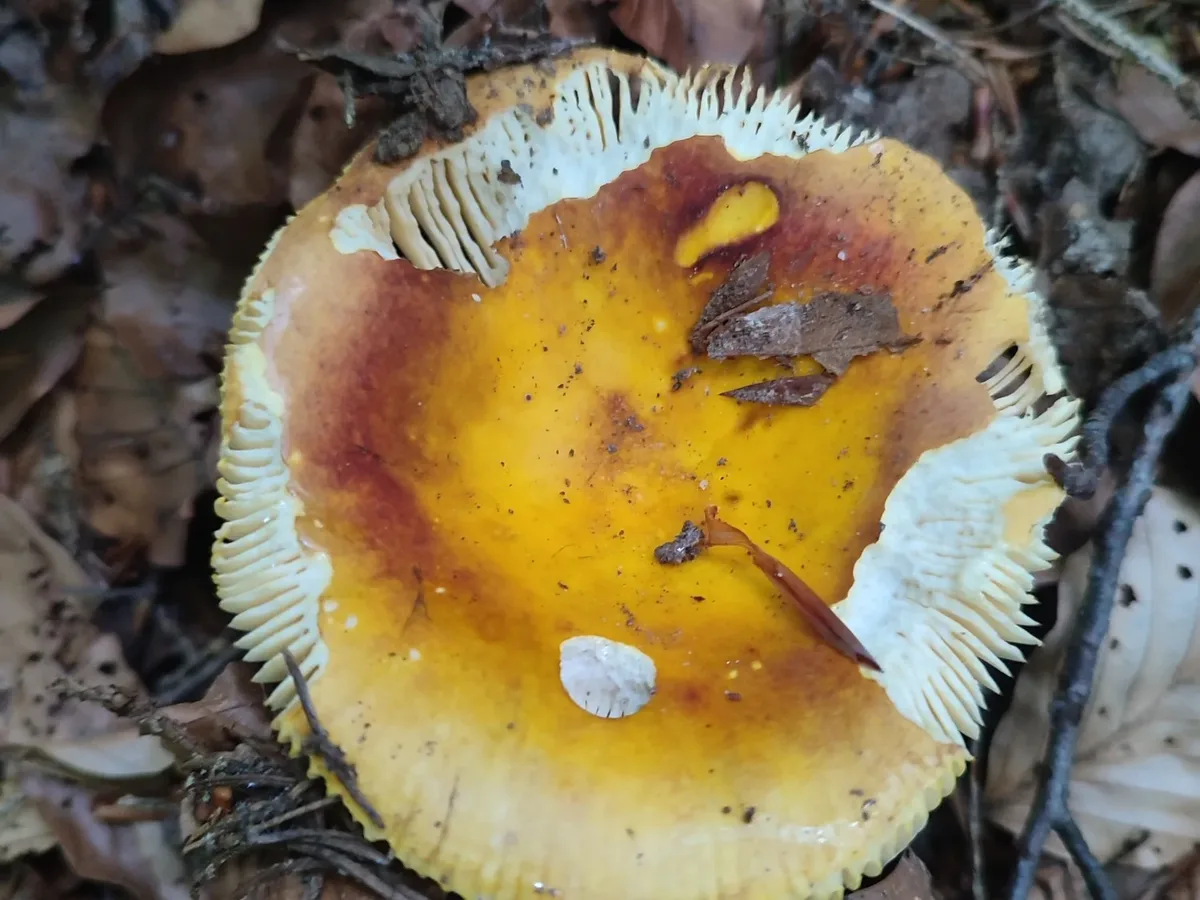 © victor laborde (CC BY)
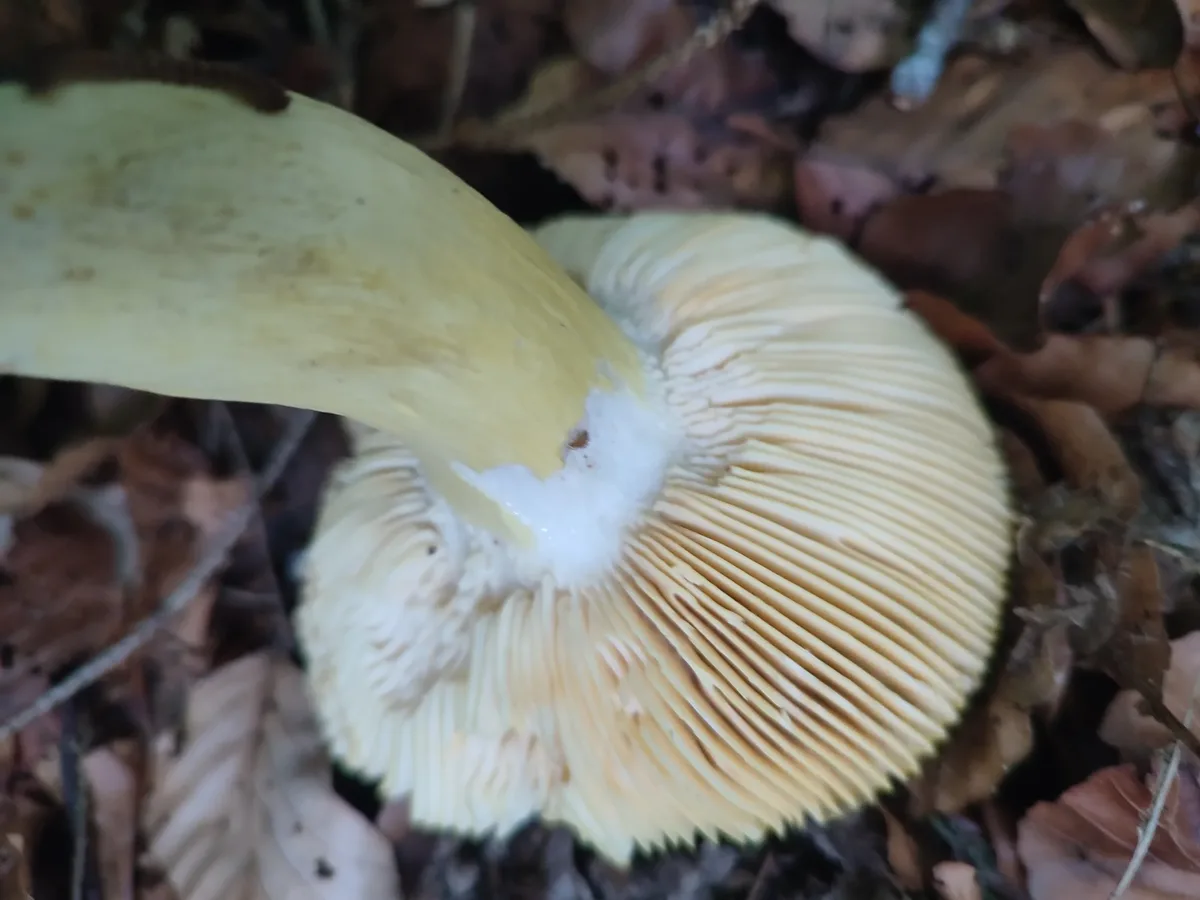 © victor laborde (CC BY)
 © victor laborde (CC BY)
 © Terje Bjerkan (CC BY)
 © Terje Bjerkan (CC BY)
 © Patrick Bayan (CC BY)
 © Patrick Bayan (CC BY)© Patrick Bayan (CC BY)© victor laborde (CC BY)
Good to eat, once you have identified it with certainty and cooked it through.
How to recognise it
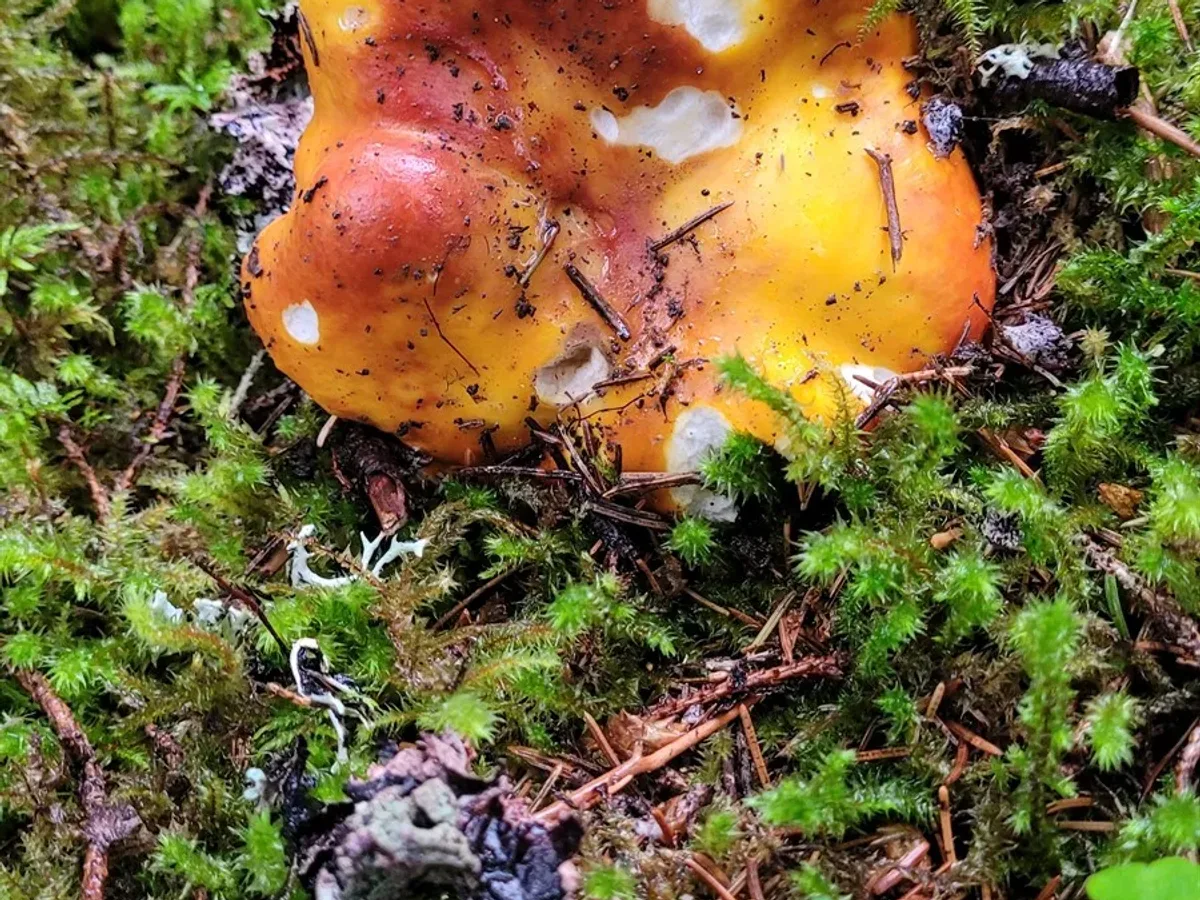
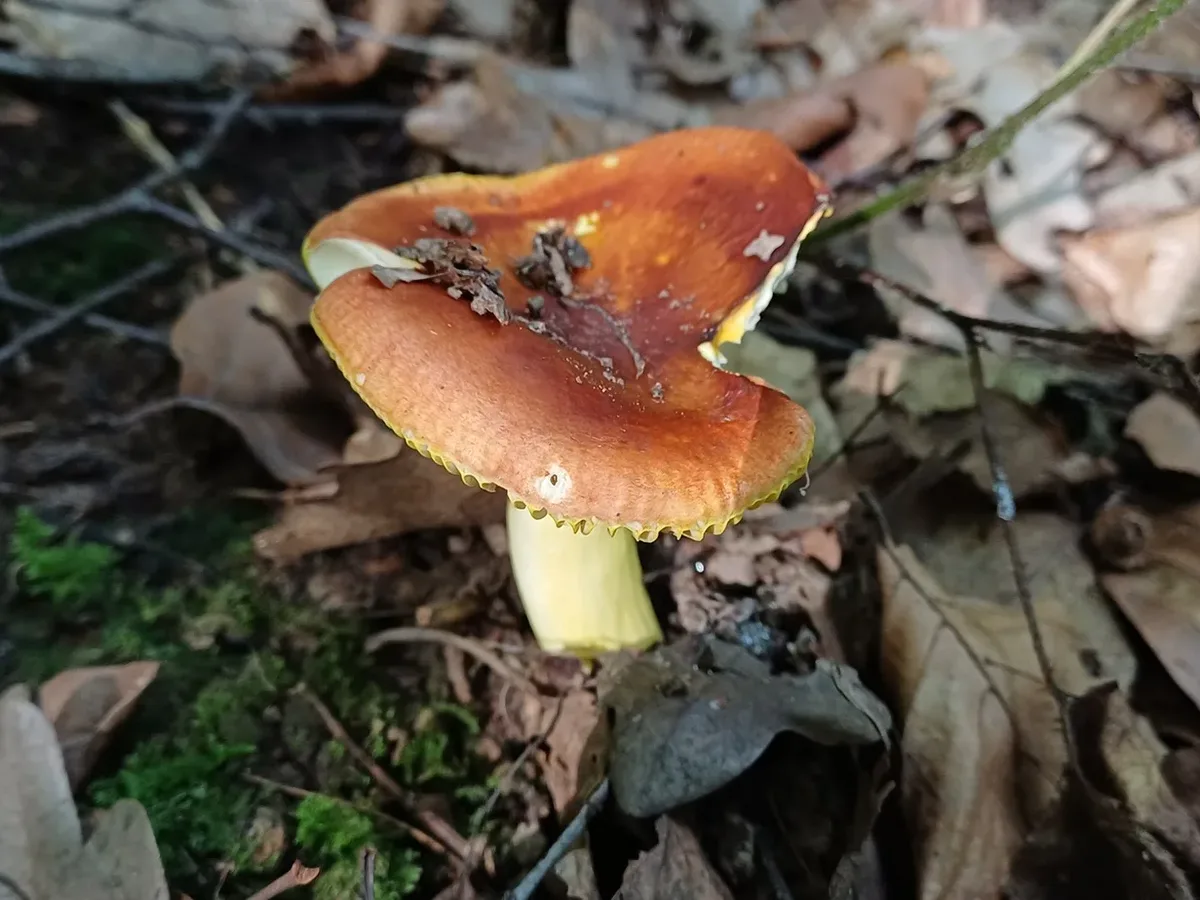
Russula aurea is one of the most visually striking russulas in European woodlands - its cap is a vivid golden-yellow to orange-red, often richly saturated in the centre and paling to cleaner yellow at the thin margin.
Cap
The cap (4-10 cm) begins convex and domed, then flattens and finally becomes shallowly depressed in old age. The surface is smooth and becomes faintly viscid in wet weather; the cuticle peels about one-third of the way in.
Gills
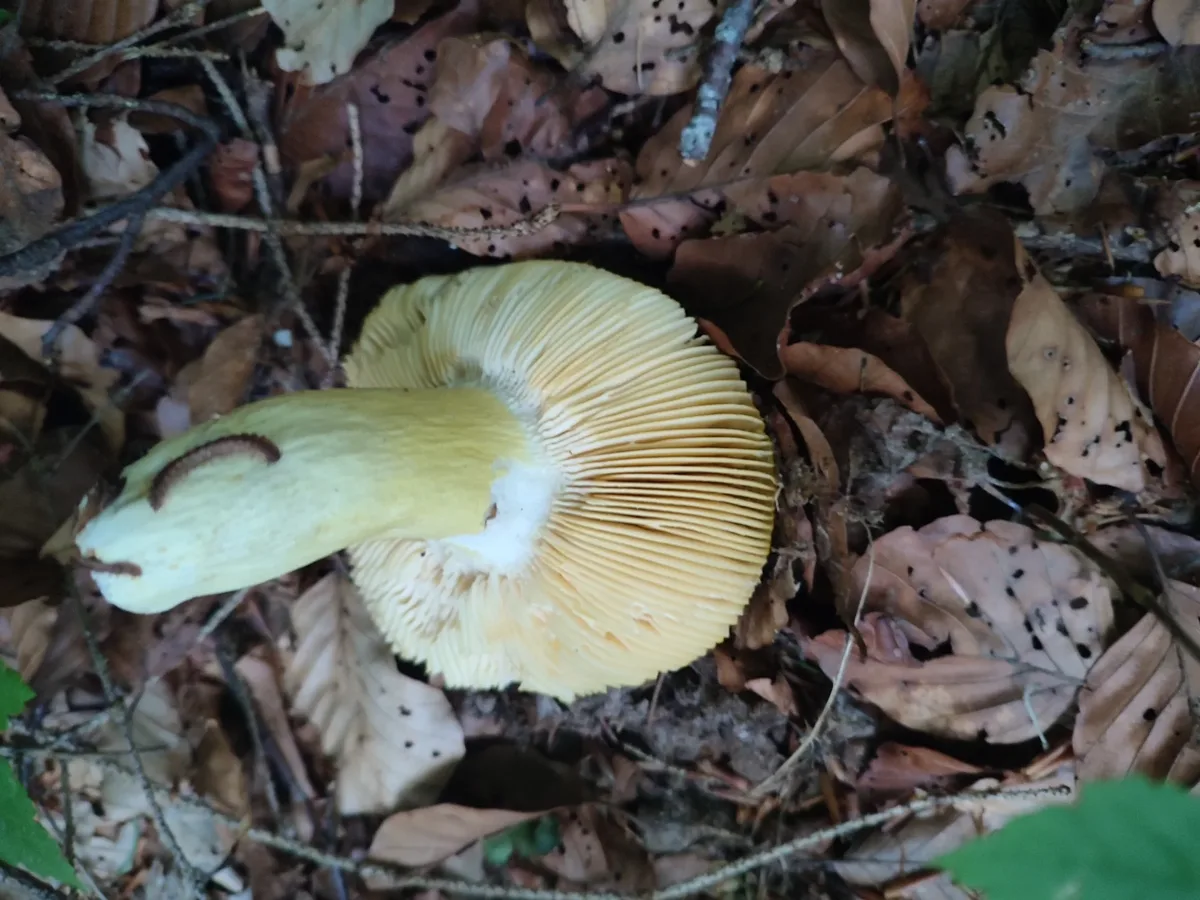
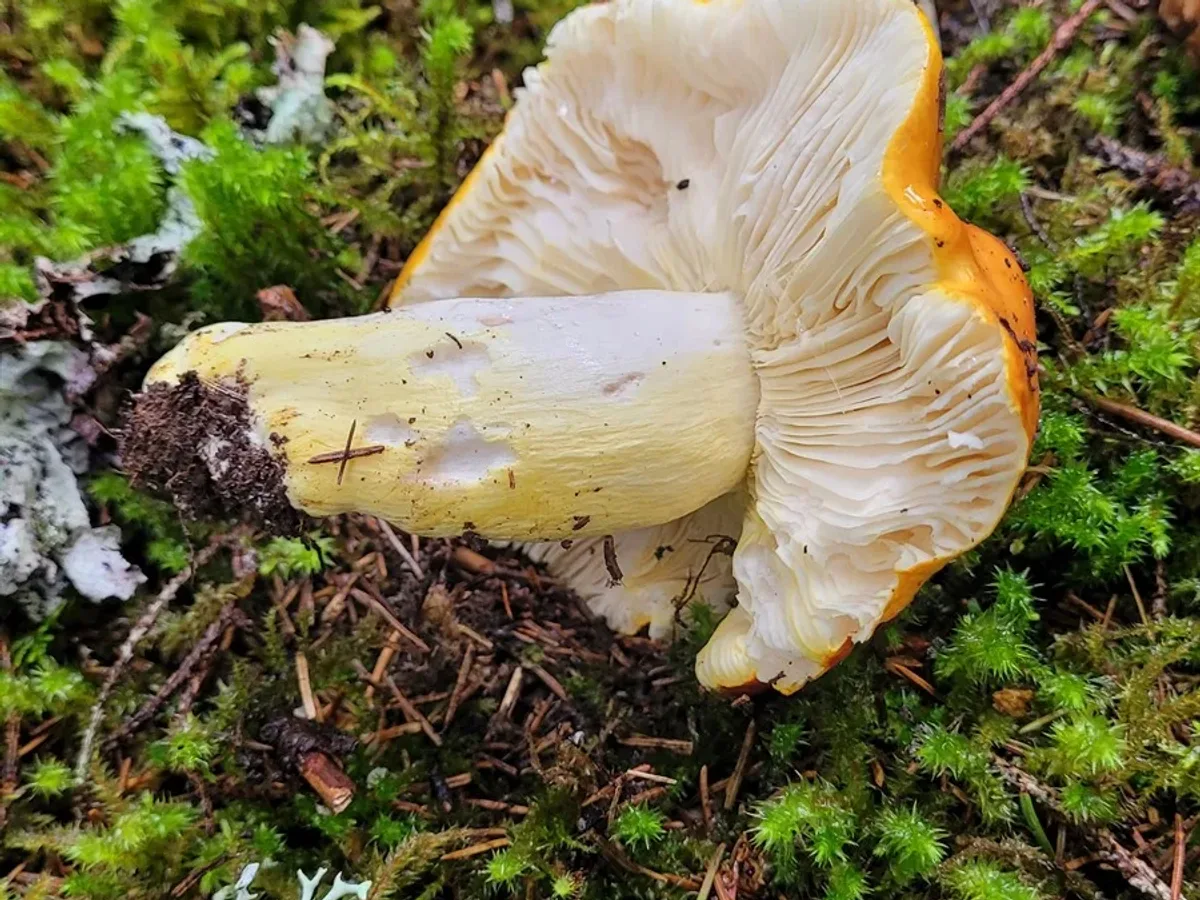
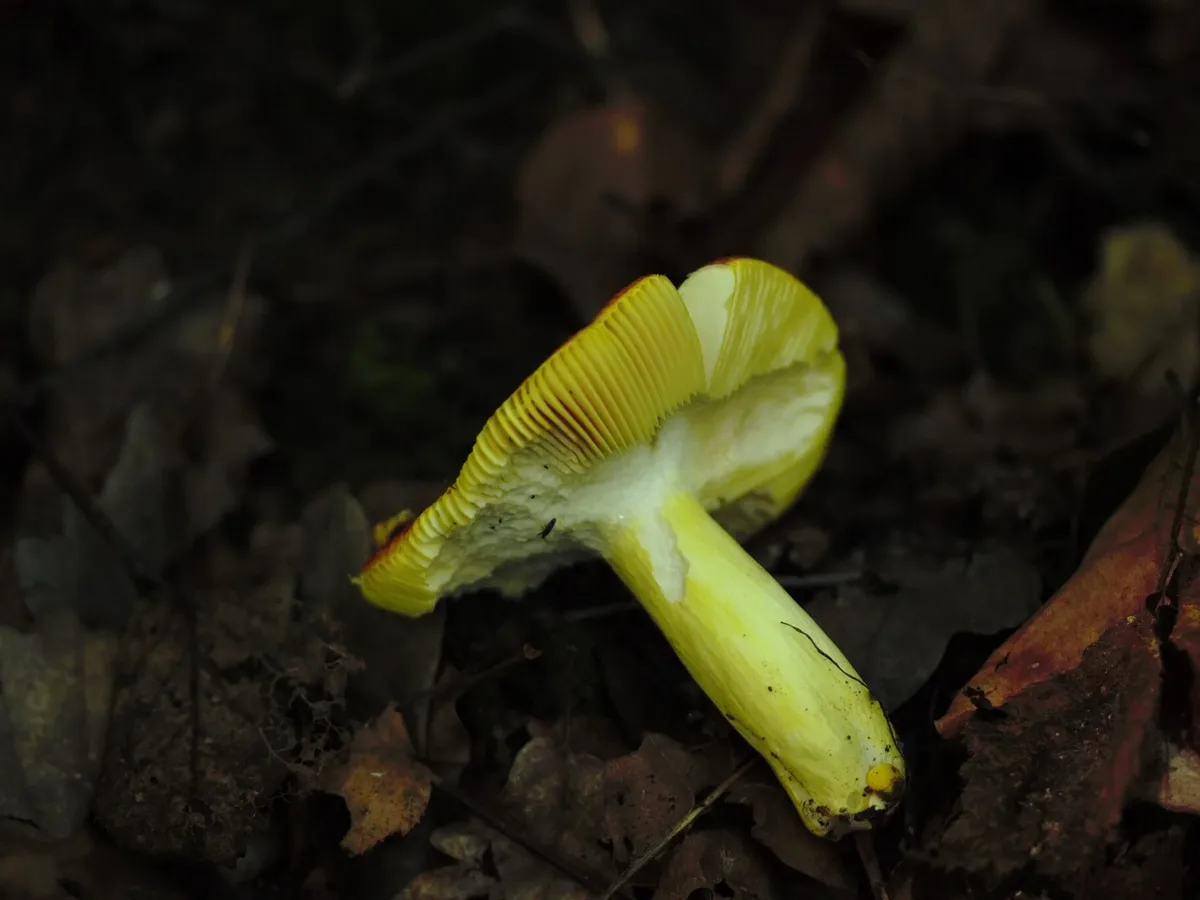
The single most useful field character is the yellow-edged gills. The gills start white but develop distinctly yellow edges that contrast with the white gill faces, making them immediately conspicuous to anyone looking underneath the cap.
Stem
White to pale lemon-yellow, firm and cylindrical.
Flesh
Pure white, firm, brittle and chalky in the true Russula manner - it snaps cleanly rather than tearing fibrous threads - and it does not change colour on cutting or bruising.
Smell & taste
The taste is mild and pleasant, the smell faintly fruity.
The spore print is pale ochre (cream to light yellow).
Critically, there is NO ring on the stem and NO volva at the base - if either is present, you are not holding a russula.
Where & when it grows
Habitat
A woodland species tied to living broadleaved trees through ectomycorrhizal partnership.
It is most reliably found in mature beech and oak forest on moist, humus-rich, neutral to slightly acidic soils, often appearing among deep leaf litter in dappled shade.
In central and western Europe it occurs throughout the lowlands and into lower montane zones.
It is generally more scattered and less abundant than the most common large russulas, making a clean find a minor prize.
When
Russula aurea fruits from June or early July in warm summers and continues into October, though it is not among the earliest russulas.
The strongest flushes appear in August and September, following soaking rain after a warm period.
Like all ectomycorrhizal species it cannot be picked from the same spot indefinitely - fruiting depends on the condition of the host tree and the seasonal moisture balance in the soil.
How it grows
Solitary or scattered, never in tight clusters and never on wood.
Each fruit body emerges within the root zone of a living host tree. After soaking summer rain the cap typically pushes through the leaf litter within five to ten days.
As with all russulas, the mycelium exchanges minerals and water for tree-produced sugars in a relationship that can persist for decades.
Fruiting conditions
Mycorrhizal; flushes follow soaking summer-to-autumn rain once soil temperatures are reliably above 11 °C. Main fruiting August-September in central Europe, triggered by warm-season rain events.
Look-alikes
The most dangerous potential confusion for an inexperienced forager is with yellow or orange-capped Amanita species growing in the same woodland.
- Fly agaric (Amanita muscaria): in its earliest button stage, before the red or yellow-red cap has expanded and while the universal veil still partly obscures it, it can present as a pale to yellow egg-like structure partially buried in soil. Once expanding, yellow-orange forms (var. flavivolvata, or simply pale specimens) superficially resemble a golden russula until the ring and volva become visible.
- Jewelled amanita (Amanita gemmata): poisonous, with a pale straw-yellow to ochre cap and white gills, growing under conifers and broadleaves across Europe. It has a ring (often fragile and evanescent), a volva, and white gills without yellow edges.
- False death cap (Amanita citrina): pale yellowish with white gills and a pronounced potato-like smell, ring and volva.
The rule for all these is identical: check for the presence of a ring and volva. A Russula has neither, ever. R. aurea's distinctively yellow-edged gills, bright orange-yellow cap and chalky-snapping flesh are collectively unlike any Amanita.
Among other russulas, Russula flavida (lemon russula) is entirely yellow and is also edible and mild. Russula claroflava (yellow swamp brittlegill) grows strictly under birch in wet woodland and has a paler, lemon-yellow cap and yellowing flesh. Neither is dangerous.
Russula lutea is a smaller, uniformly bright yellow species of mixed woodland; also edible and mild.
Pale lemon-yellow to white cap with prominent ring, deep cup-like volva and a pronounced raw-potato smell. White gills without yellow edges. Mildly poisonous (some sources list as non-toxic; others note GI irritants). The volva and ring immediately distinguish it from R. aurea.
Young fly agaric buttons before cap expansion can look superficially like a golden mushroom emerging from soil. Once expanded, yellow-orange forms have a ring, white wart-like patches on the cap and a bulbous volva at the base - none of which are present in R. aurea. Fly agaric is toxic (ibotenic acid / muscimol) but rarely lethal in typical doses; the confusion is mainly possible only before the cap has opened.
Moderately toxic (ibotenic acid / muscimol causing neurological and GI symptoms; no established fatal mechanism and no confirmed amatoxins, orellanine, or gyromitrin). Confusion with R. aurea is structurally implausible: A. gemmata has a pale creamy-yellow to straw cap, white gills without yellow edges, a prominent ring on the stem, and a sac-like volva at the base - features absent in every Russula. R. aurea has a vivid orange-red cap, distinctively yellow-edged gills, NO ring and NO volva. Any forager checking for ring and volva (the mandatory Amanita genus check) will immediately resolve the distinction. The documented real confusion risk for R. aurea is with Amanita caesarea or other red-capped Russulas, not A. gemmata.
Uniformly pale to bright lemon-yellow cap and stem, without the orange tones or yellow-edged gills of R. aurea. Also edible and mild; no danger.
Paler lemon-yellow cap; flesh and gills turn grey then black on handling (R. aurea flesh is unchanging white); grows exclusively under birch in wet or boggy woodland. Also edible.
In the kitchen
Picking & cleaning
Lift the whole mushroom gently and inspect the base before pulling it free. Confirm there is no volva:
- No sac.
- No girdling ring of tissue at the stem base.
- No basal cup.
This takes two seconds and is not optional.
Confirm the gills have yellow edges, the flesh snaps cleanly, the taste is mild.
Choose firm, young to middle-aged caps; old specimens become hollow and wormy quickly in warm weather.
Cut away any soil and debris and carry in a basket, cap-down, to avoid bruising the brittle flesh.
Cooking
A good edible with firm, pleasantly textured flesh and a mild, slightly nutty flavour. The cap holds its shape well in the pan and does not release excessive water.
- Slice and sauté in butter with garlic.
- Add to mixed-mushroom ragù or soups.
- Grill whole young caps.
Drying concentrates the flavour, but the texture is better fresh.
Always cook thoroughly.
Good to know
Russula aurea has no known toxins and is widely regarded as a good edible.
The brittle russulas as a group in temperate Europe contain no deadly species, and all mild-tasting russulas (those that are not sharply acrid or peppery on a chewed-then-spat taste test) are considered safe to eat once cooked.
This species carries the further reassurance of its very distinctive colouring - the orange-red cap and yellow gill-edges are not shared by any dangerous mushroom once the full fruit body is visible.
Nevertheless, the safety of this identification depends entirely on correctly ruling out Amanita species before picking. Confirm each of these:
- There is no ring on the stem and no volva at the base.
- The flesh snaps like chalk and does not tear in fibres.
- The gills have yellow edges.
If any doubt remains, set it aside.
The amatoxins in the death cap are tasteless, odourless and lethal even in small doses; no taste test, cooking method or preparation technique removes them.
Always cook thoroughly - eating wild mushrooms raw is never recommended.
A reference guide - never an edibility guarantee. When in doubt, leave it out.