Amethyst brittlegill
Russula amethystinasyn. Russula amethystina Quél., Russula amethystina var. amethystina
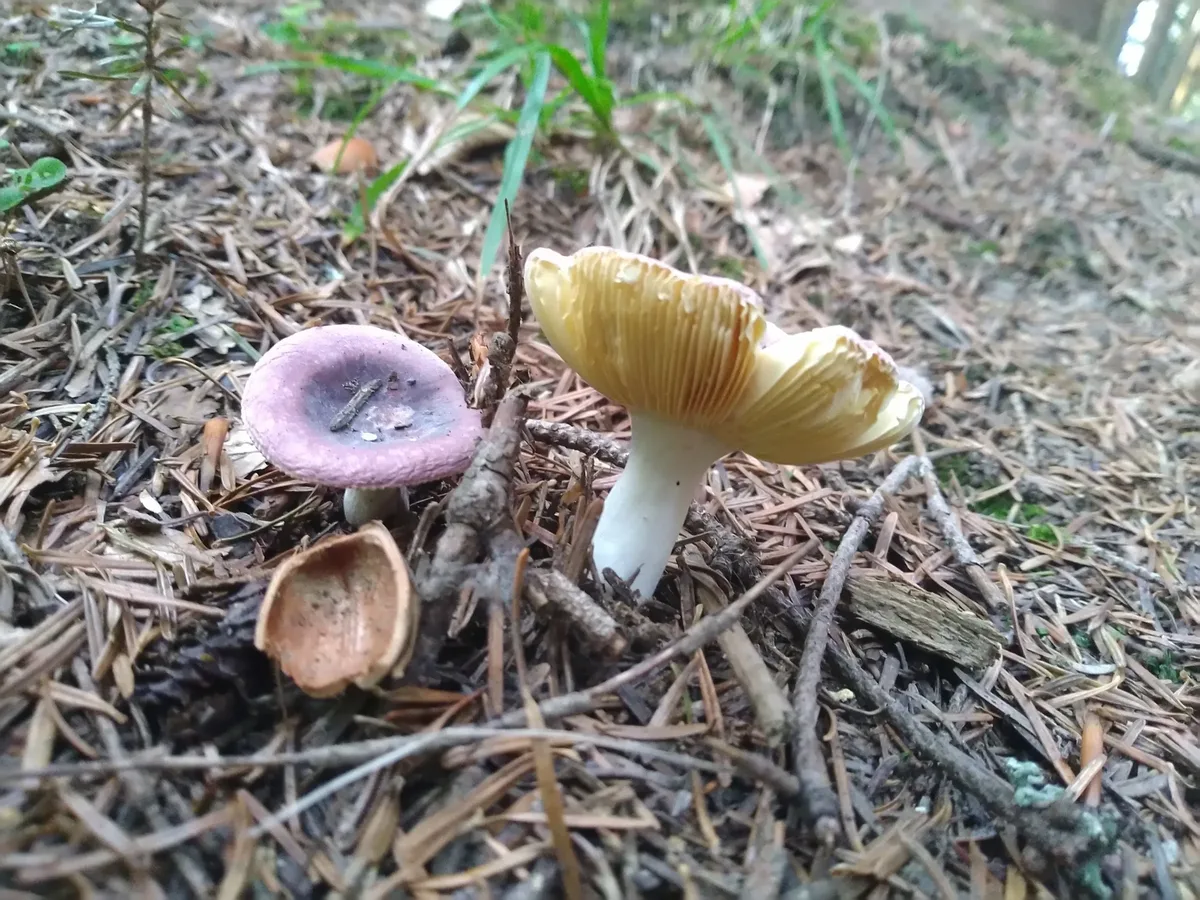 © Miriam Sokhet (CC BY)
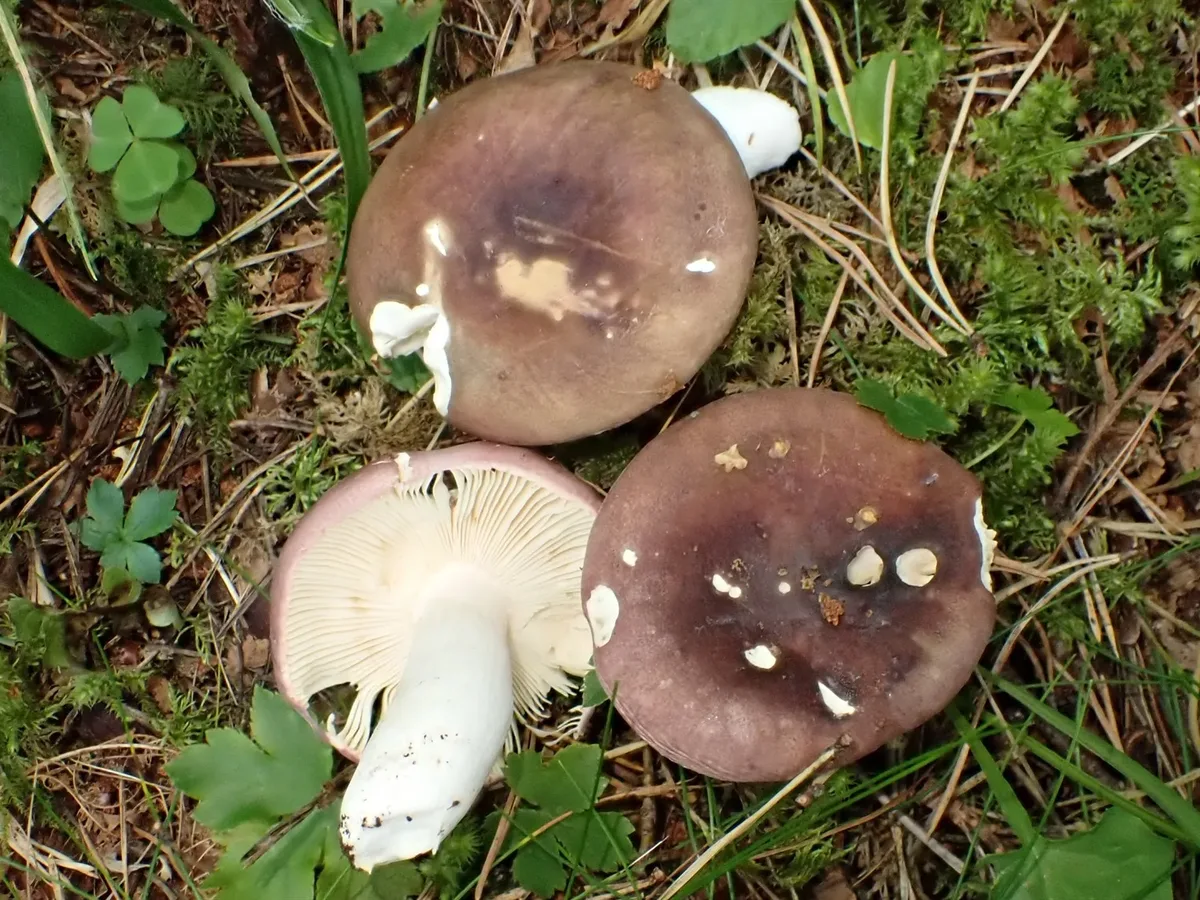 © Perry Gunnar Larsen (CC BY)
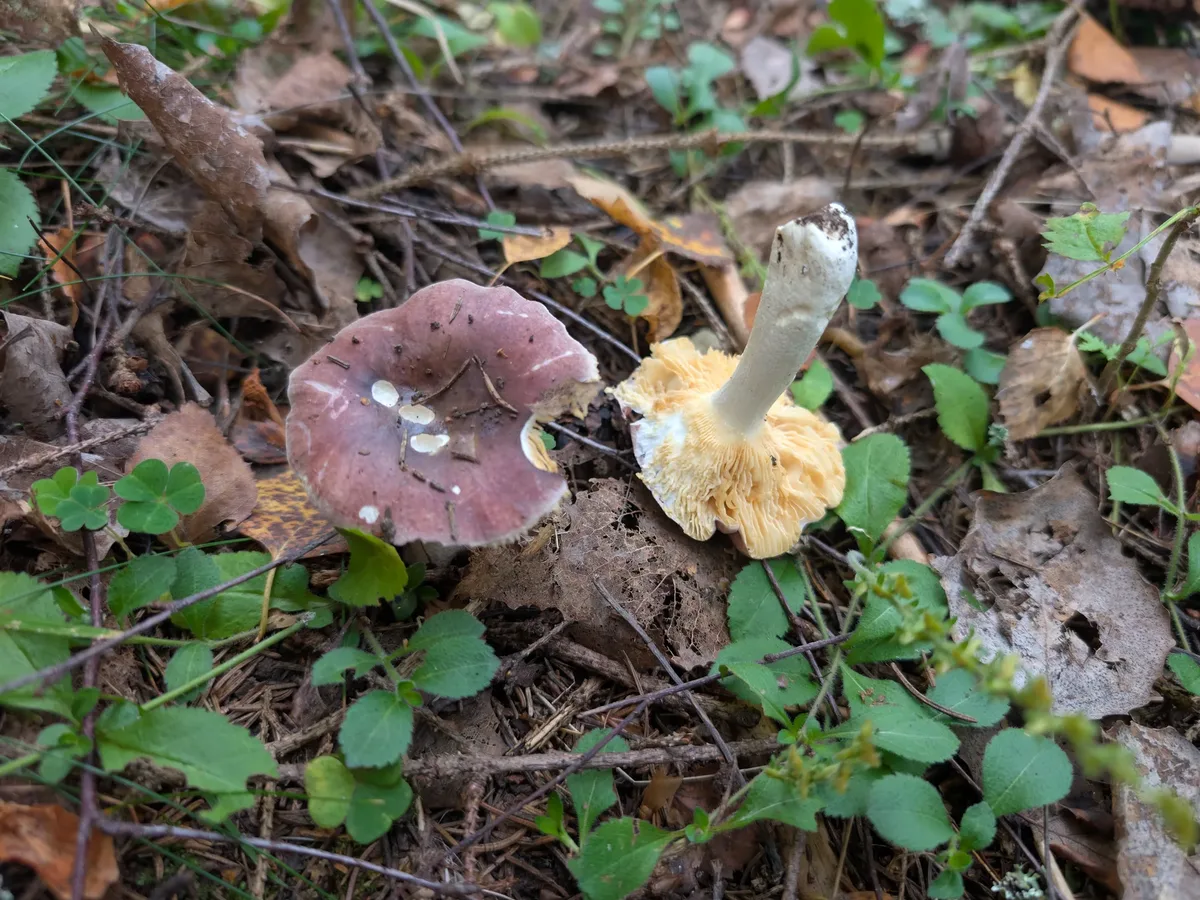 © Petri Roponen (CC BY-SA)
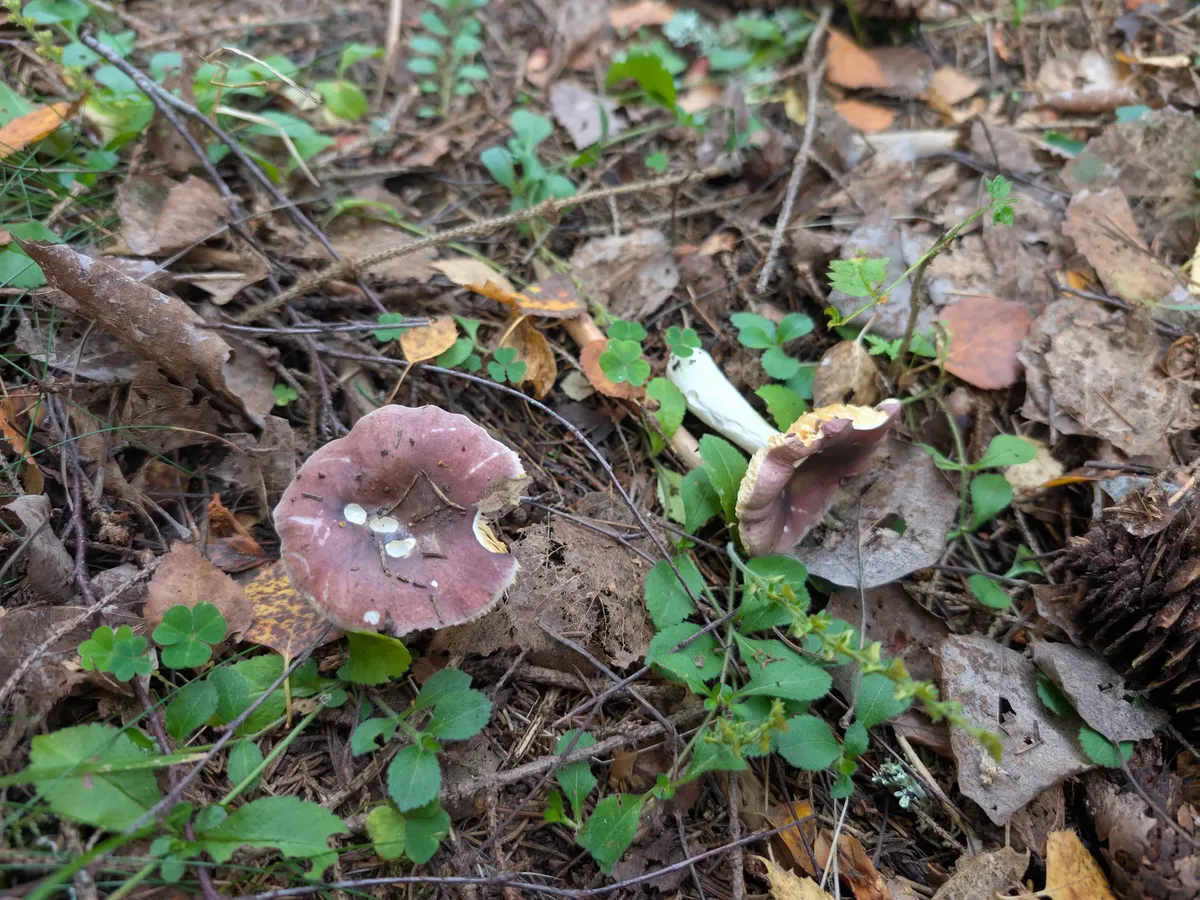 © Petri Roponen (CC BY-SA)
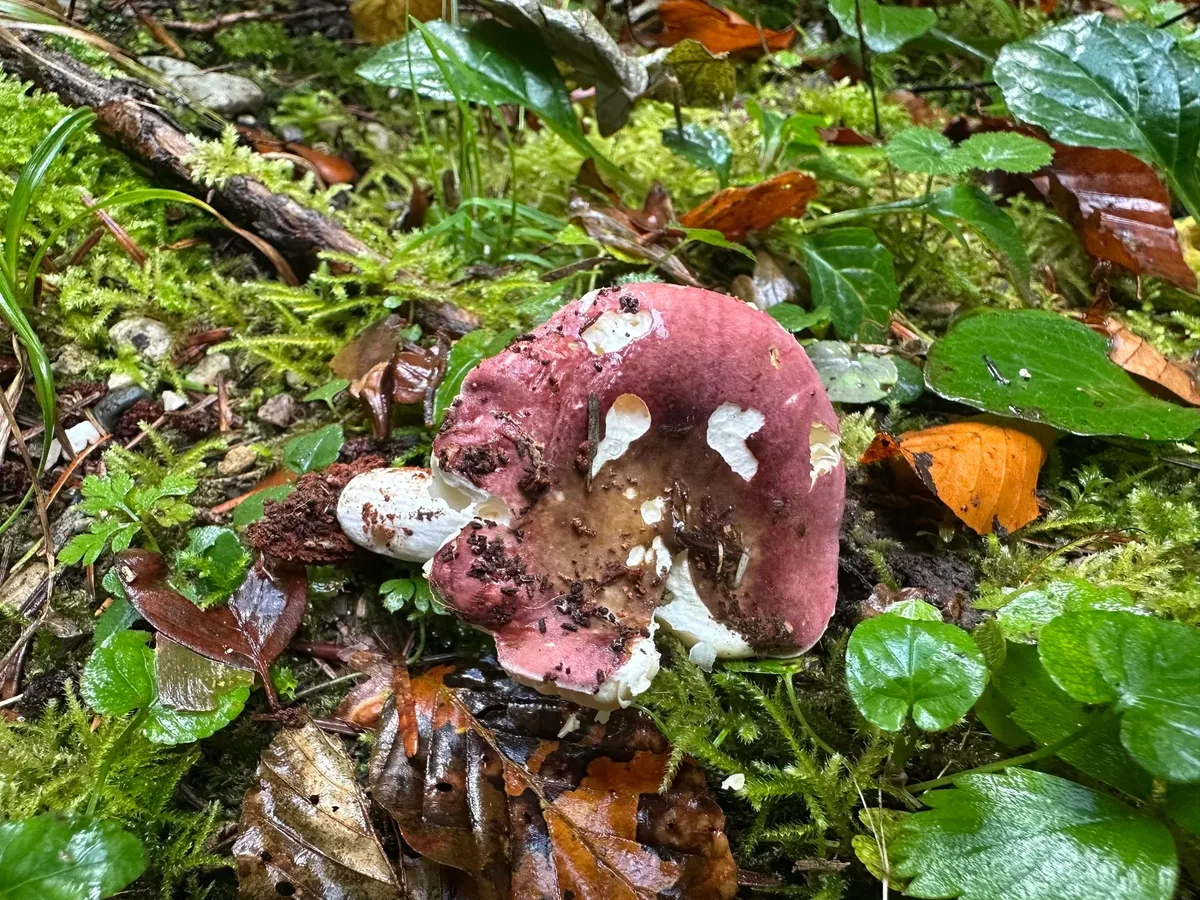 © Jason Grant (CC BY)
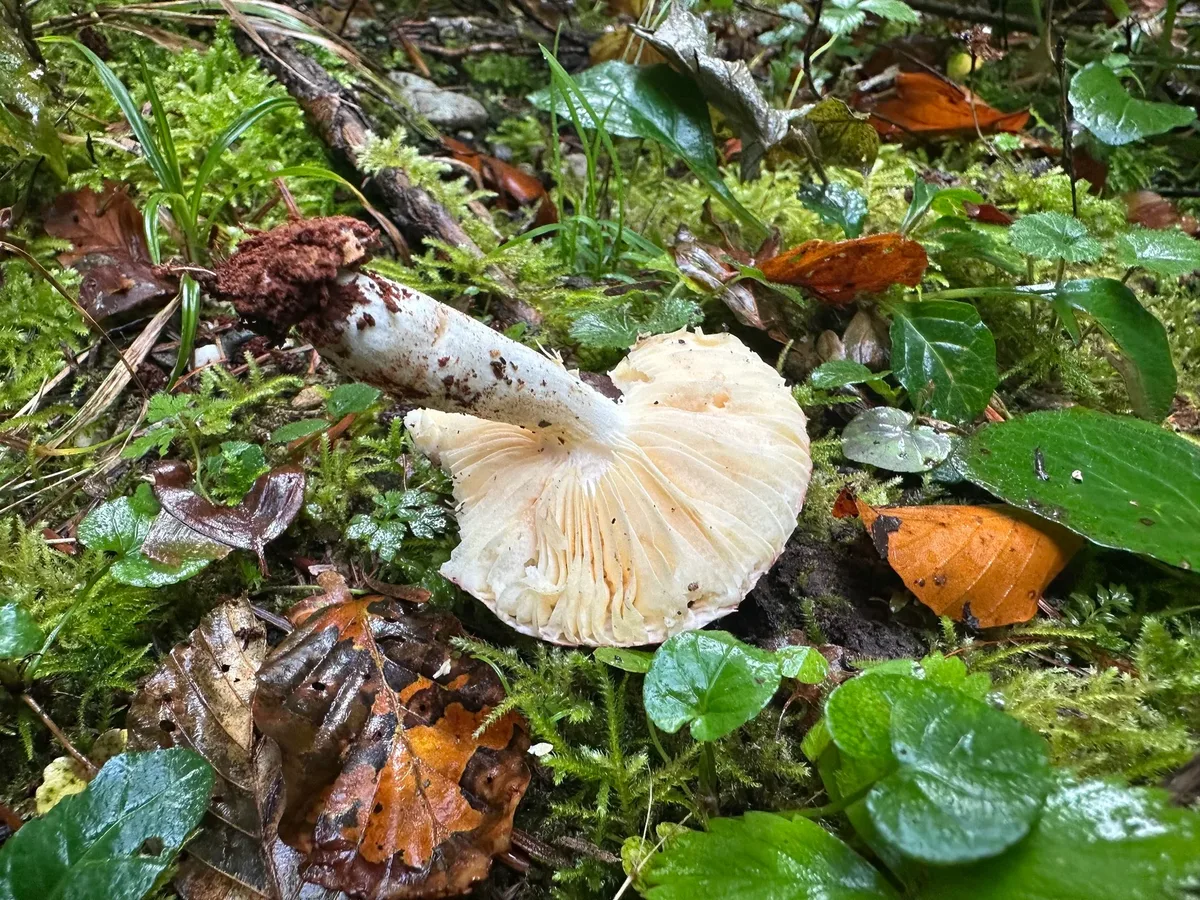 © Jason Grant (CC BY)
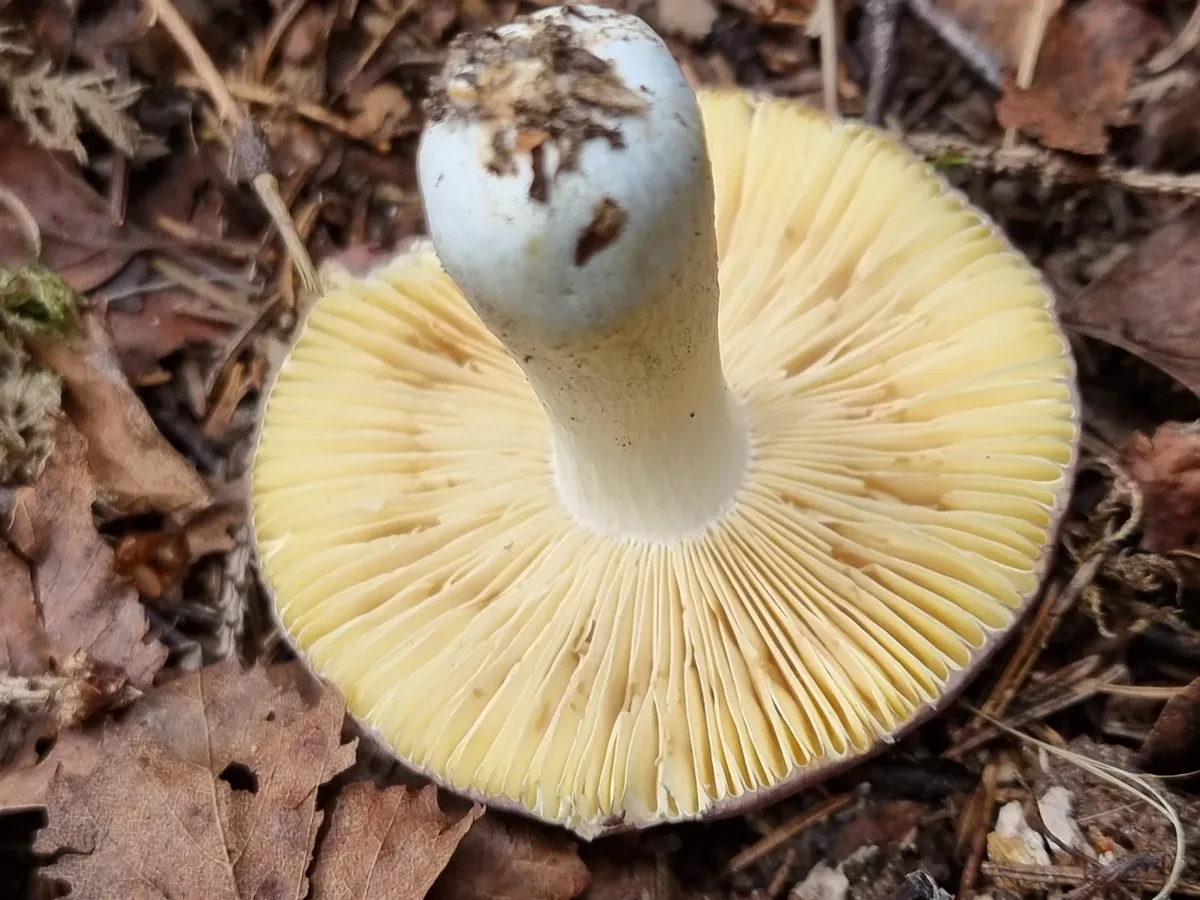 © Nils Edvard Stokke (CC BY)
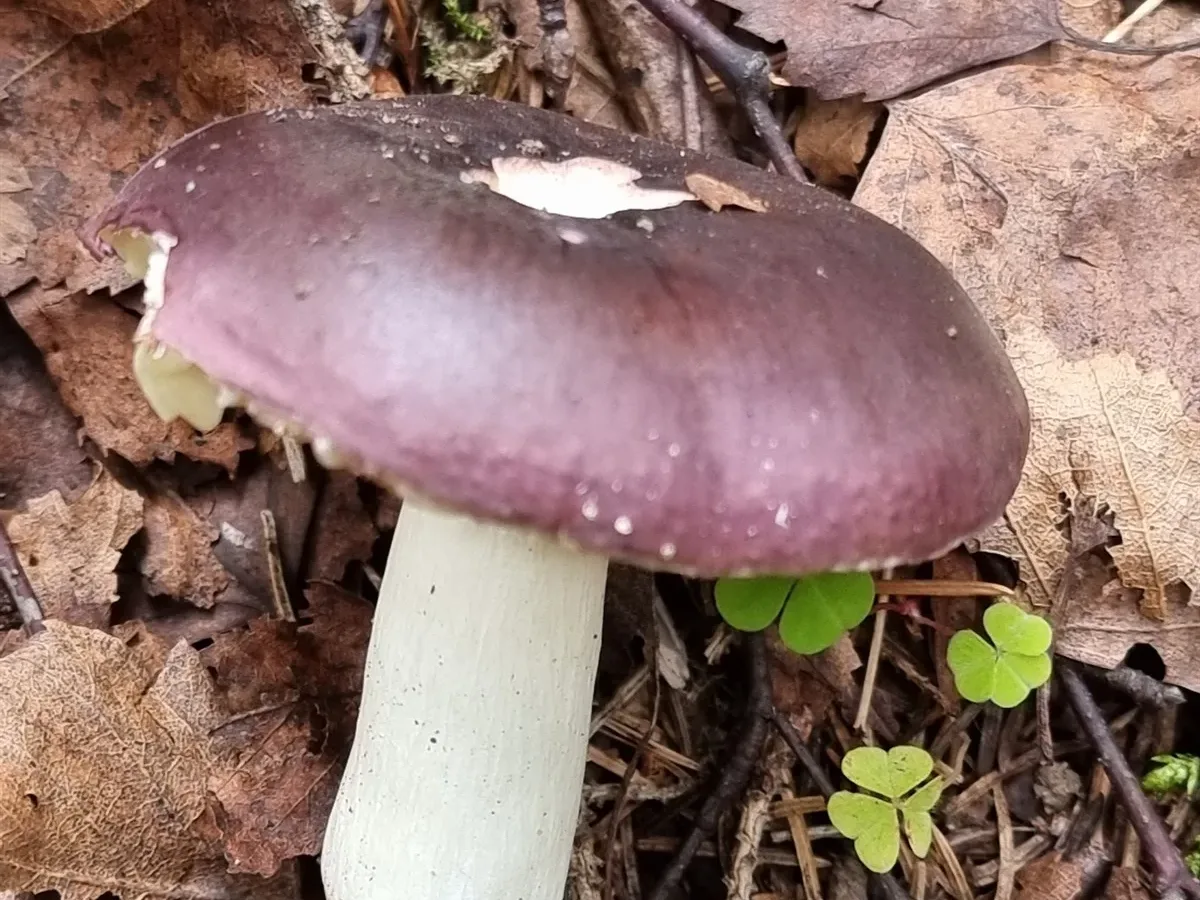 © Nils Edvard Stokke (CC BY)
 © Nils Edvard Stokke (CC BY)© Miriam Sokhet (CC BY)© Perry Gunnar Larsen (CC BY)
Good to eat, once you have identified it with certainty and cooked it through.
Never eat a mushroom you are not 100% sure of - check the look-alikes below, and always cook wild mushrooms.
How to recognise it
Cap
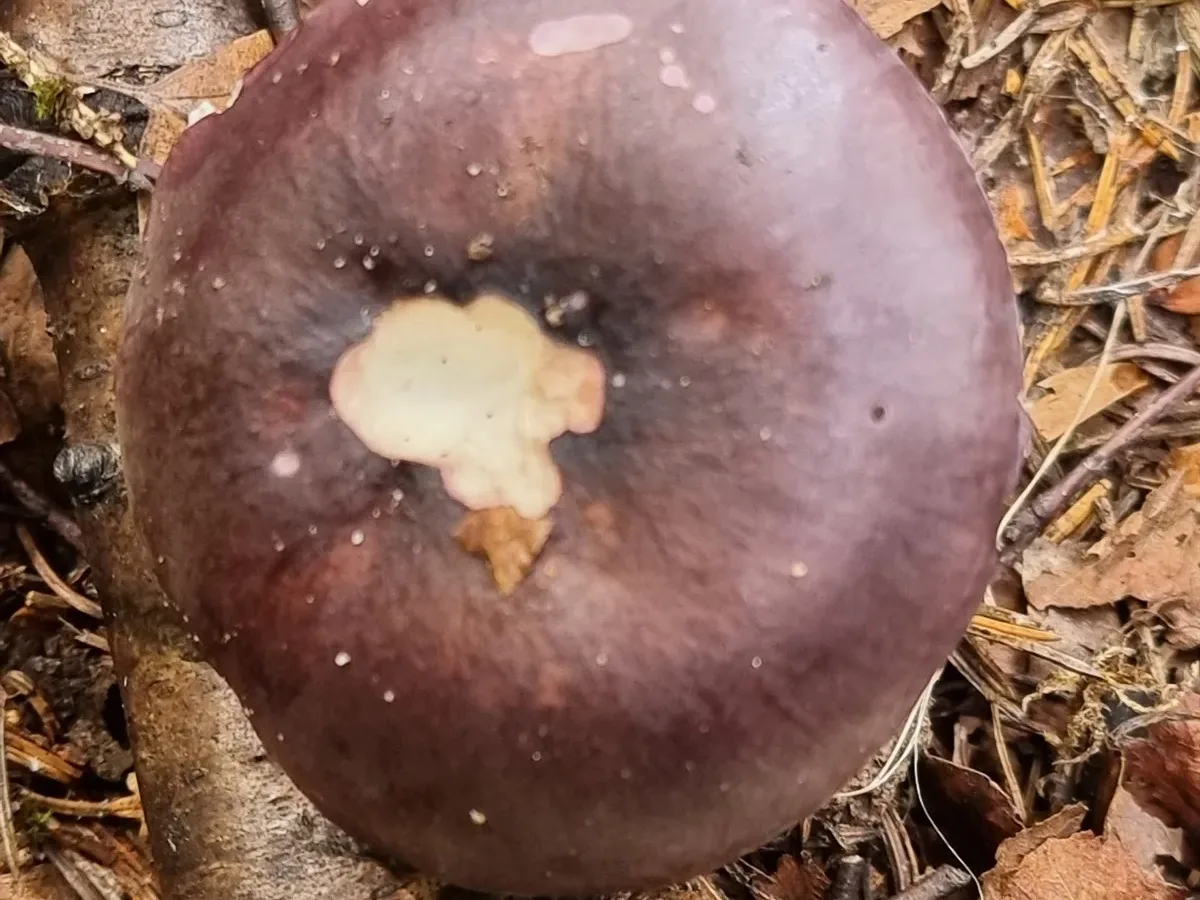
The Amethyst brittlegill is a modestly sized russula notable for its distinctive pale violet to amethyst-lilac cap, which ranges from 4 to 10 cm across.
Young caps are hemispherical and firmly fleshed; they expand to a flat or shallowly funnel-shaped disc in age.
The lilac colouring is typically strongest and most saturated at the cap margin and fades toward a pale, whitish or faintly ochre centre - a gradient that intensifies as the cap dries out or ages, sometimes leaving a nearly colourless, washy-grey cap in old specimens.
The surface is smooth and slightly tacky when wet. The cuticle peels about halfway toward the centre, a normal feature for the genus.
Gills
The gills are white becoming pale cream, fairly close, regularly forked, and brittle in the characteristic Russula fashion - pressing gently causes them to crumble like chalk, a useful tactile confirmation.
Stem
The stem is white, firm when young (3-8 cm tall), with no ring and no volva.
Flesh
Flesh is white, firm and unvarying when cut.
Smell & taste
The smell is mild and pleasant.
The taste is mild and non-peppery - this is one of the most important features in the genus, since many similar violet-capped species are sharply acrid.
The spore print is pale cream.
Where & when it grows
Habitat
This is predominantly a montane species, most at home in closed-canopy mixed and coniferous woodland at 400-1500 m elevation across central European mountain ranges - the Alps, Carpathians, Jura, Vosges, Pyrenees and Black Forest are its strongholds.
It grows in ectomycorrhizal association with Norway spruce, silver fir and beech, and occasionally with birch or mountain pine.
It favours humus-rich, slightly acidic forest soils with good moisture retention and typically emerges among needle and leaf litter in shaded conditions.
At lower elevations it becomes progressively less common, and it is essentially absent from intensively managed lowland farmland and urban woodlands.
When
The amethyst brittlegill is a mid-to-late-season russula, fruiting from July through October with peak abundance in August and September.
At altitude, the trigger is the combination of cooling soils (typically below 15°C night-time soil temperatures) following the first substantial late-summer rains. A flush usually appears 5-10 days after adequate soaking rain once soils are cool enough.
It is often one of the last russulas still productive before the first mountain frosts end the season in October.
How it grows
Grows singly or in scattered troops of a few individuals, never in tight clusters and never on woody substrate.
As an ectomycorrhizal fungus it is entirely dependent on living host trees - the mycelium has been quietly threaded through the root zone of spruce, fir or beech for years before a single fruit body emerges.
Fruit bodies always appear within that root zone, not at random. Once triggered by cooling soils and rain, young buttons can be at prime picking stage within a week.
Fruiting conditions
Mycorrhizal; flushes triggered by late-summer rainfall once montane soils cool to 8-18°C. At altitude this typically occurs from mid-August onward. Requires adequate soil moisture maintained over 1-2 weeks for best fruiting.
Look-alikes
Several violet or lilac-capped russulas occur in similar montane coniferous and mixed forests and are significantly more likely to cause a mistake than any dangerous species.
- Russula queletii (the Gooseberry brittlegill) is the most important lookalike: it grows under spruce at similar elevations, has a red-violet to purplish-red cap (often more intensely reddish-purple than R. amethystina's bluer-violet tone), a flushed purplish-red stem, and a sharply acrid, burning taste - eating it causes significant gastrointestinal upset. The taste test is decisive: R. amethystina is mild, R. queletii is fiercely acrid.
- Russula fragilis is smaller (2-6 cm cap), has a more reddish or pinkish-purple cap, a faintly acrid to very acrid taste, and white to white-cream spore print that matches, but its thin-fleshed fragile cap and acrid taste distinguish it.
- Russula emetica sensu stricto (the Sickener) is typically brighter cherry-red, not violet-amethyst, and harshly acrid; it likewise causes vomiting and diarrhoea but is not life-threatening. Russula fragilis and the broader R. emetica aggregate in montane spruce forest can show lilac tinges but remain acrid.
- Laccaria amethystina (the Amethyst deceiver) shares the amethyst-violet name and colour but is a far smaller, thinner-fleshed gilled mushroom with deeply purple-violet, flexible, waxy gills, a fibrous (not chalky-brittle) stem, and a completely different growth form; it is edible and belongs to a different family.
The most serious danger for any novice collecting white-gilled, white-stemmed woodland mushrooms is confusing them with deadly Amanita species.
Amanita phalloides (the Death cap) is olive-green to yellowish-green and looks quite different from a violet russula, but ANY white-gilled woodland mushroom should have its stem base fully excavated before eating to rule out a volva or ring.
The most important danger for any novice collecting white-gilled woodland mushrooms. The death cap is typically olive-green to yellow-green and quite different in colour from R. amethystina's violet cap, but it shares the same woodland habitat and white gills. It always has a prominent volva (membranous sac or girdled swelling) at the stem base and usually a ring on the stem; its gills are free and its flesh is fibrous, not chalky-brittle. R. amethystina has NO volva, NO ring, attached brittle gills, and snaps like chalk. Always excavate the full stem base before eating ANY white-gilled woodland mushroom.
Shares the amethyst-violet colour and the name, but Laccaria amethystina is a much smaller, thin-fleshed mushroom with deep violet-purple, waxy, widely spaced gills that are flexible and not brittle; the stem is fibrous (not chalky) and usually twisted. It belongs to a different family (Hydnangiaceae) and has a completely different flesh texture. The taste is mild and it is edible. The chalky-brittle flesh and pale cream gills of R. amethystina are immediately distinct.
Smaller (cap 2-6 cm), with a thinner-fleshed, more fragile cap typically reddish-pink to purple-red, fading strongly toward the centre. The taste is acrid to very acrid. Widespread in broadleaved and mixed forest. R. amethystina is larger, firmer-fleshed, and always mild-tasting.
The most likely genuine confusion. R. queletii grows under spruce at similar montane elevations and has a red-violet to purplish-red cap - often more saturated and reddish-purple than R. amethystina's bluer, paler amethyst tone - and the stem is frequently flushed wine-red or purplish-red. Most critically, R. queletii has a sharply acrid, burning peppery taste and causes significant gastrointestinal upset. R. amethystina is mild and non-acrid. A tiny taste-and-spit test is decisive.
Russula emetica sensu stricto has a brighter cherry-red to scarlet cap (not violet-amethyst) and is associated with sphagnum bogs and wet coniferous forest rather than typical upland spruce-fir stands. Its taste is fiercely acrid. Some forms of the R. emetica aggregate in montane spruce forest show lilac tinges, but all are sharply acrid - easily distinguished from the mild R. amethystina. Causes vomiting and diarrhoea, not life-threatening in adults.
In the kitchen
Picking & cleaning
Select firm young to middle-aged caps and cut or twist cleanly at the base.
- Always lift the whole stem clear of the soil and examine the base closely for any volva - a membranous sac or girdled swelling that would immediately indicate a deadly Amanita, not a russula.
- Confirm no ring is present on the stem.
- Taste a tiny fragment of flesh and spit it out: this species is mild and non-acrid; if you detect sharp, burning pepper this is not R. amethystina.
- Choose specimens that are firm and maggot-free; older caps become soft, spongy and heavily infested.
Do not rely on colour alone, as the lilac fades markedly with age and weather.
Cooking
The Amethyst brittlegill is edible and safe when cooked, though it sits in the middle tier of wild mushroom eating - pleasant rather than remarkable.
The flesh is firm and holds its texture well, but the flavour is gentle and understated. That mildness makes it a good team player: it rounds out mixed-mushroom soups, sautés, and pasta dishes without pulling the flavour in any particular direction.
Sauté in butter with garlic, salt and herbs to bring out what it offers. Discard any stems that have become hollow or spongy.
Never eat any wild russula raw; thorough cooking is required.
Good to know
Russula amethystina is itself an edible species with a mild, non-acrid taste and no known toxins. However, several important safety points apply.
- 1The genus requires a taste test: all sharply acrid russulas (tasting of burning pepper) should be rejected as they cause gastrointestinal illness; mild-tasting species are considered safe. The taste should be sampled from a tiny fragment chewed for a few seconds and then spat out - it will NOT detect the amatoxins of a death cap, but it will catch acrid russula mimics in the same habitat.
- 1Before eating any russula, dig up the complete stem, confirm there is no volva (sac or girdled swelling) at the base and no ring on the stem - the presence of either definitively indicates an Amanita species, several of which are lethal.
- 1Very pale, faded specimens of R. amethystina may lose their violet colour and resemble other species; always confirm brittleness of the gills and the absence of Amanita structures.
- 1The taxonomy of violet-capped conifers-associated russulas in central Europe is complex and some closely related forms may be recognised as separate species as molecular work progresses; maintain caution with specimens that seem intermediate.
Cook all wild mushrooms thoroughly before eating.
A reference guide - never an edibility guarantee. When in doubt, leave it out.