Acrid Blackening Russula
Russula acrifoliasyn. Russula acrifolia Romagn.
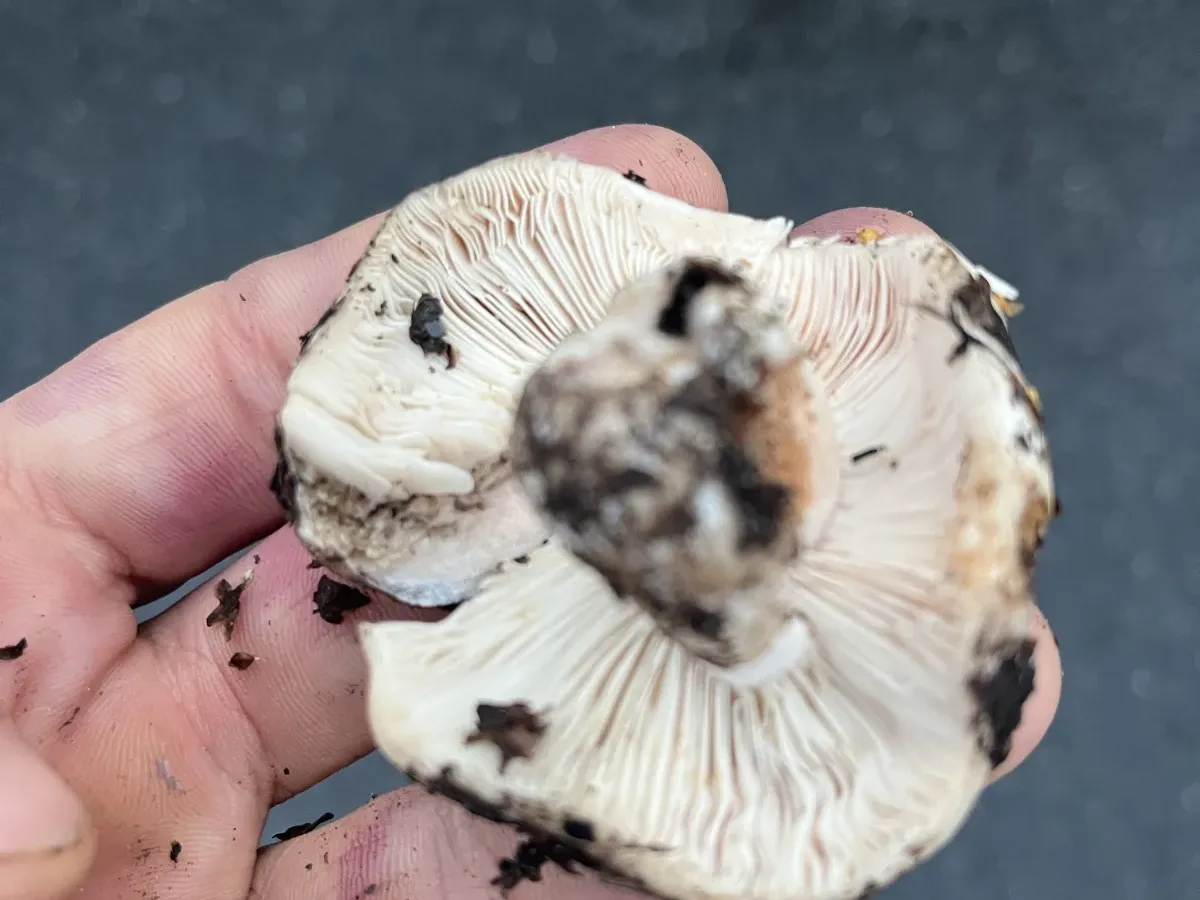 © Hallvard Holtung (CC BY)
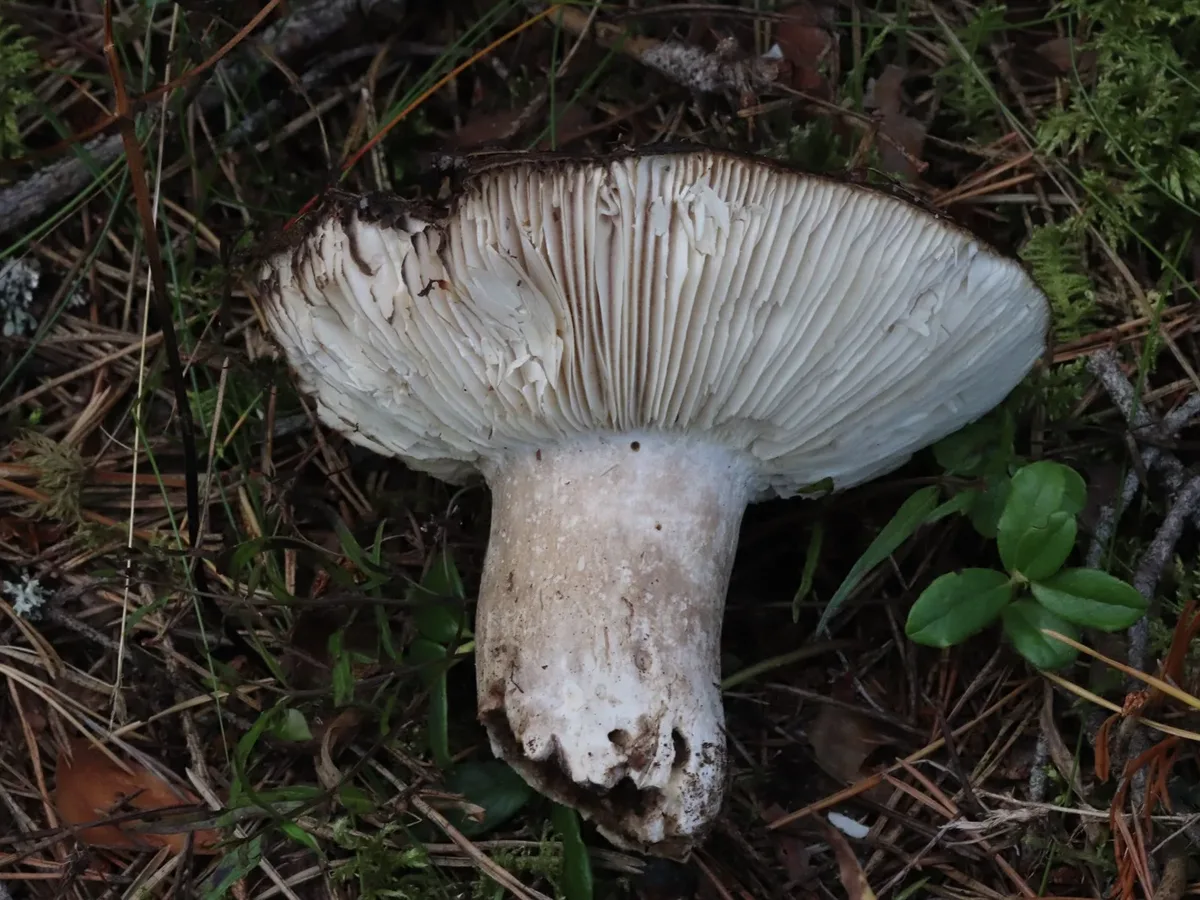 © Rob van Kruining (CC BY)
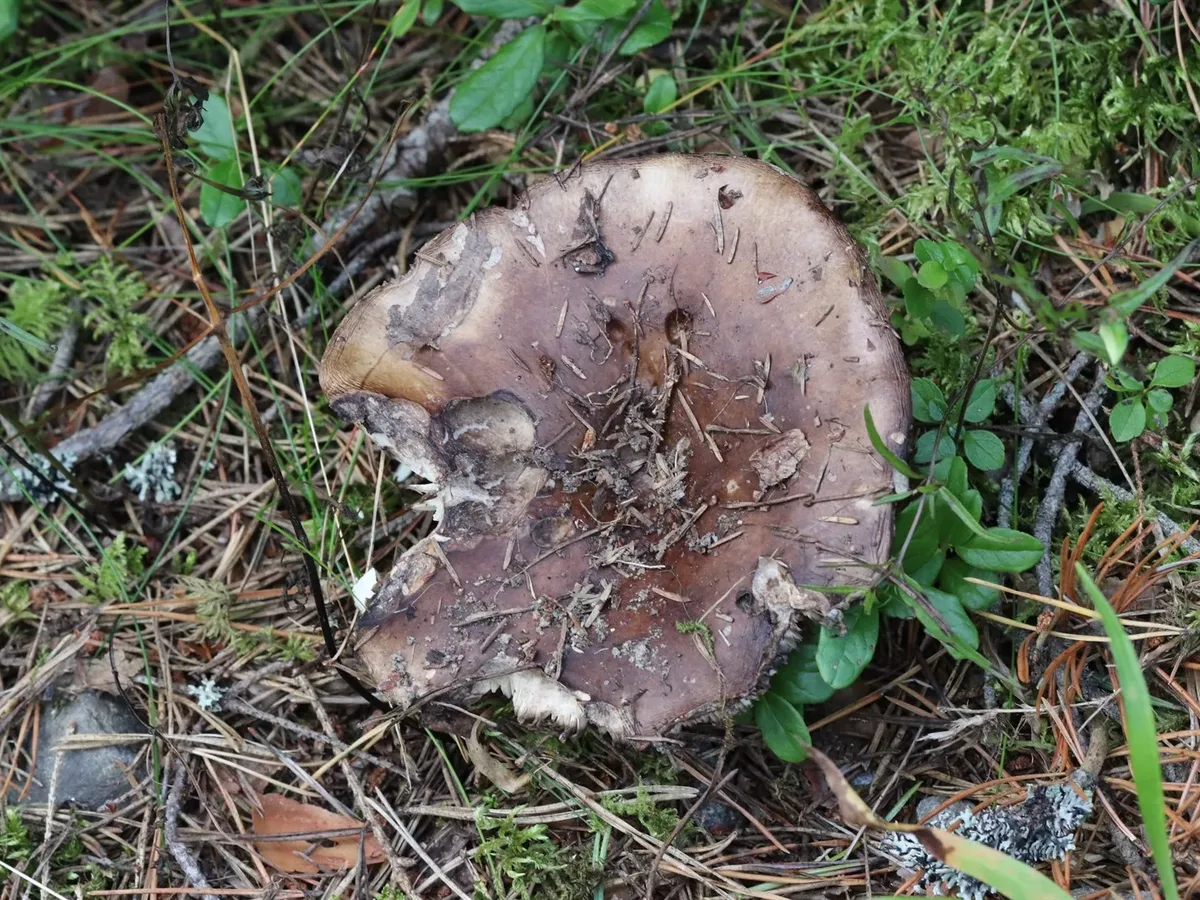 © Rob van Kruining (CC BY)
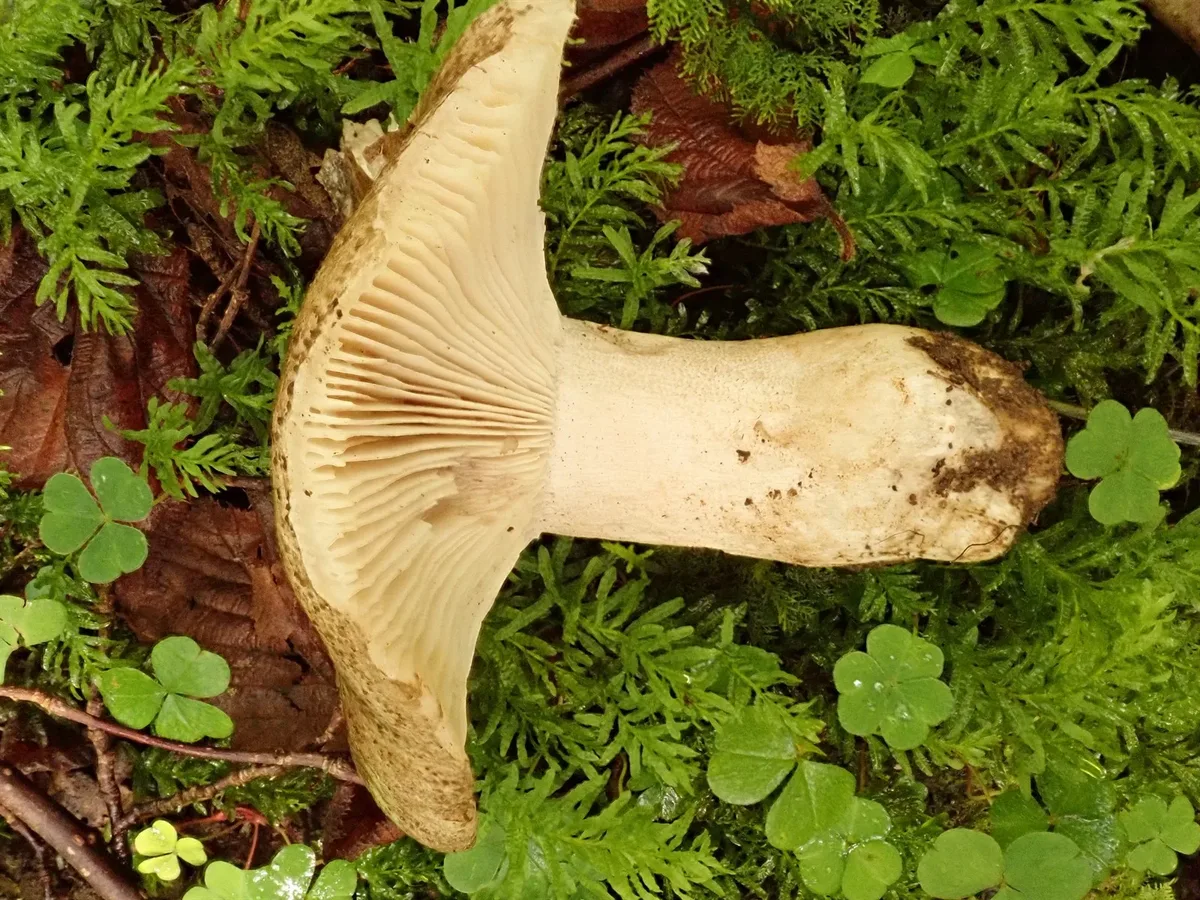 © Anders Røynstrand (CC BY)
 © Anders Røynstrand (CC BY)
 © Else Landsem (CC BY)
 © Perry Gunnar Larsen (CC BY)© Hallvard Holtung (CC BY)© Rob van Kruining (CC BY)
Edible only with the right preparation - or safe for some people but not others. Learn the caveats first.
Never eat a mushroom you are not 100% sure of - check the look-alikes below, and always cook wild mushrooms.
How to recognise it
Russula acrifolia is a large, heavy-built brittlegill of East and Southeast Asian forests belonging to the blackening Russula group (section Nigricantinae). At first glance it resembles the European Russula nigricans, but a single bite of its flesh immediately dispels any temptation to eat it - the taste is ferociously, unforgettably acrid.
Cap
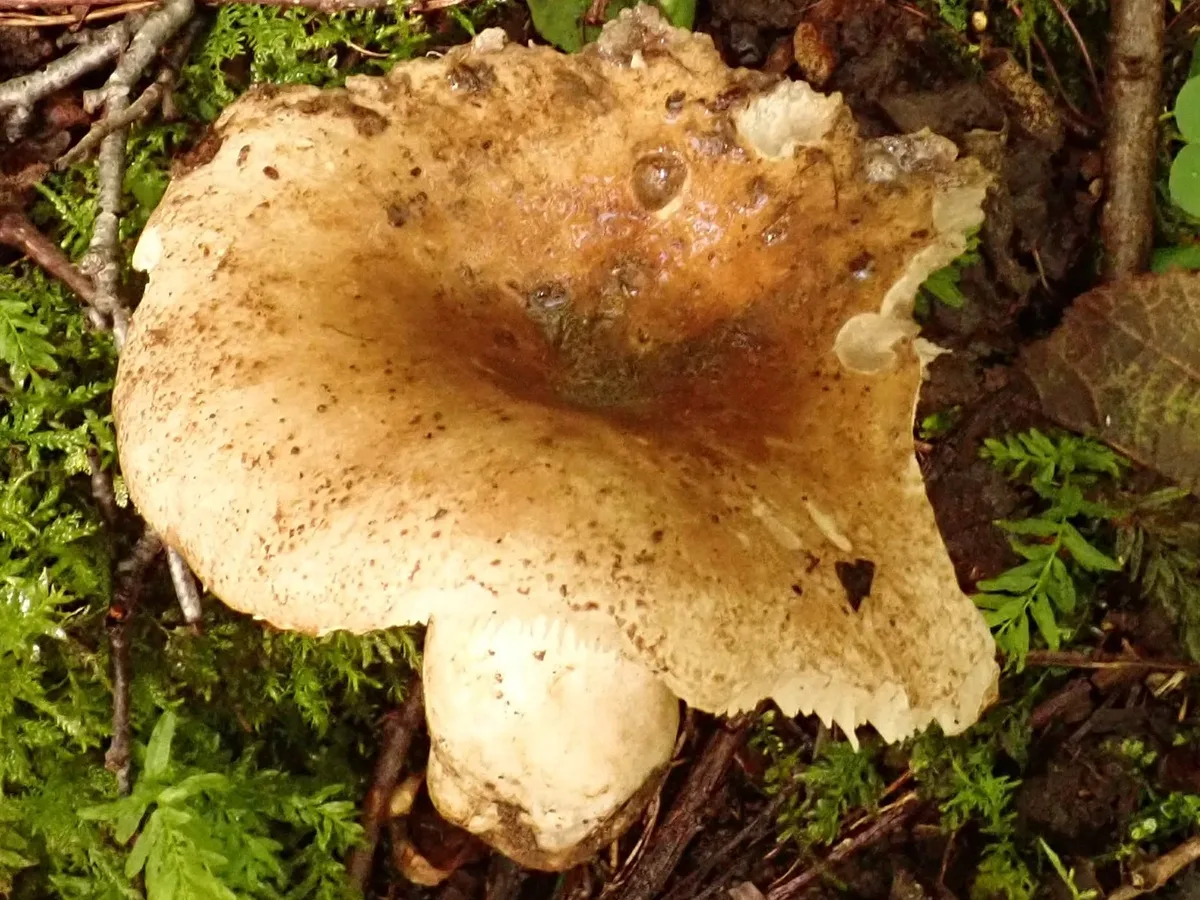
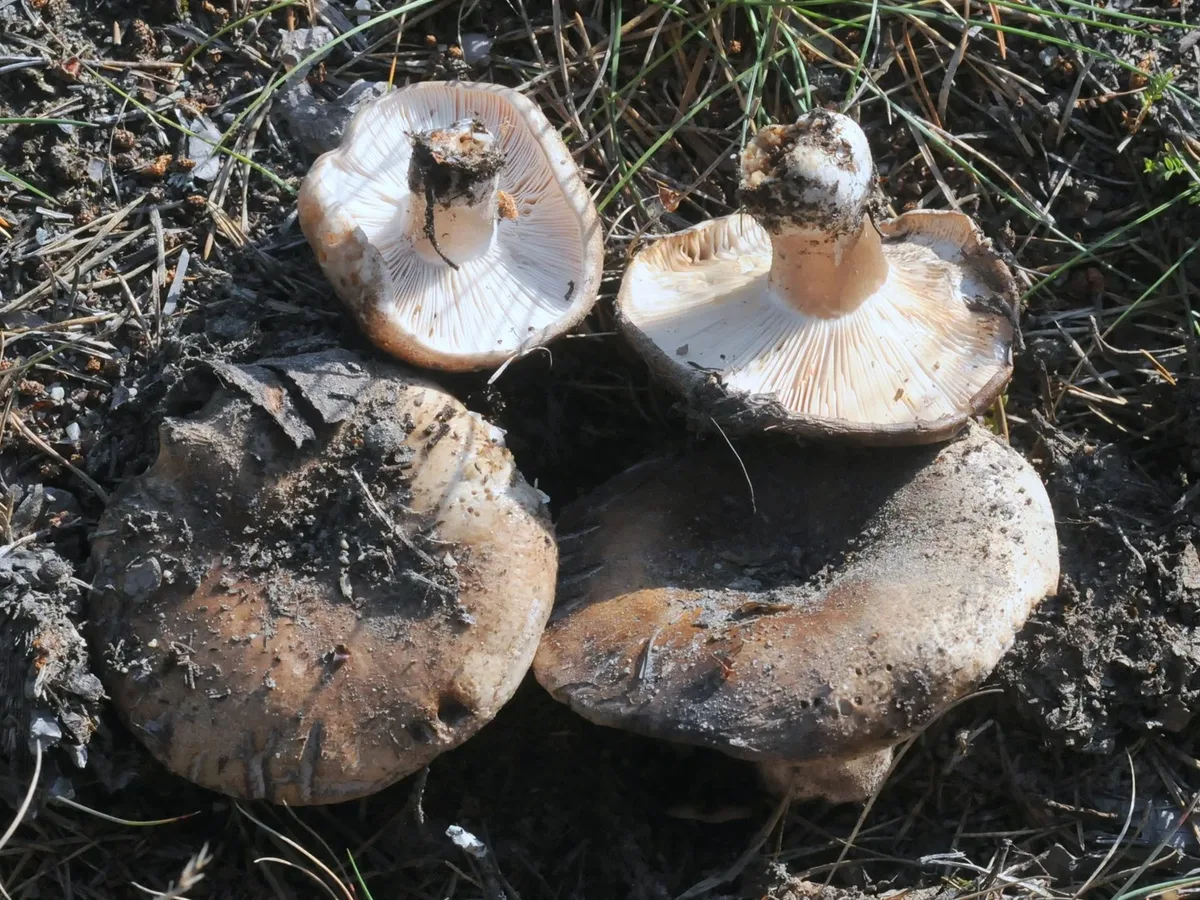
The cap begins as a rounded dome of dirty white to pale greyish-buff, with a dry, matte, slightly rough surface. With age or mechanical damage, it gradually darkens through various shades of grey-brown to ultimately coal-black - a process that may take hours under normal conditions but accelerates when specimens are bruised or pressed.
Gills
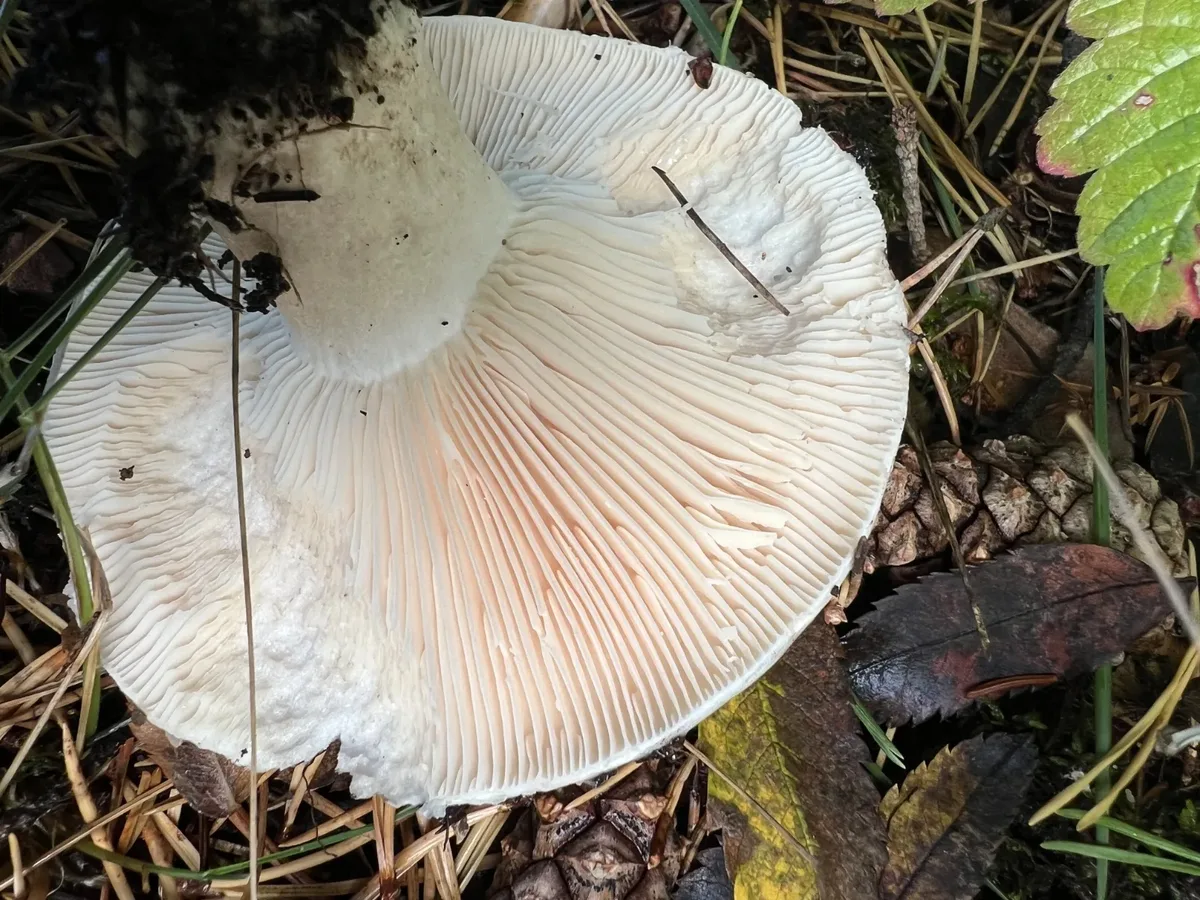
The gills are a useful orienting feature: notably widely spaced for a large Russula, thick and blunt-edged, white to cream when fresh, turning greyish then black as the fruitbody ages.
Stem
The stem is stout and white when young, blackening with age.
Flesh
Critically, when the flesh is cut the colour change is NOT the dramatic white → pink → black sequence of R. nigricans. Instead R. acrifolia shows white → grey → black with at most a very brief, indistinct, pinkish cast that fades quickly. This distinction matters when comparing the two species in the field.
Microscopically, the spores are broadly ellipsoid (6-8.5 × 5-6.5 µm) with isolated low amyloid warts and short connectives.
Why it's dangerous
The direct danger of R. acrifolia to a cautious forager is moderate: its intense raw acridity is a strong self-deterrent, and its GI irritant toxicity is not life-threatening in healthy adults under normal circumstances.
The compounded danger is high. This species exists within a poisoning-risk cluster unique to East Asia. It shares habitat, season, appearance, and the same foraging context with Russula subnigricans, a genuinely lethal species causing fatal rhabdomyolysis.
The rhabdomyolysis induced by R. subnigricans - involving catastrophic muscle-cell breakdown, myoglobinuria, and acute kidney failure - has caused deaths in China and Japan.
A forager unable to reliably distinguish between R. acrifolia and R. subnigricans in the field (a distinction that hinges on the subtle and transient colour-change chemistry of freshly cut flesh) faces the risk of consuming a lethal species while believing they have a merely unpleasant one.
No blackening Russula from East Asian forests should be consumed.
If any blackening Russula is consumed and the patient develops any of the following within 24 hours, this is a medical emergency requiring immediate hospitalisation:
- muscle pain or weakness
- dark-coloured urine
- signs of kidney distress
Toxin
The acridity and irritant properties of Russula acrifolia are attributed to sesquiterpene compounds - specifically a suite of acrid lactone and aldehyde sesquiterpenes structurally related to those found in other acrid Russula and Lactarius species.
These compounds are direct mucosal irritants that act on the epithelium of the oral cavity, oesophagus, and gastric mucosa, triggering reflex nausea and vomiting. They are produced in the cellular sap of the gill and cap tissue, detectable immediately as the violent burning sensation of the raw flesh.
Unlike delayed-action systemic toxins such as amatoxins or orellanin, the irritant sesquiterpenes act rapidly at the point of contact. No single specific toxin has been fully characterised and named for R. acrifolia as a discrete compound.
Symptoms
Ingestion of raw or insufficiently processed flesh causes an immediate burning sensation in the mouth and throat, typically so intense that accidental ingestion of significant quantities is unlikely.
If a meaningful amount is consumed, expect gastric irritation, nausea, vomiting (often prompt), and watery diarrhoea within thirty minutes to two hours. Symptoms are usually self-limiting and resolve within six to twelve hours with fluid replacement.
No hepatotoxic or nephrotoxic effects are associated with the sesquiterpene irritants of R. acrifolia itself.
However, if symptoms following consumption of a suspected R. acrifolia are prolonged, severe, or accompanied by any of the following, assume that R. subnigricans or another dangerous species may have been consumed and seek emergency medical care immediately:
- muscle pain
- dark urine (a sign of myoglobinuria from rhabdomyolysis)
- weakness
- neurological changes
Staying safe
Russula acrifolia must not be eaten. It causes gastrointestinal irritation through the action of sesquiterpene compounds (acrid aldehydes and lactones) present at high concentration in the flesh.
These produce burning and irritation of the oral mucosa, oesophagus, and gastric lining, with resulting nausea, vomiting, and diarrhoea within thirty minutes to two hours of ingestion. The acridity does not reliably diminish with normal cooking.
The species is not acutely lethal, but the risk it poses is compounded by proximity to its deadly relative Russula subnigricans, which occupies the same forests and season and has caused fatal rhabdomyolysis.
A forager who incorrectly identifies a collected R. subnigricans specimen as R. acrifolia on the basis of acridity (since both are acrid and blackening), then attempts to consume it - perhaps believing that repeated boiling or traditional processing will neutralise the hazard - faces a potentially fatal outcome. This chain of error is a documented poisoning pattern in China and Japan.
The rule is absolute: no blackening Russula from East Asian forests should be eaten.
Additionally, the same habitats host deadly Amanita species. Confirm the absence of a volva and ring on the stem base before collecting any pale-capped forest mushroom.
Where & when it grows
Habitat
This species is rooted in the warm-temperate and subtropical evergreen broadleaved forests that drape the foothills and mid-elevation ranges of southern and central China, Taiwan, Japan, and the montane zones of mainland Southeast Asia.
These forests - dominated by towering Castanopsis, Lithocarpus, and Cyclobalanopsis species alongside oaks, beeches, and chestnuts - support some of the richest ectomycorrhizal fungal communities in the world.
Because R. acrifolia is strictly mycorrhizal, it always fruits directly from the soil within the rooting zone of living trees, never from decaying wood or in the open.
The species favours moderately humid, shaded locations with a deep organic litter layer, typically between 400 and 1800 m elevation where summer rainfall is high and soils remain moist and cool during fruiting.
In Japan it is most typical of Quercus and mixed Fagus-Castanopsis montane forest on Honshu, Kyushu and Shikoku. In China it is widespread in the Yangtze basin uplands and across Yunnan, Guizhou, and Fujian provinces.
When
Fruiting is driven by the East Asian summer monsoon complex. The species begins fruiting in early June with the onset of the mei-yu (plum-rain) season in the Yangtze basin and its Japanese counterpart, the tsuyu.
After the hot dry interlude in high summer, a second flush often follows the late-summer typhoon and post-monsoon rains from August through September. Fruiting continues at a reduced pace into October in highland sites as soils remain warm and moist.
At mid-elevation sites in Yunnan and Taiwan, where rainfall is more evenly distributed, the season can extend from May through October with less obvious peaks.
Cold spells dropping overnight soil temperatures below roughly 12 °C will end the season.
How it grows
Grows singly or in small scattered groups on the forest floor beneath its host trees, never in clusters or on wood.
Individual fruitbodies develop slowly - caps emerge over five to fourteen days after triggering rains and persist for several weeks before blackening, withering, and collapsing.
Old blackened specimens remain recognisable on the forest floor for weeks because the dense flesh resists rapid decomposition. This persistence means a patch that produced a flush often shows a layering of fresh, mid-aged, and old blackened specimens side by side - characteristic of the Nigricantinae group as a whole.
Fruiting conditions
Mycorrhizal species tightly coupled to the East Asian summer monsoon. Fruiting is triggered by sustained heavy rainfall (mei-yu/tsuyu frontal systems, typhoon-associated rain) once soils are warm. Flush lag is moderate at 5-14 days after soaking rain; individual fruitbodies develop slowly and persist for 2-4 weeks before blackening and collapsing. Season ends when sustained cool nights drop soil temperatures below approximately 12 °C.
Look-alikes
The most urgent lookalike concern in the East Asian forest context is Russula subnigricans - a genuinely deadly species that causes severe rhabdomyolysis (catastrophic muscle breakdown) and has been responsible for multiple fatalities in China and Japan. It also belongs to the blackening Russula group, is similarly pale at first and darkens with age, and grows in the same forests and season.
The key field distinction is the colour-change chemistry: R. subnigricans flesh turns distinctly REDDISH-PINK when cut, then slowly greys, whereas R. acrifolia shows at most a very faint transient pinkish cast before greyening.
However, this distinction requires careful examination of fresh, cut flesh in good light, and the two species can be difficult to separate in the field. Because R. subnigricans is deadly and shares the same general appearance and habitat, any blackening Russula in East Asian forests must be treated with extreme caution.
Russula nigricans is the European counterpart of this group. It too shows blackening, but it has a clear reddening phase (white → pink → black) and grows primarily under European broadleaves, not the Castanopsis-Lithocarpus forests of East Asia.
Russula adusta is another pale, blackening species, but it tends towards a browner, more adust colouration. The flesh barely changes colour on cutting (no pink, no red, very slight greyening), it has a mild or slightly acidic rather than intensely acrid taste, and it too is not edible.
Within the same habitat, deadly Amanita species (including Amanita exitialis, A. fuliginea, and the destroying angel complex) present a baseline danger for any forager collecting large pale woodland mushrooms. These always have a membranous volva at the stem base and typically a ring on the stem - features Russula completely lacks.
Always dig up the whole stem before collecting any Russula to confirm the absence of these Amanita structures.
A deadly East Asian (southern China, Japan) Amanita responsible for fatal poisonings. Its cap is white to pale, and young buttons in the same broadleaved forest can superficially resemble any large pale mushroom. Amanita exitialis always has a ring (skirt) on the stem, a membranous volva at the base, and free gills that are not attached to the stem. Russula acrifolia has NONE of these: no ring, no volva, and adnate chalk-brittle gills. Always dig up the entire stem and inspect the base before collecting any pale mushroom from East Asian forest.
Russula subnigricans is the most critical confusion species and is DEADLY, causing fatal rhabdomyolysis (catastrophic muscle breakdown) with multiple confirmed deaths in China and Japan. It grows in the same forests, in the same season, and is similarly pale and blackening. The key distinction is the colour change of freshly cut flesh: R. subnigricans flesh turns clearly and distinctly REDDISH-PINK when cut before greyening (the pink is more pronounced and persistent than any transient tinge in R. acrifolia). R. acrifolia shows white → grey to black with at most a very faint, quickly-fading pinkish cast. In practice this distinction requires experience with fresh material in good light and is unreliable for field identification. The rule must be: do not eat ANY blackening Russula from East Asian broadleaved forest, regardless of taste or colour changes.
Pure white in all stages with a prominent membranous volva and ring; causes fatal amatoxin poisoning. While primarily European, the destroying angel complex (including Asian analogues) co-occurs in temperate East Asian forests. Distinguished from all Russula by the volva, ring, free gills, and fibrous (not chalky-brittle) flesh. A Russula has absolutely no volva or ring at any growth stage.
R. nigricans is the European member of the same blackening-Russula group and is primarily a European species, though records exist in temperate East Asian forests. It is very similar in overall appearance, but it has a CLEAR and PROLONGED reddening phase when cut (flesh turns distinctly pink-red within 10-30 seconds before eventually blackening) - absent or barely detectable in R. acrifolia. R. nigricans tends to have a more moderate, mildly acrid taste, whereas R. acrifolia is violently acrid. Both are inedible with irritant GI properties. Neither is safe to eat.
Another East Asian Russula associated with Castanopsis, but R. castanopsidis has a browner, ochre-buff cap that does not blacken significantly, a mild to slightly bitter (not violently acrid) taste, and its flesh does not darken dramatically. Edibility uncertain; distinguishable primarily by its stable, non-blackening cap colour and non-acrid taste.
Another greyish-to-blackening Russula, but R. adusta is browner from the outset (singed brownish-grey cap), the flesh shows almost no colour change when cut (turns slightly brownish-grey without reddening), the taste is mild to slightly acidic (NEVER intensely acrid), and the gills are more crowded. Not edible but less toxic than R. acrifolia.
A reference guide - never an edibility guarantee. When in doubt, leave it out.