Far East wrinkled bolete
Rugiboletus extremiorientalissyn. Boletus extremiorientalis
 Erica Krimmel (CC0)
 © Atsushi Nakajima (CC BY)
 © Atsushi Nakajima (CC BY)
 © Atsushi Nakajima (CC BY)
 © Atsushi Nakajima (CC BY)
 © Atsushi Nakajima (CC BY)
 © Atsushi Nakajima (CC BY)
 © Garry Lydon (CC BY)
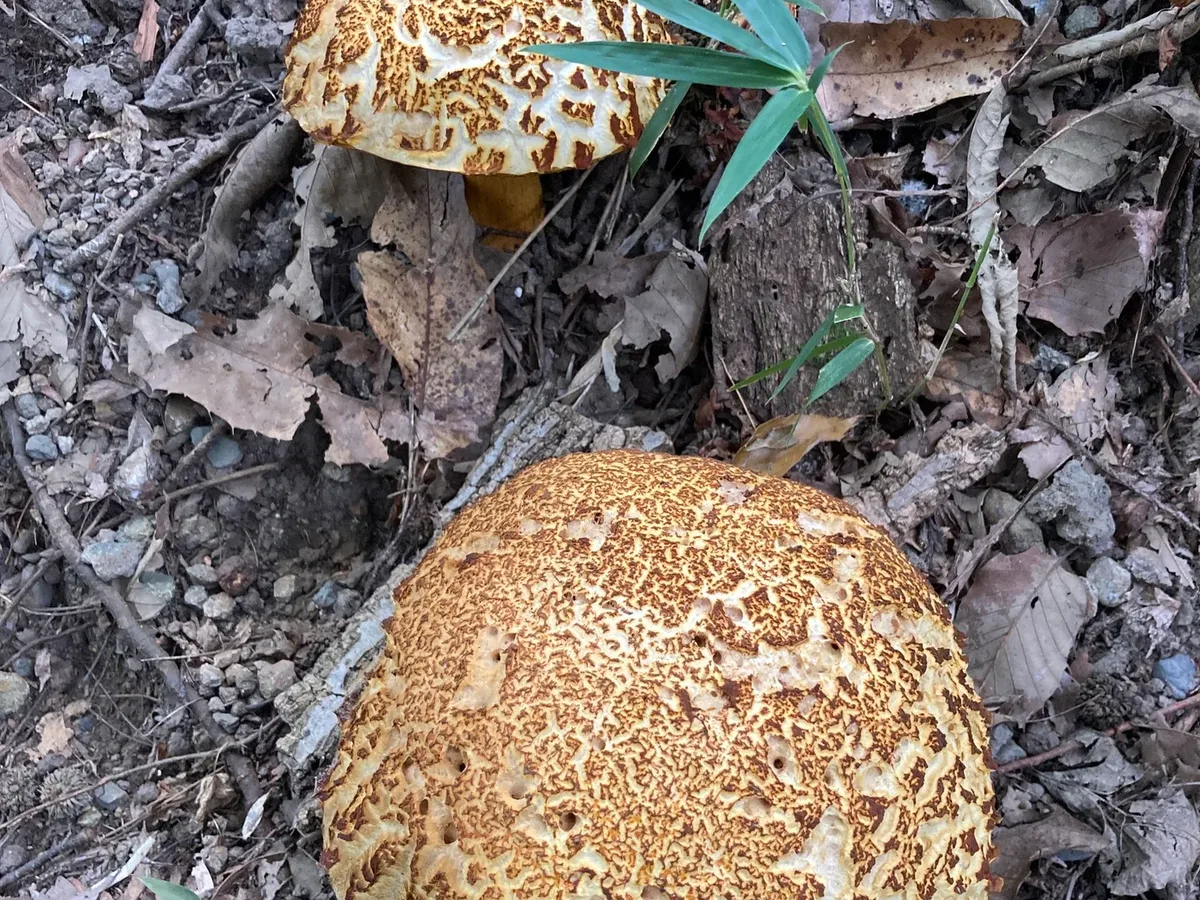 Erica Krimmel (CC0)Erica Krimmel (CC0)© Atsushi Nakajima (CC BY)
One of the best mushrooms you can bring home - once you are certain of the identification.
Never eat a mushroom you are not 100% sure of - check the look-alikes below, and always cook wild mushrooms.
How to recognise it
Cap
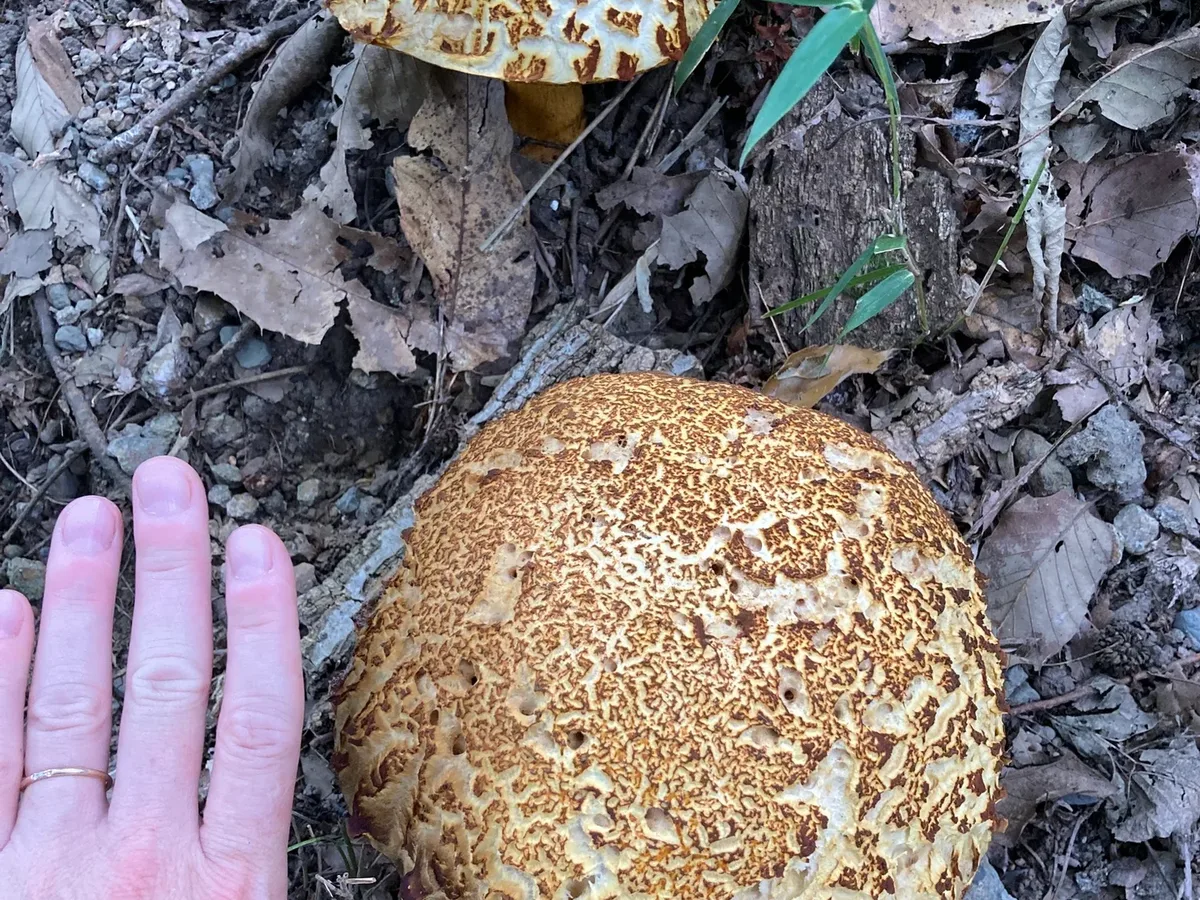
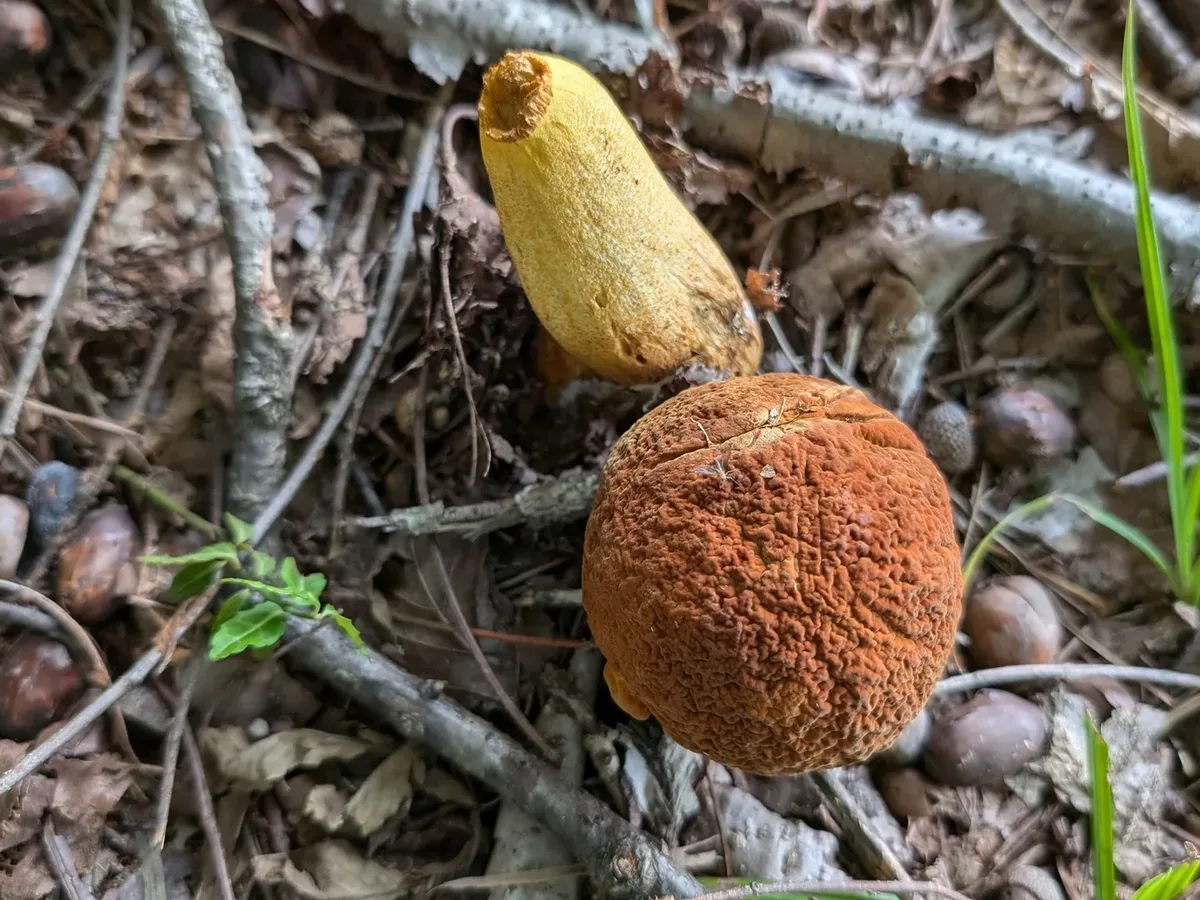
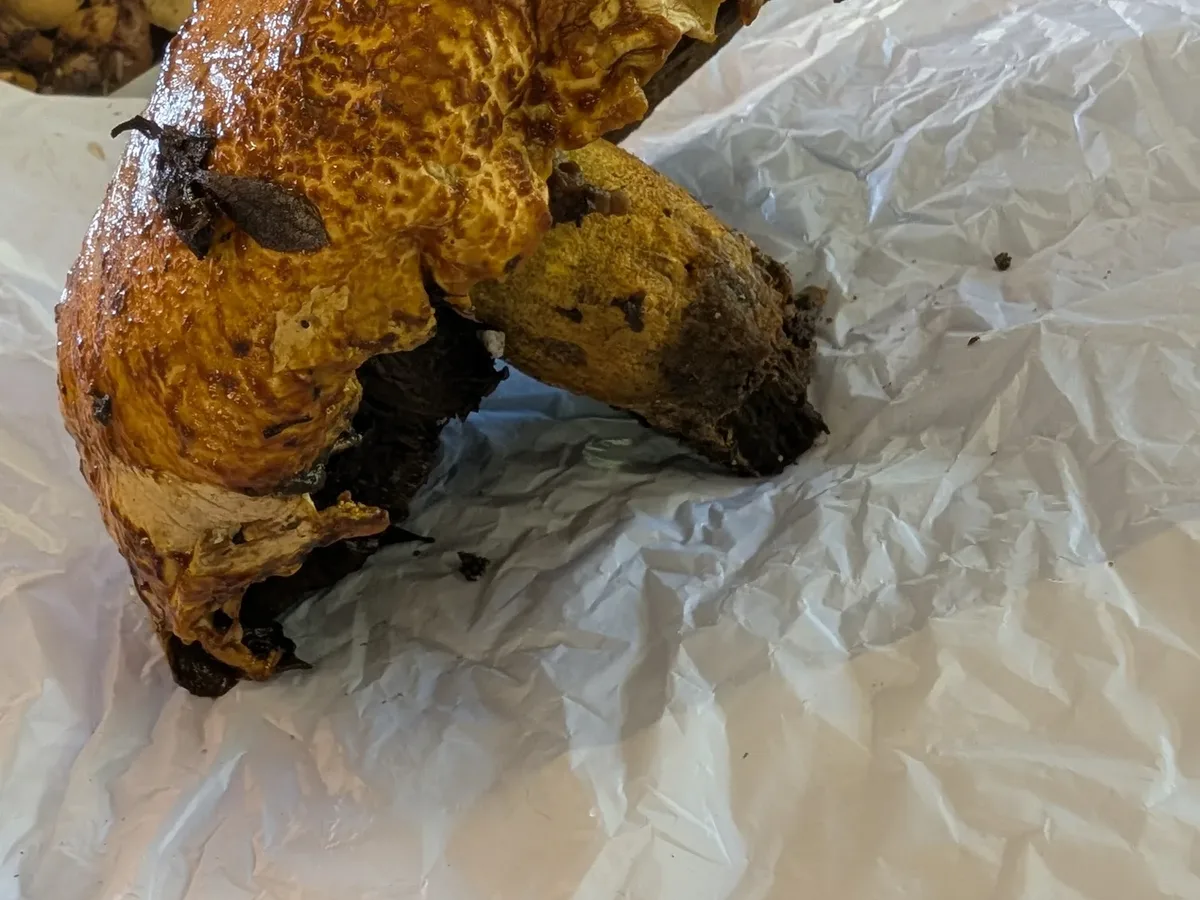
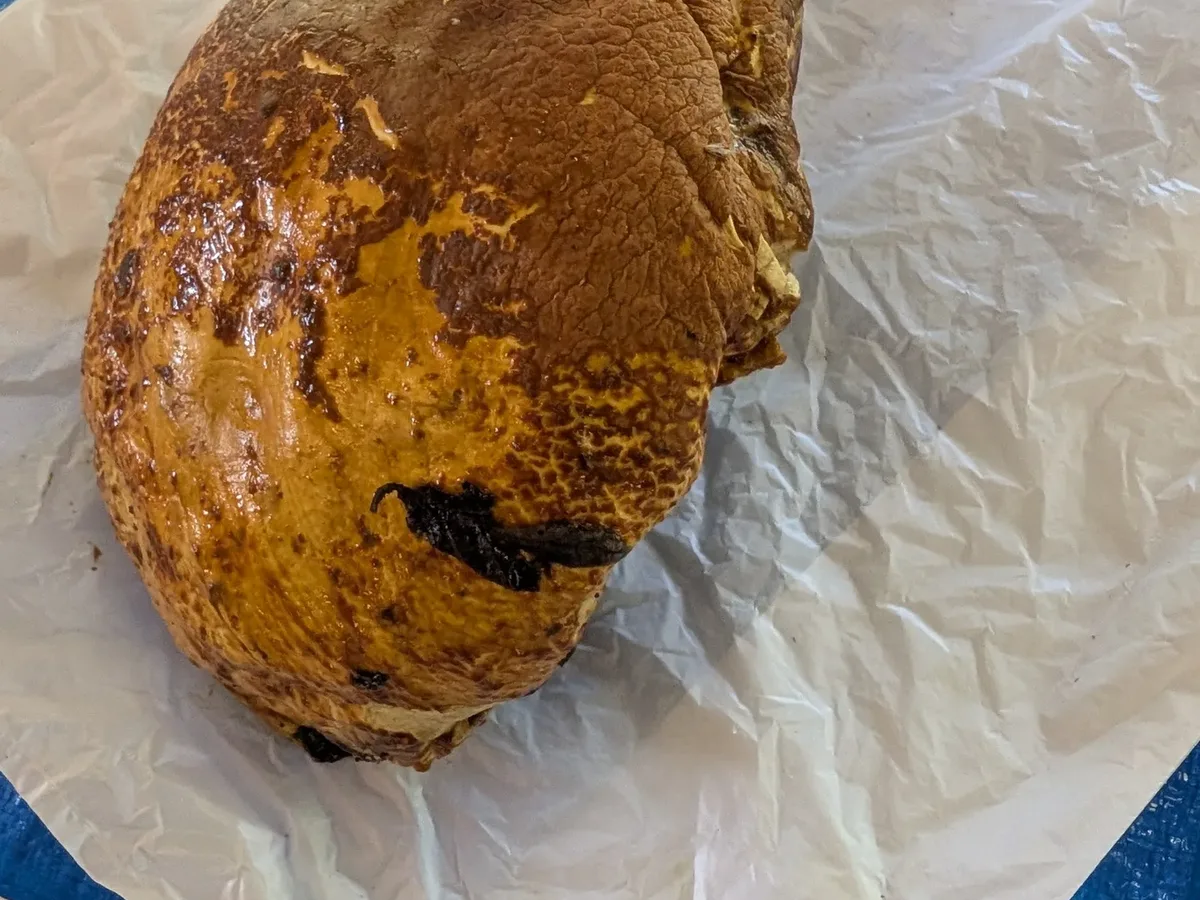
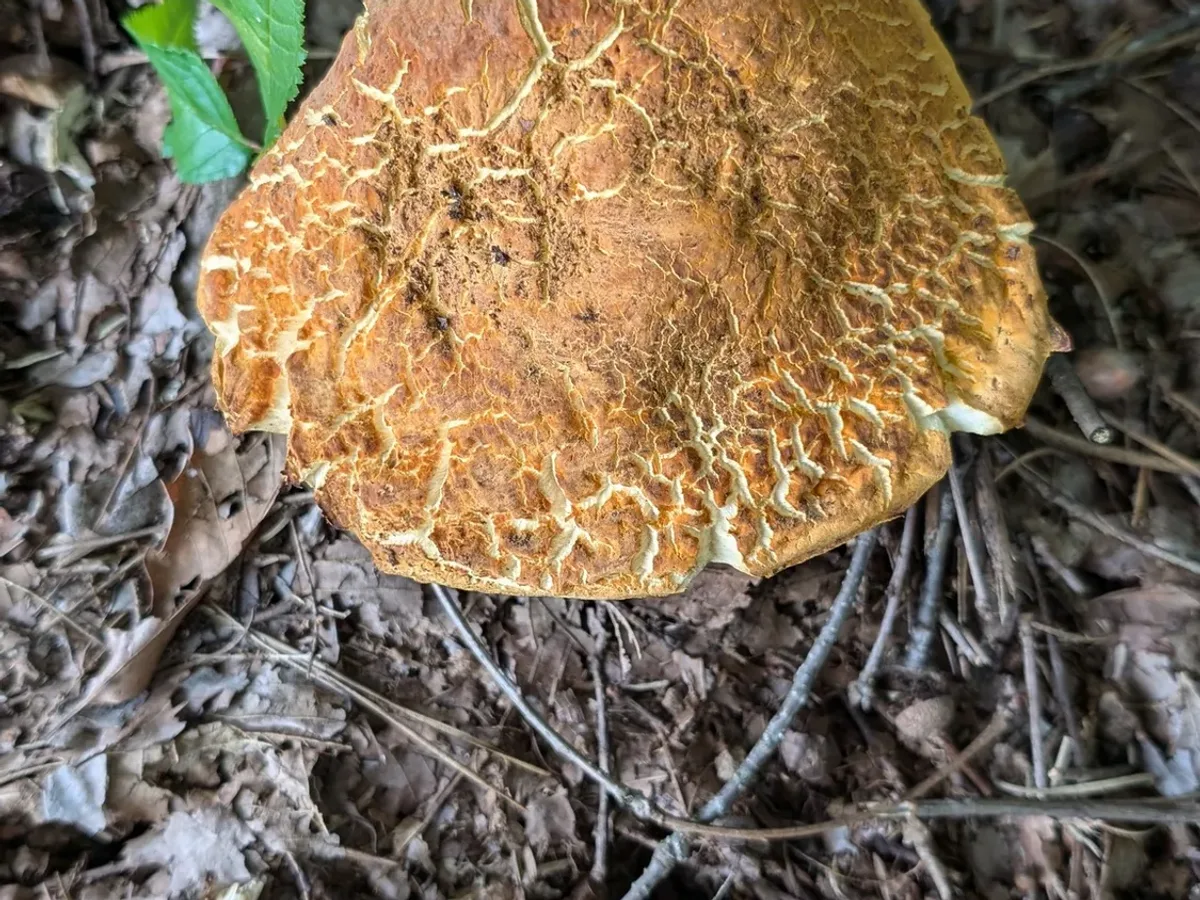
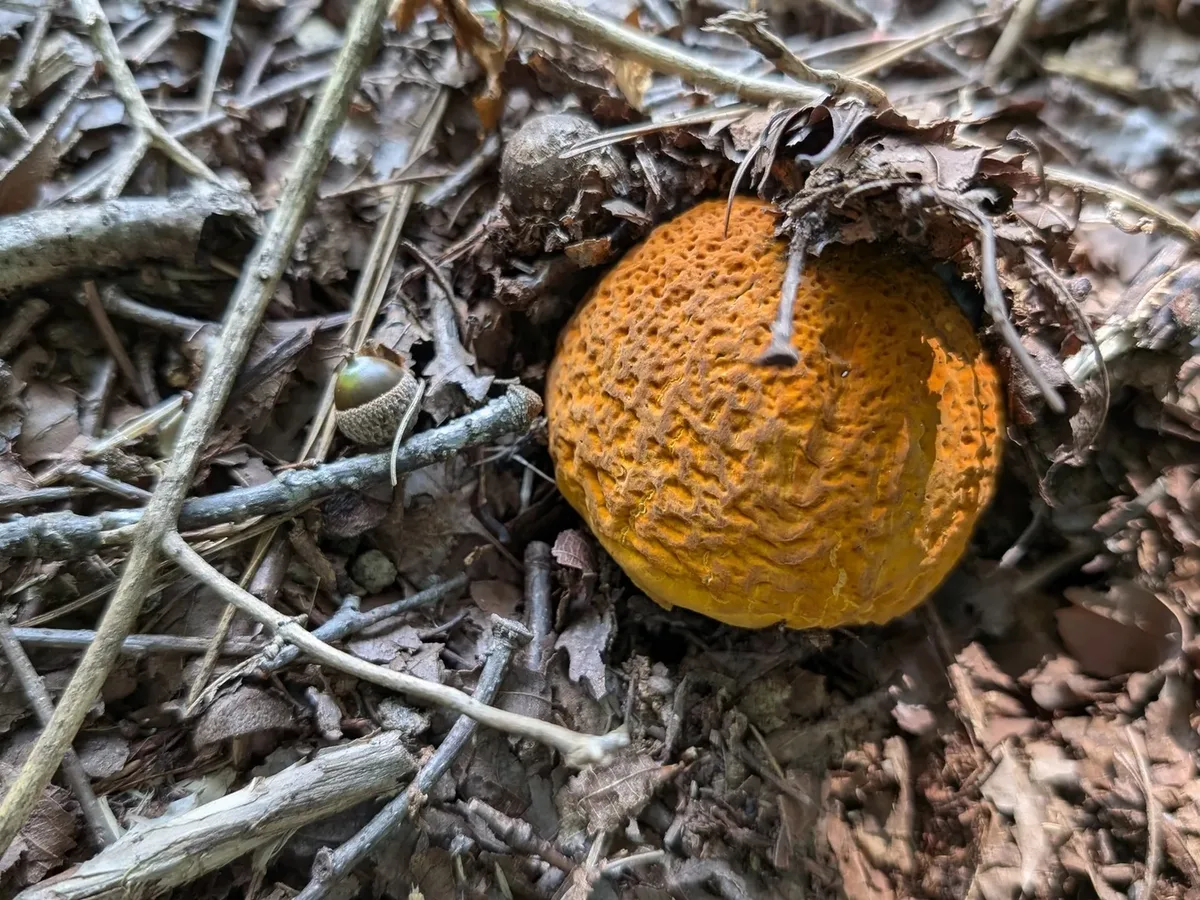
Rugiboletus extremiorientalis announces itself with a feature unique among the boletes of eastern Asia: the cap surface is prominently rugulose - coarsely wrinkled and ridged in a pattern radiating from the cap centre outward toward the margin, as if the cap skin has been lightly but firmly crumpled. This wrinkling is dry, never slimy or sticky, and is apparent even on young buttons.
The cap itself is generously built, ranging from 6 cm on a young specimen to 18 cm across at maturity, starting as a firm hemisphere and relaxing to a broad, comfortable cushion in age. Colouration is warm chestnut-brown to coffee-brown with faint greyish-olive overtones at the disc, paling only slightly toward the margin.
Gills / Pores
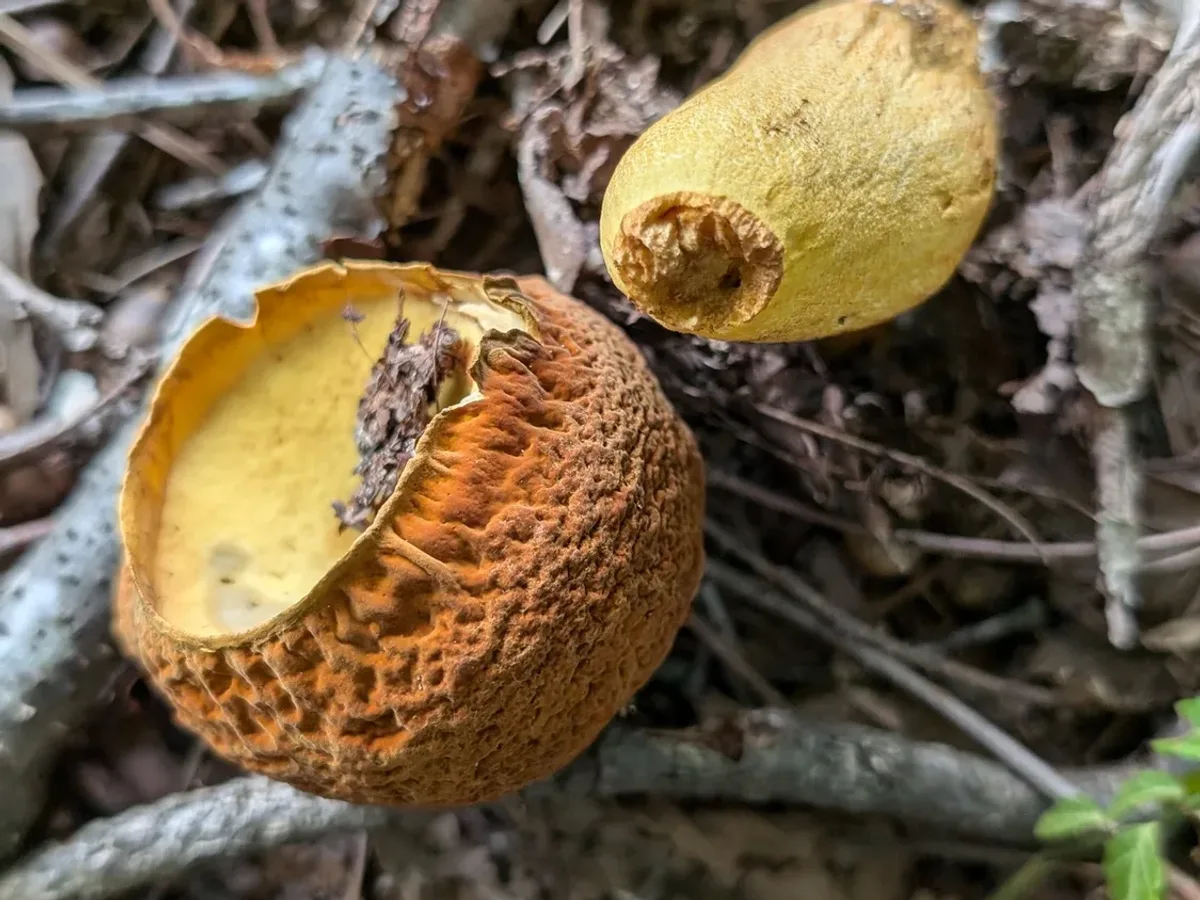
Beneath the cap the pore surface opens white to cream, matures to pale yellow, and ages to pale olive-yellow - and critically it stays that colour when you press or cut it, with no blue or green staining whatsoever.
Stem
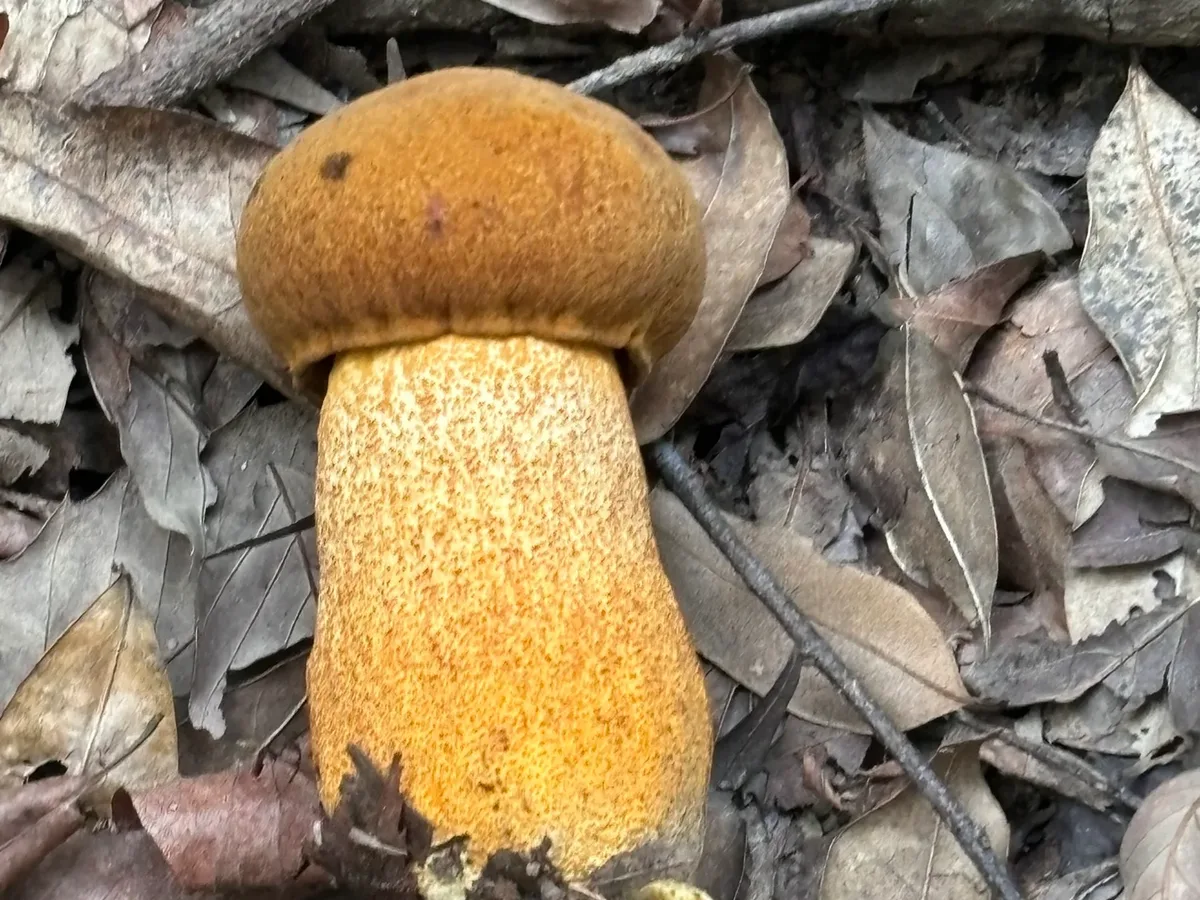
The stipe is stout and substantial, pallid to tan, and carries a raised net (reticulum) of pale buff lines most strongly developed in the upper half.
Flesh
The flesh throughout cap and stipe is firm, white, and stays white when you slice it open - no colour change, no blue, no reddening.
Smell
The smell is mild and pleasant.
Together, the rugulose cap surface, white non-bluing pores, and pale-netted stipe form a very distinctive combination that, once seen, is recognisable on sight.
Where & when it grows
Habitat
The far east wrinkled bolete is a creature of warm, humid forest with a living root partnership at its heart. It cannot grow without a Fagaceous partner tree - its mycelium is woven through the root tips of oaks, chinquapins, chestnuts, and stone oaks, exchanging mineral nutrients for the tree's photosynthetic sugars in the ancient trade of ectomycorrhiza.
In the field this means searching in subtropical and warm-temperate montane broadleaved forest dominated by these Fagaceous genera, particularly at elevations of 700-2600 m where humidity is high and summer rainfall is reliable.
Yunnan province in China is the epicentre of its abundance, where it appears alongside several other prized boletes in the forests above Kunming, in the hills around Dali, and throughout the diverse forests of Xishuangbanna. It also occurs in equivalent forest in Sichuan, Guizhou, and Hubei, and has been recorded from comparable warm broadleaved forest in Japan and the Korean Peninsula.
Productive sites are typically on slopes with good drainage under partial canopy, on deep moist humus-rich soil with ample leaf litter. Avoid waterlogged ground and exposed ridges; the mushroom favours sheltered, modestly humid hollows and stream-adjacent slopes.
When
The far east wrinkled bolete is a monsoon mushroom in the fullest sense - its season is governed by the arrival, intensity, and duration of the East Asian summer monsoon.
In southwestern China (Yunnan, Guizhou) the season opens in late June when the first heavy rains arrive, runs strongly through July and August, and tails off through September and October as temperatures begin to cool and the monsoon retreats.
Peak fruiting is mid-July to late August, when warm soils (typically 16-24 °C) combine with prolonged heavy rainfall in the most productive conditions the region offers.
In Japan and Korea the season is driven similarly by the baiu (plum rains) of June-July followed by the warm, wet rest of the East Asian summer, with the mushroom peaking July-September.
The fruiting lag after rain is typical of mycorrhizal boletes: expect fruit bodies to emerge approximately 7-14 days after a soaking rain event of 30 mm or more.
In a good monsoon year with multiple rain pulses, the season can sustain multiple overlapping flushes; in a dry summer, fruiting is sparse and brief.
How it grows
Solitary or scattered in small groups of two to five, never in dense clusters. Like all mycorrhizal fungi it is bound to the rhythm of its host trees and the vagaries of the monsoon.
Growth from button to full-sized cap takes approximately 3-6 days in warm, humid conditions.
The distinctive rugulose wrinkling of the cap surface is visible even on small buttons and persists through maturity - a diagnostic that can be checked at any stage.
Established mycelial patches fruit reliably from the same spots in productive years. Mapping known locations and returning under similar monsoon conditions is the most reliable foraging strategy.
Occasional very large solitary specimens reaching 18-20 cm cap diameter are found in undisturbed old-growth forest.
Fruiting conditions
Fruiting is driven by the East Asian summer monsoon. Requires warm soils (15-26 °C) and sustained monsoon rainfall of at least 30 mm over a 14-day window. Fruit bodies typically emerge 7-14 days after soaking rain events. Peak fruiting in Yunnan and Guizhou is mid-July through late August; in Japan and Korea the peak is July-September. Multiple overlapping flushes occur in productive monsoon years.
Look-alikes
The most critical safety hazard in the same forest is Rubroboletus sinicus (the Chinese red-pored bolete), which can share habitat and has caused severe and potentially life-threatening poisoning. This species has pores that are red to orange-red rather than white-to-yellow, and its flesh turns blue immediately and intensely when cut.
The contrast with Rugiboletus extremiorientalis - white pores, white non-bluing flesh - could not be more stark, but a young or partly-covered Rubroboletus specimen may hide its red pore colour, and the caps of both species can be similarly brown.
The rule is absolute: if the pore surface shows any red, orange-red, or orange, or if the flesh or pore surface turns any shade of blue, green, or purple on cutting, reject the specimen and do not eat it.
Neoboletus magnificus, another East Asian bolete, similarly has reddish pores and intense blueing and is poisonous.
Tylopilus species (bitter boletes) are common associates with brown caps and sturdy stipes. They differ in having pores that mature to distinctly pink or dirty pinkish-brown and, most reliably, a ferociously bitter taste that renders even a tiny raw fragment unmistakably unpleasant - taste a fragment and spit it out (do not swallow). Tylopilus species are not significantly toxic but are completely unpalatable and will ruin a cooked dish.
Boletus reticuloceps is a closely related choice edible in the same forest with a similar cap colour and white non-bluing flesh, but its cap surface is smooth to finely tomentose rather than rugulose; confusion with it is harmless from a safety perspective.
Caloboletus species (including C. calopus) may occur at the margin of this species's range in mixed forest and have pale-to-yellow pores that blue instantly on contact - exclude them by the blue-staining test before eating anything.
Pores are red to orange-red (never white or pale yellow) and all flesh turns blue intensely and immediately when cut or bruised. Causes severe gastrointestinal poisoning and has been implicated in cases requiring intensive medical care; considered deadly toxic in serious overdose. The white pores and absolutely non-bluing white flesh of Rugiboletus extremiorientalis are the definitive counter-check - any specimen with red pores or any blue staining must be rejected without exception.
Brown cap and stout stipe similar in silhouette, but pores mature to a distinctly pink to dirty pinkish-brown (not white-to-yellow), the reticulation on the stipe is dark brownish on a pale ground, and the flesh is ferociously bitter - even a tiny raw fragment is unmistakably unpalatable. Taste a small piece of raw flesh and spit it out completely; the bitterness distinguishes Tylopilus immediately. Not toxic but utterly inedible and capable of ruining a cooked dish.
Pores appear pale yellowish but turn blue immediately and strongly when pressed or cut; stem often shows an orange to reddish zone at the base; flesh blues on cutting. Causes gastrointestinal distress. The absolutely non-bluing white flesh and pores of R. extremiorientalis are the essential distinction - apply the cut test before eating any bolete.
Another East Asian bolete with reddish-orange pores and intensely bluing flesh. Causes serious gastrointestinal poisoning. Cap is often similar brown, but pores are orange-red and flesh blues immediately on any cut. Not considered lethally toxic in isolation but causes severe poisoning. The non-blueing white pores of R. extremiorientalis distinguish it clearly.
Closely related choice edible in the same Fagaceous forest; similar size, brown cap, white non-bluing pores, and pale reticulate stipe. Distinguished by a smooth to finely tomentose cap surface (lacking the coarse, distinctive wrinkling of R. extremiorientalis). Confusion is harmless from a safety perspective as both are choice edibles. Molecular identification may be needed for precise separation.
In the kitchen
Picking & cleaning
Select young to mid-aged specimens where the cap is still firmly convex and the pore surface is white to pale yellow and tight. The flesh should be uniformly white when the stipe is sliced lengthwise - confirm this in the field before the specimen enters the basket.
Reject any specimen with discoloured flesh, softened or slimy pore surface, or any hint of blueing on the cut surface. Check the cut face after 60 seconds of air exposure: it should remain white.
Probe the stipe base for insect larvae (maggots penetrate quickly in warm weather); a heavily infested stipe is not worth carrying home.
Cut cleanly at the base rather than pulling, to protect the mycelium. Carry in an open-weave basket with room to breathe.
Refrigerate and use within two days for best quality - the flesh firms up nicely when cold, making slicing easier.
Cooking
A choice mushroom with firm, white, dense flesh and a mild, pleasantly nutty flavour that holds its own in robust preparations. Widely sold at Yunnan mushroom markets alongside other premium boletes and valued as a culinary ingredient across southwestern China and Japan.
The firm texture makes it excellent for stir-frying in hot oil or butter with garlic, ginger, and aromatic greens - a preparation standard in Yunnan cuisine that showcases the clean mushroom flavour. It suits hotpots, noodle soups, rice dishes, and braises equally well, holding its shape even in slow-cooked applications.
The pore layer may be left on in young specimens (where it is tight and flavourful) or removed from older specimens where it softens.
Drying is superb: slice 5-8 mm thick and dry at low heat (40-50 °C) until fully crisp. Dried specimens develop a concentrated, intense umami fragrance and rehydrate beautifully in soaking liquid that should itself be added to the dish. Dried and powdered mushroom makes a fine seasoning.
Always cook thoroughly; never eat raw.
Good to know
Rugiboletus extremiorientalis is a long-established edible with a strong tradition of consumption at Yunnan and other southwestern Chinese markets, where it is sold as a premium bolete alongside Boletus reticuloceps, Boletus bainiugan, and other choice species. No documented toxicity is associated with correctly identified specimens.
However, the forests where it grows also contain Rubroboletus sinicus and related red-pored boletes that are seriously toxic and have caused severe, medically documented poisoning - confirming that your specimen is not one of these before eating is non-negotiable.
The two safety rules are firm and absolute:
- 1The pore surface must be white to pale yellow, never red, orange-red, or orange.
- 2When you cut the flesh or pore surface, there must be no colour change - no blue, no green, no purple - after 60 seconds of air exposure.
If either test fails, discard the specimen immediately. Confirm also the rugulose (wrinkled) cap surface as a supporting positive character.
As with all wild boletes, always cook thoroughly before eating - never eat raw. On first acquaintance with this species, eat a small test portion and wait 24 hours before eating more.
In regions where local expertise is available - Yunnan markets, Japanese mushroom hunters - verification from an experienced local forager before eating is always worthwhile.
A reference guide - never an edibility guarantee. When in doubt, leave it out.