Red-Pored Bolete
Rubroboletus pulcherrimussyn. Boletus pulcherrimus, Suillellus pulcherrimus
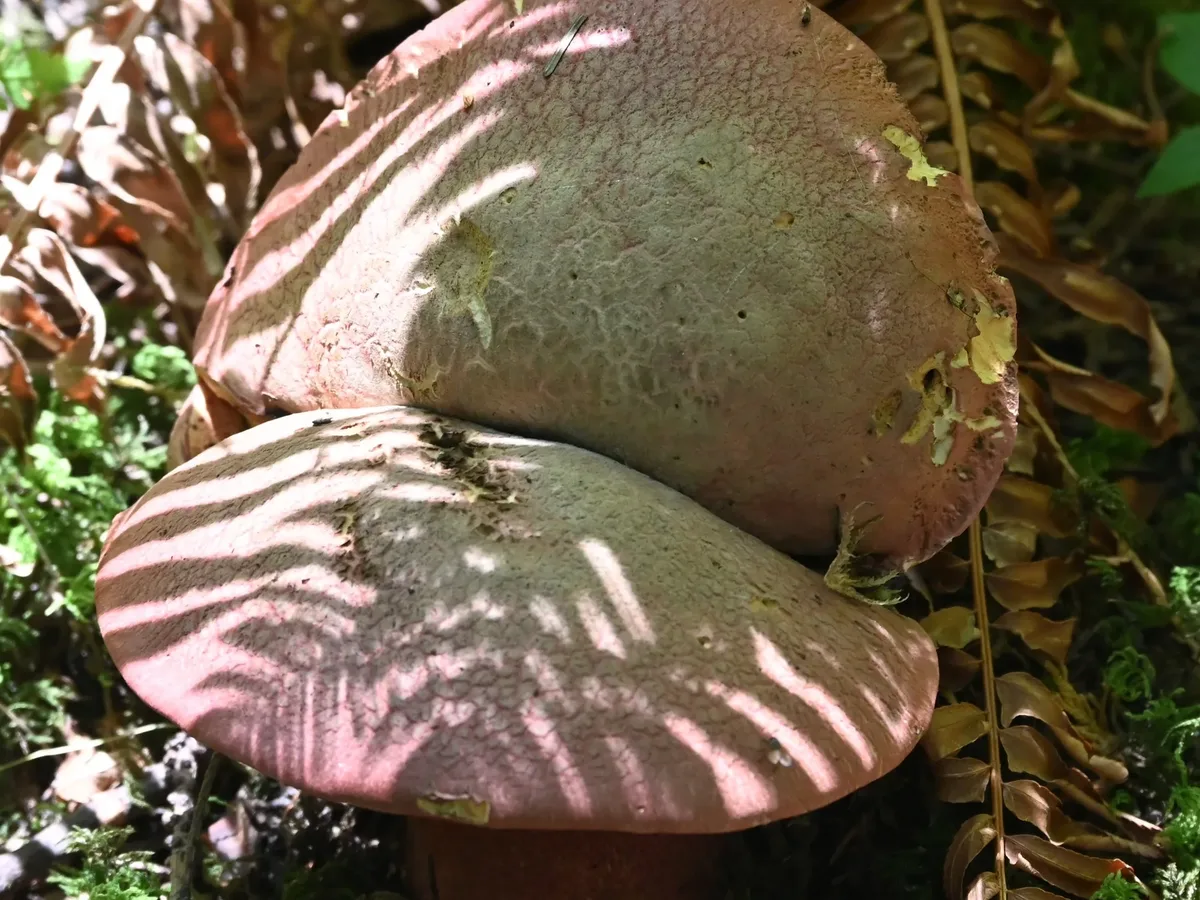 © Tanner Barnharst (CC BY)
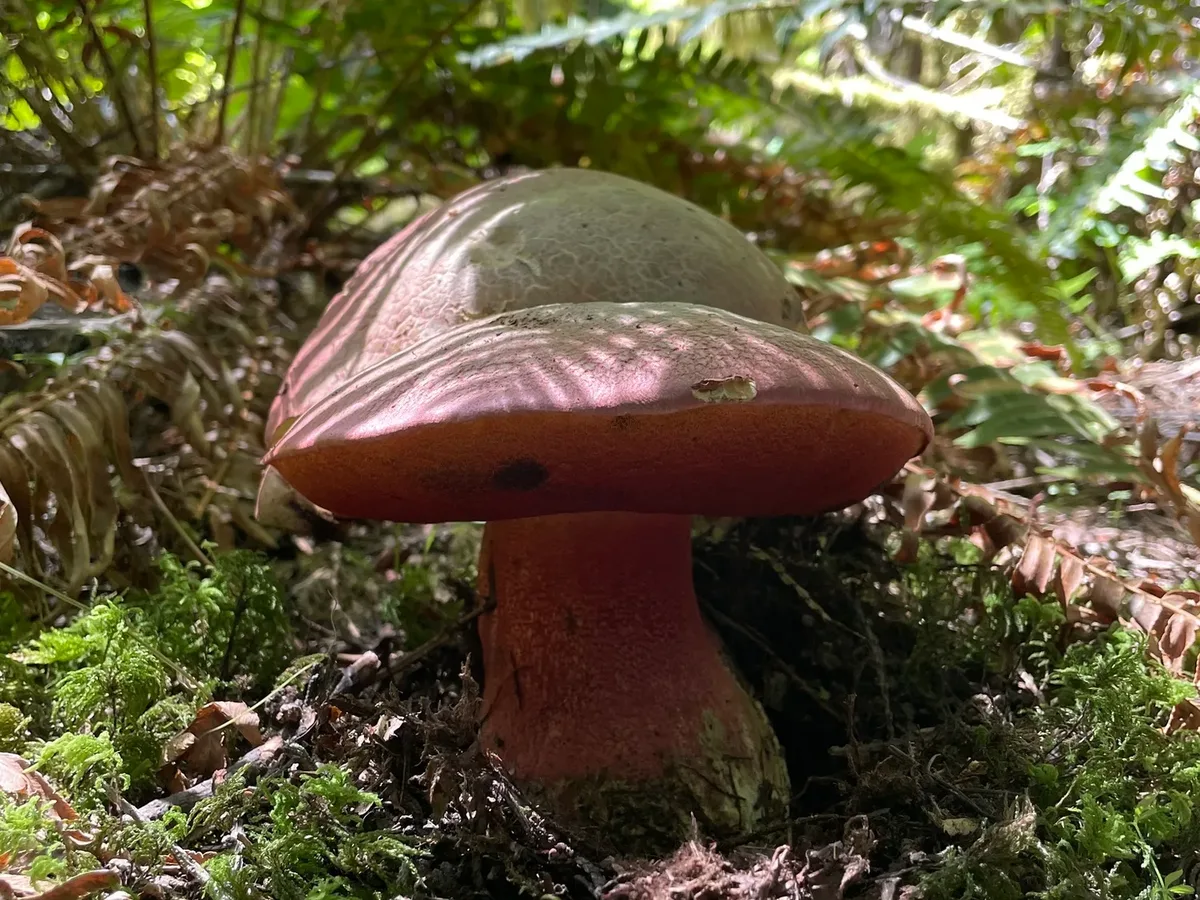 © Tanner Barnharst (CC BY)
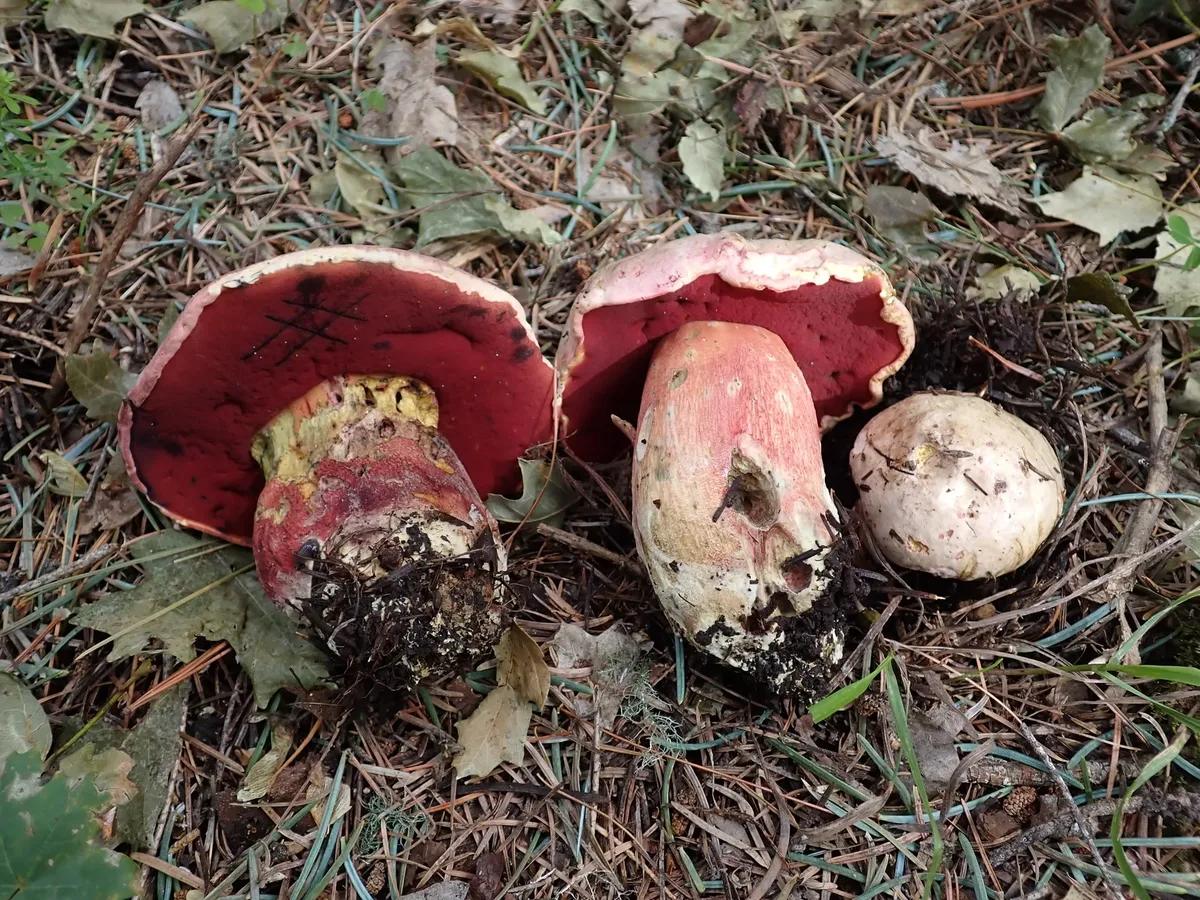 Sigrid Jakob (CC0)
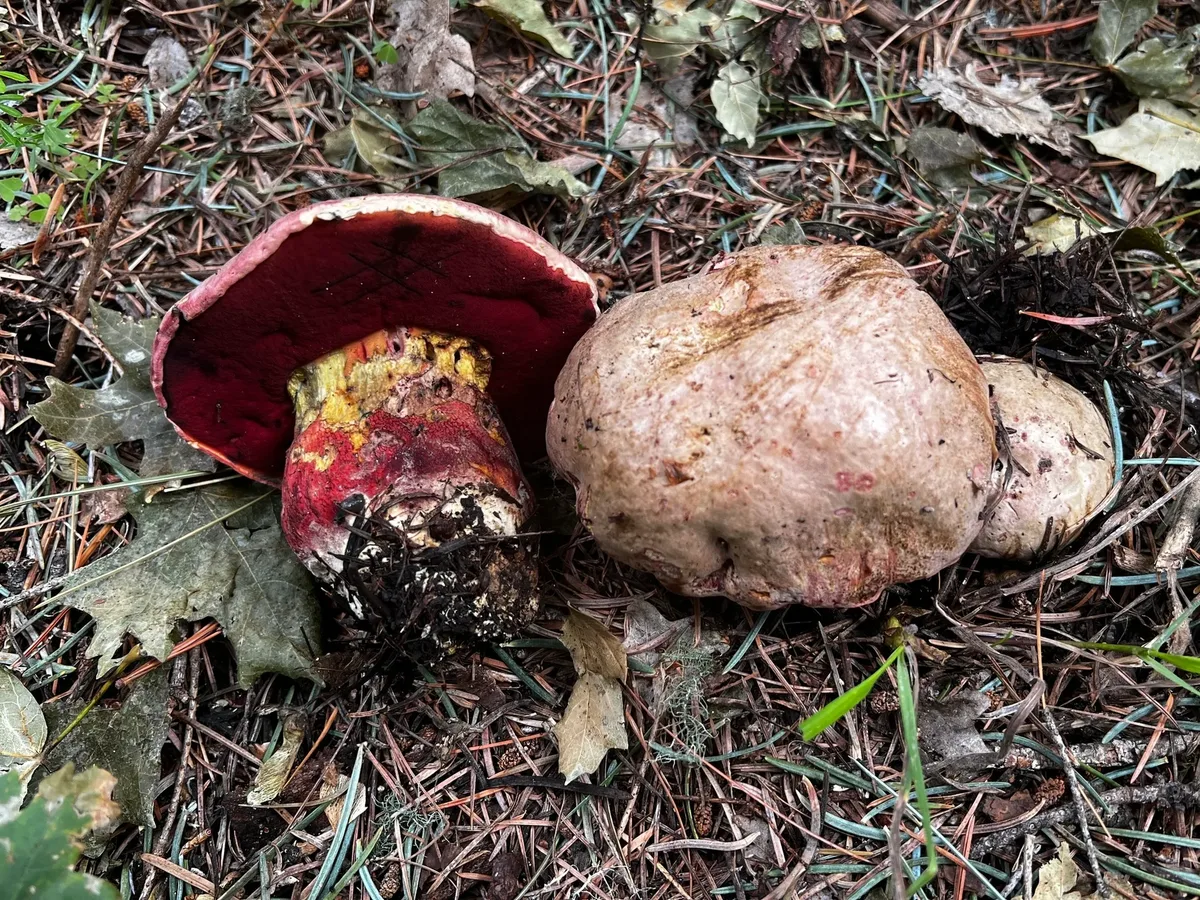 Sigrid Jakob (CC0)
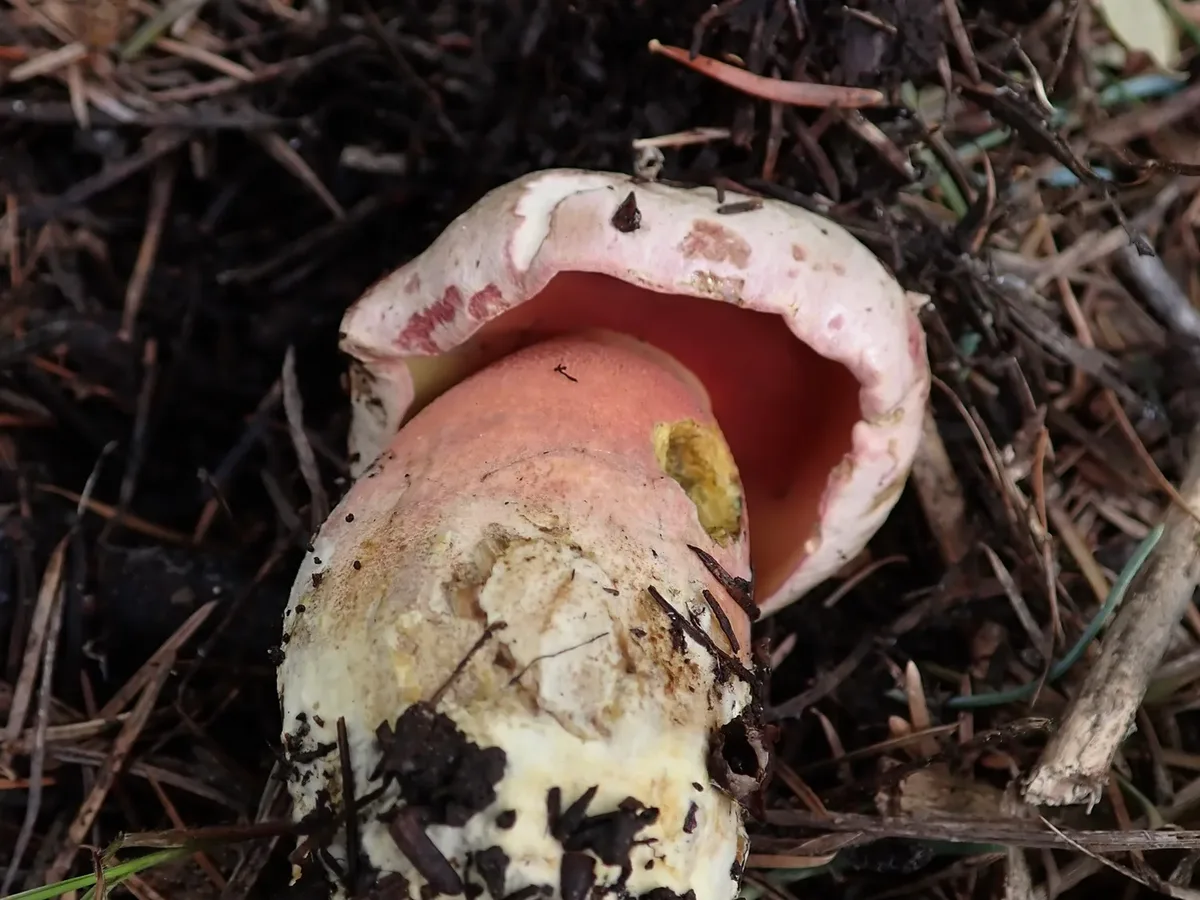 Sigrid Jakob (CC0)
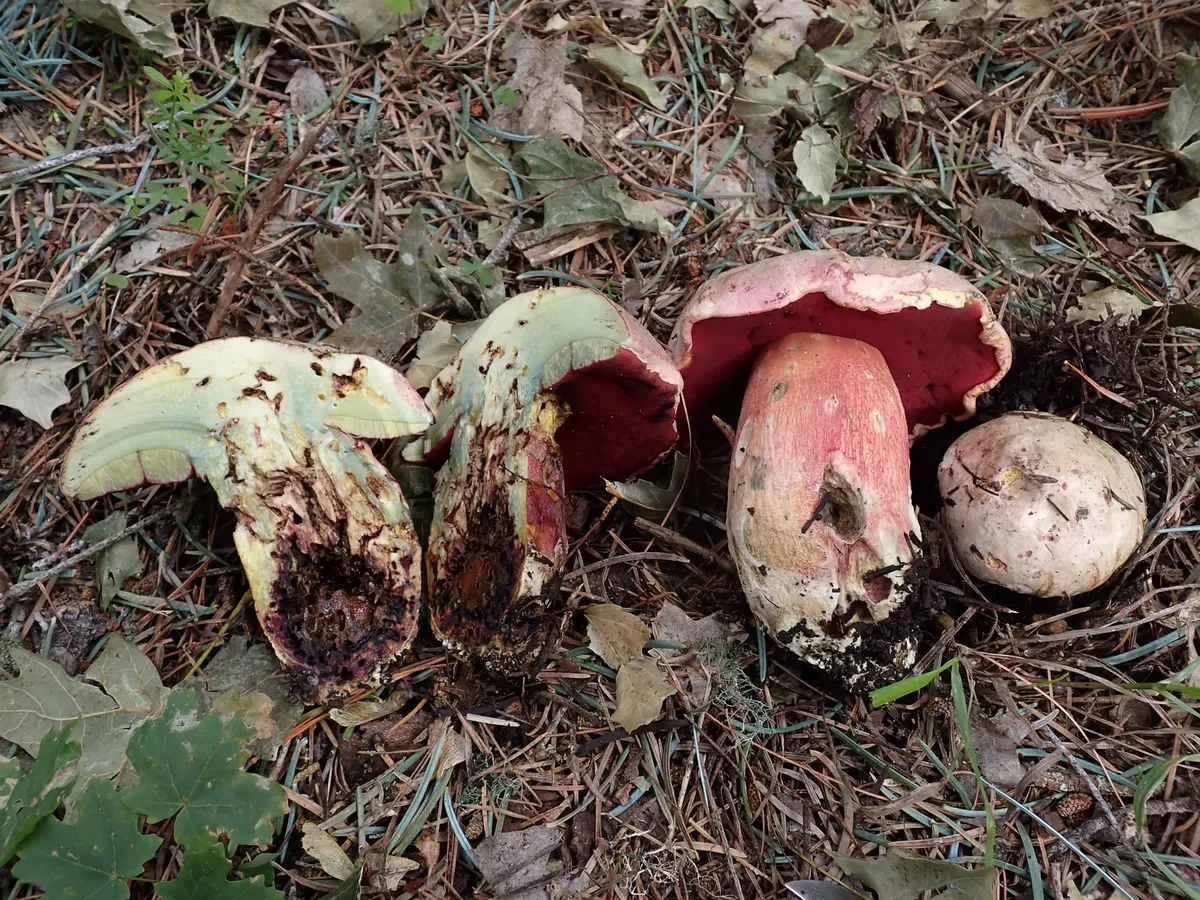 Sigrid Jakob (CC0)
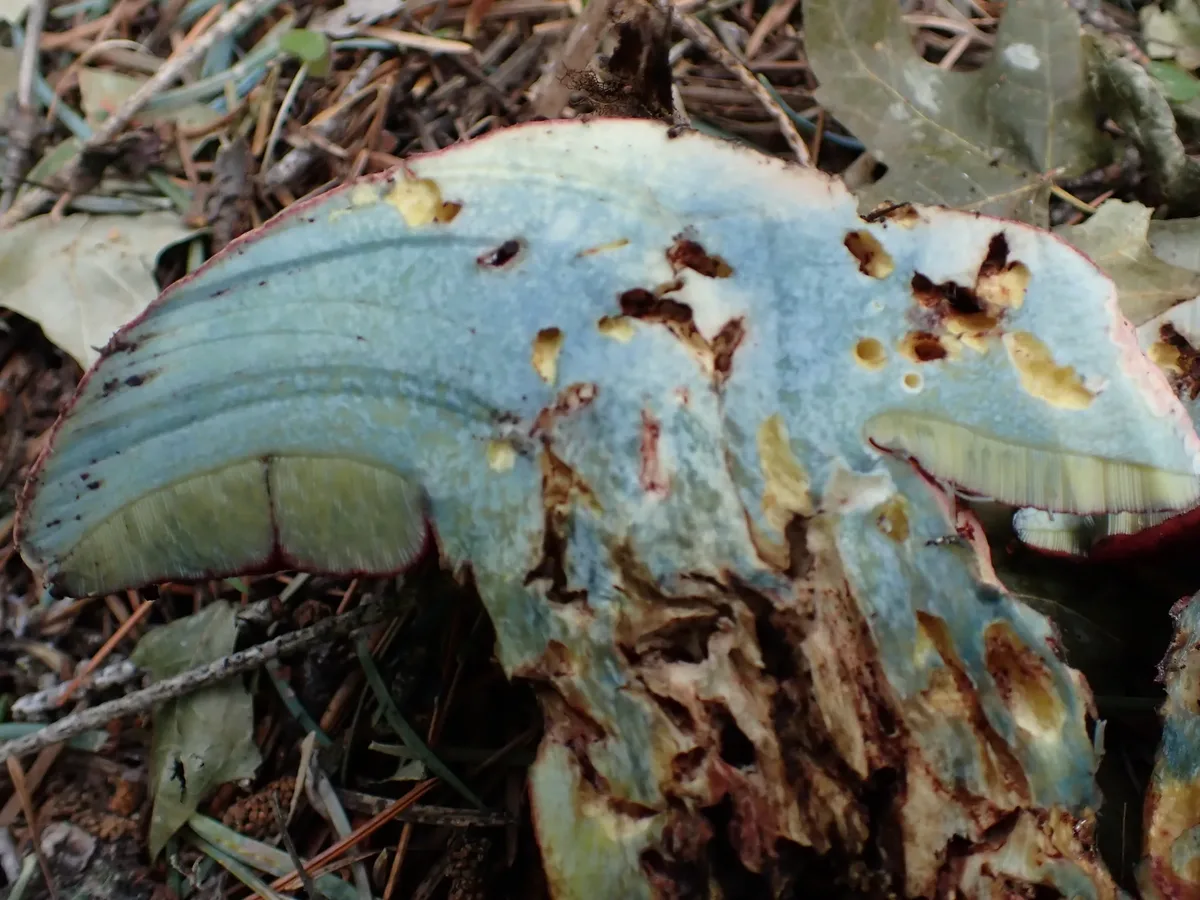 Sigrid Jakob (CC0)
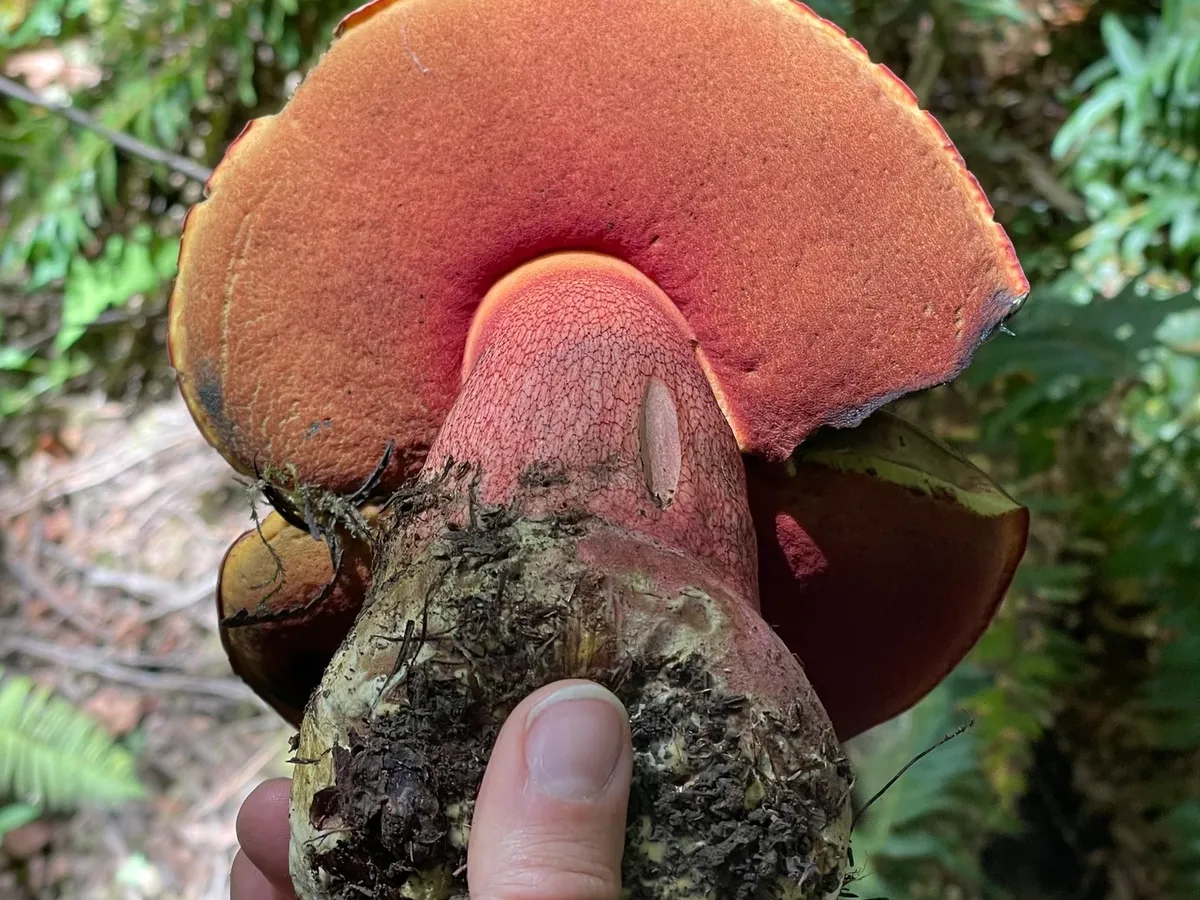 © Tanner Barnharst (CC BY)© Tanner Barnharst (CC BY)© Tanner Barnharst (CC BY)
Toxic - and the most serious cases can be fatal. Never eat it, and wash your hands after handling.
Never eat a mushroom you are not 100% sure of - check the look-alikes below, and always cook wild mushrooms.
How to recognise it
Rubroboletus pulcherrimus is named for its beauty - pulcherrimus is Latin for 'most beautiful' or 'most handsome' - and it earns the name while advertising its danger in the clearest possible visual language.
Cap
The cap is large and imposing, reaching 8-30 cm across, starting tightly hemispherical and slowly flattening with age.
The surface is dry to barely viscid in wet weather, smooth to finely felty, and coloured in tones of olive-brown, reddish-brown, or dark tawny-brown - sometimes with a grayish or olivaceous cast at the centre. This gives it a somewhat sombre, understated quality above that contrasts dramatically with everything below.
Gills / Pores
Turn the mushroom over and the contrast becomes vivid: the pore surface is blood-red to deep scarlet in young fruitbodies, fading only slightly to orange-red as the cap ages. The tube mouths are small, round, and densely packed.
Touch the pore surface with a fingertip, or cut anywhere into the flesh, and the transformation is nearly instantaneous - the tissue floods deep blue-black within seconds, driven by the rapid oxidation of variegatic acid pigments on contact with air.
This bluing reaction is one of the fastest and most complete in the entire genus Rubroboletus, and it is one of the most reliable field characters available.
Stem
The stem is the showpiece: stout, often bulbous or barrel-shaped especially toward the base, solid throughout, and decorated across most of its surface with a coarse, raised network of vivid red ridges (reticulation) on a background of yellow to orange. The stem base is typically the most intensely carmine portion.
Flesh
The flesh is very thick, pale yellow throughout, and turns an identical deep blue-black when exposed to air.
Smell & taste
The odour is mild in young specimens but becomes distinctly fetid and unpleasant in older fruitbodies; the taste is bitter to acrid.
Spore print olive-brown; spores 11-17 × 4-6 µm, fusiform, smooth.
Why it's dangerous
DEADLY TOXIC. This species has caused a confirmed fatality in the Pacific Northwest.
- Do not eat.
- Do not taste.
- Do not assume cooking makes it safe - the primary toxins are not reliably heat-destroyed.
Any bolete with red or orange pores, especially one whose flesh turns blue-black when cut, must not be consumed under any circumstances.
If ingestion is suspected:
- 1Call Poison Control immediately (US: 1-800-222-1222; Canada: regional poison centre) and go to the nearest emergency room.
- 2Bring a sample or photograph of the mushroom.
- 3Tell medical staff specifically that consumption of a red-pored bolete (Rubroboletus pulcherrimus) is suspected - this directs appropriate aggressive supportive care for the GI toxidrome.
Toxin
The principal toxic compounds are ribosome-inactivating proteins (RIPs) of the bolesatin class - thermostable glycoproteins that bind to and inactivate the 60S ribosomal subunit, halting the elongation step of protein biosynthesis in affected cells.
Rapidly dividing cells (gut epithelium, hepatocytes, renal tubular cells) are most severely affected.
The bluing reaction is driven by the oxidation of variegatic acid (a hydroxyl-substituted pulvinic acid derivative) and related quinone pigments, which react with oxygen on exposure to air. These compounds also directly damage gut mucosal cells through oxidative mechanisms.
Additional uncharacterised thermolabile and potentially thermostable lectins and toxic glycoproteins are likely present, based on the comparative biochemistry of closely related Rubroboletus species.
Symptoms
Onset is rapid - symptoms typically begin within 30 minutes to 2 hours of ingestion, which clinically distinguishes this toxidrome from the delayed-onset (6-24 hour) pattern of amatoxin poisoning.
Initial and dominant symptoms are acute severe gastroenteritis:
- violent and profuse vomiting (often projectile)
- intense watery or haemorrhagic diarrhoea
- severe abdominal cramping
- nausea
- salivation
- diaphoresis (profuse sweating)
- prostration
In the 1994 Pacific Northwest fatality, symptoms progressed to multi-organ failure including liver damage, renal injury, and cardiovascular collapse.
In any significant ingestion, dehydration and electrolyte imbalance develop rapidly and are immediately life-threatening.
Seek emergency medical care without waiting for symptom development - do not attempt to self-manage even mild symptoms.
Staying safe
Rubroboletus pulcherrimus has caused at least one confirmed human fatality in the Pacific Northwest, documented in 1994 and widely cited in North American mycological literature (including accounts by mycologist David Arora and in the North American Mycological Association's toxicology references). This makes it the most dangerous bolete native to the Pacific Northwest and northern California.
The toxin mechanism centres on bolesatin-class ribosome-inactivating proteins (RIPs) that inhibit cellular protein synthesis, causing rapid, severe gastrointestinal damage and, in serious cases, multi-organ injury.
Whether thorough cooking destroys all toxic components is not established to a sufficient degree of certainty - the primary RIP toxins are partially thermostable, and cooking reduces but cannot be assumed to eliminate toxicity.
The fetid odour and bitter taste of many specimens are natural deterrents, but these characteristics can be subtle in young fruitbodies, and the dramatic visual beauty of the species may invite handling or - fatally - sampling.
The bluing reaction, while spectacular and reliable, can be misinterpreted by foragers who confuse it with the (also strongly bluing) Neoboletus luridiformis, which is edible when cooked in Europe.
In the Pacific Northwest, no red-pored bluing bolete should be consumed without absolute certainty of expert-confirmed identification.
If ingestion is suspected, call Poison Control immediately (US: 1-800-222-1222; Canada: your regional poison centre) and seek emergency medical care without waiting for symptoms.
Where & when it grows
Habitat
Rubroboletus pulcherrimus threads its mycelium through the cool, damp forest soils of the Pacific Northwest and northern California - the domain of Douglas-fir, white fir, red fir, western hemlock, and the big pines. This separates it ecologically from its close relative R. eastwoodiae, which inhabits the drier interior foothill woodlands of oak and madrone further south.
R. pulcherrimus is a conifer-forest bolete, forming mycorrhizal partnerships with:
- Douglas-fir (Pseudotsuga menziesii)
- white fir (Abies concolor)
- red fir (Abies magnifica)
- hemlock (Tsuga heterophylla)
- western white pine (Pinus monticola)
- ponderosa pine (Pinus ponderosa)
- occasionally tanoak (Notholithocarpus densiflorus) and madrone (Arbutus menziesii), at the lower-elevation, mixed woodland interface
It grows on well-drained mineral soils with a deep organic duff layer, often on hillsides and slopes in mature or old-growth forest, from near sea level to approximately 2,000 m elevation.
Fruiting bodies appear singly or scattered in small groups, sometimes partially buried in deep duff or emerging from the base of log debris.
Its range spans the coniferous forests of Oregon, Washington, and southern British Columbia, with notable populations in the northern California Coast Ranges and Sierra Nevada, where it was the cause of the region's single confirmed fatal bolete poisoning in 1994.
When
The main fruiting season runs from late August through October across most of the Pacific Northwest, reaching its peak in September and October following the onset of autumn rains that break the summer dry period.
At higher Sierra Nevada and Cascades elevations (above 1,200 m), summer convective thunderstorms can trigger an earlier flush starting in July, when soils are still warm from the summer.
Coastal Pacific Northwest populations benefit from earlier fall moisture and may appear from late August onward. Inland and mountain populations follow the first significant rain that brings 20+ mm over a short period.
The season typically ends by November when soil temperatures cool sharply. In drought years, fruiting may be severely reduced or absent.
The timing aligns closely with the prime chanterelle and porcini season in the Pacific Northwest, meaning foragers collecting highly desirable species in these forests are working the same habitat and season as this deadly species.
How it grows
Like all Rubroboletus, R. pulcherrimus spends most of its life hidden as a mycorrhizal mycelium - a network of hyphae enveloping the fine root tips of its conifer hosts in a sheath-like mantle. It reaches out through the soil to gather water and minerals, returning photosynthetically fixed carbon to the tree in exchange.
This partnership is long-lived: productive sites often return fruitbodies to the same patch season after season, reflecting the enduring stability of the underground network.
When adequate moisture and temperature combine - typically after autumn rain soaks the duff layer and soil temperatures remain above about 8 °C - the mycelium diverts energy into producing fruitbodies.
Tiny buttons form in the duff and mineral soil layer, expand rapidly through egg and button stages, and can reach full size within 3-6 days under ideal conditions.
Older specimens soften progressively, develop a more pronounced fetid odour, and attract fly larvae and other decomposers. The bluing reaction of the flesh begins fading in very old fruitbodies as the enzymatic and chemical reserves are consumed.
Fruiting conditions
Requires at least 20 mm of rainfall over a 14-day window to break summer dormancy; soil temperatures between 8-20 °C are needed, with peak fruiting typically at 12-17 °C. In the Pacific Northwest, fruiting is strongly coupled to the first significant autumn rain following the summer dry period, usually arriving in September-October. At higher Sierra Nevada elevations, summer convective thunderstorms can trigger an earlier flush in July-August. Flush lag is typically 7-14 days after triggering rain.
Look-alikes
In the Pacific Northwest, the species most likely to be confused with R. pulcherrimus in the field are, in rough order of risk:
- 1Neoboletus luridiformis (scarletina bolete) - has reddish-orange to red pores and intensely bluing flesh, and occurs in northern coniferous forests. Cap is darker and more orange-brown than the olive-brown of R. pulcherrimus; stem surface shows granular reddish dots rather than a coarse raised reticulum; odour is mild and not fetid. Considered edible when thoroughly cooked in Europe, but this distinction requires expert-level identification under Pacific Northwest field conditions - all red-pored bluing boletes in this region should be treated as potentially life-threatening until identity is confirmed by a specialist.
- 2Aureoboletus mirabilis (admirable bolete) - a choice edible sharing the same old-growth conifer habitat. The cap has a distinctive dark maroon velvet-felty tomentum; pores are bright golden-yellow, never red; flesh does not blue. The golden pores and non-bluing flesh are definitive.
- 3Boletus edulis and related porcini - prized edible co-occurring in the same forests. White to cream pores, never red; firm white non-bluing flesh; pleasant nutty odour; pale reticulum on stem. No confusion if pore colour is checked.
- 4Rubroboletus eastwoodiae - the closely related California foothill species; virtually indistinguishable in the field, equally deadly, and treated identically. Both share habitat to some degree in northern California.
The European sibling species. Not native to the Pacific Northwest. R. satanas has a more whitish to pale grey-ochre cap and is associated with calcareous European oak-beech woodland. Equally deadly and essentially identical in its diagnostic features: blood-red pores, instant blue-black bluing, fetid odour, red reticulate stem. Geographically separated under normal circumstances.
The closely related deadly species of California's drier foothill oak-madrone woodland. Virtually indistinguishable in the field: same vivid blood-red pores, same instant blue-black bluing, same fetid odour in age, same reticulate red stem. R. eastwoodiae tends toward paler, more buff to grayish-ochre cap coloration; R. pulcherrimus tends toward more olive-brown to reddish-brown cap tones. Both are associated with oaks at some sites, but R. pulcherrimus also commonly occurs under Douglas-fir and true firs. Both are equally deadly and the distinction is of academic interest only - neither may be eaten.
A choice edible that shares coniferous forest habitat in the Pacific Northwest. Cap is dark maroon-red with a distinctive velvety-felty tomentum; pores are bright golden-yellow (never red or orange) and do not blue when cut or pressed. The golden pore surface and complete absence of blueing are definitive - the exact opposite of R. pulcherrimus. Stem reticulation is reddish-brown but over a pale yellow background. If any blueing occurs in the flesh or pores, do not eat.
Common edible in similar Pacific Northwest forests. Cap smooth and chestnut to bay-brown. Pores white to pale yellow, staining blue-green when cut or bruised but never red or orange. Stem lacks red coloration and reticulation. Pore colour check eliminates confusion immediately.
European species, rarely recorded in North America. Has orange-red pores and bluing flesh, but cap is brownish-orange to olive-brown and stem shows an orange-red reticulum with red-flushed zones rather than vivid carmine. Edible only when very thoroughly cooked (raw specimens are poisonous). Minimal geographic overlap with R. pulcherrimus. The identification standard for any red-pored bluing bolete should remain: treat as suspect.
The most coveted edible in the same forests. Pores are white when young, becoming pale yellow to olive-yellow with age - never red or orange at any growth stage. Flesh is white to cream, firm, and does not change colour when cut. Cap is brown to tan, smooth, not olive-brown. Stem has a pale white reticulum. Odour pleasant, nutty, and sweet. A check of pore colour alone eliminates all confusion: no red pore surface, no blueing.
Also has reddish-orange to red pores and strongly bluing flesh, and is found in coniferous forests - the single most realistic source of confusion in the Pacific Northwest. However, N. luridiformis has a dark yellow-orange to dark ochre-brown cap (never olive-brown or grayish like R. pulcherrimus at its most typical), and the stem has reddish-brown granular dots or a granular surface rather than a coarse net-like reticulum. The cap surface of N. luridiformis is typically darker and more brown-orange, and the stem is more cylindrical and less bulbous. Considered edible when thoroughly cooked in Europe, but this distinction is dangerously thin in the field - any red-pored bluing bolete in this region must be treated as suspect unless identification is certain. The overlap in habitat and superficial appearance makes expert-level identification essential before consumption of any red-pored PNW bolete.
A reference guide - never an edibility guarantee. When in doubt, leave it out.