Western Satan bolete
Rubroboletus eastwoodiaesyn. Boletus eastwoodiae, Boletus satanas var. eastwoodiae, Suillellus eastwoodiae
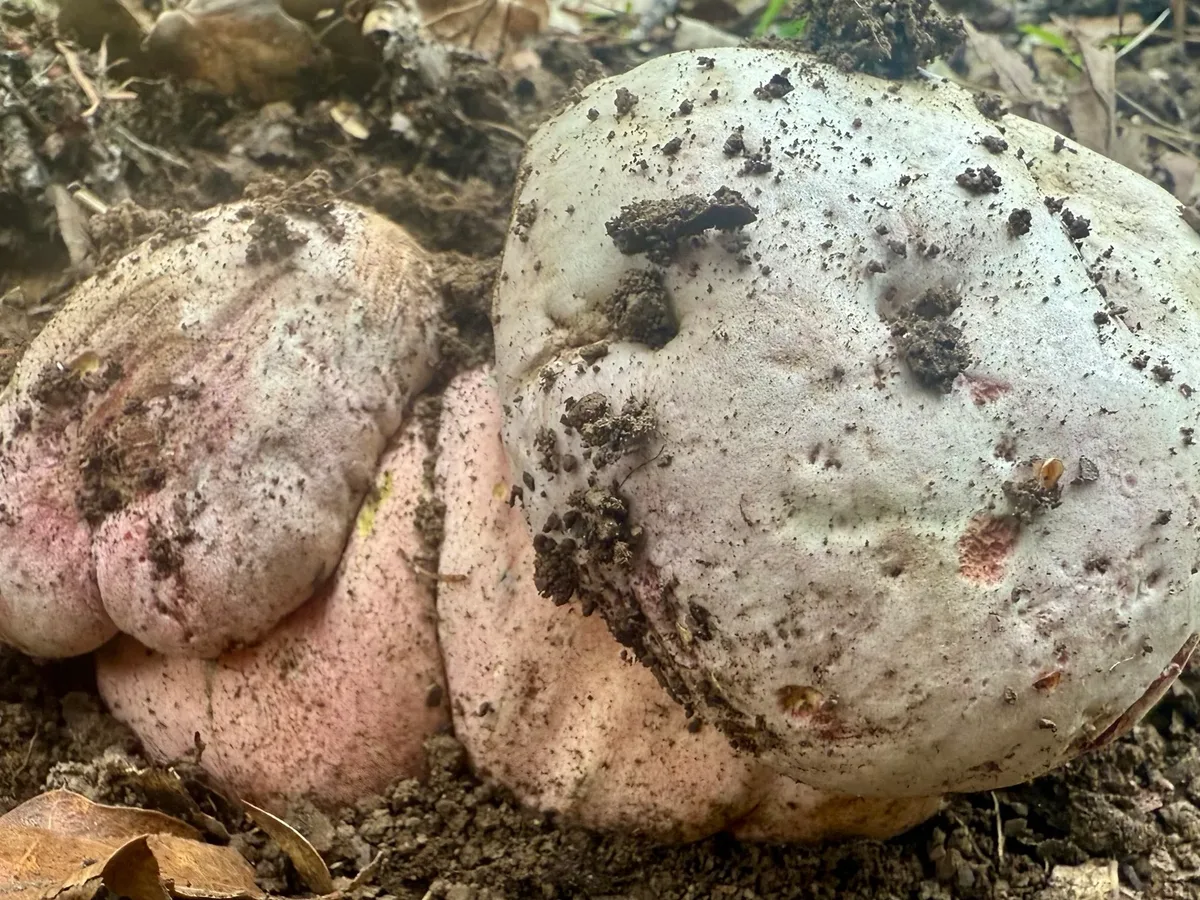 Chuck Wilson (CC0)
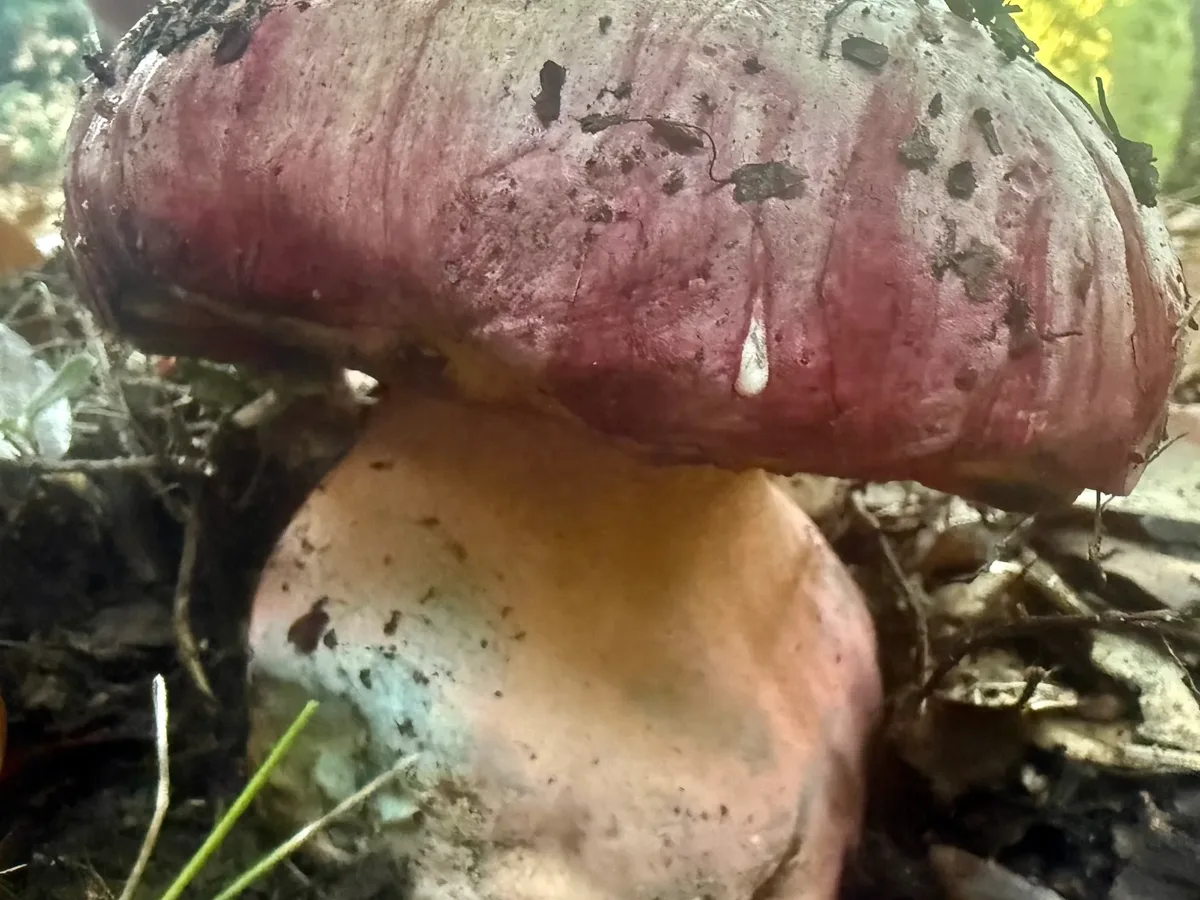 Chuck Wilson (CC0)
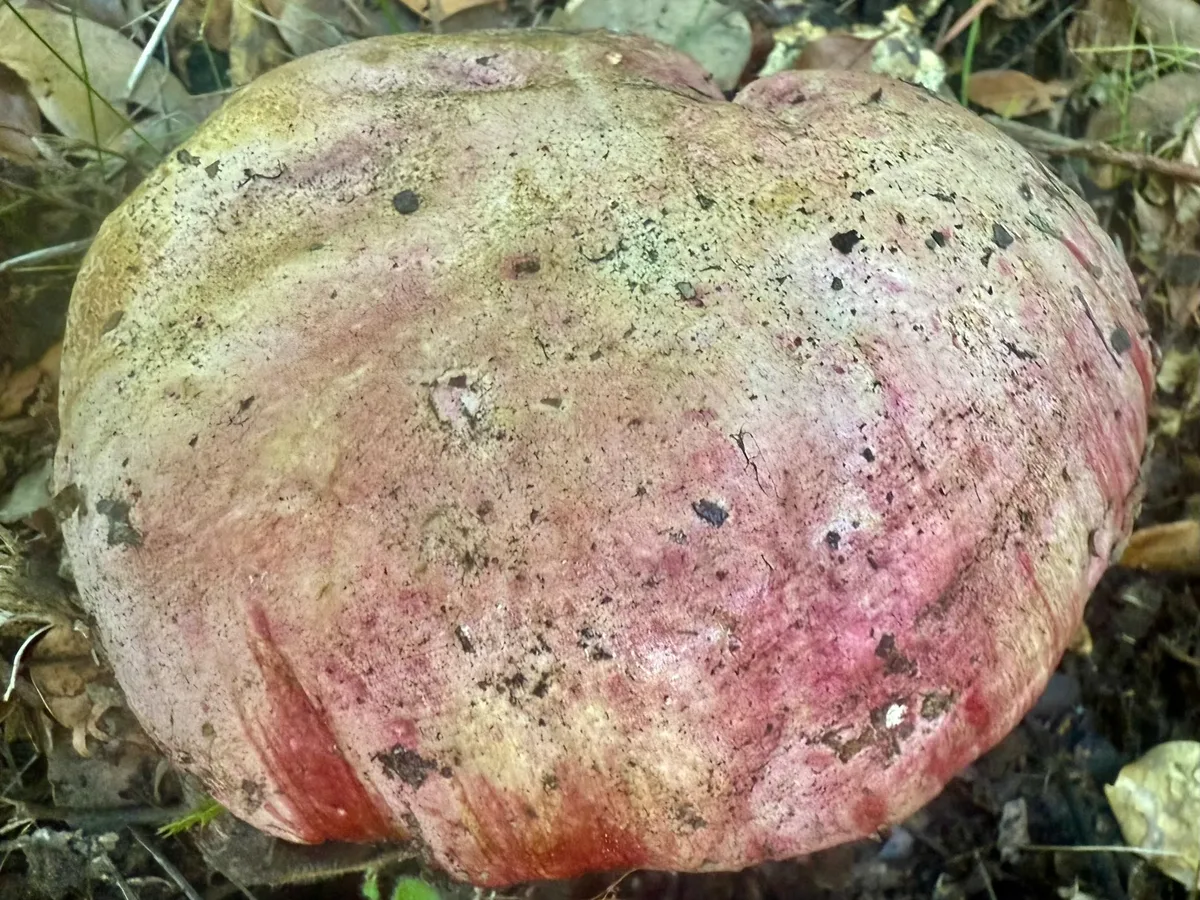 Chuck Wilson (CC0)
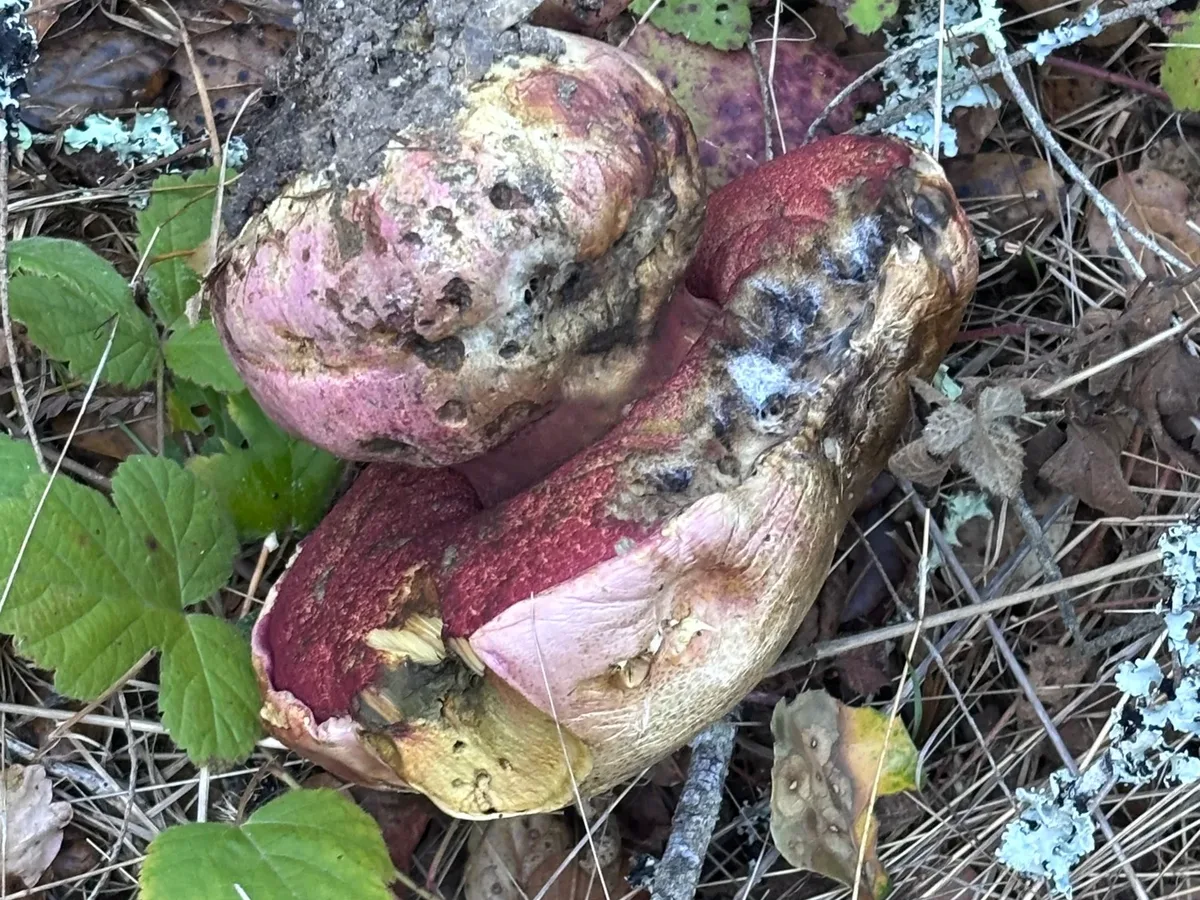 © reagan peschke (CC BY)
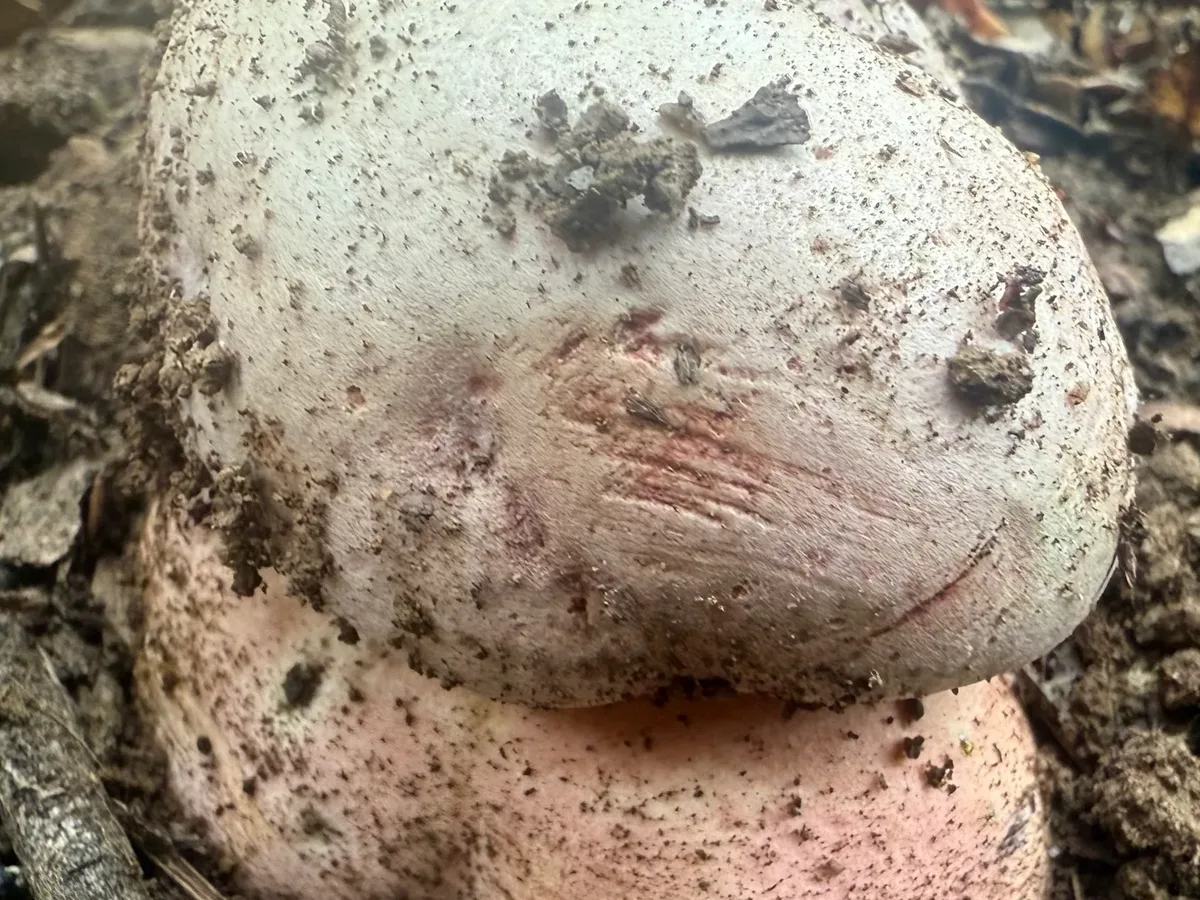 Chuck Wilson (CC0)
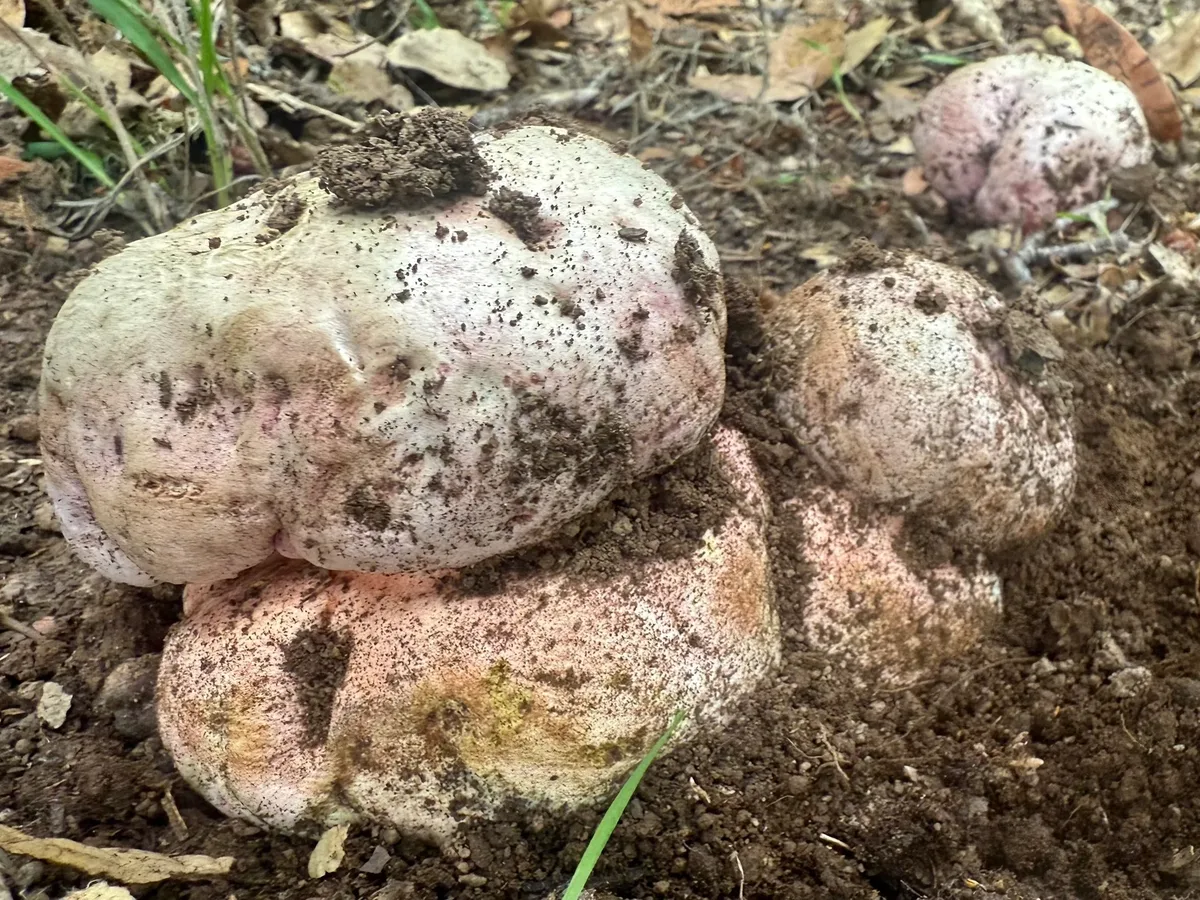 Chuck Wilson (CC0)Chuck Wilson (CC0)Chuck Wilson (CC0)
Toxic - and the most serious cases can be fatal. Never eat it, and wash your hands after handling.
Never eat a mushroom you are not 100% sure of - check the look-alikes below, and always cook wild mushrooms.
How to recognise it
Rubroboletus eastwoodiae is one of the most visually arresting and dangerous mushrooms in the western United States.
Cap
The cap reaches 8-25 cm across, initially hemispherical then broadly convex to nearly flat. The surface is dry to slightly viscid in humid conditions, smooth to finely tomentose.
It is colored pale whitish-buff to grayish-ochre or light tan - strikingly pallid compared to the vivid red structures below.
Gills / Pores
The pores are small, circular, and densely packed, colored blood-red to deep crimson when young, fading somewhat to orange-red as the mushroom matures. They stain an immediate, intense blue-black when touched, pressed, or cut.
The tubes are 1-2 cm deep, yellow near the cap flesh but transitioning to vivid red at their mouths.
Stem
The stem is the most flamboyant part of the fruiting body: 6-15 cm tall and 3-8 cm thick, often swollen and barrel-shaped or bulbous especially toward the base, solid and firm.
The stem surface is dry, yellow at the apex, transitioning through orange to vivid carmine or blood-red toward the base. It is covered over much of its length with a prominent coarse red reticulum (network of ridges).
Flesh
The flesh is thick, pale yellow, and turns an immediate, deep blue-black throughout when cut or broken - including deep within the stem.
Smell & taste
The odor is unpleasant and somewhat fetid in mature specimens, reminiscent of rotting organic matter; the taste is bitter to acrid.
Spore print olive-brown. Spores fusiform, 10-16 × 4-6 µm.
Why it's dangerous
DEADLY TOXIC.
- Do not eat.
- Do not taste.
- Do not assume cooking makes it safe.
Treat all red-pored, blue-staining boletes in western North America as toxic unless identified with absolute certainty by an expert mycologist.
If ingestion is suspected, call Poison Control (US: 1-800-222-1222) and go to the emergency room immediately.
Toxin
The principal identified toxin is bolesatin, a ribosome-inactivating protein (RIP) of the type 1 class, which inhibits protein synthesis at the ribosomal level.
Additional lectins and uncharacterized thermolabile gastrointestinal toxins are also present.
Some toxin components may be partially heat-labile, but cooking cannot be assumed to render the species safe.
Symptoms
Onset is typically 30 minutes to 2 hours after ingestion. Symptoms include:
- severe nausea
- projectile vomiting (often violent and prolonged)
- profuse watery diarrhea
- intense abdominal cramping
- salivation
- sweating
In severe cases, dehydration, electrolyte imbalance, hypotension, and collapse can occur.
Deaths have been reported historically in association with closely related Rubroboletus species, though modern medical care with aggressive fluid resuscitation is usually life-saving. Symptoms may persist for 24-72 hours.
Seek emergency medical care immediately if ingestion is suspected.
Staying safe
Rubroboletus eastwoodiae causes severe gastrointestinal poisoning and has been implicated in life-threatening illness. Even small amounts consumed raw can cause violent vomiting, profuse diarrhea, and severe abdominal cramps within 30 minutes to 2 hours of ingestion.
The primary identified toxin is bolesatin (a ribosome-inactivating protein) along with additional uncharacterized thermolabile compounds. Whether thorough cooking fully inactivates all toxic components is not established - the species must be treated as not safe to eat under any circumstances.
Symptoms can be severe enough to require hospitalization for fluid replacement and supportive care. The species should NEVER be eaten.
The rule of thumb: any bolete with red or orange pores, especially combined with blue-staining flesh and an unpleasant odor, must not be eaten without absolute certainty of identification by a qualified mycologist.
In North America, no bolete with red pores is considered safely edible without reservation.
Where & when it grows
Habitat
A mycorrhizal species endemic to western North America, the Western Satan bolete threads its mycelium through the roots of oaks and madrones in the foothill and interior woodland zones of California, southwestern Oregon, and Baja California.
It favors the warmer, drier side of the landscape - open hillsides, oak savanna, and mixed woodland with:
- coast live oak (Quercus agrifolia)
- black oak (Quercus kelloggii)
- Oregon white oak (Quercus garryana)
- madrone (Arbutus menziesii)
- tanoak (Notholithocarpus densiflorus)
It can also occur under Douglas-fir where that tree shares ground with oaks.
Soils are often well-drained, rocky, or clay-heavy. Fruiting bodies appear singly or scattered, rarely in large groups.
It is absent from the Pacific Coast fog belt and from high-elevation conifer forests.
When
The main fruiting season runs from late summer through October, coinciding with the first significant rains following the dry California summer.
Sporadic fruits may appear from June onward in years with early moisture, and populations in milder southern regions can extend into November or December.
In drought years the species may fail to fruit at all.
Peak abundance typically falls in September and October in the San Francisco Bay Area and Sierra Nevada foothills.
How it grows
Fruiting bodies emerge singly or scattered, pushing up through leaf litter and duff in oak woodland.
Growth is moderately rapid once conditions are suitable - fruiting bodies can develop from pinhead to full size in 3-5 days after triggering rains.
The flesh is firm and dense when young. Older specimens soften and often attract fly larvae; the fetid odor intensifies with age.
The bluing reaction of the flesh is nearly instantaneous and extremely dramatic - a reliable field indicator of the genus Rubroboletus.
Fruiting conditions
Requires significant late-summer or early-fall rainfall to break summer drought dormancy. Soil temperatures above 12 °C are needed; fruiting typically peaks while soils are still warm (16-22 °C). In California's Mediterranean climate, fruiting is strongly coupled to the first autumn rains arriving after the dry season, usually September-October.
Look-alikes
The most critical confusion species in the Pacific Northwest and California are:
- 1Boletus edulis and related porcini - these have white to brown (never red) pores, white flesh that does not blue, and a pleasant mild odor; no red coloration on pores or stem base.
- 2Neoboletus luridiformis (Scarletina bolete) - also has reddish pores and bluing flesh but is considered edible when cooked; it differs in having a yellow-orange to dark brown (not pale buff) cap, dots rather than reticulation on the stem, a more northern and alpine distribution, and less vivid red coloration overall; expert-level identification is required to distinguish these safely.
- 3Rubroboletus satanas (Satan's bolete) - the European counterpart, very similar but geographically distinct; differs in slightly larger stature and ecological associations with European oak-beech woodland; equally toxic.
- 4Suillellus luridus (Lurid bolete) - has orange-red pores and bluing flesh but shows a distinct reddish-orange net on the stem and a more orange-brown cap tint; edible only when thoroughly cooked but dangerous raw; distribution overlaps minimally with R. eastwoodiae.
- 5Boletus haematinus and other California red-pored boletes - multiple undescribed or recently described red-pored bluing boletes occur in California; all should be treated as toxic until proven otherwise by expert examination.
European species with virtually identical appearance; geographically separated (Europe vs. western North America). Both are equally deadly. R. satanas tends to have a slightly paler, more whitish cap and is associated with European calcareous oak-beech woodland. Not found in North America under normal circumstances.
Pores are white to pale yellow, staining blue when bruised but never red. Cap is chestnut-brown. Edible and commonly foraged. Distinguished instantly by pale (not red) pore color.
European species (rarely recorded in North America) with orange-red pores, bluing flesh, and a reddish-orange reticulate stem; cap is brownish-orange to olive-brown. Considered edible when thoroughly cooked but toxic raw. Distinguished from R. eastwoodiae by orange (not blood-red) pore color, orange-brown cap, and orange rather than carmine stem coloration.
Pores are white when young, becoming pale yellow then greenish-yellow; never red or orange. Flesh is white, firm, and does not blue when cut. Cap is brown to tan. Stem has a fine white reticulum. Odor pleasant and nutty. No danger of confusion if pore color and bluing reaction are checked.
Also has reddish pores and blue-staining flesh, but cap is yellow-orange to dark umber-brown (not pale buff/whitish), stem has red granular dots rather than a red reticulum (net), odor is mild and pleasant, and it is considered edible when thoroughly cooked. Primarily a northern and subalpine species; rarely overlaps with R. eastwoodiae. Distinguishing these safely requires expert examination - do not eat any red-pored bluing bolete unless you are absolutely certain of the identification.
Pores white to yellowish, never red; flesh does not blue; brown reticulate cap; mild pleasant odor. No serious confusion risk if pore color is checked.
A reference guide - never an edibility guarantee. When in doubt, leave it out.