Smooth-spored coral
Ramaria rasilisporasyn. Ramaria rasilispora Marr & D.E. Stuntz
 © Mandy Hackney (CC BY)
 © Mandy Hackney (CC BY)
 Katrina Mccollough (CC0)
 Katrina Mccollough (CC0)
 Katrina Mccollough (CC0)© Mandy Hackney (CC BY)© Mandy Hackney (CC BY)
Edible only with the right preparation - or safe for some people but not others. Learn the caveats first.
How to recognise it
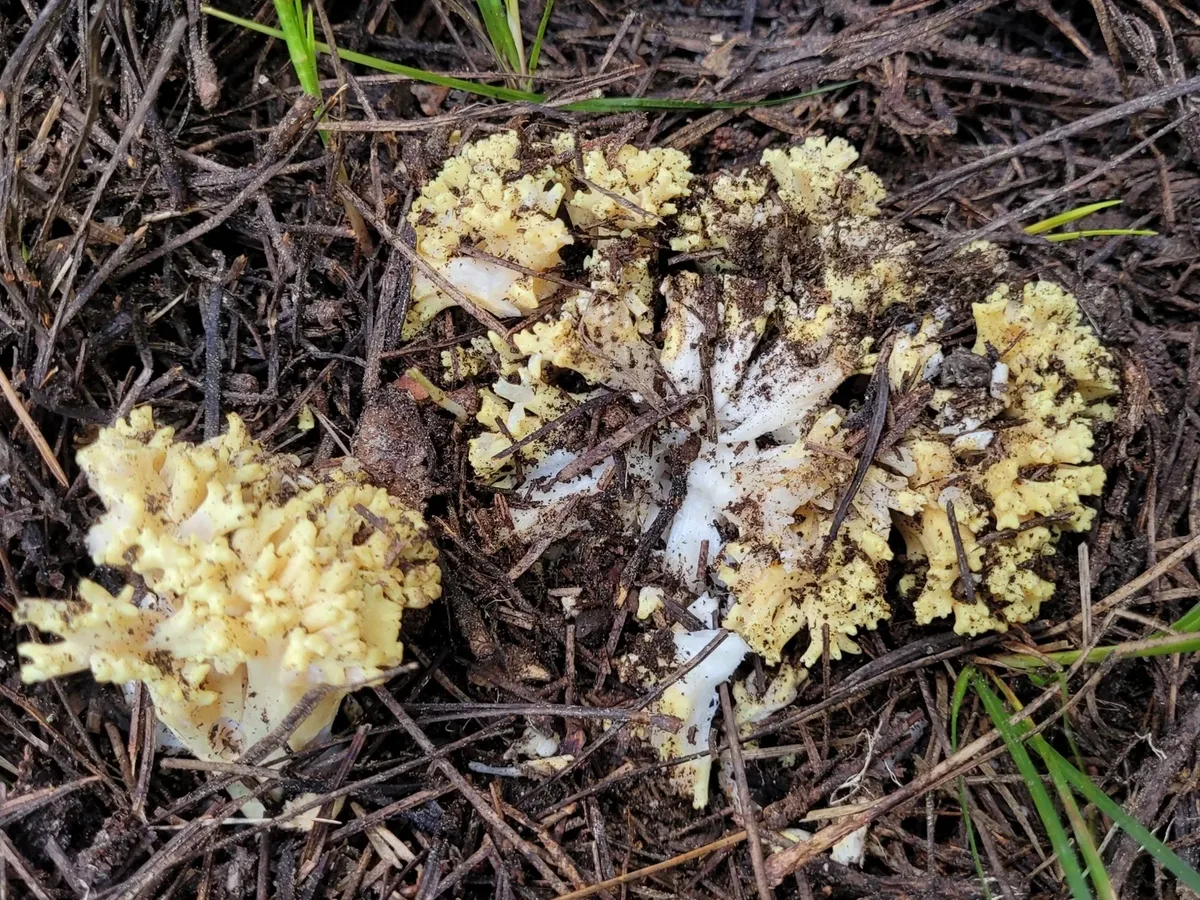
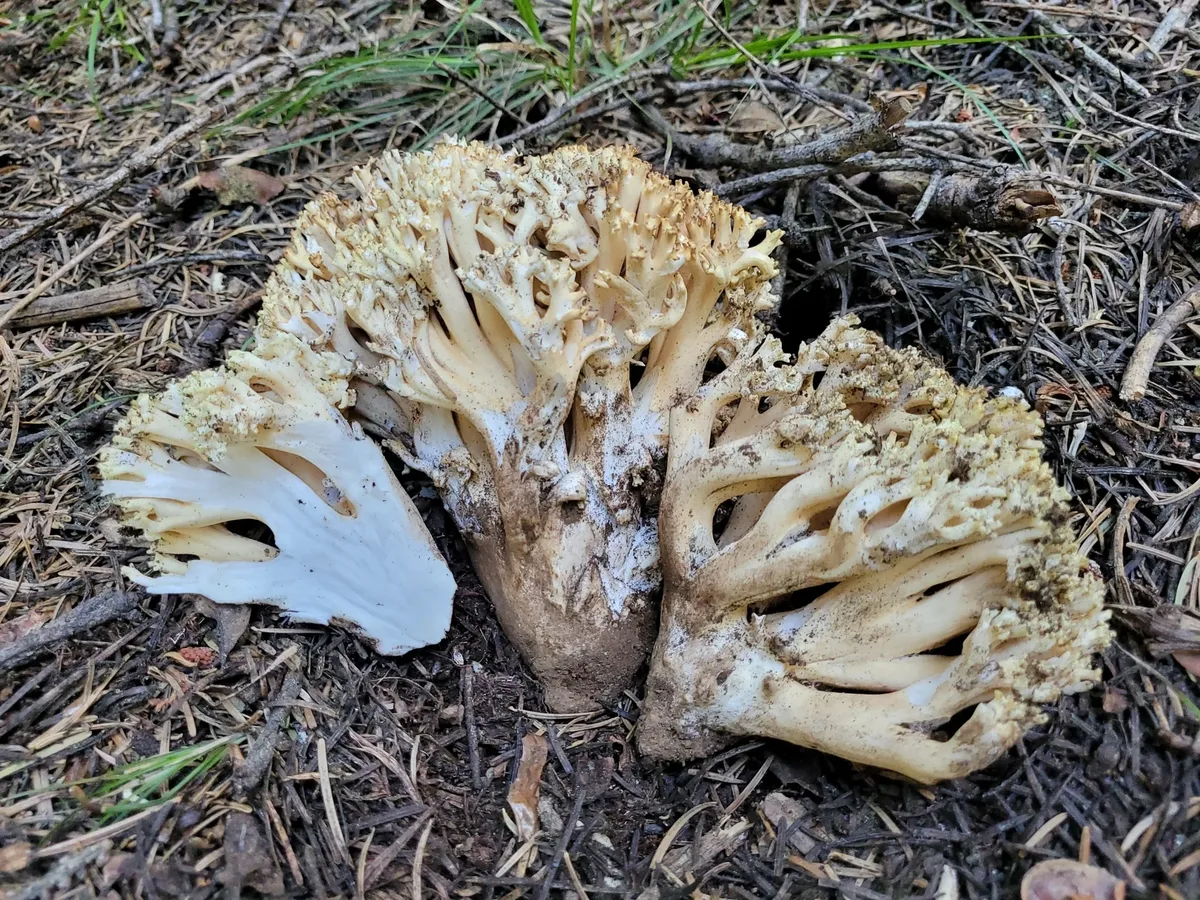
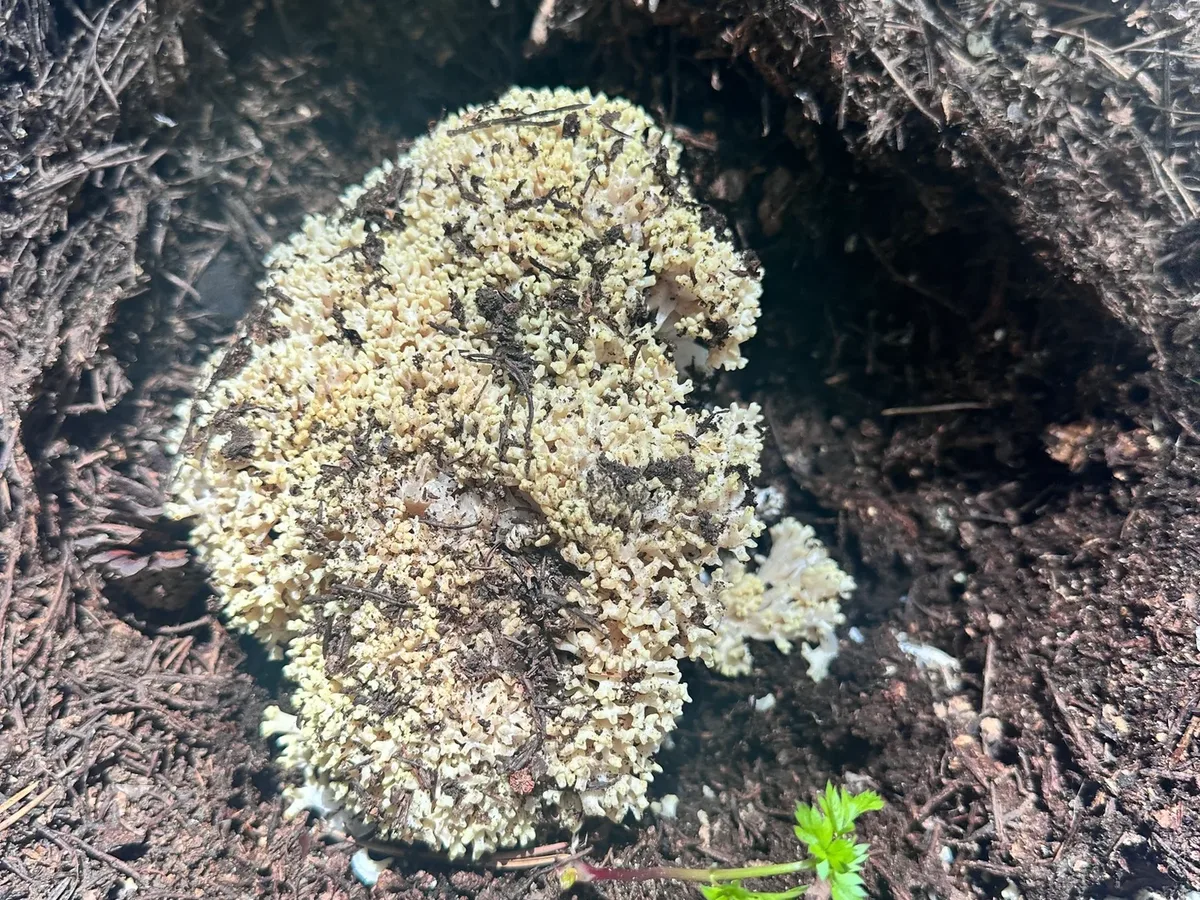
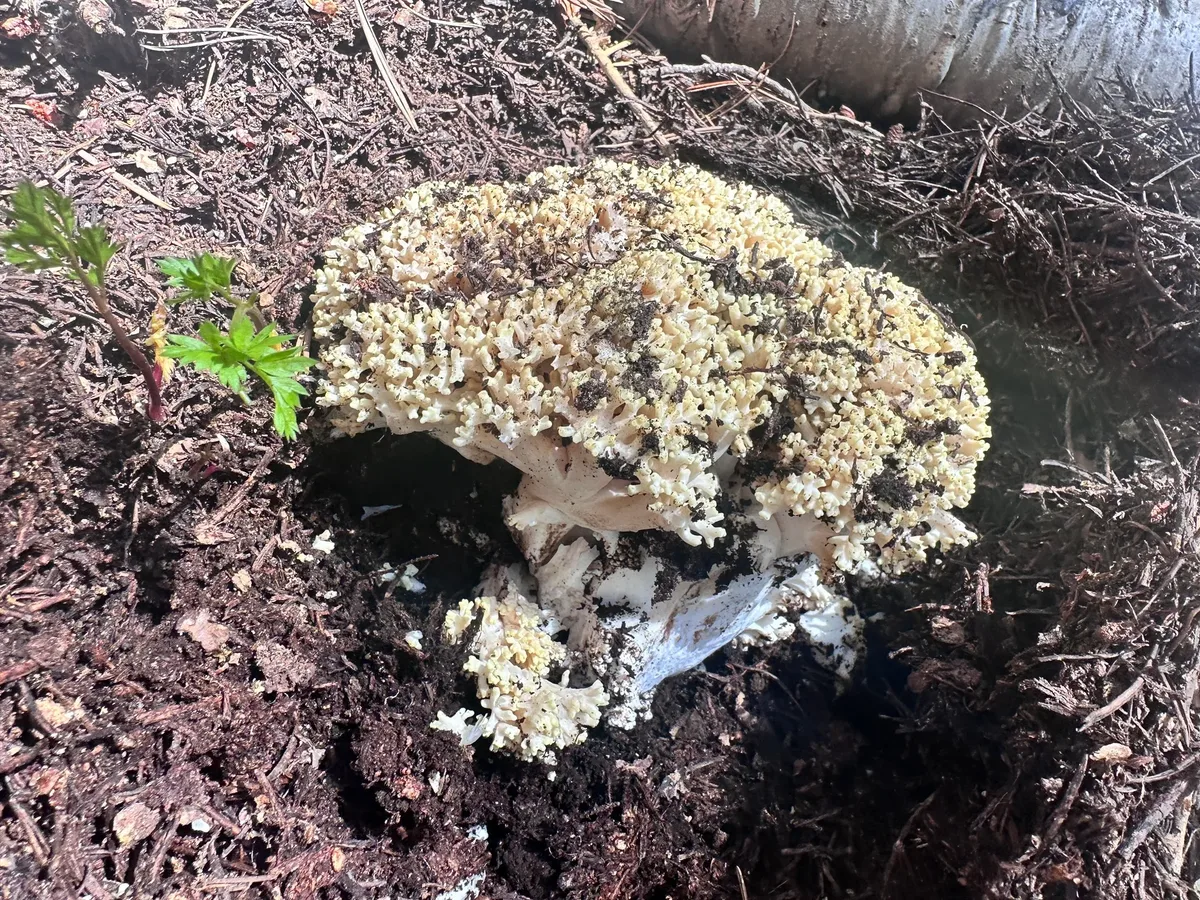
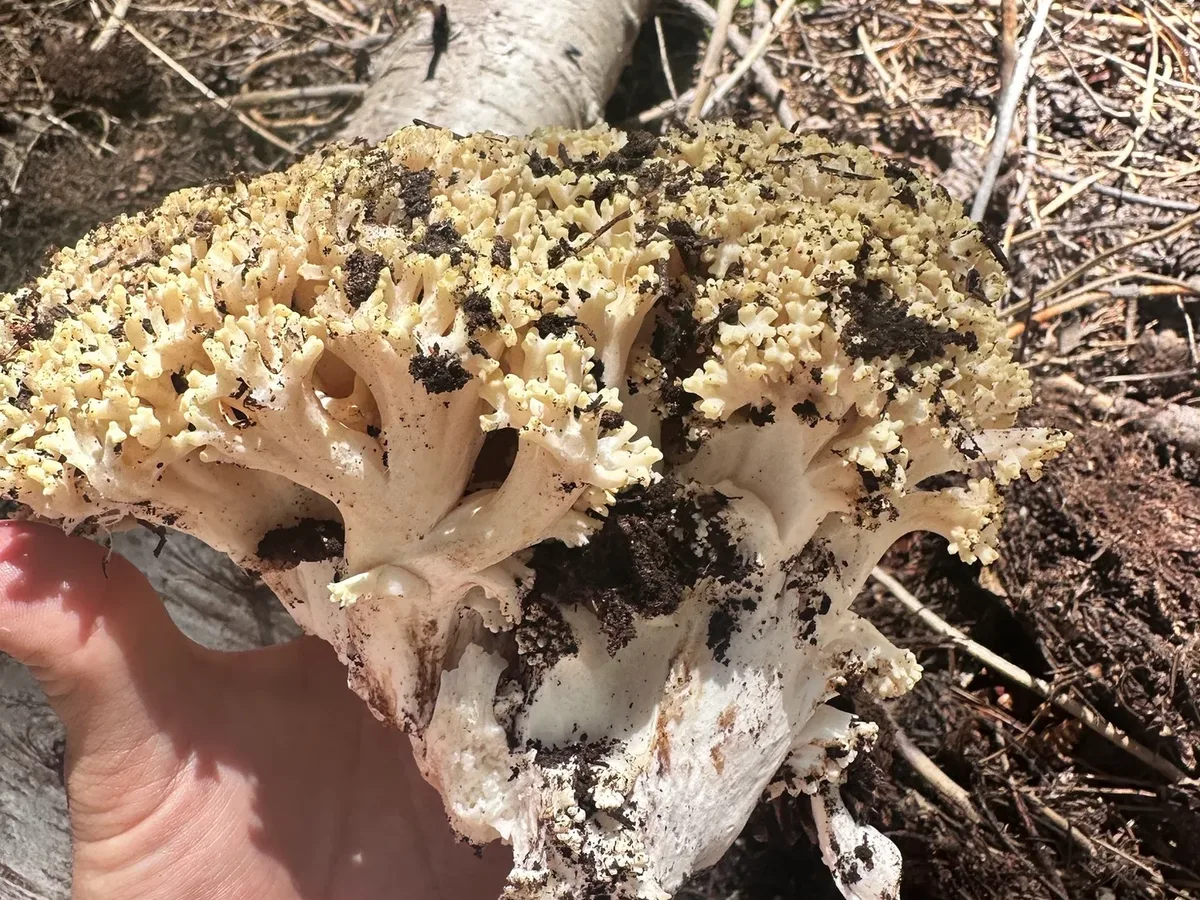
Ramaria rasilispora presents as a substantial, repeatedly branched coral fungus that can fill the palm of your hand or grow larger - 8-20 cm tall and nearly as wide, with a structure somewhere between a sea fan and a cluster of antlers. From a compact white to pale buff basal trunk, branches divide and redivide in 3-5 orders into a dense upright mass.
The colour throughout is a characteristic pale to moderate yellow - straw-yellow to ochre-yellow, sometimes with a slight buff tinge - generally a quieter, less vivid hue than the saturated golden-yellow of Ramaria largentii but more distinctly yellow than the whitish or cream-tan of some related species.
The tips are concolorous or very slightly paler and lack any contrasting colour: there is no pink, no salmon, no red, no orange. That absence of contrasting or warm-toned tip colour, combined with the pale straw-yellow main body, is the most useful gross field character.
The flesh is white, firm, and brittle in good specimens, snapping cleanly under light pressure rather than bending - that brittleness is characteristic of well-structured Ramaria in general and is a quality cue when collecting for the table.
The smell is mild and agreeable; the taste is mild to nutty when young.
The feature that technically defines the species - smooth to nearly smooth spores, as opposed to the distinctly warted-striate spores of most yellow Ramaria relatives - is a microscopic character invisible in the field, which means field identification in this species group should always be treated as provisional.
Where & when it grows
Habitat
Ramaria rasilispora belongs to the rich Ramaria flora of the Pacific Northwest's old-growth conifer forests - a region with more Ramaria species than almost anywhere else in the world, which itself tells you something about how deeply these fungi are woven into the ecology of the ancient fir and spruce woods.
The species forms ectomycorrhizal partnerships with the root systems of living conifers: primarily true firs such as Pacific silver fir (Abies amabilis) and noble fir (Abies procera) in mid-elevation Cascades, subalpine fir (Abies lasiocarpa) higher up, and Sitka spruce (Picea sitchensis) in coastal zones.
The mycelium lives perennially underground, exchanging water and mineral nutrients for tree-produced sugars - one of those quiet, long-term biological contracts that underpin the health of the whole forest.
Above ground, you will find this species in the humus-rich, structurally complex forest floor of undisturbed mature woodland, where duff layers many centimetres deep have been quietly accumulating for generations.
Young managed forests and clear-cut regrowth rarely support it; the fungal community these old-growth floors host takes a very long time to reassemble once disrupted.
When
The fruiting season aligns with the classic Pacific Northwest autumn mushroom window: late August through November, with the main flush in September and October.
The biological trigger is the arrival of the region's autumn rains after a typically dry Pacific Northwest summer. When those first substantial precipitation events - 25 mm or more over a week or two - reach soils that have cooled to the 8-15°C range, the mycelium responds.
Fruitbodies emerge and expand over the following one to two weeks, reaching full size on a roughly 7-14 day lag after the triggering rain.
At high-elevation montane sites, the season compresses; the window may be just four to six weeks before early frosts end it. At lower coastal elevations, where autumn rains arrive a little earlier and temperatures stay mild longer, good conditions can persist into November.
How it grows
The mycelium of Ramaria rasilispora is a perennial presence in the soil and root systems of its forest habitat, living year-round as an invisible partner of its conifer hosts.
The fruitbodies themselves are seasonal and short-lived. After triggering rainfall, a small pale nodule breaks through the duff surface and branches expand over 7-14 days into the full coral form - growing from the branch tips outward and upward with quiet speed when conditions are ideal.
Mature fruitbodies can persist for 1-3 weeks in cool, moist conditions before insect larvae, decay fungi, and desiccation take their toll.
Maggot infestation is a persistent problem with Pacific Northwest coral fungi; even visually sound specimens should be cut open at the base to inspect the interior before collecting.
Fruiting conditions
Fruiting is triggered by the first substantial autumn rainfall after the Pacific Northwest summer dry period, once soil temperatures have dropped into the 8-14°C range. A sustained precipitation event delivering at least 25 mm over 1-2 weeks is typically required to initiate a reliable flush. Fruitbodies emerge 7-14 days after the triggering rain. Peak conditions across most of the Cascade and Coast Range occur September through October; high-elevation sites may peak earlier and the season compresses more sharply.
Look-alikes
The Pacific Northwest hosts several yellow coral fungi that overlap in appearance with Ramaria rasilispora, and field separation is genuinely difficult without microscopy. The most important confusions are:
Ramaria largentii (Largent's coral) is the closest field lookalike - another large yellow coral of old-growth Pacific Northwest conifer forest. It has a brighter, more saturated golden-yellow to egg-yolk-yellow coloration compared to the softer straw-yellow of R. rasilispora, but this difference is subtle and variable.
The definitive separation is microscopic: R. largentii has distinctly warted-striate spores (10-16 × 4-5.5 µm) while R. rasilispora has smooth or nearly smooth spores (9-14 × 3-4.5 µm) that are also somewhat narrower.
R. largentii is considered a GI irritant by many sources and should be treated as suspect edibility; the edibility difference is a reason to try to separate them, even though field separation is imprecise.
Ramaria formosa (salmon coral) is the most dangerous confusion in a culinary context, as it is a confirmed gastrointestinal irritant causing significant diarrhea and cramping.
However, R. formosa is usually quite distinguishable: it has salmon-pink to coral-orange main branches with characteristically pale lemon-yellow to straw-yellow tips - the 'pink body, yellow tips' pattern. R. rasilispora is uniformly pale yellow throughout with no pink or salmon pigment.
Any coral with salmon or pink tones in the branches should immediately be excluded from consideration as R. rasilispora.
- Ramaria flaviceps has pale whitish to cream main branches with distinctly brighter yellow branch tips - a two-tone pattern opposite to the uniform pale yellow of R. rasilispora. Edibility suspect.
- Ramaria flava is a similar all-yellow coral primarily associated with European broadleaved forests (beech, oak); Pacific Northwest records under this name are likely different taxa. Large yellow corals in PNW conifer forest should not be assumed to be R. flava.
- Clavariadelphus truncatus (club coral) is unbranched or only sparsely forked - a thick single club rather than a multi-branched coral - and separated immediately by growth form.
Whitish to cream main body with vivid wine-red to reddish-purple branch tips when fresh - the deeply coloured red tips are unmistakable and immediately distinguish it from the pale-yellow R. rasilispora. A choice edible; no practical risk of confusion when tips are examined.
An unbranched or very sparsely forked single club form rather than an elaborately multi-branched coral; yellowish-ochre to buff in colour. Separated immediately by its simple, unbranched growth habit. Considered edible.
The closest field lookalike - another large yellow coral of old-growth PNW conifer forest. R. largentii typically shows a brighter, more saturated golden-yellow to egg-yolk-yellow colour; R. rasilispora is usually a softer straw-yellow or pale ochre-yellow. Definitive separation requires microscopy: R. largentii has distinctly warted-striate spores (10-16 × 4-5.5 µm); R. rasilispora has smooth or nearly smooth spores (9-14 × 3-4.5 µm) that are also narrower. R. largentii is considered a GI irritant and of suspect edibility - correctly separating the two matters for the table.
Has salmon-pink to coral-orange main branches with distinctly pale lemon-yellow to straw-yellow tips - the characteristic 'pink body, yellow tips' pattern. R. rasilispora is uniformly pale straw-yellow throughout with no pink or salmon pigment anywhere on fresh specimens. R. formosa causes significant gastrointestinal illness (pronounced diarrhea and cramping); any coral with pink or salmon branch coloration must not be eaten.
Has a distinctly two-tone pattern - pale whitish to cream main branches with conspicuously brighter yellow tips - the reverse of R. rasilispora's uniformly pale yellow coloration. Edibility suspect; avoid.
In the kitchen
Picking & cleaning
Collect only young, firm specimens with an intact, consistent pale yellow coloration and no signs of browning or softening at the branch tips, which indicate the onset of decay.
Before putting any specimen in your basket, cut the basal stipe open and inspect the interior: coral fungi are disproportionately susceptible to maggot infestation, and the tunnelling can be extensive while the exterior still looks pristine.
Heavily infested specimens are worthless for the table; partially infested ones should be trimmed aggressively or discarded.
- Cut at ground level with a knife rather than pulling, which disturbs the mycelium unnecessarily.
- In the field, brush away debris from the branches; at home, cut the coral into segments and rinse briefly under cold water.
- Use promptly - shelf life even under refrigeration is short, ideally no more than 48 hours.
Given that reliable species identification in this group requires microscopy, collect only in amounts you will use, leave a substantial portion, and accept that a provisional field ID - however careful - carries residual uncertainty in the Ramaria genus.
Cooking
Young, well-identified specimens of Ramaria rasilispora are a pleasant edible with a mild, faintly nutty flavour and a firm texture that holds up reasonably well to moderate heat.
Before cooking, cut the coral into smaller segments and check the interior and base for insect larvae; rinse under cold water and pat dry or shake off excess moisture.
Sautéing in butter or neutral oil over medium-high heat is the standard approach: work in batches so the pan is not crowded, which would cause steaming rather than browning. Cook until lightly golden at the edges and clearly tender throughout - approximately 5-8 minutes depending on piece size.
Season simply with salt and pepper; a little garlic, fresh thyme, or a squeeze of lemon suits the mild flavour well without overwhelming it. Works pleasantly in pasta, risotto, cream-based sauces, and egg dishes.
A brief blanch in well-salted boiling water (2-3 minutes, then drain) before the main cooking step can mellow any residual bitterness and improve texture in older or larger specimens.
Never consume raw. Use promptly; shelf life is short even refrigerated.
Good to know
Ramaria rasilispora is considered edible in the Pacific Northwest foraging literature (including the original descriptions by Marr and Stuntz, and subsequent guides such as Arora's Mushrooms Demystified), and correctly identified, thoroughly cooked specimens have a reasonable track record of safe consumption.
However, the Ramaria genus in the Pacific Northwest presents layered safety challenges that apply to this species:
- 1Microscopic ID required for certainty. The defining character of R. rasilispora - smooth spores - cannot be assessed in the field. Field identification as 'pale yellow coral in old-growth PNW conifer forest' is a reasonable working ID but not a confirmed species-level determination. The closest lookalike, R. largentii, is considered a GI irritant by many sources; misidentifying it as R. rasilispora is the primary risk.
- 2Confusion with Ramaria formosa. The toxic R. formosa (causes significant GI illness) must be positively excluded before eating any Ramaria. In R. rasilispora, the uniform pale yellow coloration with no pink or salmon tones anywhere on the branches is the key distinguishing feature: if there is any pink, salmon, or coral-orange pigmentation on the main branches, it is not R. rasilispora.
- 3Always cook thoroughly. No Ramaria species should ever be eaten raw; raw consumption reliably produces GI upset across the genus. Thorough cooking - sautéing until clearly tender, not merely briefly warmed - is essential.
- 4First-trial moderation. Even with correct identification and adequate cooking, eat a modest portion first and wait 12-24 hours before consuming more. Individual sensitivity to Ramaria species varies.
- 5Avoid if vulnerable. Children, pregnant individuals, and anyone with GI sensitivities should avoid all Ramaria species.
A reference guide - never an edibility guarantee. When in doubt, leave it out.