Yellow-reddening coral
Ramaria flavorubescenssyn. Clavaria flavorubescens Atk., Clavariella flavorubescens (Atk.) S. Imai
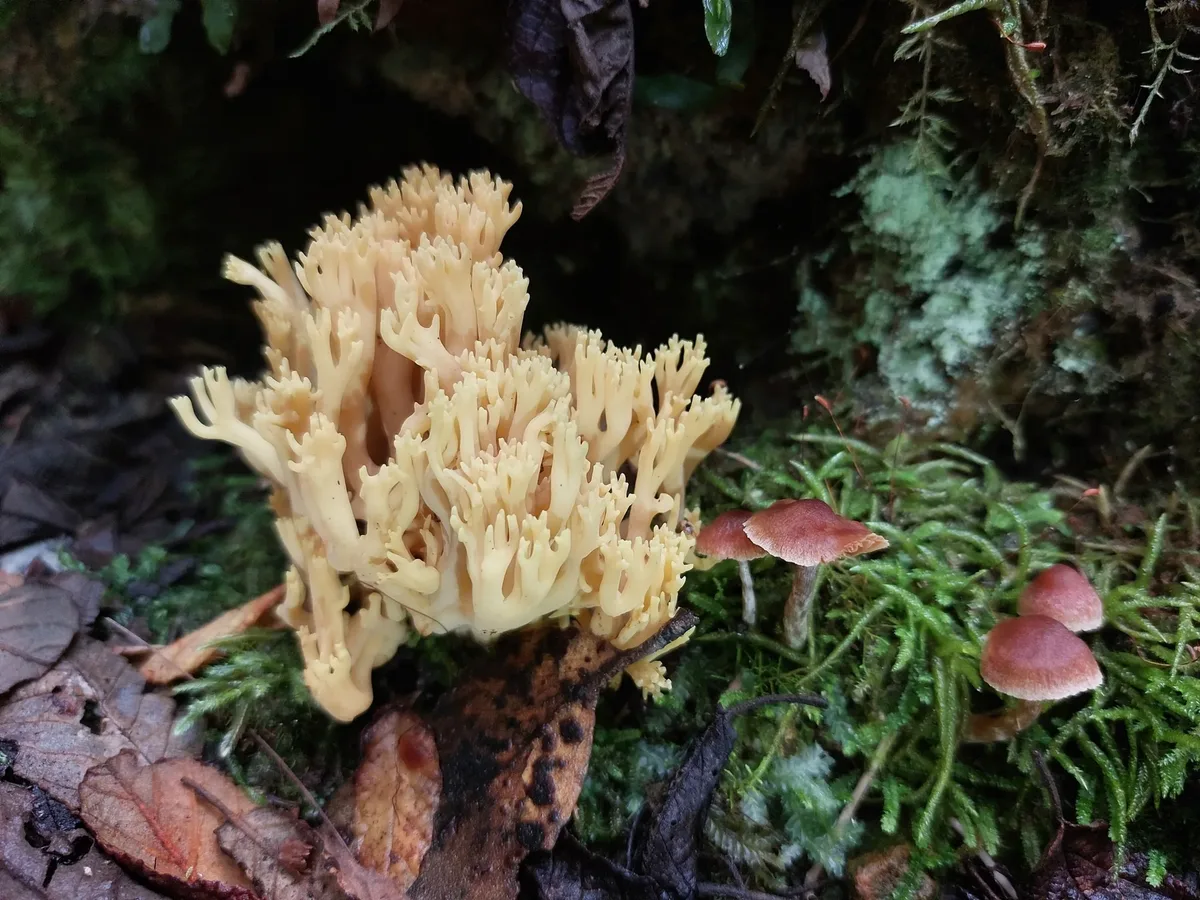 Atlas of Living Australia (CC0)
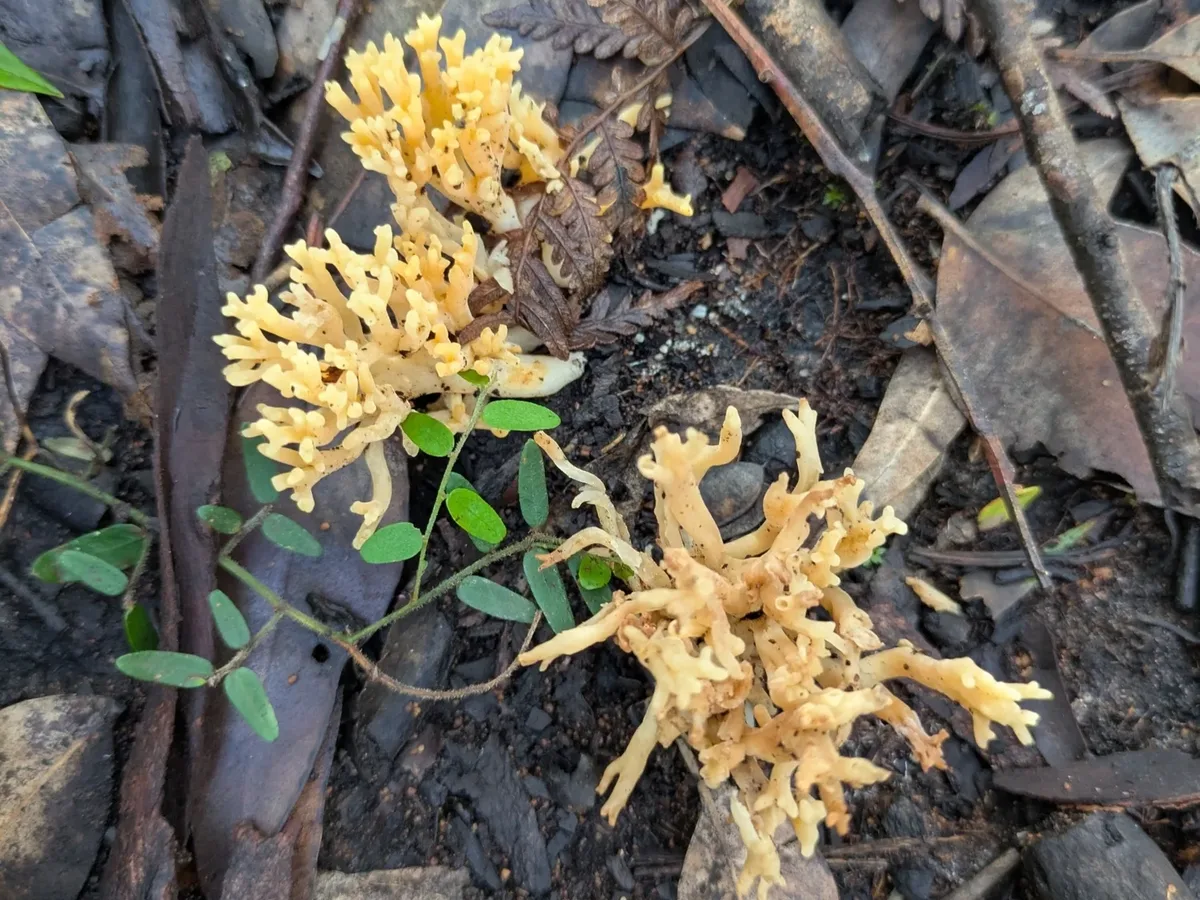 Atlas of Living Australia (CC0)
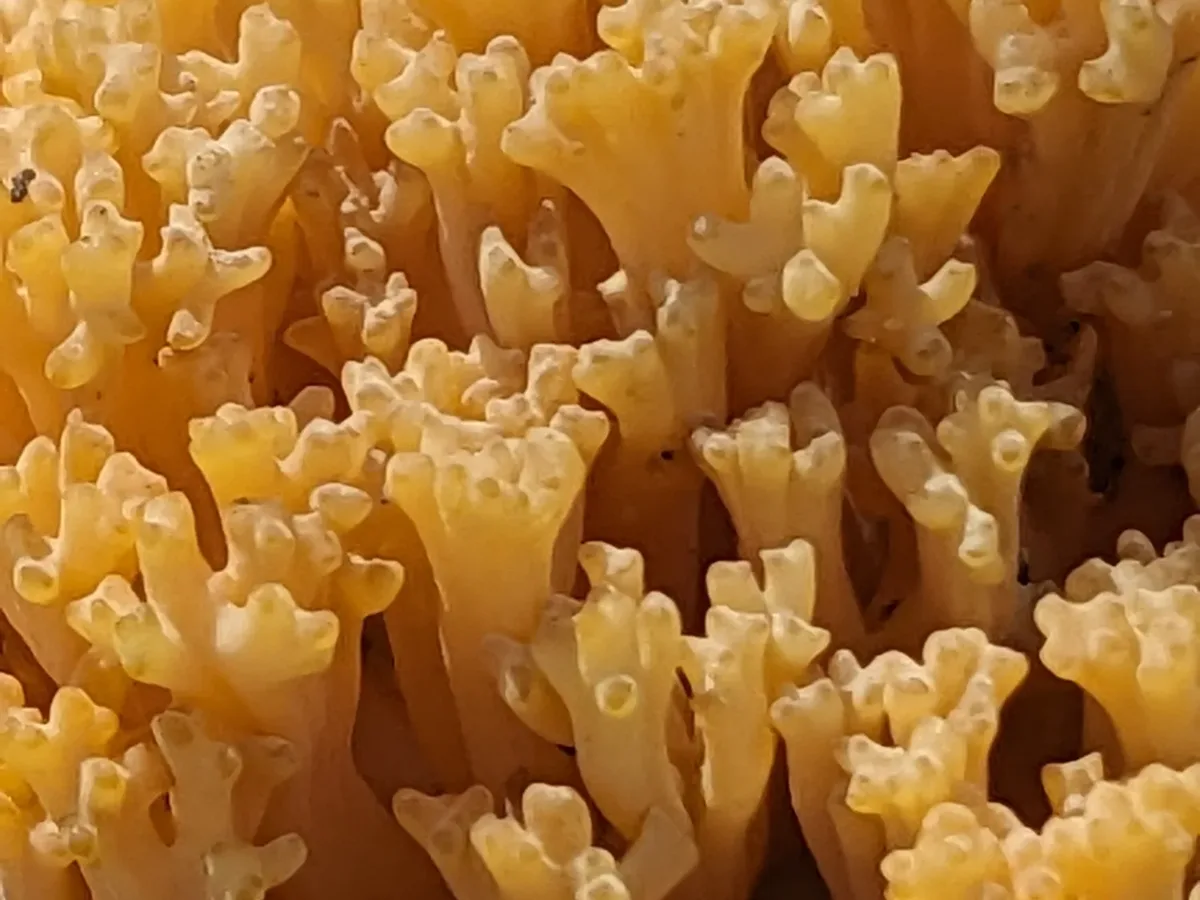 Atlas of Living Australia (CC0)
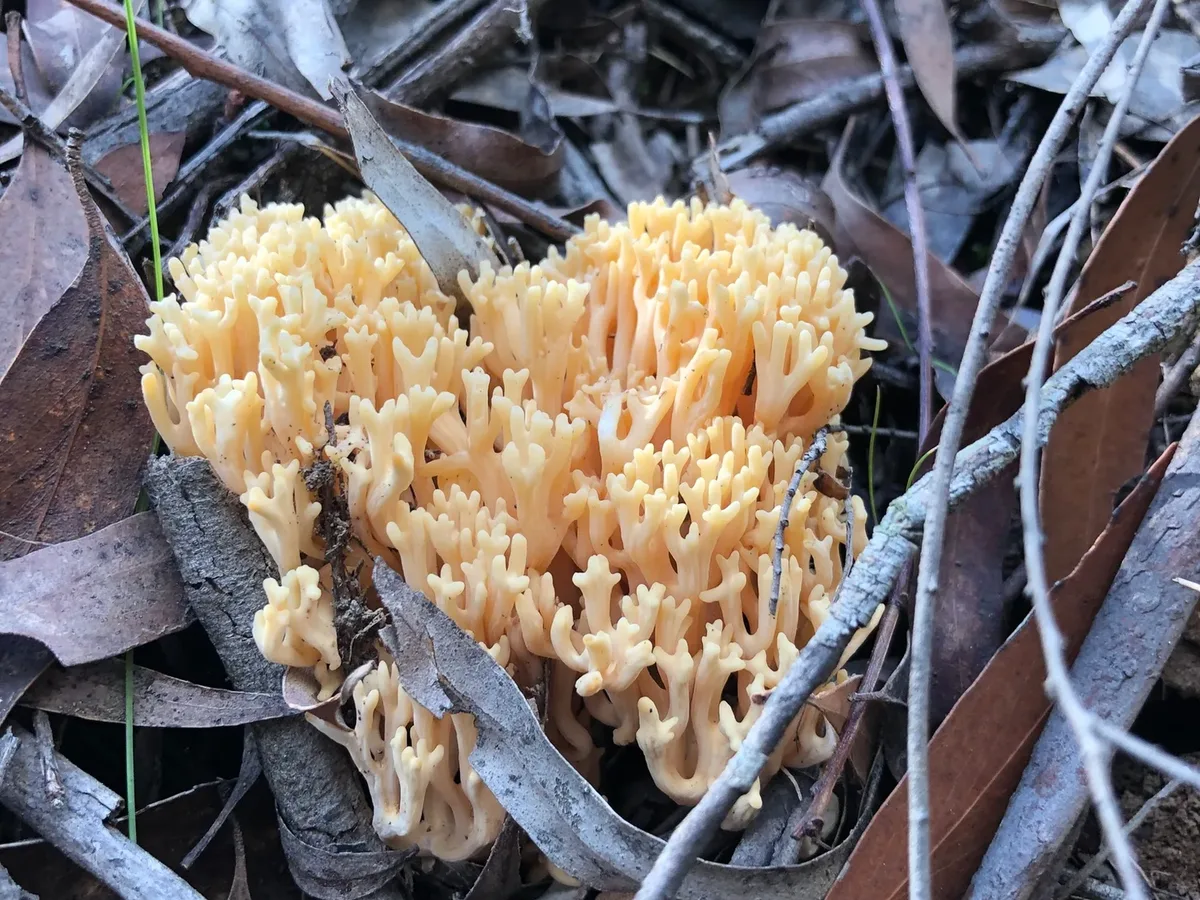 Atlas of Living Australia (CC0)
 Atlas of Living Australia (CC0)
 Atlas of Living Australia (CC0)Atlas of Living Australia (CC0)Atlas of Living Australia (CC0)
Edible only with the right preparation - or safe for some people but not others. Learn the caveats first.
How to recognise it
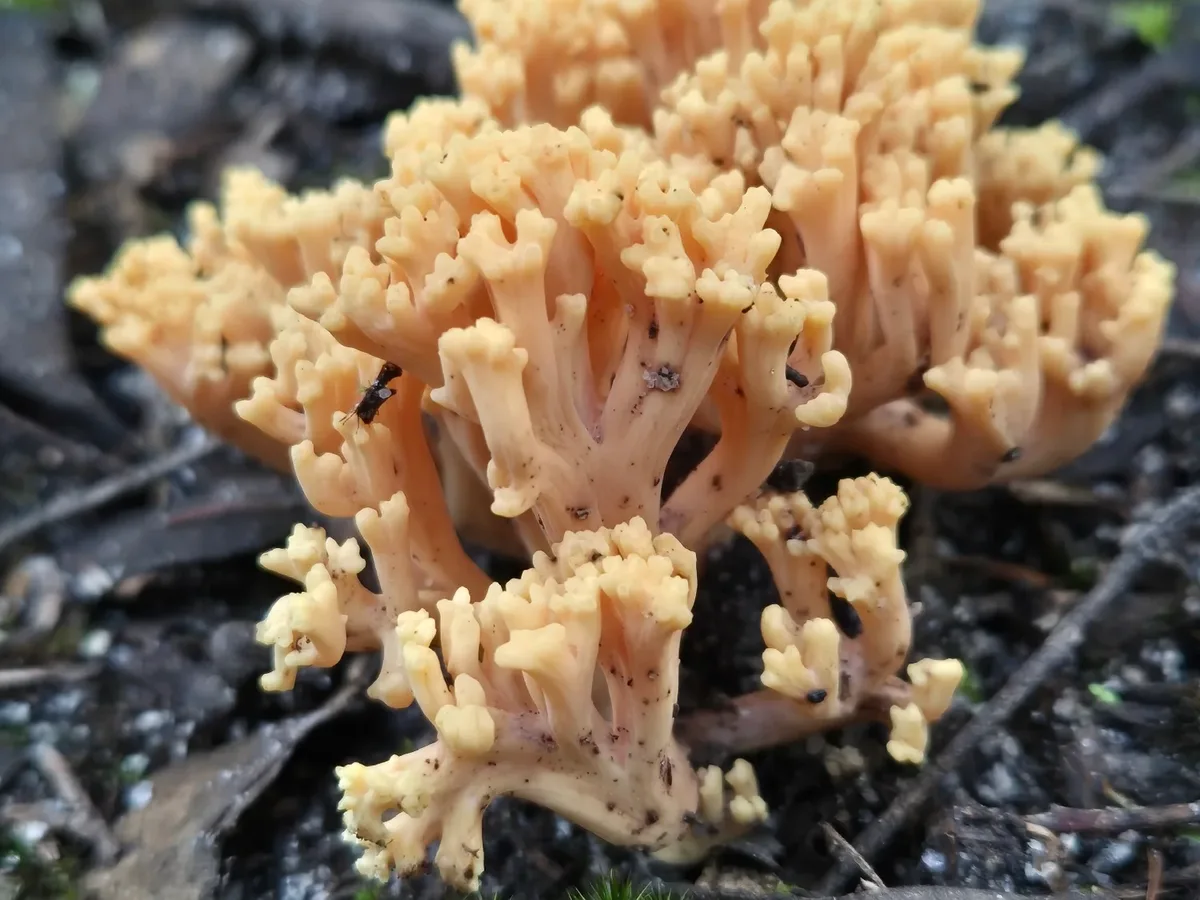
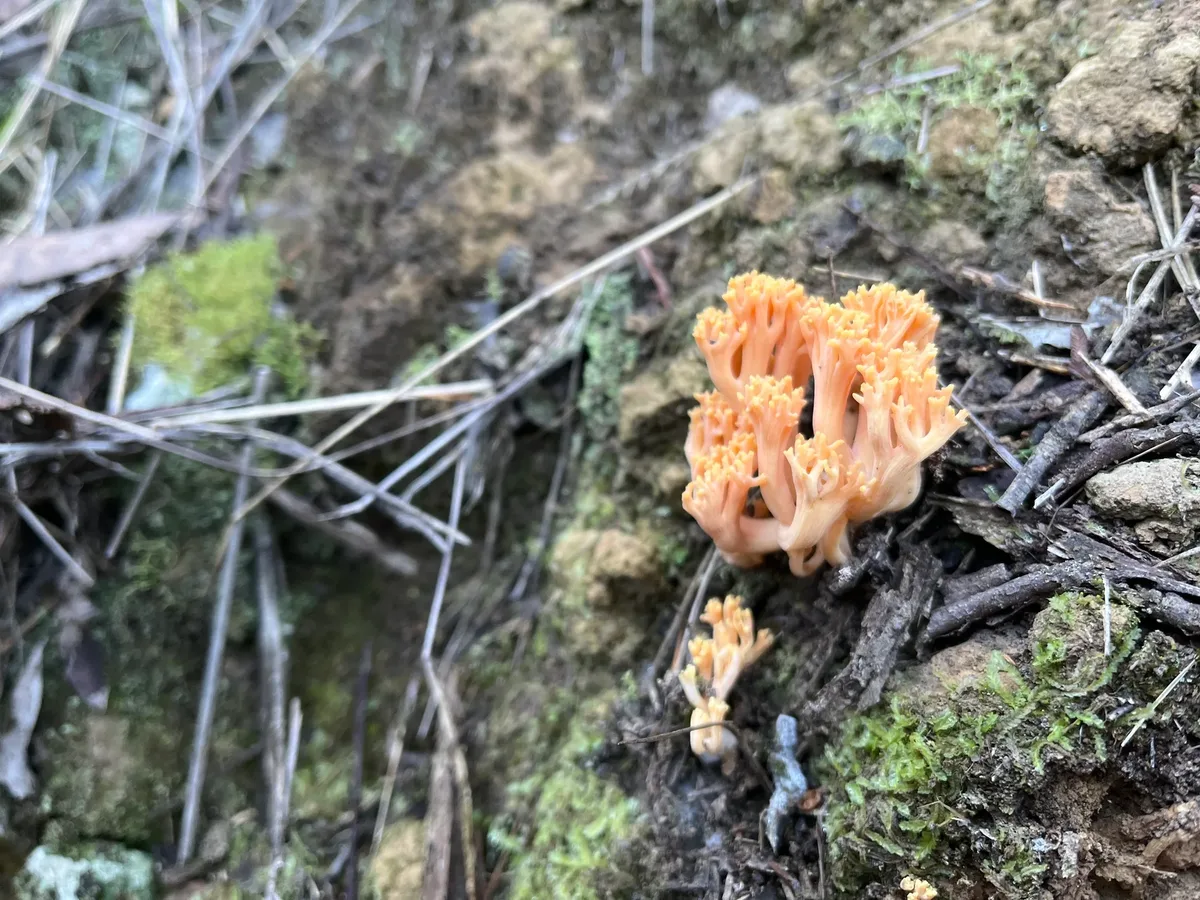
Ramaria flavorubescens is one of the many coral fungi of the genus Ramaria - a group that grows in upright, repeatedly branched, antler- or tree-like clusters and is one of the more visually dramatic families of forest fungi.
In youth this species is a characteristic bright sulfur-yellow to lemon-yellow, the forking branches rising from a stout pale-cream stipe in a tidy, bush-like arrangement. Young fruitbodies in good condition are handsome: clean, brittle, the colour of fresh butter or a ripe lemon, with blunt, even branch tips.
What distinguishes this species within its complex is what happens next: as the fruitbody ages, or in areas that are bruised, weathered, or subject to insect damage, the yellow progressively shifts toward pinkish-orange, brick-red, or rust. This reddening process - flavus (yellow) + rubescens (becoming red) - gives the species its scientific name and is its most diagnostic character. The shift can be subtle in younger material but becomes pronounced in older specimens, particularly at the stipe base.
Flesh
White, firm, brittle, and clean-breaking.
Smell & taste
Smell is agreeable and faint; taste mild in young specimens but potentially developing bitterness or slight acridity with age.
Spores
Spore print pale to medium ochre. Under the microscope the spores are narrowly cylindrical to subfusiform, finely warted-striate, 8-13 × 3.5-5 µm, consistent with other members of the genus.
Where & when it grows
Habitat
This is a mycorrhizal forest fungus that lives in partnership with the roots of trees, making it entirely dependent on living forested habitat.
In South America - particularly the highland forests of southern Brazil (Rio Grande do Sul, Santa Catarina), the Atlantic Forest remnants, the Araucaria angustifolia forests of the southern cone, and the montane Andean mixed forests of Argentina and Colombia - it occupies the cool, moist forest floor under Araucaria and mixed conifers, fruiting in the austral cool season when temperature and moisture conditions align.
In North America it appears in comparable habitats under pines, hemlocks, and spruces.
Look for it in mature, relatively undisturbed forest with deep humus: it is a fungus of established ecosystems, not recently cleared or replanted ground.
The Araucaria forests of South America, where this species most reliably occurs, are threatened ecosystems now occupying a small fraction of their historic range, making encounters with Ramaria flavorubescens increasingly precious and worth photographing rather than harvesting.
When
In the southern hemisphere the fruiting season tracks the austral autumn and early winter. The first significant fruitbodies appear after the late-summer heat breaks, typically in April in southern Brazil and northern Argentina.
Peak fruiting is in May and June, when overnight temperatures drop consistently below 12-14 °C and steady rainfall moistens the deep humus. By August in most locations the season is drawing to a close.
In the higher Andean sites and at greater southern latitudes, the season may start earlier (March) and finish later (September).
In North American populations the equivalent season is late summer to autumn (August-October), driven by the same logic of cooling temperatures after summer warmth combined with autumn rainfall. Individual fruitbodies last 1-2 weeks under good conditions; frost kills them quickly.
How it grows
Fruiting bodies emerge singly or in small groups of 2-3 from the forest floor, arising from a shared mycelial base that is bound into the root systems of the associated host trees.
The stipe pushes up first as a pale, compact nub; branches develop and fork rapidly over several days once the stipe is established. The whole fruitbody reaches full size in roughly 5-10 days after the initial emergence.
The mycelial network is perennial, and productive forest patches may yield fruitbodies in consecutive years if the host tree community remains intact and conditions are suitable. As a mycorrhizal species, it cannot be cultivated in isolation from its tree partner.
Fruiting conditions
In South America, fruiting is triggered by the arrival of the austral cool season (March-May) when temperatures drop after the summer maximum and rainfall remains adequate or increases. In highland Araucaria forest, optimum conditions are soil temperatures 8-15 °C with 20+ mm of rainfall over the preceding two weeks; first fruitbodies typically appear 7-14 days after triggering rains. In North America the equivalent trigger is the onset of autumn cool-down (August-September) with adequate soil moisture. Fruitbodies are sensitive to frost and dry conditions.
Handle with care
Toxin
No specific toxic compound has been definitively isolated from Ramaria flavorubescens. The caution classification is precautionary, derived from the genus's poor overall record and the chemical uncertainty around the reddening pigments.
In confirmed toxic relatives, gastrointestinal cathartic symptoms have been attributed to emodin (an anthraquinone) and sesquiterpene compounds (ramarin A and B). Whether R. flavorubescens contains these or related substances is unknown.
The reddening reaction itself may involve phenol-oxidase activity on yellow flavonoid pigments, producing reddish quinone derivatives - a class of compounds with known mucosal irritant potential. Until a rigorous chemical and clinical study is conducted, the toxin situation remains unresolved.
Symptoms
If gastrointestinal upset follows ingestion, expect nausea, intestinal cramping, watery diarrhoea, and possibly vomiting, typically with onset 1-3 hours after eating.
Symptoms are generally self-limiting in healthy adults who consume small quantities and resolve within 12-24 hours with rest and oral rehydration.
Larger quantities or consumption by vulnerable individuals (children, elderly, pregnant women, those with digestive or renal disease) carry a higher risk of significant fluid and electrolyte loss, warranting medical attention.
If symptoms are severe, persist beyond 24 hours, or include neurological signs (which are not expected with a GI irritant but signal misidentification with a more serious species), seek emergency medical evaluation immediately and report the species consumed.
Look-alikes
Coral fungi of the genus Ramaria form one of the most challenging identification groups in mycology, with numerous species sharing broadly similar branching forms in yellow, ochre, orange, pink, and white colour ranges. Several species are known or suspected to be toxic.
The most important lookalikes for Ramaria flavorubescens are:
- Ramaria formosa (Salmon coral, Beautiful clavaria) is a confirmed toxic species causing gastrointestinal cathartic symptoms. R. formosa has salmon-pink to coral-orange main branches with lemon-yellow tips - the colour relationship is the reverse of R. flavorubescens (yellow body becoming pinkish-red versus pink body with yellow tips), but in intermediate or aged specimens of either, this distinction can blur. Any pink-branched coral with yellow or yellowish tips in forest should be treated as potentially R. formosa.
- Ramaria flava (Yellow coral) is very similar when young, with uniform bright sulfur-yellow branches and blunt tips, but R. flava does not develop the progressive reddening-orange tints that characterise R. flavorubescens; R. flava ages toward buff and ochre rather than toward pinkish-red or rust. Both are of uncertain edibility and treated as caution species in this guide.
- Ramaria aurea (Golden coral) is similarly bright yellow throughout, sometimes with deeper chrome or orange-yellow tones, and is associated with conifers; it does not develop the reddening characteristic and is also of uncertain edibility.
- Ramaria subaurantiaca and related neotropical species in South America can appear very similar in young stages; the South American Ramaria flora is less well taxonomically resolved than the European one, and determination to species should be considered tentative in the field without microscopy.
- Ramaria botrytis (Cauliflower coral) is separated immediately by its distinctive wine-red to carmine-purple branch tips against a pale cream body - a completely different colour pattern.
- Ramaria pallida (Pale coral) is whitish to cream throughout; known to be toxic.
In any Ramaria identification, particularly in South America where many species are incompletely described, the advice of a specialist mycologist or a verified local herbarium record should be sought before any consumption.
Why it matters
The direct danger from correctly identified Ramaria flavorubescens is low to moderate: it is not a confirmed lethal species and has been consumed without reported serious harm in parts of North America and South America.
However, the real danger lies in the difficulty of identification in the field - particularly in the less well-documented South American Ramaria flora - and in the risk of consuming a more toxic species (especially R. formosa) under misidentification.
Any person collecting yellow coral fungi in South American highland forests should apply strict caution to the whole exercise, not just to this species.
There are no deadly lookalikes specifically associated with this species, but the broader coral-fungus group is sufficiently treacherous that deadlyLookalike is false only in the strict sense: no species that is definitely deadly is the primary confusion species here, though the confirmed-toxic R. formosa is in the same habitat and growth-form range.
Cream to pale ochre main body with very distinctive wine-red to carmine-purple branch tips in fresh specimens - an unmistakably different and brighter colour pattern from R. flavorubescens. Edible and choice. The deep red-purple (not rust-orange) tips and pale cream body are diagnostic.
Uniformly bright golden- to chrome-yellow, sometimes with deeper egg-yolk tones, without developing reddening tints on aging. Tends toward conifer association. Edibility uncertain; treat as suspect. Can appear very similar to young R. flavorubescens before the reddening develops.
Uniformly pale cream to whitish-yellow throughout, lacking the vivid sulfur-yellow of young R. flavorubescens and not developing reddening. Often has a slightly unpleasant or farinaceous smell. Toxic - causes gastrointestinal symptoms. Separated by its consistently pale, almost white overall colour.
The most important toxic confusion species. R. formosa has salmon-pink to coral-orange main branches with distinctly lemon-yellow tips - the pink-body-yellow-tip pattern is the opposite of R. flavorubescens (yellow body developing red-orange tints). In aged or weather-faded specimens the colour contrast can narrow and confusion becomes possible. R. formosa is a confirmed gastrointestinal toxin causing profuse watery diarrhoea and intestinal cramping; cooking does not neutralise the toxins. Key separator: in R. formosa the tips are conspicuously yellow-pale against a clearly pink or salmon body; in R. flavorubescens the reddening develops from the base upward in aged material and the whole body shifts toward rust-orange, while tips are last to redden. When in doubt, do not eat any pinkish-tinted coral fungus in the same habitat.
The Ramaria flora of South America includes numerous incompletely described species, some of which overlap with R. flavorubescens in colour, form, and habitat. Without microscopic examination and comparison with type specimens or documented regional keys, field identification to species in the neotropical Ramaria complex should be considered tentative. Any yellow or yellow-reddening coral fungus in South American forest should be treated as potentially toxic until proven otherwise.
Nearly identical in young yellow stage. R. flava does not develop the characteristic pinkish-red or rust-orange reddening with age - it ages toward ochre, buff, or pale tan rather than toward reddish tones. The two species share the same uncertain edibility status and both warrant caution; confusion between them is not dangerous in a differential sense, but neither should be eaten casually.
In the kitchen
Picking & cleaning
Ramaria flavorubescens is treated with caution in this guide. While North American field literature has historically listed it as edible - and it is sometimes collected and eaten in parts of South America where Ramaria coral fungi have a tradition of culinary use - the evidence base is thin, and several closely related yellow-reddening Ramaria species have caused gastrointestinal upset.
The reddening chemistry of this species group (possibly involving anthroquinone-type or sesquiterpene-type compounds related to those found in the confirmed-toxic Ramaria formosa) is not fully characterised, and no rigorous controlled study of its toxicological safety has been published.
The group is also genuinely difficult to identify: many yellow and yellow-reddening Ramaria intergrade, and collectors even with experience can confuse them.
For these reasons, the recommended approach is to observe, photograph, and leave this species in place.
If gathering for any purpose:
- Collect only young, firm, bright-yellow specimens that are beginning to show the characteristic reddening but are still firm and fresh; reject any soft, old, insect-ridden, or very reddened material entirely.
- Never eat raw.
- Try only a tiny amount on first encounter.
- Do not collect from highly protected or fragile Araucaria forest patches where any disturbance to the ecosystem is undesirable.
Cooking
Not recommended as a regular or casual food.
If an experienced forager with a confident and verified identification elects to prepare this species, the following applies:
- Use only young, firm, bright-yellow fruitbodies in fresh condition; discard any material that is soft, heavily reddened, insect-damaged, or past its peak.
- Separate the branches, rinse thoroughly under cold running water, and check for hidden insect larvae.
- Always cook thoroughly - no Ramaria should ever be consumed raw.
- Blanching briefly in salted boiling water and discarding the water before the main cooking step reduces any bitter or irritant compounds present.
The mild flavour suits butter-sautéing, cream-based sauces, soups, and stir-fries.
Given the precautionary status, eating a small test portion on the first occasion and waiting 24 hours before eating more is strongly advised. Do not mix this species with other unlabelled Ramaria collections.
Good to know
The safety profile of Ramaria flavorubescens is incompletely understood, and this entry accordingly classifies the species as CAUTION. The grounds for caution are:
- 1The species belongs to a genus with a poor overall edibility record - Ramaria contains several confirmed toxic species (notably R. formosa and R. pallida) and many more of uncertain status.
- 2The reddening reaction that defines this species is caused by pigment chemistry that may overlap with the anthraquinone and sesquiterpene compound classes identified in toxic relatives; no clean bill of health from controlled toxicological study exists.
- 3In South America the broader Ramaria flora is incompletely described, creating real risk that what a field forager identifies as R. flavorubescens is in fact a different, more toxic species.
- 4Several sources in the older North American literature that list this species as 'edible' do not provide accompanying toxicological data, and more recent mycological opinion has moved toward greater caution with yellow Ramaria as a group.
- Never eat any Ramaria raw.
- Always cook thoroughly.
- Eat small quantities on first trial and wait 24 hours before consuming more.
- Discard any specimen showing softening, unpleasant smell, or heavy insect damage.
- Children, pregnant women, the elderly, and immunocompromised individuals should avoid all Ramaria species without exception.
A reference guide - never an edibility guarantee. When in doubt, leave it out.