Yellow coral
Ramaria flavescenssyn. Clavaria flavescens Schaeff., Ramaria flava var. flavescens (Schaeff.) R.H. Petersen
 © Allar Antson (CC BY-SA)
 © Perry Gunnar Larsen (CC BY)
 © Rune Solvang (CC BY)
 © Rune Solvang (CC BY)
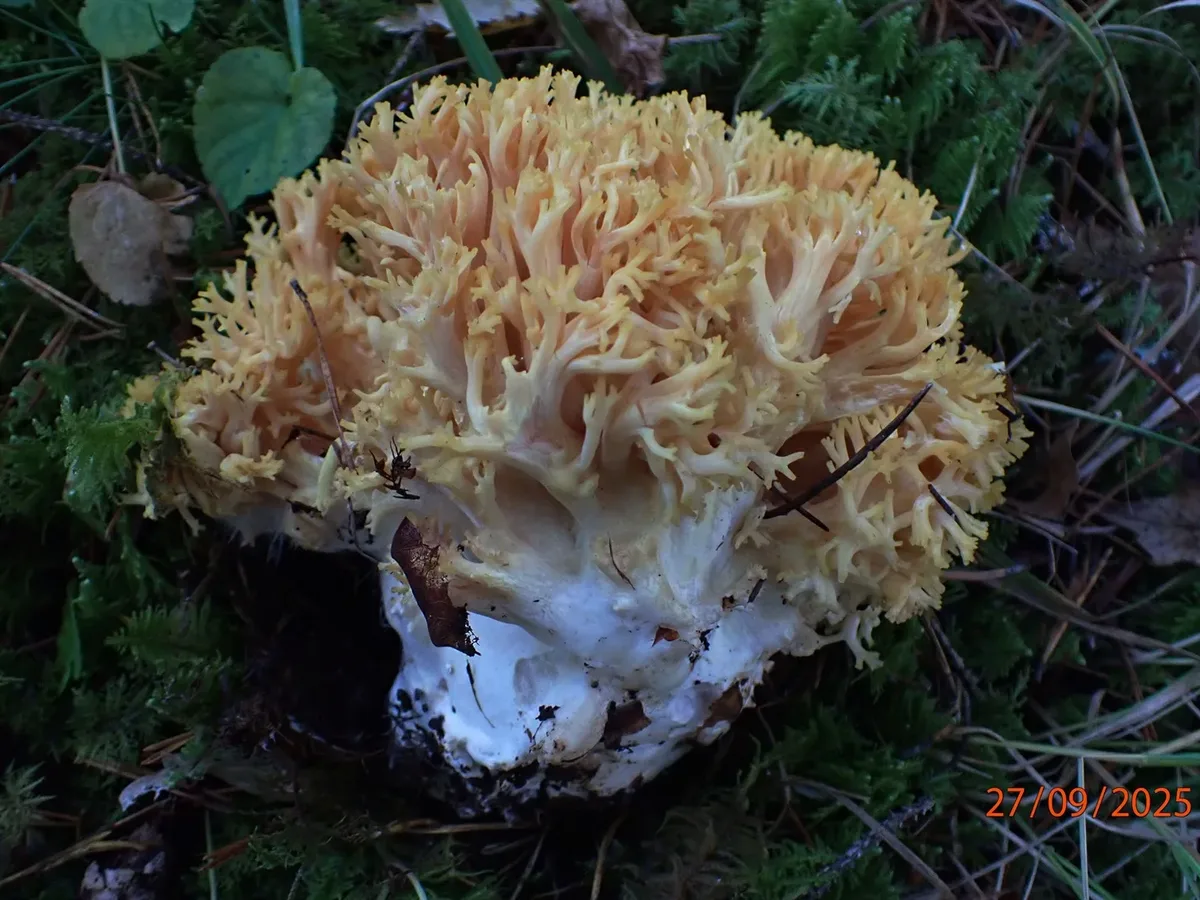 © Tove Jacobsen (CC BY)
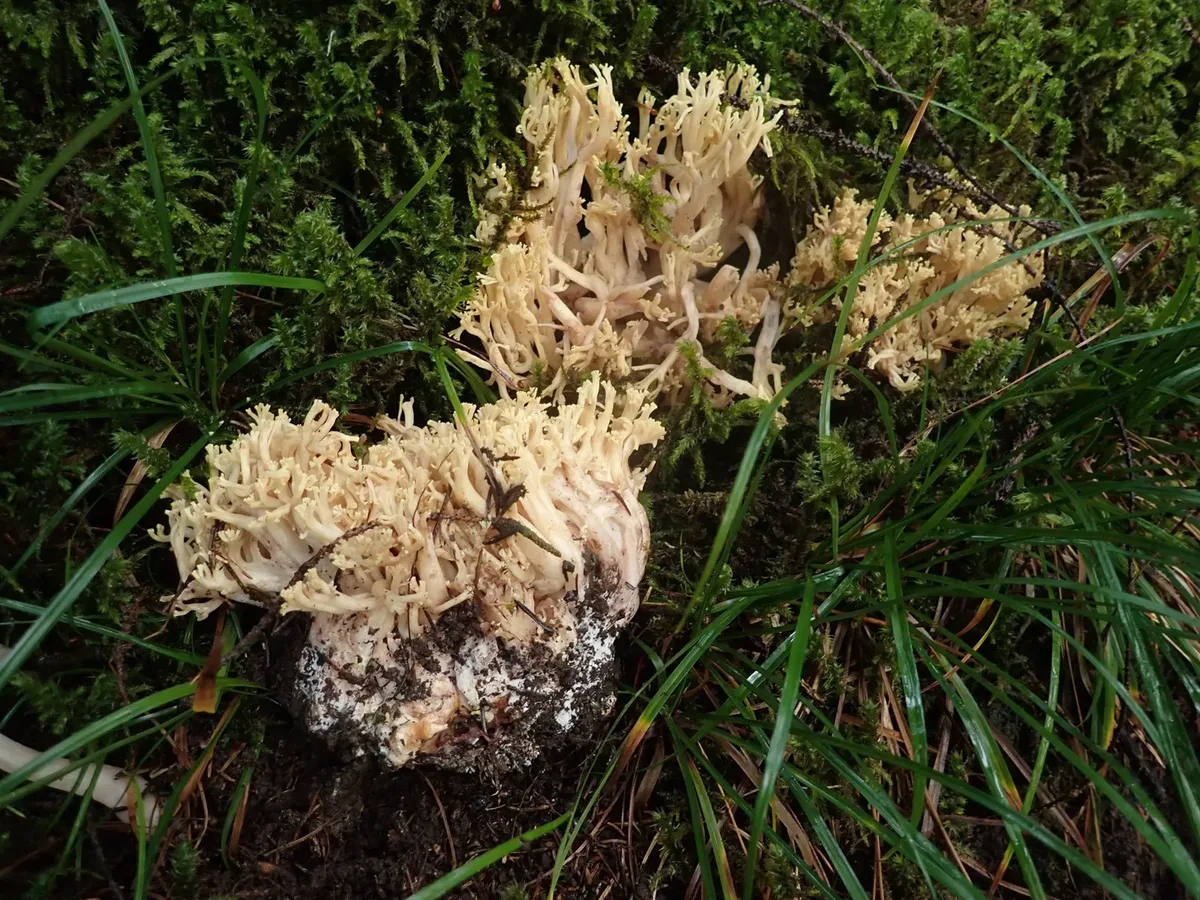 © Rune Solvang (CC BY)
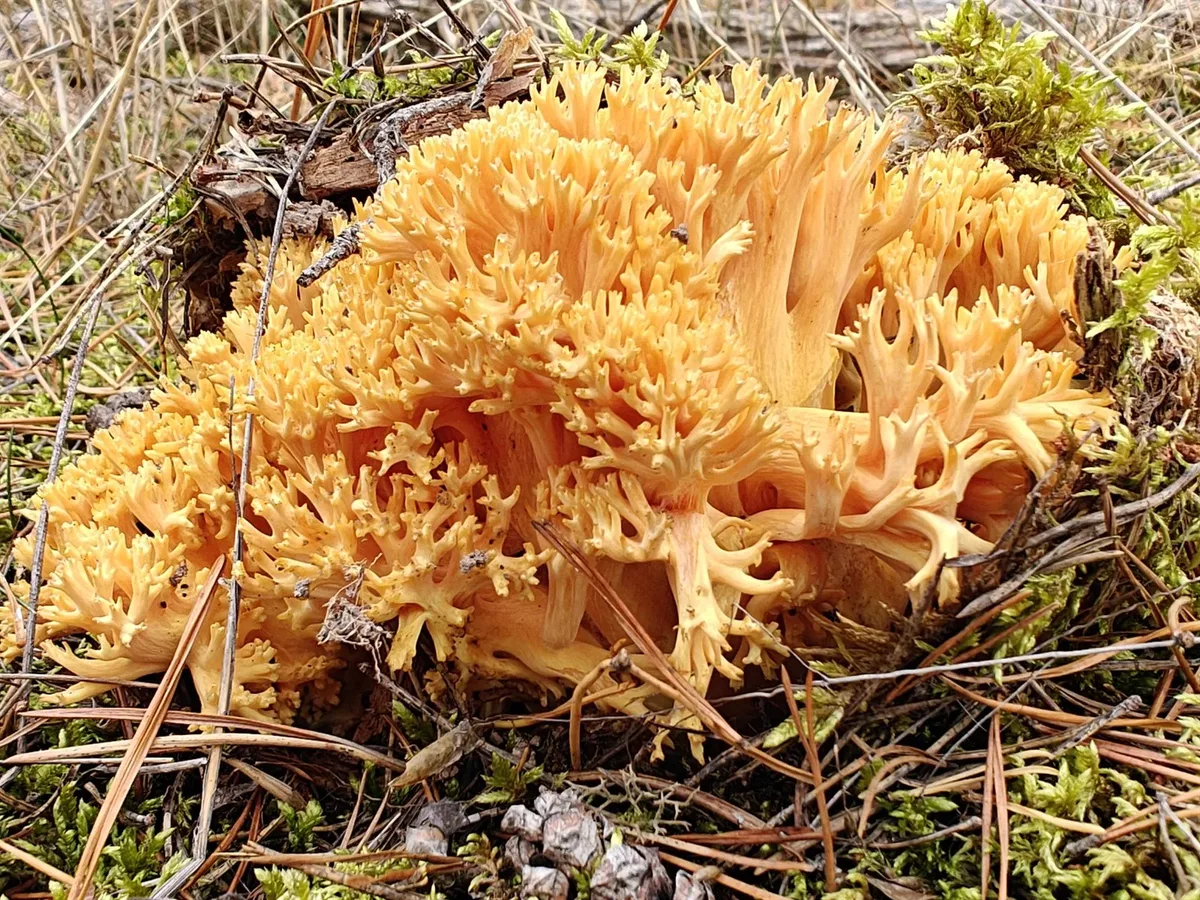 © Jostein Elvestrand (CC BY-SA)
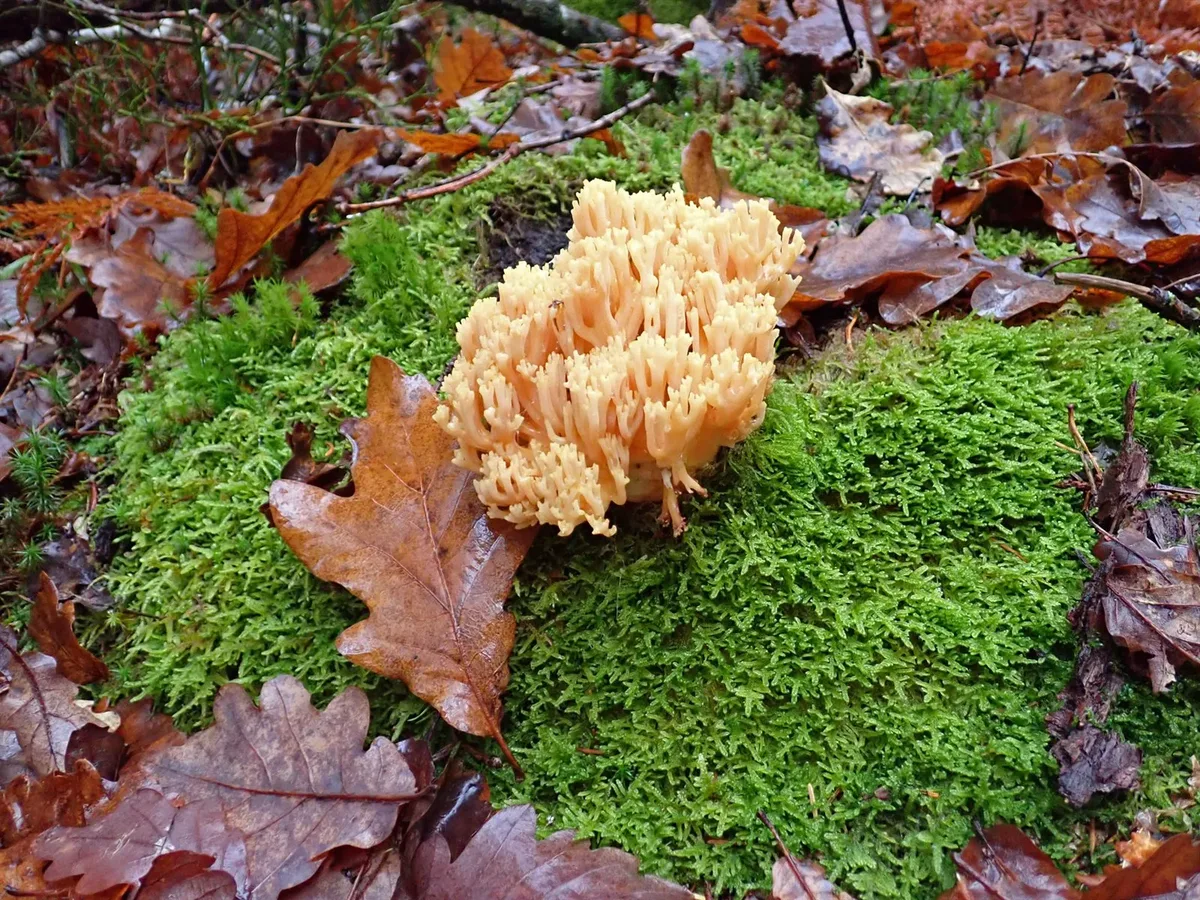 © Inger-Lise Fonneland (CC BY)
 © Inger-Lise Fonneland (CC BY)
 © Allar Antson (CC BY-SA)© Allar Antson (CC BY-SA)© Perry Gunnar Larsen (CC BY)
Edible only with the right preparation - or safe for some people but not others. Learn the caveats first.
How to recognise it
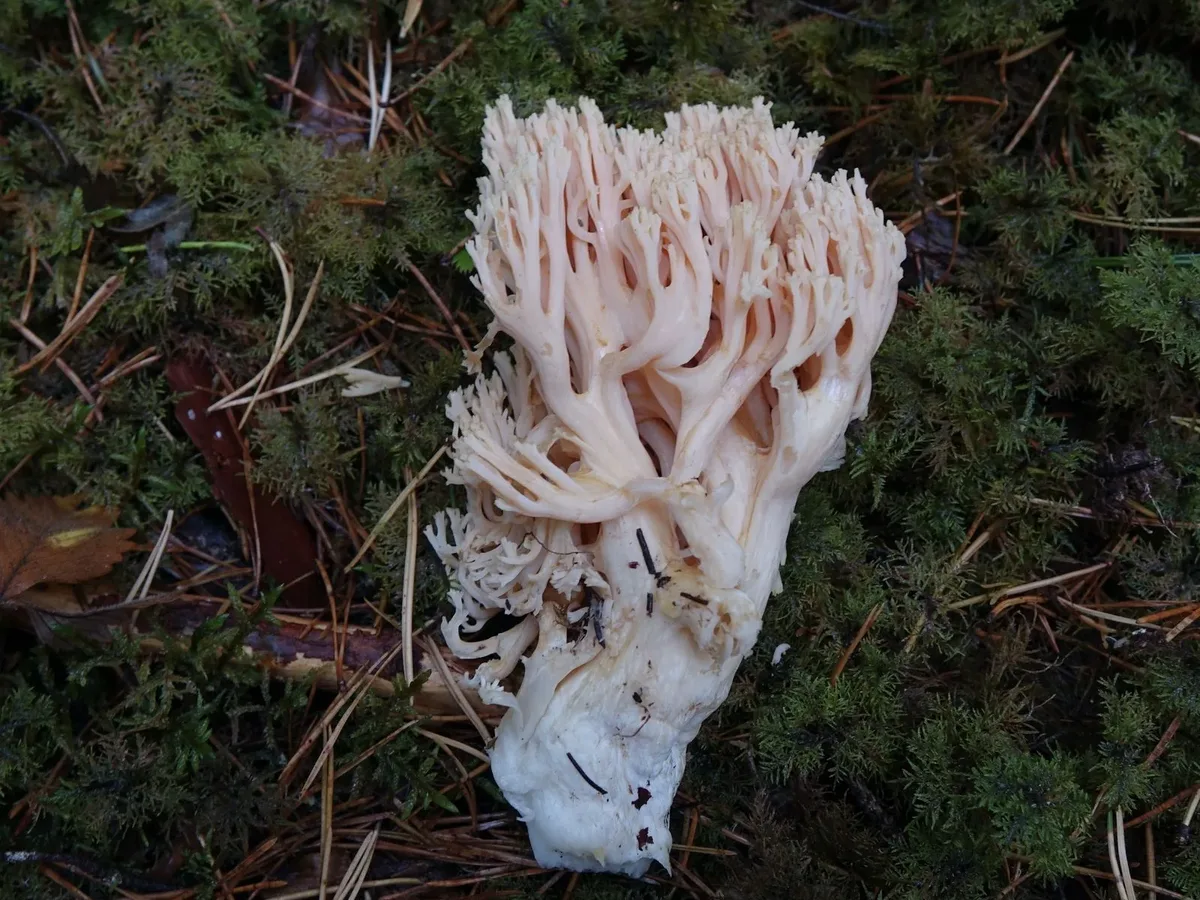
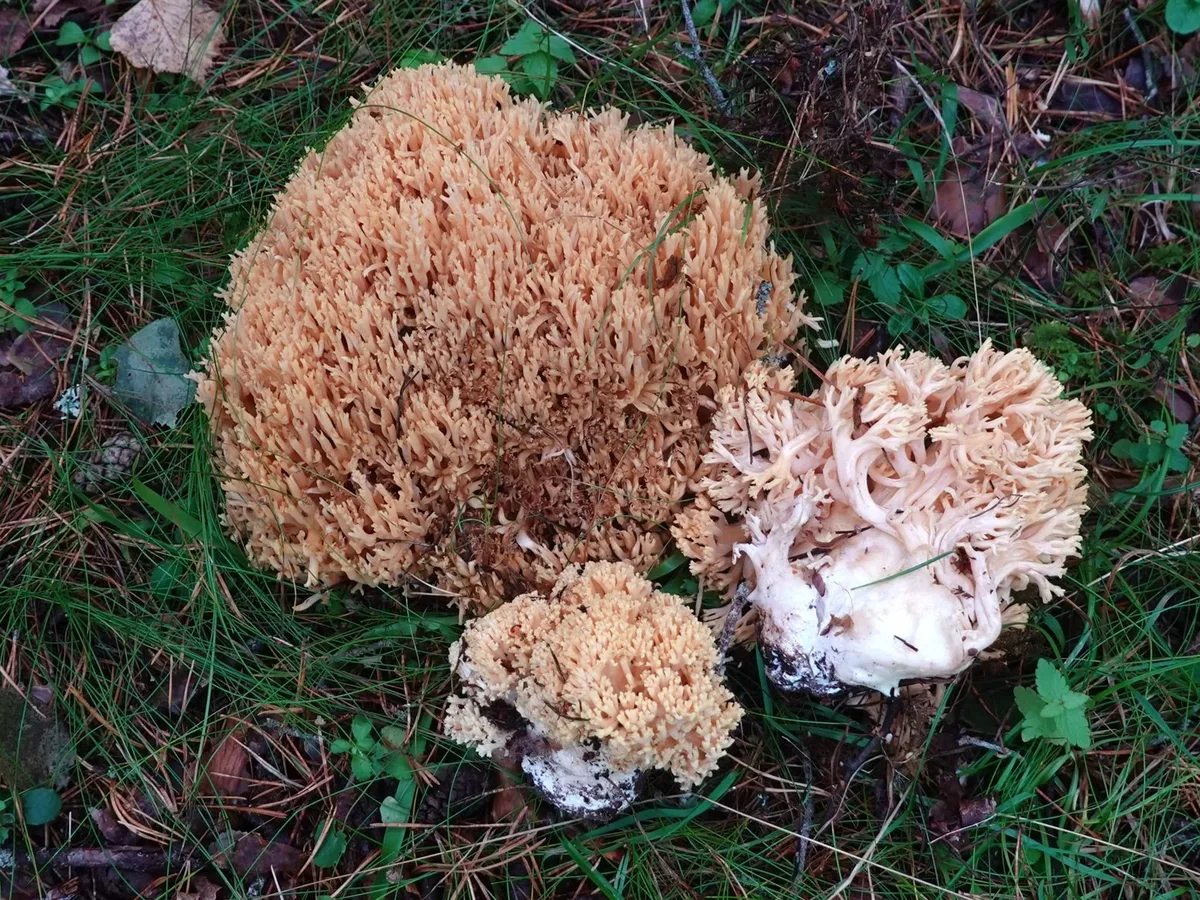
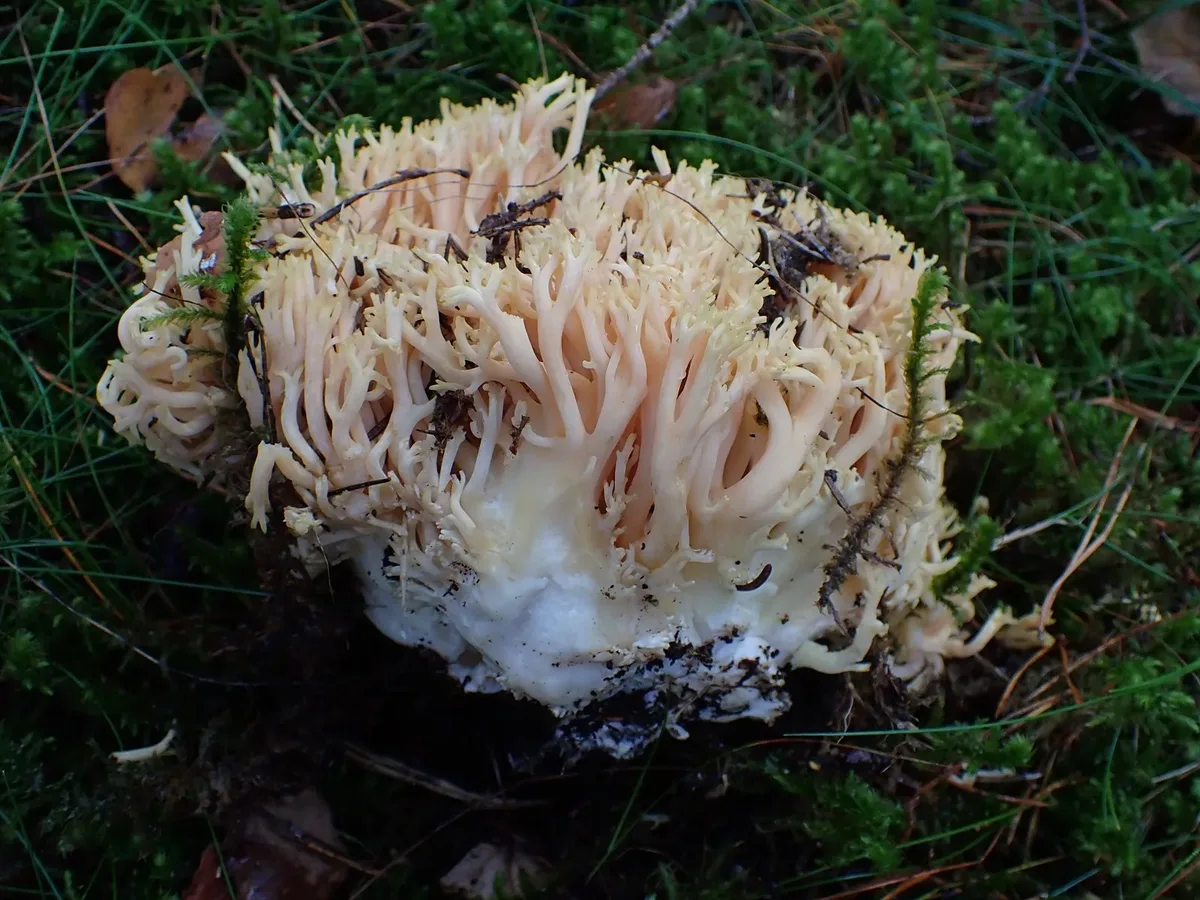
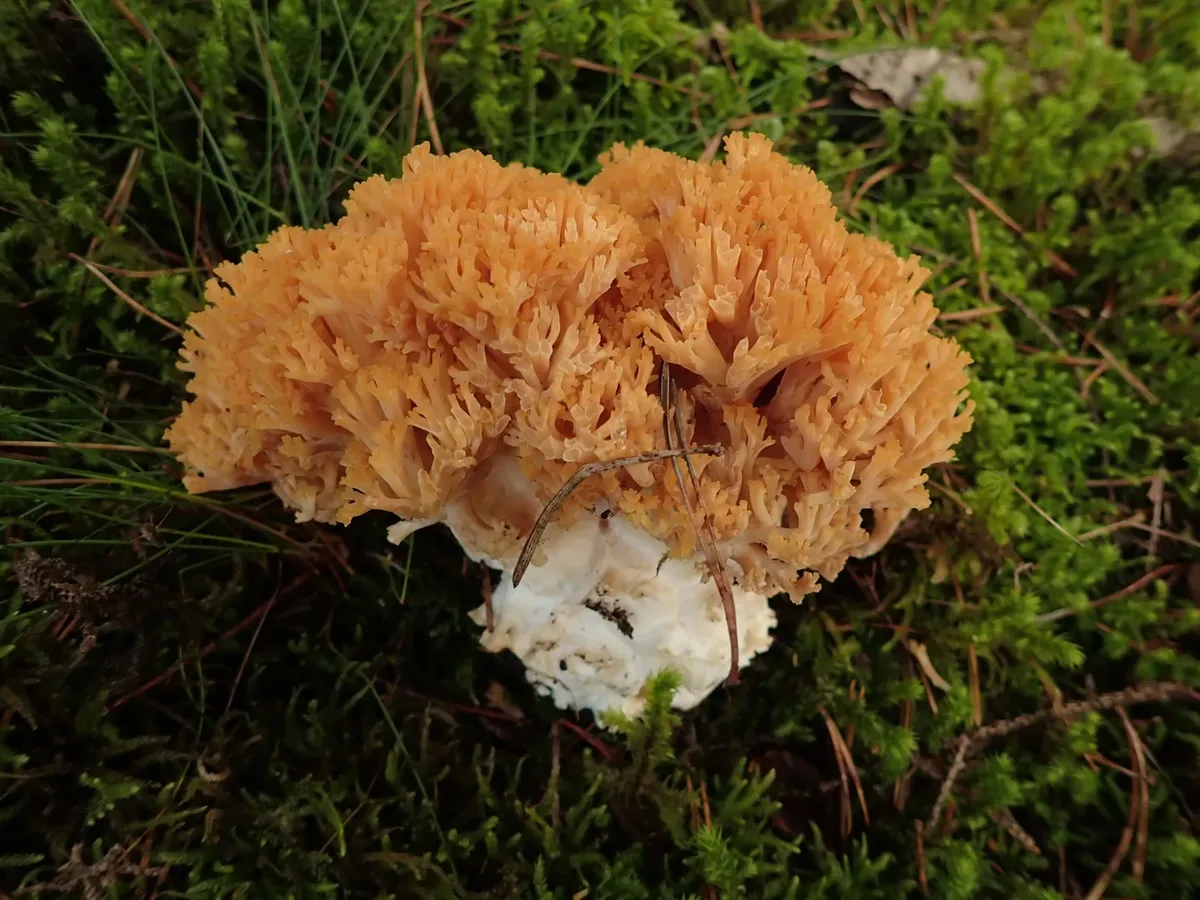
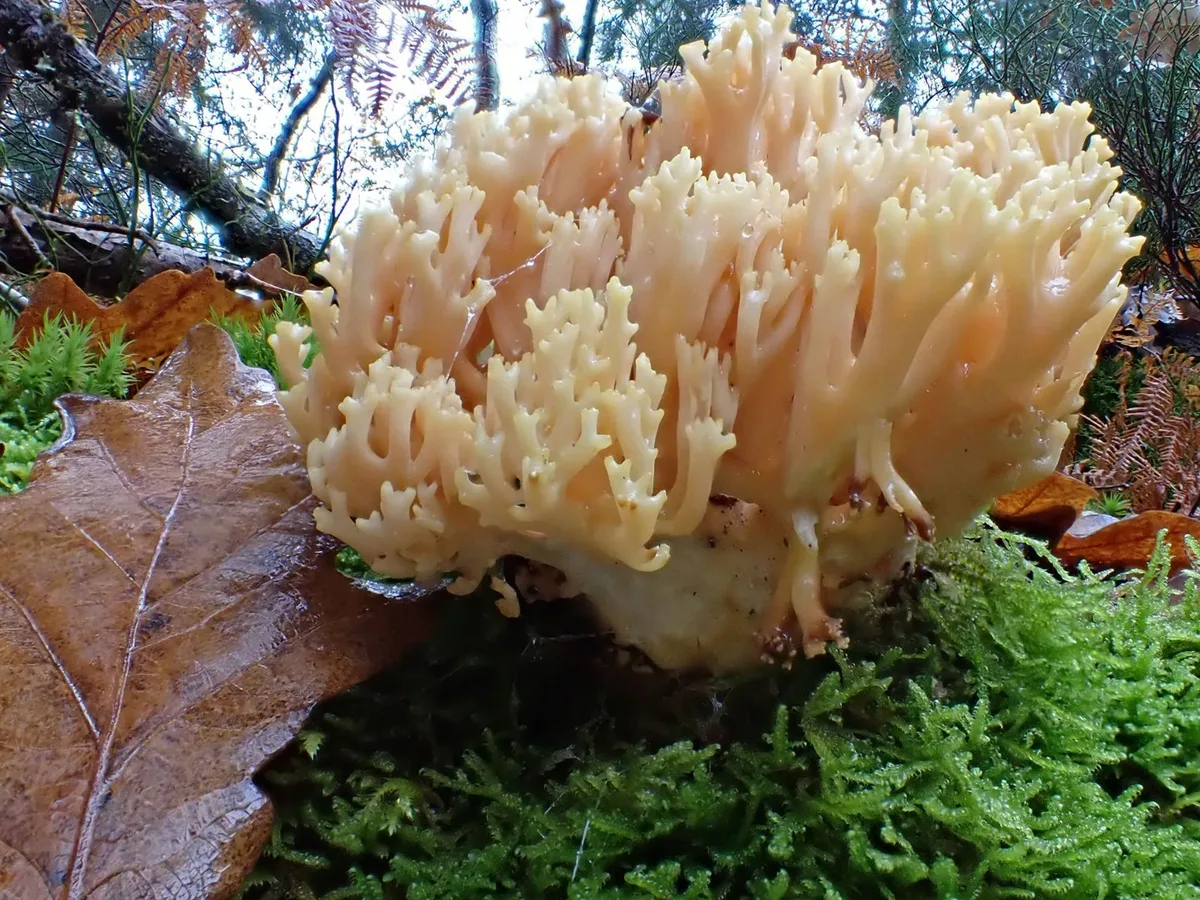
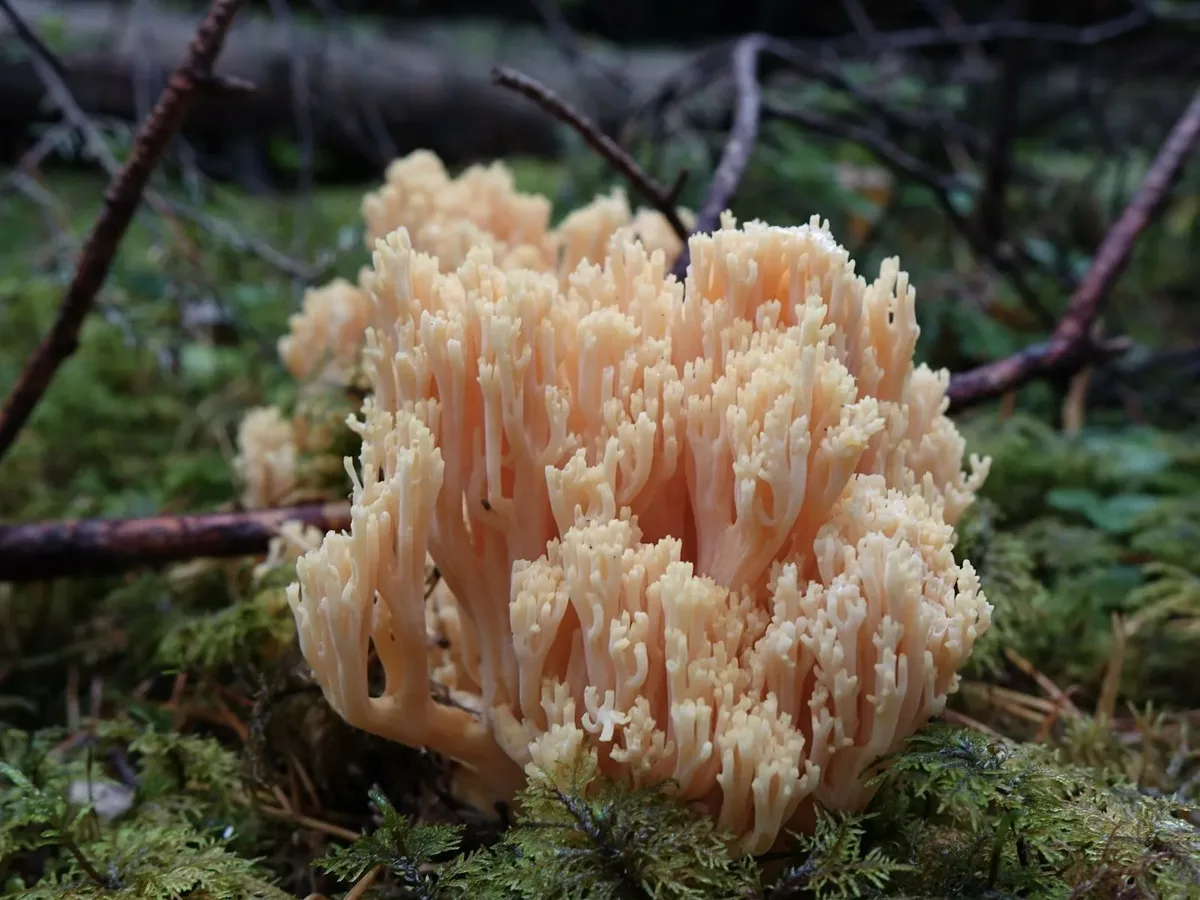
Ramaria flavescens is a large coral fungus - bushy, repeatedly forked, and surprisingly substantial at 8-22 cm tall and up to 18 cm across.
A stout, fleshy cream-white trunk anchors the base and gives rise to multiple upright branches that split 2-4 times into dense, coral-like sprays.
The color is the defining character: a pale, quietly muted lemon-yellow to straw-yellow - distinctly less saturated than the strong sulfur-yellow of Ramaria flava and closer to a washed-out cream-yellow.
Branch tips are blunt and concolorous or slightly whiter; critically, there is no pink, salmon, or orange pigment anywhere at any stage of development, which separates it from the toxic Ramaria formosa.
As the fruiting body ages or dries, it fades further to pale buff or off-white, making old specimens tricky to tell apart from Ramaria pallida (also suspect).
The flesh is white, firm, and pleasingly brittle, snapping cleanly without any color change on the cut surface.
Smell is mild and faintly mushroomy; taste is mild in young specimens, sometimes edging toward slight bitterness with age.
Spore print pale ochre to ochraceous-cream; spores 9-15 × 3.5-5 µm, cylindric to subfusiform, finely warted.
Why it's dangerous
- Moderate risk from misidentification with Ramaria formosa: if the wrong coral is harvested, the result is severe GI illness (profuse laxative-type diarrhea and cramps) that is not life-threatening in healthy adults but can cause significant dehydration and distress.
- Low-to-moderate risk from correctly identified R. flavescens: mild GI upset is possible in susceptible individuals, particularly with raw consumption or large portions.
The species is not considered life-threatening under any plausible scenario.
However, children, elderly individuals, and pregnant women should avoid all Ramaria species entirely - the identification difficulty combined with their reduced physiological tolerance makes the risk-benefit ratio unfavorable.
Medical attention is warranted if symptoms are severe (persistent vomiting, profuse diarrhea lasting more than a few hours, signs of dehydration) or if there is any doubt about which species was consumed. Bring a specimen or photograph to the medical consultation if possible.
Toxin
Unidentified gastrointestinal irritants; exact toxins have not been isolated or characterized for Ramaria flavescens specifically.
The species belongs to a genus with a poor toxicological track record. The closely related Ramaria formosa contains uncharacterized laxative and GI-irritant compounds responsible for profuse, watery diarrhea - the specific molecules remain unnamed in the literature but their effect is well-documented clinically. Ramaria pallida, another close relative, carries similarly unidentified GI irritants.
R. flavescens itself is suspected to contain low-level irritants of the same general class, particularly in older specimens, in raw material, or in large quantities. The irritant load likely diminishes significantly with thorough cooking, which is why the species retains an 'edible with caution' status in parts of central Europe rather than a full toxicity listing.
The mechanistic why: Ramaria species in this color group share ecological and biosynthetic proximity, and the absence of documented isolated toxins for R. flavescens reflects the difficulty of studying taxonomically complex coral fungi rather than confirmed safety.
Treat the unknown compounds as likely present at sub-symptomatic or threshold-level concentrations in properly cooked, correctly identified material.
Symptoms
Onset typically 1-4 hours after consumption.
In cases of self-ingestion of correctly identified R. flavescens - especially raw, in large quantities, or in susceptible individuals - symptoms may include nausea, mild abdominal cramping, and loose stools or mild diarrhea. The episode is generally self-limiting within 12-24 hours and resolves without intervention in most healthy adults.
More severe presentations are expected when the consumed mushroom was actually Ramaria formosa rather than R. flavescens. R. formosa causes profuse, watery, laxative-type diarrhea with significant abdominal cramps and vomiting, which can lead to dehydration if fluid replacement is neglected. Onset for R. formosa poisoning follows the same 1-4 hour window.
In both scenarios no neurological, hepatic, or renal involvement is expected - this is a gastrointestinal syndrome only.
The absence of life-threatening organ effects does not make the illness trivial: severe fluid loss from prolonged diarrhea can be medically serious in vulnerable groups.
Staying safe
Ramaria flavescens has a long history of use as a food mushroom in parts of central Europe, often collected alongside or interchangeably with Ramaria flava. However, several important cautions apply:
- 1The Ramaria genus is taxonomically complex and contains multiple toxic species (notably R. formosa and R. pallida) that closely resemble R. flavescens. Misidentification is a genuine, documented risk even for experienced foragers.
- 2R. flavescens itself is suspected to cause mild gastrointestinal upset in some individuals, especially if consumed raw, in large quantities, or if misidentified. It is listed as edible with caution rather than as a choice edible in contemporary European field guides.
- 3The taxonomy of this species relative to R. flava is unsettled; some populations may represent intergrading forms or the same species, adding uncertainty about which specific toxicological data apply.
- 4Thorough cooking is mandatory - never consume any Ramaria raw. Eat only small amounts on first trial. If any salmon, pink, or orange pigment is present in the branches (indicating possible R. formosa), discard immediately. Pale or whitish specimens may indicate R. pallida; discard these too.
Children, elderly individuals, and pregnant women should avoid all Ramaria species.
Where & when it grows
Habitat
Ramaria flavescens is a mycorrhizal species that lives quietly underground for much of its life, threading its mycelium among the roots of its host trees across broadleaved and mixed forests of central and western Europe.
It favors calcareous to mildly acidic soils with deep, undisturbed humus - most characteristically under European beech (Fagus sylvatica), but also under oaks (Quercus spp.) and in montane mixed stands with silver fir (Abies alba) and spruce (Picea abies).
This occasional presence in montane mixed woodland sets it apart ecologically from Ramaria flava, which tends more strictly to broadleaved forest.
Elevation range stretches from lowland beech stands up to around 1400 m in the Alps and Carpathians.
It is largely absent from young plantations, heavily managed woodland, and open ground - it belongs to older, more settled forest.
When
The main fruiting window runs from July through October across central Europe, with the best showing typically in August and September.
Good crops tend to follow sustained warm, moist spells - the classic trigger is warm nights and adequate late-summer rainfall, followed by a gradual cooling into early autumn.
At higher montane sites the season can stretch into mid-October. In drought years a site may produce nothing at all.
How it grows
Fruiting bodies push up from the forest floor singly or in loose clusters of two or three, sometimes with several emerging close together from the same underground mycelium.
After rain triggers growth, the pale cream nub of the base breaks the soil surface and the branches expand over several days, reaching full size in roughly 5-10 days under good conditions.
The same mycelial network, quietly established beneath the forest floor, can fruit again across successive years as long as the host trees and their microhabitat remain intact.
Fruiting conditions
Fruiting is triggered by warm, moist conditions in late summer and early autumn. Typically requires at least 20 mm of rainfall over 14 days combined with soil temperatures of 10-18 °C. Peak fruiting occurs 7-14 days after a significant rain event when temperatures are declining from summer highs. Fruiting fails in extended drought or early hard frost.
Look-alikes
The genus Ramaria is one of the most taxonomically difficult groups in European mycology, and several species can be confused with R. flavescens:
- Ramaria formosa (Salmon coral): The most important confusion risk. R. formosa has salmon-pink to coral-orange main branches with distinctly pale lemon-yellow to straw-yellow tips. R. flavescens is pale yellow throughout branches AND tips with absolutely no pink or salmon pigment. Any coral with pink or salmon branches must be rejected as R. formosa (toxic, causes severe laxative-type gastrointestinal illness). The difference in tip color is obvious when fresh but can be harder to read in faded old specimens.
- Ramaria flava (Yellow coral): Very similar but with more vivid, saturated sulfur-yellow to golden-yellow coloration throughout. R. flavescens is paler, more straw-colored or washed lemon-yellow. The two species overlap morphologically and some authors treat R. flavescens as a variety of R. flava or as synonymous; edibility considerations are similar for both.
- Ramaria pallida (Pale coral): Pale cream to whitish, sometimes with a faint lilac or greyish tinge; typically paler than R. flavescens and often with a farinaceous or unpleasant smell. Considered mildly toxic (gastrointestinal irritant). Any strongly pale, whitish-cream coral should be treated as R. pallida.
- Ramaria aurea (Golden coral): Deeper, more chrome-yellow to orange-yellow, typically brighter than R. flavescens; often more associated with conifers; edibility uncertain, treat as suspect.
- Ramaria botrytis (Cauliflower coral): Distinguished immediately by distinctly wine-red to carmine-tipped branches - tips never yellow or cream. Edible and choice; no realistic confusion with R. flavescens once branch tips are examined.
- Clavulina coralloides / Clavulina cinerea: Smaller, with more brittle branches and white to grey-white coloration; lack the yellow pigment entirely.
General rule: any yellow-to-cream coral should be identified to species by an expert before consumption. When in doubt, discard.
Distinguished immediately by wine-red to carmine-pink branch tips - never yellow or cream. Main body is paler, whitish-cream to pale buff. Edible and choice. No realistic confusion with R. flavescens once the characteristic colored tips are noted.
Deeper chrome-yellow to orange-yellow, more intense and vivid than the pale straw-yellow of R. flavescens; typically more associated with conifers. Edibility uncertain - treat as suspect. Distinguished by the more saturated, golden-orange coloration.
Uniformly whitish to pale cream, sometimes with a faint lilac or greyish tinge, and typically with a farinaceous or slightly unpleasant smell. Paler overall than R. flavescens. Considered mildly toxic - avoid any coral with strongly whitish-cream coloration or an unpleasant farinaceous odor.
The primary and most dangerous confusion. R. formosa has salmon-pink to coral-orange main branches with distinctly pale lemon-yellow to straw-yellow tips. R. flavescens is pale lemon-yellow to cream-yellow throughout with no pink or salmon pigment anywhere at any life stage. Any coral with pink or salmon branches should be rejected as R. formosa. R. formosa is a gastrointestinal irritant causing profuse diarrhea, cramps, and nausea - do not eat.
Very similar and sometimes treated as the same species or as a variety. R. flava is more vivid, with a saturated sulfur-yellow to golden-yellow color throughout, while R. flavescens is paler, more straw-colored or washed lemon-yellow. Distinction is subtle and requires careful comparison; edibility and caution advice are similar for both.
A reference guide - never an edibility guarantee. When in doubt, leave it out.