Cauliflower coral
Ramaria botrytissyn. Clavaria botrytis Pers., Corallium botrytis (Pers.) Henn., Ramaria botrytis var. botrytis
 © Manuela Fiorini (CC BY)
 © ionafraser (CC BY)
 © ionafraser (CC BY)
 © ionafraser (CC BY)
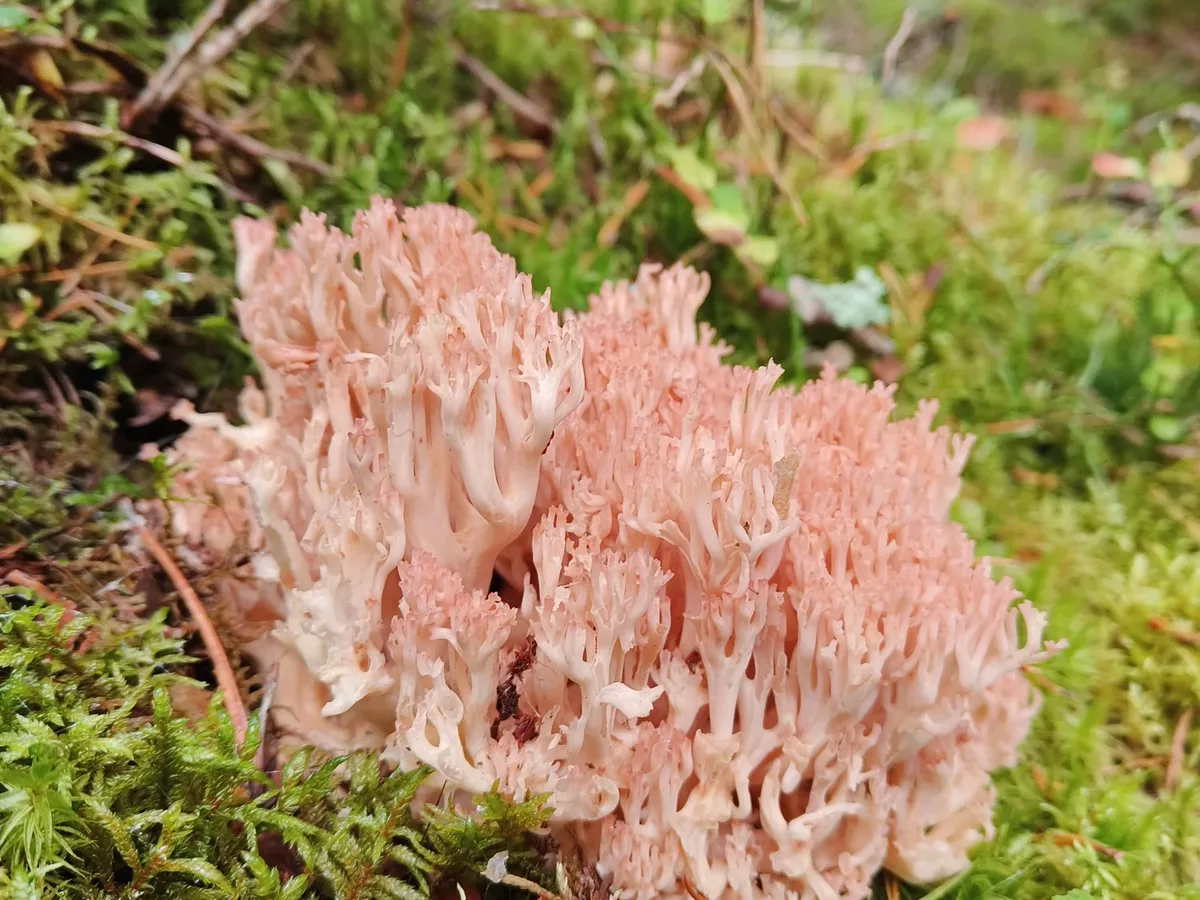 © Unknown (CC BY-SA)
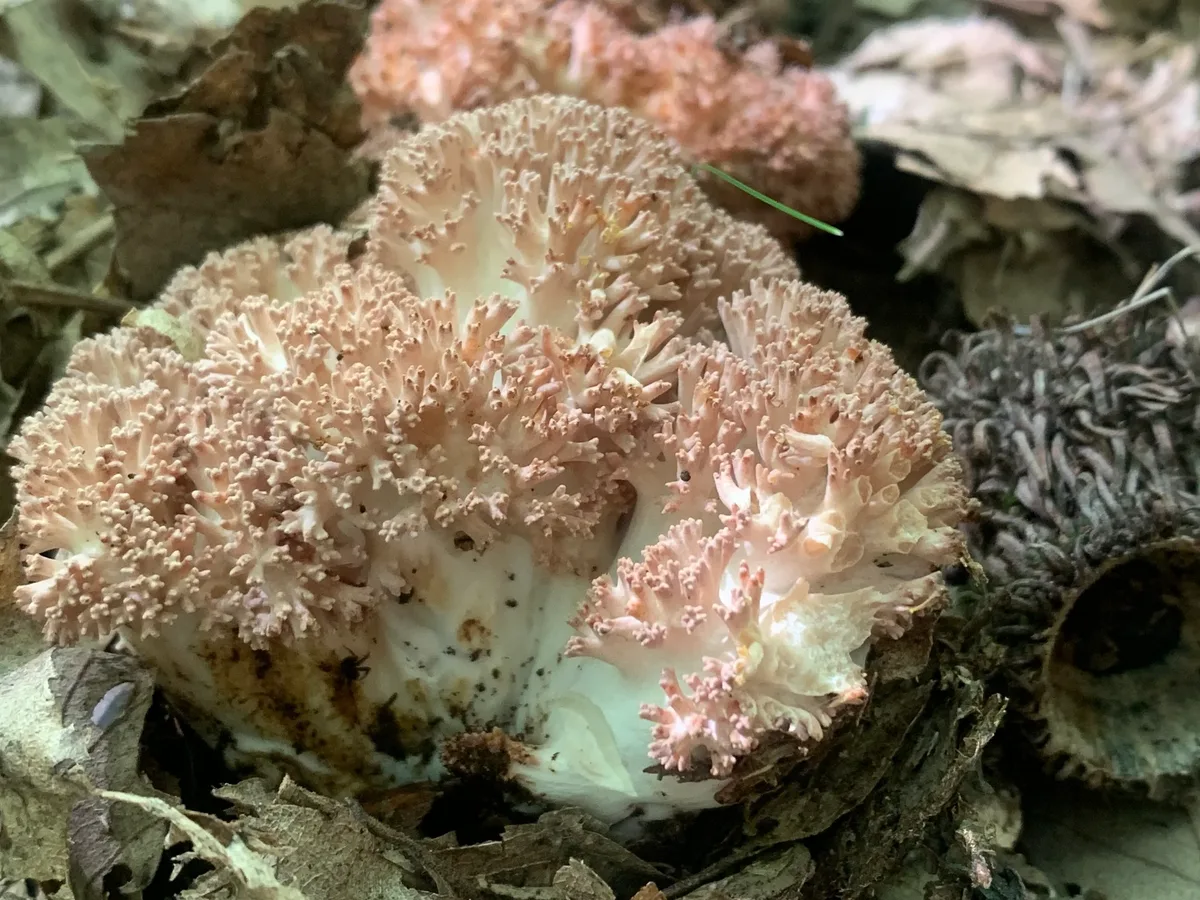 © Manuela Fiorini (CC BY)
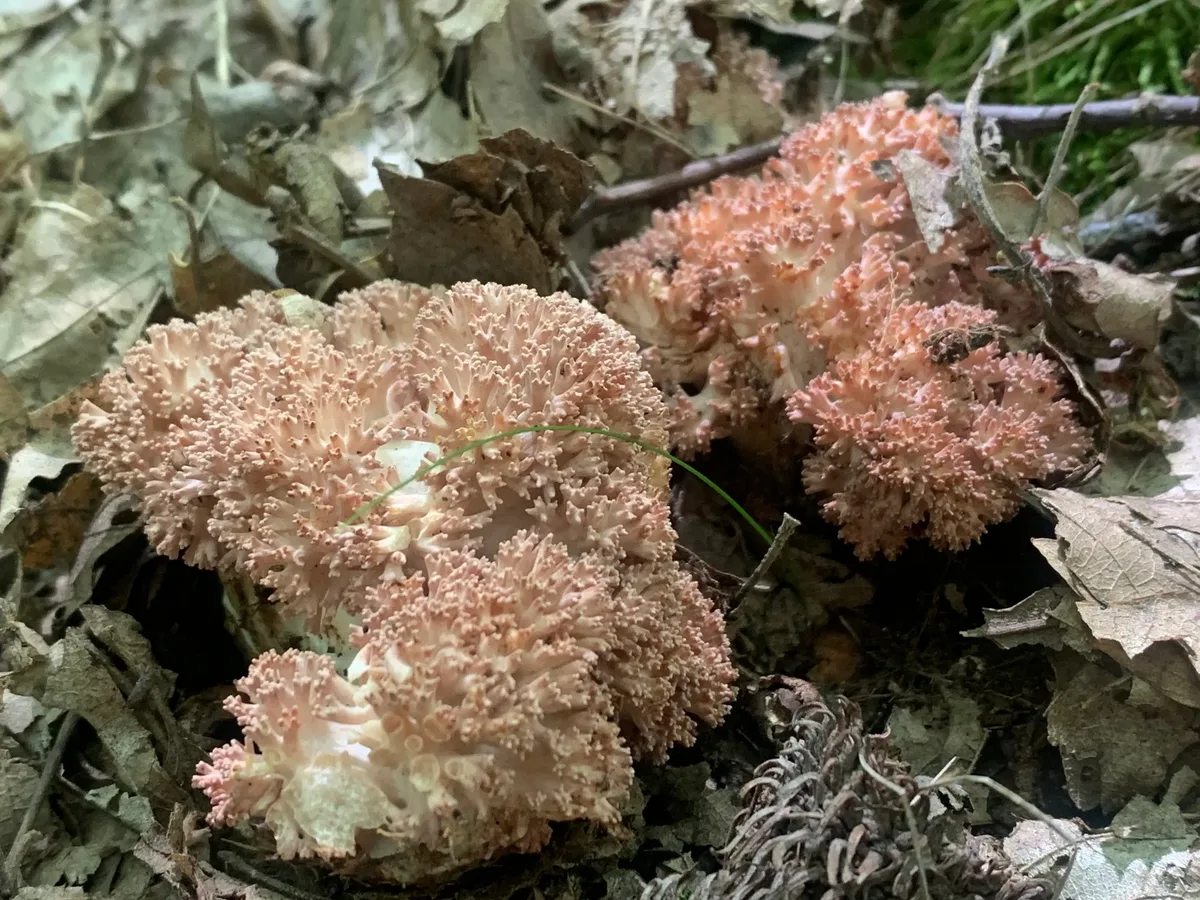 © Manuela Fiorini (CC BY)
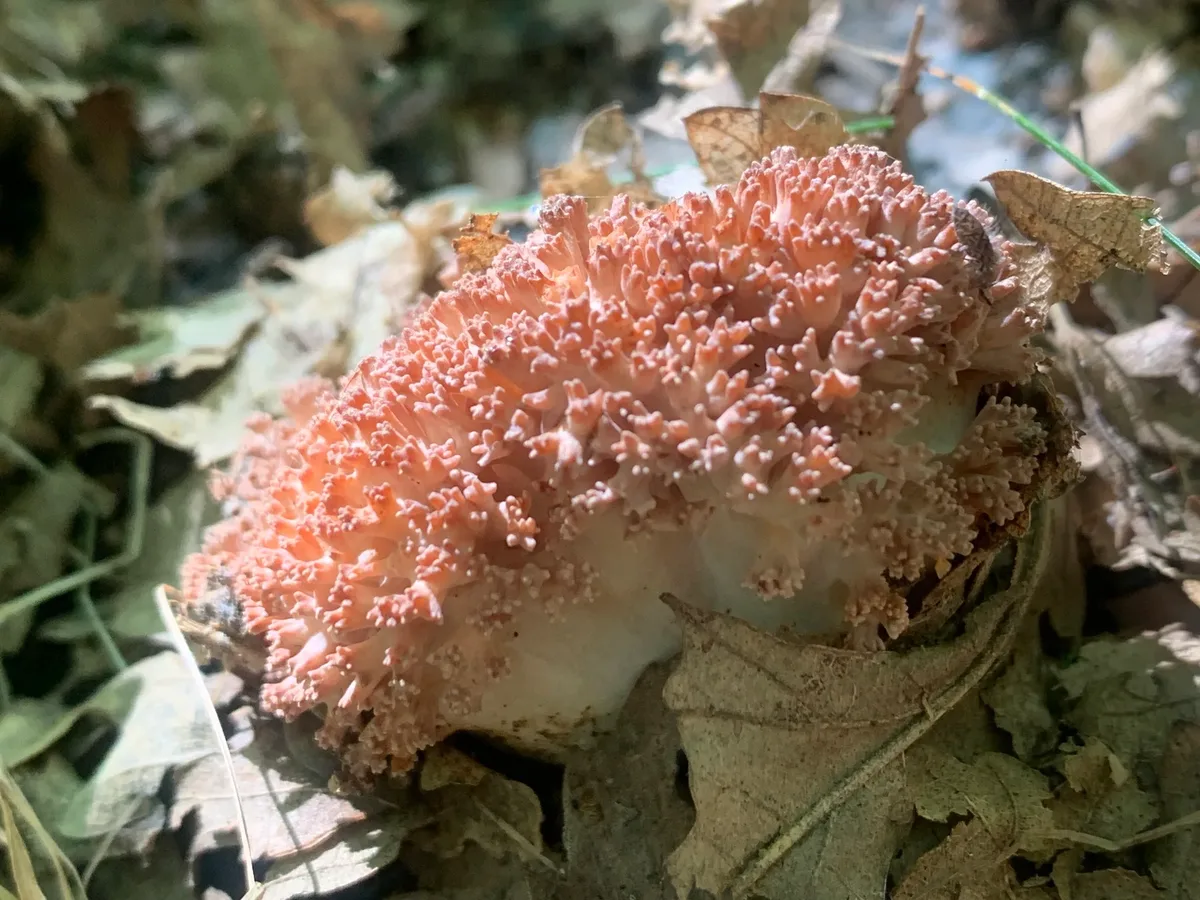 © Manuela Fiorini (CC BY)
 © Manuela Fiorini (CC BY)© Manuela Fiorini (CC BY)© ionafraser (CC BY)
Good to eat, once you have identified it with certainty and cooked it through.
How to recognise it
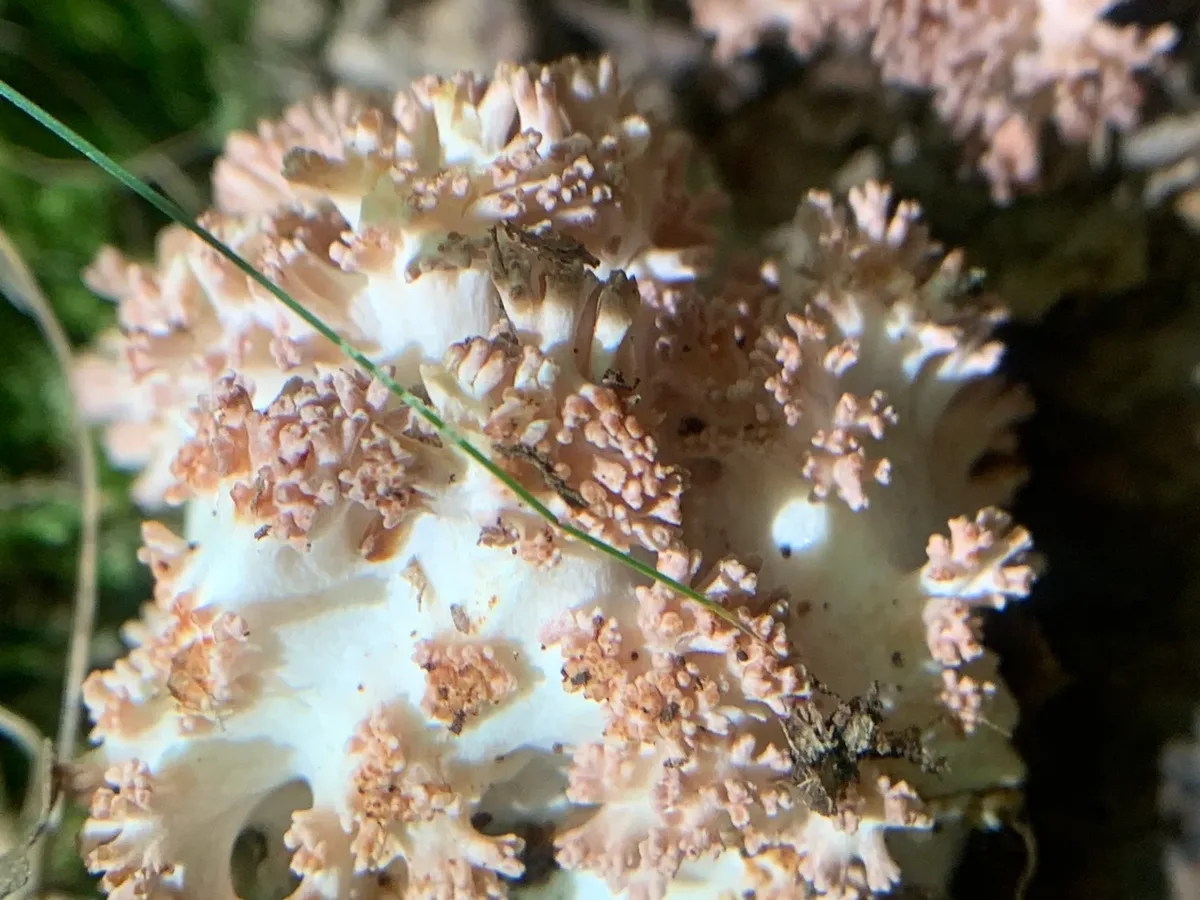
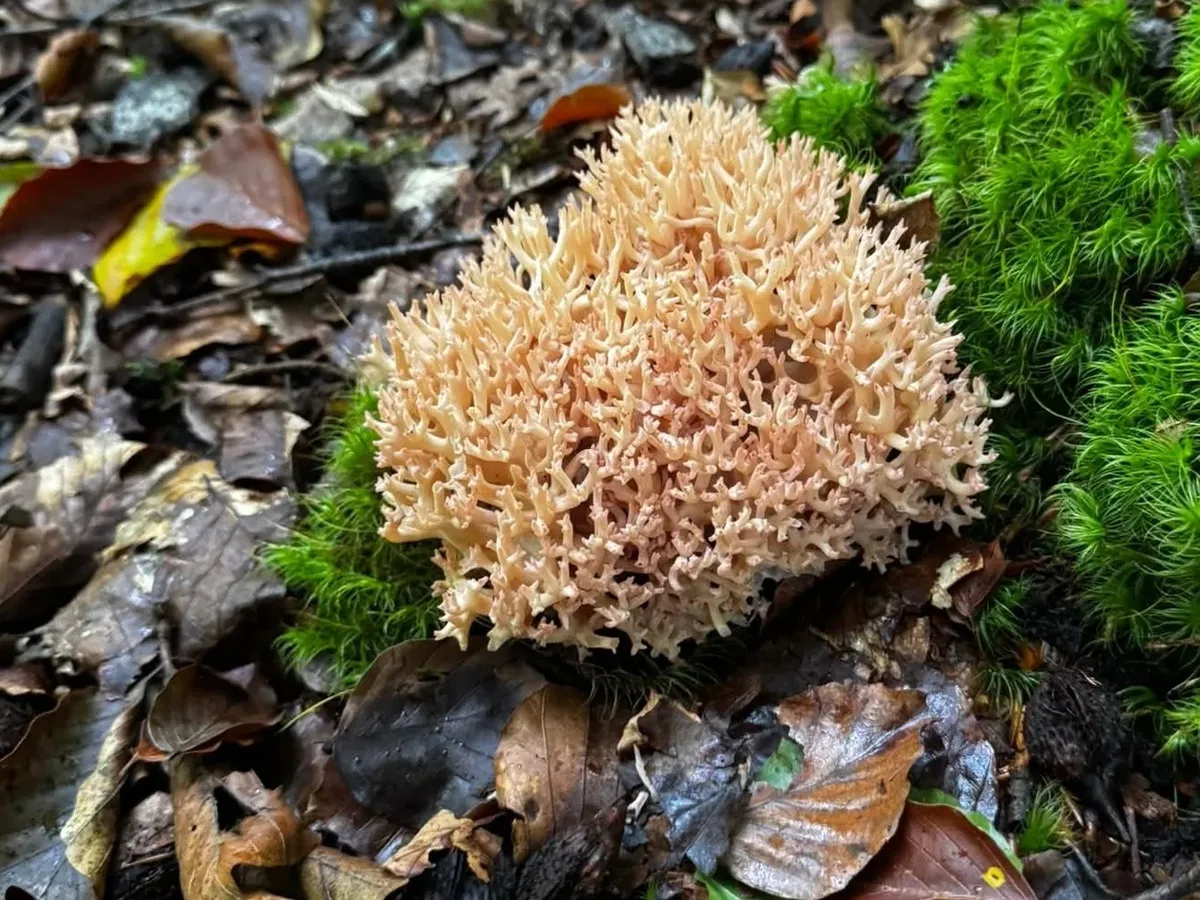
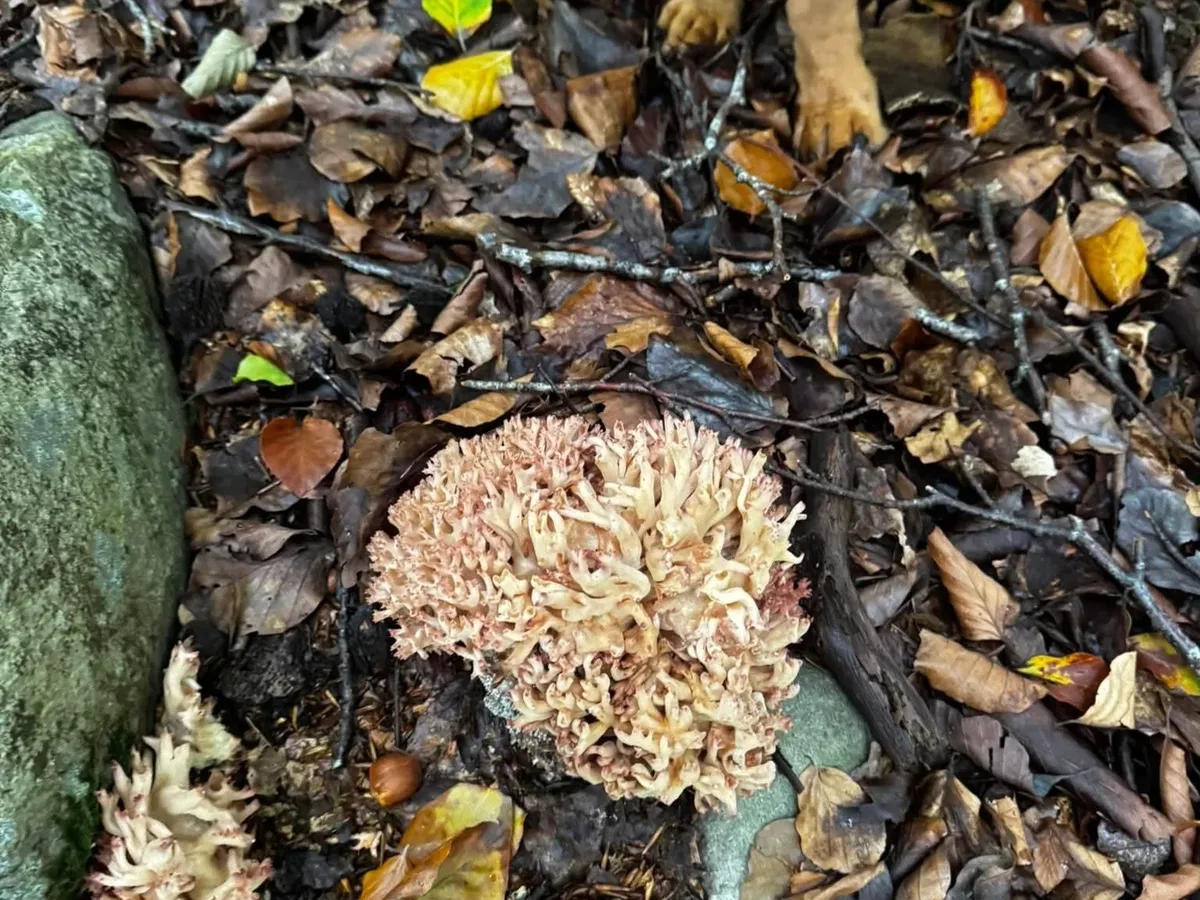
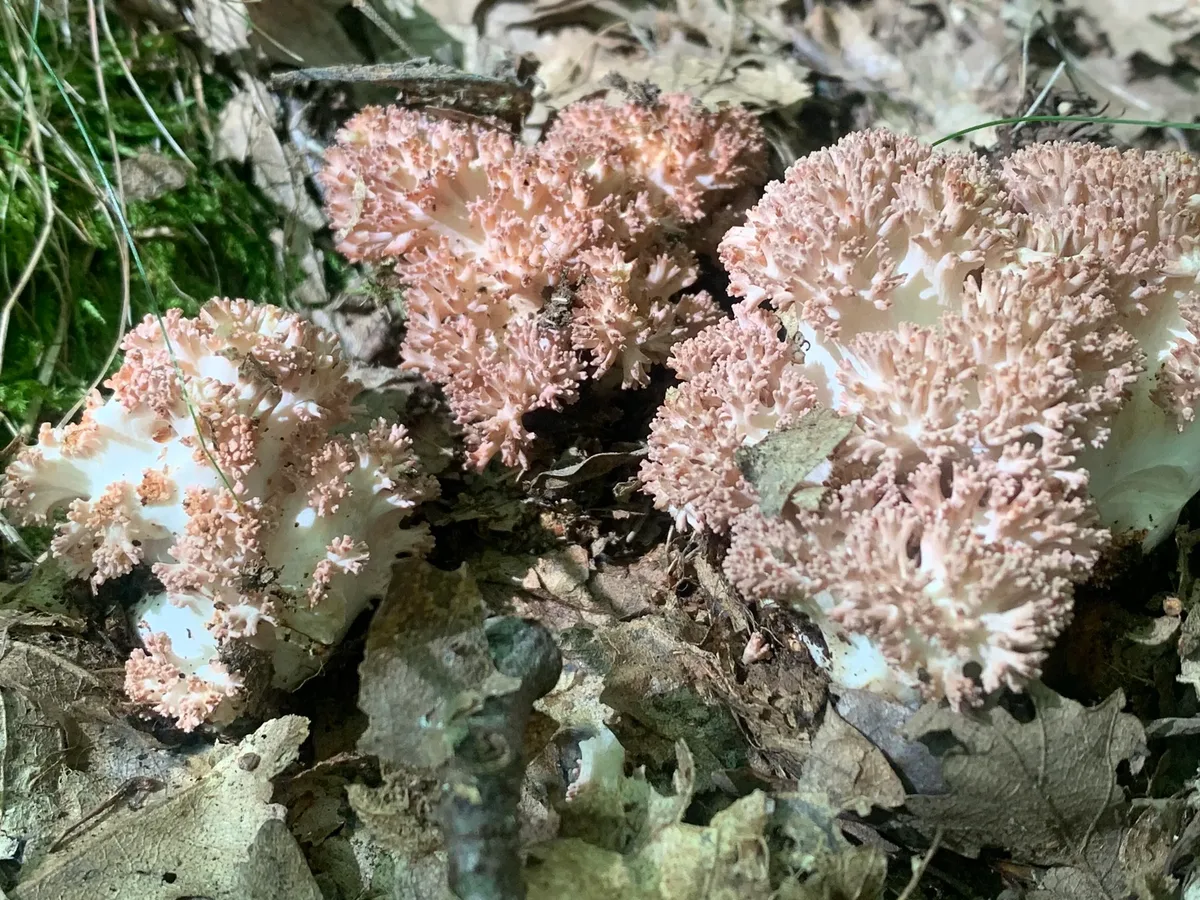
Ramaria botrytis is one of the most imposing coral fungi in European temperate forests. The entire fruitbody - often as large as a human fist, sometimes bigger - erupts from the forest floor as a dense, cauliflower-like mound of repeatedly branched coral.
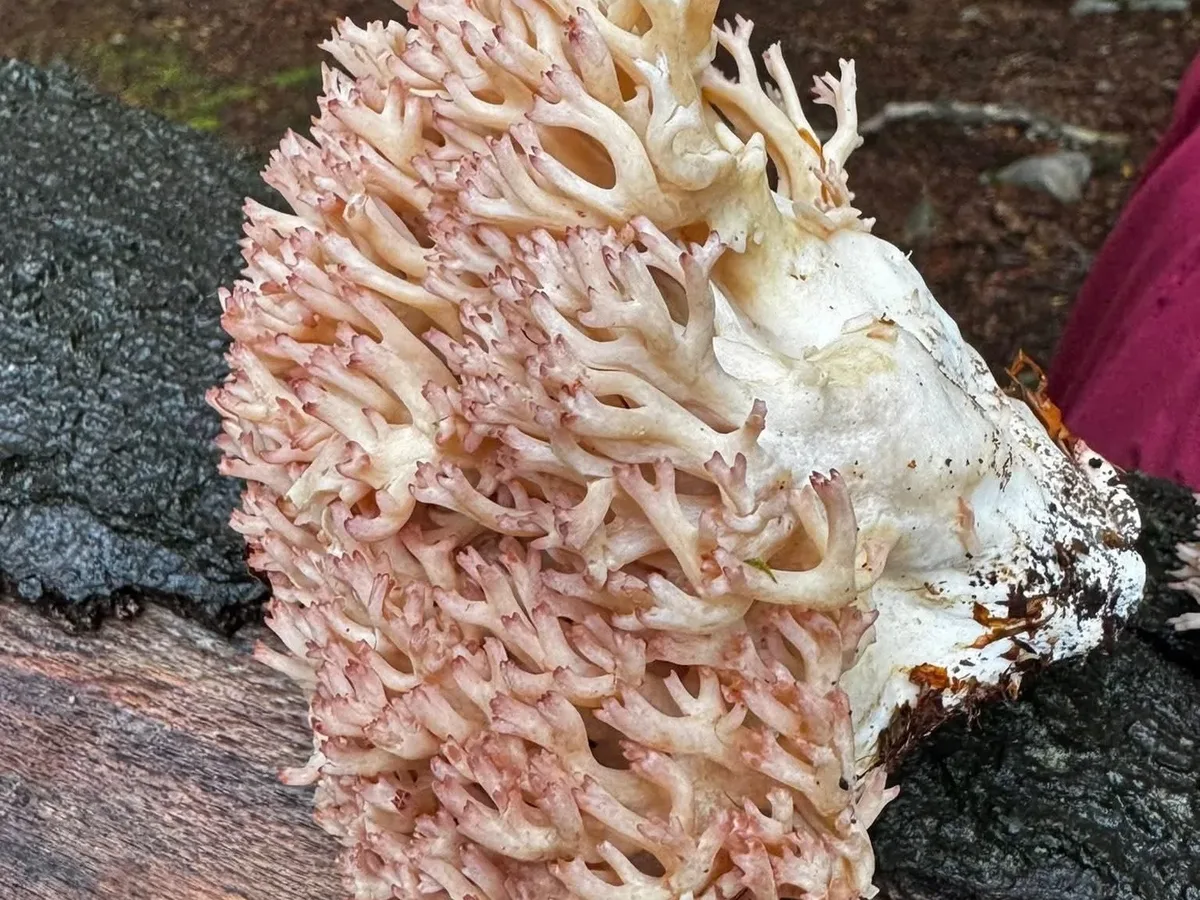
The basal stipe is thick, stubby, and whitish-cream, quickly dividing into numerous upright branches that are cream to pale ochre in colour.
The crowning feature that distinguishes this species is the tips: in fresh, young specimens they are a rich wine-red to reddish-purple, a colour unique among the large European corals. As the fungus ages, this colour bleaches to pinkish-buff and finally almost disappears, making aged specimens harder to identify.
The flesh throughout is white, dense, and rather brittle - it snaps cleanly when a branch is broken - and does not change colour on exposure to air.
The smell is mild and pleasant, the taste agreeable and slightly nutty. The spore deposit left on a flat surface is pale ochre to yellowish-rusty.
Where & when it grows
Habitat
Ramaria botrytis is mycorrhizal and tightly associated with mature deciduous trees, particularly European beech (Fagus sylvatica).
It favours undisturbed, humus-rich forest floors with a well-developed leaf-litter layer, often in somewhat calcareous soils.
In central and western Europe, the classic habitat is old beech forest, particularly mixed beech-oak or beech-fir stands on sloping ground with good moisture retention.
The fungus tends to recur at the same spots year after year, often in the same area of woodland where large old beeches provide a reliable mycorrhizal host. It is regarded as an indicator of old, ecologically intact deciduous forest.
When
Fruiting in central and western Europe spans late July through October, with the main flush in August and September.
In mountain beech-fir zones (600-1400 m elevation), fruitings tend to peak slightly later, often into late September and early October.
Fruiting is triggered by adequate summer rainfall followed by warm soil conditions; extended drought markedly reduces or eliminates fruitings.
Individual fruitbodies persist for one to two weeks in good condition before softening and beginning to decompose.
How it grows
Emerging singly or occasionally in small clusters from deep humus beneath mature beech and oak, the fruitbody grows rapidly when conditions are right.
It begins as a small, rounded, whitish nodule just below the leaf surface, erupting and expanding over several days into its full branched form. Growth is fastest - several centimetres per day - during warm, wet weather.
The entire fruitbody is a single unit arising from a common base. It does not have a true stipe-and-cap architecture but rather a branching coral form.
Fruiting conditions
Fruiting is reliably triggered by late-summer rainfall (at least 20 mm over 14 days) with mild to warm soil temperatures (10-22 °C). Prolonged summer drought strongly suppresses fruiting. Fruitbodies typically appear 7-18 days after adequate precipitation.
Look-alikes
Several Ramaria species closely resemble R. botrytis and some are toxic or mildly poisonous.
- Ramaria formosa (salmon coral) is the most dangerous confusion: it has salmon-pink to pale orange branches with yellowish tips (not wine-red tips), grows similarly in beech forest, and causes significant gastrointestinal poisoning.
- Ramaria pallida (pale coral) is whitish to pale lilac-grey throughout, with no red tips, and is reported to cause gastrointestinal upsets.
- Ramaria mairei has pinkish branches but lacks the distinctive dark red tips and has a different branch architecture.
- Ramaria eumorpha is a smaller, more yellowish or buff species of coniferous woodland.
The wine-red branch tips of fresh R. botrytis are the single most reliable field character; any large white-to-cream coral with salmon, orange, or uniformly pinkish coloration (especially without dark red tips) should be avoided. Do not consume any Ramaria that cannot be positively identified to species level.
Ramaria eumorpha is a smaller, more yellowish or buff species typically found in coniferous woodland, lacking the large creamy basal mass and wine-red tips of R. botrytis. Edibility uncertain; avoid.
Sparassis crispa forms a low, cauliflower-like mass of flattened, wavy lobes (not cylindrical branches), is pale cream to yellowish, and grows at the base of conifers; it is a choice edible but structurally very different from the upright branched coral of R. botrytis.
Ramaria pallida is uniformly whitish to pale lilac-grey or buff throughout with no red coloration at tips; it lacks the diagnostic wine-red tips of R. botrytis and is reported to cause gastrointestinal upsets.
Ramaria mairei has pale pinkish branches but lacks the vivid wine-red to purple tips characteristic of fresh R. botrytis; branch architecture may differ. Edibility uncertain; avoid.
Ramaria formosa has salmon-pink to pale orange branches with yellowish (not wine-red) tips; branches tend to be more uniformly coloured throughout. It causes significant gastrointestinal poisoning. R. botrytis has a whitish-cream base and distinctively deep wine-red to reddish-purple branch tips when fresh.
Ramaria flava has bright yellow branches throughout; no wine-red tips. Can cause mild gastrointestinal upset. Easily distinguished from R. botrytis by uniform yellow coloration.
In the kitchen
Picking & cleaning
- Select young specimens with well-developed, deep wine-red branch tips, as older, bleached individuals are harder to identify confidently and have inferior flavour and texture.
- Cut cleanly at the base with a knife; avoid pulling, which may disturb the mycelium and surrounding soil.
- Brush away debris in the field.
- The hollow basal stipe sometimes harbours insects or slugs; inspect carefully and trim as needed.
- Use only what can be consumed fresh, as shelf life is short - ideally cook within 24-48 hours.
- Clean in the kitchen by cutting the coral into segments and rinsing briefly.
Cooking
Ramaria botrytis is considered a good edible when young and fresh, with a pleasant, mild flavour and a firm, slightly crunchy texture.
Cut the coral mass into smaller pieces or separate branches for easier cooking. It is best sautéed in butter or oil over medium-high heat until any excess moisture evaporates and the edges begin to colour lightly; season simply with salt, pepper, and fresh herbs.
It pairs well with eggs, mild pasta, and risotto. The texture holds up reasonably well to brief braising.
Avoid eating raw. Older, softer specimens become bitter or insipid and are best discarded.
Some sources recommend blanching before the main cooking step to mellow any residual bitterness in older fruitbodies.
Good to know
IMPORTANT: Positive identification to species level is essential before consumption. The key identification character - vivid wine-red to reddish-purple branch tips - must be present and clearly visible. Do not collect aged or bleached specimens where this colour has faded.
The most serious risk is confusion with Ramaria formosa, which causes gastrointestinal poisoning and is found in the same habitat.
Some individuals report mild gastrointestinal symptoms even from correctly identified R. botrytis, possibly due to consuming large quantities or undercooking. Always cook thoroughly and eat a modest portion on first acquaintance.
Avoid collecting any coral fungi in areas where Ramaria formosa or Ramaria pallida are known to occur without absolute certainty of identification.
A reference guide - never an edibility guarantee. When in doubt, leave it out.