Gold Top
Psilocybe subaeruginosasyn. Hypholoma subaeruginosum, Psilocybe tasmaniana
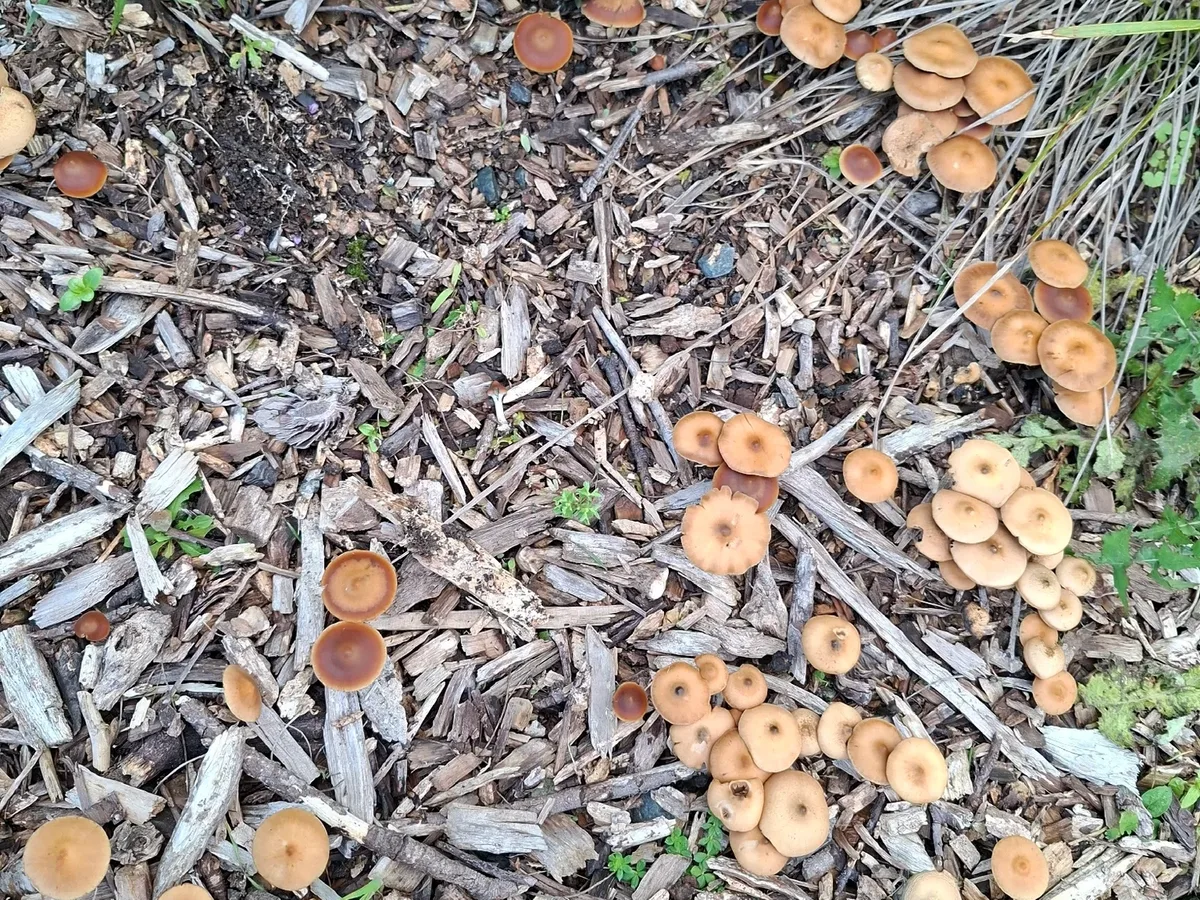 dannali (CC0)
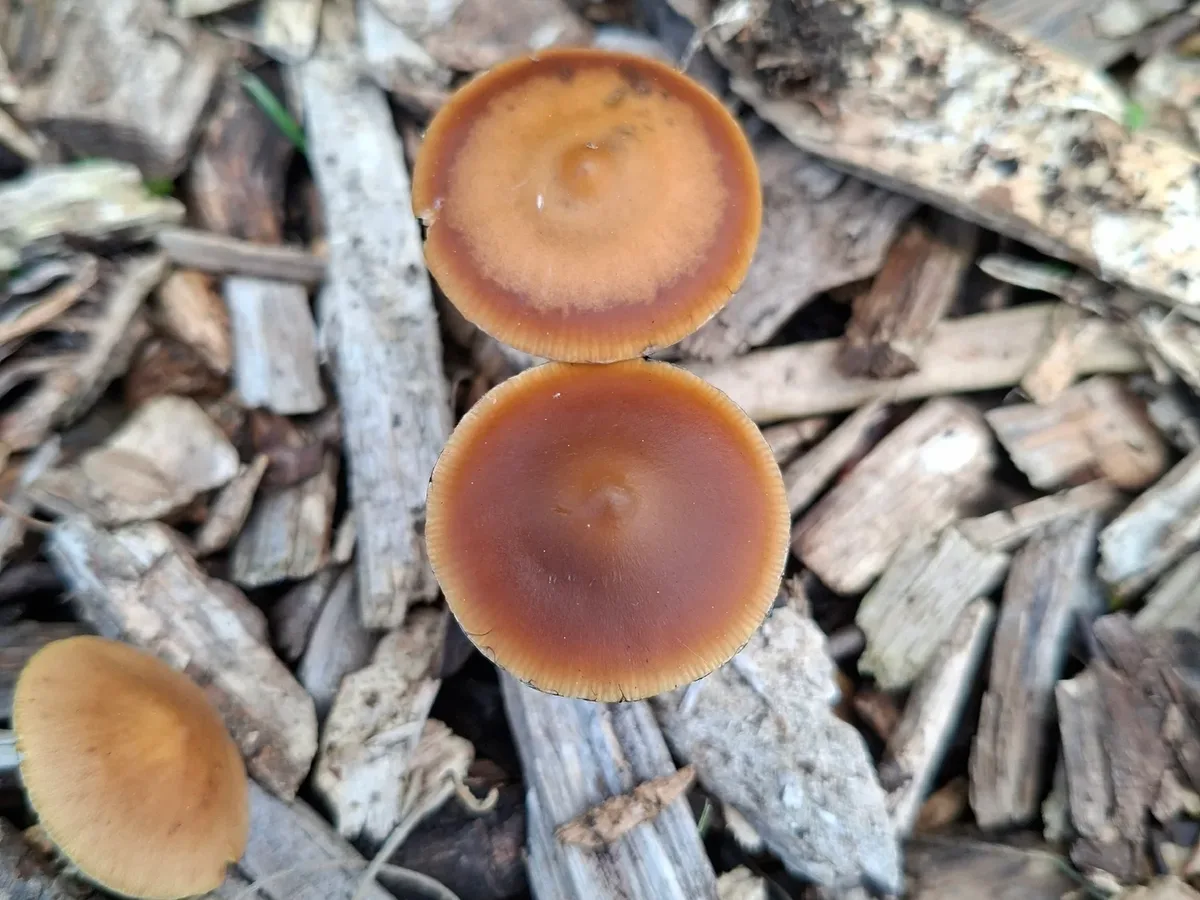 dannali (CC0)
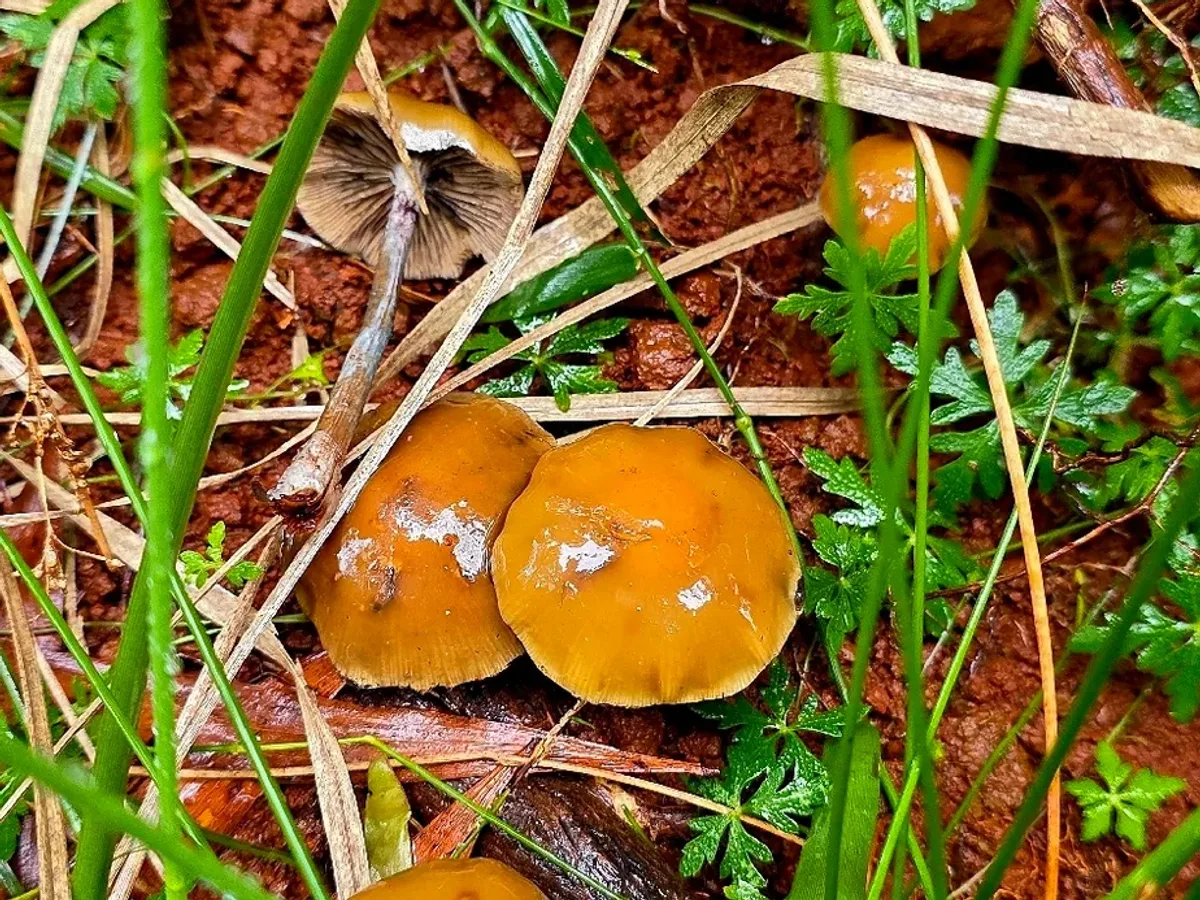 © Hector Hind (CC BY)
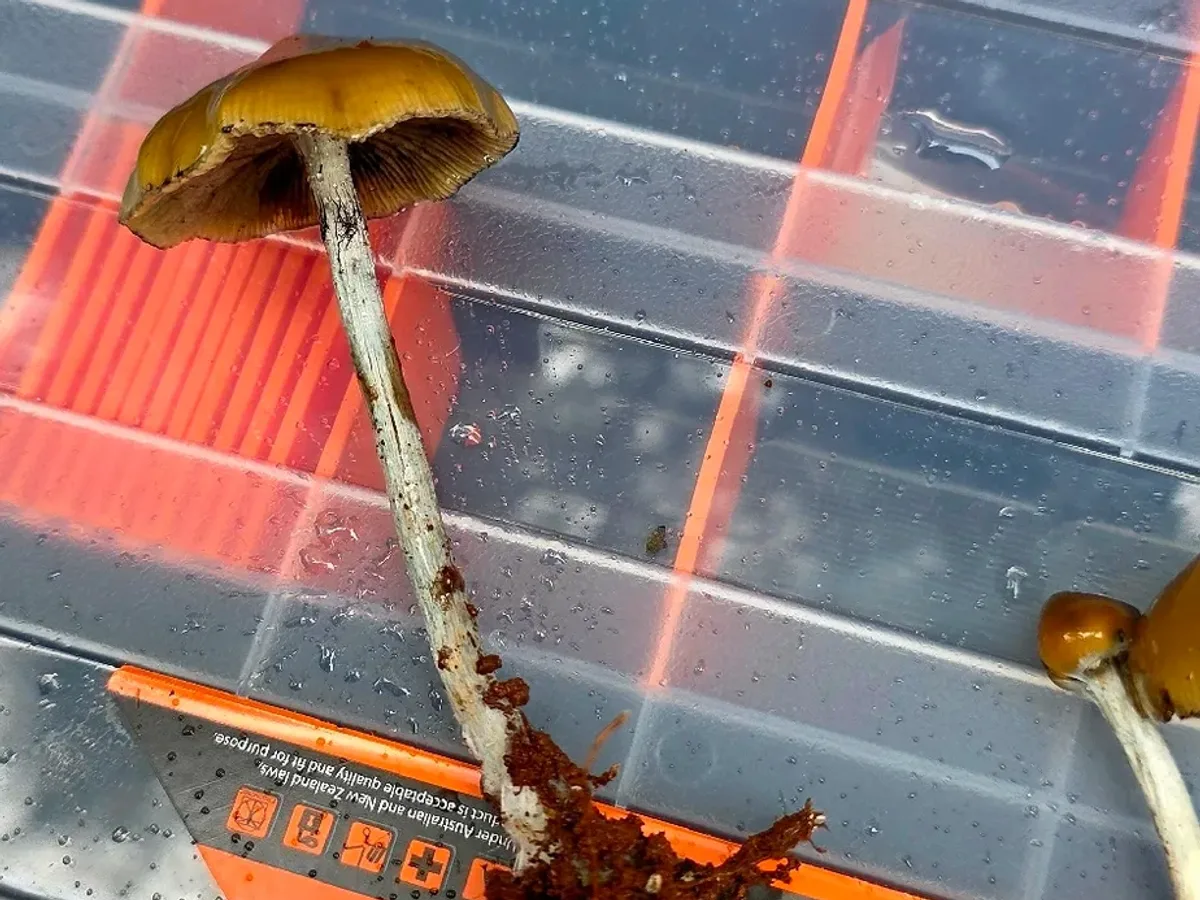 © Hector Hind (CC BY)
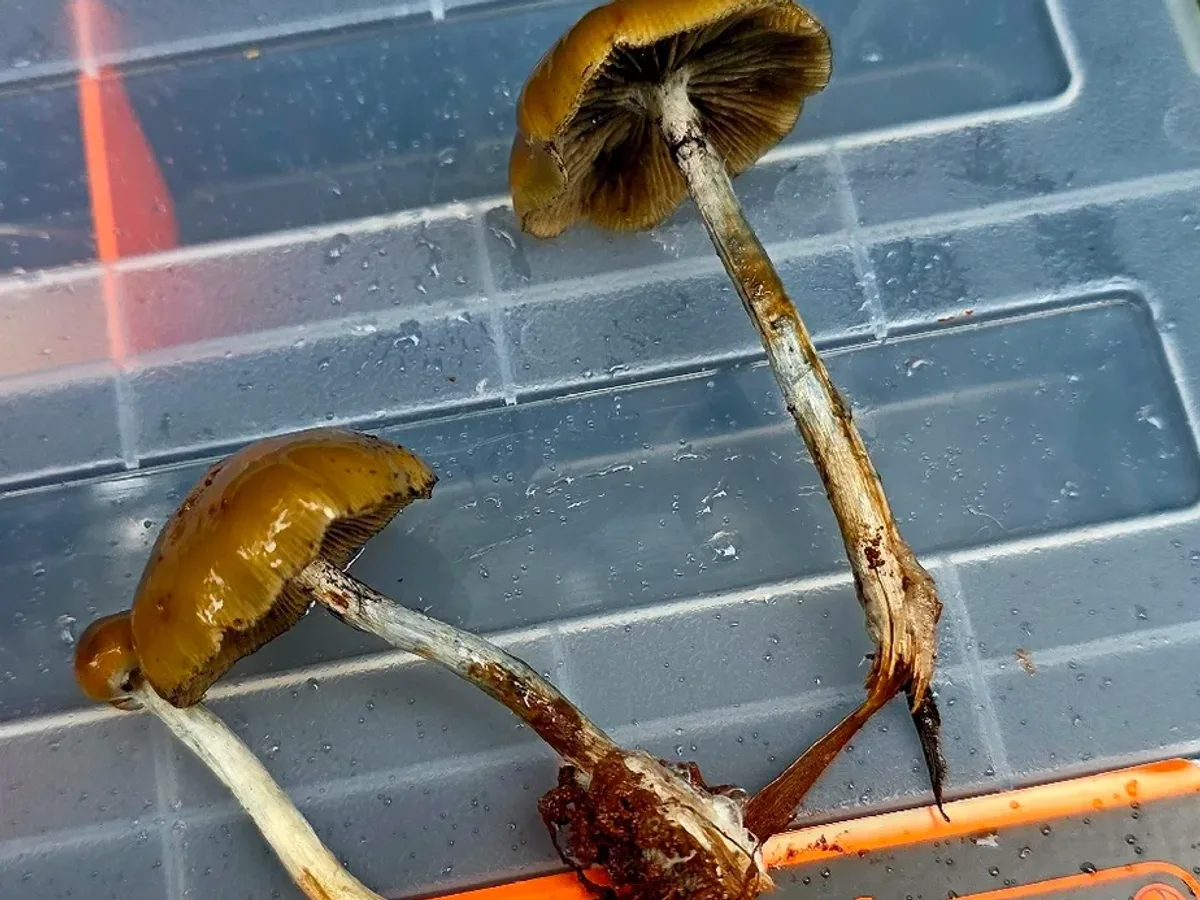 © Hector Hind (CC BY)
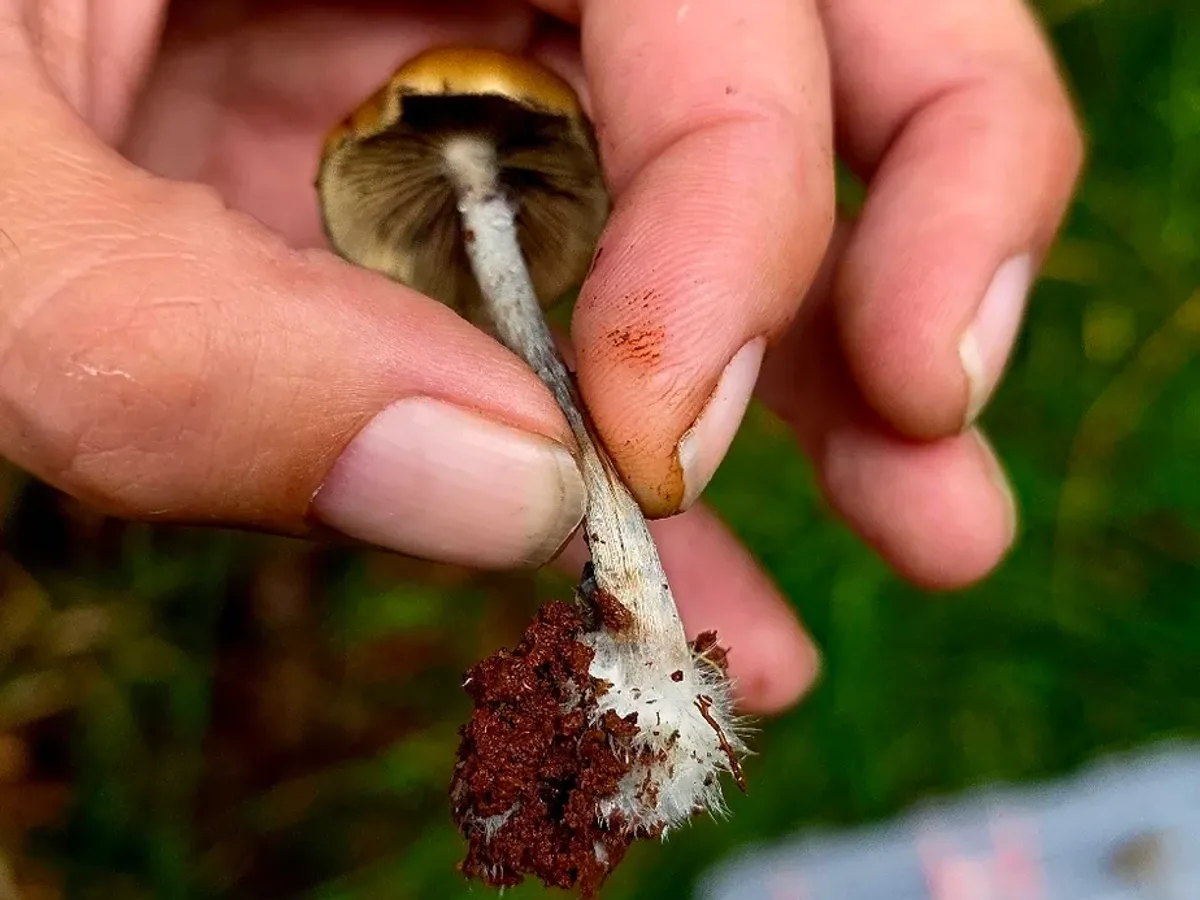 © Hector Hind (CC BY)
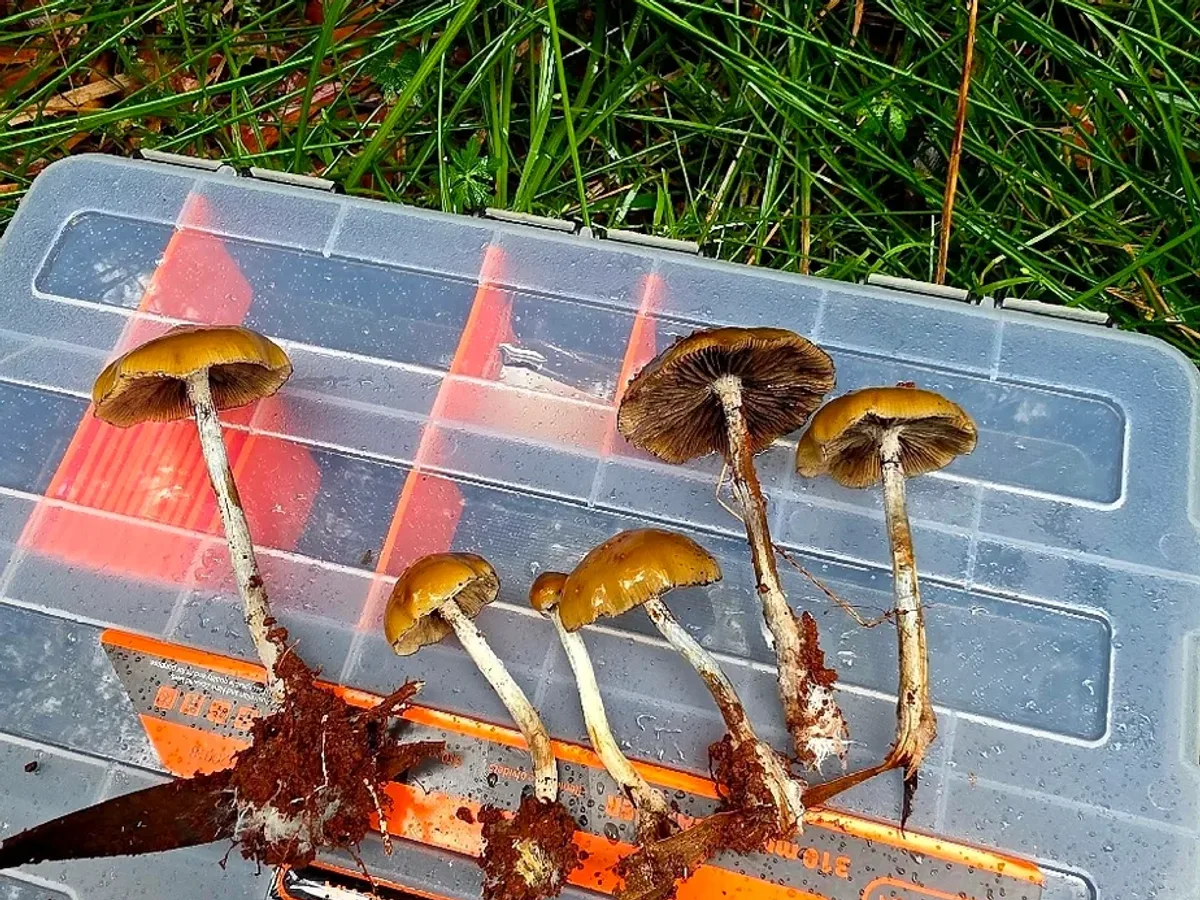 © Hector Hind (CC BY)
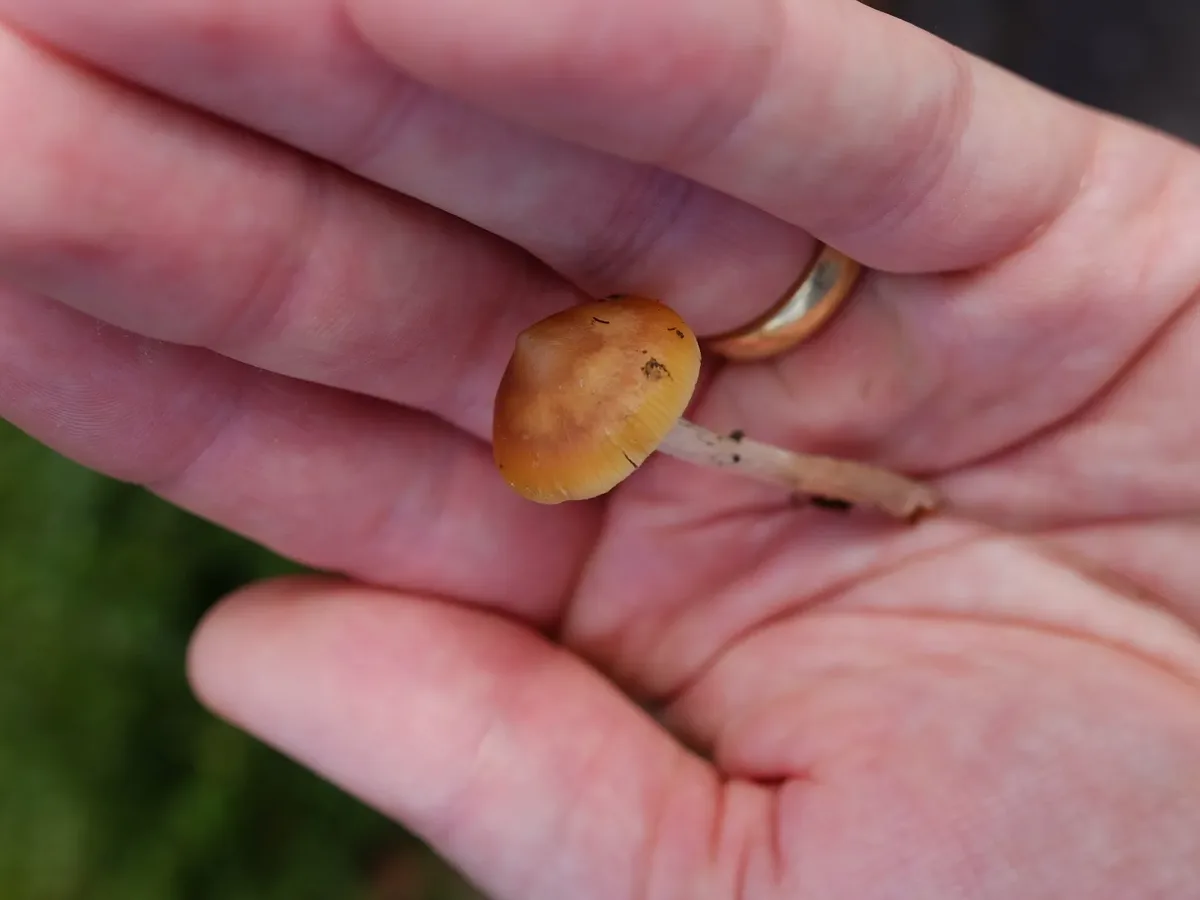 © Michael (CC BY)
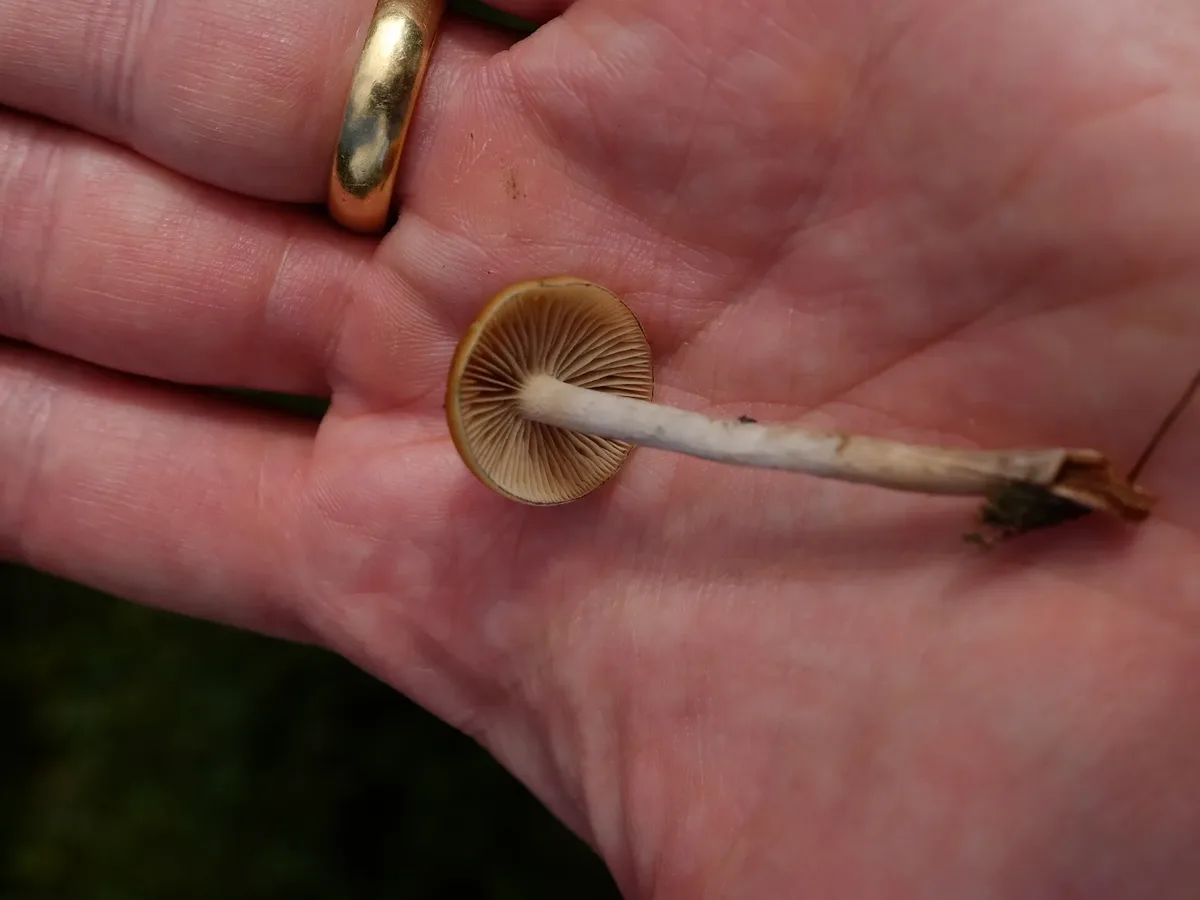 © Michael (CC BY)
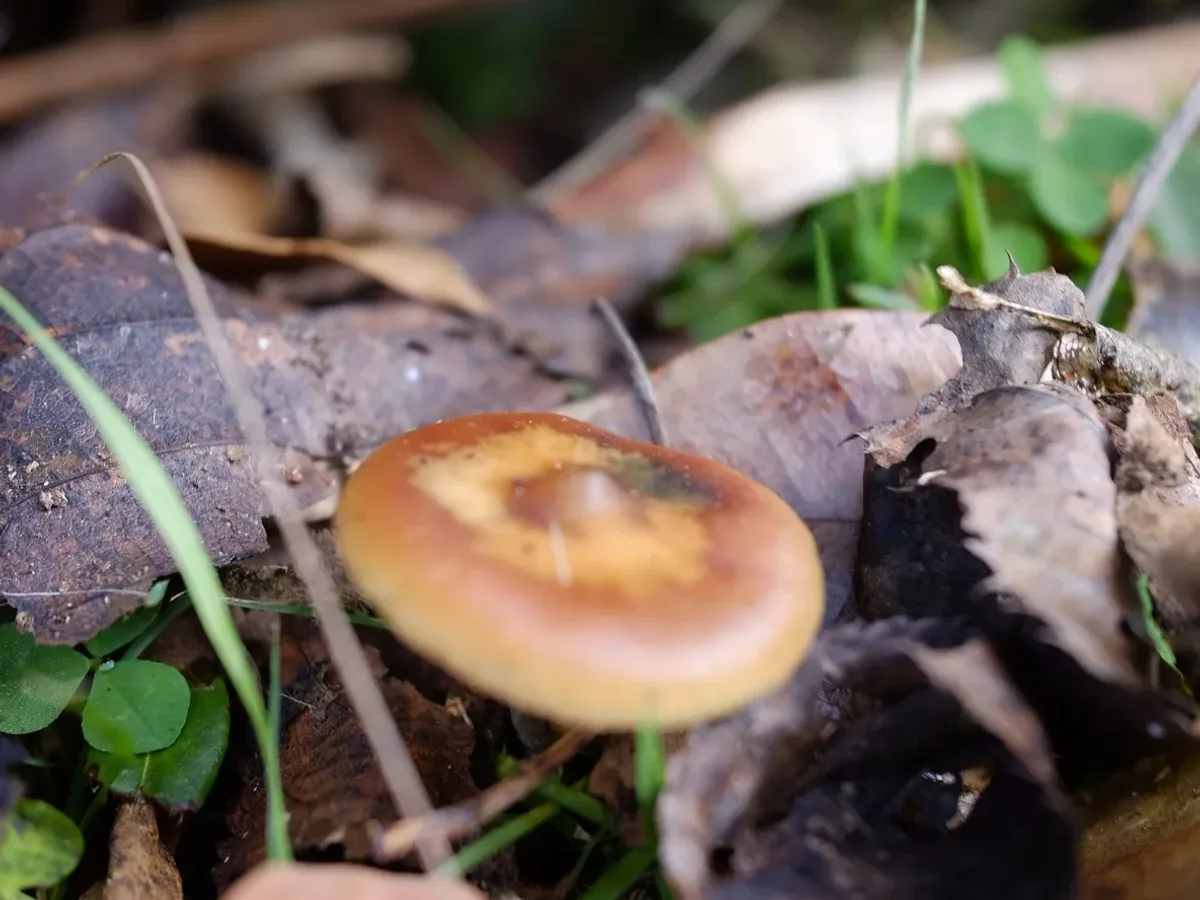 © Michael (CC BY)dannali (CC0)dannali (CC0)
Edible only with the right preparation - or safe for some people but not others. Learn the caveats first.
Never eat a mushroom you are not 100% sure of - check the look-alikes below, and always cook wild mushrooms.
How to recognise it
Cap
The cap is 1-5 cm across, progressing from a sharp conical or bell shape in the button stage to broadly convex or almost flat with a persistent central umbo in maturity.
It is strongly hygrophanous - one of the most reliably hygrophanous Psilocybe species in the Australian region - meaning the colour shifts dramatically with moisture content. Freshly wetted or fog-damp caps are rich chestnut-brown or warm caramel, while caps drying in sunshine turn pale straw-yellow or honey-beige, typically from the centre outward so that both tones are visible at once on a single cap, giving it a halo or target-ring effect.
The surface is smooth and viscid (gelatinous when very wet), often with a faint translucent striate margin visible when wet.
Gills / Pores
Gills are adnate, pale grey when young and maturing to deep purplish-brown as the spores ripen. A dark spore print (purple-brown to near-black) deposited on paper is one of the fastest confirmation tests.
The most biologically distinctive feature is the bluing reaction: when the cap flesh, gills, or stem base is cut, pressed, or bruised, they turn blue-green within seconds to a few minutes - sometimes dramatically so at the stem base.
This colour change is a direct chemical signal of psilocin content (enzymatic oxidation of the compound on exposure to air) and is essentially not found in the deadly Galerina species that share the same substrate.
It is, however, not perfectly reliable as a sole identification tool: old, dried, or very cold specimens may blue weakly or not at all.
Why it's dangerous
There are two distinct danger categories:
- 1Legal: P. subaeruginosa is a prohibited substance in Australia and New Zealand; collecting, possessing, or consuming it is a criminal offence.
- 2Misidentification: the habitat, cap shape, colour, and growth form are shared with Galerina marginata, which contains lethal amatoxins causing delayed (6-24 hours post-ingestion) liver failure.
Any person who has consumed unverified brown mushrooms from wood chips and then develops nausea and abdominal pain - even hours later - must be taken to emergency medicine immediately, and the collected specimens should be preserved for identification.
The bluing reaction and spore print colour are the two most important distinguishing features from Galerina, but they must both be assessed correctly.
Toxin
Psilocybin (O-phosphoryl-4-hydroxytryptamine) is the primary compound, present at approximately 0.4-1.5% of dry weight in P. subaeruginosa - making it one of the more potent naturally occurring psilocybin mushrooms.
Psilocin (4-hydroxytryptamine), the pharmacologically active dephosphorylated form, is present in smaller amounts and is responsible for the bluing reaction on oxidation.
Baeocystin and norbaeocystin are also present and are thought to contribute to the overall pharmacological effect.
All active compounds act as partial agonists at serotonin 5-HT2A receptors in the brain. None of these compounds are amatoxins; they do not cause liver or kidney failure.
Potency varies considerably with substrate, growth conditions, and individual specimen.
Symptoms
Ingestion of psychoactive doses produces:
- nausea and vomiting (common in the first hour)
- pupil dilation
- tachycardia
- heightened sensory perception
- visual and auditory hallucinations ranging from geometric patterns to complex imagery
- emotional lability
- dissolution of self-boundaries
- disorientation
Onset begins 20-60 minutes after ingestion. Duration is typically 4-8 hours.
In vulnerable individuals (pre-existing anxiety disorders, psychotic disorders, or under certain medications - especially SSRIs, MAOIs) effects can be prolonged, more intense, or precipitate a psychiatric crisis.
Accidental ingestion should be monitored in a calm environment. Emergency medical care should be sought if the person becomes acutely distressed, is a danger to themselves, or if Galerina poisoning cannot be excluded (which requires clinical evaluation).
Staying safe
Psilocybe subaeruginosa is psychoactive and carries both pharmacological and legal risks.
Pharmacologically, ingestion produces psilocybin/psilocin intoxication: perceptual distortions, hallucinations, altered time perception, emotional amplification, and tachycardia. These begin 20-60 minutes after ingestion and typically last 4-8 hours depending on dose and individual sensitivity.
Adverse effects include:
- acute anxiety, panic, and psychotic episodes (particularly in individuals with personal or family history of psychotic illness)
- dangerous impairment of judgment (falls, accidents, risky behaviour)
- at high doses, nausea and vomiting
Deaths directly attributable to psilocybin toxicity are extremely rare, but fatal accidents during intoxication have occurred.
The overriding safety concern in the field is misidentification: Galerina marginata causes fatal liver failure and grows on identical substrates. A single Galerina cap can contain a lethal amatoxin dose for an adult.
The bluing reaction in Psilocybe is a useful differentiator but is not 100% reliable in all conditions, and it requires experience to assess correctly.
No untrained person should attempt to use P. subaeruginosa for any purpose.
Where & when it grows
Habitat
Strictly a wood-decay saprotroph with no mycorrhizal associations. Psilocybe subaeruginosa has impressive ecological flexibility centred on lignin-rich substrates:
- in native eucalyptus and mixed sclerophyll forest it fruits from decaying wood, buried rootlets, and woody litter
- in pine plantations it exploits the abundant needle-rich woody duff
- in suburban and peri-urban environments it has become remarkably successful on wood chip mulch used as garden dressing in public parks, urban gardens, roadsides, and schoolgrounds - making it one of the most commonly encountered psychoactive fungi in Australian cities
The expansion of wood chip mulching in Australian horticulture from the 1980s onward has been mirrored by a well-documented increase in urban encounters with this species.
It does not colonise dung (unlike Psilocybe cubensis), so a fruiting body emerging from wood chips or woody soil is the baseline expectation.
When
Fruits in the cool, wet half of the year in the southern hemisphere, broadly from early autumn (March) through the end of winter (August). The most dependable fruiting is from May to June, when night temperatures are consistently cool and rainfall accumulates.
Each significant autumn rain event - particularly those dropping 20 mm or more over 2-3 days - tends to trigger a flush roughly 5-10 days later, with the speed depending on how warm the soil remains.
Fruiting bodies are short-lived: they develop, mature, and autolyse (liquefy at the margin) within 4-7 days. The same wood chip bed or log may produce multiple flushes across a season.
How it grows
Typically solitary to scattered, occasionally loosely clustered around the same decaying wood mass, but without the tight, multi-stemmed tufting seen in Hypholoma or Kuehneromyces.
Each fruit body develops from white mycelial threads visible in the wood chip substrate.
The full lifecycle from pin to mature cap takes 5-10 days in cool conditions (10-14 °C). In warmer conditions (above 18 °C) development is faster, but caps tend to be smaller and thinner.
After spore dispersal the cap margin begins to curl upward and liquefy, often leaving only the pale stem as evidence of the flush.
Fruiting conditions
Autumn-winter saprotroph triggering on cooling temperatures combined with accumulated rainfall. In southeastern Australia the critical threshold is a soil temperature dropping below approximately 16-18 °C combined with at least 20 mm of rain over 1-2 weeks; flushes typically appear 5-12 days after a significant rain event in the April-June window. Wood chip beds warm and cool faster than native soil, so microhabitat temperature modulates timing. Multiple flushes from the same substrate bed occur across the season.
Look-alikes
The most important and dangerous confusion is with Galerina marginata, a deadly species that grows on the same woody substrates (wood chips, decaying logs, sawdust) and is superficially very similar.
Galerina lacks the bluing reaction, has a rusty-cinnamon (not dark purple-brown) spore print, often has a more persistent and well-formed membranous ring, and its cap colour tends to be more uniformly tawny-honey without the strongly two-toned hygrophanous effect of P. subaeruginosa. But these differences require careful, experienced comparison, and some characters vary with age and weather.
Because Galerina contains amatoxins at concentrations sufficient to cause fatal liver failure, any brown mushroom on wood chips must be positively identified with certainty before any handling decision.
Other wood-substrate look-alikes:
- Hypholoma fasciculare (sulphur tuft, poisonous): grows in denser tufts, has a brighter sulfur-yellow cap and stem, intensely bitter taste, greenish-yellow young gills, and a purplish-brown spore print (similar to Psilocybe) but lacks the bluing reaction.
- Hypholoma lateritium (brick cap): more brick-red at the centre, grows in tight clusters, lacks the bluing reaction, and has a dark purplish-brown spore print.
- Kuehneromyces mutabilis (sheathed woodtuft, edible): has a two-toned hygrophanous cap like P. subaeruginosa but a distinctly scaly lower stem and produces a cinnamon-brown spore print without the purplish tinge; it does not blue.
- Stropharia species on wood chips: may be similar but tend to be larger, with greenish or olive tones, and lack the bluing reaction.
Galerina marginata grows on the same woody substrates - wood chips, rotting logs, sawdust - and is superficially very similar in cap shape, colour, and size. Critical differences: Galerina does NOT blue when bruised or cut; its spore print is rusty-cinnamon (not dark purple-brown); its ring is typically more persistent and membranous; and the cap colour is more uniformly tawny-honey without the strongly two-toned hygrophanous haloing effect of P. subaeruginosa. Galerina contains lethal amatoxins (alpha-amanitin) at concentrations sufficient to cause fatal liver failure from a single cap. All differences must be confirmed with certainty before drawing any conclusion; when in doubt, treat as Galerina.
Distinctly brick-red to rusty-orange at the cap centre (not caramel-brown), grows in tight dense tufts from hardwood stumps, does not blue, and has a dark purplish-brown spore print. Disputed edibility; not present in Australia-NZ.
Edible species with a similar two-toned hygrophanous cap but has a distinctly scaly lower stem below a well-formed ring, produces a cinnamon-brown (not purplish-brown) spore print, and does not blue when bruised. More common in the Northern Hemisphere.
Bright sulfur-yellow cap and stem without hygrophanous colour change; grows in dense multi-stemmed clusters rather than scattered; intensely bitter taste; greenish-yellow gills when young; purplish-brown spore print (similar to Psilocybe); NO bluing reaction. Poisonous, causing gastrointestinal illness.
Grows on disturbed ground and grass margins rather than wood chips; cap surface is shaggily fibrous-scaly (not smooth and viscid); gills weep dark droplets of liquid when young (a unique character); does not blue. Spore print dark blackish-brown with a warty texture.
A reference guide - never an edibility guarantee. When in doubt, leave it out.