Southern Podostroma
Podostroma alutaceumsyn. Hypocrea alutacea, Podostroma alutaceum (Cleland & Cheel) Cleland
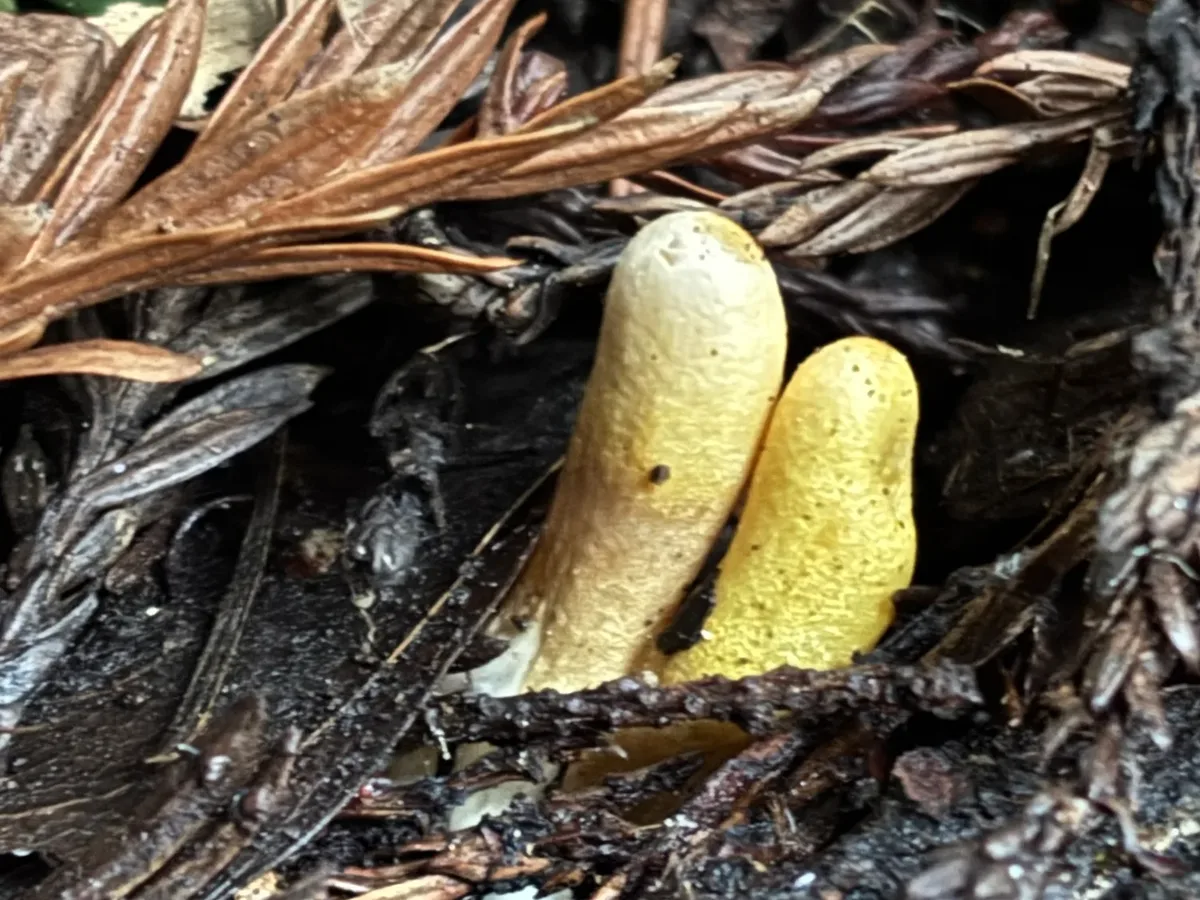 © reagan peschke (CC BY)
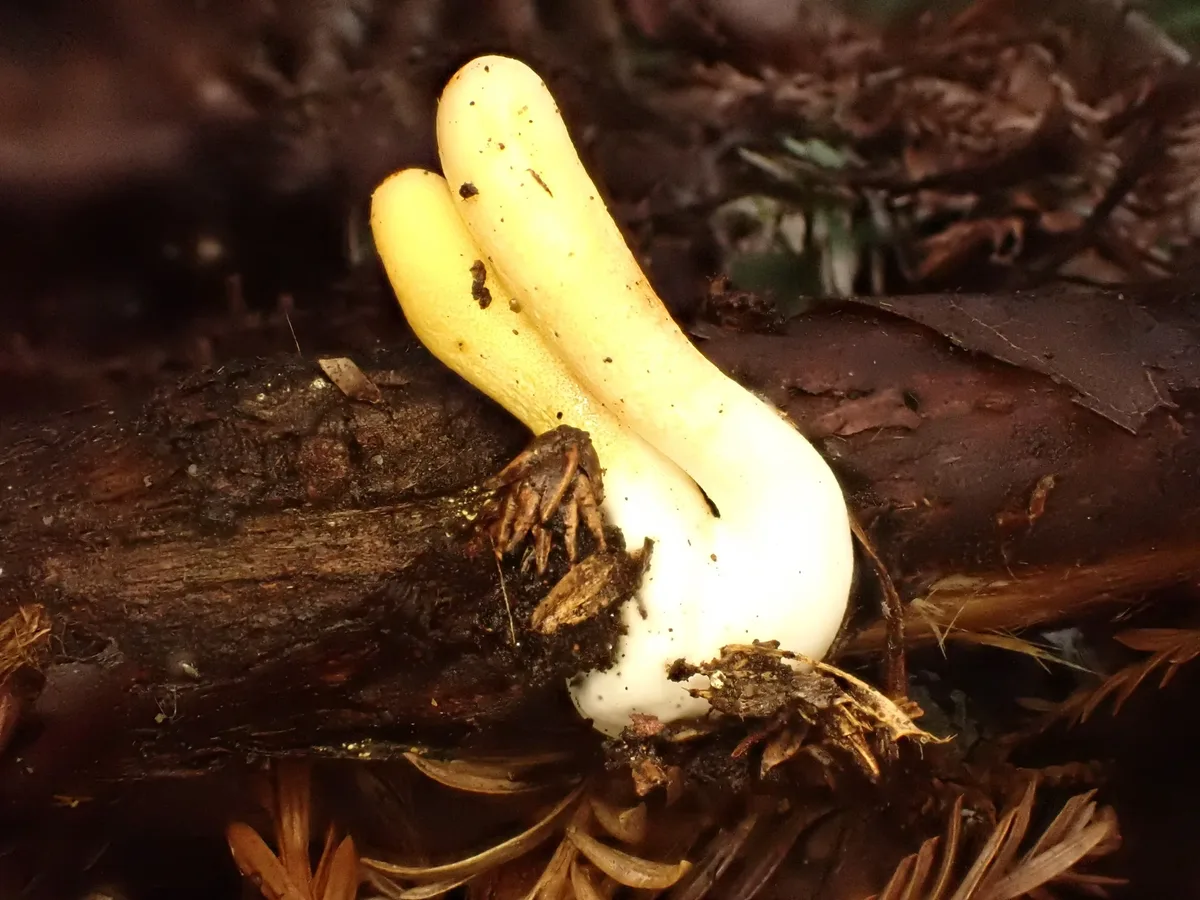 © reagan peschke (CC BY)
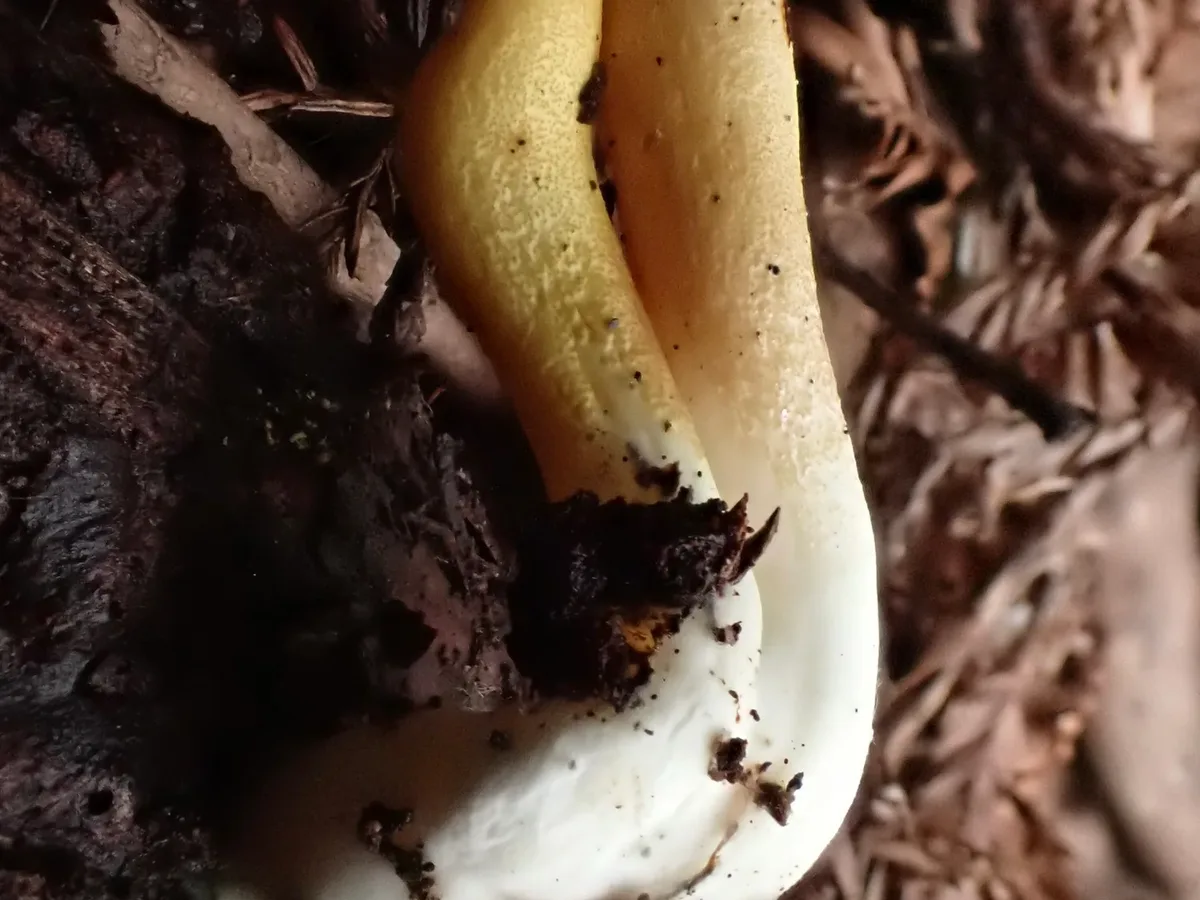 © reagan peschke (CC BY)
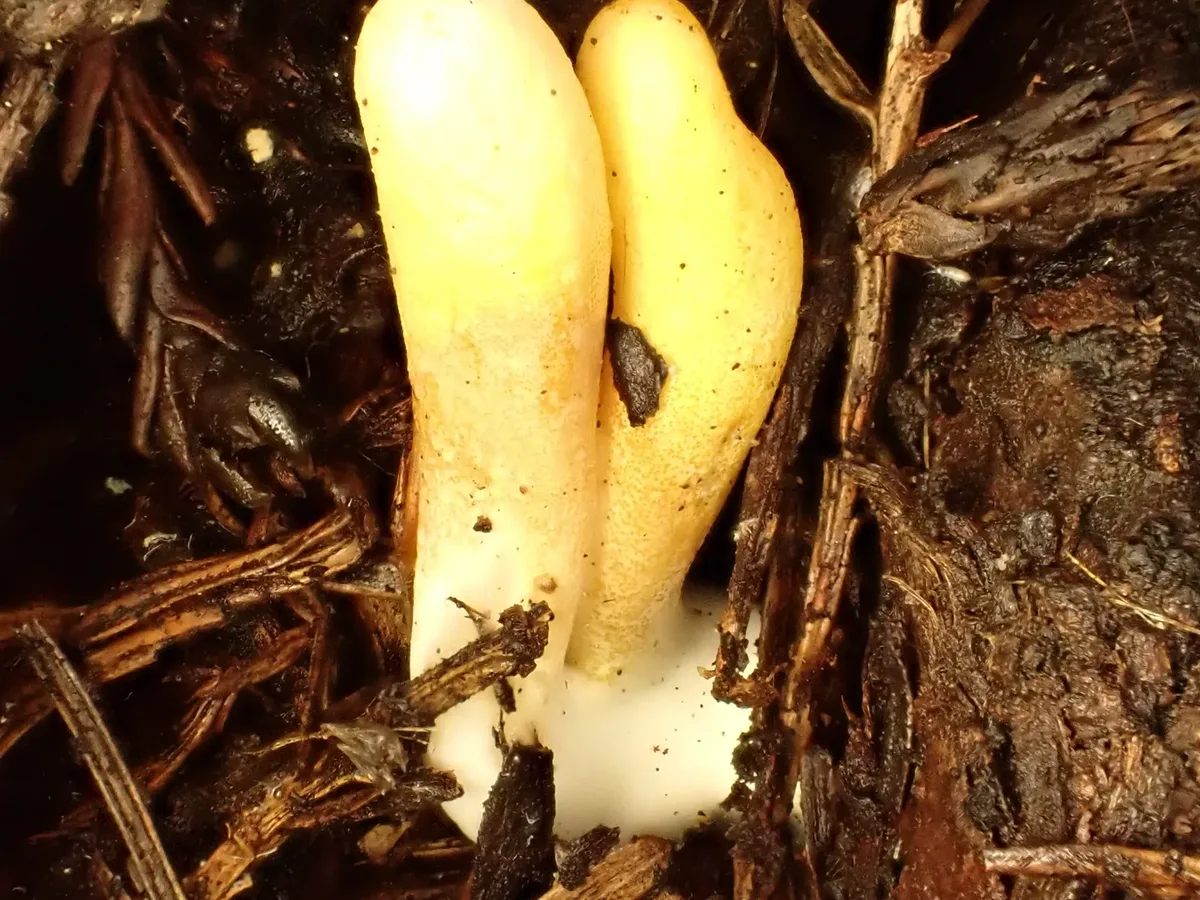 © reagan peschke (CC BY)
 © reagan peschke (CC BY)© reagan peschke (CC BY)© reagan peschke (CC BY)
Toxic - and the most serious cases can be fatal. Never eat it, and wash your hands after handling.
Never eat a mushroom you are not 100% sure of - check the look-alikes below, and always cook wild mushrooms.
How to recognise it
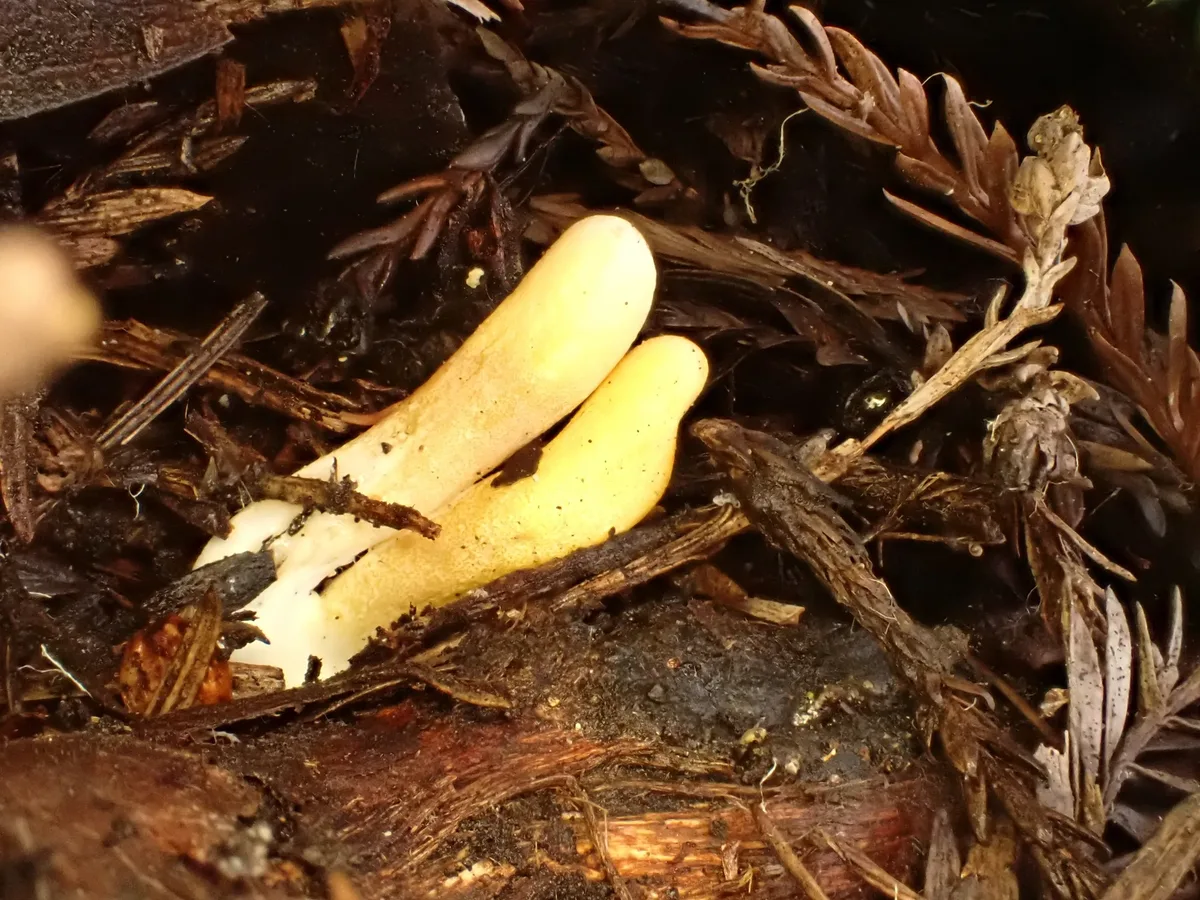
Podostroma alutaceum is a club-shaped or spathulate ascomycete standing 2-8 cm tall, pale tan to pale ochre-buff in colour - the specific epithet alutaceum, from the Latin for leather, captures the understated, pale tan hue precisely.
The fruiting body is smooth, dry, and featureless on the surface: no gills, pores, spines, or veil of any kind. The cross-section reveals a solid white to pale yellow interior throughout.
The base narrows to a paler, stalk-like structure that attaches to the decaying wood substrate. Young specimens are particularly smooth and uniform; older ones may develop a faintly grainy texture on the upper fertile surface as asci and ascospores mature.
The pale colour and clean club shape are the most immediate field characters, but they are also shared with a range of unrelated edible and non-edible species - the absence of distinctive colour is precisely what makes this species easy to misidentify.
It does not stain, bleed, or change colour when handled or cut.
Why it's dangerous
DEADLY. Podostroma alutaceum is treated as a deadly species on the basis of its trichothecene mycotoxin content, consistent with the well-documented toxicology of the closely related Trichoderma cornu-damae (Poison Fire Coral), which has caused documented human fatalities in Japan and is confirmed to contain the same toxin class.
No minimum safe dose has been established. Trichothecene toxins are heat-stable and not destroyed by any cooking method; even a small amount of material is sufficient to initiate multi-organ toxicity.
The unassuming pale tan appearance of P. alutaceum means it does not carry the obvious visual warning that the vivid red T. cornu-damae does. A forager who knows to avoid red 'fire coral' mushrooms might not recognise the pale Australian Podostroma as equally dangerous.
If ingestion is confirmed or suspected, treat it as a life-threatening medical emergency.
Toxin
Podostroma alutaceum is understood to contain trichothecene mycotoxins, the same class of sesquiterpene epoxide compounds documented in its close relative Trichoderma cornu-damae (Poison Fire Coral).
Trichothecenes are potent inhibitors of eukaryotic protein synthesis, binding to ribosomal subunits and blocking peptide chain elongation. This mechanism causes widespread cellular damage in tissues with high protein turnover rates, disproportionately affecting:
- Gut epithelium
- Liver
- Kidney
- Vascular endothelium
- Bone marrow
The specific trichothecene compounds present in P. alutaceum have not been fully characterised in published literature, but the Hypocreaceae family's toxicological profile strongly supports treating it as carrying equivalent risk to T. cornu-damae.
Critically, trichothecene toxins are heat-stable and are not inactivated by any standard cooking, drying, or food preparation technique - including prolonged boiling and alcohol extraction.
Symptoms
Trichothecene poisoning typically begins 30 minutes to several hours after ingestion with acute gastrointestinal symptoms: nausea, vomiting, abdominal cramps, and profuse diarrhoea leading to dehydration.
This initial phase is followed by progressive systemic toxicity: fever, hypotension, and signs of multi-organ involvement. Over hours to days, this may develop into:
- Renal injury (oliguria, elevated creatinine)
- Hepatocellular damage (elevated transaminases)
- Coagulopathy consistent with disseminated intravascular coagulation
- Bone marrow suppression (leukopenia, thrombocytopenia)
Neurological features including altered consciousness have been reported in severe trichothecene poisonings, along with dermatological effects such as skin desquamation and erythema - reflecting the epitheliotoxic properties of this compound class.
Death from multi-organ failure can occur within 12-48 hours in severe cases. Early presentation to emergency services significantly improves outcomes.
Staying safe
Podostroma alutaceum is treated as a deadly poisonous species. Its trichothecene mycotoxin content is consistent with other documented toxic Australian Hypocreaceae, and no safe culinary use has been established or proposed for any Podostroma species.
- If you have touched this species with bare hands, wash thoroughly with soap and water.
- If any material has been ingested - even a small amount, including tasting - seek emergency medical care immediately without waiting for symptoms, as trichothecene toxicity may have a delayed onset.
- In Australia, contact the Poisons Information Centre on 13 11 26; in New Zealand, contact the National Poisons Centre on 0800 764 766.
- Describe the mushroom as a pale club-shaped hypocreaceous ascomycete and specify trichothecene mycotoxins as the suspected toxin class so clinical staff can initiate appropriate supportive care.
Where & when it grows
Habitat
This species is a saprotrophic decomposer of native hardwood in Australian forests: its mycelium colonises decaying logs, stumps, and buried woody roots, extracting nutrients from structural carbohydrates and lignin left behind by dead trees.
Because it is saprotrophic rather than mycorrhizal, it is not tied to a living tree host - it can fruit wherever suitable decaying native hardwood substrate is present, including at some distance from any standing tree.
Southeastern Australia (South Australia, Victoria, New South Wales, Queensland) is the documented distribution, consistent with its original description from South Australia by Cleland and Cheel.
Moist sclerophyll forest appears to be a preferred setting, providing both the right substrate and the sustained moisture conditions that favour fruiting.
It does not colonise exotic timber, pine plantations, or garden settings, and is not expected outside native forest environments.
When
Fruiting in the Southern Hemisphere autumn and winter - broadly March to August, with the main peak from April to June.
Unlike mycorrhizal species whose fruiting is triggered by surface rainfall penetrating to root depth, Podostroma alutaceum as a wood-decay species responds primarily to moisture saturation within its decaying woody substrate.
This means fruiting can be more variable in timing: a log that stayed damp through summer may produce fruit bodies earlier than one that dried out, while conversely a very dry autumn may delay fruiting until winter rains saturate the wood.
In practice, look for it after extended wet periods in autumn and early winter in native forest, when decaying logs and stumps have been thoroughly moistened for at least two to three weeks.
How it grows
As a saprotrophic ascomycete in the family Hypocreaceae, Podostroma alutaceum grows from a perennial mycelium established within decaying native hardwood. The mycelium may occupy a substrate for months or years before fruiting conditions are met, and the visible club-shaped fruiting bodies are the short-lived sexual stage of a much longer-lived organism.
When conditions are right - adequate substrate moisture, appropriate temperature range - fruiting bodies push up from the wood surface or through the overlying leaf litter within a few days to a week. They may appear singly or in groups of two to six at a shared substrate point.
The genus Podostroma (and the closely related genus Trichoderma) belongs to the Hypocreaceae, a family that contains some of the most important biocontrol fungi in agriculture as well as some of the most dangerous toxin-producing species known.
The toxin-producing hypocreaceous fungi represent a fascinating and still incompletely understood evolutionary development within an otherwise primarily saprotrophic and entomopathogenic lineage.
Fruiting conditions
Saprotrophic wood-decay species: fruiting is driven by sustained moisture saturation of the decaying woody substrate over an extended period (typically 2-4 weeks of wet conditions) rather than by a single rainfall event. Soil temperature range reflects the Southern Hemisphere autumn-winter fruiting window (March-August). Flush lag is longer than for mycorrhizal species because the moisture must penetrate and saturate the woody substrate before fruiting is triggered.
Look-alikes
The most dangerous resemblance is to other Podostroma and Trichoderma species:
- Trichoderma cornu-damae (Poison Fire Coral) - the primary concern, particularly where that species produces paler or less vividly red-orange specimens, or where material is encountered dried or weathered. It is typically brilliant red-orange to scarlet and usually easily distinguished from the pale tan P. alutaceum in fresh condition, but in some lighting conditions, on weathered specimens, or where the intense colour has faded, confusion is possible - and both species carry trichothecene-class deadly risk.
- Clavaria and Clavulinopsis species (true coral fungi in Basidiomycota) - within Australia, these pale clavate or club-shaped fungi produce similarly shaped white to pale yellow or buff fruiting bodies; they differ from Podostroma in being more translucent, fragile, and often growing from soil among grass or litter rather than directly from decaying wood.
- Ganoderma - dried or young stages very rarely produce club-shaped growths but are typically associated with a developing bracket.
Any pale, club-shaped to spatula-shaped fungus growing directly from decaying hardwood in southeastern Australian native forest must be treated with caution.
Several other club-shaped or clavate hypocreaceous ascomycetes occur in Australia, including species in Hypocrea and related genera. Some are orange to red, others tan or greenish. All should be treated with extreme caution; none has an established safe edibility record, and the toxin-producing capacity of the Hypocreaceae makes any club-shaped wood-inhabiting ascomycete in native Australian forest a species to leave alone unless definitively identified by a specialist.
Trichoderma cornu-damae is typically vivid red-orange to scarlet - a much more intense colour than the pale tan of Podostroma alutaceum - and often more elaborately branched. However, weathered, dried, or immature T. cornu-damae specimens can appear less vividly coloured and may approach the pale tones of P. alutaceum. Both species belong to the Hypocreaceae and carry trichothecene mycotoxins; both are deadly. If you cannot confirm which species a pale-to-orange club-shaped hypocreaceous fungus is, treat it as deadly regardless.
Clavulinopsis fusiformis produces bright yellow spindle-shaped fruiting bodies clustered in grass and woodland soil - more vivid in colour than the pale tan of Podostroma alutaceum and arising from soil rather than wood. Some related Clavulinopsis species are paler, but again the soil substrate rather than decaying wood separates them from Podostroma definitively.
True coral fungi in the genus Clavaria (and related genera such as Clavulinopsis) produce white to pale yellow, cream, or buff club-shaped fruiting bodies that may superficially resemble Podostroma alutaceum. The key distinction is substrate: Clavaria species grow from soil, often among grass or moss, rather than directly from decaying wood. Clavaria fruiting bodies are also typically more fragile and translucent, with a hollow or spongy interior, compared to the firm, solid flesh of Podostroma. If a pale club-shaped fungus is growing directly from a decaying log or woody debris, it is not Clavaria.
A reference guide - never an edibility guarantee. When in doubt, leave it out.