Olive oyster
Pleurotus purpureo-olivaceussyn. Agaricus purpureo-olivaceus Berk. & Broome, Pleurotus purpureo-olivaceus (Berk. & Broome) Sacc.
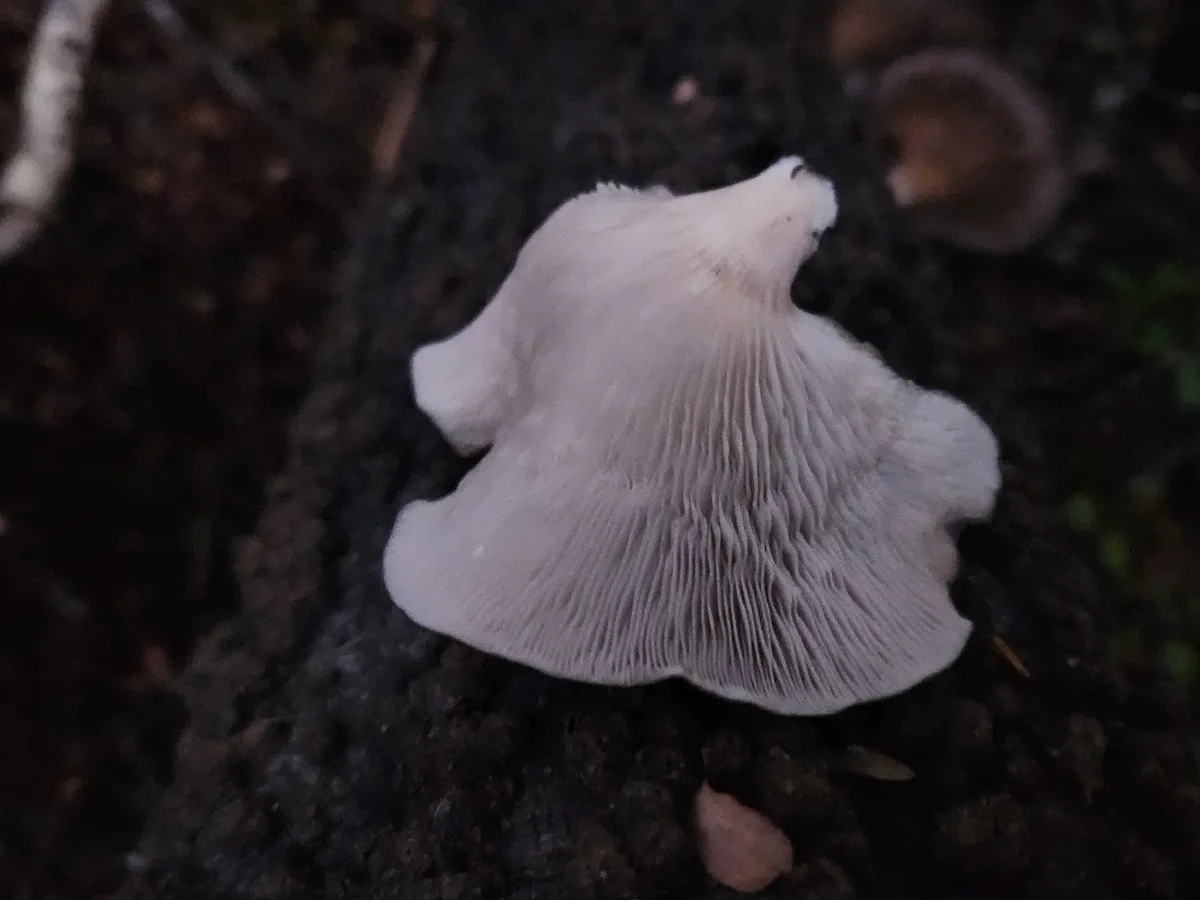 © claire (CC BY)
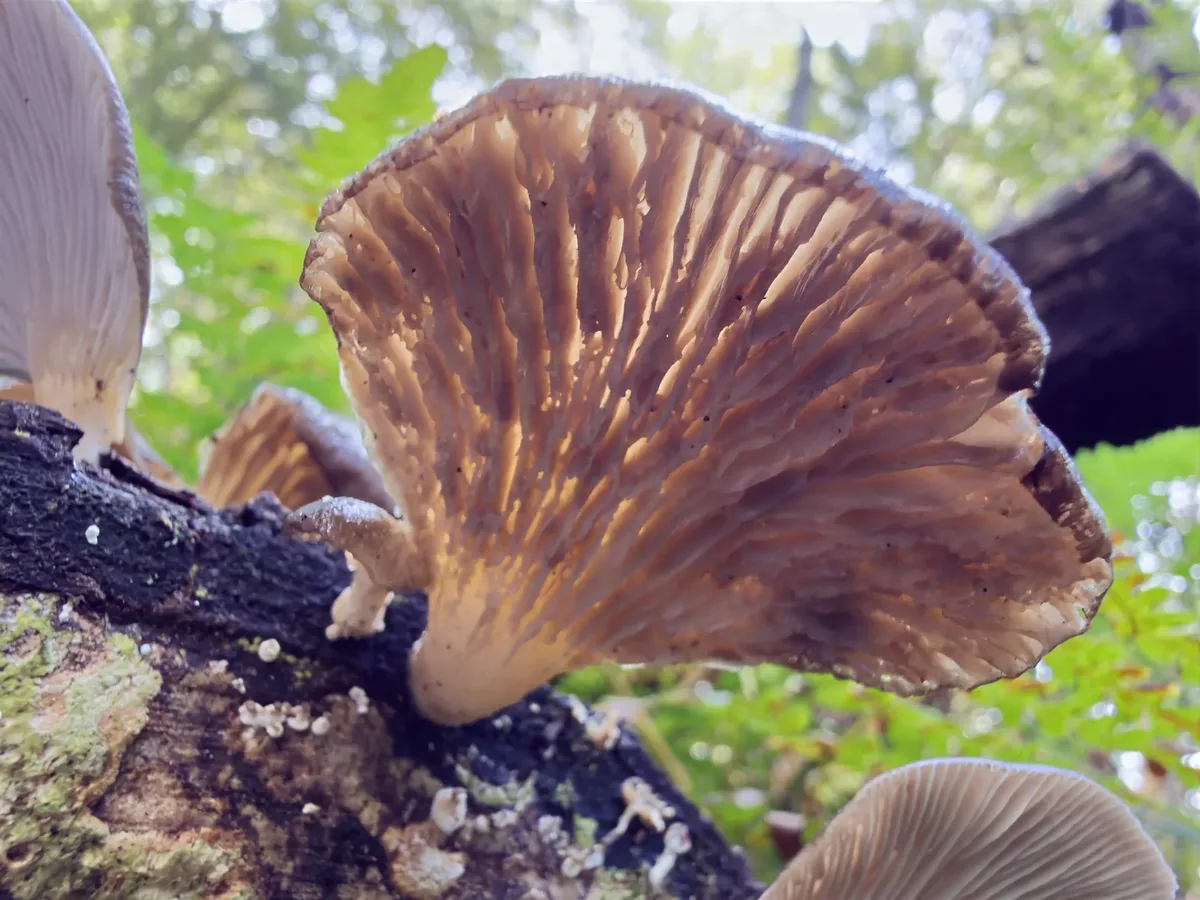 © Jeremy Rolfe (CC BY)
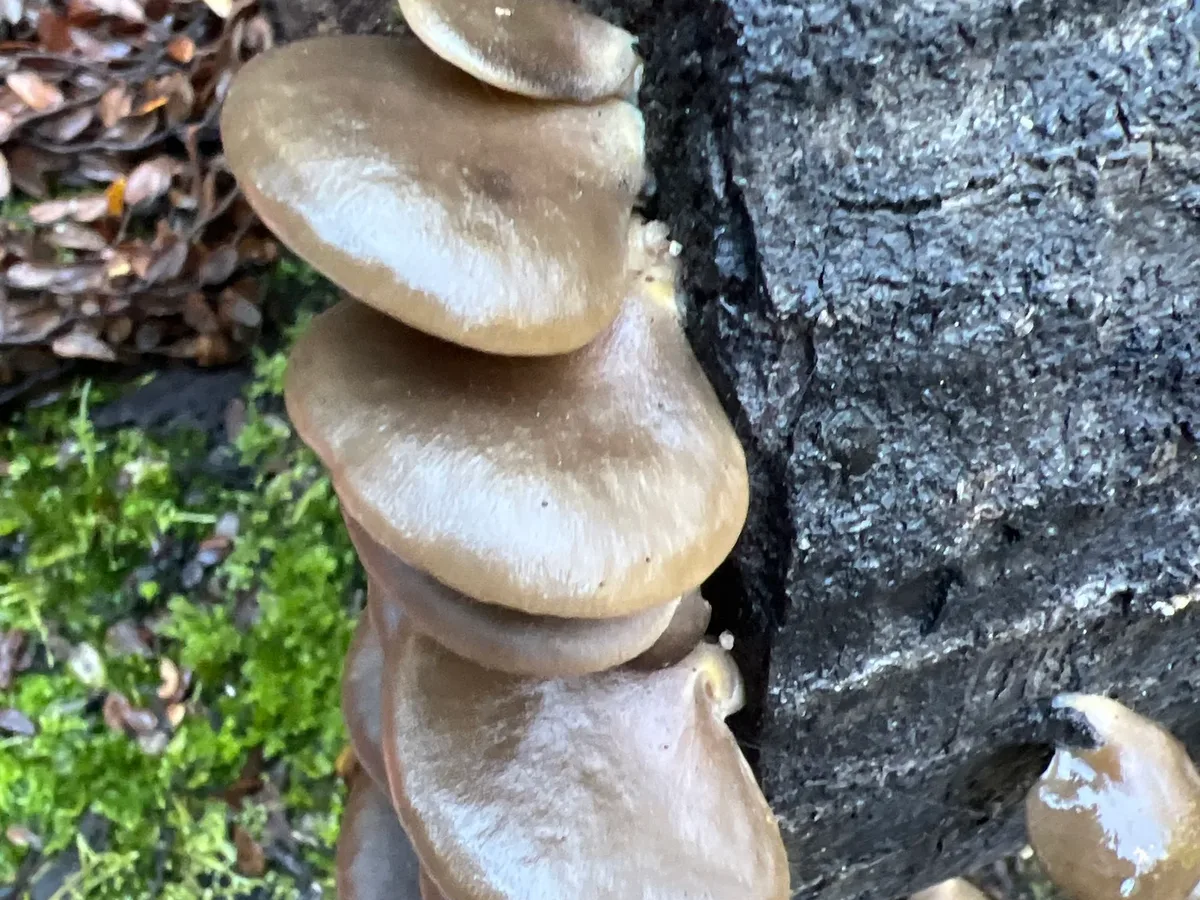 © David Orlovich (CC BY)
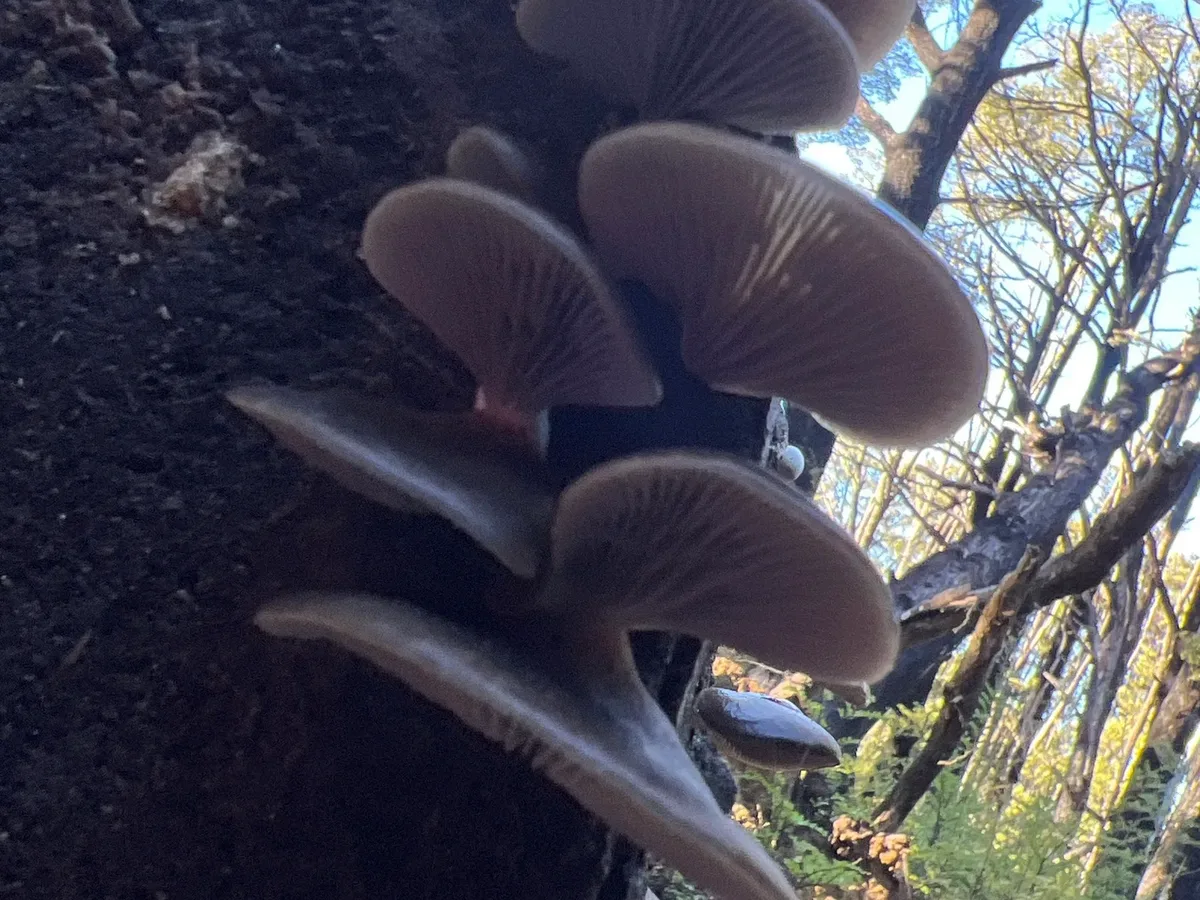 © David Orlovich (CC BY)
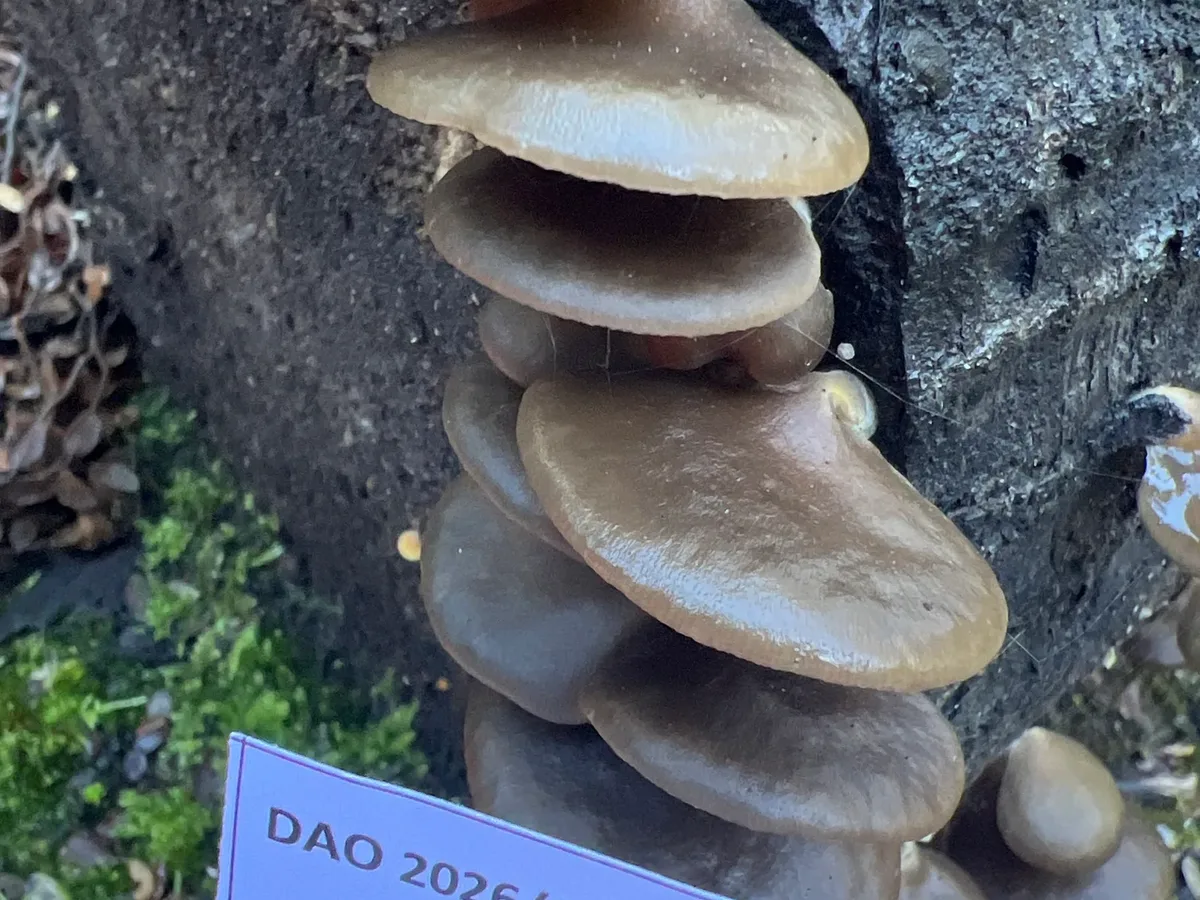 © David Orlovich (CC BY)
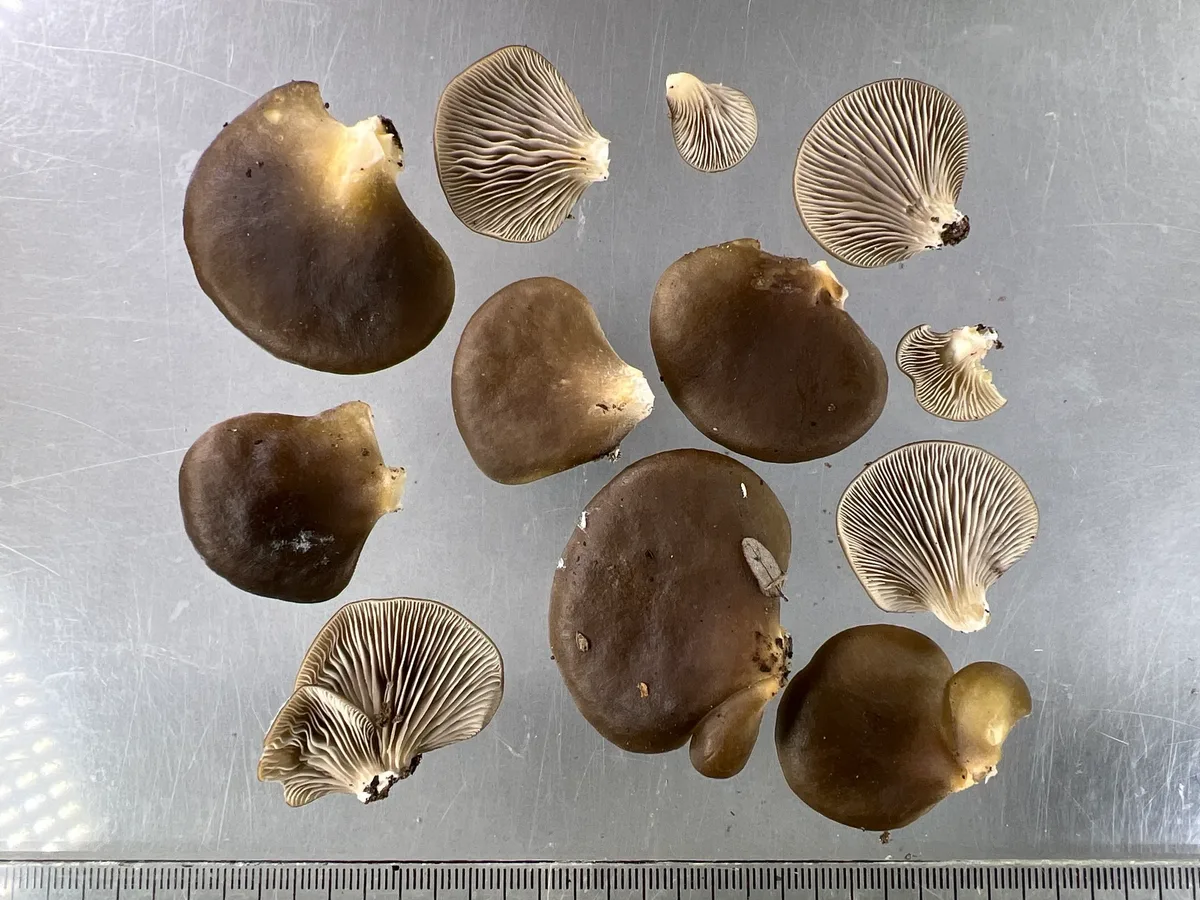 © David Orlovich (CC BY)
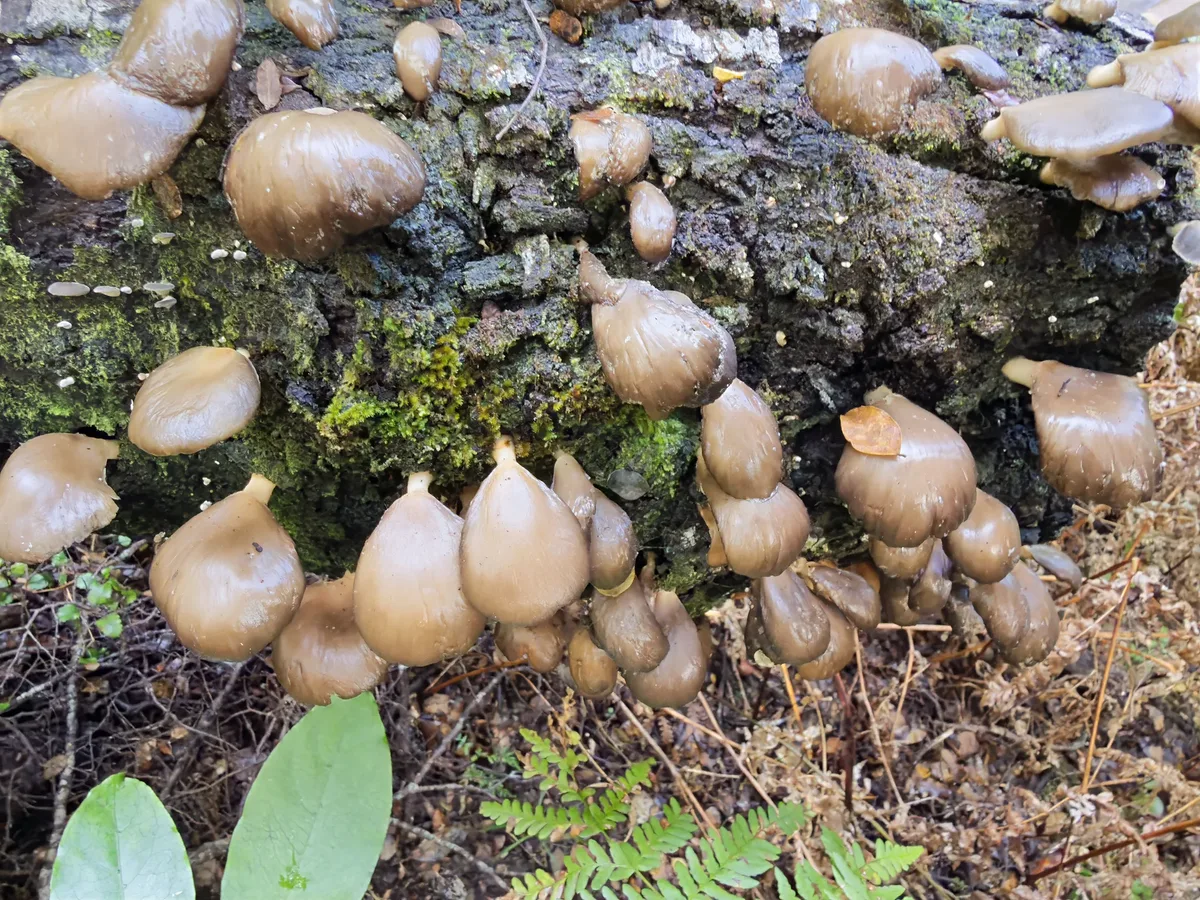 © Jeremy Rolfe (CC BY)
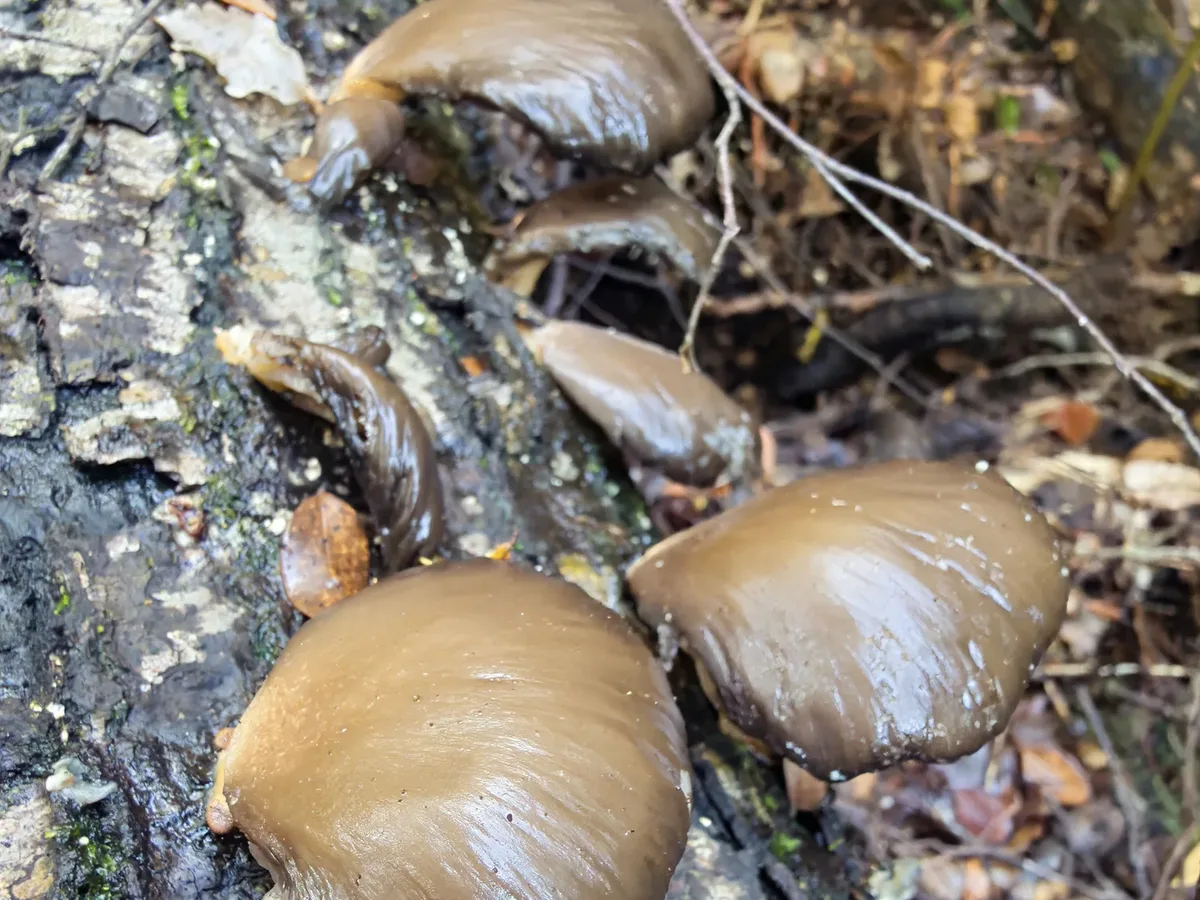 © Jeremy Rolfe (CC BY)
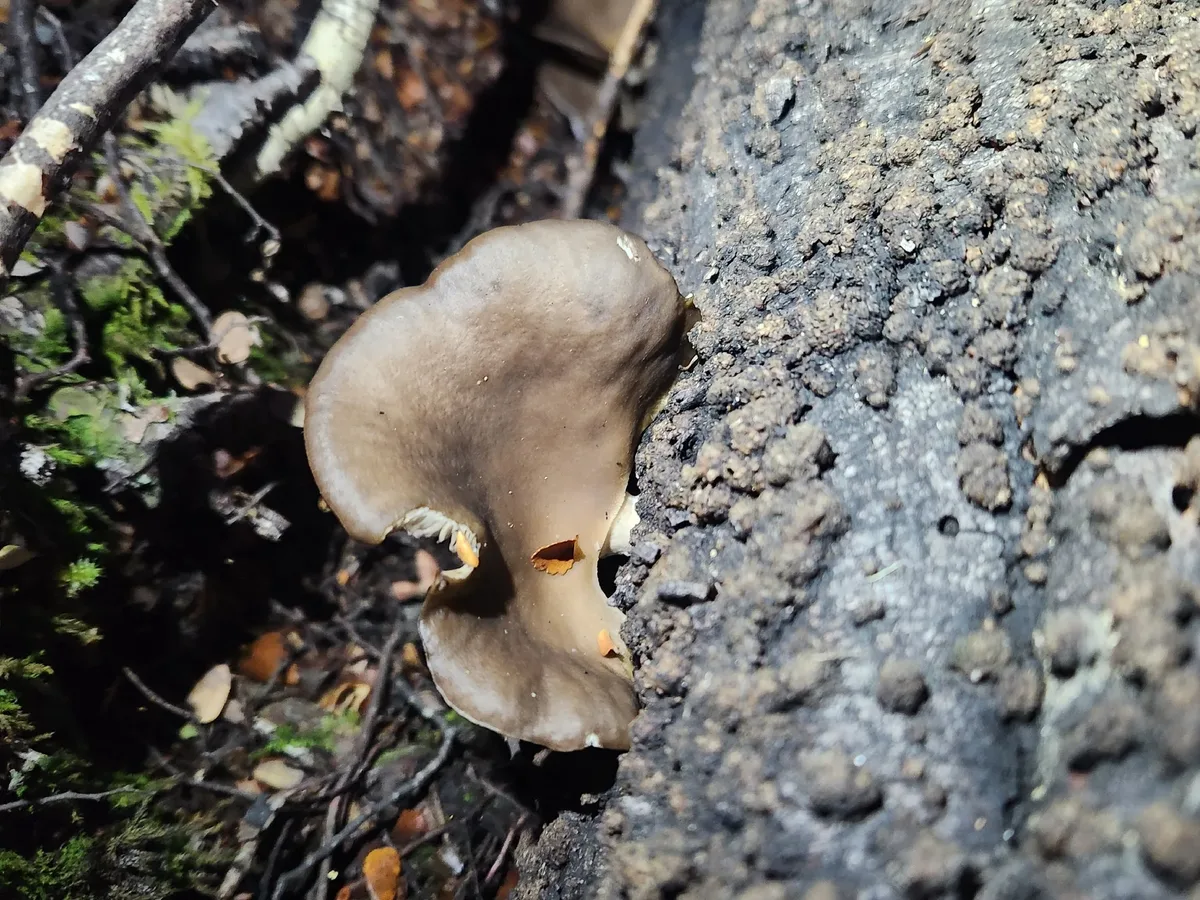 © claire (CC BY)
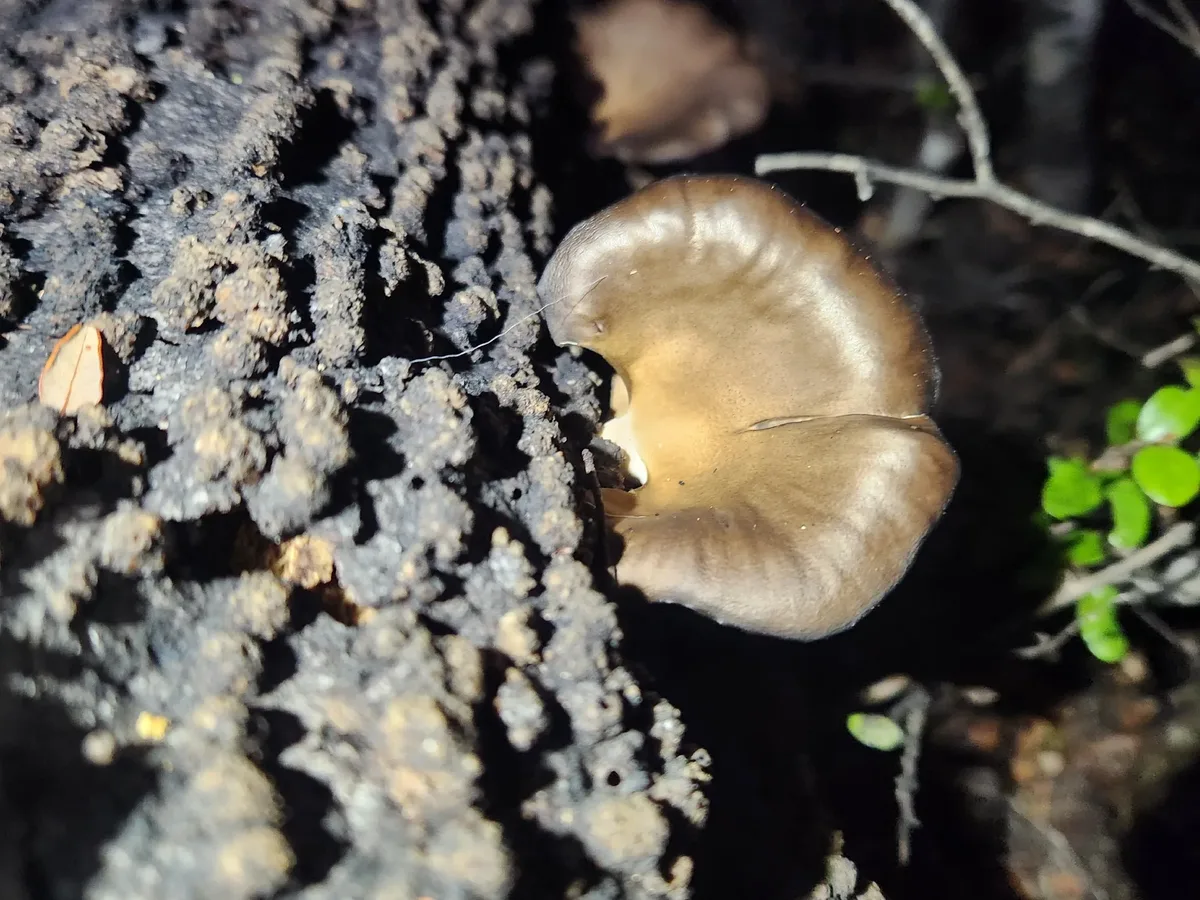 © claire (CC BY)© claire (CC BY)© Jeremy Rolfe (CC BY)
Good to eat, once you have identified it with certainty and cooked it through.
How to recognise it
Pleurotus purpureo-olivaceus carries one of the more distinctive colour signatures in the oyster mushroom genus: the cap combines purplish and olive pigments that produce tones ranging from grey-olive and brownish-olive to purple-tinged brown-grey, depending on age, humidity, and light conditions.
This subdued, layered colouration is what the scientific name describes - purpureo (purple-tinged) combined with olivaceus (olive). In practice the colour can resemble a somewhat darker, purple-washed version of the grey oyster (Pleurotus ostreatus), and the olive component may be subtle in older or drier specimens.
Cap
The fan-shaped to shell-shaped cap, 3-12 cm across, is smooth to finely felty with a wavy, inrolled margin when young.
Colour fades noticeably with age and drying, so fresh, young specimens in humid conditions show the diagnostic olive-purple tones most clearly.
When evaluating a possible specimen, examine the cap top in natural light: the olive undertone is often most visible at the centre, while the margin may appear greyer.
Gills
Gills are crowded, white to cream, and run decurrently down the short lateral stem - the classic oyster mushroom pattern shared across the genus.
The spore print is white to faint lilac-white.
Stem
The stem is short, firm, and white to pale grey.
Flesh
Flesh is white throughout, firm, and mild-smelling.
Where & when it grows
Habitat
This species is a wood-rotting saprobe of humid subtropical and warm-temperate forests in the Australasian region. It breaks down the cell walls of dead hardwood through white-rot enzymatic activity - bleaching the wood pale as it digests cellulose and lignin.
Fruiting bodies emerge directly from bark surfaces or exposed cut faces of fallen logs and stumps, often appearing on the lower flanks or underside of logs in contact with moist leaf litter or soil.
Unlike ectomycorrhizal species that require a living tree partner, Pleurotus purpureo-olivaceus needs only adequate dead hardwood and sufficient humidity. It can therefore colonise a wider range of degraded habitats, forest edges, and riparian zones where fallen timber accumulates.
Eastern Australia - particularly the humid coastal fringe from Queensland to the mid-New South Wales coast - provides the most reliable wild habitat, and it has also been recorded from parts of the Pacific and Southeast Asia.
When
Fruiting is driven primarily by humidity and temperature rather than strict photoperiod.
In the Southern Hemisphere, autumn (March-May) is the main peak: post-summer rains rehydrate the substrate and cooler temperatures reduce evaporative stress on developing fruiting bodies. A secondary flush occurs in spring (September-November) during warming but still-moist conditions.
In the humid subtropics and tropics, significant rainfall at any time of year can trigger fruiting, and the 'season' becomes a broad wet-period phenomenon rather than a calendrical one. The species does not fruit in cold, dry winter conditions.
Practically, after any significant rain event of 25 mm or more in warm-to-mild weather, it is worth checking known logs within one to two weeks.
How it grows
A white-rot saprobe forming its fruiting bodies singly or in small overlapping clusters directly from wood.
The mycelium colonises dead hardwood and can persist in a substrate for years, producing successive flushes from the same log across multiple seasons. The above-ground fruiting body is only the reproductive tip of a much larger mycelial network ramifying through the wood.
Flush development is fast under warm, humid conditions: primordia visible to the naked eye can reach harvest-ready size in 4-8 days.
Multiple flushes from the same piece of substrate are possible if the wood remains moist and the mycelium is not exhausted.
Fruiting conditions
Fruiting is triggered by significant rainfall (25 mm or more over 14 days) combined with mild to warm temperatures. In the Southern Hemisphere, the main autumn flush (March-May) follows post-summer rains as temperatures cool. A secondary spring flush (September-November) occurs when warming temperatures coincide with remaining soil moisture. Flush lag from triggering rain event to harvest-ready caps is 5-14 days depending on temperature. Above 30 °C and below 12 °C fruiting is suppressed.
Look-alikes
The main confusion risk in the field is with other Pleurotus species and related wood-growing gilled fungi. The olive-purple colouration, while characteristic, is subdued and variable, so other oyster mushrooms warrant mention:
- Pleurotus ostreatus (grey/pearl oyster) - the most likely confusion species; it shares the fan-shaped cap on wood with white decurrent gills but is typically grey to slate-blue or brownish-grey without any olive or purple tones. Fully edible and excellent; confusion would result in eating another fine mushroom.
- Pleurotus pulmonarius (lung oyster, summer oyster) - paler, white to very light greyish-brown, lacking any olive or purple component; also edible.
- Crepidotus spp. - small (rarely exceeding 3 cm), kidney-shaped, sessile on wood; white when young but gills develop brown tones as spores mature (brown spore print), which definitively separates them from Pleurotus (white spore print). Not seriously dangerous but not culinary.
- Phyllotopsis nidulans (mock oyster / stinking oysterling) - bright orange to orange-yellow, no olive tones, and produces a powerfully unpleasant odour of rotten cabbage. Unmistakable once smelled.
- Hohenbuehelia spp. - small, gelatinous-fleshed oysterlings on wood; rarely exceeding 3-4 cm and with distinctly gelatinous or viscid flesh unlike the firm flesh of Pleurotus. Not toxic but poor eating.
None of the realistic field lookalikes in the Australasian range are known to be lethally dangerous to humans.
Small (rarely over 3 cm), sessile or with a minute rudimentary stem, growing in overlapping fans on wood. White when young but gills turn cinnamon-brown as spores mature; spore print brown rather than white. These features - small size and brown spore print - absolutely separate them from Pleurotus. Not seriously toxic but unpalatable.
The most common confusion species - same fan-shaped pleurotoid cap on wood with white decurrent gills and short lateral stem. P. ostreatus is grey to slate-blue or pale brownish-grey without olive or purple tones. Both are edible and valuable; confusion results only in eating another excellent mushroom. In the absence of the olive-purple cap colour, confirm white spore print and wood substrate.
Small oysterling relatives on dead wood; distinguished from Pleurotus by distinctly gelatinous or viscid flesh and much smaller size (typically 1-4 cm). The gelatinous texture is immediately apparent on handling. Not toxic but not worthwhile eating.
Very similar pleurotoid form on wood but consistently pale white to very light grey-brown, lacking any olive or purple pigmentation. Edible and good. Also sometimes called the summer oyster mushroom; the two species often grow in overlapping seasons. Harmless confusion between two edible species.
Grows on wood in overlapping habitat but is immediately distinguished by its bright orange to egg-yolk-yellow colouration and a powerfully unpleasant odour of rotting vegetation or sewer gas - completely unlike the mild pleasant smell of Pleurotus purpureo-olivaceus. Unpalatable and not recommended for eating, but not lethally dangerous.
In the kitchen
Picking & cleaning
Harvest while the cap margin is still incurved to just beginning to flatten and the gills are white and fresh-looking; at this stage texture and flavour are at their best.
Caps that have begun to cup upward, dry at the edges, or show yellowing gills are past prime for the table.
Twist and pull cleanly from the wood surface, or use a knife to cut the short stem at the base.
Carry in a basket rather than a sealed bag to allow airflow; these oyster mushrooms deteriorate quickly after picking. Refrigerate immediately and use within one to two days.
Clean with a soft brush or dry cloth; avoid washing unless necessary, as the flesh absorbs water readily.
Cooking
The flavour is mild to moderately savoury, pleasant, and broadly similar to the grey oyster mushroom - clean, delicately fungal, and slightly seafood-like when well cooked.
It responds best to high-heat cooking: sauté over a hot pan in butter or oil until the edges begin to caramelise and develop a golden colour, which concentrates flavour and improves texture.
It suits stir-fries, rice dishes, soups, pasta, and Asian-style preparations with soy sauce, ginger, and garlic.
The olive-purple cap colour does not survive cooking and quickly fades to pale tan-grey in the pan, so the aesthetic experience is in the field rather than on the plate.
Avoid overcooking, as the texture can become chewy. Young, fresh caps are noticeably tenderer than older specimens.
Pairs well with light sauces, egg dishes, and as a complement to seafood given the vaguely oceanic note in its aroma.
Good to know
Pleurotus purpureo-olivaceus belongs to the oyster mushroom genus, members of which are among the most widely consumed mushrooms globally, with a strong safety record. No toxicity specific to this species has been documented in the mycological literature.
As with all wild oyster mushrooms, it is best cooked rather than eaten raw, as raw oyster mushrooms of any species can cause mild gastrointestinal discomfort in some individuals.
Confirm before eating:
- the white to pale spore print (not brown)
- the decurrent white gills
- the short lateral or eccentric stem
- the wood substrate
The characteristic olive-purple cap colour - most visible on fresh, young specimens in humid conditions - is the most useful distinguishing feature.
Collect only material you are confident about; if the cap has entirely lost its colour and the specimen looks like any generic tan-brown fan on wood, seek further identification support before consuming.
As always with wild fungi, individuals with prior mushroom allergies should exercise caution.
A reference guide - never an edibility guarantee. When in doubt, leave it out.