Lung Oyster
Pleurotus pulmonariussyn. Agaricus pulmonarius, Pleurotus araucariicola, Pleurotus sajor-caju (misapplied), Dendrosarcus pulmonarius
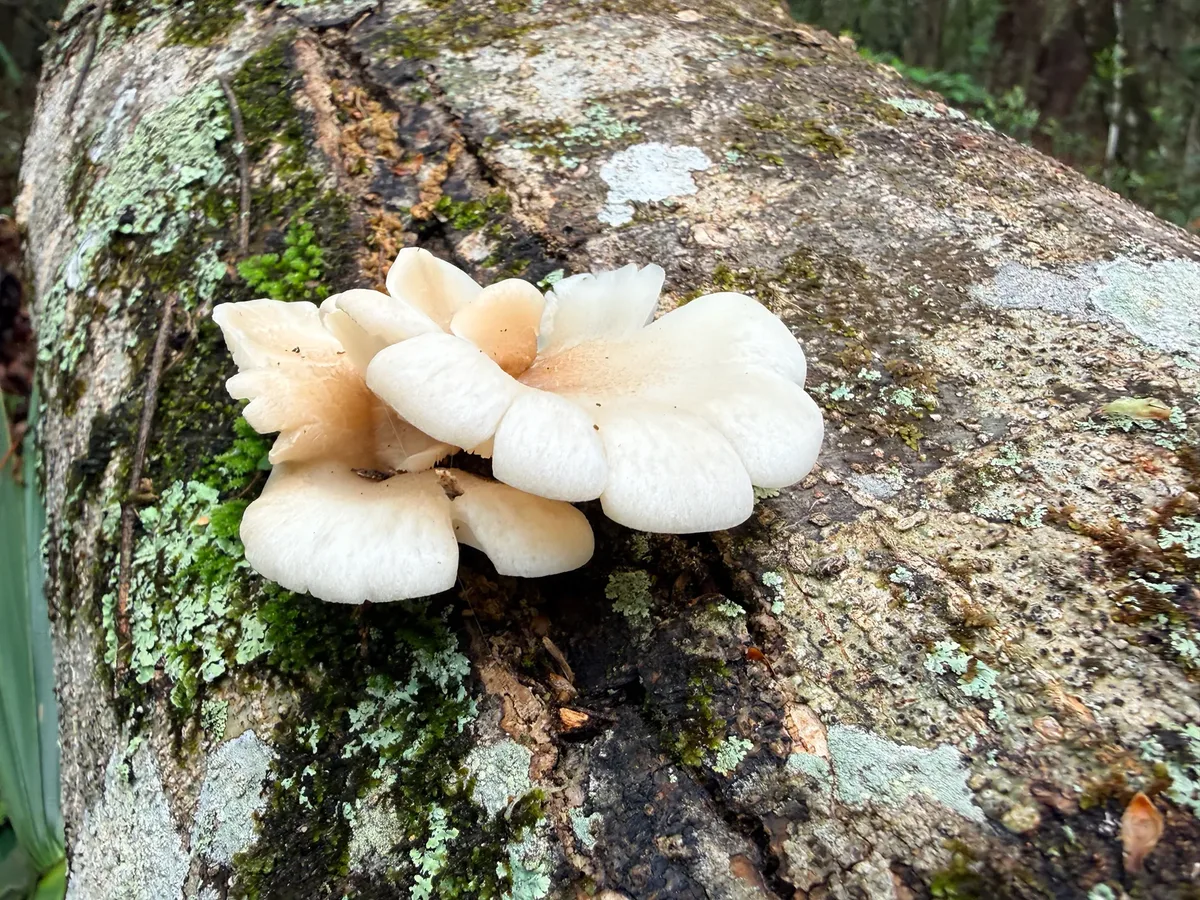 © Melissa Meadows (CC BY)
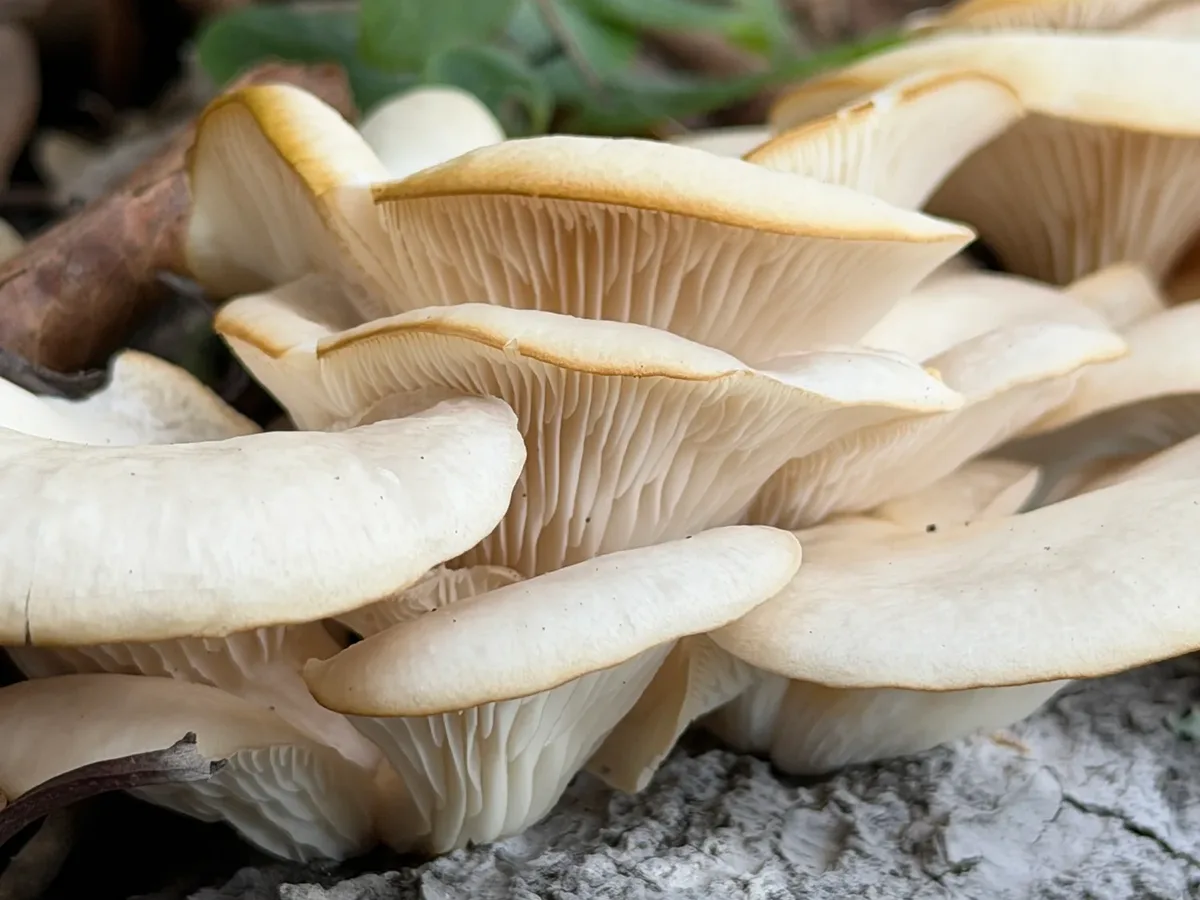 Alex Heyman (CC0)
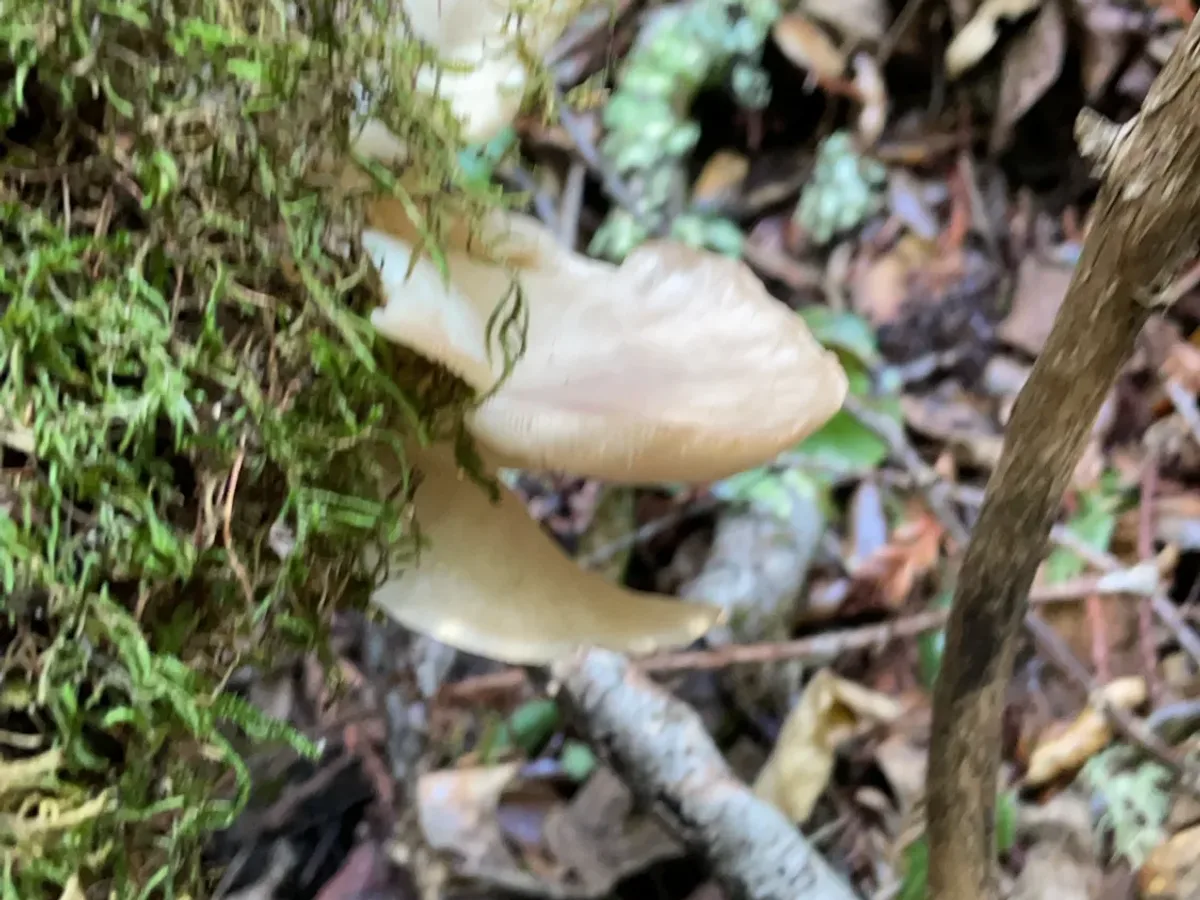 David A. Krause (CC0)
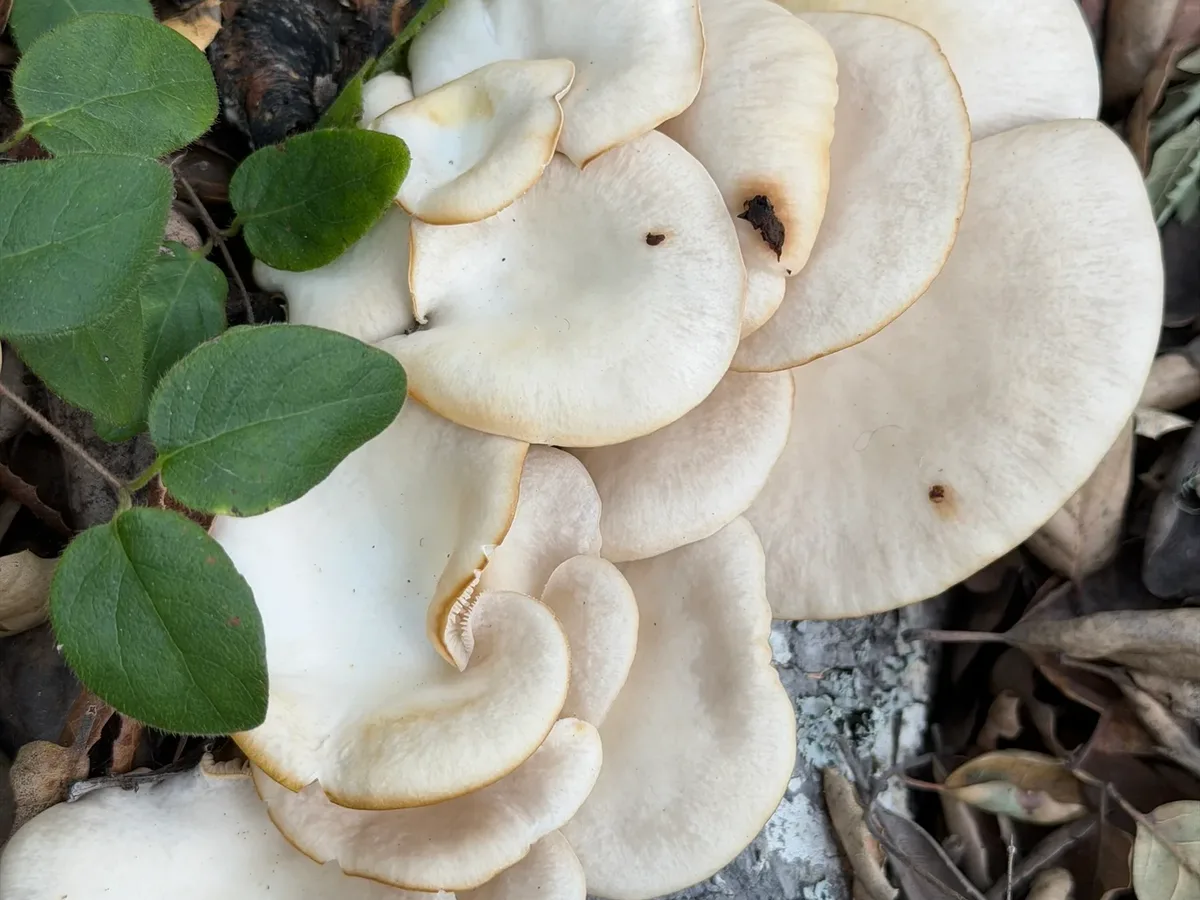 Alex Heyman (CC0)
 Alex Heyman (CC0)
 Alex Heyman (CC0)
 Alex Heyman (CC0)
 Alex Heyman (CC0)
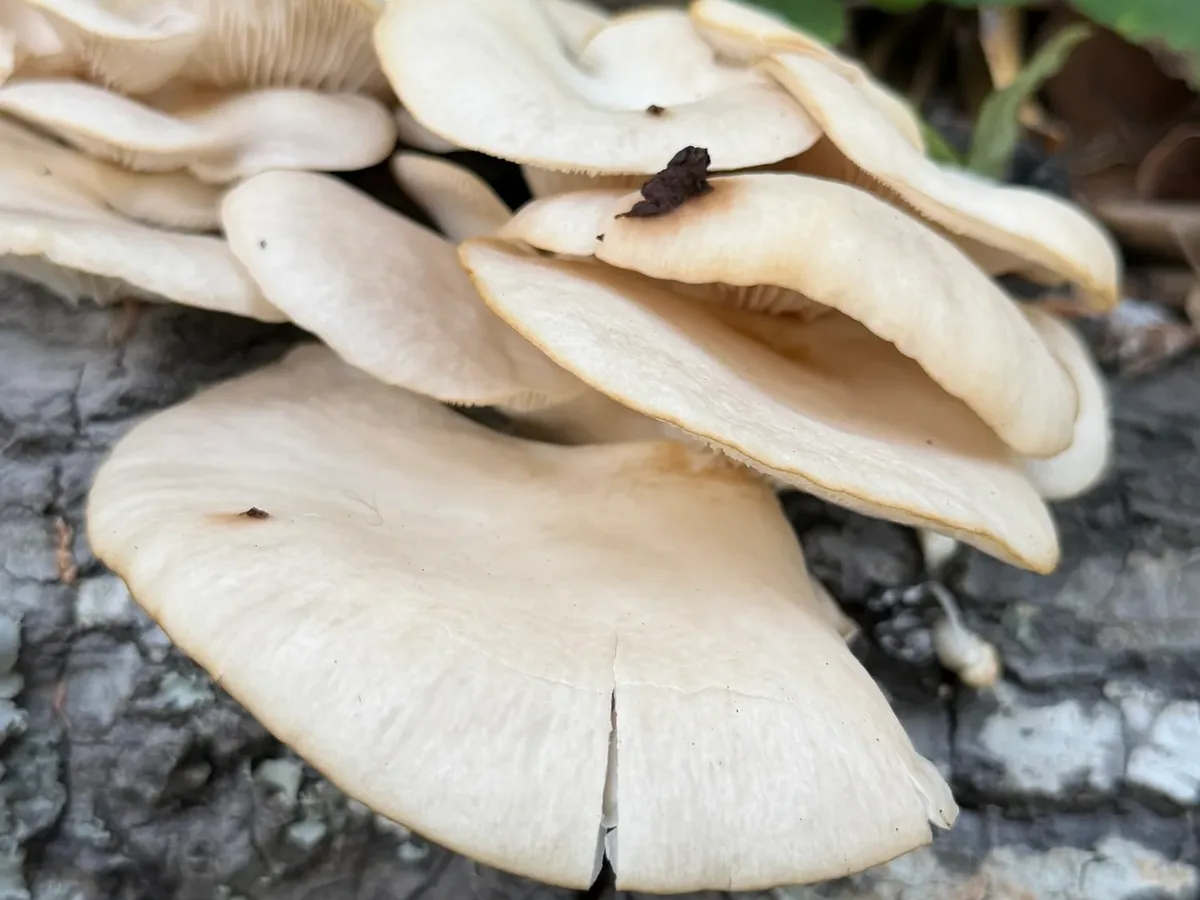 Alex Heyman (CC0)
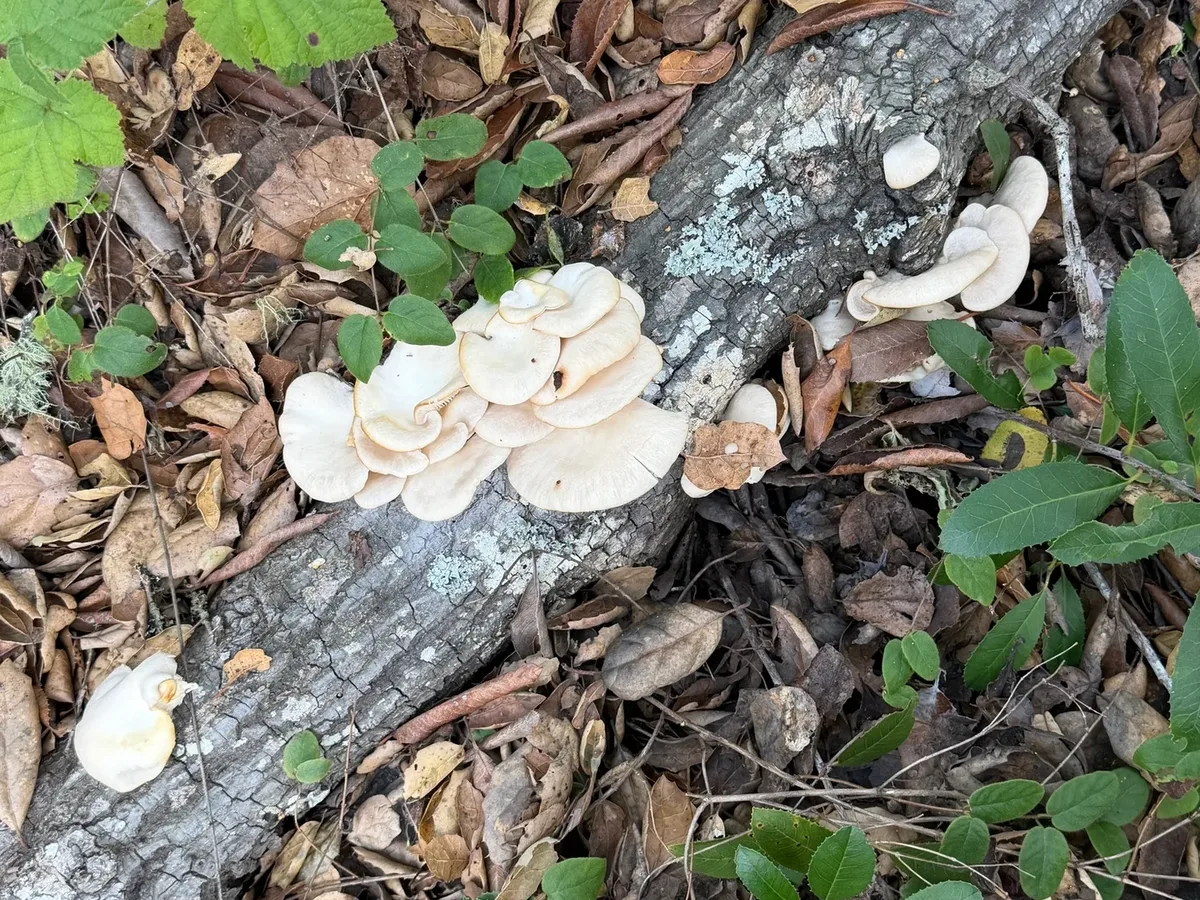 Alex Heyman (CC0)© Melissa Meadows (CC BY)Alex Heyman (CC0)
One of the best mushrooms you can bring home - once you are certain of the identification.
Never eat a mushroom you are not 100% sure of - check the look-alikes below, and always cook wild mushrooms.
How to recognise it
The Lung Oyster is the pale, summery cousin of the common oyster.
Cap
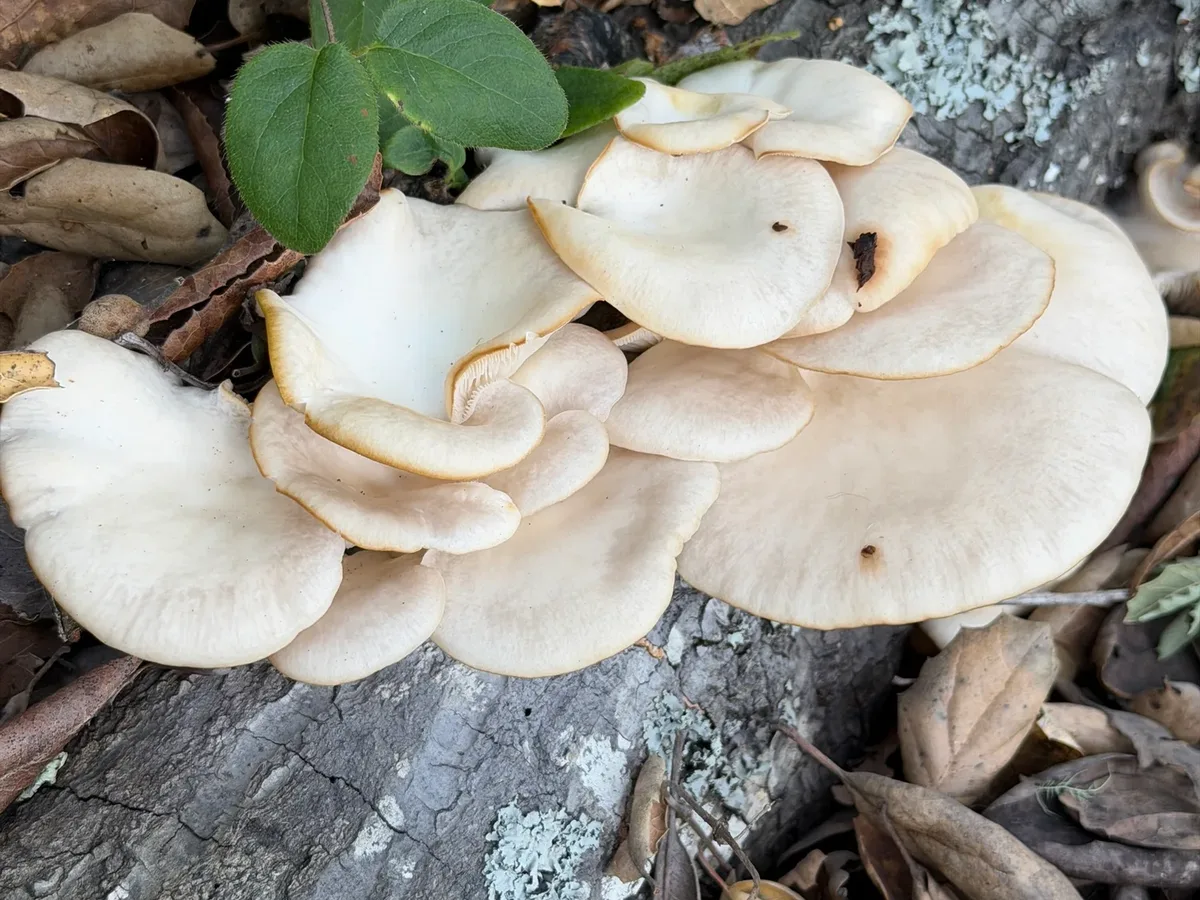
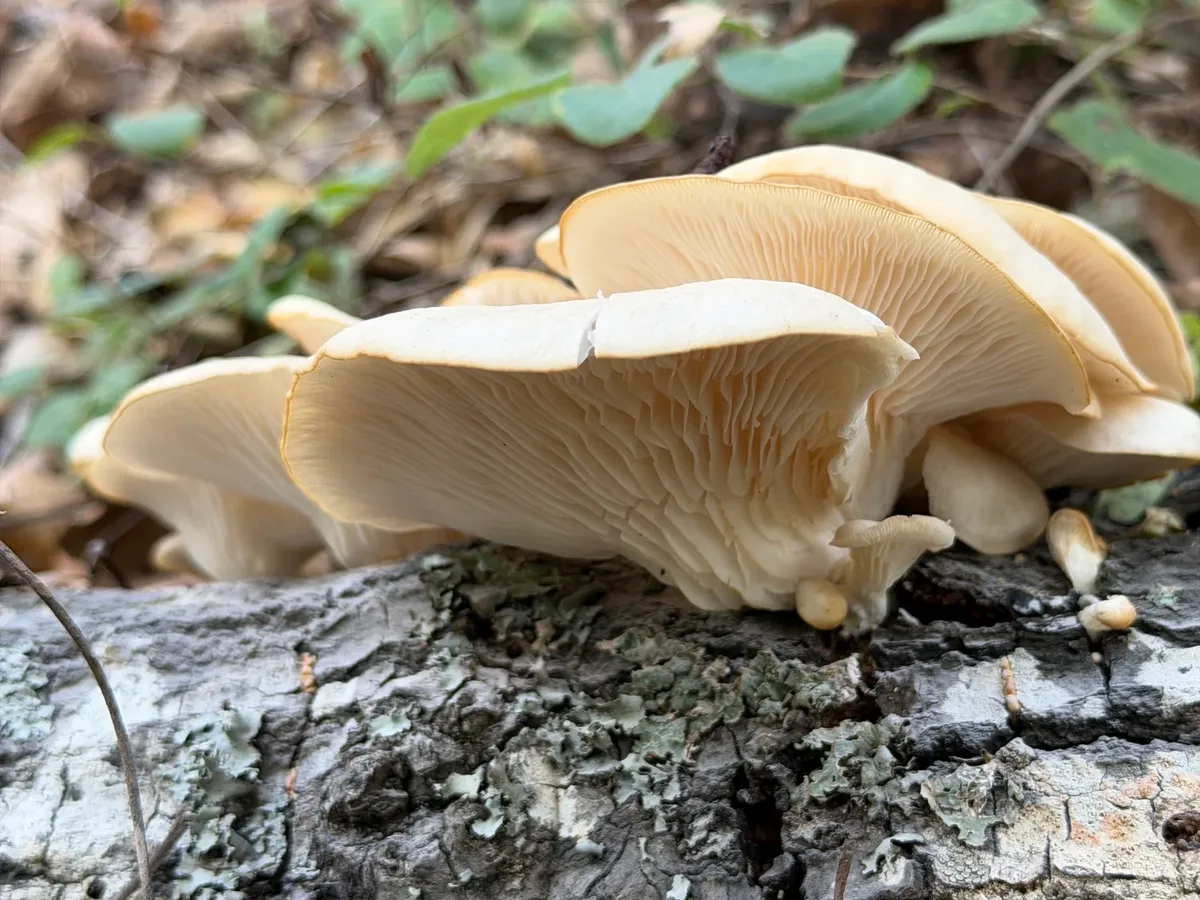
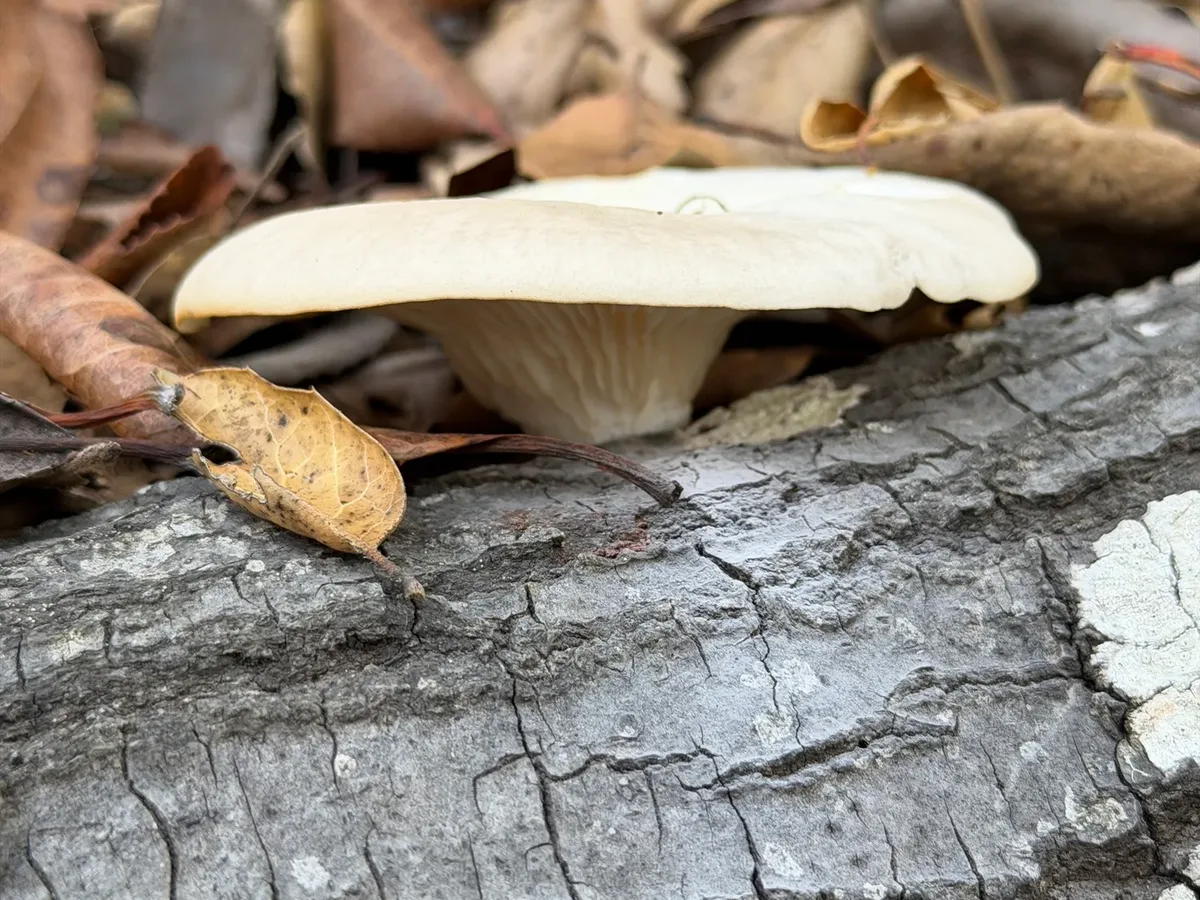
Look for thin, fan- to lung-shaped caps 4-12 cm across, attached to the wood by a short lateral or off-centre stem, growing in overlapping tiers like a stack of shelves.
The defining impression is paleness and delicacy: caps are cream, ivory or dingy white - rarely the deep grey-brown of the winter oyster - and the flesh is noticeably thinner and softer.
Gills
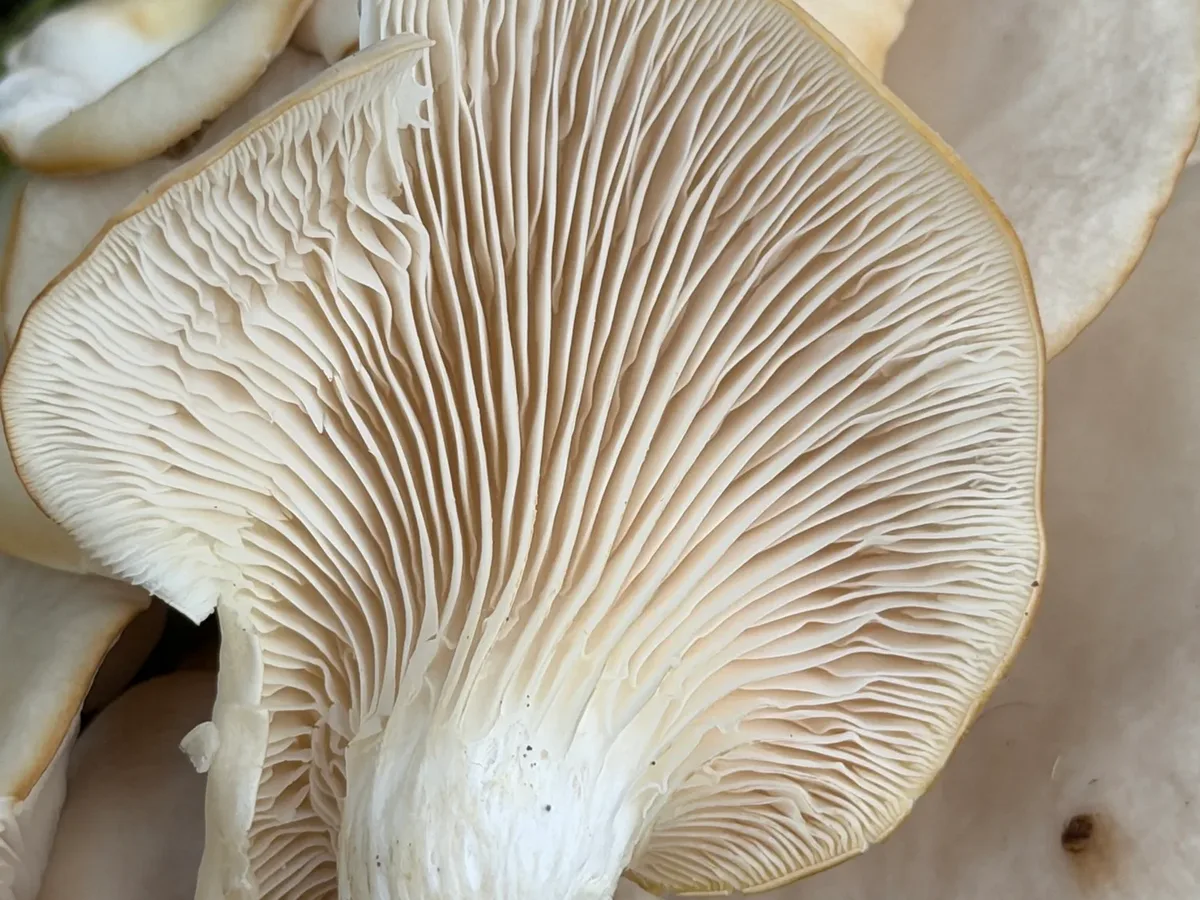
Underneath, white to cream gills run decurrently down onto the stem and have smooth, even edges (never jagged or saw-toothed).
Flesh
The flesh is white and does not change colour when cut. A spore print taken on dark paper is white to faintly lilac-grey.
Bruise-free flesh, smooth gill edges, a present-but-short stem, and an overall pale, lung-like shape together make a confident identification.
Where & when it grows
Habitat
A wood-decay fungus, never growing from soil. It fruits directly on dead and dying hardwood - fallen logs, stumps, standing dead trunks and thick branches - of beech, oak, poplar, aspen, willow, birch, alder and maple, and, more readily than the winter oyster, on conifer and a broad range of subtropical broadleaf wood.
It causes a white rot, breaking down lignin and bleaching the wood as it goes.
Expect it in deciduous and mixed woodland, riverside woods, parks and forestry edges across temperate and subtropical regions worldwide.
Any 'oyster' apparently arising from the ground is almost always attached to buried wood or a root - check the point of attachment.
When
This is the summer oyster. While Pleurotus ostreatus is a creature of late autumn and winter frosts, P. pulmonarius comes into its own in the warm half of the year - roughly June to October in the temperate north, peaking in the heat and humidity of July and August.
It needs warmth plus moisture, so flushes follow summer rains and thundery, humid spells. In subtropical and tropical climates it fruits opportunistically through much of the year.
If you find pale oysters in high summer, this is the likeliest species.
How it grows
The mycelium lives within the dead wood itself - threading through heartwood and sapwood, quietly digesting lignin month after month, sometimes for years, until the conditions are right.
When a warm summer rain arrives and then the air cools slightly, the fungus pushes out tightly clustered, overlapping fruitbodies in shelf-like tiers, often many caps fused at a shared base.
Individual caps expand quickly over a few days from small lung-shaped buttons to broad fans; in warm weather a flush can appear, ripen and be gone within a week. The same log can fruit repeatedly over several summers until the wood is fully exhausted.
It is one of the most widely cultivated edible mushrooms, grown commercially on straw, sawdust and other lignocellulose substrates.
Fruiting conditions
Warm-season wood-rotter: flushes follow summer rain plus warmth, typically triggered by a cooling, humid spell after a wet period; tolerates higher temperatures than P. ostreatus and fruits opportunistically year-round in subtropical climates.
Look-alikes
Easily confused with other oysters, all edible: Pleurotus ostreatus (the winter oyster) is larger, more robust, darker grey-brown and fruits in cold weather; P. ostreatus var. columbinus and the cultivated P. eryngii are likewise harmless.
The most important safety task is ruling out the genuinely dangerous look-alikes.
The single most serious is the Angel Wing (Pleurocybella porrigens): a small, thin, pure-white, oyster-shaped fungus growing specifically on dead CONIFER wood (spruce, pine, fir). It has been linked to fatal acute brain inflammation (encephalopathy), especially in people with reduced kidney function, and was responsible for deaths in Japan in 2004.
It is dangerously easy to mistake for a small pale oyster - the safest rule is to treat any thin, pure-white 'oyster' on conifer wood with extreme suspicion and not eat it unless you can positively exclude P. porrigens.
True Pleurotus is generally cream to tan and better-stemmed; Angel Wing is whiter, more delicate, essentially stemless, and grows almost exclusively on softwood.
Beyond that, separate oysters from:
- Lentinellus species (e.g. L. ursinus) - oyster-shaped but with jagged, saw-toothed gill edges and an intensely bitter, acrid taste; oysters have smooth gill edges and a mild taste.
- Jack O'Lantern (Omphalotus species - O. olearius/illudens in Europe and eastern North America, O. olivascens in the west, O. nidiformis in Australasia) - bright orange and growing in dense clusters from buried wood or tree bases, often with a true central stem, with sharp non-decurrent gills and faint green bioluminescence (its toxin is illudin S, causing violent gastrointestinal poisoning, NOT muscarine).
- Mock Oyster / Orange Oyster (Phyllotopsis nidulans) - bright orange-yellow, hairy-felty on the cap, smelling strongly unpleasant (rotten/sulphurous).
- Ivory funnel-type Clitocybe (e.g. Clitocybe dealbata/rivulosa) - small whitish funnels growing on the ground in grass, not shelving from wood.
Elm oyster (Hypsizygus ulmarius) is edible but has a more central stem and non-decurrent gills.
DEADLY - linked to fatal acute encephalopathy (brain inflammation), especially in people with impaired kidney function; caused multiple deaths in Japan in 2004. Small (2-6 cm), thin, pure-white, essentially stemless oyster-shaped caps growing in tiers almost exclusively on dead CONIFER wood (spruce, pine, fir). Distinguished from true oysters by its stark pure-white colour, very thin delicate flesh, lack of a developed stem, and softwood habitat. Treat any thin pure-white 'oyster' on conifer wood as this until proven otherwise and do NOT eat.
Inedible (intensely bitter/acrid). Oyster-shaped but with jagged, saw-toothed gill edges and often a finely hairy cap. Oysters always have smooth, entire gill edges and a mild taste.
Edible. More central, well-developed stem and gills that do NOT run decurrently down the stem; firmer flesh. Harmless confusion.
Toxic (severe gastrointestinal upset, illudin-type; not lethal), Australasian. Cream to grey-brown but strongly bioluminescent green in the dark, growing in clusters from wood; gills sharp. Reject if it glows.
Poisonous (muscarine). Small whitish funnel-shaped caps growing on the GROUND in grass, with a central stem - not shelving from wood. Habitat and central stem separate it from oysters.
Toxic (severe, violent gastrointestinal poisoning from illudin S - not muscarine; not usually lethal). Bright orange throughout, dense clusters from buried wood/tree bases with true central-ish stems, sharp non-running gills, often faintly bioluminescent green. Oysters are pale with decurrent, smooth-edged gills.
Inedible. Bright orange-yellow, densely hairy/felty cap, and a strong unpleasant rotten/sulphur smell. True oysters are pale, smooth-capped and mild-smelling.
Edible. Larger, more robust and darker grey-brown to bluish; fruits in cold autumn/winter weather rather than summer. Harmless confusion.
In the kitchen
Picking & cleaning
Harvest young to mid-aged clusters when the caps are still firm, pale and pliable, before the margins yellow, dry or tatter and before they become tough or buggy - summer oysters are notorious for harbouring beetle larvae, so cut a couple open to check.
Cut the whole cluster at the base with a knife rather than tearing, leaving the wood undamaged so it can fruit again.
Carry them in an open basket; the thin flesh wilts and sweats quickly in a plastic bag.
Trim off the tough, hairy stem bases and any wood debris in the field.
Cooking
An excellent, versatile edible with a delicate, faintly seafood-like flavour and tender texture, milder and thinner-fleshed than the winter oyster. Always cook - never eat raw.
It is superb:
- fried hot and fast in butter or oil until the edges crisp and brown;
- sliced into stir-fries, soups, risottos and pasta;
- or torn and roasted.
The thin flesh cooks quickly and releases water, so use high heat and avoid crowding the pan to encourage browning rather than stewing.
The tough stem bases are best discarded or saved for stock. It dries well and rehydrates for soups, and is one of the standard 'gourmet' cultivated oysters sold fresh in markets.
As with all oysters, a few people are sensitive to them, so introduce a modest portion first.
Good to know
Pleurotus pulmonarius is a safe, popular and widely cultivated edible, but the foraged version carries one potentially LETHAL pitfall that beginners overlook: the Angel Wing (Pleurocybella porrigens), a thin, pure-white, near-stemless oyster look-alike on dead CONIFER wood that has caused fatal encephalopathy, particularly in people with impaired kidney function.
Because this very mushroom can grow on conifer wood, treat any small, thin, pure-white 'oyster' on softwood as suspect and do not eat it unless you can positively rule out P. porrigens.
For everything you keep, confirm ALL of:
- 1Growing on wood (or buried wood), not soil.
- 2Decurrent gills with smooth, entire edges - reject anything with jagged/saw-toothed gills.
- 3Pale cream-to-tan cap (not stark thin pure-white on conifer) and a white-to-pale-lilac spore print - reject bright orange specimens.
- 4Mild taste and smell - reject anything markedly bitter, acrid or foul.
Other dangers to know:
- Bright orange clustered mushrooms (Jack O'Lantern, Mock Oyster) cause violent gastrointestinal poisoning.
- Acrid saw-toothed-gilled species (Lentinellus) are merely inedibly bitter.
- Ground-dwelling white Clitocybe funnels contain muscarine.
A small number of people experience mild gastrointestinal upset from oysters even when correctly identified; always cook thoroughly and try only a small portion the first time.
Avoid specimens riddled with insect larvae or from polluted/roadside wood, as oysters readily accumulate environmental contaminants.
If in any doubt, do not eat - have an expert confirm the identification.
A reference guide - never an edibility guarantee. When in doubt, leave it out.