Smooth oyster
Pleurotus levissyn. Agaricus levis Berk. & M.A. Curtis, Pleurotus sapidus var. levis
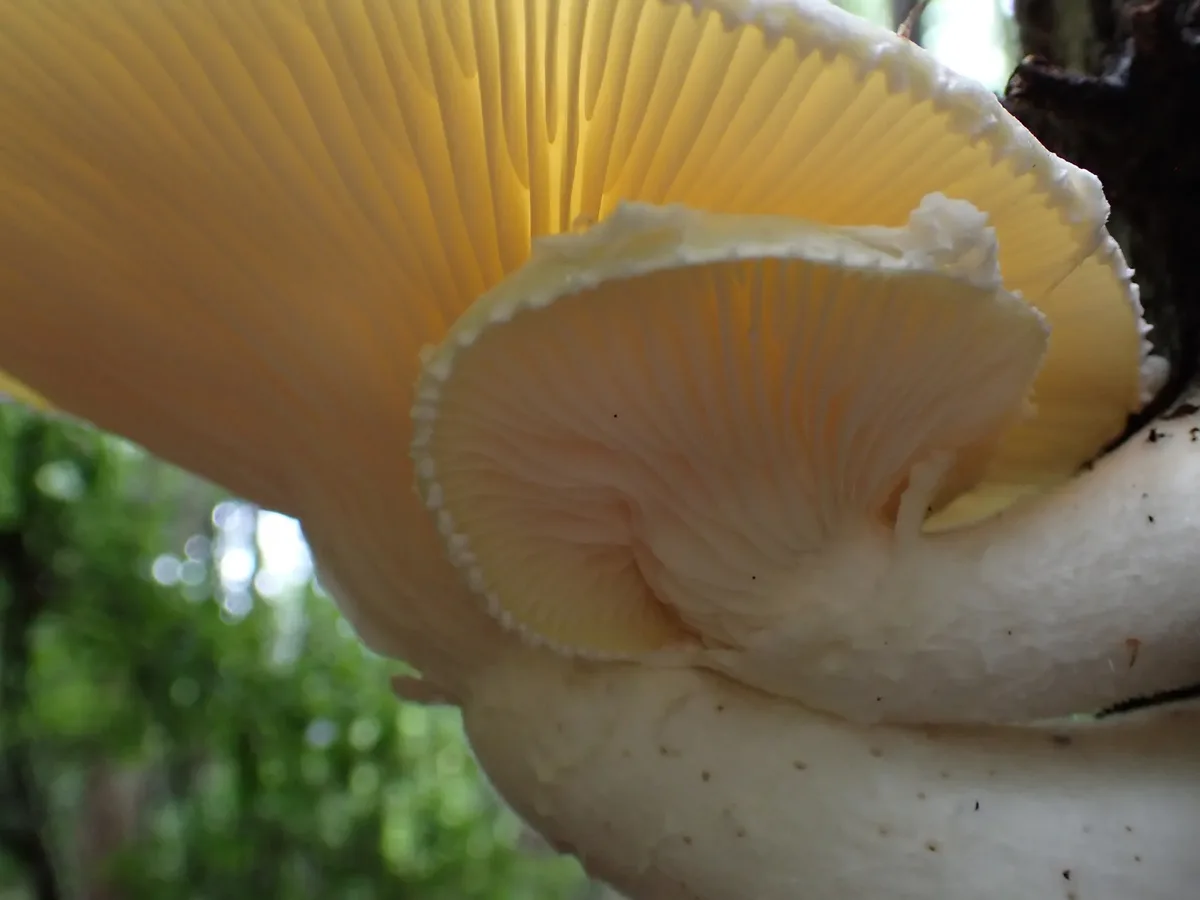 © David Wilkins (CC BY)
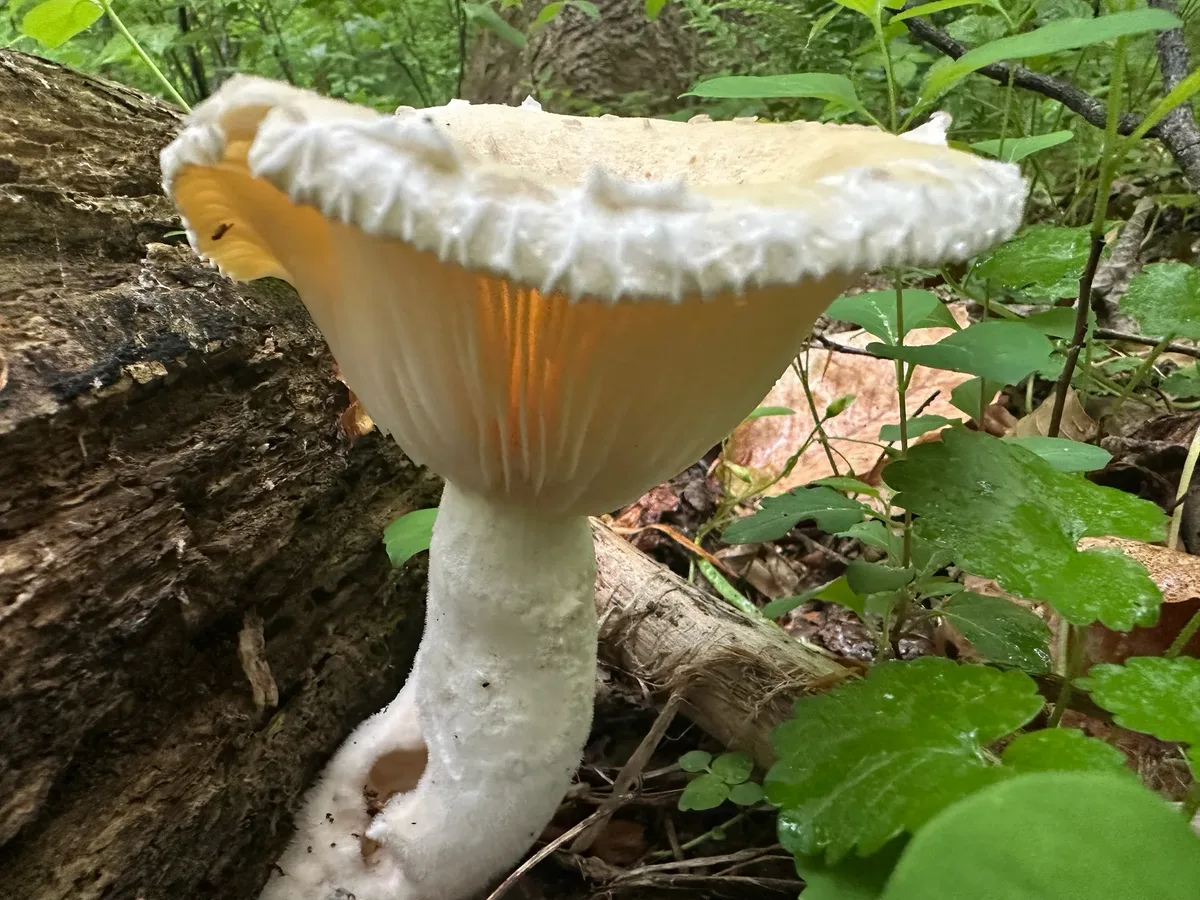 © Ana Ka'ahanui (CC BY)
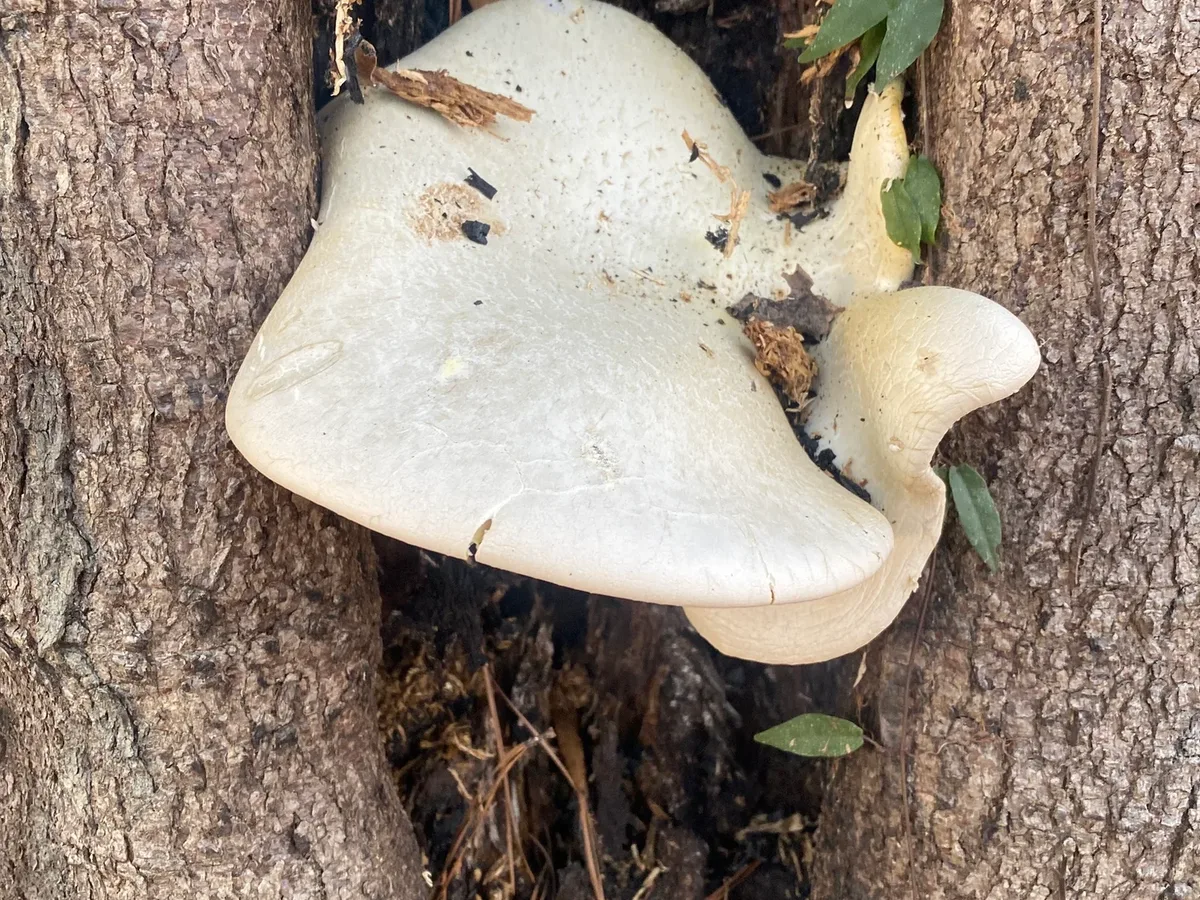 April Coulon (CC0)
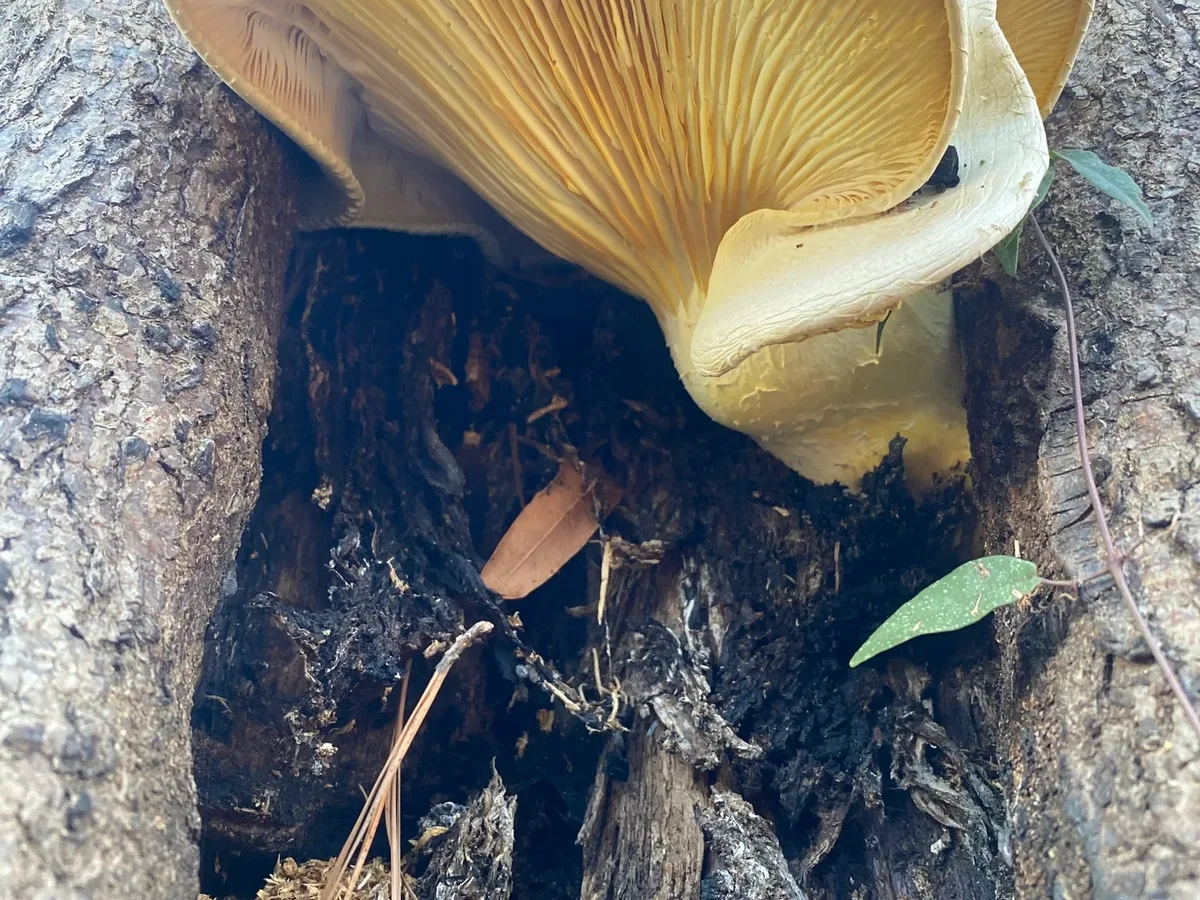 April Coulon (CC0)
 April Coulon (CC0)
 © David Wilkins (CC BY)
 © David Wilkins (CC BY)© David Wilkins (CC BY)© Ana Ka'ahanui (CC BY)
Good to eat, once you have identified it with certainty and cooked it through.
Never eat a mushroom you are not 100% sure of - check the look-alikes below, and always cook wild mushrooms.
How to recognise it
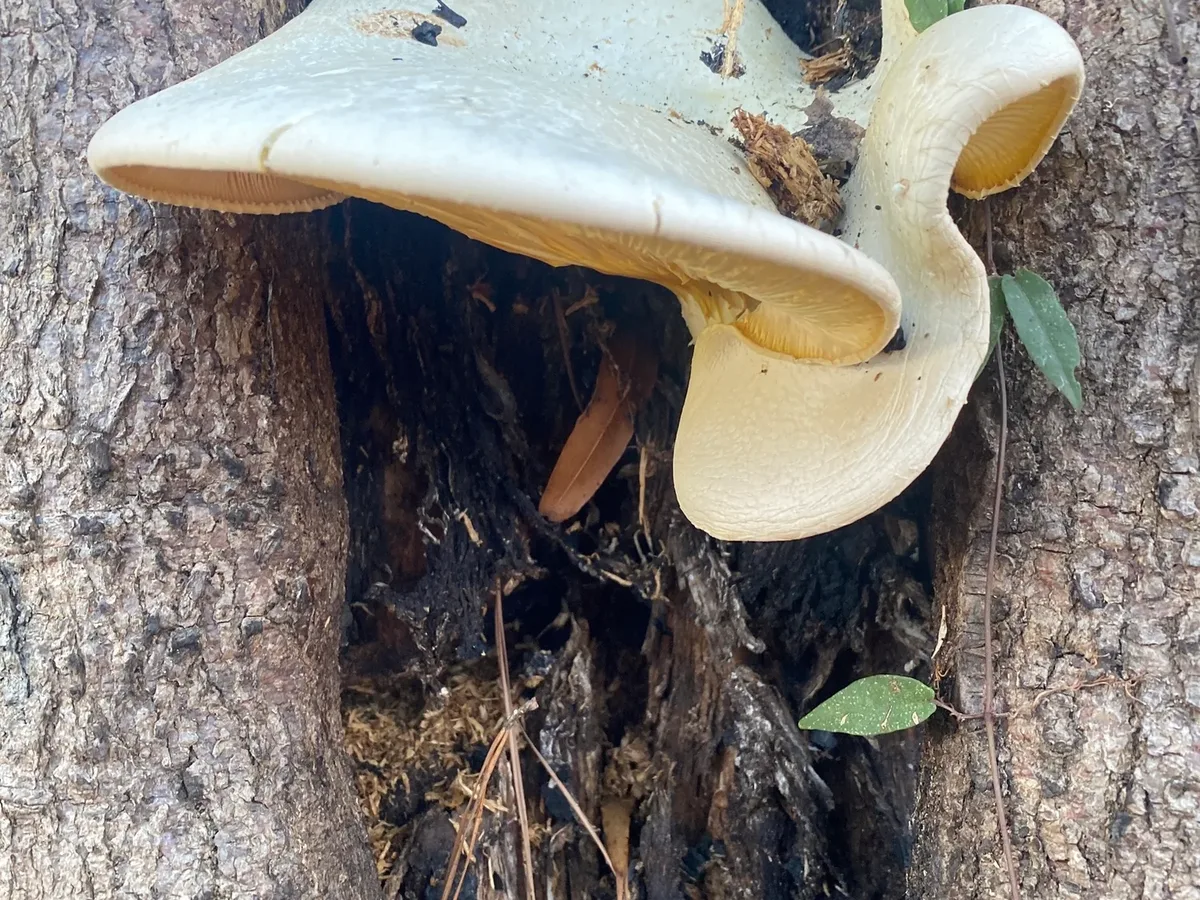
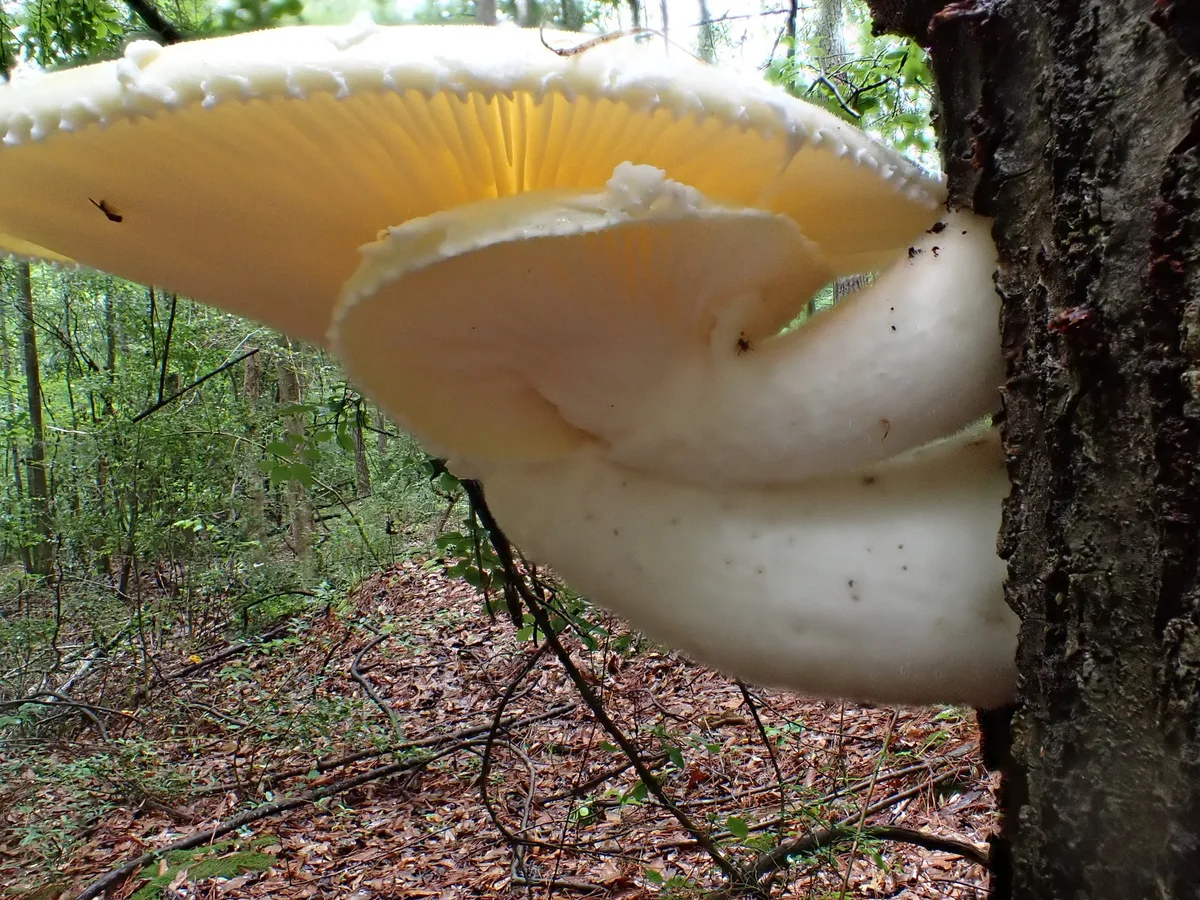
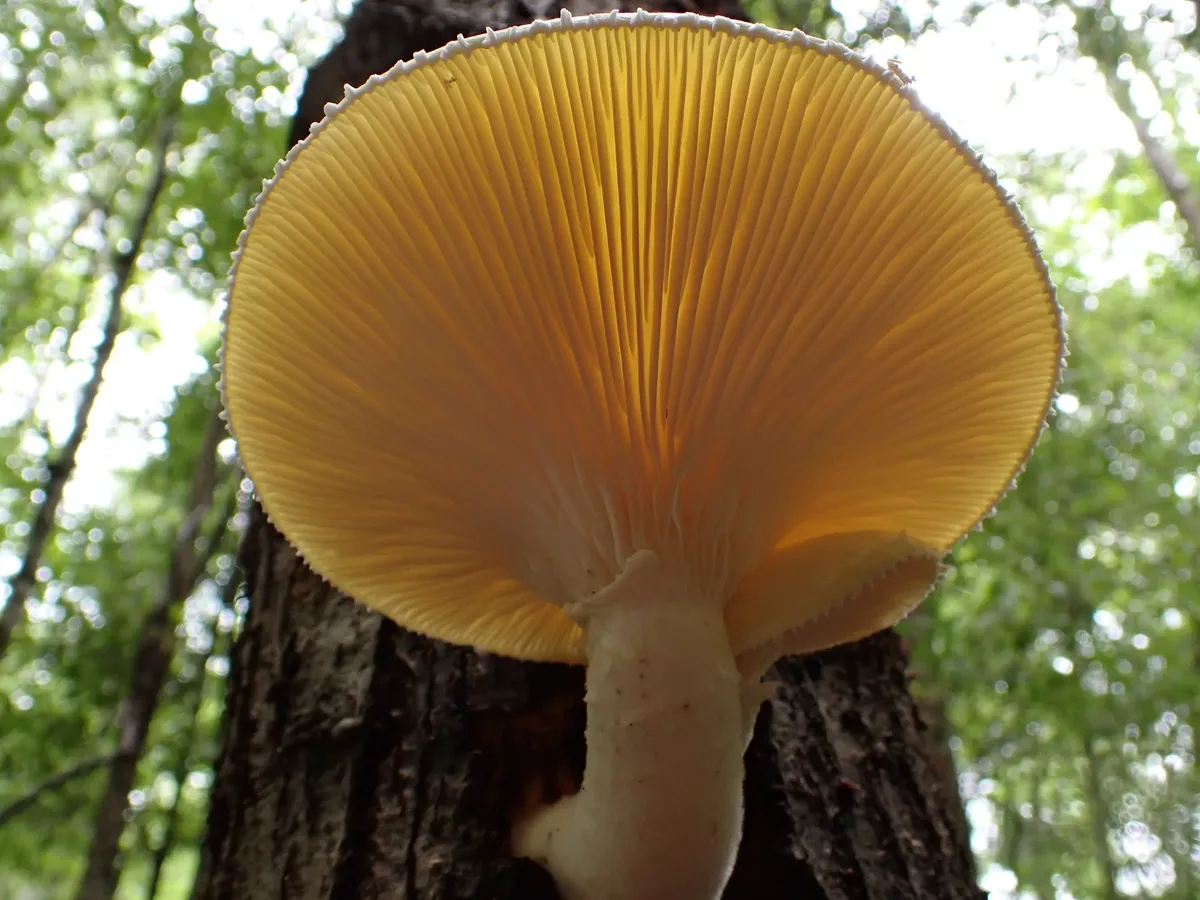
Pleurotus levis is a classic fan-shaped oyster mushroom in pale cream to white tones.
Cap
The cap is smooth-surfaced - this smoothness is the trait the species name levis ('smooth' or 'plain' in Latin) directly records - ranging from 3 to 12 cm across.
It attaches to the wood at one lateral or slightly off-centre point, often several caps growing together from a shared, compressed base.
Gills
The gills underneath are white to cream, run down (decurrent) onto the stub of a stem, and have smooth, even edges - never jagged or saw-toothed.
A spore print deposited on dark paper is white to barely lilac.
Flesh
The flesh is white throughout and does not change colour when cut or bruised.
Stem
The stem, when present, is short, stout, and lateral, 0.5-2 cm long, white, and hairy at the very base.
Overall impression: pale, smooth, fan-shaped, clustered on wood, mild-smelling.
Where & when it grows
Habitat
A wood-rotter: always growing on, or directly connected to, dead and decaying hardwood.
Look on fallen logs, large branches, stumps and the lower trunks of dying deciduous trees, particularly oak, beech, maple, elm and poplar in eastern North America.
The fungus causes a white rot, stripping the wood of its structural polymers and leaving it pale and fibrous. Growth is typically caespitose - overlapping, shelf-like clusters attached at a common base.
If a specimen appears to grow from the soil, probe around and you will almost always find a buried root or stub. Pleurotus levis does not form mycorrhizal relationships; it gets all its nutrition by decomposing wood.
When
A warm-season species across eastern North America, appearing from roughly May to October in most years.
There are often two broad fruiting windows:
- a late-spring flush as temperatures warm and soils moisten after spring rains
- an autumn flush in September-October as the heat of summer eases and humidity returns
Summer flushes can occur after heavy rainfall.
Unlike the common winter oyster (Pleurotus ostreatus), which thrives in near-freezing weather, Pleurotus levis needs warmth to fruit well.
Look for it after periods of rain followed by persistent warm, humid conditions.
How it grows
The mycelium threads silently through dead hardwood for months or years, secreting enzymes that dismantle lignin and cellulose and slowly turning the wood pale and fibrous from the inside.
When warmth and rainfall arrive together and humidity climbs, the hidden network responds: fruitbodies push out in overlapping tiers over just a few days.
A single log can yield successive flushes across the warm season, and established mycelium can return to the same piece of wood year after year until the substrate is finally exhausted - which is why a favourite fallen oak is worth revisiting after every significant rain.
Spores lift away on the air from the smooth white print deposited between the gills.
Fruiting conditions
Warm-season white-rot species: fruitbodies are triggered by warm humid conditions following rain, especially when a period of rainfall is followed by sustained warmth and high humidity. Substrate moisture in the host log is the proximate driver; extended dry spells suppress fruiting even at suitable temperatures.
Look-alikes
Several oyster mushrooms share the same fan-shaped, pale, wood-growing habit, and the single most dangerous lookalike demands particular attention.
The Angel Wing (Pleurocybella porrigens) is a small (2-6 cm), thin, pure-white, essentially stemless oyster-shaped fungus that grows specifically on dead CONIFER wood (spruce, pine, fir).
It has been linked to fatal acute encephalopathy (brain inflammation) in Japan, particularly in people with impaired kidney function, and is seriously dangerous.
Because Pleurotus levis is cream to pale white, the two can appear superficially similar at a distance. The crucial differences:
- Angel Wing has extremely thin, delicate, pure-white flesh with no developed stem and grows almost exclusively on softwood.
- Pleurotus levis has firmer, thicker flesh, a short lateral stem, and strongly prefers hardwood.
If you are collecting from a conifer log and find thin pure-white oyster shapes, treat them as Angel Wing until positively excluded.
Other lookalikes:
- The Jack O'Lantern (Omphalotus illudens in eastern North America) is also in the same forests but is bright orange throughout, grows in dense clusters from tree bases or buried roots, has a true central or eccentric stem, and non-decurrent, sharp-edged gills - quite unlike the pale, cream-coloured P. levis. Jack O'Lantern causes severe gastrointestinal poisoning.
- Pleurotus ostreatus (winter oyster) is very similar and edible, but typically larger, darker grey-brown, and fruits in cold autumn/winter weather.
- Pleurotus pulmonarius (lung oyster) is also very similar and edible, generally slightly thinner-capped and even paler. Both are harmless confusions.
- Mock Oyster (Phyllotopsis nidulans) is bright orange-yellow with a hairy cap and a foul sulphurous smell.
- Lentinellus ursinus looks oyster-like but has unmistakably jagged, saw-toothed gill edges and a bitter, acrid taste - true oysters have smooth gill edges and a mild taste.
DEADLY - linked to fatal acute encephalopathy, particularly in people with impaired kidney function; caused deaths in Japan. Small (2-6 cm), thin, pure-white, essentially stemless oyster-shaped caps growing almost exclusively on dead CONIFER (softwood) wood. Distinguish from Pleurotus levis by: substrate (conifer vs hardwood), its extremely thin and delicate flesh, stark pure-white colour with no cream tinge, and lack of any developed lateral stem. Treat any thin pure-white stemless 'oyster' on softwood as this species and do NOT eat it.
Inedible (intensely bitter and acrid). Oyster-shaped and growing on wood, but with unmistakably jagged, saw-toothed gill edges - one touch of the gill edge reveals the difference. Pleurotus levis always has smooth, even gill edges. The bitter taste is also immediately distinctive.
Edible. On elm and other hardwoods; has a more centrally placed, better-developed stem and gills that do NOT run decurrently down the stem (adnate to notched rather than decurrent). Harmless confusion.
Toxic - causes severe gastrointestinal poisoning (vomiting, diarrhoea, cramps from illudin S); not usually lethal. Bright orange throughout cap, gills and stem; grows in dense clusters from buried wood or tree bases; has a true central or eccentric stem; gills are sharp, non-decurrent; may glow faintly in the dark. Easily distinguished from the pale cream Pleurotus levis by its vivid orange colour and central stem.
Edible. Very similar warm-season oyster, paler and thinner-fleshed, also on hardwood. The two species are closely related and may be difficult to distinguish in the field; both are edible and harmless. P. pulmonarius tends to be even paler (sometimes nearly translucent at the margin) and slightly thinner-fleshed.
Inedible. Bright orange-yellow throughout with a distinctly hairy, felty cap surface and a strong foul sulphur-rotten smell. Pleurotus levis is pale cream, smooth-capped, and mild-smelling. The smell alone is diagnostic.
Edible. Larger, more robust, typically darker grey to grey-brown; fruits in cold autumn and winter weather rather than the warm season. Harmless confusion - both are desirable edibles.
In the kitchen
Picking & cleaning
Harvest clusters when caps are firm and still fully incurved or only just flattening - at this stage the flesh is at its most tender and flavour is best.
Older specimens with yellowing margins, drying edges or torn flesh are tough, more strongly flavoured and prone to insect larvae tunnelling through the gills.
- Cut the cluster cleanly at its base with a knife rather than tearing, to avoid damaging the mycelium and the wood.
- Trim off the tough, hairy stub bases in the field.
- Carry in a shallow basket or open trug; oysters sweat and soften quickly in sealed plastic bags.
- Check the cut flesh for beetle larvae - a small percentage of wild specimens contain them, especially in warm summer conditions.
Cooking
Pleurotus levis has a mild, pleasant fungal flavour and tender-firm texture comparable to other oyster mushrooms - somewhat milder than the winter oyster. Always cook before eating.
The simplest and best treatment is to fry in a hot pan with butter or oil until the edges brown and crisp; the thin flesh cooks quickly and releases moisture, so use high heat and avoid crowding.
It works well in stir-fries, soups, pasta, risotto and grain dishes. The flesh is delicate enough to absorb surrounding flavours readily. Trim and discard the tough, fibrous stem bases.
It can also be dried - thin slices at low heat - and rehydrated for soups and stews, though the delicate flavour fades somewhat. It does not preserve as robustly as the denser winter oyster but is excellent fresh.
Good to know
Pleurotus levis is considered a safe and edible species with no known intrinsic toxins, but the most critical safety concern for any white oyster-shaped mushroom is the Angel Wing (Pleurocybella porrigens).
This thin, pure-white, stemless fungus on conifer wood has caused fatal encephalopathy, and distinguishing it from pale oyster species requires careful attention to substrate (softwood vs hardwood) and texture (very thin and delicate vs thicker-fleshed).
Always confirm:
- 1the substrate is hardwood, not softwood - if in doubt, do not eat;
- 2the specimen has a short but distinct lateral stem (Angel Wing is essentially stemless);
- 3the flesh is firm and cream-coloured, not paper-thin and stark white;
- 4gills have smooth, entire edges - reject anything saw-toothed or jagged (Lentinellus);
- 5the colour is pale cream to buff - reject anything bright orange (Jack O'Lantern, Mock Oyster).
Always cook oyster mushrooms thoroughly before eating; raw oyster mushrooms can cause gastrointestinal discomfort in some individuals.
Try only a moderate portion on first acquaintance, as a small number of people are sensitive to Pleurotus species even when correctly identified.
Avoid specimens from visibly polluted sites (roadside, industrial runoff) as oyster mushrooms can concentrate environmental contaminants from the wood they decompose.
When in doubt, do not eat - obtain expert confirmation.
A reference guide - never an edibility guarantee. When in doubt, leave it out.