Veiled oyster
Pleurotus dryinussyn. Pleurotus corticatus, Agaricus dryinus
 © Анна Митрошенкова (CC BY)
 © Irina Mitine (CC BY)
 © Irina Mitine (CC BY)
 © Irina Mitine (CC BY)
 © Irina Mitine (CC BY)
 © Irina Mitine (CC BY)
 © Анна Митрошенкова (CC BY)
 © Анна Митрошенкова (CC BY)
 © Анна Митрошенкова (CC BY)© Анна Митрошенкова (CC BY)© Irina Mitine (CC BY)
Good to eat, once you have identified it with certainty and cooked it through.
How to recognise it
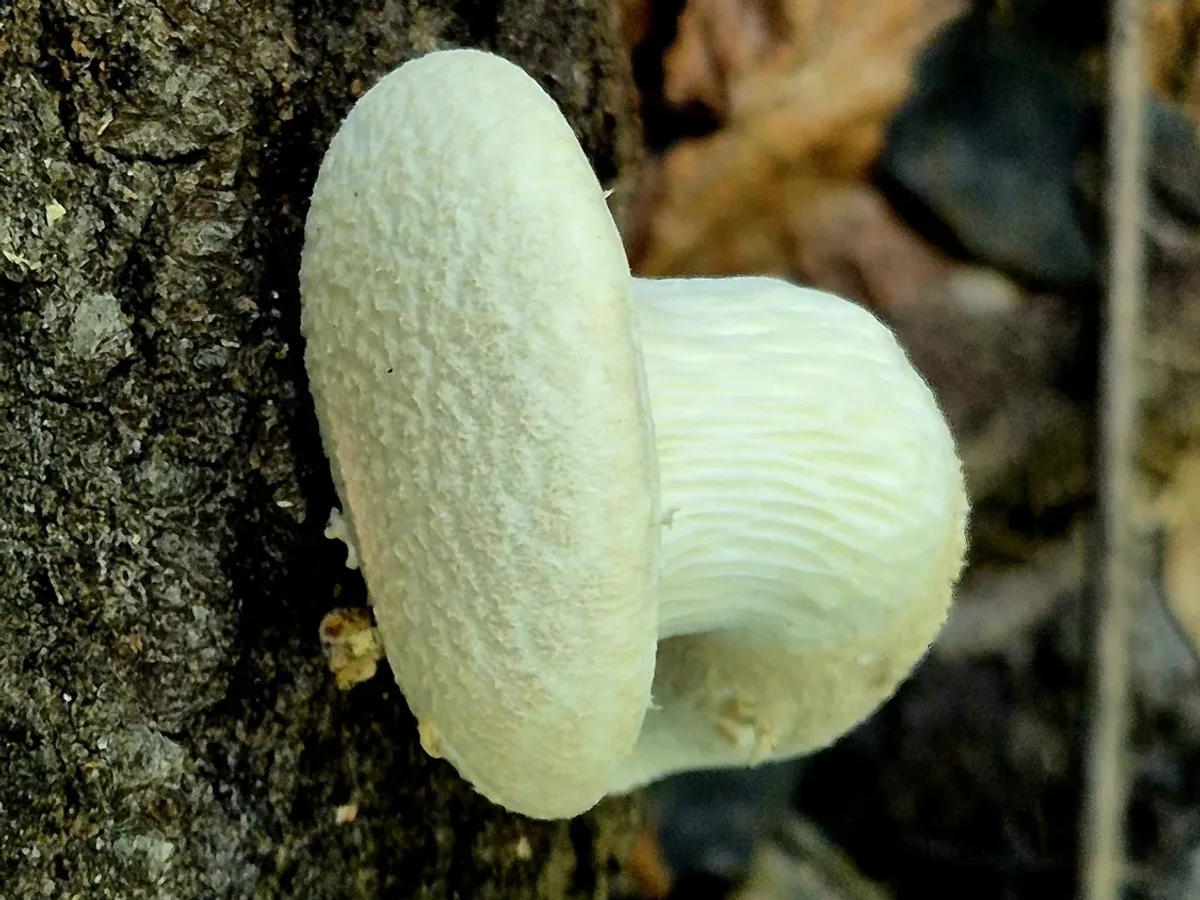
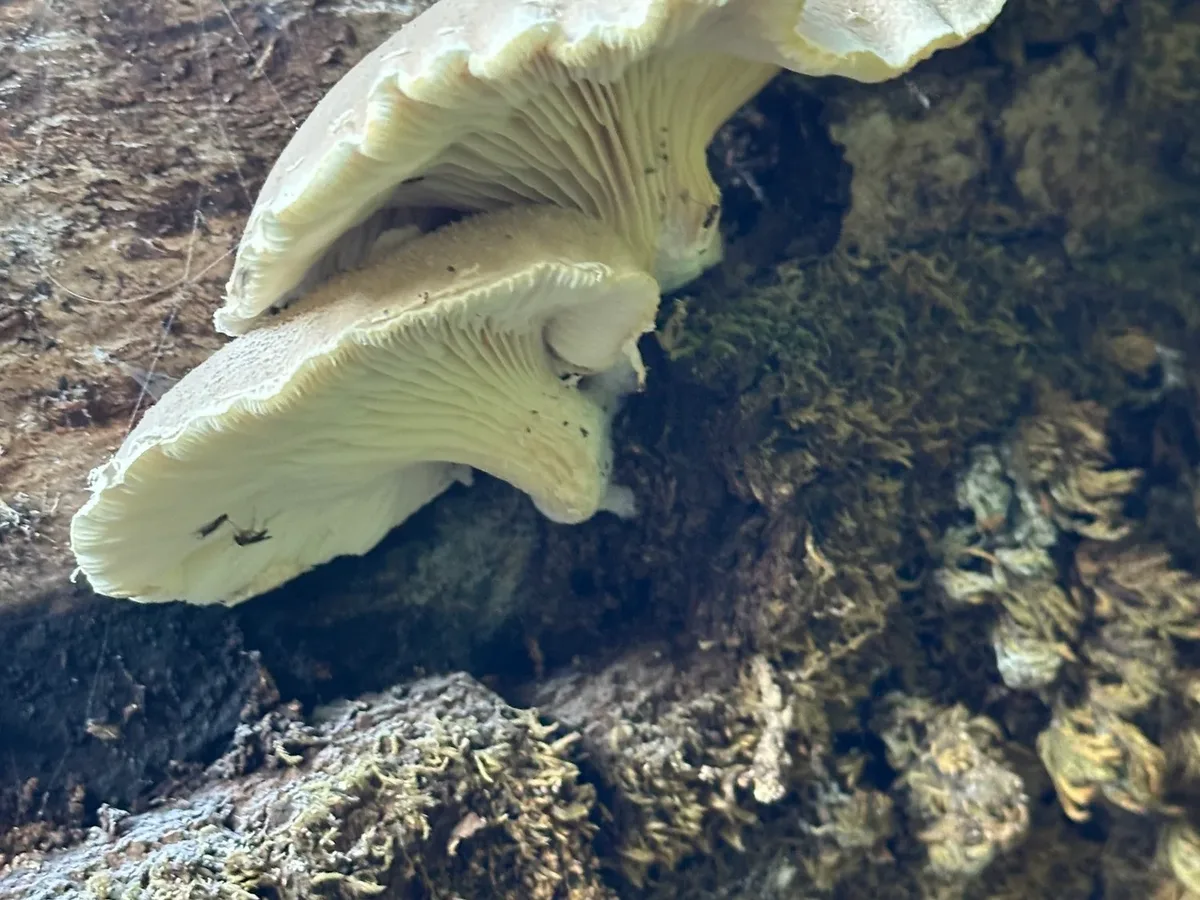
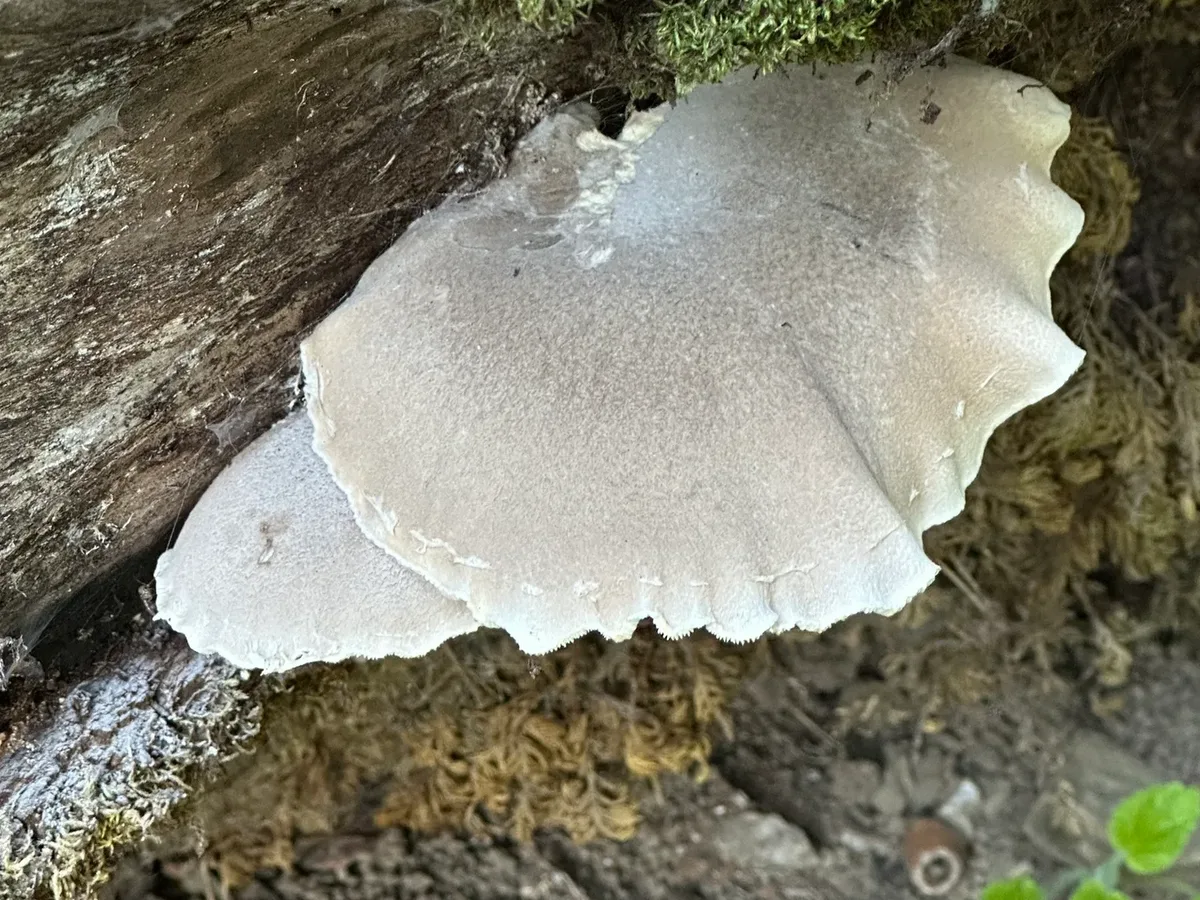
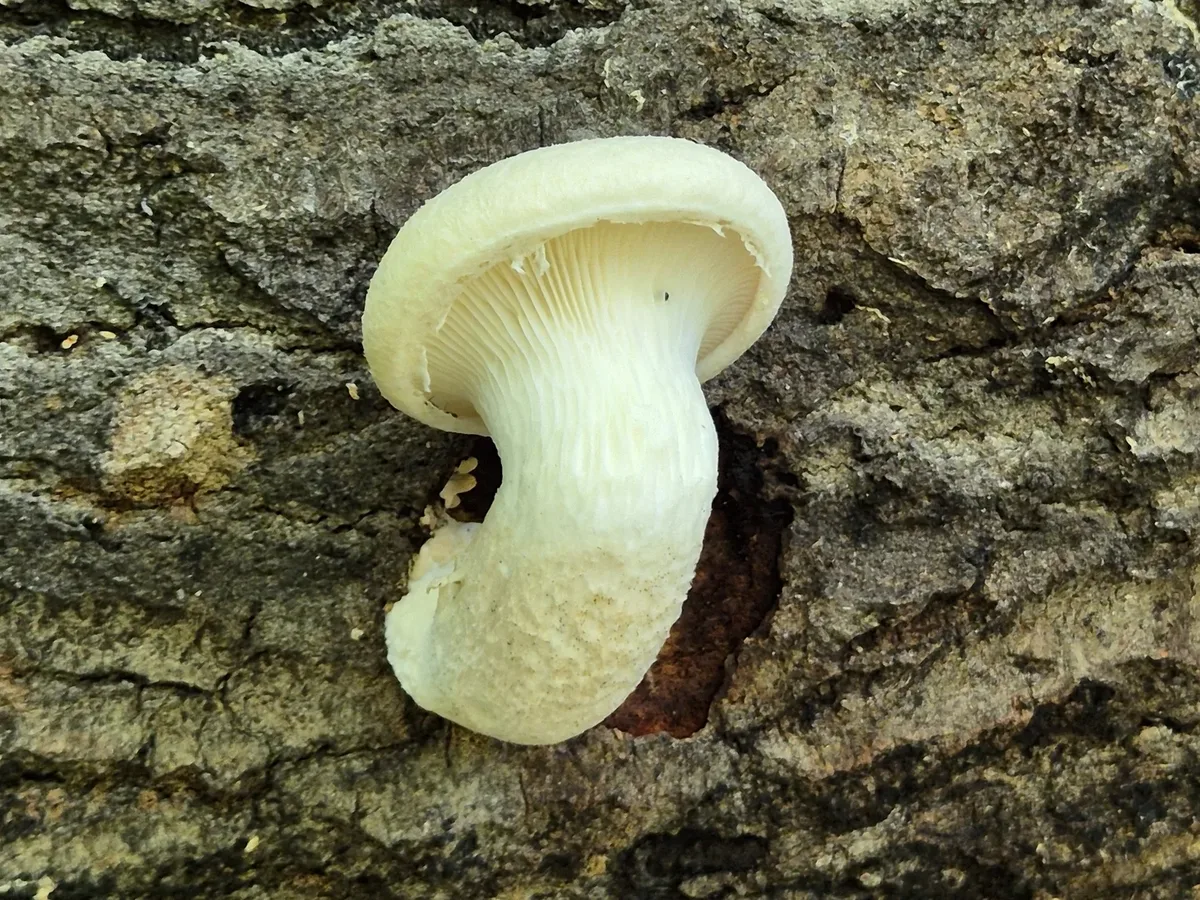
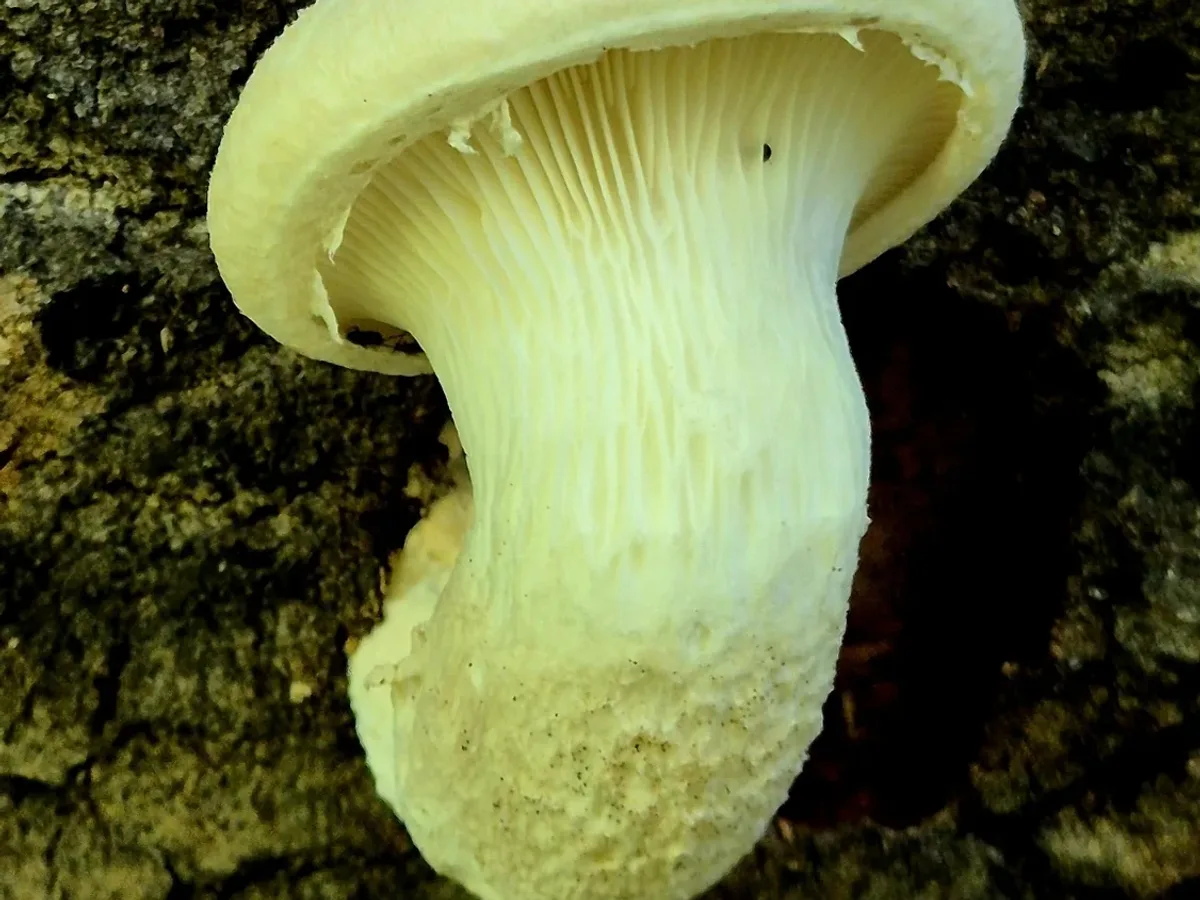
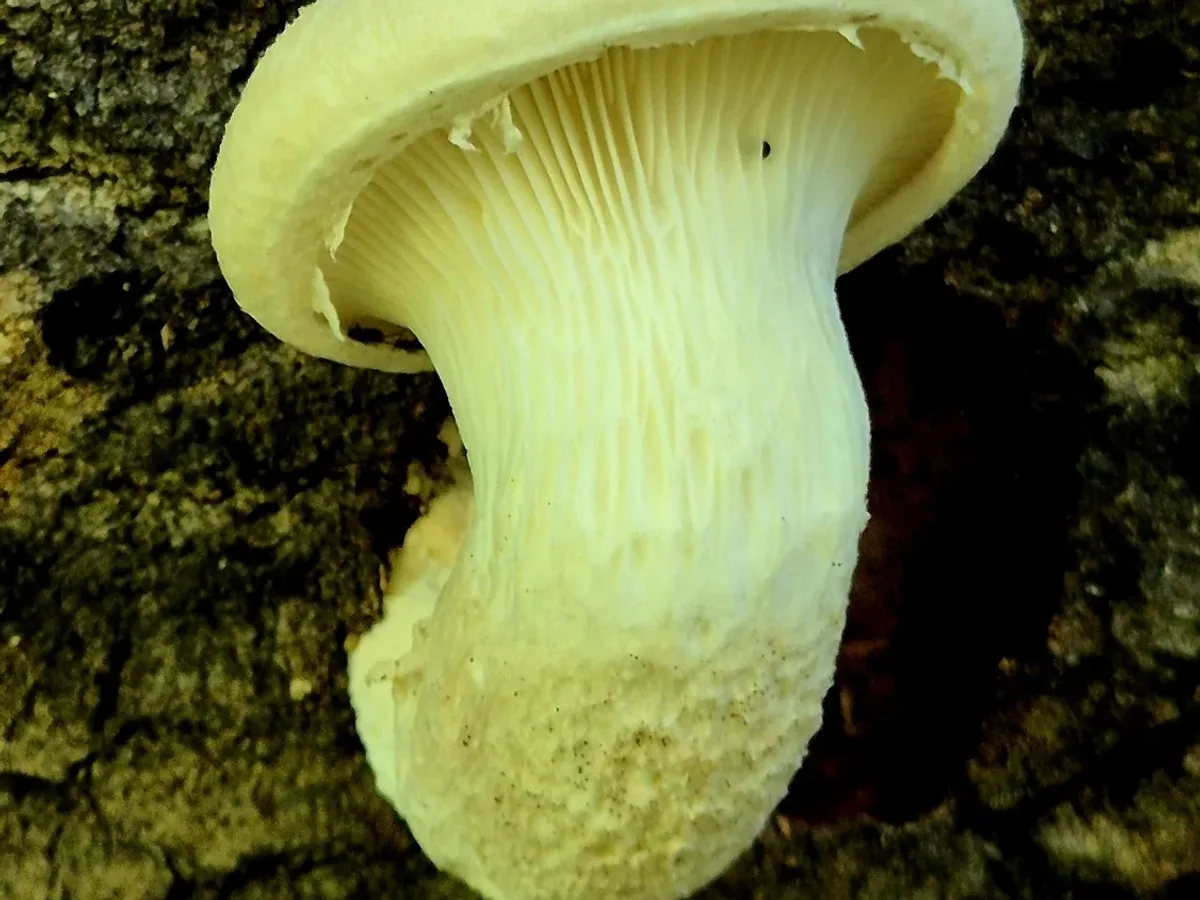
The veiled oyster is set apart from all other Pleurotus species by one character: a persistent partial veil. When young, a white fibrous membrane stretches from the cap edge to the stem and protects the gills. As the cap expands, this veil tears, leaving a ragged ring zone (annulus) on the stem and frayed remnants hanging from the cap margin.
Cap
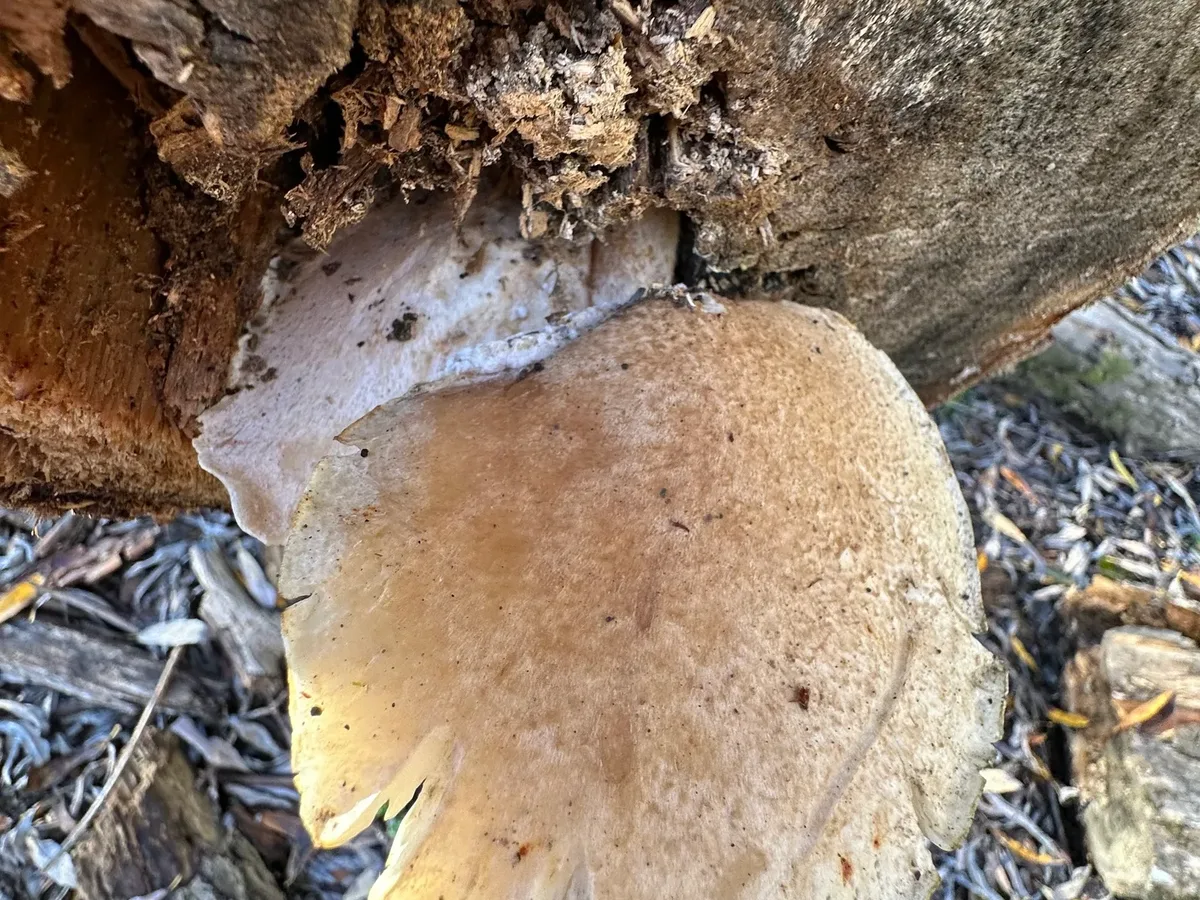
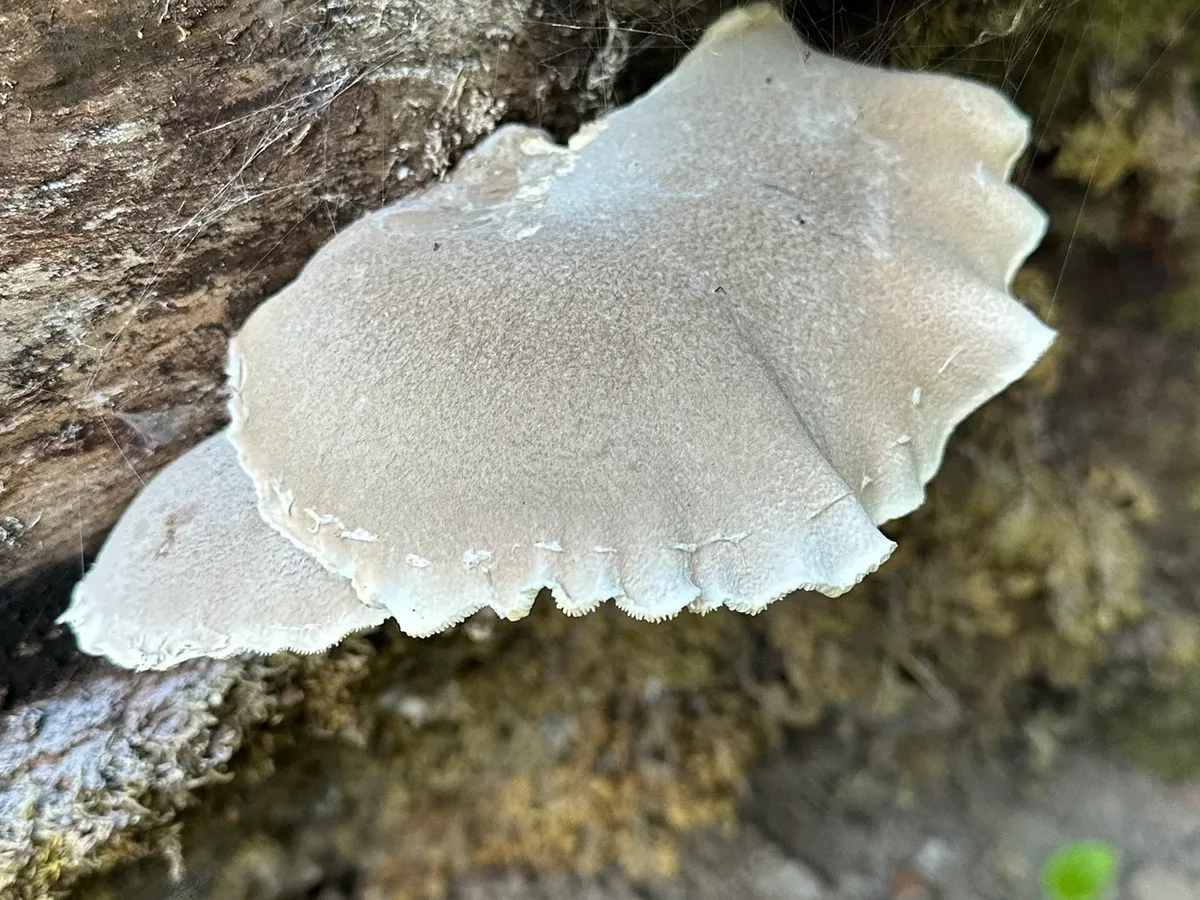
5-15 cm, whitish to pale greyish-buff, kidney-shaped to irregular, dry to slightly downy, with an inrolled margin that becomes wavy and lobed.
Gills
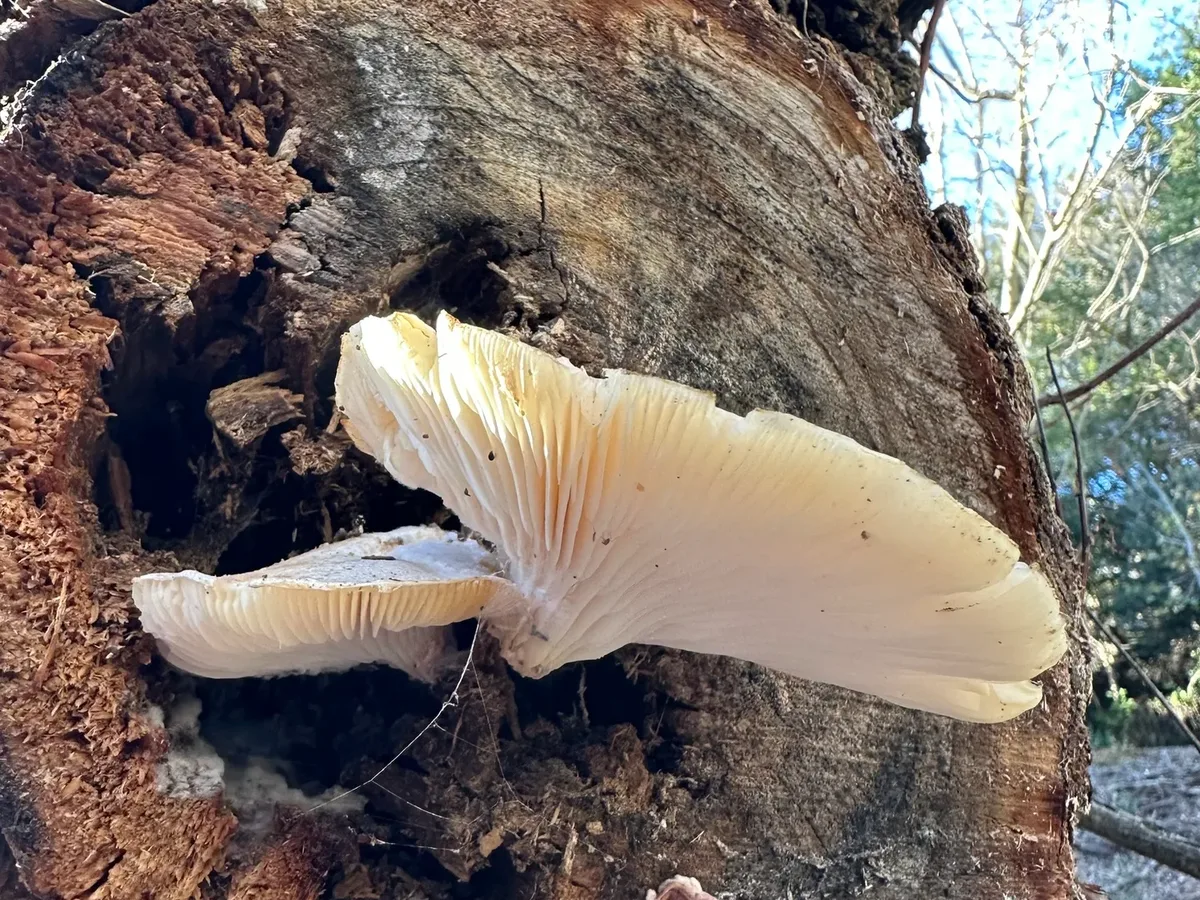
White, crowded, and decurrent.
Stem
Short (2-5 cm), lateral to eccentric, white, firm, and distinctly floccose-cottony.
Flesh
White, firm, and moderately thick.
Smell & taste
Mild, pleasant aroma sometimes described as faintly anise-like.
Spore print white to very pale lilac.
Where & when it grows
Habitat
Grows on dead or dying hardwood - primarily oak, beech, elm, and hornbeam - in deciduous forests, mixed woodland, and wooded parks.
Unlike the more opportunistic oyster mushroom (Pleurotus ostreatus), P. dryinus tends to select standing dead trunks or large-diameter fallen logs rather than cut stumps, and it often fruits at some height on the trunk rather than at the base.
It is a wood-rotting saprotroph causing white rot, occasionally also parasitising stressed or internally rotting living trees. Look for it on the shadier, north-facing sides of large trunks.
When
Main fruiting season is late summer through autumn, roughly August to November, with September and October being peak months across temperate central and western Europe.
Individual flushes tend to be brief, but the same substrate can produce multiple flushes over the season. Warm, humid weather following drier spells triggers flushes.
Occasional spring fruiting occurs in milder southern regions.
How it grows
Fruit bodies emerge singly or in small overlapping clusters of 2-5 caps from a single attachment point on the wood. Unlike the large, densely packed shelf clusters typical of P. ostreatus, the veiled oyster tends to produce more isolated, often solitary fruitings.
Beneath the surface, the mycelium threads quietly through the heartwood for months or years before a flush appears - breaking down cellulose and lignin in the process and leaving the wood progressively pale, spongy, and fibrous.
This white rot is a genuine service to the forest, returning locked-up nutrients to the wider system one fallen trunk at a time.
Fruiting conditions
Flushes follow moderate autumn rains into wood that has been colonised by the mycelium. Soil (and wood) temperature dropping into the 8-18 °C range triggers fruiting; extended warm dry spells suppress it. Being wood-based, the substrate retains moisture longer than soil, so flushes can occur even after lighter rainfall events if the log is already well-moistened.
Look-alikes
The most important look-alike is Pleurotus ostreatus (oyster mushroom), which is edible and common. It lacks the partial veil and ring entirely, has a grey-brown to slate-coloured cap, and grows in dense shelf-like clusters.
- Pleurotus pulmonarius (lung oyster) is also edible and similarly pale, but again lacks any ring.
- Crepidotus species grow on wood and have lateral attachment, but are much smaller (rarely exceeding 4 cm), have a brown spore print, and completely lack a stalk - not a serious confusion risk.
- Hohenbuehelia petaloides has a very short lateral stem but occurs on wood litter, is small, and has no ring.
No deadly species realistically risk confusion with P. dryinus, given the distinctive ring zone, white spore print, and white decurrent gills.
P. pulmonarius is paler and smaller than P. ostreatus, with a whitish cap, but it completely lacks a partial veil or ring on the stem. It also tends to have a stronger mushroom smell. Both are edible, but the ring is the key distinguishing character of P. dryinus.
P. ostreatus is grey-brown to slate-coloured, lacks any partial veil or ring, grows in large dense overlapping clusters, and has a slightly more strongly decurrent gill arrangement. P. dryinus is whitish to pale buff, has a diagnostic fibrous ring zone on the stem, and usually fruits in smaller clusters.
Much smaller (cap 2-6 cm), spoon- or spatula-shaped, greyish, with a very short gelatinous-based stem and no ring. Grows on wood debris and litter. No edibility concern but easily separated by size and habitat.
In the kitchen
Picking & cleaning
Best collected when the caps are still firm and before the veil fully tears - young specimens have the most tender flesh.
Cut the stem cleanly near its base with a knife rather than pulling, to avoid disturbing the mycelium and to keep the fruit body clean.
The flesh is firm but not as delicate as P. ostreatus, so it transports well. Discard the stem base if it is very tough.
Cooking
Cook thoroughly before eating. Young, fresh specimens work well sliced and sautéed in butter or oil with garlic; the firm texture holds up well to longer cooking in soups and stews.
The flavour is mild and pleasant but less intense than P. ostreatus. Older caps can become quite tough - the stem is generally too fibrous to eat and is best discarded.
Suitable for stir-fries, pasta sauces, or as a substitute anywhere oyster mushrooms are called for.
Good to know
Pleurotus dryinus is edible and generally safe when properly cooked. It is considered inferior in flavour and texture to P. ostreatus and the king oyster (P. eryngii), tending to be somewhat tougher.
As with most mushrooms in the Pleurotus genus, it should always be cooked before eating. Raw or undercooked oyster mushrooms can cause mild gastric discomfort in sensitive individuals due to partially heat-labile compounds. No serious toxins are known.
Confirm identification by checking for the characteristic partial veil remnants and ring zone on the stem, which are unique to this species within Pleurotus.
A reference guide - never an edibility guarantee. When in doubt, leave it out.