Pink oyster
Pleurotus djamorsyn. Pleurotus flabellatus, Pleurotus salmoneostramineus, Agaricus djamor, Pleurotus ostreatus var. djamor, Lentinus djamor
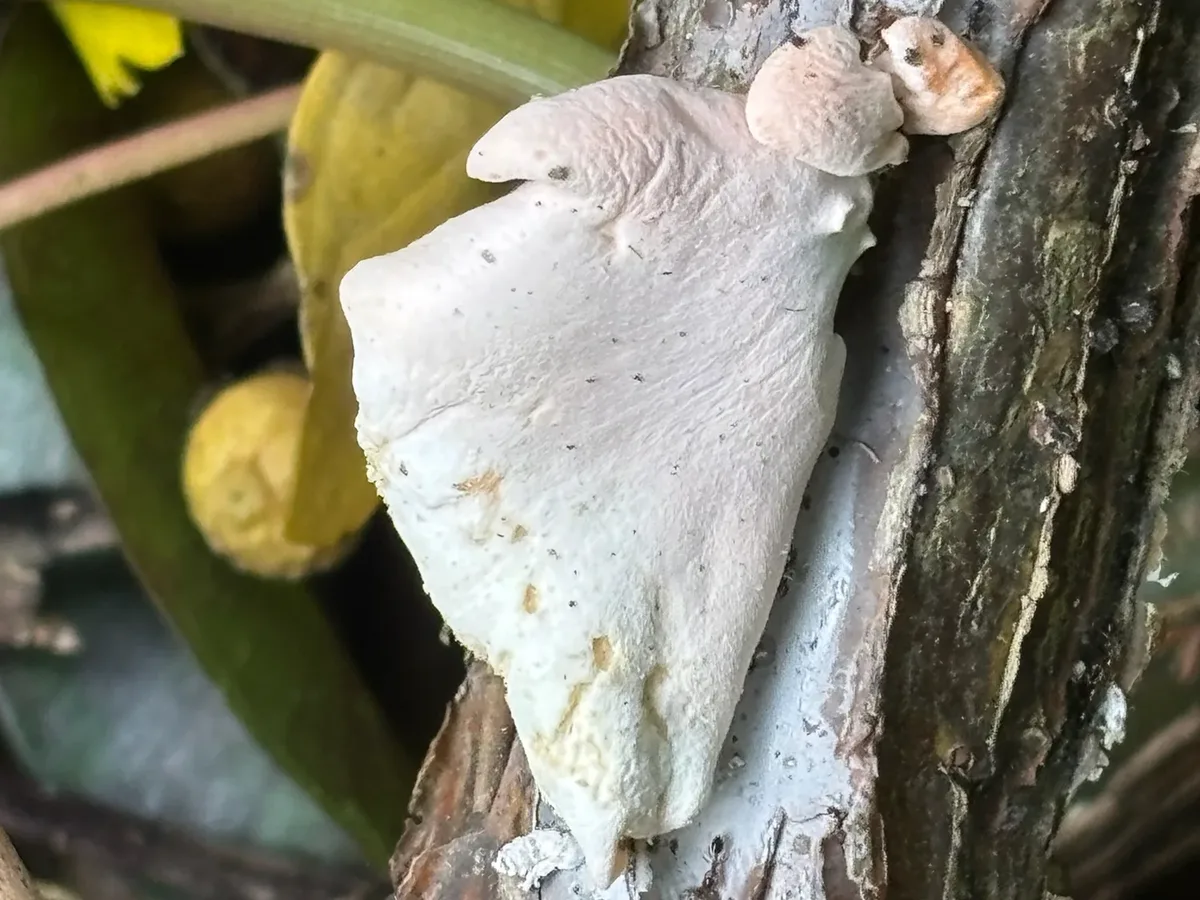 © Júlio Castellain (CC BY)
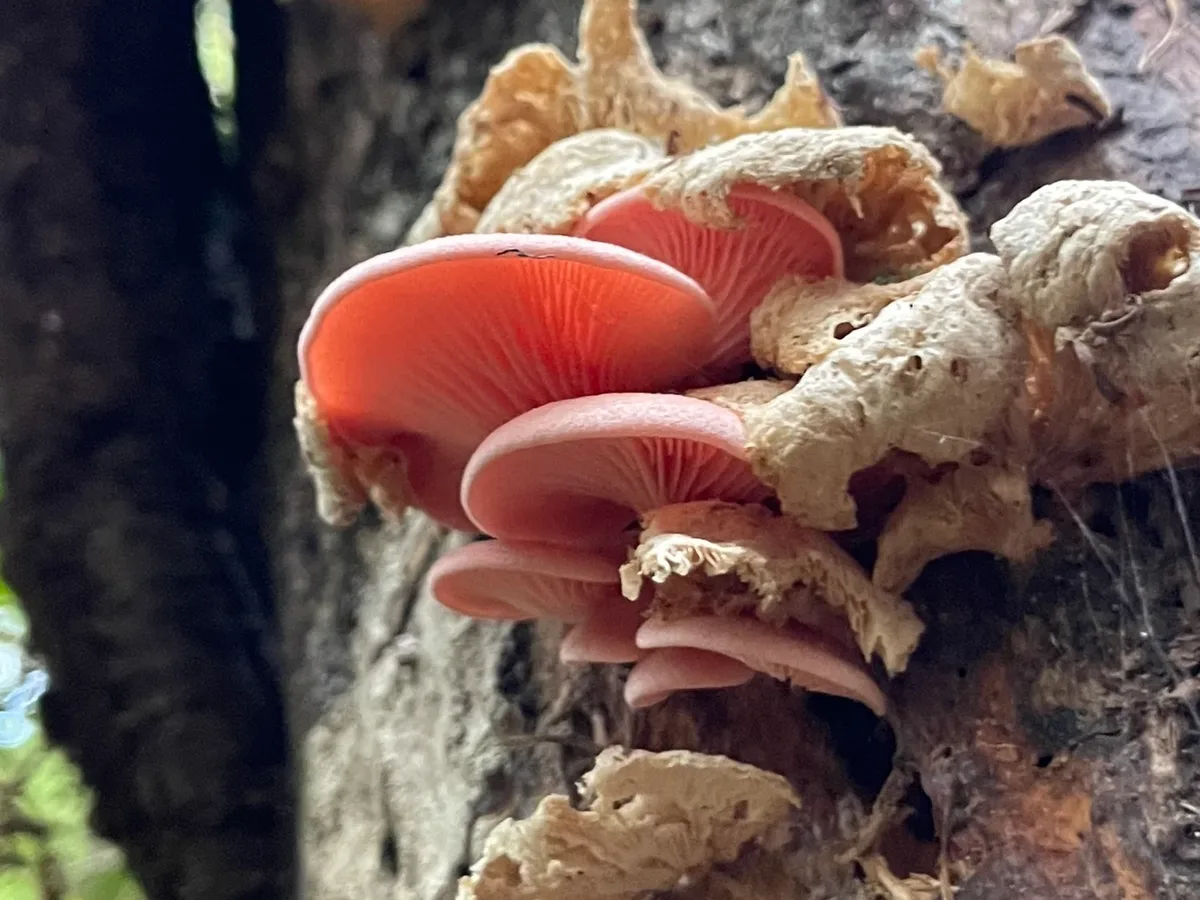 © B. Phalan (CC BY)
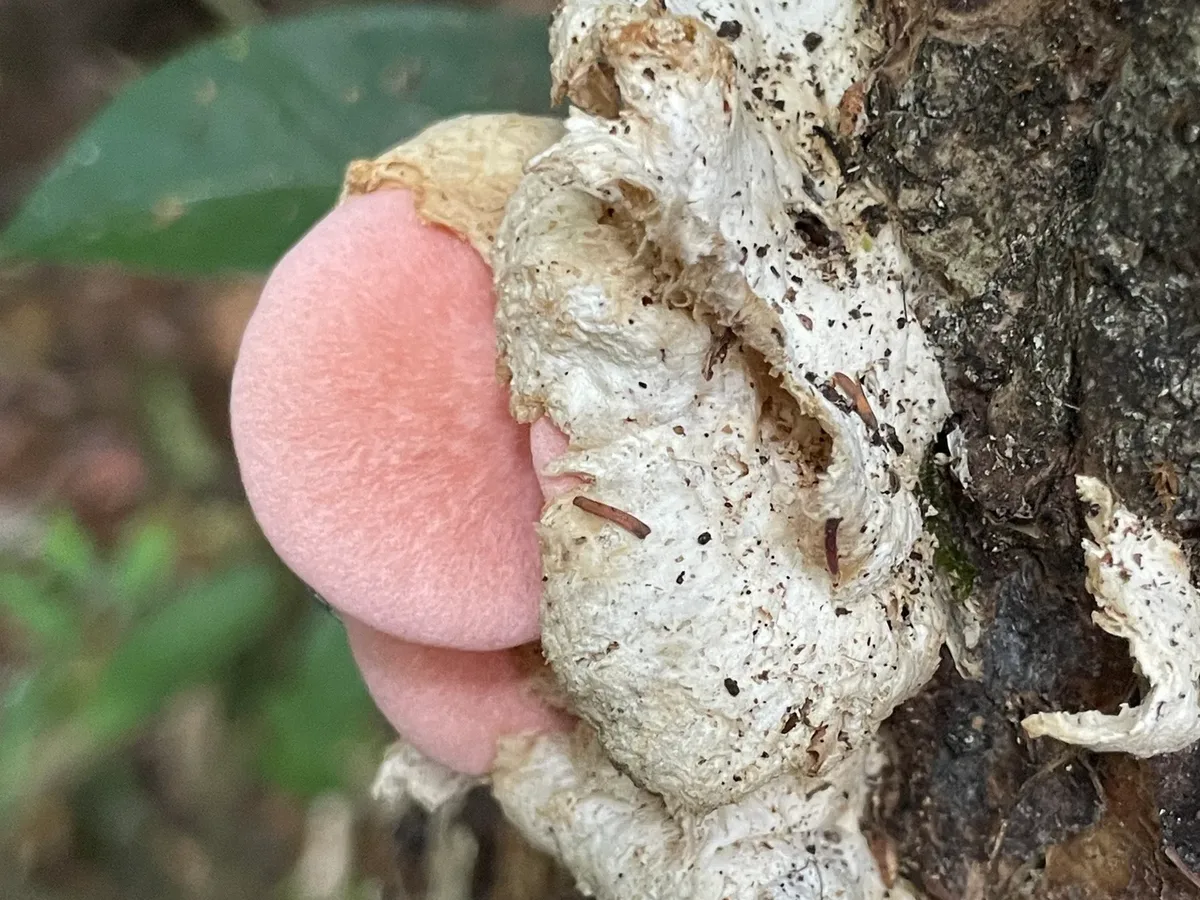 © B. Phalan (CC BY)
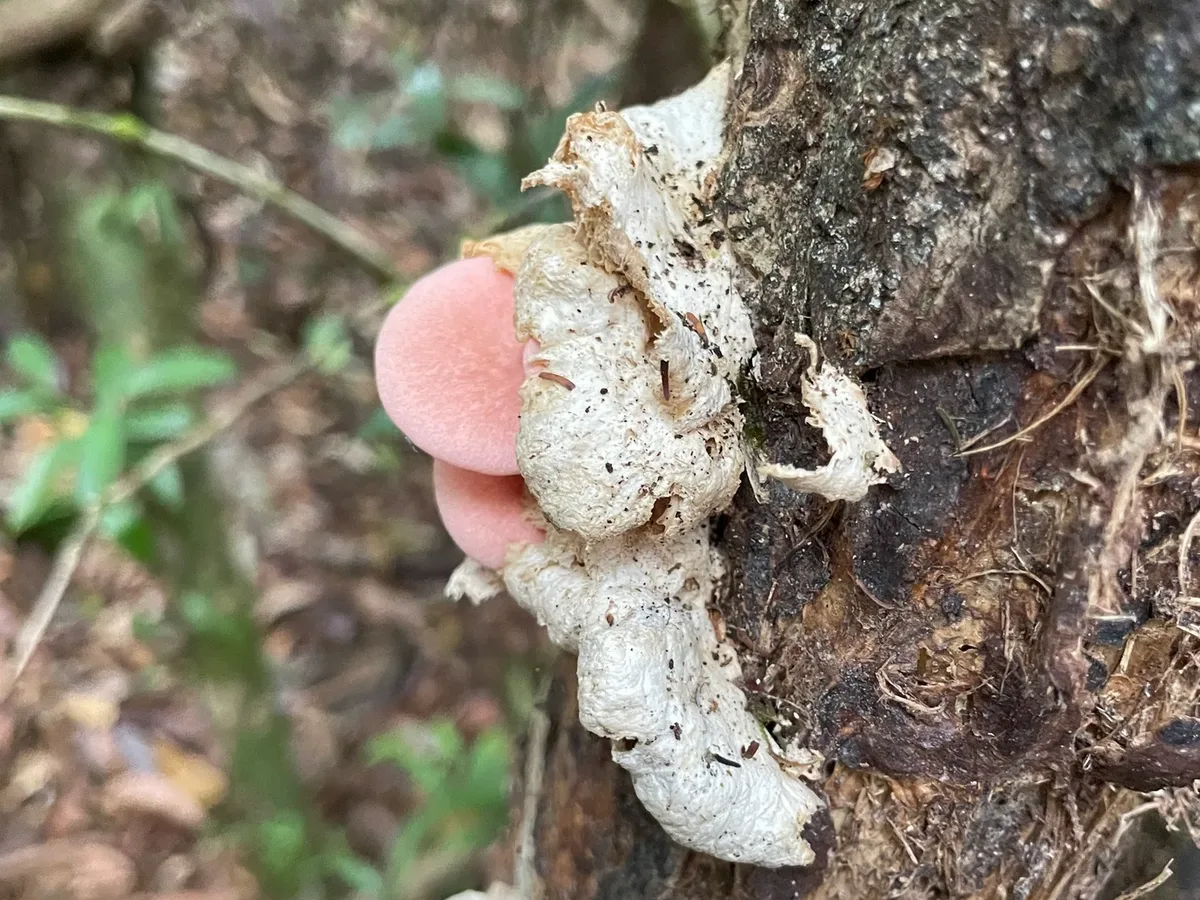 © B. Phalan (CC BY)
 © Carlos Otávio Gussoni (CC BY)
 © Denis Zabin (CC BY)
 © Denis Zabin (CC BY)
 © vinicius_s_domingues (CC BY)
 © vinicius_s_domingues (CC BY)© Júlio Castellain (CC BY)© B. Phalan (CC BY)
Good to eat, once you have identified it with certainty and cooked it through.
How to recognise it
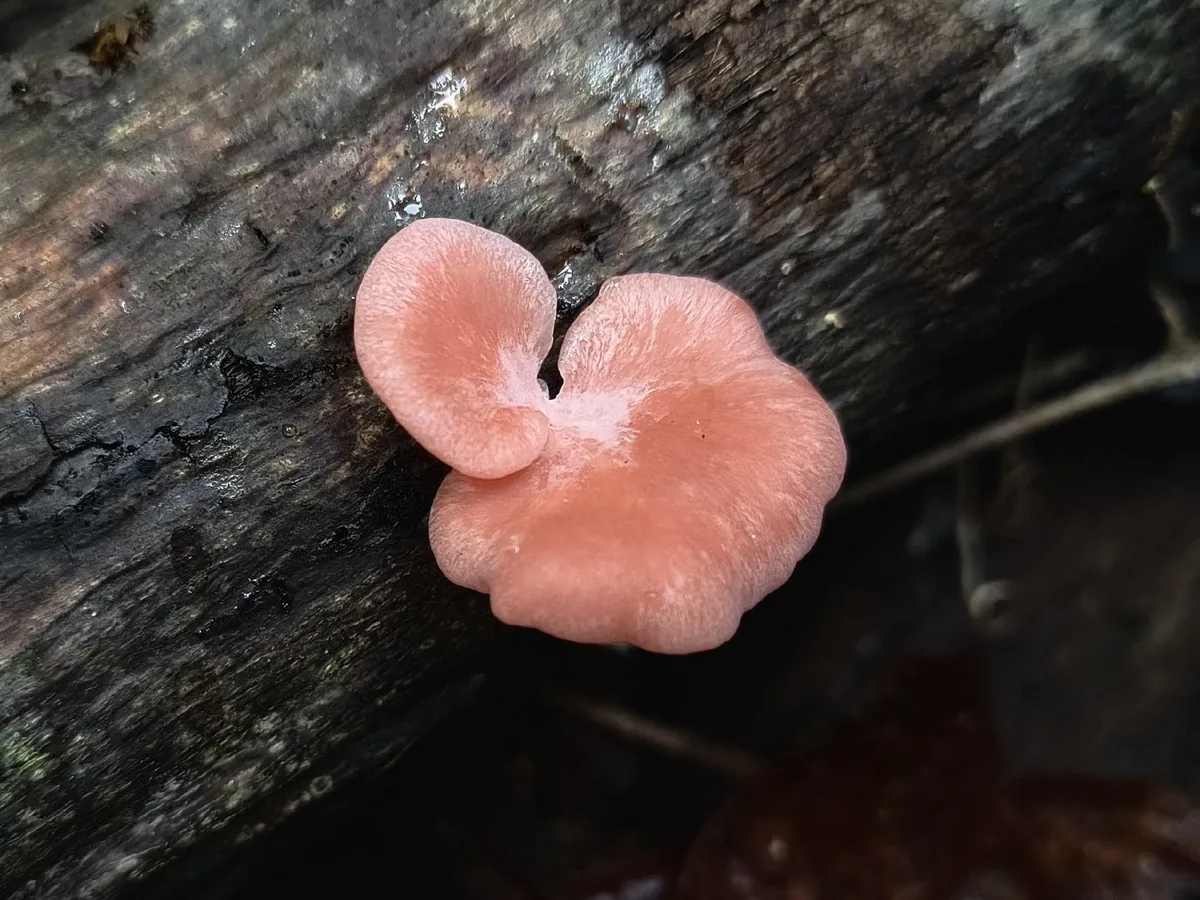
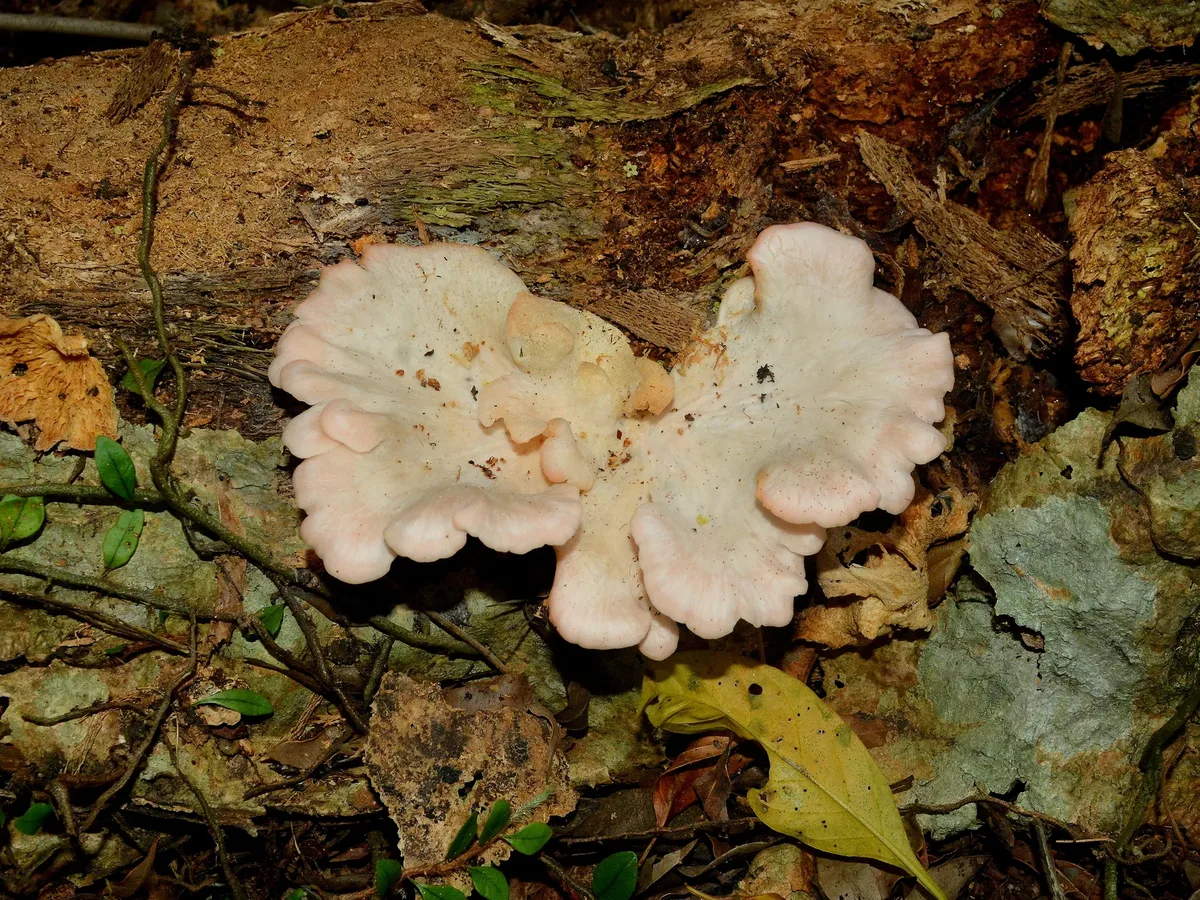
Pleurotus djamor is immediately recognisable by its vivid pink to salmon-rose colouring when fresh - one of the few truly pink mushrooms in the oyster group.
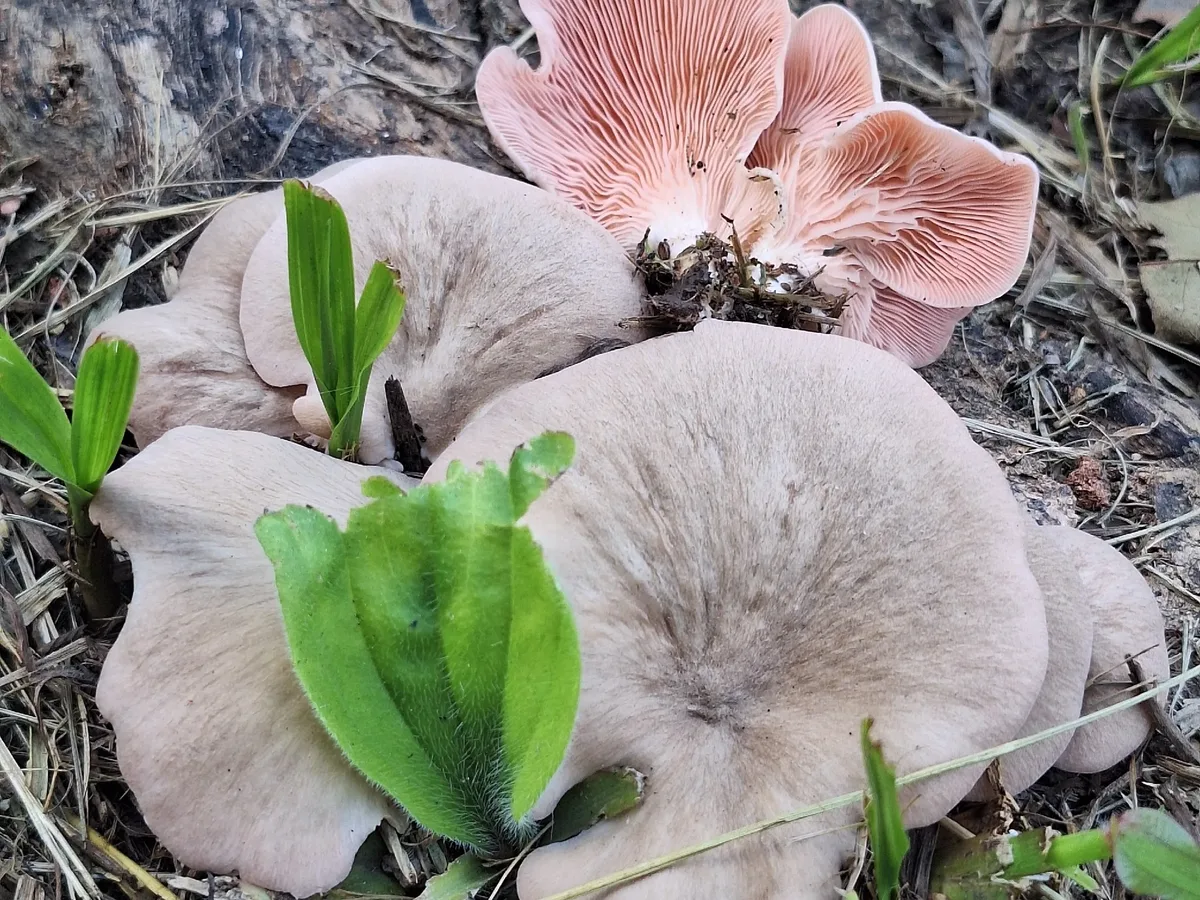
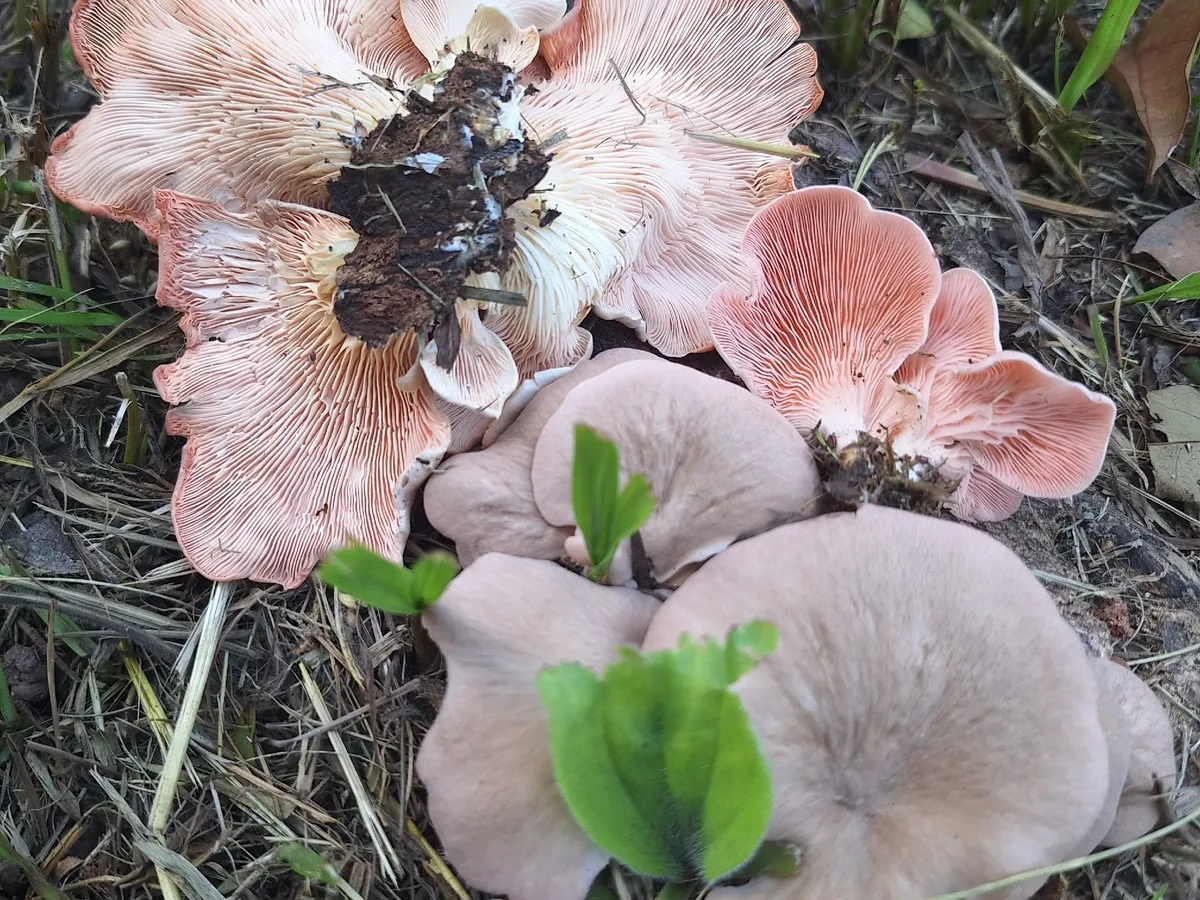
The fan-shaped caps, 3-15 cm across, are smooth and moist, growing in dense overlapping clusters or rosettes directly from wood. The crowded white gills run well down a short, lateral stem.
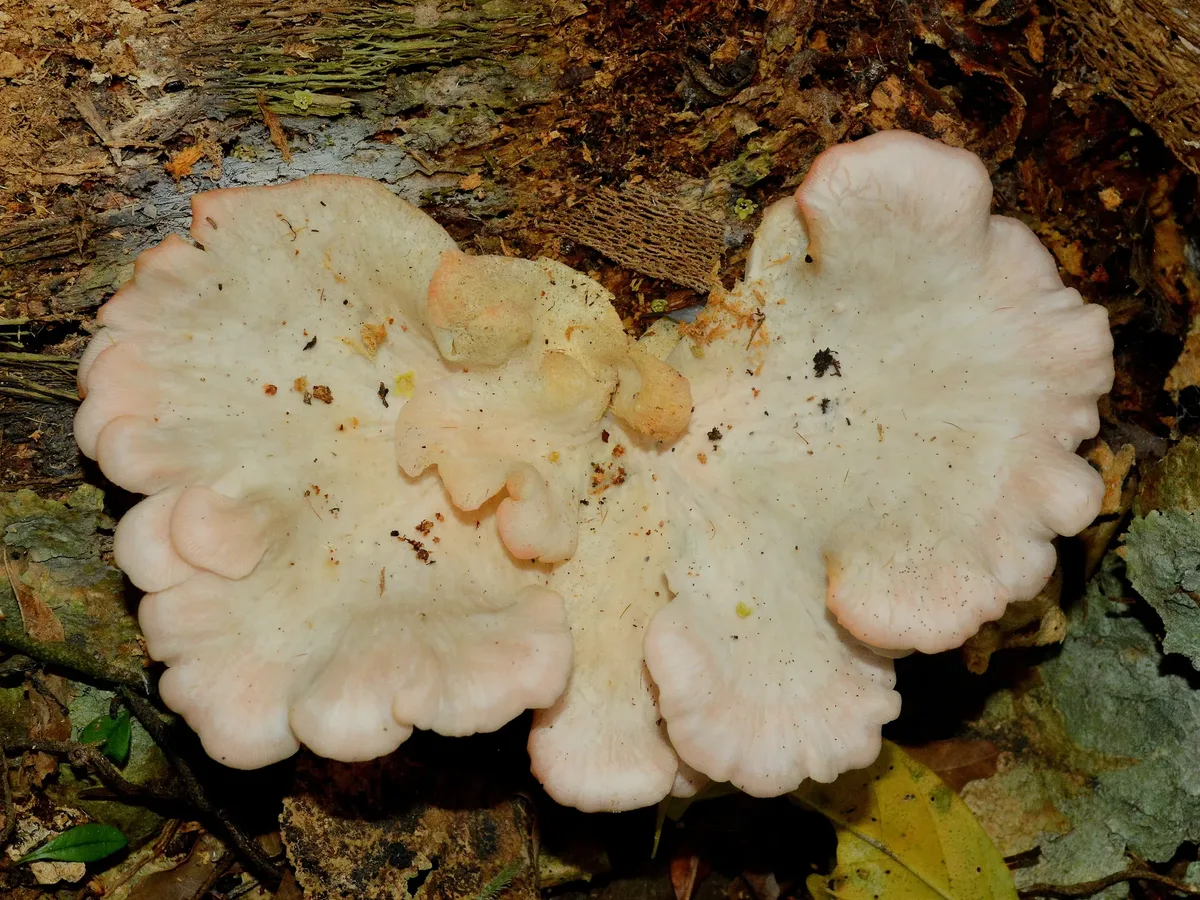
The colour is the mushroom's most diagnostic feature but is notoriously transient: caps fade to pale buff or cream within hours in direct sun or as they dry, and old specimens in the field may appear nearly white. Always check fresh, young specimens.
The flesh is thin and firm, white throughout, with a mild pleasant odour. Spore print white to faintly lilac.
Where & when it grows
Habitat
A wood-rotting saprobe restricted to dead or dying hardwood in tropical and subtropical Asia, Africa, and the Pacific.
In the wild it most commonly appears on rubber tree logs, dead banana pseudostems, oil palm trunks, and a wide range of other broadleaf species following rains.
It decays the wood's cellulose (white rot), colonising logs, stumps, and large branches lying on the ground or still standing. It is rarely found on conifers.
Globally it is grown on an enormous scale as a commercial crop on straw, sawdust blocks, and agricultural by-products, making it one of the most widely cultivated mushrooms in Southeast Asia.
When
In the humid tropics the species fruits opportunistically through most of the year, responding to rain events and elevated humidity rather than strict seasonality. Significant flushes coincide with monsoon onset and post-monsoon wet periods.
In areas with a pronounced cool dry season, fruiting ceases until temperatures and humidity recover.
The optimum fruiting temperature is 22-32 °C; above 35 °C growth slows markedly.
How it grows
Pink oyster grows as a white rot decomposer, secreting lignocellulolytic enzymes to break down cellulose and lignin in the substrate.
Its mycelium colonises wood rapidly and is aggressive and heat-tolerant compared to other Pleurotus species.
Primordia form in response to:
- a drop in CO₂ concentration
- a temperature fluctuation
- high relative humidity
Fruiting bodies develop quickly: a full flush from pin initiation to harvest-ready caps can occur in 3-5 days under warm conditions. Multiple flushes are produced from the same substrate over several weeks.
Fruiting conditions
Fruiting is triggered by high humidity (>80 % RH) and warm temperatures (optimum 22-32 °C). A rain event or irrigation of substrate followed by a brief temperature drop of 2-5 °C reliably initiates primordia. Lag from rain event to visible pins is 3-7 days under optimum conditions; full harvest-ready caps in 3-5 more days. Unlike temperate Pleurotus, this species does not require cold shock and is inhibited by temperatures below 15 °C.
Look-alikes
Because of its unique vivid pink colour when fresh, there are few dangerous field lookalikes. The main confusion risk is:
- Pleurotus salmoneostramineus (Salmon oyster) - now generally treated as a synonym or closely related taxon, essentially the same species or a very close relative; edible.
- Pleurotus ostreatus and relatives - grey-white to brownish oyster mushrooms on wood; differ by lacking pink colouration.
- Crepidotus spp. - small, white-to-tan kidney-shaped fungi on wood; much smaller (rarely >3 cm), gills are brown at maturity due to brown spores, no stem.
- Phyllotopsis nidulans (Stinking oysterling) - orange to yellow fan-shaped fungus on wood; smells powerfully of rotting cabbage or sewage, making confusion unlikely once smelled.
- Lentinus spp. - some tropical species grow on wood in a similar habit but have tougher, leathery flesh and serrated gill edges.
None of the realistic lookalikes are lethally dangerous, but Phyllotopsis nidulans is unpalatable and should not be eaten.
Small (rarely over 3 cm), kidney-shaped, sessile or with only a rudimentary stem; white when young but gills turn cinnamon-brown as spores mature (spore print brown). Much smaller than pink oyster and lacks pink pigment. Not seriously dangerous but unpalatable.
Similar fan-shaped caps on wood and decurrent white gills, but cap is slate-grey to brownish or white - never vivid pink. Fully edible and desirable; confusion would only result in eating another good mushroom, not a poisonous one.
Grows on wood in tropical regions; white to buff with dark scales on cap; has a defined central-to-off-centre stem; gill edges serrated (toothed); flesh very tough and leathery. Lacks pink colour. Not toxic but unpalatable raw.
Now widely treated as a synonym of or nearly identical to P. djamor; essentially the same species or a very close relative. Colour may be slightly more salmon-buff vs. vivid pink. Edible and interchangeable.
Bright orange-yellow caps on wood; no stem or only a vestigial one; smells powerfully and distinctively of rotting cabbage or sewage - utterly unlike pink oyster. Unpalatable but not lethally dangerous. Colour and smell alone distinguish it immediately.
In the kitchen
Picking & cleaning
Harvest just before or as the cap margin begins to flatten and the edges start to split or curl upward - at this point flavour and texture are best.
Caps that have become very pale or whose margins are splitting and drying are past their prime for table use.
Twist and pull cleanly from the cluster base, or use a knife. The very short stem is edible but can be slightly tougher than the cap; trim if cooking for guests.
Pink oysters deteriorate rapidly after picking:
- refrigerate immediately
- use within 1-2 days
- do not seal in airtight containers
They do not dry well because they lose their colour and become very tough.
Cooking
Pink oyster has a tender, somewhat silky texture with a mild, faintly seafood-like or savoury-meaty flavour that deepens considerably with heat.
It is best cooked hot and fast to preserve texture and develop flavour: sauté over high heat in butter or oil until the edges crisp and colour and aroma deepen.
Excellent in stir-fries, soups, noodle dishes, tacos, and as a meat substitute in rice dishes.
The striking pink colour unfortunately does not survive cooking: heat turns the caps pale grey or tan within seconds, so the colour display is best enjoyed in the field or in the kitchen before the pan.
Do not overcook or the texture becomes tough and chewy.
Season simply with soy sauce, garlic, and sesame oil, or use in any recipe calling for oyster mushrooms. The mushroom pairs well with coconut milk, lemongrass, ginger, and chilli in Southeast Asian preparations.
Good to know
Pleurotus djamor is considered a safe, widely consumed edible mushroom with no documented serious toxicity in healthy adults when cooked.
Raw oyster mushrooms of all species may cause mild gastrointestinal discomfort in some individuals and should generally be cooked before consumption.
The characteristic pink colour of young specimens is the key field safety feature. If a suspected pink oyster has faded entirely to white or tan, rely on additional features:
- wood substrate
- decurrent white gills
- short lateral stem
- lack of a ring or volva
Avoid any specimen that smells foul.
As with all wild fungi, do not consume if any doubt about identification remains.
Individuals with mushroom allergies, particularly Pleurotus sensitivity, should exercise caution.
A reference guide - never an edibility guarantee. When in doubt, leave it out.