Aspen oyster
Pleurotus calyptratussyn. Hohenbuehelia calyptrata, Resupinatus calyptratus
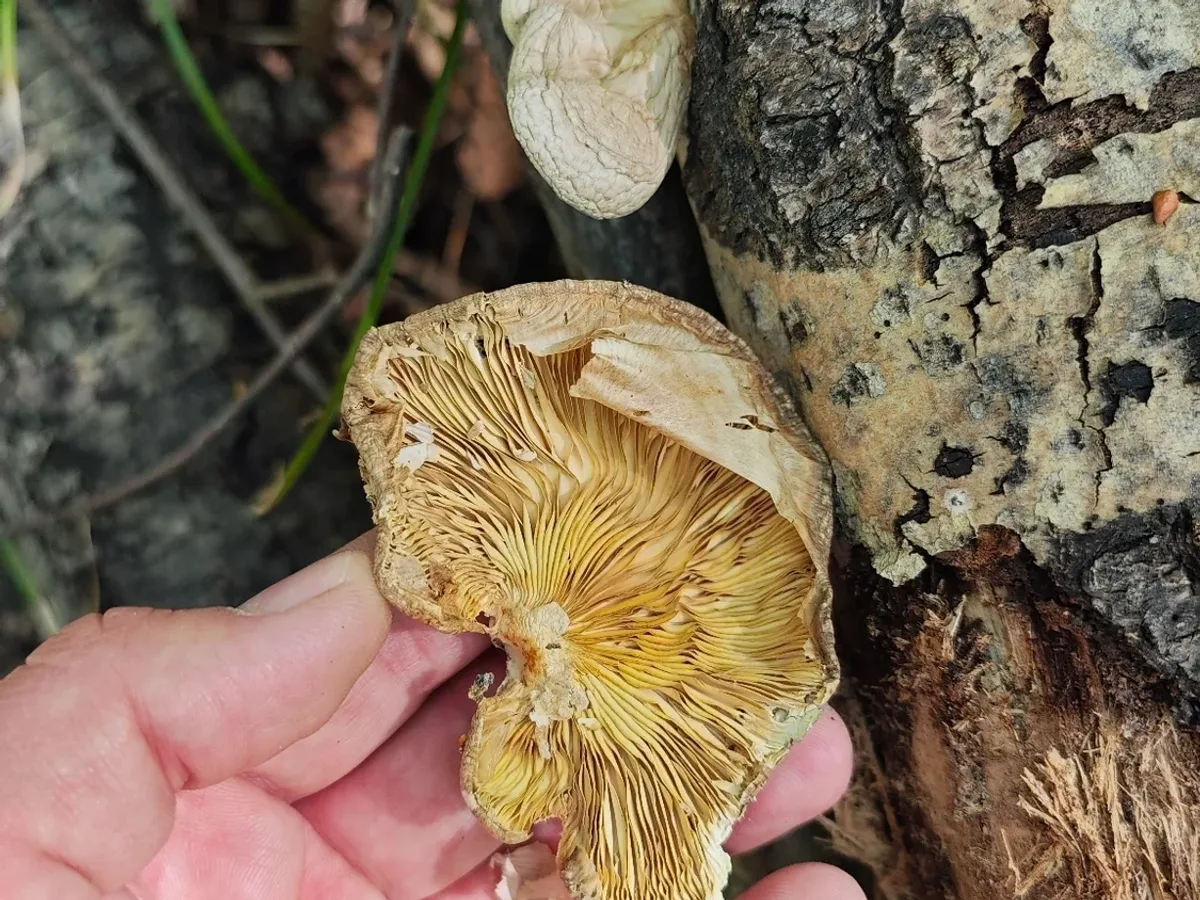 © relew (CC BY)
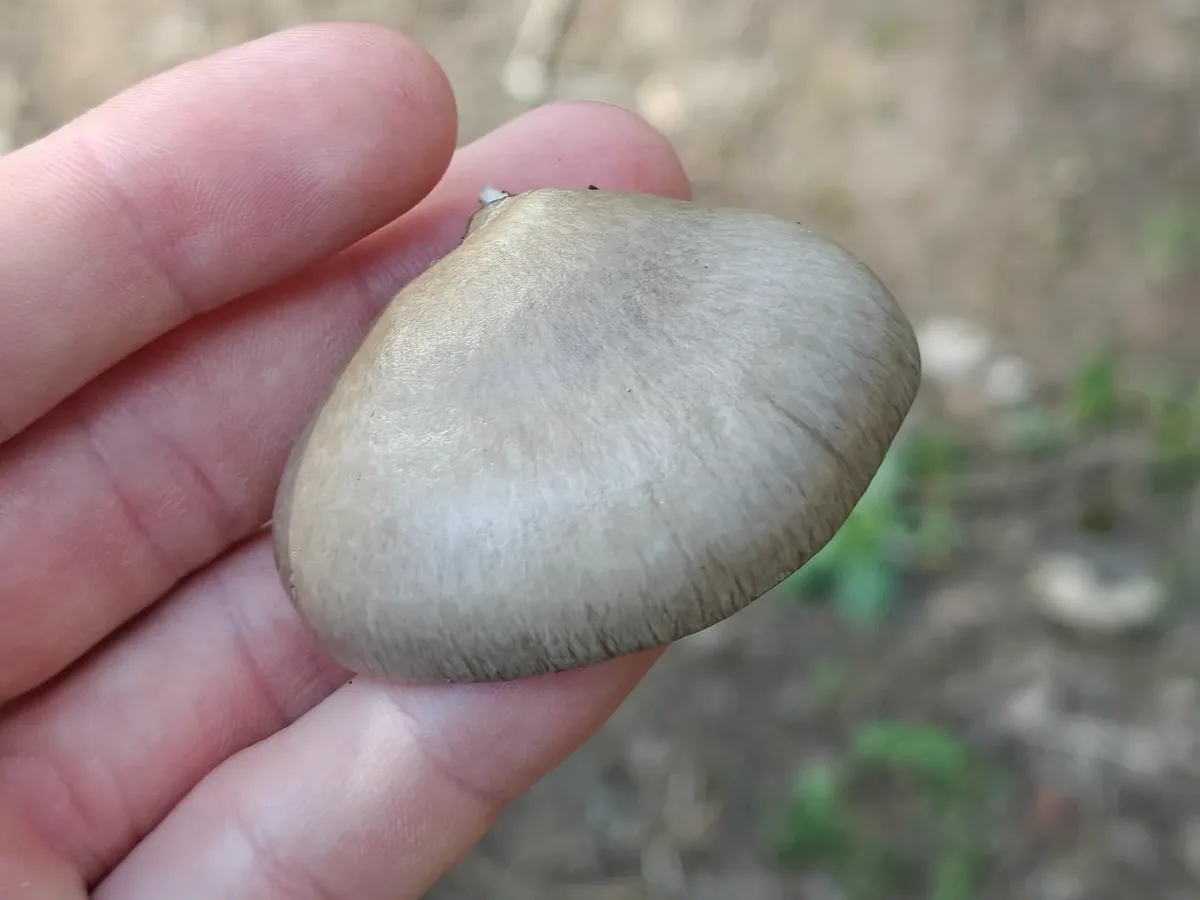 © Scheufler Stefan (CC BY)
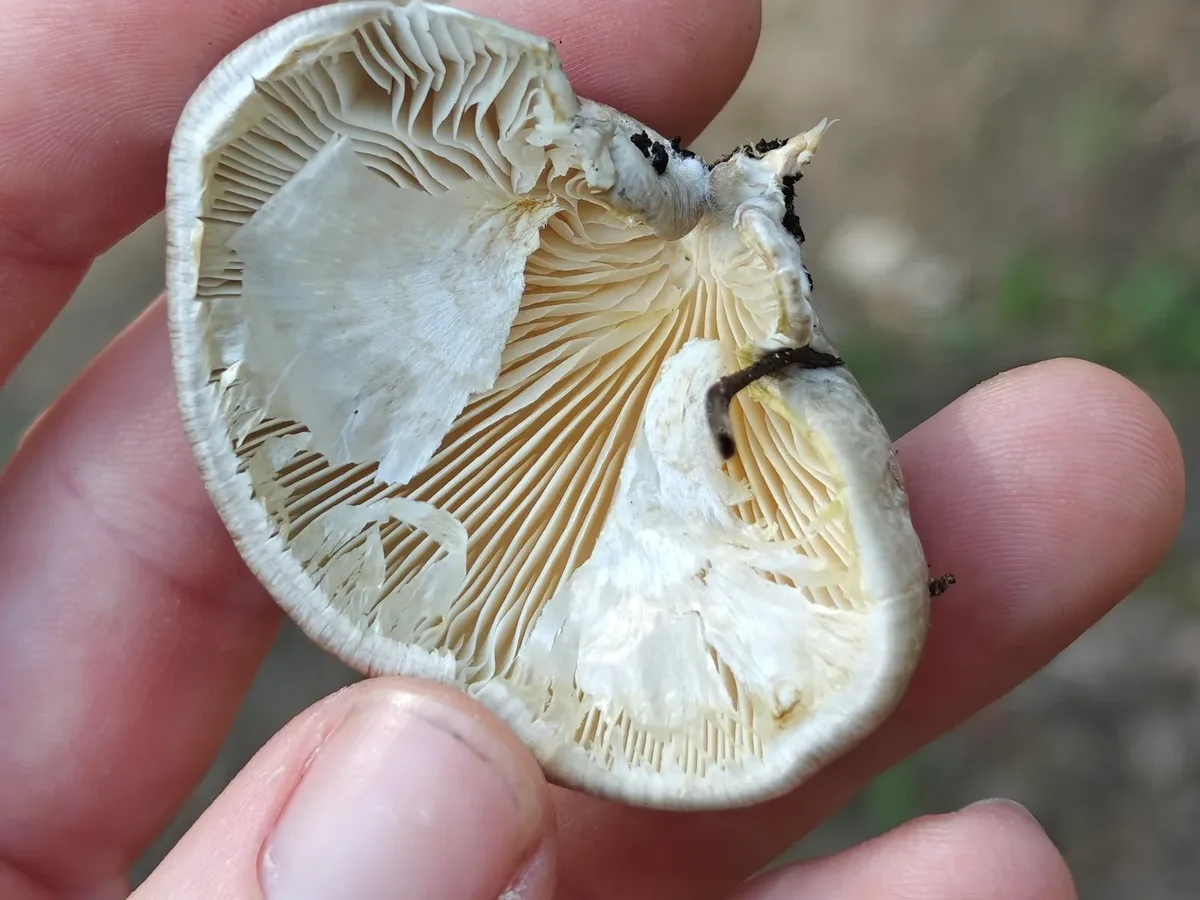 © Scheufler Stefan (CC BY)
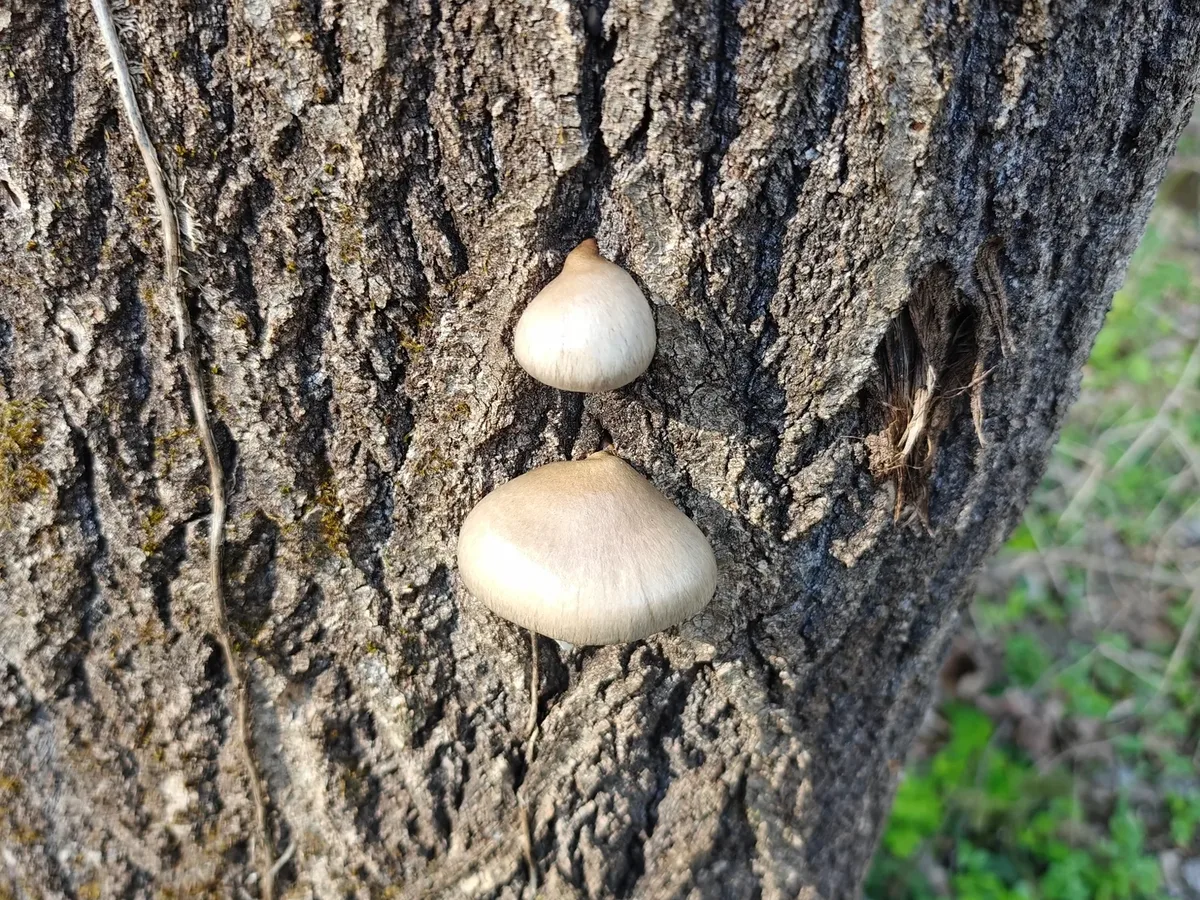 © Scheufler Stefan (CC BY)
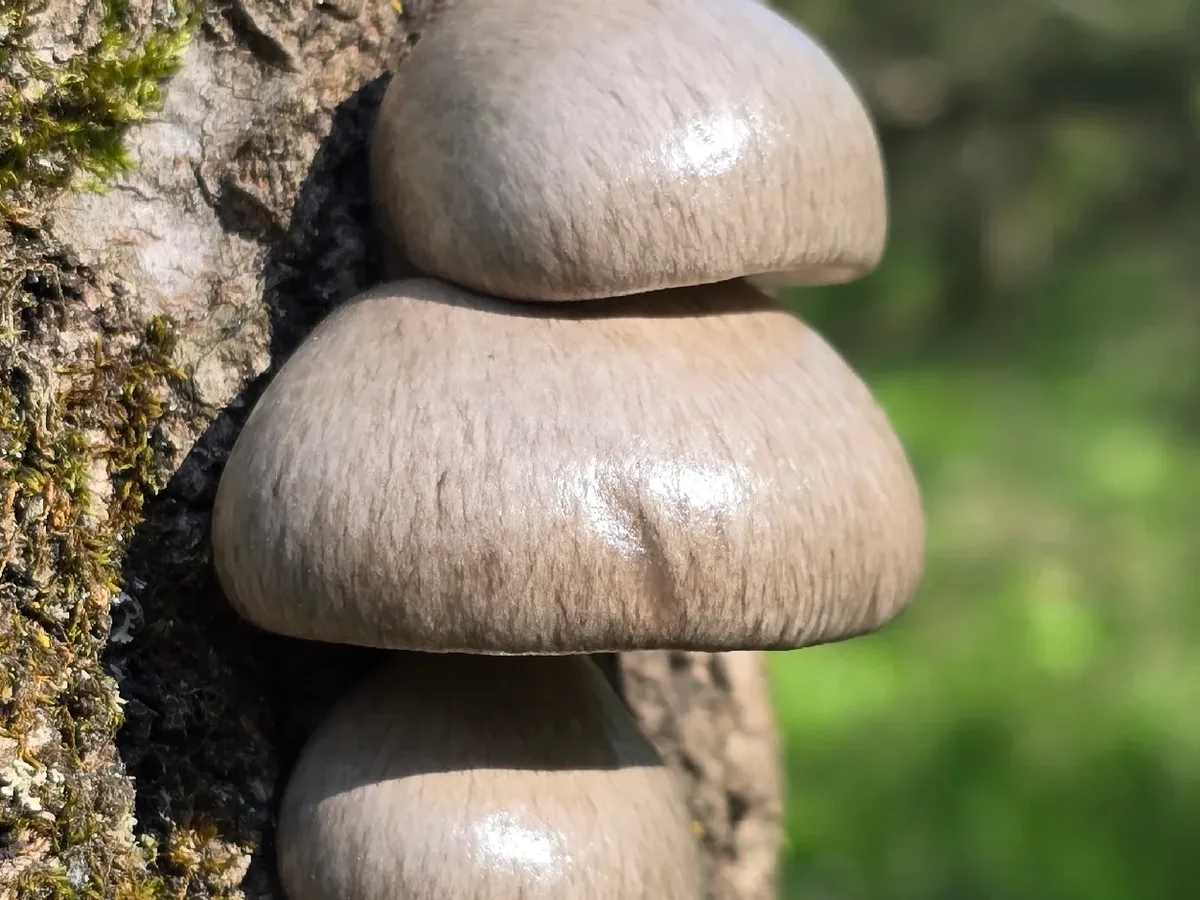 © Paula Nimigean (CC BY)
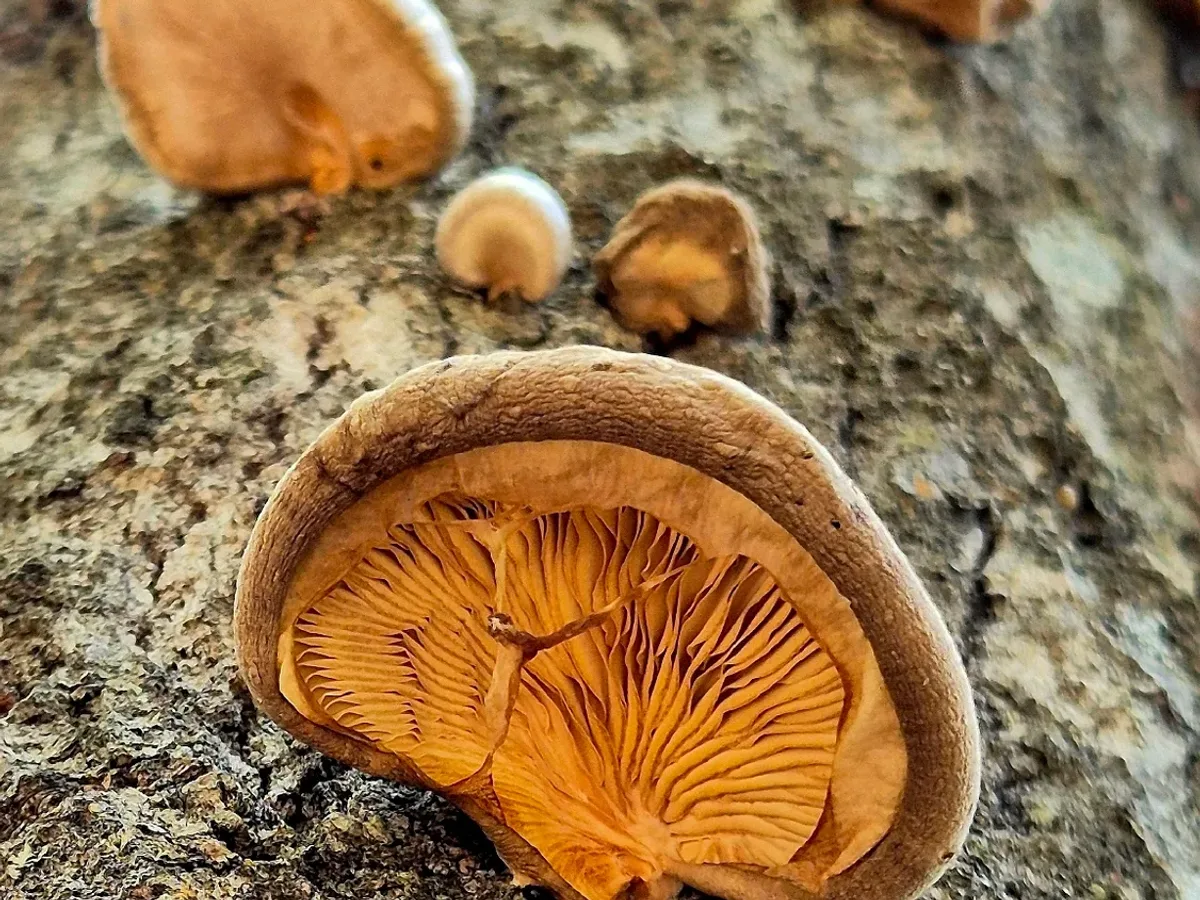 © Анна Митрошенкова (CC BY)
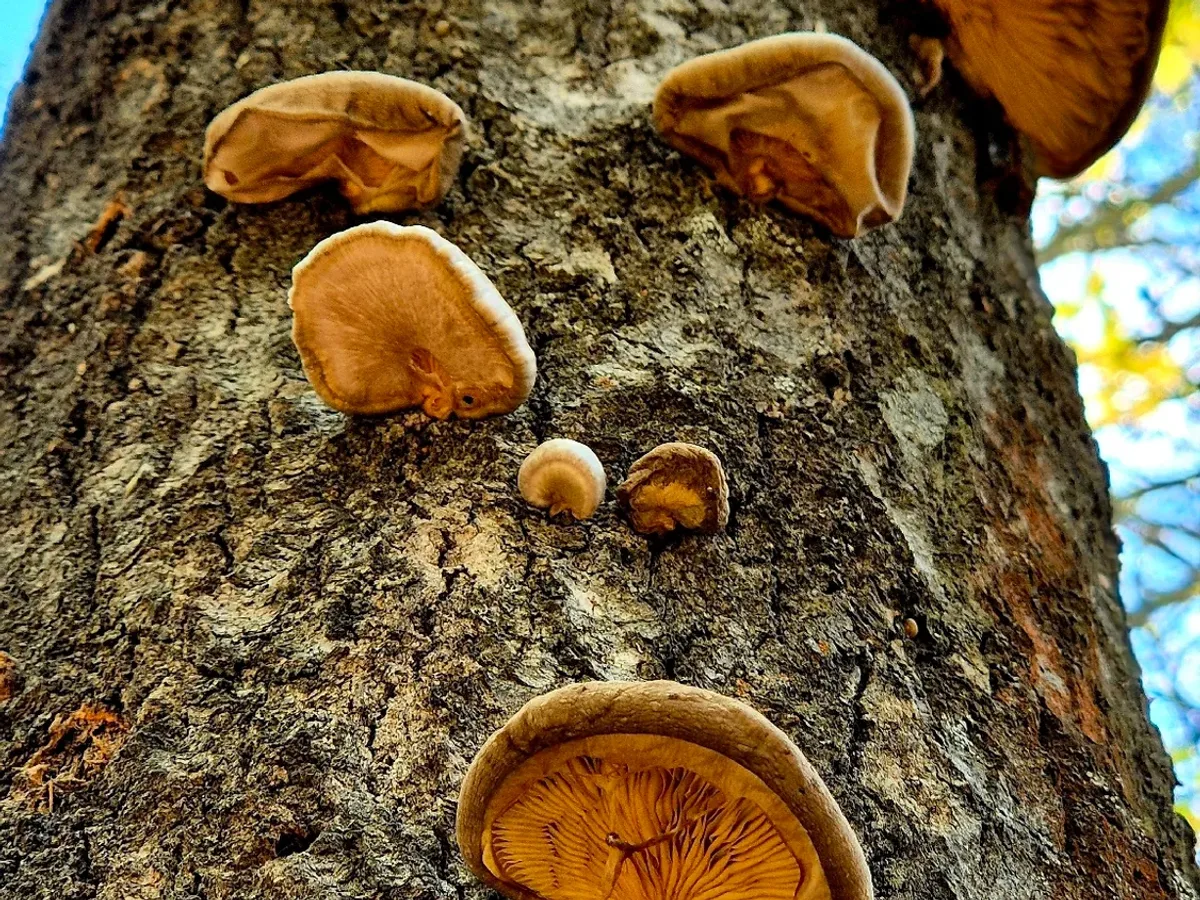 © Анна Митрошенкова (CC BY)
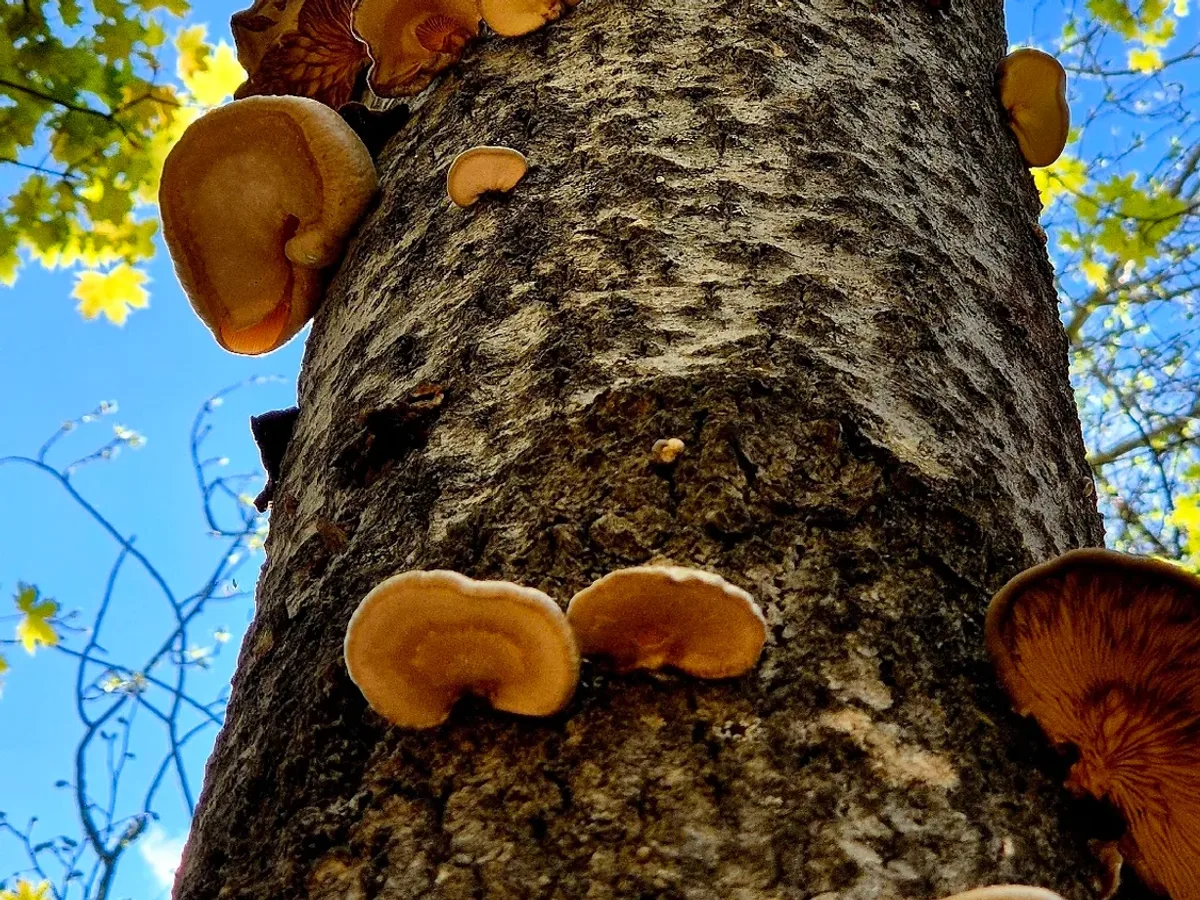 © Анна Митрошенкова (CC BY)
 © Анна Митрошенкова (CC BY)© relew (CC BY)© Scheufler Stefan (CC BY)
Good to eat, once you have identified it with certainty and cooked it through.
Never eat a mushroom you are not 100% sure of - check the look-alikes below, and always cook wild mushrooms.
How to recognise it
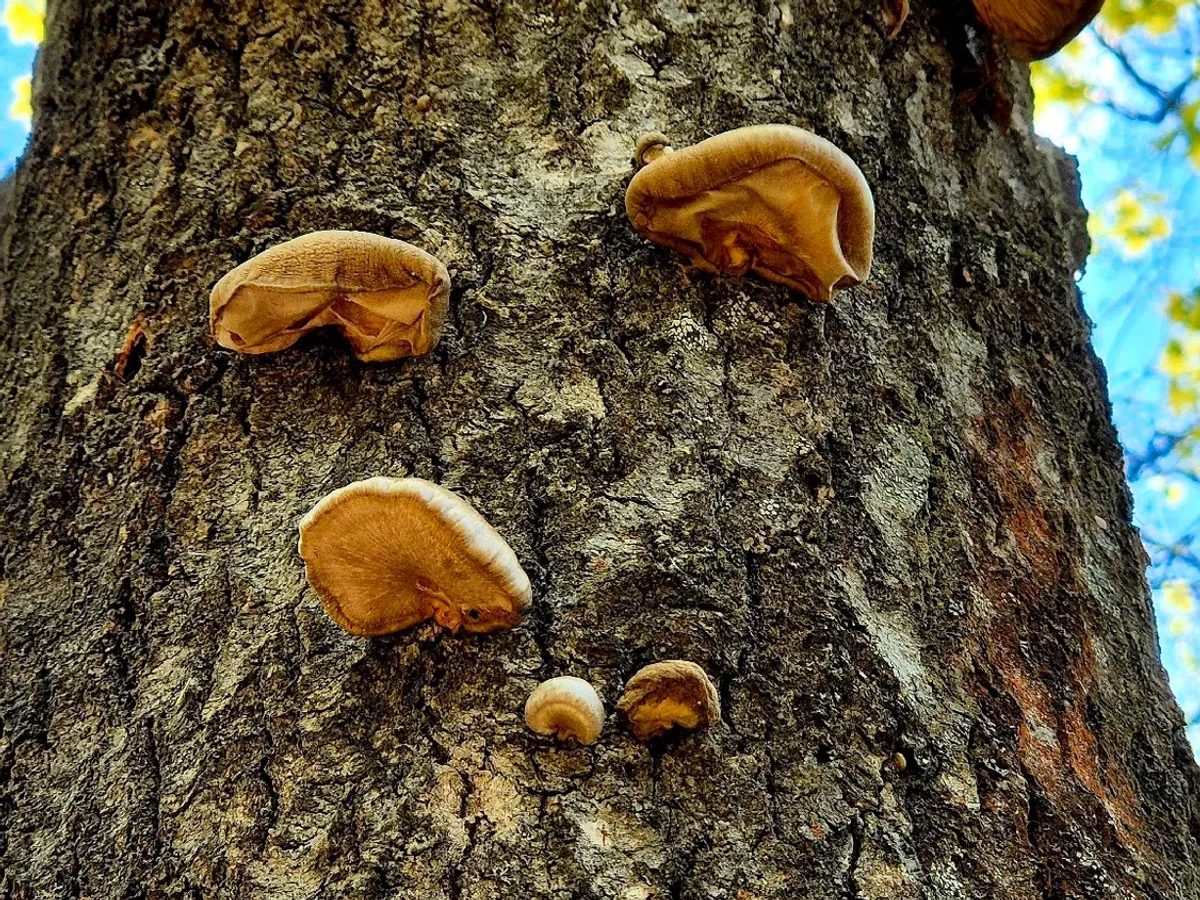
A medium-sized oyster-style mushroom, 3-12 cm across, that grows laterally from dead aspen wood.
Cap
The cap is fan-shaped to tongue-shaped, pale ash-grey to whitish-grey, smooth to silky.
The most diagnostic field mark - and the feature its name refers to (Latin calyptratus, 'wearing a hood') - is the partial veil present in young specimens: a delicate whitish curtain, cobweb-like to membranous, connecting the cap margin to the short lateral stem.
As the cap expands it tears, leaving a ragged fringe on the cap edge or a faint fibrous pseudo-ring on the stem. This veil is unique among Nordic Pleurotus species and sets it apart at a glance from the veil-less common oyster (P. ostreatus).
Gills
Gills are white to cream, crowded, strongly decurrent onto the stem.
Stem
The stem is very short (0.5-2 cm), lateral to eccentric, white, with no persistent ring.
Flesh
Flesh is white, firm, and mild-smelling. Spore print is white to pale lilac-white.
Where & when it grows
Habitat
A specialist saprotroph of dead aspen (Populus tremula), usually colonising large fallen trunks or stumps with advanced white-rot decay. Less commonly found on birch or willow.
Favours moist, humid settings where logs retain moisture through the autumn:
- valley forests near watercourses
- boggy depressions
- damp north-facing slopes
The species is distinctly rare in the Nordic region (red-listed in Sweden and Finland), and finding it is unusual even in suitable habitats.
When
Fruits in late autumn, typically October through November in Scandinavia. It often appears after the first cold rains of autumn when temperatures drop to 5-12 °C.
Unlike P. ostreatus, which can persist through mild winters, P. calyptratus is generally a strictly autumn species that fades with hard frosts.
How it grows
Fruit bodies grow singly or in small groups of 2-5 from the same point on a log. They do not form the large dense clusters characteristic of P. ostreatus.
The lateral attachment, combined with the presence of a veil in young specimens, is the key growth habit to note.
Fruiting conditions
Late-autumn saprotroph; flushes follow sustained autumn rains once air temperatures drop below ~12 °C. Log moisture is the primary limiting factor; fruits from well-saturated, large-diameter aspen logs.
Look-alikes
The most important dangerous confusion is with Galerina marginata (deadly Galerina / funeral bell), which can co-occur on the same aspen and birch logs.
Galerina marginata is far smaller (cap 1-4 cm), has a persistent brown fibrous ring on a slender stem, rusty-brown gills, a brown spore print, and smells mealy.
The partial veil remnant in young P. calyptratus can superficially resemble the ring of Galerina to an inexperienced eye, so the spore print colour is critical: Pleurotus gives white to pale lilac-white; Galerina gives rust-brown.
Within the Pleurotus genus:
- P. ostreatus (common oyster, edible) lacks any partial veil entirely and grows in large clusters.
- P. dryinus (veiled oyster) also has a partial veil but is primarily a central-European and southern-Scandinavian species on oak and beech (rarely aspen), is larger (cap to 20 cm), and has a more persistent, skirt-like ring - P. dryinus is also edible.
Crepidotus species grow on wood in a similar lateral manner but are typically very small (under 3 cm), lack gills running to a true stem, have a brown spore print, and are inedible (though not deadly).
Much smaller (cap 1-4 cm), with rusty-brown gills, a persistent brown fibrous ring on a slender hollow stem, and a rust-brown spore print. Deadly - contains amatoxins. Spore print colour is the definitive test: Pleurotus calyptratus gives white to pale lilac-white.
Edible and choice. Grows in large dense clusters on a wide range of broadleaved trees; completely lacks any partial veil at all stages; cap often dark grey-blue when young. Much more common.
Inedible but not deadly. Very small (under 2 cm), white, kidney-shaped, no stem, no gills running to a stem, brown spore print. Grows on thin dead twigs, not large logs.
Edible. Also has a partial veil but is larger (cap to 20 cm), with a more developed ring-like skirt. Primarily on oak and beech in central/western Europe, not typically on aspen in Nordic regions.
In the kitchen
Picking & cleaning
Pick by twisting and pulling gently from the substrate.
Because the species is red-listed in Sweden and Finland due to rarity, collection should be minimal - photograph first and collect only what is needed. If harvesting, leave behind smaller, immature specimens.
The veil on young mushrooms is important for identification, so young examples are best for confirming the ID before older veil-less specimens are taken.
Cooking
The flesh is mild and pleasant, similar in texture and flavour to P. ostreatus but somewhat firmer. It takes well to frying and sautéing - butter and garlic suit it naturally - and adds body to soups and stews.
The cap edges and any veil remnants may be slightly chewy and can be trimmed.
Not well-suited to drying due to its relatively delicate texture, but handles light cooking well. Best consumed fresh within 1-2 days of picking.
Good to know
Considered a good edible mushroom by Scandinavian field guides, though rarely collected due to its rarity. No toxins are known in this species.
The paramount safety rule is spore print confirmation: always take a white spore print before eating any lateral wood-growing mushroom.
Galerina marginata, which contains deadly amatoxins, can grow on the same logs, and a young Galerina with a ring could be mistaken for the veiled P. calyptratus by a careless picker.
The spore print test takes one hour and can be lifesaving.
A reference guide - never an edibility guarantee. When in doubt, leave it out.