Brown Oyster
Pleurotus australissyn. Pleurotus ostreatus var. australis, Agaricus australis G.Stev.
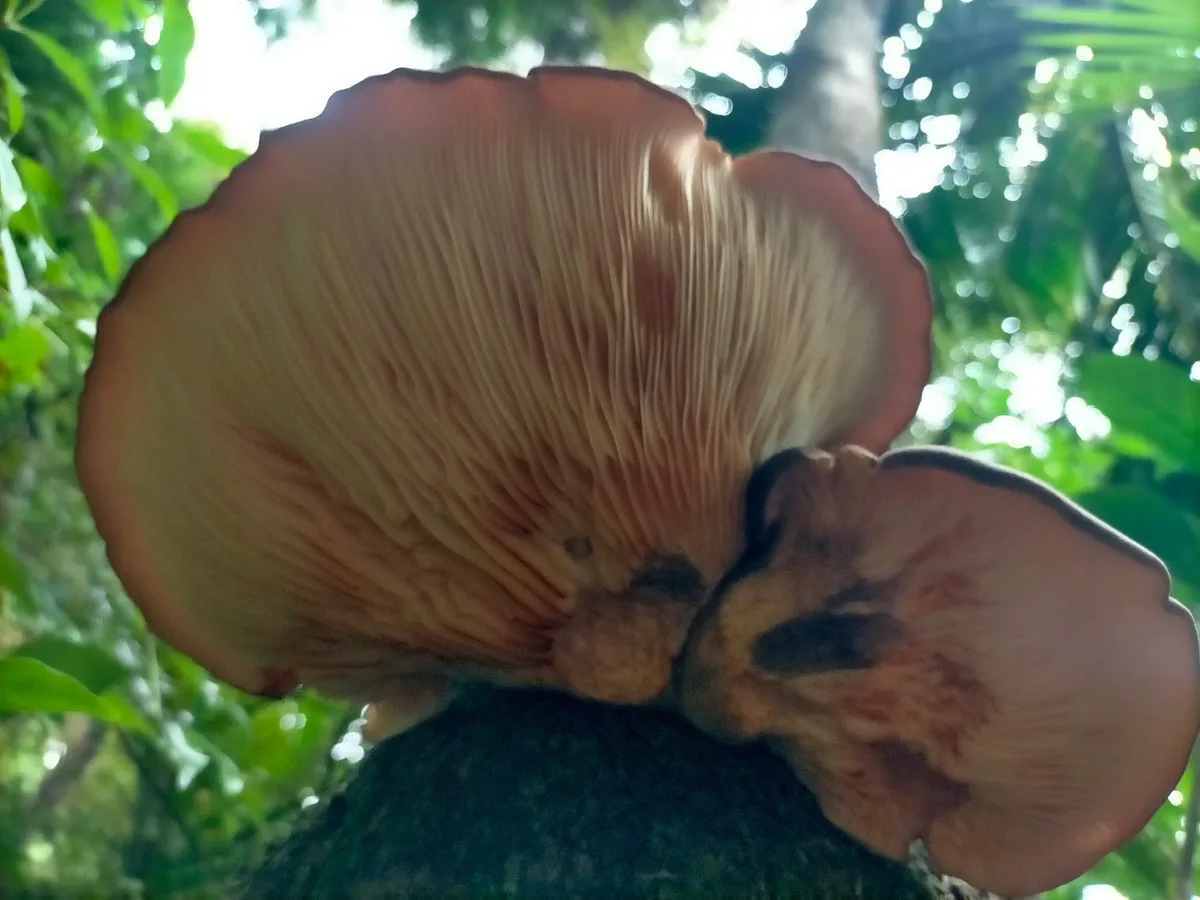 maxine_b (CC0)
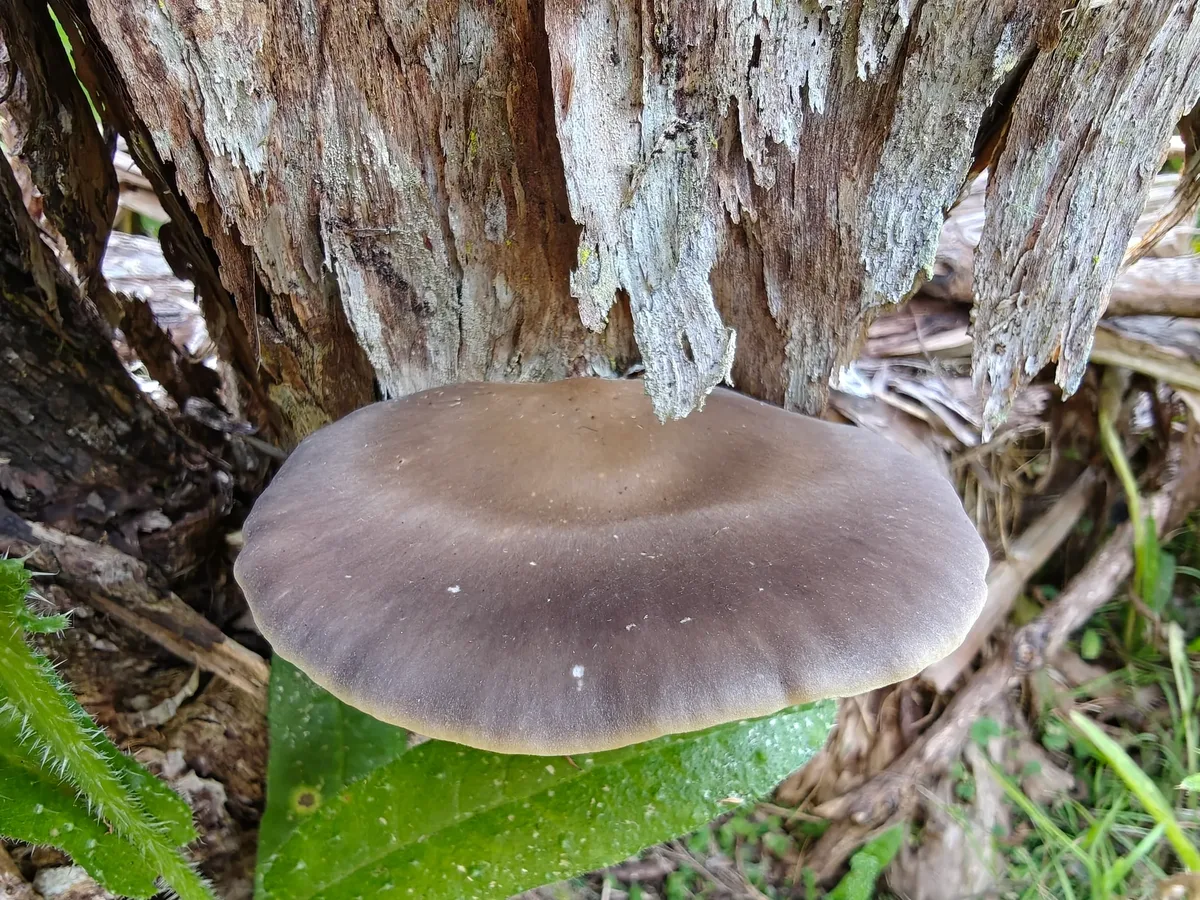 © Mark Stirling (CC BY)
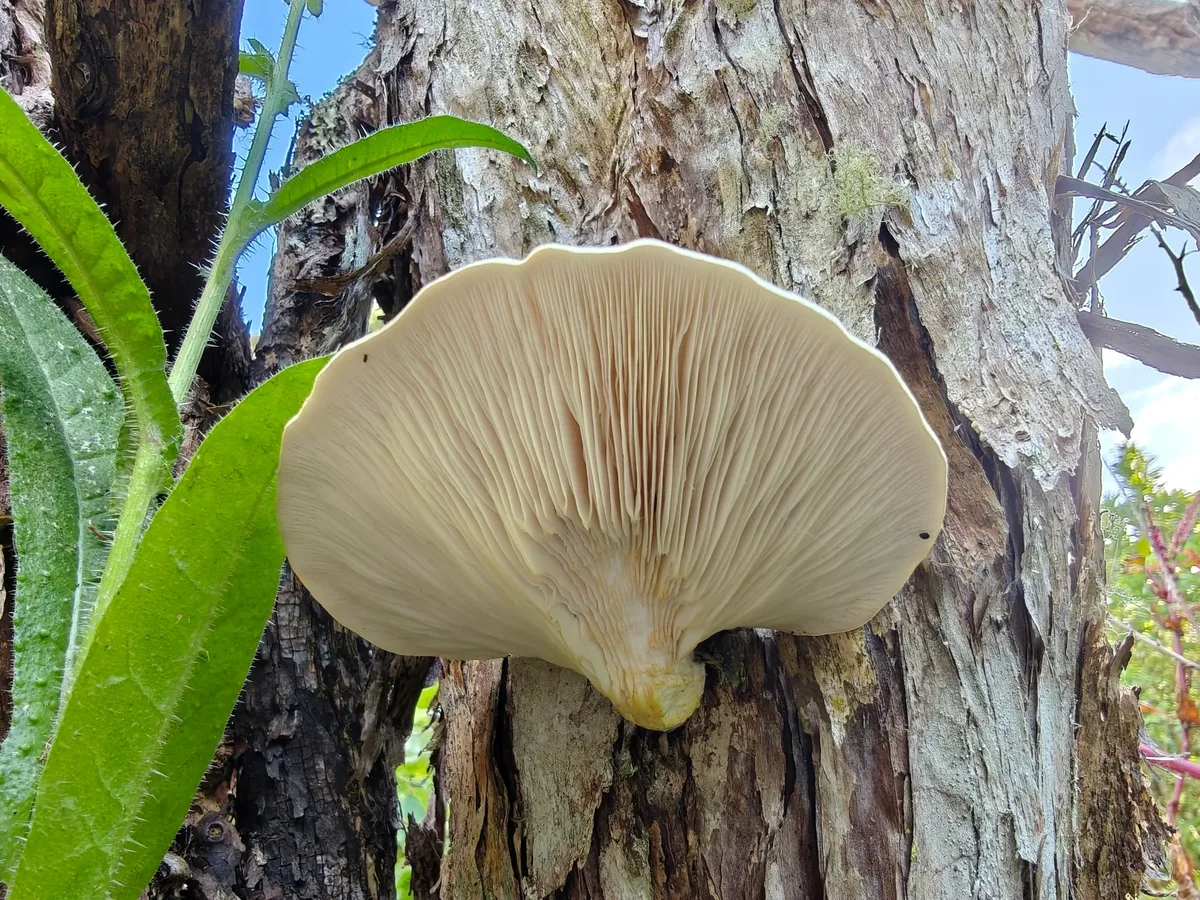 © Mark Stirling (CC BY)
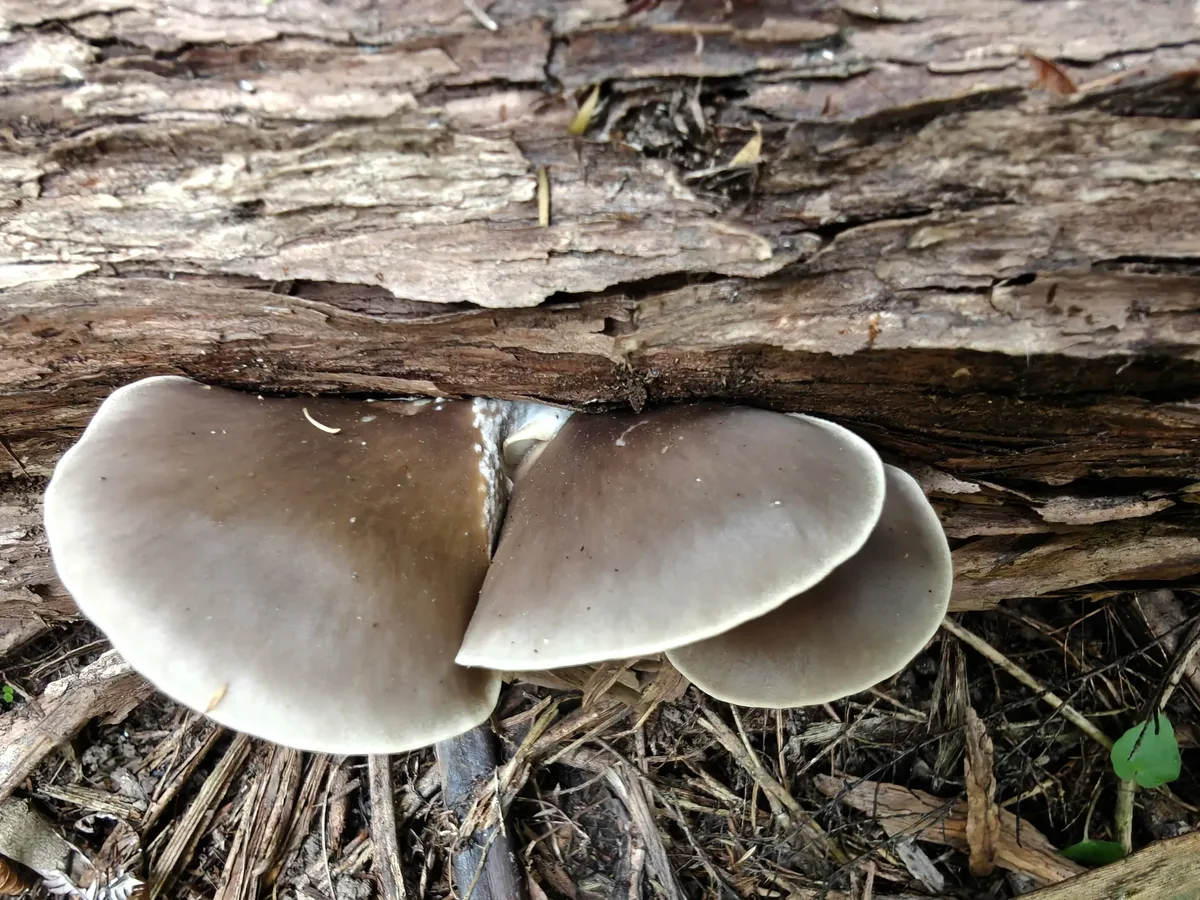 © Mark Stirling (CC BY)
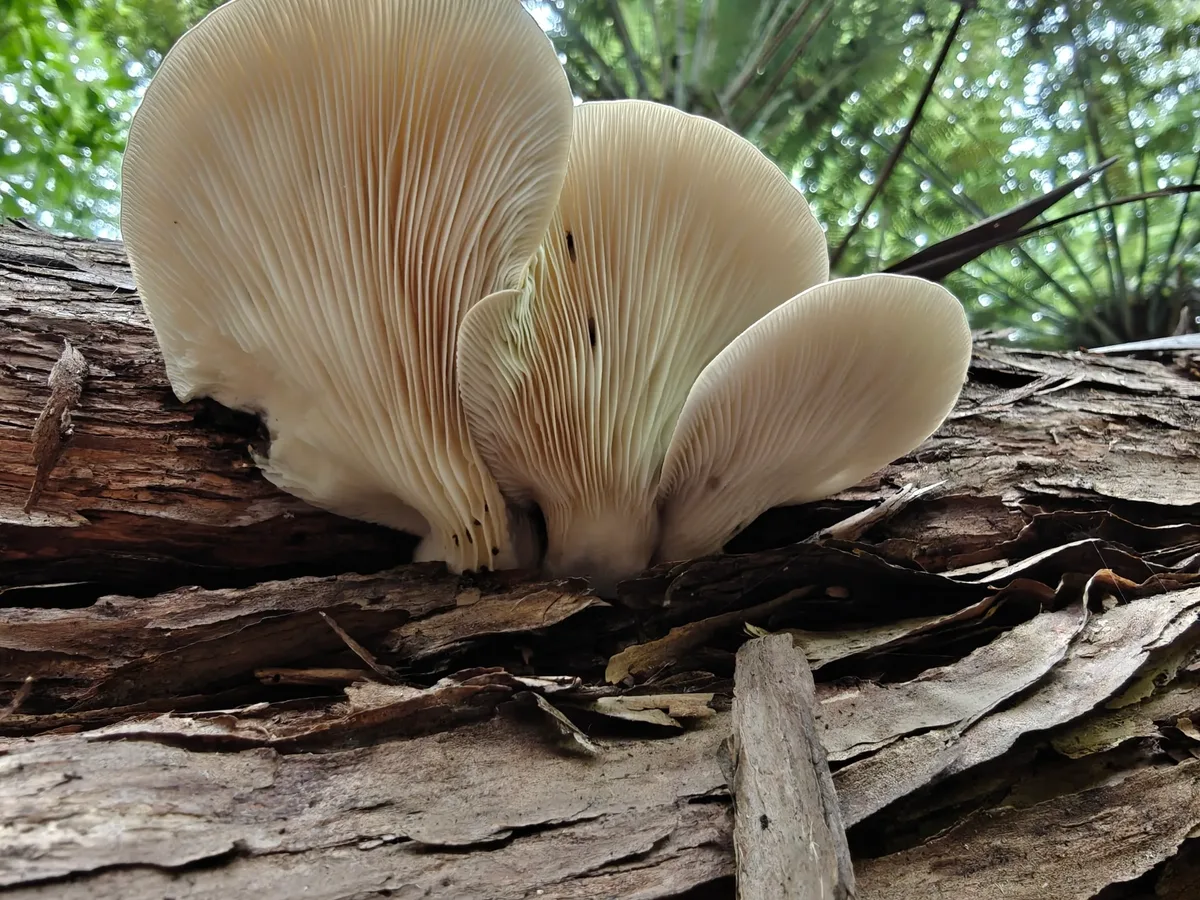 © Mark Stirling (CC BY)
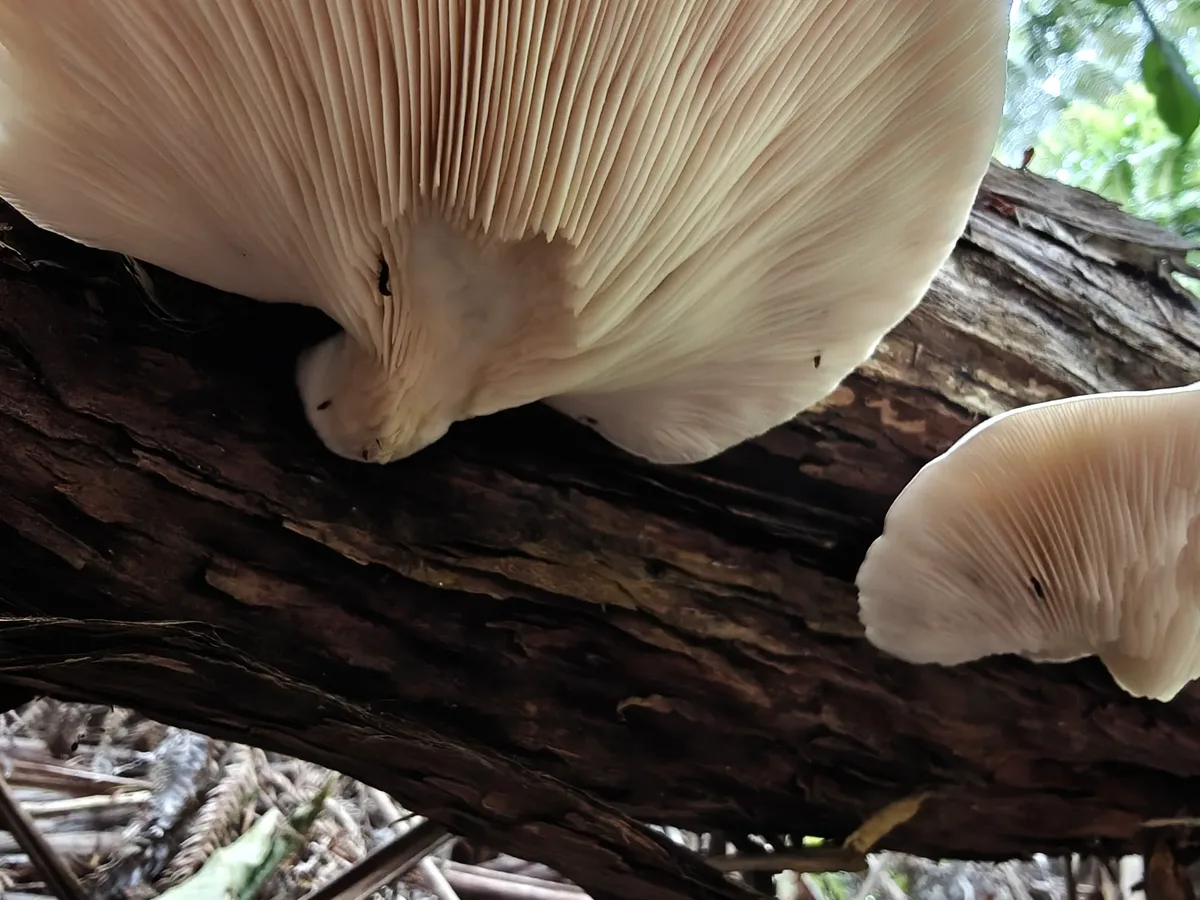 © Mark Stirling (CC BY)
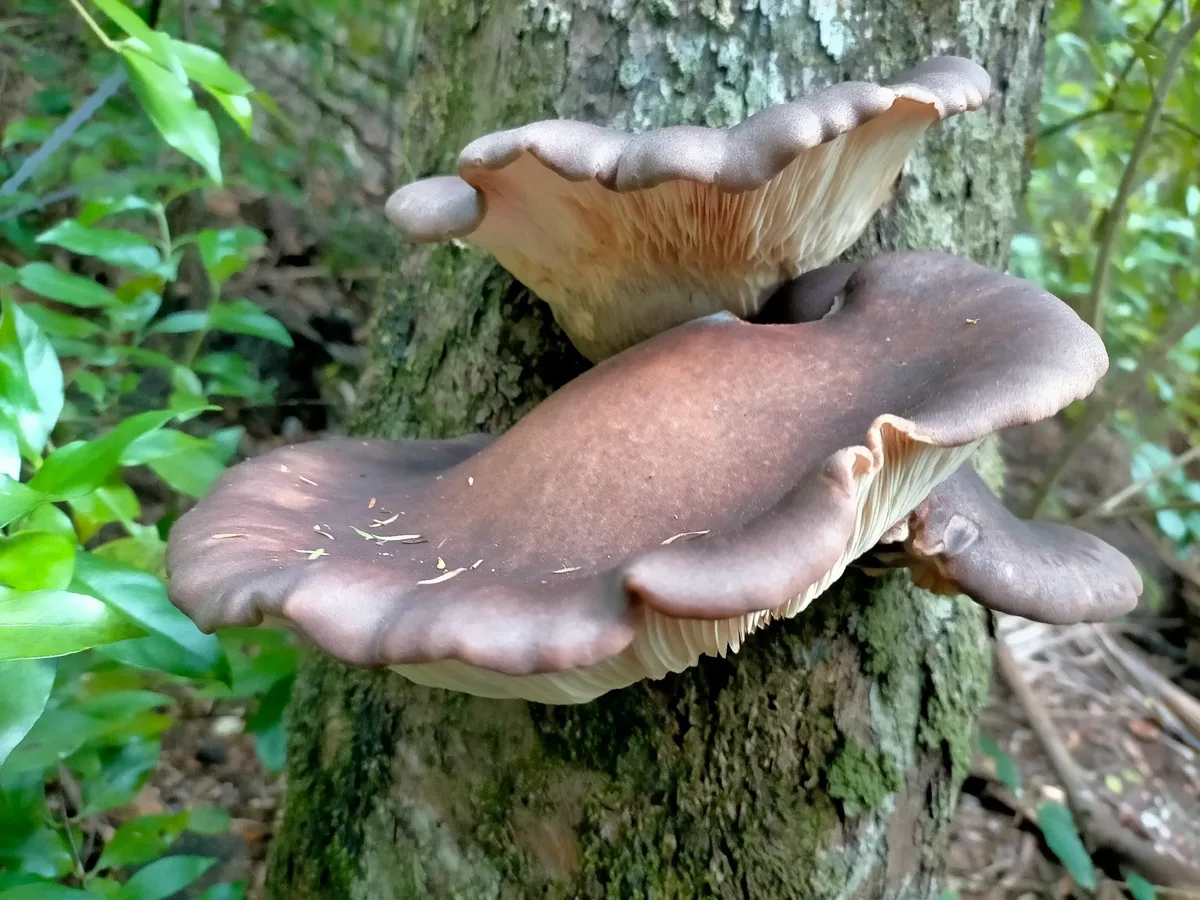 maxine_b (CC0)
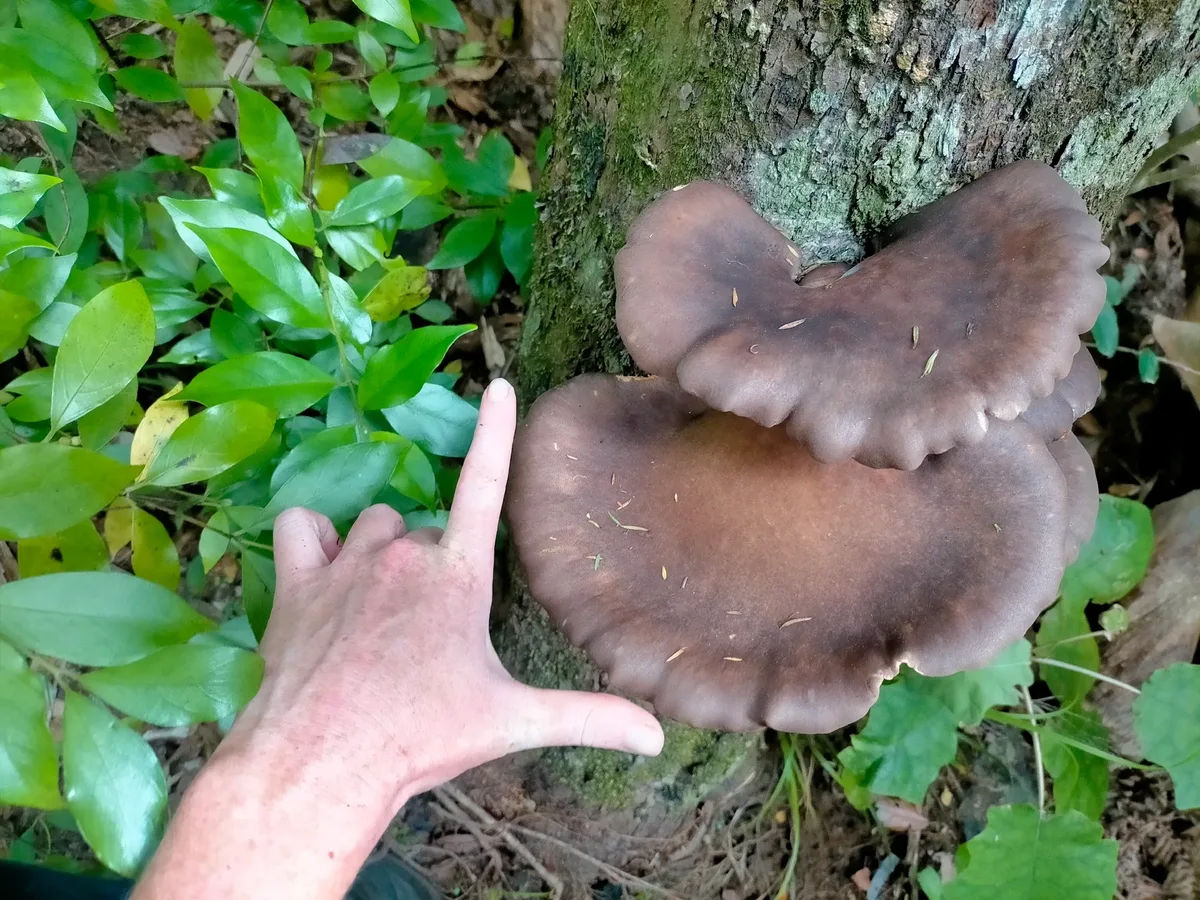 maxine_b (CC0)
 maxine_b (CC0)maxine_b (CC0)© Mark Stirling (CC BY)
One of the best mushrooms you can bring home - once you are certain of the identification.
Never eat a mushroom you are not 100% sure of - check the look-alikes below, and always cook wild mushrooms.
How to recognise it
Pleurotus australis is the characteristic native oyster mushroom of New Zealand and cool-temperate southeastern Australia.
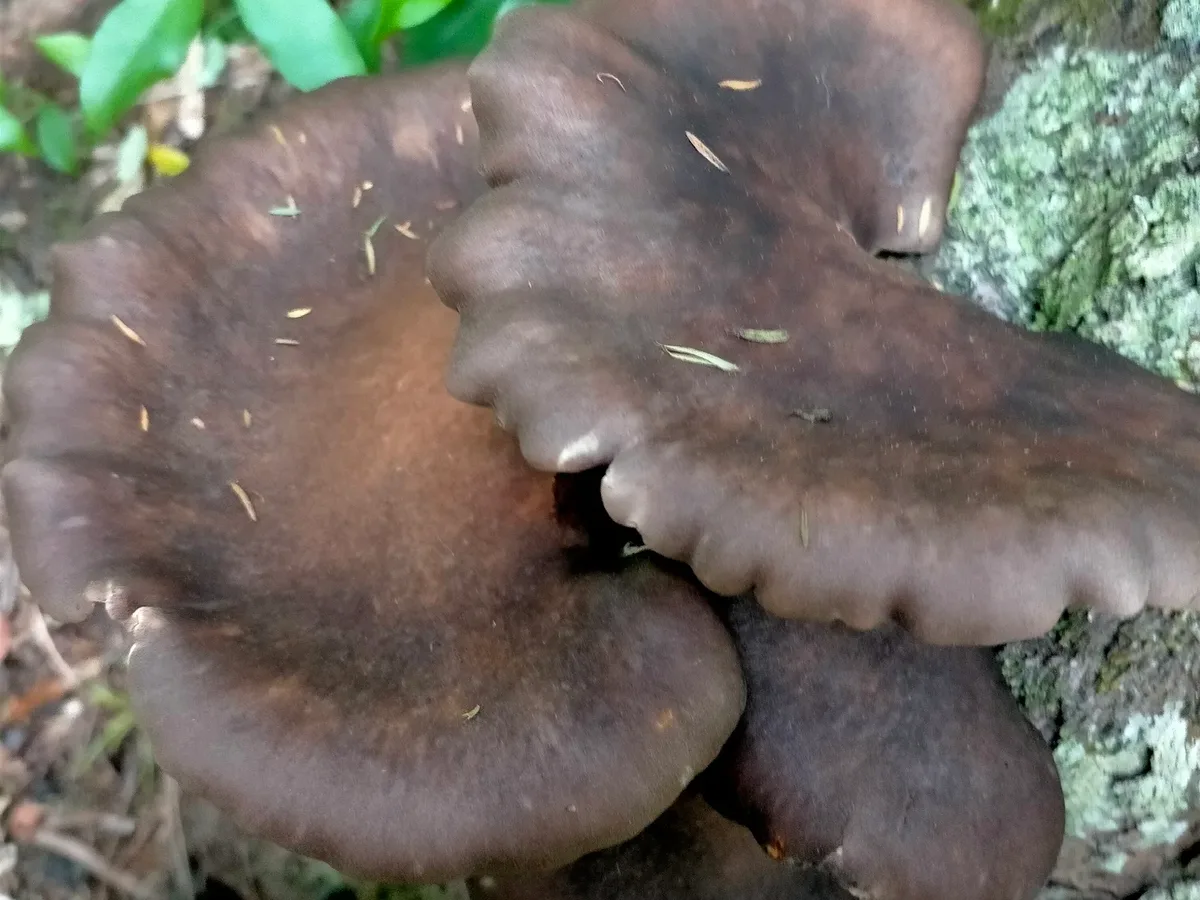
Its most important visual feature is the cap colour: consistently brown - umber, chocolate, or deep grey-brown when young, fading to pale tan or buff with age. This is a reliable contrast to the grey-white to pale dove-grey caps of the introduced P. ostreatus that also grows in the region.
The fan shape and crowded white decurrent gills on a short lateral stem are classic oyster-mushroom architecture, instantly recognisable once you know the genus.
The flesh is firm and white throughout, with a pleasant mild to anise-scented odour that is one of the most dependable features in the field.
There is no ring, no volva, no universal veil remnant at any stage - the absence of these Amanita-type structures is an important safety check.
The white spore print distinguishes it from dangerous wood-rot species (Galerina produces a rusty-brown print).
Overall, a fresh cluster of P. australis is a handsome and distinctive fungus: overlapping chocolate-brown fans, white gills underneath, emerging from wood in the cool damp of a native Australasian forest.
Where & when it grows
Habitat
P. australis is a white-rot wood saprobe - it secretes powerful lignocellulolytic enzymes that break down cellulose, hemicellulose, and lignin, recycling dead wood back into the forest ecosystem.
It is an important decomposer in Nothofagus beech forests and moist eucalypt ecosystems, and it does not form mycorrhizal partnerships with living trees.
Find it on fallen logs, large branches on the forest floor, and the dead basal sections of otherwise living trees in moist, undisturbed native forest. It is not associated with pine plantations or introduced ornamental trees.
The best sites are cool, shaded gullies and valley floors where logs remain persistently moist through autumn and winter. Look along tracks and clearings at forest edges where fallen logs are more visible.
The fungus may also develop cryptically within a rotting log before it fruits, so a seemingly solid log may already be colonised.
When
The primary fruiting season in the Southern Hemisphere runs from autumn through winter - roughly April to July at most sites, with fringe fruiting extending from March to September under good conditions.
The trigger is a combination of cooling temperatures and substantial rainfall: a 15-25 mm rain event when air temperatures are falling through 15-22 °C reliably initiates primordia within 7-14 days.
In New Zealand's wetter western forest regions and in Tasmania, the species can produce sporadic fruit bodies outside the main season whenever a warm-season rain event is followed by a cool snap.
At higher elevations (above 600-800 m), fruiting can extend well into winter before persistent frost inhibits it.
How it grows
As a saprobe, P. australis grows entirely independently of living trees, progressing through dead wood at whatever pace moisture, temperature, and substrate nutrition allow.
The mycelium colonises logs over months to years before producing a visible flush. A single well-colonised log can produce multiple flushes per season and over multiple years.
Fruiting bodies develop in overlapping clusters - what appears to be several separate mushrooms typically share a common mycelial base.
Development from visible pinheads to harvest-ready caps takes 5-10 days under cool, moist conditions; warmer temperatures accelerate development but reduce shelf life.
The white rot the fungus produces is structurally significant: colonised wood bleaches to a white, spongy, fibrous consistency as the lignin is degraded.
Fruiting conditions
Fruiting is triggered by a combination of significant rainfall (15+ mm over 14 days) and cooling temperatures, with air and substrate temperatures in the 10-20 °C range being optimal. The species is sensitive to desiccation; consistent moist air (>75 % RH) is required to sustain primordia development through to harvestable caps. Flush lag from effective rain event to visible pinheads is 7-14 days; caps reach harvest size in 5-10 further days depending on temperature (faster at 18-22 °C, slower at 8-12 °C). Multiple flushes from the same log are typical across the season.
Look-alikes
The most dangerous lookalike confusion risk in the Australian-NZ region involves small oyster-shaped fungi growing on wood.
- Galerina marginata (Funeral bell, Deadly Galerina) - a deadly amatoxin-bearing species that grows on wood, sometimes colonising the same logs as oyster mushrooms. Key distinctions: Galerina is much smaller (cap 2-5 cm, rarely to 7 cm), has a persistent or fugacious ring on the stem, produces a distinctly rust-brown to ochre-brown spore print (never white), and grows in small groups or singly rather than the dense overlapping clusters typical of Pleurotus. The rust-brown spore print is an absolute distinguishing feature and should always be verified. Even a single Galerina cap mixed into a harvest of Pleurotus is potentially fatal. Never mix species in a collection bag.
- Crepidotus spp. (Crep caps) - small (1-5 cm), kidney-shaped to shell-shaped fungi on wood, initially white then tanning to pale brown; no stem or only a rudimentary one. Distinguished by their brown to cinnamon-brown spore print at maturity and much smaller size. Not deadly but indigestible and unpleasant; the brown spore print rules them out as oysters.
- Hohenbuehelia spp. - small oyster-like fungi on wood; distinguished by smaller size (1-5 cm), a gelatinous layer beneath the cuticle (visible when the cap is sliced), and a pale grey to white colouration. Not dangerous but very small. Spore print white.
- Pleurotus ostreatus (Grey Oyster) - the commercially grown species, occasionally naturalised in Australia/NZ; very similar in form but cap colour is pale grey, grey-brown, or white rather than the distinctive brown of P. australis. Both are excellent edibles; confusion carries no safety risk, only culinary curiosity.
- Lentinus strigosus and related tropical Lentinus spp. - in northern Queensland, some shelf fungi on wood may superficially resemble oysters but have tougher, leathery flesh, a true central to lateral stem, and serrated gill edges (tooth-like). Not dangerous but unpalatable.
Galerina marginata contains amatoxins (alpha-amanitin) and is unambiguously deadly. It grows on dead wood in overlapping clusters that can superficially suggest oyster mushrooms to an inexperienced eye. Key separating features: cap is honey-brown to tawny-ochre, 2-5 cm (very rarely to 7 cm) - substantially smaller than most P. australis specimens; a fragile membranous ring is present on the stem (may wash off in rain); the stem is slender (3-6 mm thick) relative to the cap; and most decisively, the spore print is rust-brown to ochre-brown, never white. The white spore print of Pleurotus is an absolute separator: take a spore print from any suspected oyster mushroom before eating it. A single Galerina cap mixed with Pleurotus in a meal has killed adults. Never harvest small brown cluster fungi from wood without confirming a white spore print.
Small (1-5 cm), sessile or with only a rudimentary lateral stub; kidney-shaped; initially white to pale buff, browning with age. Gill colour progresses from white to cinnamon-brown as spores mature, and the spore print is brown - an immediate and absolute distinguishing feature from the white-printed Pleurotus. Much smaller than P. australis and lacks the oyster's firm meaty flesh. Not toxic but indigestible.
The commercial oyster mushroom, naturalised and occasionally found wild in planted woodland and parks in Australia and NZ. Extremely similar form - fan caps, decurrent white gills, lateral stem, white spore print, wood substrate - but cap colour is slate-grey to grey-brown, pale blue-grey, or whitish, never warm chocolate-brown. Fully edible and of equivalent quality. Confusion carries no safety risk.
Small fan- to spatula-shaped fungus on wood; grey to pale brown; 1-6 cm across; white spore print. Distinguished from P. australis by much smaller size, a diagnostic gelatinous layer beneath the cap cuticle visible on cross-section, and a narrower spatula or tongue shape rather than a broad fan. Not toxic but too small to be of culinary interest.
Fan-shaped, orange-yellow to bright egg-yolk cap growing in overlapping clusters on wood. Completely unlike P. australis in colour. The distinguishing feature is an overwhelming, unmistakable odour of rotting cabbage or sewage. Produces a pale pinkish-yellow spore print. Unpalatable and should not be eaten; confusion with brown oyster is implausible in practice but noted for completeness.
In the kitchen
Picking & cleaning
Harvest when the cap is still distinctly convex to nearly flat and the margin has not yet split or turned upward - at this stage the flavour and texture are at their best.
A cap is past its peak once it shows any of these:
- flattened completely
- margins splitting, drying, or darkening at the edges
- patches of white mould developing on the surface
Twist and pull clusters free from the wood, or use a knife to cut them close to the substrate.
The short stem is fully edible but can be slightly more fibrous than the cap; trim if cooking for a delicate dish.
Unlike tropical oyster species, Brown Oyster keeps reasonably well in a paper bag in the refrigerator for 3-5 days. It also dries well, retaining flavour on reconstitution.
When picking, always check the spore print: oyster mushrooms leave a white to very pale lilac print, never brown or rust. Any cluster of small brown gill fungi on wood that produces a rust-brown spore print should be left strictly alone.
Cooking
The Brown Oyster has firm, meaty flesh with a pleasantly mild, subtly savoury-umami flavour that deepens beautifully with heat. It handles most cooking techniques well.
Pan-fry over medium-high heat in butter or a neutral oil until the caps take on golden-brown colour and the edges begin to crisp - 3-5 minutes per side - then season with salt, pepper, and fresh thyme or parsley.
The flesh holds up well in longer braises and soups without dissolving. It makes an outstanding addition to risotto, pasta, omelettes, and toast toppings. The cap can be used as a meat substitute in burgers and tacos.
Drying concentrates the flavour considerably; dried P. australis reconstitutes well in warm water and the soaking liquid makes a fine stock.
The relatively neutral brown cap colour means it does not discolour dishes the way some wild mushrooms do.
Avoid waterlogging: a quick sauté in a hot dry pan before adding butter or cream gives the best texture.
Good to know
Pleurotus australis is a well-regarded, safe edible mushroom with no documented toxicity in healthy adults. It is collected and eaten by foragers across New Zealand and southeastern Australia, and was used as a food source by Indigenous peoples in some regions.
The critical safety practice is positive identification of the genus. Confirm:
- white to very pale lilac spore print
- decurrent white gills
- fan-shaped cap on a lateral stem
- no ring, no volva
- growth directly from dead wood
The single most important rule is to take a spore print. Any cluster of small brown gill mushrooms on wood with a rust-brown to ochre spore print is a potential Galerina marginata and must not be eaten. The white print of Pleurotus is definitive.
As with all wild mushrooms, cook before eating - raw Pleurotus can cause mild gastrointestinal irritation in some individuals due to heat-labile proteins.
If any doubt about identification remains, do not eat the specimen.
Contact the New Zealand National Poisons Centre (0800 764 766) or Australian Poisons Information Centre (13 11 26) if accidental ingestion of an unknown fungus is suspected.
A reference guide - never an edibility guarantee. When in doubt, leave it out.