Gilled bolete
Phylloporus rhodoxanthussyn. Agaricus rhodoxanthus, Phylloporus pelletieri, Phylloporus rhodoxanthus subsp. rhodoxanthus, Xerocomus rhodoxanthus
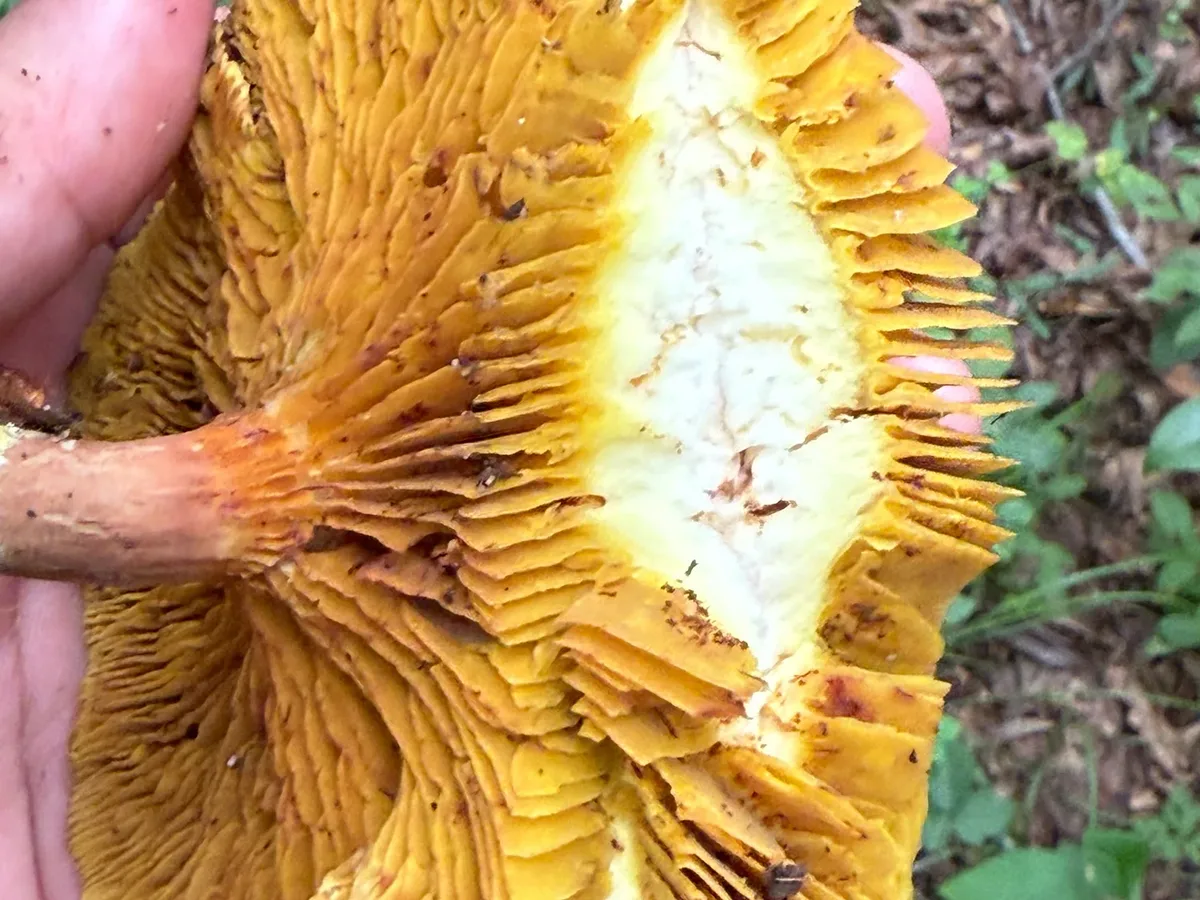 © Serenella Linares (CC BY)
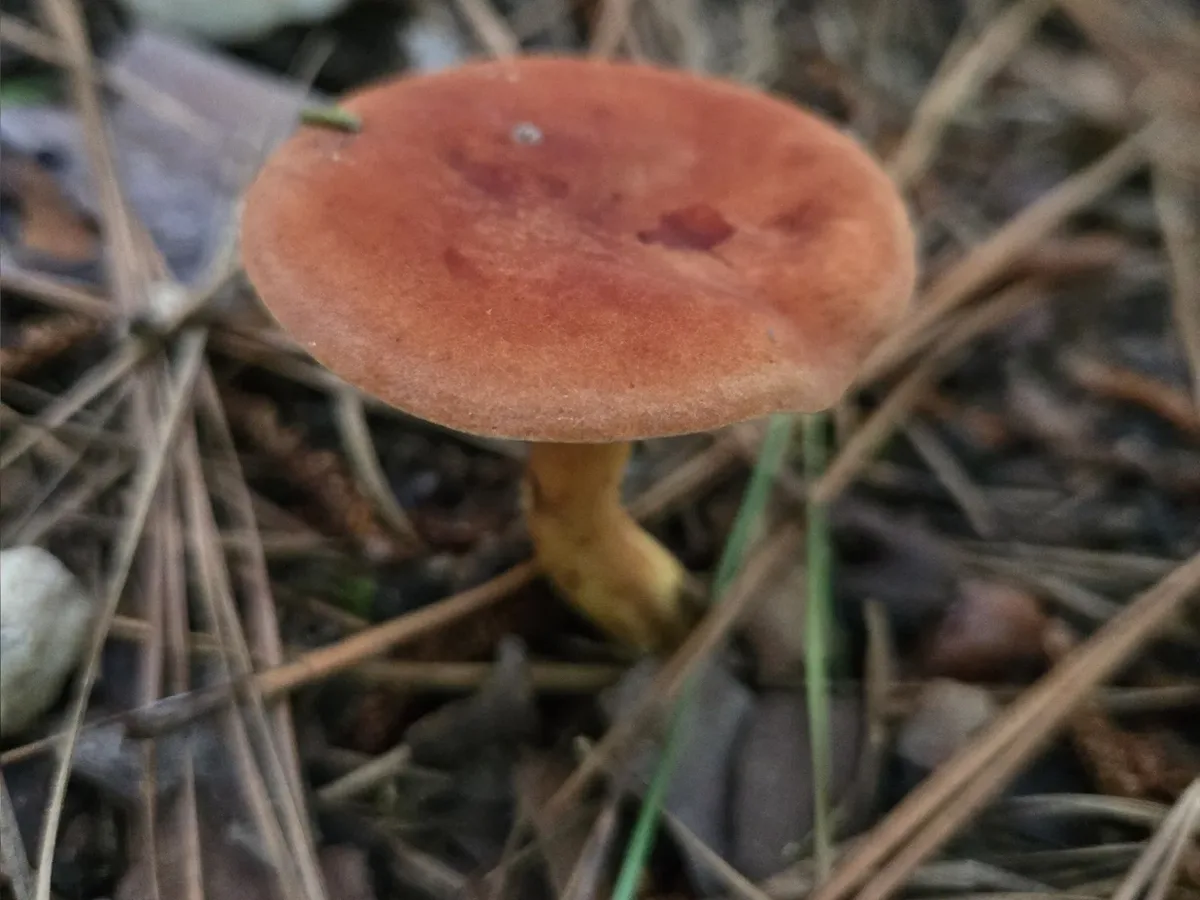 © Elizabeth Altman (CC BY)
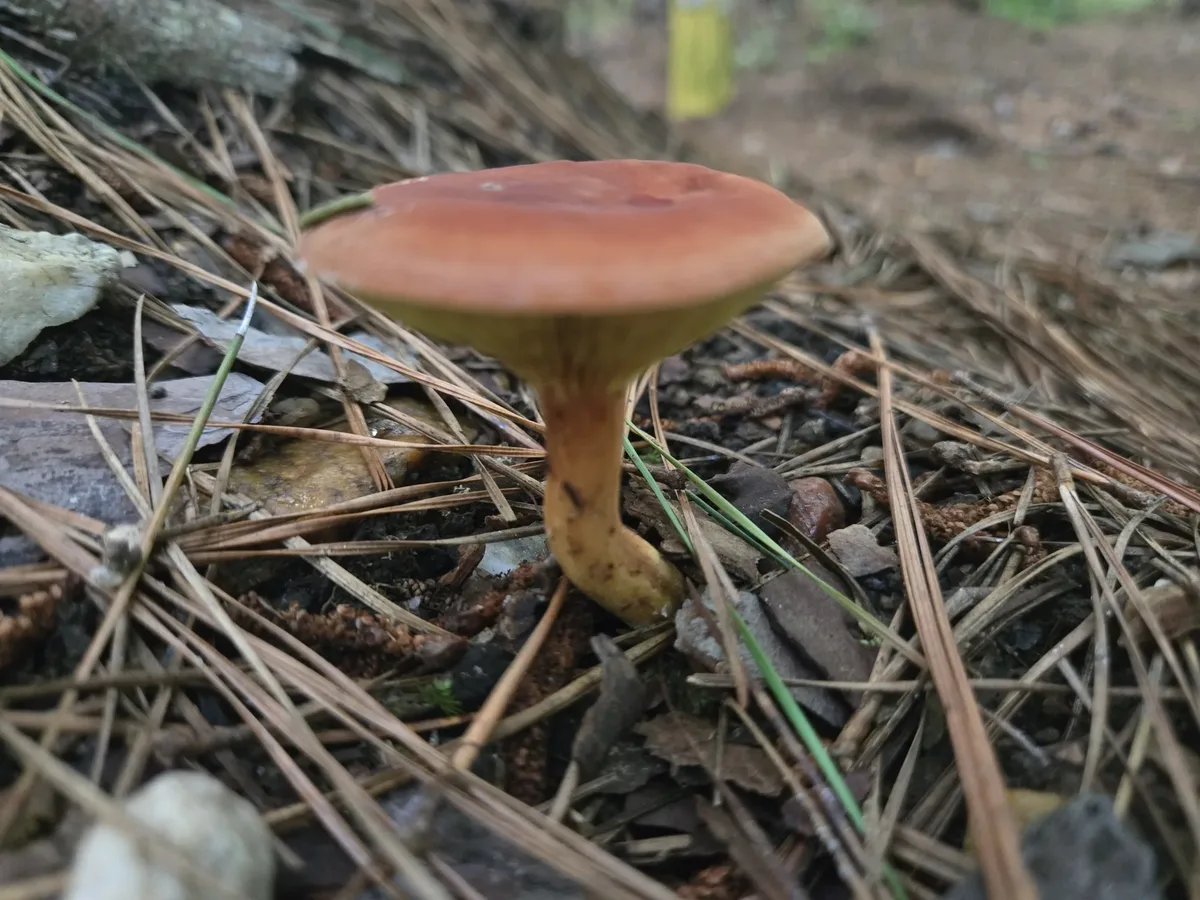 © Elizabeth Altman (CC BY)
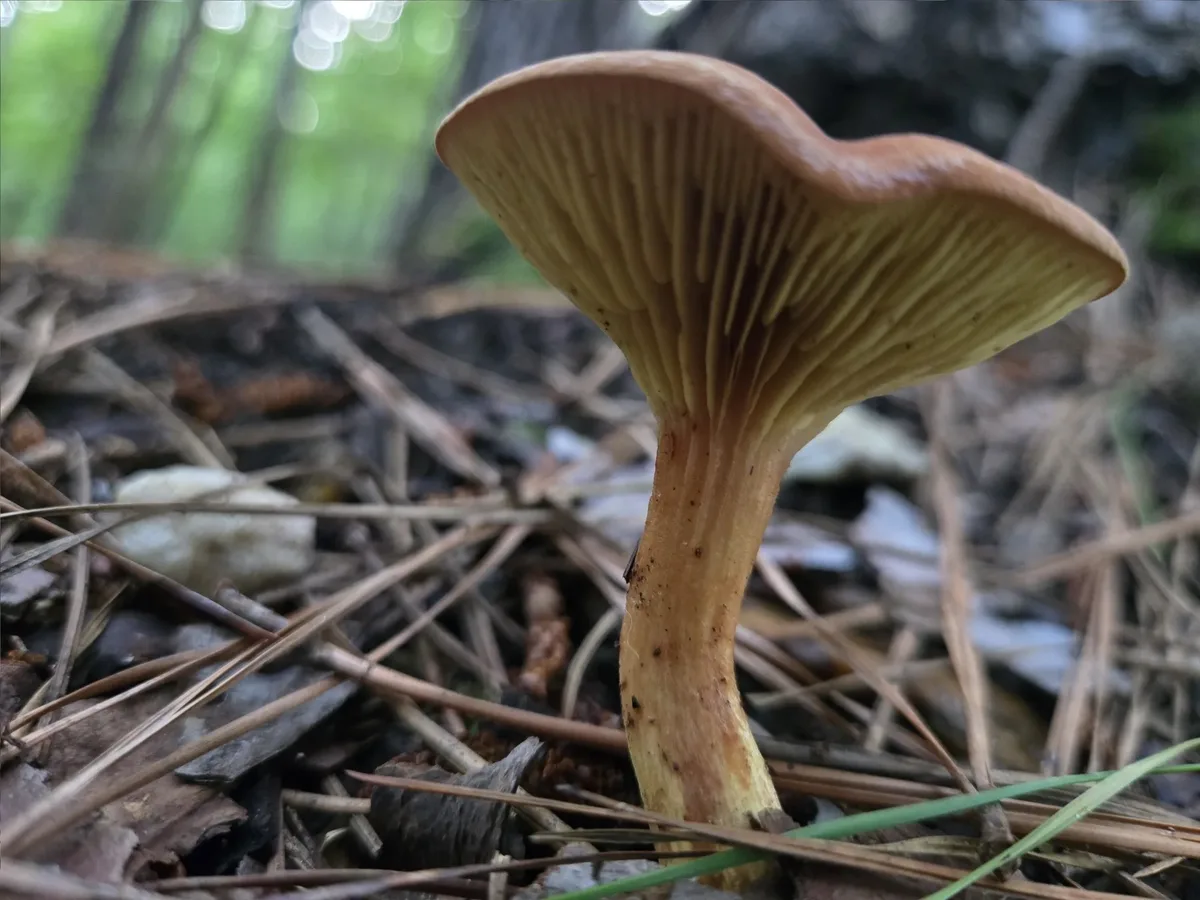 © Elizabeth Altman (CC BY)
 © Elizabeth Altman (CC BY)
 © Serenella Linares (CC BY)
 © Serenella Linares (CC BY)
 © Serenella Linares (CC BY)
 © Serenella Linares (CC BY)© Serenella Linares (CC BY)© Elizabeth Altman (CC BY)
Good to eat, once you have identified it with certainty and cooked it through.
Never eat a mushroom you are not 100% sure of - check the look-alikes below, and always cook wild mushrooms.
How to recognise it
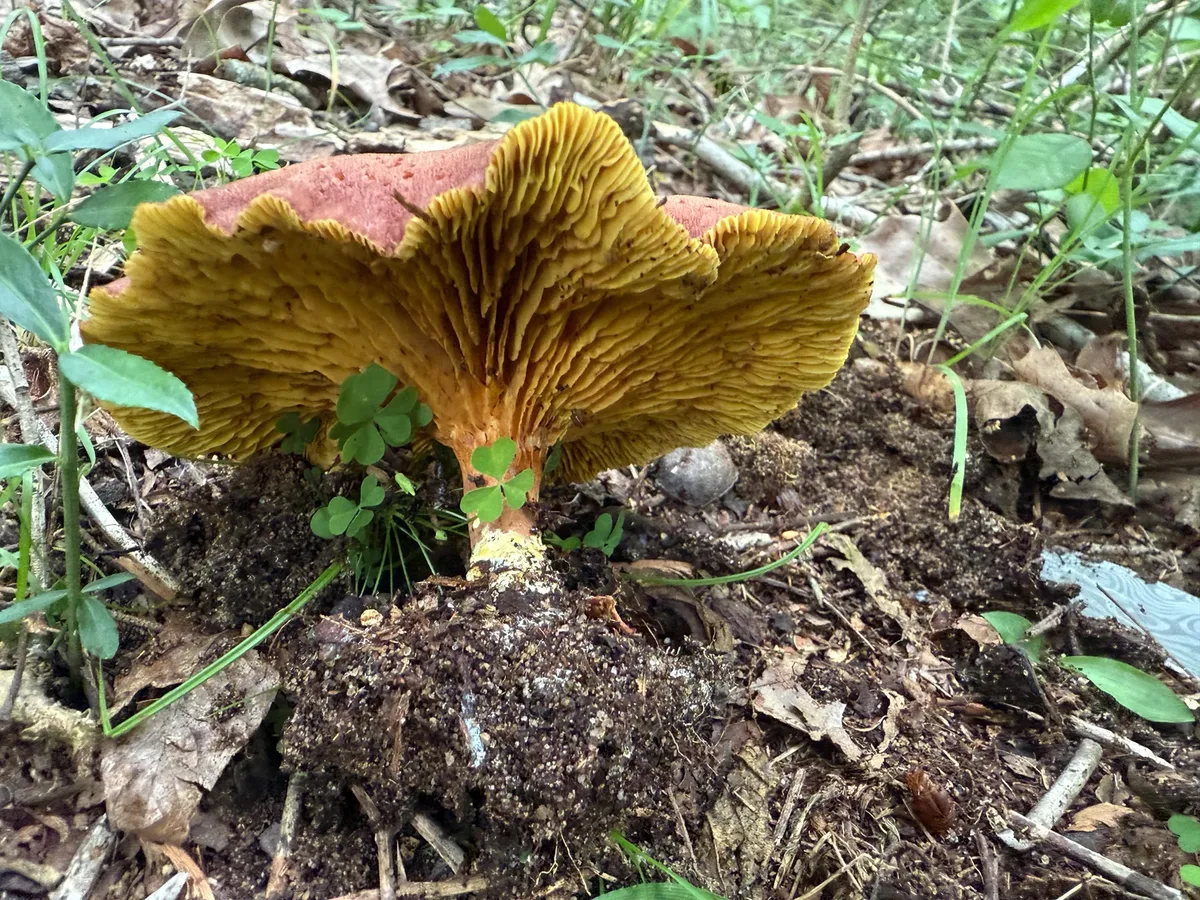
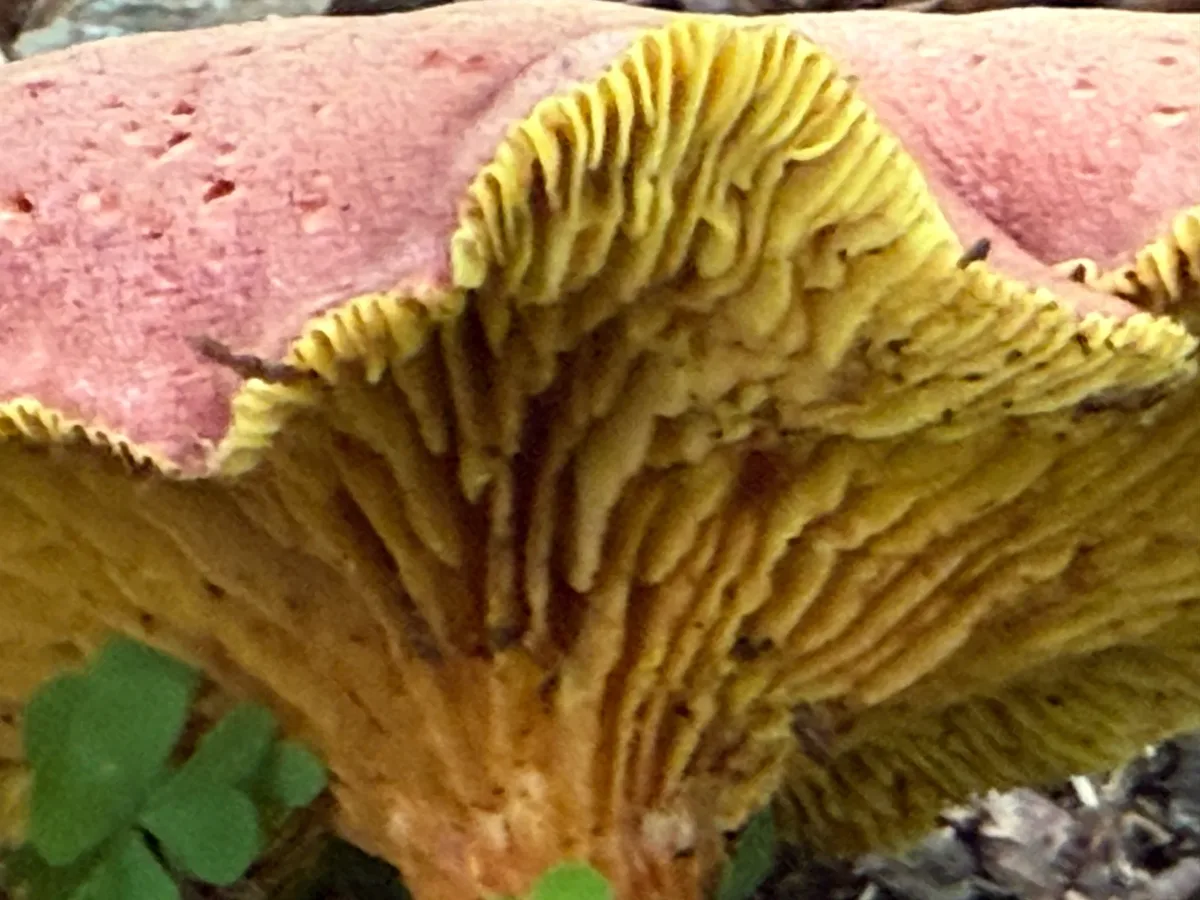
Phylloporus rhodoxanthus carries a quiet surprise: it looks like a bolete from above but opens to reveal true gills beneath the cap - the only member of the bolete order in North America to do so.
Cap
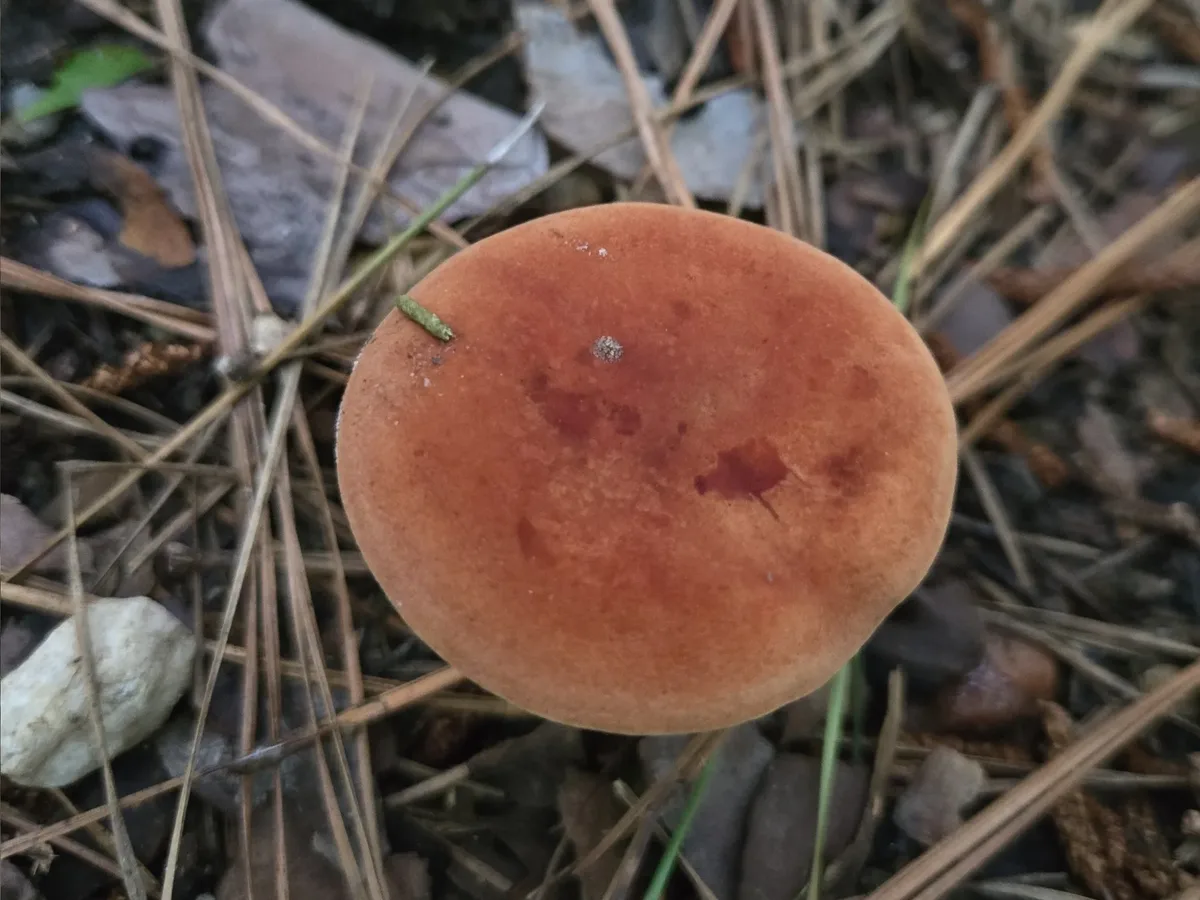
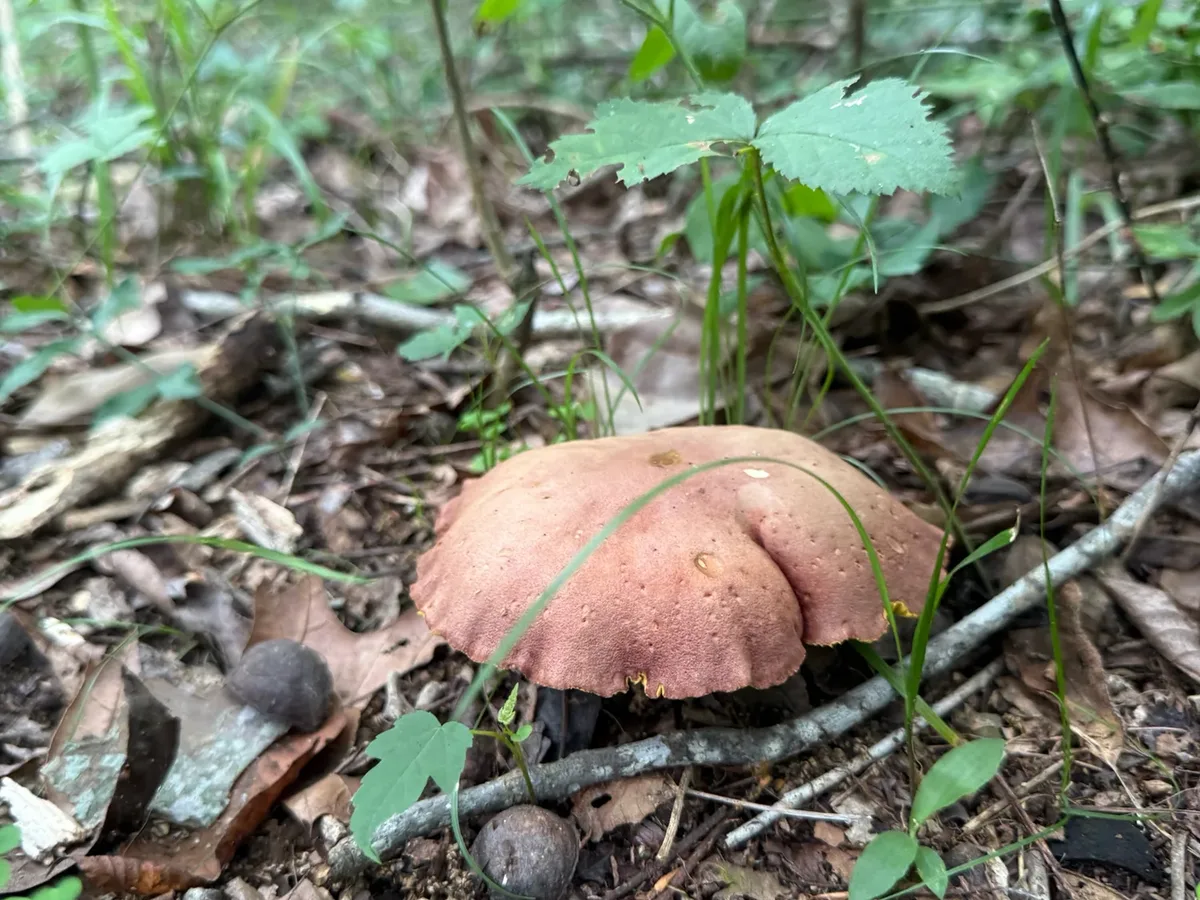
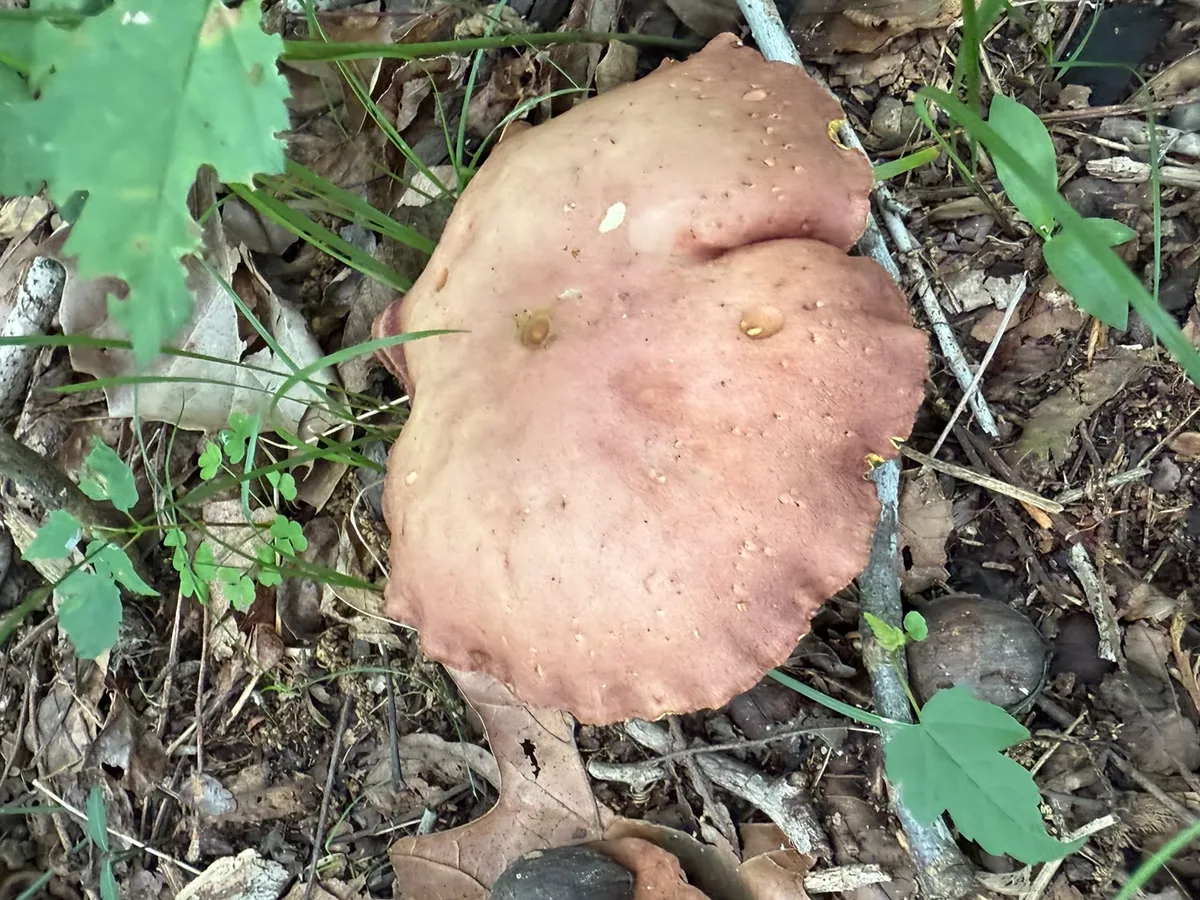
The cap starts convex and gradually flattens or becomes slightly depressed in the centre, reaching 3-10 cm (occasionally 12 cm).
The surface is dry and distinctly felty-velvety, olive-brown to reddish-brown or warm tawny, often cracking into small flat scales in dry spells and revealing a paler layer beneath.
Gills
Flip it over and the surprise reveals itself: broad, chrome-yellow gills running firmly down the stipe (decurrent), forking up to three times, with shorter lamellulae filling the spaces between.
They bruise slowly to pinkish-red when cut or handled - worth noting in the field.
Under a hand lens, the gill edges are slightly fringed (fimbriate).
Stem
The stipe is solid, 3-8 cm tall, 0.5-1.5 cm across, olive-brown to reddish-brown, often distinctly redder at the base, and longitudinally striate.
Flesh
The flesh is firm and pale lemon-yellow, flushing gently reddish near the stipe base when cut. Spore print yellowish-brown to olive-brown.
Where & when it grows
Habitat
A warm-season mycorrhizal partner living its hidden life entwined with the roots of oaks, beeches, and chestnuts in broadleaved and mixed woodland on well-drained, slightly acidic to neutral soils.
In eastern North America it favours oak-dominated forest from the Carolinas to New England and the Midwest. In Europe it occurs in oak-beech woodland from the Atlantic fringe east through central Europe and into Russia.
Look for it growing singly or in loose scatter on mossy ground or among fallen leaves, often on slopes with good drainage.
This is not a species of dense, cool boreal forest - it needs the warmth and humidity of temperate lowland-to-montane broadleaved woodland to fruit.
When
In eastern North America, first fruitings appear in June once the summer heat takes hold, with the season stretching through November in the south. The heart of the season is July through October.
In Europe, July to October is typical, peaking in late August and September.
A warm spell followed by soaking rain is what brings them up - but this species is rarely prolific, and finding more than a handful of specimens in a single outing is genuinely worth remarking on.
How it grows
Solitary or scattered; never in dense clusters.
Being mycorrhizal, it lives bound to the roots of living trees - the fruiting body you see above ground is only the tip of a relationship that may have persisted for years between fungus and host.
It does not regrow from the same substrate the way a saprotrophic species might, yet experienced foragers return to the same oak glades and find it again season after season.
It favours older, undisturbed forest with a continuous canopy.
Fruiting conditions
Fruiting triggered by warm summer or early-autumn rains; requires sustained soil warmth above 12 °C. Lag from rain to fruiting typically 7-14 days. Does not flush abundantly; single specimens or small groups are the norm.
Look-alikes
Because no other bolete in eastern North America bears true decurrent gills, Phylloporus rhodoxanthus is hard to confuse with other boletes once you recognise what gills look like versus pores.
The potential confusions:
- Xerocomus and Xerocomellus species (e.g., Xerocomellus chrysenteron, the red-cracking bolete): the main practical confusion arises before close inspection, as the overall brown cap and stipe silhouette superficially resembles them - but those have a tube layer (pores) rather than gills.
- Hygrophoropsis aurantiaca (false chanterelle): among gilled mushrooms, the yellow decurrent gills could prompt brief confusion; it has a more orange cap with shallower, more crowded, narrower gills and a very different habitat and spore print (white).
- Cantharellus species: they have false gills (forking, blunt-edged ridges that are not true gills), are typically more golden-orange, and smell and taste distinctly fruity.
- Paxillus involutus (deadly-toxic, with decurrent gills): a crucial lookalike to be aware of in Europe - inrolled cap margin (especially when young), a more olive-brown to date-brown gill colour, gills that stain brown when bruised, a more robust, shorter stipe, and notably lacks the yellow colouration of P. rhodoxanthus gills.
Paradoxically dangerous despite the family resemblance: Paxillus involutus is DEADLY (it causes immune-mediated haemolysis) and must never be eaten.
Paxillus involutus has an inrolled cap margin (especially when young), dull olive-brown to date-brown gills that bruise and stain brown (not bright yellow like Phylloporus), gills that do not fork as elaborately, flesh that browns on cutting rather than flushing pink-red, and a mealy smell. It causes lethal immune-mediated haemolytic anaemia if eaten; never eat any brown-capped decurrent-gilled mushroom unless positively identified.
Chanterelles have blunt-edged, forking gill-like ridges that are not true gills; flesh is white to pale yellow throughout without pink-red staining; cap is more golden-egg-yellow; strongly fruity apricot scent. Edible and prized.
More orange overall (cap and gills), narrower and more crowded gills that are not chrome-yellow, white spore print, no staining of gills when bruised, typically found in or near coniferous or mixed woodland on sandy soil. Causes gastrointestinal upset.
Has a pore layer (tubes) beneath the cap, not gills; pores yellow, bruising blue; cap surface cracks to show red flesh beneath. Edible but mediocre.
Has a pore/tube layer, not gills; pores small, brownish to ochre, slight blueing; associated with pine; stipe lacks reddish tones. Edible.
In the kitchen
Picking & cleaning
Select young to mid-aged specimens with firm, unworm-eaten flesh. The felty cap, vivid yellow gills, and any slight pink bruising confirm identity.
Trim the stipe base cleanly. Carry in a mesh bag or open basket. The yellow gills discolour with handling so pack loosely.
Specimens deteriorate quickly in warm weather; refrigerate promptly.
The species is infrequent enough that restrained harvesting is advisable - take no more than you will use.
Cooking
The flavour is mild, pleasant, and slightly nutty, inferior in intensity to prime boletes such as Boletus edulis. Young specimens are firmer and best.
Clean by wiping with a damp cloth; avoid soaking.
The yellow gills soften and can become slightly slimy when cooked - many cooks scrape them off before use, using only the cap flesh.
Suitable for:
- sautéing in butter with garlic
- adding to mixed mushroom risottos or ragùs
- drying (the dried product intensifies flavour modestly)
Not considered a gourmet prize but perfectly pleasant as a supplementary ingredient.
Good to know
Phylloporus rhodoxanthus is considered edible with no documented toxicity. However, it is uncommon to rarely collected, so there is limited ethnomycological eating tradition and few systematic evaluations.
Eat only small test quantities initially.
The critical safety step is accurate identification. Confirm:
- the dry, felty olive-brown cap
- broad bright-yellow decurrent gills (not pores, not ridges)
- yellow-staining flesh flushing pink-red on cutting
- yellowish-brown spore print
If gills are olive-brown to date-brown or the cap margin is inrolled, do NOT eat - this may be Paxillus involutus, which is deadly.
Never eat any gilled bolete-like fungus you cannot identify with certainty.
A reference guide - never an edibility guarantee. When in doubt, leave it out.