Central Asian gilled bolete
Phylloporus centroasiaticus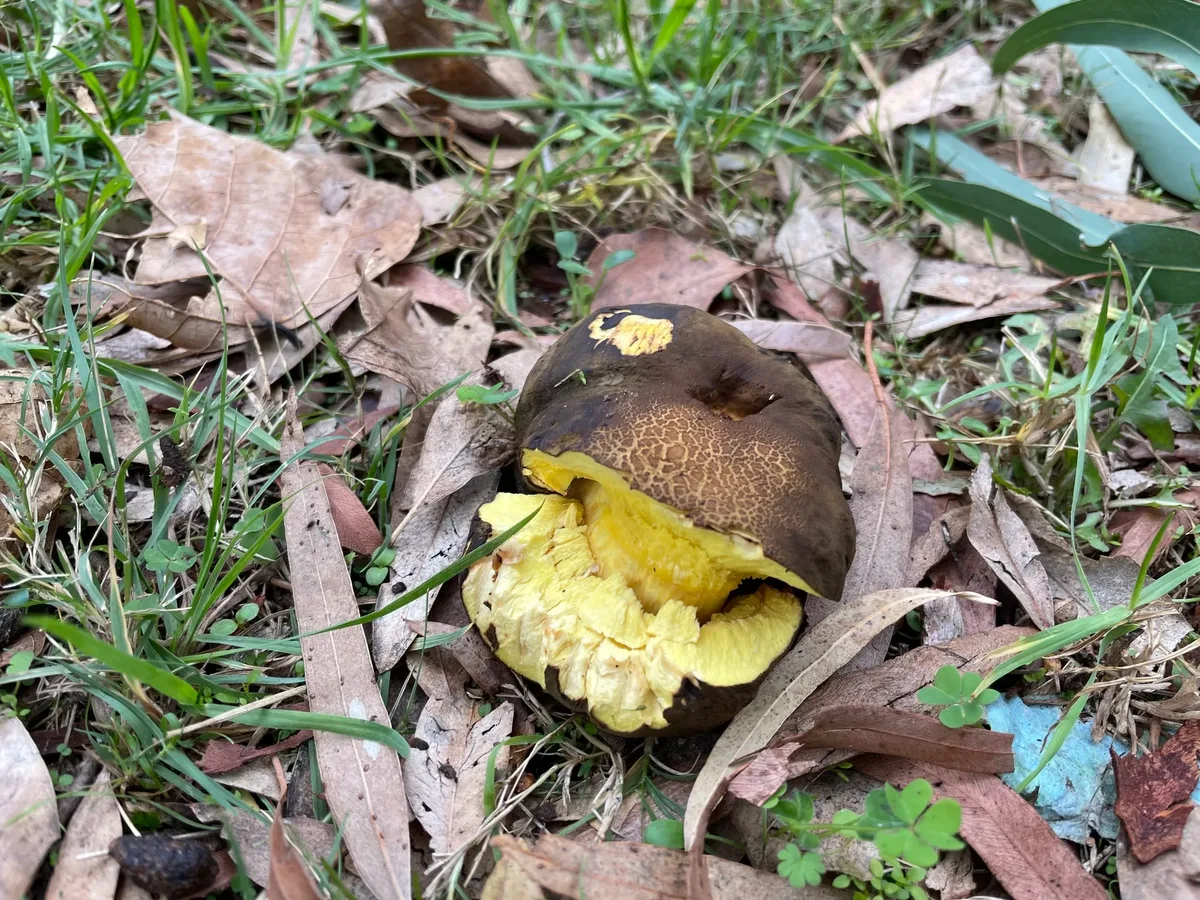 Atlas of Living Australia (CC0)
 Atlas of Living Australia (CC0)
 Atlas of Living Australia (CC0)
 Atlas of Living Australia (CC0)
 Atlas of Living Australia (CC0)
 Atlas of Living Australia (CC0)Atlas of Living Australia (CC0)Atlas of Living Australia (CC0)
Good to eat, once you have identified it with certainty and cooked it through.
Never eat a mushroom you are not 100% sure of - check the look-alikes below, and always cook wild mushrooms.
How to recognise it
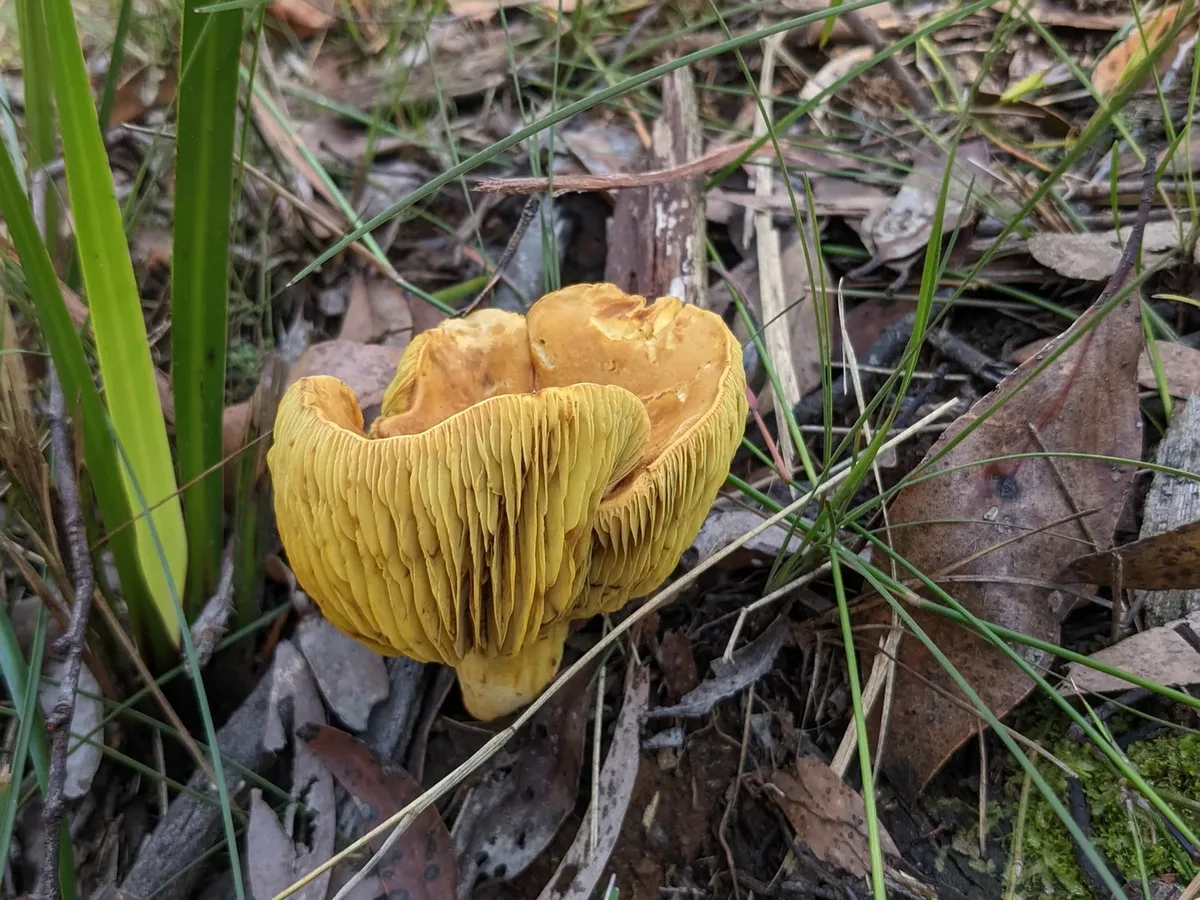
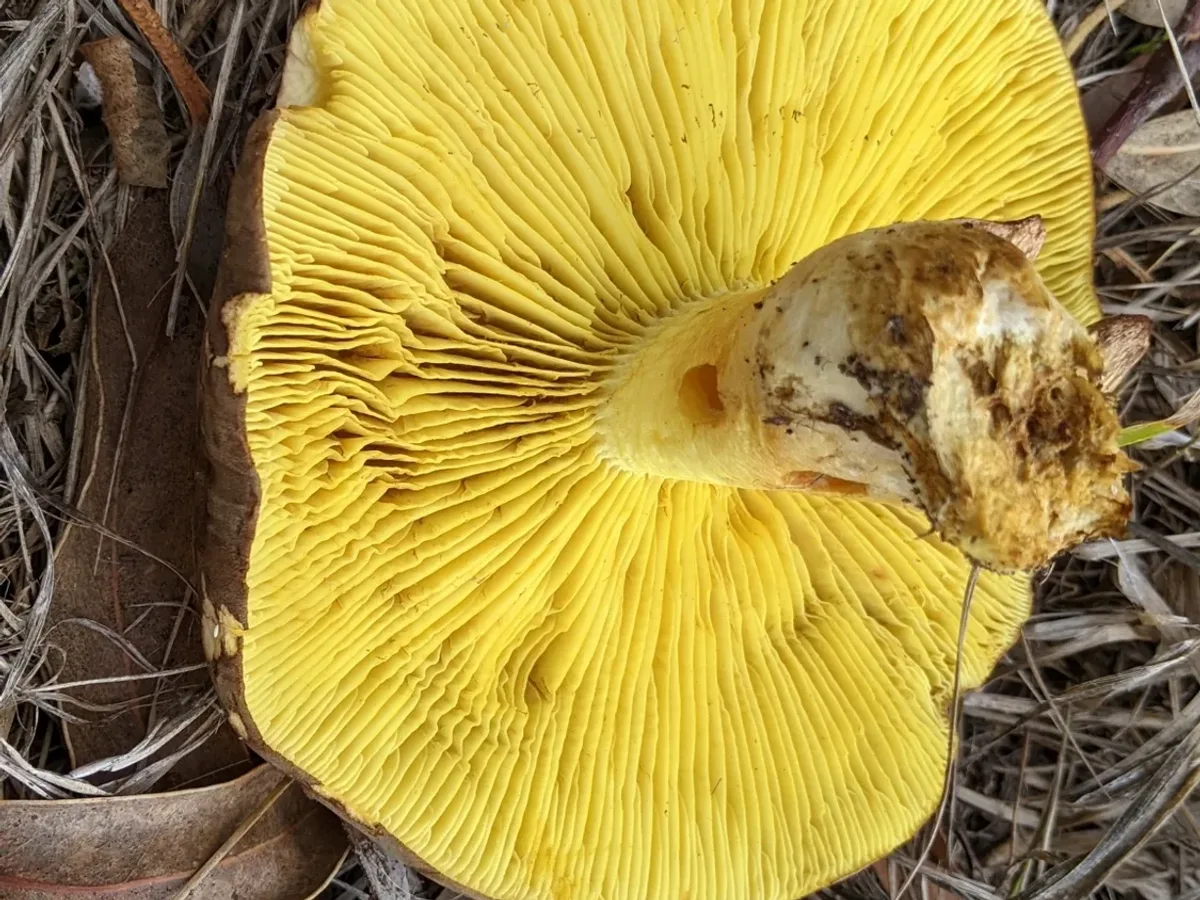
Phylloporus centroasiaticus shares the hallmark of the entire Phylloporus genus: a bolete-sized and bolete-coloured fruitbody bearing true gills rather than the tube-and-pore layer typical of boletes.
Cap
The cap is 3-9 cm across, initially convex and firm, expanding to broadly umbonate or nearly flat with a gentle central depression in age.
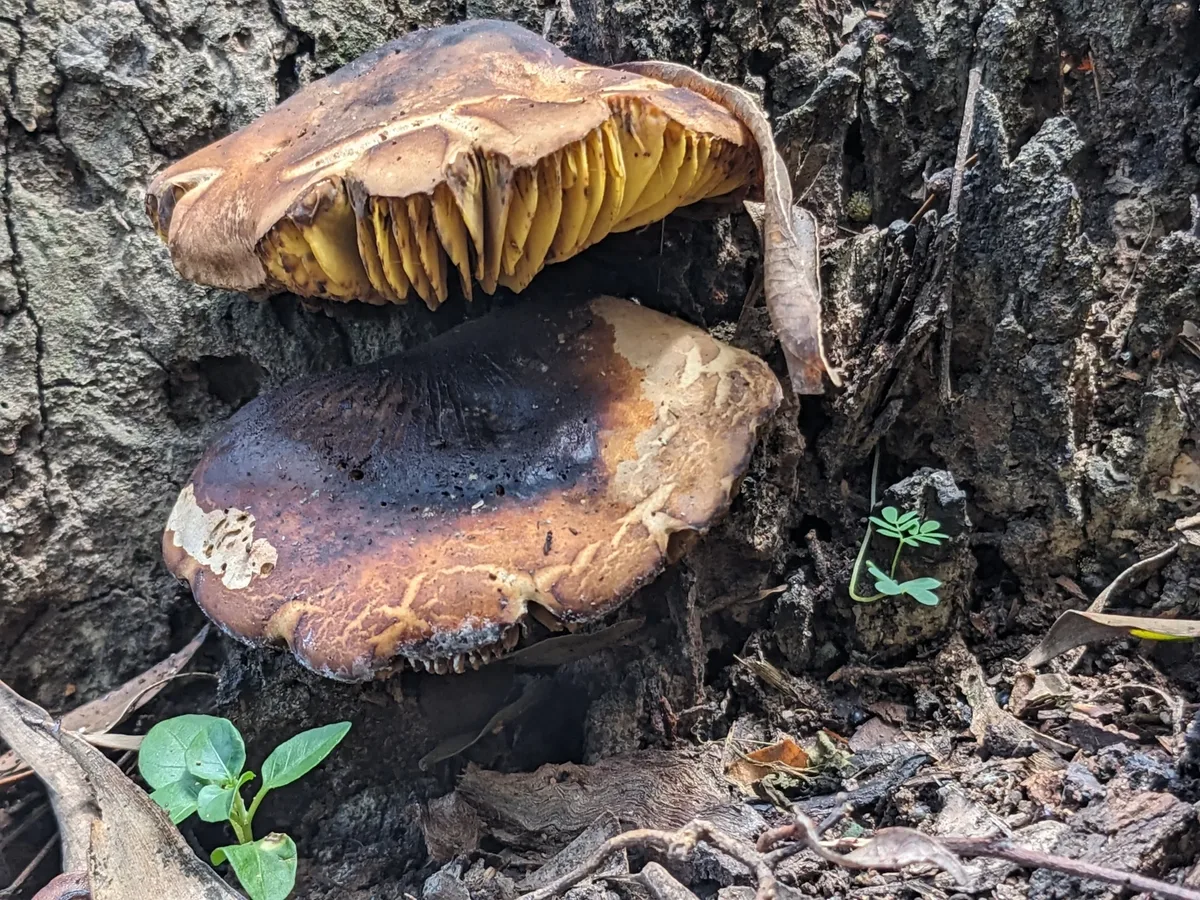
The surface is characteristically dry and finely velvety - never sticky or glutinous - with a warm olive-brown to chestnut-brown colouration that is richest at the centre and fades slightly toward the margin. In prolonged dry weather it may crack into small flat areolae.
Gills
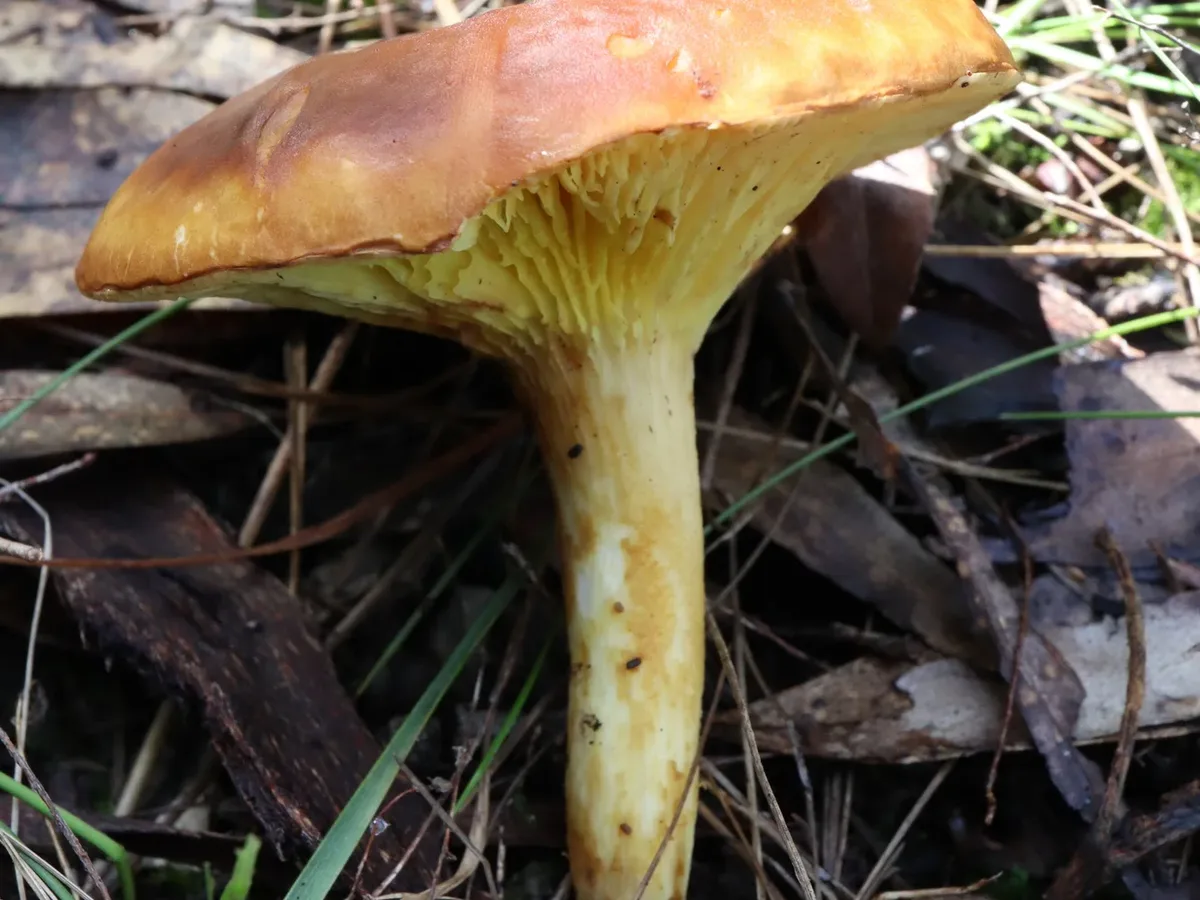
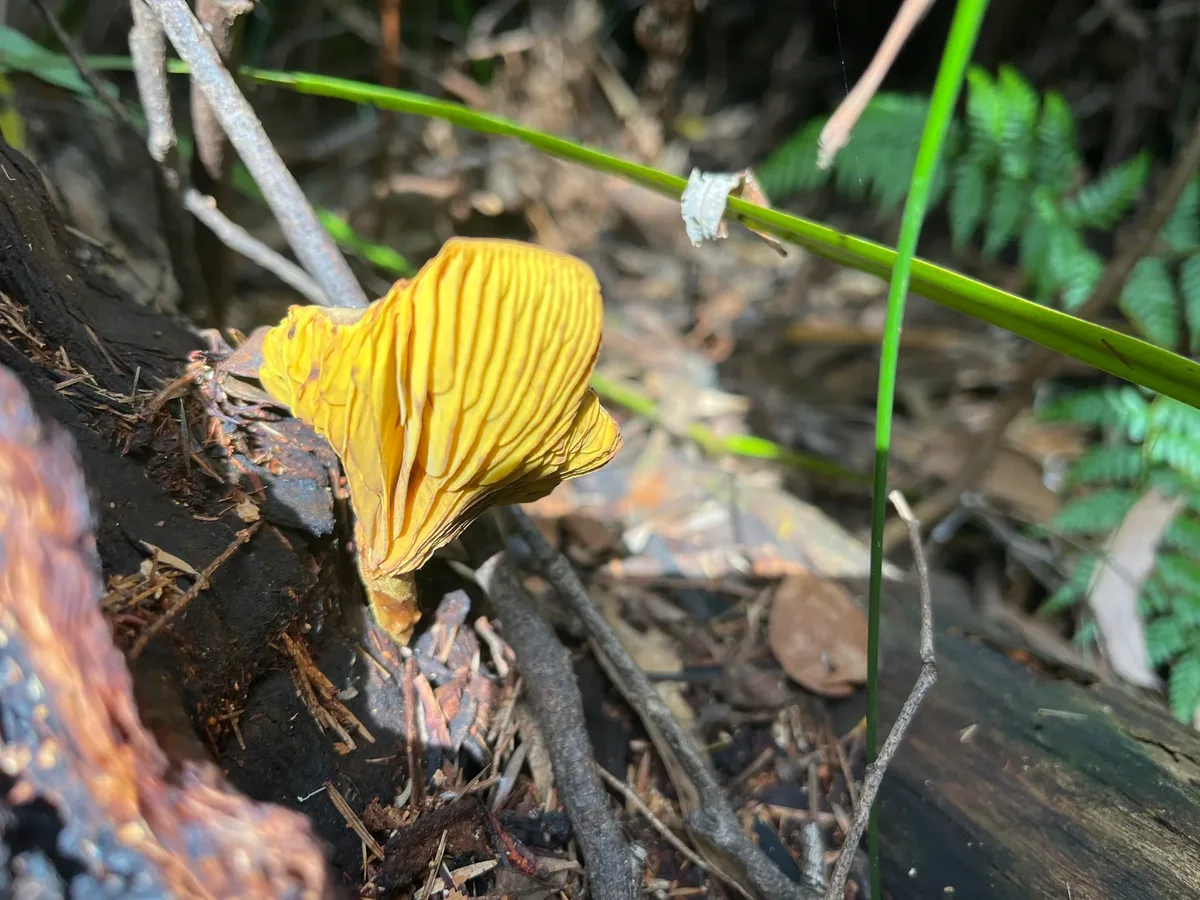
The gills are the most distinctive feature: broad, bright chrome-yellow to golden-yellow, running down the stipe (strongly decurrent), forking repeatedly to produce a network with interspersed shorter lamellulae.
The yellow colouration is vivid and unmistakable when fresh. They bruise very slowly pinkish-reddish when cut or handled roughly, which is a useful confirmation point.
Stem
The stipe is solid, 3-7 cm tall and 0.6-1.5 cm thick, cylindrical to slightly club-shaped, surface olive-brown to tawny, frequently with reddish tinges at the base, and marked by longitudinal fibres.
Flesh
The flesh is pale to medium yellow in the cap, yellower toward the stipe, and colours slightly pink-red on a fresh cut exposed to air. The spore print is olive-brown to yellowish-olive.
The overall gestalt - a brown cap paired with vivid yellow decurrent gills and no visible tube-and-pore layer - is essentially unique among boletoid fungi and makes Phylloporus essentially unmistakable as a genus once the key character is learned.
Where & when it grows
Habitat
An ectomycorrhizal fungus of broadleaved and mixed forest, most commonly associated with Nothofagus (southern beech) in New Zealand and southeastern Australia, where it occurs in both lowland and montane forest up to approximately 900 m elevation.
In its wider range (including central Asia, whence the species name derives) it associates with other broadleaf trees such as oaks.
Grows on the forest floor among leaf litter and mosses, usually singly or in small scattered groups of two to five, on freely drained slopes or banks with mildly acidic to circumneutral mineral soil.
It is not a species of waterlogged or compacted ground and avoids deep shade; patches under partially open canopy with a dappled light regime tend to be the most productive.
When
In Australasian occurrences (Southern Hemisphere autumn), expect fruitings from March through June, with the peak in April-May when soils are still warm from summer but autumnal rain events have begun.
Soil temperature around 12-18 °C combined with at least 20-30 mm of rain over two weeks creates optimal conditions. A lag of roughly 7-14 days from soaking rain to emergence is typical for mycorrhizal boletes.
The species is not abundant; finding even two or three specimens in a visit is considered a good find. In warm, wet autumns it may persist into late June before cold soil temperatures end fruiting.
How it grows
Solitary or scattered in small groups of two to five; never densely clustered.
As a mycorrhizal species it grows attached to the root network of living trees and cannot be cultivated.
Repeat sites can be productive in consecutive years if conditions align, making the mapping of known patches a worthwhile practice for foragers.
The species does not produce obvious mycelium mats or soil disturbance visible from the surface.
Fruiting conditions
In the Southern Hemisphere fruiting is triggered by autumnal rainfall (March-June) while soil temperature remains above 10 °C. A minimum of 20 mm rainfall over 14 days followed by a 7-14 day lag before emergence is consistent with patterns for related mycorrhizal boletes. Does not flush abundantly; single specimens or small groups are the norm.
Look-alikes
The most important and dangerous lookalike for any gilled bolete is Paxillus involutus (the brown roll-rim) and related Paxillus species. Paxillus involutus is a deadly-toxic species that superficially resembles Phylloporus: it has a similarly brown cap, decurrent gills, and a bolete-like stipe.
The crucial distinguishing features are:
- An inrolled cap margin (strongly so in young specimens, less so in age)
- Dull olive-brown to date-brown gills that stain darker brown when rubbed (not bright yellow like Phylloporus)
- Gills that bruise brown rather than pink-reddish
- Flesh that also browns readily on cutting
Paxillus involutus causes lethal immune-mediated haemolytic anaemia - accumulating sensitivity from repeated consumption - and has killed experienced foragers who mistook it for something edible. In Australasia, Paxillus orientalis (very similar morphology) is an introduced species that poses the same risk.
Never eat any brown-capped, decurrent-gilled mushroom without a definitive identification.
The false chanterelle (Hygrophoropsis aurantiaca) could also briefly be confused with a young or damaged Phylloporus: it is orange rather than brown, with narrower and more crowded gills, is saprotrophic rather than mycorrhizal, grows in a wider range of habitats (including conifer mulch), and has a white spore print. It causes gastrointestinal upset.
True chanterelles (Cantharellus) have blunt-edged, ridge-like false gills rather than true gills, a strongly fruity scent, and white-yellow flesh without pink-reddish staining.
Paxillus involutus has a strongly inrolled cap margin (at least in young specimens), dull olive-brown to date-brown gills that stain darker brown when rubbed - not the bright chrome-yellow of Phylloporus - flesh and gills that brown on cutting, a mealy or earthy smell, and a more robust, shorter stipe. It causes lethal immune-mediated haemolytic anaemia and has killed experienced foragers. Never eat any brown decurrent-gilled mushroom that lacks bright yellow gills.
An introduced Australasian species virtually identical to Paxillus involutus in macroscopic features and equally deadly. Shares the inrolled margin, dull browning gills, brown-staining flesh, and mealy odour. The Paxillus genus must never be consumed.
More orange overall, narrower and more densely crowded gills, white spore print, saprotrophic (not mycorrhizal with forest trees), grows widely in disturbed habitats and conifer litter. Causes gastrointestinal upset. The distinctly orange colouration and white spore print distinguish it clearly.
The Northern Hemisphere counterpart of Phylloporus centroasiaticus; essentially identical in field appearance. Both are edible; distinguishing them requires microscopy or molecular analysis. In Australasian forest, P. centroasiaticus is the expected species.
Has blunt-edged, forking gill-like ridges (not true gills); cap and false gills are golden-egg-yellow throughout; flesh white to pale yellow without pink-reddish staining; distinctive fruity-apricot scent. Edible and prized.
In the kitchen
Picking & cleaning
Select young to mid-aged specimens with firm, unwormed flesh. The vivid yellow gills should confirm identity before cutting: dull, brownish, or inrolled-margined caps should never be collected as Phylloporus.
- Slice the stipe base cleanly with a knife rather than pulling.
- Transport in a mesh bag or open basket with space to breathe.
- The yellow gills discolour with compression, so pack loosely.
- Refrigerate and use within two days; the species deteriorates faster than prime boletes like Boletus edulis.
Because Phylloporus centroasiaticus is uncommon, restrained collecting - taking only what you will use within a day or two - is both practical and ecologically sound.
Cooking
The flavour of Phylloporus centroasiaticus is mild, slightly nutty, and pleasant but not exceptional - comparable to other Phylloporus species and generally considered good rather than outstanding. Young, firm specimens give the best texture.
Clean by wiping with a damp cloth; avoid soaking, which softens the gills excessively. Many cooks prefer to scrape the yellow gills from the cap and use only the cap flesh, as the gills can become slightly mucilaginous on cooking.
Suitable for:
- Sautéing in butter with garlic and herbs
- Inclusion in mixed mushroom dishes such as risotto or pasta
- Drying (drying concentrates the flavour modestly)
Not typically used as a standalone centrepiece mushroom dish, but a worthwhile find when encountered.
Good to know
Phylloporus centroasiaticus is considered edible with no documented toxicity. However, it is a modestly documented species and formal chemical analysis is limited; treat it as edible-but-not-well-studied.
The paramount safety rule is accurate identification: the critical distinction from Paxillus involutus and P. orientalis (both deadly) must be made before eating.
Before eating, confirm:
- Bright chrome-yellow decurrent gills (not dull olive-brown, not browning gills)
- No inrolled cap margin in any collected specimen
- Pink-reddish rather than brown bruising of the flesh and gills
- An olive-brown spore print
If any doubt remains - especially regarding gill colour, bruising reaction, or margin shape - do not eat the specimen.
First-time tasters should eat only a small portion and wait 24 hours to monitor for any gastrointestinal reaction before consuming larger amounts.
A reference guide - never an edibility guarantee. When in doubt, leave it out.