Golden-gilled bolete
Phylloporus bellussyn. Phylloporus bellus var. bellus, Gomphidius bellus
 © Atsushi Nakajima (CC BY)
 © Atsushi Nakajima (CC BY)
 © Lyrae (CC BY)
 © Lyrae (CC BY)
 © yajapin (CC BY)
 © yajapin (CC BY)
 © Atsushi Nakajima (CC BY)
 © Atsushi Nakajima (CC BY)© Atsushi Nakajima (CC BY)© Atsushi Nakajima (CC BY)
Good to eat, once you have identified it with certainty and cooked it through.
Never eat a mushroom you are not 100% sure of - check the look-alikes below, and always cook wild mushrooms.
How to recognise it
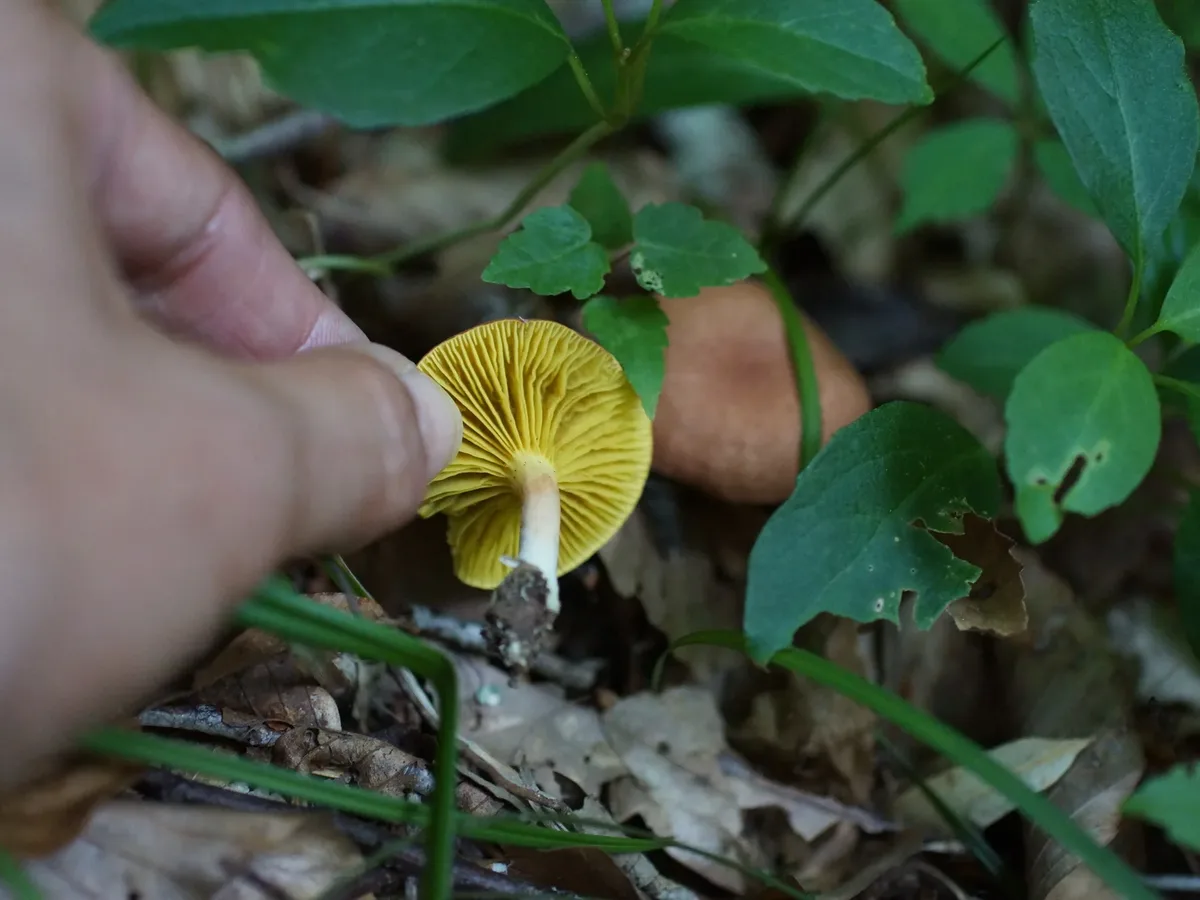
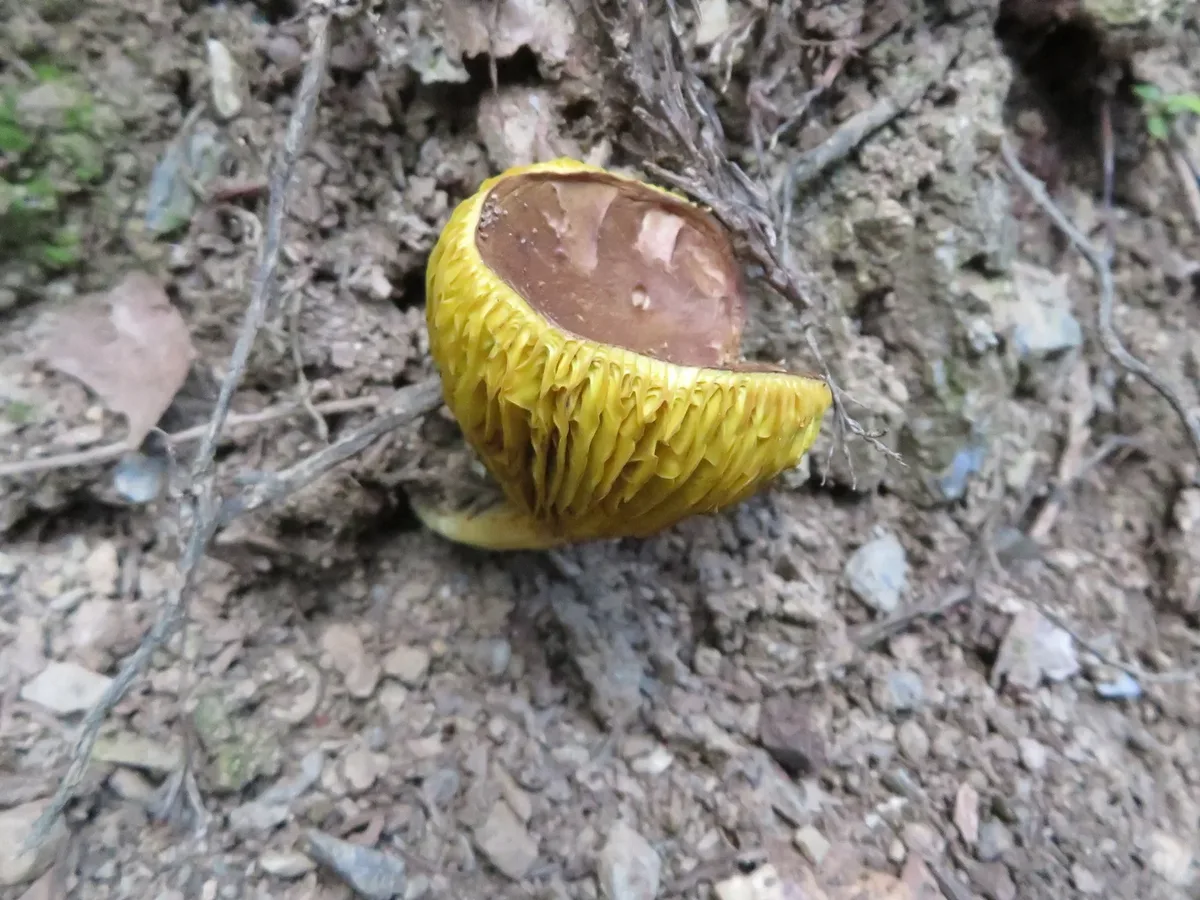
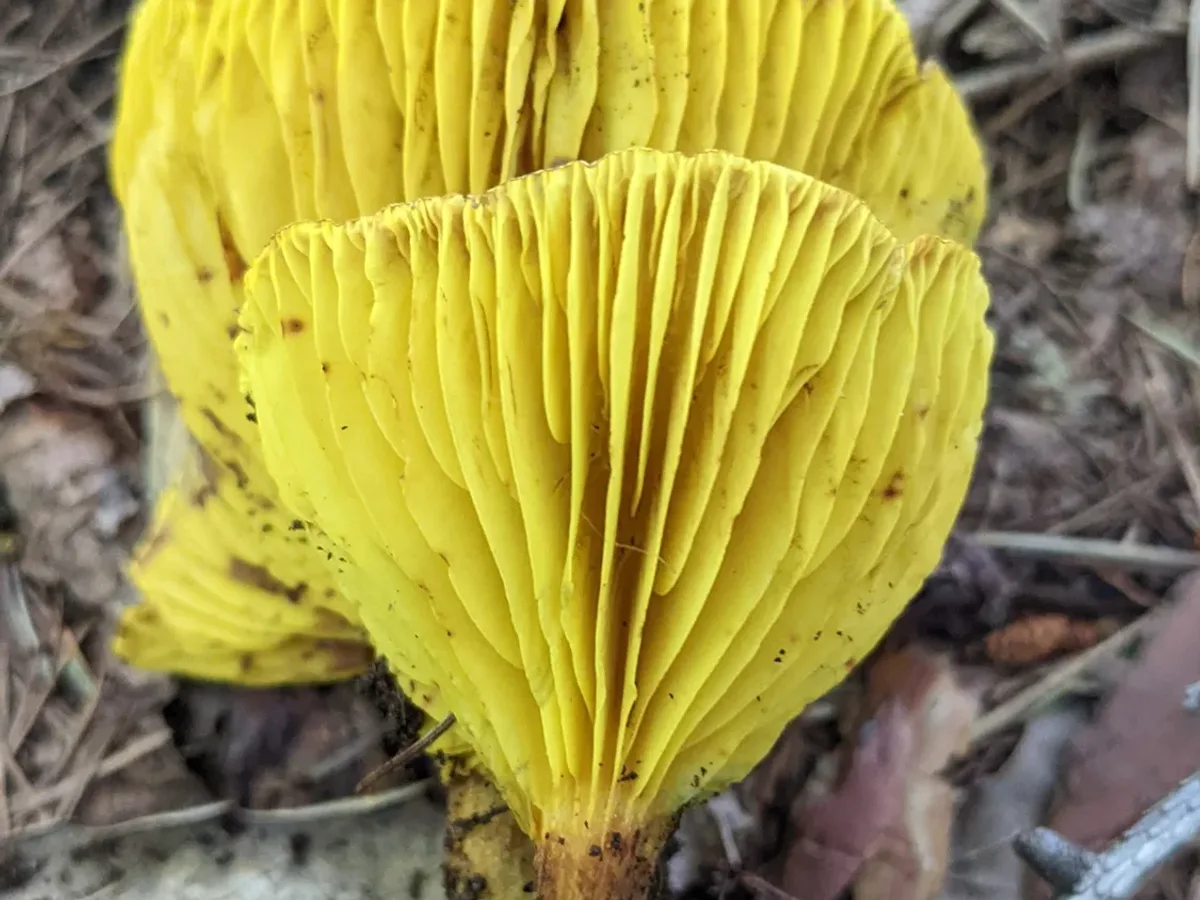
Phylloporus bellus is one of the so-called 'gilled boletes' - it has the cap colour and ecology of a bolete but bears yellow gills on its underside instead of the spongy pore layer typical of most boletes.
Cap
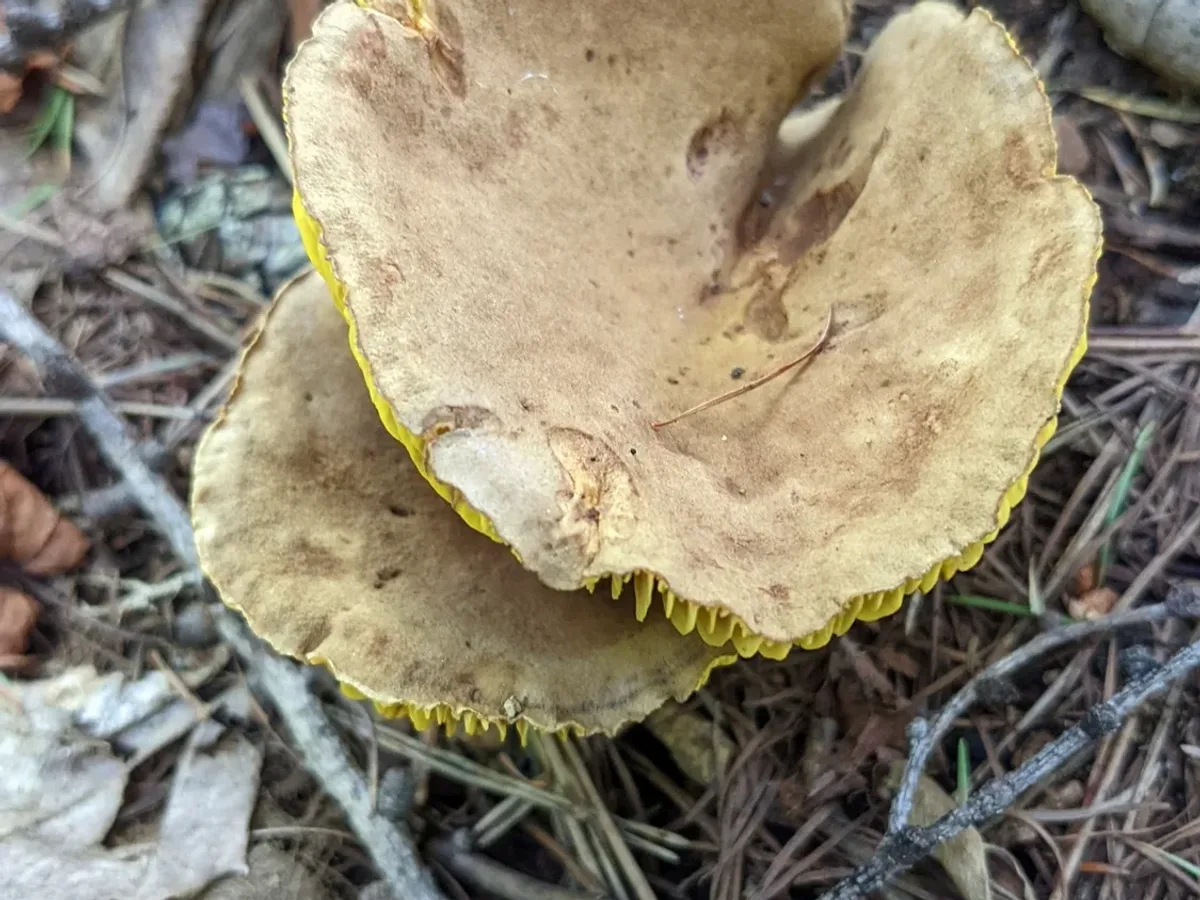
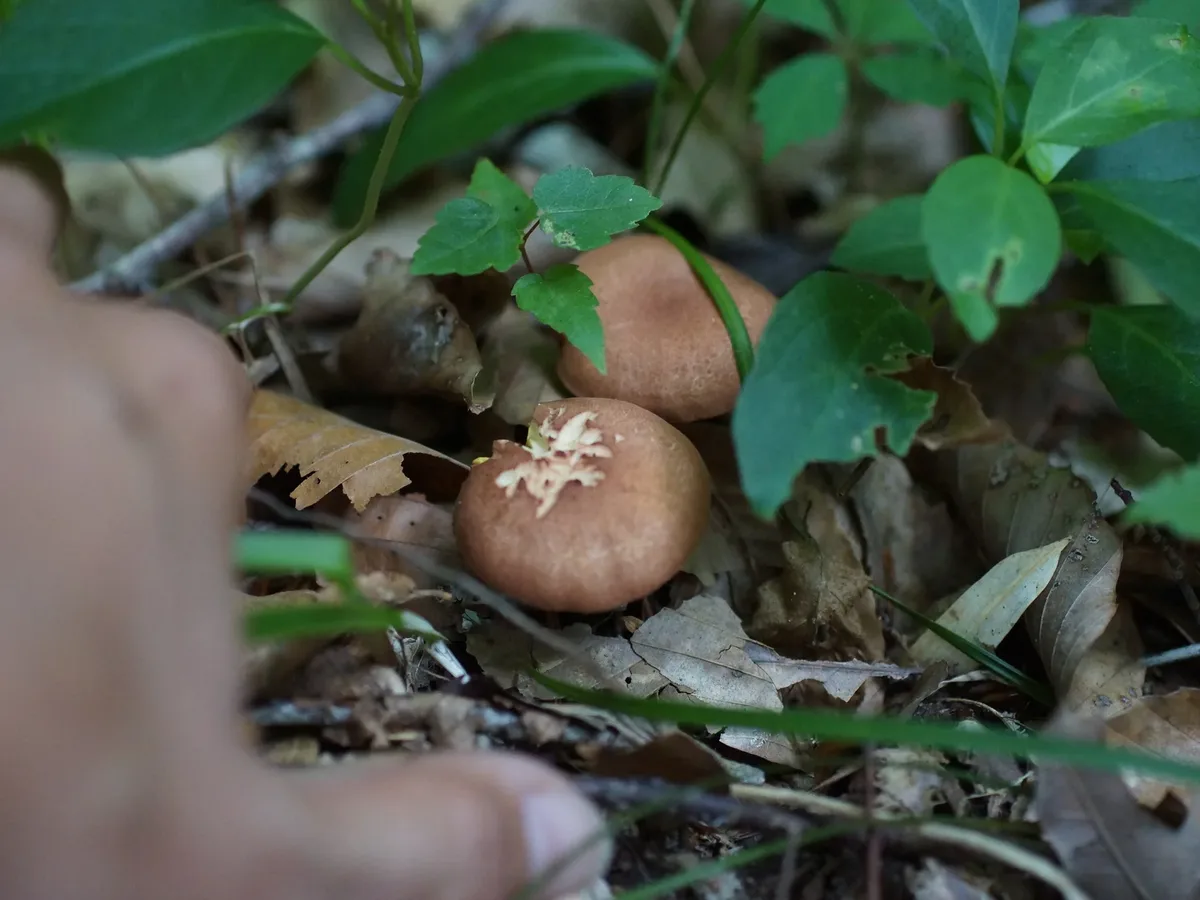
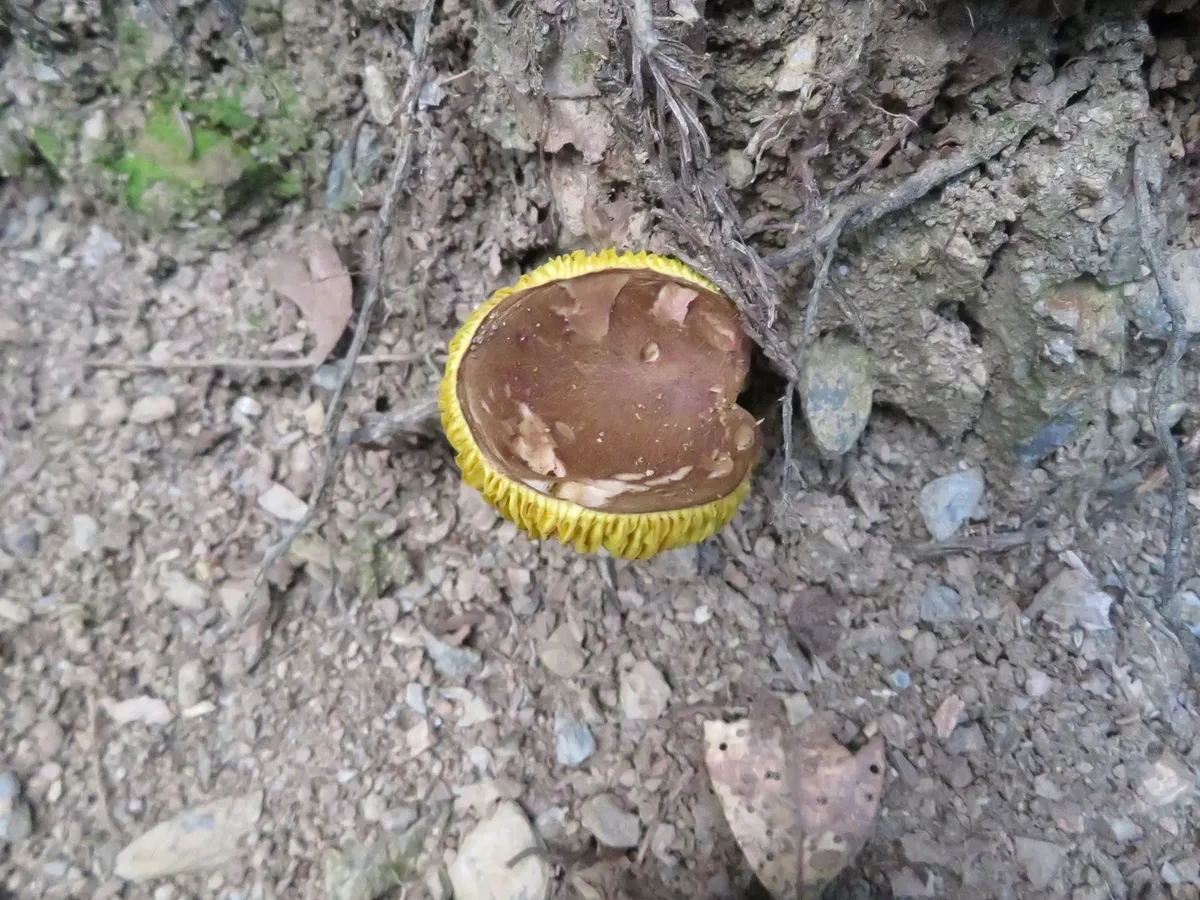
The cap (3-8 cm) is convex, then broad and flattened, with a dry, finely velvety to tomentose surface in shades of olive-brown, tawny brown or reddish-brown.
Gills
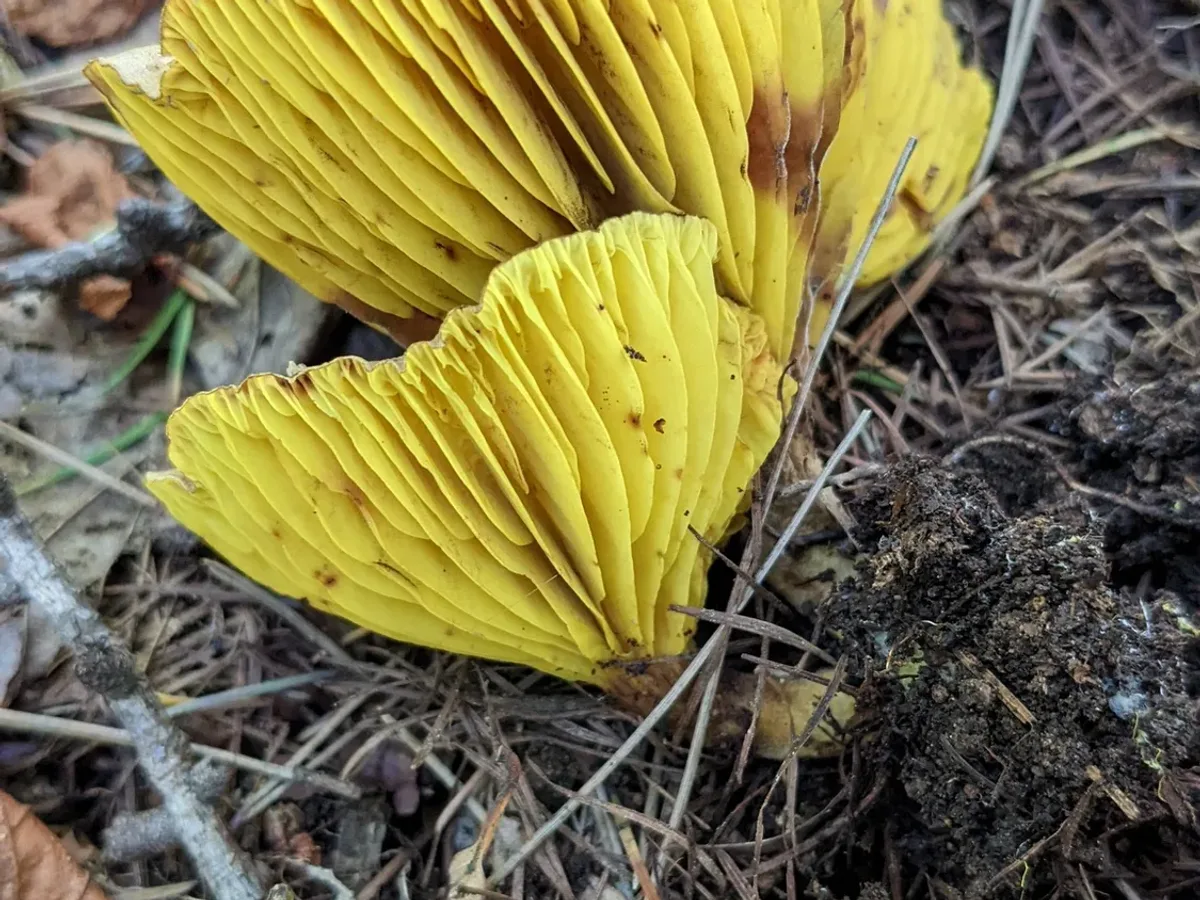
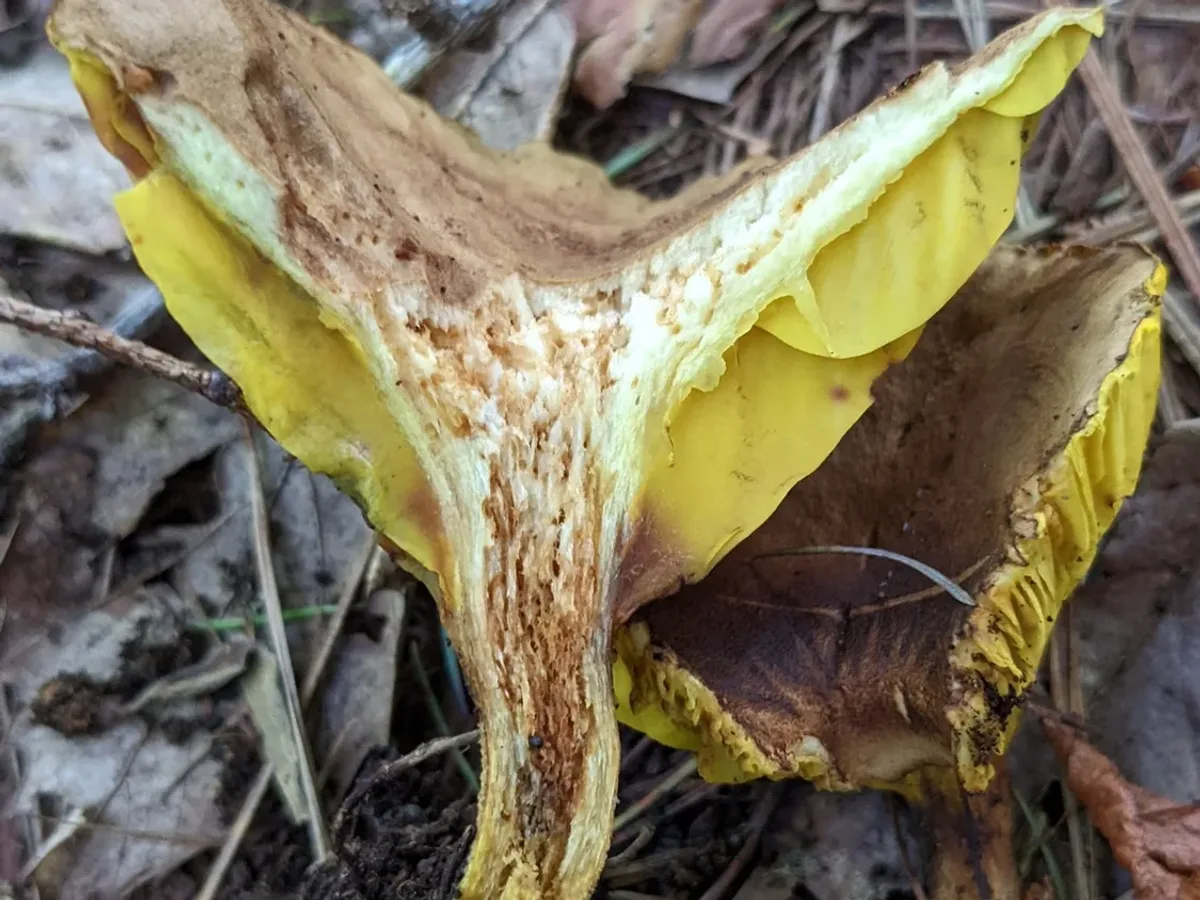
The gills are golden-yellow to bright yellow, moderately crowded, often forking near the stem attachment, and slightly wavy.
Stem
The stem is 3-7 cm tall, 0.6-1.2 cm thick, solid, fibrillose, and coloured similarly to the cap or slightly paler. There is no ring or volva.
Flesh
The flesh is firm and pale yellowish-white; it does not blue when cut or only turns faintly blue.
The spore print is olive-brown to yellowish-brown.
The unusual combination of a brown bolete-type cap with bright yellow gills is the single most reliable identification feature.
Where & when it grows
Habitat
Ectomycorrhizal with pines and oaks across tropical and subtropical Asia.
Look for it in open pine-oak forest and forest margins on acidic, well-drained sandy or loamy soils, from lowland foothills up to about 1800 m.
Common throughout South China (Yunnan, Guangdong, Fujian, Guangxi), Indochina, Thailand, peninsular Malaysia, and the Philippines.
It favours secondary and edge habitats and is frequently found near roadsides in pine forest.
When
Fruits during and after monsoon rain events from June through October, with peak activity in July-September.
The trigger is sustained soil moisture combined with warm soil temperatures (above approximately 18-20 °C).
In the tropics at lower elevations, sporadic early flushes can appear in May. Fruit bodies appear singly to scattered on the ground.
How it grows
Like all true boletes, Phylloporus bellus is mycorrhizal and cannot be cultivated commercially; all specimens are wild-harvested. It grows singly or in scattered groups on the forest floor, directly from the soil.
Its phylogenetic position within Boletales is now well-supported. Molecular studies show that its 'gills' are not homologous to agaric gills but represent a highly modified hymenophore that evolved from a pore surface - the lamellae are essentially fused and elongated tubes.
This makes Phylloporus spp. a textbook example of convergent evolution within fungi.
Fruiting conditions
Triggered by sustained monsoon rainfall (at least 30 mm over 14 days) with warm soil temperatures (18-28 °C). Fruit bodies typically emerge 5-10 days after a significant rain event. Fruiting ceases when soils dry out between rain episodes or when temperatures drop below approximately 16 °C in late autumn.
Look-alikes
The gilled underside immediately separates Phylloporus bellus from all true pore-bearing boletes.
Within the genus Phylloporus, several related species (P. rhodoxanthus in Europe and North America, P. clelandii in Australia) are similar and also edible; they are separated primarily by geography and subtle morphological and molecular differences.
The yellow gills could superficially suggest a Hygrophoropsis (false chanterelle) species. But Hygrophoropsis has a thin-fleshed, orange-tinted, deeply funnel-shaped cap with forking false-gills and a very different growth habitat (decaying wood/litter).
Cortinarius species with brown caps and yellowish gills might seem similar at a glance, but Cortinarius always has a cortina (cobweb-like veil remnant) and rusty-brown spores that typically coat the gills in age.
No deadly species is reliably confused with Phylloporus bellus when the diagnostic yellow-gilled, brown-capped, bolete-context combination is assessed carefully.
Confusion between Phylloporus bellus and Cortinarius is unlikely in practice: the orellanine-bearing species most associated with serious poisoning (e.g. C. rubellus, C. orellanus) are temperate European and North American fungi not documented in the tropical and subtropical Asian range of P. bellus, and P. bellus's distinctive bright golden-yellow gills in a bolete ecological context are not characteristic of Cortinarius. As a genus-level structural check: any Cortinarius will show remnants of a cortina (cobweb-like fibrillose partial veil) on the stem and rusty-brown to cinnamon gills or spore deposits in age - features absent in Phylloporus bellus.
Orange to orange-yellow, thin-fleshed, deeply funnel-shaped cap with forking 'false gills' (not true gills). Grows on decaying wood and needle litter, not on soil in mycorrhizal context. Mildly toxic (causes gastrointestinal upset and occasional neurological effects). Distinguished from Phylloporus bellus by the orange cap colour, thin funnel shape, and saprotrophic habitat.
The Australasian gilled bolete; similarly brown-capped with yellow gills. Occurs in Australia and New Zealand, not in tropical Asia. Also edible.
The European and North American gilled bolete; very similar in form (brown cap, yellow gills, bolete ecology) but geographically separated - it occurs in Europe and the Americas, not tropical Asia. Also edible. Separated reliably only by geography and molecular data.
In the kitchen
Picking & cleaning
Harvest young to mature fruit bodies before the cap has flattened fully and before insect larvae have penetrated the stem. The cap surface should still feel velvety.
Cut at the base with a knife rather than pulling, to leave the mycelium intact.
The yellow gills bruise and discolour to dark yellow-brown with handling; this is normal and not a sign of toxicity.
- Trim the base.
- Brush off soil.
- Inspect the stem for larval tunnels.
Phylloporus bellus is sold at local markets throughout Yunnan, Thailand, and Vietnam, typically alongside other wild boletes.
Cooking
The flesh is firm and holds up well to heat. Clean with a brush or dry cloth, then slice vertically through cap and stem.
The flavour is mild and earthy with a slight nuttiness, less intense than porcini.
- In Yunnan, stir-fried with garlic, dried chilli, and spring onions.
- In Thailand, in spicy salads (yam hed) and soups.
It pairs well with soy-based seasonings and aromatic oils. Drying concentrates the flavour.
Avoid boiling for extended periods as the texture becomes waterlogged.
Good to know
Phylloporus bellus is regarded as a safe edible of moderate quality throughout its range and is sold at Southeast Asian markets without significant reported toxicity issues. No toxic compounds have been identified in the species.
Standard precautions apply:
- Do not eat raw (some boletes cause gastrointestinal irritation when uncooked).
- Always cook thoroughly.
- Avoid any specimen that smells off or has heavily deteriorated flesh.
Because the gills yellow-bruise with handling, beginners occasionally mistake discolouration for a toxic reaction - it is not.
Confirm identification by the combined features:
- Brown velvety cap
- Yellow sinuate-decurrent gills
- Solid concolorous stem
- No ring
- Ectomycorrhizal habitat
- Olive-brown spore print
A reference guide - never an edibility guarantee. When in doubt, leave it out.