Shaggy scalecap
Pholiota squarrosasyn. Agaricus squarrosus Oeder, Dryophila squarrosa (Oeder) Quél., Flammula squarrosa (Oeder) P.Kumm., Pholiota squarrosa var. squarrosa
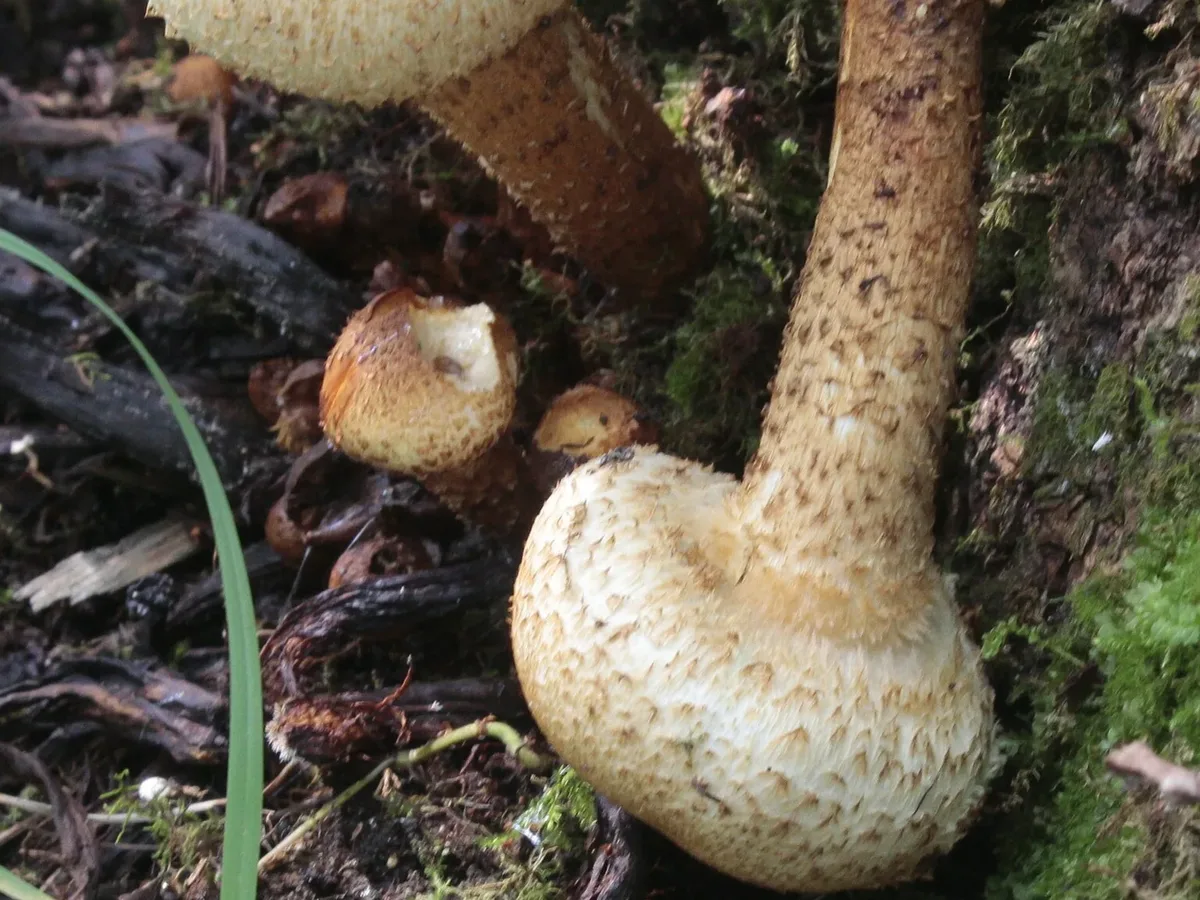 © Константин Селивёрстов (CC BY)
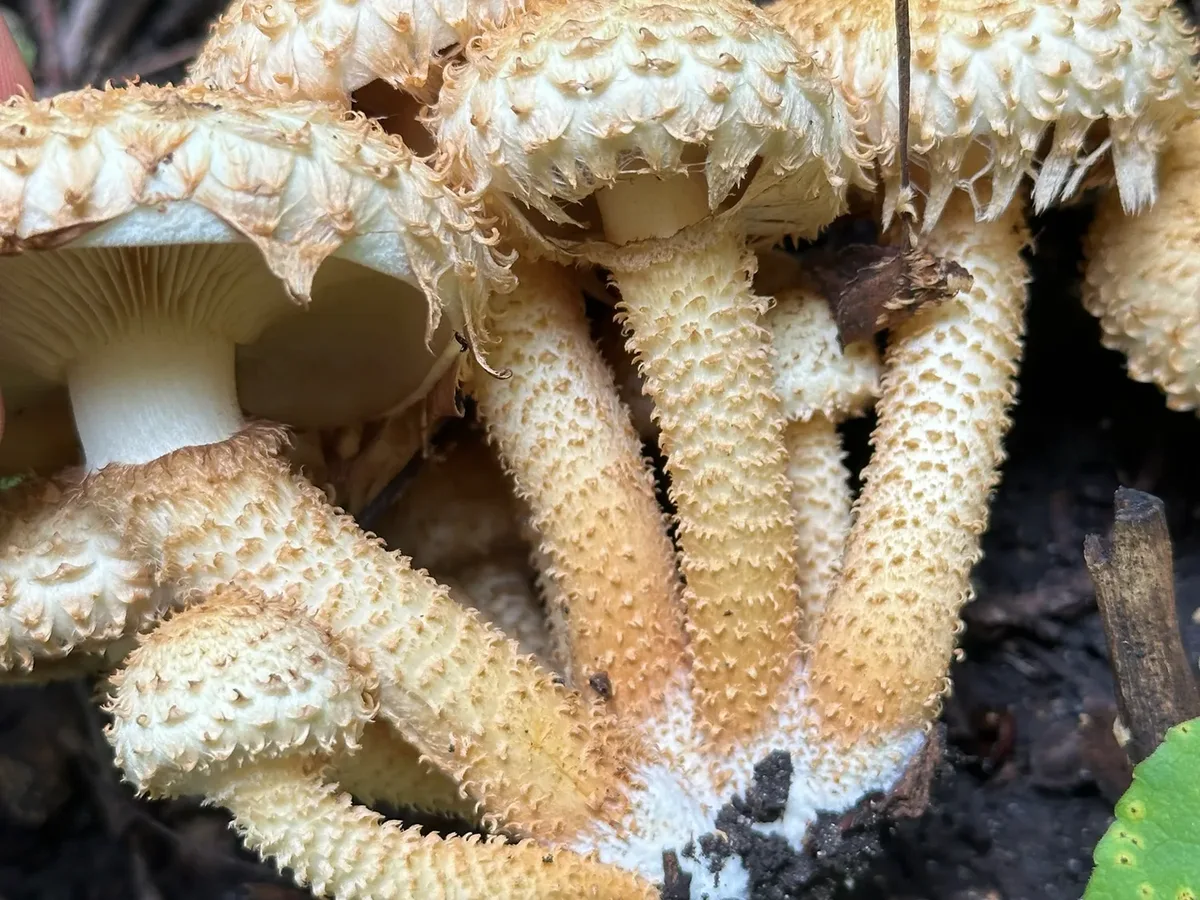 Kallum McDonald (CC0)
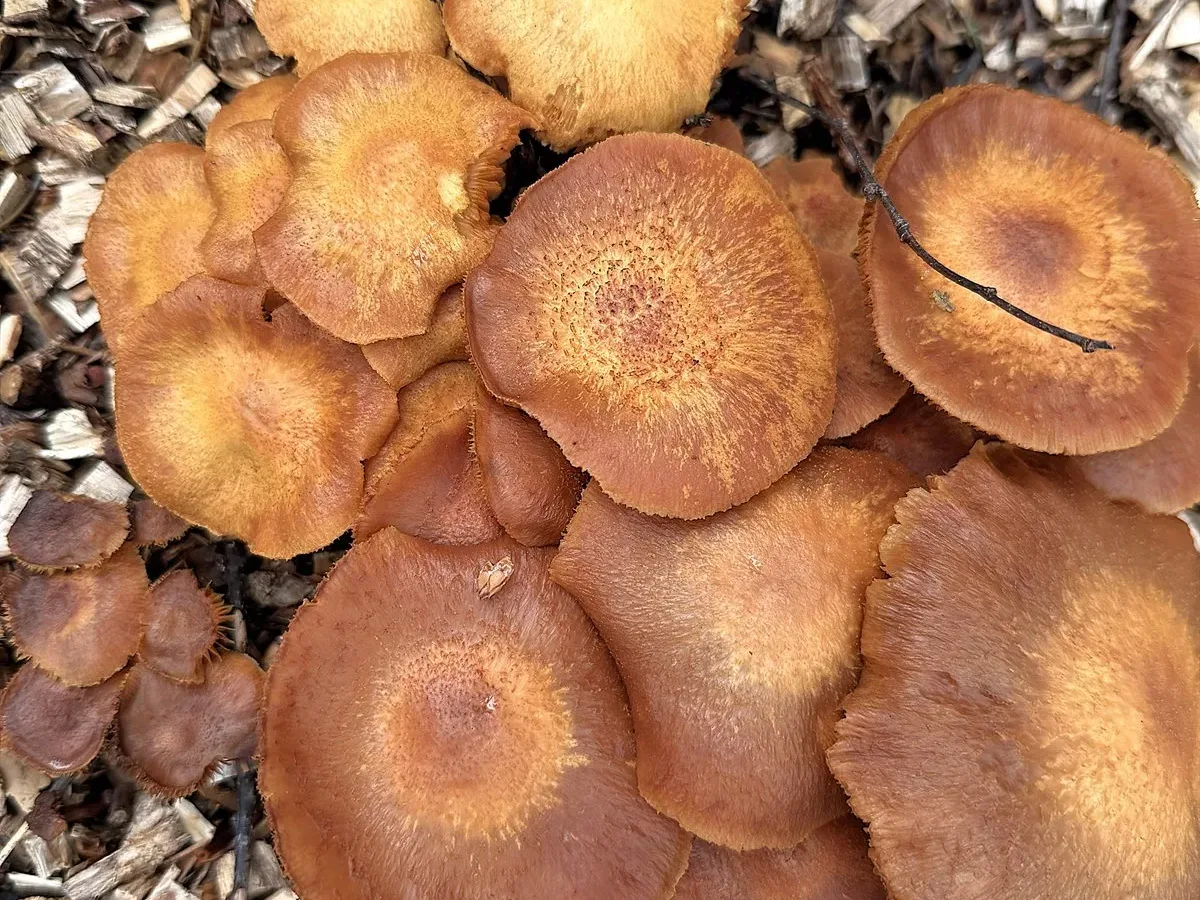 © Jan Alsvik (CC BY)
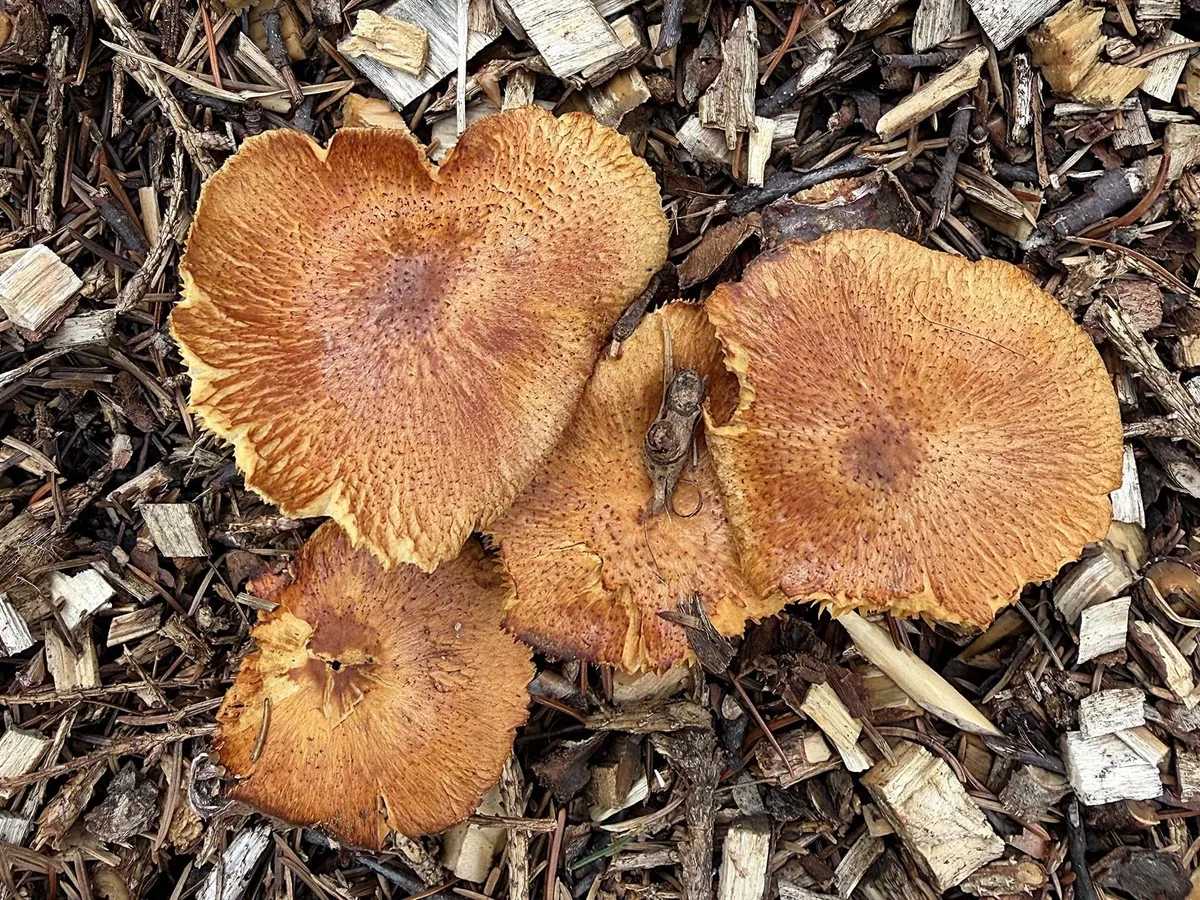 © Jan Alsvik (CC BY)
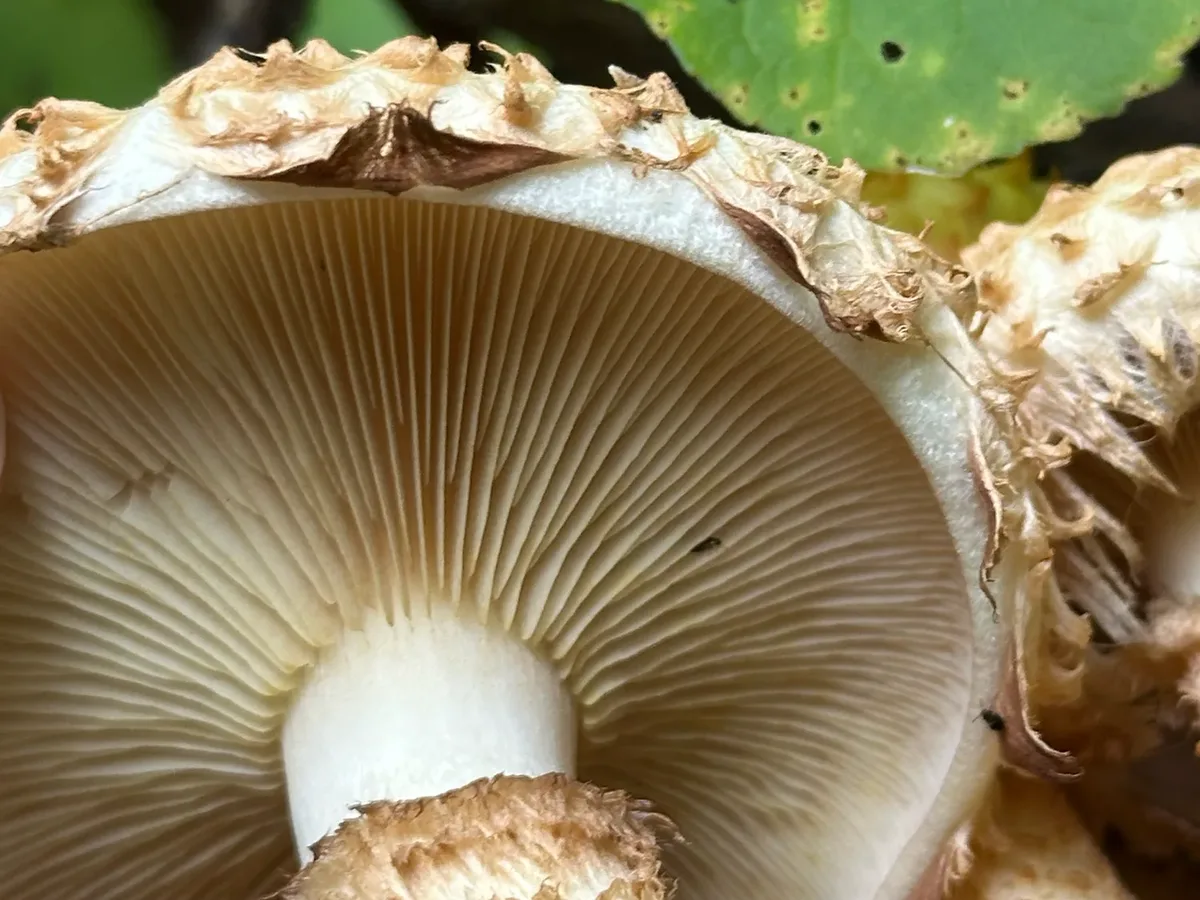 Kallum McDonald (CC0)
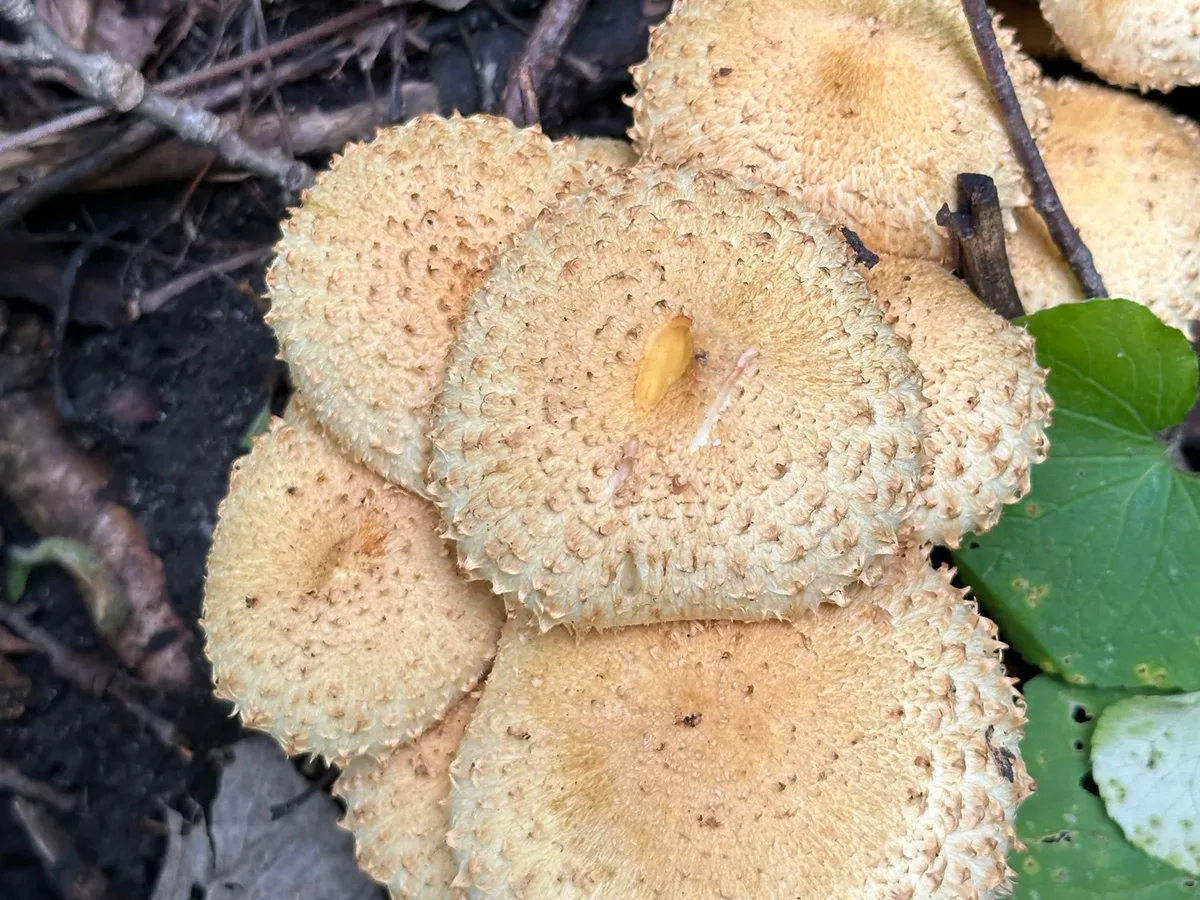 Kallum McDonald (CC0)
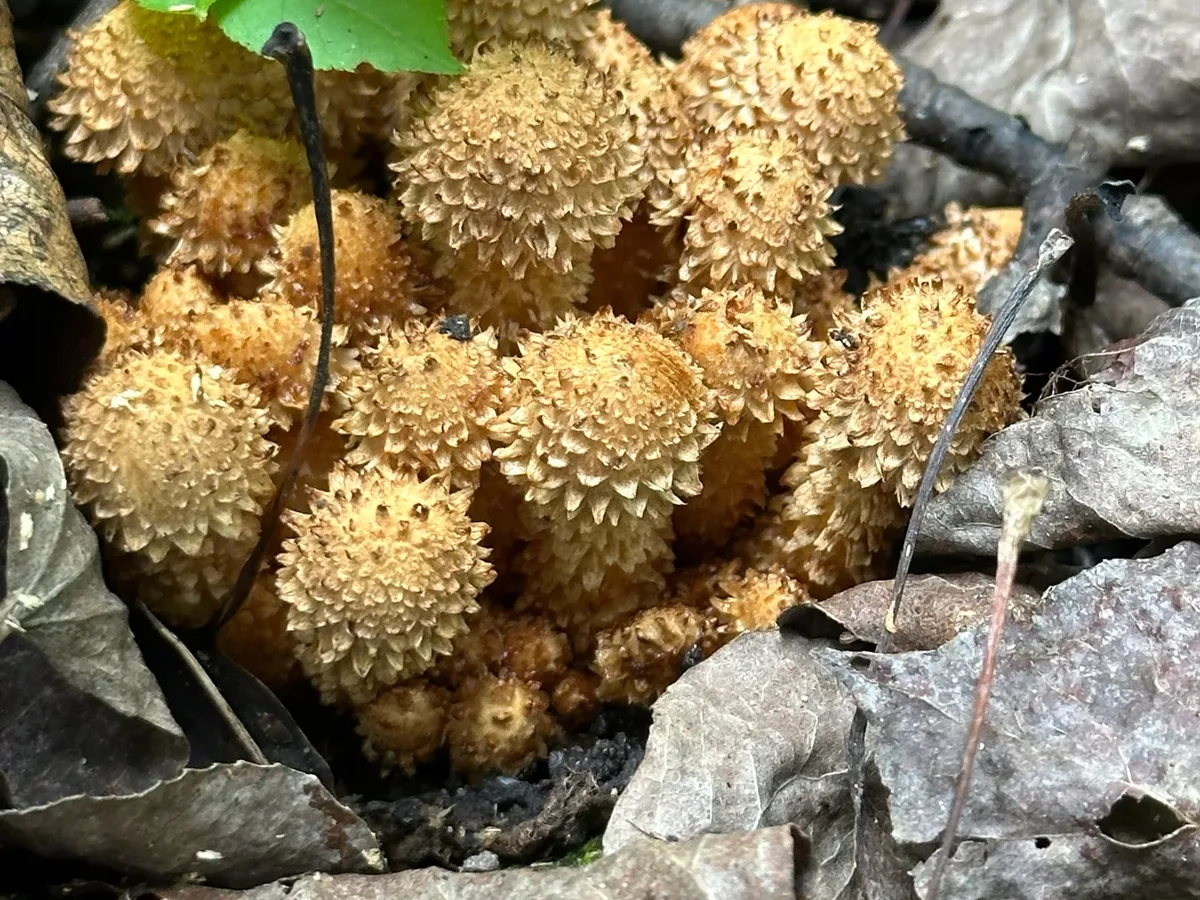 Kallum McDonald (CC0)
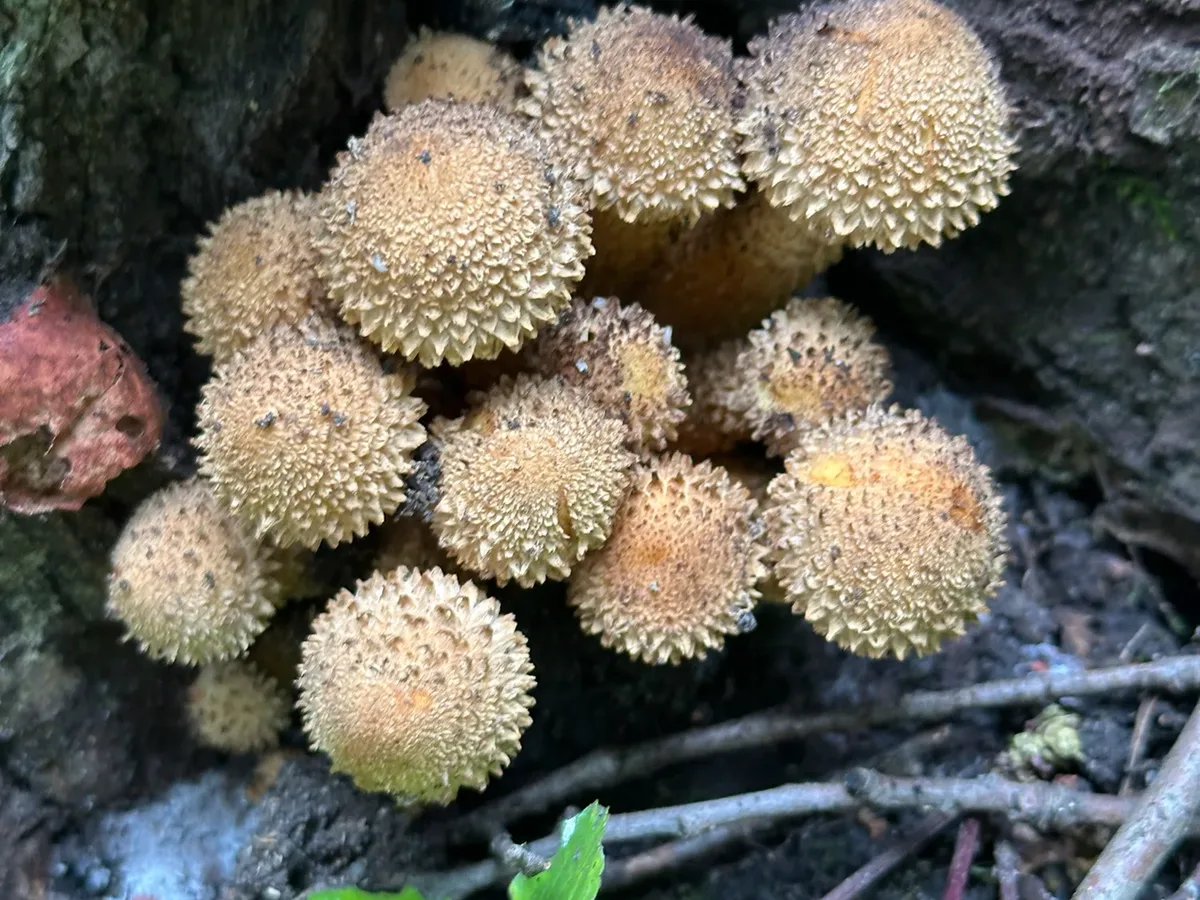 Kallum McDonald (CC0)
 Kallum McDonald (CC0)© Константин Селивёрстов (CC BY)Kallum McDonald (CC0)
Edible only with the right preparation - or safe for some people but not others. Learn the caveats first.
Never eat a mushroom you are not 100% sure of - check the look-alikes below, and always cook wild mushrooms.
How to recognise it
The shaggy scalecap earns its name - this is one of the most densely armoured of all common woodland mushrooms.
Cap
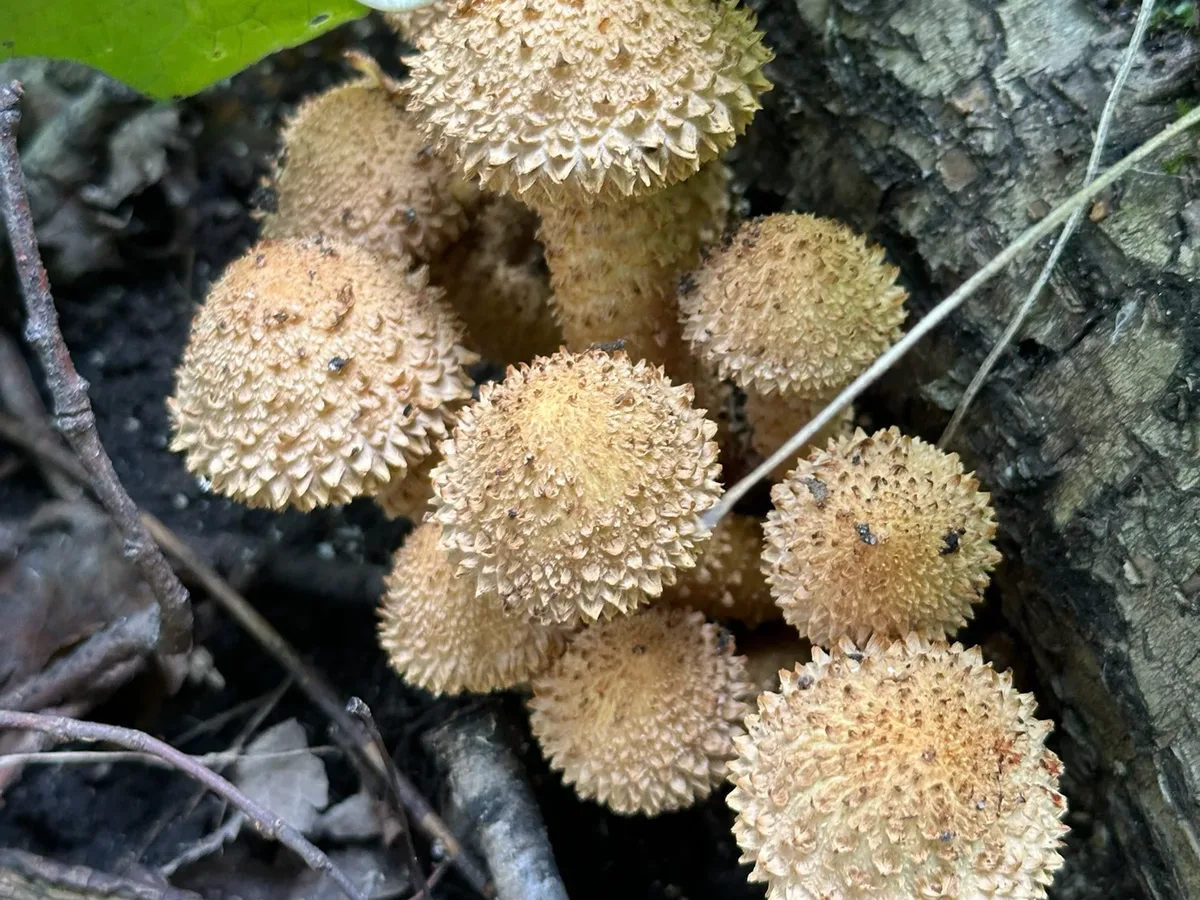
The cap (4-12 cm) starts as a pale straw-yellow to ochre hemisphere, tightly clothed from center to margin in coarse, recurved, dark-brown scales that stand erect like the bristles of a hedgehog.
In dry weather the scales stay sharply defined and upright; wet weather can mat them somewhat but they never become slimy or viscid - the cap is always dry to the touch.
As the cap expands to broadly convex the scales spread apart but remain obvious.
Gills
Beneath the cap the gills start pale yellowish, slowly shifting through olive to cinnamon-brown at spore maturity.
Stem
The stem carries the same recurved scaling all the way from its base up to the ring, unifying the whole fruiting body in one coherent shaggy texture. The ring itself is membranous and often stained rust-brown by fallen spores.
Flesh
Flesh is firm and pale yellowish.
Smell & taste
The single most useful field character: a strong, persistent raw-garlic or garlic-radish smell - unmistakable once learned, and enough on its own to make you pause before eating anything claimed to be this species.
Why it's dangerous
Pholiota squarrosa is a toxic species causing moderate gastrointestinal illness, not a life-threatening one in otherwise healthy adults under ordinary circumstances. There are no confirmed fatalities attributed solely to this species.
However, the GI syndrome can be incapacitating. Persons who are young, elderly, immunocompromised, or have pre-existing GI or renal conditions are at higher risk of serious dehydration from vomiting and diarrhea.
Seek medical attention if symptoms are severe, prolonged (>12 hours), or accompanied by signs of dehydration.
The main danger in the field is misidentification leading someone to eat it believing it to be Armillaria (honey mushroom). Always verify the white spore print and white ring of Armillaria against the cinnamon-brown spore print and recurved-scaled stem of P. squarrosa.
Toxin
The toxic compounds responsible for gastrointestinal illness following ingestion of Pholiota squarrosa have not been fully characterised by modern analytical methods. Bitter terpenoids and fatty-acid derivatives of the type found in related Pholiota species are suspected on chemical grounds.
Some clinical reports suggest an alcohol-interaction component (disulfiram-like reaction), but coprine - the confirmed coprine-alcohol syndrome agent in Coprinopsis atramentaria - has not been identified in P. squarrosa.
The strong garlic-like odor originates from sulphur-containing volatile compounds (related to allicin-type sulfides), which are separate from the toxicity but reinforce the species' distinctive field character.
Symptoms
Gastrointestinal poisoning: nausea, vomiting, abdominal cramps, and diarrhea, typically beginning within 30 minutes to 3 hours after consumption.
Symptoms are generally self-limiting and resolve within 6-24 hours once the irritant material has been cleared. Persons who have consumed alcohol around the time of ingestion may experience additional or more pronounced symptoms.
Systemic effects (liver damage, neurological signs, renal impairment) are not characteristic of this species - if such symptoms appear, suspect co-ingestion of another species and seek emergency care immediately.
Staying safe
Pholiota squarrosa is toxic and should not be eaten. It causes gastrointestinal illness - nausea, vomiting, abdominal cramps, and diarrhea - in a significant proportion of consumers, with variability that may reflect dose, preparation method, or individual sensitivity.
Reports from Japan and mainland Europe describe cases of GI poisoning following consumption of this species even after thorough cooking.
Some accounts also describe enhanced or unusual symptoms in persons who drink alcohol around the time of ingestion, suggesting a possible interaction, though the responsible compound has not been characterised.
The species is classified as toxic throughout the mycological literature in Japan and Europe. Do not eat it.
Where & when it grows
Habitat
Pholiota squarrosa is a parasite and wood-decayer of living trees. Look for it clustered tightly at the base of standing conifers and broadleaves - spruce, fir, beech, oak, birch, willow, and many others all serve as hosts.
Unlike many related fungi that colonise fallen logs and stumps, this species frequently emerges from the living trunk just above the soil line, or from attached surface roots. It causes slow white-rot in the host heartwood, entering through wounds or root damage.
In East and Southeast Asia (Japan, China, Korea) it appears in broadleaf and mixed montane forest in autumn, often on beech (Fagus) and oak relatives.
When
Late summer through mid-autumn. In temperate East Asia (Japan, China, Korea) the season broadly runs September through November, peaking in October as cool overnight temperatures arrive alongside autumn rainfall.
Fruiting is reliably triggered by the combination of falling air temperatures and adequate soil moisture following rain. The species can persist through mild frosts.
How it grows
Emerges in clusters, sometimes loose tufts, from the base of a host tree or from surface roots. Individual fruiting bodies within a cluster mature at different rates.
The same infected tree may produce crops in successive years as long as the host remains alive or retains decaying wood - the internal mycelium persists for years.
Fruiting conditions
Fruiting is triggered by cooling air temperatures combined with sustained autumn rainfall. Because mycelium is established within the wood of a living or recently dead host tree, soil temperature is less directly relevant than ambient temperature and bark moisture; flushes typically follow a period of rain (>20 mm over two weeks) and a distinct temperature drop below about 15 °C nights. The same host tree can reflush across several seasons.
Look-alikes
The dry, heavily scaled pale-straw cap and strong garlic odor are the most distinctive features; confirm both before considering identification complete.
- Pholiota aurivella (golden scalycap): closely related and also grows on trees, but its cap is conspicuously viscid (slimy-shiny) with deep rust-brown scales, it lacks the garlic smell, and its cap color is richer golden-amber to tawny-orange.
- Pholiota adiposa (fat scalycap): similarly viscid and orange-tinted without the garlic smell.
- Pholiota flammans (flaming scalycap): sulphur-yellow scales and grows on conifer wood, also without garlic odor.
- Armillaria species (honey mushrooms): the most important real-world confusion. They also cluster at the base of trees and on stumps, but have honey-yellow to tawny caps with small dark central scales (not the coarse recurved pale-straw scales of P. squarrosa), a well-developed white to cream ring with a cottony underside, and - crucially - a white spore print, not cinnamon-brown.
Honey mushrooms are edible (with care, cooked). Pholiota squarrosa is not.
DEADLY: contains lethal amatoxins. A small (cap 1-5 cm), smooth, honey-brown mushroom with a fragile ring and rust-brown spore print. It does not resemble P. squarrosa directly - it is much smaller, lacks scales, and lacks the garlic odor - but it can colonise the same fallen wood or stumps in the immediate vicinity of P. squarrosa. Any small, smooth, ring-bearing mushroom near a P. squarrosa cluster should be treated as potentially deadly Galerina until proven otherwise.
Very similar to P. aurivella - viscid orange-yellow cap with appressed scales, no garlic smell, often on conifers. Like P. squarrosa it is also inedible. The viscid cap surface and absence of garlic odor distinguish it.
Brighter sulphur-yellow overall, with dry sulphur-yellow to flame-orange scales and no garlic odor. Grows primarily on dead conifer wood (stumps and logs), not at the base of living trees. Inedible.
Cap is conspicuously viscid (slimy-shiny when moist), richer golden-amber to tawny-orange in color, with deeper rust-brown recurved scales; lacks the strong garlic odor of P. squarrosa. Often fruits higher on trunks rather than at the base. Also inedible/toxic.
The most common real-world confusion. Armillaria also clusters at the base of living trees and on stumps, and can have a tawny, somewhat scaly cap - but its scales are small, dark, and central rather than large, pale, and recurved across the whole cap. The ring of Armillaria is well-developed with a diagnostic cottony-woolly underside and a yellowish edge; most importantly, the spore print is WHITE, not cinnamon-brown. Armillaria also lacks the strong garlic odor. Edible when cooked thoroughly, but confusing it with P. squarrosa carries the risk of a toxic meal.
Similar growth habit at the base of conifers and birch in northern forests. Distinguished by the same features as A. mellea: white spore print, cottony white ring, smaller dark central cap scales, and no garlic smell. Edible when well-cooked.
A reference guide - never an edibility guarantee. When in doubt, leave it out.