Nameko
Pholiota namekosyn. Pholiota microspora, Pholiota glutinosa, Collybia nameko, Kuehneromyces nameko, Agaricus microsporus
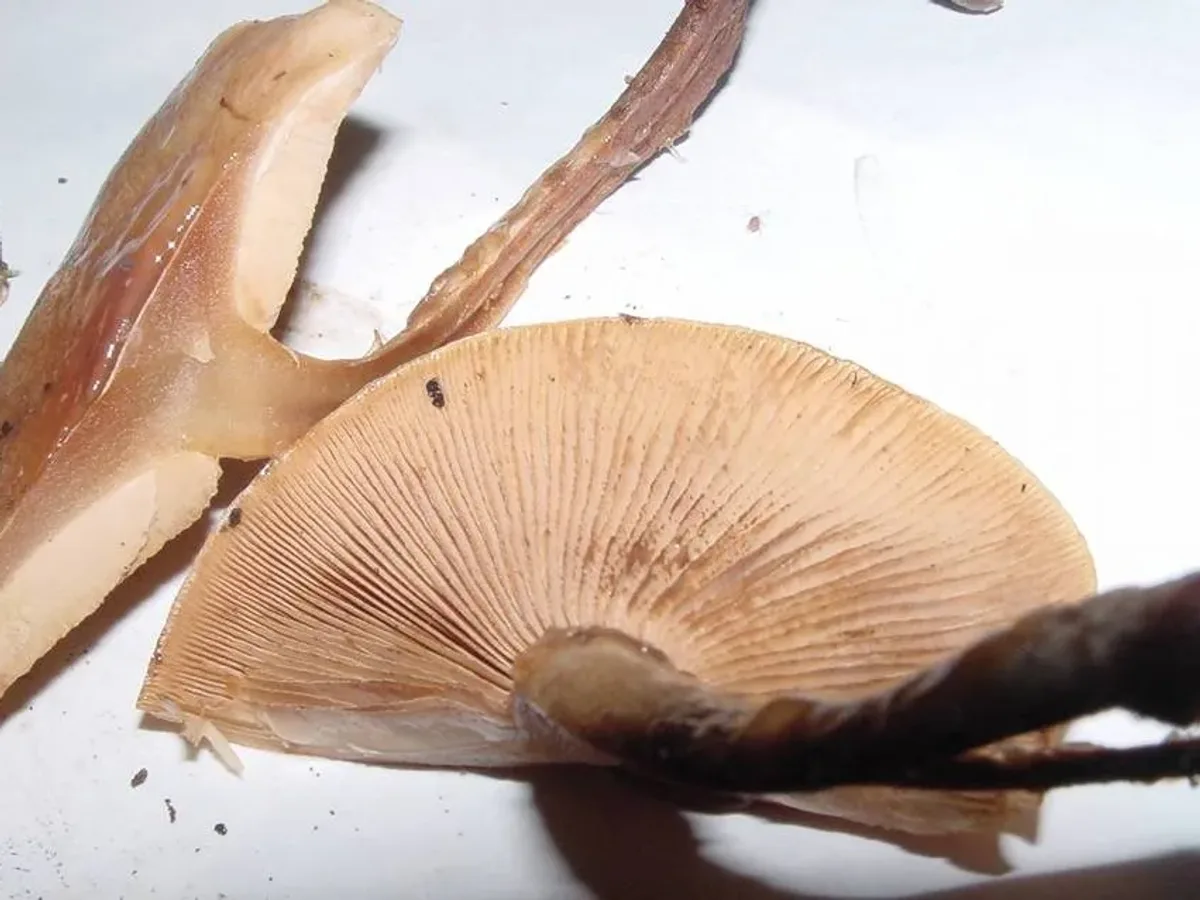 © Vasco Fachada (CC BY-SA)
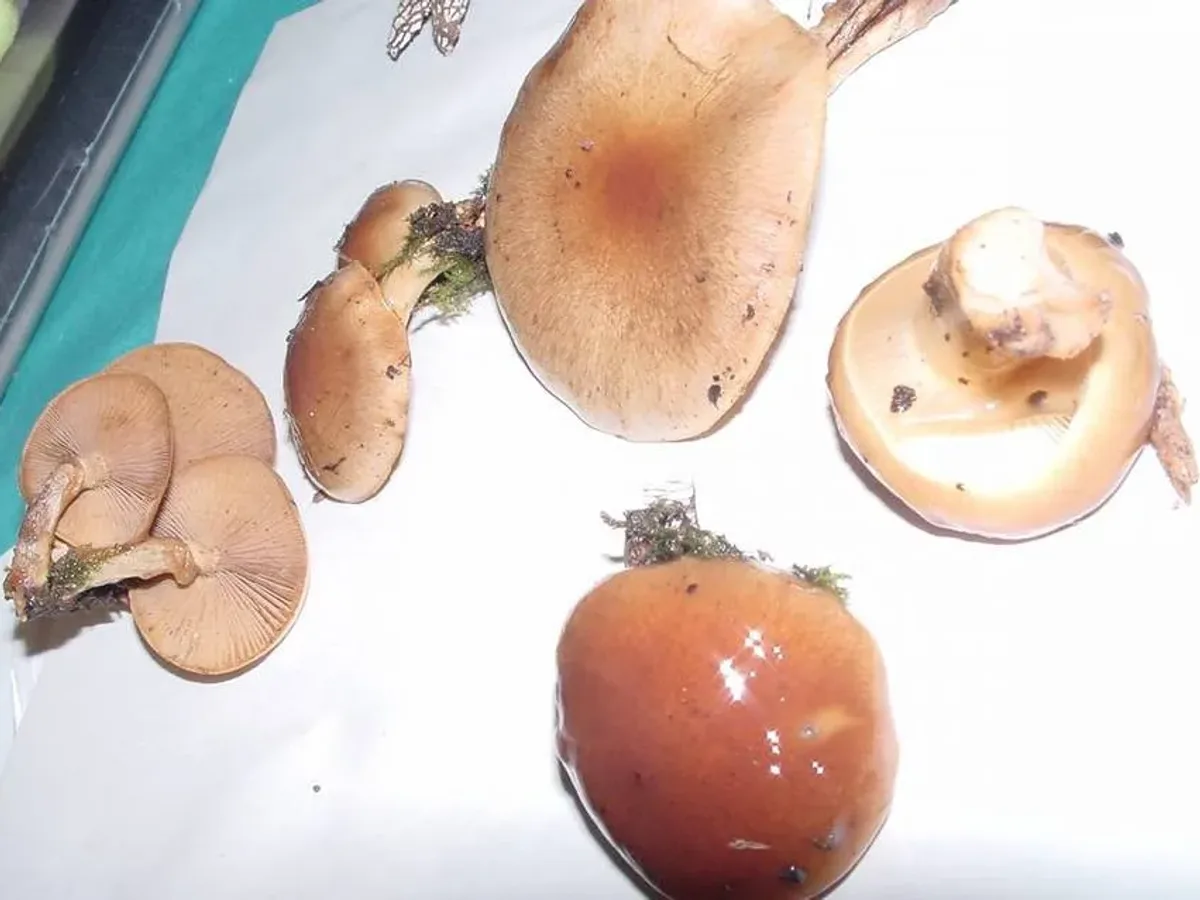 © Vasco Fachada (CC BY-SA)
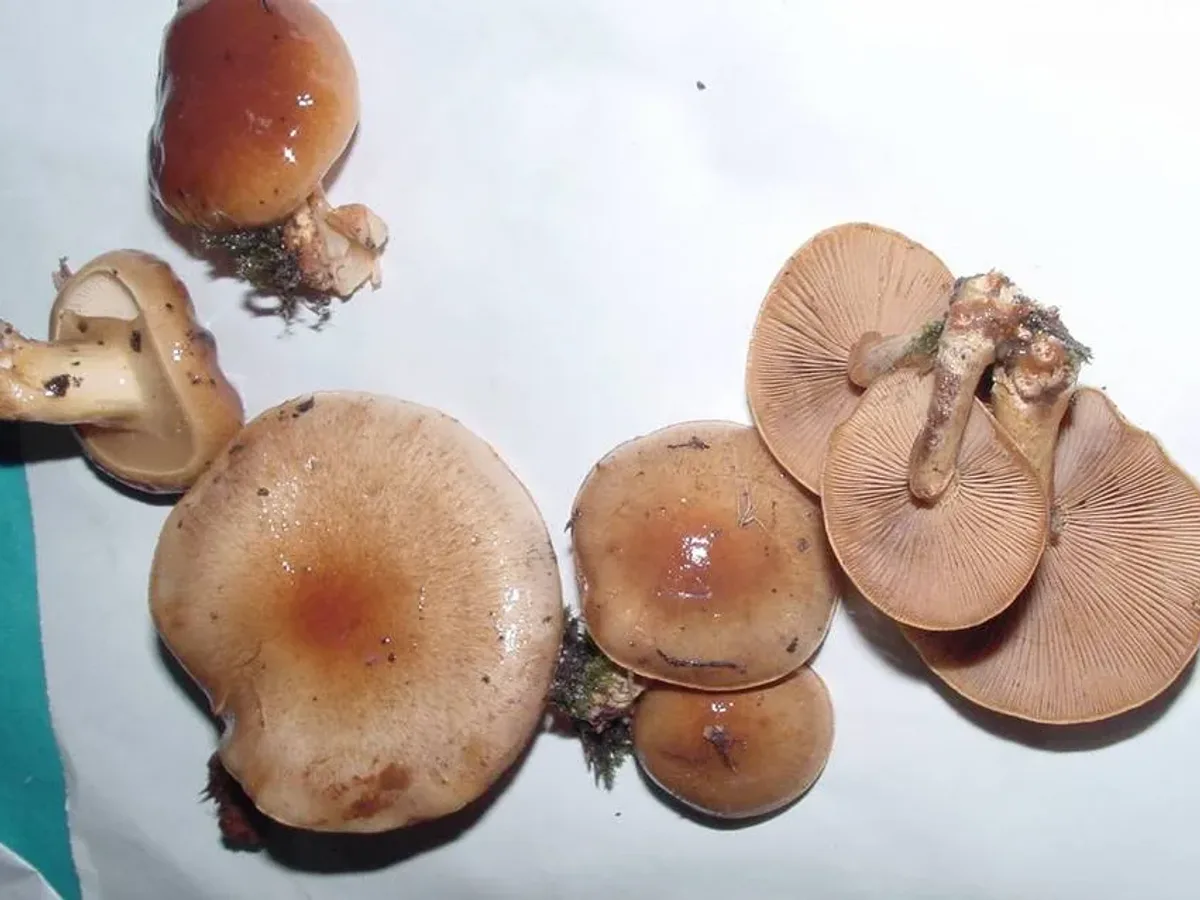 © Vasco Fachada (CC BY-SA)
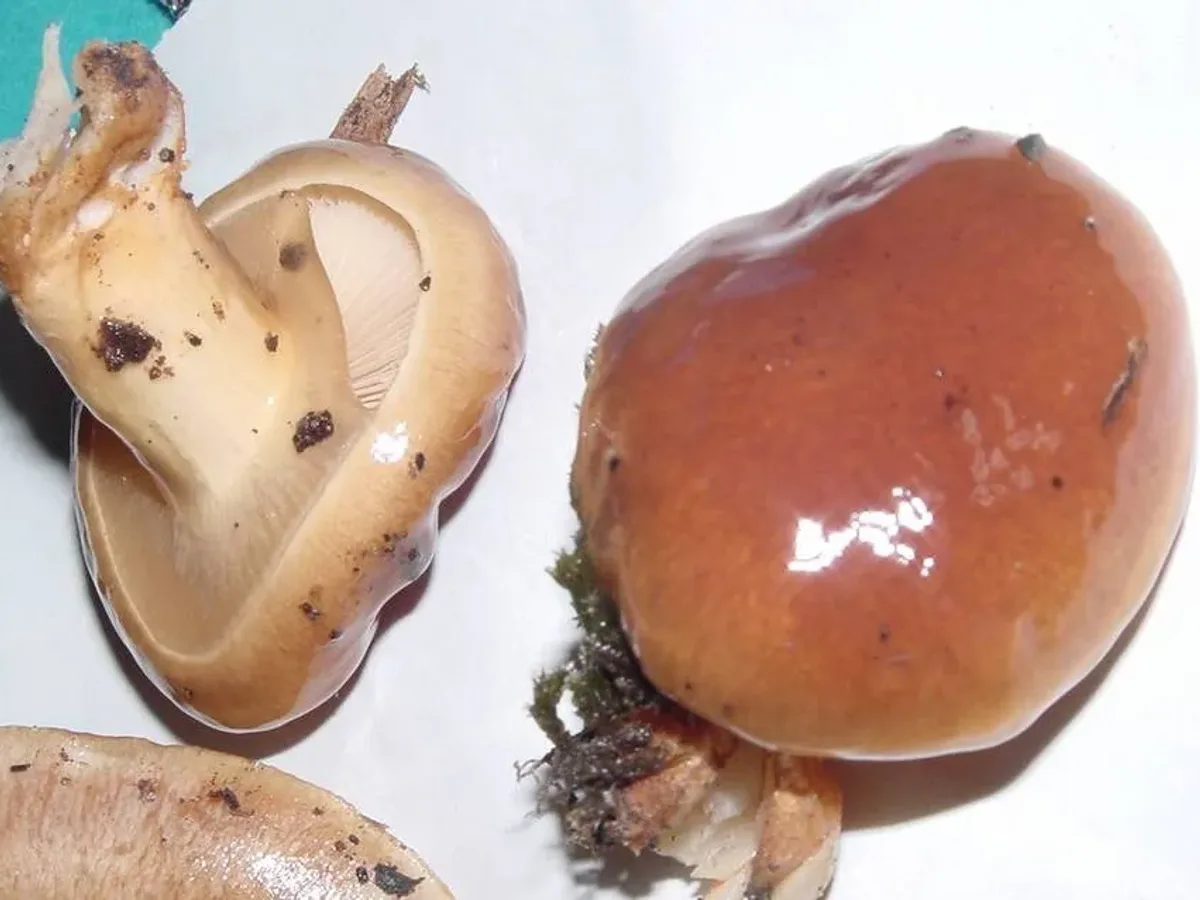 © Vasco Fachada (CC BY-SA)
 © Vasco Fachada (CC BY-SA)© Vasco Fachada (CC BY-SA)© Vasco Fachada (CC BY-SA)
Good to eat, once you have identified it with certainty and cooked it through.
Never eat a mushroom you are not 100% sure of - check the look-alikes below, and always cook wild mushrooms.
How to recognise it
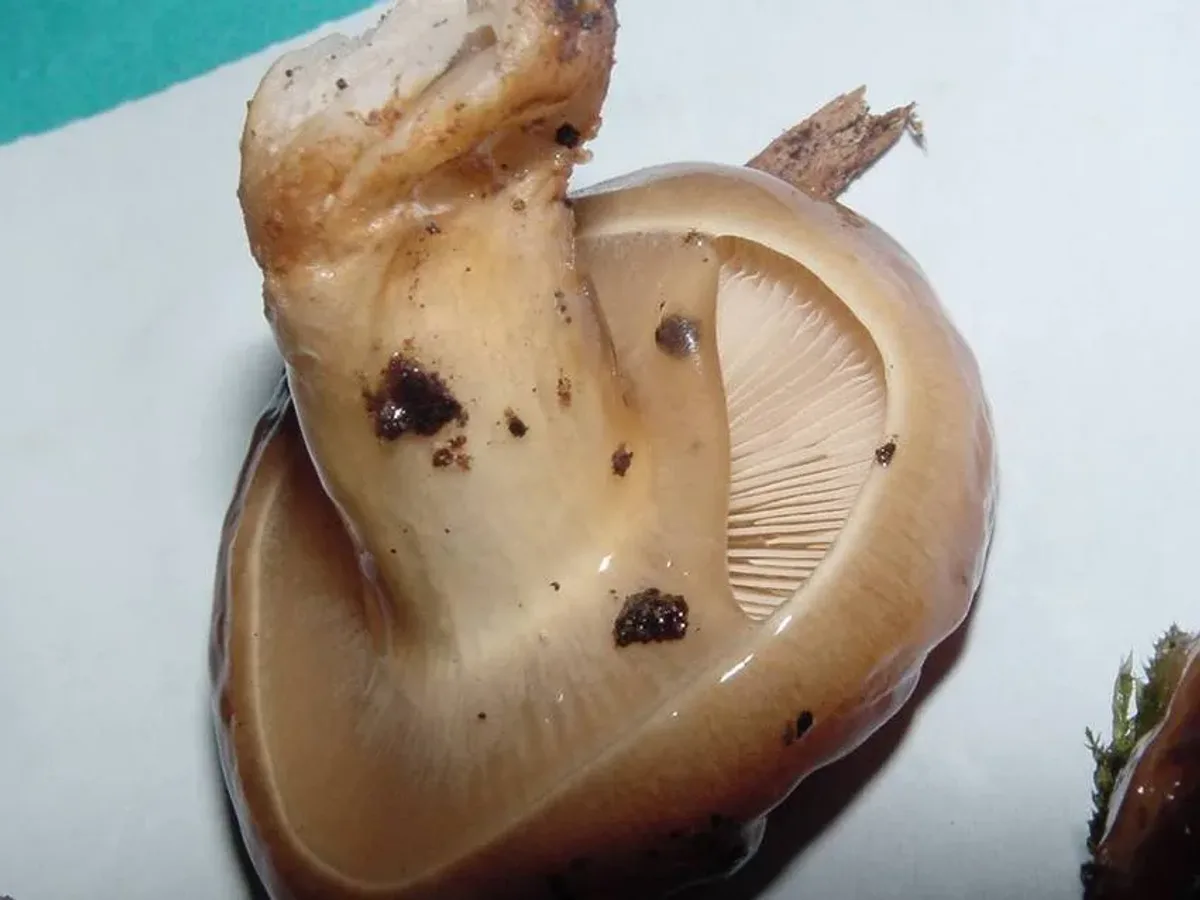
Nameko is most easily told by its sheen: the whole cap is sheathed in a clear, glistening gelatinous slime that catches the light and makes the mushroom slippery to handle.
The currently accepted scientific name is Pholiota microspora; you will still see it sold and described as Pholiota nameko.
Cap
Caps are 2-8 cm across, starting hemispherical with an inrolled edge and opening to convex or flat. They are coloured a warm amber, tawny orange-brown or 'butterscotch' yellow, usually a touch paler at the rim. Unlike most of its scaly Pholiota relatives, the nameko cap is smooth.
Gills
Beneath, the gills run adnate to slightly down the stem, are fairly crowded, and shift from pale yellowish through cinnamon to rusty brown as the spores ripen.
Stem
The stem is 3-8 cm long and slim, fibrous, pale at the top and rusty toward the base, and also slimy above. Young fruitbodies carry a thin gelatinous veil that breaks to leave a faint slimy ring zone rather than a firm ring, often stained dark by fallen spores.
Flesh
Flesh is thin and pale.
Smell & taste
Smell is mild and pleasant.
Where & when it grows
Habitat
A decomposer of dead hardwood, nameko grows in tight clusters on rotting logs, stumps, fallen branches and buried roots of broadleaf trees, with beech and oak the classic hosts.
In the wild it favours cool, humid forests of Japan, China, Korea, Taiwan and the Russian Far East, appearing as the season turns cold and wet.
Because it is a champion cultivation species, almost all nameko in commerce is grown indoors or in shade-houses on inoculated logs or on bags and bottles of supplemented hardwood sawdust.
When
This is an autumn-to-early-winter mushroom that thrives in cool, damp weather. Wild and cultivated flushes typically run from September through December, peaking around October and November.
Nameko is unusually cold-hardy for a gilled fungus and will keep producing after the first light frosts, which is part of why it is prized as a late-season crop.
How it grows
Nameko is a saprotroph - it draws all its energy from dead wood rather than trading nutrients with living tree roots, so it is not mycorrhizal.
In the forest, the hidden mycelium threads silently through a rotting log for months. Then, when cool autumn air and rising humidity arrive, dense overlapping clusters erupt from a single point, sometimes seemingly overnight.
In cultivation, the same trigger is replicated deliberately. Spawn is driven into hardwood logs or blended into pasteurised sawdust-and-bran blocks, and fruiting is induced by dropping the temperature and raising humidity to mimic the onset of autumn.
Fruiting conditions
A cool-season wood-decomposer: fruiting is triggered by falling temperatures combined with sustained high humidity or autumn rain. Optimal fruiting temperatures are roughly 8-15 C; it tolerates and continues fruiting through near-freezing conditions, which is unusual among gilled mushrooms. Values are approximate and apply mainly to wild/log-grown material.
Look-alikes
Confirm nameko on the whole combination of features, never one alone:
- a clear gelatinous slime over a smooth (not scaly) amber cap
- a rust-brown spore print
- a slimy gelatinous veil zone (not a firm membranous ring)
- clustered growth on dead hardwood
The most dangerous confusion is with the deadly Galerina marginata (funeral bell), a small brown mushroom that also grows clustered on dead wood, also has a rust-brown spore print, and contains the same lethal amatoxins as the death cap.
Crucially, Galerina is hygrophanous and can be slightly greasy or viscid when wet, so a wet, faintly slimy-looking brown cap does not rule it out. The thick clear glutinous sheath of true nameko is different in degree, but a beginner cannot safely rely on this.
Galerina also has a thin membranous ring (versus nameko's gelatinous veil zone) and a more striate margin.
Sheathed woodtuft, Kuehneromyces mutabilis, is an edible clustered wood-dweller that is only tacky (not glutinous), often two-toned and hygrophanous, with small dark scales on the stem below a distinct fibrous ring. It famously grows intermingled with deadly Galerina.
Other Pholiota species are mostly scaly-capped and drier, and several are inedible or upset the stomach.
Honey fungus (Armillaria) is larger and has a WHITE spore print, not rusty.
Always take a spore print and check every detail; if anything fails to match, do not eat it.
DEADLY: contains the same lethal amatoxins as the death cap and has killed foragers. A small dull-brown mushroom that, like nameko, grows clustered on dead wood and has a rust-brown spore print. It is hygrophanous (the cap fades as it dries) and is moist to slightly greasy or viscid when wet, so a damp, faintly slimy-looking brown cap does NOT rule out Galerina -- do not use sliminess as a safety test. It lacks nameko's thick, clear, glutinous sheath; it typically has a faintly striate margin and a thin membranous ring rather than nameko's slimy gelatinous veil zone. Grows on dead wood of both conifers and broadleaf trees. Any small brown clustered wood mushroom that does not match nameko on every feature -- and especially the rust-brown spore print plus thick clear slime -- must be treated as potentially deadly and discarded.
Grows in clusters on wood but is larger, has a WHITE spore print (not rusty), often a persistent woolly ring, and lacks nameko's thick clear slime. Edible only when well cooked; causes upset in some people.
Most Pholiota have conspicuously scaly, dry-to-tacky caps rather than the smooth, heavily slimed cap of nameko; several are inedible or cause stomach upset. The smooth slimy cap of true nameko distinguishes it from the scaly-capped relatives.
Edible and very similar in habit (clustered on hardwood, brown cap, rust-brown spores) but the cap is only slightly tacky rather than thickly glutinous, often two-toned (hygrophanous, drying paler from the centre outward), the stem below the ring is covered in small dark scales, and it bears a more distinct fibrous ring. It famously grows intermingled with the deadly Galerina marginata, so the same lethal caution applies -- never collect this group as a beginner.
In the kitchen
Picking & cleaning
Harvest clusters young, while the caps are still rounded and the slime layer is glistening and intact, for the best texture and flavour.
- Cut or twist the bundle at the base.
- Handle gently; the gelatinous coating is the whole point of the mushroom and should not be wiped or washed away before cooking.
- Avoid waterlogged, decaying caps with darkened gills, which deteriorate quickly.
Wild collecting is strongly discouraged for anyone but expert mycologists. Small brown clustered wood-mushrooms include the lethal Galerina marginata, and the slime layer is not a reliable safety test (see lookalikes and safety).
Cooking
Nameko is valued precisely for its slippery, gelatinous texture, which thickens and enriches whatever it is cooked in.
It is the classic mushroom for Japanese miso soup, where the slime gives the broth a silky body. It is also used in nabe hotpots, soba and udon noodle dishes, grated-radish dressings (oroshi-ae), simmered dishes and stir-fries.
- Cook the mushrooms whole or in clusters, and add them toward the end so the texture stays intact.
- Do not over-rinse, as the prized coating washes away.
- Always cook thoroughly before eating, never raw.
The flavour is mild, earthy and slightly nutty, complementing dashi, soy and miso especially well.
Good to know
Nameko itself is a safe, long-established edible eaten daily across East Asia, but it must always be thoroughly cooked, never eaten raw. Raw or undercooked nameko can cause gastrointestinal upset.
The far greater danger is misidentification of small brown clustered wood-mushrooms. The deadly Galerina marginata shares the same dead-wood habitat, the same rust-brown spore print, and can look slightly slimy when wet, and it has killed foragers.
Do not treat the presence of slime as proof a mushroom is nameko and safe - it is not a reliable test.
Because of this lethal lookalike, beginners and even intermediate foragers should obtain nameko only from cultivation or trusted markets rather than wild-collecting.
If you do collect in the wild, confirm the complete set of features - and discard any cluster you cannot identify with total certainty:
- rust-brown spore print
- thick clear glutinous cap
- smooth (not scaly) surface
- slimy veil zone
- hardwood substrate
A reference guide - never an edibility guarantee. When in doubt, leave it out.