Bushveld bolete
Phlebopus sudanicussyn. Afroboletus luteolus, Boletus loosii
 Andrew Deacon (CC0)
 Andrew Deacon (CC0)
 Erwin Sieben (CC0)
 Erwin Sieben (CC0)
 Erwin Sieben (CC0)
 Erwin Sieben (CC0)
 Dale Holder (CC0)
 Dale Holder (CC0)
 Innes Buchner (CC0)
 Kelly Abram (CC0)
 Kelly Abram (CC0)
 © Henry de Lange (CC BY 4.0)
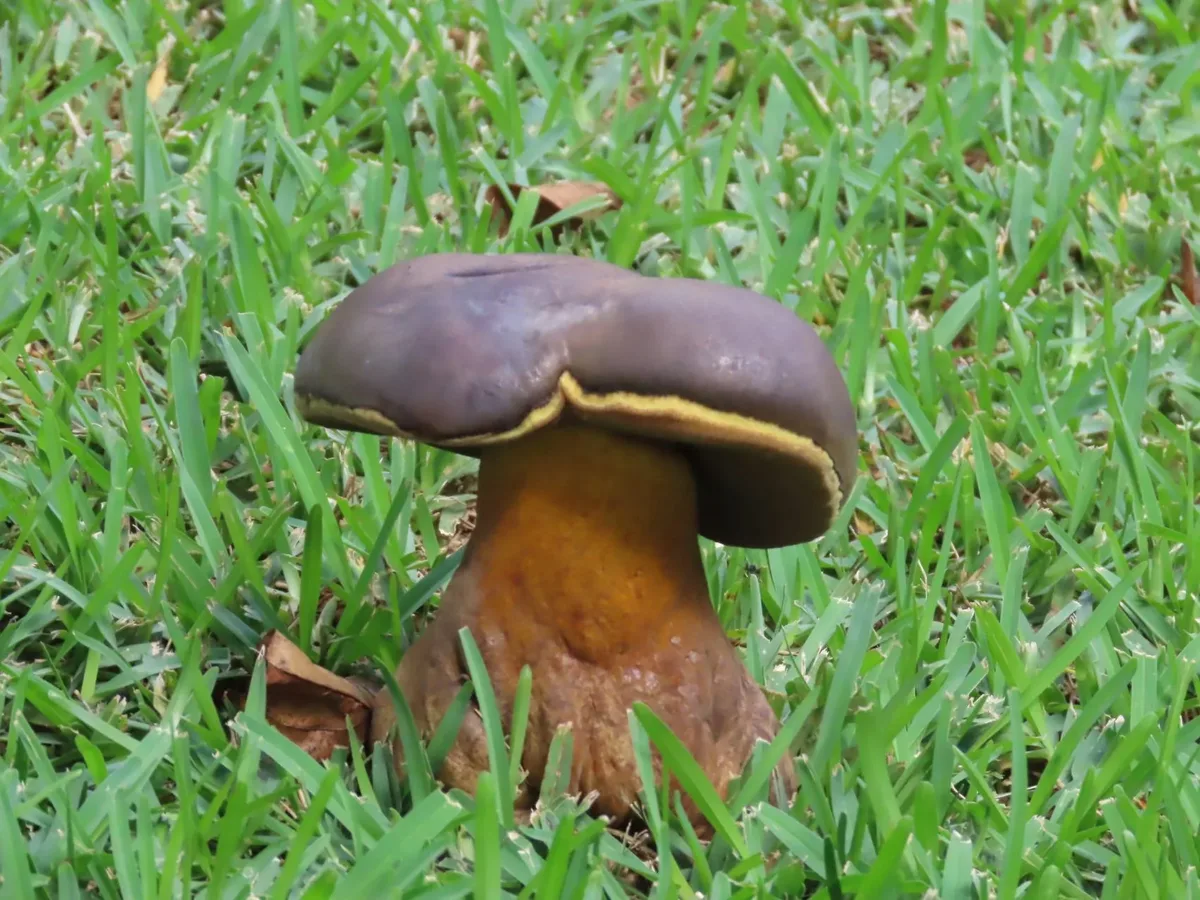 Andrew Deacon (CC0)Andrew Deacon (CC0)Andrew Deacon (CC0)
Edible only with the right preparation - or safe for some people but not others. Learn the caveats first.
How to recognise it
Phlebopus sudanicus is one of the largest boletes on the African continent, and encountering a mature specimen is genuinely striking.
Cap
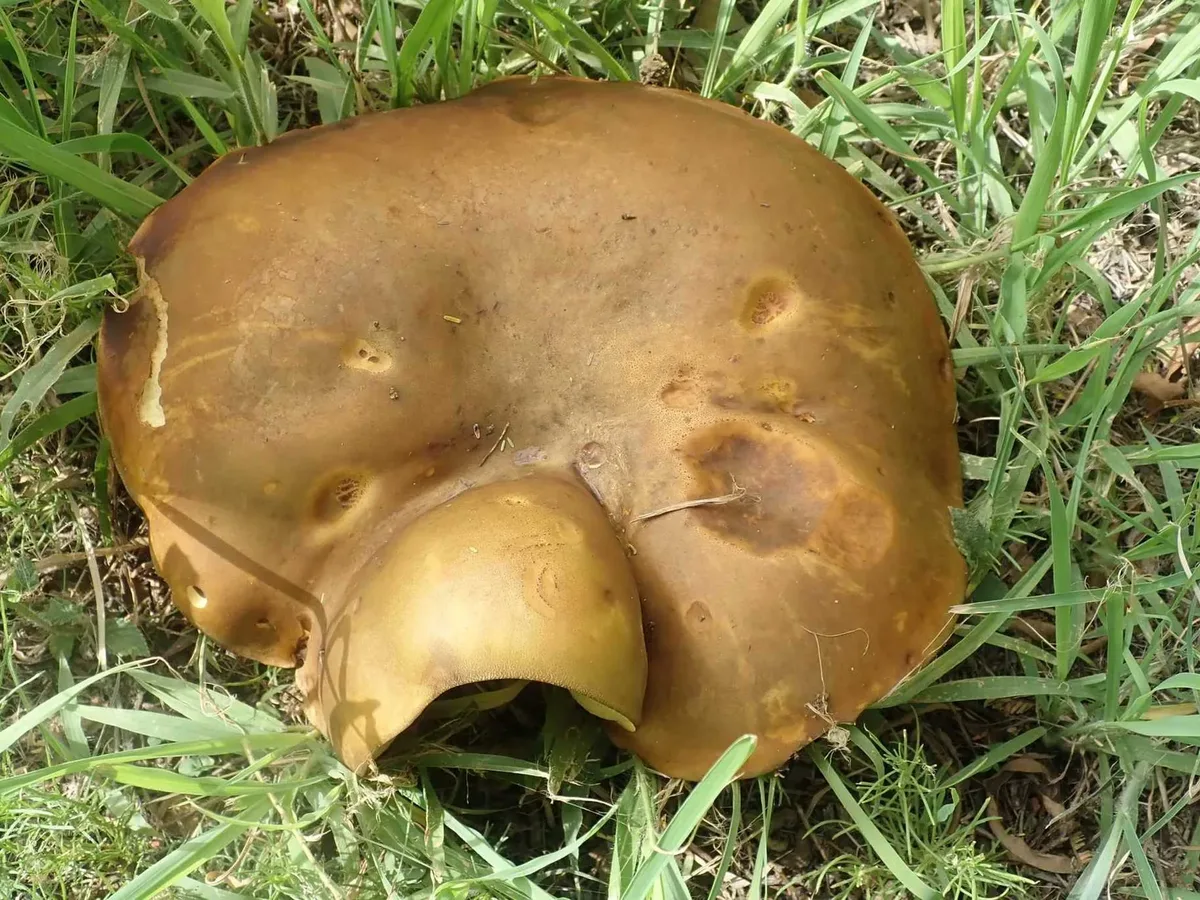
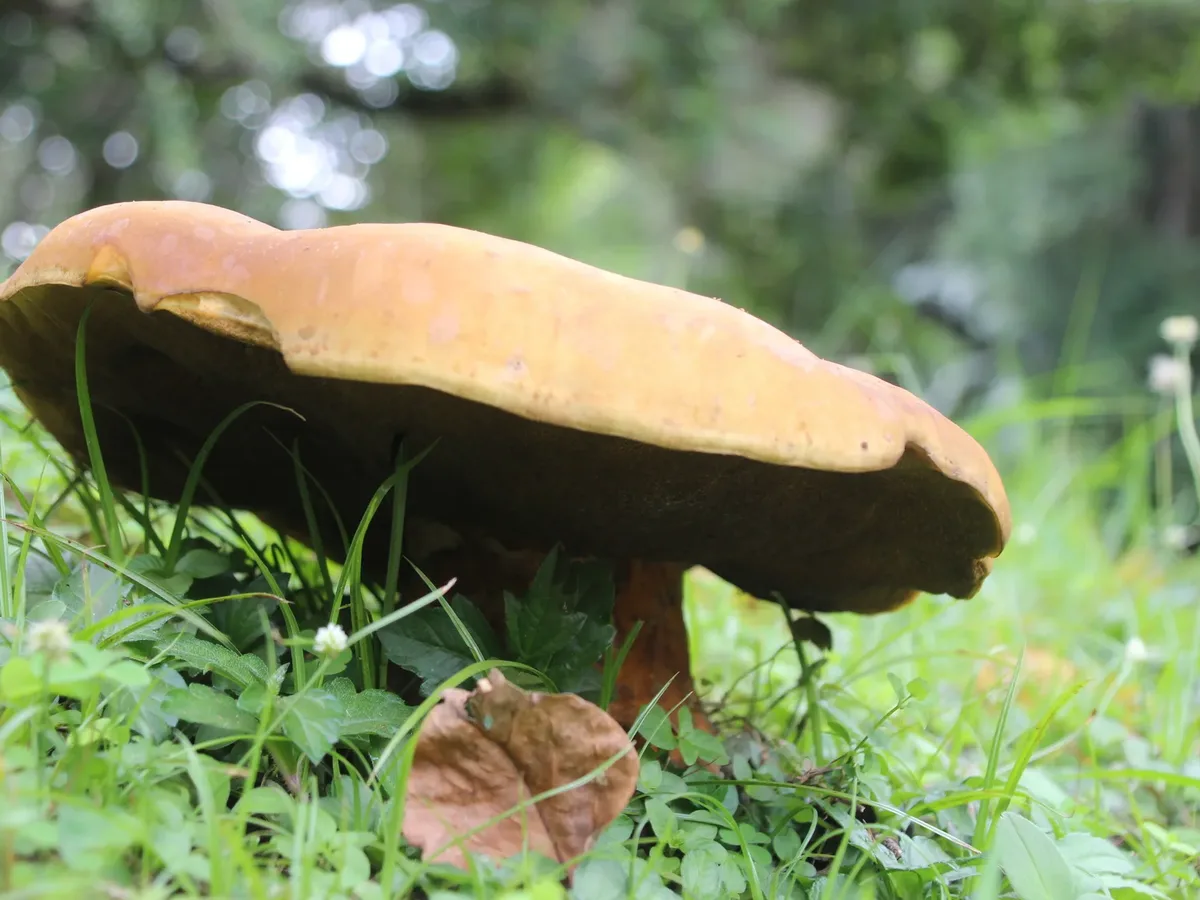
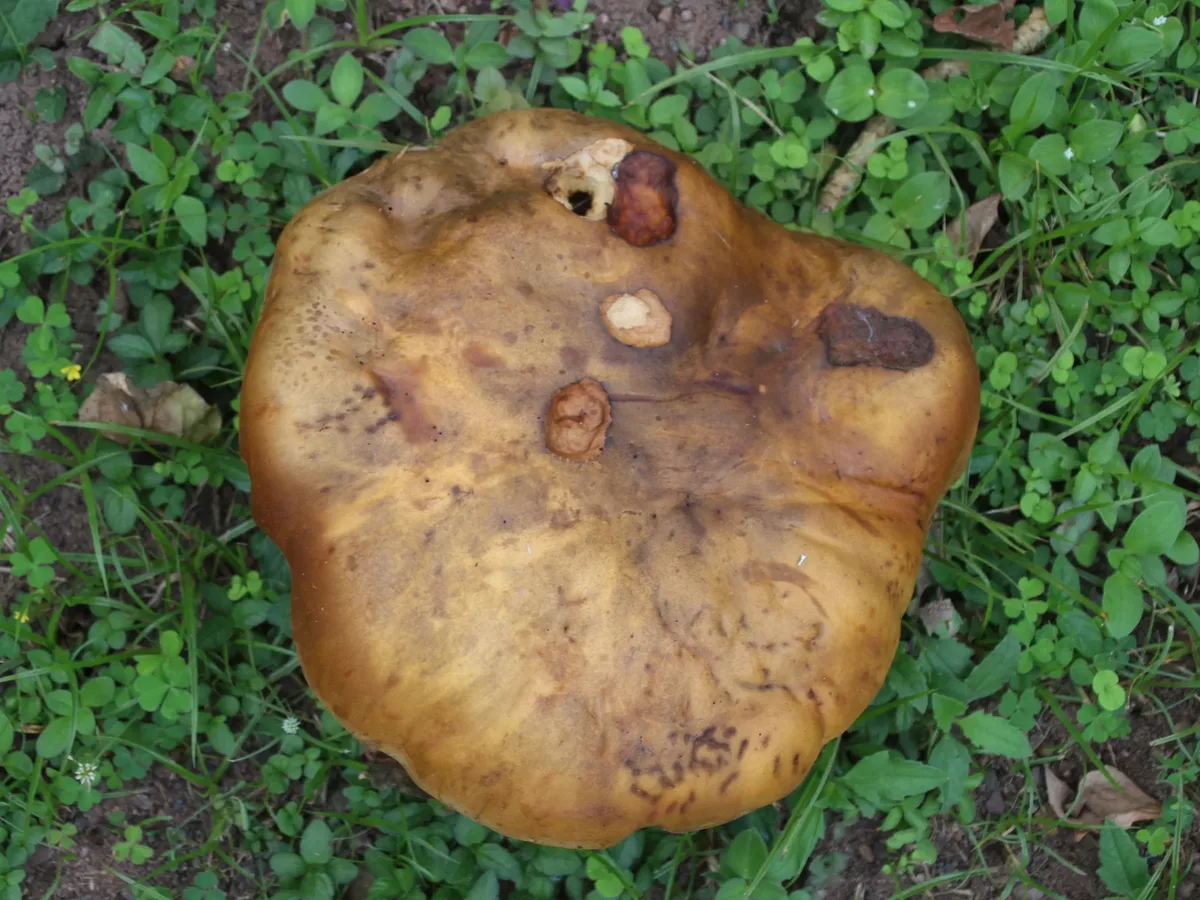
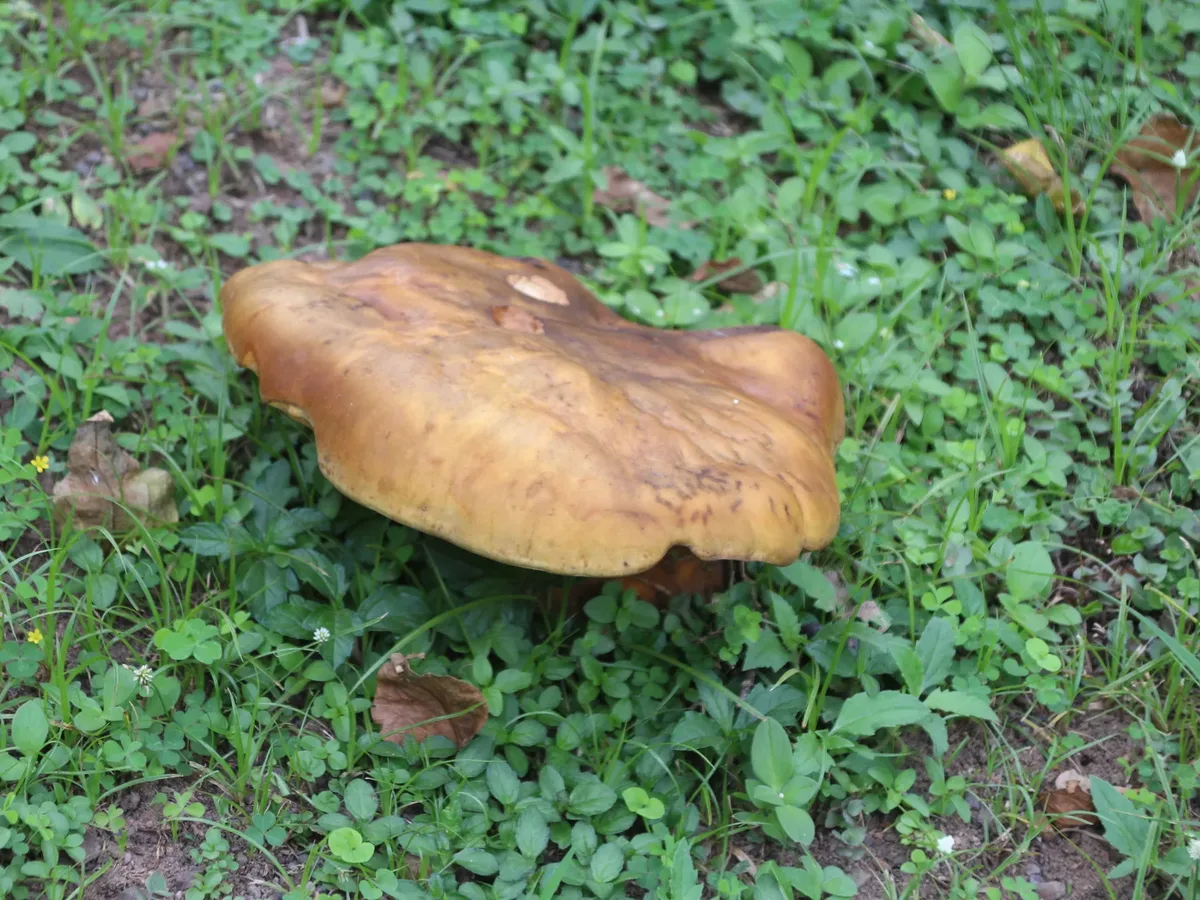
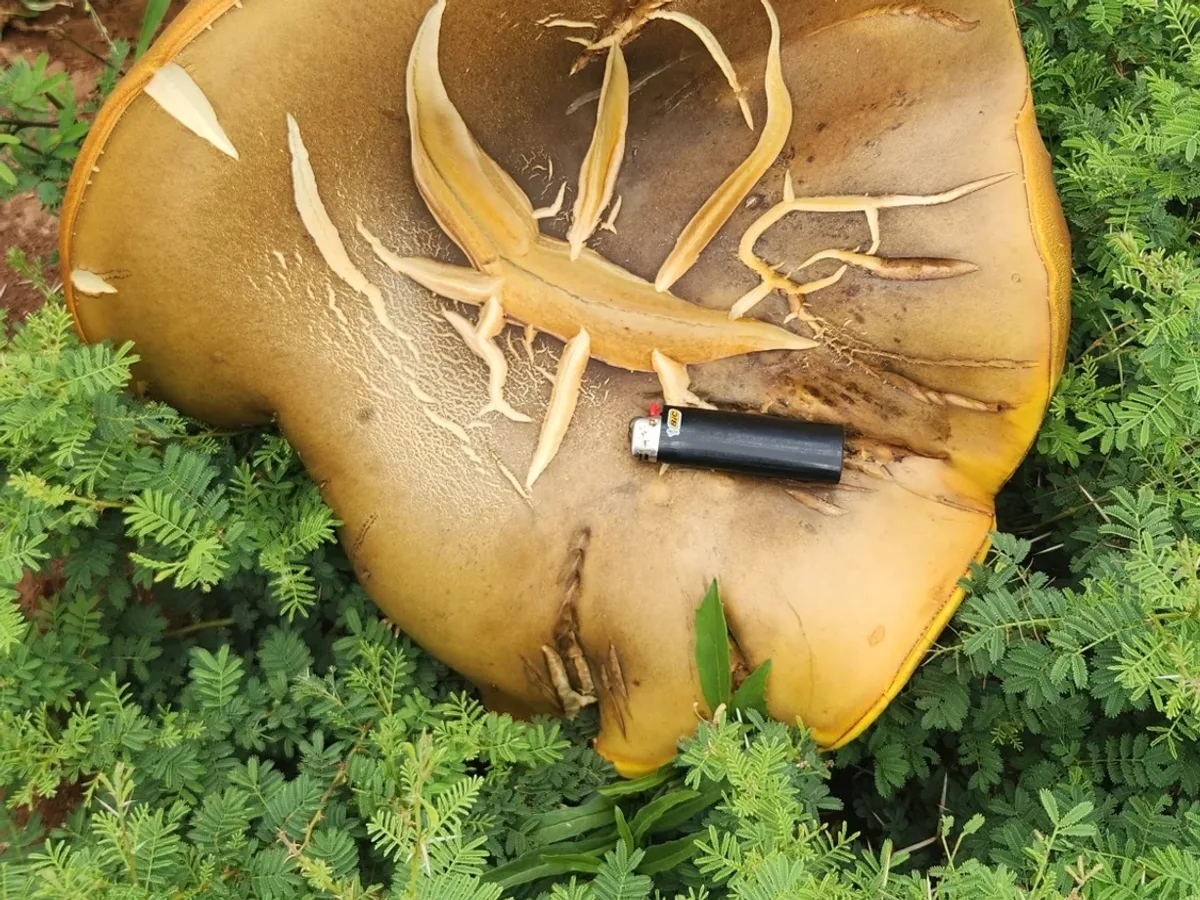
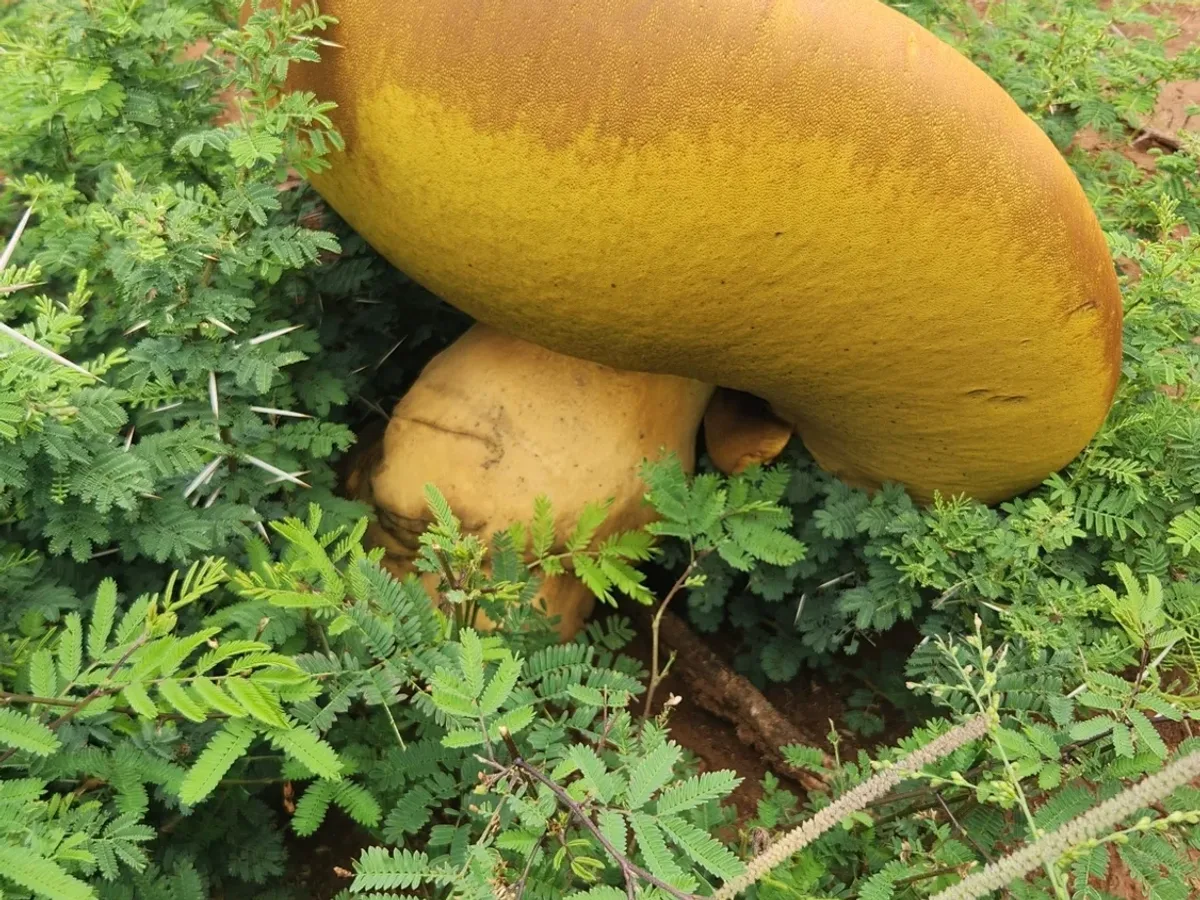
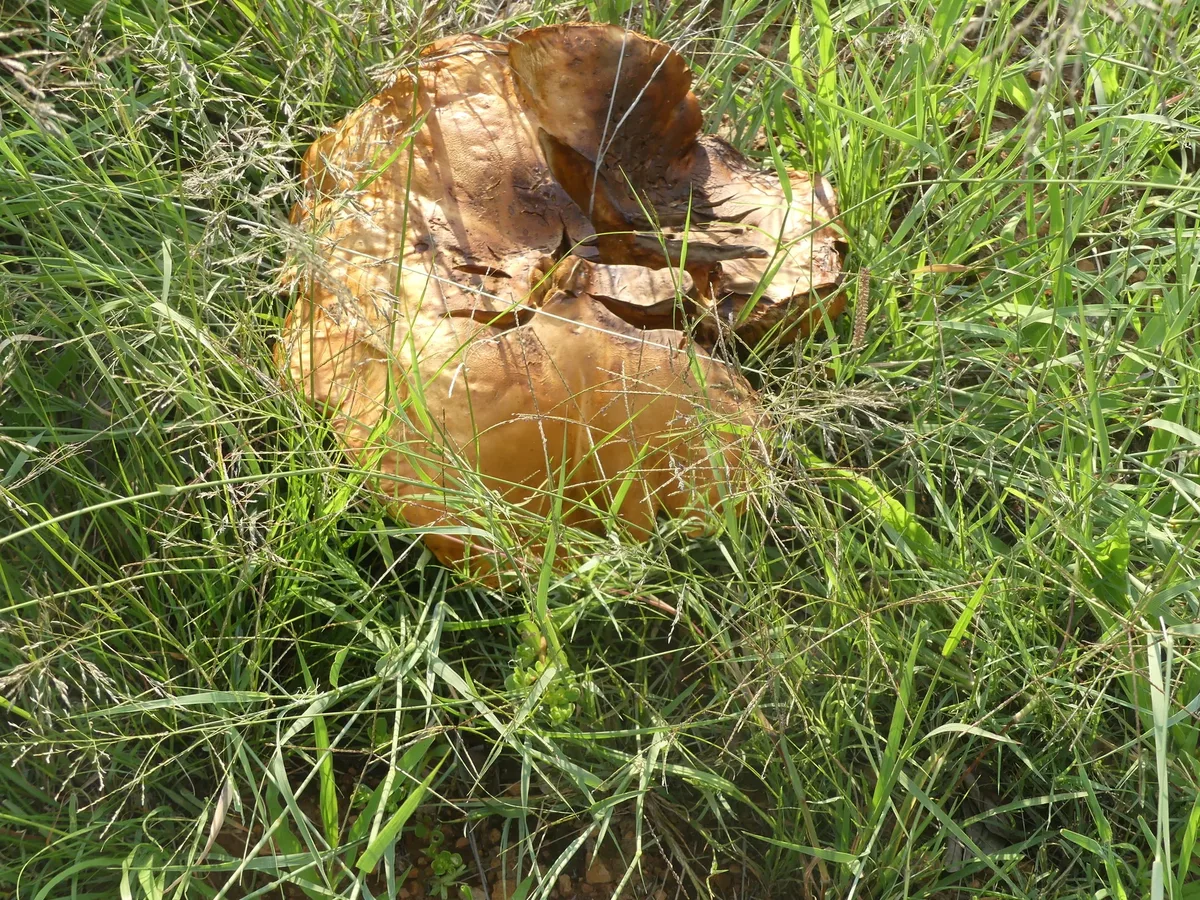
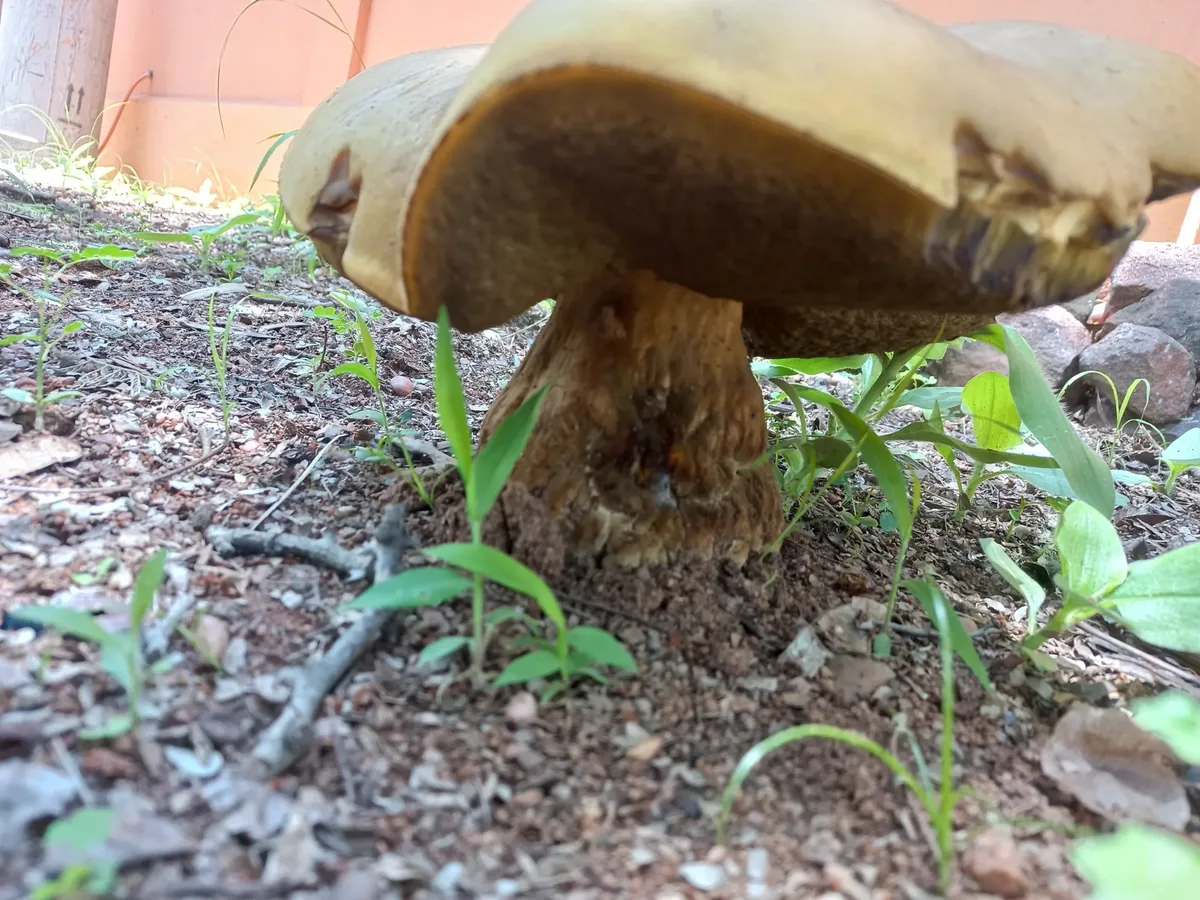
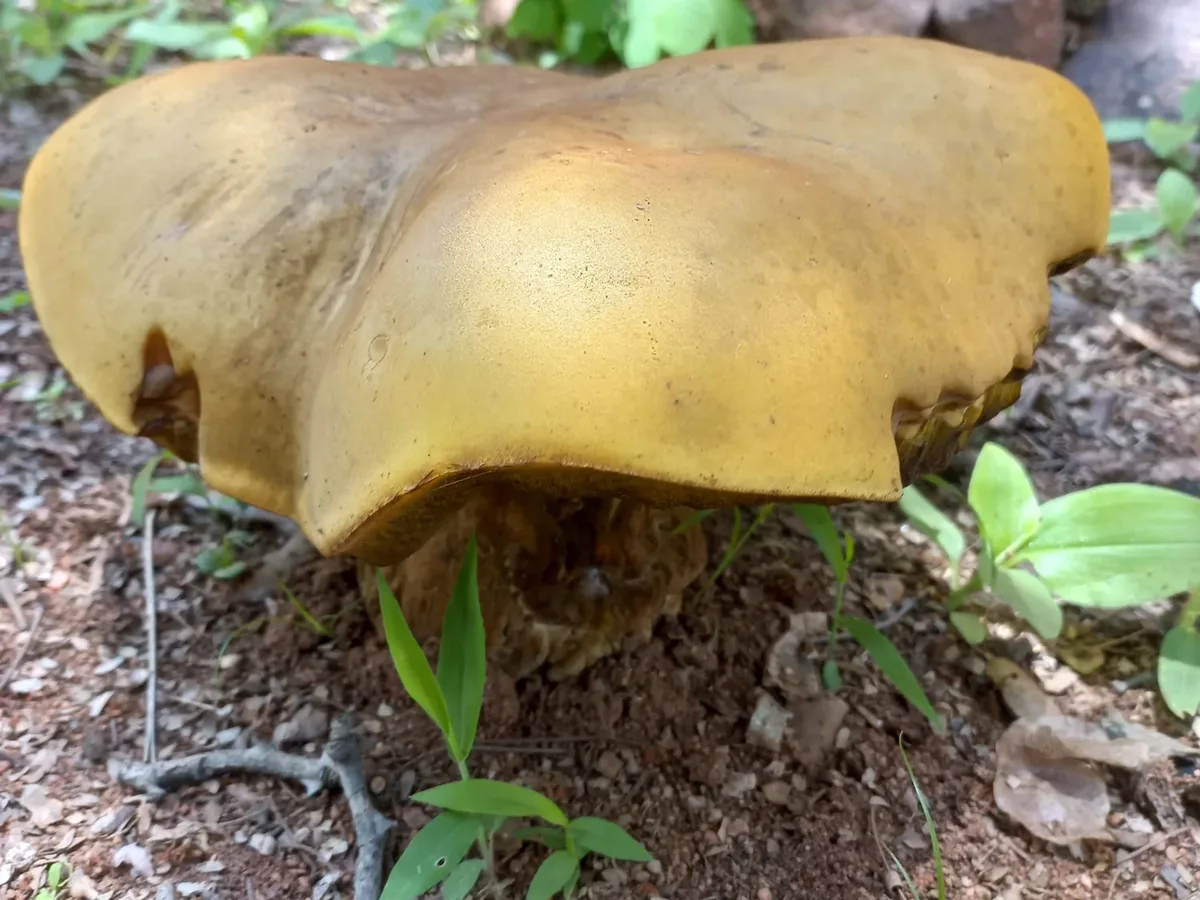
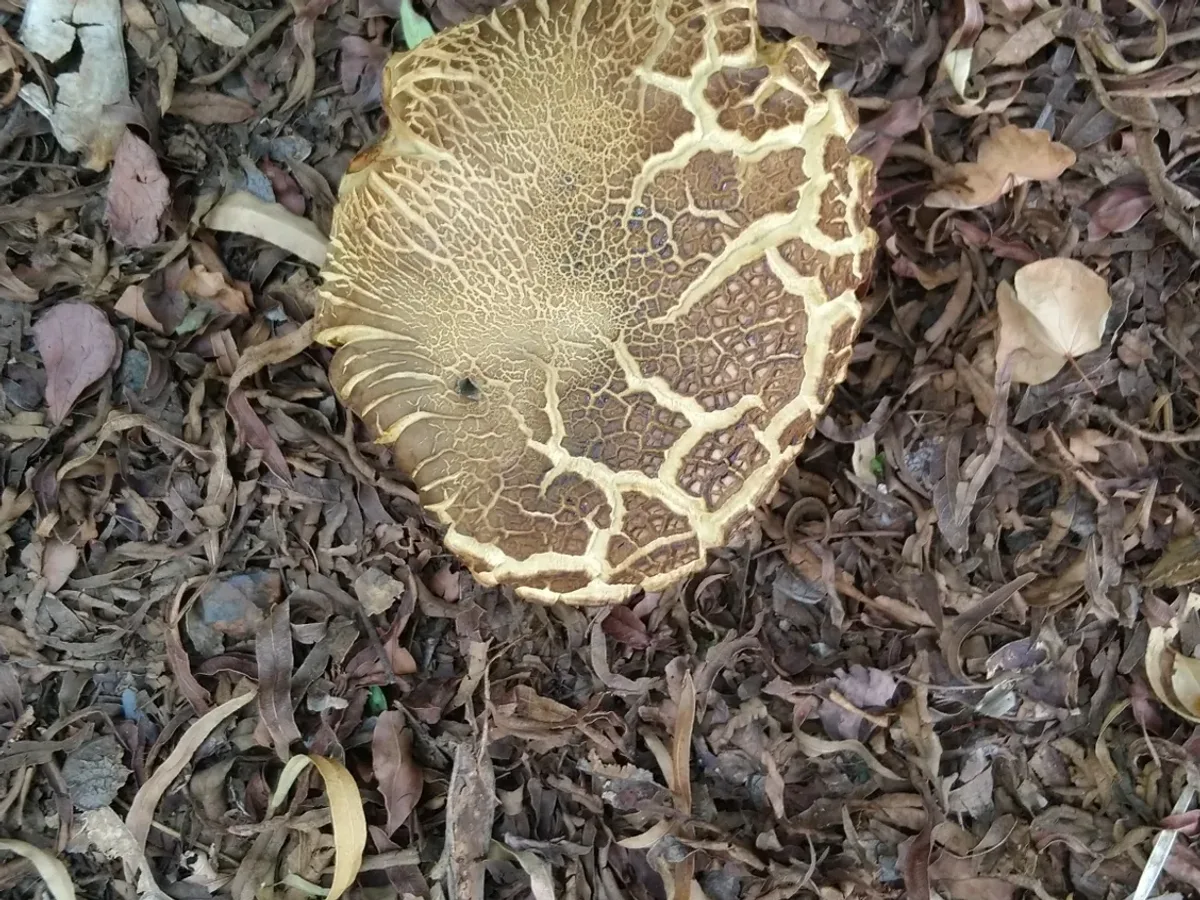
The cap typically measures 20-35 cm across - broad enough to span an adult's forearm - beginning as a neat convex dome before expanding and lobing outward into an irregular, wavy-edged disc.
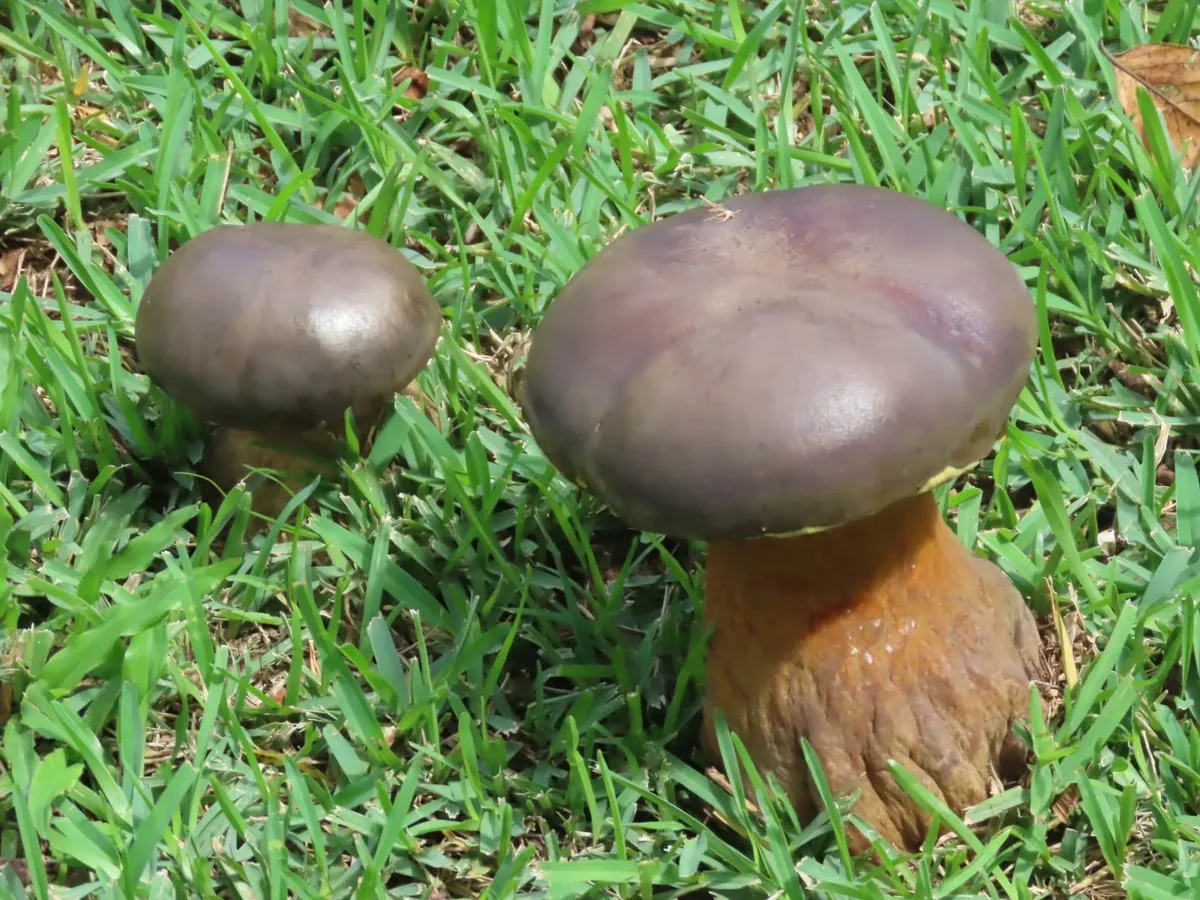
In youth the surface carries a fine, velvety down; as the fruiting body matures that tomentum wears away and the cap becomes smooth, sometimes slightly viscid after rain.
Colouration is richly layered: a dark chestnut-brown at the centre gradually diluting to olive-yellow or ochre-gold toward the undulating margin.
Gills / Pores
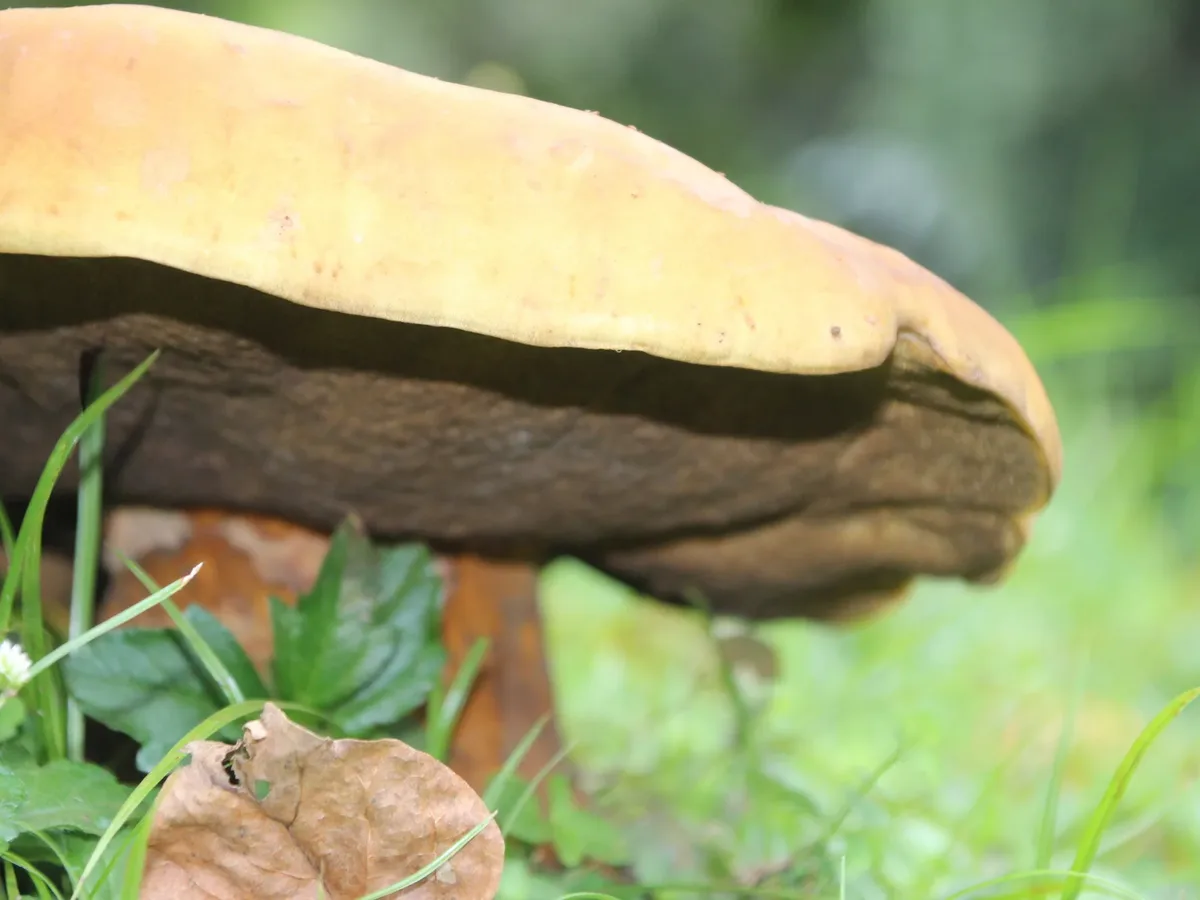
The pore surface underneath is one of the most reliable identification features: fine, densely packed tubes that produce a yellowish to pale-ochre pore face - never gills, always tubes, the defining bolete structure.
Pores do not blush, blue, or change colour when cut or bruised, which is worth noting when comparing with other large African boletes.
Stem
The stipe is thick, solid, and relatively short in proportion to the cap, often expanding slightly at the base. The flesh is pale yellow-white, firm in young specimens, softening and sometimes discolouring slightly with age.
There is no ring, no volva, and no partial veil remnant - the fruitbody is entirely smooth-stalked and unencumbered.
Where & when it grows
Habitat
Phlebopus sudanicus occupies a distinctive ecological niche: a mycorrhizal bolete that has adapted to disturbed and human-modified landscapes rather than pristine forest.
Its principal habitat is miombo woodland - the vast Brachystegia and Julbernardia-dominated savanna-woodland belt that stretches across central and eastern Africa. But unlike many mycorrhizal fungi that are tightly bound to undisturbed canopy trees, Phlebopus also thrives in plantations of introduced species: Acacia, Casuarina, and Citrus groves host it reliably across West, Central, and East Africa.
This flexibility may reflect the genus Phlebopus's unusually broad host range; some Phlebopus species globally have even been documented growing saprotrophically or facultatively, blurring the usual strict mycorrhizal boundary.
In practical terms, the mushroom appears in farmland margins, roadside Acacia belts, plantation edges, and secondary woodland regrowth - landscapes that human activity has created rather than erased.
Look for it in loose sandy or loamy soils with moderate leaf litter, typically under or near the drip-line of a potential host tree.
It is not a rainforest species; open-canopy, light-dappled terrain suits it best.
When
Fruiting is governed almost entirely by the tropical wet season, and the mushroom's calendar shifts considerably across the vast sub-Saharan range.
- Sahel and West Africa (Burkina Faso, Nigeria, and neighbouring countries): the rains arrive relatively late; the main flush runs from roughly November through February, collapsing as soils dry out.
- Central and eastern African miombo (DR Congo, Malawi, Burundi, Tanzania): the wet season begins earlier; the main flush typically spans November to March, occasionally stretching into April at higher elevations where moisture lingers.
The trigger is unmistakable: fruiting bodies push through the soil within two to five days of the first heavy downpours of the seasonal rains, often appearing in the same spots year after year as the underground mycelium - which has remained dormant through the dry months - responds rapidly to the combination of warmth and moisture.
This flush-after-rain pattern is typical of mycorrhizal boletes globally; what makes Phlebopus notable in the African context is the sheer reliability of the flush, which communities in Burkina Faso and Burundi have historically depended on.
Once the rains stabilise, successive flushes may appear every two to three weeks; as the dry season approaches and soil moisture drops, fruiting ceases entirely until the next year.
How it grows
Phlebopus sudanicus fruits singly or in loose, scattered groups of two to five individuals, never in tight clusters.
The fruiting bodies push upward from the mineral soil - not from wood, not from duff - with remarkable speed once the seasonal rains arrive.
A primordia (pin-stage fruitbody) can reach harvest size within three to five days under warm, humid conditions. The same hyphal network that waited out several dry months underground mobilises resources rapidly once soil moisture crosses a threshold.
The mycelium forms a broad, diffuse network around the roots of its host trees, and repeat fruiting in the same microsites over successive wet seasons is commonly observed, suggesting long-lived underground networks.
Older fruiting bodies in the late wet season can become very large and soft, and these over-mature specimens are best avoided both for quality and for safety reasons. Cap tissue that has begun to discolour, smell sour, or become waterlogged should not be collected.
Fruiting conditions
Fruits in the rainy season; flushes follow the onset of seasonal rains in tropical sub-Saharan woodland and plantations.
Handle with care
Toxin
No specific toxin compound has been isolated or named for Phlebopus sudanicus. The raw flesh is toxic, but the causative agents are not characterised beyond being heat-labile (destroyed by boiling or thorough drying).
This is consistent with a class of unidentified thermolabile irritants rather than a classical mycotoxin such as amatoxin, orellanine, or muscarine.
The toxicity appears to be dose-dependent and related to specimen age. Fresh young mushrooms that are boiled are well tolerated; old, soft, or decomposing specimens and raw consumption are the consistent risk factors across reported cases.
Some accounts attribute ill effects to overconsumption rather than inherent poison - large quantities even of properly prepared Phlebopus may exceed an individual's capacity to digest the dense fungal tissue and polysaccharides.
The current scientific literature does not support classifying Phlebopus sudanicus as a true poisonous species in the same category as Amanita phalloides. It is better understood as a conditionally edible species requiring mandatory preparation.
Symptoms
Consumption of raw or improperly prepared Phlebopus sudanicus, or of over-mature specimens, typically produces gastrointestinal symptoms:
- nausea
- vomiting
- cramping abdominal pain
- diarrhoea
Onset is generally within one to three hours of ingestion, consistent with a gastrointestinal irritant rather than a nephrotoxic or hepatotoxic agent (which would have delayed onset of 6-24 hours or longer).
Symptoms are self-limiting in most cases and resolve within 12-24 hours with supportive care (rest, rehydration). No neurological, hepatic, or renal sequelae have been documented in the literature.
Overconsumption of correctly prepared specimens may produce milder digestive discomfort without the acute vomiting pattern.
If symptoms are severe or prolonged, seek medical attention and provide information about the species and the preparation method used.
Look-alikes
Two taxa are noted alongside Phlebopus sudanicus in the foraging literature of sub-Saharan Africa.
Boletus edulis (cep / king bolete) is a celebrated edible also collected and eaten in Nigeria by the Gbagyi people, and is sometimes grouped with Phlebopus in discussions of African bolete use. It can be distinguished by:
- a pale beige to tan cap (lacking the olive-yellow tone of Phlebopus)
- distinctive white reticulation (network pattern) on the upper stipe
- a paler cream-white pore surface, especially when young
- a thicker, club-shaped stipe with a wider base
Afroboletus luteolus (formerly grouped with Phlebopus) is a closely related African bolete; the two species share a tubular pore surface and a broadly similar yellow-olive palette.
Authoritative differentiation requires microscopy or genetic analysis, but Afroboletus luteolus is typically smaller, with a more uniformly yellow cap lacking the dark brown central disc of Phlebopus sudanicus.
In practical field use, both lookalikes are boletes (pored, not gilled, no ring, no volva) and neither is deadly; the hazard in this genus is not mistaken identity with a lethal species but rather improper preparation of Phlebopus itself.
The bolete pore structure - dense tubes, no gills - rules out the few deadly amanitas of the region, which always have gills, a ring, and a volva.
Why it matters
Not deadly. Phlebopus sudanicus causes gastrointestinal illness when eaten raw or improperly prepared, but no fatalities are attributed to it in the scientific or ethnomycological literature.
The hazard is eliminated by thorough boiling (discard the cooking water) or by complete drying before cooking. Neither step should be omitted or shortened.
Old or soft specimens carry higher risk and should not be collected.
The species does not resemble any deadly amanita (which would have gills, a ring, and a basal volva); the lookalikes in the same bolete group are also non-deadly.
The primary danger is complacency about preparation - this mushroom is widely and safely eaten across sub-Saharan Africa by communities that apply the correct preparation method consistently.
A related African bolete grouped with Phlebopus under the African boletes.
Another bolete cited in the same group; eaten by the Gbagyi people in Nigeria.
In the kitchen
Picking & cleaning
Harvest only young to mid-stage specimens: a firm, convex or just-opening cap with a dense pore surface and solid stipe flesh are the marks of a collectible fruiting body.
Press the cap gently - it should spring back; a cap that remains dented is too soft and is best left.
Cut the stipe cleanly at ground level rather than pulling, to preserve the mycelium and host-root interface, and to avoid bringing excess soil into the basket.
Because raw Phlebopus is toxic, field hygiene matters:
- keep collected mushrooms separate from food
- wash hands after handling
- process on the same day if possible
The flesh deteriorates rapidly in tropical heat, so transport in an aerated container (a cloth bag or open basket, never sealed plastic) and refrigerate or begin processing within a few hours.
Discard any specimens that smell sour, fermented, or off - that odour signals breakdown products that persist even through thorough cooking.
Regional practice in DR Congo and Malawi points to the importance of not skipping the boiling or drying step under any circumstances; partial preparation is not safe preparation.
Cooking
After the essential boiling or drying step, Phlebopus sudanicus becomes a versatile and substantial ingredient.
The flesh is dense and meaty - its common Burkinabe name, la viande des Bobos (the Bobo people's meat), directly reflects its role as a protein-rich, filling food in communities where animal protein is scarce.
After boiling in salted water (discard the water), the flesh can be sliced and fried in oil until golden and slightly crisped at the edges, which develops a rich, savoury flavour.
It absorbs surrounding flavours well and performs excellently in long-cooked stews with tomato, onion, and chilli, holding its texture better than many delicate European boletes.
Dried Phlebopus can be reconstituted in hot water before cooking. The soaking water - unlike that of dried porcini used in European cooking - should be discarded rather than added to the dish, as it may carry residual problematic compounds.
The cap flesh is preferable to the stipe, which can be tougher and slightly more fibrous.
Do not add raw Phlebopus directly to a slow cooker or soup that is merely simmering; a proper rolling boil in a separate pot is required first.
Seasoning is straightforward: the mushroom's own earthy, slightly nutty flavour pairs well with bold spice profiles common to West and Central African cuisines.
Good to know
Phlebopus sudanicus is classed as a caution species: it is edible after correct preparation, but raw or improperly prepared specimens cause gastrointestinal toxicity.
The toxicity is not attributed to a named or isolated compound - it is believed to result from heat-labile factors present in the raw flesh, compounded by consumption of over-mature specimens and by individual sensitivity.
Two preparation methods have been validated by long-standing regional practice, and both are acceptable:
- 1Boiling (the standard in DR Congo) - done in ample water, which is discarded after cooking; the mushroom is then used in subsequent cooking steps.
- 2Thorough drying before cooking (the standard in Malawi) - reduce moisture content to the point where the flesh is brittle or leather-hard.
Neither method should be abbreviated. The mushroom must never be consumed raw, lightly heated, or marinated without prior thermal treatment.
Individuals new to this species should begin with small quantities even after correct preparation, as overconsumption is a separate reported cause of ill effects.
The species is not considered deadly and fatalities are not documented in the literature, but gastrointestinal illness can be severe enough to require medical attention.
A reference guide - never an edibility guarantee. When in doubt, leave it out.