Black bolete
Phlebopus portentosussyn. Boletus portentosus, Gyroporus portentosus, Phlebopus colossus
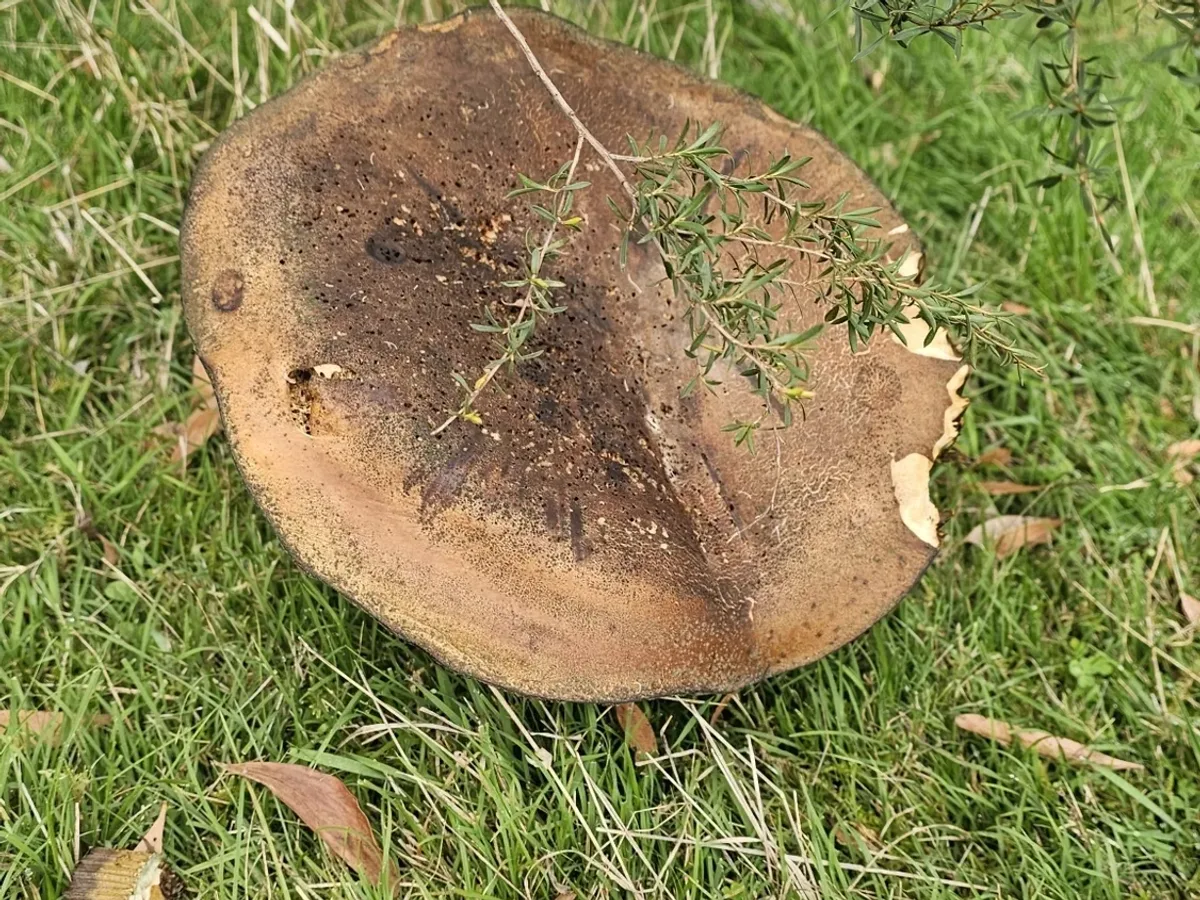 Atlas of Living Australia (CC0)
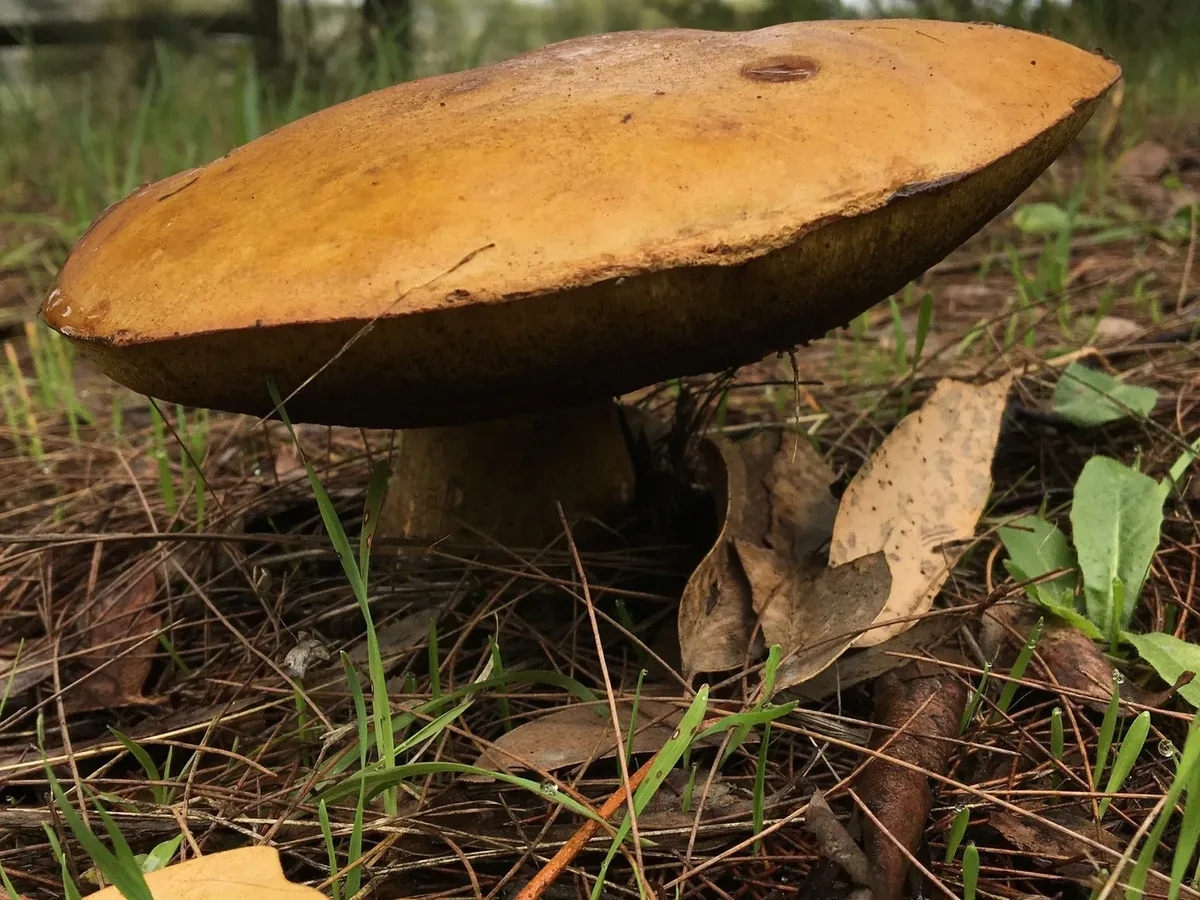 Atlas of Living Australia (CC0)
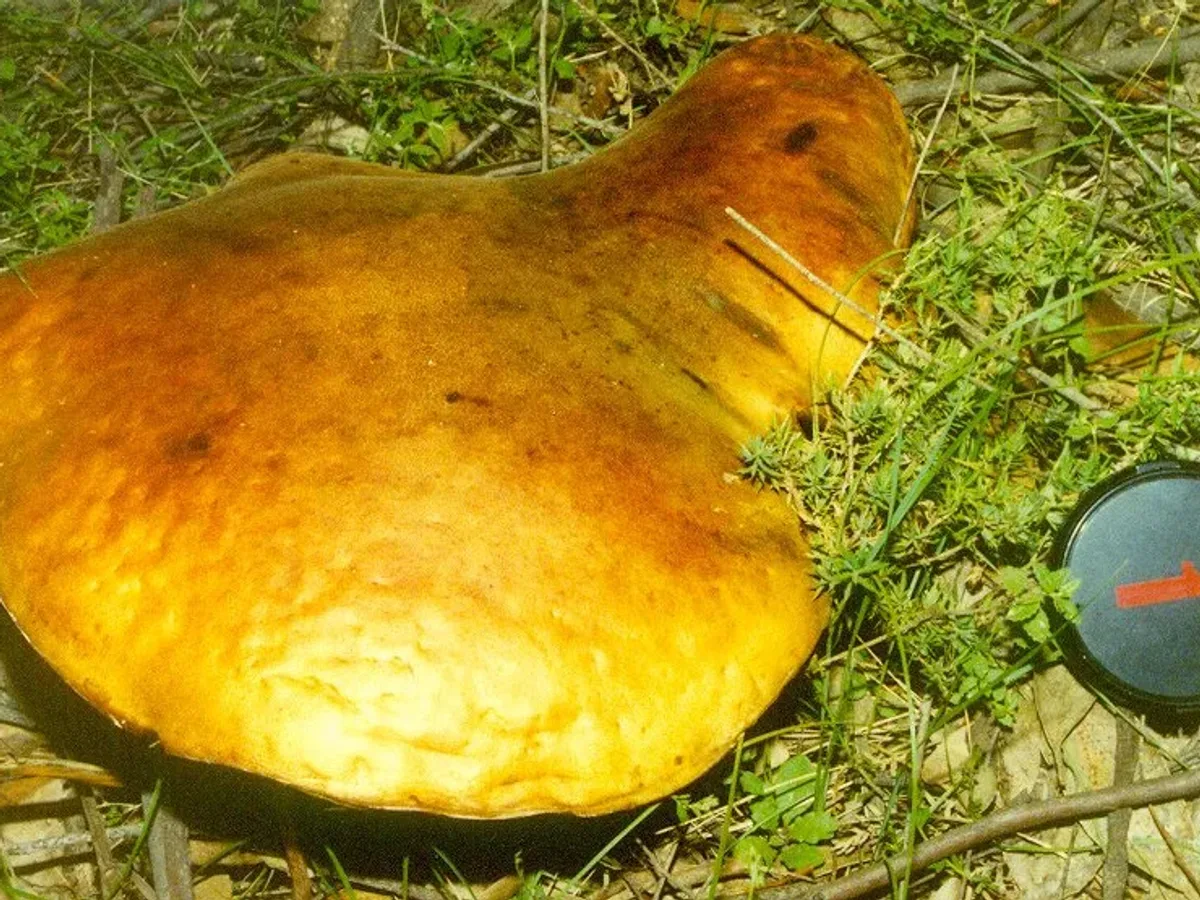 Cas Liber (Public domain)
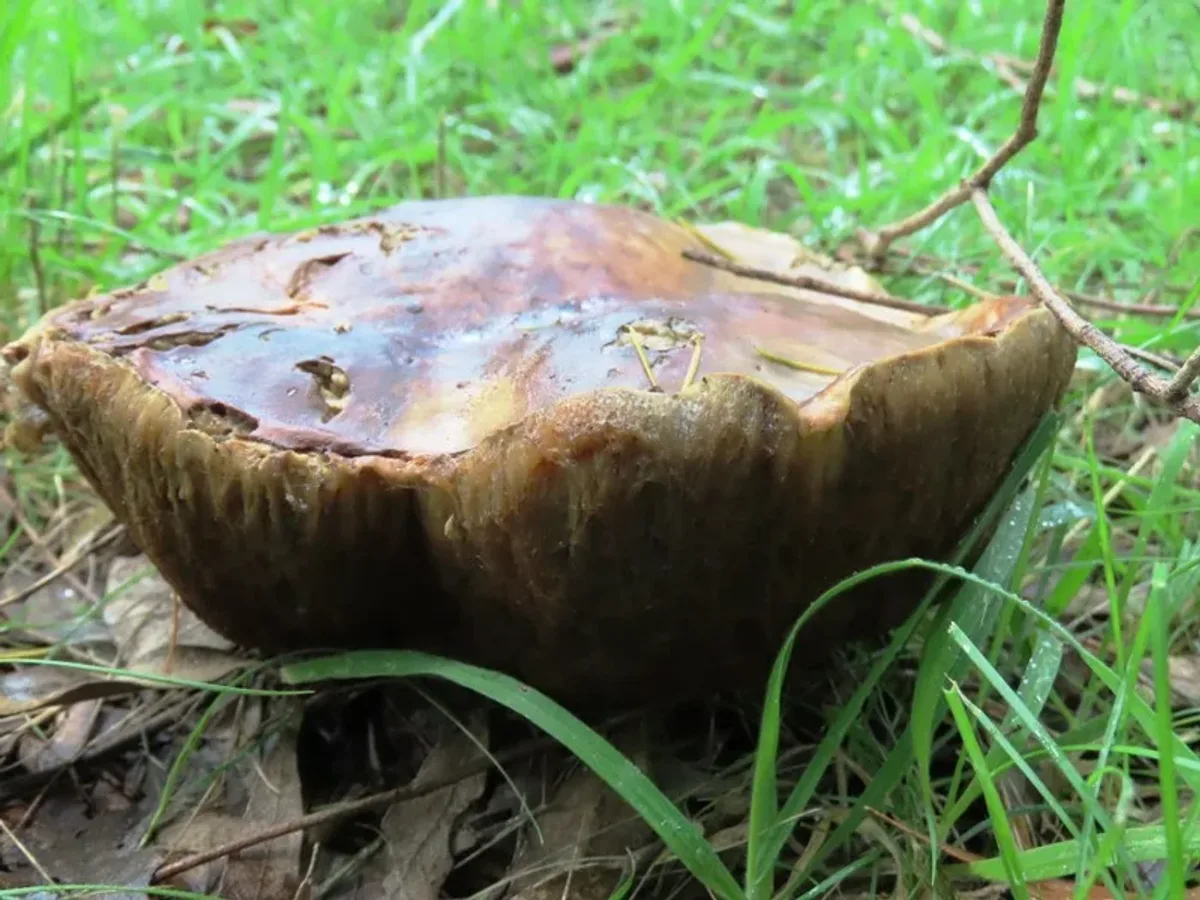 Atlas of Living Australia (CC0)
 Atlas of Living Australia (CC0)Atlas of Living Australia (CC0)Atlas of Living Australia (CC0)
One of the best mushrooms you can bring home - once you are certain of the identification.
How to recognise it
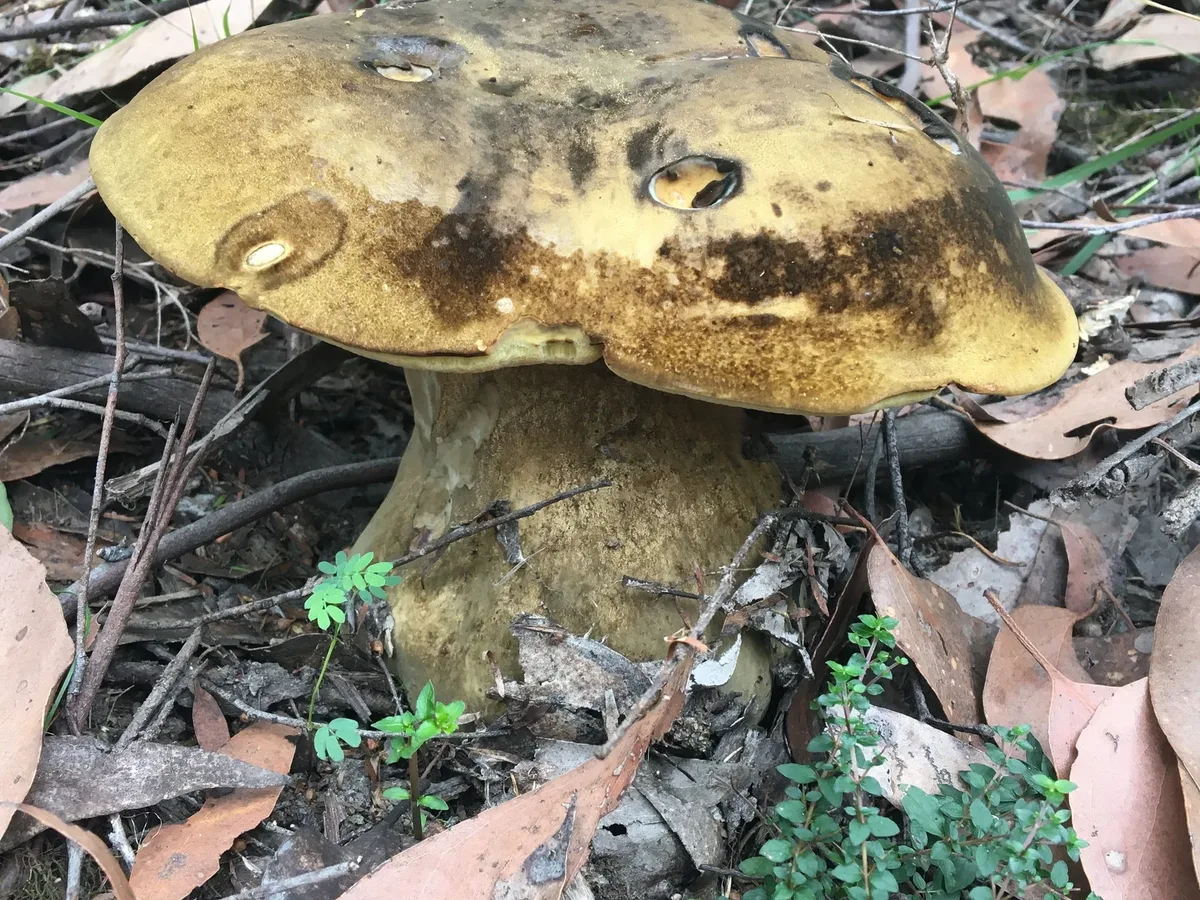
Phlebopus portentosus is one of the largest boletes in tropical Asia, with caps frequently 15-30 cm across and occasionally exceeding 40 cm.
Cap
When young the cap is broadly convex, dark brown to blackish-brown (sometimes olive-tinged), dry to slightly tacky; older caps flatten and may crack in dry weather.
Gills / Pores
The pore surface is lemon-yellow to pale yellow and does not blush dramatically when pressed or cut - the absence of strong rapid blueing is an important distinction from the dangerous blueing boletes of the genus Lanmaoa sold nearby at markets.
Stem
The stem is thick, firm, and often stout-bulbous at the base; its upper surface is clearly reticulate (forming a raised net pattern), which is a key identification character.
Flesh
The flesh is pale cream-yellow, firm and dense when young, with only weak, slow, inconsistent blueing when cut or absent entirely.
The spore print is olive-brown to yellowish-brown.
Where & when it grows
Habitat
Unlike most boletes, Phlebopus portentosus thrives in disturbed environments:
- roadsides
- rubber plantations (Hevea brasiliensis)
- teak stands
- bamboo groves
- gardens
- secondary forest edges
It is distributed across mainland Southeast Asia (Thailand, Laos, Vietnam, Myanmar, Cambodia), the Malay Peninsula, parts of Indonesia, southwestern China (Yunnan, Guangxi), and extending into northeastern India.
It appears to be saprotrophic or weakly associated with tree roots rather than strictly ectomycorrhizal, which explains why it can tolerate disturbed soils and has been successfully cultivated - an extraordinary trait among large forest boletes.
Look for it fruiting from rich humus, decaying wood chips, or near tree bases in shaded plantation settings.
When
The fruiting season follows the monsoon in mainland Southeast Asia: expect the first fruiting bodies from May or June, peaking through July and August at the height of the rains, then tapering off in September-October.
In Yunnan the window broadly tracks the summer rains (June-September).
Unlike temperate boletes, which wait for cool autumn soils, Phlebopus portentosus is triggered by soil moisture - a good downpour is the cue, not a drop in temperature.
Once triggered, fruiting bodies push up quickly and reach full size within two to four days, which is part of what makes it so rewarding to find after heavy rain.
How it grows
Phlebopus portentosus is unusual among boletes: it appears to be saprotrophic (decomposing organic matter) rather than strictly ectomycorrhizal.
This has allowed researchers - particularly in Thailand, where it is highly commercially valued - to cultivate it on artificial substrates such as:
- sawdust blocks
- rice straw
- wood chips
Cultivation trials by Thai academic institutions have achieved reliable fruiting on sawdust inoculated with mycelial culture.
In the wild it grows singly or in small clusters, often reappearing in the same location over multiple seasons.
The large fruiting bodies emerge quickly after rain and deteriorate fast in heat; they are best picked at the button-to-half-open stage.
Fruiting conditions
Fruiting is driven by monsoon rainfall in tropical/subtropical lowland habitat. Soil temperatures remain high year-round in range; the key trigger is cumulative rainfall rather than temperature drop. Fruiting bodies emerge 3-7 days after significant rainfall events (>40 mm over 14 days) and grow rapidly to full size within 2-4 days.
Look-alikes
Several dark-capped boletes share the same tropical habitats and market stalls.
The most important confusion is with blueing boletes in the Lanmaoa/Neoboletus group (sold as 'jian shou qing' in Yunnan markets) - these blue dramatically and rapidly when cut (flesh turning indigo within seconds), which Phlebopus portentosus does not do (any blueing is slow and faint).
In Thailand, confusion with Porphyrellus porphyrosporus and similar dark pore-bearing boletes is possible, but these are much smaller.
The reticulate stem and consistently large size help confirm P. portentosus.
No deadly species are reliably confused with it in its natural range. Still, as with any large bolete, attention is essential to:
- pore colour (not gills)
- stem reticulation
- the absence of a volva
Lanmaoa asiatica and related blueing boletes blue rapidly and dramatically (flesh turns deep indigo within seconds of cutting). Phlebopus portentosus shows only faint, slow, or no blueing. The pore surface of Lanmaoa is also often more intensely yellow to blood-red near the stem. When in doubt at a market, cut a sliver and wait 30 seconds - deep indigo means a blueing bolete requiring thorough cooking.
A smaller dark-capped bolete with purple-grey to dark brown pores (not yellow) and a non-reticulate stem. Considered inedible but not definitively toxic. Much smaller than a mature Phlebopus portentosus.
Red-pored boletes (Rubroboletus, Suillellus) have orange-red to blood-red pore surfaces and blue intensely. Phlebopus portentosus has pale lemon-yellow pores and does not blue dramatically. Never collect any large bolete with red pores.
In the kitchen
Picking & cleaning
Harvest when the cap is still convex to flat and the pores are tight and lemon-yellow - at this stage the flesh is firm and flavour is best.
Cut or twist cleanly from the substrate; check the stem base for insect infestation (large caps are frequently tunnelled by beetle larvae). The dark cap and pale pore surface should be obvious.
Do not collect in conditions of poor light without being certain of the pore colour and reticulate stem; superficially similar dark-capped boletes occur in the same habitat.
In Thailand, Phlebopus portentosus is sold extensively at fresh markets (Chiang Mai, Chiang Rai, Bangkok wholesale markets) and commands a premium price.
Trim away any soft or larva-damaged flesh on site. The mushroom deteriorates rapidly in tropical heat; process or refrigerate within hours.
Cooking
Phlebopus portentosus has a rich, meaty flavour and firm texture that holds up well to heat.
In Thailand it is commonly prepared:
- sliced and stir-fried with garlic, oyster sauce, and chili (pad het thop)
- grilled over charcoal
- added to tom kha (coconut galangal soup)
- battered and deep-fried
The dense flesh suits slow-cooked curries and stews. In Yunnan it is stir-fried with chili and Sichuan pepper or added to broth.
It dries well - sliced and dried in the sun or dehydrated, it reconstitutes with good flavour and is sold in dried form at regional markets.
Always cook thoroughly before eating.
Good to know
Phlebopus portentosus has a long history of safe consumption in Thailand, Laos, Vietnam, and Yunnan. There are no confirmed reports of poisoning from correctly identified, properly cooked specimens.
As with all wild boletes, thorough cooking is strongly advised - consuming raw or undercooked large boletes can cause gastrointestinal irritation in some individuals regardless of species.
Market buyers should inspect that:
- pores are pale yellow (not red or orange)
- the flesh does not blue rapidly
- the specimen is fresh (not over-mature or larva-ridden)
Avoid collecting any bolete with red pores, which indicates the presence of potentially toxic species such as Rubroboletus or Suillellus.
A reference guide - never an edibility guarantee. When in doubt, leave it out.