Phlebopus beniensis
Phlebopus beniensissyn. Phaeogyroporus beniensis
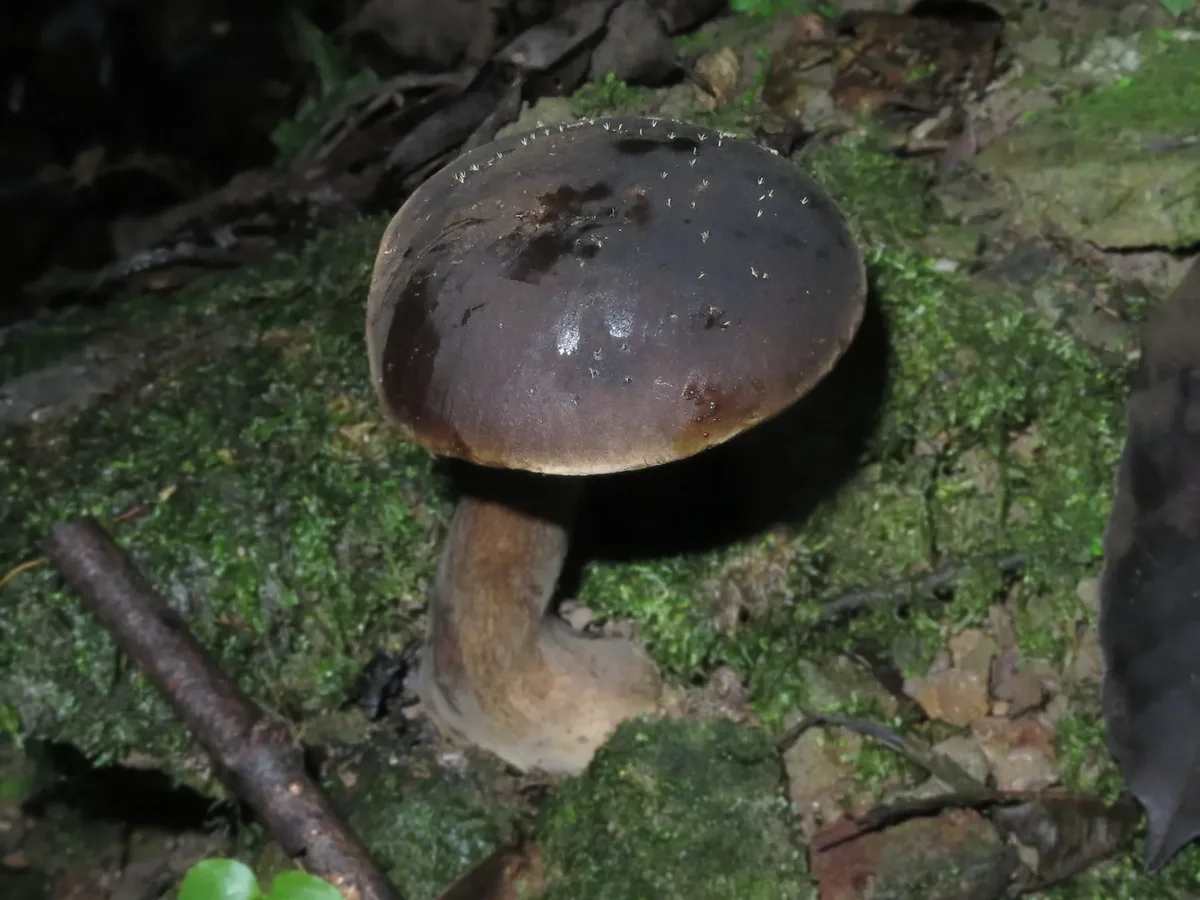 © Teodoro Chivatá Bedoya (CC BY)
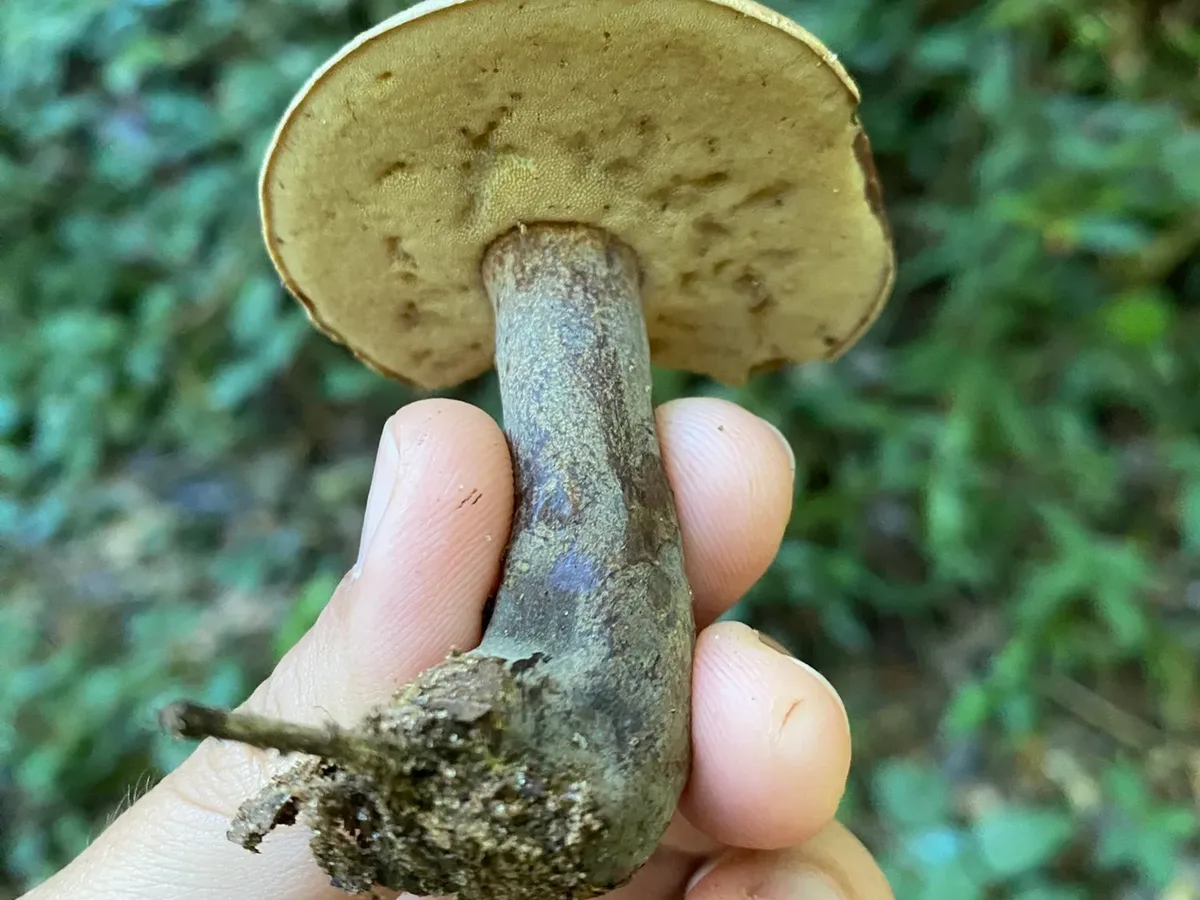 Julia Ariadna (CC0)
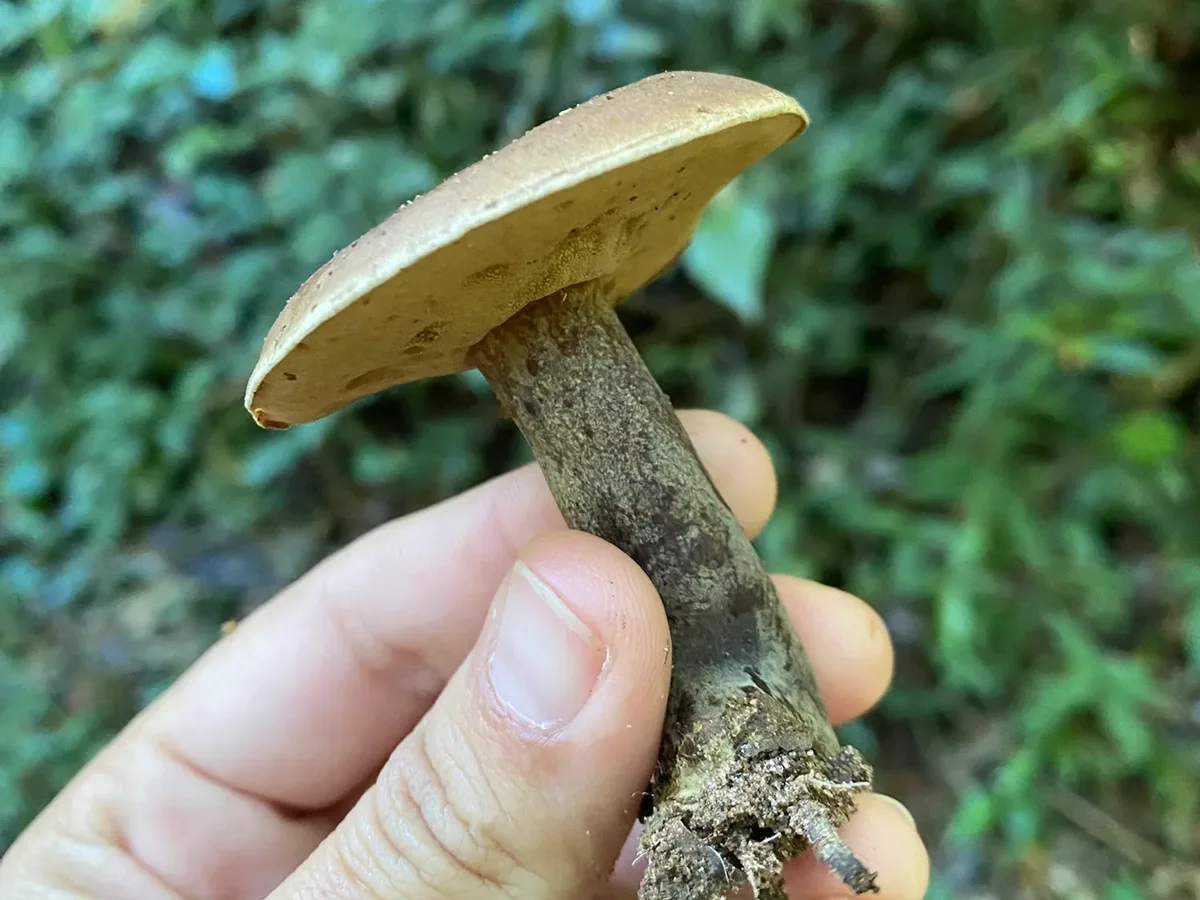 Julia Ariadna (CC0)
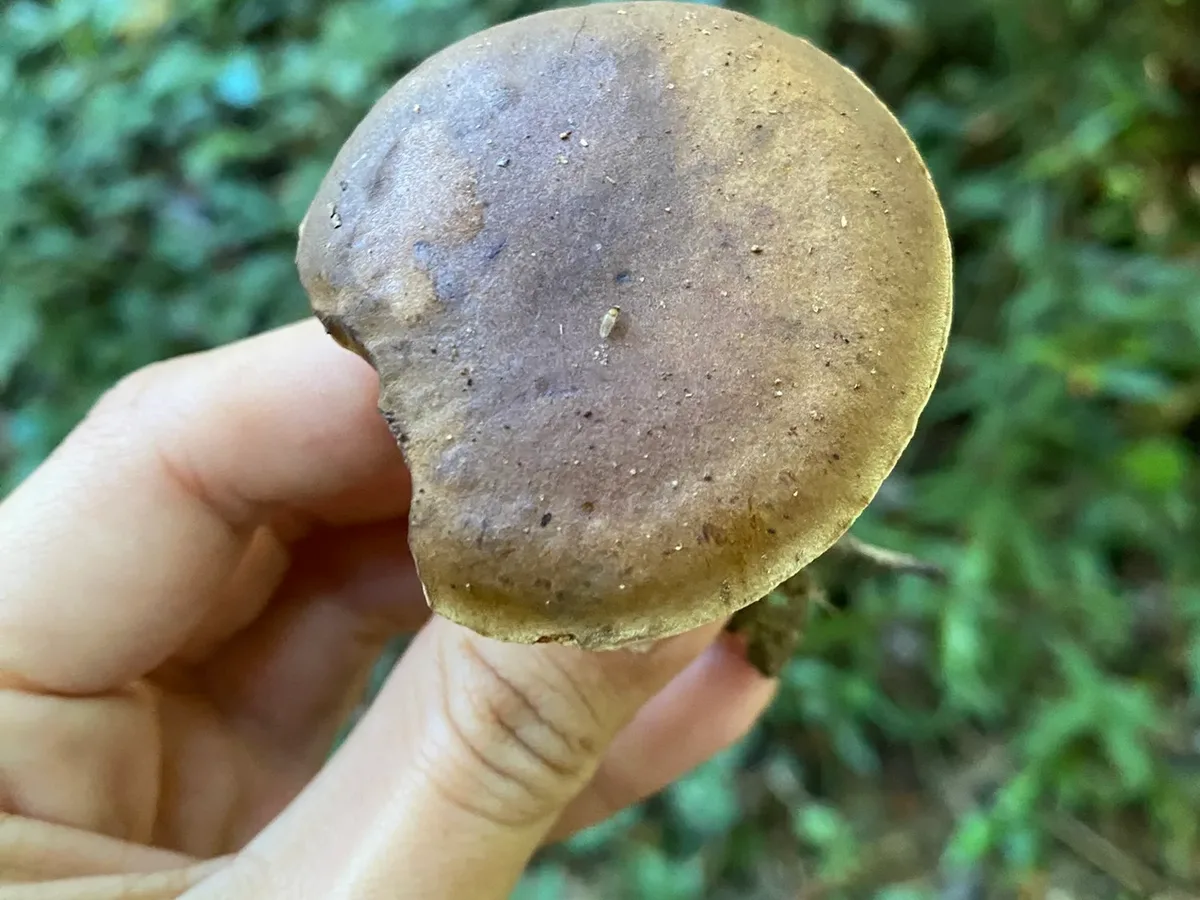 Julia Ariadna (CC0)
 © Teodoro Chivatá Bedoya (CC BY)
 © Teodoro Chivatá Bedoya (CC BY)© Teodoro Chivatá Bedoya (CC BY)Julia Ariadna (CC0)
Edible only with the right preparation - or safe for some people but not others. Learn the caveats first.
Never eat a mushroom you are not 100% sure of - check the look-alikes below, and always cook wild mushrooms.
How to recognise it
Phlebopus beniensis is a medium to large bolete with the solid, substantial build that defines the genus.
Cap
The cap starts broadly convex in youth and expands to flat or shallowly depressed in old age, reaching 8-25 cm across - a generous size even for a robust bolete.
The surface is dry to slightly moist, finely downy when young and smoothing somewhat with age, coloured a warm tawny-brown to dark chestnut, a palette shared by many of its relatives.
Gills / Pores
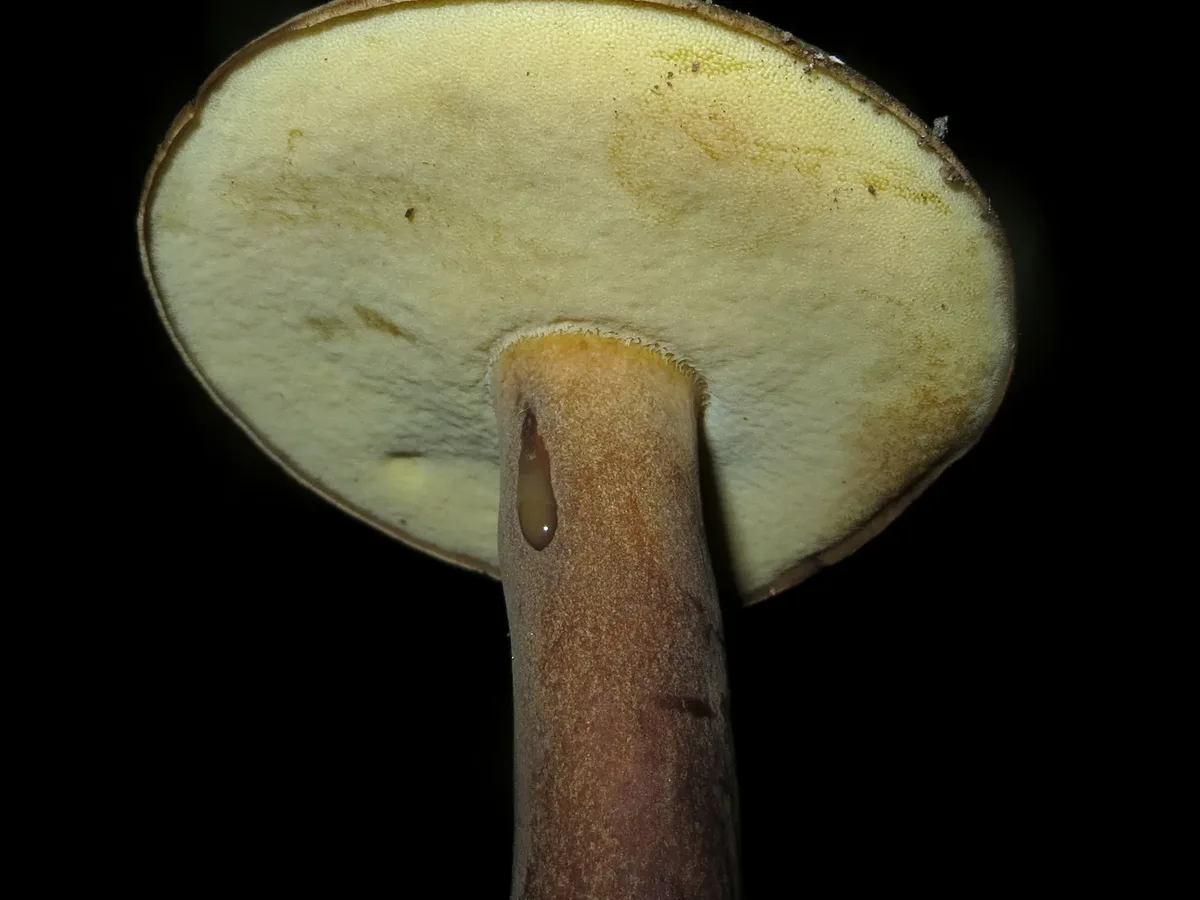
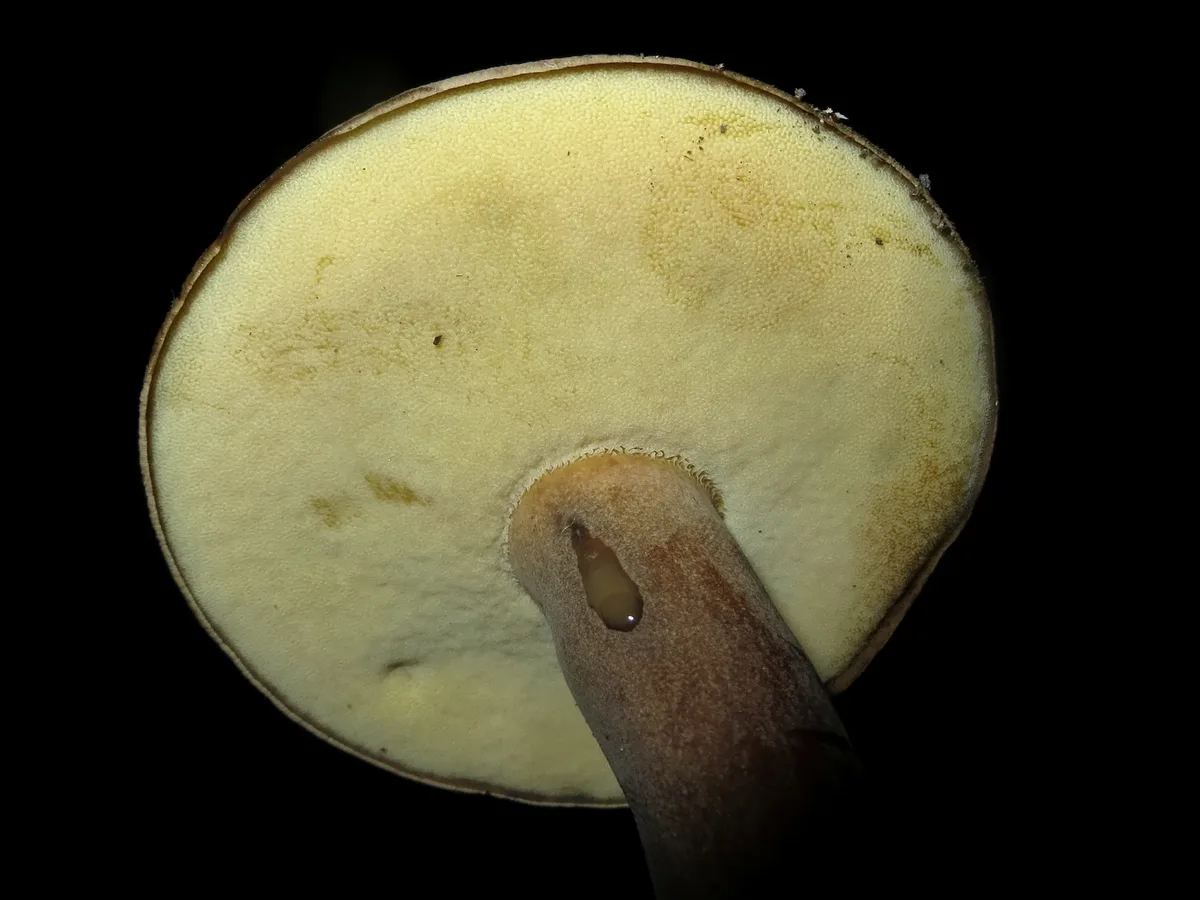
Beneath the cap, the pore surface opens pale yellow to ochre-yellow in young specimens and dulls to brownish-yellow with age. It does not blue on handling, or does so only very faintly - a notable contrast to related species like Phlebopus marginatus, which can react more strongly. Tubes run 1-2 cm deep.
Stem
The stem is solid and stout, often club-shaped or thickened toward the base. Its pale yellowish-brown to ochre surface is covered in longitudinal fibres, with no ring.
Flesh
Flesh is thick and cream to pale yellow, firm when young and softening with age, changing little when cut.
Smell
The smell is mild.
Spores
The spore print is olive-brown, with ellipsoid to subfusiform, smooth, pale olive spores.
Why it's dangerous
The primary danger is misidentification, either:
- confusing this species with the raw-toxic P. sudanicus within the genus, or
- failing to distinguish large tropical boletes with different pore colours.
The uncertain edibility of P. beniensis itself means it should not be eaten by foragers unless they have specialist knowledge and have ruled out the toxic lookalikes with certainty.
The overall risk is moderate: not from a confirmed potent toxin in this species, but from the combination of unknown safety profile and the presence of genuinely dangerous similar species in the same ecosystem.
Toxin
No specific toxins have been identified in Phlebopus beniensis. The caution rating reflects unknown safety rather than confirmed toxicity.
The related Phlebopus sudanicus contains uncharacterised compounds causing gastrointestinal illness when eaten raw. Whether P. beniensis shares these compounds is unknown.
Symptoms
No poisoning cases attributable specifically to Phlebopus beniensis are documented in the literature.
Symptoms of gastrointestinal irritant poisoning (the pattern seen in P. sudanicus when eaten raw) would appear within 1-4 hours of ingestion and include:
- nausea
- vomiting
- abdominal cramps
- diarrhoea
Staying safe
Phlebopus beniensis has no formally established edibility status in the mycological literature. The species was described taxonomically but has not been subjected to toxicological study.
Within the genus Phlebopus, edibility ranges from good-when-cooked (P. portentosus in Southeast Asia) to raw-toxic (P. sudanicus in Africa). Given this variability, and the almost complete absence of safety data for P. beniensis specifically, this species must be treated as unknown-safety and approached with significant caution.
Do not consume this species without expert identification confirming it is not P. sudanicus or another toxic Phlebopus or closely related bolete.
Any bolete with red, orange, or pink pores - which can be confused with Phlebopus in the field - must be unconditionally rejected as potentially deadly.
Where & when it grows
Habitat
The type locality for this species is the Beni region of northeastern Democratic Republic of Congo - a landscape where dense equatorial forest grades into montane forest, threaded through with the roots of large tropical trees.
It grows in forest soil and likely forms ectomycorrhizal partnerships with the dominant trees around it. The most plausible partners are Brachystegia, Isoberlinia, Afzelia, and other forest hardwoods, though this has not been precisely documented.
The species may extend into adjacent central African countries where similar forest cover persists. A handful of records from tropical South America have been tentatively linked to P. beniensis or close relatives, but without molecular confirmation those attributions remain open questions.
When
Phlebopus beniensis fruits in step with the rains. The northeastern DRC sits in a bimodal rainfall zone, with a long wet season running roughly March to June and a shorter one in October and November.
Fruiting bodies push up during these rainy windows and in the days that follow good rainfall. Where only a single wet season occurs, fruiting concentrates there instead.
Specific phenological data for this species are scarce, so these timings are inferred from the regional climate and the behaviour of comparable Phlebopus species in similar tropical environments.
How it grows
Fruitbodies appear singly or in small groups from forest soil or at forest margins.
Like other large tropical boletes, growth is likely rapid once rainfall is sufficient - substantial caps can expand over just a few days. Older specimens deteriorate quickly in the warm, humid conditions, becoming soft and heavily visited by insects.
Fruiting conditions
Fruiting is triggered by substantial tropical rainfall of 30 mm or more over 1-2 weeks combined with warm soil temperatures typical of the tropical forest zone. Flush typically appears 4-12 days after significant rainfall. Fruiting is suppressed during dry season months.
Look-alikes
Other tropical African boletes are the most relevant comparison group.
- Phlebopus sudanicus - a closely related and superficially similar species found across sub-Saharan Africa; it is toxic when eaten raw, making correct identification within the genus particularly important. It tends to have a more strongly olive-brown to grey-brown cap and is more widely distributed. Without molecular confirmation, distinguishing it from P. beniensis in the field may be very difficult for non-specialists.
- Lanmaoa asiatica and related red-pored boletes - the critical safety concern in tropical forest environments. Any bolete with red, orange, or pink pores must be rejected entirely.
- Phaeogyroporus portentosus (= Phlebopus portentosus) and related Southeast Asian species - macroscopically similar but differ in range; some African boletes have been confused with them historically.
- Rubroboletus-type boletes in Africa - may also be confused with large brown-capped species. The distinguishing feature is the red pore colour, a check that must be performed on every specimen.
DEADLY - reject immediately. Any bolete with red, orange, or pink pores must never be consumed. These toxic boletes can be superficially brown-capped like Phlebopus but differ critically in pore colour. Phlebopus beniensis has yellow to ochre-yellow pores that age to dull brown - never red or orange. This check must be performed on every specimen, every time.
A Southeast Asian species with a very dark brown to nearly black cap and stronger blue staining in some forms; not found in Africa. Distinguished from P. beniensis by distribution and the darker cap colouration, and in some forms by more marked blue-staining of the flesh.
Toxic when raw - must not be eaten without thorough cooking. Morphologically very similar within the genus; P. sudanicus tends toward a more olive-grey-brown cap and is broadly distributed across sub-Saharan Africa. In the northeastern DRC overlap zone the two species may co-occur and cannot be reliably separated without specialist examination or molecular work. Treat any unconfirmed Phlebopus from central Africa as potentially P. sudanicus.
A reference guide - never an edibility guarantee. When in doubt, leave it out.