Golden bootleg
Phaeolepiota aureasyn. Agaricus aureus, Lepiota aurea, Cystoderma aureum, Togaria aurea, Pholiota aurea
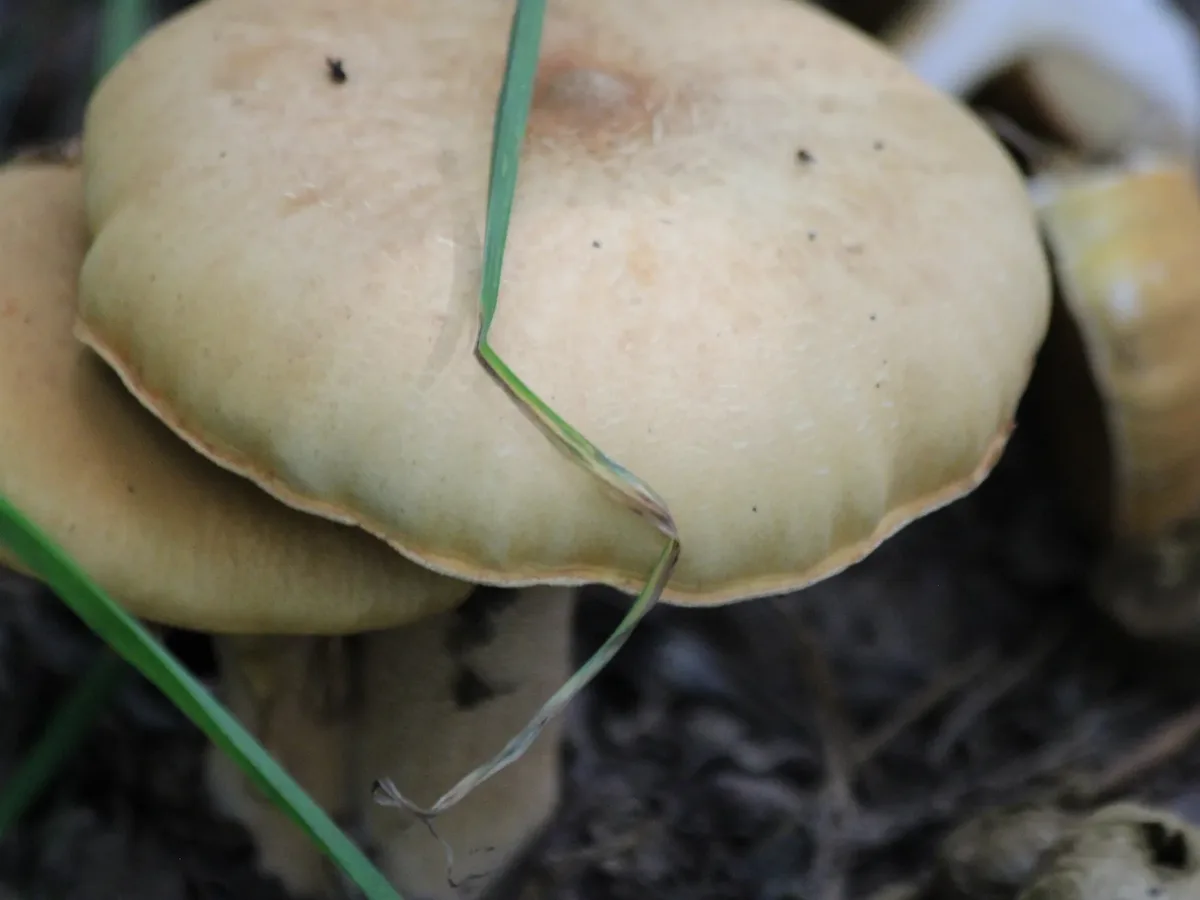 © Tatiana Strus (CC BY)
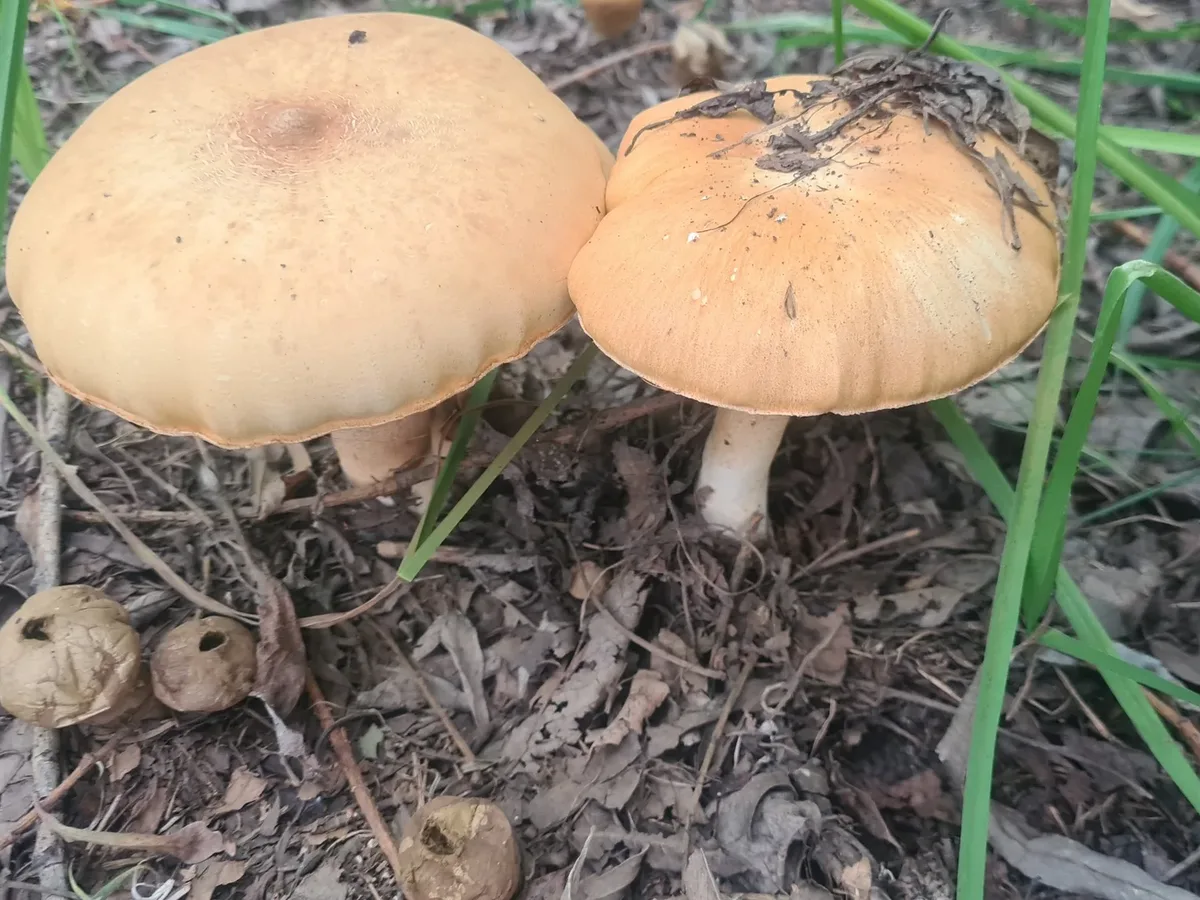 © Tatiana Strus (CC BY)
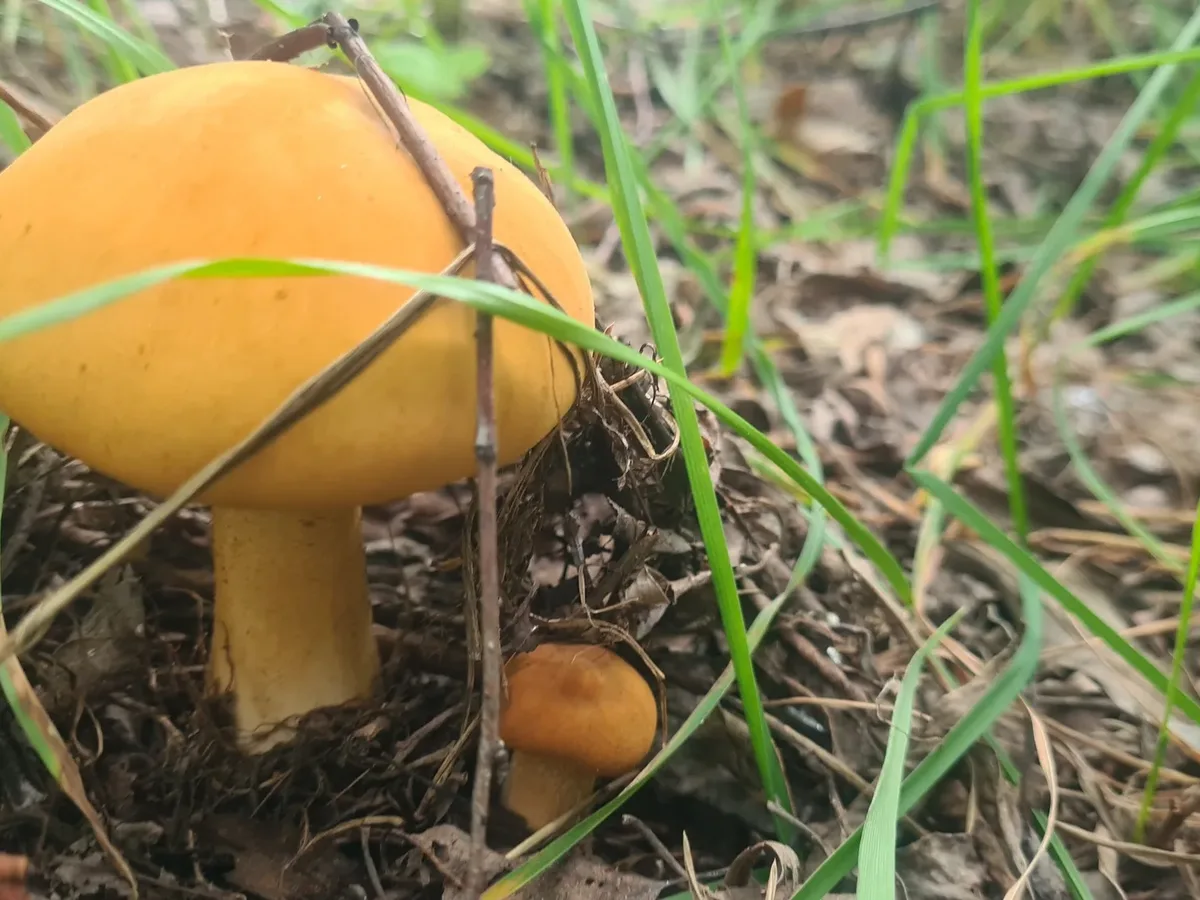 © Tatiana Strus (CC BY)
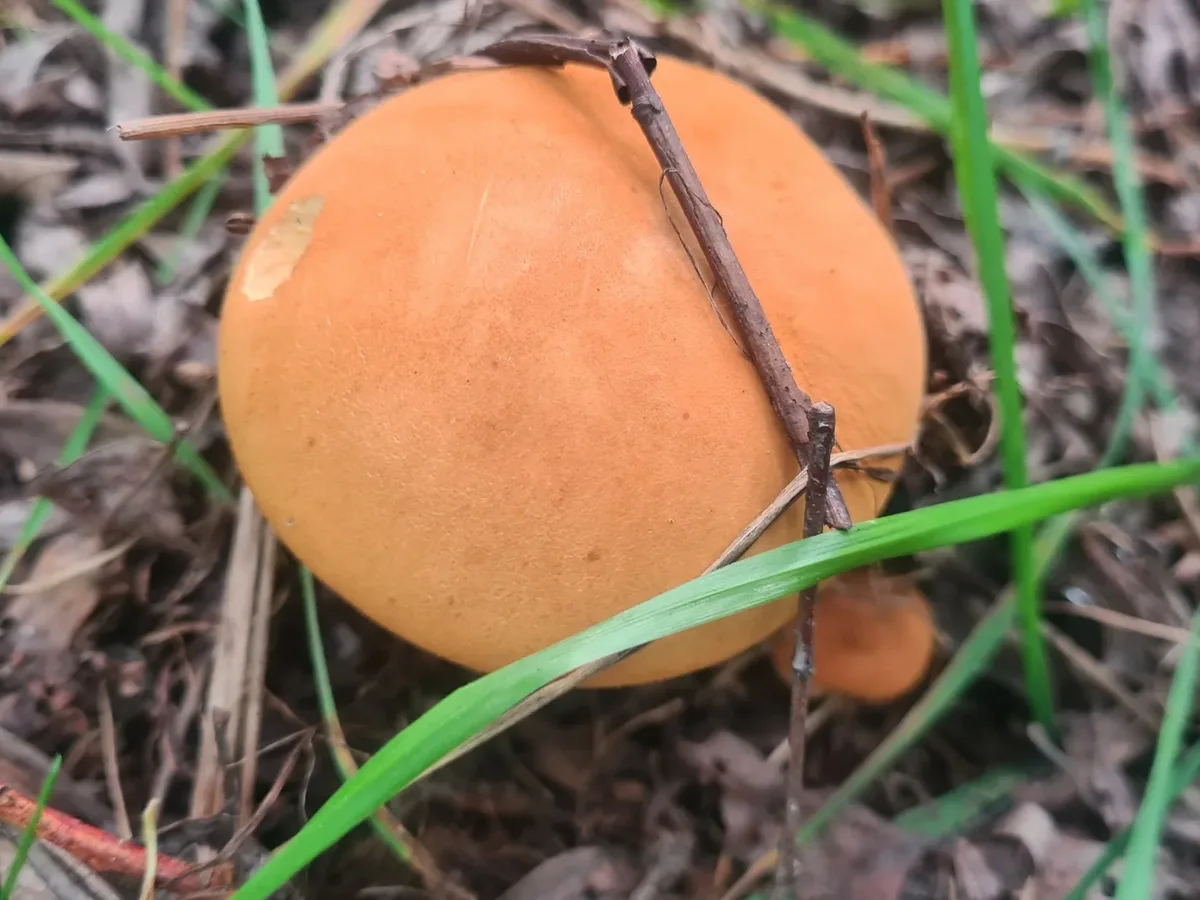 © Tatiana Strus (CC BY)
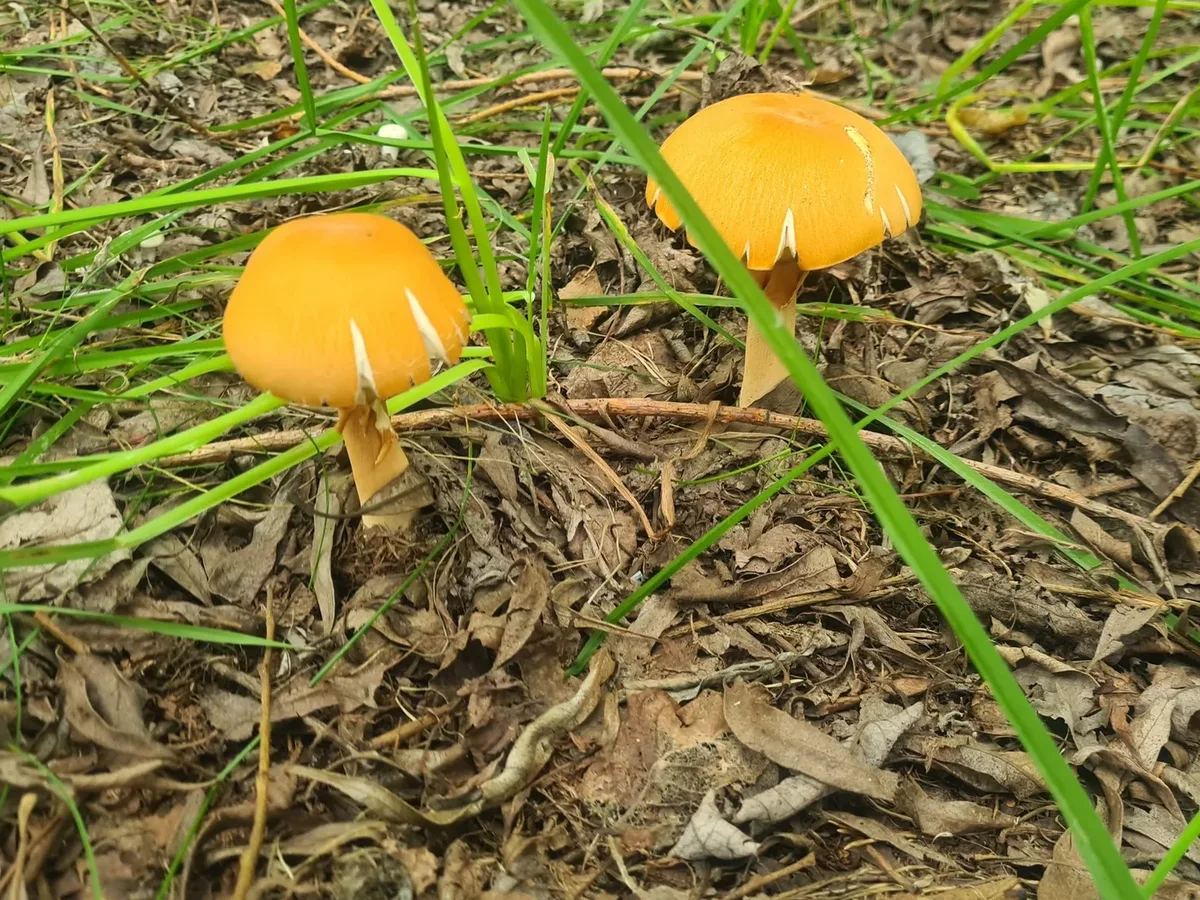 © Tatiana Strus (CC BY)
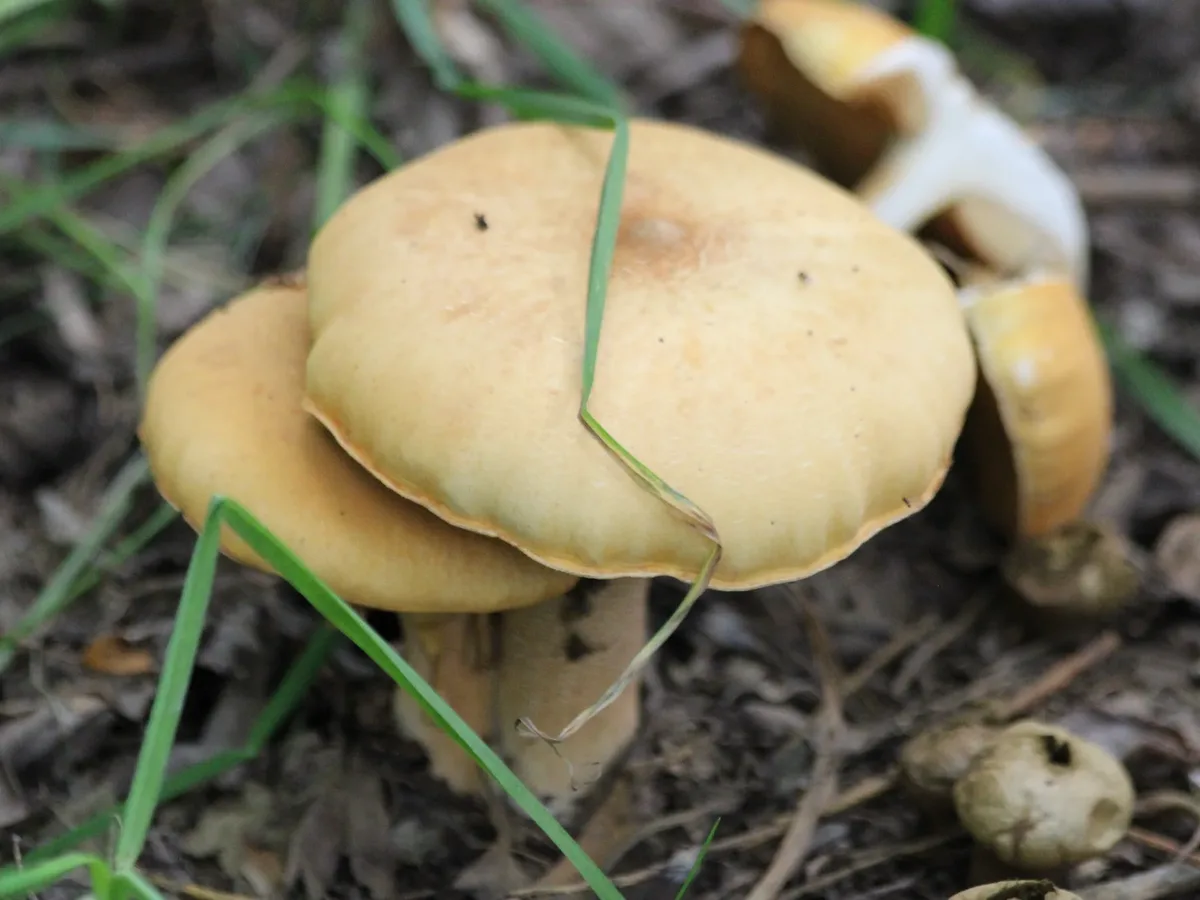 © Tatiana Strus (CC BY)© Tatiana Strus (CC BY)© Tatiana Strus (CC BY)
Edible only with the right preparation - or safe for some people but not others. Learn the caveats first.
How to recognise it
Phaeolepiota aurea is one of the most visually distinctive large agarics in northern Europe.
Cap
The cap reaches 5-20 cm, opening from a tight golden hemisphere into a broadly domed or nearly flat disc. It always keeps its dry, granular-velvety surface - a coat of fine tawny-ochre to rusty-golden scales that catches the light like hammered metal.
Young buttons are bright golden-yellow; older or weathered caps deepen to rust-ochre.
Gills / Pores
The gills are free to narrowly attached, cream-ochre at first, maturing to a warm cinnamon-tan that mirrors the spore print.
Stem
The stem is the key field character. Below the large, persistent ring it is entirely wrapped in dense concentric bands of golden granular scales - the 'bootleg' that gives the species its English name; above the ring it is smooth and pale.
The ring itself is large and skirt-like, golden-granular on its underside.
Flesh
Flesh is white to cream, firm, and does not change colour when cut.
Spore print is a warm rust-brown to ochraceous-brown - immediately different from the pure white print of any Macrolepiota.
Why it's dangerous
Moderate - primarily gastrointestinal poisoning with occasional systemic effects; not considered lethal but can cause significant illness.
Children and individuals with gastrointestinal sensitivity or compromised immunity face higher risk.
Avoid consumption.
Toxin
The active toxic compounds in Phaeolepiota aurea have not been definitively characterised.
Trimethylamine and related volatile amines have been identified in the fruiting body and are thought to contribute to gastrointestinal irritation.
Some analyses have detected additional unknown thermostable or heat-labile compounds that may account for neurological symptoms in severe cases.
The exact toxin profile likely varies between geographic populations.
Symptoms
Symptoms typically begin 30 minutes to 4 hours after ingestion and include nausea, vomiting, abdominal cramping, and diarrhoea.
More severe cases may involve sweating, dizziness, bradycardia, and general prostration.
Symptoms are usually self-limiting within 12-24 hours but can be prolonged in sensitive individuals.
No fatalities have been attributed to Phaeolepiota aurea, but medical assessment is advisable after symptomatic ingestion.
Staying safe
Phaeolepiota aurea is classified as of uncertain or conditional edibility in most modern European field guides and should be treated with caution.
While the species has been consumed in parts of continental Europe and is sometimes listed as edible, documented cases of gastrointestinal poisoning (nausea, vomiting, cramps, diarrhoea) following ingestion - even after thorough cooking - have been reported in Germany, Switzerland, and Scandinavian countries.
Some reports describe neurological symptoms including sweating, bradycardia, and general malaise in sensitive individuals, though the responsible compounds have not been conclusively identified; trimethylamine and related volatile amines are suspected.
The toxicity appears to vary between individuals, between populations of the fungus, and possibly with cooking method and quantity consumed.
Never eat this species raw.
Given the unpredictable toxic potential, most authoritative current sources (e.g., BfR Germany, Nordic mycological societies) advise against eating it, especially for children or immunocompromised individuals.
Do not confuse caution-category status with 'safe after cooking'.
Where & when it grows
Habitat
A nitrophilous saprotrophic species that favours soils rich in organic nitrogen. Typical microhabitats include:
- edges of stands of stinging nettles (Urtica dioica)
- roadsides with nitrogen run-off
- compost areas
- old kitchen-garden soils
- hedgerows
- forest tracks
- disturbed woodland margins
It frequently co-occurs with elder (Sambucus nigra), brambles, and other ruderal plants.
Despite its large size, it is rarely found in undisturbed forest interiors. In Scandinavia it is most common in southern regions, often turning up in village surroundings, farmyards, and park edges.
The saprotrophic mycelium decomposes organic-rich litter and soil humus rather than forming mycorrhizal partnerships.
When
In Scandinavia and central-western Europe the first fruitbodies appear in July during warm summers, but the main season runs from August through September and into October.
The species is strongly associated with late-summer warm spells followed by moisture. Flushes can be large, with many fruitbodies appearing gregariously in the same nitrogen-rich patch year after year.
In the Pacific Northwest of North America a close or conspecific taxon similarly fruits in late summer and early autumn.
How it grows
Grows solitarily to gregariously, often in loose clusters or irregular rings where the mycelium has quietly colonised a patch of nitrogen-rich soil.
Fruitbodies develop rapidly after warm rain, pushing up through dense nettle or herb litter. For a mushroom that can exceed 20 cm across, the pace is striking: from first pin to full-sized cap in just 4-7 days under warm, moist conditions.
The mycelium itself is perennial, threading the soil unseen, and a productive patch may erupt in the same spot year after year as long as the organic nitrogen holds.
Fruiting conditions
Responds to late-summer or early-autumn rainfall following warm periods; thrives when soil temperatures remain above 10 °C and organic nitrogen content is high. Flushes can be dense in repeatedly productive patches.
Look-alikes
The golden bootleg's combination of large size, golden granular scales on both cap and stem sheath, and rusty-brown spore print is unique among common agarics. The most important confusion species are:
- 1Pholiota aurivella and other large Pholiota species, which also have ochre-brown scaly caps and rust-brown spore prints, but have attached (adnate to decurrent) rather than free gills, grow on wood or at the base of trees, and lack the spectacular granular stem sheath.
- 2Macrolepiota procera (Parasol mushroom) and allies: similarly large agarics with a distinctive ring and scaly cap, but their cap scales are brown on a white ground, gills are white and free, spore print is white, stem bears a snakeskin pattern not golden granules, and the ring is moveable.
- 3Cystoderma species are much smaller and share granular cap and stem surfaces but are far too small (cap rarely exceeding 5 cm) to be confused with mature golden bootleg.
- 4Rozites caperatus (Cortinarius caperatus, Gypsy mushroom) has a broadly similar ochre colour and skirt-like ring but the cap surface is wrinkled-fibrous with whitish frost rather than granular-golden, the stem is not sheathed in golden scales, and the spore print is warty rust-brown.
- 5Chlorophyllum rhacodes (Shaggy parasol) grows in similar ruderal and garden habitats but has a white spore print, flesh that reddens conspicuously when cut, white gills, no golden granular sheath on the stem, and a moveable ring.
Cystoderma species share the granular cap and stem sheath but are far smaller (cap 2-5 cm), typically orange-ochre rather than bright golden, with a more fibrous ring remnant and an earthy smell. Size difference alone excludes confusion in most cases.
Pholiota aurivella grows on wood or at the base of living trees, never on soil; gills are adnate to decurrent (attached, not free), and the stem sheath is less dramatically golden-granular. Spore print similarly rusty-brown but colony growth habit entirely different.
Cortinarius caperatus has a whitish frosted (not granular-golden) cap surface, lacks the dramatic golden stem sheath, has adnate-sinuate gills (not free), and a warty rusty-brown spore print characteristic of Cortinarius; no large skirt-like ring.
Macrolepiota procera has white free gills, a white spore print, brown cap scales on a white background (not uniform golden granules), a moveable double ring, and a distinctive snakeskin-patterned stem with no golden sheath. Entirely different spore print colour is the quickest separator.
Chlorophyllum rhacodes has a white spore print, flesh that reddens conspicuously when cut, white gills, no golden granular sheath on the stem, and a moveable ring. The reddening flesh is the fastest field check. Commonly found in similar ruderal and garden habitats.
Pholiota squarrosa grows in clusters at the base of trees or on wood, has recurved (squarrose) scales on both cap and stem, adnate gills, a musty-garlicky smell, and lacks the tall golden stem sheath and free gills of Phaeolepiota aurea.
A reference guide - never an edibility guarantee. When in doubt, leave it out.