White Trumpet
Panus duseniisyn. Lentinus dusenii
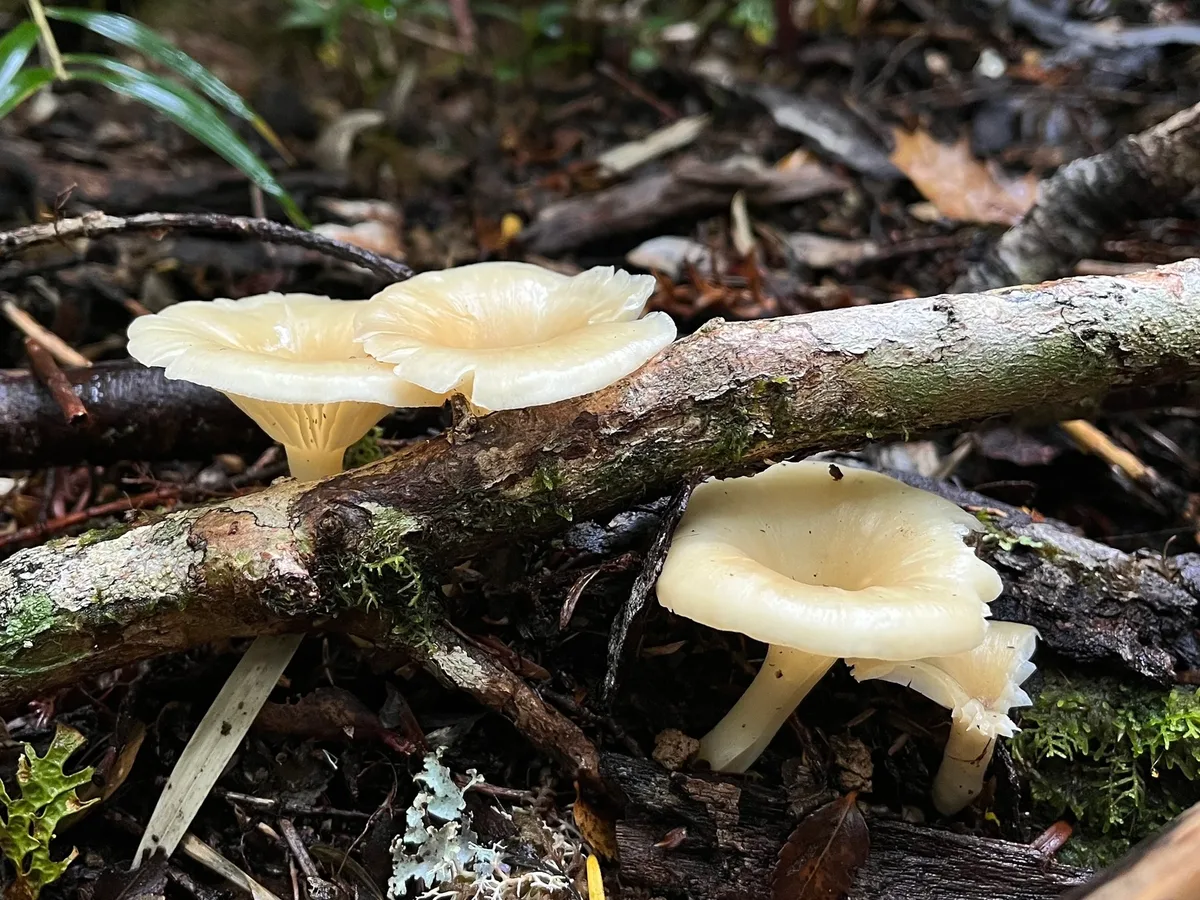 © Cristian Riquelme (CC BY)
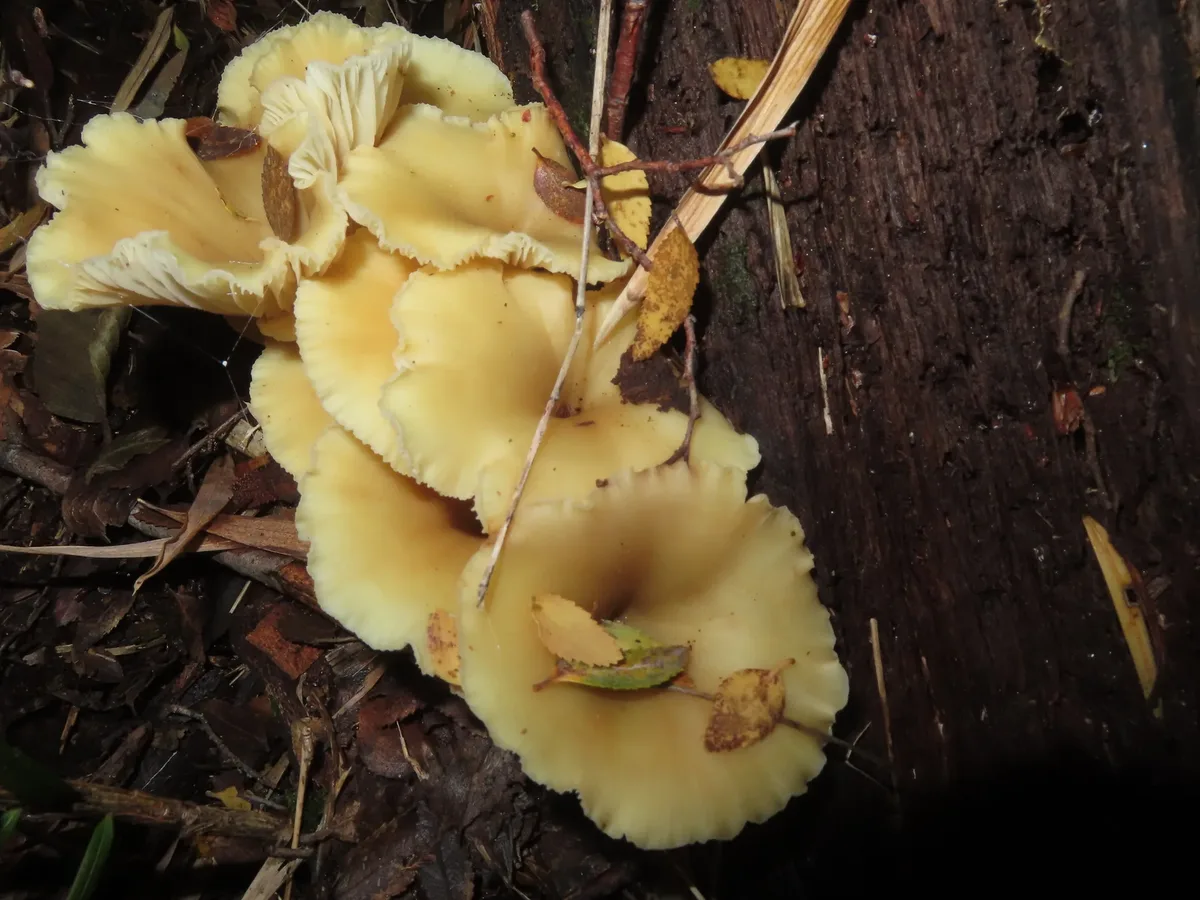 © Eric Schmidt (CC BY)
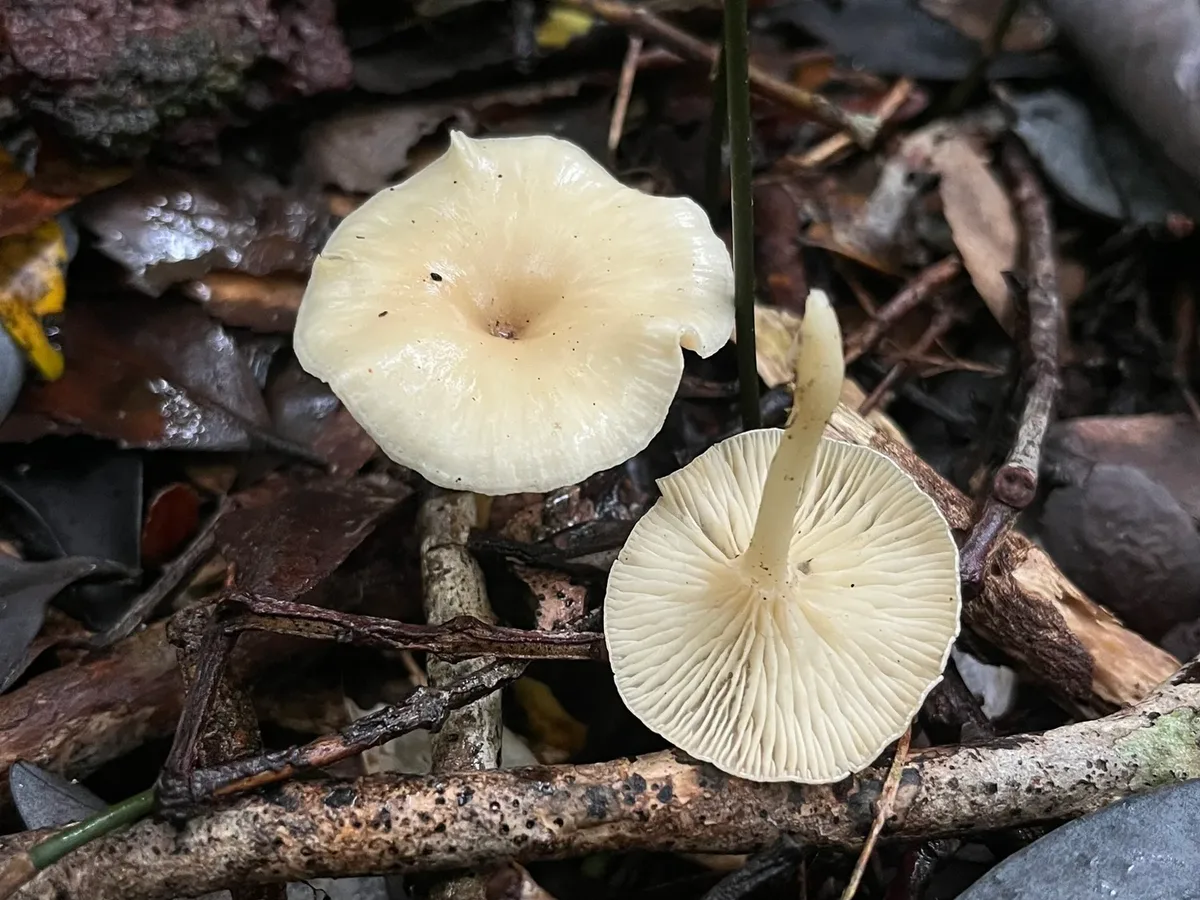 © Pablo Silva (CC BY)
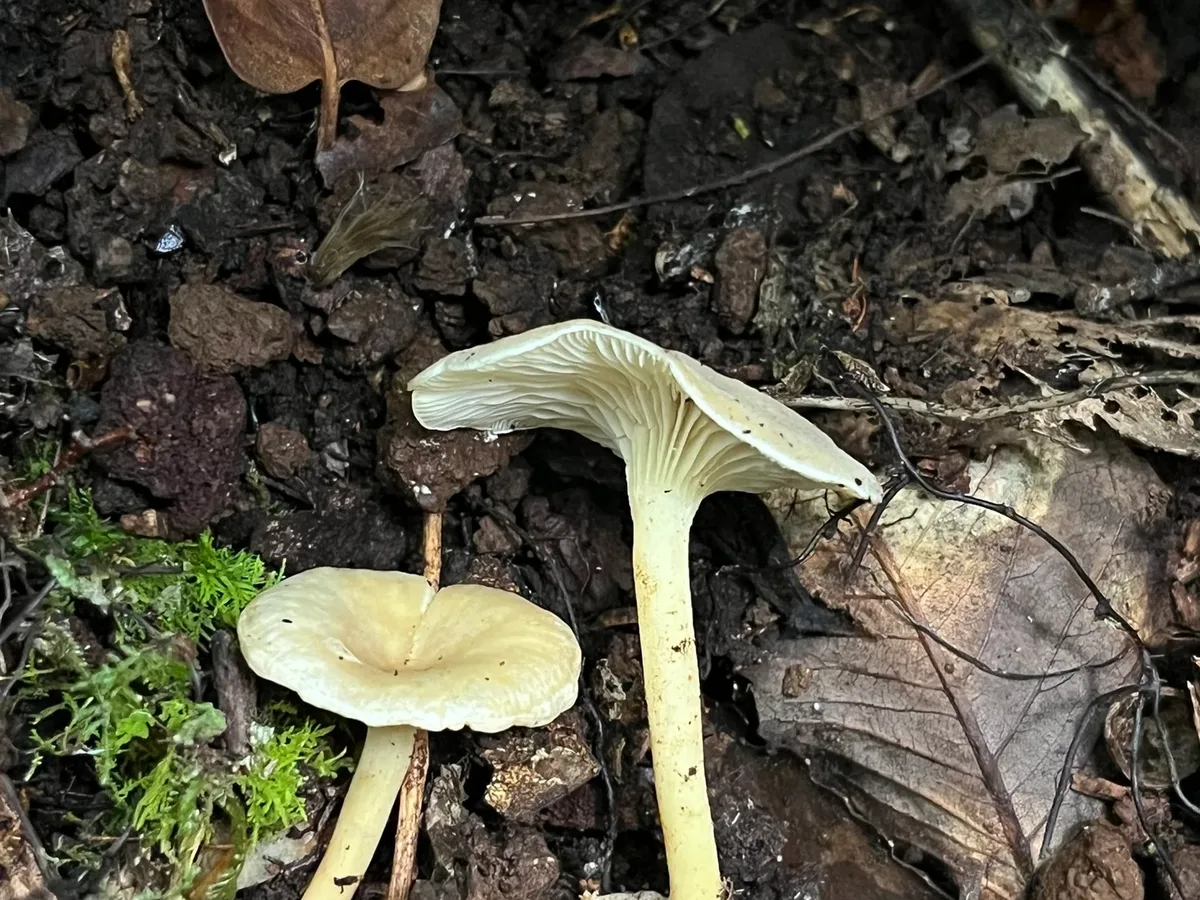 © Pablo Silva (CC BY)
 © Eric Schmidt (CC BY)
 © Cristian Riquelme (CC BY)
 © Pablo Silva (CC BY)
 Julia Ariadna (CC0)
 Julia Ariadna (CC0)© Cristian Riquelme (CC BY)© Eric Schmidt (CC BY)
Good to eat, once you have identified it with certainty and cooked it through.
How to recognise it
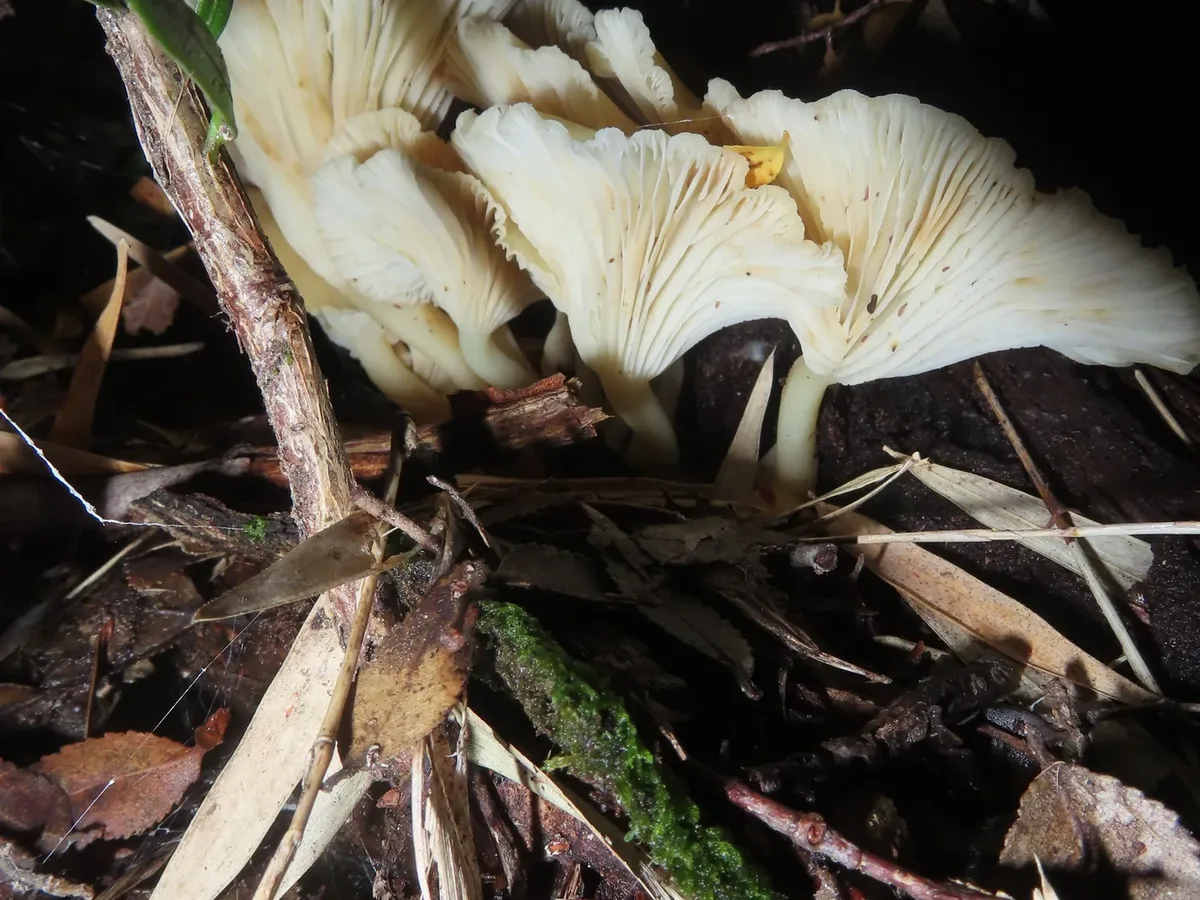
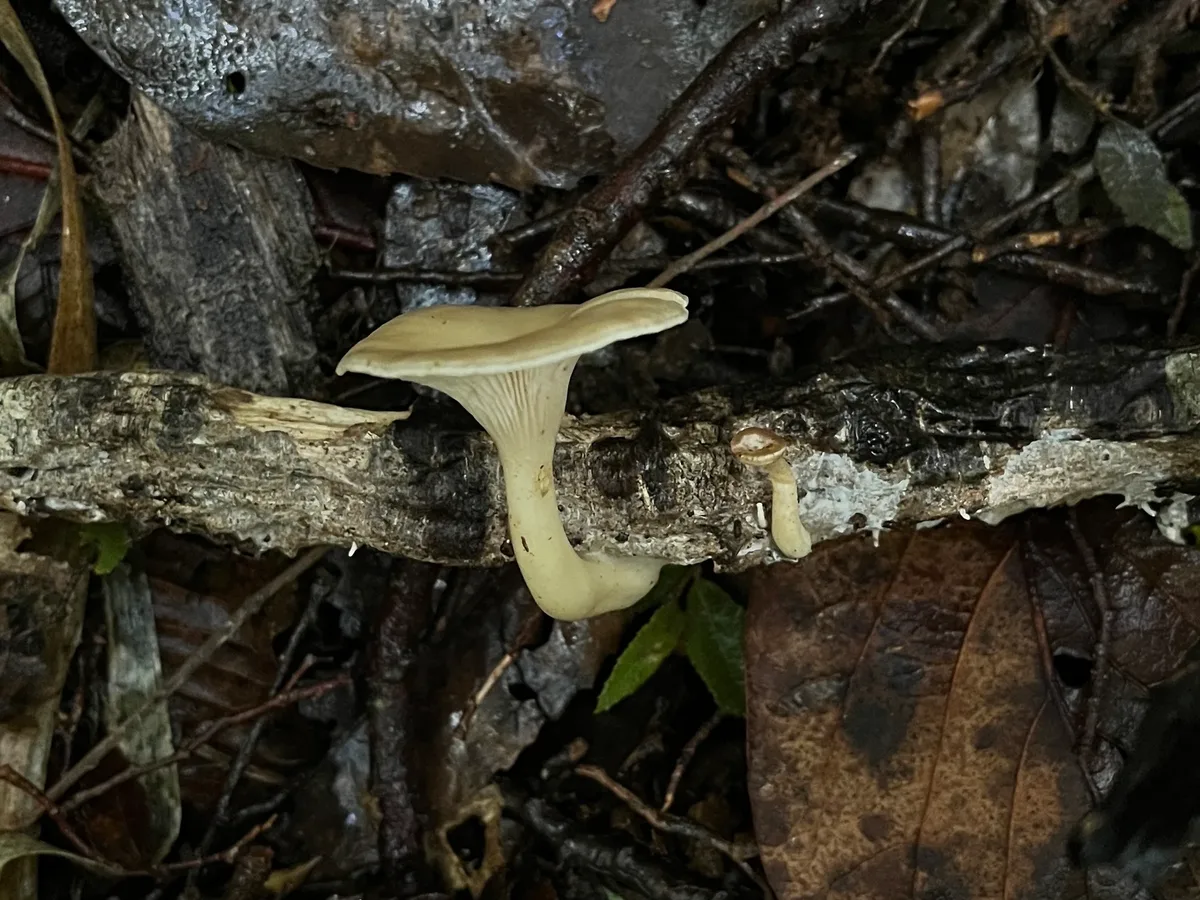
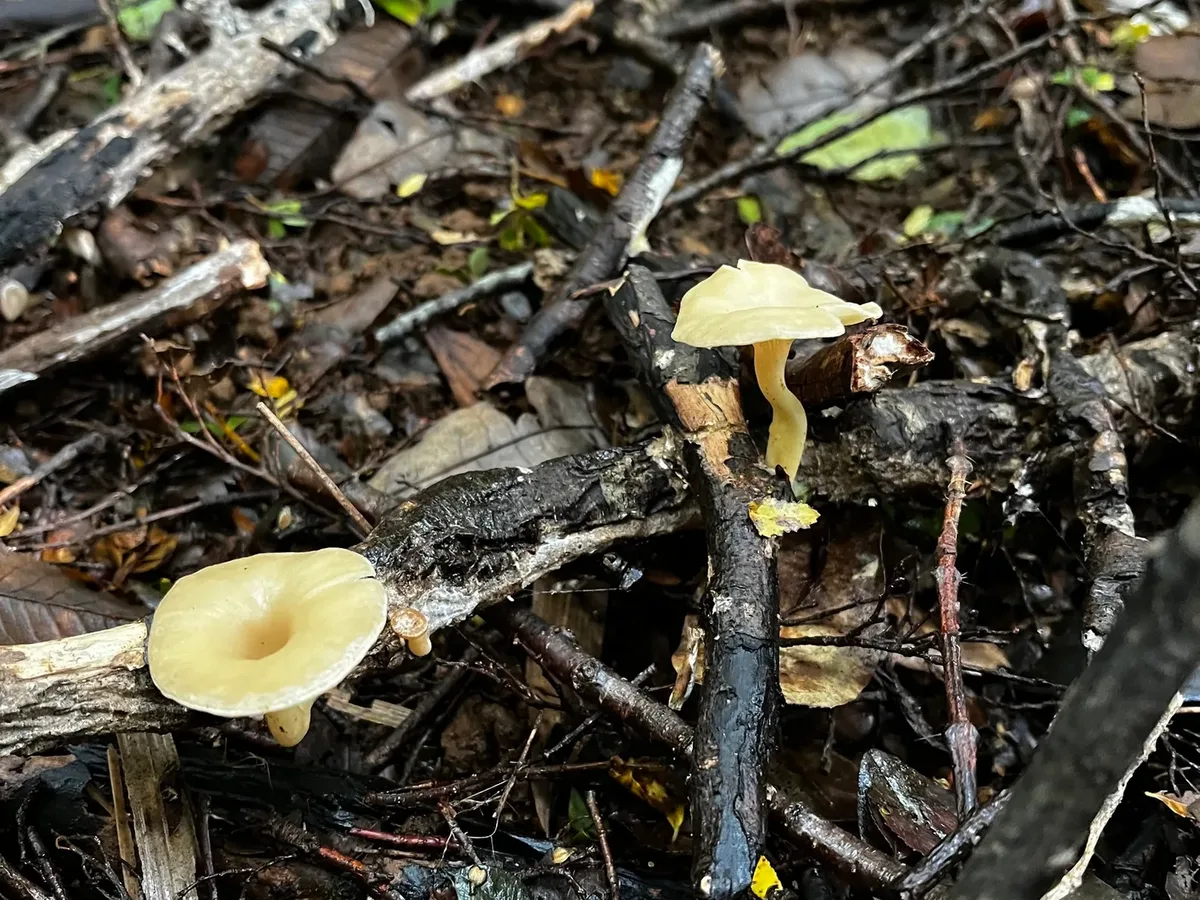
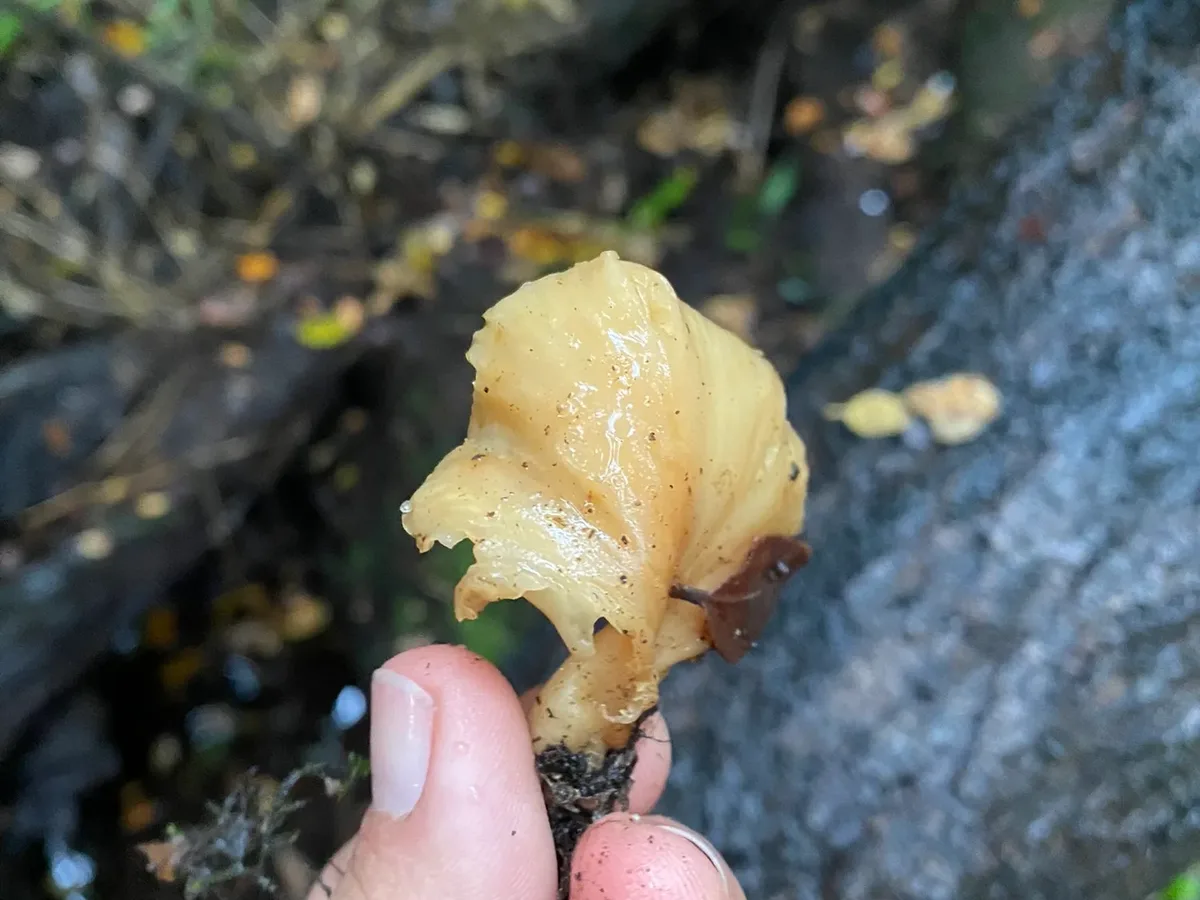
Panus dusenii is a medium-sized, all-white to pale cream saprobic mushroom with a distinctive trumpet or deep funnel shape that becomes more pronounced as it matures.
Cap
Starting as a convex cap, the centre gradually sinks until fully expanded specimens form a true hollow funnel with a rolled-to-wavy margin that can reach 10 cm across. The surface is dry and smooth to finely felty.
Flesh
Pick one up and the first thing you notice is the texture of the flesh itself: unusually firm and leathery, almost rubbery, even in fresh specimens, quite unlike the tender, fragile flesh of most edible gilled mushrooms.
Gills
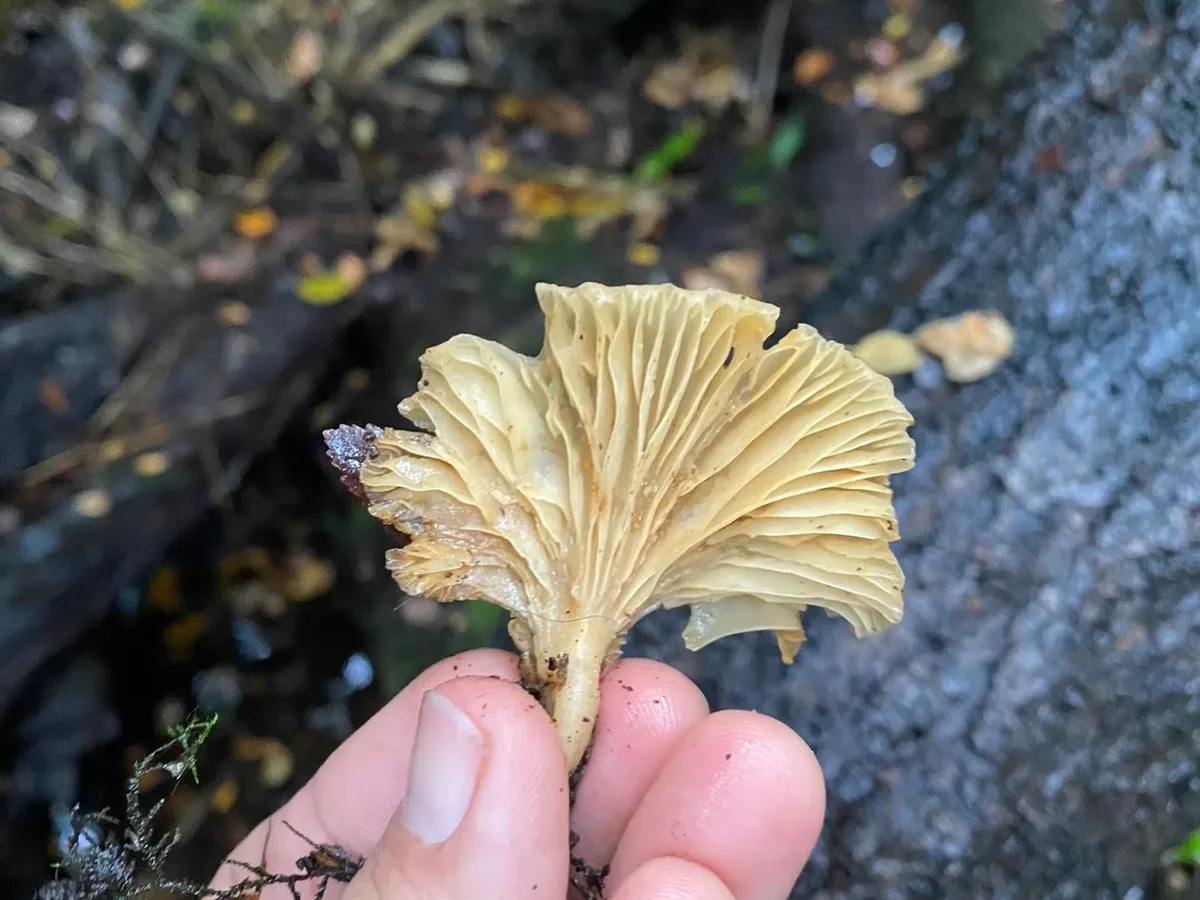
The gills run far down the short white stem (decurrent), are crowded and pale cream, and do not change colour when damaged.
Everything about the fruiting body is white to very pale cream, with no blue, red, pink, brown, or other strong pigmentation at any stage - this uniform pallor combined with the funnel shape and wood substrate are the key recognition features. The spore print is white.
Where & when it grows
Habitat
An obligate wood-rotter of tropical South America, Panus dusenii is found exclusively on dead hardwood - fallen logs, stumps, thick branches on the forest floor - in humid tropical and subtropical forest.
It causes white rot, enzymatically dismantling both the lignin and cellulose of the substrate over time.
The species prefers the shaded, humid interior of primary or mature secondary forest, where logs decay slowly and humidity remains reliably high even during drier intervals.
It is most frequently encountered in Brazil's Atlantic Forest (Mata Atlântica) and in Amazonian lowland forest, typically on wood that is already well-decayed and soft.
Look for it on the underside or in crevices of large logs in shaded ravines and stream margins where humidity is highest.
When
In the humid tropics of South America, where this species is centred, there is no strict dormant season for wood-rotters if moisture and warmth persist.
Panus dusenii can produce fruiting bodies across most of the year, but flushes are most frequent and most productive during and after rain events in the warm wet season.
In southeastern Brazil (outside the tropics), the season peaks roughly from autumn through spring (October-April in Southern Hemisphere terms), corresponding to warmer, wetter months. In continuously humid Amazonian settings it may be found year-round.
Sustained drought is the main limiting factor: the leathery flesh becomes desiccated and shrunken in dry periods but can reconstitute partially when moisture returns.
How it grows
Panus dusenii grows as a white-rot saprobe: its mycelium secretes powerful ligninolytic and cellulolytic enzymes that break down both the lignin and cellulose of the host wood, leaving a pale, spongy or stringy residue.
The fruit bodies emerge singly or in small groups directly from the decaying wood surface, sometimes with several arising from a shared mycelial pad at a common point.
Because the mycelium persists for a long time within the log, a productive substrate can yield multiple flushes over successive rainy seasons.
The leathery texture makes the fruit bodies resistant to desiccation and physical damage. They can dry out almost completely during dry spells and partially reconstitute when rain returns, though old, dried specimens are of little culinary interest.
Fruiting conditions
Wood-rotting saprobe; fruiting responds primarily to sustained high humidity and warm temperatures rather than a single rain event. Significant flushes follow multi-day rain periods that raise substrate moisture content. Lag from rain event to visible fruit bodies is approximately 5-14 days depending on substrate moisture state and ambient temperature. Optimum fruiting temperature approximately 20-28 °C. Fruiting ceases during prolonged drought or when temperatures drop below about 15 °C.
Look-alikes
The combination of all-white colouring, deep funnel shape, decurrent crowded gills, short white central stem, wood substrate, and leathery texture is fairly distinctive among South American forest fungi, but several species merit comparison:
- Other Panus species - Panus conchatus and Panus neostrigosus grow in similar habitats on dead wood in tropical regions and are morphologically similar. Panus conchatus tends toward lilac or purple tints on the cap and gills when young; P. neostrigosus has a hairy to strigose (coarsely bristly) cap surface, pale violet to purplish tones, and is generally more northerly in range. All co-occurring Panus species are regarded as edible (though tough) or at worst unpalatable - none are known to be toxic or deadly.
- Lentinus species - several Lentinus species in South America grow on wood in similar habit (fan-shaped to funnel-shaped, crowded decurrent gills) but tend to have more robust, coarser-scaled or zonate caps (often tan, buff, or brownish rather than white), and characteristically serrated (toothed) gill edges - a feature absent in Panus dusenii, which has smooth gill edges. Lentinus tigrinus and related species are not seriously toxic but are tough and of minimal culinary value.
- Pleurotus species - oyster mushrooms grow on wood in a lateral, shelf-like (pleurotoid) habit with decurrent gills but are typically softer and more fragile than Panus, lacking the pronounced funnel shape and the leathery texture. Pleurotus ostreatus and its tropical relatives are fully edible and the confusion would not be harmful.
- Clitocybe species - white-capped, funnel-shaped, pale gilled mushrooms on soil could be confused in a cursory glance, but true Clitocybe species grow on soil or leaf litter, not on solid wood, and are much more fragile. Importantly, some Clitocybe species (notably Clitocybe dealbata and related small white funnels) contain muscarine and are toxic. A white funnel mushroom must be checked carefully: if it grows directly on wood, well-decayed wood, or is clearly attached to buried wood, Panus dusenii is a credible match; if it grows from soil with no wood substrate visible, muscarine-containing Clitocybe species become a concern and the specimen should not be eaten without certain identification.
Panus neostrigosus is distinctly hairy to strigose (with coarse, bristly hairs) on the cap surface, which is also typically pale lilac to violet-grey when fresh rather than plain white. Its strigose texture is immediately apparent to the touch. Both grow on dead wood and are edible-but-tough, with no known toxicity.
A muscarine-containing toxic white funnel mushroom that can cause serious cholinergic poisoning (sweating, salivation, lacrimation, slowed heartbeat). Clitocybe dealbata grows on soil (grass, forest floor, meadows, roadsides) - never directly on solid dead wood - and is much more fragile with thin, non-leathery flesh. It lacks any attachment to dead wood substrate. Any white funnel mushroom not confirmed to grow directly from dead wood should not be identified as Panus dusenii. Confirming the wood substrate is the critical separation from all muscarine-containing Clitocybe species.
Pleurotus ostreatus grows on wood in overlapping shelf-like clusters and has soft, tender, fragile flesh quite unlike the tough leathery flesh of Panus dusenii. Caps are typically slate-grey to grey-brown or ivory (not pure white and funnel-shaped), fan- or shell-shaped rather than truly infundibuliform, and the margin does not inroll. Fully edible and desirable; any confusion would result in eating a superior mushroom.
Closely related and morphologically similar white-rot saprobe on dead hardwood. Panus conchatus typically shows lilac, violet, or pinkish-purple tints on the cap and gills (especially when young and fresh), and the cap is often more shell-shaped (pleurotoid to flabelliform) with a more eccentric or lateral stem. Panus dusenii is consistently white to pale cream without violet tints. Both are edible-but-tough and no toxicity is known for either.
Lentinus tigrinus has a pale buff to whitish cap covered with small dark brown to blackish scales arranged concentrically, giving a 'tiger-striped' appearance very different from the plain white smooth surface of Panus dusenii. The gill edges in Lentinus are characteristically serrated or toothed - a distinctive feature running along the underside of each gill - whereas Panus dusenii has smooth gill edges. Also grows on dead wood; tough and of minimal culinary value but not toxic.
In the kitchen
Picking & cleaning
If collecting for the table, take only young, fresh, recently emerged fruit bodies where the flesh is pale, firm, and fully white without any yellowing, browning, or shrivelled edges.
The leathery texture means these mushrooms require substantial cooking even at their freshest. Older or partly desiccated specimens become progressively tougher and less palatable and should be left.
Slice the stem base cleanly with a knife - avoid tearing - and collect into a basket. Because the species grows on wood in tropical environments, check for insect infestation (bore holes, discolouration) in the flesh before taking specimens home.
The mild odour and pale colour of fresh fruit bodies are reassuring signs; any foul, sour, or chemical smell is a reason to discard the specimen.
Cooking
Panus dusenii is a functional rather than gourmet edible - serviceable as an ingredient when more prized species are unavailable, but demanding in the kitchen because of its tough, leathery flesh.
Long, moist cooking methods work best:
- extended simmering in broths and soups
- braising
- slow-cooking with acidic ingredients (tomato, citrus, vinegar) that help break down the fibrous texture
Slicing thinly before cooking and sautéing over moderate heat for 10-15 minutes is the minimum treatment; a slow-cooked stew or rice dish where the mushroom has an hour or more in liquid will yield a pleasanter result.
The flavour is mild and fungal without strong distinctive character, so bold accompanying seasonings (garlic, cumin, chilli, herbs) complement it well. Dried and powdered, the tough flesh becomes a passable flavouring powder for stocks and sauces.
Do not eat raw or lightly cooked: the leathery flesh is difficult to digest and the mild taste offers little reward for the effort.
Good to know
Panus dusenii has no documented toxicity. No muscarine, amatoxins, or other known mycotoxins have been reported for this species or for the genus Panus more broadly.
It is regarded as an edible species in the limited mycological literature covering South American fungi, though it is consumed more as an ingredient of opportunity than as a sought-after delicacy, given its tough texture.
The primary safety consideration is correct identification. A white, funnel-shaped mushroom must be confirmed to grow directly on wood before any edibility conclusion can be applied.
White funnel mushrooms on soil may include muscarine-containing Clitocybe species, which cause cholinergic symptoms:
- profuse sweating
- salivation
- lacrimation
- slow heart rate
- gastrointestinal distress
Once substrate (dead wood, confirmed) and texture (leathery, firm) are verified, Panus dusenii presents no known poison risk.
As with any wild mushroom, do not consume large quantities at a first trial, and ensure the specimen is thoroughly cooked - prolonged heat is needed to soften the leathery flesh to an acceptable texture.
A reference guide - never an edibility guarantee. When in doubt, leave it out.