Bitter oyster
Panellus stipticussyn. Agaricus stipticus, Crepidotus stipticus, Panus stipticus, Pleurotus stipticus
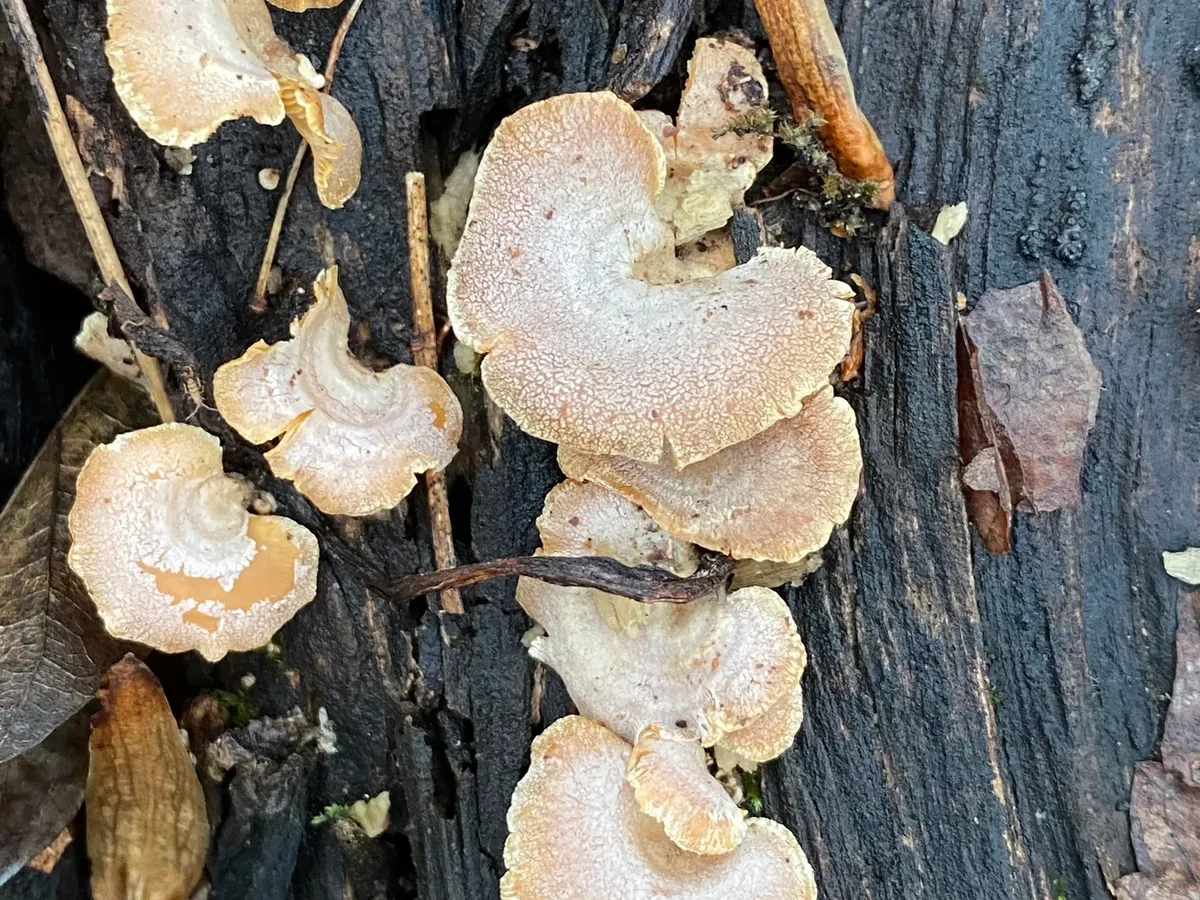 © Nizar Jibrin (CC BY)
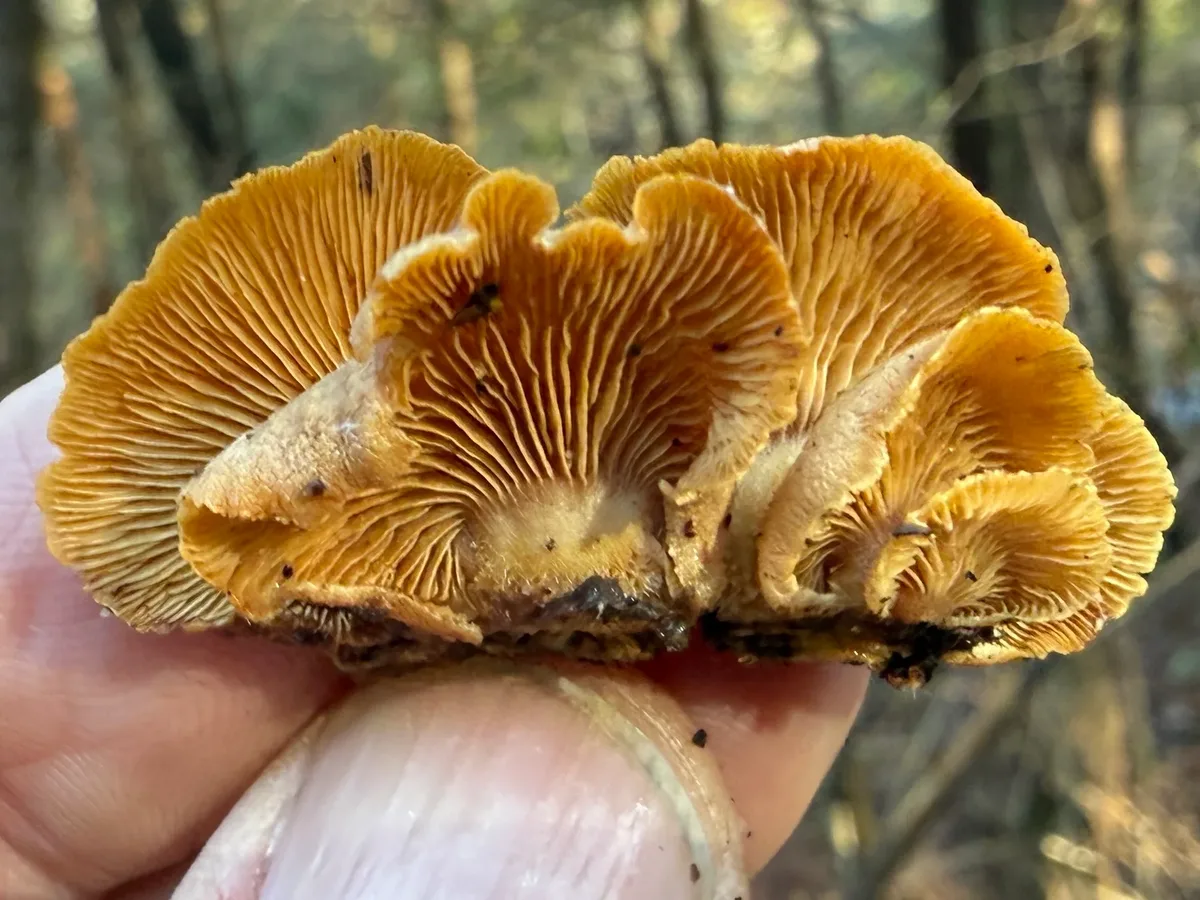 © Hill Craddock (CC BY)
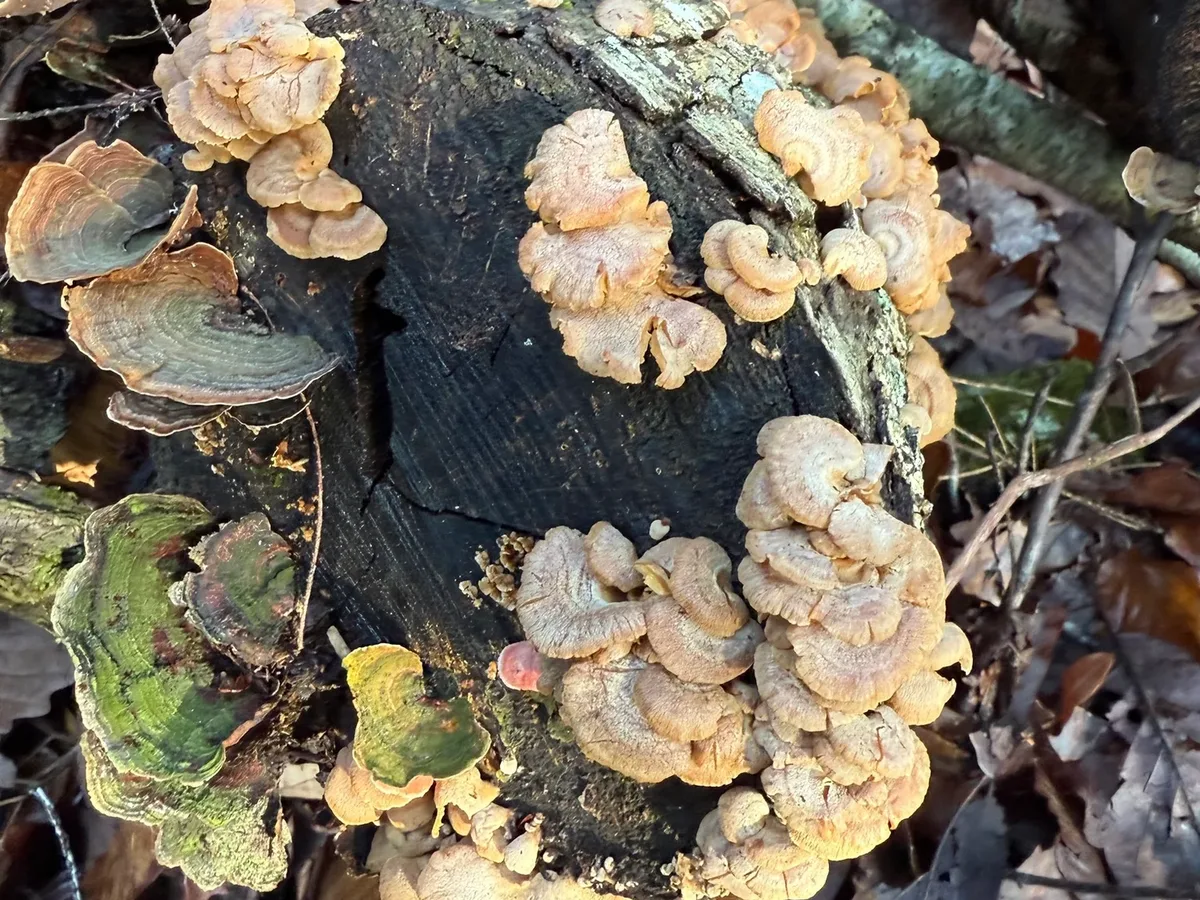 © Hill Craddock (CC BY)
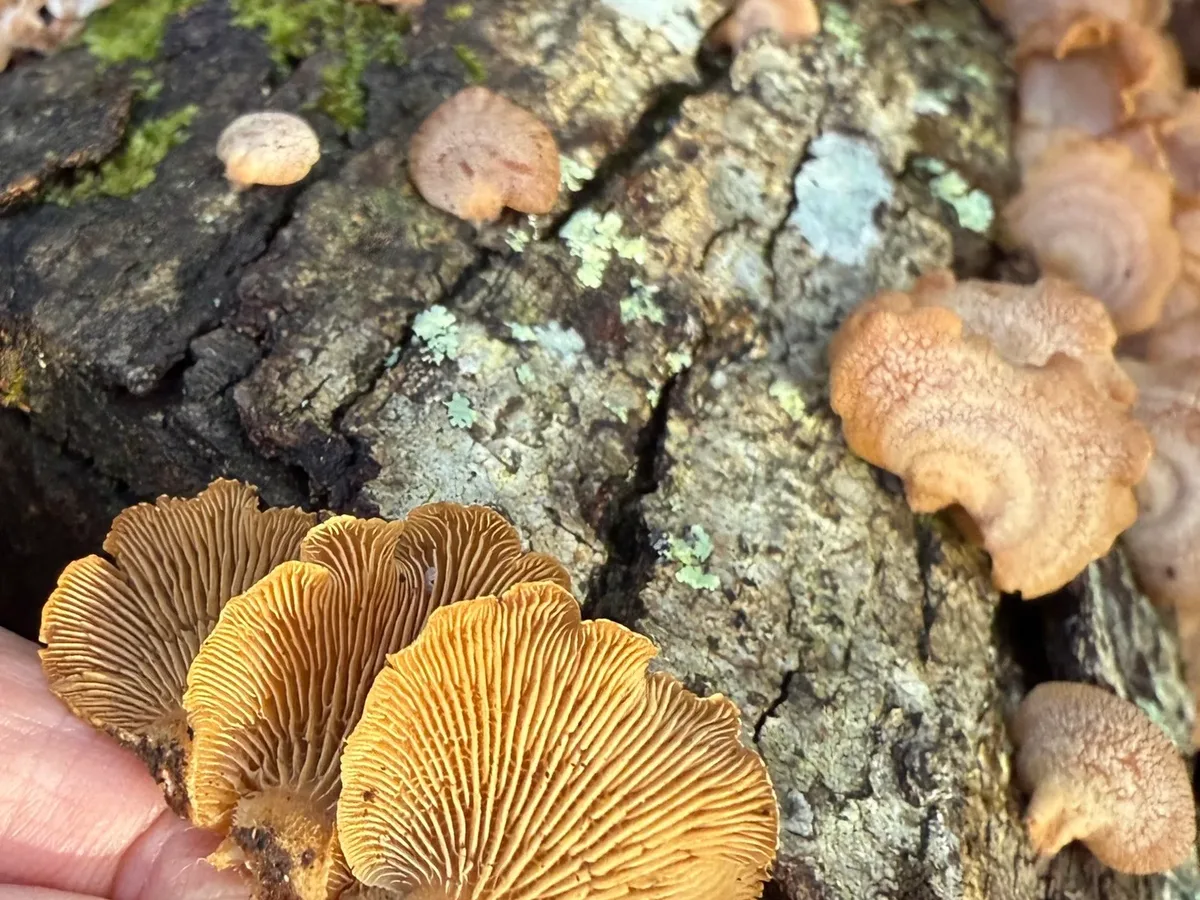 © Hill Craddock (CC BY)
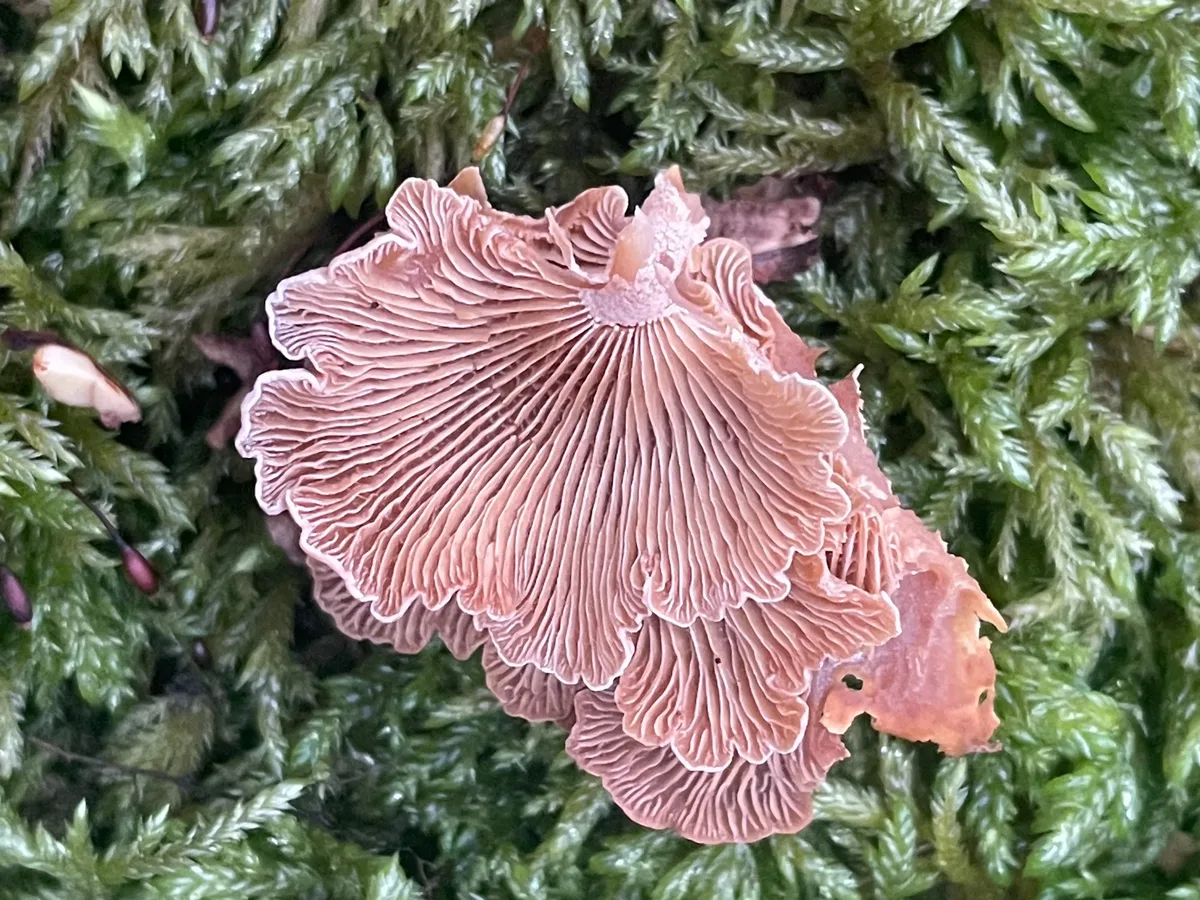 © fernium (CC BY)
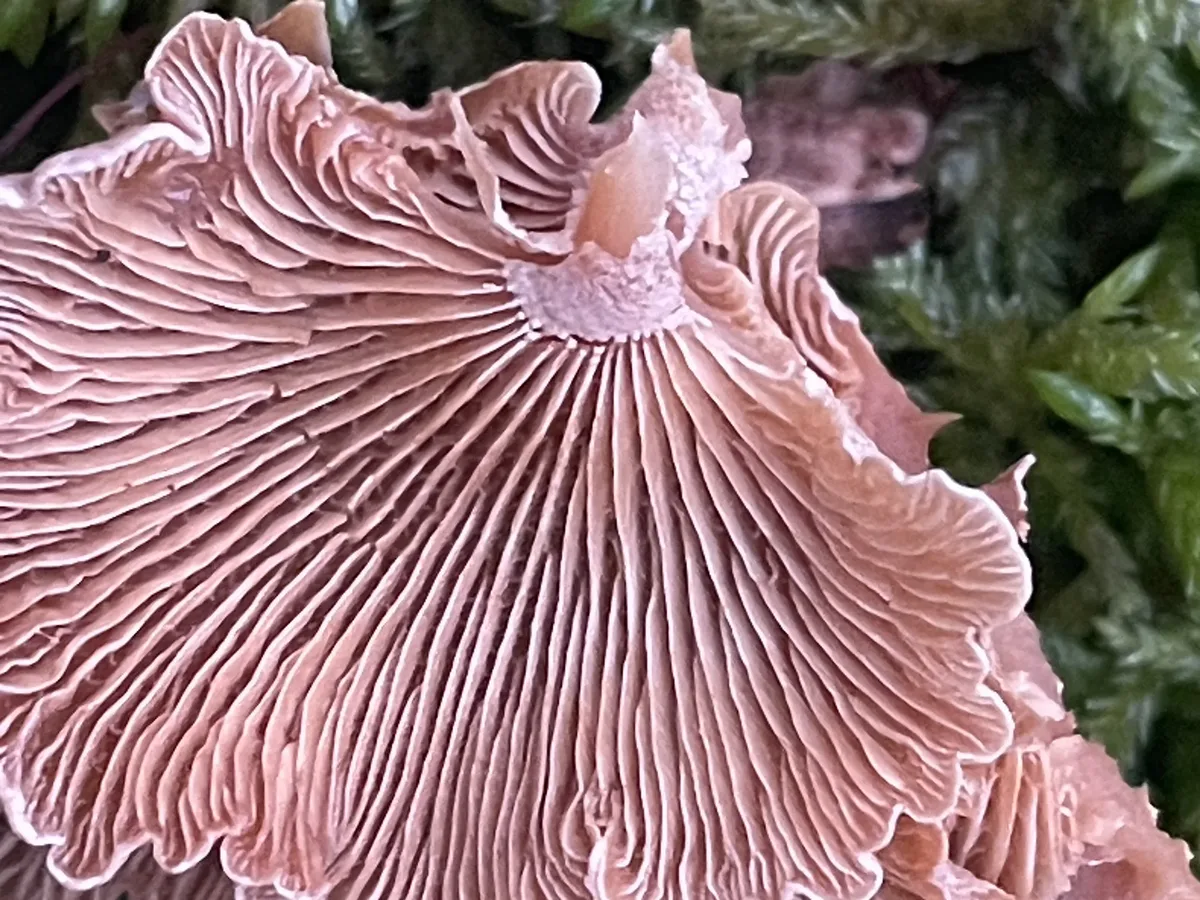 © fernium (CC BY)
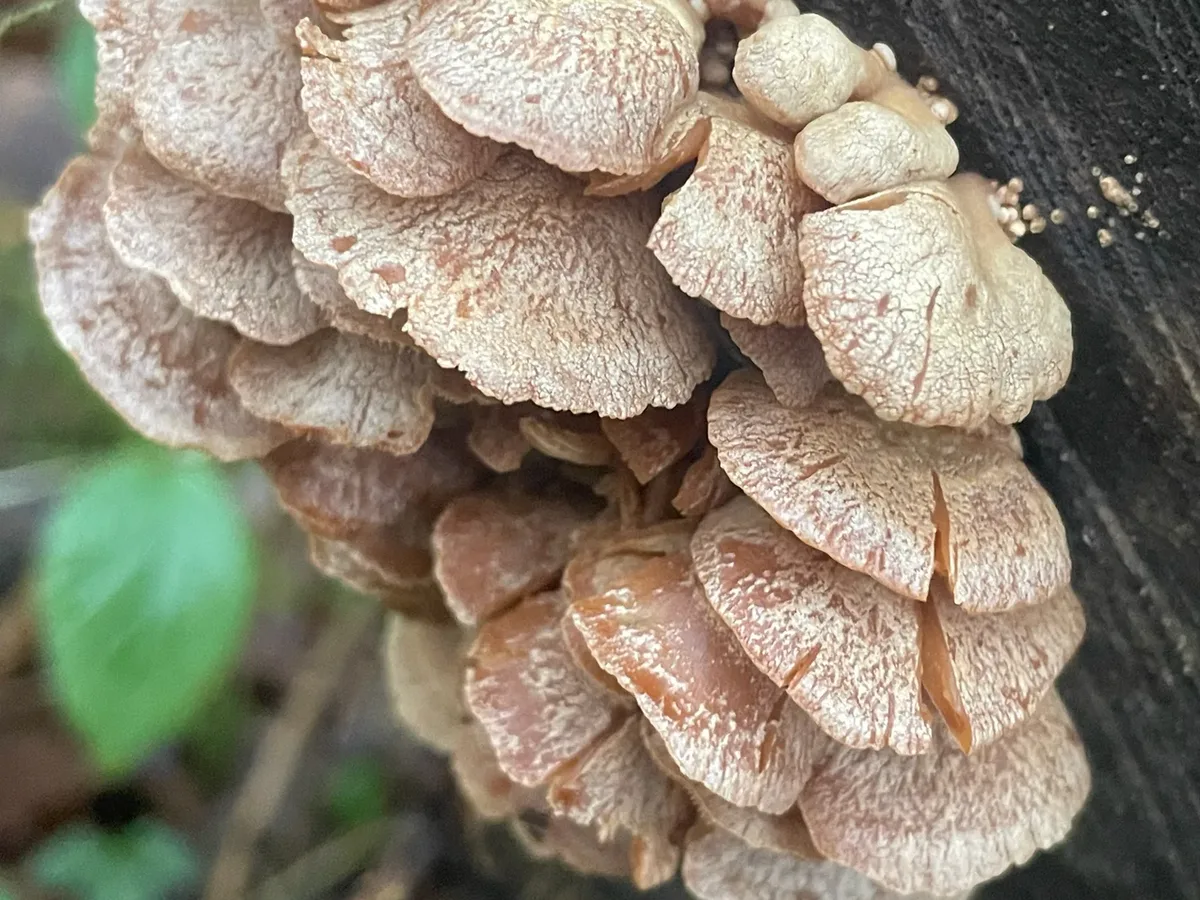 © fernium (CC BY)
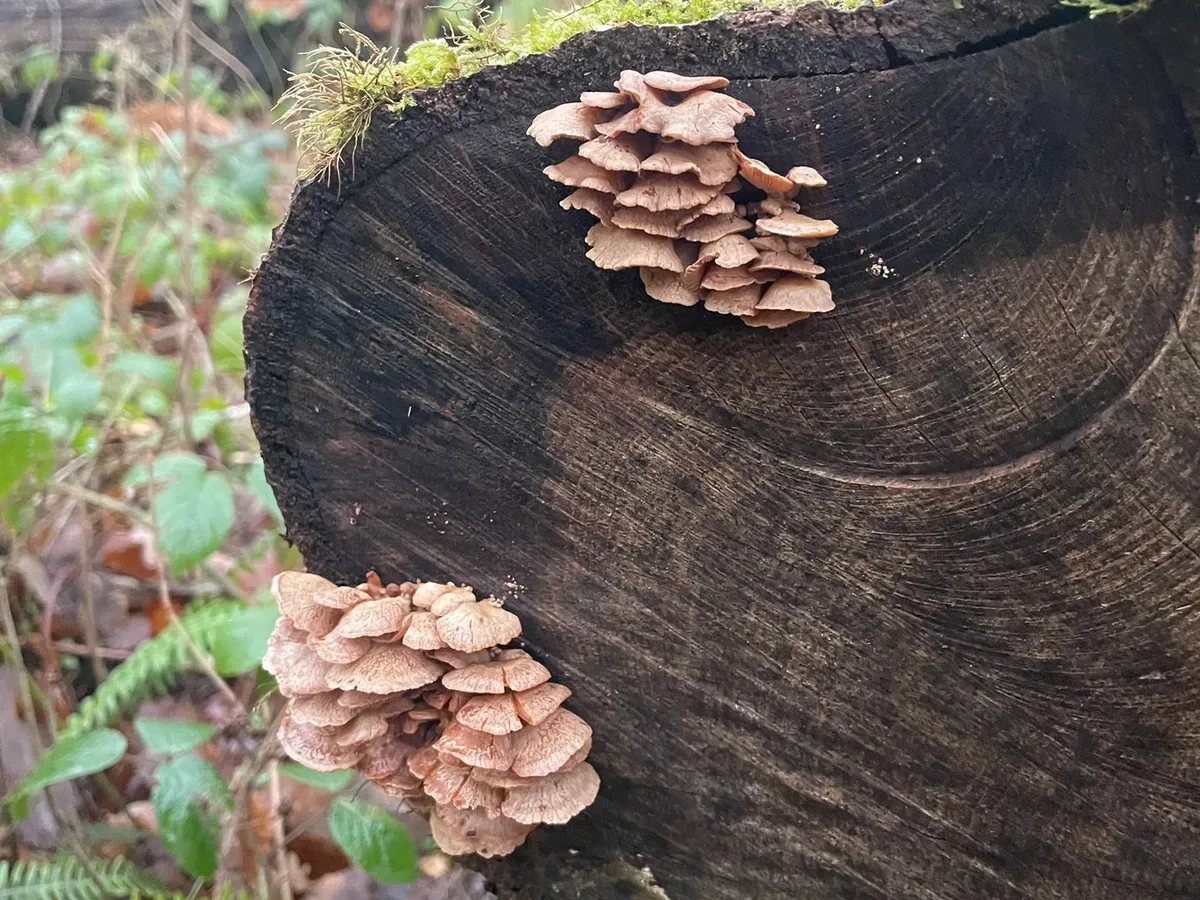 © fernium (CC BY)
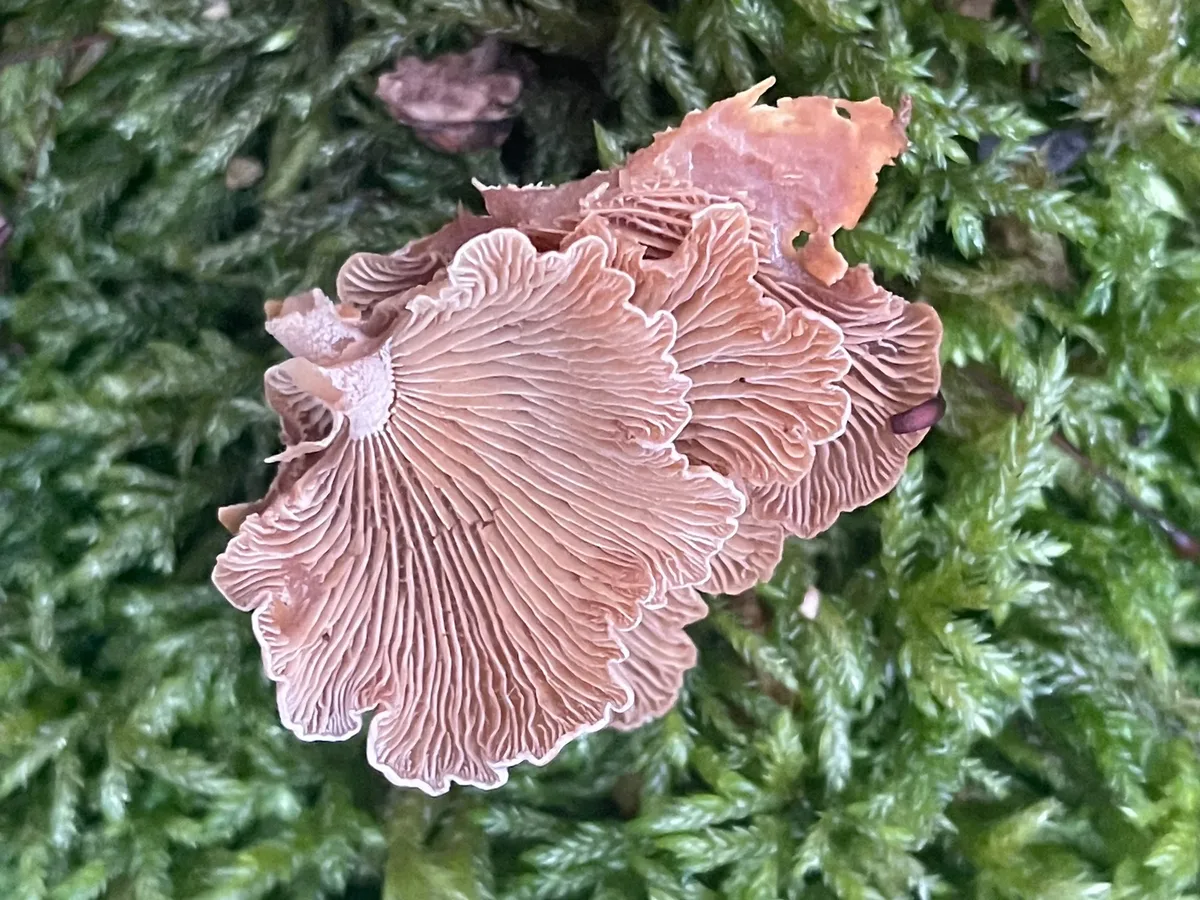 © fernium (CC BY)© Nizar Jibrin (CC BY)© Hill Craddock (CC BY)
Not poisonous, but not worth eating - too tough, bitter, or bland for the pot.
Never eat a mushroom you are not 100% sure of - check the look-alikes below, and always cook wild mushrooms.
How to recognise it
Panellus stipticus is a small bracket- or oyster-like mushroom that tiles fallen logs and stumps in dense, overlapping clusters.
Cap
The cap is 1-4 cm across and distinctly kidney-shaped, fan-shaped, or ear-shaped - attached at the side rather than the centre, the way a shelf fungus hugs a branch.
The upper surface is dry and matte, covered when young with a fine velvety texture; colour runs from pale ochraceous-buff through cinnamon-tan, sometimes with a hint of pinkish-brown.
The margin starts inrolled and stays wavy, irregular, and lobed at maturity.
Gills / Pores
The gills are crowded and narrow, sharing the same pale tan to pinkish-buff tone as the cap, with even, untoothed edges.
Then comes the remarkable part: in North American populations, the entire fruiting body - and especially the gills - emits a cold, soft, greenish-white light in total darkness.
This is true bioluminescence, driven by a luciferase-mediated reaction, and in these populations it is one of the most reliable field identification characters the species offers. European and Asian strains are genetically distinct and their luminescence is variable or absent.
Stem
The stem is very short (rarely exceeding 1.5 cm), thick, tough-cartilaginous, eccentric or lateral, concolorous with the cap, and bears no ring or volva.
Flesh
The flesh is thin, white to pale buff, and intensely bitter on the tongue - a bitterness that hits immediately and lingers, providing a reliable check in the field.
Spore print white.
Under a microscope the spores are small, cylindrical-allantoid (3-6 × 1-2.5 µm), smooth, hyaline, and strongly amyloid (bluing in Melzer's reagent), a character that cleanly separates this species from look-alikes in Crepidotus and Hohenbuehelia.
Where & when it grows
Habitat
Panellus stipticus is a wood-rotter, working through dead hardwood via white-rot and dismantling both cellulose and lignin from the inside out.
It favours the trunks, fallen logs, and exposed stumps of oak, beech, maple, birch, and related broad-leaved trees in temperate deciduous and mixed forests, though it occasionally colonises conifer logs too.
Fruiting bodies push through bark cracks or directly from exposed sapwood, nearly always in dense imbricate (overlapping) clusters with individual caps packed side-by-side.
The species is tolerant of moisture variation and can colonise partially dried logs that other wood-decay fungi have already begun - often sharing a substrate with them rather than displacing them.
It is very common and widespread throughout the temperate Northern Hemisphere, including eastern and central North America, Europe, North Africa, and parts of Asia.
When
Fruiting bodies appear from late summer (August) through early winter (December) across the main range.
The peak in eastern North America and western Europe falls during October and November, when nights cool and rainfall or dew keeps fallen logs damp.
Individual clusters can persist for several weeks. The tough, leathery flesh resists drying far better than most small gilled mushrooms, so the same cluster may still be identifiable long after first appearance.
In warmer southern portions of the range (southern USA, Mediterranean Europe) scattered fruiting can occur in early spring and mild spells in winter as well.
How it grows
Panellus stipticus produces overlapping clusters - occasionally solitary fruitbodies - erupting directly from hardwood bark or exposed wood.
As a saprotroph it needs no living host: the mycelium threads through the wood internally, rendering it spongy and bleached in the characteristic white-rot pattern.
The same stump may fruit repeatedly over several years as the mycelium continues breaking down the substrate.
Fruiting is triggered by a combination of:
- cooling temperatures
- high humidity
- adequate moisture already held in the wood
It does not need rain on the day of emergence if the log has retained enough moisture from earlier wet periods.
Fruiting conditions
Fruiting is driven primarily by wood moisture content and cooling autumn temperatures rather than acute rainfall events; the wood substrate acts as a moisture reservoir that buffers short dry spells. Bioluminescence is most vivid on humid nights above 8 °C.
Look-alikes
Several small lateral-stemmed species can superficially resemble Panellus stipticus, but careful observation of the bitter taste, white spore print, tough texture, and (in North America) bioluminescence readily separates them.
- Crepidotus species (e.g., Crepidotus mollis, C. applanatus) grow in similar situations but have brown spore prints, no bitter taste, no bioluminescence, and much softer, more watery flesh.
- Hohenbuehelia petaloides is paler white-grey, grows on soil or buried wood, has a more elongated stem-like base, and lacks both the bitterness and bioluminescence of Panellus stipticus.
- Pleurotus ostreatus (oyster mushroom) is substantially larger, edible, has white spores, and pale to dark grey coloration, but its flesh is thick, soft, and mild-flavoured; it lacks bioluminescence and never produces the burning bitterness of Panellus stipticus.
- Phyllotopsis nidulans occupies similar niches but is bright egg-yellow to orange with a foul, sour-rancid odour and no bioluminescence.
- Wax-cap species (Hygrocybe spp.) sharing overlapping shades are terrestrial, never wood-growing.
IMPORTANT: Galerina marginata grows on the same decaying hardwood logs, is DEADLY (amatoxins - the same poisons as the death cap), and has caused human fatalities. It is separated from Panellus stipticus by:
- a central (not lateral) stem
- a membranous ring on the stem
- rusty-brown gills
- a rusty-brown spore print
- an entirely different non-clustering growth form
Panellus stipticus, by contrast, has a lateral stub-stem with NO ring, white spores, pale tan gills, and an intensely bitter taste.
Never eat any small brown mushroom found near Panellus stipticus clusters without confirming the spore print is white and the stem is lateral with no ring.
DEADLY - contains amatoxins (same as the death cap), which cause delayed liver failure and have killed people. Galerina marginata has a central (not lateral) stem bearing a membranous ring, rusty-brown gills and a rusty-brown spore print, and grows upright from decaying logs - never in lateral bracket-like clusters. Panellus stipticus has a short lateral stub-stem with NO ring, white spores, pale tan gills, and an intensely bitter taste. Both can grow on the same log; always check for a lateral stemless-to-stub stem, no ring, and white spores before handling any co-occurring brown mushrooms.
Small, white to buff, but spore print brown, flesh soft (not tough), taste mild, no bioluminescence.
Pleurotus ostreatus is substantially larger, has thick soft white flesh with a mild pleasant taste, pale grey to brown coloration, no bioluminescence, and is edible. Panellus stipticus is small, thin-fleshed, intensely bitter, and bioluminescent in North American populations.
Phyllotopsis nidulans is bright egg-yellow to orange, has a strong fetid or sour-rancid odour, pinkish-buff spore print, and lacks bioluminescence. Grows on similar dead hardwood.
Hohenbuehelia petaloides is paler white-grey, grows on soil or buried wood, has a more elongated stem-like base, and lacks the pronounced bitterness and bioluminescence of Panellus stipticus.
Crepidotus mollis has a brown spore print (not white), soft gelatinous flesh, no bioluminescence, no bitterness, and is sessile without even a short stem.
In the kitchen
Picking & cleaning
Panellus stipticus is not collected for food. The fruiting bodies are tough, thin-fleshed, and intensely bitter, making them unpalatable regardless of preparation.
The species has a long history as a haemostyptic (styptic) agent - hence the common name 'stiptic fungus' and the specific epithet stipticus - applied topically to minor cuts to slow bleeding, though this folk use has no robust clinical validation.
For naturalists and photographers, the bioluminescent North American populations are a genuine draw: clusters photographed with long exposures in complete darkness reveal the pale greenish glow emanating primarily from the gills and cap flesh.
Handle gently to avoid disturbing the log community, and do not confuse with edible oyster relatives.
Cooking
Not applicable. Panellus stipticus is too tough, thin, and intensely bitter to be edible or to have any culinary merit.
No preparation method (boiling, repeated water changes, drying) eliminates the bitterness or improves the texture sufficiently. It should not be eaten.
Good to know
Panellus stipticus is not toxic in the sense of containing dangerous alkaloids or peptide toxins at typical contact or accidental-nibble doses; it is simply intensely bitter and inedible.
The raw flesh has caused mild gastrointestinal irritation in individuals who have ingested significant quantities, so it should not be eaten. There are no confirmed deaths attributable to this species.
The primary safety concern is misidentification. Foragers seeking edible oyster mushrooms (Pleurotus ostreatus, P. pulmonarius) on logs should be aware of this species as a potential lookalike, particularly in dim conditions where the bioluminescence might paradoxically increase curiosity rather than caution.
The bitter taste test on a small piece (spat out immediately) will reliably rule out Panellus stipticus from edible oysters, which are mild and pleasant.
CRITICAL: Galerina marginata, which shares the same hardwood log habitat and has killed people, contains deadly amatoxins. It is distinguished by:
- a central (not lateral) stem bearing a membranous ring
- rusty-brown gills becoming rusty-brown-spored
- an entirely different upright growth form
Always check for a lateral stubby stem (no ring) and confirm the spore print is white before drawing any conclusions about wood-dwelling mushrooms found nearby.
A reference guide - never an edibility guarantee. When in doubt, leave it out.