Lilac bonnet
Mycena purasyn. Agaricus purus, Mycena pura var. alba, Mycena pura var. lutea
 © Matt D'Agrosa (CC BY)
 © LJ Moore-McClelland (CC BY)
 © LJ Moore-McClelland (CC BY)
 © LJ Moore-McClelland (CC BY)
 © victor laborde (CC BY)
 © victor laborde (CC BY)
 © victor laborde (CC BY)
 © Matt D'Agrosa (CC BY)
 © Matt D'Agrosa (CC BY)© Matt D'Agrosa (CC BY)© LJ Moore-McClelland (CC BY)
Edible only with the right preparation - or safe for some people but not others. Learn the caveats first.
How to recognise it
Mycena pura is a small, elegant bonnet mushroom whose most striking - and variable - feature is colour.
Cap
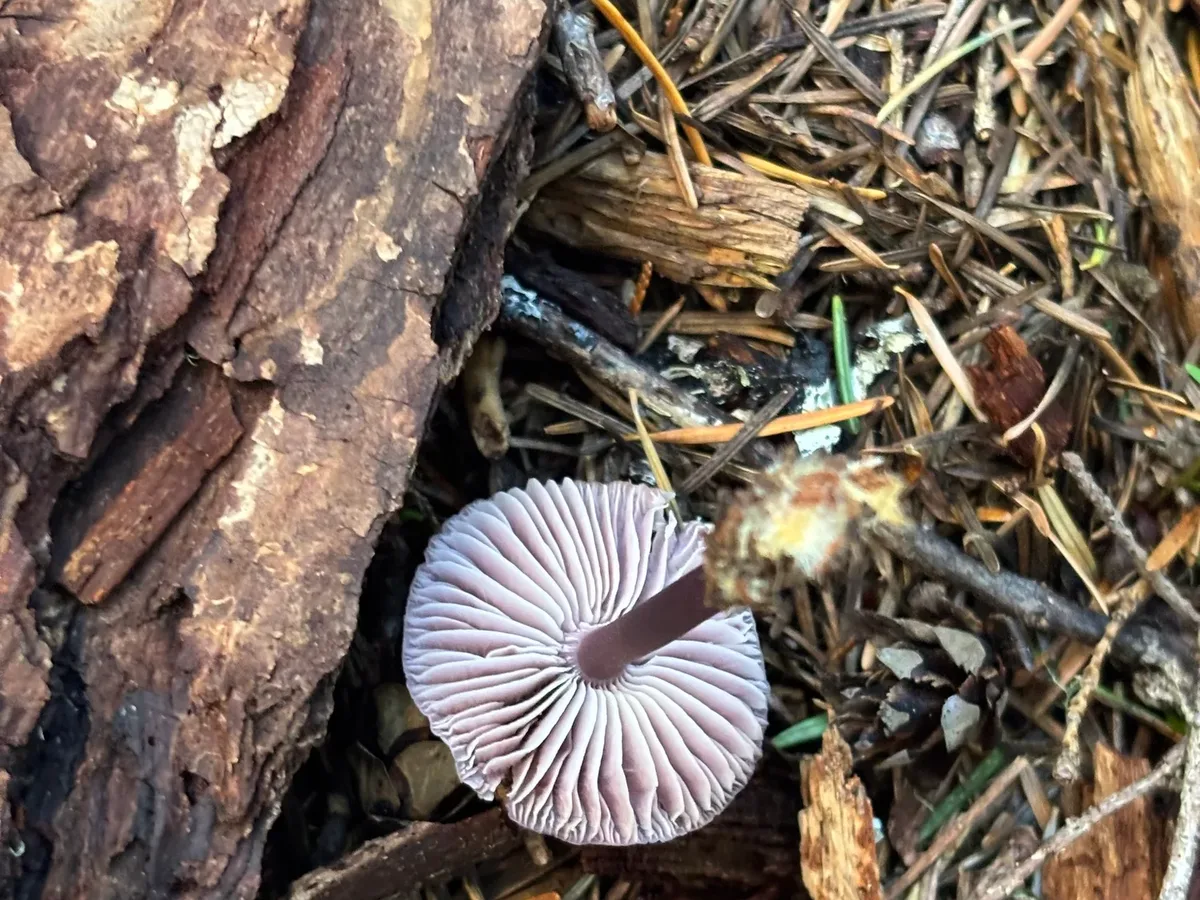
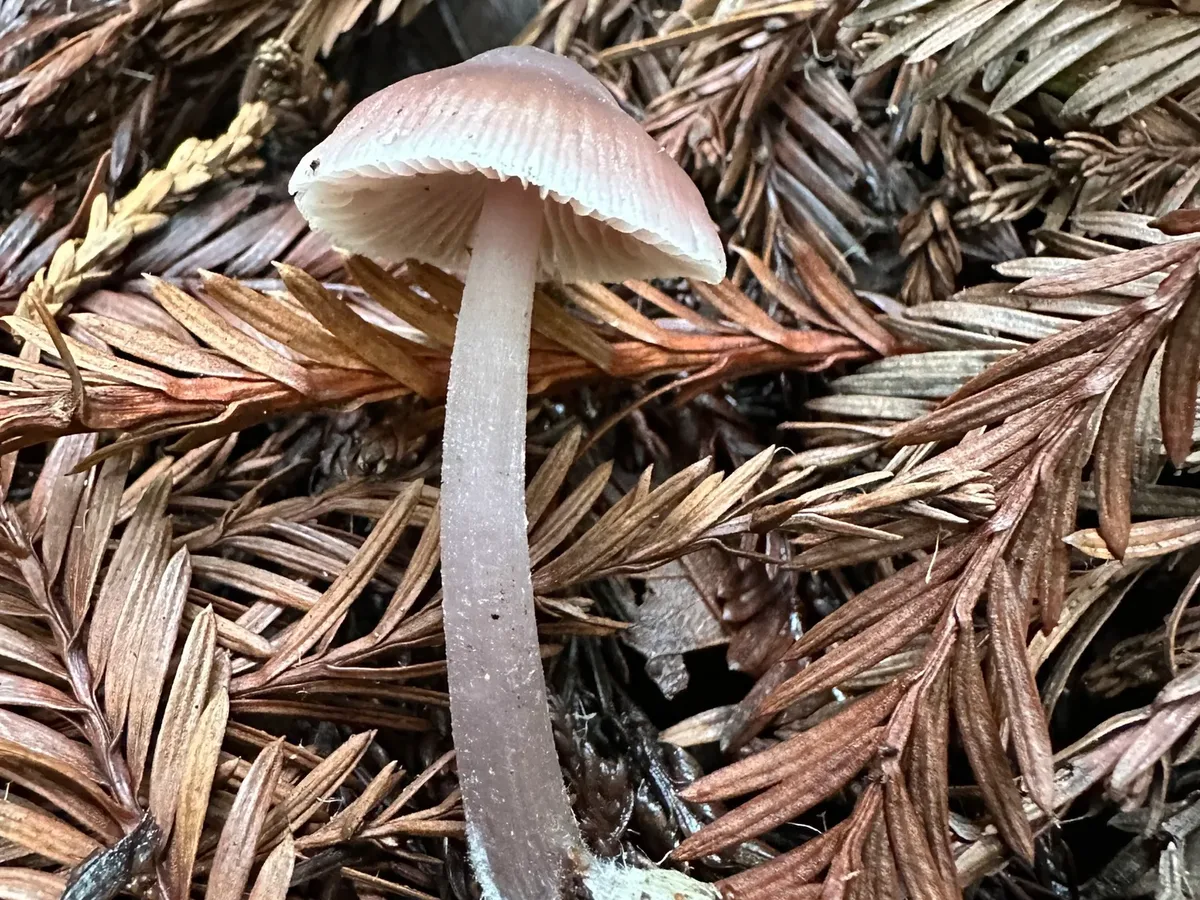
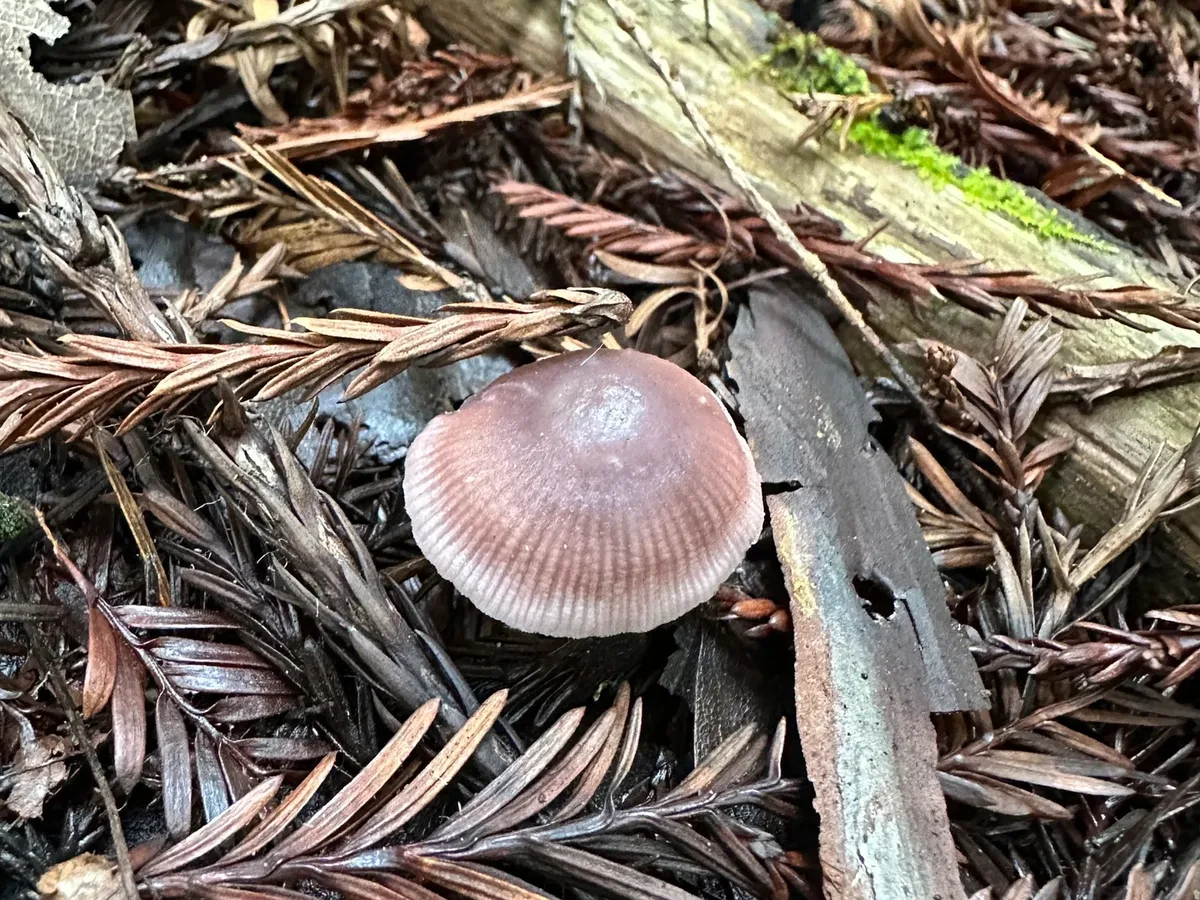
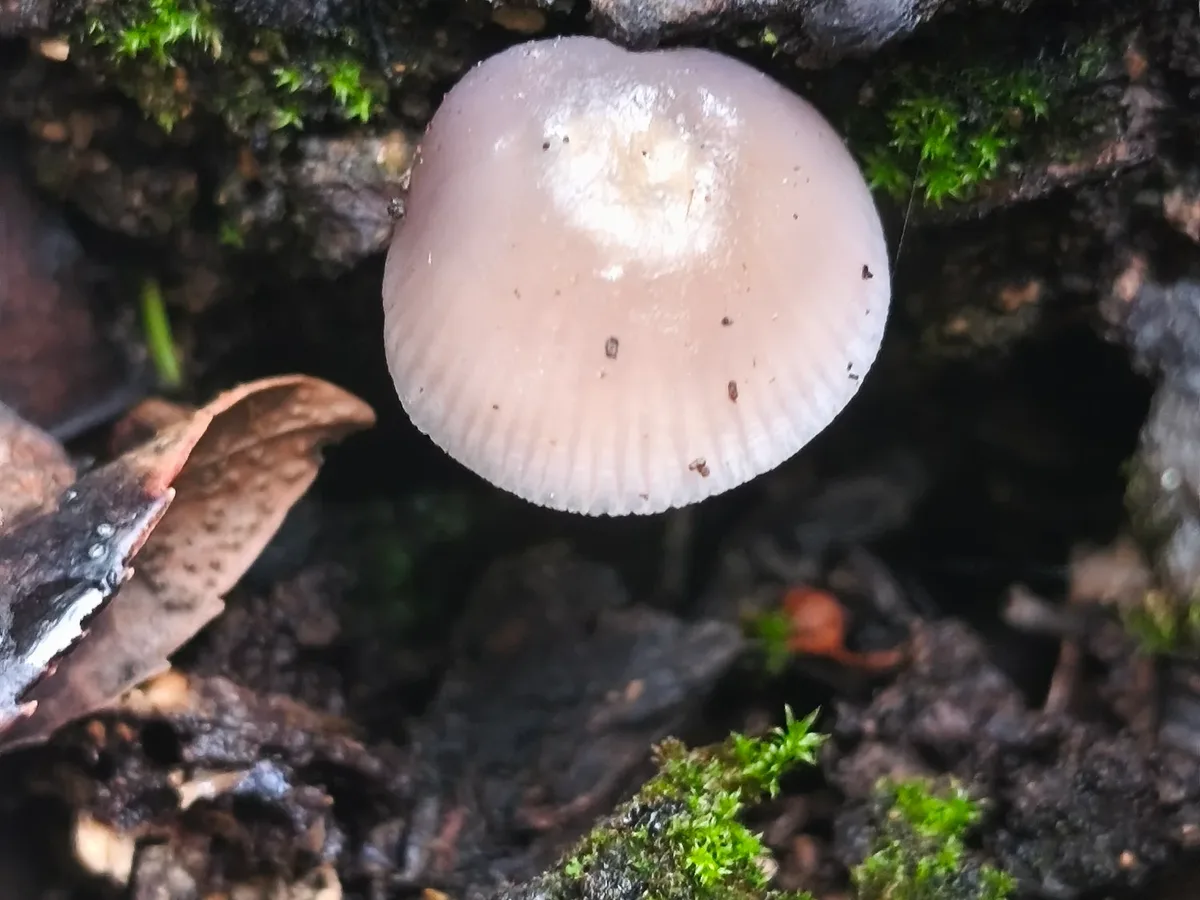
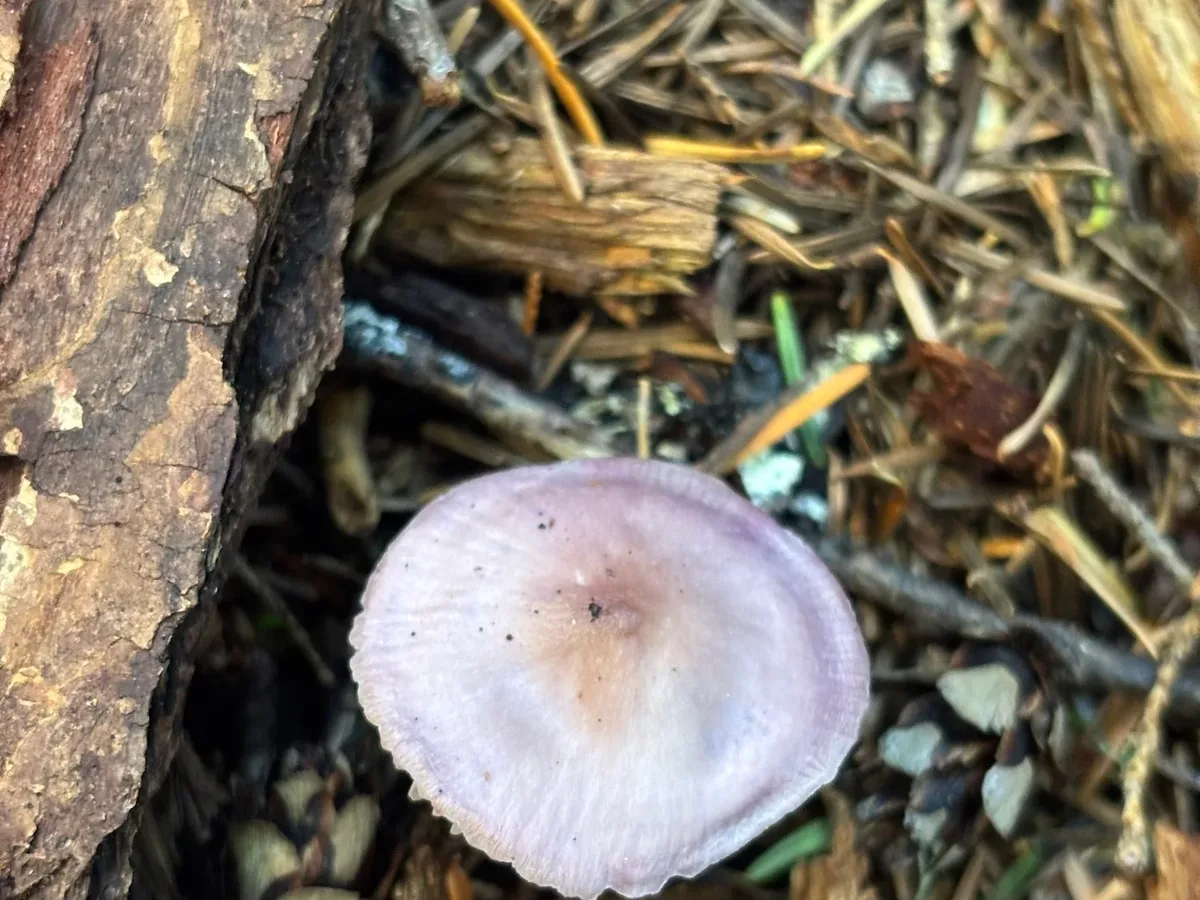
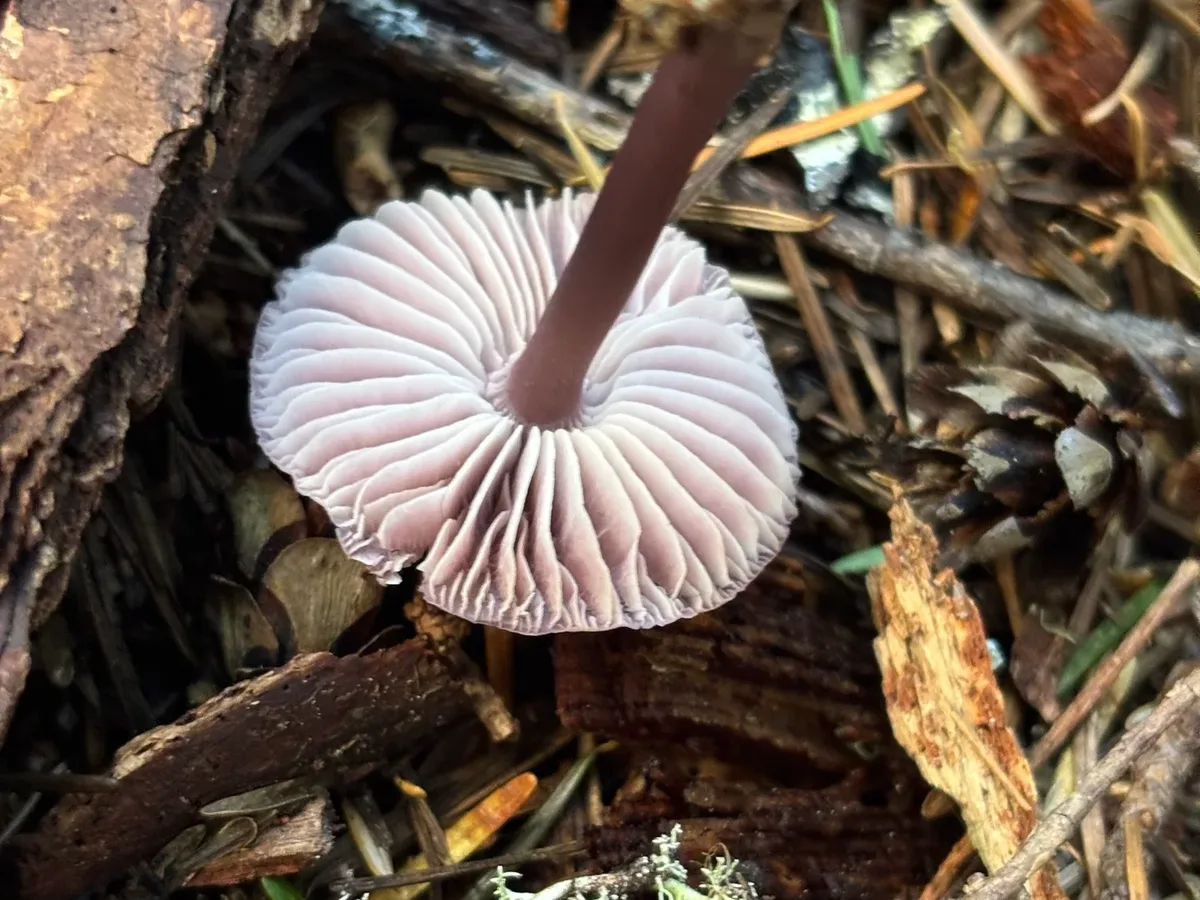
The cap ranges from rich lilac-violet through pink and flesh-tones to nearly pure white, often within a single population; hygrophanous specimens fade dramatically as they dry, stripping away the lilac and leaving a pale greyish disc.
The cap shape progresses from a tight cone in youth to broadly bell-shaped or nearly flat, sometimes with a low central umbo.
Gills
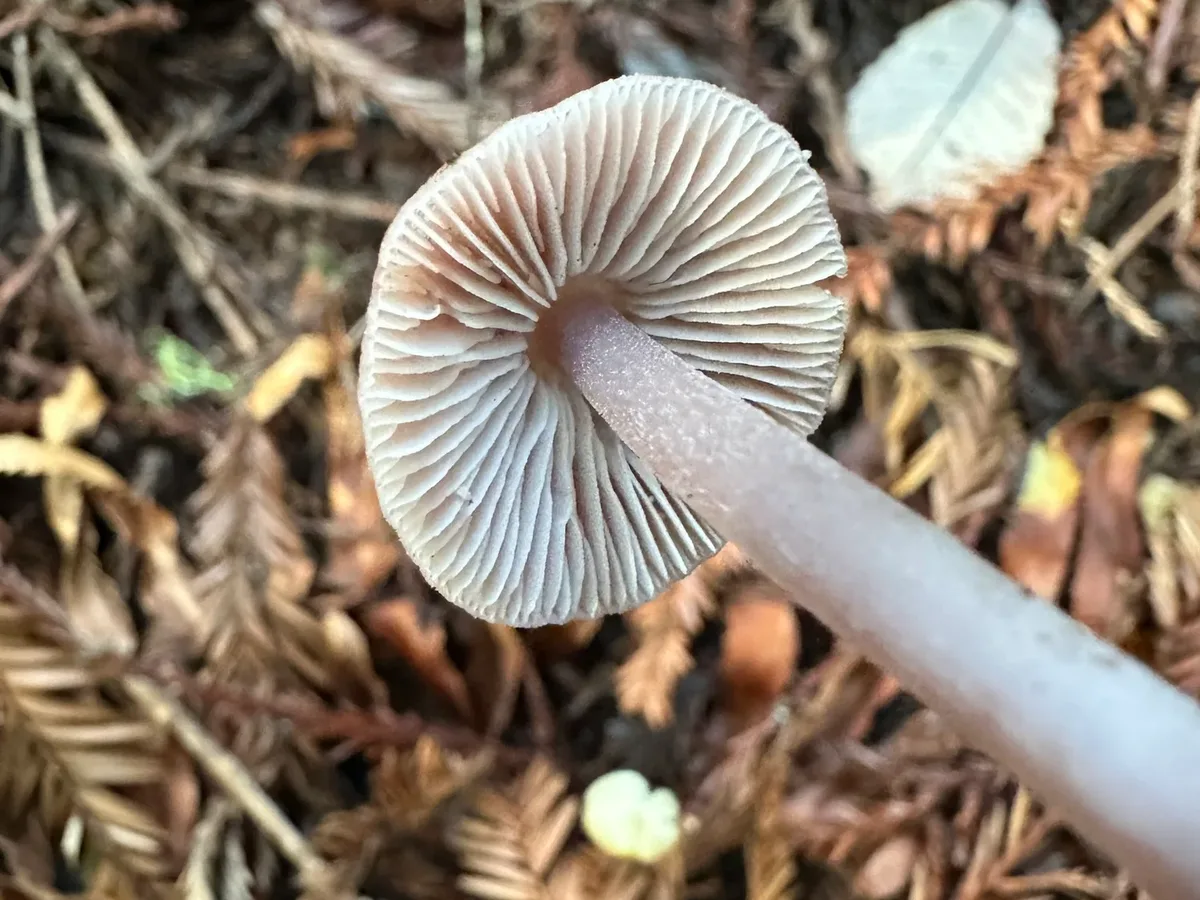
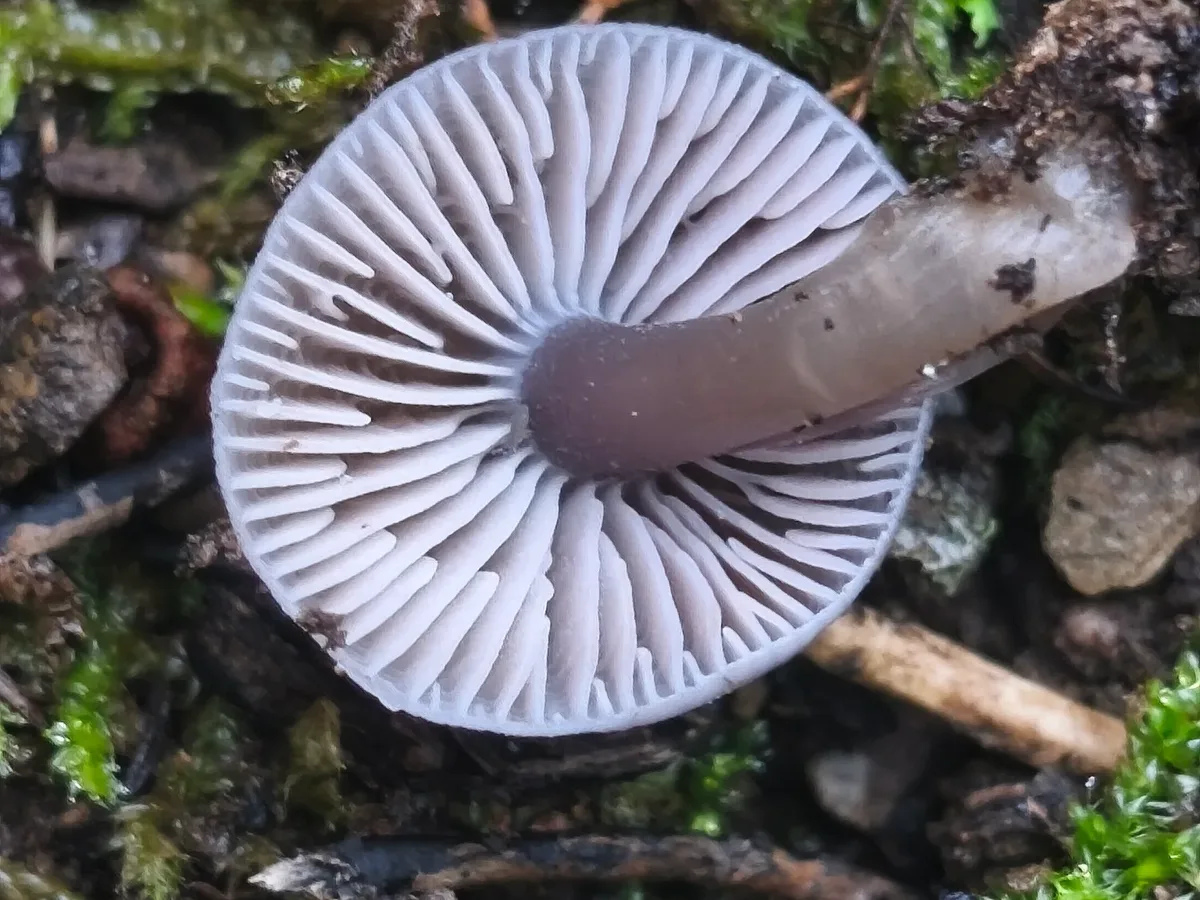
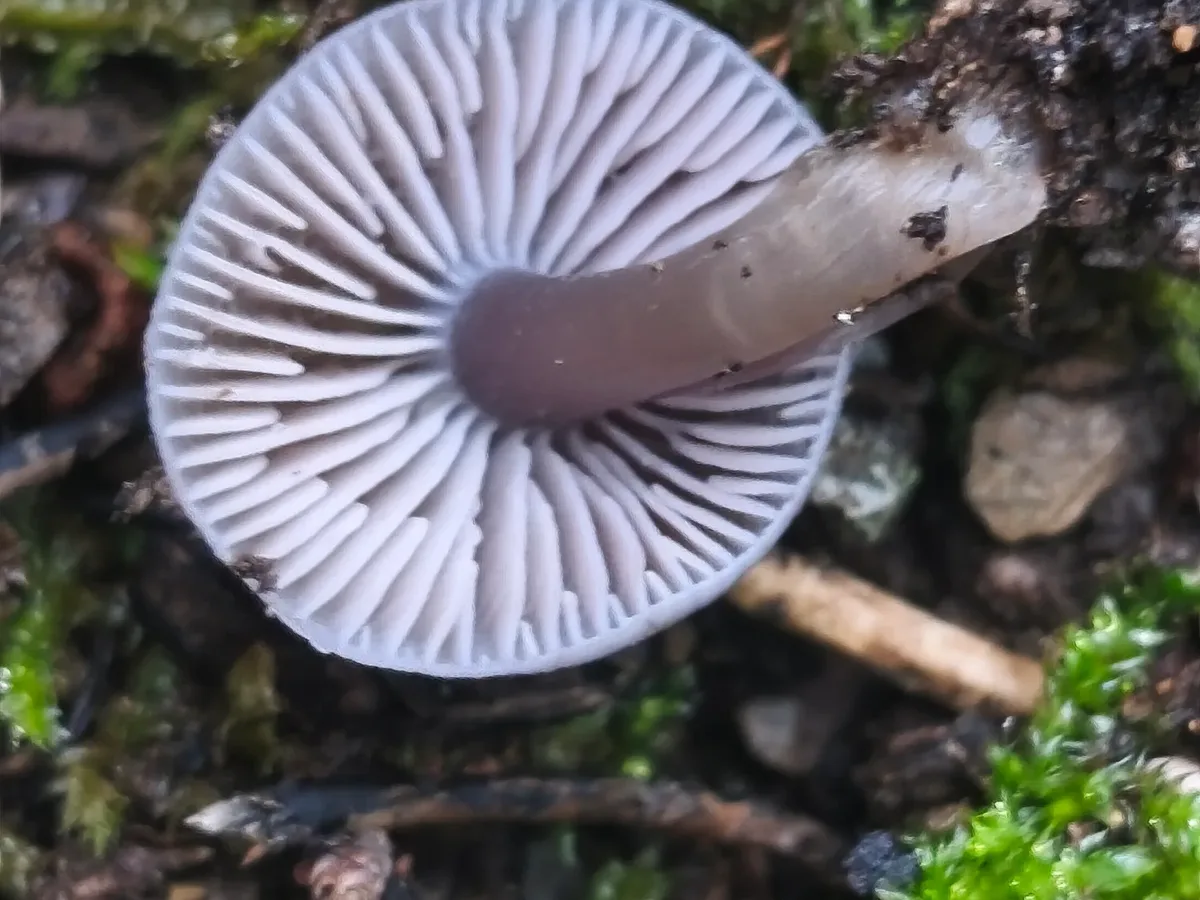
The gills are white to pale lilac-grey, spaced more widely than in most small Mycenas, and feel faintly waxy.
Stem
The hollow stem is fragile and shares the cap's colour palette.
Smell & taste
The single most important character - and the one that eliminates confusion with Lepista nuda - is the unmistakable radish odour: a sharp, peppery Raphanus smell that intensifies when the cap is broken or rubbed. Learn this smell and it becomes your anchor.
The spore print is white.
Why it's dangerous
Although fatalities from Mycena pura alone are very rare, the species is a documented cause of muscarine poisoning in Europe, particularly in Scandinavia and Central Europe.
Its attractiveness - the lilac colour is beautiful - and its historical presence in some older 'edible' lists create ongoing risk.
The main population at risk is adults who confuse it with Lepista nuda (Wood blewit), which is a popular edible. Children who handle and mouth the mushrooms are also at risk.
Treat any small lilac or pink bonnet mushroom in leaf litter as suspect unless you have unambiguous radish-odour confirmation AND expert-level certainty.
Toxin
Muscarine - a quaternary ammonium alkaloid that acts on muscarinic acetylcholine receptors in the parasympathetic nervous system.
Mycena pura contains muscarine at moderate levels. Concentrations vary between specimens but are consistently sufficient to cause clinical symptoms.
Muscarine is not destroyed by cooking, so heat treatment does not make this species safe to eat.
Symptoms
Onset within 15 minutes to 2 hours of ingestion.
Classic parasympathomimetic (SLUDGE) syndrome: excessive salivation, tearing (lacrimation), sweating, nausea, vomiting, diarrhoea, abdominal cramps, bradycardia (slow heart rate), miosis (constricted pupils), and urinary urgency.
In mild cases symptoms resolve within 6-24 hours; in severe cases, particularly after large ingestion, hypotension and bronchospasm can develop.
Antidote: atropine (administered in clinical settings). Contact Poison Control even in mild cases.
Staying safe
Mycena pura is poisonous due to muscarine content. Do not eat it.
The muscarine syndrome has a short onset (15 minutes to 2 hours) and causes characteristic SLUDGE symptoms: salivation, lacrimation, urination, defecation, gastrointestinal distress, and emesis - combined with slowed heart rate (bradycardia), narrowed pupils (miosis), sweating, and abdominal cramps.
Severity depends on the quantity consumed and individual sensitivity; most adult poisonings are unpleasant but not life-threatening. However, children and people with cardiac conditions are at greater risk.
If ingestion is suspected, contact Poison Control immediately - muscarine poisoning is treated with atropine in clinical settings.
Do not eat any small lilac, pink, or grey bonnet mushroom found in leaf litter unless you are an expert capable of confident identification.
Where & when it grows
Habitat
A litter decomposer (saprotroph) of broadleaved and mixed forests, partial to deep accumulations of fallen leaves where it threads its mycelium through the humus layer.
Most productive in beech and oak woodland, but widespread under conifers in the Nordic region.
Appears singly or in small loose groups - never in the dense tufts or rings characteristic of some other bonnet mushrooms.
Look for it from summer through late autumn wherever leaf litter is thick.
When
Mid-summer to late autumn, with a clear peak in late August through October across most of its range.
In Scandinavia the season is compressed into weeks 36-43 (early September to late October), triggered by the combination of warm soil, adequate moisture and the first cooler nights.
In Atlantic climates (UK, western France, the Low Countries) fruiting can persist until November. The species is rarely productive in drought years.
How it grows
Grows singly or in small scattered groups among leaf litter and woody debris.
Each fruiting body rises from fine white mycelial threads visible at the stem base if you carefully ease it from the litter - a reminder that the organism itself lives unseen through the humus for years, surfacing only when rain and cooling temperatures align.
The pattern is typical of litter saprotrophs: a brief flush over several days after adequate rain, then rapid senescence. The hollow, fragile stem means caps collapse quickly after maturation.
If the litter layer remains undisturbed, fruiting will return to the same spot season after season.
Fruiting conditions
As a litter saprotroph, Mycena pura requires moist, cool conditions. Fruiting is triggered by adequate late-summer or autumn rainfall after the soil has begun to cool below 18°C. A flush typically emerges 5-10 days after 15+ mm of rain over 14 days, once overnight temperatures drop to single digits. Dry autumns suppress fruiting significantly.
Look-alikes
Several species pose a realistic confusion risk.
- Lepista nuda (Wood blewit): overlaps in colour - both can be lilac-violet - but is substantially larger (cap 6-15 cm), has crowded, deep violet gills, a meaty texture, and smells fruity or faintly perfumed, never of radish; its spore print is pale pink rather than white. The radish odour immediately separates Mycena pura from Lepista nuda.
- Clitocybe species (particularly Clitocybe fragrans and Clitocybe suaveolens): can be superficially similar in size and growth habitat, but have decurrent gills (running down the stem), a distinct anise or sweet odour, and never have lilac tones; some Clitocybe species contain high levels of muscarine and are more dangerous than Mycena pura itself.
- Other Mycena species - including Mycena rosea (rosy bonnet), which also contains muscarine and smells of radish: differ mainly in colour (Mycena rosea is consistently pink-rose without the greyish or whitish variants of Mycena pura) and are equally toxic; the group is best treated as a whole as toxic small bonnets not for the table.
- Mycena galericulata (common bonnet): larger, grey-brown rather than lilac, and has a mealy smell rather than radish.
Mycena galericulata is larger, grey-brown without lilac tones, has a mealy (flour-like) smell rather than radish, and is generally considered inedible but not acutely toxic in the same way. The colour difference and mealy smell separate it.
Mycena rosea is consistently a uniform rose-pink without the greyish or whitish colour variants of Mycena pura. Both species share the radish odour and are equally toxic with muscarine. Treat both the same way: do not eat.
Clitocybe fragrans has decurrent (downward-running) gills, an anise or sweet perfume odour (never radish), and whitish tones without any lilac coloration. It also contains muscarine and is toxic. The gills running down the stem and the anise smell clearly separate it from Mycena pura.
Lepista nuda is much larger (cap 6-15 cm vs 2-6 cm), has densely crowded deep violet gills, a meaty, non-fragile texture, a fruity or faintly perfumed smell (never radish), and a pale pink spore print (Mycena pura has a white spore print). The radish odour of Mycena pura immediately eliminates Lepista nuda.
A reference guide - never an edibility guarantee. When in doubt, leave it out.