Common bonnet
Mycena galericulatasyn. Agaricus galericulatus, Agaricus rugosus, Mycena rugosa, Mycena polygramma var. galericulata
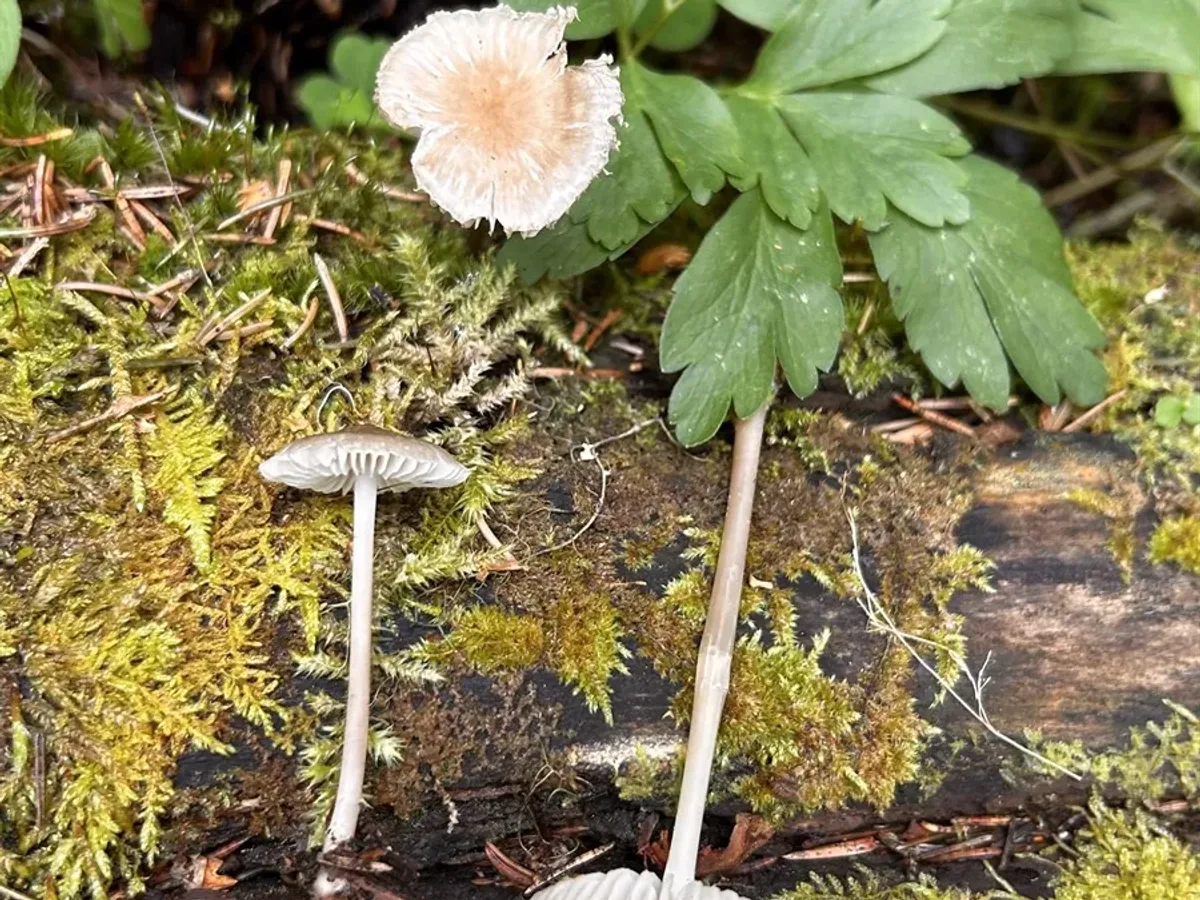 © Kjersti Nerbråten Tjernshaugen (CC BY)
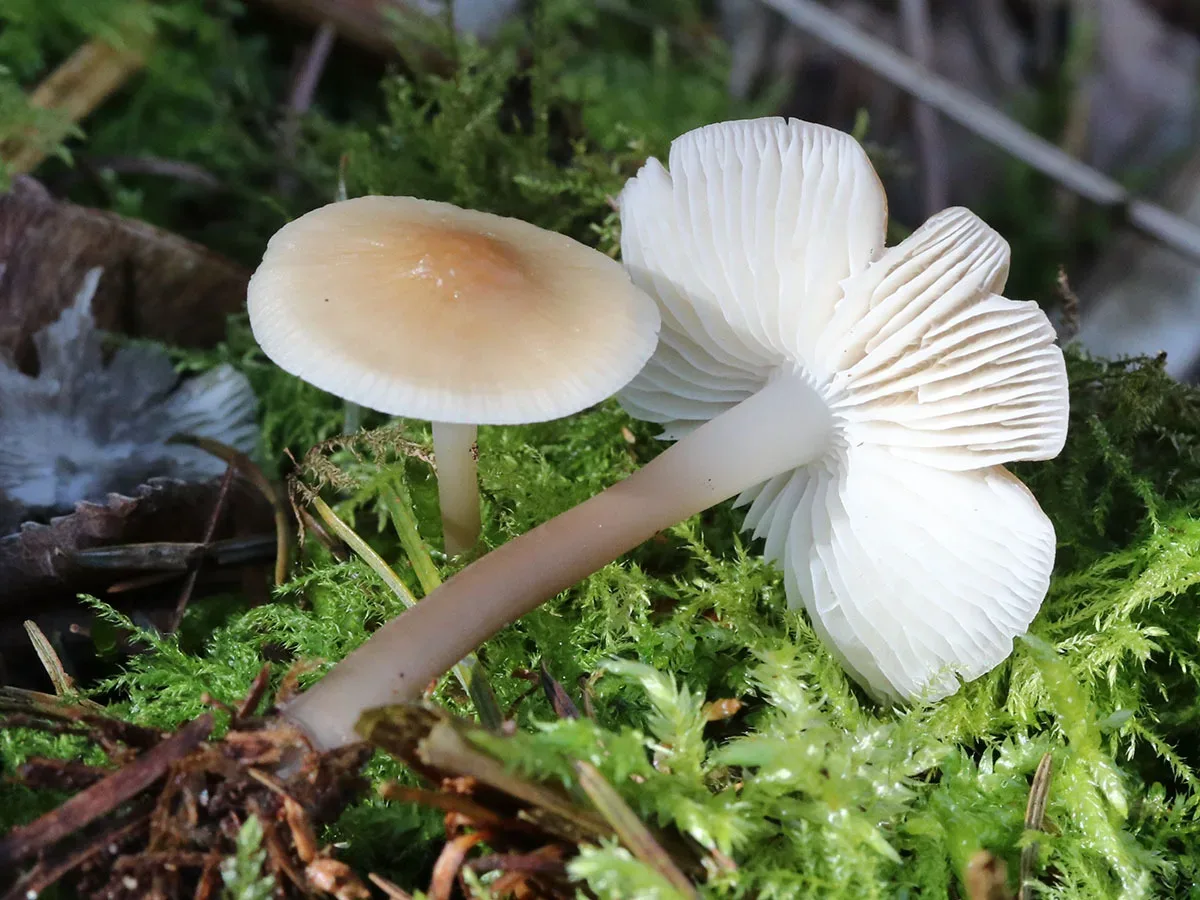 © Daniel Ghyselinck (CC BY)
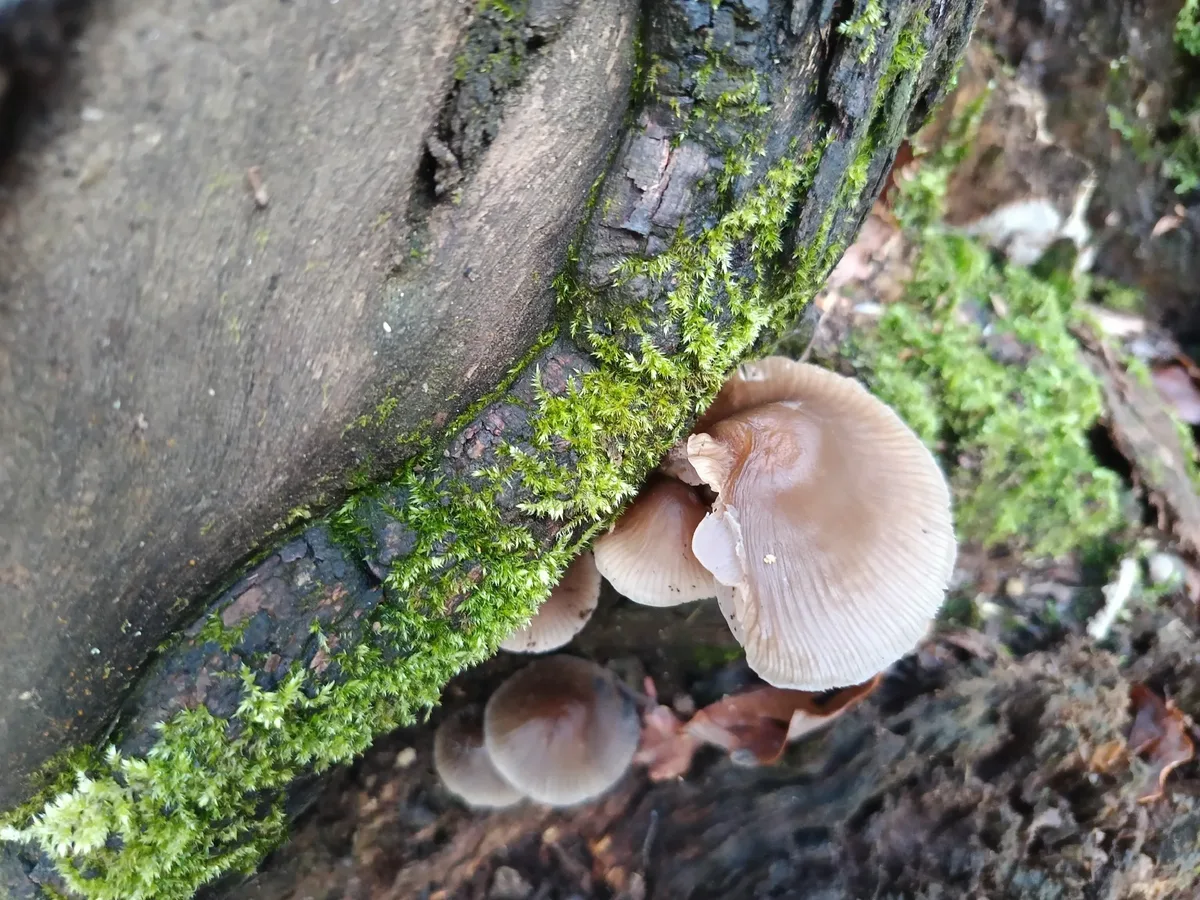 © Carl Ramirez (CC BY)
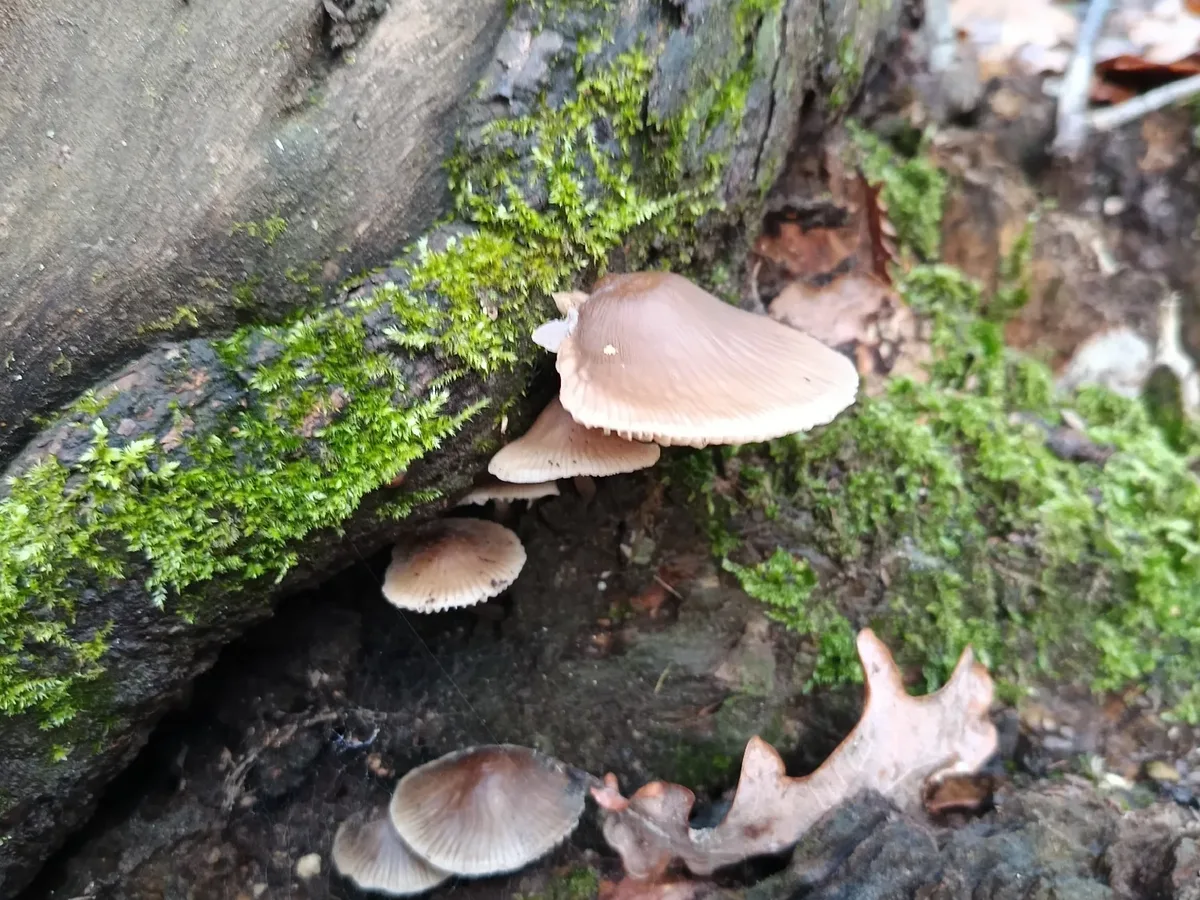 © Carl Ramirez (CC BY)
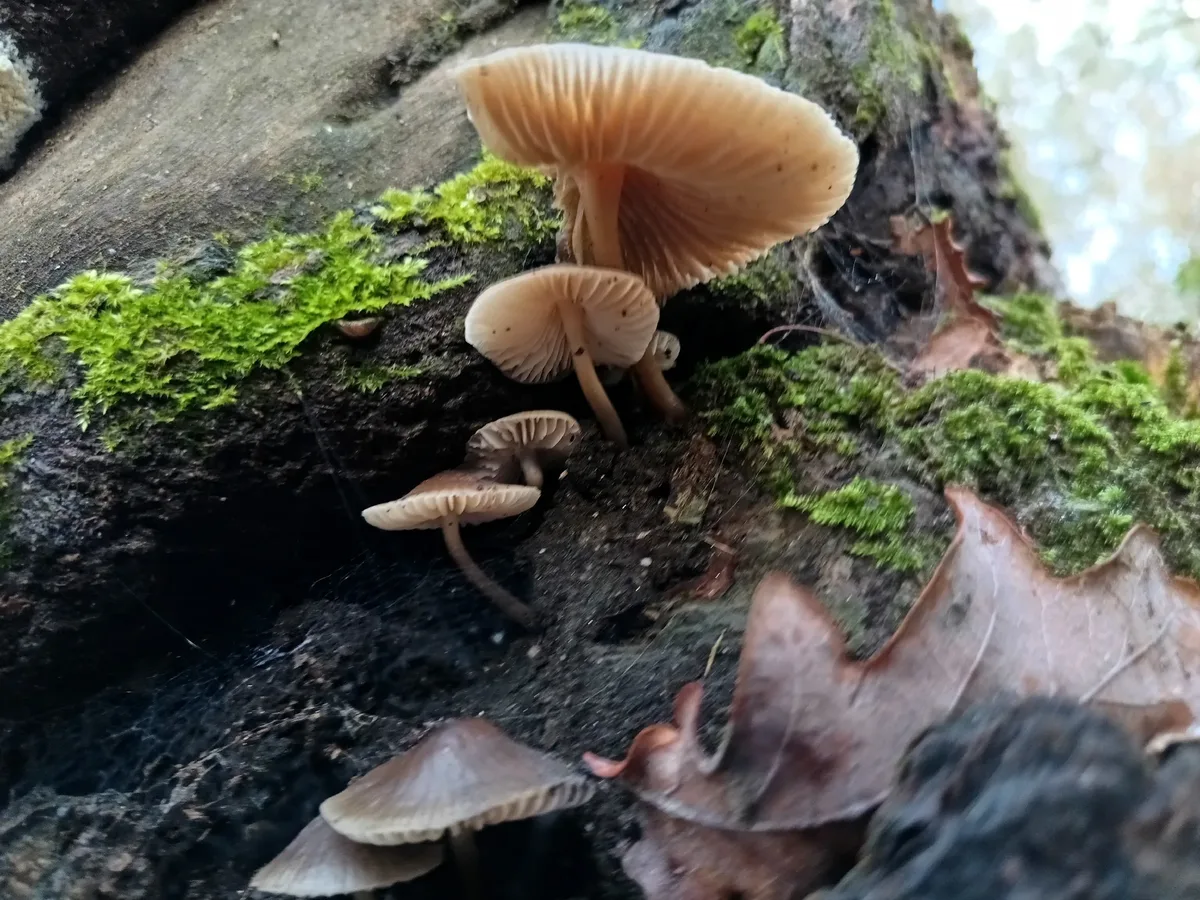 © Carl Ramirez (CC BY)
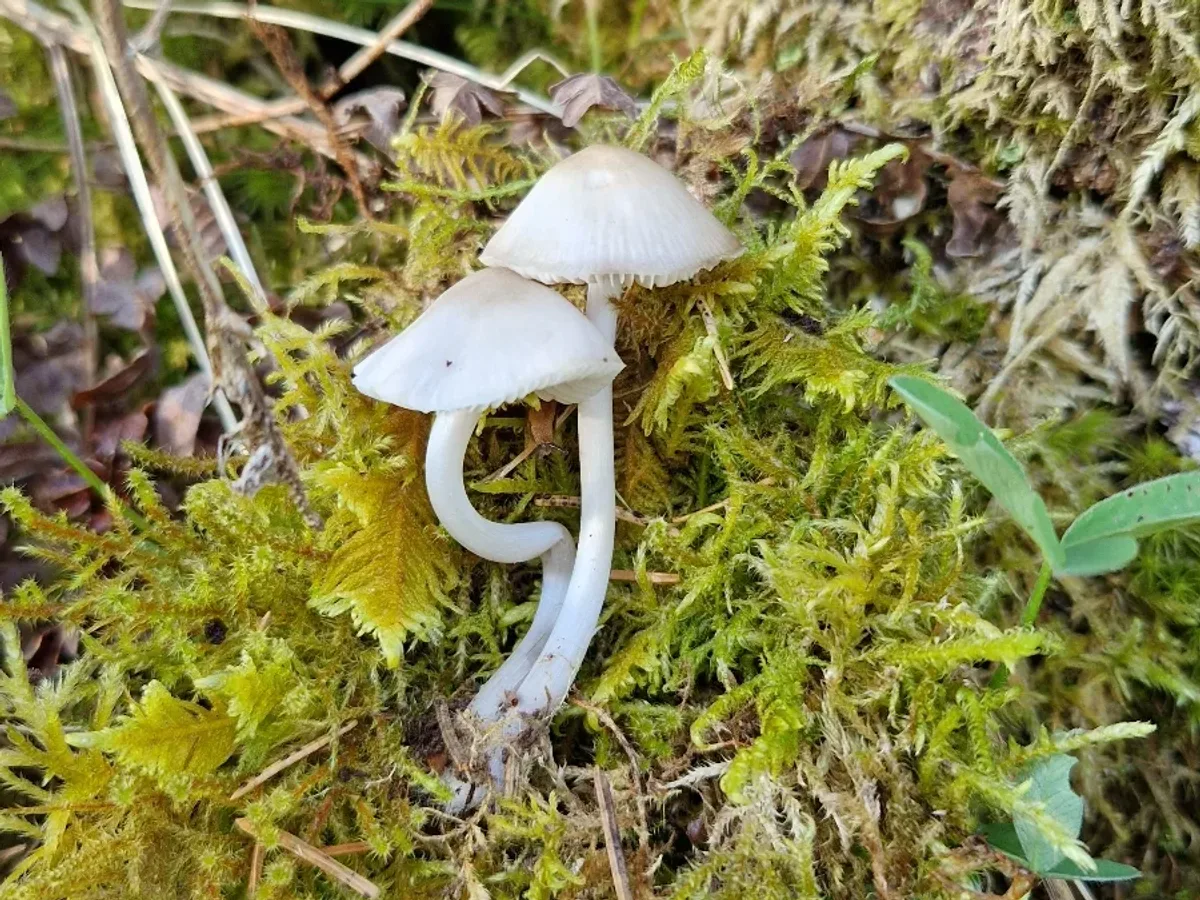 © Anne Christenson (CC BY)
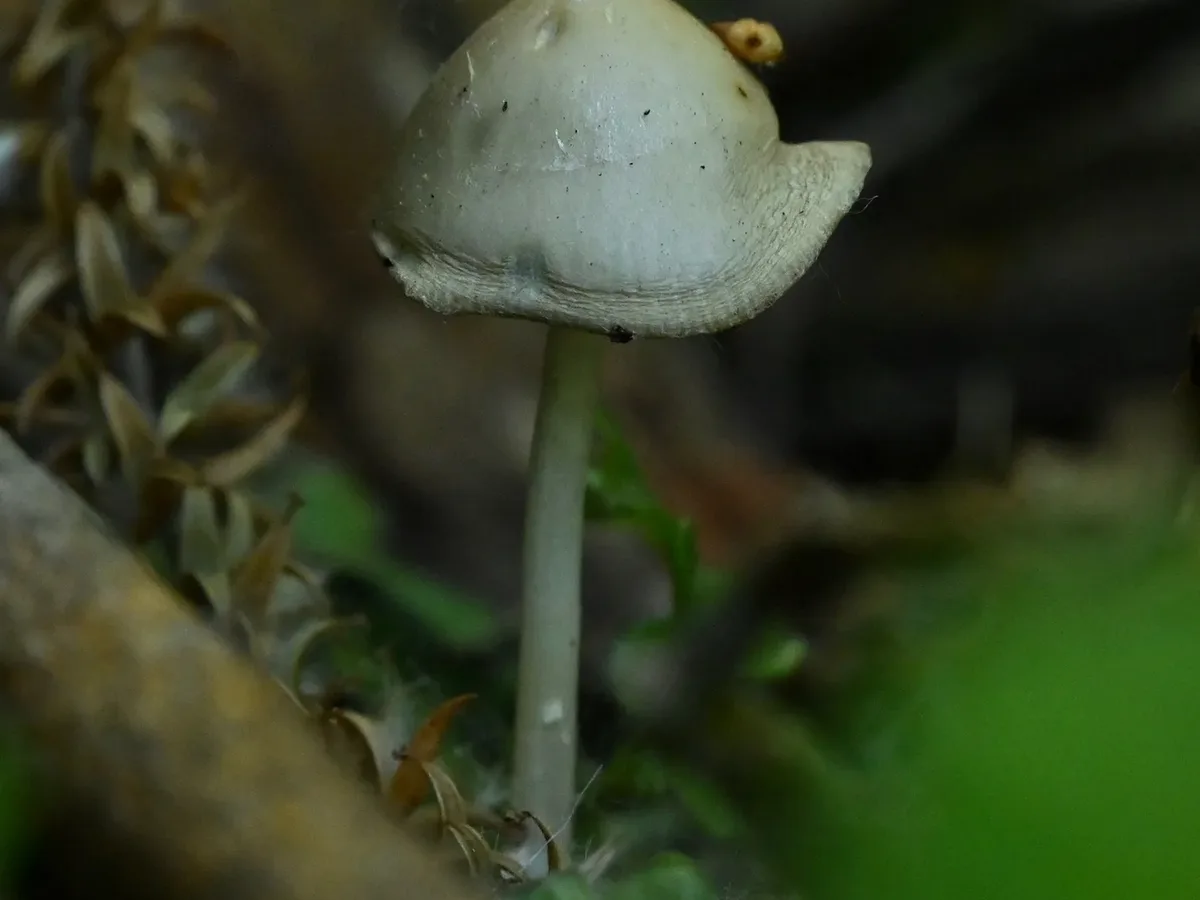 © Maciej Boenisch (CC BY)
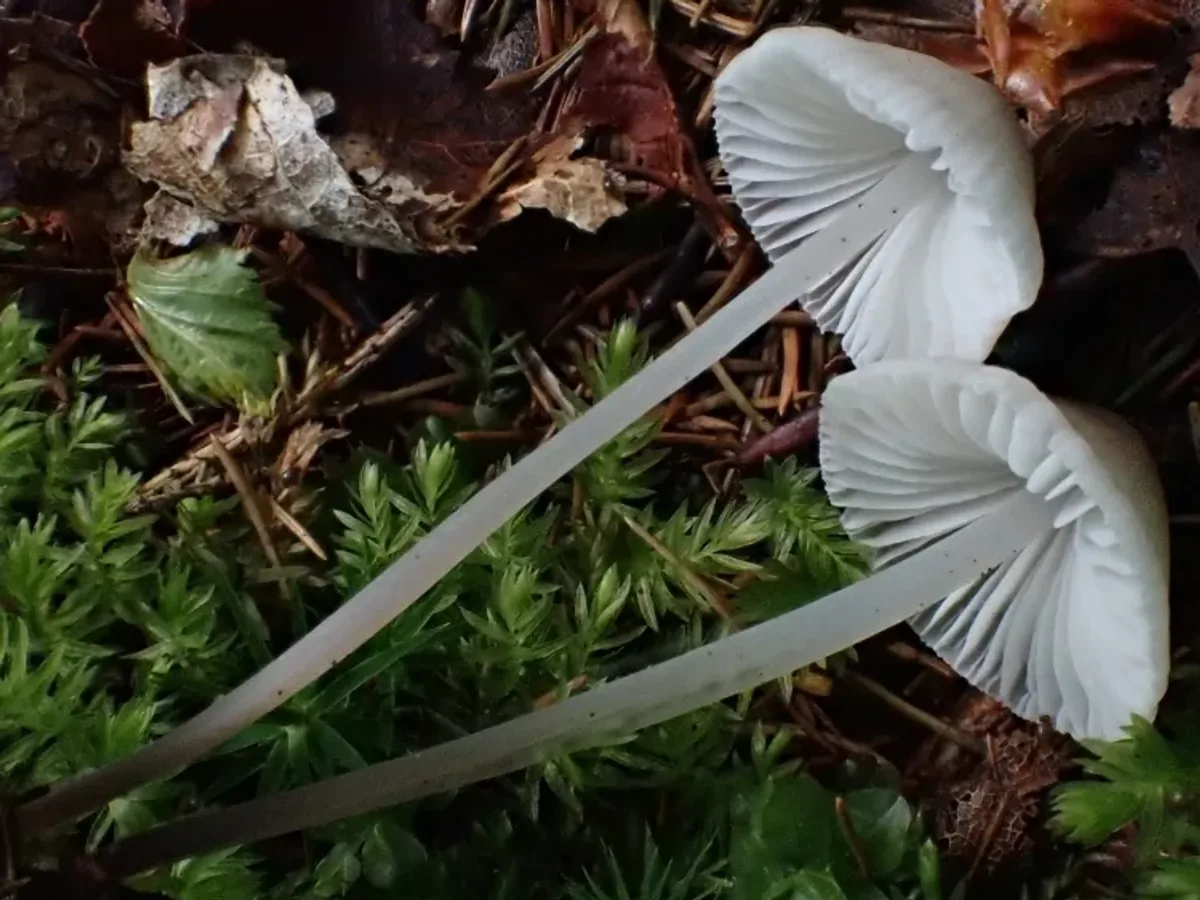 © Morten Pettersen (CC BY)
 © Morten Pettersen (CC BY)© Kjersti Nerbråten Tjernshaugen (CC BY)© Daniel Ghyselinck (CC BY)
Not poisonous, but not worth eating - too tough, bitter, or bland for the pot.
Never eat a mushroom you are not 100% sure of - check the look-alikes below, and always cook wild mushrooms.
How to recognise it
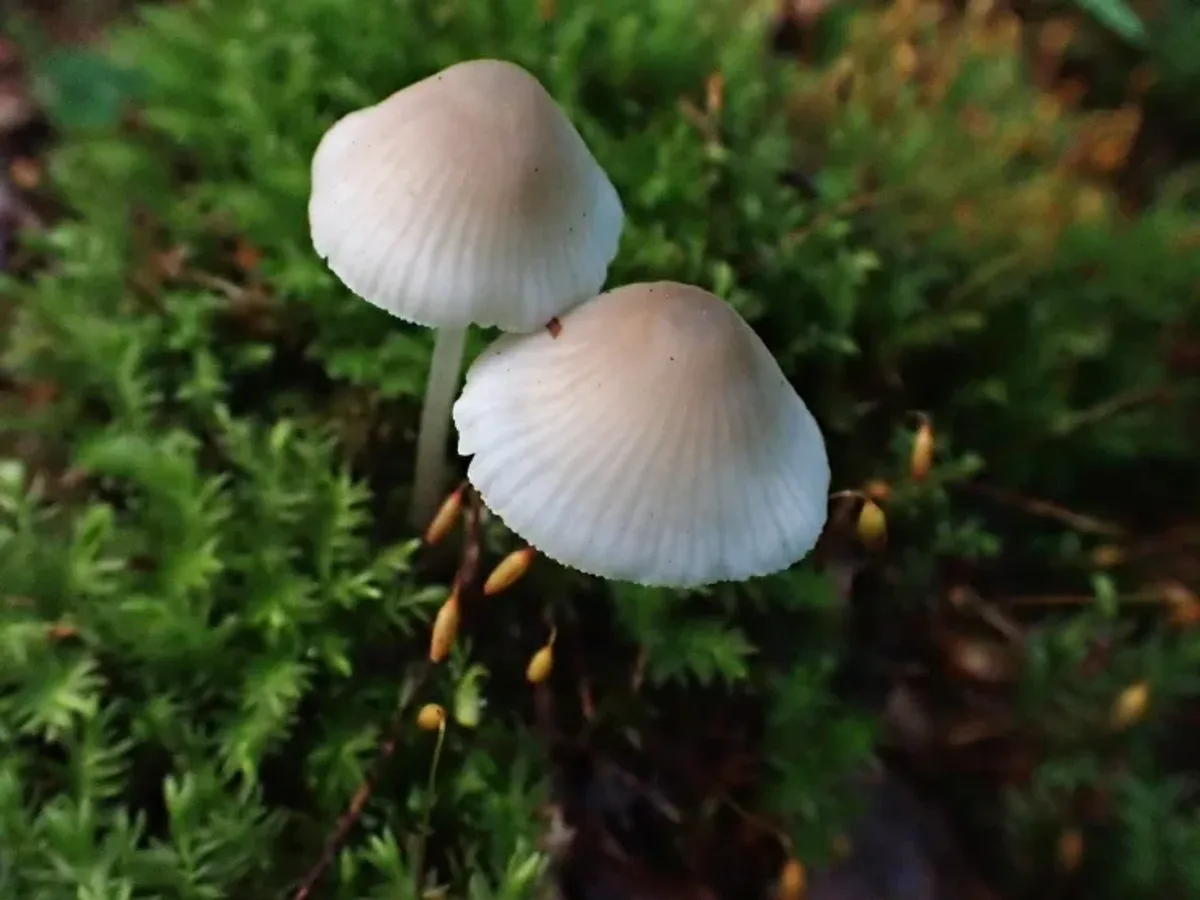
Mycena galericulata is a medium-sized bonnet mushroom, immediately recognisable by three convergent features: its densely tufted habit on dead hardwood, the pale pink tinge the gills acquire with age, and the tough, cartilaginous stem that resists tearing and is firmly rooted into the substrate.
Cap
The cap opens from a sharply conical shape into a broad bell with a persistent central umbo; the margin is distinctly striate (grooved) when moist, reflecting the gill arrangement below.
Cap colour is a soft grey-brown to buff with a slightly darker centre, fading to near-whitish at the striate margin. In wet weather it appears darker and more hygrophanous but does not display the dramatic two-tone colouring of some related species.
Gills
The gill-pinkening is subtle but reliable - gills start white and progressively assume a pale flesh or rosy-buff tone from the centre outward as the spores mature. Under a hand lens the gill edges are even and whitish.
Stem
The stem is long relative to cap width, flexuous, often twisted, and distinctly cartilaginous - it bends without snapping and will not split cleanly longitudinally.
Its surface is silky and slightly greasy, grey to whitish above and darker grey below. The base tucks firmly into wood or bark, sometimes fused with neighbouring stems into a tight cluster.
Smell & taste
Spore print is white; spores are amyloid (react blue-black in Melzer's reagent), a feature shared across most Mycena species. Microscopically, the presence of clamp connections and club-shaped cheilocystidia without pleurocystidia distinguishes this from some close relatives.
Where & when it grows
Habitat
A dedicated wood decomposer (white rot), Mycena galericulata colonises the dead wood of a broad range of deciduous trees and less commonly conifers.
It is most at home in humid lowland broadleaved woodland - oak-beech-birch forest in Western and Central Europe, mixed hardwood stands in eastern North America - but ventures into parks, gardens, and urban trees wherever deadwood persists.
It is almost always found in clusters erupting from stumps, fallen trunks, or from roots of dead trees that remain buried, the fruiting bodies sometimes appearing to arise from bare soil with the rotting root some distance below.
In Scandinavia it is common on birch and alder deadwood along stream margins and in boreal-temperate transition forest.
When
One of the longer-fruiting Mycena species, M. galericulata can appear from April or May through to December or even later in mild oceanic climates. In most of its range it peaks in October and November, when humidity is high and temperatures have dropped below 10 °C.
A secondary flush in spring is not uncommon after winter rains. It is rarely seen at the height of summer except in cool upland or shaded riparian habitats.
In the Pacific Northwest and maritime Western Europe it is virtually a year-round species on suitable substrates.
How it grows
Fruits densely caespitose (in tight clusters of many fruitbodies sharing fused stipe bases) or, more rarely, solitary to scattered. Individual clusters can number 10-50 or more fruitbodies arising from a single stump or log.
The species causes a white rot, producing the enzymes laccase and peroxidase to break down lignin; this white, stringy rot is visible if the substrate is broken open near the fruiting base.
Mycelium spreads through dead wood and may travel along buried roots, so clusters sometimes appear some metres from the visible dead wood source.
Fruiting conditions
Responds to sustained cool, moist conditions rather than sharp temperature drops. Mycelium already established in dead wood; fruiting is triggered when wood moisture content rises following autumn rainfall and temperatures fall below ~15 °C. Can flush repeatedly through the same substrate across multiple seasons.
Handle with care
Toxin
No characterised human toxin is known in M. galericulata.
Some Mycena species (e.g. M. pura, M. rosea) contain muscarine; M. galericulata is not reported to do so.
Symptoms
If accidentally ingested in quantity: possible mild gastrointestinal irritation from the mealy-bitter compounds, but no serious toxicity expected. No deaths attributable to this species.
If Galerina marginata is accidentally consumed instead, symptoms begin 6-24 hours after ingestion with severe vomiting and diarrhoea, followed by a false improvement, then liver and kidney failure - seek emergency medical attention immediately.
Look-alikes
The most important lookalike in a foraging context is the DEADLY Galerina marginata (funeral bell), which also clusters on dead wood and shares a grey-brown cap, mealy odour, and similar size.
Galerina is separated by its RUSTY-BROWN spore print (M. galericulata is white), the presence of a ring or ring-zone on the stem, brown mature gills, and a non-cartilaginous stem. Always take a white spore print before trusting any small clustered wood-rotting mushroom.
Other lookalikes to separate:
- Mycena maculata also grows in clusters on wood with a similar grey-brown cap, but develops distinctive reddish-brown staining spots on the gills and cap surface with age - M. galericulata shows no such spots.
- Mycena polygramma is a close relative growing singly on buried wood, distinguished by the strongly striate (grooved and ribbed) stem that appears 'polished silver' and lacks the densely clustered habit; it does not develop pink gills.
- Mycena stipata grows in similarly large clusters on conifer deadwood, has a strongly ammoniacal (bleach-like) odour, and its gills remain white or cream.
- The clustered Marasmius oreades (fairy ring champignon) grows in grass, not on wood, and has widely-spaced gills and a leathery, drying-and-reviving cap.
- Coprinellus micaceus (glistening inkcap) grows in dense clusters from buried wood, has a deeply grooved ochre-brown cap with mica-like granules when young, and gills that autodigest to black ink - very different from Mycena.
- Hypholoma fasciculare (sulphur tuft) also clusters on wood but has a bright sulphur-yellow cap, yellow-olive gills that darken to purple-grey, and a bitter taste - it is poisonous.
Why it matters
HIGH MISIDENTIFICATION RISK. While M. galericulata itself is not toxic, it shares its tufted-on-wood habitat and small brown appearance with the DEADLY Galerina marginata (amatoxin-containing, potentially fatal).
Confirm white spore print and absence of a stem ring before handling any small clustered wood-rotting mushroom in this context.
DEADLY - contains amatoxins (same as death cap), fatal if consumed. Can grow in dense clusters on dead wood; cap honey-brown to grey-brown, hygrophanous; stem with a narrow, fragile ring or ring-zone; spore print RUSTY-BROWN (not white); mealy odour similar to M. galericulata. M. galericulata always has a WHITE spore print, NO ring on stem, and gills that turn pale pink at maturity. Taking a white spore print is the non-negotiable safety check before consuming any small clustered wood-rotting mushroom.
Grows in dense clusters on conifer deadwood; distinguished by a strong bleach-like (ammoniacal) odour - quite different from the mealy-rancid smell of M. galericulata - and gills that remain white.
Tufted on buried wood or at tree bases; cap tawny-ochre with fine mica-like granules (best on young specimens), deeply radially grooved; gills autodigest to black inky fluid. No pink gills; white spore print excluded by the inky autodigestion. Very different in maturity.
Usually solitary or loosely gregarious rather than densely tufted; stem conspicuously longitudinally grooved and silvery-grey ('polished'); odour similar but gills remain white to cream without pinkening.
Clusters on dead hardwood; strongly hygrophanous two-tone cap (ochre centre, pale beige rim when drying); stem with a ring (annulus) and distinctly scaly-brown below the ring; spore print cinnamon-brown. An edible species but must not be confused with the deadly Galerina marginata, which grows in similar situations.
Also tufted on dead wood with similar grey-brown cap, but develops distinctive reddish-brown spots and stains on the gills and cap surface with age; M. galericulata shows no such spots. Gills of M. maculata may also pink, making this a close lookalike requiring careful comparison.
Dense clusters on dead wood but cap is bright sulphur-yellow, gills yellow then greenish-grey to purple-black; spore print purple-brown; taste intensely bitter. Poisonous - causes serious gastrointestinal illness.
In the kitchen
Picking & cleaning
Mycena galericulata is not gathered for the table - the flesh is thin and watery, and the mealy-rancid odour does not invite a second opinion. Its value to the mushroom hunter lies elsewhere: this is one of the most instructive species in the whole bonnet genus.
A single cluster on a stump lets you practise four Mycena field marks at once:
- tufted growth on dead wood
- gill pinkening with age
- a striate cap margin
- the distinctive cartilaginous stem that bends without snapping
When collecting for study, lift entire clusters intact so the fused stipe bases remain together, and keep specimens separate in a paper bag. Smell them immediately on picking; the mealy-rancid quality fades quickly and is easiest to catch while the mushrooms are still fresh.
If you are using this find to cross-check against Galerina marginata, take a spore print before anything else - a clean white print is the reliable separator.
Cooking
Not used culinarily. The flesh is thin, watery, and the mealy-rancid odour does not dissipate with heat.
Discard any specimens collected accidentally.
Good to know
Mycena galericulata is considered inedible due to its small size, watery thin flesh, and unpleasant mealy-rancid odour that persists on cooking. There are no reports of significant toxicity; it is not classified as poisonous.
The primary safety concern is misidentification: the DEADLY Galerina marginata (funeral bell) also clusters on dead wood, shares a similar grey-brown cap and mealy odour, and grows in the same habitats. Galerina contains amatoxins - the same compounds found in the death cap - and a single cap can be fatal.
The key distinguishing features are:
- 1M. galericulata always has a WHITE spore print; Galerina's is rusty-brown.
- 2M. galericulata has no ring on the stem; Galerina has a ring or ring-zone.
- 3M. galericulata gills turn pale pink at maturity; Galerina gills remain brown.
Never consume any small clustered wood-rotting mushroom without confirming a white spore print.
Some Mycena relatives contain psilocybin or irritant compounds, and the genus presents substantial identification challenges for non-experts - avoid eating any Mycena species without expert verification.
A reference guide - never an edibility guarantee. When in doubt, leave it out.