Black landscape morel
Morchella importunasyn. Morchella elata auct. Pacific Northwest, Morchella conica auct. p.p.
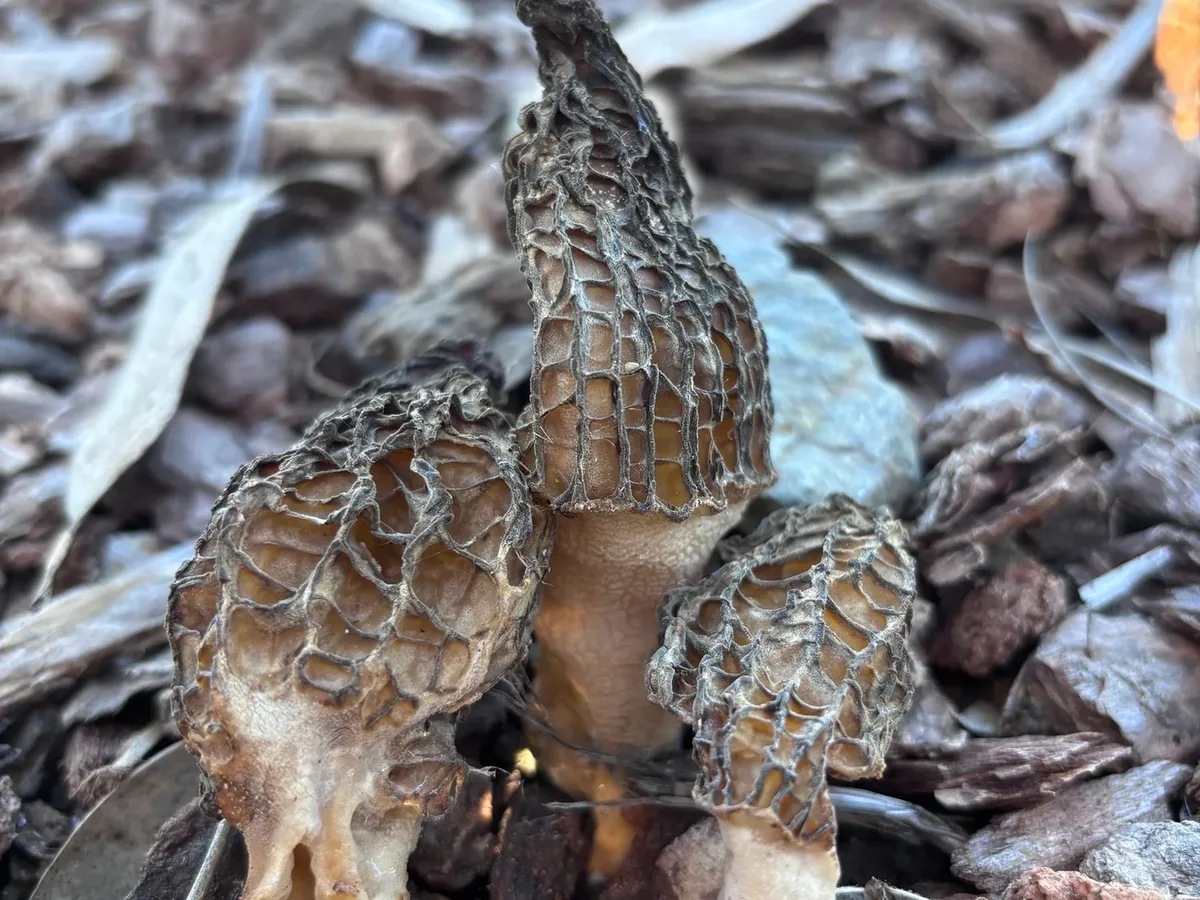 © reagan peschke (CC BY)
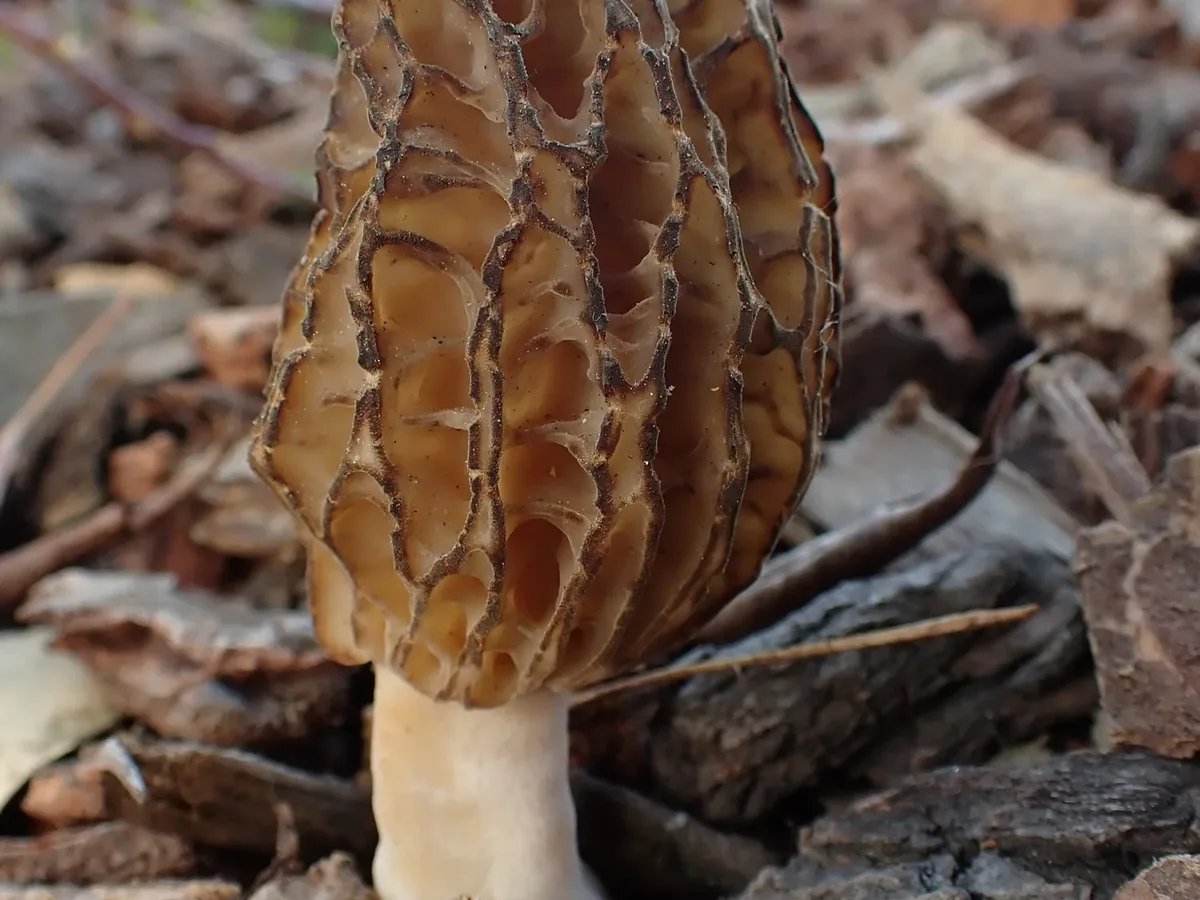 © reagan peschke (CC BY)
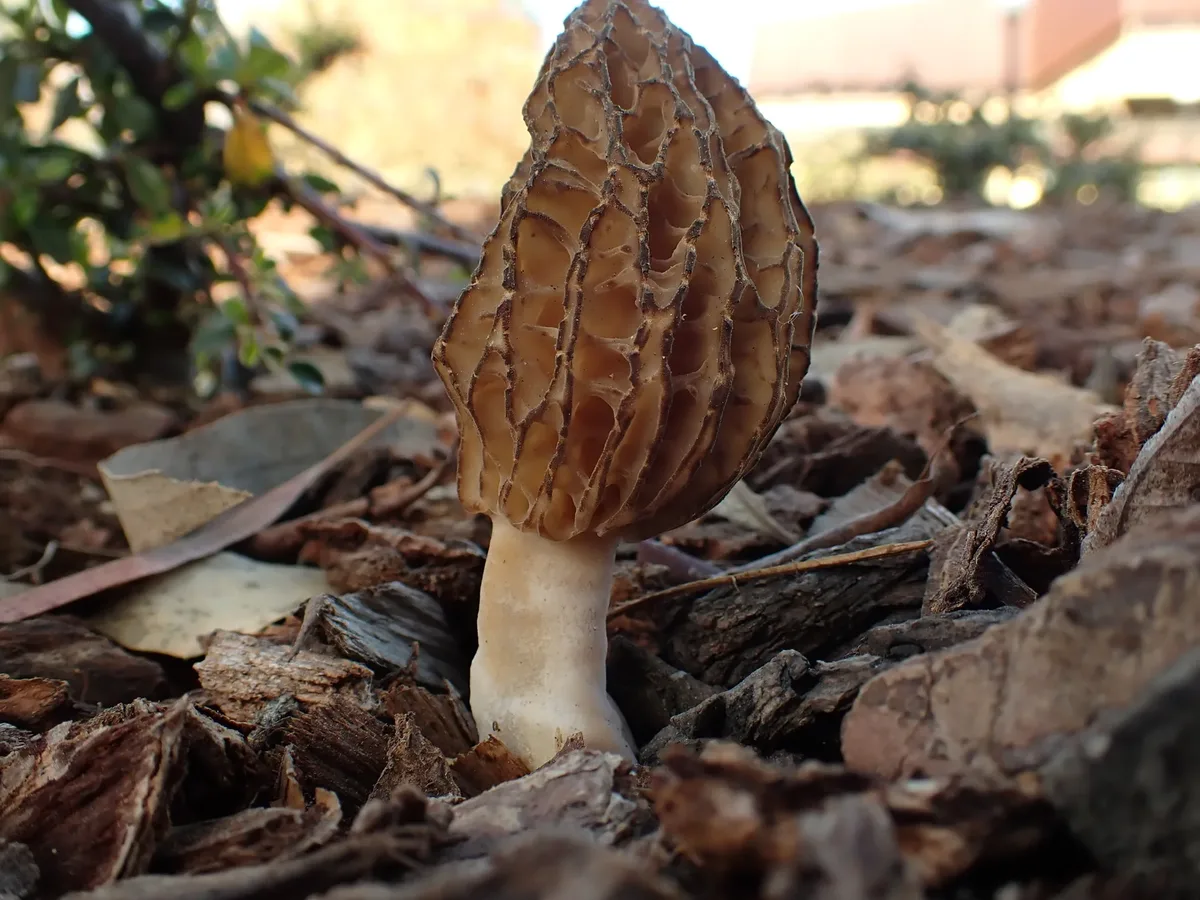 © reagan peschke (CC BY)
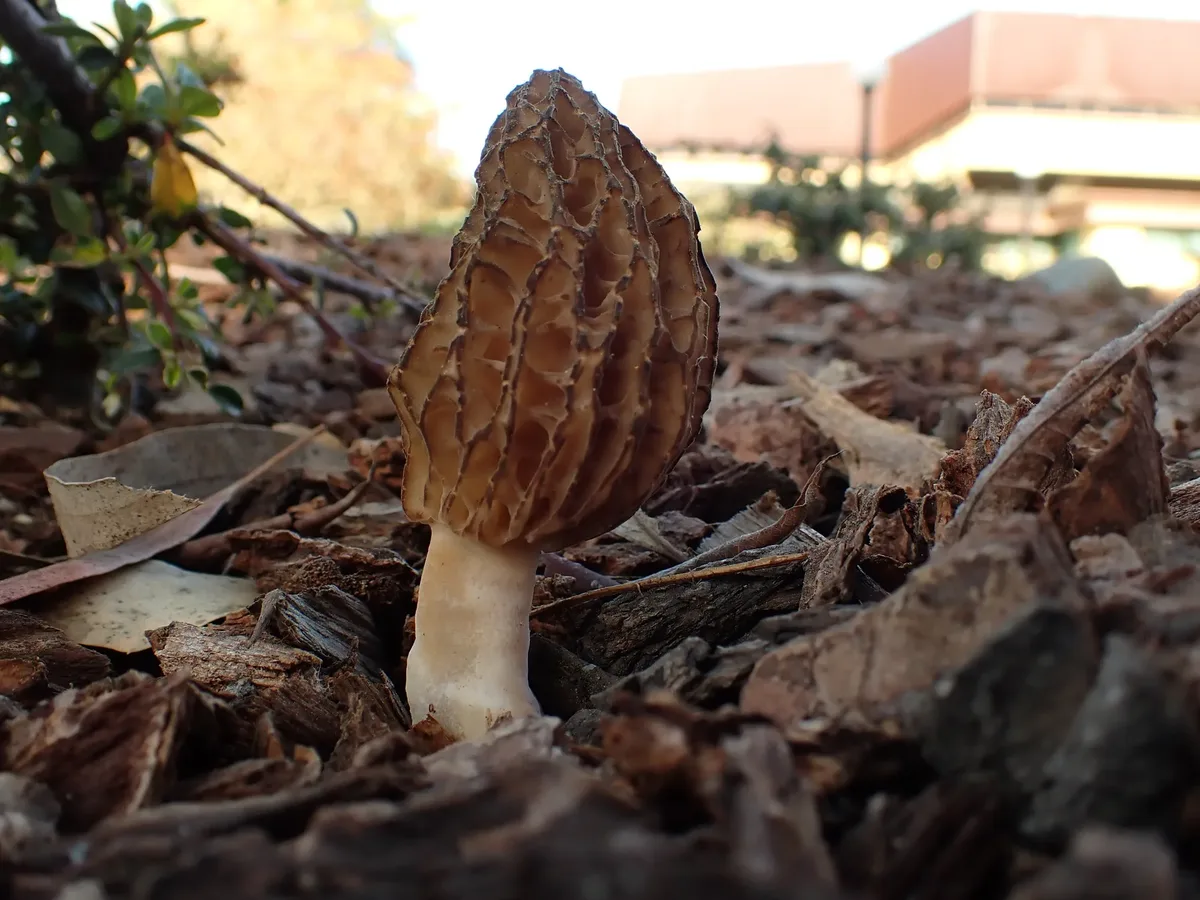 © reagan peschke (CC BY)
 © reagan peschke (CC BY)
 © reagan peschke (CC BY)
 © reagan peschke (CC BY)
 © reagan peschke (CC BY)
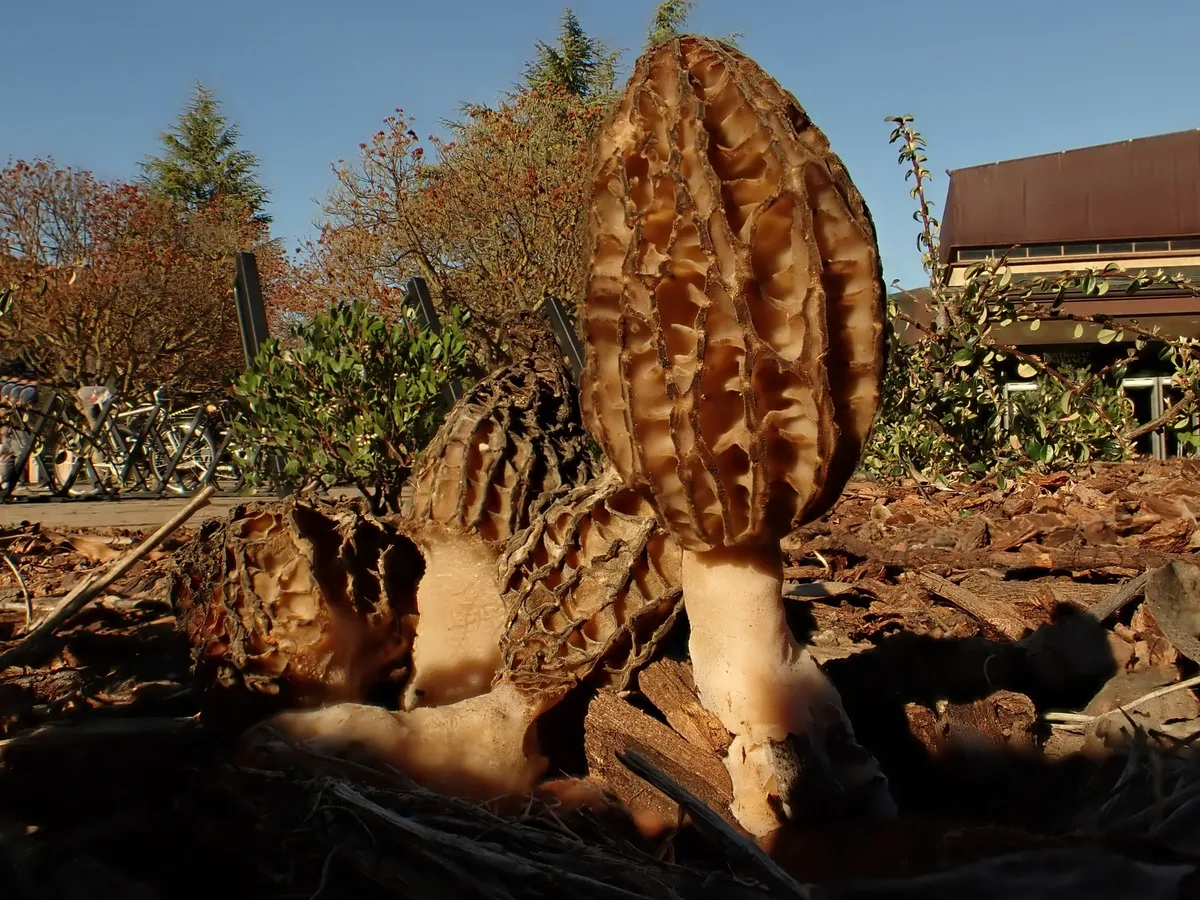 © reagan peschke (CC BY)© reagan peschke (CC BY)© reagan peschke (CC BY)
One of the best mushrooms you can bring home - once you are certain of the identification.
Never eat a mushroom you are not 100% sure of - check the look-alikes below, and always cook wild mushrooms.
How to recognise it
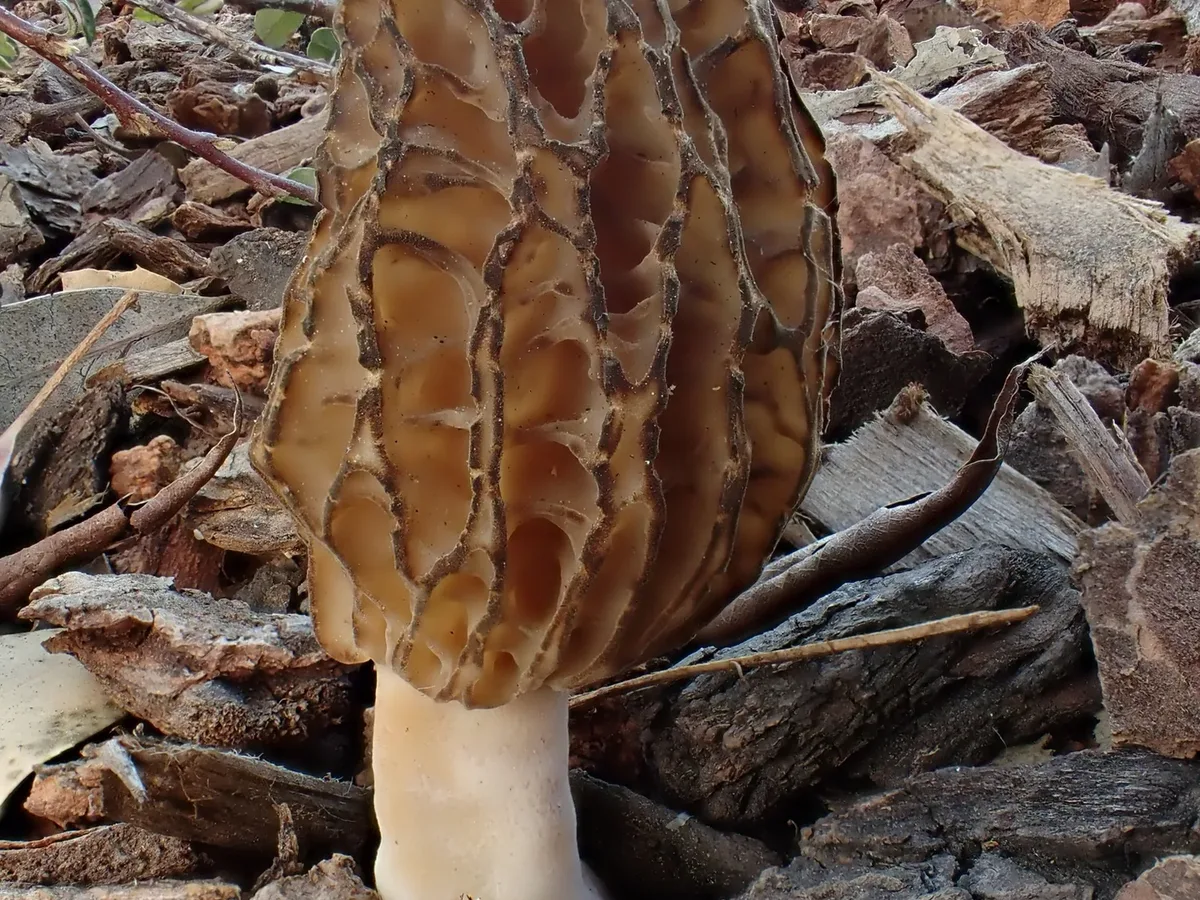
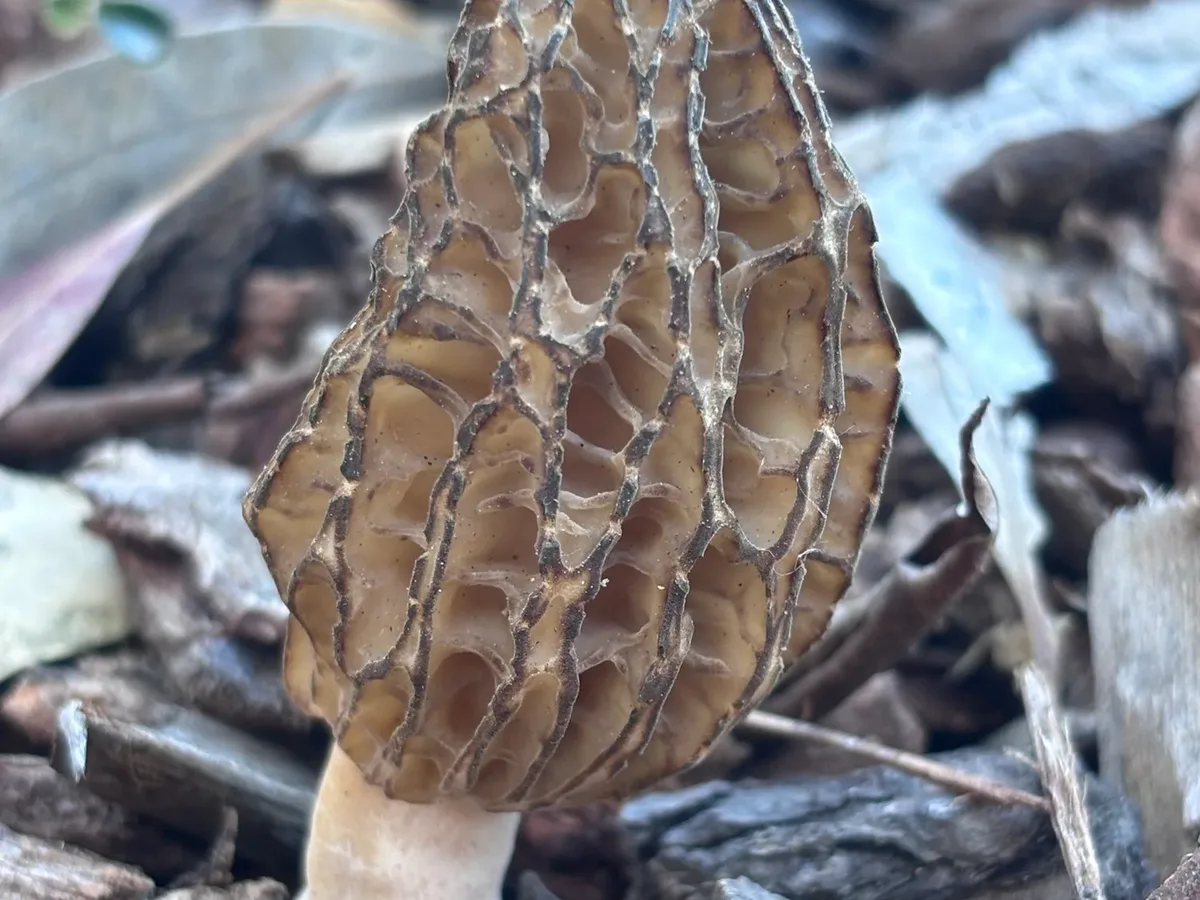
M. importuna belongs to the black morel group (Elata clade) and has the conical, deeply honeycomb-pitted head that makes true morels so distinctive.
Cap
The head stands 3-9 cm tall and 2-5 cm wide, attached to the stem at or near its base with only minimal free overhang.
Ridges start out pale grayish to tan when the mushroom is young, then gradually darken to charcoal-gray or near-black as it matures - this darkening is one of the most reliable visual cues. The pits between ridges stay paler, a grayish-buff to ochre-tan.
Cut one open lengthwise and you will find a single, clean, continuous hollow running from cap tip to stem base; any solid tissue or irregular chambers disqualify it as a true morel.
Stem
The stem is 3-10 cm × 1.5-4 cm, white to cream, with a mealy-granular texture especially toward the top, and sometimes develops shallow longitudinal grooves.
Flesh
Flesh is white and brittle, with a mild, pleasant earthy odor. Spore print pale creamy yellow.
Where & when it grows
Habitat
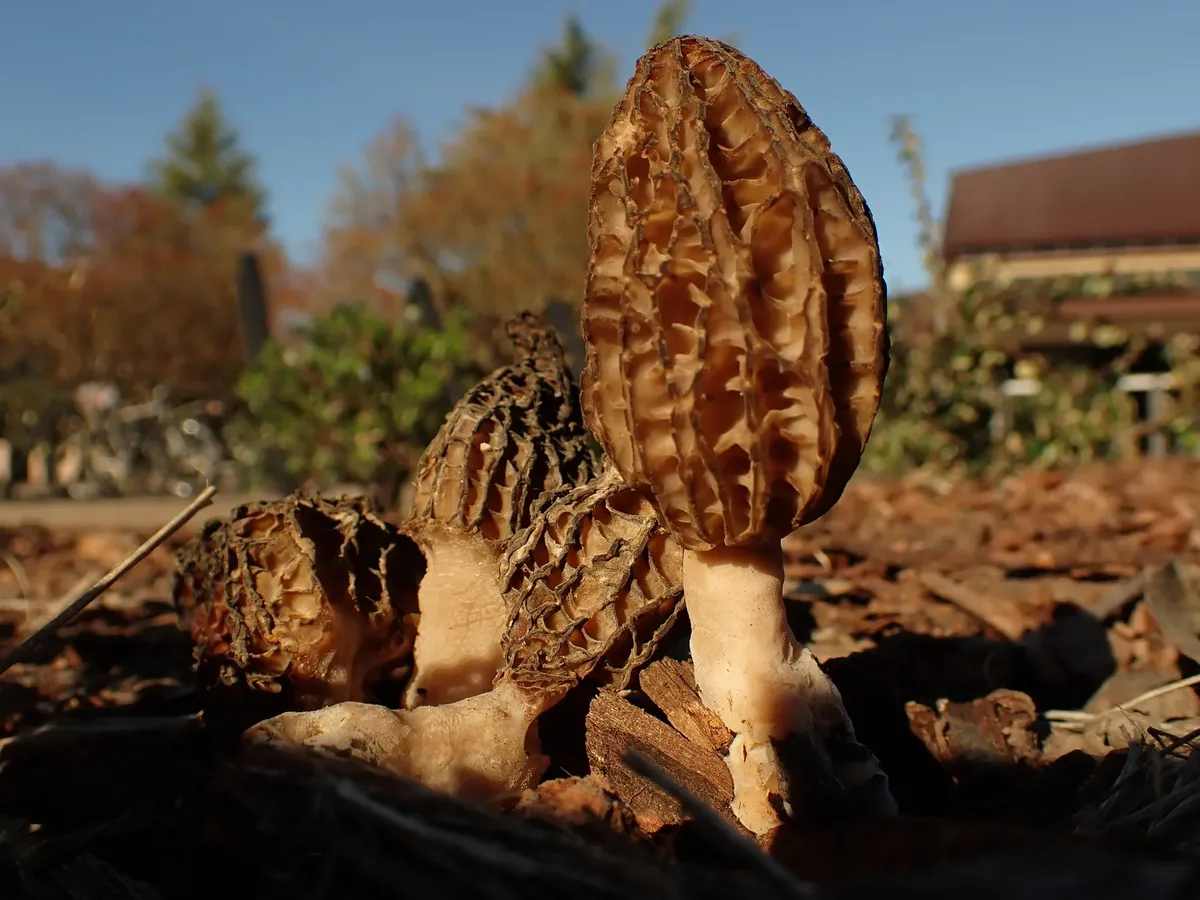
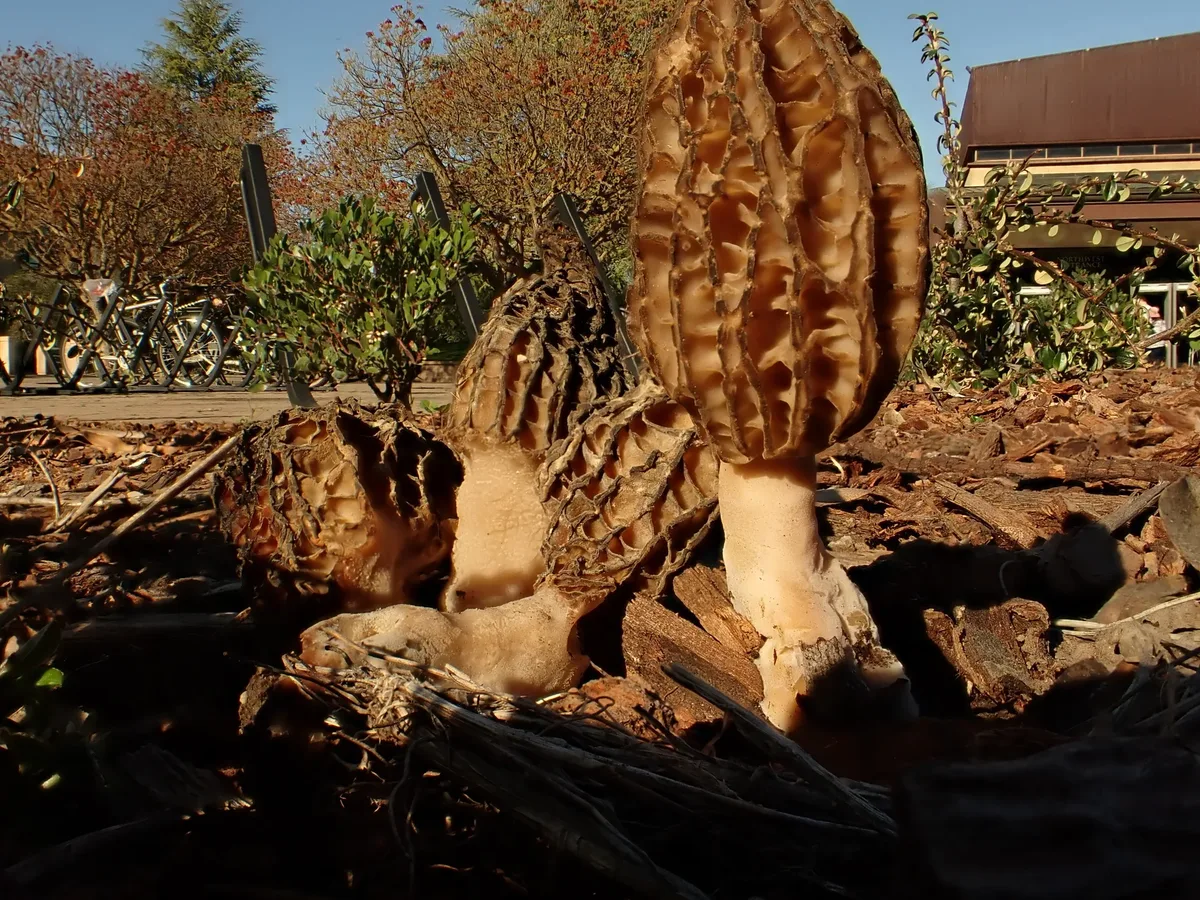
M. importuna is the morel you are most likely to find in a city park or a suburban garden - and that is not an accident. It is a true disturbance specialist, thriving wherever wood-chip or bark mulch has been laid down: landscape borders, ornamental beds, chip-covered pathways, and park plantings are all productive ground.
The same species can also explode in post-fire conifer stands in the Cascades and Sierra Nevada, sometimes in remarkable numbers the spring after a wildfire burns through.
Substrates range from decaying wood chips to burnt forest duff to disturbed mineral soil.
Unlike many morel species, M. importuna does not appear to need a specific tree partner and is considered saprotrophic or weakly saprotrophic in mulch habitats, though facultative associations may occur in forested settings.
When
In the Pacific Northwest - British Columbia, Washington, Oregon, and northern California - M. importuna fruits from late February in warm coastal years through May. Peak abundance is typically from late March through late April at lower elevations.
Post-fire populations at mid-elevation (800-1,500 m) can push fruiting into June.
One of the pleasures of urban landscape morels is their repeatability: once a mulch bed produces, it often does so year after year at roughly the same time, making them easier to plan for than forest species.
How it grows
Fruiting bodies emerge singly to scattered, or in loose dense groups from mulch or burned soil.
In landscaped settings the same beds can produce morels repeatedly over several consecutive years - the mycelium persists and waits for the right spring conditions.
In post-fire forests the first spring after a burn is often the most spectacular flush, then productivity drops sharply in years 2-3 as the post-fire nutrient pulse fades.
Growth is fast: in warm, dry weather a fruiting body can mature and begin to deteriorate within just 5-7 days of breaking the surface.
Fruiting conditions
Fruiting is most reliably triggered by warming spring soils (8-15 °C) combined with moderate moisture. In mulch-bed habitats, watering from irrigation systems can substitute for rain. Post-fire populations respond primarily to snowmelt and soil temperature the spring after a wildfire; a wet autumn before the fire year is anecdotally correlated with better post-fire crops.
Look-alikes
The most critical confusion species are the false morels in the genus Gyromitra, particularly Gyromitra esculenta (false morel / brain fungus) and Gyromitra infula (saddle-shaped false morel).
These species have a wrinkled, brain-like, lobed, or saddle-shaped cap rather than the honeycomb-ridged-and-pitted structure of a true morel. They are not truly hollow - a cross-section reveals irregular chambers and cottony tissue, not a single open hollow.
Gyromitra esculenta contains gyromitrin, a toxin that hydrolyzes to the potent carcinogen and hepatotoxin monomethylhydrazine (MMH); poisonings have been fatal.
Verpa bohemica (early morel, wrinkled thimble-cap) has a cap that is attached only at the apex to the stem (cap hangs free around the stem) and ridges that run longitudinally without the crossbar pitting of a true morel; it also contains low levels of gyromitrin.
Verpa conica (smooth thimble-cap) has a smooth to finely wrinkled cap attached only at the apex.
None of these are true morels and all carry risk.
The distinguishing features of M. importuna are:
- 1The fully hollow, contiguous interior from cap tip to stem base.
- 2True honeycomb pitting with distinct ridges and pits.
- 3Cap attached to stem at or near its base.
- 4Ridges darkening to gray-black with age.
Cap is convoluted, brain-like, reddish-brown to brown - never honeycomb-pitted. Interior is NOT a single hollow cavity but has irregular chambers and cottony mycelium. Contains gyromitrin (converted to toxic MMH in the body). Fatal poisonings recorded. Never confuse with any true morel.
Cap is saddle-shaped or irregularly lobed, reddish-brown; not conical or honeycomb-pitted. Interior chambered, not truly hollow. Also contains gyromitrin. Fruits later in the season (late summer-autumn) so temporal overlap with spring morels is minimal but possible at elevation.
Also a true morel (fully hollow, honeycomb cap); distinguished from M. importuna by broader, more rounded pits, cap color tending toward tan to golden-yellow rather than darkening gray-black ridges, and distinct ecological preference for orchards, elm and ash stands, and disturbed floodplains rather than mulch beds or burn sites. Both are edible choice; the distinction matters for ecological understanding and precise identification.
Cap attached only at the very apex of the stem (hangs freely at the sides, like a thimble placed on a peg). Ridges run mainly longitudinally without true crossbar pitting creating a honeycomb. Stem cotton-stuffed (not fully hollow). Contains trace gyromitrin; considered suspect - cook thoroughly. Fruits slightly earlier than Morchella importuna.
A true (edible) morel but the lower half of the small honeycombed cap hangs free of the stem rather than being fully fused at the base. Much smaller cap relative to a long stem. Must still be thoroughly cooked.
Cap smooth to very finely wrinkled (NOT honeycomb-pitted), attached only at apex to stem, thimble-like. Stem hollow or stuffed with cottony pith. Edibility suspect; should be thoroughly cooked.
In the kitchen
Picking & cleaning
Harvest only fully formed, healthy specimens that smell fresh and earthy - nothing sour or chemical.
- Cut at the base with a knife rather than pulling, which leaves nearby developing fruitbodies undisturbed.
- A mesh or wicker basket lets spores disperse as you walk.
- Always cut each specimen lengthwise before the basket goes home: the interior must be a single clean hollow, completely free of insects or decay.
- Discard anything slimy, over-mature, or that smells of ammonia.
Cook thoroughly before eating - raw morels cause gastrointestinal illness. In landscaped settings, it is worth asking whether the site has been treated with pesticides or herbicides before picking.
Cooking
Morchella importuna is considered one of the finest edible wild fungi. The deeply pitted cap structure traps butter, cream, and cooking juices, making it exceptional for sautéeing in butter with shallots and fresh thyme.
- 1Halve or quarter large specimens and rinse gently to remove grit from the pits.
- 2Sauté in generous unsalted butter over medium-high heat until golden and tender (8-12 minutes).
Use in cream sauces for pasta or risotto, stuffed with herbed ricotta, or simply on toast. Morels pair superbly with eggs, cream, Madeira, and asparagus.
Dried morels (dehydrate at 55 °C until brittle) rehydrate excellently and intensify in flavor; soak 20 minutes in warm water and reserve the soaking liquid as stock.
Good to know
All true morels (Morchella spp.) contain thermolabile hemolysins and should never be eaten raw or undercooked. Consuming raw morels causes nausea, vomiting, and diarrhea.
Thorough cooking (minimum 10-15 minutes, internal temperature >70 °C) destroys these compounds. Some individuals may experience gastrointestinal sensitivity even with cooked morels, particularly when consumed with alcohol.
Confirm identification by examining the cut interior - any solid or chambered tissue rules out a true morel.
Be aware of potential contamination from pesticides or herbicides in landscaped settings. Do not consume if the specimen has an ammonia or sour odor.
A reference guide - never an edibility guarantee. When in doubt, leave it out.