Black Morel
Morchella elatasyn. Morchella conica, Morchella angusticeps (misapplied to European material), Phallus esculentus L.
 Евгения (CC0)
 Евгения (CC0)
 Евгения (CC0)
 Евгения (CC0)
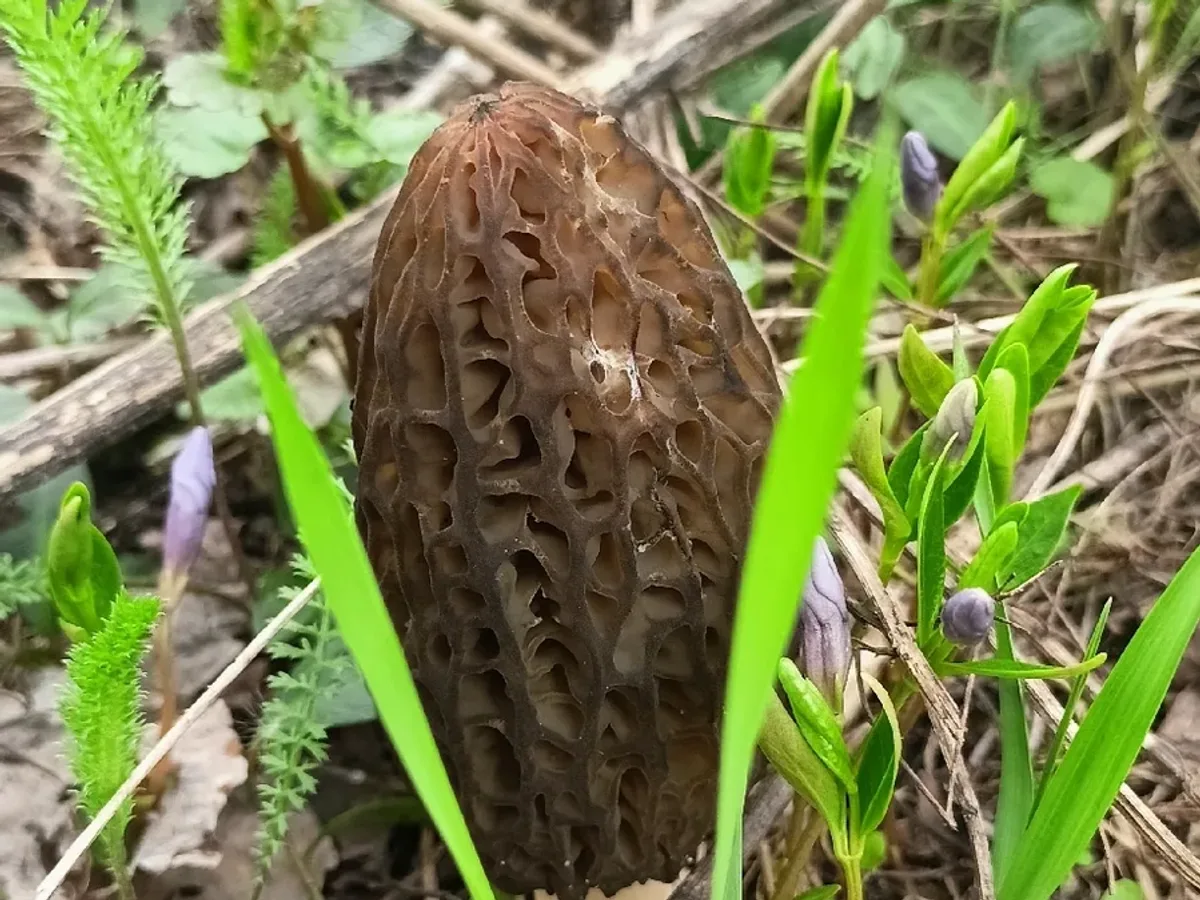 Евгения (CC0)
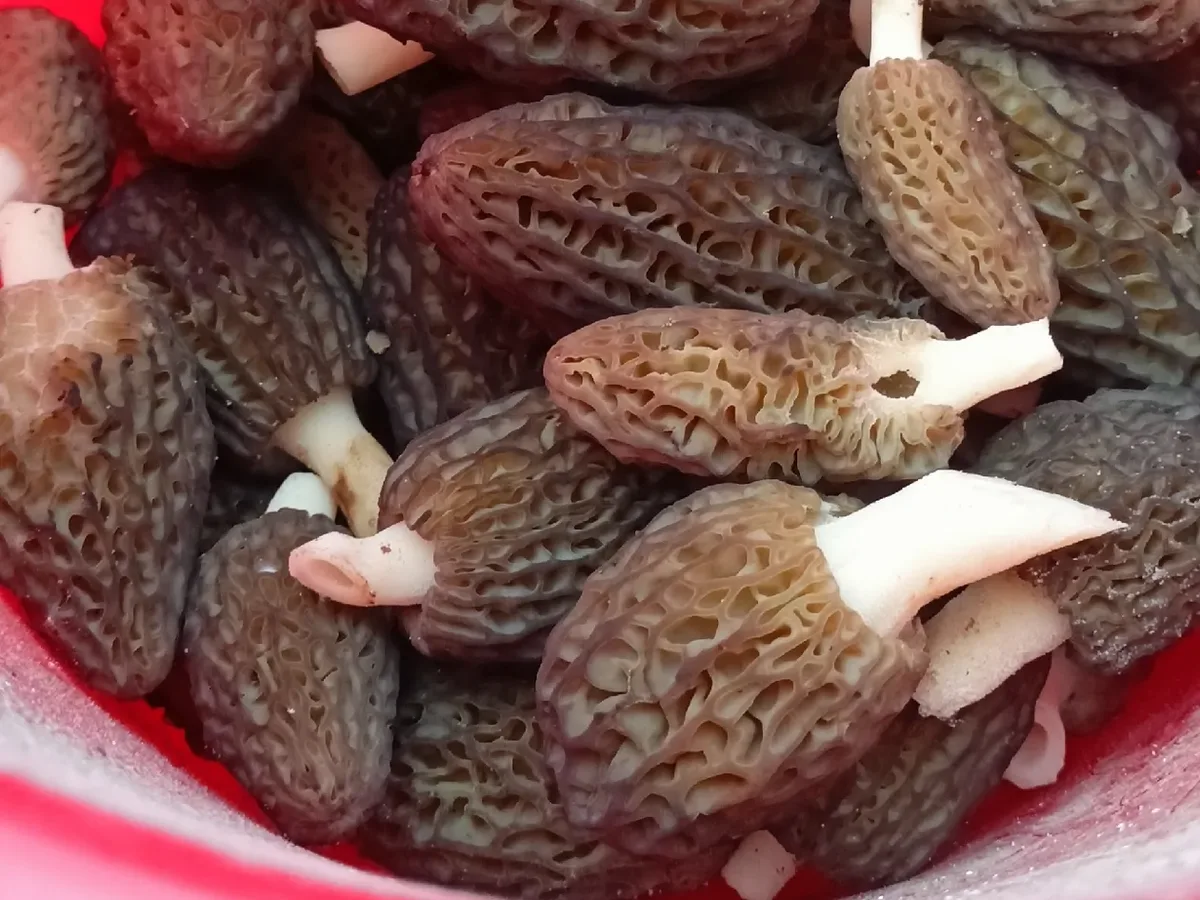 Евгения (CC0)Евгения (CC0)Евгения (CC0)
One of the best mushrooms you can bring home - once you are certain of the identification.
Never eat a mushroom you are not 100% sure of - check the look-alikes below, and always cook wild mushrooms.
How to recognise it
The Black Morel is the dark, conical member of the morel family.
Cap
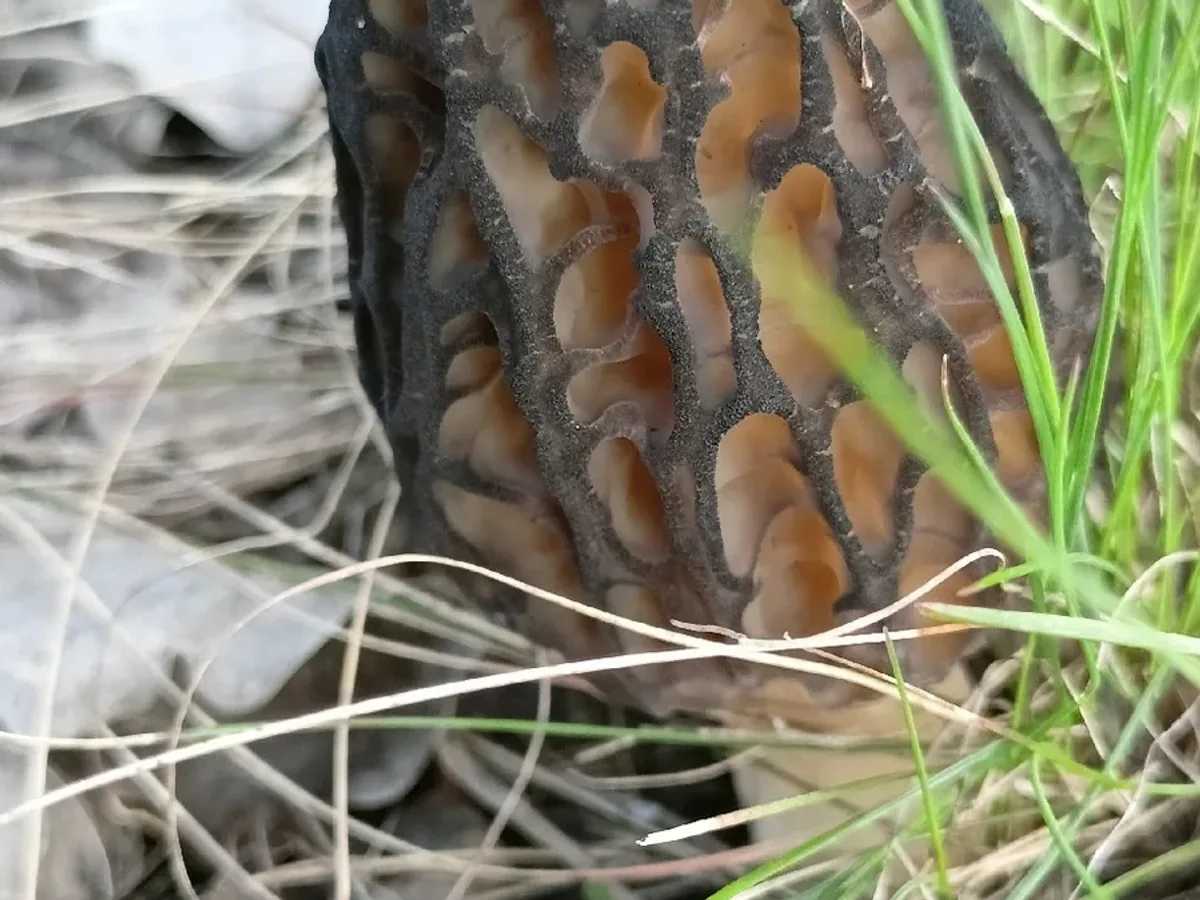
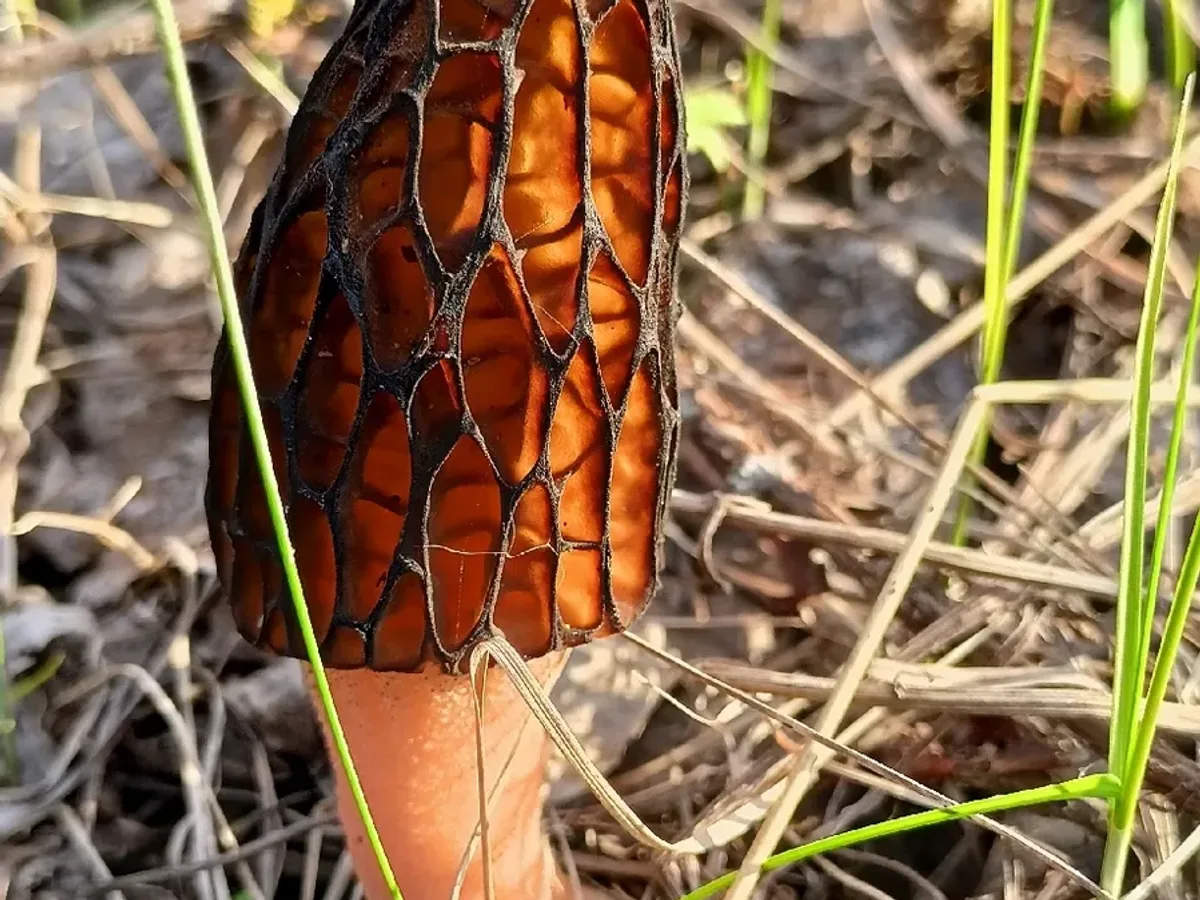
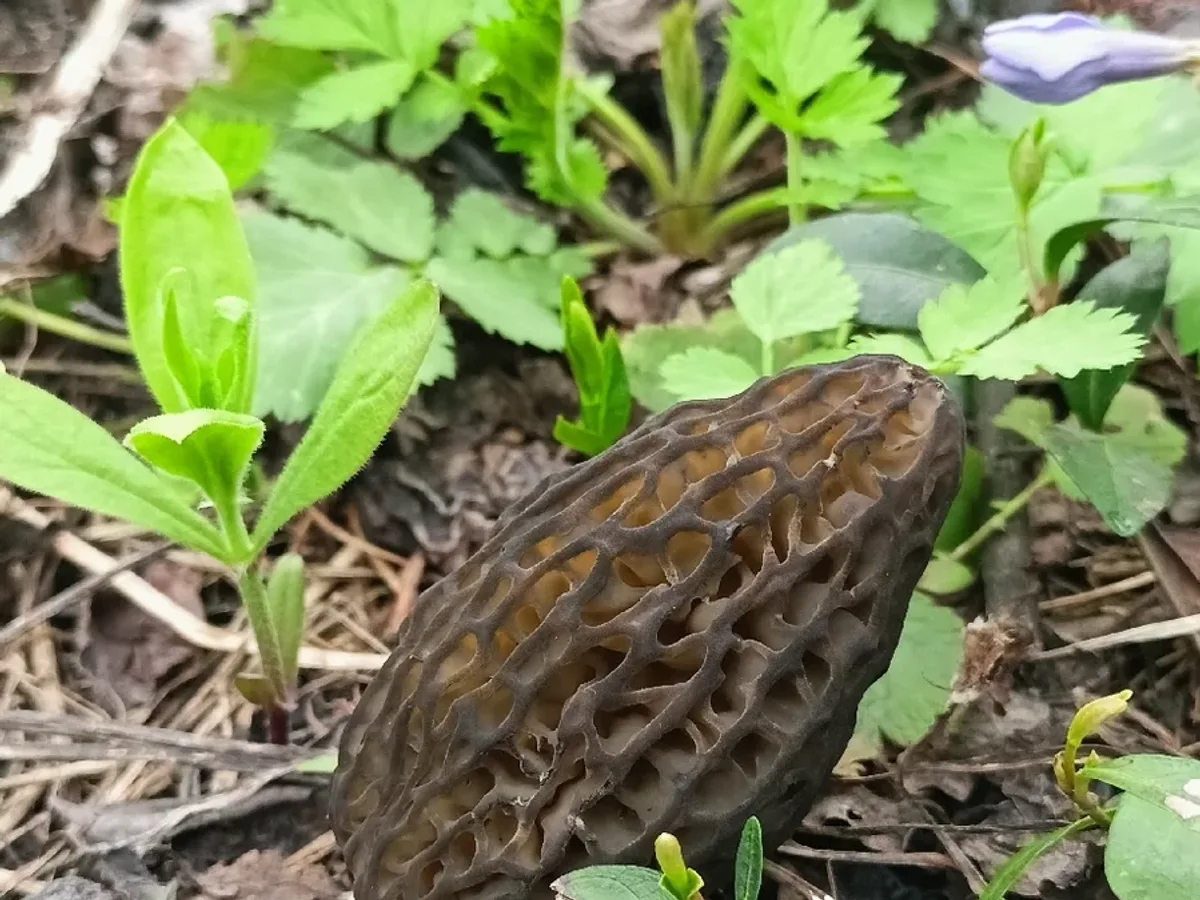
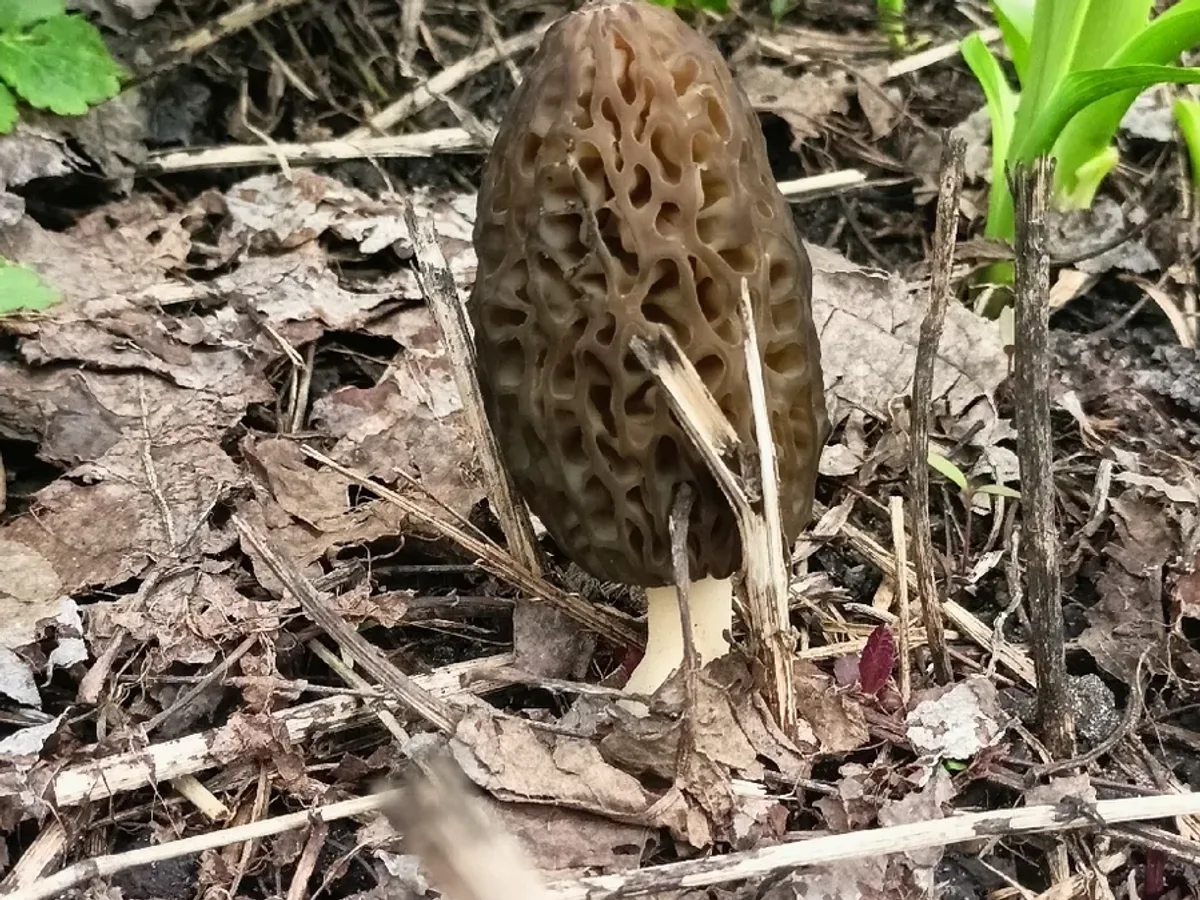
Its cap is a genuine honeycomb of deep pits separated by raised ridges, but unlike the rounded, brain-like cap of false morels it is built on a clear vertical (longitudinal) grid: long ridges run from base to tip, with shorter cross-bars between them.
Young caps are pale grey-brown; as they age the ridges blacken to dark grey, brown or charcoal while the recessed pits often stay paler tan or ochre, giving a striking two-tone honeycomb.
The cap is conical to narrowly egg-shaped and, crucially, is fused to the top of the stem along its lower rim, so there is no overhanging skirt.
Stem
The stem is whitish to cream, mealy and granular, cylindrical or slightly bulbous and furrowed toward the base.
Flesh
The defining internal feature, seen the instant you slice one lengthways, is that cap and stem together form a single continuous hollow chamber, completely empty inside with no cottony stuffing.
Flesh is thin, brittle and waxy.
Smell & taste
The smell is faint and pleasantly mushroomy.
Where & when it grows
Habitat
Look for Black Morels in early spring on well-drained ground, often where the soil has been disturbed.
They favour:
- coniferous and mixed woodland;
- sandy or chalky banks;
- riverside gravels;
- old apple orchards;
- bark-mulched beds in parks and gardens.
A large part of the black-morel group is fire-loving: in the spring following a forest fire, especially in conifer stands where the burn was patchy and some shade and needle litter survived, they can fruit in great numbers across the scorched ground.
They also exploit other recent disturbances such as logging, flooding and fresh wood chips.
When
This is a spring mushroom.
In lowland temperate Europe it usually appears from March into May, often a week or two ahead of the yellow morels.
At higher latitudes and elevations, and on northern burn sites, the season slides into April, May and June as the snow line retreats.
Burn-site fruitings are concentrated in the first spring after a fire and may fade or vanish in subsequent years, so a known burn is best searched promptly.
How it grows
Black Morels arise singly or in scattered to gregarious troops directly from the soil, frequently pushing up through leaf litter, gravel, mulch or burned debris.
Their fruiting is notoriously erratic and weather-driven - triggered by warming soil and a pulse of spring moisture - and a site generous one year may be completely bare the next.
On burn sites, where the fire has apparently reset some biological clock in the soil, the flush can appear almost overnight once temperatures climb: dozens of dark conical caps emerging from charred ground in a single warm, damp morning.
Morels are saprotrophic to weakly symbiotic rather than tightly mycorrhizal, so their relationship to the landscape is less anchored than that of a chanterelle, which makes their timing all the harder to predict.
Fruiting conditions
Triggered in spring when soil temperatures climb into roughly 7-16 C following adequate moisture; on burn sites the largest flushes come the first spring after fire. Fruiting is notoriously erratic and weather-dependent.
Handle with care
Toxin
Fresh, raw morels contain small amounts of heat-labile, water-soluble irritant compounds (sometimes described as gyromitrin-like hydrazines, though their exact identity in Morchella is debated).
These are largely destroyed or volatilised by thorough cooking and by drying, which is why morels are only ever eaten well cooked.
Symptoms
Eating raw or undercooked morels typically causes gastrointestinal upset within a few hours: nausea, vomiting, abdominal cramps and diarrhoea.
A separate, well-documented neurological syndrome (tremor, dizziness, unsteadiness, lack of coordination) has been reported even after cooked morels in sensitive people or with large quantities, usually resolving within a day.
Symptoms can be worsened by accompanying alcohol.
Look-alikes
The dangerous confusion is with the FALSE MORELS, above all Gyromitra esculenta, which can be lethal.
- Gyromitra esculenta: a reddish-brown, irregularly lobed, wrinkled BRAIN-like cap (not a regular pitted honeycomb); when sliced its stem and cap are chambered and stuffed with cottony tissue rather than forming one clean hollow.
- Gyromitra infula: a wavy saddle-shaped to lobed cap with the same chambered, stuffed interior.
- Verpa species (e.g. Verpa bohemica, V. conica): a thimble-like cap that hangs FREE around the stem, attached only at the very top, and a stem that is often cotton-stuffed; regarded as poisonous to many people.
- True yellow/white morels (Morchella esculenta group): paler, more rounded and with a less vertically aligned pit pattern but equally edible.
- The half-free morel (Morchella semilibera): a small cap whose lower half hangs free of the stem.
The two non-negotiable tests for a true morel are:
- 1a cap that is fused to the stem (no free skirt);
- 2a single, completely hollow interior.
Why it matters
Properly cooked Black Morels are a safe, classic edible, so the real danger lies in MISIDENTIFICATION rather than in the morel itself.
Mistaking it for the false morel Gyromitra esculenta can be fatal: gyromitrin is metabolised to monomethylhydrazine, causing delayed (6-12 hour) onset of vomiting, then potentially liver failure, haemolysis, seizures and death.
Gyromitra infula contains the same class of toxins. Verpa species can also cause poisoning.
Treat any wrinkled, brain-like, free-hanging or cotton-stuffed 'morel' as potentially deadly and discard it.
Reddish-brown, irregularly lobed BRAIN-like cap (not a regular honeycomb); interior chambered and stuffed with cottony tissue, not a single clean hollow. Contains gyromitrin and can be lethal even after cooking.
Saddle-shaped to lobed, wavy reddish-brown cap without honeycomb pits; chambered/stuffed flesh, not hollow. Contains gyromitrin-type toxins.
Smooth to slightly wrinkled bell-shaped cap hanging free from the stem top; not a fused honeycomb. Stem often cotton-stuffed. Best avoided.
Wrinkled thimble-like cap hangs FREE around the stem, attached only at the apex; stem often cotton-stuffed rather than cleanly hollow. Considered poisonous to many people and causes GI/neuro upset.
A genuine (edible) morel but the lower half of the small honeycombed cap hangs free of the stem; smaller cap relative to a long stem. Must still be thoroughly cooked.
Paler yellow-brown, more rounded cap with a less vertically aligned pit pattern; also an excellent edible (cooked), not a dangerous lookalike.
In the kitchen
Picking & cleaning
Cut or pinch the stem cleanly at ground level, leaving the base, and carry your harvest in a basket or mesh bag so spores can disperse.
Always slice each mushroom lengthways in the field: confirm the single continuous hollow interior and the cap fused to the stem before adding it to your bag.
Hollow morels can shelter insects and grit in their pits, so a lengthways cut also lets you brush them out.
Take only firm, fresh specimens and leave old, slimy or waterlogged ones.
Cooking
Among the most prized wild mushrooms in the kitchen - rich, savoury and nutty with a meaty, sponge-like texture that soaks up butter and cream beautifully.
That said, morels MUST be thoroughly cooked: they contain heat-labile compounds that cause vomiting, cramps and diarrhoea if eaten raw or lightly cooked, and these are driven off only by proper heat.
Sauté in butter over medium heat for at least 5-10 minutes until fully heated through. Never eat raw, in tartare, or rare, and cook in a well-ventilated kitchen.
Morels dry exceptionally well and actually intensify in flavour when reconstituted. Soak dried ones in warm water, then discard or reduce the soaking water (it carries fine grit and some of the irritant compounds) rather than adding it directly to a sauce.
Excellent with cream, eggs, poultry, and spring pastas.
Avoid pairing with alcohol on first trials, and introduce gradually - some people are sensitive even to well-cooked morels.
Good to know
Never eat any morel raw or undercooked, and never let one touch alcohol at the same meal, as the combination can cause illness.
The overriding safety rule is to rule out false morels. Do not eat it if:
- the cap is wrinkled and brain-like rather than honeycombed;
- it hangs free of the stem like a thimble;
- the inside is stuffed with cottony pith or divided into chambers.
Slice every single specimen lengthways before cooking.
Beginners should have their first morels checked by an experienced forager, and even confirmed Black Morels should be eaten in modest quantity the first time to test individual tolerance.
A reference guide - never an edibility guarantee. When in doubt, leave it out.