Giant polypore
Meripilus giganteussyn. Polyporus giganteus, Grifola gigantea, Boletus giganteus
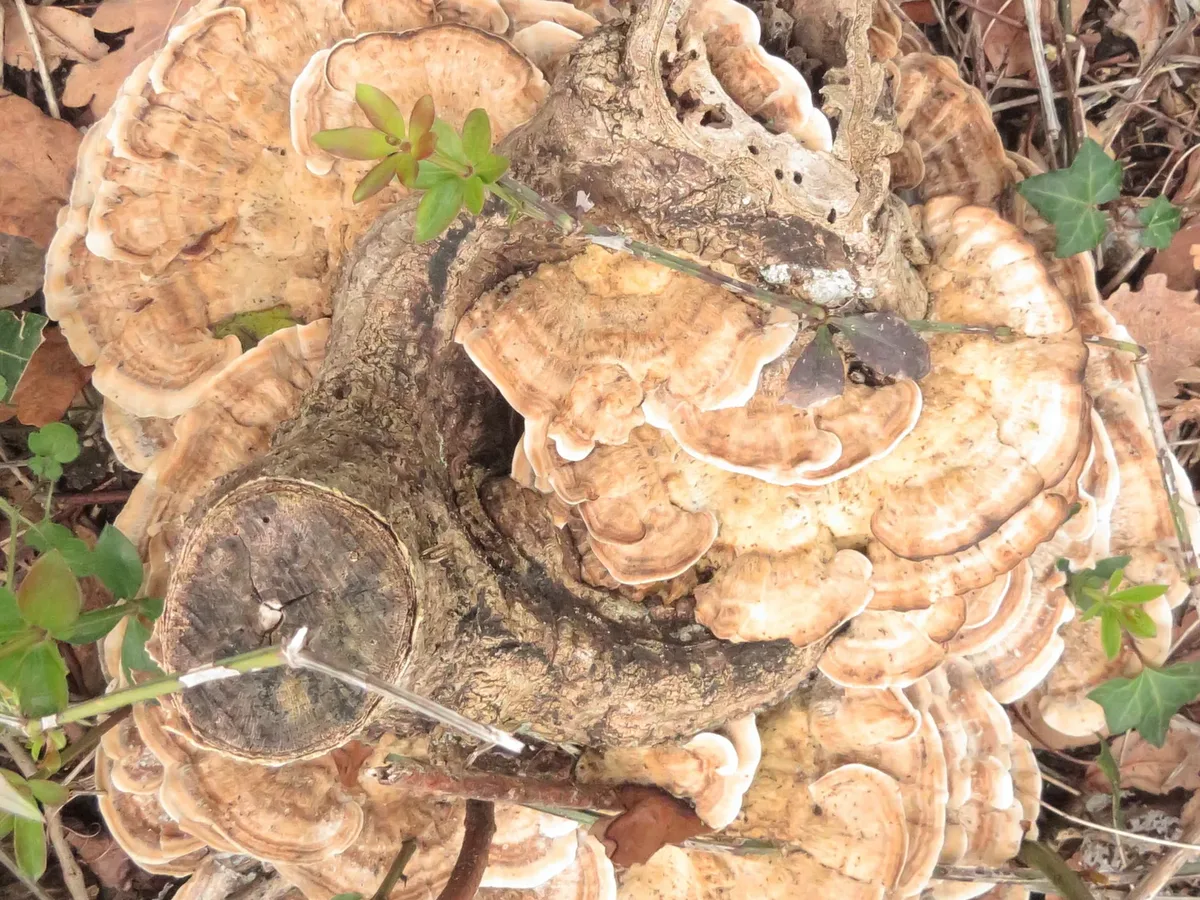 © Gianni Del Bufalo bygdb (CC BY)
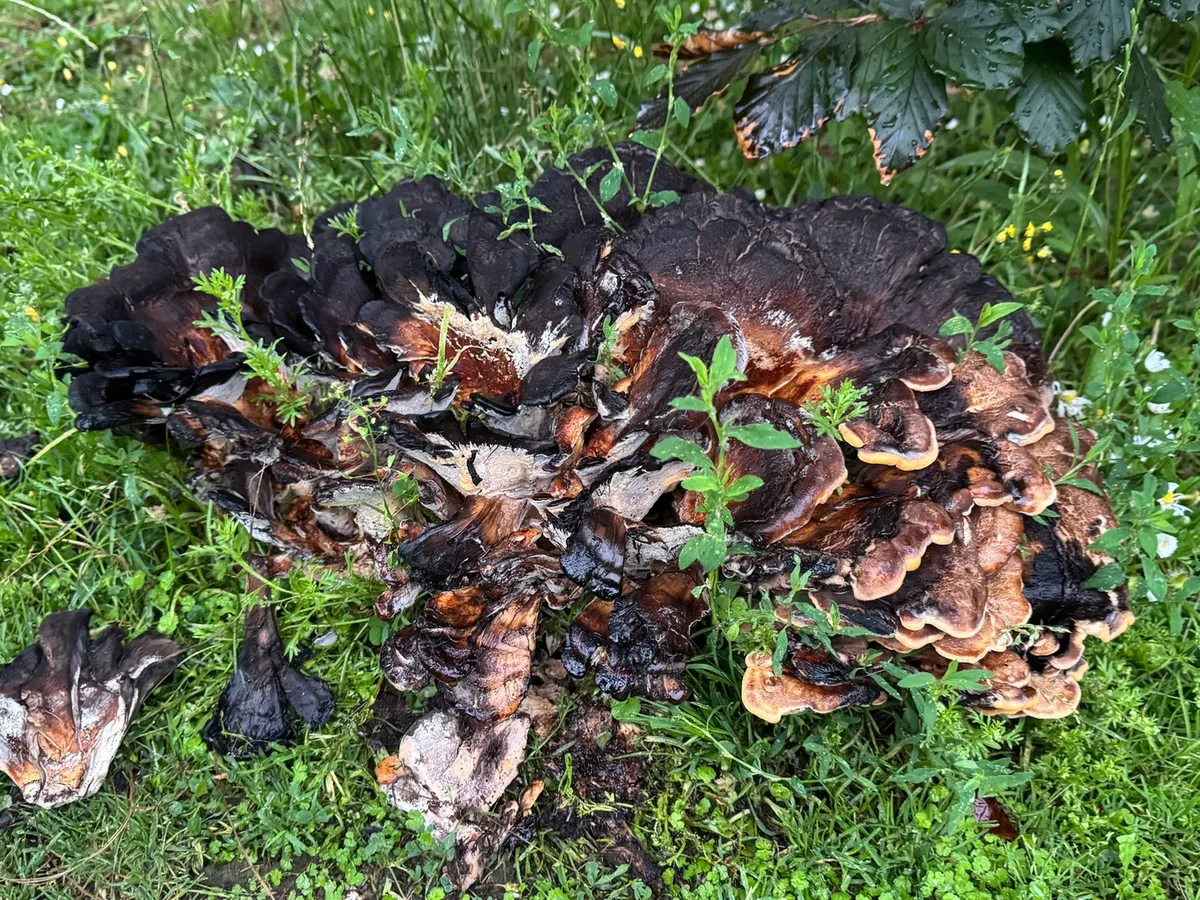 © Frank Ashwood (CC BY)
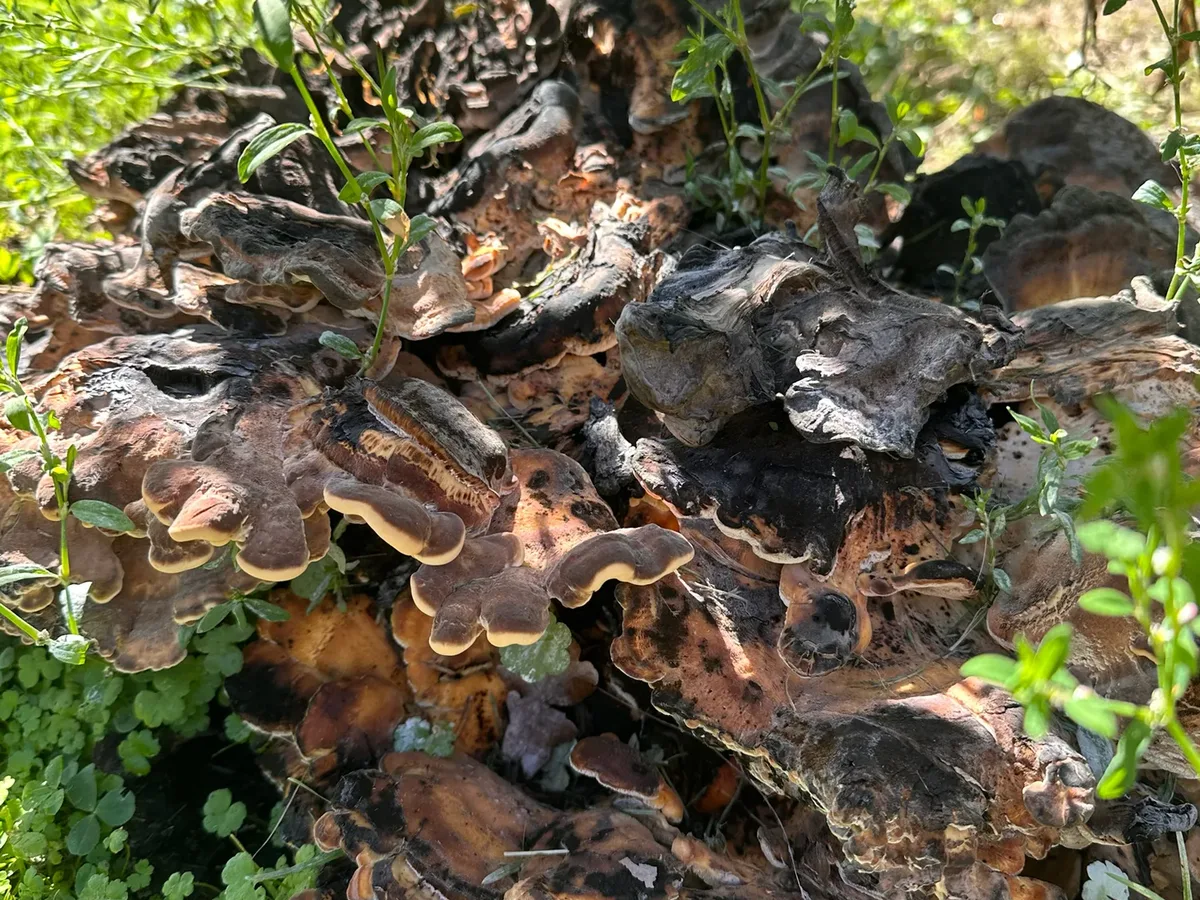 © boytouchgrass (CC BY)
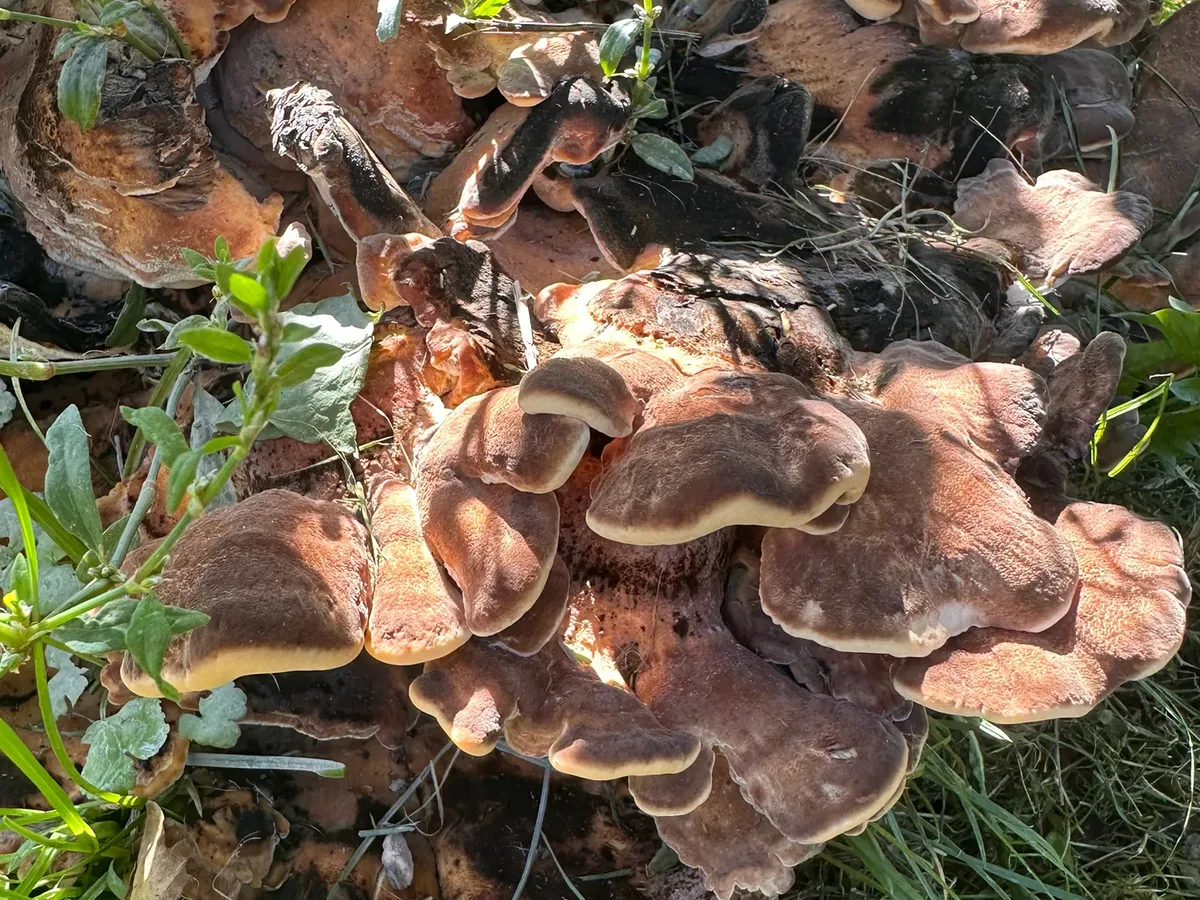 © boytouchgrass (CC BY)
 © boytouchgrass (CC BY)
 © boytouchgrass (CC BY)© Gianni Del Bufalo bygdb (CC BY)© Frank Ashwood (CC BY)
Edible only with the right preparation - or safe for some people but not others. Learn the caveats first.
How to recognise it
Meripilus giganteus is one of the most imposing fungi in European broadleaved woodland.
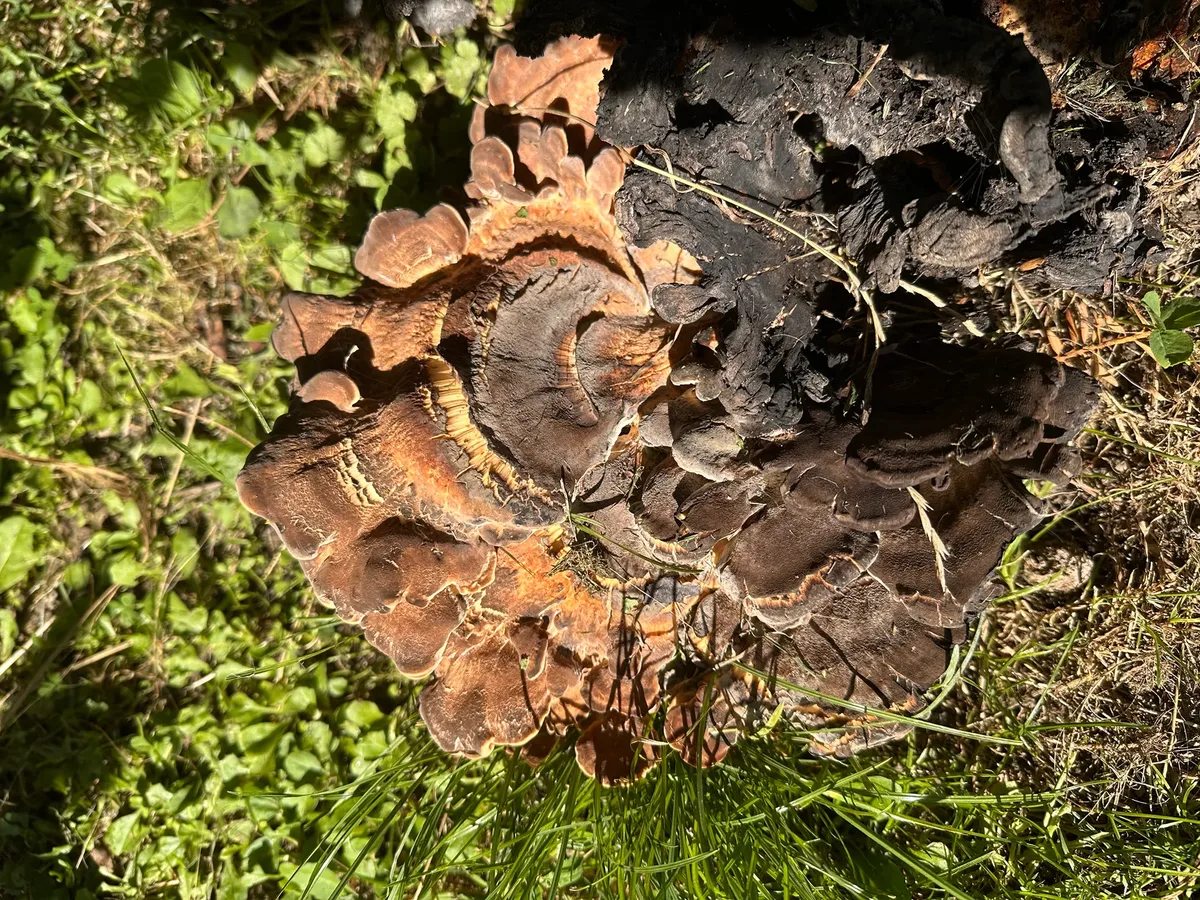
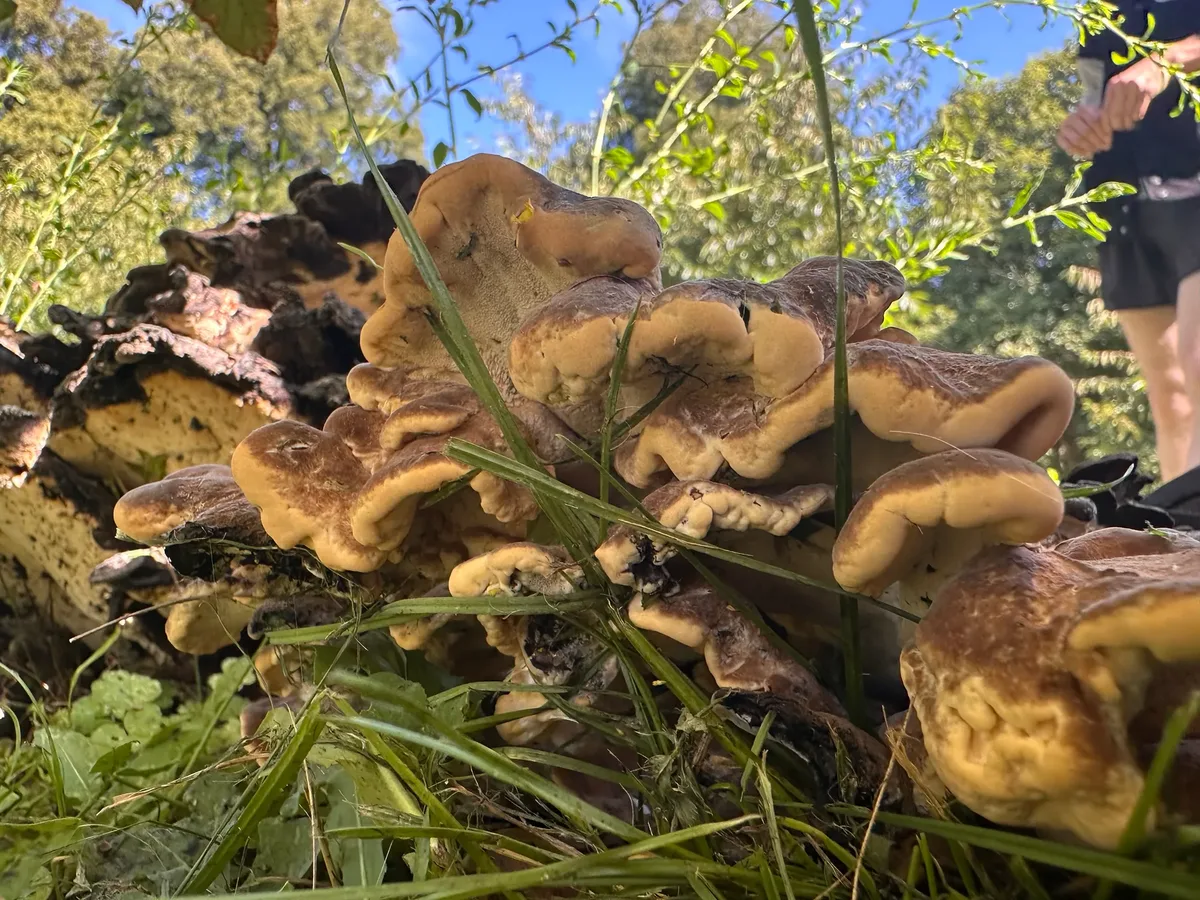
The entire fruiting body forms a dense, ground-hugging rosette of overlapping fan- to spoon-shaped caps arising from a common, often buried, fleshy base - the whole cluster can exceed the diameter of a dustbin lid and in exceptional cases weighs several tens of kilograms.
Cap
Each individual cap is leathery-firm, 10-30 cm across, and typically only 1-3 cm thick.
The upper surface is radially fibrous to finely scaly, progressing in colour from pale cream or buff-yellow at the margin to tawny-ochre or grey-brown toward the attachment point. The margin is undulating and lobed, often paler and thinner than the rest of the cap.
Gills / Pores
The underside carries a pure white to cream pore surface bearing minute, angular pores (3-5 per mm) that turn instantly and definitively grey-black when pressed, rubbed, or cut - a reaction so reliable it has earned the species its North American vernacular 'black-staining polypore.'
Stem
The stem or stalk is a stout, pale, branching structure that narrows into a shared rooting base buried in the ground or pressed against the substrate; it too blackens on handling.
Flesh
Flesh is white, thick, and firm in young specimens, becoming progressively tougher, more fibrous, and spongy as the fruiting body ages. Cut surfaces darken grey over several minutes.
Spores white in mass, ellipsoid, smooth, 5-7 × 3.5-5 µm.
Where & when it grows
Habitat
Almost invariably found at the base of mature or veteran deciduous trees, growing from buried roots, root collars, or from the soil directly above major lateral roots - the mycelium can reach several metres from the trunk before surfacing.
Beech is overwhelmingly the preferred host in Britain, the Low Countries, France, and Germany. Oak and sweet chestnut are important secondary hosts around the Mediterranean fringe and in southern England. Occasionally recorded on ash, lime, and elm.
It favours long-established trees in ancient woodland, wood-pasture, parkland, and large gardens.
Because the same mycelial network persists underground from year to year, a well-known site can be revisited reliably each autumn - though the fungus is also quietly working as a tree pathogen: foresters and tree surgeons treat the appearance of its rosettes as a warning sign of structural root decay in the host.
When
The main fruiting season in temperate Europe runs from late July or August through to November, with a pronounced peak across August, September, and October.
In the British Isles, September is typically the best month. Warm, moist autumns following a dry summer often produce the largest rosettes.
Each individual fruiting body has a short active lifespan of only 1-2 weeks before it begins to blacken, soften, and collapse. The window for collection as food is even shorter, limited to the first several days when the tips of the lobes are still pale, firm, and pliable.
How it grows
Meripilus giganteus lives as a saprotrophic and facultative parasitic wood-rotter, threading an extensive network of mycelial cords through the soil around the roots of its host.
It breaks down the white cellulose-rich tissues of heartwood and structural roots, leaving behind soft, pale, spongy material - a slow process that can play out over many years while the tree remains standing.
The same underground mycelium can persist for decades, sending up a fresh rosette each autumn while the hidden rot deepens.
Unlike mycorrhizal fungi, it forms no beneficial partnership with its host; it feeds on the wood itself. The species is not cultivated commercially.
Fruiting conditions
Responds to warm, moist late-summer and early-autumn conditions. Adequate rainfall in the preceding two weeks combined with soil temperatures between roughly 10-22 °C encourages fruiting. The mycelium is perennial and the same site can fruit reliably each year; drought suppresses or delays but rarely permanently prevents fruiting at established sites.
Look-alikes
The combination of a massive rosette habit at a tree base, the pale-brown fan-shaped caps, and the instantly blackening white pore surface is unique in European polypores and renders confusion with dangerous species effectively impossible for an informed observer.
- Grifola frondosa (hen of the woods / maitake) grows in similar habitat at oak and beech bases and has a similar rosette of overlapping grey-brown caps, but its pore surface does NOT blacken when bruised; its caps are more distinctly fan-shaped with thinner, more regularly lobed edges and a typically greyer, more muted coloration.
- Bondarzewia berkeleyi is superficially similar but is primarily a North American species, has much larger individual caps that are cream to pale tan, pores that do not blacken, and appears at oak bases.
- Laetiporus sulphureus (chicken of the woods) is also large and at tree bases but is immediately distinguished by its vivid sulphur-yellow or orange-yellow coloration and its lack of blackening.
Both Grifola and Bondarzewia are edible. No deadly polypore closely mimics Meripilus giganteus in Europe.
Primarily a North American species; similar large rosette at oak bases, but caps are much larger (up to 40 cm each), pale cream to buff-tan, and the pore surface does not blacken. Rarely encountered in Europe.
Laetiporus sulphureus produces overlapping bracket shelves on or at the base of trees but is immediately distinguished by its vivid sulphur-yellow to orange cap surfaces and bright yellow pore surface; no blackening occurs. Often grows higher on the trunk rather than at ground level.
Grifola frondosa grows in similar rosette clusters at oak or beech bases and has grey-brown fan-shaped caps with a white pore surface, but the pore surface does NOT blacken when bruised or cut. Caps are typically more numerous, thinner, and more evenly fan-shaped with a greyish, not ochre-yellow, coloration. Both species are edible.
In the kitchen
Picking & cleaning
Collect only very young specimens - tips of the fan lobes should be white or pale cream, firm to the touch, and not yet showing any blackening.
The outermost 5-10 cm of each lobe is the only portion worth eating; the fibrous, woody central stalk and old or blackened tissues should be discarded. A single large specimen can yield several kilograms of usable material.
Use a sharp knife to slice off young lobes close to the cap edge, leaving the base intact if you wish the site to re-fruit in subsequent years.
Transport in a wide basket without compression, as the flesh bruises and blackens readily. Process the same day - it does not keep well.
Cooking
Only the thin, pale, outer portions of the youngest lobes are worth cooking. Slice or tear into pieces, discarding the tough stalk tissue.
Pan-frying in butter or oil over high heat until thoroughly cooked and golden is the most reliable preparation. Moisture content is high, so the pieces must be spread out and cooked in batches to achieve a light caramelisation rather than steaming.
The flavour is mild, slightly meaty, and faintly nutty - pleasant but not remarkable. Texture improves with extended cooking; braising in stock until tender is another common approach.
Avoid consuming large quantities at a single meal until personal tolerance is established.
Good to know
Meripilus giganteus is technically edible but comes with important caveats. The flesh of young, pale lobe-tips is edible after thorough cooking and has been consumed in parts of Europe for generations.
However, caution is advised:
- 1Raw or undercooked flesh can cause gastrointestinal upset in some individuals.
- 2Even when fully cooked, some people experience nausea or abdominal discomfort, likely owing to the large amount of tough polysaccharide material.
- 3With age the flesh becomes fibrous and practically indigestible.
The species should always be cooked thoroughly and tried in small amounts first. Sensitivity varies considerably between individuals. Children and those with compromised digestive health should avoid it.
There are no deadly lookalikes in Europe, but always confirm the immediate blackening reaction on the pore surface before eating - this is the definitive identification character.
A reference guide - never an edibility guarantee. When in doubt, leave it out.