Whitelaced shank
Megacollybia platyphyllasyn. Collybia platyphylla, Oudemansiella platyphylla, Tricholomopsis platyphylla, Agaricus platyphyllus
 © Morten Pettersen (CC BY)
 © victor laborde (CC BY)
 © victor laborde (CC BY)
 © victor laborde (CC BY)
 © victor laborde (CC BY)
 © Emil Jantke (CC BY)
 © Emil Jantke (CC BY)
 © Morten Pettersen (CC BY)
 © Morten Pettersen (CC BY)© Morten Pettersen (CC BY)© victor laborde (CC BY)
Edible only with the right preparation - or safe for some people but not others. Learn the caveats first.
Never eat a mushroom you are not 100% sure of - check the look-alikes below, and always cook wild mushrooms.
How to recognise it
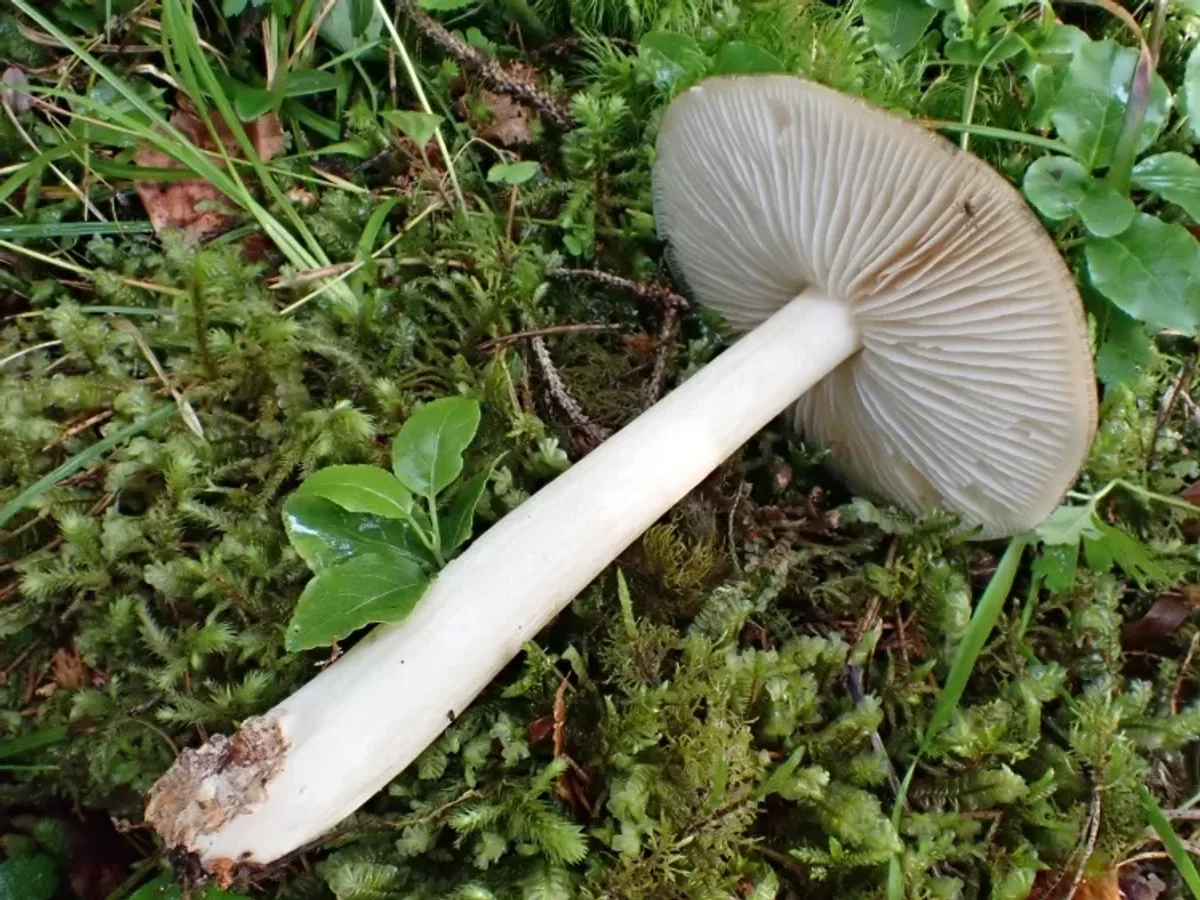
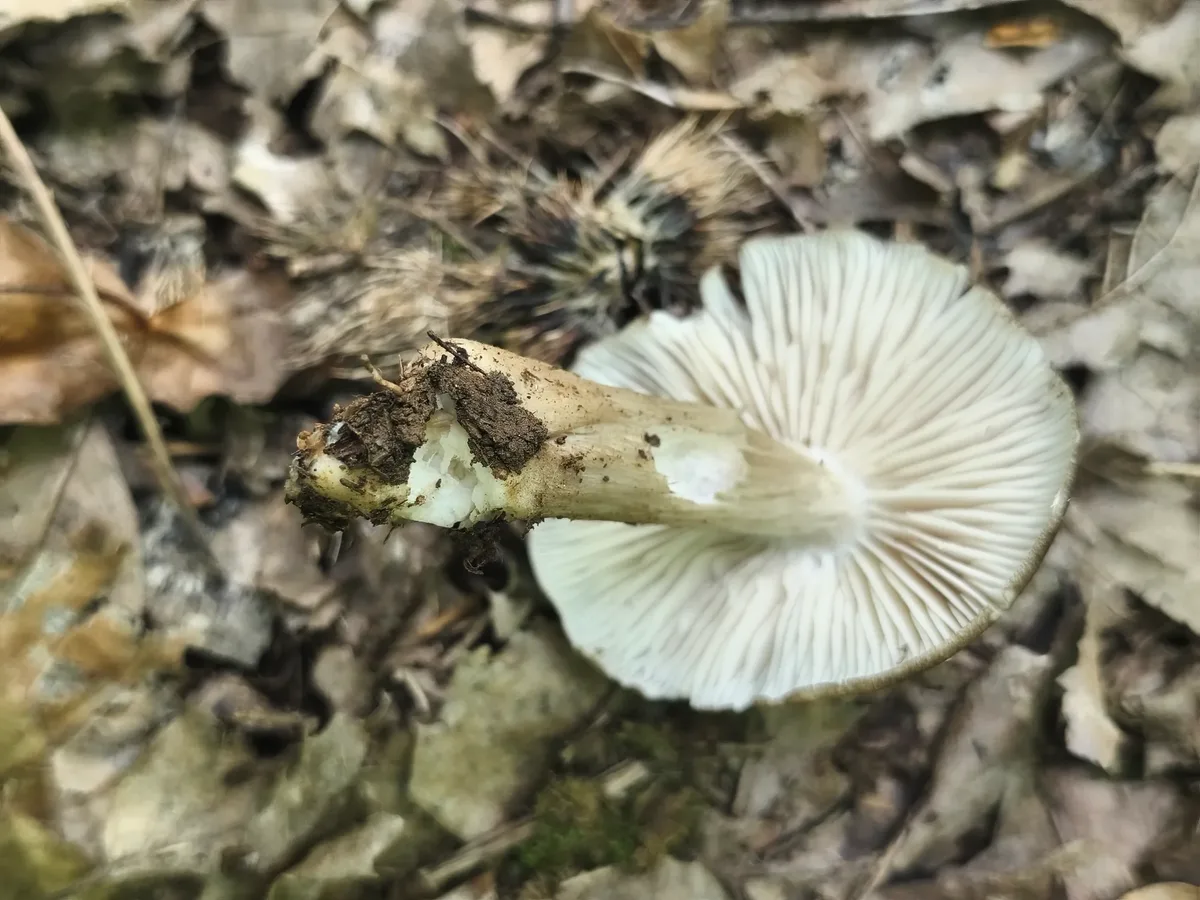
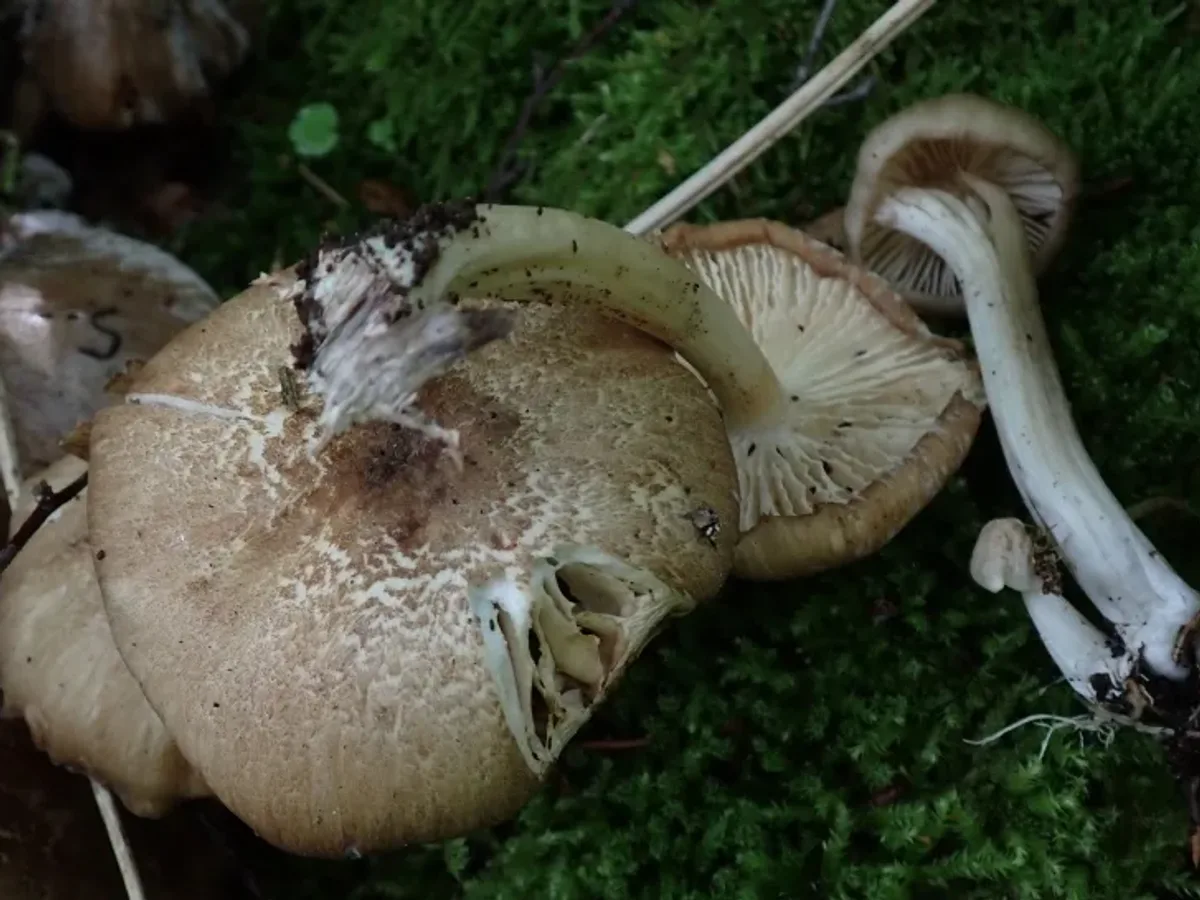
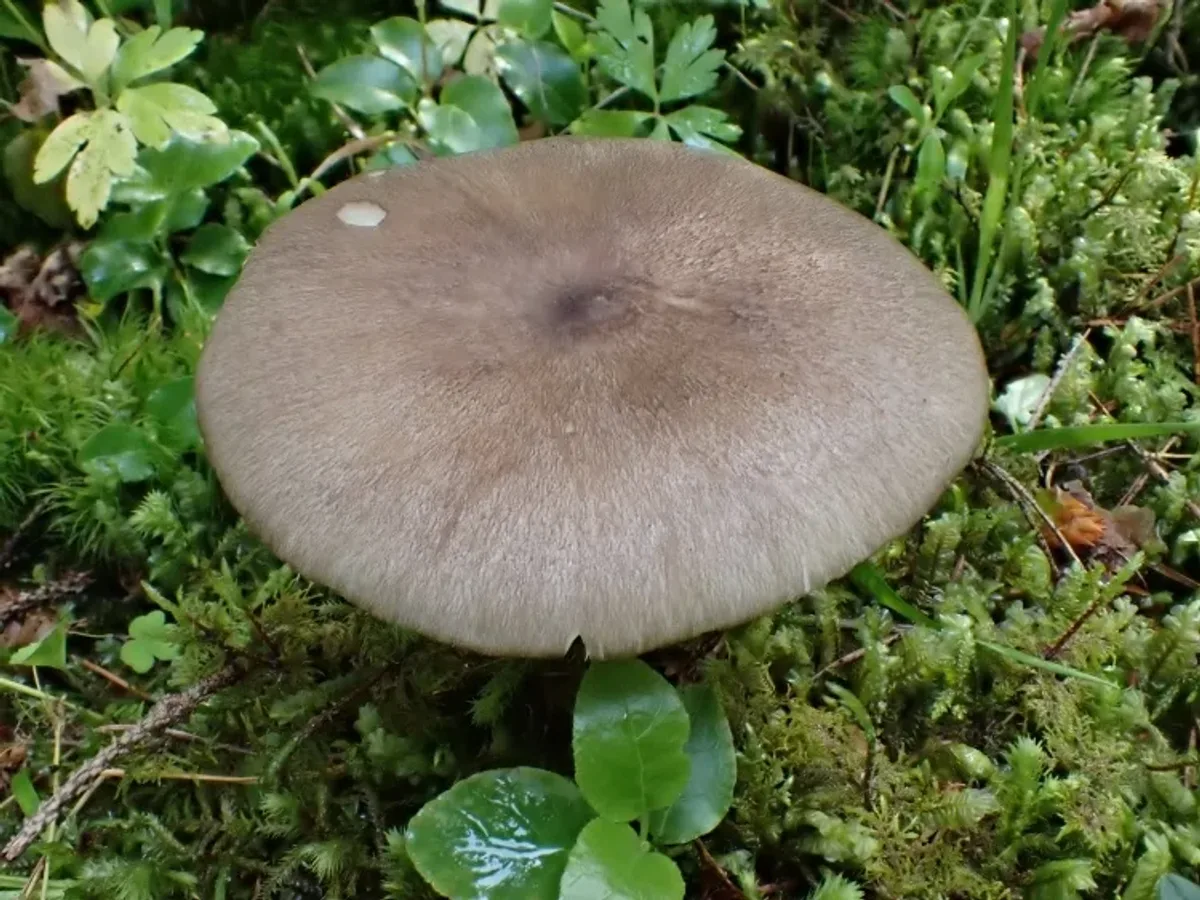
Megacollybia platyphylla is a medium to large woodland mushroom immediately recognised by its combination of a drab grey-brown, radially fibrous cap and exceptionally broad white gills.
Cap
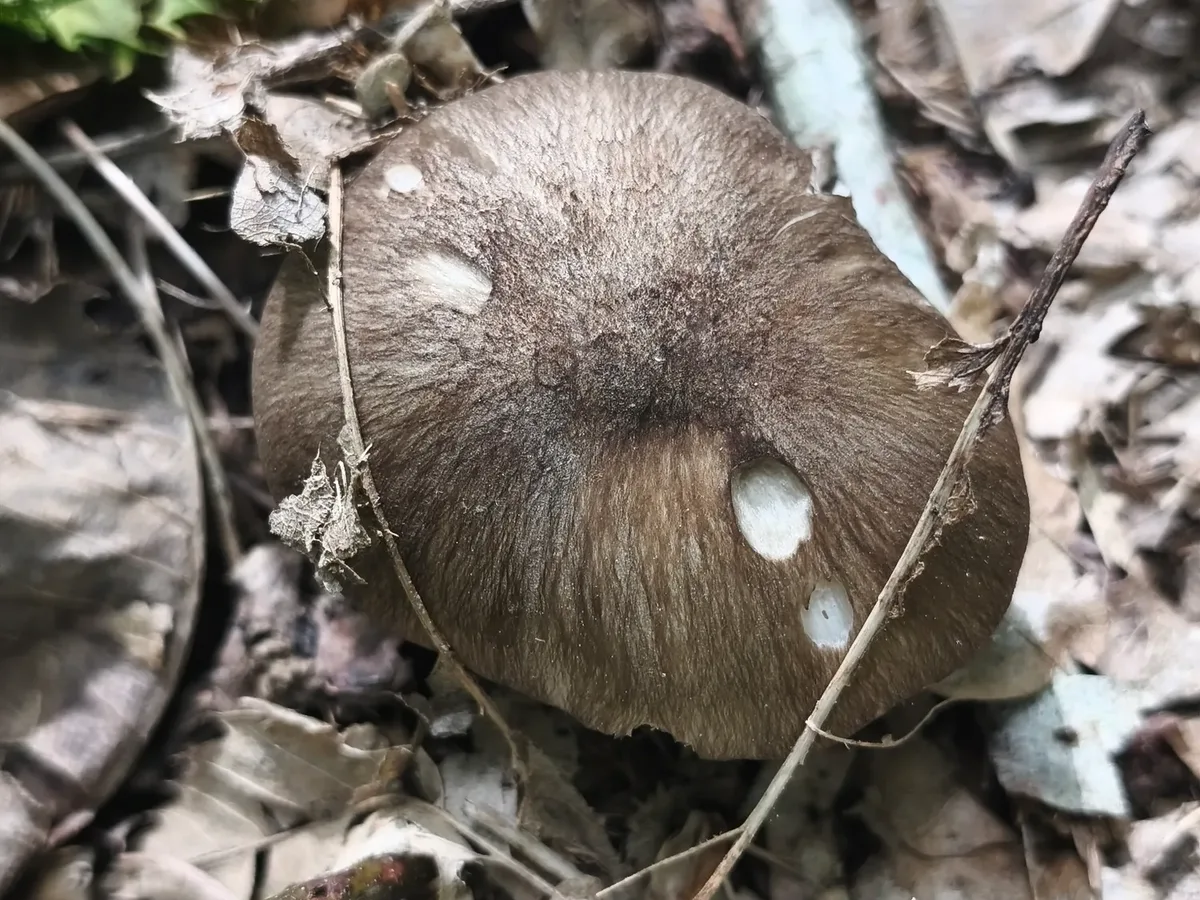
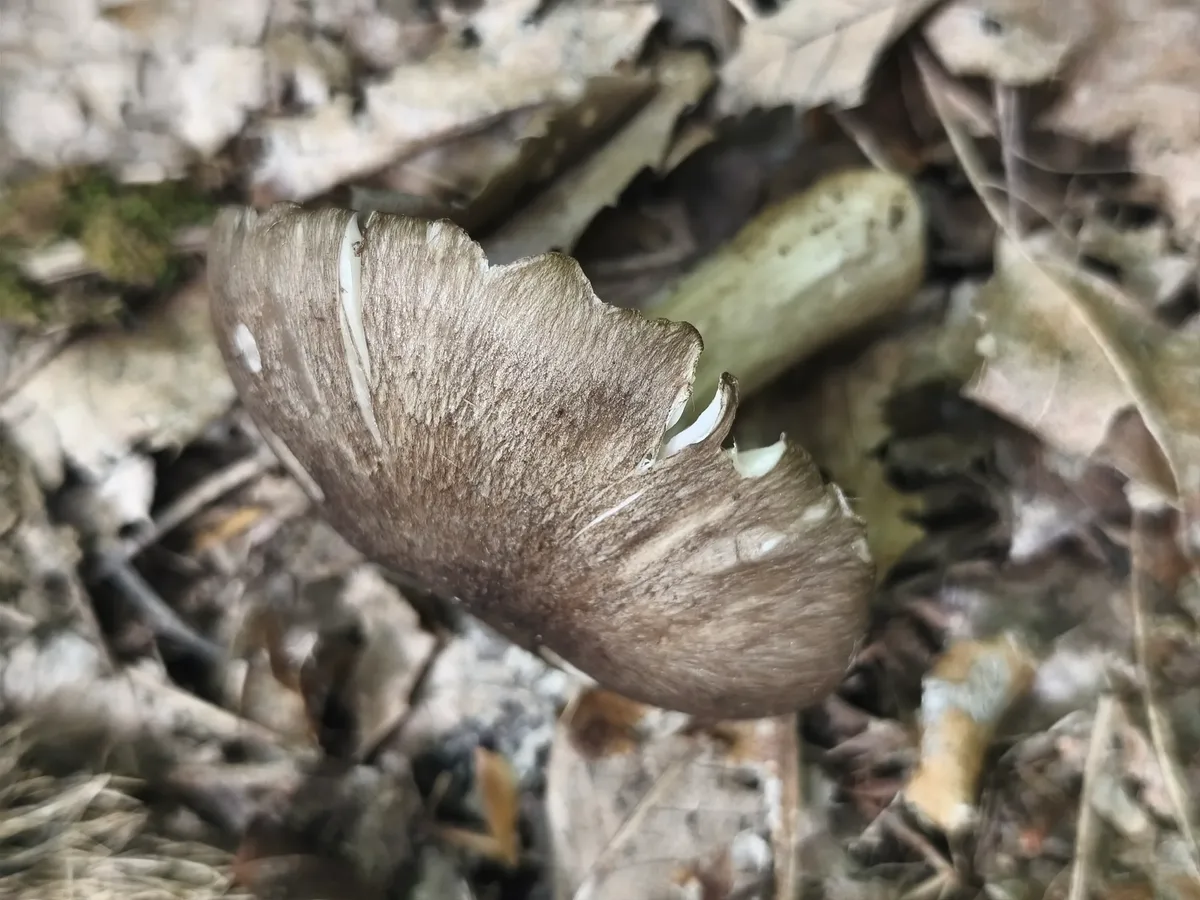
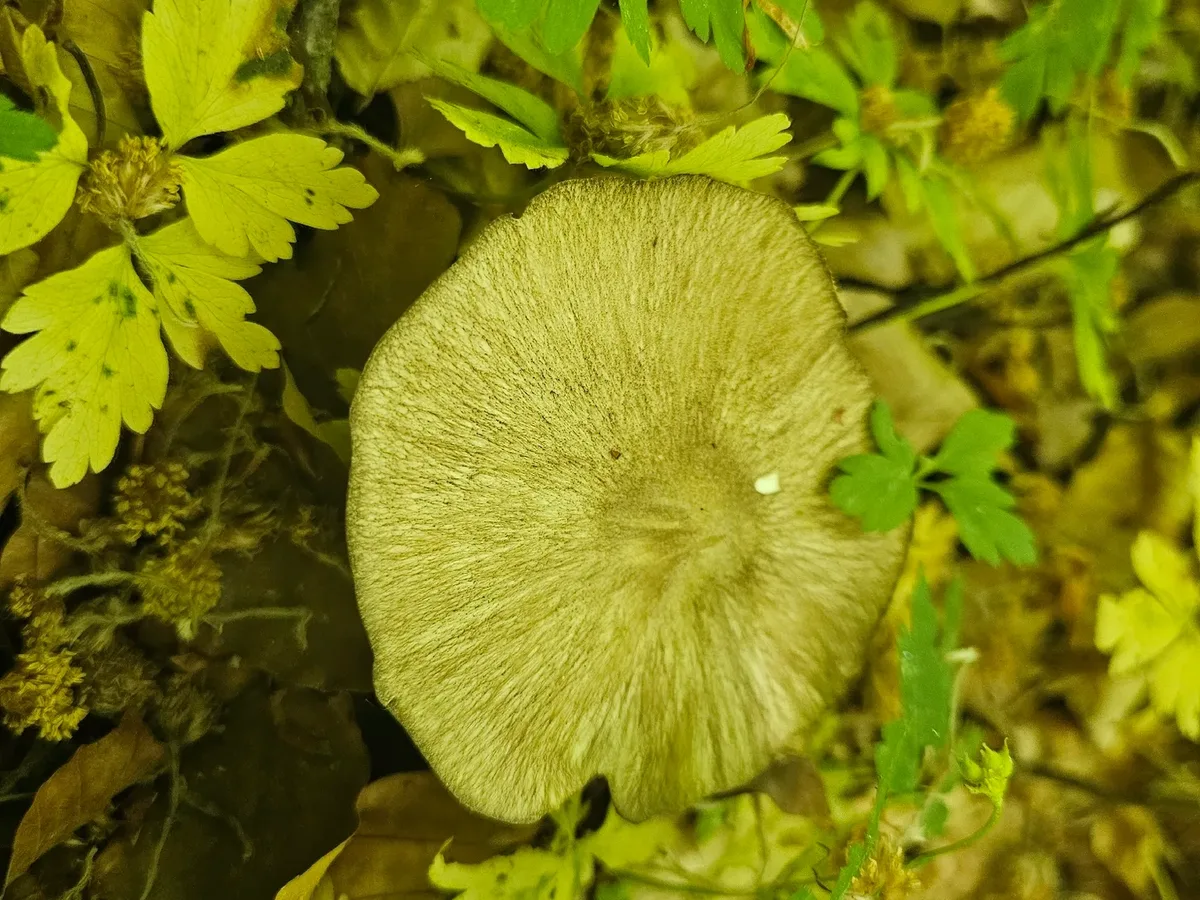
The cap ranges from 5 to 15 cm across, starting convex and broadly umbonate before flattening with an undulating or wavy margin at maturity.
The surface is dry, smooth to finely fibrous, and ranges from dark grey-brown at the disc to pale grey-brown or beige near the margin, often with faint darker radial streaks.
Gills
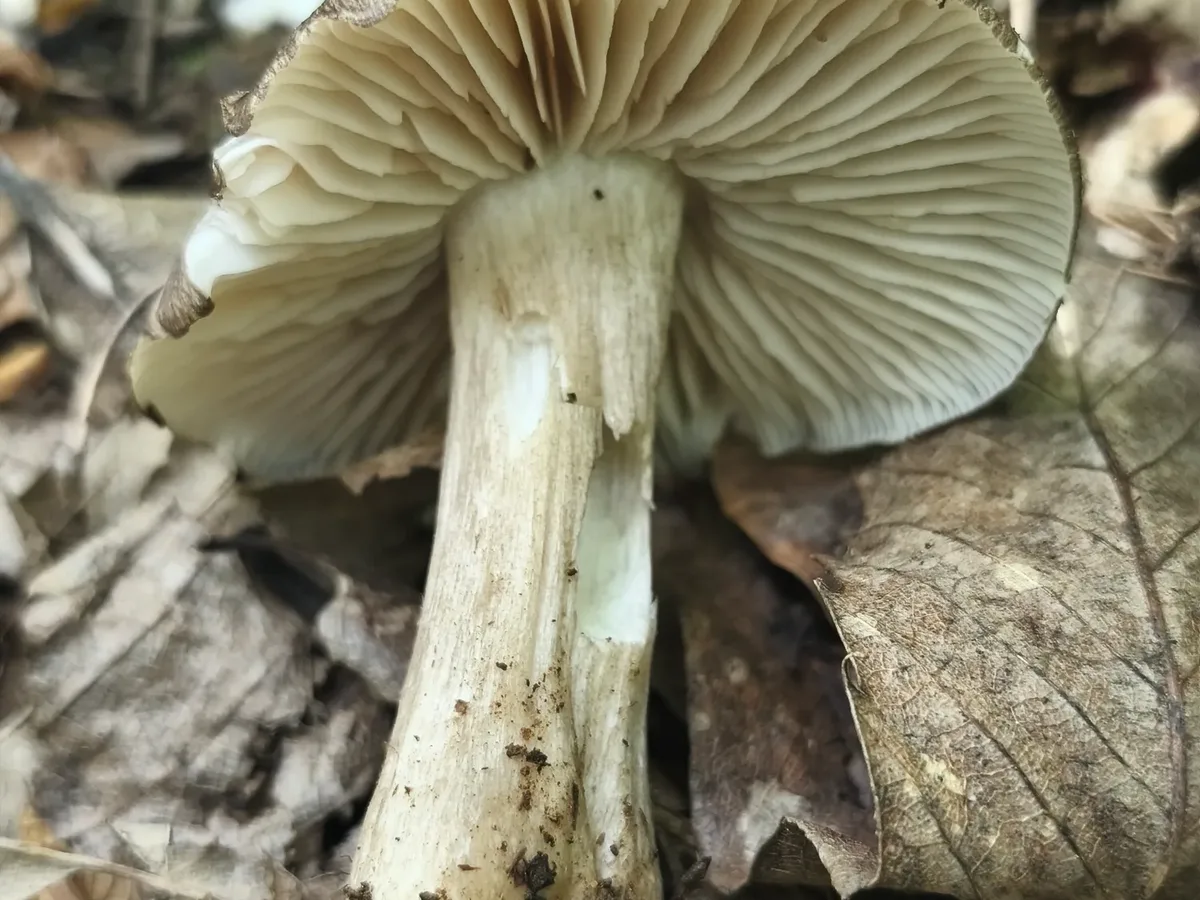
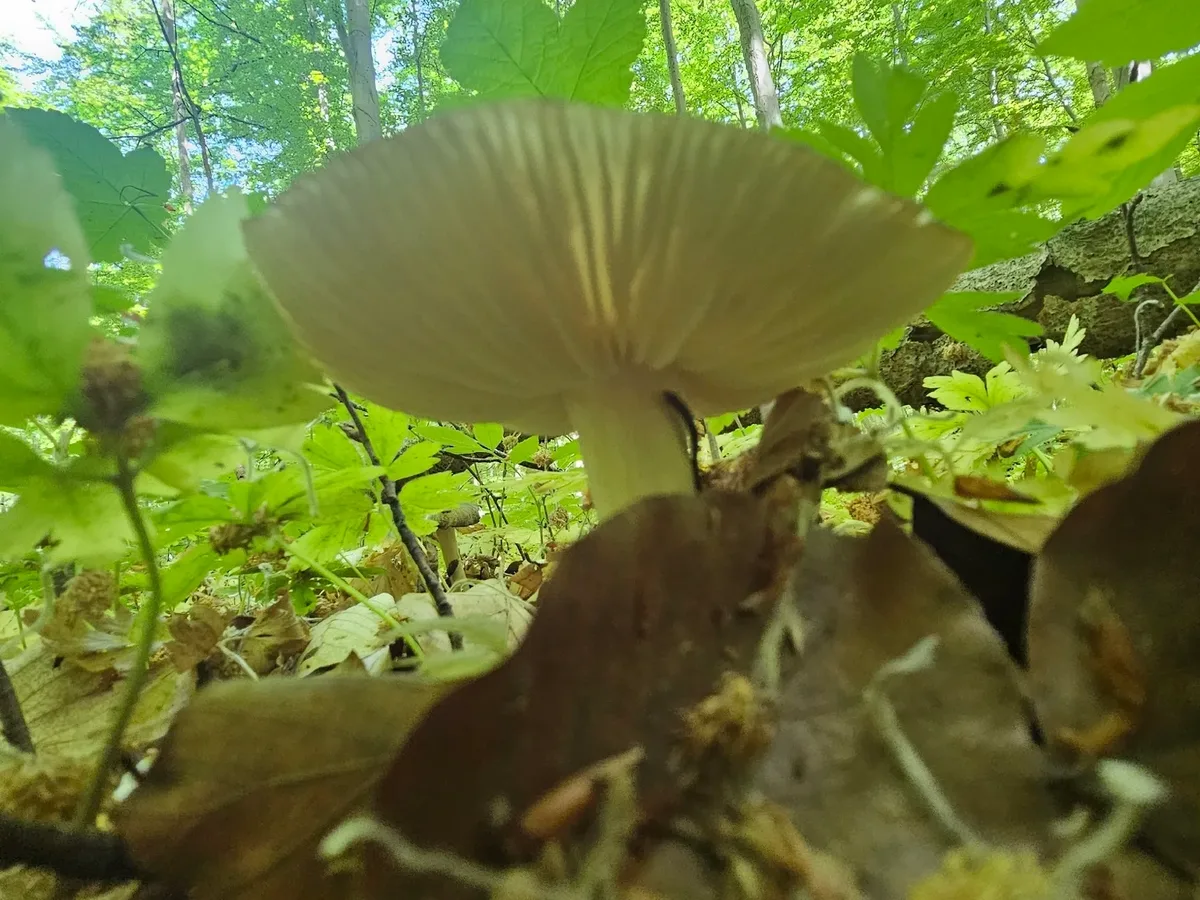
The gills are perhaps the most arresting feature: they are strikingly broad - up to 15 mm - white to cream-white, crowded to subdistant, and essentially free from the stipe or with only a slight notch.
This breadth, combined with their whiteness, earns the species its vernacular name 'broadgill'.
Stem
The stipe is 5-12 cm tall, 8-15 mm thick, cylindrical, whitish to pale greyish-brown, and longitudinally fibrous-striate.
Its base tapers and extends, sometimes deeply, into buried substrates via conspicuous white mycelial cords (rhizomorphs) that can be traced into buried, decaying wood - a feature visible if the mushroom is carefully lifted whole.
Flesh
Flesh is pure white, firm, and does not change colour on cutting.
Smell & taste
Smell is faint and mealy or slightly rancid; taste mild to slightly unpleasant.
Spore print white; spores 7-9 × 5-7 µm, broadly ellipsoid, smooth, non-amyloid.
Where & when it grows
Habitat
Megacollybia platyphylla is a saprotrophic wood-rotter found throughout temperate deciduous and mixed forests of Europe and western Asia.
It is strongly associated with decaying broadleaf wood, particularly beech, oak, hornbeam, ash, and various other hardwoods. But it almost invariably grows from buried or partially buried woody debris rather than on clearly visible standing deadwood.
This gives it the superficial appearance of a soil-dwelling species - foragers frequently dig down to find the tell-tale white rhizomorphs linking the stipe to buried wood.
It thrives in old forest with deep leaf-litter, but also appears in hedgerow scrub, urban parks, and wherever old stumps or fallen limbs have been buried under soil or mulch.
It tends to grow singly or in scattered groups of two to four, rarely in dense clusters.
When
The fruiting season spans early summer to late autumn, from June through November in much of temperate Europe.
Peak fruiting occurs in late August through October, coinciding with post-rain temperature drops following summer heat.
Early-summer fruitings (June-July) occur in wetter years, particularly after sustained rainfall on warm soil.
The species is absent or rare during prolonged dry spells in July-August. It disappears promptly with the first hard frosts.
How it grows
Megacollybia platyphylla is a saprotroph that slowly dismantles buried hardwood through white-rot enzymatic activity, breaking down both cellulose and lignin over years.
What you see above ground is only the tip of a much larger hidden system. Conspicuous white mycelial cords (rhizomorphs) radiate from the stipe base and thread through the soil, sometimes running horizontally for 10-30 cm before reaching a buried stump, log remnant, or ancient root mass.
The fungus can persist at a site for many years, fruiting repeatedly from the same woody substrate as long as it remains.
This quiet persistence - a web of cords doing patient, invisible work beneath the leaf litter - is part of what makes finding the first fruiting body each autumn feel like stumbling across evidence of a long-running process you were never meant to see.
Fruitbodies emerge singly or in small scattered groups, not in the dense tufts typical of wood-tuft species.
Fruiting conditions
Fruiting is triggered by sustained rainfall following moderate soil temperatures; emergence typically lags 7-14 days after significant rain events in late summer and autumn. Dry summers strongly suppress fruiting.
Look-alikes
Several dangerous or toxic species share a similar grey-brown cap and white gills in woodland settings, making Megacollybia platyphylla a species that warrants careful identification.
- 1Entoloma sinuatum (livid pinkgill) - a seriously toxic species causing violent gastroenteritis requiring hospitalisation - is superficially similar in size and colour but has gills that are sinuate (deeply notched), initially cream and then becoming distinctly pink as the angular-faceted spores mature; the spore print is salmon-pink rather than white. It grows in open woodland edges and parkland, often under oak and beech, lacking rhizomorphs.
- 2Clitocybe nebularis (clouded funnel) - edible for most but causing gastric upset in sensitive individuals - is a robust grey-brown mushroom, but its gills are decurrent (running down the stem), crowded and narrow, not broad and free; smell is strongly mealy.
- 3Amanita species with pale grey-brown caps: young buttons emerging from volvas can be confused at a glance, but Amanita has a sack-like volva at the base and a ring on the stem, and gills are free and white. Some Amanita species in this size class - including the death cap (Amanita phalloides) - are deadly.
- 4Tricholoma species: some grey Tricholoma species resemble M. platyphylla in colour but have sinuate, narrower gills and lack rhizomorphs.
Always trace the basal cords to buried wood and confirm a white spore print.
Young emerging Amanita buttons can be superficially similar but always possess a sack-like volva at the base and, on maturing, a ring (annulus) on the stem. Gills are free but narrower. Dig up the base carefully: a volva is definitive for Amanita. Rhizomorphs are absent. The death cap (Amanita phalloides) and destroying angel (Amanita virosa) are among the world's deadliest fungi - never eat any mushroom with a volva.
Entoloma sinuatum is seriously toxic, causing violent gastroenteritis that frequently requires hospitalisation. It has gills that are deeply sinuate (notched at the stipe) and turn pink to salmon as spores mature; spore print is salmon-pink not white. Gills are narrower and not as strikingly broad. Lacks white rhizomorphs at base. Often grows in grassy woodland edges, not from buried wood. Always take a white spore print to eliminate this species before any other consideration.
Clitocybe nebularis has gills that run down the stem (decurrent), are narrow and crowded, and remain whitish-cream without ever being as broad as those of M. platyphylla. It has a strongly mealy smell, grows in fairy rings or troops in leaf litter, and lacks rhizomorphs to buried wood.
Grey Tricholoma species have gills that are sinuate (notched), narrower, and do not approach the breadth of M. platyphylla gills. They typically grow directly from soil in mycorrhizal association with conifers or broadleaves, without rhizomorphs to buried wood. Some Tricholoma species are toxic.
Russula species have brittle, chalk-like flesh that shatters rather than tearing. The stipe is solid and club-like with no rhizomorphs. Gills are typically crowded and more regular. Spore print ranges from white to deep ochre depending on species.
In the kitchen
Picking & cleaning
The mushroom is not a priority edible species and most experienced foragers leave it.
If gathered for trial, select only firm, fresh caps; the stem is tough and should be discarded.
Note that the species can cause gastrointestinal upset in some individuals - particularly when consumed raw or in large amounts - and therefore should be cooked thoroughly and tried in small quantities first.
Always trace the white rhizomorphs to confirm attachment to buried wood (ruling out soil-dwelling lookalikes).
Avoid collecting in areas treated with pesticides or wood preservatives, as the rhizomorphs readily absorb contaminants from decomposing treated timber.
Cooking
Megacollybia platyphylla is not a species to cook casually. Its edibility is unreliable: some individuals tolerate it after thorough cooking with no ill effects, while others experience significant gastrointestinal upset - nausea, cramping, and diarrhoea - even from moderate portions.
No preparation method renders it reliably safe for all people, so it should be treated as a marginal species and approached with caution rather than appetite.
If you choose to cook it:
- Discard the stipe entirely - it is stringy, fibrous, and indigestible in texture even after long cooking, contributing nothing pleasant to the dish.
- Use only fresh, firm cap flesh.
- Cook thoroughly at full heat: a minimum of 10-15 minutes in a hot dry pan or in simmering liquid. Light sautéing is not sufficient.
- Avoid combinations with alcohol or on an empty stomach, as both increase the likelihood of gastric irritation.
- Do not cook for vulnerable individuals (children, pregnant people, immunocompromised, or anyone with digestive sensitivities).
The cap flesh has a mild, slightly mealy flavour with no particular culinary merit. It does not rival edible species such as Clitocybe nuda (blewit) or Lepista saeva that grow in similar habitats and offer both better taste and much greater reliability.
If you are exploring this species for the first time, cook a small amount (half a cap maximum) and wait 24 hours before eating more. Do not eat raw under any circumstances - raw flesh is particularly prone to causing upset.
The primary reason to know this species in the kitchen is negative: it is easily confused with the seriously toxic Entoloma sinuatum (livid pinkgill), which can send pickers to hospital with violent gastroenteritis.
Never cook any grey-brown, broad-gilled mushroom from woodland without first confirming a white spore print, broad free gills, and basal rhizomorphs to buried wood.
Good to know
Megacollybia platyphylla is not considered a safe, reliably edible species. Some sources list it as edible after thorough cooking, but multiple reports of gastrointestinal distress exist, and its edibility is regarded as inconsistent across individuals and possibly across geographic populations.
The species should be treated with caution:
- Do not eat raw.
- Cook thoroughly.
- Begin with a small portion.
- Avoid if gastric sensitivity is a concern.
Its principal safety significance lies in its potential to be confused with Entoloma sinuatum, a highly toxic species causing severe gastroenteritis requiring hospitalisation, and with deadly Amanita species (including the death cap, Amanita phalloides) in certain growth forms.
Always confirm before considering eating:
- White spore print.
- Free broad gills.
- Rhizomorphs to buried wood.
- Absence of volva or ring.
A reference guide - never an edibility guarantee. When in doubt, leave it out.