Fairy Ring Champignon
Marasmius oreadessyn. Agaricus oreades, Collybia oreades, Scorteus oreades
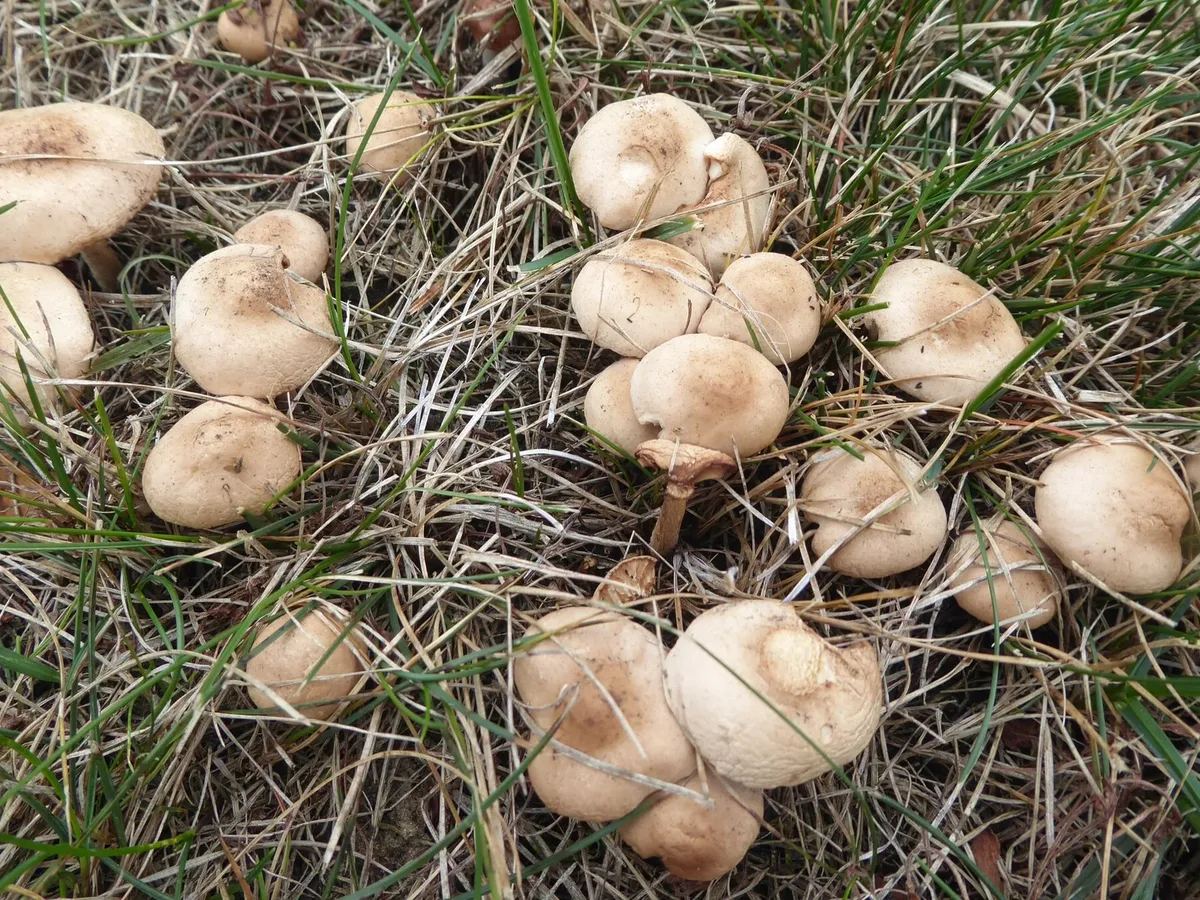 © Aalbert Rebergen (CC BY)
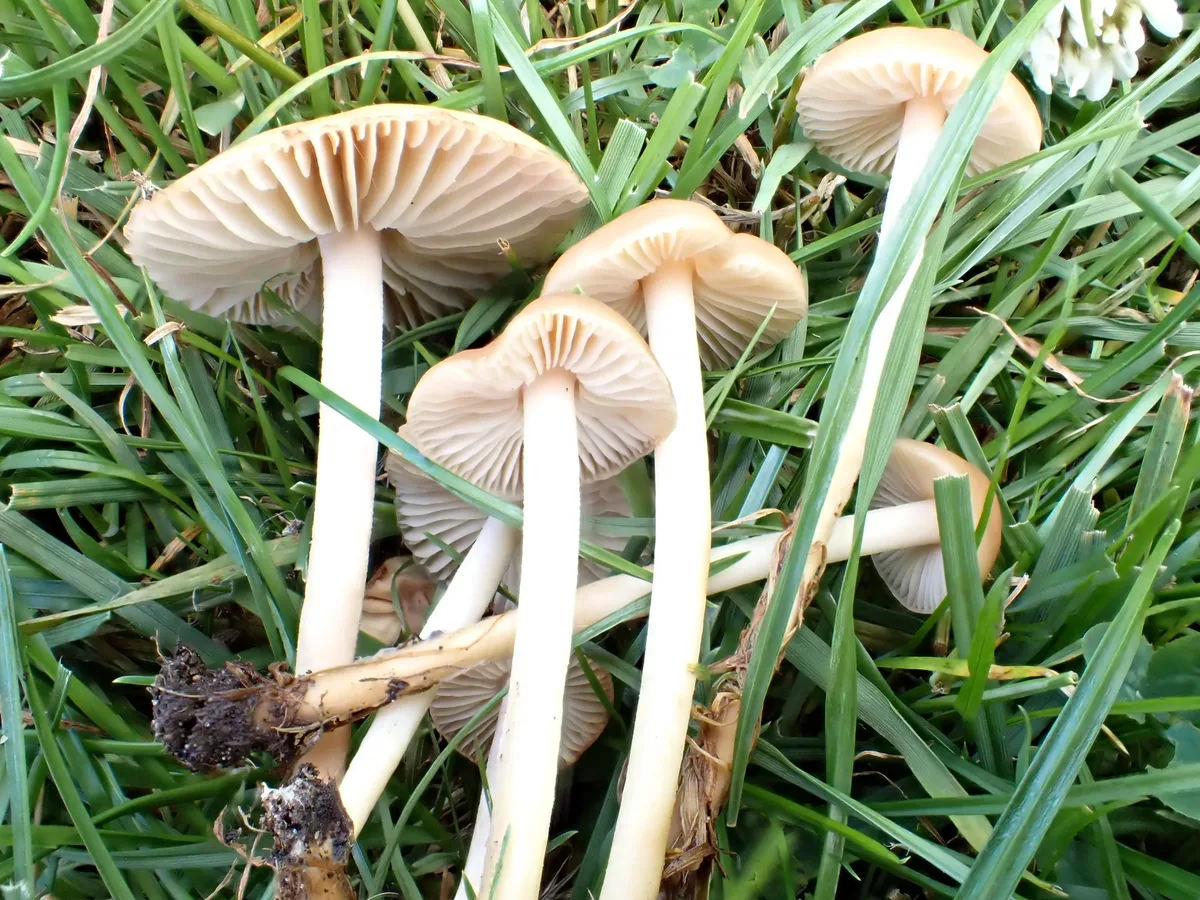 Peter de Lange (CC0)
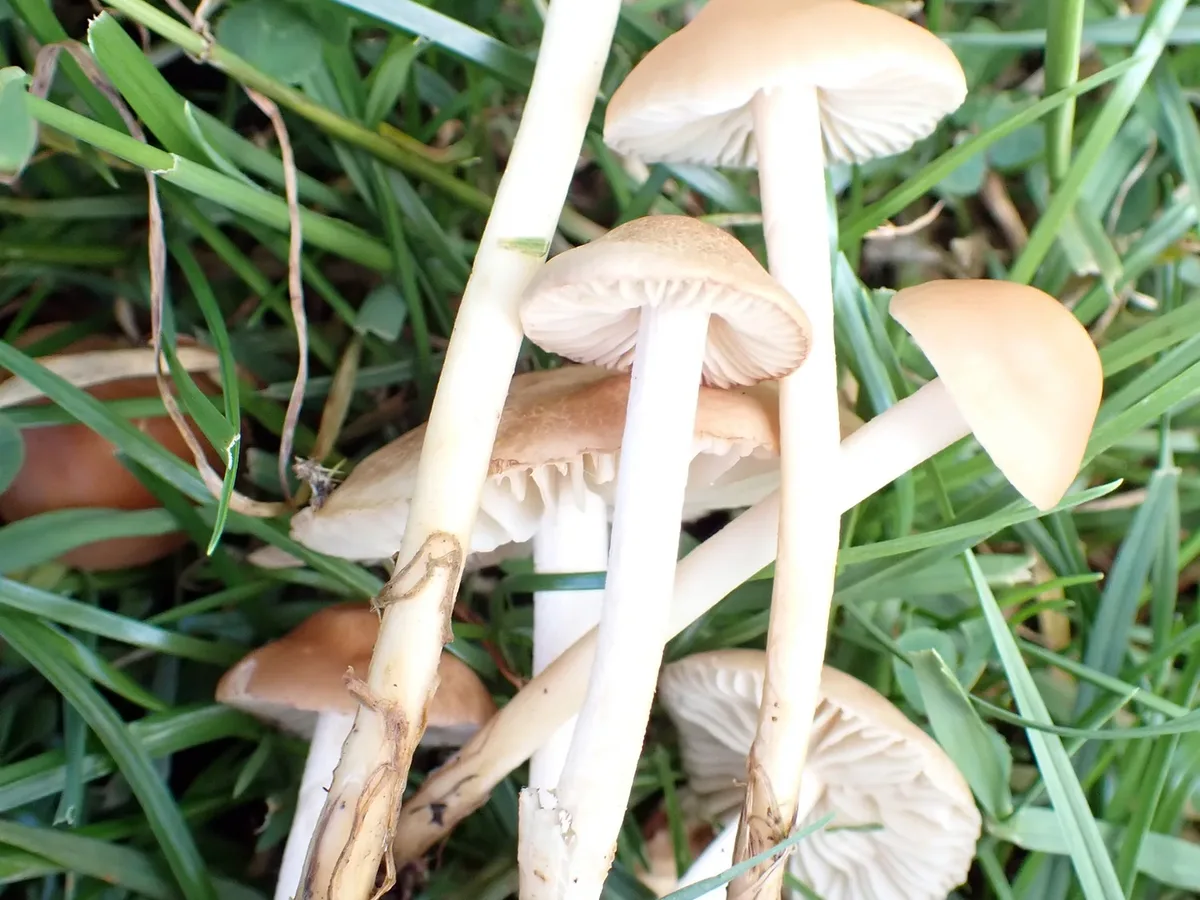 Peter de Lange (CC0)
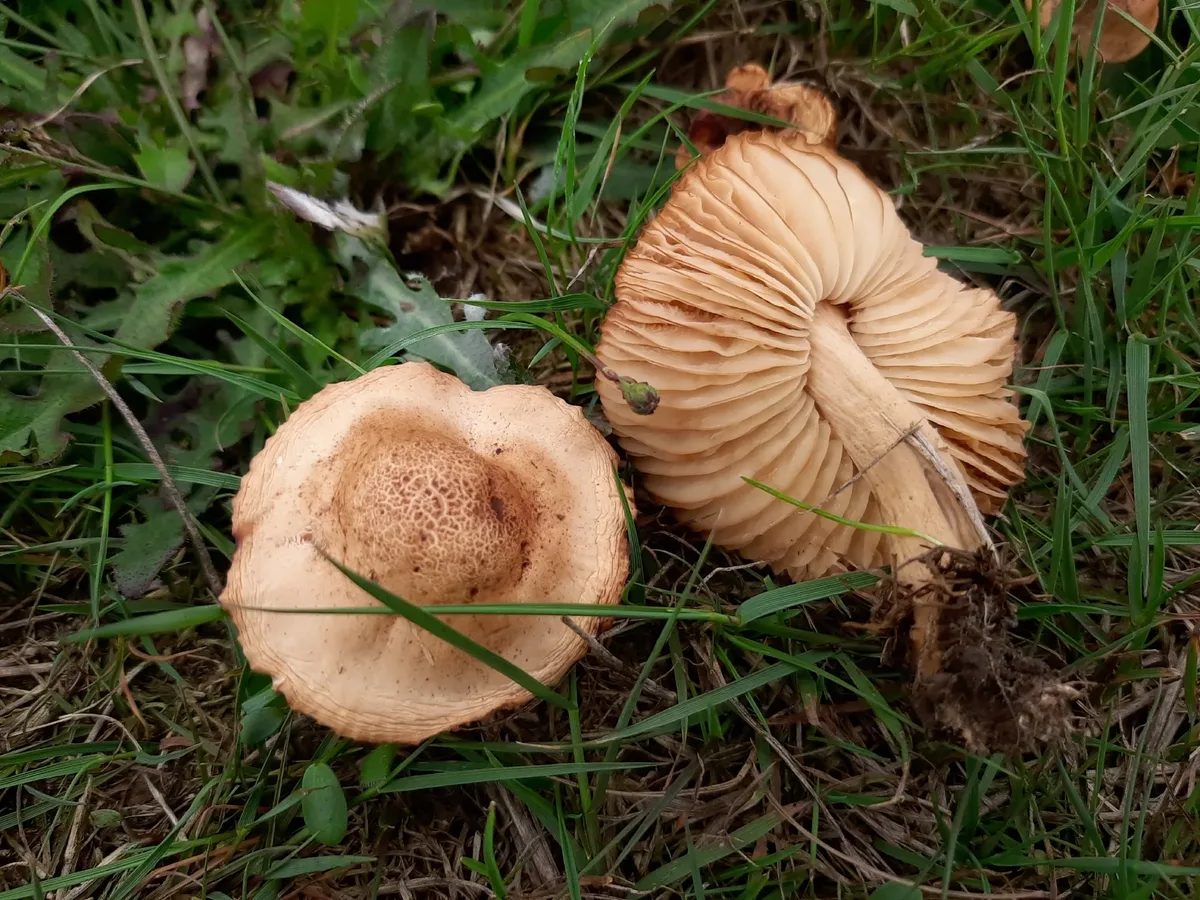 © Beaulah (CC BY)
 © Beaulah (CC BY)
 © Hannah Whittall (CC BY)
 © duaneg (CC BY)
 © duaneg (CC BY)© Aalbert Rebergen (CC BY)Peter de Lange (CC0)
Good to eat, once you have identified it with certainty and cooked it through.
Never eat a mushroom you are not 100% sure of - check the look-alikes below, and always cook wild mushrooms.
How to recognise it
A small but instantly recognizable lawn mushroom once you learn it.
Cap
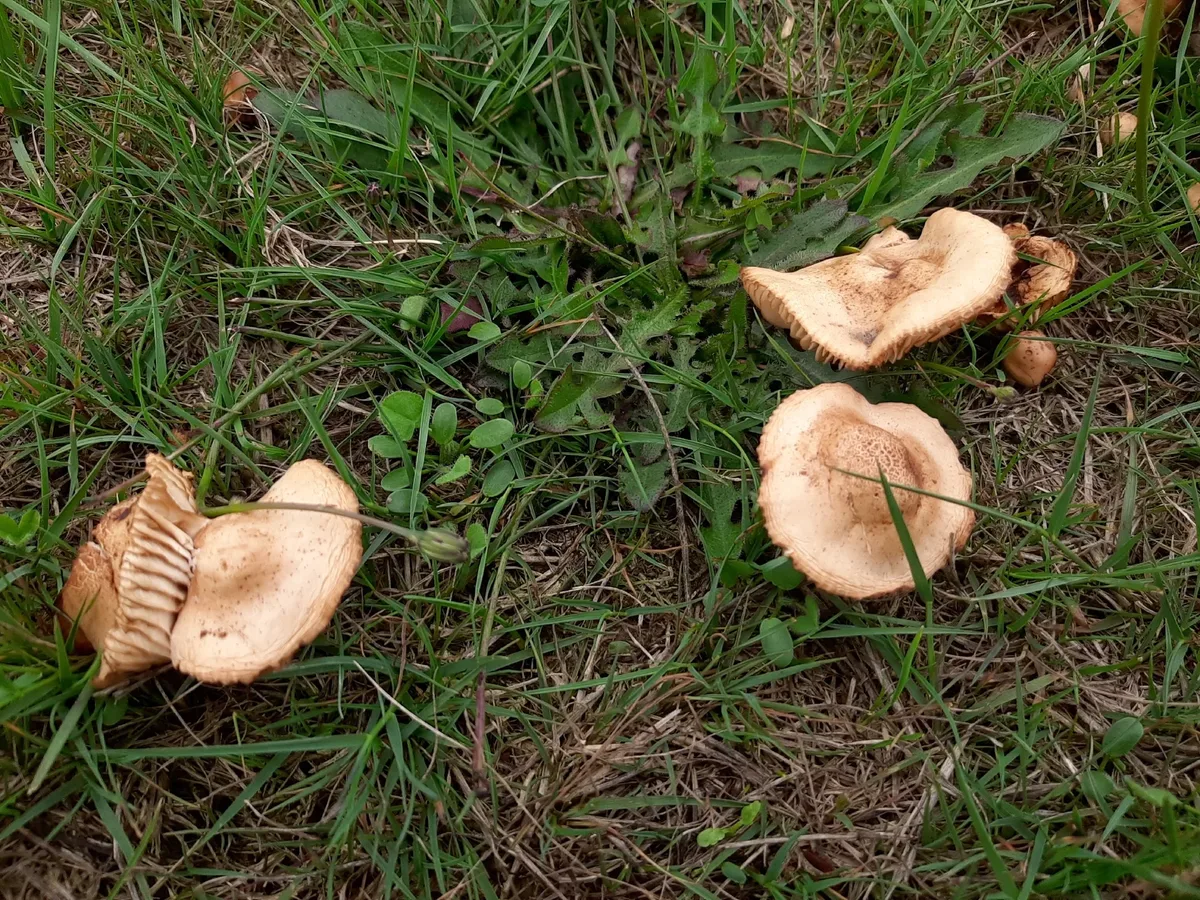
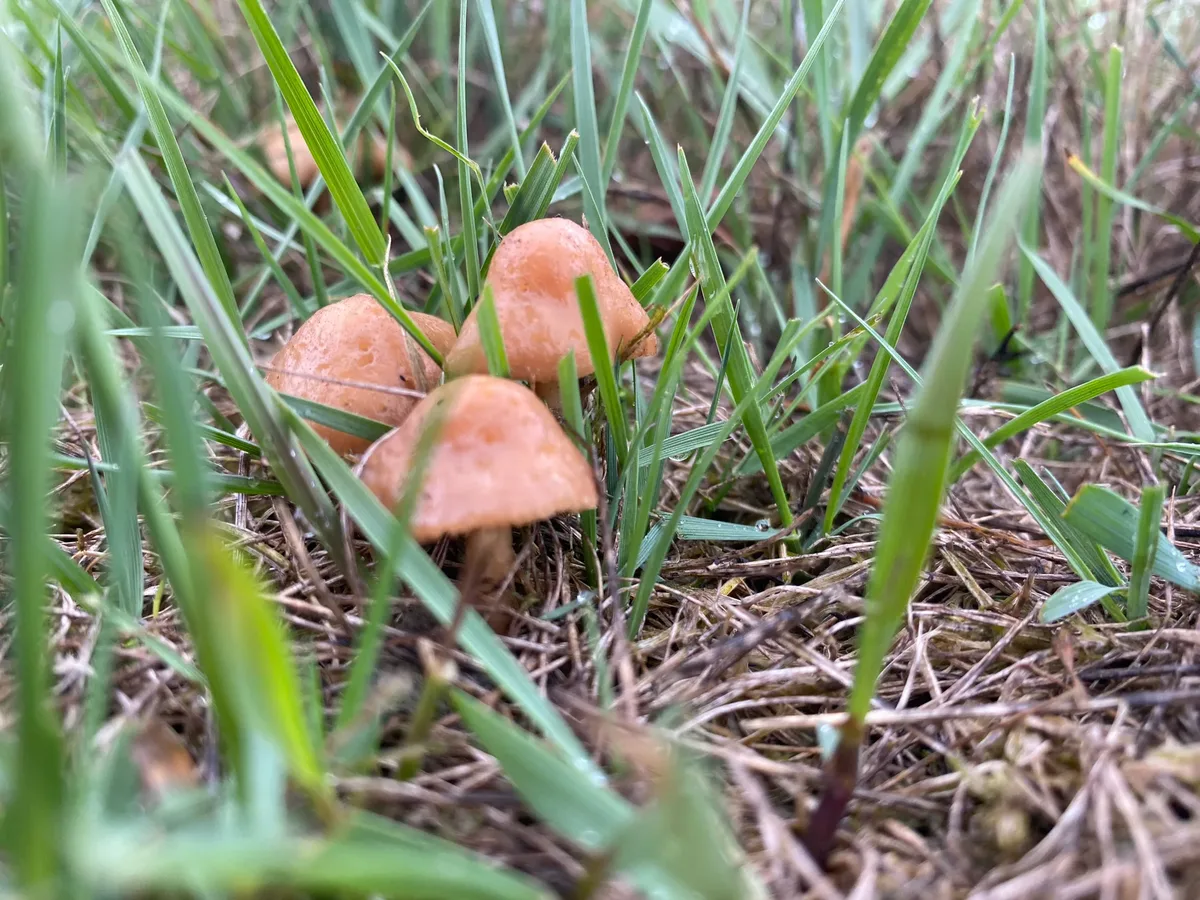
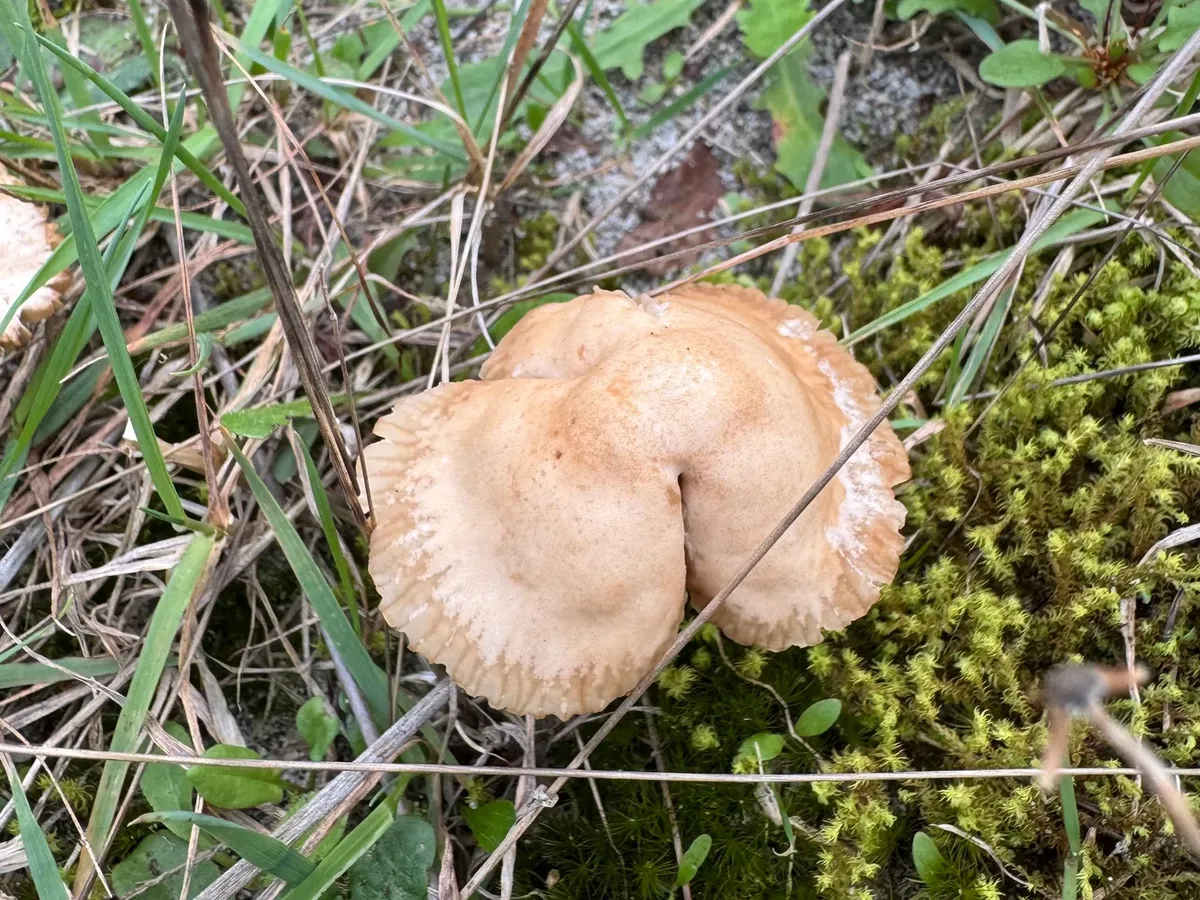
The cap is 2-5 cm across, starting bell-shaped and expanding to nearly flat while retaining a distinctive broad, low central bump (umbo). It is dry, smooth and slightly leathery, coloured pale tan, buff or cinnamon, and is hygrophanous: it darkens in wet weather and fades to cream as it dries, often leaving a faintly two-toned look with a darker centre. The margin can become weakly grooved with age.
Gills
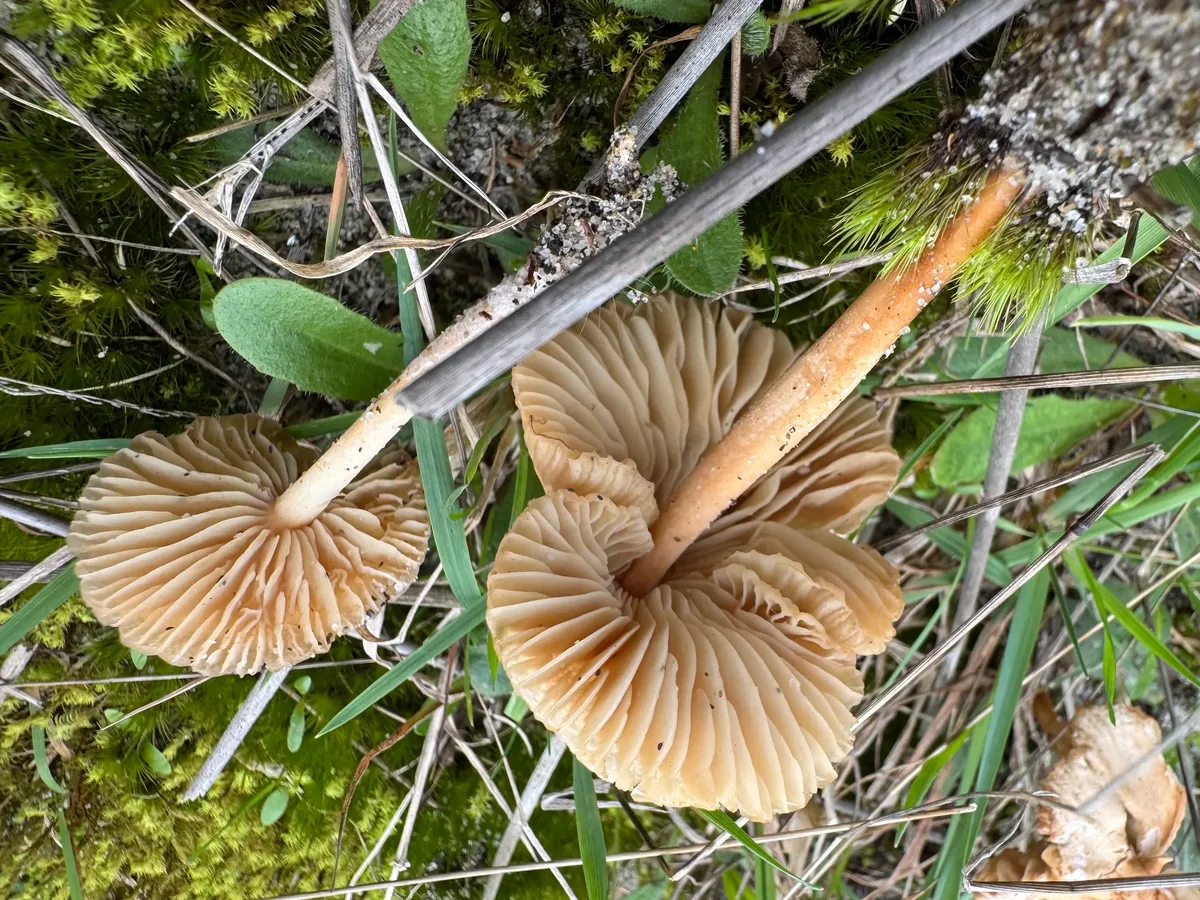
Underneath, the gills are the key feature: pale whitish-buff, broad, and notably well-spaced (distant), with shorter gills running between the long ones. They are attached only narrowly to the stem (adnexed) or nearly free.
Stem
The stem is 3-8 cm tall but only a few millimetres thick, equal, pale tan, finely downy toward the base, and astonishingly tough and pliant - you can tie it in a loose knot or twist it round without it snapping, which sets it apart from the brittle grass-loving toadstools around it. There is no ring and no volva.
Flesh
The flesh is thin and white, and the spore print is white.
Where & when it grows
Habitat
A grassland saprotroph, living on the dead roots and humus of grasses rather than on trees, so it appears on lawns, pastures, meadows, sports fields, golf courses, parks, dunes and grassy roadsides.
It is one of the classic fairy-ring fungi: the mycelium spreads outward underground year on year, and you often see a ring or arc of fruitbodies sitting on - or just inside - a band of lush, darker-green grass where the fungus has released nutrients.
The grass can also turn brown and die immediately over the densest mycelium, producing the rings of bare or scorched turf that gardeners notice.
It favours fertile, well-drained soil and is abundant across the temperate Northern Hemisphere.
When
The main season runs from late spring (May) through to the first hard frosts of autumn (October-November), with summer often as productive as autumn.
Because the species responds quickly to moisture, flushes follow warm rain or garden watering, sometimes appearing within a day or two of a summer downpour. In mild oceanic climates fruitbodies can turn up in almost any month.
A practical quirk for the forager: dried-out caps left from a previous flush revive when re-wetted and look deceptively fresh, so check that what you pick is firm and recently grown.
How it grows
Grows scattered, in troops, in arcs and especially in true rings - single or with the stems sometimes joined at the base. It is gregarious, and a given ring may produce several flushes through a season as conditions allow.
The mushroom is marcescent - rather than rotting away like most agarics, the small body simply dehydrates in dry spells and rehydrates when rain returns. This is reflected in its old genus name (Marasmius, from the Greek for 'withering').
Fruiting conditions
Strongly rain-triggered and quick to respond - warm summer thunderstorms or lawn watering can bring a flush within a day or two. Fruits across a wide warm-season temperature window; main flushes follow rain on already-warm soil. Marcescent fruitbodies revive after re-wetting, so apparent flushes can also reflect rehydration of old caps.
Look-alikes
The crucial point is that several small, plain, pale mushrooms grow in the very same lawns, and at least one of them is dangerously poisonous.
- Clitocybe rivulosa - the white Fool's Funnel / Sweating Mushroom (and the closely related C. dealbata) - is the most important confusion. It shares grassy habitat and rings but is white to greyish, has crowded gills that run down the stem (decurrent), a flatter cap with no umbo, and a brittle (not pliant) stem. It contains muscarine and is dangerously, potentially lethally poisonous, and frequently grows intermingled with M. oreades.
- Grassland Inocybe (fibrecap) species are another muscarine-containing danger in the same turf; they have brown, fibrous-streaked caps, brownish spores and an unpleasant or spermatic smell.
- Several little brown Marasmius and grass-loving funnel-caps overlap too.
- Mowers' Mushrooms and the lawn-dwelling Panaeolus/Protostropharia species have black or dark spores and a different gill colour.
- Less seriously, young specimens can be mistaken for various small Collybia/Gymnopus-type fungi.
- The deadly amatoxin-containing Galerina marginata (usually on wood, occasionally in grass over buried wood) is brown with brown spores and a ring.
The combination of pale-tan umbonate cap + widely spaced pale gills + tough twistable stem + white spore print + almond smell is what reliably separates M. oreades from all of these.
Contains lethal amatoxins. Usually grows on or near wood, but can appear in grass over buried wood, so it is worth knowing. It is brown and hygrophanous with a faint ring on the stem, crowded brownish gills and a RUSTY-BROWN spore print - the white spore print, ringless tough stem and widely spaced pale gills of M. oreades exclude it.
Grows in the same lawns and rings - often intermingled with M. oreades - but is white to greyish-buff (not warm tan), has a flat cap with no umbo, crowded gills that run DOWN the stem (decurrent), and a brittle stem that snaps rather than twisting. Clitocybe dealbata (Ivory Funnel) is widely treated as a synonym of C. rivulosa and represents the same muscarine-containing species complex; both names may be encountered in field guides. Contains muscarine - causes severe sweating, salivation, abdominal cramps, slowed heartbeat and can be fatal. If gills are crowded/decurrent and the stem is not tough and pliant, do not eat.
Several Inocybe species grow in short grass and lawns and contain dangerous, potentially lethal amounts of muscarine. They differ from M. oreades by a brown, radially fibrous or silky-streaked (often umbonate) cap, a brown to clay-brown spore print (not white), brownish gills in age, and an unpleasant, mealy or spermatic smell rather than a sweet almond one. A white spore print rules them out.
Dark-spored grass dwellers with grey-black mottled gills and fragile stems; some are mildly hallucinogenic and unpleasant. White spore print and tough pliant stem distinguish M. oreades.
A dung/grass mushroom with a sticky cap, a ring zone on the stem, and dark purple-brown gills/spore print - quite unlike the ringless, dry, pale-gilled, white-spored M. oreades.
A very common small brown lawn mushroom but with mottled dark brown to blackish gills and a dark (purple-brown to blackish) spore print, versus the pale gills and white spore print of M. oreades; flesh is softer and the stem not leathery.
Some woodland Collybia-type fungi look superficially similar but typically grow on leaf litter or wood rather than open turf, often have more crowded gills, and lack the strong almond smell. Less dangerous, but confirm the habitat and gill spacing.
In the kitchen
Picking & cleaning
Pick by pinching or cutting the caps; the wiry stems resist a clean snap and can pull up plugs of turf if yanked.
Because the lower stem is woody and often gritty, most foragers take only the caps and the upper, tenderer part of the stem and discard the tough base.
Collect from clean grassland and avoid lawns, verges and sports turf likely to have been treated with herbicides, fungicides, fertilisers or exposed to dog traffic, as well as roadsides where pollutants accumulate.
Lay the caps in a single layer in a basket; they keep their shape well and dry beautifully.
Cooking
Valued for an intense, sweet, almost almond-and-clove flavour out of proportion to its size - more a flavouring than a bulk mushroom.
The caps cook quickly and hold their texture; the tough stems are best discarded or used only to infuse stocks and then removed.
Excellent in soups, sauces, stews, omelettes and with meat, and a classic addition to French cooking (faux mousseron).
It dries extremely well - the flavour concentrates and even strengthens - so the usual practice is to dry the surplus and reconstitute it later or grind it to a seasoning powder.
Always cook before eating; do not eat raw.
Good to know
This is a good, well-known edible, but it is found in exactly the kind of short turf where seriously and potentially fatally poisonous lookalikes also grow, so it is NOT a beginner's free-for-all.
Never gather lawn mushrooms 'by handful' - examine each cap individually.
Confirm ALL of:
- a pale tan umbonate cap
- broad, widely spaced pale gills
- a remarkably tough, pliant stem that twists without snapping
- a white spore print
- a mild almond smell
Reject anything with:
- crowded or decurrent white gills
- a brittle stem
- brown or dark spores
- a fibrous brown cap
- a ring on the stem
- a mealy/spermatic/unpleasant odour
Always take a spore print if there is any doubt. If in any doubt, do not eat it. Always cook thoroughly before eating - never eat it raw.
Also avoid sites treated with lawn chemicals or used by dogs.
A reference guide - never an edibility guarantee. When in doubt, leave it out.